Plan your trip
First trip to Mongolia: the ten-day loop and daily costs
Most of Mongolia is grassland, desert and mountain crossed by tracks rather than roads, with herding families' gers scattered across it. That is the reason to go, and it decides how you travel: outside Ulaanbaatar you move with a driver and a guide, sleep in ger camps and eat what the camp cooks. A first trip of ten days takes in the capital, the granite hills of Terelj, the dunes and canyons of the Gobi and the old imperial valley of the Orkhon, and this guide explains how to book it, what to carry and what it costs.
In this guide
Find the location ↗ — opens in a new tabThe short answer
Plan ten days and nine nights: one in Ulaanbaatar, six in ger camps on a loop through the Gobi to Kharkhorin with a licensed operator's driver and guide, then two more in the capital with a Terelj day trip. View Mongolia's eight-day Gobi and Kharkhorin tour costs USD 2,150 per person private for two or USD 1,373 on a group date. All in on the ground, a private trip comes to about MNT 1,030,000 (USD 290) per person a day, MNT 10,280,000 for the ten days, plus flights. Book the tour first, for June to early September, then flights to Chinggis Khaan International Airport (UBN).
- Key point
- 10 days, 9 nights: 3 in Ulaanbaatar and 6 in ger camps (Tsagaan Suvarga, Yolyn Am, Khongoryn Els, Bayanzag, Ongi, Kharkhorin)
- Where it applies
- Ulaanbaatar for the first and last nights, with a licensed operator's driver and guide for the six nights on the road
- Timing
- June to early September, when the countryside ger camps are open; Naadam falls on 11-13 July
A tour, a driver or on your own
Ulaanbaatar is easy on your own: buses, a taxi app and hotels that take cards. The countryside is not. Outside Ulaanbaatar, travel with a licensed operator's driver and guide: distances are long, many roads are unpaved tracks, and there is no mobile signal in large areas. The tracks have no signposts, and a guide who speaks Mongolian is how you are welcomed into a herding family's ger rather than photographing it from the car.
There are three ways to arrange that. The cheapest on paper is a car with a driver: Tengri Tours, for example, charges USD 120 a day for a UAZ van or a Hyundai Starex and USD 150 for a Land Cruiser or Lexus SUV, driver included, with the guide, fuel, camps, meals and park fees still to add. Most first-timers instead book a tour, which bundles all of that into one price. View Mongolia's eight-day Gobi and Kharkhorin tour costs USD 2,150 per person as a private trip for two, with your own van, driver and English-speaking guide on your own dates, or USD 1,373 per person on one of its group departures of up to 15 travellers. Guru Travel Mongolia, a member of the Mongolian Tourism Organization, and Travel Gobi Mongolia publish private two-person prices of about USD 2,130-2,150 per person for a similar week.
A quote worth comparing lists the nights and camps, whether the camps have private or shared bathrooms, three meals a day and drinking water, park and museum entry, horse and camel rides, both airport transfers and what happens if a road or a camp closes. View, for instance, includes the arrival transfer but not the departure one, and View and Travel Gobi Mongolia both leave out tips. The trip-cost guide prices the whole ten days at three levels.
A first route: ten days, nine nights
The classic first loop runs south from Ulaanbaatar into the Gobi and comes back north through the Orkhon Valley, so you see desert and grassland without retracing a road. Days 1 to 8 are View Mongolia's eight-day tour as published, group or private; you add two more nights in the capital and a Terelj day trip on day 9, the pattern our 10-day itinerary sets out with hotels and camps. Drives take 3.5 to 6 hours on most days, and your driver plans each one to arrive before dark, because overland driving at night is advised against. Keep day 9 as your spare day: fuel shortages can disrupt domestic flights and road travel, and the Terelj trip is the one day you can drop if the road back runs late.
- Day 1: land at Chinggis Khaan International Airport (UBN), south of the city, where the tour's driver meets you, and sleep in the tour's city hotel. Buy a SIM card, then walk to Sükhbaatar Square and the Chinggis Khaan National Museum, whose permanent exhibition fills floors 3 to 9 (MNT 30,000). Gandan Monastery, built in 1840, was the only monastery that kept working through the communist period; its monks chant every morning, and the Migjid Janraisig temple at the end of the main path was built for a 26 m statue of Avalokiteshvara in 1911-1913; the original statue was destroyed in 1938.
- Day 2: the long drive south, 470 km and about 6 hours on paved road, to Tsagaan Suvarga, where colourful eroded cliffs rise over 50 m at their highest. First night in a ger camp.
- Day 3: 200 km, about 3 hours, to Yolyn Am in Gobi Gurvan Saikhan National Park. The car stops at a parking area and you walk into a gorge so narrow and shaded that ice can last until the end of June; View allows 2.5 to 3 hours there and back.
- Day 4: about 190 km of dirt road, 5 to 6 hours, to Khongoryn Els, dunes up to 300 m high and about 100 km long. Ride a Bactrian camel, and climb a dune at sunset if your legs allow; the climb is optional.
- Day 5: 150 km, about 4 hours, to Bayanzag, the Flaming Cliffs, where the American explorer Roy Chapman Andrews found the first nest of dinosaur eggs. Fossils are protected, so look and leave them.
- Day 6: 155 km, about 4 hours, north to the ruins of Ongi Monastery on the Ongi River, once one of the largest monasteries in the Gobi, destroyed in 1937; a small temple and a ger museum stand among the ruins.
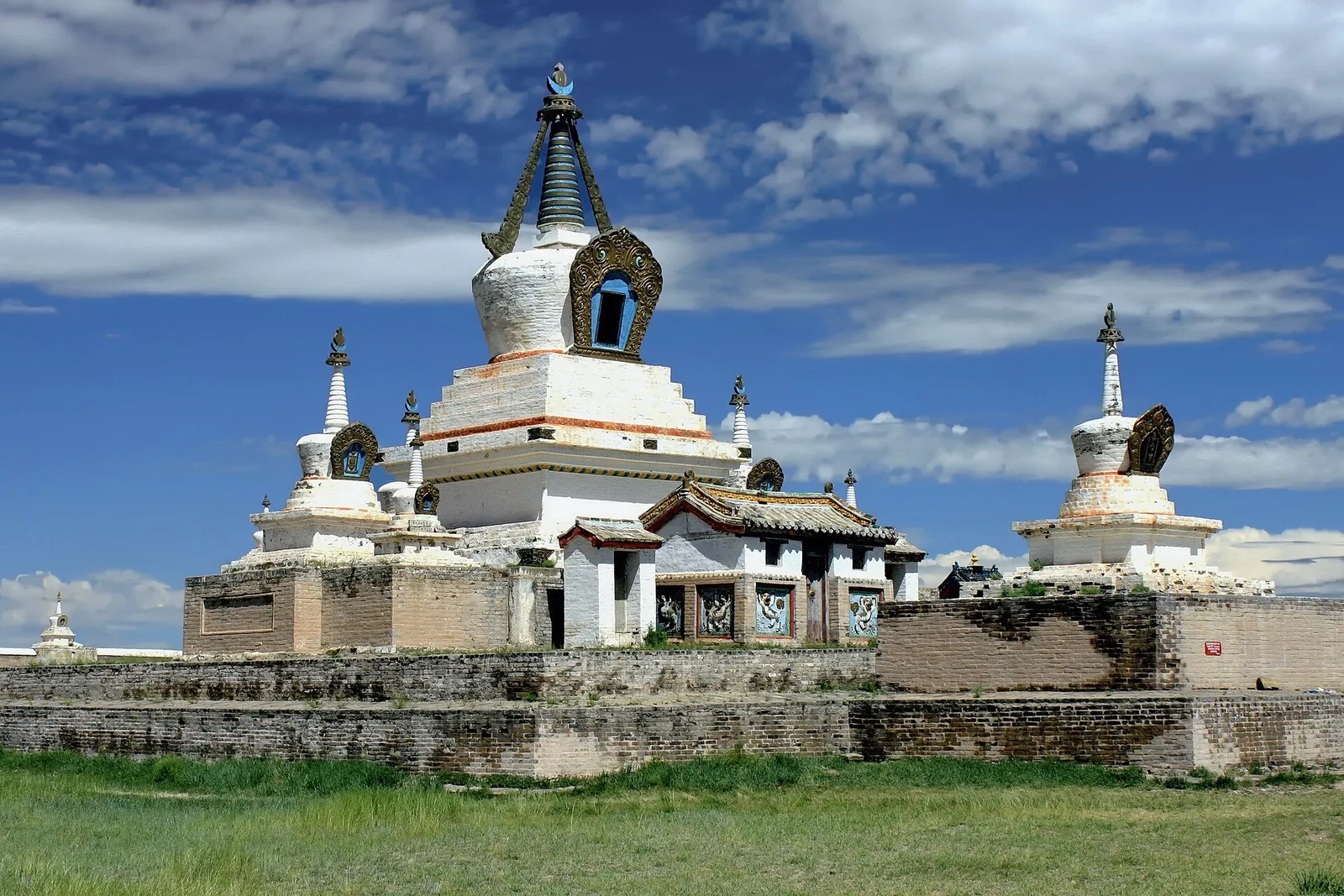
- Day 7: north as the desert gives way to steppe, about 200 km and 5 hours on dirt, then 40 km and an hour, mostly paved, into Kharkhorin, on the site of Karakorum, the 13th-century capital of the Mongol Empire. Erdene Zuu Monastery, founded in 1586 with stones from the old capital, is a walled enclosure lined with 108 stupas around a few temples, a state museum since 1965 where monks still chant the sutras. It and the Kharkhorum Museum are both open daily from 09:00 to 18:00 in summer.
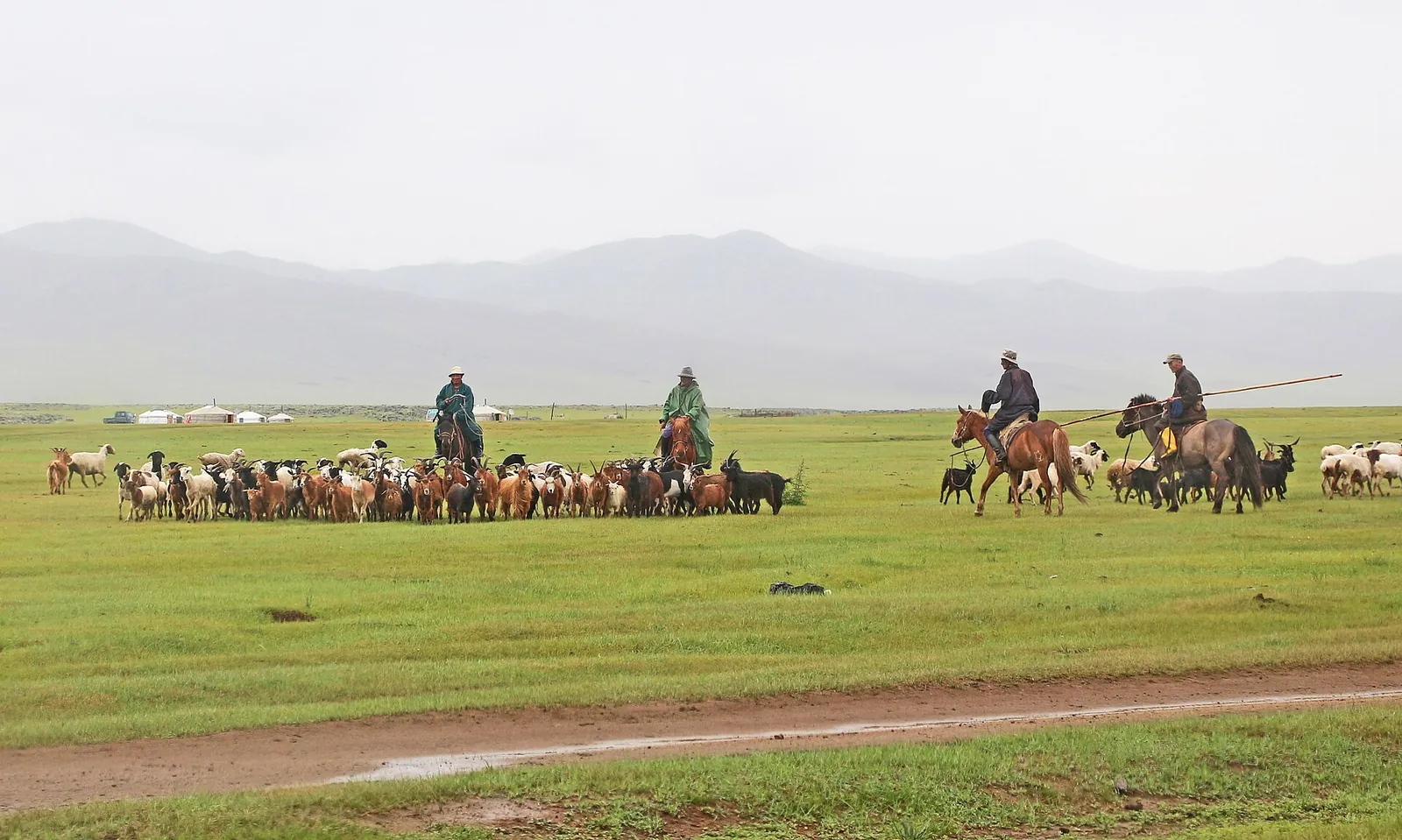
- Day 8: 360 km on paved road back to Ulaanbaatar, about 6 hours, with a stop at a horse-herding family's camp on the way. The tour ends in the city; the next two nights are in a hotel you book yourself.
- Day 9: a day trip east to the Chinggis Khaan Equestrian Statue at Tsonjin Boldog, 40 m high with a view over the steppe from the top, and on into Gorkhi-Terelj National Park for Turtle Rock and the climb to Aryabal Meditation Temple. Amicus Mongolia's private day trip, USD 176 per person for two, leaves at 09:00 and is back around 18:00, lunch included.
- Day 10: the flight home, with the airport taxi or the X:19 bus from the airport box below.
More time, or less driving
The longest drive is the 470 km south to Tsagaan Suvarga. A flight to Dalanzadgad, the southern Gobi's airport town, replaces most of it: on the winter timetable to late March 2027 MIAT flies there on Fridays and Sundays at 17:40, and the summer timetable is published separately; your operator meets the plane for the drive to the dunes. Our transport guide has the flights, buses and the Beijing train.
With fourteen days, add the north: the Orkhon Waterfall beyond Kharkhorin and Lake Khövsgöl, 136 km long, in a stone bowl near the Russian border. Our 14-day itinerary links it to the Gobi loop, and the Lake Khövsgöl guide covers the camps and the flight to Mörön.
When to go
Gobi ger camps are fully open from 15 May to 20 September, and partly open or closed outside those dates, so June to early September is the safest window for a first trip. Nights are cool even then: the temperature drops by 10-20 degrees in the evening, and Gobi nights can fall to about 8°C at the end of May, in June and in late August and September.
Naadam, the national festival of horse racing, wrestling and archery, is held every year on 11-13 July, and the public holiday runs from 10 to 15 July. It is the most colourful week of the year and the busiest; the festivals guide has the 2027 dates, tours and the winter festivals. The best-time guide goes through the weather month by month.
Ger camps, family gers and good manners
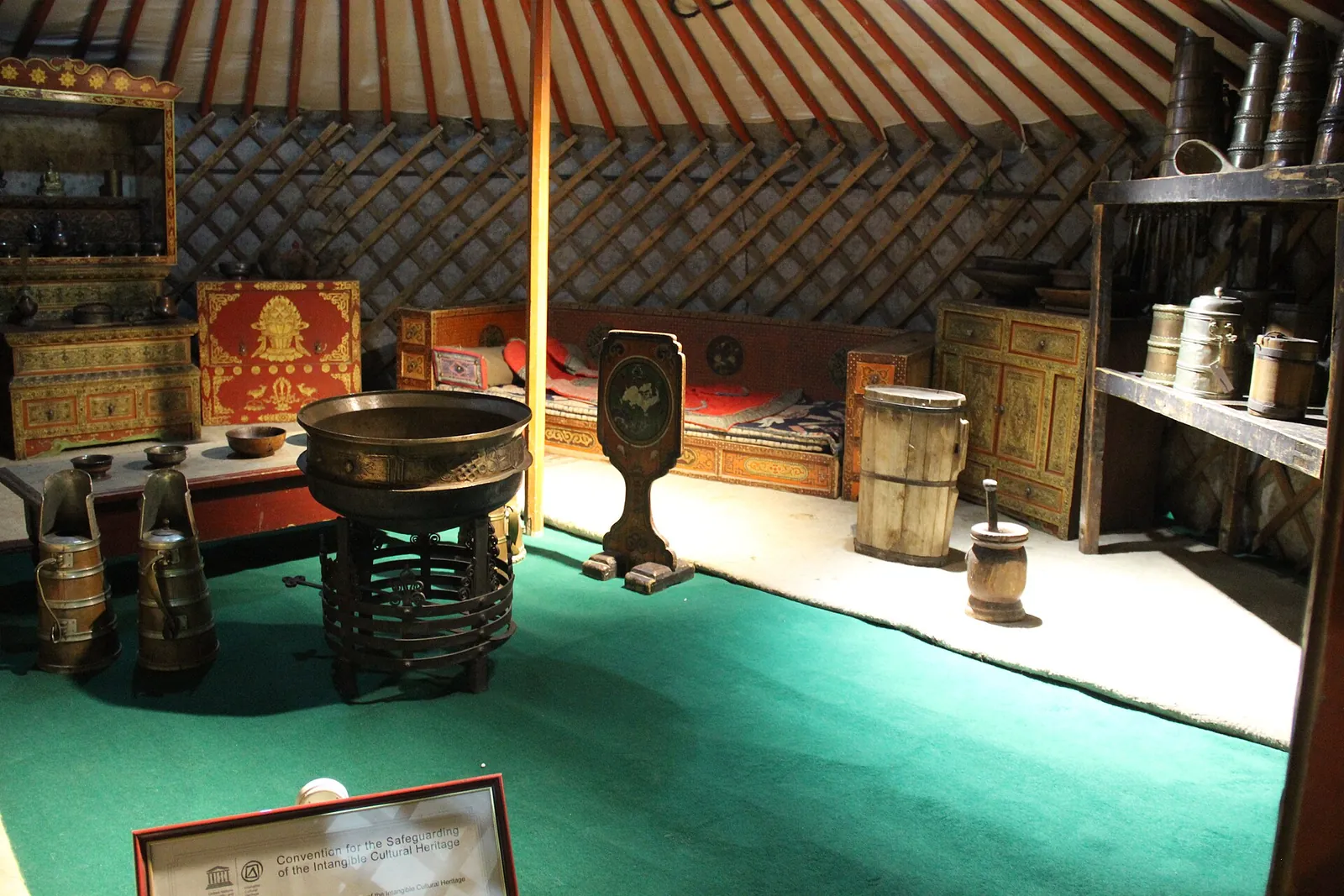
Almost every night on the loop is in a tourist ger camp: a circle of felt tents with beds and a stove, a restaurant ger and a block of toilets and showers. Standard camps share the bathrooms; dearer camps have gers with their own. Guru's private week, for instance, puts its guests in ensuite gers for four of six nights. A herding family's ger is a home, not a hotel, and visits are arranged through your guide, often with a cup of milk tea and a taste of the family's dairy. The ger stays guide compares camps and family stays. Camp meals are set menus, mostly Mongolian and built around meat (mutton, beef or chicken with vegetables, soups and salads); breakfast is bread, jam, eggs and sausage. If you are vegetarian or have another diet, tell the operator when you book.
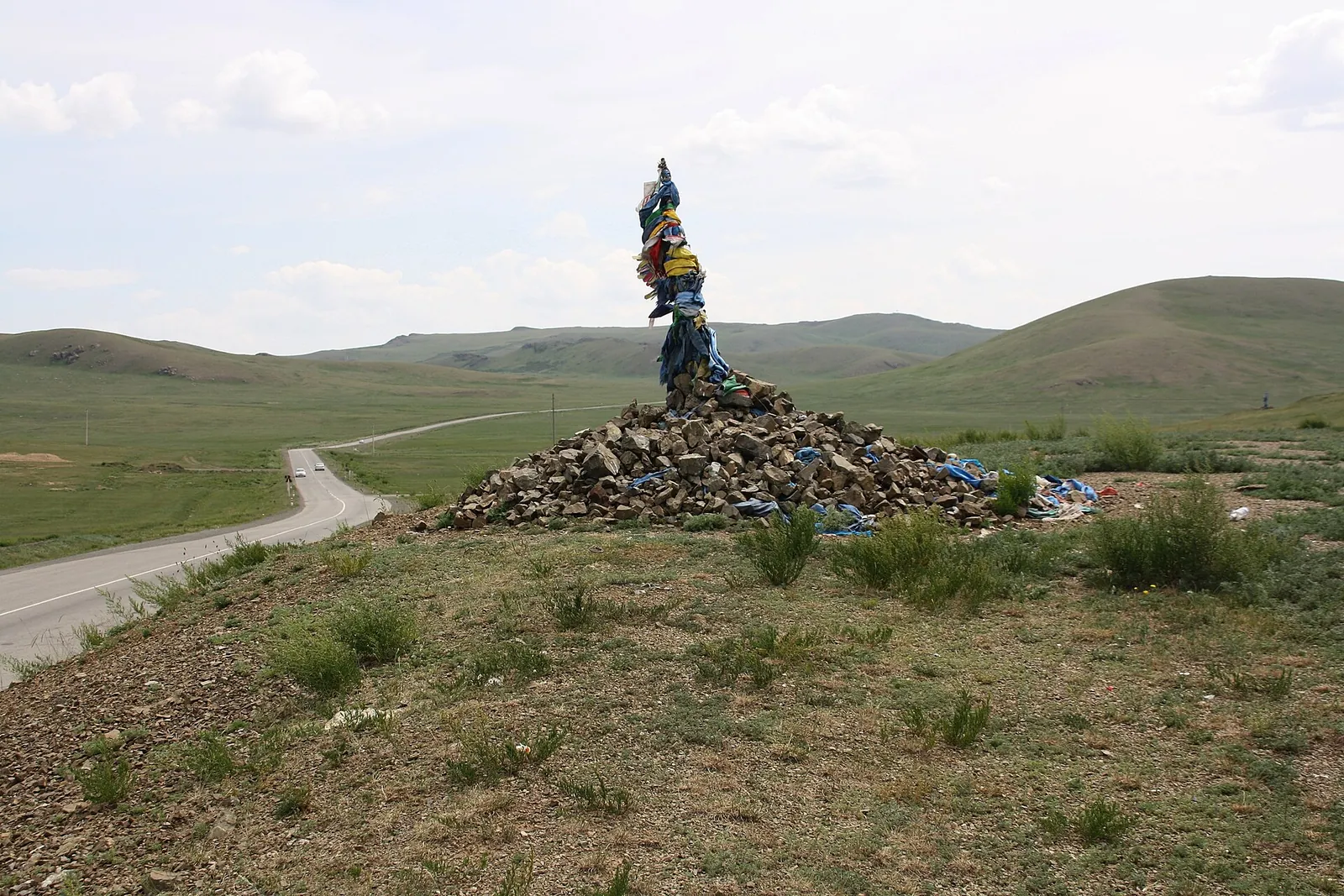
A few customs go a long way. Do not step on the threshold as you enter; go to the left, the guests' side, and sit where your hosts show you. Do not lean on the two central pillars or walk between them. Accept a bowl or a gift with your right hand, supporting your right elbow with your left, or with both hands, and at least taste what you are offered. Walk clockwise around stupas and the stone cairns called ovoo, and ask before photographing people or the inside of a temple. Airag, fermented mare's milk, is offered in summer; it is unpasteurised, so a polite sip is enough.
Entry and registration
UK and most EU passports (including France, Italy, Spain, the Netherlands, Sweden, Poland and others listed by Mongolia's consular service) can visit for up to 30 days without a visa under a temporary scheme that runs until the end of 2026. Unless the scheme is extended, a 2027 trip on those passports needs a tourist visa, applied for at a Mongolian embassy unless e-visa eligibility is announced: the UK and the EU states are not on the Immigration Agency's list of nationalities eligible for the e-visa. German passports have their own 30-day visa-free arrangement. The UK also advises a passport valid for at least six months after the day you arrive.
Customs matters on a Gobi trip. Cash and foreign currency from MNT 15 million in total, about USD 4,170, must be declared on arrival, and customs very often searches departing luggage for antiques, minerals and palaeontological finds: nothing from Bayanzag's fossil beds goes home with you.
Your hotel or camp registers you with the immigration authority within 48 hours of arriving at each address; if you stay with friends or in a rented flat, you register yourself. On a tour that happens without you noticing. The entry guide has the rules for every passport and the longer-stay procedure.
What a first trip costs per day
| Level, ten days | Per person a day | For two a day | Per person, ten days |
|---|---|---|---|
| Budget: group tour | about MNT 680,000 (USD 190) | about MNT 1,350,000 | about MNT 6,760,000 |
| Mid-range: private tour | about MNT 1,030,000 (USD 290) | about MNT 2,060,000 | about MNT 10,280,000 |
| Comfort: private tour, VIP grade | about MNT 1,290,000 (USD 360) | about MNT 2,590,000 | about MNT 12,930,000 |
These are all-in ground costs for two adults sharing a twin room or ger on the ten-day loop above, in June to early September and outside Naadam week, with prices read on 29 October 2026. Each level is View Mongolia's eight-day tour, as a group departure, a private trip or its VIP grade (the same route in View's higher grade of camps, USD 612 more per person), plus Amicus Mongolia's private Terelj day, two more nights in Ulaanbaatar in a twin room with breakfast, at USD 77 a night at the budget level (tax scope not stated on the hotel's page, so counted as shown) and USD 170 at mid-range and comfort, five meals each in the city at a Mongolian restaurant's menu prices, the departure taxi, the Chinggis Khaan National Museum, a few city bus rides, two tourist SIM cards and a 10% buffer for drinks, tips and extras. Dollars are converted at the Bank of Mongolia's rate of USD 1 = MNT 3,599.08 for 29 October 2026.
Flights from London via Istanbul add about GBP 800-850 per person, an off-season example from Turkish Airlines' economy fares for November and December 2026. The trip-cost guide itemises each level.
Money: tögrög, cards and cash
Mongolia's currency is the tögrög (MNT). Tours are priced in US dollars and usually paid in advance, so on the road you need money only for drinks, snacks, souvenirs, tips and the odd extra ride. In Ulaanbaatar there are more and more cash machines that take the usual credit and debit cards, and larger hotels, restaurants and shops used by foreigners accept major credit cards. In the countryside, withdrawing cash with a card is rarely possible, so carry enough tögrög before the loop starts. Local QR payments are spreading in the cities but generally need a Mongolian bank account or a local app, so they rarely work for visitors.
SIM cards and staying in touch
Unitel's tourist SIM costs MNT 25,000 for 10 days and 15 GB of data plus MNT 5,000 for the card, MNT 30,000 in all; the 20-day plan with 25 GB is MNT 40,000 plus the card. Wi-Fi is widely available in Ulaanbaatar's hotels, restaurants and bars.
What to pack, and tipping
Pack for heat by day and cold by night: base layers, a fleece and a windproof, waterproof jacket, plus sunglasses, sunscreen and a hat for the Gobi. A headlamp saves fumbling for the toilet block after dark, a power bank keeps your phone alive where electricity is limited, and a small roll of toilet paper or wet wipes helps at roadside stops. Sockets take two-pin European plugs at 220 V.
Tipping is customary for guides and drivers; in hotels it is optional. Guru Travel Mongolia suggests USD 10-20 per traveller a day for the guide and driver together on a group tour, or 10-20% of the tour price shared between them on a private trip, with drivers tipped as much as guides; the 10% buffer in the budget above covers tips at the lower end of that range. In restaurants, 5-10% is a kind gesture for good service, never expected.
Health and safety
Take insurance that covers evacuation and repatriation: medical care outside Ulaanbaatar is limited and hospitals may ask for most of the cost up front. If you ride, wear a helmet and back protection; pack your own unless the operator lists them. Rabies is present, so keep away from stray dogs, and ticks are out in spring and summer. In Ulaanbaatar, use licensed taxis or the trackable UBCab app rather than a car hailed in the street. The entry guide covers vaccinations.
Practical questions
Can I travel in Mongolia without a tour?
In Ulaanbaatar, yes. Beyond it nearly everyone travels with a driver and a guide, because the tracks are unsigned and the camps are booked through operators. A car with a driver alone costs about USD 120-150 a day, before the guide, fuel, camps and meals.
How many days do I need for a first trip to Mongolia?
Ten days and nine nights cover Ulaanbaatar, a Terelj day trip and a six-night loop through the Gobi to Kharkhorin. Fourteen days add the Orkhon Waterfall and Lake Khövsgöl, as in our 14-day itinerary.
How much does Mongolia cost per day?
On the ten-day loop for two people sharing, about MNT 680,000 per person a day on a group tour, MNT 1,030,000 on a private tour and MNT 1,290,000 at a VIP grade, all in on the ground. Flights come on top.
Do I need a visa for Mongolia?
Not until the end of 2026 on UK and most EU passports, which can visit for up to 30 days without one; the entry section above covers 2027 and German passports.
Do cards work in Mongolia?
In Ulaanbaatar, yes, at larger hotels, restaurants and shops; outside the city, carry tögrög, as the money section explains.
What are ger camps like?
A circle of felt gers with beds and a stove, a restaurant ger and a shared toilet and shower block; dearer camps have gers with their own bathrooms. Meals are usually included in a tour.
How much should I tip my guide and driver in Mongolia?
Guru Travel Mongolia suggests USD 10-20 per traveller a day for the guide and driver together on a group tour, or 10-20% of a private tour price shared between them. Tips in hotels and restaurants are optional.
Keep planning your trip
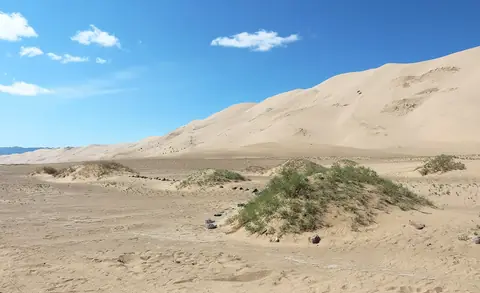
Mongolia in ten days
Three nights in Ulaanbaatar, a Terelj day and a six-camp loop through the Gobi to Kharkhorin with a private driver and guide: drive times, camps and an all-in budget.
Read the guide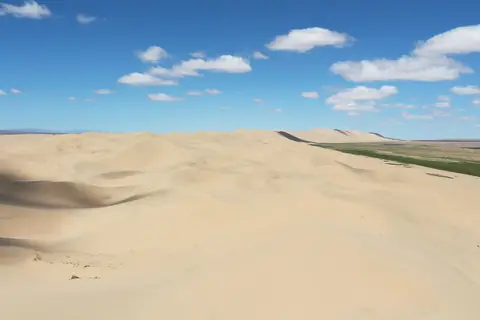
Mongolia trip cost
Ten days in Mongolia for two, all in: about MNT 6.76 million per person on a group tour, MNT 10.28 million on a private tour or MNT 12.93 million in comfort.
Read the guide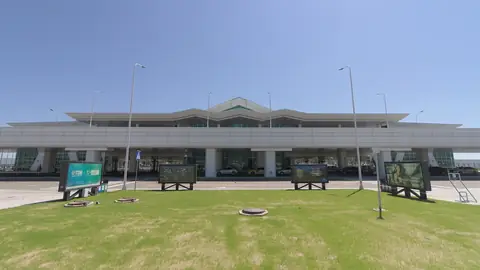
Entering Mongolia
Who can visit Mongolia without a visa and until when, what changes for a 2027 trip, the 48-hour address registration, and what customs lets you bring in and take home.
Read the guide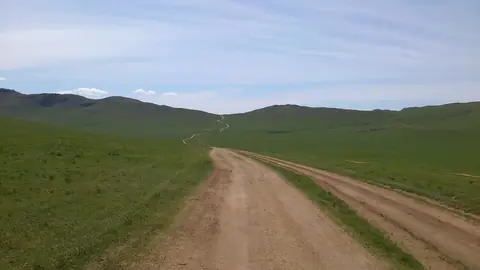
Health and safety in Mongolia
Emergency numbers, insurance and the 80% hospital deposit, vaccines and rabies, raw milk and plague, night driving, taxis and the laws that catch visitors in Mongolia.
Read the guide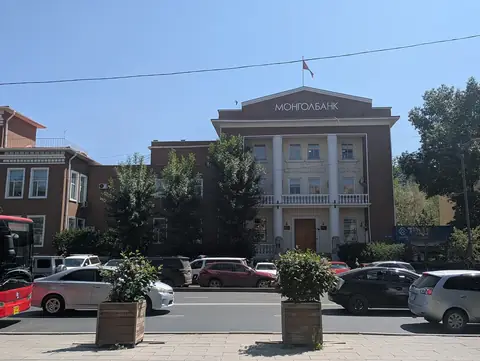
Money and payments in Mongolia
Paying in Mongolia: where a foreign card works, what an ATM pays out, which notes to bring and change, cash for the countryside, tipping guides and customs.
Read the guide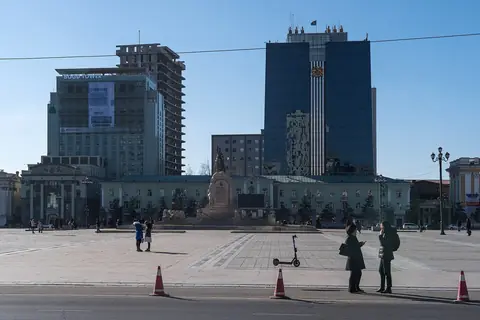
Solo female travel in Mongolia
Travelling alone as a woman in Mongolia: the UK, German and French advice, the airport after midnight, taxis, nights out, guesthouses and gers, the countryside and 102.
Read the guideSources and checks before you travel
(45)
- View Mongolia: Gobi Desert and Orkhon Valley Tour, 8 days ↗ — opens in a new tab
- Amicus Mongolia: Genghis Khan's Statue Complex and Terelj National Park day trip ↗ — opens in a new tab
- Guru Travel Mongolia: Epic Gobi Desert and Orkhon Valley Express, 7 days ↗ — opens in a new tab
- Mongolian Tourism Organization: member 645 ↗ — opens in a new tab
- Travel Gobi Mongolia: Gobi and central Mongolia overland tour ↗ — opens in a new tab
- Travel Gobi Mongolia: relaxed Gobi tour by car ↗ — opens in a new tab
- Travel Gobi Mongolia: all bests of central Mongolia ↗ — opens in a new tab
- Immigration Agency of Mongolia: e-visa ↗ — opens in a new tab
- Ministry of Foreign Affairs of Mongolia, Consular Department: general visa information ↗ — opens in a new tab
- Chinggis Khaan International Airport: customs office (Mongolian) ↗ — opens in a new tab
- Turkish Airlines: flights from London to Ulaanbaatar ↗ — opens in a new tab
- Ulaanbaatar City Tourism Department: Ulaanbaatar guide 2025 (PDF) ↗ — opens in a new tab
- Arts Council of Mongolia, Mongolian Temples project: Migjid Janraisig temple (Gandan) ↗ — opens in a new tab
- View Mongolia: Gobi desert tour ↗ — opens in a new tab
- Tengri Tours: car rental with driver ↗ — opens in a new tab
- Orkhon Valley Cultural Landscape administration: Erdene Zuu museum ↗ — opens in a new tab
- Orkhon Valley Cultural Landscape administration: Kharkhorum Museum ↗ — opens in a new tab
- Chinggis Khaan International Airport: VIP taxi ↗ — opens in a new tab
- Ulaanbaatar Public Transport Policy Department: airport buses ↗ — opens in a new tab
- Nomadic Journeys: dos and don'ts in Mongolia ↗ — opens in a new tab
- Tsomtsog Ger: etiquette inside a Mongolian ger ↗ — opens in a new tab
- UNESCO Intangible Cultural Heritage: Naadam ↗ — opens in a new tab
- Embassy of Mongolia in Berlin: public holidays 2026 ↗ — opens in a new tab
- Mongolian Consular Service: visa exemptions ↗ — opens in a new tab
- Immigration Agency of Mongolia: 48-hour registration ↗ — opens in a new tab
- GOV.UK: Mongolia entry requirements ↗ — opens in a new tab
- GOV.UK: Mongolia travel advice ↗ — opens in a new tab
- GOV.UK: Mongolia safety and security ↗ — opens in a new tab
- GOV.UK: Mongolia health ↗ — opens in a new tab
- Auswärtiges Amt: Mongolei, Reise- und Sicherheitshinweise ↗ — opens in a new tab
- France Diplomatie: Mongolie, sécurité ↗ — opens in a new tab
- France Diplomatie: Mongolie, santé ↗ — opens in a new tab
- Unitel: Toursim tourist SIM plans ↗ — opens in a new tab
- Bank of Mongolia ↗ — opens in a new tab
- Royal Mountain Hotel: Superior Twin ↗ — opens in a new tab
- Mika Hotel: twin room ↗ — opens in a new tab
- Modern Nomads: menu (Metro Mall branch) ↗ — opens in a new tab
- Chinggis Khaan National Museum: visit ↗ — opens in a new tab
- Travel Gobi Mongolia: Mongolia cross express tour ↗ — opens in a new tab
- Mongolia Short Tours (Amicus Mongolia): 4-day central Mongolia tour ↗ — opens in a new tab
- Chinggis Khaan International Airport: domestic seasonal departures ↗ — opens in a new tab
- Guru Travel Mongolia: what to pack for a Mongolia tour ↗ — opens in a new tab
- Guru Travel Mongolia: tipping in Mongolia ↗ — opens in a new tab
- Immigration Agency of Mongolia: countries eligible for the e-visa ↗ — opens in a new tab
- View Mongolia (operator): Khovsgol Lake ↗ — opens in a new tab
Reference sources for the version dated 3 November 2026. Confirm opening times, access, transport and conditions for your travel dates.
Photo credits
(4)
The Golden Stupa at Erdene Zuu Monastery in Kharkhorin, the last stop of the loop before Ulaanbaatar
Photograph: Marcin Konsek — opens in a new tab · CC BY-SA 4.0 — opens in a new tab
Changes: Resized and converted to WebP; displayed with responsive crops. · Original photograph and licence details ↗ — opens in a new tab
Herders with their goats in the Orkhon Valley, the grassland the loop crosses on its way back north
Photograph: Bernard Gagnon — opens in a new tab · CC0 — opens in a new tab
Changes: Resized and converted to WebP; displayed with responsive crops. · Original photograph and licence details ↗ — opens in a new tab
A furnished ger in the Traditional Life gallery of the National Museum of Mongolia, Ulaanbaatar
Photograph: Gary Todd from Xinzheng, China — opens in a new tab · CC0 — opens in a new tab
Changes: Resized and converted to WebP; displayed with responsive crops. · Original photograph and licence details ↗ — opens in a new tab
An ovoo beside the road south of Ulaanbaatar: walk round it clockwise
Photograph: GerritR — opens in a new tab · CC BY-SA 4.0 — opens in a new tab
Changes: Resized and converted to WebP; displayed with responsive crops. · Original photograph and licence details ↗ — opens in a new tab