Övörkhangai
Kharkhorin and the Orkhon Valley: monasteries and waterfall
West of Ulaanbaatar the steppe opens into the Orkhon Valley, where the Mongol Empire had its capital and Mongolia built its first Buddhist monastery. Kharkhorin and Erdene Zuu are the reason most people come; the waterfall in the upper valley, Zanabazar's hermitage at Tövkhön and the wild takhi horses of Khustai on the way back are what make it worth three nights rather than one.
In this guide
Find the location ↗ — opens in a new tabThe short answer
Give central Mongolia four days and three nights with a driver-guide: a night in Kharkhorin for Erdene Zuu and the Kharkhorum Museum, a night by the Orkhon Waterfall, Tövkhön Monastery on day 3, and Khustai's wild horses on the drive home. Amicus Mongolia's private four-day tour costs USD 1,240 per person for two with camps, meals and entrance fees; all in, about MNT 5,000,000 per person. Kharkhorin is 360 km and about 6 hours from Ulaanbaatar; on your own, the public bus there costs MNT 36,000 per adult. Go from June to August, when the valley is green.
- Suggested time
- 4 days and 3 nights: Kharkhorin, the Orkhon Waterfall and Khogno Khan, with Khustai on the way back
- Where to stay
- A ger camp near Erdene Zuu in Kharkhorin, then camps by the Orkhon Waterfall and at Khogno Khan; RAHM's ger camp near Kharkhorin for comfort
- Season and timing
- June to August, when the valley is green and the camps are open. Erdene Zuu opens daily from May to September and on weekdays in winter; the waterfall can run low in dry summers and freezes in winter.
Four days in central Mongolia
The Orkhon Valley was the heart of the steppe empires for centuries, and it still looks the part: a broad green valley of herders' gers and horses below the Khangai mountains, with the ruins of two imperial capitals, Mongolia's first Buddhist monastery and a hermitage on a forested crag. UNESCO inscribed 121,967 hectares of it as the Orkhon Valley Cultural Landscape on 7 July 2004. Kharkhorin, the small town on the site of Chinggis Khaan's capital, is a full day's drive west of Ulaanbaatar.
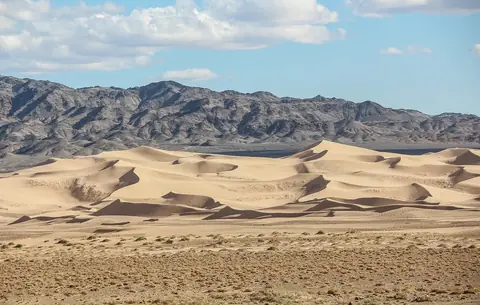
Four days and three nights cover it well, and Amicus Mongolia runs this plan as a private tour. Day 1: pick-up at 08:00 and 360 km, about 6 hours, to Kharkhorin, with lunch and an hour on a camel at the Elsen Tasarkhai dunes on the way, a strip of sand among hills, willows and streams, a small desert in the middle of the country; night in a camp near Erdene Zuu. Day 2: the Kharkhorum Museum and Erdene Zuu Monastery in the morning, then 125–136 km and 3–4 hours up the valley to the Orkhon Waterfall; night in a camp near the falls. Day 3: Tövkhön Monastery in the morning, a visit to a herding family, then on to Khogno Khan National Park, about 246 km and 6 hours in all; night in a camp there. Day 4: about 300 km in all: lunch at the Hustai tourist camp, its small ger museum, a short drive and walk to find the wild horses, then 2 hours to Ulaanbaatar, arriving at about 19:00. The tour leaves the park before the horses come down in the evening; add a night at Khustai's camp (below) for dusk and dawn.
If you are short of time, a single night in Kharkhorin still gives you Erdene Zuu and the museum without hurrying, but the waterfall and Tövkhön are another day's drive up the valley. A day trip from Ulaanbaatar means about 12 hours on the road for a few hours at the monastery. Without a tour, public buses from Ulaanbaatar's Dragon terminal reach Kharkhorin on the paved road for MNT 36,000 per adult plus MNT 1,400 insurance; with its stops, the bus takes longer than the 6 hours by car. In Kharkhorin, Erdene Zuu, the museum and the stone turtles are within walking distance of each other, but the waterfall and Tövkhön lie up the valley on tracks with no bus to the sights; they need a car and driver, which is why most visitors take a tour. Khustai and Khogno Khan charge the national park entry fee in tögrög at the gate. Our budgets include the national park fee at MNT 15,000 per foreign visitor. The tours in this guide include it. Our 10-day itinerary comes to Kharkhorin from the Gobi instead, at the end of a longer loop.
Erdene Zuu and the old capital at Kharkhorin
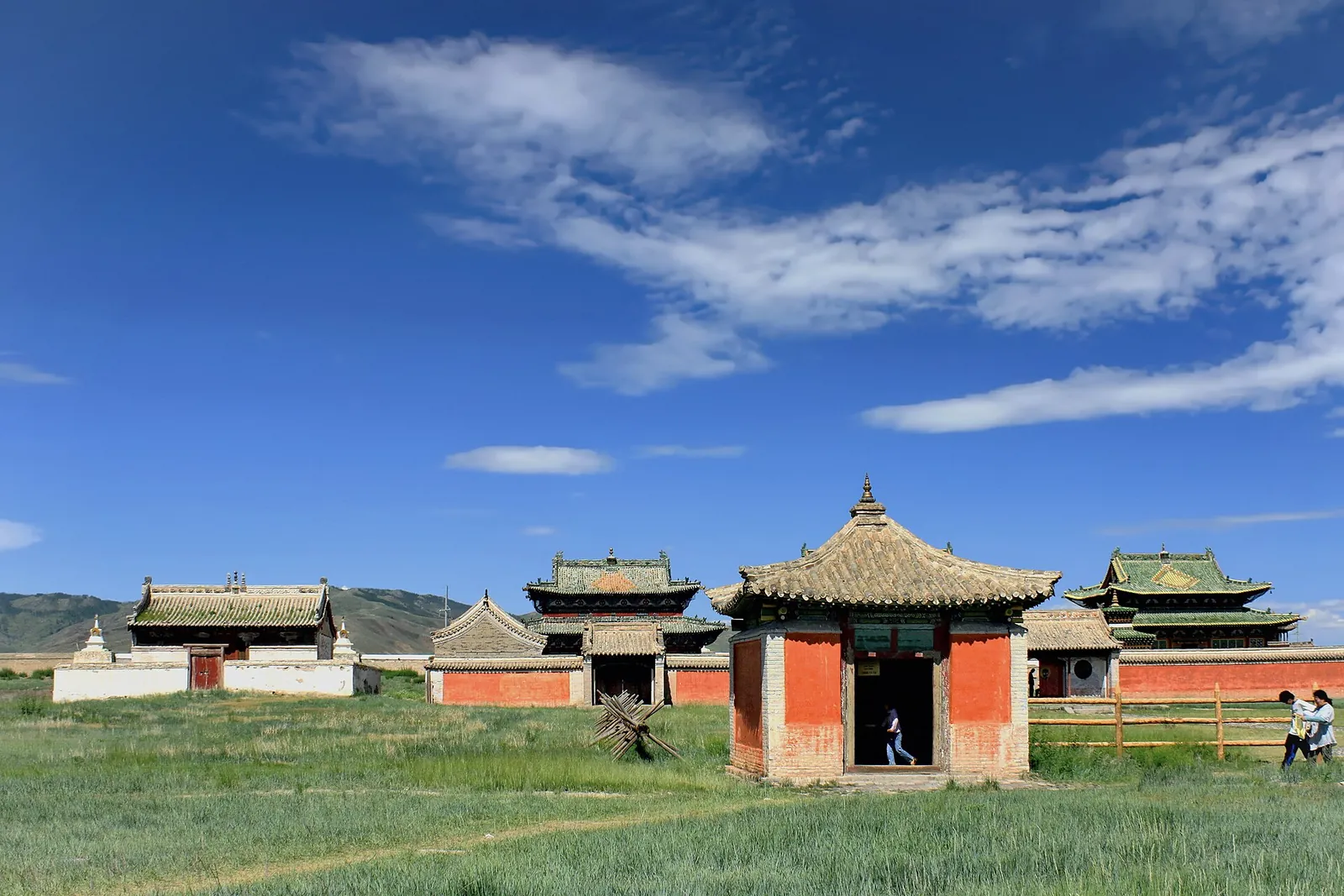
Erdene Zuu Monastery was founded in 1586 by Abtai Sain Khan, a descendant of Chinggis Khaan, beside the ruins of Kharkhorum, and it was the first Buddhist monastery in Mongolia. Its white wall, about 400 m a side with four gates and crowned with 108 stupas, encloses a vast grassy courtyard where a few temples, their green-tiled roofs bright against the steppe, survived the purges of 1939. Since 1965 it has been a state museum of religious history, with exhibits in eight temples and an exhibition hall, and it is a working monastery too, with 25 lamas: come in the morning and you may hear them chanting.
The heart of the monastery is the Gurvan Zuu, the three temples raised in Chinese style in 1585-86 with bricks and stones from the ruins of Kharkhorum. They stand in a row facing east, with Buddhist statues and wall paintings inside and a corridor round the images for the pilgrims' circuit; in the western temple, the Buddha Sakyamuni sits among the images. Two of the stupas on the wall hold the remains of Abtai Khan and his son Gombodorj. Inside the courtyard, the small Dalai Lama temple dates from 1675, the lavrang or Lavrin temple, the residence of the reincarnate lama, from 1780, and the great golden stupa, Bodhi Suvraga, from 1799.
The museum part is open every day from 09:00 to 18:00 from 1 May to 30 September, and on working days from 09:00 to 17:00 from October to the end of April. Walk round the courtyard and the stupas clockwise, cover your shoulders and legs, take off your hat in the temples, and do not photograph during prayers or use a flash inside.
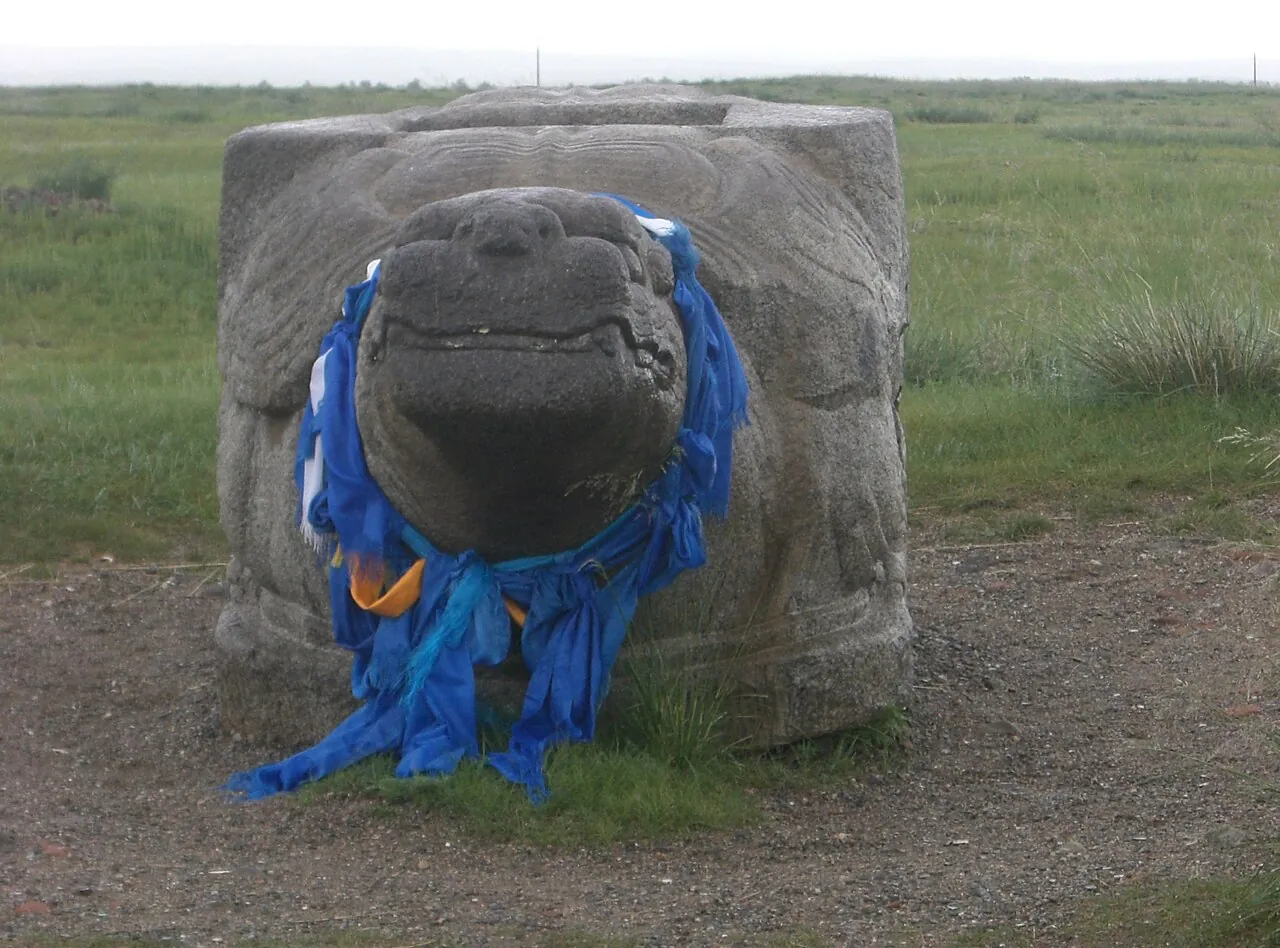
Of Kharkhorum itself little stands above the grass. Chinggis Khaan decreed a capital here in 1220, and his son Ögedei completed it in 1235; for a few decades it was the administrative centre of the Mongol Empire and a crossroads of trade between East and West. Materials from its ruins later went into Erdene Zuu. What survives in the open are the stone turtles: four granite turtles were set at the corners of the city in the 13th century as its guardians, and Mongolians still honour them, so you will find them draped in blue scarves.
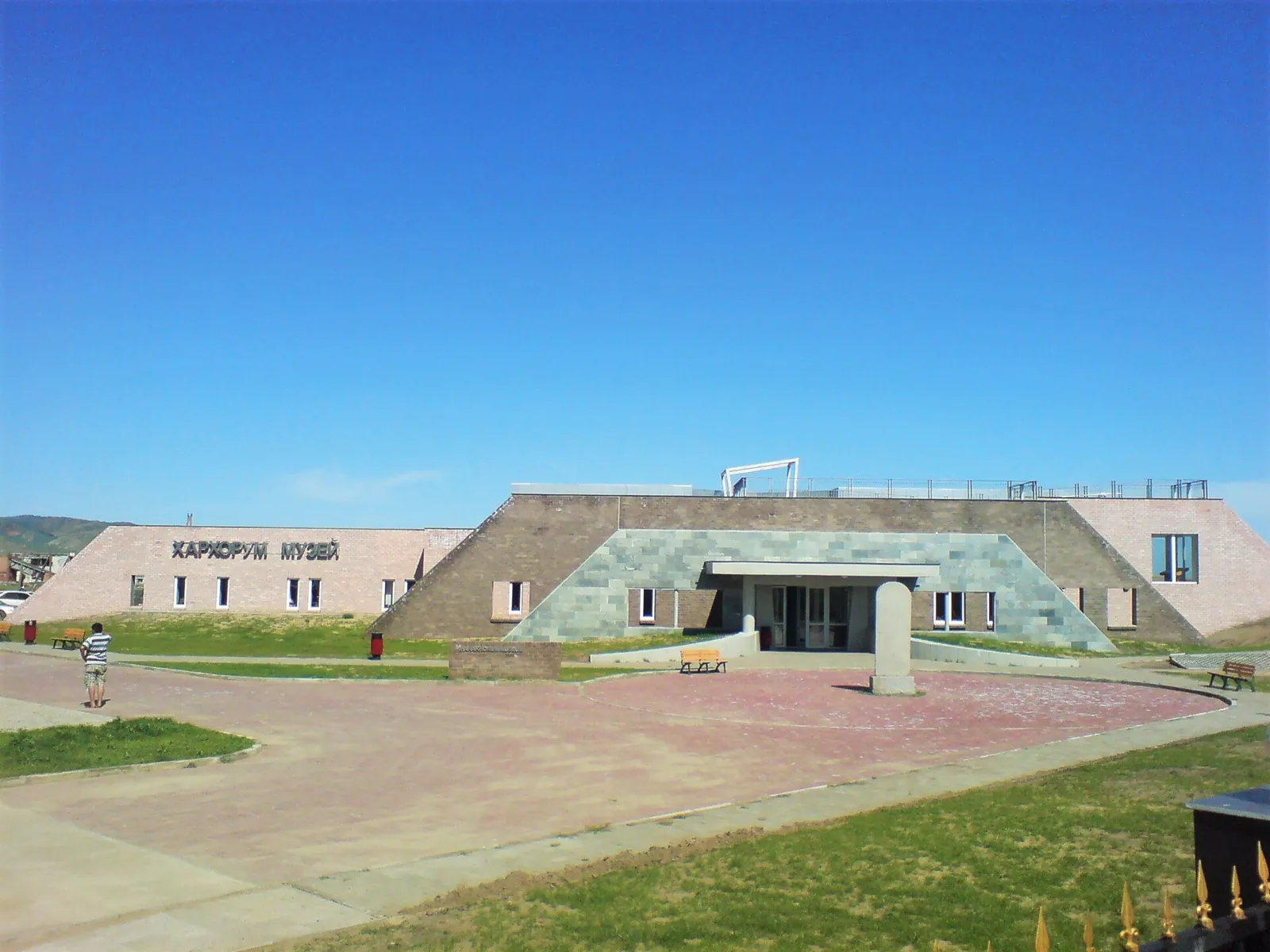
The Kharkhorum Museum, opened on 4 June 2011, keeps the finds from the old capital and the World Heritage valley around it in permanent and temporary halls, and its outdoor grounds hold a centre for traditional Mongolian games. It is open every day from 09:00 to 18:00 from 1 April to 30 September, and on working days from 10:00 to 17:00 from October to March. Neither the museum nor Erdene Zuu publishes its admission price online; tour packages include both, and on your own you pay in tögrög at the door.
Older than Kharkhorum are the stones at Khöshöö Tsaidam, north of Kharkhorin in Khashaat district of Arkhangai province: the memorials of Bilge, khan of the Turkic Khaganate, and his younger brother, the general Kul Tegin, are part of the World Heritage landscape. A museum beside them, opened on 28 June 2011, keeps and shows the finds of the Turkic Khaganate; it opens daily from 09:00 to 18:00 from May to September and on working days from 09:00 to 17:00 in winter. The second imperial capital of the valley is Khar Balgas, Khan Balyk, which the first Uyghur khan founded around 751 as the capital of the Uyghur Khaganate, a state that lasted from 745 to 840. The four-day loop includes neither.
The Orkhon Waterfall and the upper valley
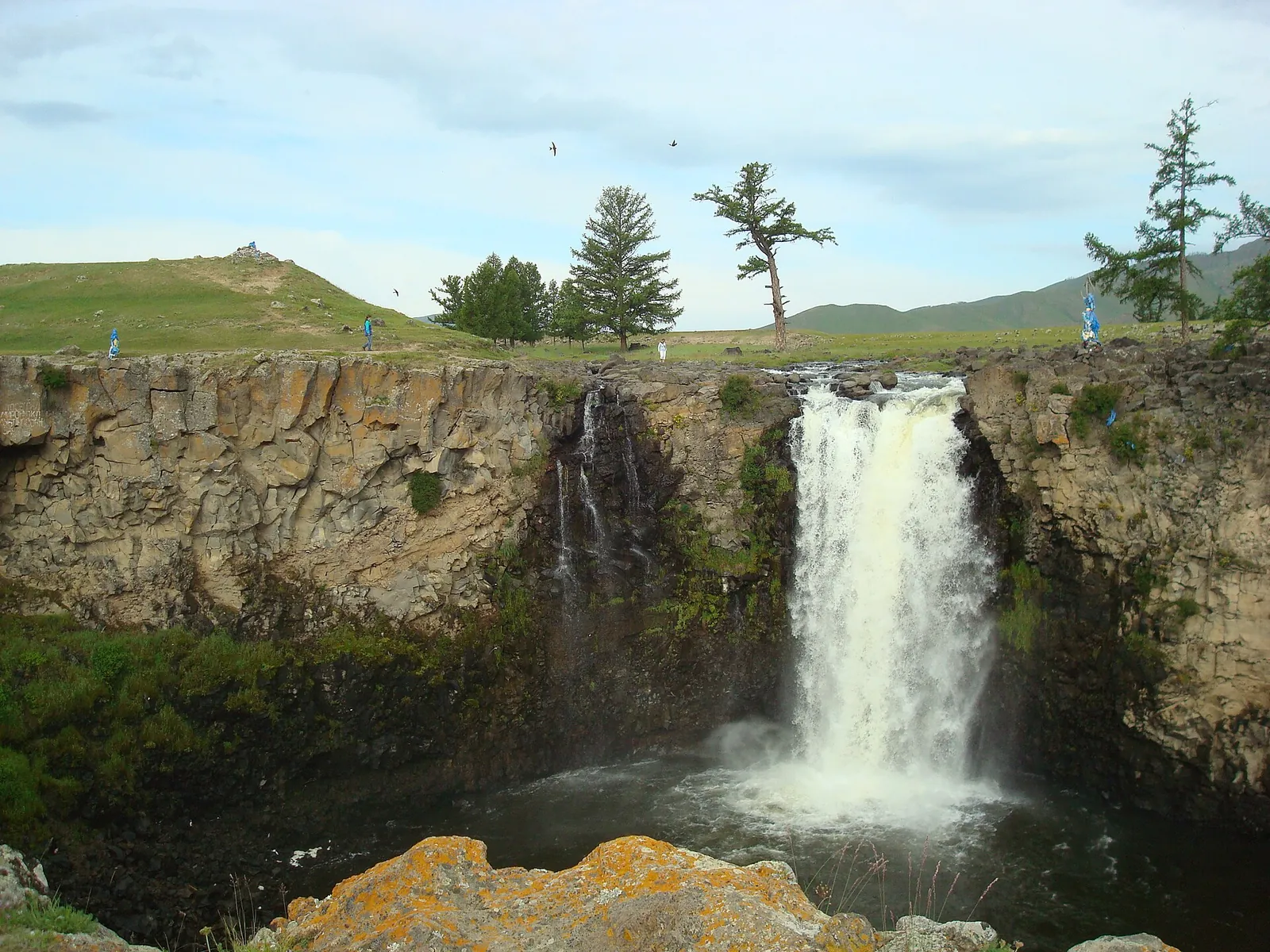
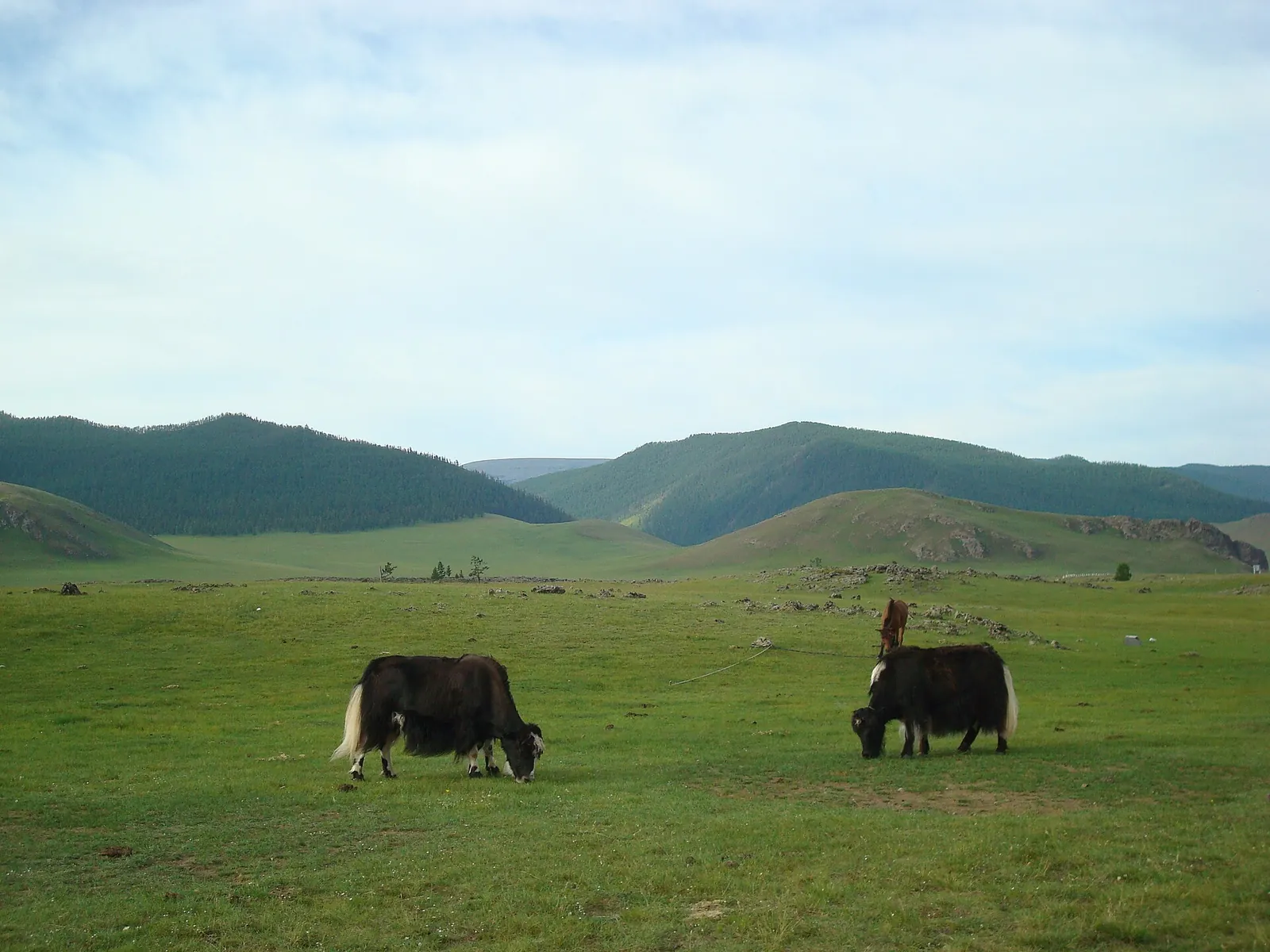
Upstream from Kharkhorin the valley floor is old lava, and the road turns to track. The Orkhon Waterfall (Ulaan Tsutgalan) is where the Ulaan River drops over a lava cliff into the Orkhon, half a day's drive up the valley from Kharkhorin; the last 30 km, beyond the village of Bat-Ölzii, are bumpy and muddy, with several streams to ford. Below the falls a trail leads about 250 m downstream into a canyon 22 m deep and dotted with pines, and the open valley around it is grazing land, full of herders and their animals.
The falls are not always full: in some dry summers the flow shrinks, and in winter they freeze into a wall of ice. The camps nearby are simple guest gers and basic camps: Orkhon Camp, on the river 7 km from the falls, lists a double or twin ger at USD 40 a night, with a restaurant and bar and solar-heated showers. If you prefer more comfort, stay in Kharkhorin and see the falls in a long day trip. An hour on horseback up the Ulaan River valley is the classic afternoon here. French travel advice strongly recommends a riding helmet and back protection.
Tövkhön Monastery
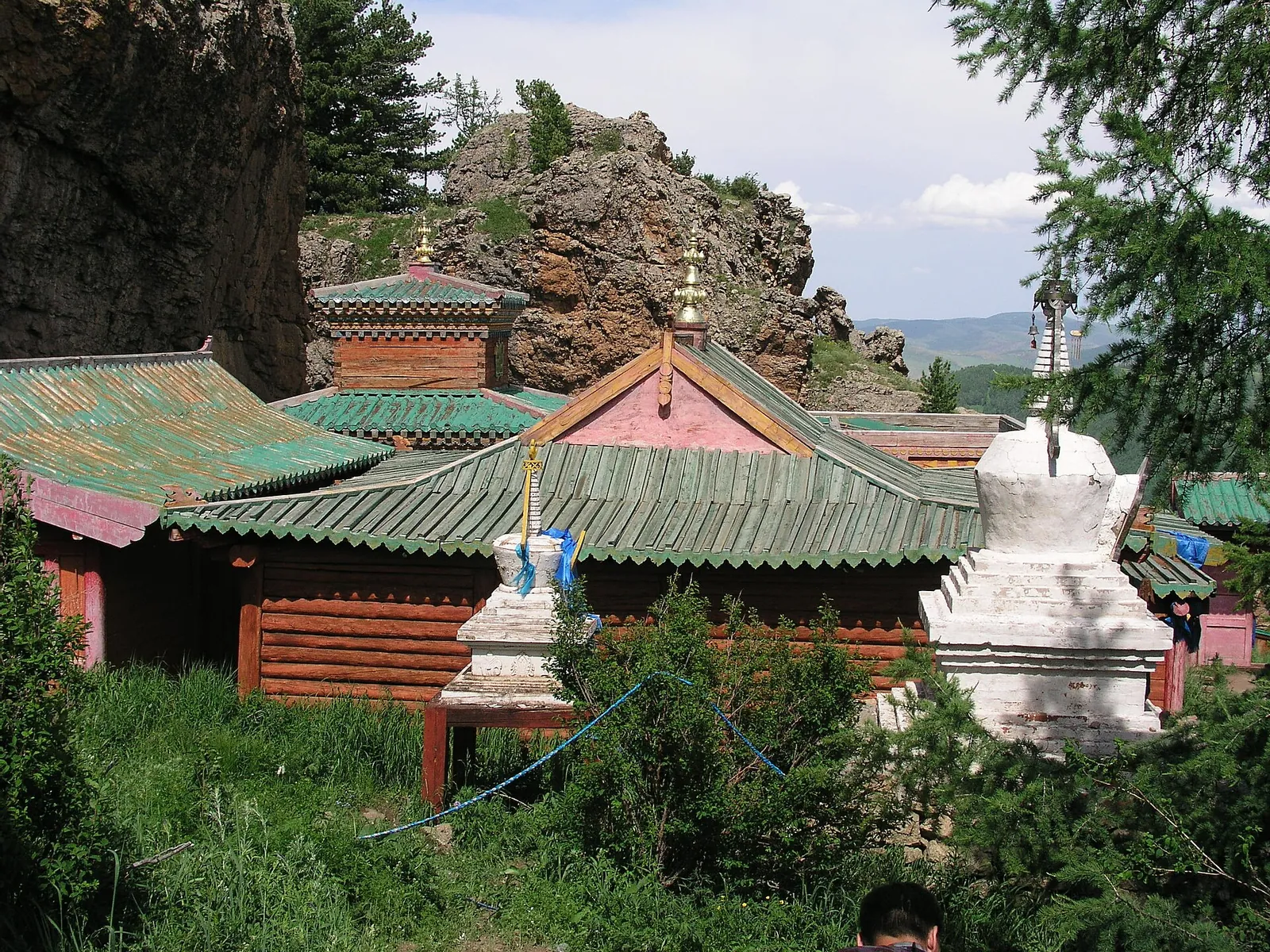
Tövkhön is the most atmospheric place in the valley: a cluster of small temples and stupas on a forested crag at about 2,000 m, in Bat-Ölzii district. Zanabazar came here in 1648 at the age of 14 and in 1651 built a small stone-walled house for meditation, called Dubkhan, a place for creative work, a name that became Tövkhön. Today there are four temples, two stupas and monks who live here all year, as well as the caves where he meditated, a footprint said to be his on the rock, and rock formations called the womb and the cradle, symbols of rebirth.
Cars stop at the foot of the mountain, and the walk up through the conifer forest and back takes about 2.5 hours, plus time at the top; a sturdy 4x4 can drive the steep track in about 20 minutes, or you can hire a horse. From the waterfall it is about 60 km and 2 hours on dirt; Tövkhön is the morning of the third day, before the long run east. With a fourth night, turn west instead to the Tsenkher hot springs, 120 km and about 3 hours on dirt from Tövkhön, where water of about 36–40°C fills the open-air pools of the ger camps; Travel Gobi Mongolia's six-day tour of central Mongolia adds them, with Khorgo-Terkh National Park, for USD 1,430 per person for two in tourist ger camps.
Khogno Khan: the third night
Khogno Khan National Park, where the four-day loop spends its third night, packs rocky mountains, semi-desert, sand dunes and steppe into one small area, three natural zones side by side. The tour stops on the way in at Övgön Monastery, whose ruins lie at the southern foot of Khogno Khan mountain: the monastery was built in 1660 and later destroyed, its monks killed, by the army of Galdan Boshugtu (1644-1697), the Dzungar ruler and rival of Zanabazar who invaded the Khalkha lands in 1688. After the long drive from Tövkhön, the granite slopes above the ruins are the place for an evening walk, for wildlife and for photographs in the low light, with the night in a tourist camp in the park. At the foot of Khogno Khan and Bat Khan mountains lie the small dunes of Elsen Tasarkhai, the "piece of sand" where you rode camels on the first day.
Khustai National Park and the takhi
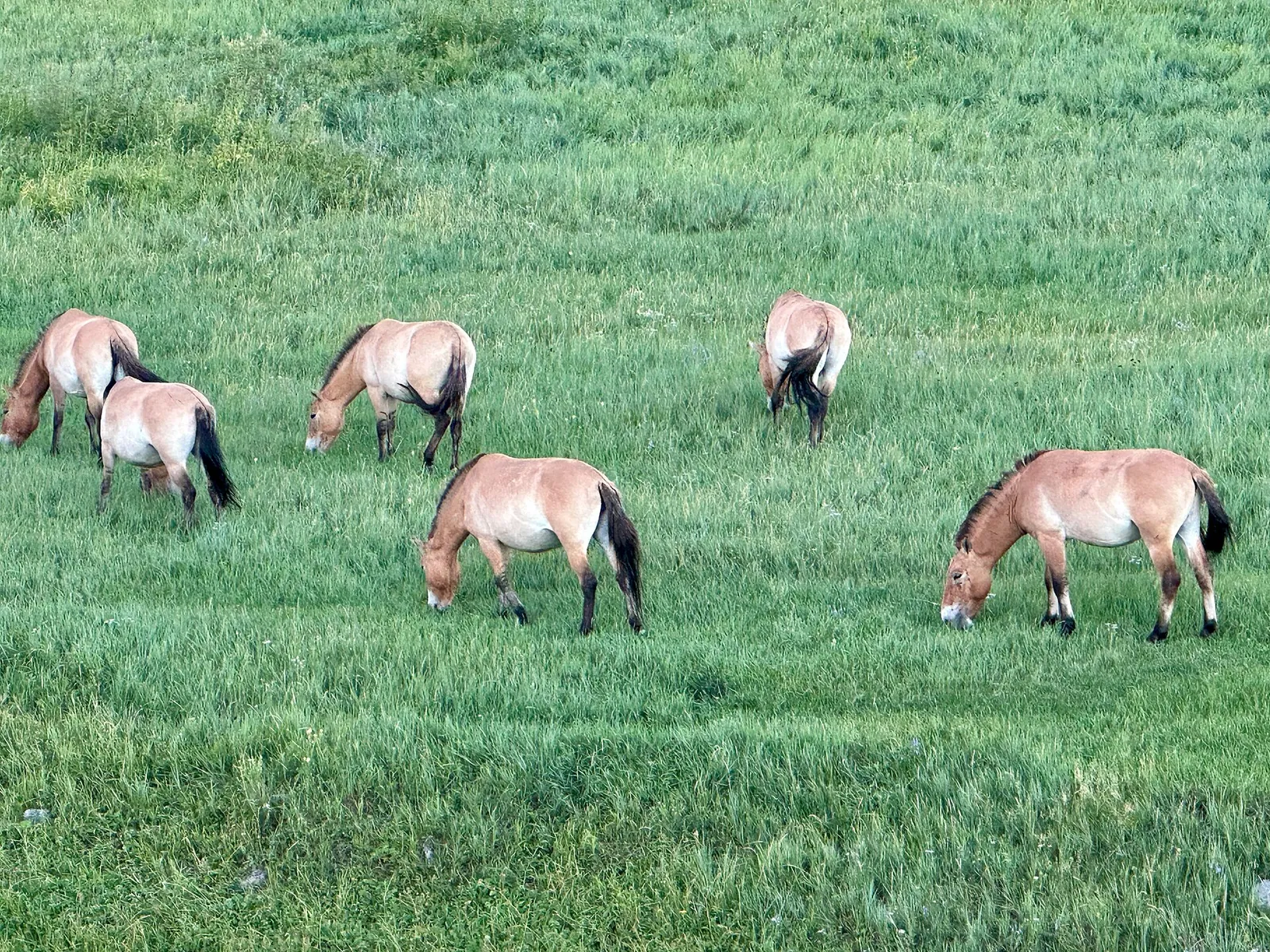
Khustai National Park, about 2 hours' drive west of Ulaanbaatar, exists because of one animal: the takhi, or Przewalski's horse, the last wild horse, which was listed as extinct in the wild in 1969. Reintroduction began here in 1992; Khustai became a nature reserve in 1993 and a national park in 1998, and it now covers more than 50,000 hectares and has the largest population of Przewalski's horses living in the wild. Their success is why the species was moved back to endangered in 2011. Stocky, dun-coloured, with an upright black mane, they look like a cave painting come to life.
Your best chance is the late afternoon: Amicus suggests 2–3 hours before sunset, when the horses come down from the hills to drink. The park runs two drives from its tourist camp, a shorter trail of about 36 km for takhi, marmots, red deer and birds of prey and a longer one of about 80 km past deer stones and ancient tombs; a small ger museum at the camp explains the reintroduction. The park's rules are strict: no driving off the tracks or making new ones, no closer than 300 m to the takhi or other wildlife, no shouting, and no more than 40 km/h, with fines of MNT 300,000 to MNT 5 million under the law on offences.
The park's own Hustai tourist camp, 82 km west of Ulaanbaatar, has 35 gers of two to four beds, a shower and toilet block and a restaurant for 100 in summer; it takes guests in winter too, on a smaller scale. A night here lets you see the horses at dusk and dawn, which the four-day plan does not.
Where to stay in the valley
In Kharkhorin, camps and guesthouses line the edge of town and the main road; the heritage administration's list includes Asa Land Resort and Gaya's Guest House, and Amicus puts its guests in a camp near Erdene Zuu. Tour packages choose and pay for the camp; in a standard ger the toilets and hot showers are in a separate building nearby. By the waterfall, Orkhon Camp's double or twin ger at USD 40 a night is the one published room price in the upper valley.
Near Kharkhorin, the comfortable option is RAHM Orkhon Valley Ger Camp, seven felt gers with wood stoves a short drive from Kharkhorin, open from June to August by request, from USD 500 per ger per night for two with breakfast, lunch and dinner in a shared dining ger, hot water and shared bathrooms, and horses from the neighbouring families. RAHM offers Tövkhön and the waterfall as day trips from it, though the falls make a long day. At the foot of Tövkhön, the heritage administration lists the camp Out of Now Here (Ursa Major).
Your camp registers your stay with the immigration authority, and our entry guide covers visas.
Seasons, herders and health
The valley is at its best from June to August, when the grass is green, the camps are open and the herders are milking their mares for airag; Erdene Zuu and the Kharkhorum Museum stay open on weekdays through the winter and the Khustai camp takes guests, but RAHM's camp is taken down. The heritage administration counted 95,027 visitors to the valley in 2025, up from 69,332 in 2024.
When you visit a herding family, enter the ger without stepping on the threshold, move to the left (clockwise), and accept tea, food or a bowl of airag with your right hand. Keep away from dogs and wild animals: German travel advice notes that rabies is endemic in Mongolia.
Outside Ulaanbaatar, travel with a licensed operator's driver and guide: distances are long, many roads are unpaved tracks, and there is no mobile signal in large areas. German travel advice is to avoid overland driving after dark. Fuel shortages may affect domestic flights and road travel, so keep a spare day before your flight home. Medical care outside Ulaanbaatar is limited and hospitals may ask for most of the cost up front, so take insurance that covers evacuation and repatriation.
What to eat and where to look
Airag
Fermented mare's milk, slightly sour and mildly alcoholic, made in summer when the mares are milked several times a day and churned in a leather bag; offered to guests as a sign of welcome.
- Where to look
- The herding family on day 3, between the waterfall and Tövkhön; in June to August most families in the valley are making it.
- Fit it into your day
- A small bowl with the family on day 3.
France advises avoiding unpasteurised milk and raw or undercooked meat; airag is made from raw milk, so drink it only if you choose to, and a sip is polite enough.
Suutei tsai
Salty milk tea of brick tea boiled with milk and salt, the first thing a family offers anyone who comes into the ger.
- Where to look
- The same herding family on day 3, and every camp breakfast table.
- Fit it into your day
- With the family on day 3.
Khorkhog
Mutton or goat cooked in a sealed metal container with stones heated in the fire and vegetables, so the meat steams in its own juices; a dish for gatherings.
- Where to look
- Ordered in advance at a camp, or cooked by a herding family for a gathering: ask your operator for it when you book.
- Fit it into your day
- Dinner on day 2 by the waterfall, if ordered ahead.
Buuz
Steamed dumplings of minced mutton or beef with onion, seasoned with little more than salt; eat them with your fingers and sip the juice first.
- Where to look
- Kharkhorin, where the first camp dinner is part of the package; camp kitchens serve Mongolian dishes alongside European ones.
- Fit it into your day
- Dinner on day 1.
Tsuivan
Noodles fried with meat and vegetables, the everyday dish of Mongolian homes and canteens.
- Where to look
- A guanz, the plain canteen of Mongolian towns and roadsides, in Kharkhorin town or on the main road west; tsuivan is one of its staples, with buuz and khuushuur.
- Fit it into your day
- A lunch stop on the drive, ordered from the canteen's menu.
What four days in the Orkhon Valley cost
| | Per person | For two | | --- | ---: | ---: | | Four days and three nights, on the ground | about MNT 5,000,000 (USD 1,390) | about MNT 9,990,000 (USD 2,780) | | Return flight from London (example) | about GBP 800–850 (about MNT 3,830,000–4,070,000) | about GBP 1,600–1,700 (about MNT 7,670,000–8,150,000) | | With the London flight | about MNT 8,830,000–9,070,000 | about MNT 17,660,000–18,140,000 |
The model is two adults sharing a ger on the four-day private tour above, in summer, with prices checked on 29 October 2026 (rows rounded to MNT 10,000). Amicus charges USD 1,240 per person for two, which includes the private guide and driver with the car, three nights in tourist camps on a twin-share basis, three breakfasts, four lunches and three dinners, all entrance fees in the itinerary, the hour on a camel, drinking water and taxes; Ulaanbaatar hotels, tips and insurance are extra. On top comes dinner after you return, priced at Modern Nomads' menu in Ulaanbaatar (breakfast on day 1 is at your Ulaanbaatar hotel, priced with your nights there), a 10-day Unitel tourist SIM each (MNT 30,000 with the card), and eight 1.5-litre bottles of water bought in Ulaanbaatar at MNT 1,928. The 10% buffer covers tips and drinks at the camps. USD is converted at the Bank of Mongolia's rate of USD 1 = MNT 3,599.08 for 29 October 2026.
| For two, in MNT | Amount |
|---|---|
| Private tour: car, driver, guide, three camp nights, meals and fees | 8,930,000 |
| Dinner in Ulaanbaatar on the way back | 70,000 |
| Two SIM cards and extra water | 80,000 |
| Subtotal | 9,080,000 |
| 10% buffer | 910,000 |
| Total for two (about) | 9,990,000 |
The London flight is an example: Turkish Airlines' economy returns via Istanbul for November and December 2026 dates were about GBP 800–850 per person; summer fares open later, and pounds are converted at the European Central Bank's reference rates for 29 October 2026. Add at least one Ulaanbaatar night on arrival and one before the flight home: our Ulaanbaatar guide prices those nights, and the trip cost guide a whole 10-day trip.
Practical questions
How many nights do I need for Kharkhorin and the Orkhon Valley?
Three nights on a four-day loop: Kharkhorin, the Orkhon Waterfall and Khogno Khan, with Tövkhön on the way and Khustai on the drive back. One night in Kharkhorin is enough for Erdene Zuu and the museum alone.
Can I visit Kharkhorin as a day trip from Ulaanbaatar?
Not well: it is 360 km and about 6 hours each way. Stay at least one night.
What are Erdene Zuu's opening hours?
Every day from 09:00 to 18:00 from 1 May to 30 September; on working days from 09:00 to 17:00 from October to the end of April.
How far is the Orkhon Waterfall from Kharkhorin?
125–136 km and 3–4 hours by car, the last 30 km on a bumpy track with stream crossings (View Mongolia).
Is there always water in the Orkhon Waterfall?
No. The flow shrinks in some dry summers, and the falls freeze in winter.
When can I see the wild horses at Khustai?
Late afternoon, 2–3 hours before sunset, when the takhi come down to drink; the four-day tour passes earlier, so stay a night at the park's camp for dusk. Keep at least 300 m from them, as the park requires.
How much does a four-day Orkhon Valley tour cost?
Amicus charges USD 1,240 per person for two for a private four-day tour with camps, meals and fees; all in, about MNT 5,000,000 per person.
Keep planning your trip
Gobi Desert
How to see the South Gobi: the six-day loop to Tsagaan Suvarga, Bayanzag, Khongoryn Els and Yolyn Am, drive times, camps, the fly-in option and what it costs.
Read the guide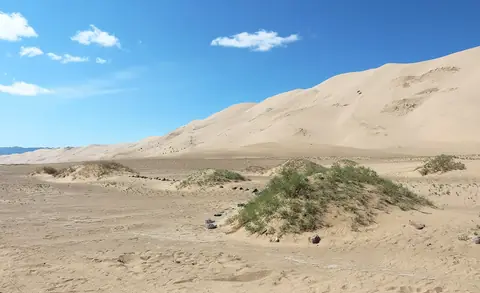
Mongolia in ten days
Three nights in Ulaanbaatar, a Terelj day and a six-camp loop through the Gobi to Kharkhorin with a private driver and guide: drive times, camps and an all-in budget.
Read the guide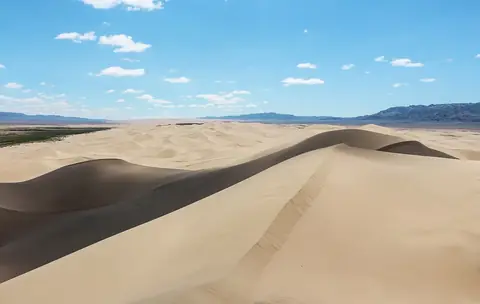
Mongolia in fourteen days
A Gobi and Orkhon Valley road loop with a private driver-guide, two nights at Lake Khövsgöl by domestic flight and a Terelj day: drive times, camps and an all-in budget.
Read the guide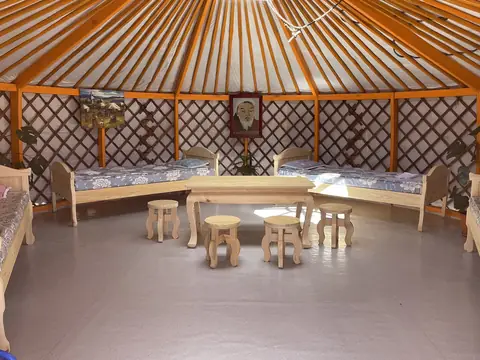
Ger stays in Mongolia
Ger camp or herding family? What a night in a ger includes, from bathrooms, stoves and meals to etiquette, with priced camps near Ulaanbaatar and on the Orkhon route.
Read the guide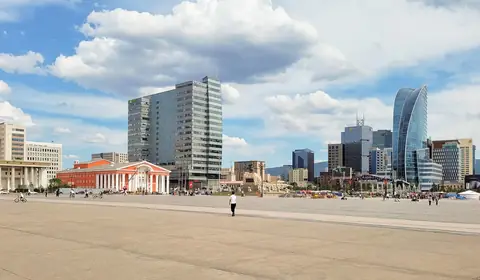
Ulaanbaatar
How many nights Mongolia's capital needs: Sükhbaatar Square, the Chinggis Khaan museum, Gandan and Choijin Lama temples, the Bogd Khan Palace, hotels and costs.
Read the guide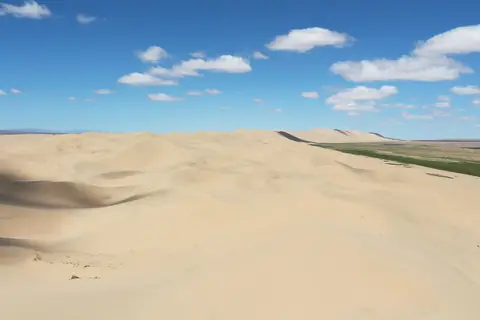
Mongolia trip cost
Ten days in Mongolia for two, all in: about MNT 6.76 million per person on a group tour, MNT 10.28 million on a private tour or MNT 12.93 million in comfort.
Read the guideSources and checks before you travel
(46)
- Orkhon Valley World Heritage site administration: the World Heritage site ↗ — opens in a new tab
- Orkhon Valley World Heritage site administration: must-see monuments ↗ — opens in a new tab
- Orkhon Valley World Heritage site administration: Erdene Zuu Museum ↗ — opens in a new tab
- Orkhon Valley World Heritage site administration: Kharkhorum Museum ↗ — opens in a new tab
- Orkhon Valley World Heritage site administration: tourist camps ↗ — opens in a new tab
- Orkhon Valley World Heritage site administration: tourism ↗ — opens in a new tab
- Erdene Zuu Monastery ↗ — opens in a new tab
- Mongolia Short Tours (Amicus Mongolia): 4-day central Mongolia tour ↗ — opens in a new tab
- Mongolia Short Tours: about ↗ — opens in a new tab
- Travel Gobi Mongolia (licensed operator): All Bests of Central Mongolia ↗ — opens in a new tab
- Travel Gobi Mongolia: Gobi and central Mongolia overland tour ↗ — opens in a new tab
- View Mongolia (operator): Ulaan Tsutgalan waterfall ↗ — opens in a new tab
- Hustai National Park: brief history ↗ — opens in a new tab
- Hustai National Park: results of protection ↗ — opens in a new tab
- Hustai National Park: location ↗ — opens in a new tab
- Hustai National Park: tour programme ↗ — opens in a new tab
- Hustai National Park: tourist resort ↗ — opens in a new tab
- Hustai National Park: prohibited activities ↗ — opens in a new tab
- RAHM Hospitality: Orkhon Valley Ger Camp ↗ — opens in a new tab
- Nomadic Journeys (operator): dos and don'ts in Mongolia ↗ — opens in a new tab
- Discover Mongolia (operator): traditional food and beverage ↗ — opens in a new tab
- Nomad Mongolia (operator): Mongolian foods ↗ — opens in a new tab
- Modern Nomads: menu (Metro Mall branch) ↗ — opens in a new tab
- Nomin: Bonaqua water 1.5 l ↗ — opens in a new tab
- Unitel: tourist SIM plans ↗ — opens in a new tab
- Chinggis Khaan International Airport: official taxi ↗ — opens in a new tab
- National Road Transport Centre: Ulaanbaatar-Kharkhorin bus tariff ↗ — opens in a new tab
- Man of Millennium (licensed operator): ger camps ↗ — opens in a new tab
- Bank of Mongolia: exchange rates ↗ — opens in a new tab
- Immigration Agency of Mongolia: 48-hour registration ↗ — opens in a new tab
- UK FCDO: Mongolia travel advice ↗ — opens in a new tab
- UK FCDO: Mongolia health ↗ — opens in a new tab
- German Federal Foreign Office: Mongolia travel and safety advice ↗ — opens in a new tab
- France Diplomatie: Mongolia security advice ↗ — opens in a new tab
- France Diplomatie: Mongolia health advice ↗ — opens in a new tab
- Orkhon Valley World Heritage site administration: Khöshöö Tsaidam Museum ↗ — opens in a new tab
- View Mongolia (operator): Tövkhön Monastery ↗ — opens in a new tab
- Orkhon Camp (Orkhon Tours Mongolia): the camp ↗ — opens in a new tab
- European Central Bank: euro foreign exchange reference rates ↗ — opens in a new tab
- Mongolian Travel: Övgön Khiid ↗ — opens in a new tab
- Protected areas administration: entry fee notice, January 2025 ↗ — opens in a new tab
- Lonely Planet: Övgön Khiid ↗ — opens in a new tab
- Wikipedia: Galdan Boshugtu Khan ↗ — opens in a new tab
- Goyo Travel: Ulaanbaatar uncovered ↗ — opens in a new tab
- Nomadays (Horseback Mongolia): Erdene Zuu Monastery practical guide ↗ — opens in a new tab
- Wikipedia: Erdene Zuu Monastery ↗ — opens in a new tab
Reference sources for the version dated 3 November 2026. Confirm opening times, access, transport and conditions for your travel dates.
Photo credits
(7)
Erdene Zuu Monastery, Kharkhorin
Photograph: Marcin Konsek — opens in a new tab · CC BY-SA 4.0 — opens in a new tab
Changes: Resized and converted to WebP; displayed with responsive crops. · Original photograph and licence details ↗ — opens in a new tab
The Orkhon Waterfall (Ulaan Tsutgalan) in the upper Orkhon Valley
Photograph: Arabsalam — opens in a new tab · CC BY-SA 4.0 — opens in a new tab
Changes: Resized and converted to WebP; displayed with responsive crops. · Original photograph and licence details ↗ — opens in a new tab
Grazing land in the upper Orkhon Valley near the waterfall
Photograph: Arabsalam — opens in a new tab · CC BY-SA 4.0 — opens in a new tab
Changes: Resized and converted to WebP; displayed with responsive crops. · Original photograph and licence details ↗ — opens in a new tab
Tövkhön Monastery on its forested crag
Photograph: Mongolia Expeditions… — opens in a new tab · CC BY 3.0 — opens in a new tab
Changes: Resized and converted to WebP; displayed with responsive crops. · Original photograph and licence details ↗ — opens in a new tab
Takhi (Przewalski's horses) in Khustai National Park
Photograph: Josep Renalias Lohen11 — opens in a new tab · CC BY 4.0 — opens in a new tab
Changes: Resized and converted to WebP; displayed with responsive crops. · Original photograph and licence details ↗ — opens in a new tab
One of the stone turtles of Kharkhorum near Erdene Zuu
Photograph: Brücke-Osteuropa — opens in a new tab · Public domain — opens in a new tab
Changes: Resized and converted to WebP; displayed with responsive crops. · Original photograph and licence details ↗ — opens in a new tab
The Kharkhorum Museum in Kharkhorin
Photograph: Batu — opens in a new tab · CC BY-SA 3.0 — opens in a new tab
Changes: Resized and converted to WebP; displayed with responsive crops. · Original photograph and licence details ↗ — opens in a new tab