Baa and South Ari (Alif Dhaal) atolls
Snorkelling and diving in the Maldives: mantas, whale sharks
Each year the south-west monsoon turns one small bay in Baa Atoll into a feeding ground. From about May or June to November, plankton gathers in Hanifaru Bay and manta rays come to feed, sometimes hundreds at once, spiralling through the water in feeding chains. In South Ari Atoll, whale sharks feed along the reefs of a marine protected area. This guide helps you choose between the two, explains the rules that protect both sites, and prices the packages, boats and flights from Velana airport.
In this guide
Find the location ↗ — opens in a new tabThe short answer
Book three nights on one island: Dharavandhoo in Baa Atoll for Hanifaru Bay's mantas, from about May or June to November, or Dhigurah in South Ari for whale sharks in any month. On Dharavandhoo, book Liquid Salt's Manta Madness package first: USD 720 per person sharing, with breakfast, the domestic flight and two Hanifaru snorkels, plus USD 45 a night for full board. On Dhigurah, book the room and the speedboat first (USD 66 per person each way), then two whale-shark trips at about USD 110 per person each with service charge and T-GST. All in, three nights cost about USD 2,090 for two on Dharavandhoo and about USD 1,510 for two snorkellers on Dhigurah.
- Suggested time
- 3 nights on one island
- Where to stay
- Dharavandhoo (Baa Atoll) for Hanifaru Bay, or Dhigurah (South Ari Atoll) for whale sharks
- Season and timing
- Hanifaru's manta season runs from about May or June to November, with the south-west monsoon; South Ari's whale sharks are the alternative outside it, and the mantas at Rangali Madivaru, in Ari Atoll, are seen from December to April.
Two bases: Dharavandhoo for Hanifaru, Dhigurah for whale sharks
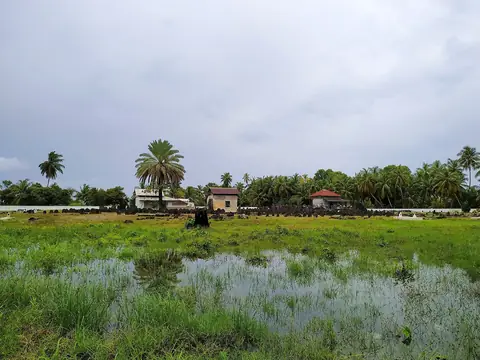
The Maldives' two best-known big-animal encounters sit in different atolls, about 180 km apart in a straight line, so connect through Velana International Airport (MLE) if you visit both. Pick one base for three nights rather than trying to do both from one island. Dharavandhoo, a guesthouse island in Baa Atoll with its own domestic airport, is the base for Hanifaru Bay and its manta rays. The island lies in the Baa Atoll UNESCO Biosphere Reserve, a short boat ride from the bay, and off its western side Dharavandhoo Thila, a protected pinnacle of corals and reef fish, has a manta cleaning station where 521 mantas had been recorded by 2020. Dhigurah, in South Ari Atoll, sits at the edge of the South Ari Marine Protected Area, the country's best-known whale-shark site. Visit Maldives singles out its beach, the Dhigurah thundi, a long stretch of white, powder-soft sand. Both are inhabited islands, so their rules apply: no alcohol, shoulders and knees covered in the streets and on the public beach, swimwear on the designated bikini beach, and nudity and topless sunbathing banned everywhere, resorts included.
On Dharavandhoo, Aveyla Manta Village is home to Liquid Salt Divers, which sells stays there as packages. Its three-night Manta Madness package is USD 720 per person sharing a Village Deluxe room and USD 820 in a Beach or Ocean Deluxe room, with breakfast, the return domestic flight from Malé and two manta snorkelling trips; Liquid Salt lists the 10% service charge, the 17% tourism goods and services tax (T-GST) and the USD 6 green tax among the inclusions, and sells full board at USD 45 per person a night on top. Kiha Beach, on the same island, lists its 30-square-metre Deluxe room for two, with a double or twin beds, from USD 180 a night.
On Dhigurah, Bliss Dhigurah lists its Deluxe room from USD 80++ a day with breakfast, a price it gives for single or double occupancy; "++" means the service charge and taxes are added. Whaleshark Beach, a 23-room guesthouse, starts its Superior Room with Balcony at USD 150 a night, and Sunwave Dhigurah its Deluxe Room with City View, for two adults as a double or twin, from USD 150 a night. On top of a room-only rate, guesthouses on inhabited islands with 50 or fewer registered rooms charge a service charge of at least 10%, the 17% T-GST and a green tax of USD 6 per person per day of stay (prices checked on 1 November 2026).
Hanifaru Bay: the manta feeding grounds and the rules in the water
Hanifaru Bay is a shallow, funnel-shaped reef bay on the eastern edge of Baa Atoll, part of the Hanifaru Marine Protected Area (protected since 5 June 2011) and of the Baa Atoll UNESCO Biosphere Reserve. During the south-west monsoon, strong lunar tides push plankton-rich water back into the atoll, and a reverse current traps it in the bay. The reef manta rays follow: the Maldives Manta Conservation Programme has identified more than 1,800 individuals here and counted up to 247 at once during a cyclone-feeding event, when the mantas spiral in a column through the plankton. Whale sharks feed here too. The environment ministry's protected-areas portal calls the bay a feeding and mating hub of the western monsoon.
When to go. Mass gatherings come from May to December, frequently but not on every tide, according to the Maldives Manta Conservation Programme; Liquid Salt and Aveyla sell their manta packages for June to November. Outside the season, book South Ari instead; our best-time guide sets the monsoons against each site.
How a trip works. Visits are short and decided on the day. The bay's rangers and the island's dive centres share news of feeding mantas, and the boats go when the animals are there: Dharavandhoo Divers says its Hanifaru trips are almost always spontaneous and cannot be scheduled in advance. Aveyla is about fifteen minutes by boat from the bay, and Liquid Salt Divers' Hanifaru Bay snorkelling trips take about one and a half hours in all. Hanifaru's visit fee is MVR 310 (about USD 20) per person per visit from 1 May to 1 December 2026, the rate the protected-areas portal lists for resort guests; the budget below assumes guesthouse guests pay the same. Baa Atoll's resorts send their own boats too: the action plan gives resorts, dive schools and guesthouses alternating days in the bay. Hanifaru is for snorkellers only: scuba diving is banned in the bay.
The rules in the bay. The government's Hanifaru Marine Protected Area Conservation Action Plan 2025-2030 sets them out, and five shape a visitor's day. Every group needs an access permit and an EPA-certified guide. At most 80 snorkellers may be in the water, each for up to 45 minutes. The bay is closed on Fridays from 12:00 to 14:00, on Hajj Day and on the first day of Ramadan, and from 18:00 to 06:00 every day. Drones, flash photography, selfie sticks and touching or chasing the animals are banned. And read the flags: green means calm or moderate conditions, yellow that the bay is full and red strong currents, while no flag does not mean safe water.
In the water, the Manta Trust's guidance is to slip in quietly at least 10 metres from a manta, never approach closer than 3 metres, let the animal come to you and never chase or touch it. Divers who want mantas in Baa go to Angafaru, a large oval reef nearby, where Dhigu Thila is a cleaning station for adult reef mantas in the south-west monsoon.
South Ari: whale sharks and the boats around them
The South Ari Marine Protected Area (SAMPA), 5,610.58 hectares of reef and lagoon in South Ari Atoll, has been protected since 5 June 2009. The environment ministry says its whale sharks can be seen there throughout the year, along with turtles, manta rays and several kinds of shark. Most are young males: Visit Maldives calls the park a secondary nursery for mostly juvenile males, and Maldives Whale Shark Research says sharks are not seen there again once they grow beyond 8 metres, the size at which they mature. Sightings are never certain; the guesthouses and dive centre on Dhigurah run whale-shark boat trips into the protected area. The protected-areas portal lists snorkelling and diving bookings in SAMPA at MVR 0 for guesthouse, resort and liveaboard guests: the boat, guide and gear are what you pay for. On Bliss Dhigurah's trips the boat usually leaves at 08:30 and is out for four to five hours. Much of that is quiet searching: the crew scan the water from height for a shadow or a dorsal fin, then wait their turn and drop swimmers to one side of the shark, and the swim itself may last under a minute or several.
The national whale-shark interaction rules are in Regulation 2024/R-96, summarised by Visit Maldives Corporation in October 2024; SAMPA also has its own management plan, consolidated through the third amendment on 6 September 2026. Stay at least 3 metres from the body and 4 metres from the tail, approach calmly from the side, and never touch, hold on, chase, block the animal's path or feed it. Flash photography, selfie sticks and bright lights are restricted, and drones must fly at least 30 metres above the sea within the pilot's line of sight. Within SAMPA, at most six boats, the ranger's included, may be in the 250-metre zone around a shark, and they must slow right down and keep at least 15 metres from it. Visits need an access permit, and whale-shark snorkelling groups need at least one registered SAMPA guide for every six guests. Snorkelling and freediving run from 06:00 to 18:00, with no more than 60 people in the contact zone and a 15-minute limit in the water when others are waiting. Scuba diving is prohibited where whale-shark snorkelling boats are operating and in their active contact zone.
Boats are the main risk here. The UK Foreign Office's travel advice reports fatal propeller accidents in SAMPA and at nearby whale-shark sites, and says the rule requiring propeller guards is not yet fully enforced. The SAMPA plan gives boats until 31 December 2026 to fit propeller guards; after that date, only boats with jet engines or guards may operate there for snorkelling or diving. Other governments may draw a wider line, so check your own government's advice. Choose an operator that briefs you on how its boat drops and picks up swimmers, stay well away from every hull and propeller in the water, and follow the crew's instructions.
Fari Dive Center Dhigurah runs manta snorkelling trips to a cleaning station (half a day, about three hours, equipment included) and two-hour turtle snorkels, and lists a two-hour dolphin cruise at USD 70 per person. Whale-shark trips are sold by the guesthouses on Dhigurah. Loft Maldives, a guesthouse on the island, sells places on a four-hour shared whale-shark boat from USD 85 per person, which sails once at least six guests have booked; with 10% service charge and 17% T-GST, that is about USD 110 per person per trip, the figure the budget below uses. A shark is never certain on one trip, so the budget books two. On Maamigili, the South Ari island with the domestic airport, Vilu Residence sells a shared whale-shark trip of about two and a half hours, also at USD 85 per person, gear included, for at least two guests; if no shark is found, the boat stops at a reef for about 30 minutes of snorkelling.
Elsewhere in Ari Atoll, adult reef mantas gather from December to April at the Rangali Madivaru cleaning station in Rangali Kandu, the channel at the south of the atoll, a site the conservation programme describes as a favourite with divers.
House reefs and snorkelling from a guesthouse island
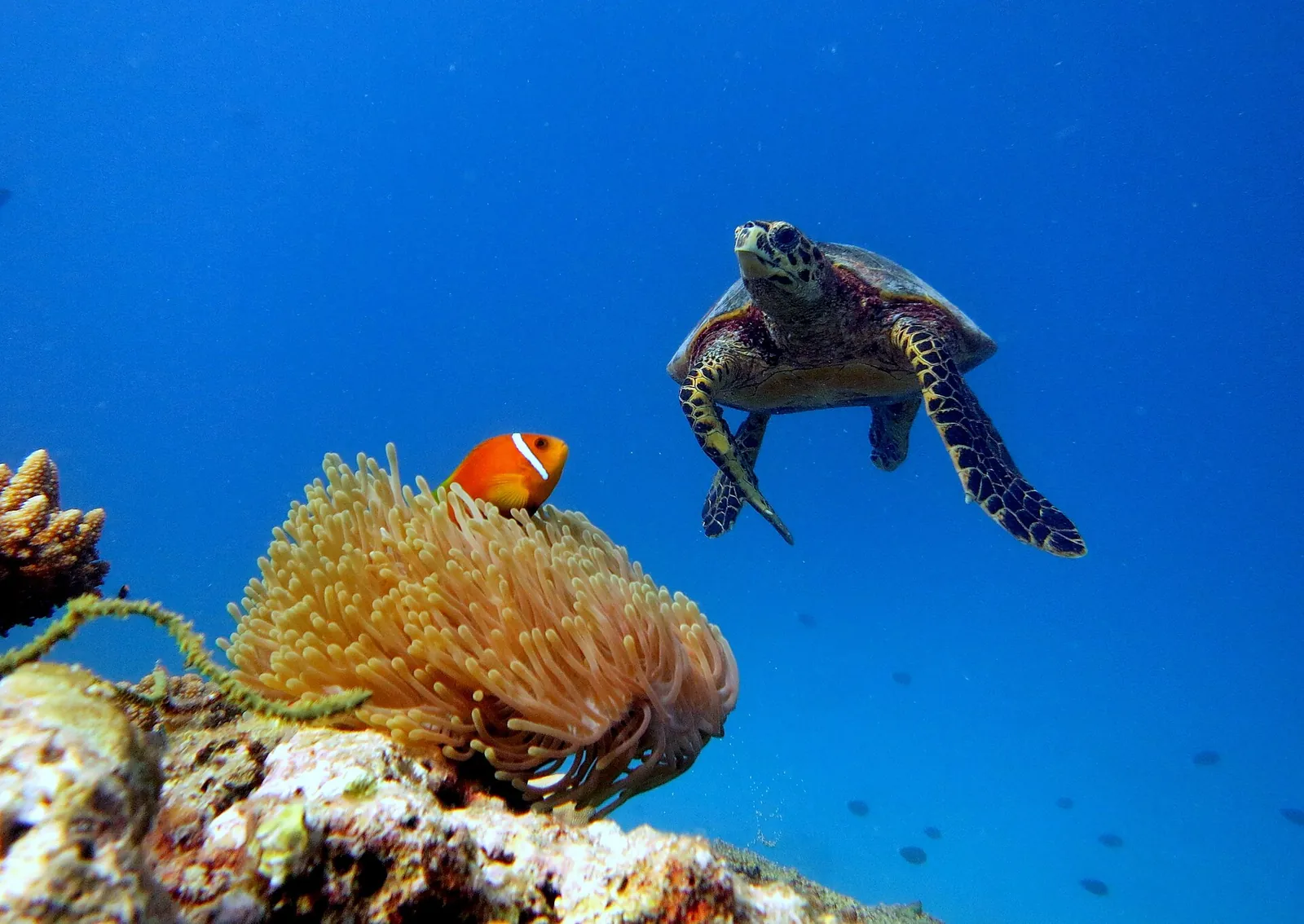
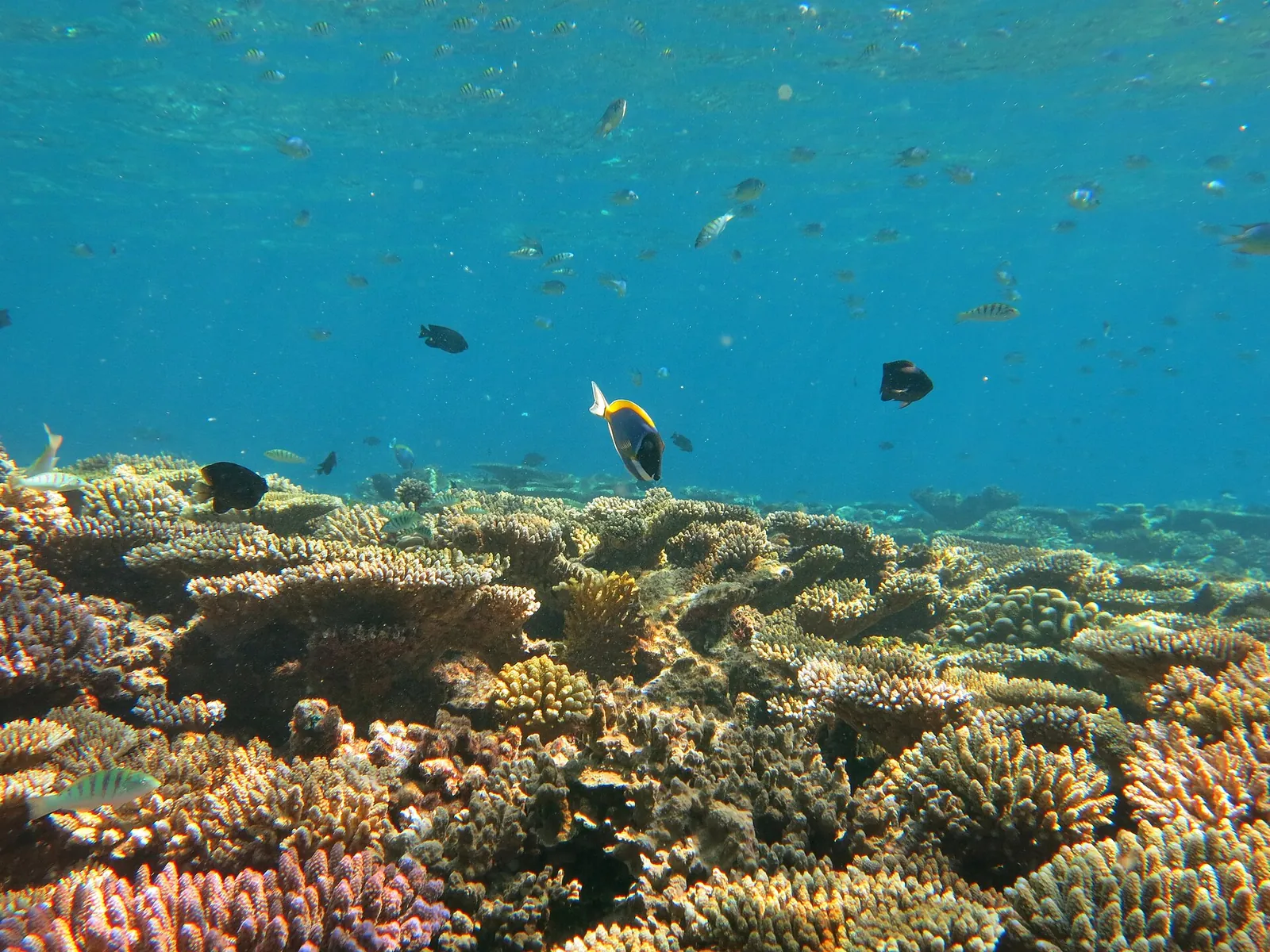
Between the big trips, you can explore the reef off your own island when conditions allow. Aveyla describes snorkelling on Dharavandhoo with reef access directly from the shore, and on Dhigurah Bliss rents canoes and paddleboards for exploring the shoreline, out to a manta spot near the island. Most other reef trips from a guesthouse island are short boat outings: on Dharavandhoo, Liquid Salt runs turtle snorkelling trips of one to two hours, a two-hour night snorkel and a sandbank trip. Closer to the airport, juvenile reef mantas feed from May to November in Guraidhoo Falhu, a sheltered lagoon in South Malé Atoll, according to the Maldives Manta Conservation Programme; for reef trips from the islands near Malé, see our Maafushi guide and local islands guide. At a resort, the house reef and the resort's own boat trips take the place of these outings: LUX* South Ari Atoll, a short boat ride from Dhigurah, runs a three-hour whale-shark trip for up to 18 guests at USD 155 per adult.
The currents around the atolls are strong and visitors often underestimate them. Swim only where it is supervised, designated safe or has a lifeguard, never alone, even at a resort, and on a small excursion boat check that there is a life jacket for everyone before you leave the harbour. Bring your own mask if you can, wear a rash vest against the sun, and do not stand on coral.
Diving: certification, packages and flying afterwards
Liquid Salt's terms require valid certification for the dives you book and make divers responsible for their own dive insurance. Beginners can start with a Discover Scuba session or an Open Water course: Liquid Salt lists both, and Dharavandhoo Divers runs PADI courses. The Maldives Recreational Diving Regulation caps every recreational dive at 30 metres, on liveaboards too, and entry-level divers at 20 metres; Dharavandhoo Divers takes Open Water divers to 18 metres and Advanced divers to 30 metres, with four or five divers per guide, and non-divers can join its boat for a minimum charge of USD 20 per non-diver per trip. A medical certificate may be required, so have a dive-medical check before you travel.
Two packages bundle the room, the dives and the transfer. Dive Hanifaru at Liquid Salt is three nights with breakfast, four boat dives and two manta snorkels, the return domestic flight, the taxes and free nitrox for certified divers, from USD 1,144 per person sharing a Village Deluxe room; full board is USD 45 per person a night more, dive equipment is not included, and longer versions run to seven nights and 14 dives. Basic Blue at Fari Dive Center is three nights with breakfast in a guesthouse on Dhigurah, the return speedboat, five dives (one with whale sharks and one with mantas), tanks, weights and underwater photos, at USD 771 per person sharing a double, with government taxes included; extra dives are USD 65 per dive and full equipment USD 10 a dive, and drinks and dive insurance are not included.
Seasons for divers. Diving goes on all year, in water that Visit Maldives puts at around 28°C, but the monsoon decides where the big animals are. In Ari Atoll, Visit Maldives says the mantas gather on the western side of the atoll during the north-east monsoon and move to the eastern side in the south-west monsoon; in Baa, the Dhigu Thila cleaning station and the Hanifaru feeding season belong to the south-west monsoon, from about May to November. The north-east monsoon, from January to March, usually brings clear skies and calm water, the easiest months for long boat rides to outer-reef sites; the south-west monsoon brings more wind, cloud and rain. South Ari's whale sharks show no seasonal pattern, so Dhigurah works in any month.
Liveaboards. A dive boat that you sleep on suits divers who want several atolls in one trip without a hop back through Malé each time. The same rules apply in SAMPA and at Hanifaru, where the Maldives Manta Conservation Programme describes a scheduled alternation of entrance days between liveaboards and resort boats. On a tourist vessel the green tax is USD 12 per person per day of stay, twice the USD 6 rate for inhabited-island guesthouses with 50 or fewer registered rooms. Emperor Divers, for one, sails a week-long Best of the Maldives route all year from Malé, through Rasdhoo, North and South Ari, Vaavu and North and South Malé atolls, with the sites chosen by the weather.
Other dive areas. In North Ari Atoll, the protected thilas are isolated submerged reefs with steep sides; Maaya Thila, in the centre of the northern atoll, tops out at about 7 to 12 metres, with grey and whitetip reef sharks around it. In South Malé Atoll, Emboodhoo Kandu is a narrow, protected channel through the outer reef, where sharks gather off the front of Emboodhoo Thila on an incoming current.
Plan your last dive around the flight home, and around the domestic flight or seaplane too. DAN, the divers' safety organisation, recommends at least 12 hours between a single no-decompression dive and a flight, and at least 18 hours after several dives a day or several days of diving, so keep the last day free of diving. The tourism ministry lists hyperbaric chambers at ADK Hospital in Malé and at the Bandos, Kuramathi, Kuredu and Kandima resorts; choose insurance that covers diving and chamber treatment.
Getting there: domestic flights to Baa, speedboats to Dhigurah
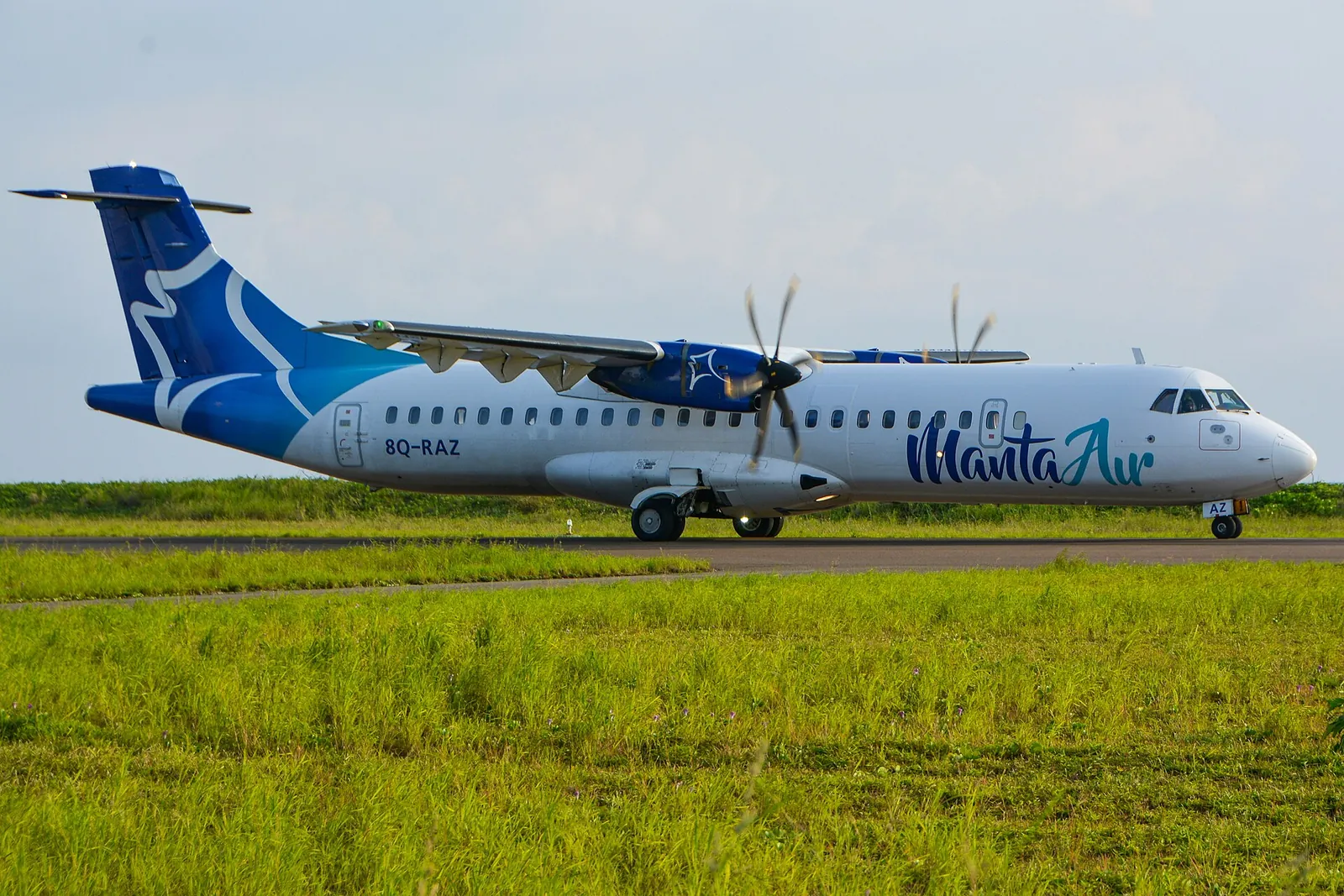
Dharavandhoo. Maldivian, the airline of Island Aviation Services, flies to Dharavandhoo's airport, about 115 km from Velana in a straight line, and the Manta Madness and Dive Hanifaru packages include the return flight. If you book the room alone, the flight is extra: Blue World, a guesthouse on the island, lists it at USD 240 per adult return before taxes. Aveyla's own speedboat transfer takes about 2.5 to 3 hours, depending on the sea. Our transport guide explains how domestic flights and transfers work.
Dhigurah. Bliss Dhigurah arranges three ways in: a shared speedboat of about 2 hours in good weather, from the airport at 11:00 and 16:00 (10:00 and about 16:30 on Fridays) and back at 07:00 and 13:00, at USD 66 per person each way, for guests whose international flight lands before 15:00 or leaves after 11:30; a domestic flight to Maamigili (VAM), a short taxi and a 20-minute speedboat, at USD 216 per adult each way, door to door; or a seaplane to the platform at LUX* South Ari Atoll and a 5-minute boat, at USD 283 per adult each way, in daylight only, landing in Malé by 15:30 to reach Dhigurah the same day and taking a flight home after 09:00. Whaleshark Beach arranges a speedboat through a third-party company at USD 65 per person each way, 1 hour 45 minutes to 2 hours in good weather, and asks for your flight details at least 72 hours before you arrive.
Boats can be cancelled in rough seas, so leave slack before an international flight: on departure day, take the morning boat back.
What three nights cost
| Trip | Per person | For two |
|---|---|---|
| Dharavandhoo, three nights, Manta Madness with full board | about USD 1,040 | about USD 2,090 |
| Dharavandhoo, with a London return flight | USD 1,840-3,430 | USD 3,690-6,870 |
| Dharavandhoo, three nights, Dive Hanifaru with full board, four dives and equipment hire | about USD 1,580 | about USD 3,160 |
| Dhigurah snorkellers: room with breakfast, two whale-shark trips, lunches, dinners and drinks | about USD 750 | about USD 1,510 |
| Dhigurah snorkellers, with a London return flight | USD 1,550-3,140 | USD 3,110-6,290 |
| Dhigurah, divers' package with equipment hire, lunches, dinners and drinks | about USD 1,080 | about USD 2,160 |
| Dhigurah divers, with a London return flight | USD 1,880-3,470 | USD 3,760-6,940 |
On Dharavandhoo, two adults sharing a Village Deluxe room at Aveyla Manta Village on Liquid Salt's three-night Manta Madness package, between June and November, pay about USD 1,040 each, USD 2,090 for two, all in (prices checked on 3 November 2026). The package is USD 720 per person, USD 1,440 for two, with the room and breakfast, the return domestic flight from Malé, two manta snorkelling trips, the service charge, the T-GST and the green tax; full board adds USD 270 for two, at USD 45 per person a night. Two Dhiraagu Traveler Premium SIMs (100 GB, 30 days) are about USD 110 for two with 8% GST, and the Hanifaru visit fee for two snorkels each about USD 80. A 10% buffer of about USD 190 covers water, soft drinks and tips; no Dharavandhoo menu publishes drink prices. Dive Hanifaru has the same inclusions plus four boat dives, at USD 1,144 per person, USD 2,288 for two. Equipment hire adds about USD 130 for two, based on Blue World's Dharavandhoo rate of USD 5 per item a day, for five items over two dive days with service charge and T-GST. With full board, the SIMs, the Hanifaru fee and a buffer of about USD 290, it comes to about USD 1,580 each, USD 3,160 for two.
On Dhigurah, two adults sharing a double on Fari Dive Center's Basic Blue package, with lunch and dinner each day, pay about USD 1,080 each, USD 2,160 for two. The package is USD 771 per person, USD 1,542 for two: three nights with breakfast in a guesthouse on Dhigurah, the return speedboat from the airport, five dives with tanks and weights, and all government taxes. Full equipment hire adds USD 100 for two, at USD 10 per dive. Lunches and dinners add about USD 150 for two: one main each per meal, three lunches and three dinners, at The Remora, Whaleshark Beach's restaurant, where the Maldivian fish curry, a typical main, is USD 10, or about USD 12.90 with the 10% service charge and the 17% T-GST of a guesthouse restaurant. Drinks add about USD 60 for two: one USD 3 soft drink and one USD 5 half-litre bottle of sparkling water per person each day at The Remora, with the same service charge and tax. The same SIMs and a 10% buffer complete it. The October 2026 planning range for a return economy flight from London to Velana was GBP 600-1,800 per person, about USD 800-2,390 at the Maldives Monetary Authority's rate for 28 October 2026 (GBP 1 = USD 1.3305).
For snorkellers on Dhigurah, two adults pay about USD 750 each, USD 1,510 for two. The room is Bliss Dhigurah's Deluxe with breakfast, from USD 80++ a day for single or double occupancy; with a 10% service charge, the 17% T-GST and USD 6 green tax per person per day of stay, three nights for two come to about USD 340. Bliss's shared speedboat is USD 66 per person each way, USD 264 for two. Two whale-shark trips each, at about USD 110 per person with tax, add about USD 440 for two. The meals, drinks, SIMs and buffer are as for Basic Blue above.
How the totals for two build up, before flights:
| For two | Package or room | Transfers | Two SIMs | Meals, drinks, gear and trips | 10% buffer | Total |
|---|---|---|---|---|---|---|
| Manta Madness | USD 1,440 | flight in package | about USD 110 | full board USD 270; Hanifaru fee about USD 80 | about USD 190 | about USD 2,090 |
| Dive Hanifaru | USD 2,288 | flight in package | about USD 110 | full board USD 270; equipment about USD 130; Hanifaru fee about USD 80 | about USD 290 | about USD 3,160 |
| Dhigurah snorkellers (Bliss room, two trips each) | about USD 340 | USD 264 | about USD 110 | about USD 150 meals, USD 60 drinks, USD 440 trips | about USD 140 | about USD 1,510 |
| Basic Blue | USD 1,542 | in package | about USD 110 | about USD 150 meals, USD 60 drinks, USD 100 equipment | about USD 200 | about USD 2,160 |
The diving totals assume you already have insurance that covers the dives.
What to eat and where to look
Mas huni
The Maldivian breakfast: tuna mixed with grated coconut, onion, chilli and lime, scooped up with roshi, a thin flatbread, and eaten with sweet tea.
- Where to look
- Hermit's, the restaurant at Bliss Dhigurah, which puts mas huni with wraps on its breakfast menu.
- Fit it into your day
- Breakfast before a whale-shark boat, which usually leaves in the morning.
Most Maldivian dishes are built on tuna; say so early if you avoid fish.
Garudhiya
A clear tuna broth, an everyday dish of the islands, eaten with rice, lime, chilli and onion; locals often add a spoonful of rihaakuru, the thick fish paste made by boiling the broth down.
- Where to look
- Hermit's at Bliss Dhigurah, which has garudhiya with rice, onion, lemon, chilli and mirus chilli paste on its dinner menu.
- Fit it into your day
- Lunch on a rest day between boat trips.
Mas riha
Maldivian fish curry: tuna or reef fish simmered in a coconut and spice sauce, eaten with rice or roshi.
- Where to look
- The Remora, the restaurant and rooftop at Whaleshark Beach on Dhigurah, which lists a Maldivian-style fish curry with coconut spice sauce, rice or roshi at USD 10 before service charge and tax.
- Fit it into your day
- Lunch or dinner on Dhigurah, where the dive package covers breakfast only.
Fihunu mas
Reef fish or tuna rubbed with spices and chilli, then grilled or barbecued, the simplest way to eat the day's catch.
- Where to look
- Kiha Beach on Dharavandhoo, whose restaurant grills red snapper to order and barbecues the catch of the day.
- Fit it into your day
- Dinner after a morning in Hanifaru Bay.
Practical questions
When is the best time to see mantas at Hanifaru Bay?
From about May or June to November, in the south-west monsoon. The government's action plan for the bay records the most boats from July to September, the busiest months. Feeding depends on the tides, so book three nights to give yourself several chances.
Can I dive in Hanifaru Bay?
No. Scuba diving is banned in the bay; it is a snorkelling site, with at most 80 snorkellers in the water and 45 minutes each. Divers see mantas at Dhigu Thila on nearby Angafaru reef in the south-west monsoon.
Can I see whale sharks all year in the Maldives?
The environment ministry says whale sharks can be seen throughout the year in the South Ari Marine Protected Area, next to Dhigurah. Sightings are never guaranteed, so plan two boat trips over three nights; the Dhigurah budget in this guide includes two each.
How much is a whale-shark snorkelling trip?
Loft Maldives on Dhigurah sells places on a four-hour shared boat from USD 85 per person, sailing once six guests have booked; with service charge and T-GST that is about USD 110. Vilu Residence on Maamigili sells one at USD 85 per person for at least two guests, and LUX* South Ari Atoll charges its own guests USD 155 per adult.
How close can I get to a whale shark?
Under Regulation 2024/R-96, stay at least 3 metres from the body and 4 metres from the tail, approach from the side, and never touch, chase or feed the animal; flash photography and selfie sticks are restricted.
How do I get to Dharavandhoo and Dhigurah?
Dharavandhoo has a domestic airport served by Maldivian, and the Liquid Salt packages include the flight; Aveyla's speedboat takes about 2.5 to 3 hours. Dhigurah is about 2 hours by shared speedboat in good weather (USD 66 per person each way with Bliss Dhigurah) or a domestic flight to Maamigili and a short boat.
How long should I wait to fly after diving?
DAN recommends at least 12 hours after a single no-decompression dive and at least 18 hours after several dives a day or several days of diving, and that includes domestic flights and seaplanes. Keep the last day free of diving.
Keep planning your trip
Best time to visit the Maldives
When to go to the Maldives: calm seas from January to March, the wetter south-west monsoon, Hanifaru Bay's manta season, South Ari's whale sharks and Ramadan 2027.
Read the guide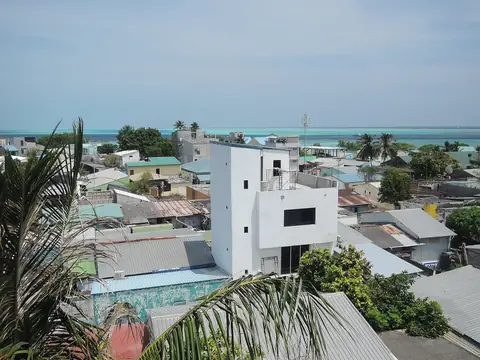
Local islands of the Maldives
Compare seven Maldives guesthouse islands, from Maafushi and Thulusdhoo to Fulidhoo, Thoddoo and Dhigurah: boats from the airport, fares, rules and three-night costs.
Read the guide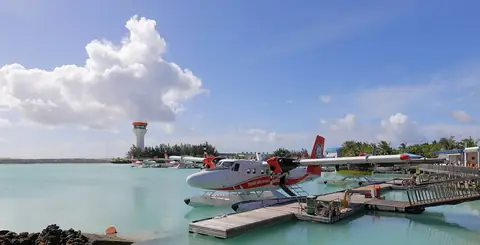
Getting around the Maldives
From Velana airport to Malé, Hulhumalé and the guesthouse islands: the MVR 15 ferry, shared speedboat fares and times, MTCC ferries, seaplanes and domestic flights.
Read the guide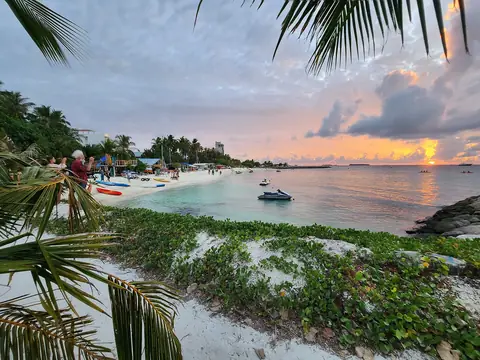
Maafushi
How many nights on Maafushi, which boat from the airport, the bikini beach and island rules, snorkelling and resort day trips, guesthouses and a three-night budget.
Read the guide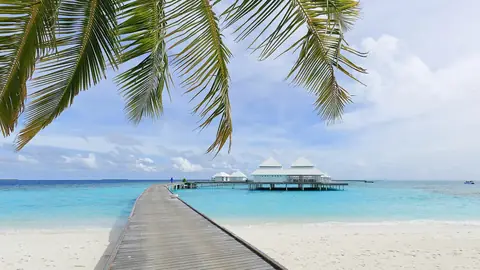
First trip to the Maldives
Resort or guesthouse island for a first Maldives trip: the rules on alcohol and dress, money, SIM cards, entry, safety and what a day costs at three levels.
Read the guide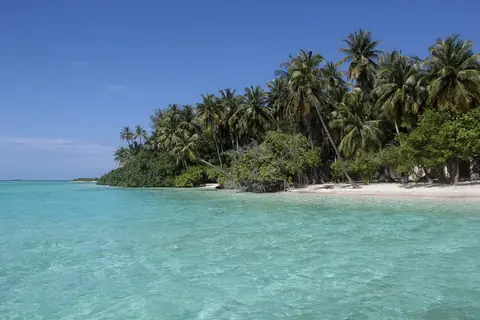
Maldives trip cost
A Maldives week for two, all in: about USD 1,260 per person on a guesthouse island, USD 1,910 with two resort nights, or USD 3,230 for a resort week.
Read the guideSources and checks before you travel
(64)
- Maldives Protected Areas portal: Hanifaru Region ↗ — opens in a new tab
- Ministry of Tourism and Environment: Hanifaru Marine Protected Area Conservation Action Plan 2025-2030 (PDF on the protected-areas portal) ↗ — opens in a new tab
- Maldives Protected Areas portal: South Ari Marine Protected Area (SAMPA) ↗ — opens in a new tab
- Maldives Protected Areas portal: B. Dharavandhoo Thila ↗ — opens in a new tab
- Maldives Protected Areas portal: Maaya Thila ↗ — opens in a new tab
- Maldives Protected Areas portal: Emboodhoo Kanduolhi ↗ — opens in a new tab
- Visit Maldives Corporation: whale-shark regulation 2024/R-96 (13 October 2024) ↗ — opens in a new tab
- Maldives Manta Conservation Programme: protected areas ↗ — opens in a new tab
- Visit Maldives: Adventure in Ari ↗ — opens in a new tab
- Maldives Whale Shark Research: research overview ↗ — opens in a new tab
- Manta Trust: how to swim with manta rays ↗ — opens in a new tab
- UK Foreign Office: Maldives safety and security ↗ — opens in a new tab
- French Foreign Ministry: Maldives, sécurité ↗ — opens in a new tab
- German Foreign Office: Malediven, Reise- und Sicherheitshinweise ↗ — opens in a new tab
- Liquid Salt Divers: excursions ↗ — opens in a new tab
- Liquid Salt Divers: Manta Madness package ↗ — opens in a new tab
- Liquid Salt Divers: Dive Hanifaru package ↗ — opens in a new tab
- Liquid Salt Divers: terms and conditions ↗ — opens in a new tab
- Aveyla Manta Village: Hanifaru Bay ↗ — opens in a new tab
- Aveyla Manta Village: FAQ ↗ — opens in a new tab
- Aveyla Manta Village: activities and dining ↗ — opens in a new tab
- Dharavandhoo Divers: FAQ ↗ — opens in a new tab
- Kiha Beach: Deluxe room ↗ — opens in a new tab
- Kiha Beach: dining ↗ — opens in a new tab
- Bliss Dhigurah: Deluxe room ↗ — opens in a new tab
- Bliss Dhigurah: transport to Dhigurah ↗ — opens in a new tab
- Bliss Dhigurah: Hermit's restaurant and cooking class ↗ — opens in a new tab
- Whaleshark Beach: Superior Room with Balcony ↗ — opens in a new tab
- Sunwave Dhigurah: Deluxe Room with City View ↗ — opens in a new tab
- Fari Dive Center Dhigurah: Basic Blue package ↗ — opens in a new tab
- Fari Dive Center Dhigurah: excursions ↗ — opens in a new tab
- Maldivian: destinations ↗ — opens in a new tab
- Whaleshark Beach: The Remora menu (PDF) ↗ — opens in a new tab
- Blue World Dharavandhoo: pricing ↗ — opens in a new tab
- Bliss Dhigurah: whale-shark snorkelling guide ↗ — opens in a new tab
- Bliss Dhigurah: activities ↗ — opens in a new tab
- MIRA: green tax ↗ — opens in a new tab
- MIRA: GST rates ↗ — opens in a new tab
- Labour Relations Authority: service charge regulation ↗ — opens in a new tab
- Maldives Monetary Authority: reference rates ↗ — opens in a new tab
- Vilu Residence Maamigili: whale-shark snorkelling ↗ — opens in a new tab
- LUX* South Ari Atoll: whale-shark trip ↗ — opens in a new tab
- Visit Maldives: swimming with mantas ↗ — opens in a new tab
- Visit Maldives: surfing in the Maldives ↗ — opens in a new tab
- Maldives Manta Conservation Programme: natural history of the Maldives ↗ — opens in a new tab
- Maldives Meteorological Service: climate of the Maldives ↗ — opens in a new tab
- Loft Maldives: whale-shark excursion ↗ — opens in a new tab
- Bliss Dhigurah: Hermit's dinner menu ↗ — opens in a new tab
- Ministry of Climate Change, Environment and Energy: SAMPA management plan, unofficial English translation consolidated through the third amendment, 6 September 2026 ↗ — opens in a new tab
- Kiha Beach: rooms ↗ — opens in a new tab
- Fari Dive Center: manta ray snorkelling ↗ — opens in a new tab
- Dhiraagu: tourist SIM ↗ — opens in a new tab
- Maldives Monetary Authority: cross rates for 28 October 2026 ↗ — opens in a new tab
- Turkish Airlines: flights from London to the Maldives ↗ — opens in a new tab
- MIRA: green-tax questions ↗ — opens in a new tab
- MIRA: Goods and Services Tax Regulation, consolidated ↗ — opens in a new tab
- Whaleshark Beach: accommodation ↗ — opens in a new tab
- Visit Maldives: eating for vegans, vegetarians and pescatarians ↗ — opens in a new tab
- Visit Maldives: Maldivian cuisine ↗ — opens in a new tab
- MIRA: Goods and Services Tax Act (consolidated) ↗ — opens in a new tab
- Ministry of Tourism: Maldives Recreational Diving Regulation (unofficial translation) ↗ — opens in a new tab
- Ministry of Tourism: hyperbaric treatment chambers ↗ — opens in a new tab
- DAN: flying after diving ↗ — opens in a new tab
- Emperor Divers: Best of the Maldives liveaboard itinerary ↗ — opens in a new tab
Reference sources for the version dated 3 November 2026. Confirm opening times, access, transport and conditions for your travel dates.
Photo credits
(7)
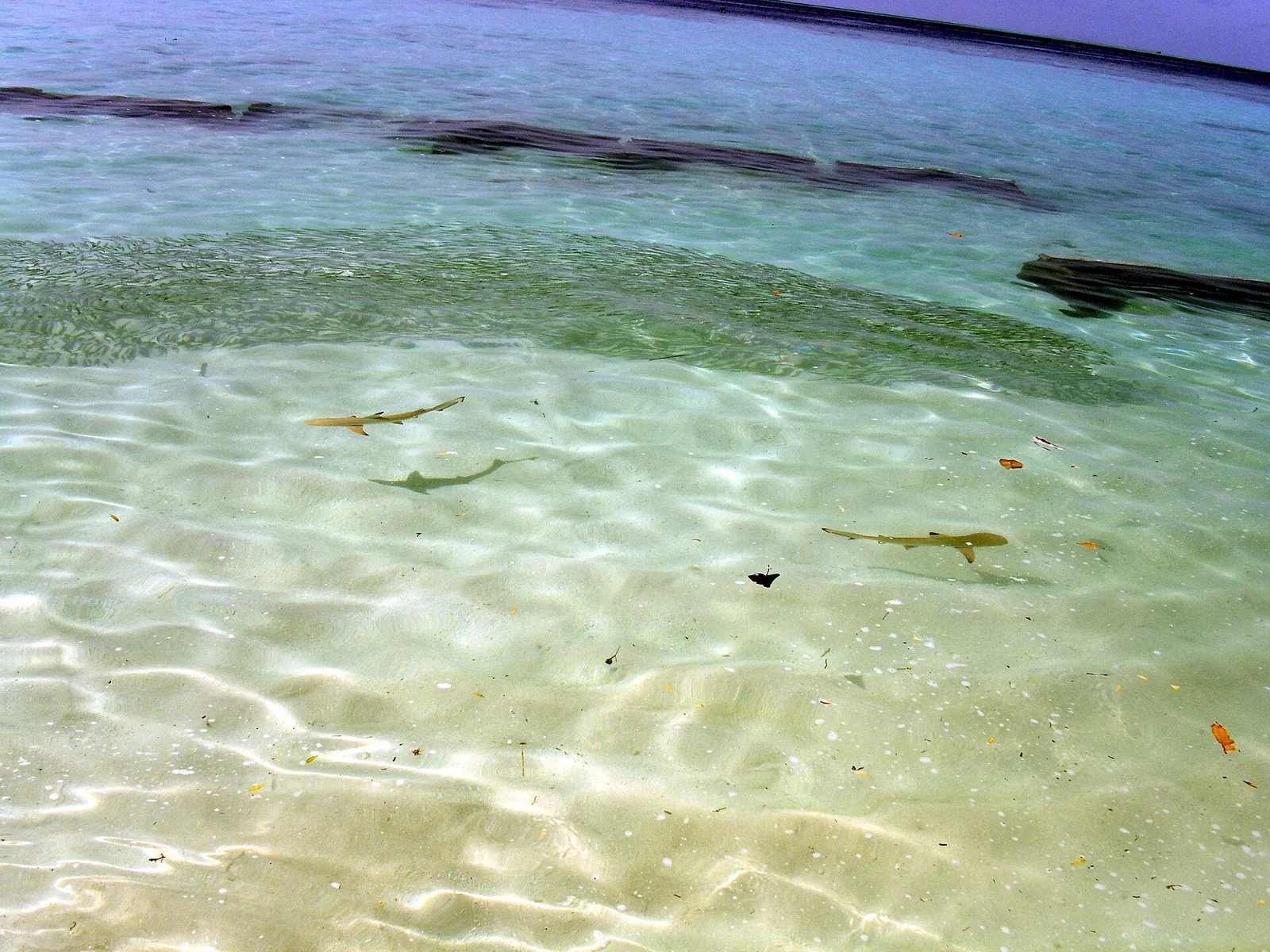
Young reef sharks in the shallows of South Ari Atoll, the atoll of Dhigurah and the whale-shark protected area
Photograph: jancsukas — opens in a new tab · CC BY-SA 3.0 — opens in a new tab
Changes: Resized and converted to WebP; displayed with responsive crops. · Original photograph and licence details ↗ — opens in a new tab
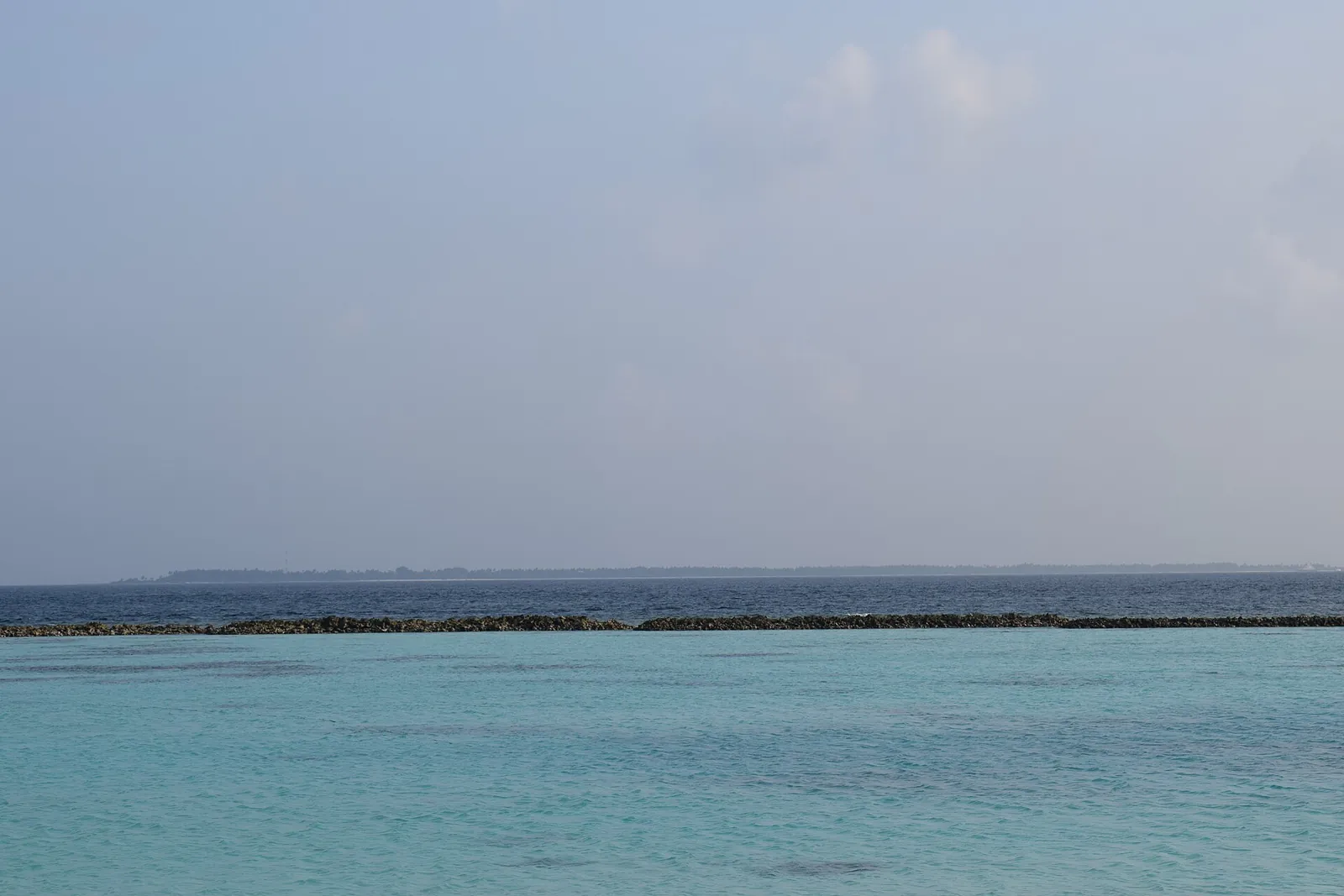
Dhigurah, the long island on the horizon, seen across the lagoon of South Ari Atoll
Photograph: Syced — opens in a new tab · CC BY-SA 3.0 — opens in a new tab
Changes: Resized and converted to WebP; displayed with responsive crops. · Original photograph and licence details ↗ — opens in a new tab
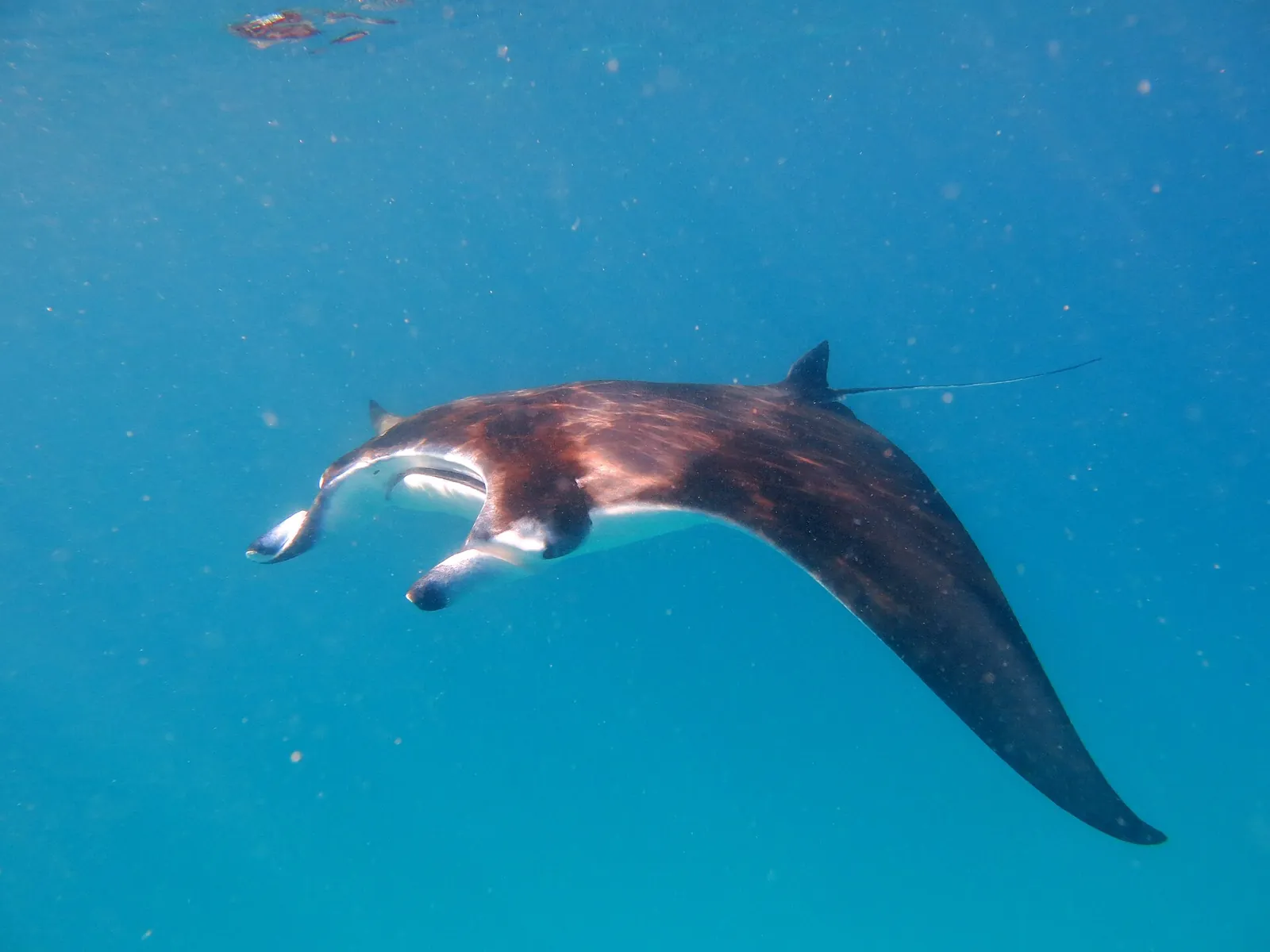
A reef manta ray at Fonimagoodhoo, Baa Atoll, the atoll of Hanifaru Bay
Photograph: Ahmed Abdul Rahman — opens in a new tab · CC BY-SA 3.0 — opens in a new tab
Changes: Resized and converted to WebP; displayed with responsive crops. · Original photograph and licence details ↗ — opens in a new tab
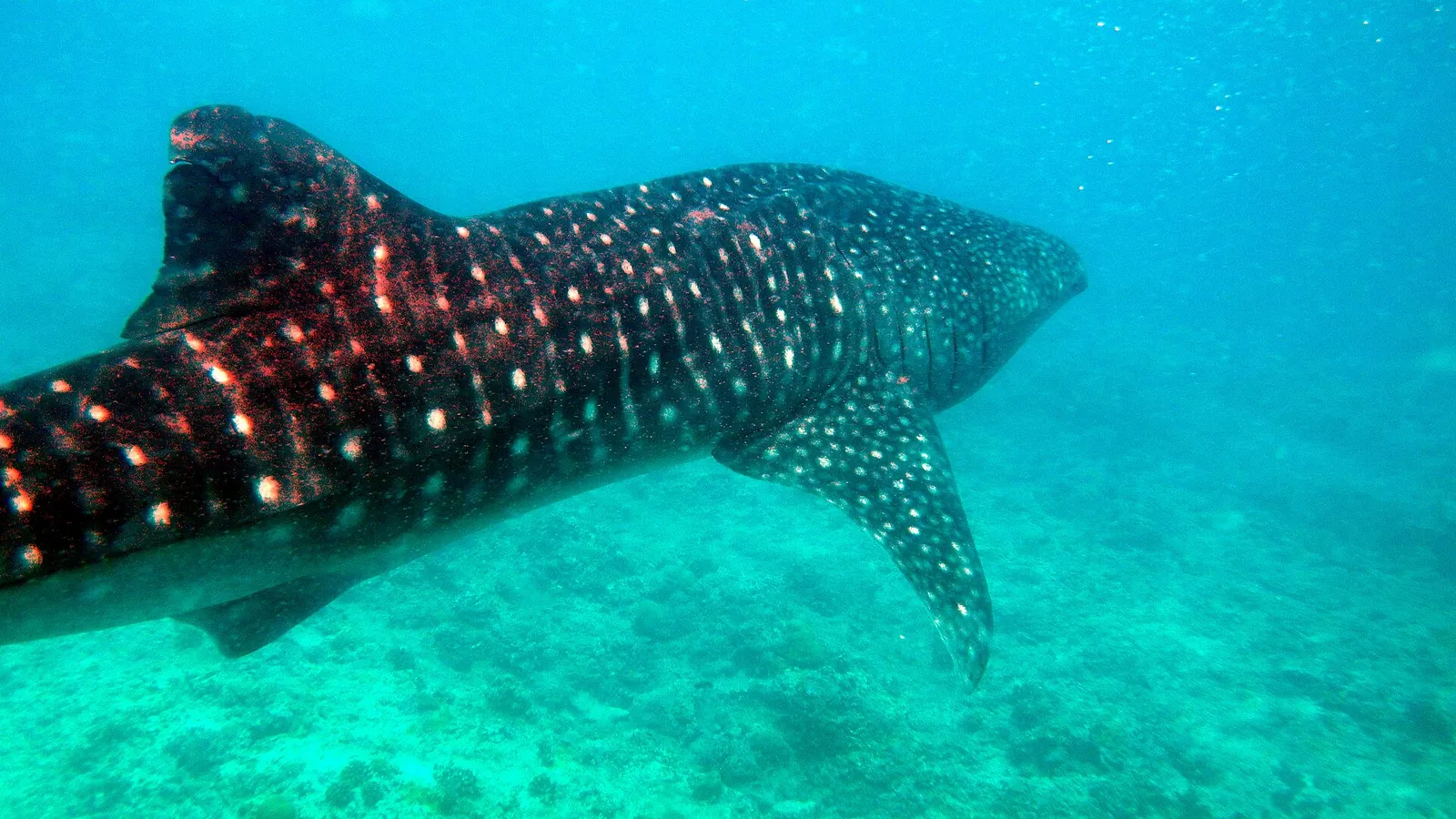
A whale shark off South Ari Atoll, near Dhigurah
Photograph: Laika ac from UK — opens in a new tab · CC BY-SA 2.0 — opens in a new tab
Changes: Resized and converted to WebP; displayed with responsive crops. · Original photograph and licence details ↗ — opens in a new tab
A hawksbill turtle and a Maldive anemonefish on a reef in Baa Atoll
Photograph: Ahmed Abdul Rahman — opens in a new tab · CC BY-SA 4.0 — opens in a new tab
Changes: Resized and converted to WebP; displayed with responsive crops. · Original photograph and licence details ↗ — opens in a new tab
Coral reef at Voavah, Baa Atoll
Photograph: Ahmed Abdul Rahman — opens in a new tab · CC BY-SA 4.0 — opens in a new tab
Changes: Resized and converted to WebP; displayed with responsive crops. · Original photograph and licence details ↗ — opens in a new tab
A domestic flight at Dharavandhoo Airport, the gateway to Hanifaru Bay
Photograph: Inspirationqs — opens in a new tab · CC BY 4.0 — opens in a new tab
Changes: Resized and converted to WebP; displayed with responsive crops. · Original photograph and licence details ↗ — opens in a new tab