Itineraries · Rajasthan
Rajasthan itinerary: Jaipur, Jodhpur and Udaipur in 9 days
West of Jaipur, Rajasthan turns from the pink-walled capital of the Kachhwahas to the Rathore fort of Jodhpur on its cliff above the blue lanes, then south through the Aravalli hills to Udaipur, the lake city of the Mewar rulers. The road between the last two passes the white marble Jain temple at Ranakpur, and 84 km north of Udaipur the walls of Kumbhalgarh run for 36 km over the ridges. Nine days give each city its own unhurried days, one whole day to the road and one to the fort, and finish at Udaipur's airport or station.
- Suggested time
- 9 days / 8 nights
- Where to stay
- Jaipur's walled Pink City for 2 nights; Jodhpur's old city by the clock tower for 2; Udaipur's old city or Gulab Bagh Road for 4
- Season and timing
- October to March is the comfortable time: the India Meteorological Department's averages give Jaipur dry, mild months from November to February, and Incredible India's table for Jodhpur gives 5.0-30.2 °C in January but 22.4-45.0 °C in May. IMD counts June to September as the southwest monsoon season.
The short answer
Book eight nights: two in or near Jaipur's walled Pink City, two in Jodhpur's old city by the clock tower, below Mehrangarh, and four in Udaipur's old city or on Gulab Bagh Road, then leave from Udaipur on day 9. Book the Jaipur-Jodhpur train first, on IRCTC under the Foreign Tourist quota, then a car with driver for the day-5 drive to Udaipur by way of Ranakpur, then the rooms: unlike our single-city guides, which book the room first, this plan's days hang on the train and the car. Two key prices, checked on 17 October 2026: Mehrangarh Museum costs an international visitor INR 800, with the audio guide included, and the City Palace Museum in Udaipur charges every adult INR 400. The model budget below comes to about INR 76,970 for two for the six Jodhpur and Udaipur nights with their taxes, the sights with published prices in all three cities, the boat and two lunches; No Jaipur hotel we could find publishes a dated room rate on its own site, so the Jaipur nights are not in this total; add the room you choose. The trains, the two car days and most meals come on top as well.
Eight nights, three cities and one long drive
The route runs one way, from north-east to south-west, so you never double back: two nights in Jaipur, two in Jodhpur and four in Udaipur. Jaipur and Jodhpur are joined by train; Jodhpur and Udaipur by a day on the road, because the drive through the hills is the point of that leg and Ranakpur sits on it. Udaipur gets the most nights because it carries the most: the City Palace and the boat to Jag Mandir, the old city and its lakes, and a whole day for Kumbhalgarh.
Sleep where you can walk to the sights: inside or just outside the walls in Jaipur, around the clock tower and Gulab Sagar in Jodhpur, and around Jagdish Temple and Gangaur Ghat, or on quieter Gulab Bagh Road, in Udaipur. From abroad, you can land at Delhi or Mumbai, both on the e-Visa site's list of arrival airports, and Rajasthan Tourism lists domestic flights from both to Jaipur International Airport (JAI). JAI accepts the e-Visa too, so the route can also start there; Jodhpur and Udaipur are not on that list.
With eight days, drop the Kumbhalgarh day and keep three Udaipur nights. With ten, choose one extra night. A third night in Jaipur gives you the Albert Hall Museum and a weekday in the bazaars. Pushkar, which Rajasthan Tourism places 145 km from Jaipur and 186 km from Jodhpur, breaks the journey west: a town surrounded by hillocks on three sides, with a sacred lake and what the state calls the only temple to Lord Brahma in the world, reached by car, or by train to Ajmer, 14 km away. Chittorgarh, whose fort stands on a 180 m hill and spreads over 700 acres, lies 115 km from Udaipur, Rajasthan Tourism says: a long day out by car.
This edition keeps its guides at least 50 km from the India-Pakistan border, a wider margin than the FCDO's warning against all travel within 10 km, so this guide stays east of Jaisalmer, Barmer and the desert beyond Jodhpur, which lie further west, towards the border. The FCDO is the UK Foreign, Commonwealth & Development Office; other governments may draw a wider line, so check your own government's advice.
From March the heat builds: IMD's Jaipur table gives a mean daily maximum of 32.0 °C in March, 37.6 °C in April and 41.1 °C in May. In those months start each day at opening time and spend the afternoons indoors; our health and safety guide covers heat exhaustion and its first aid.
What to book, and how each leg works
Trains first. Foreign visitors book on IRCTC with an international mobile number; under the Foreign Tourist quota a ticket costs 1.5 times the normal fare plus a service charge of INR 200 plus GST, paid by international card, and the quota opens up to 365 days ahead, although a booking made beyond the normal 60-day reservation period gets its berth only when that period opens. Carry the original passport and visa on board. Indian Railways publishes Jaipur-Jodhpur departure times and fares only in its journey search, so check IRCTC for your date. Our transport guide explains the account, the classes and the cancellation rules.
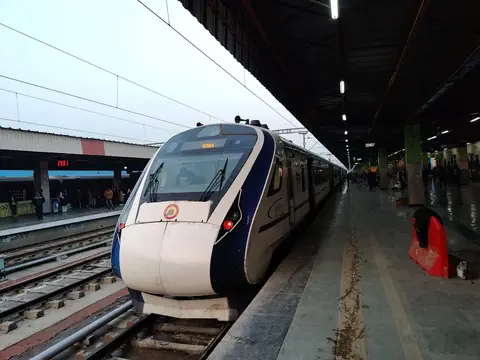
Jaipur to Jodhpur (day 3): Rajasthan Tourism says Jaipur is connected by rail with Jodhpur and Udaipur, and lists domestic flights from Jaipur International Airport to both. Pick a morning train in that search, so the afternoon is free in Jodhpur; trains leave from Jaipur Junction (JP) and arrive at Jodhpur Railway Station (JU), from where an auto-rickshaw or taxi takes you to the clock tower. Jodhpur Airport (JDH) is the alternative.
Jodhpur to Udaipur (day 5): Rajasthan Tourism puts Udaipur 257 km from Jodhpur, and the Ranakpur Jain temple almost 90 km from Udaipur, in the forested Aravalli hills, so the drive with the temple stop fills the day. Hire a car with driver for the whole day and leave Jodhpur right after breakfast; after the visit, the last stretch of hill road to Udaipur still lies ahead. Agree the price with the driver, together with the stop at Ranakpur and the drop-off at your Udaipur address. Incredible India's account of the road to Ranakpur from Kumbhalgarh says there are only one or two places to eat on the way and suggests carrying food; on this drive too, take water and a packed lunch.
Kumbhalgarh (day 7): The fort is 84 km north of Udaipur and open from 09:00 to 18:00, Incredible India says, so a car with driver for the day is again the way to go, leaving after breakfast; agree the fare with the driver.
Leaving Udaipur (day 9): Maharana Pratap Airport (UDR) is 20 km from Udaipur City Railway Station, and the Airports Authority of India lists taxis and car hire there; the airlines' own sites list its domestic flights for your date. Trains leave from Udaipur City Railway Station.
Days 1-2: Jaipur, or the last two nights of the Golden Triangle
If you are coming from our Golden Triangle itinerary, its two Jaipur nights are these two, and the trips join into 13 days and 12 nights: six nights on the Golden Triangle, then two in Jodhpur and four in Udaipur. Follow the Golden Triangle as far as its day 6. On its day 7, see Amber Fort, arriving for 09:00, then, instead of returning to Delhi, take a train to Jodhpur later in the day, choosing one that leaves after your Amber morning, and spend the evening at the clock tower market. Day 8 is this route's day 4, the Mehrangarh day, and day 9 is the drive to Udaipur by way of Ranakpur; days 10 to 13 follow days 6 to 9 below. The join leaves out Umaid Bhawan, whose museum keeps daytime hours; to see it, add a third Jodhpur night.
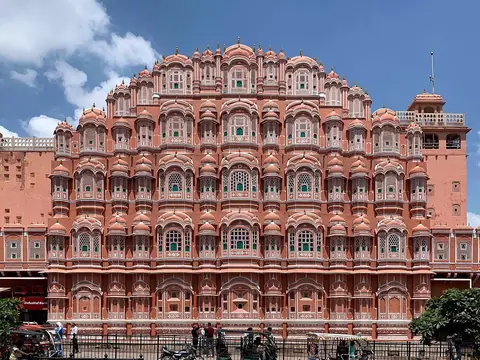
Starting here instead, land at JAI, where prepaid taxis wait at the domestic terminal and app cabs run into town. On day 1, spend the afternoon in the walled city. Jantar Mantar, open until 19:00, is the observatory whose 18th-century stone instruments still tell the time by the sun, and the latticed front of Hawa Mahal is a short walk along the bazaar. Rajasthan Tourism says Jaipur's markets are generally closed on Sundays, so on a Sunday keep to the two monuments. Finish with street snacks at Masala Chowk, in Ram Niwas Garden, the garden that holds the Albert Hall Museum.
On day 2, be at Amber Fort for 09:00, when both Rajasthan Tourism and Incredible India have it open. Raja Man Singh I began Amber in 1592 in the hills about 11 km from Jaipur, and Rajasthan Tourism describes a blend of Hindu and Mughal styles in red sandstone and white marble, its harsh exterior hiding carvings, precious stones and mirrors, with Maota Lake in front. Go first to the Sheesh Mahal, the hall of mirrors, and give the palace the morning, before the heat. Jaigarh, on the hill above, comes next. Come back past the Jal Mahal on its lake and take a taxi up to Nahargarh by mid-afternoon for the view over the Pink City; our Jaipur guide gives its closing time. End the day at the City Palace, open until 18:30 with the last tickets at 18:00, where the courtyards lead from the Mubarak Mahal to the seven-storey Chandra Mahal; the museum says the Textile Gallery in the Mubarak Mahal is closed for restoration from 27 March 2026. Its composite ticket covers the palace museum, Jaigarh and the royal cenotaphs, so use it for Jaigarh and the palace on the same day. Then go out to Tonk Road for a Rajasthani dinner. Our Jaipur guide describes each site, the two separate ticket systems and the gem-selling scam to avoid.
Days 3-4: Jodhpur, the blue city below Mehrangarh
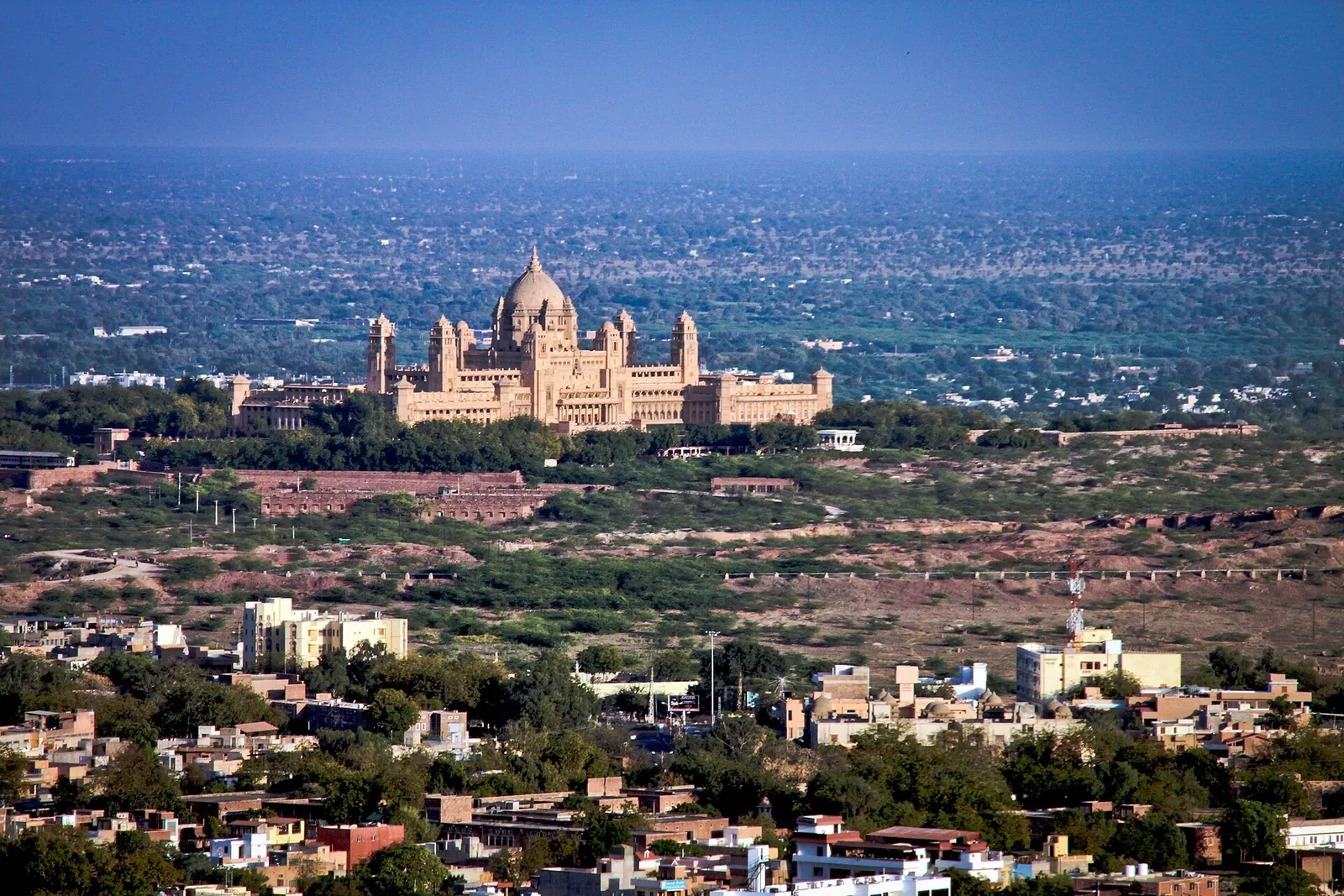
Day 3: the palace and the clock tower. From the morning train, leave your bags in the old city and take an auto-rickshaw across town to Umaid Bhawan Palace, begun in 1928 and completed in 1943 for Maharaja Umaid Singh by Incredible India's count (Mehrangarh Museum Trust's trail gives 1929 to 1944), originally the residence of the royal family of Jodhpur and now, Incredible India says, one of the largest private residences in the world; its museum of royal artefacts, vintage cars and memorabilia is open from 09:00 to 17:00. Back in the old city, walk to the Ghanta Ghar, the clock tower of Maharaja Sardar Singh, and the spice and textile stalls of Sardar Market, and try a mirchi vada from a stall on Clock Tower Road.
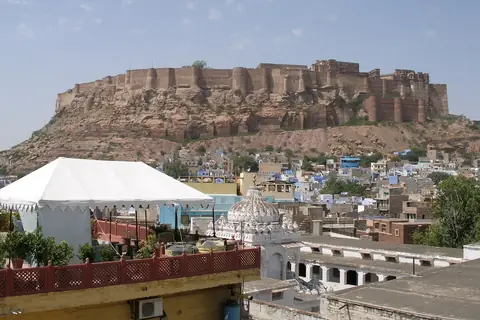
Day 4: Mehrangarh. Walk up for the 09:00 opening. Rao Jodha began the fort in 1459, and you climb to its palaces and period rooms such as the Sheesh Mahal and the Phool Mahal, then out onto the ramparts for the view over the old city. Mehrangarh Museum Trust lists the museum as open every day from 09:00 to 17:00; its ticket, INR 800 for an international visitor, includes the audio guide, and a guide costs INR 500 for one to four people, paid directly to the guide. In the afternoon, walk to Jaswant Thada, the white marble memorial of 1906 (INR 100 for an international visitor), and the trails of Rao Jodha Desert Rock Park (INR 100), open until 17:30 from October to March.
The Jodhpur guide has the fort's history, the rock park, Mandore and the stepwell at Toorji ka Jhalra, if you can stay a third night.
Day 5: through the Aravalli hills to Udaipur, by way of Ranakpur
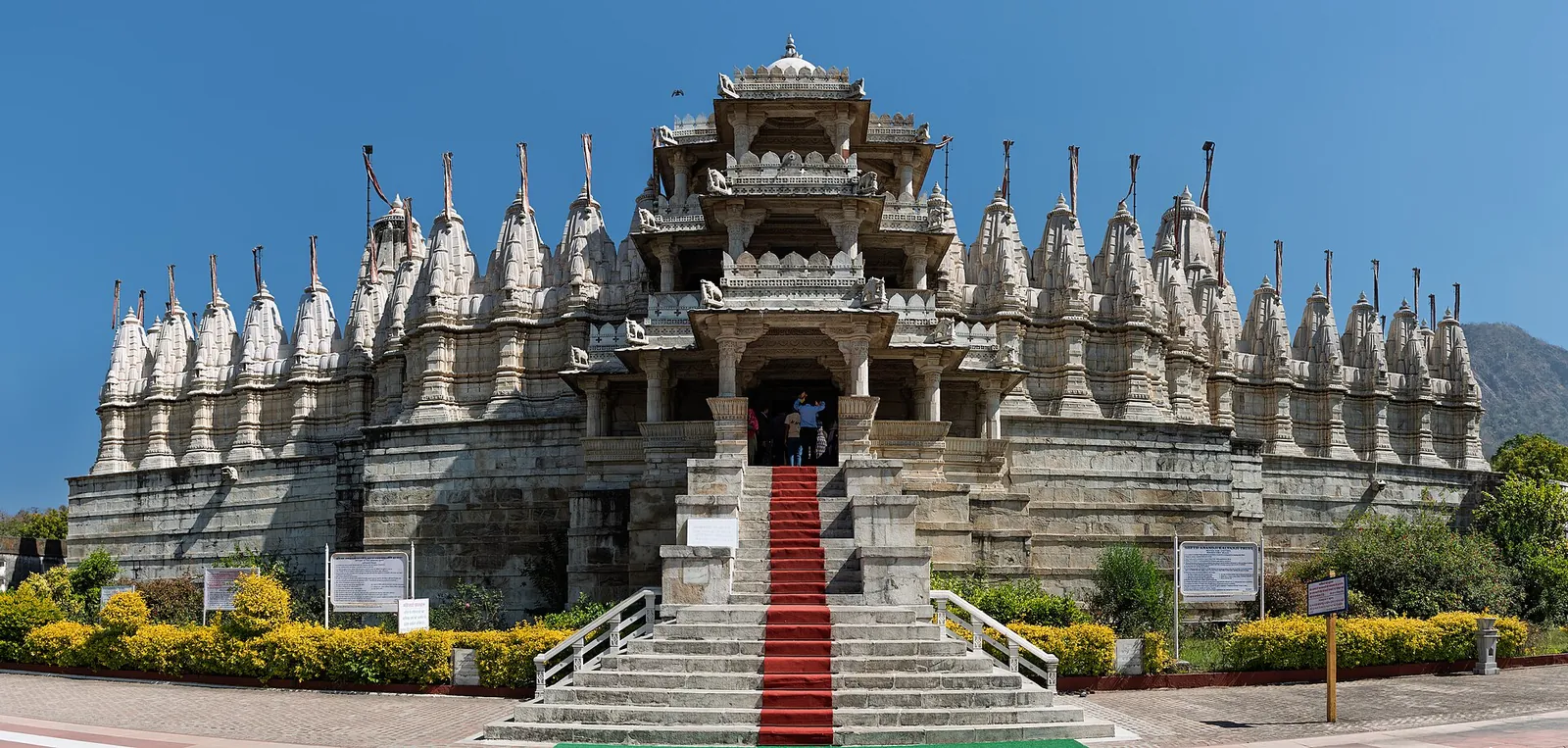
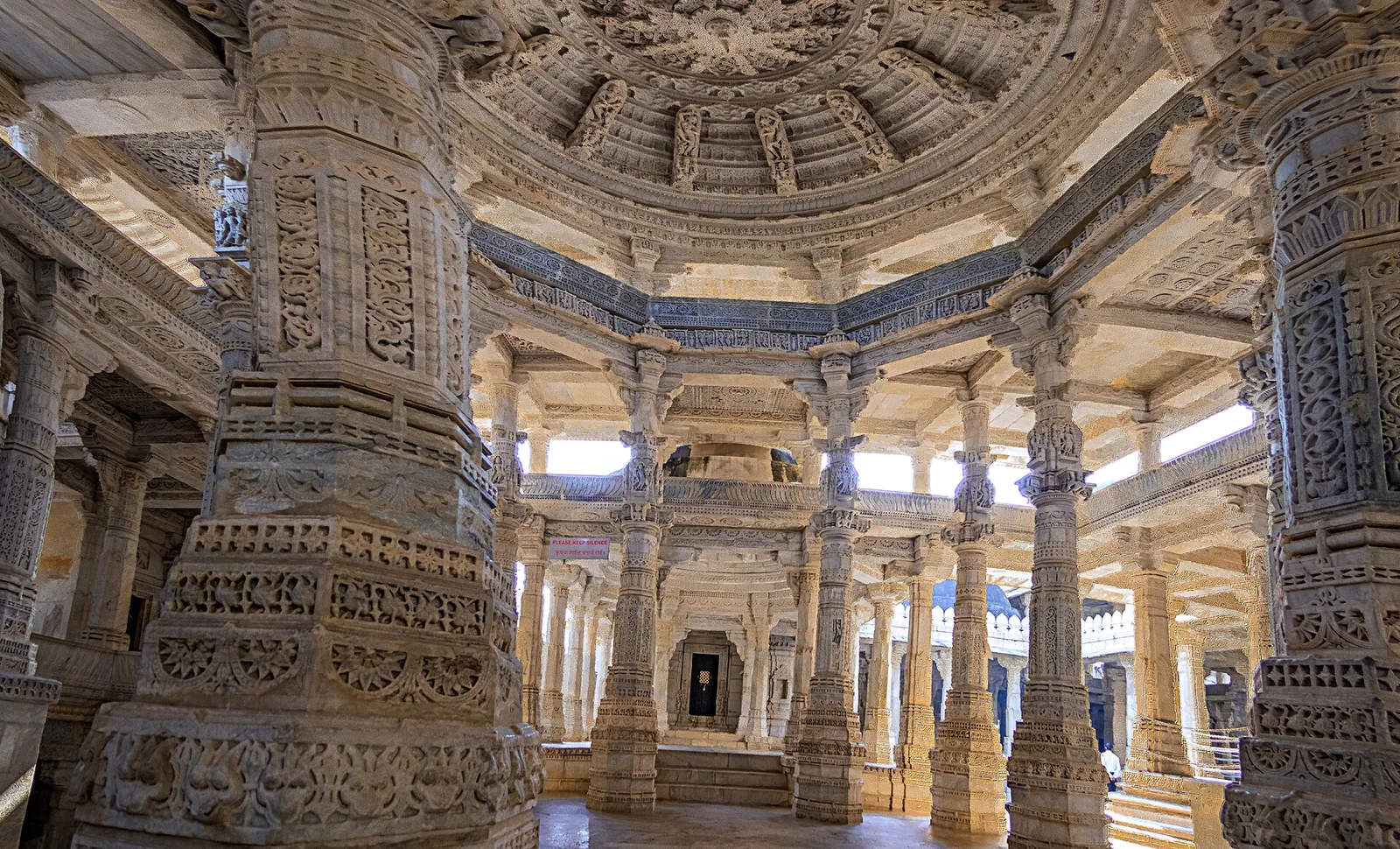
Leave Jodhpur after breakfast. The day's stop is the Ranakpur Jain temple, which Dhanna Shah, a merchant and minister at the court of Rana Kumbha, built in the 15th century under the king's patronage; Rajasthan Tourism says the work took about 50 years. The temple of softly coloured marble is dedicated to Adinath, the first Jain tirthankara, whose four-faced image looks out in the four directions. Inside, 1,444 carved pillars, no two of them alike, and 80 domes fill a complex of more than 48,000 square feet, and Incredible India calls the halls airy and well lit by natural light.
Dress moderately; tickets, and any camera charge, are paid at the counter. Ranakpur's visiting hours and fee for sightseers are not published.
From Ranakpur the road climbs on through the hills to Udaipur, and you should allow the rest of the afternoon. If there is light left, walk up to Jagdish Temple in the old city.
Days 6-9: Udaipur's lakes, and a day at Kumbhalgarh
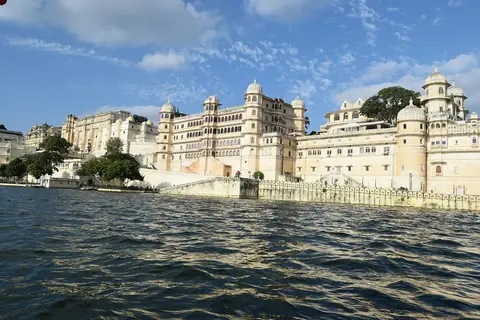
Day 6: the City Palace and the lake. The City Palace Museum opens at 09:00 and charges every adult INR 400, Indian or foreign; give it the morning. In the afternoon, take HRH Group of Hotels' boat from Rameshwar Ghat to Jag Mandir, the island palace, past the palace front, the ghats and the Lake Palace. Its timetable gives regular departures from 10 am until 3 pm in summer and until 2 pm in winter, and sunset trips until 6 pm in summer and 5 pm in winter. HRH's latest published fare table, for 1 April 2025 to 31 March 2026, lists INR 600 for an adult on a regular trip and INR 800 on a sunset trip (INR 300 and INR 450 for a child); HRH had not published its 2026-27 boat fares by 17 October 2026.
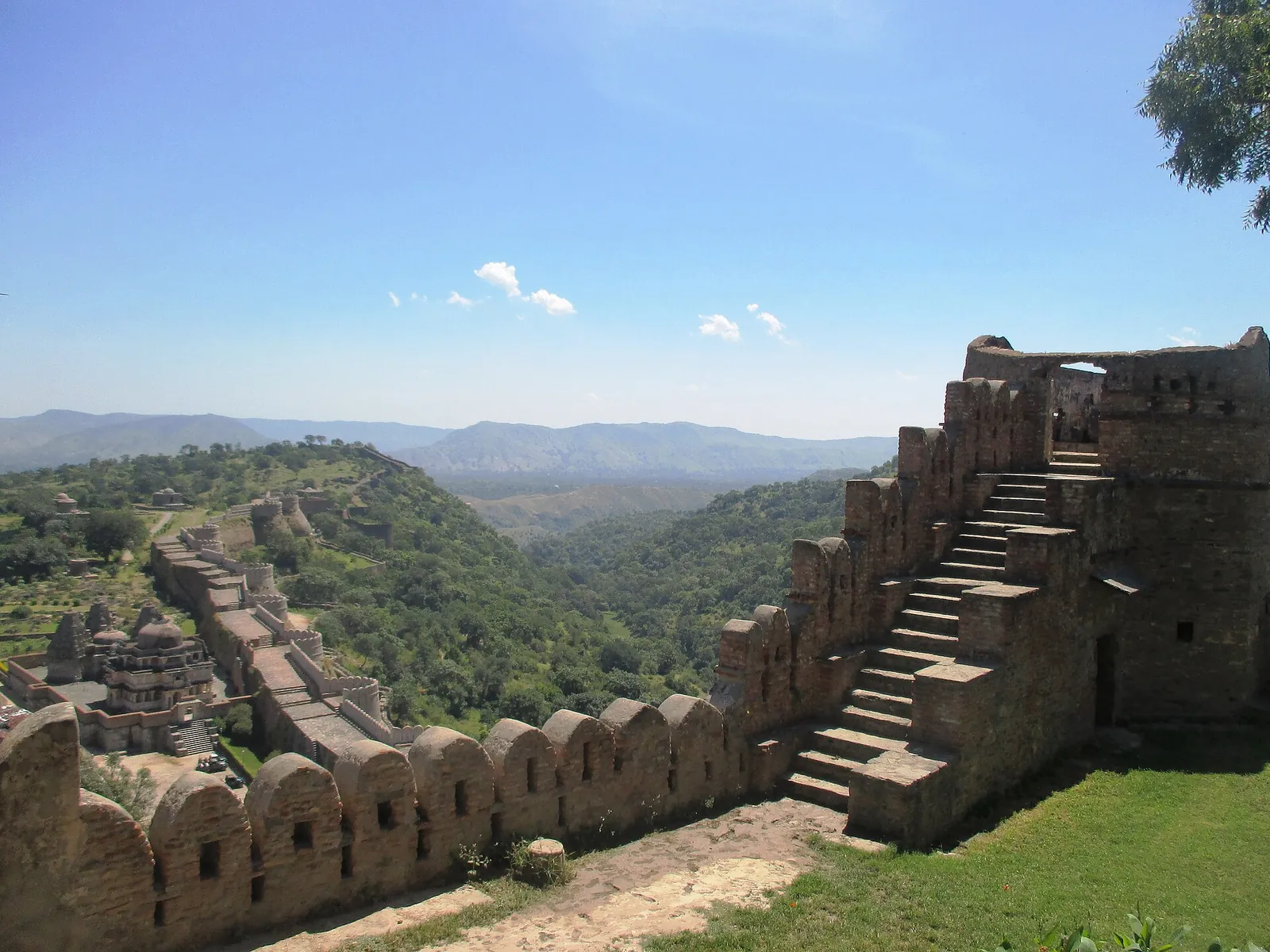
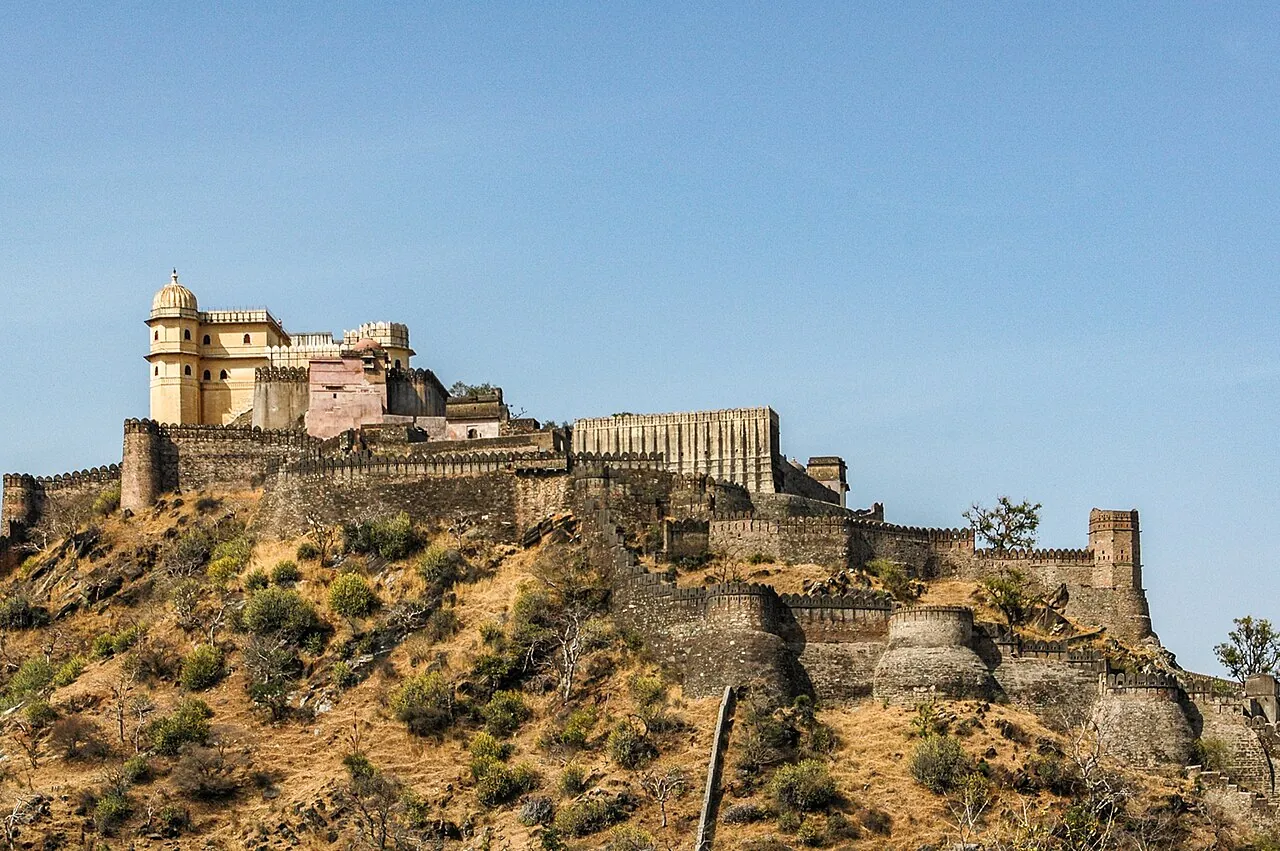
Day 7: Kumbhalgarh. Mewar's great hill fort was built in the 15th century by Rana Kumbha and is a UNESCO World Heritage site; Incredible India calls it the highest fort in Rajasthan and the birthplace of Maharana Pratap. Its walls run for 36 km around the hills, wide enough for eight horses abreast, behind seven fortified gates. Walk the ramparts in the morning light and come back to Udaipur for dinner; leave out the fort's nightly sound and light show, which would mean driving back after dark, and the UK Foreign Office says to avoid travelling at night. ASI lists Kumbhalgarh among its ticketed monuments but prints no fee there, so check the price at the gate.
Day 8: the old city and the lakes to the north. Start at Bagore ki Haveli on Gangaur Ghat, the 18th-century mansion of a Mewar prime minister, where the West Zone Cultural Centre charges foreign visitors INR 150; walk the bazaars of Hathi Pol, then take an auto-rickshaw to Saheliyon ki Bari, the Garden of the Maidens. End the day at the Monsoon Palace on its hilltop for the late-afternoon light over the lake; Incredible India gives its hours as 09:00 to 17:00, and its fee is not published. Go up by taxi or auto-rickshaw.
Day 9: leave. With a late flight or train, spend the morning at Shilpgram, the crafts village 3 km west of town, where WZCC charges foreign visitors INR 150, before the airport, which is 20 km from Udaipur City Railway Station. The Udaipur guide covers the palace's audio guides and the Dharohar dance show at Bagore ki Haveli.
Make time for the local food
What to eat and where to look
Dal baati churma
Rajasthan's signature platter, which the Ministry of Tourism lists first among Jaipur's dishes: ghee-soaked wheat dumplings (baati) with a lentil curry (dal) and churma, a sweet crumble.
- Where to look
- Chokhi Dhani, a recreated Rajasthani village with folk dance and low-table dining, out of town at 12 Miles, Tonk Road.
- Fit it into your day
- Dinner on day 2, by taxi out along Tonk Road after the City Palace.
Rajasthani food is rich in ghee, dairy, gram flour and chilli; say so if you avoid dairy, gluten or nuts, and eat street snacks where they are fried in front of you.
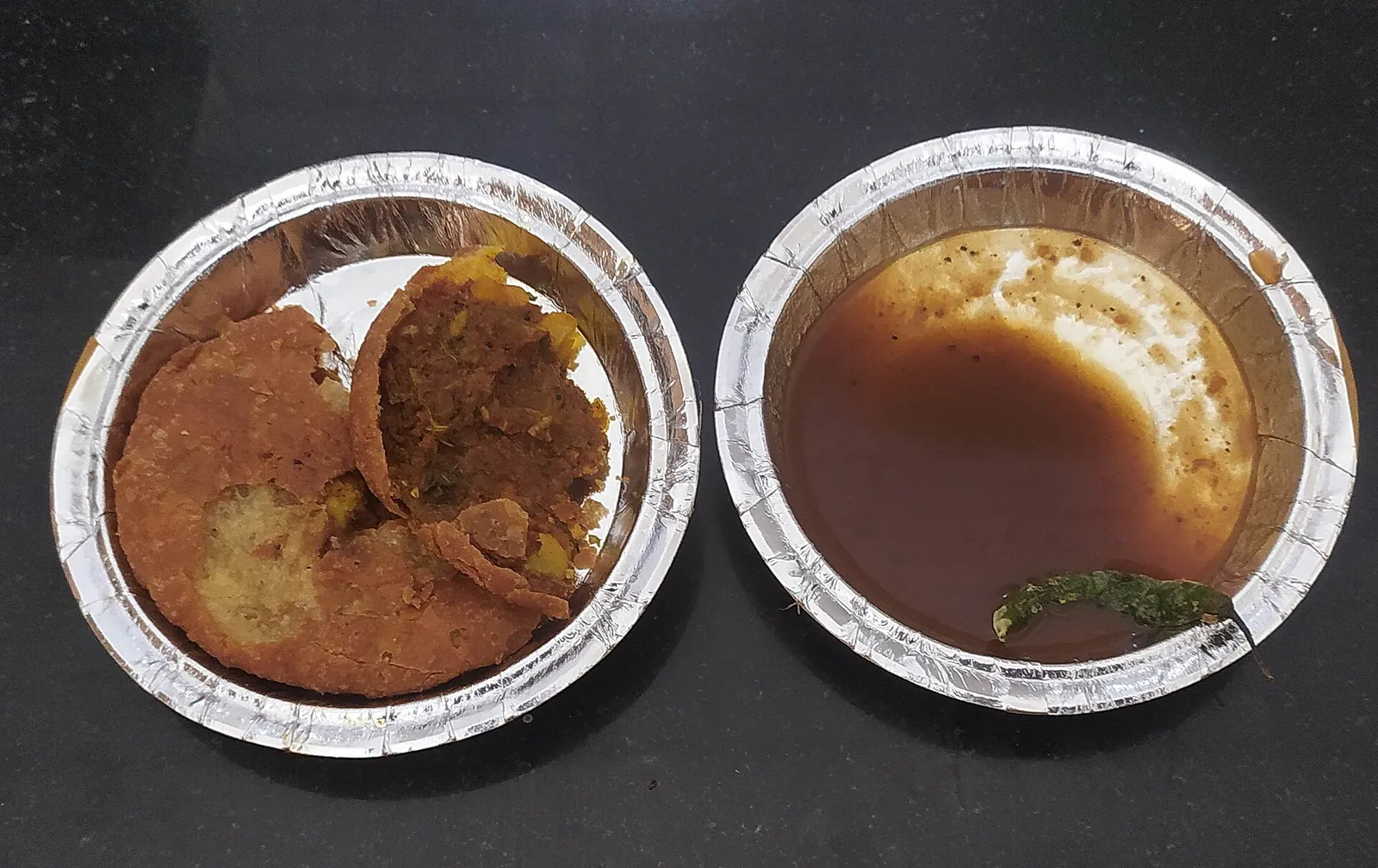
Kachori
A flaky fried pastry with a spiced filling, which the Ministry of Tourism counts among Jaipur's must-try snacks.
- Where to look
- Masala Chowk in Ram Niwas Garden, the garden that holds the Albert Hall Museum, an open-air court of 21 street-food stalls; entry costs INR 10.
- Fit it into your day
- An evening snack on day 1.
Mirchi vada
Jodhpur's winter snack: a large chilli filled with spiced potato or cauliflower, dipped in gram-flour batter and fried golden.
- Where to look
- The street stalls of Ghantaghar Market on Clock Tower Road, one of the two street-food streets Incredible India names in Jodhpur.
- Fit it into your day
- An evening snack on day 3, after Umaid Bhawan.
Laal maas
Rajasthan's fiery red mutton curry, cooked with red chillies, spices and ghee.
- Where to look
- Risala, the restaurant inside Umaid Bhawan Palace, which Incredible India lists for lal maas and safed maas, with views of the garden and Mehrangarh.
- Fit it into your day
- Dinner on day 3, at the palace you visited in the afternoon.
Ghevar
A sweet of flour, ghee and sugar syrup, which Incredible India counts among Udaipur's street-food specialities.
- Where to look
- Hathi Pol Bazaar, one of the two streets Incredible India names as food havens in Udaipur.
- Fit it into your day
- An afternoon sweet on day 8, in the bazaar.
What the nine days cost for two
This model follows the nine-day plan for two adults sharing a room, with every price checked on 17 October 2026, for stays between 1 October 2026 and 31 March 2027, the period both room tariffs cover. It covers the six nights in Jodhpur and Udaipur with their taxes, the sights with published prices, the boat to Jag Mandir and two lunches. No Jaipur hotel we could find publishes a dated room rate on its own site, so the Jaipur nights are not in this total; add the room you choose.
- Jodhpur, 2 nights: the room priced in our Jodhpur guide, with breakfast and the arrival transfer, at INR 7,500 a night (INR 15,000) plus 5% GST (INR 750): INR 15,750.
- Udaipur, 4 nights: the room priced in our Udaipur guide, a standard room for one or two, room only, at INR 11,000 a night (INR 44,000), plus GST at 18%, the rate for rooms above INR 7,500 a night (INR 7,920): INR 51,920.
- Jaipur sights: the City Palace Museum's composite ticket (museum, Jaigarh Fort and the royal cenotaphs) at INR 1,700 a person: INR 3,400.
- Jodhpur sights: Mehrangarh Museum at INR 800 a person (INR 1,600), and Jaswant Thada and Rao Jodha Desert Rock Park at INR 100 each a person (INR 400): INR 2,000.
- Udaipur sights: the City Palace Museum at INR 400 a person (INR 800), and Bagore ki Haveli at INR 150 a person (INR 300): INR 1,100.
- Jag Mandir boat: HRH's latest adult fare for a regular trip, INR 600 each: INR 1,200.
- Two lunches in Udaipur: the thali priced in our Udaipur guide, at INR 400 a person including taxes, on days 6 and 8: INR 1,600.
- Total without the two Jaipur nights: about INR 76,970 for two.
- Not included: the two Jaipur nights; the train from Jaipur to Jodhpur with IRCTC's charges, and the journey home from Udaipur; the two car days (Jodhpur-Udaipur and Kumbhalgarh); the state monuments in Jaipur (Amber, Hawa Mahal, Jantar Mantar and Nahargarh), at the Department of Archaeology and Museums' current prices; Shilpgram (INR 150 a person) if your departure leaves the morning free; the Umaid Bhawan museum, Ranakpur, Kumbhalgarh and the Monsoon Palace, whose fees are not published; meals other than the Jodhpur breakfasts and the two Udaipur lunches; taxis, auto-rickshaws, guides, camera fees and the lift at Mehrangarh.
Practical questions
How many days do you need for Jaipur, Jodhpur and Udaipur?
Nine days and eight nights let you see all three without rushing: two nights in Jaipur, two in Jodhpur and four in Udaipur, with a whole day for the drive by way of Ranakpur and another for Kumbhalgarh. With eight days, skip Kumbhalgarh; with ten, add a third night in Jaipur or a night in Pushkar.
Can I add this route to the Golden Triangle?
Yes, as a 13-day trip of 12 nights. Follow the Golden Triangle itinerary through its day 6, see Amber Fort on the morning of its day 7 and take a train to Jodhpur later that day instead of returning to Delhi; Mehrangarh fills day 8, the Ranakpur drive day 9, and Udaipur days 10 to 13. Leave India from Udaipur by a domestic flight connecting to your international one, or by train.
Is there a train from Jodhpur to Udaipur?
This guide does not plan a train for this leg. A car with driver is the better choice in any case: it lets you stop at the Ranakpur Jain temple on the way and drops you at your Udaipur address.
How much are Mehrangarh and the City Palace in Udaipur?
Mehrangarh Museum charges an international visitor INR 800, with the audio guide included, and the City Palace Museum in Udaipur charges every adult INR 400, Indian or foreign. Jaipur's City Palace has its own composite ticket at INR 1,700 for a foreign adult. The nine-day budget above comes to about INR 76,970 for two without the Jaipur rooms. No Jaipur hotel we could find publishes a dated room rate on its own site, so the Jaipur nights are not in this total; add the room you choose.
Is Kumbhalgarh worth a day from Udaipur?
Yes, if you like forts and long walks: the walls run for 36 km over the Aravalli hills, and Incredible India calls it the highest fort in Rajasthan. It is 84 km north of Udaipur, so plan a full day with a car and driver.
When is the best time for a Rajasthan trip?
October to March. IMD's averages give Jaipur dry, mild months from November to February, while its mean daily maximum peaks at 41.1 °C in May; from June to September the southwest monsoon brings the rain.
Sources and checks before you travel
Reference sources for the version dated 17 October 2026. Confirm opening times, access, transport and conditions for your travel dates.
- Rajasthan Tourism: Jaipur ↗ — opens in a new tab
- City Palace Museum, Jaipur: visit and tickets ↗ — opens in a new tab
- Rajasthan Tourism: Jantar Mantar ↗ — opens in a new tab
- Jaipur International Airport: to and from the airport ↗ — opens in a new tab
- Official e-Visa site (Bureau of Immigration): e-Tourist visa ↗ — opens in a new tab
- IRCTC: Foreign Tourist Quota booking (PDF) ↗ — opens in a new tab
- IRCTC: Foreign Tourist terms and conditions (PDF) ↗ — opens in a new tab
- IRCTC: foreign user registration and booking guide (PDF) ↗ — opens in a new tab
- Incredible India: Jodhpur ↗ — opens in a new tab
- Incredible India: Umaid Bhawan Palace ↗ — opens in a new tab
- Mehrangarh Museum Trust: museum trails ↗ — opens in a new tab
- Incredible India: Ghanta Ghar ↗ — opens in a new tab
- Mehrangarh Museum Trust: architecture ↗ — opens in a new tab
- Mehrangarh Museum Trust: Mehrangarh Museum, tickets and timings ↗ — opens in a new tab
- Mehrangarh Museum Trust: Jaswant Thada ↗ — opens in a new tab
- Mehrangarh Museum Trust: Rao Jodha Desert Rock Park ↗ — opens in a new tab
- Incredible India: a culinary journey of Jodhpur ↗ — opens in a new tab
- Incredible India: 10 restaurants to bookmark in Jodhpur ↗ — opens in a new tab
- GST Council: recommendations of the 56th meeting (PIB release of 3 September 2025) ↗ — opens in a new tab
- Incredible India: must-visit Ranakpur Jain temple (travel account) ↗ — opens in a new tab
- Incredible India: Kumbhalgarh Fort ↗ — opens in a new tab
- Incredible India: Udaipur ↗ — opens in a new tab
- The City Palace Museum, Udaipur: FAQ (PDF) ↗ — opens in a new tab
- HRH Group of Hotels: Jagmandir Island Palace excursion and boat rides ↗ — opens in a new tab
- West Zone Cultural Centre: Bagore ki Haveli Museum ↗ — opens in a new tab
- Incredible India: Monsoon Palace ↗ — opens in a new tab
- West Zone Cultural Centre: Shilpgram ↗ — opens in a new tab
- Airports Authority of India: eAIP, Udaipur (VAUD) ↗ — opens in a new tab
- India Meteorological Department: Jaipur climatological information ↗ — opens in a new tab
- Rajasthan Department of Archaeology and Museums: About Us ↗ — opens in a new tab
- India Meteorological Department: Northeast Monsoon 2024 report ↗ — opens in a new tab
- UK Foreign Office (FCDO): India safety and security ↗ — opens in a new tab
- Rajasthan Tourism: Ranakpur Temple ↗ — opens in a new tab
- Rajasthan Tourism: Pushkar ↗ — opens in a new tab
- Rajasthan Tourism: Chittorgarh ↗ — opens in a new tab
- Archaeological Survey of India: ticketed monuments ↗ — opens in a new tab
- Incredible India (Ministry of Tourism): Jaipur ↗ — opens in a new tab
- Chokhi Dhani: Village Fair restaurant, Jaipur ↗ — opens in a new tab
- Rajasthan Tourism: Jodhpur ↗ — opens in a new tab
- Press Information Bureau: GST rates on services recommended by the 37th GST Council ↗ — opens in a new tab
- UK Foreign Office (FCDO): India warnings and insurance ↗ — opens in a new tab
Photo credits
The Ranakpur Jain temple, the stop on the drive from Jodhpur to Udaipur
Photograph: Mustang Joe — opens in a new tab · CC0 — opens in a new tab
Changes: Resized and converted to WebP; displayed with responsive crops. · Original photograph and licence details ↗ — opens in a new tab
Inside Ranakpur: some of the temple's 1,444 carved marble pillars
Photograph: Banerjeedebasis — opens in a new tab · CC BY-SA 4.0 — opens in a new tab
Changes: Resized and converted to WebP; displayed with responsive crops. · Original photograph and licence details ↗ — opens in a new tab
Kumbhalgarh's walls running over the Aravalli hills, seen from the palace
Photograph: Sreesarkar — opens in a new tab · CC BY-SA 4.0 — opens in a new tab
Changes: Resized and converted to WebP; displayed with responsive crops. · Original photograph and licence details ↗ — opens in a new tab
Kumbhalgarh Fort, a day trip north of Udaipur
Photograph: Rajesh Kapoor — opens in a new tab · CC BY-SA 4.0 — opens in a new tab
Changes: Resized and converted to WebP; displayed with responsive crops. · Original photograph and licence details ↗ — opens in a new tab
Umaid Bhawan Palace seen from Mehrangarh Fort, Jodhpur
Photograph: Nico Crisafulli from USA — opens in a new tab · CC BY 2.0 — opens in a new tab
Changes: Resized and converted to WebP; displayed with responsive crops. · Original photograph and licence details ↗ — opens in a new tab
A Jodhpur pyaaz kachori with tamarind chutney
Photograph: PabIoChocobar — opens in a new tab · CC0 — opens in a new tab
Changes: Resized and converted to WebP; displayed with responsive crops. · Original photograph and licence details ↗ — opens in a new tab