Itineraries · Maharashtra, Goa and Karnataka
Mumbai, Goa and Hampi itinerary: 10 days by train and road
Few Indian routes change as much in ten days as this one. It starts among the Victorian stations and harbour caves of Mumbai, follows the Konkan coast south by day train to the Portuguese churches and painted lanes of Goa, then climbs over the Western Ghats to Hampi, where the ruins of the Vijayanagara capital lie among piles of granite boulders. You fly in to Mumbai and out of Goa, so nothing is backtracked except one road day, and the two long legs run on a public train and a state bus.
- Suggested time
- 10 days / 9 nights
- Where to stay
- Mumbai (Colaba or Fort) for 3 nights; Goa (Porvorim or Panaji) for 2; Hampi (Kamalapura) for 3; Goa (Porvorim) for 1 before the flight
- Season and timing
- October to February suits the whole route: Karnataka Tourism recommends these months for Hampi, at 15°C to 30°C. The south-west monsoon brings heavy rain to the coast from June to September, when the Elephanta crossing gets rough, and the Konkan Railway runs a slower monsoon timetable, in 2026 from 15 June to 20 October (check IRCTC for your date).
The short answer
Book nine nights: three in Colaba or Fort in Mumbai, two in Porvorim or Panaji in Goa, three in Kamalapura beside the Hampi ruins, and a last night back in Porvorim before you fly home from Goa on day 10. Book the morning Vande Bharat from Chhatrapati Shivaji Maharaj Terminus (CSMT) to Goa first, on IRCTC under the Foreign Tourist quota, then the Kadamba bus from Panaji to Hosapete, which opens a month ahead, then the rooms. Two key prices, checked on 17 October 2026: the Elephanta Caves cost foreign visitors INR 550 online, and the Archaeological Survey of India (ASI) charges INR 600 for the Group of Monuments at Hampi. The priced trip below comes to about INR 44,463 for two and covers the rooms, the sights, the Hampi car day and the Goa airport shuttle; the train, the buses, taxis and meals come on top.
Three stops, nine nights and one long road day
The route runs south and then inland: three nights in Mumbai, two in Goa, three in Hampi and one more in Goa before the flight home. Mumbai gets a day for the Elephanta Caves and a day for the Fort district; Goa gets an evening in the old Latin quarter of Panaji, a full day on the beach and, on the last morning, the churches of Old Goa; Hampi gets two full days, one on foot around the temples still in worship and the river, and one by car to the palaces and the Vittala Temple. The return to Goa is the price of an open-jaw ticket: you lose a day on the bus, but you fly home from a beach state instead of crossing India again.
Sleep in Colaba or Fort in Mumbai, a walk or a short taxi ride from both the Elephanta launches and CSMT, where the train to Goa starts. In Goa, Porvorim or Panaji, on either bank of the Mandovi, sit between Thivim station, Old Goa and the Panaji bus stand, so both Goa stays can use the same hotel. In Hampi, Kamalapura is the village beside the ruins (its distance from Hampi Bazaar is not published, so ask the hotel when you book); Hosapete, 13 km away, is the town with the railway station, where the bus from Goa also ends.
Book in this order. Vande Bharat trains ran above 100 percent occupancy in 2024-25 and in the first quarter of 2025-26, so reserve the morning train to Goa on IRCTC as soon as the dates are fixed; then the Kadamba interstate bus to Hosapete, which Kadamba sells online one month in advance; then the three rooms; and last, the flight home from Goa. Both Mumbai airports and both Goa airports accept the e-Visa.
Days 1-3: Mumbai's harbour, caves and Victorian Fort
Day 1: arrive. Mumbai has two airports, Chhatrapati Shivaji Maharaj International Airport (BOM) and Navi Mumbai International Airport (NMI), inaugurated in October 2025; Akasa Air announced in November 2025 that it would fly from there. App taxis such as Uber and Ola wait in all terminal buildings, the Foreign Office says. In the evening, see the Gateway of India, the basalt arch on the harbour front, then take a taxi to Nariman Point and walk north along Marine Drive, the curve of lights around Back Bay, to Girgaum Chowpatty, where the stalls sell pav bhaji.
Day 2: Elephanta. Take an early launch from the Gateway of India to the island; Maharashtra Tourism gives the crossing as about an hour. The launch fare and times are not published; ask at the Gateway of India for them, and for the island's landing charge and the toy-train fare; carry cash for the ticket and the charges. The caves were cut into the hill in about the 6th and 7th centuries, and the great hall of Shiva holds the Mahesamurti, the colossal three-faced bust that is the reason to come. The ASI lists the caves as open from 9 am to 5 pm and closed on Monday, at INR 600 in cash or INR 550 online for foreign visitors. Back on the mainland, spend the late afternoon on Colaba Causeway.
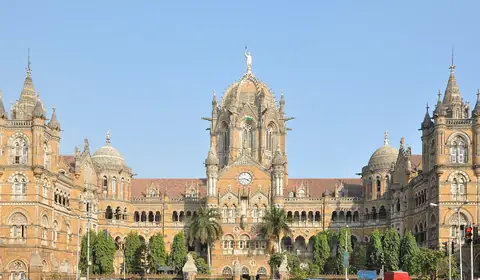
Day 3: Fort and Kala Ghoda. Start at Chhatrapati Shivaji Maharaj Terminus, the Gothic railway palace of 1887 that is still the headquarters of the Central Railway, then cross to the Oval Maidan, where the High Court and the Rajabai Clock Tower face a row of Art Deco blocks across the grass. Give the afternoon to the Chhatrapati Shivaji Maharaj Vastu Sangrahalaya (CSMVS), the city's great museum, which lists foreign adults at INR 700 with the audio guide and opens from 10:15 to 18:00. Around it lies Kala Ghoda, the arts district, with the Jehangir Art Gallery, the National Gallery of Modern Art and streets of murals. Sleep early: the train south leaves at dawn. Our Mumbai guide describes each sight and the city's other days out.
Days 4-5: down the Konkan coast to Panaji and a day on the beach
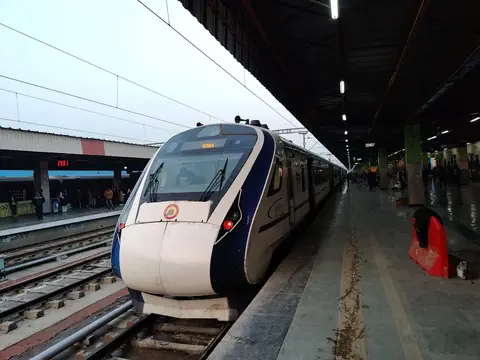
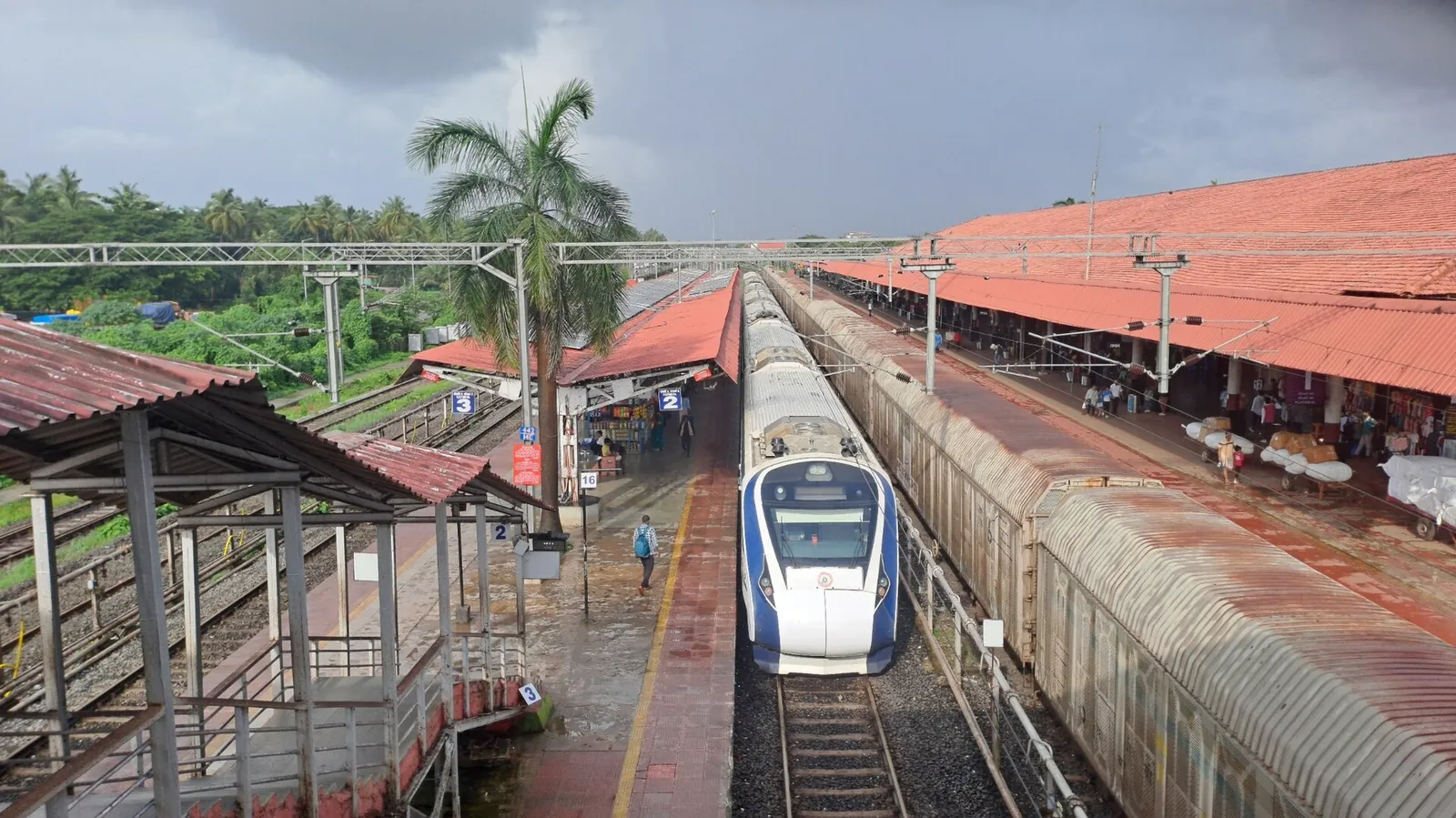
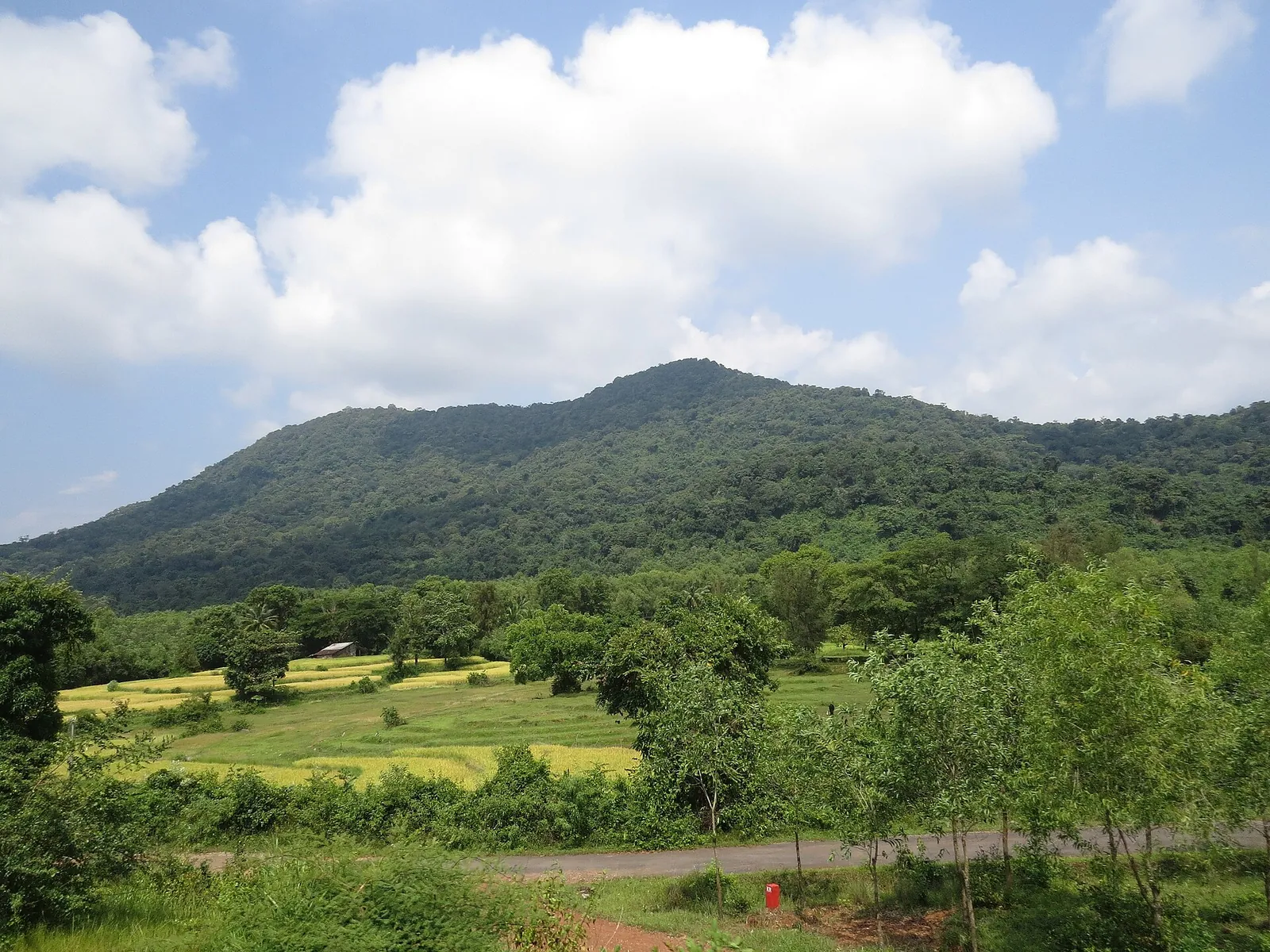
Day 4: the Konkan Railway. The Konkan Railway is the scenic way to Goa. The Chhatrapati Shivaji Maharaj Terminus-Madgaon Vande Bharat Express (22229/22230) stops at Dadar, Thane, Panvel, Khed, Ratnagiri, Kankavali and Thivim. Outside the monsoon it is timetabled to leave CSMT at 05:25 and reach Madgaon at 13:10, every day except Friday, and to return from Madgaon at 14:40, reaching CSMT at 22:25; these are the timings published at its launch. Konkan Railway runs a monsoon timetable with sectional speed restrictions along the route; its 2026 monsoon timetable runs from 15 June to 20 October; after that date the non-monsoon timings above should apply, but check IRCTC for your date.
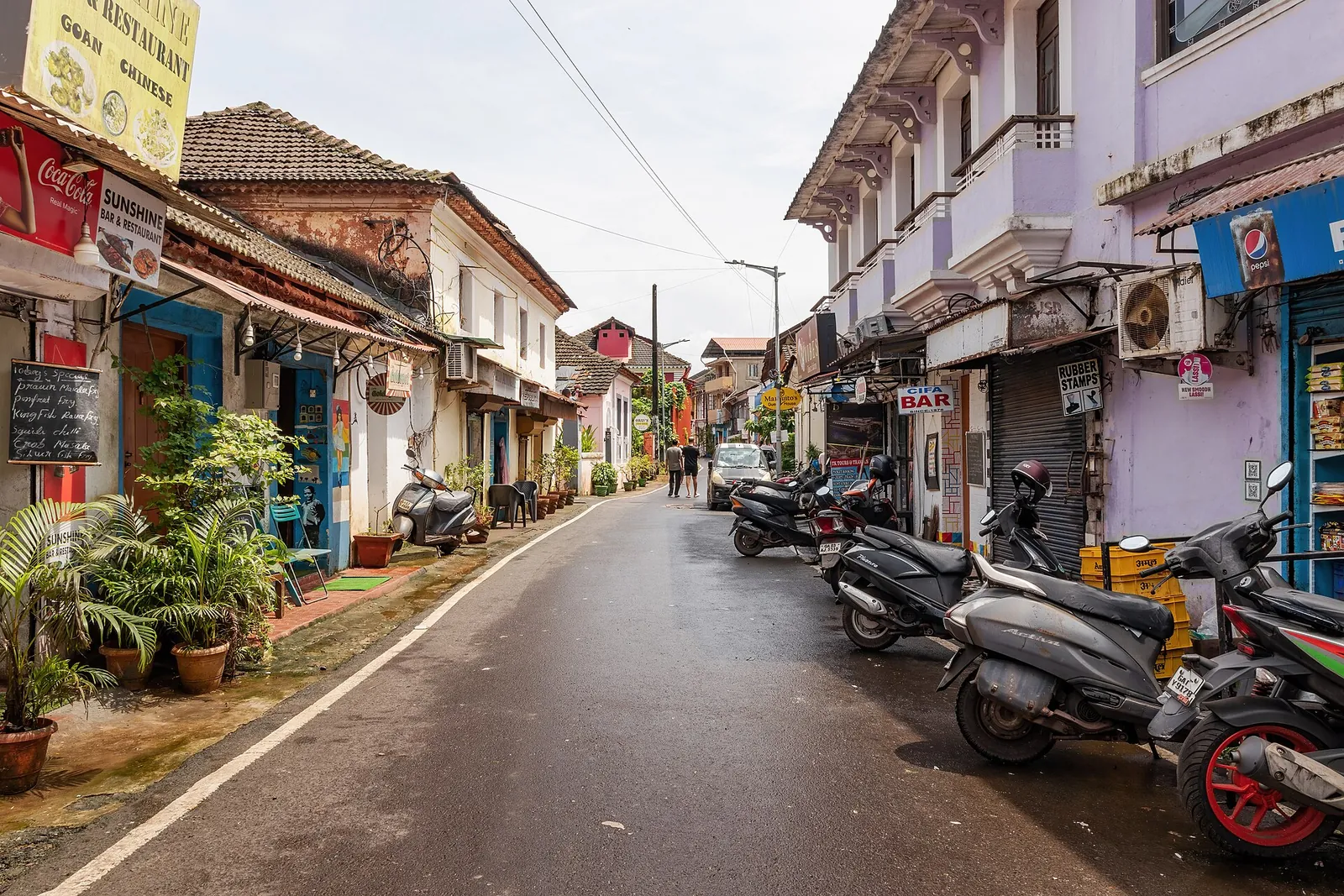
Get off at Thivim, the last stop PIB lists before Madgaon, if you are heading for Panaji or the north coast; Madgaon, where the train ends, is in south Goa. Check the time it reaches Thivim on your ticket. Goa Tourism says white tourist taxis wait at the stations; agree the fare before you get in. Foreign visitors book the train on IRCTC: IRCTC's foreign-tourist terms charge INR 100 plus GST to register, and under the Foreign Tourist quota a ticket costs 1.5 times the normal fare plus INR 200 plus GST, paid by international card, with the original passport and visa carried on board. The India transport guide explains the account and the classes. In the late afternoon, walk the painted lanes of Fontainhas, Panaji's 19th-century quarter, up to the Church of Our Lady of the Immaculate Conception above the main square, and stay in the quarter for dinner.
Day 5: a day on the beach. Choose north or south before you set out. The north is close: from Sinquerim below Fort Aguada, the beaches run north through Candolim, about 18 km from Panaji, and Calangute, the 7 km 'Queen of Beaches', to Baga, with parasailing, jet skis and banana boats and shacks serving fish curry rice; Anjuna, beyond it, is rockier, with a flea market on Wednesdays. To get there from Porvorim or Panaji, take one of the white tourist taxis, which Goa Tourism says most hotels arrange on request, or one of the state and private buses that serve all the major places. The south is quieter but far: Palolem, a crescent bay of calm water and beach huts in Canacona, lies about 38 km from Margao, which makes it a long day from Porvorim; it is better as two extra nights at the end of the trip. Swim only between the red-and-yellow flags, and stay out of the water at red flags and in the monsoon. Beaches are open from 7 AM until sunset: all beaches are closed from sunset to 7 AM, and Goa Tourism asks you not to enter the water after sunset, so keep the evenings for town. The Goa guide describes each beach, the forts and the far south.
Day 6: over the Western Ghats by bus to Hampi
This is the long day. Kadamba Transport Corporation, Goa's state bus company, lists an interstate bus from Panaji to Hosapete (Hospete in its timetable) via Anmod, Hubballi and Gadag, 379 km by its count, leaving Panaji at 09:30. At 379 km over the Ghats, the ride takes most of the day, so plan to reach Hampi in the evening. Kadamba sells interstate seats on its own website, goakadamba.com, one month in advance, asks passengers to report 30 minutes before departure, and keeps 15% of the fare on a cancellation five days or more ahead, rising to the whole fare within 4 hours of departure.
Hosapete is also the railhead. For Hampi, Karnataka Tourism names Hosapete Junction, about 13 km away, as the nearest station, and Jindal Vijaynagar Airport, about 40 km away, as the nearest airport; taxis, buses and rental bikes run from Hosapete to the ruins. Indian Railways publishes Goa-Hosapete departure times and fares only in its journey search, so check IRCTC for your date.
From Hosapete, take a taxi for the last stretch to Kamalapura and settle in; the boulders and the ruins can wait for the morning light. When you check in, ask the front desk to arrange both of the pre-dawn rides this plan needs: to Hampi Bazaar on day 7 and to Hosapete on day 9.
Days 7-8: Hampi's sacred and royal centres
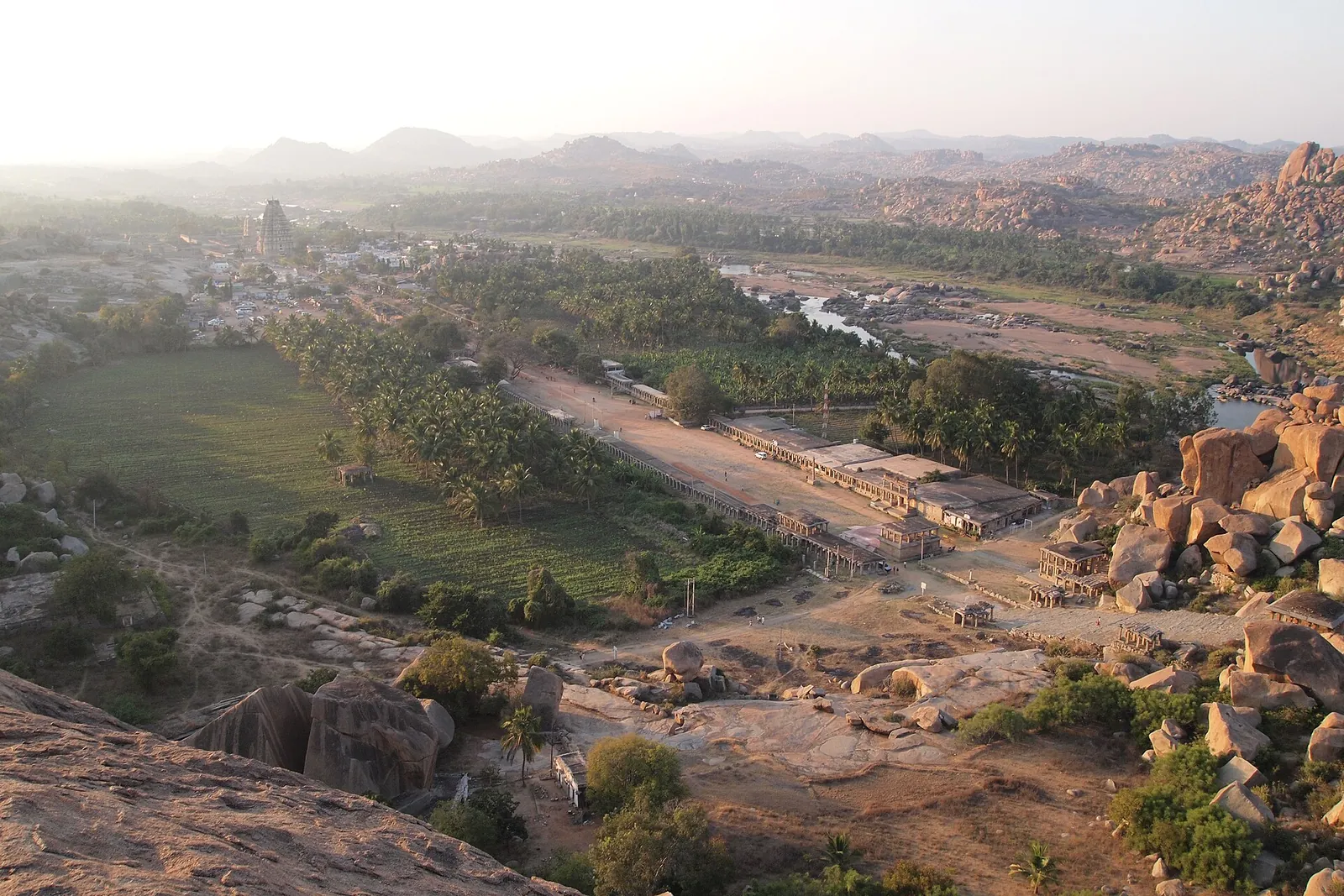
Hampi was the capital of the Vijayanagara kings, and the ASI describes its ruins as spread over nearly 26 sq km on the south bank of the Tungabhadra. The ASI lists the Group of Monuments at Hampi as open from sunrise to sunset, at INR 600 for foreign visitors and free for children below 15. The ASI prices the Group of Monuments as one ticket, so keep it with you all day. The Virupaksha Temple, still in worship, keeps its own hours, given below. Split the site in two, and walk one half and drive the other; Karnataka Tourism also suggests renting a bicycle to reach the monuments at your own pace.
Day 7: Matanga Hill, the Sacred Centre and the river. Ride from Kamalapura to Hampi Bazaar before first light in the auto-rickshaw or car arranged at check-in, and climb Matanga Hill, the highest point in Hampi, over rocky paths and ancient steps for the sunrise over the ruins and the Tungabhadra. Then walk the bazaar, a long stretch of stone pavilions and ruined mandapas on both sides of the road, to the Virupaksha Temple, still in worship, whose great gopuram rises nine storeys; Incredible India lists it as open from 06:00 to 12:00 and from 16:30 to 21:00. Then, outside the monsoon, take a coracle, one of the round basket boats of the Tungabhadra, from the ghat by the temple across to Virupapur Gadde, the village known as Hippie Island, a crossing of about 5 minutes; Anegundi, a village older than Hampi itself, lies on the same bank. No crossing fare or timetable is published; agree the fare at the ghat. Come back across the river for the sunset on Hemakuta Hill, among its small early temples and the Sasivekalu Ganesha, carved from a single rock on its slopes.
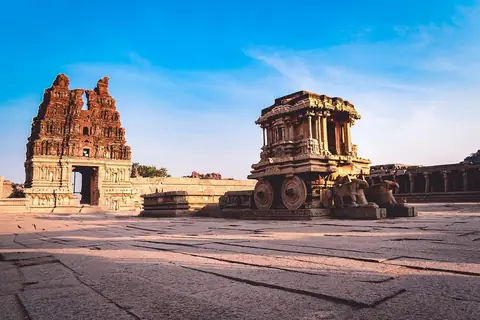
Day 8: the Vittala Temple and the Royal Centre by car. Be at the Vijaya Vittala Temple at opening time for its stone chariot, a granite shrine to Garuda carved as a ceremonial temple car. Then drive to the Royal Centre: the Mahanavami Dibba throne platform and the stepped tank, the Hazara Rama Temple with its Ramayana panels, the Lotus Mahal in the Zenana Enclosure, which Karnataka Tourism lists as open from 8 AM to 6 PM, and the domed Elephant Stables. Stop on the way back at the Ugra Narasimha, Vishnu's man-lion form carved from one boulder. The car with driver priced in our Hampi guide covers 8 hours or 80 km; the guide also explains the coracle crossings and when the river is too high for them. In Kamalapura, the Archaeological Museum has scale models of the site and its monuments, sculptures found in the ruins, among them forms of Shiva such as Veerabhadra and Bhairava, and the tools and coins of Vijayanagara. No opening hours or closing day are published for it, so go in the afternoon of a day with time to spare.
Days 9-10: back to Goa, Old Goa and the flight home
Day 9: Hosapete to Goa. Kadamba's return bus leaves Hosapete at 05:45, so the drive from Kamalapura to Hosapete starts in the dark, in the car arranged at check-in; if you would rather not depend on it, sleep the eighth night in Hosapete, which Karnataka Tourism says has rooms for every budget. At 379 km, the ride takes most of the day; keep the evening free for a last walk in Fontainhas.
Day 10: Old Goa, then the flight home. Go early, before the heat, to the cathedrals and churches of the old Portuguese capital, now the UNESCO World Heritage Site of the Churches and Convents of Goa. The Basilica of Bom Jesus keeps the remains of St Francis Xavier, and Incredible India lists it from 09:00 to 18:30 on weekdays and from 10:30 to 18:30 on Sundays. The Se Cathedral, dedicated to St Catherine because the Portuguese took Goa on her feast day in 1510, was begun in 1562 and finished in 1619; Incredible India calls it the largest church in Asia, 250 feet long with a façade 115 feet high, and its Golden Bell the biggest in Goa. The Church and Convent of St Francis of Assisi is in ASI's care and no longer holds services; its halls and ceilings carry paintings of scenes from the saint's life. The cathedral is open from 07:30 to 18:00 and St Francis of Assisi from 07:30 to 18:30. The ASI's Archaeological Museum in Old Goa is open from 09:00 to 17:00, closed on Fridays, at INR 10 for adults. Book an afternoon or evening flight; with a morning flight, give the afternoon of day 4 to Old Goa instead of Fontainhas.
Goa is served by Manohar International Airport (GOX) at Mopa, in the far north, and by Dabolim (GOI), 30 km south of Panaji, and both accept the e-Visa. Kadamba's citizen charter prices its air-conditioned airport shuttle from Mopa to Panaji at INR 200 per passenger and from Dabolim to Panaji at INR 150; it gives no fare for the ride to the airport. Old Goa lies 10 km from Panaji by Goa Tourism's count, so ride back to Panaji for the bus, or take a tourist taxi straight to the airport. Mopa airport's timetable lists buses from Panaji to the airport at 07:00, 08:00, 09:00, 12:00, 14:30, 16:00 and 19:00.
Make time for the local food
What to eat and where to look
Pav bhaji
A spiced mash of vegetables cooked on a griddle and served with soft bread rolls fried in butter, Mumbai's favourite street supper.
- Where to look
- The street-food stalls of Girgaum Chowpatty, at the north end of Marine Drive, which Incredible India names for pav bhaji.
- Fit it into your day
- Dinner on the day you land, at the end of the Marine Drive walk.
Vada pav
A spiced potato fritter in a soft bun with chutneys, the city's everyday fast food.
- Where to look
- The street-food stalls around Crawford Market, just north of CSMT, which Incredible India names for vada pav.
- Fit it into your day
- A snack on the morning of day 3, after CSMT.
Fish curry rice
The meal on every Goan table: a red, coconut-rich curry soured with kokum, poured over rice, with mackerel, kingfish or prawns.
- Where to look
- The shacks on Calangute beach, which Incredible India names for it.
- Fit it into your day
- Lunch on the beach day.
Goan curries are hot with chilli, and many are made with seafood, pork or coconut; say so if you avoid shellfish, pork, coconut or strong chilli.
Xacuti
A festive Goan curry of 16 to 18 spices and roasted coconut, made with chicken, crab, mutton or vegetables.
- Where to look
- Viva Panjim, a family restaurant in a heritage house on Rua 31 de Janeiro in Fontainhas, which lists a vegetable xacuti at INR 240 and a pork xacuti at INR 300.
- Fit it into your day
- Dinner in Fontainhas on day 4, after the walk through the quarter.
Kadak rotti with chutney pudi
The crisp, hard version of North Karnataka's jowar flatbread, which Karnataka Tourism calls ideal for storage and travel, eaten with dry chutney powders of groundnut, sesame or garlic mixed with ghee or curd.
- Where to look
- The snack shops and markets of Hosapete; Karnataka Tourism says restaurants in Hubballi, on the bus route to Goa, also serve North Karnataka meals.
- Fit it into your day
- Bought in Hosapete when the bus arrives on day 6, and kept for the dawn bus back to Goa on day 9.
Arrival days that work, the season and an eight-day version
Three weekly gaps set the order: no Elephanta on Mondays, no Vande Bharat on Fridays outside the monsoon, and no Old Goa museum on Fridays. Outside the monsoon, the plan works as written if you land on a Monday, Thursday, Friday or Saturday. Landing on a Sunday, swap days 2 and 3, so Elephanta falls on the Tuesday. Landing on a Wednesday, day 10 is a Friday: the churches of Old Goa stay open, and only the museum is lost. Landing on a Tuesday, day 4 is a Friday: fly to Goa that day, or move Elephanta to day 4 and take the train on the Saturday, giving up the beach day. Akasa Air announced in November 2025 a daily non-stop from Navi Mumbai at 17:40, due in Goa at 18:55; its booking page shows the current times and which Goa airport they use, and the airlines' own pages show the flights from Mumbai's main airport. Allow plenty of time for the road transfer from Colaba to Navi Mumbai airport. These landing days follow the non-monsoon timetable; the 2026 monsoon timetable runs to 20 October, so check IRCTC for your date if you travel in a monsoon.
The season decides how the trip feels. Goa Tourism gives the monsoon as June to September, and Karnataka Tourism recommends October to February for Hampi, when temperatures run between 15°C and 30°C; Karnataka Tourism warns that summer in the Hampi area can get extremely hot, so start each day at sunrise. The best-time guide compares the months across India, and the health and safety guide covers heat, food and water, and the warnings for nights out in Goa.
With eight days (seven nights), give Mumbai two nights (the Gateway and Marine Drive on the evening you land, Elephanta and a walk past CSMT on day 2), take the train to Goa on day 3 for one night in Porvorim, ride the bus to Hampi on day 4 for three nights, and return on day 7 for a last night in Goa. Old Goa moves to the morning of day 8, before an afternoon or evening flight.
What the ten days cost for two
This model follows the ten-day plan for two adults sharing a room, with every price checked on 17 October 2026. The rooms are the ones priced in the three place guides, at exactly their rates; monument tickets are the foreign-visitor prices, and children below 15 enter Elephanta and Hampi free.
- Mumbai, 3 nights: the Colaba room priced in our Mumbai guide, a double room with bath and breakfast from INR 5,250 a night (INR 15,750), plus the 5% government tax the hotel adds: INR 16,538.
- Goa, 3 nights (2 + 1): the Porvorim room priced in our Goa guide, a standard room for two at INR 3,750 a night, room only, taxes included, in a tariff valid from 22 September 2025: INR 11,250.
- Hampi, 3 nights: the Kamalapura room priced in our Hampi guide, an A/C Deluxe Double at INR 3,119 a weekday night (INR 9,357), plus the 5% GST that applies to rooms priced at INR 7,500 or less a night: INR 9,825; each weekend night costs INR 3,379, or INR 260 more before GST. KSTDC adds a seasonal hike to these basic rates, so this is the lowest the three nights cost.
- Mumbai sights: Elephanta bought online at INR 550 each (INR 1,100) and the CSMVS with audio guide at INR 700 each (INR 1,400): INR 2,500.
- Goa and Hampi sights: the Old Goa Archaeological Museum at INR 10 each (INR 20) and the ASI ticket for the Group of Monuments at Hampi at INR 600 each (INR 1,200): INR 1,220.
- Car day in Hampi: the state tourism corporation's sedan with driver for 8 hours or 80 km, INR 2,600 plus 5% GST: INR 2,730.
- Airport shuttle in Goa: Kadamba's air-conditioned shuttle from Panaji to Mopa for two, at INR 200 each, the fare its charter gives for the ride from Mopa, because the Porvorim hotel's free airport pick-up and drop is only for stays of three nights or more, and both Goa stays here are shorter: INR 400.
- Total: about INR 44,463 for two.
- Not included: meals and drinks; flights; the Vande Bharat fare and IRCTC's charges; the Elephanta launch and the coracle crossings; and the Kadamba buses to and from Hosapete and the taxis (from the airport, from Thivim, to the beach, and between Kamalapura, Hampi Bazaar and Hosapete), for which no official fare is published.
Practical questions
Can I see Mumbai, Goa and Hampi in ten days?
Yes, with nine nights: three in Mumbai, two in Goa, three in Hampi and a last night in Goa before the flight. The day train down the Konkan coast and the bus over the Ghats each take most of a day, so the plan keeps them to days 4, 6 and 9.
Should I take the train or fly from Mumbai to Goa?
Take the train if your day allows it: outside the monsoon the Vande Bharat is timetabled to leave CSMT at 05:25 and reach Madgaon at 13:10, every day except Friday, along the coast, and it stops at Thivim for north Goa; these are the timings published at its launch. Fly to Goa if the train does not run on your day, and check Akasa Air's booking page for its current flights from Navi Mumbai.
How do I get from Goa to Hampi?
By Kadamba's interstate bus from Panaji to Hosapete, which leaves at 09:30 and covers 379 km via Hubballi, or by rail to Hosapete Junction, Hampi's nearest station; check IRCTC for a train on your date. Hampi is 13 km from Hosapete by taxi.
Which Goa beach should I choose for the beach day?
From a base in Porvorim or Panaji, the north is the easy choice: Candolim, about 18 km from Panaji, runs into Calangute and Baga, with shacks and water sports, and Anjuna is rockier and quieter. Palolem, in the far south, is about 38 km from Margao and suits two nights of its own rather than a day trip.
What does the trip cost for two?
About INR 44,463 for the nine rooms with their taxes, the main monument tickets, a car day in Hampi and the Goa airport shuttle, on prices checked on 17 October 2026. Trains, buses, taxis and meals come on top.
Does the route work in eight days?
Yes, with seven nights: two in Mumbai, one in Goa, three in Hampi and one more in Goa. Old Goa moves to the last morning, so book an afternoon or evening flight home.
Sources and checks before you travel
Reference sources for the version dated 17 October 2026. Confirm opening times, access, transport and conditions for your travel dates.
- Archaeological Survey of India: Elephanta Caves ↗ — opens in a new tab
- Maharashtra Tourism: Elephanta Caves ↗ — opens in a new tab
- Ministry of Tourism (Incredible India): Chhatrapati Shivaji Maharaj Terminus ↗ — opens in a new tab
- Ministry of Tourism (Incredible India): The Victorian and Art Deco Ensemble of Mumbai ↗ — opens in a new tab
- Chhatrapati Shivaji Maharaj Vastu Sangrahalaya: Visit us ↗ — opens in a new tab
- Ministry of Tourism (Incredible India): Mumbai's Culinary Tapestry ↗ — opens in a new tab
- Press Information Bureau (PIB): Navi Mumbai International Airport, 8 October 2025 ↗ — opens in a new tab
- UK Foreign Office (FCDO): India safety and security ↗ — opens in a new tab
- Official e-Visa site: e-Tourist visa and entry points ↗ — opens in a new tab
- PIB Goa: Madgaon-Mumbai Vande Bharat flagged off, 27 June 2023 ↗ — opens in a new tab
- Konkan Railway: Konkan Railway gears up for monsoon 2026, 12 June 2026 ↗ — opens in a new tab
- IRCTC: Foreign Tourist quota booking (PDF) ↗ — opens in a new tab
- IRCTC: Foreign Tourist quota terms and conditions (PDF) ↗ — opens in a new tab
- PIB (Ministry of Railways): Vande Bharat Express backgrounder, 16 January 2026 ↗ — opens in a new tab
- Akasa Air: Navi Mumbai operations press release, 14 November 2025 ↗ — opens in a new tab
- Goa Tourism (Department of Tourism, Government of Goa): within Goa ↗ — opens in a new tab
- Goa Tourism (Department of Tourism, Government of Goa): weather ↗ — opens in a new tab
- Ministry of Tourism (Incredible India): Goa ↗ — opens in a new tab
- Goa Tourism (Department of Tourism, Government of Goa): beach dos and don'ts (PDF) ↗ — opens in a new tab
- Ministry of Tourism (Incredible India): Goa's coastline ↗ — opens in a new tab
- Ministry of Tourism (Incredible India): Calangute Beach ↗ — opens in a new tab
- Ministry of Tourism (Incredible India): Basilica of Bom Jesus ↗ — opens in a new tab
- Ministry of Tourism (Incredible India): The Archaeological Museum, Old Goa ↗ — opens in a new tab
- Ministry of Tourism (Incredible India): Top 14 foods to try in Panjim ↗ — opens in a new tab
- Kadamba Transport Corporation: citizen charter, last updated 28 January 2026 ↗ — opens in a new tab
- AAI eAIP: VOGO Goa (Dabolim) aerodrome data ↗ — opens in a new tab
- AAI eAIP: VOGA Manohar International Airport, Mopa ↗ — opens in a new tab
- Karnataka Tourism: Hampi ↗ — opens in a new tab
- Archaeological Survey of India: Group of Monuments at Hampi ↗ — opens in a new tab
- Ministry of Tourism (Incredible India): Virupaksha Temple ↗ — opens in a new tab
- Ministry of Tourism (Incredible India): Coracle Crossings ↗ — opens in a new tab
- Ministry of Tourism (Incredible India): 8 best things to do in Hampi ↗ — opens in a new tab
- Karnataka Tourism: Lotus Mahal ↗ — opens in a new tab
- Karnataka Tourism: Northern Karnataka food trail ↗ — opens in a new tab
- Viva Panjim: menu ↗ — opens in a new tab
- GST Council: recommendations of the 56th meeting (PIB release of 3 September 2025) ↗ — opens in a new tab
- Ministry of Tourism (Incredible India): Se Cathedral, Old Goa ↗ — opens in a new tab
- Ministry of Tourism (Incredible India): Church and Convent of St Francis of Assisi ↗ — opens in a new tab
- Goa Tourism: Goa Tourist Directory (distances in Goa) ↗ — opens in a new tab
- Manohar International Airport, Mopa: bus routes and timings ↗ — opens in a new tab
Does this experience fit your route?
Book the dawn train down the Konkan coast first, then the bus over the Ghats to Hosapete, then three rooms that do the work: Colaba for the harbour, Porvorim for both Goa nights, and Kamalapura for sunrise among the ruins.
Check dates and details on Viator ↗ — opens in a new tabAffiliate link · Book with ViatorPhoto credits
Hampi Bazaar runs east from the Virupaksha Temple between the boulder hills, seen from the top of Matanga Hill.
Photograph: Vyacheslav Argenberg — opens in a new tab · CC BY 4.0 — opens in a new tab
Changes: Resized and converted to WebP; displayed with responsive crops. · Original photograph and licence details ↗ — opens in a new tab
A Vande Bharat Express at Madgaon Junction, the Goa terminus of the train from Mumbai CSMT.
Photograph: Arhan Jain — opens in a new tab · CC BY 4.0 — opens in a new tab
Changes: Resized and converted to WebP; displayed with responsive crops. · Original photograph and licence details ↗ — opens in a new tab
Painted houses line a street in Fontainhas, Panaji's 19th-century Latin quarter.
Photograph: iMahesh — opens in a new tab · CC BY-SA 4.0 — opens in a new tab
Changes: Resized and converted to WebP; displayed with responsive crops. · Original photograph and licence details ↗ — opens in a new tab
Hills and rice fields beside the Konkan Railway, seen from a passing train.
Photograph: Vinayaraj — opens in a new tab · CC BY-SA 4.0 — opens in a new tab
Changes: Resized and converted to WebP; displayed with responsive crops. · Original photograph and licence details ↗ — opens in a new tab
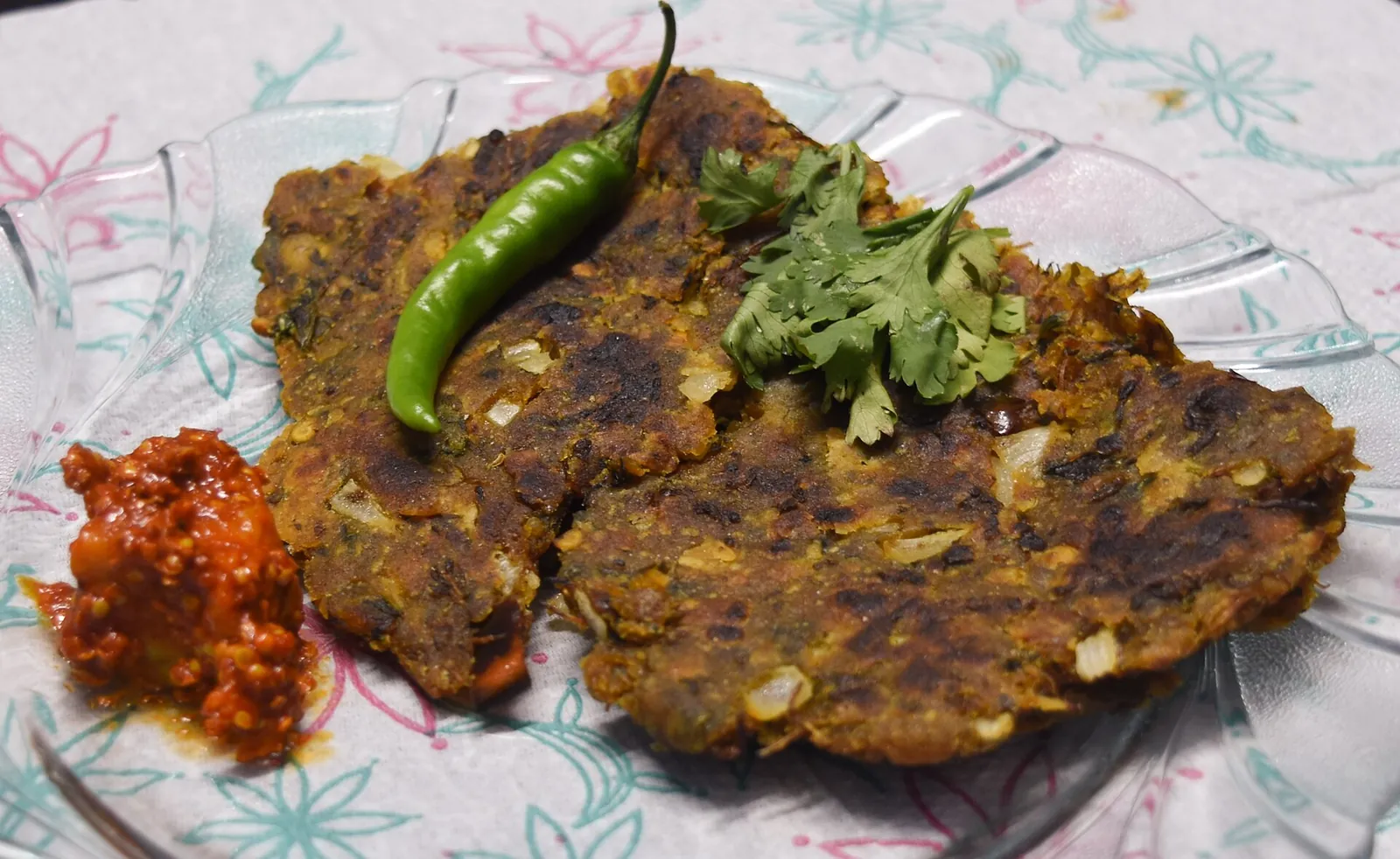
Thalipeeth, a Maharashtrian flatbread of mixed grain flours, served with pickle.
Photograph: Satyajit Dhawale (Satyajit888) — opens in a new tab · CC BY-SA 4.0 — opens in a new tab
Changes: Resized and converted to WebP; displayed with responsive crops. · Original photograph and licence details ↗ — opens in a new tab