Wangdue Phodrang
Phobjikha Valley: Gangtey Gonpa, the cranes and two quiet nights
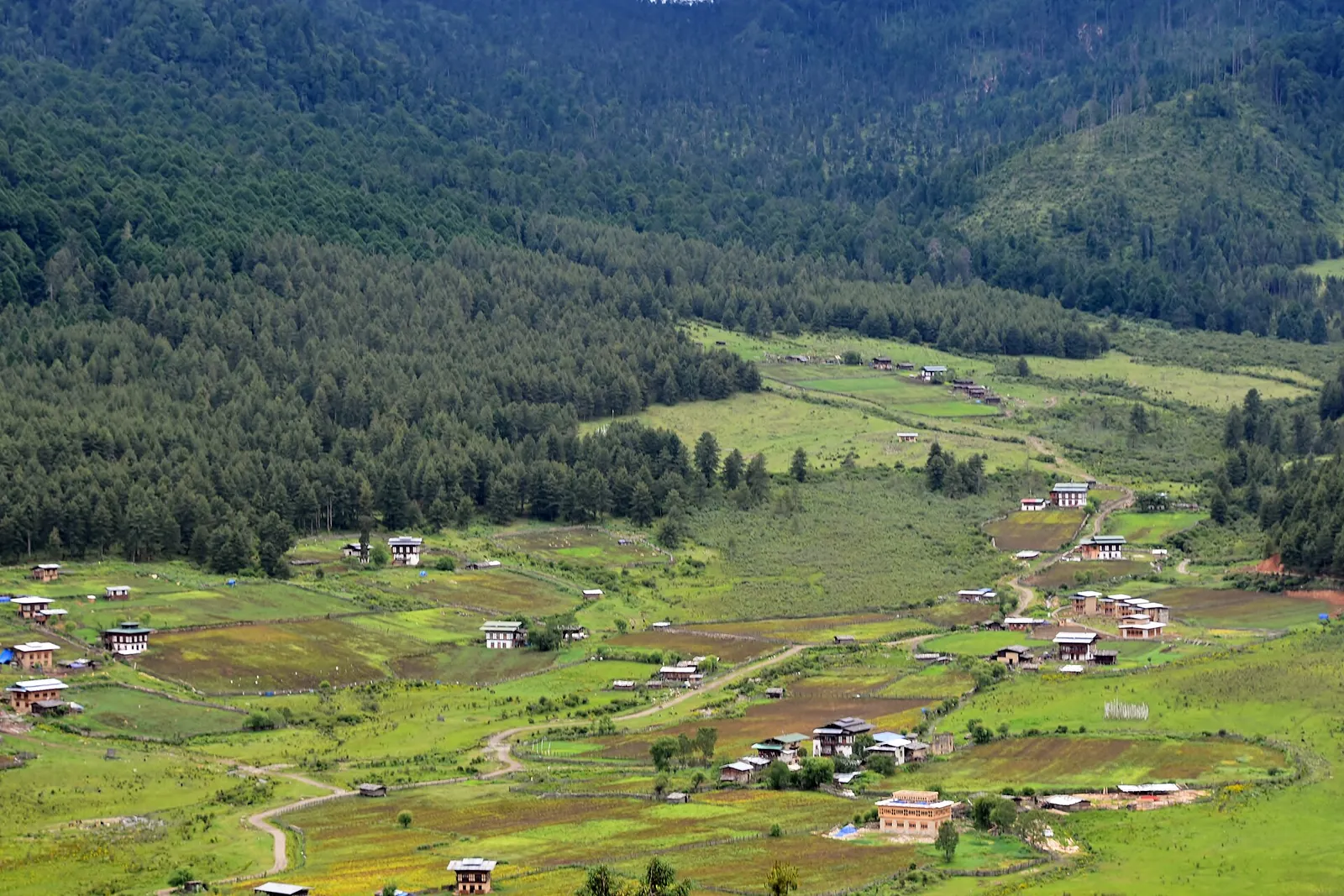
Over the Lawa La pass from Wangdue Phodrang the road drops into a wide, open bowl at about 3,000 m: a marsh in the middle, potato fields and farmhouses on the slopes, and the white walls of Gangtey Gonpa on a spur at the head of the valley. From late October to mid-March this is where most of Bhutan's black-necked cranes spend the winter. Phobjikha asks for a detour of a morning's drive from Punakha and rewards it with the slowest days of a Bhutan trip: a monastery, a crane centre, a downhill walk and nights by a wood stove.
In this guide
Find the location ↗ — opens in a new tabThe short answer
Give Phobjikha two nights after Punakha: it is 78 km and about 3 hours by road over the Lawa La pass, and one night leaves only an afternoon in the valley. Stay on the valley floor near the crane centre if the cranes are the point, or on the slopes by Gangtey Gonpa for the monastery and the nature trail. Go between late October and mid-March for the cranes, or for the Black-necked Crane Festival, tentatively on 11 November 2027. Guided Bhutan sells a ten-day private route with two Phobjikha nights at USD 5,220 for two; with Delhi flights, tips and a buffer, that trip comes to about USD 7,550 for two, all in. Book the operator and Paro flights first, and the Phobjikha rooms early for October and November.
- Suggested time
- 2 nights in Phobjikha, after Punakha
- Where to stay
- The Phobjikha valley floor near the crane centre, or the slopes around Gangtey Gonpa
- Season and timing
- The cranes winter in the valley from late October, with most gone by mid-March; snow is common above 3,000 m from late November to March
A glacial valley at 3,000 m, and why the cranes come
Phobjikha lies at about 3,000 m in the hills of Wangdue Phodrang district, a wide valley whose floor is a wetland, the largest in Bhutan in the description of the Royal Society for Protection of Nature (RSPN). Its marsh is Bhutan's biggest Ramsar site, a wetland of international importance covering 974.65 ha. Around it the valley is farmland: together with neighbouring Gangtey, Phobjikha grows about 12,000 tonnes of potatoes a year, more than a third of Bhutan's crop, according to UNDP, and the farmhouses with their carved windows and shingled roofs sit among the fields.
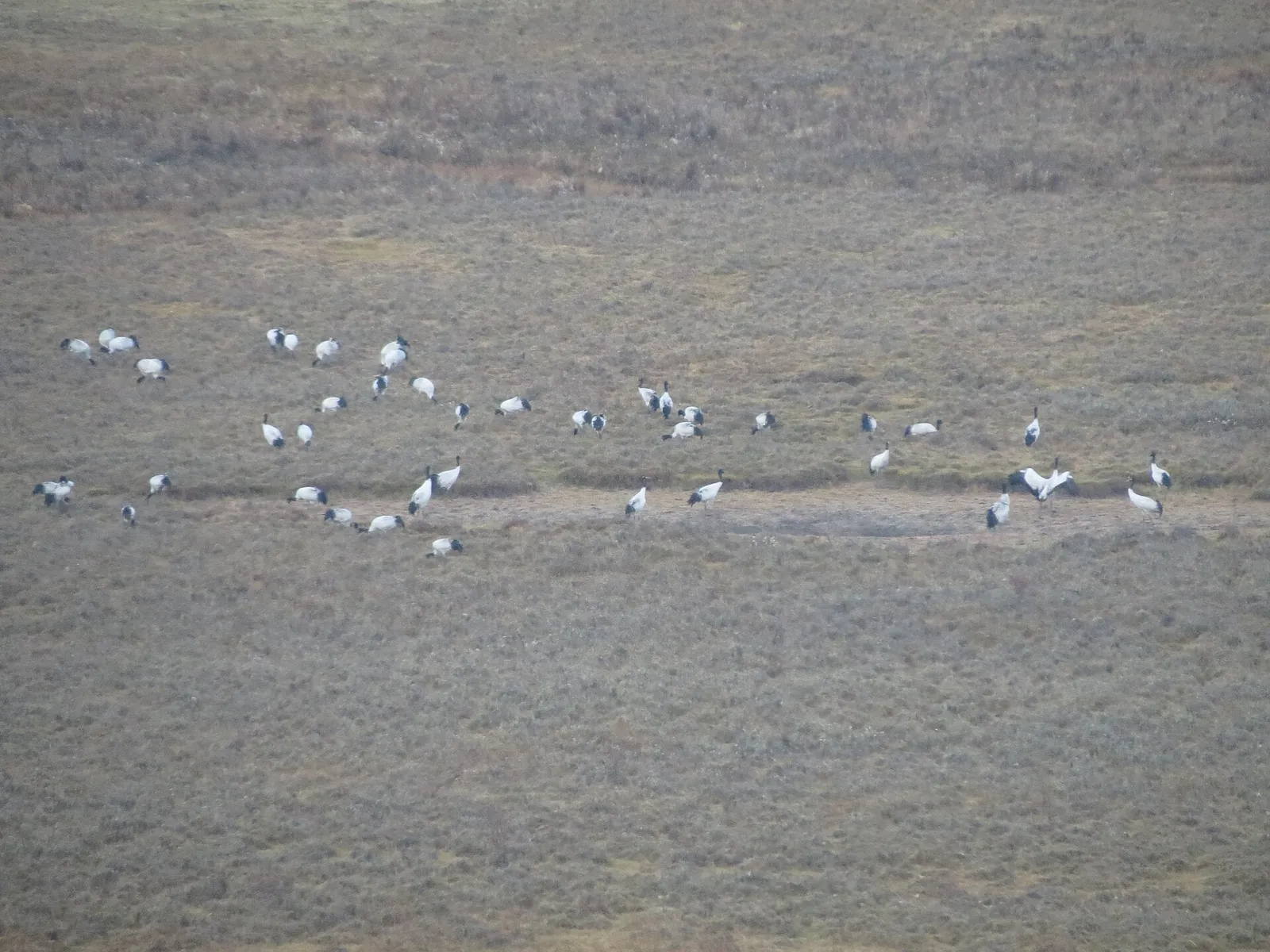
The black-necked cranes make the valley famous. These tall grey cranes with black heads and necks breed on the Tibetan Plateau and fly south for the winter; Phobjikha is their main wintering ground in Bhutan. RSPN's records show the first cranes arriving in late October, most by December, and the first groups leaving at the end of February, with most gone by mid-March. In the winter of 2024–25 RSPN counted 650 cranes in Phobjikha, out of more than 700 in the whole country, as reported by the state broadcaster BBS. You see them feeding on the marsh and the harvested fields by day and flying in to roost at dusk; local people revere them as heavenly birds, RSPN notes.
Outside the crane months the valley is still worth its detour: green in summer, quiet, and far from the busier western sights. It is also cold: at 3,000 m, Phobjikha sits at the height where the Department of Tourism says snow is common from late November to March, so bring warm layers for any winter visit.
Gangtey Gonpa and the Black-necked Crane Visitor Centre
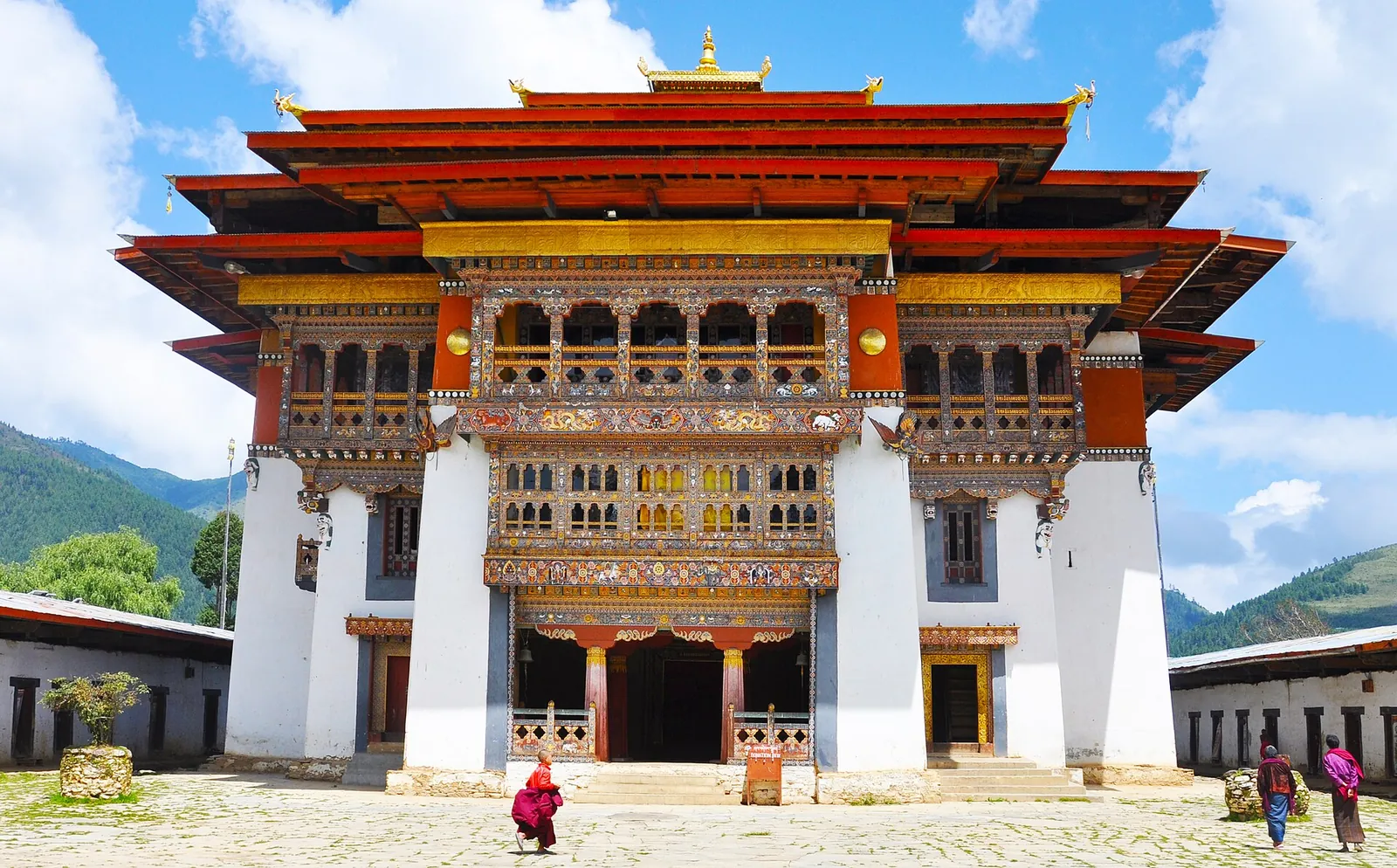
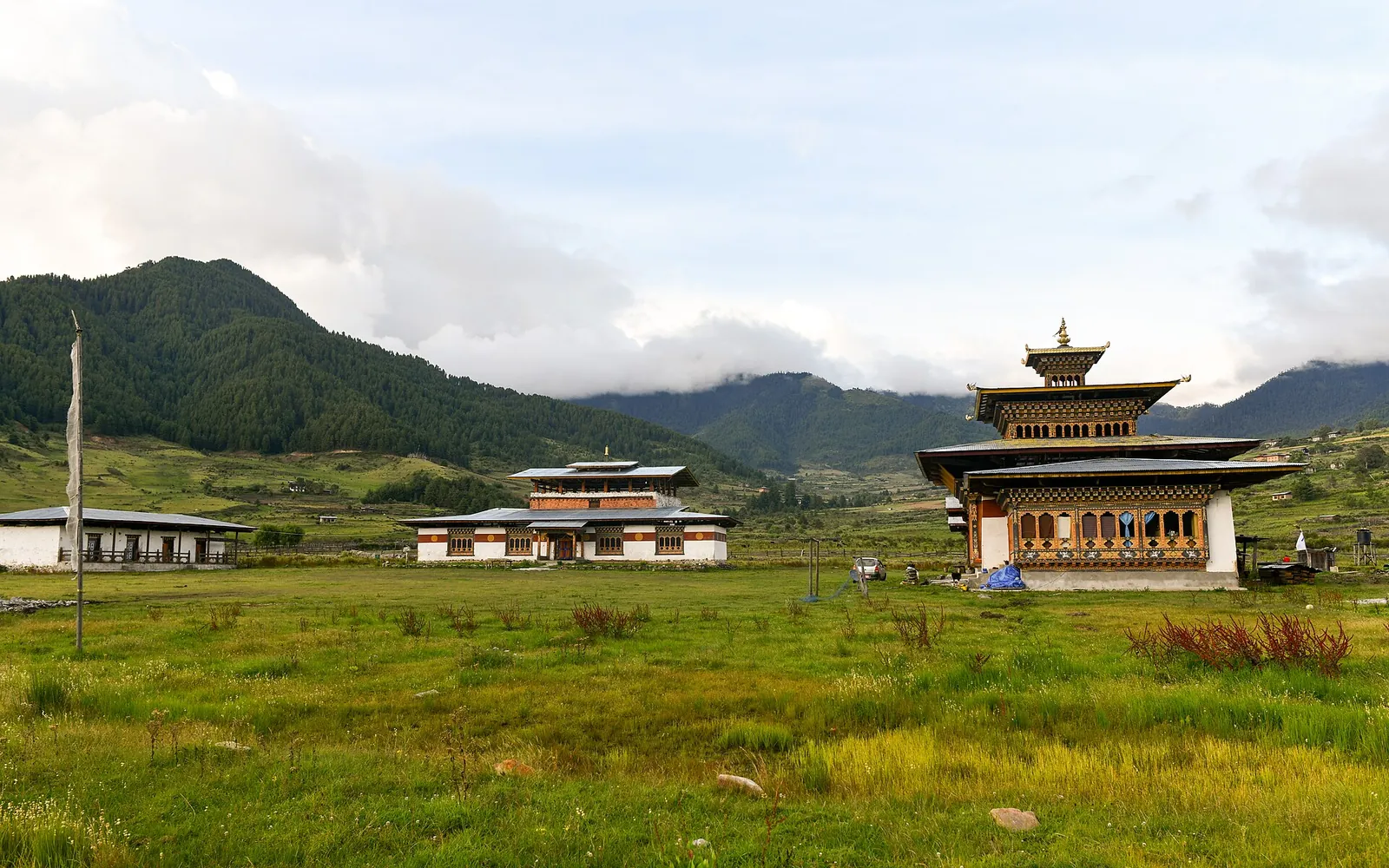
Gangtey Gonpa stands on a forested spur at the head of the valley, visible from much of the valley floor. It was founded in 1613 by Pema Tinley, grandson of the treasure revealer Pema Lingpa, and remains a main seat of the Pema Lingpa tradition of the Nyingma school. The large central temple, with its tall wooden pillars and painted walls, is ringed by monks' quarters and a monastic college; a restoration from 2000 to 2008 rebuilt much of it in the traditional way. The Department of Tourism's monument list gives entry as Nu 100, with visiting hours from 08:00 to 17:00 and a lunch break from 11:30 to 13:00. Wear clothing that covers you from shoulders to knees; photography inside temples is forbidden. Gangtey Tshechu, the monastery's festival of masked dances, is tentatively listed for 13–15 October 2027, and the crane festival is held in its courtyard.
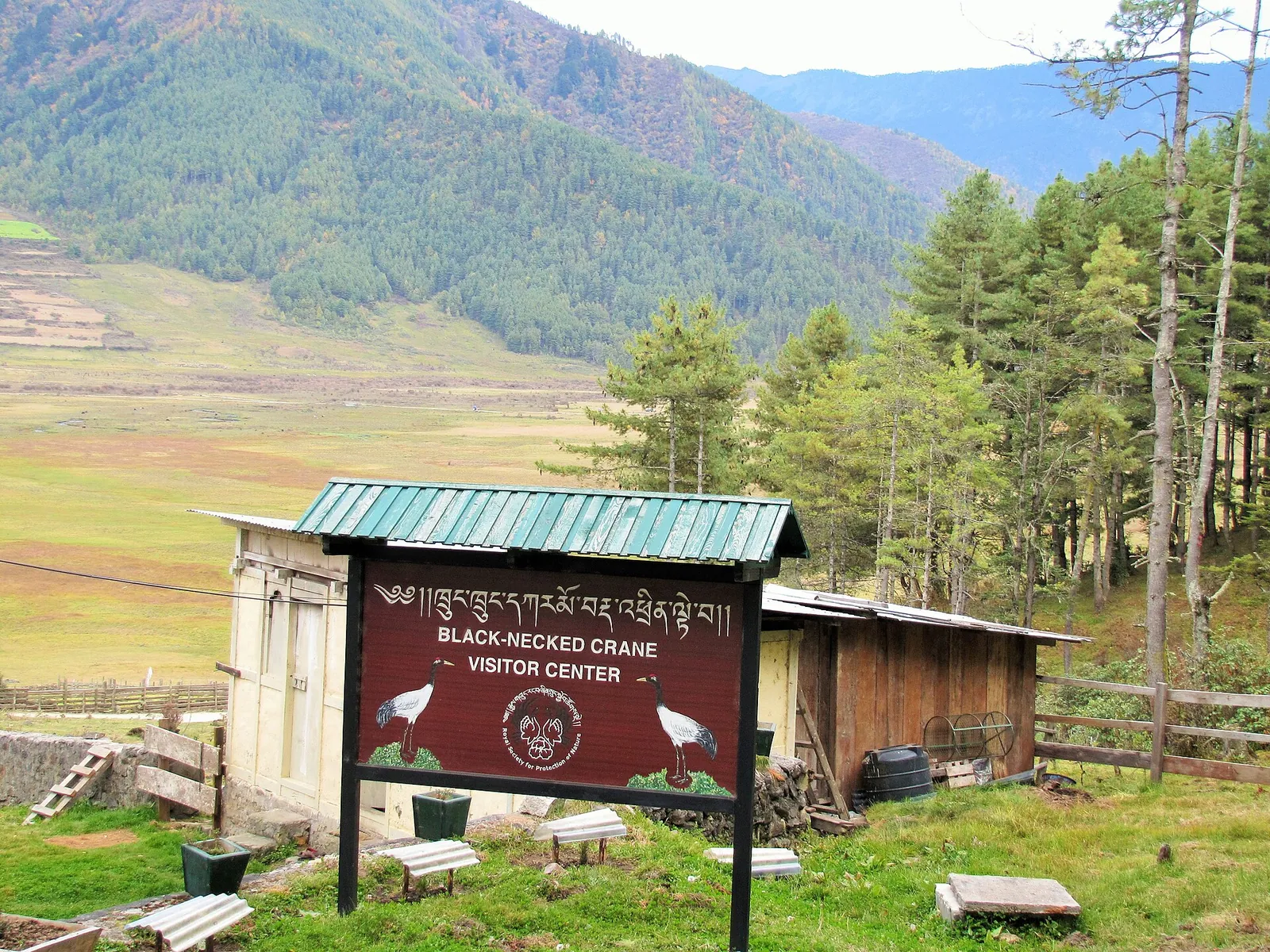
The Black-necked Crane Visitor Centre, run by RSPN on the valley floor, is the place to start a crane day. RSPN describes a small theatre with crane documentaries and an observatory with spotting scopes trained on the marsh, so you can watch the birds without walking out to them. Little Bhutan, a licensed operator, notes that two cranes that cannot fly live at the centre all year, which makes it worth a stop in summer too. The Department of Tourism's monument list gives entry as Nu 200 and hours from 09:00 to 17:00. Allow about an hour, then look for the flock from the road and the trail with what you have learned.
Watching the cranes. The flock spends the night on roosts in the marsh and leaves around dawn to feed on the marsh and the harvested fields: an RSPN observer, watching from a hide about 100 m from the two main roosts on 22 February 2015, saw the cranes fly off to feed at 06:41. Little Bhutan notes that the centre's staff know where the flock is on any given morning, so start there, then watch from the centre, the road and the trail, never from the marsh itself. Before dawn, keep voices and torches low, as the RSPN observers did, and do not walk onto the marsh for a closer photograph.
Walks: the Gangtey Nature Trail and Longtey
The Gangtey Nature Trail is the classic half-day. The Department of Tourism gives it as about four to five kilometres, through pine forest and over gently undulating pastures, with views back to Gangtey Gonpa. Little Bhutan describes it as starting at the mani wall just north of the monastery and running downhill, one way, for about an hour and a half to Khewang Lhakhang, a small temple on the valley floor, where your car meets you. It is easy walking; the altitude is the only effort, so take it slowly on your first afternoon.
For a longer day, the Department of Tourism suggests the Longtey trail, which starts at the Pele La pass on the main road east, crosses a small village where yak herders camp and climbs to a pass at about 3,700 m before the valley opens below you. Guided Bhutan's ten-day route uses the half-day hike from Longtey to Gogona as its Phobjikha walk. Whichever you choose, stay on the paths and off the marsh: the cranes feed and roost undisturbed only while people keep their distance.
Your guide can also arrange a farmhouse visit or a village walk; RSPN, which helps the valley's community run its crane festival, lists the Khewang Lhakhang visit and village walks among the half-day additions a local group can prepare with notice.
When to go: cranes, the October tshechu and the November festival
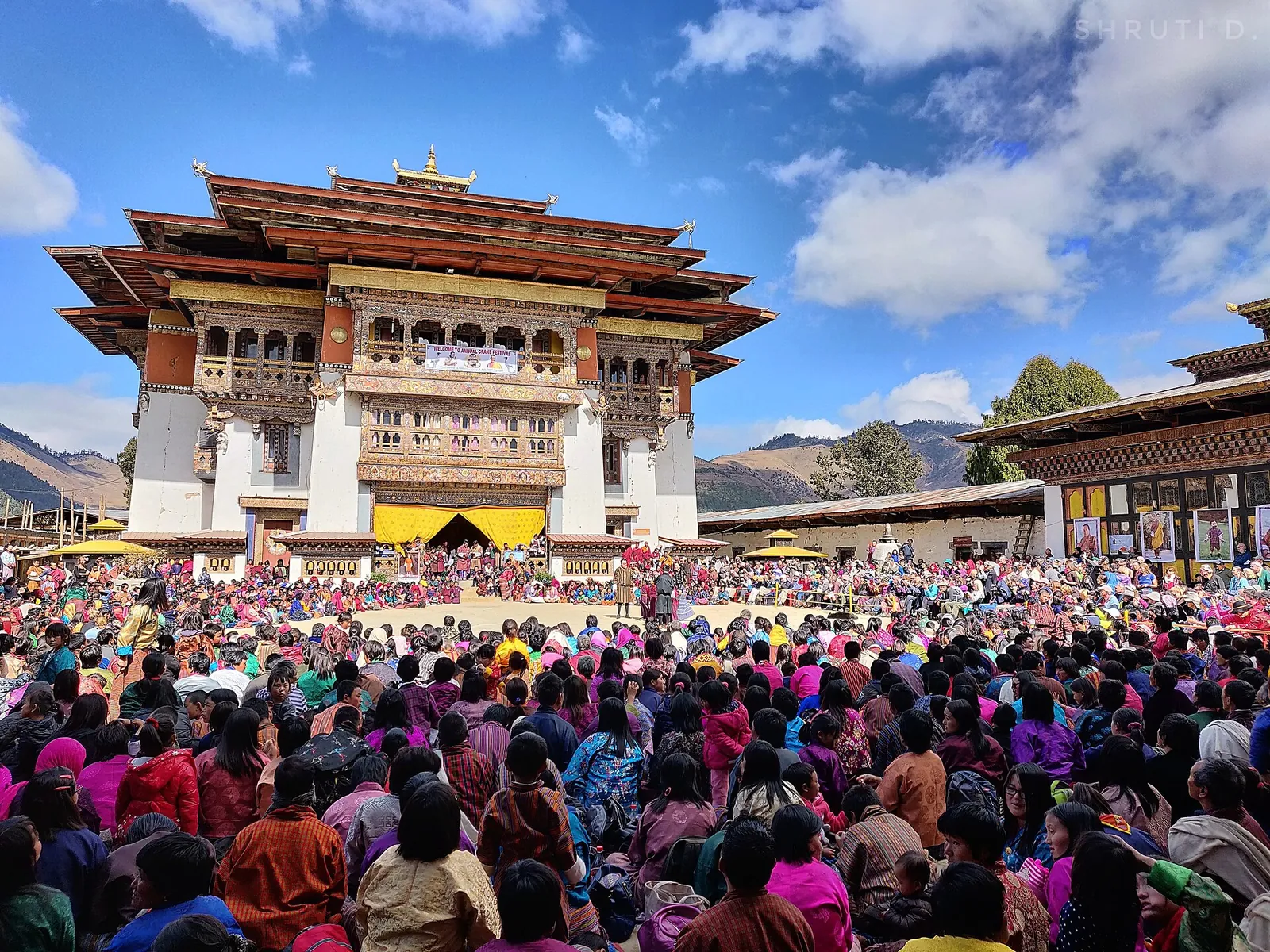
Plan around the cranes: from late October to mid-March, with the largest numbers in midwinter. The Department of Tourism tentatively lists the Black-necked Crane Festival at Gangtey Gonpa on 11 November 2027. RSPN describes it as an annual one-day event but its pages differ on whether it falls on 11 or 12 November, so the 2027 date may change. The festival welcomes the cranes with folk songs and masked dances by local people and monks, conservation songs and plays, and a crane dance by schoolchildren in costume, usually from about 09:30 until mid-afternoon. The valley's environment committee organises it, and what visitors pay supports the community's conservation work.
Gangtey Tshechu, tentatively 13–15 October 2027, fills the monastery courtyard with masked dances and folk songs, with a thongdrel displayed on the last day; the cranes have usually not yet arrived. Our festivals guide lists both with the other festivals of the year.
December to February brings clear, cold days and the most cranes, with snow possible on the high passes. From June to September the valley is green and empty of cranes.
Getting there from Punakha, and how many nights
Phobjikha is a stop beyond Punakha rather than a day trip from it. Bhutan Travel Bureau, a licensed operator, gives 78 km and about 3 hours from Punakha; Guided Bhutan, which stops on the way, plans about 5 hours. The road runs down the valley to Wangdue Phodrang, 13 km and about 45 minutes from Punakha, climbs east along the main highway and then turns south over the Lawa La pass, at about 3,300 m, into the valley. You start at about 1,250 m in Punakha and end at about 3,000 m, a big climb for one morning, which is one more reason to stay two nights rather than one. Our transport guide explains why every road day runs in daylight and how the June to September monsoon affects the roads.
Two nights give you an arrival afternoon for the crane centre, a full day for Gangtey Gonpa and the nature trail, and an early morning for the cranes before you leave. From Phobjikha you either return west, back to Punakha (78 km) on the way to Paro, or continue east into central Bhutan: Bhutan Travel Bureau gives 188 km and 5 to 6 hours to Bumthang. From Thimphu it is 135 km and 5.5 to 6 hours, so most routes reach Phobjikha from Punakha.
The simplest plan adds two nights to the western week: after two nights in Punakha, drive to Phobjikha, then back west to Punakha or Paro. Guided Bhutan's ten-day route does it as Paro 2, Thimphu 2, Punakha 1, Phobjikha 2, Punakha 1, Thimphu 1; our 7-day itinerary has the week this extends.
Where to stay: lodges, hotels and homestays
You may stay only in hotels, homestays or campsites certified by the Department of Tourism, and Phobjikha has fewer rooms than the western towns: Guided Bhutan advises booking five to six months ahead for October and November, because rooms in the valley are limited and fill first. Most places sit on the valley floor near the crane centre or on the slopes towards Gangtey Gonpa.
Among the certified hotels on the Department of Tourism's register, Hotel Yueloki is a three-star, traditionally built two-storey house with 17 rooms near Tabiting, about 15 minutes' walk from the nature trail. Phobjikha Resort, also three-star, has 22 rooms, all looking over the valley. Gangtey Tent Resort, a four-star, puts its guests in heated tents with valley views. Gangtey Lodge, a five-star with 12 rooms, is the comfort end.
Guided Bhutan's ten-day package, priced below, puts its guests in Hotel Dewachen, which it describes as a three-star with wood-stove rooms and a traditional hot-stone bath.
Village homestays are part of the valley's way of earning from visitors, and they too must be certified. The Department of Tourism's portal lists, for example, Karma Wangmo Homestay, three rooms in a family house with home cooking and a hot-stone bath. A homestay night means simple rooms, a shared meal with the family and an early start with suja by the stove.
What to eat and where to look
Kewa datshi
Potatoes in a soft cheese sauce with chilli, made here with the valley's own crop: Phobjikha and neighbouring Gangtey grow about 12,000 tonnes of potatoes a year.
- Where to look
- The dining room of your hotel or homestay in Phobjikha.
- Fit it into your day
- Dinner on your first night in the valley.
Ema datshi with red rice
The national dish: chillies stewed with yak cheese, garlic, onion and tomato, eaten with red rice grown on the terraces of Wangdue, Punakha and Paro.
- Where to look
- Any hotel or homestay kitchen in the valley; Karma Wangmo Homestay cooks with local ingredients.
- Fit it into your day
- Lunch on the way from Punakha.
Shakam paa
Paa is a stew topped with dried meat and fresh green chilli, served with rice; shakam paa is the version made with dried beef.
- Where to look
- Hotel and homestay kitchens in the valley.
- Fit it into your day
- Lunch after the Gangtey Nature Trail.
Jaju
A soup of local spinach or turnip greens, served alongside the rice.
- Where to look
- Homestay and hotel dinners in the valley.
- Fit it into your day
- With dinner on a cold evening.
Puta and buckwheat pancakes
Hand-rolled buckwheat noodles, usually stir-fried, and khurle buckwheat pancakes, the highland staples of Bumthang, the next valley east.
- Where to look
- Bumthang, 188 km east, if you continue into central Bhutan.
- Fit it into your day
- Your first meal in Bumthang.
Bhutanese dishes are built on chilli and cheese; say early if you avoid dairy or very hot food.
What ten days with two Phobjikha nights cost, all in
USD 3,773 per person, USD 7,546 for two, for ten days and nine nights with two of them in Phobjikha, all in: return flights from Delhi, three-star rooms, every meal, the guide, driver and car, entry fees, the SDF and visas, two SIMs, tips for the guide and driver, and a 10% buffer on the ground costs for drinks, snacks and small purchases. On the same operator's rate, the two Phobjikha nights alone add about USD 580 per adult to a western-valleys trip.
| Level | Per person | For two |
|---|---|---|
| Three-star, 10 days / 9 nights, with Delhi flights | USD 3,773 | USD 7,546 |
The model is two adults sharing a room on Guided Bhutan's Culture and Nature Escape (Paro 2, Thimphu 2, Punakha 1, Phobjikha 2, Punakha 1, Thimphu 1 nights), standard three-star hotels with Hotel Dewachen in Phobjikha, travelling in the crane season between December 2026 and February 2027; prices checked on 3 November 2026. The package appears as one line because the operator does not price the rooms, meals, guide and car separately. The SDF is USD 100 per adult per night until 31 August 2027; later trips pay the rate then in force.
| For two | USD |
|---|---|
| Return flights Delhi–Paro | 1,360 |
| SDF, nine nights | 1,800 |
| Visas | 80 |
| Rooms, all meals, guide, driver and car, entry fees | 3,340 |
| Tips | 400 |
| Two tourist SIMs | 4 |
| 10% buffer on ground costs | 562 |
| Total | 7,546 |
Flights: Little Bhutan, a licensed operator, put one-way economy fares from Delhi to Paro at about USD 220–340 in mid-2026; the budget takes the top of that range each way, USD 680 a person return. Package: USD 5,220 for two, of which USD 1,880 is the SDF and visas. Tips: Guided Bhutan calls USD 10–15 a day from each traveller typical for the guide and USD 5–10 for the driver; the budget takes USD 20 per person a day for ten days. SIMs: two Bhutan Telecom tourist SIMs at Nu 200 each, Nu 400 in all or about USD 4 at the Bank of Bhutan's rate of Nu 94.67 to the dollar. Buffer: 10% of the USD 5,624 ground total.
Practical questions
When are the black-necked cranes in Phobjikha?
From late October, when the first arrive, to mid-March, when most have left; RSPN says most arrive by December, and the first groups leave at the end of February. Midwinter has the most birds.
How many nights should I spend in Phobjikha?
Two. The drive from Punakha takes a morning, and two nights give you the crane centre, Gangtey Gonpa, the nature trail and an early morning with the cranes.
Can I visit Phobjikha as a day trip from Punakha?
It is possible but hard: Bhutan Travel Bureau gives about 3 hours each way for 78 km, which leaves little time in the valley before the drive back. A night in the valley is far better.
When is the Black-necked Crane Festival?
The Department of Tourism tentatively lists it on 11 November 2027 at Gangtey Gonpa; RSPN's pages give 11 or 12 November, so check the date before you book.
How much does it cost to add Phobjikha to a Bhutan trip?
Guided Bhutan's packages work out at USD 290 per adult per night for two sharing, so two Phobjikha nights add about USD 580 per adult before tips. Its ten-day route with two Phobjikha nights costs USD 5,220 for two; with Delhi flights, tips and a buffer, USD 7,546.
Where and when do you see the cranes?
They roost on the marsh at night and leave around dawn to feed on the marsh and the fields. Start at the Black-necked Crane Visitor Centre, whose staff know where the flock is that morning, and watch from the centre, the road and the trail, never from the marsh.
Keep planning your trip
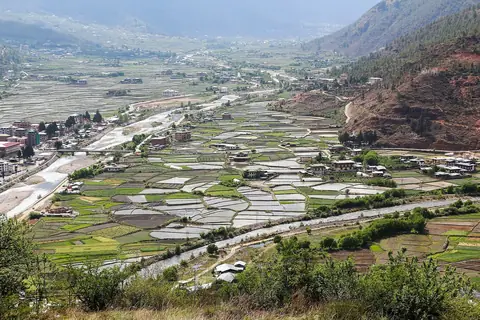
Bhutan in seven days
Two nights each in Thimphu, Punakha and Paro, with Dochula on day 3 and the Tiger's Nest hike on day 6: drive times, hotels, the fees and an all-in budget.
Read the guide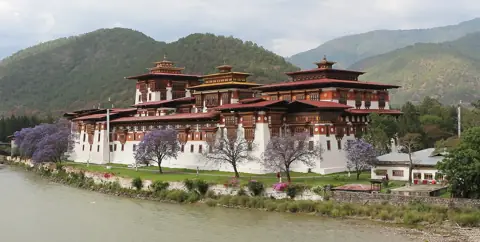
Thimphu and Punakha
Two nights in Thimphu and two in Punakha: Buddha Dordenma, Tashichho Dzong at dusk, the drive over Dochula, Punakha Dzong and Chimi Lhakhang, with fees, hotels and costs.
Read the guide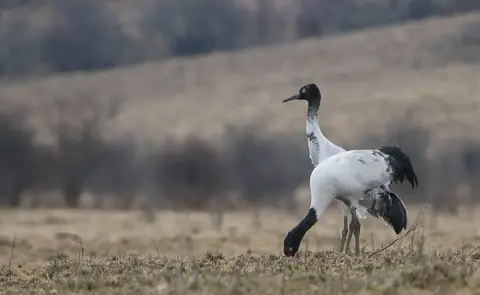
Bhutan festivals and events 2027
Tentative 2027 Bhutan festival dates: Punakha in February, Paro in March, Thimphu in October and the crane festival in November.
Read the guide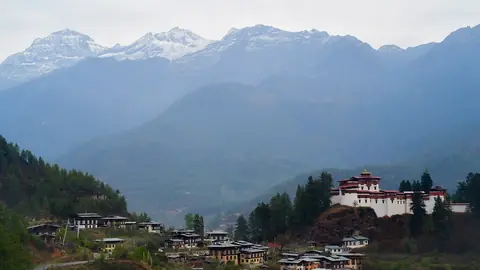
Best time to visit Bhutan
When to visit Bhutan: dry spring and autumn, the June-September monsoon, clear winters, 2027 festival months and Paro and Thimphu weather by month.
Read the guide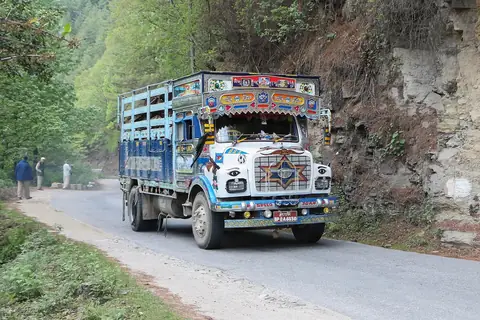
Getting around Bhutan
Who flies to Paro from where, the land crossings from India, the guide's car, drive times between the valleys and domestic flights to Bumthang, Yonphula and Gelephu.
Read the guide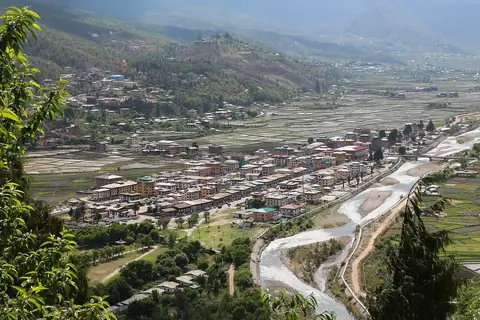
Bhutan trip cost
A Bhutan week for two: about USD 1,880 per person on a budget, USD 2,080 mid-range or USD 2,520 in four-star rooms, plus international flights.
Read the guideSources and checks before you travel
(34)
- Royal Society for Protection of Nature: Black-necked Crane Festival brochure ↗ — opens in a new tab
- Royal Society for Protection of Nature: history of the Black-necked Crane Festival ↗ — opens in a new tab
- Royal Society for Protection of Nature: Phobjikha bids adieu to the black-necked cranes ↗ — opens in a new tab
- Royal Society for Protection of Nature: Gangtey-Phobji declared Bhutan's third Ramsar site ↗ — opens in a new tab
- Royal Society for Protection of Nature: entrance fees for the Black-necked Crane Visitor Center ↗ — opens in a new tab
- BBS: Black-necked crane population on rise (18 February 2025) ↗ — opens in a new tab
- UNDP Bhutan: Gangtey's new potato trade facilitation center (25 July 2024) ↗ — opens in a new tab
- Department of Tourism Bhutan: monument and museum information (DOCX linked from the FAQs) ↗ — opens in a new tab
- Department of Tourism Bhutan: FAQs ↗ — opens in a new tab
- Department of Tourism Bhutan: Announcements ↗ — opens in a new tab
- Department of Tourism Bhutan: tentative festival dates for the year 2027 (PDF) ↗ — opens in a new tab
- Department of Tourism Bhutan: Soulful journeys, a step-by-step guide ↗ — opens in a new tab
- Department of Tourism Bhutan: food and drink ↗ — opens in a new tab
- Department of Tourism Bhutan: the diverse (and delicious) food of Bhutan ↗ — opens in a new tab
- Department of Tourism Bhutan: Visit (etiquette) ↗ — opens in a new tab
- Wangdue Phodrang Dzongkhag Administration: Gangtey Lhakhang ↗ — opens in a new tab
- Bhutan Travel Bureau: driving distances ↗ — opens in a new tab
- Little Bhutan: Things to do in Wangdue Phodrang ↗ — opens in a new tab
- Little Bhutan: Black-Necked Crane Information Centre ↗ — opens in a new tab
- Department of Tourism Bhutan: Tourism Services Portal, Little Bhutan ↗ — opens in a new tab
- Guided Bhutan Tours: Culture and Nature Escape, 10 days ↗ — opens in a new tab
- Guided Bhutan Tours: Bhutan trip cost calculator ↗ — opens in a new tab
- Guided Bhutan Tours: Bhutan tour guide ↗ — opens in a new tab
- Department of Tourism Bhutan: Tourism Services Portal, Hotel Yueloki ↗ — opens in a new tab
- Department of Tourism Bhutan: Tourism Services Portal, Phobjikha Resort ↗ — opens in a new tab
- Department of Tourism Bhutan: Tourism Services Portal, Gangtey Tent Resort ↗ — opens in a new tab
- Department of Tourism Bhutan: Tourism Services Portal, Gangtey Lodge ↗ — opens in a new tab
- Department of Tourism Bhutan: Tourism Services Portal, Karma Wangmo Homestay ↗ — opens in a new tab
- Bhutan Telecom: tourist SIM ↗ — opens in a new tab
- Bank of Bhutan: current rate of exchange ↗ — opens in a new tab
- OpenStreetMap: Phobjikha route map data ↗ — opens in a new tab
- Royal Society for Protection of Nature: Observing the black-necked cranes in Phobjikha (visit of 22 February 2015) ↗ — opens in a new tab
- HI DMC (Bhutan destination management company): Bhutan's high-altitude crops and their dishes ↗ — opens in a new tab
- Little Bhutan: Getting to Bhutan (updated 24 August 2026) ↗ — opens in a new tab
Reference sources for the version dated 3 November 2026. Confirm opening times, access, transport and conditions for your travel dates.
Photo credits
(6)
The open floor of the Phobjikha valley in July, months before the cranes arrive
Photograph: Richard Mortel — opens in a new tab · CC BY 2.0 — opens in a new tab
Changes: Resized and converted to WebP; displayed with responsive crops. · Original photograph and licence details ↗ — opens in a new tab
Gangtey Gonpa, the monastery at the head of the Phobjikha valley
Photograph: Prof Ranga Sai — opens in a new tab · CC BY-SA 4.0 — opens in a new tab
Changes: Resized and converted to WebP; displayed with responsive crops. · Original photograph and licence details ↗ — opens in a new tab
The Black-necked Crane Festival in the Gangtey Gonpa courtyard, 11 November 2018
Photograph: ShrutiAD — opens in a new tab · CC BY-SA 4.0 — opens in a new tab
Changes: Resized and converted to WebP; displayed with responsive crops. · Original photograph and licence details ↗ — opens in a new tab
The Black-necked Crane Visitor Centre, run by the RSPN, on the valley floor
Photograph: Chuck Moravec — opens in a new tab · CC BY 2.0 — opens in a new tab
Changes: Resized and converted to WebP; displayed with responsive crops. · Original photograph and licence details ↗ — opens in a new tab
Cranes on the valley floor, seen on the road into Phobjikha in November
Photograph: Doug Knuth from Woodstock, IL — opens in a new tab · CC BY-SA 2.0 — opens in a new tab
Changes: Resized and converted to WebP; displayed with responsive crops. · Original photograph and licence details ↗ — opens in a new tab
Khewang Lhakhang on the valley floor, in August
Photograph: Christopher J. Fynn — opens in a new tab · CC BY-SA 4.0 — opens in a new tab
Changes: Resized and converted to WebP; displayed with responsive crops. · Original photograph and licence details ↗ — opens in a new tab