Plan your trip
Cash or card in Laos? Kip, ATMs, Lao QR and changing money
Laos runs on kip in cash. A card settles the bill at a larger hotel or restaurant in Vientiane or Luang Prabang, but the tuk-tuk, the noodle stall, the night-market textile and the temple ticket are paid in notes, and the QR code taped to the counter is built for Lao bank apps. This guide sets out where a foreign card works, what a BCEL ATM charges a card from abroad, where to change dollars, euros and baht, how visitors can pay a Lao QR code, which fees are quoted in US dollars, and how to keep cash and cards safe.
In this guide
Find the location ↗ — opens in a new tabThe short answer
Plan to pay most things in kip (LAK) and keep a card for the larger bills: Visa, Mastercard and American Express are accepted only in larger hotels, restaurants and souvenir shops in the big cities, such as Vientiane, Luang Prabang, Savannakhet and Champasack. BCEL's ATMs take foreign cards around the clock; ATMs in Laos usually pay out up to LAK 2 million per withdrawal, and BCEL charges LAK 40,000 per withdrawal with a Visa card or LAK 75,000 with a Mastercard, before your own bank's fee. No official list shows which smaller towns have an ATM, so draw kip in Vientiane or Luang Prabang before you head out. On a budget, food, getting around and sights come to about LAK 680,000 a day per person in our trip-cost guide, so one full withdrawal covers about three days. When a machine offers your home currency, choose kip. Bring US dollars, euros or Thai baht to change at a bank, the airport or an exchange office; banks open 08:30-15:30, Monday to Friday. Three prices for scale: the flat-rate taxi from Luang Prabang airport costs 50,000 kip per group, the Kuang Si Falls ticket for foreigners is 100,000 kip from 15 November 2026, and That Luang in Vientiane lists an admission fee of 30,000 kip. Kip may not be taken into or out of Laos, and foreign currency worth USD 10,000 or more must be declared.
- Key point
- Set up before you fly: a Visa card, a second card as back-up, some US dollars, euros or baht in notes, and a check of your bank's foreign fees
- Where it applies
- Applies everywhere in Laos; cards matter only in the larger cities, and cash matters everywhere else
- Timing
- All year; banks open 08:30-15:30 Monday to Friday only, so change money on a weekday
The kip: notes, rates and what things cost
The kip (LAK) is the official currency of Laos. Tourism Laos lists notes from 500 to 100,000 kip, and prices are counted in thousands, so a ticket of 60,000 kip is an everyday sum. Keep the 10,000- and 20,000-kip notes apart from the 100,000s for stalls and tuk-tuks.
For a sense of scale, BCEL's exchange-rate table of 6 November 2026 bought US dollar notes of 50 or 100 at 22,275 kip, euro notes at 24,952 kip, pound notes at 29,940 kip and baht at 667.1 kip; the bank adds that its rates can change during the day without notice. In our Laos trip-cost guide, food, getting around and sights come to about LAK 680,000 a day per person on a budget and about LAK 1.3 million mid-range, with rooms and the visa on top. On a budget, one LAK 2 million withdrawal covers those daily costs for about three days.
A few published prices show where the kip goes. In Luang Prabang, the flat-rate taxi from the airport costs 50,000 kip per group, a tuk-tuk to the boat pier about 9 km out costs about 50,000 kip, and a shared tuk-tuk or van to Kuang Si Falls about 60,000 kip per person (about 250,000 kip for a private one per group). Several of the town's admissions rise on 15 November 2026: for foreigners, Wat Xieng Thong goes from 30,000 to 60,000 kip, Mount Phousi from 30,000 to 60,000 kip, Kuang Si Falls from 60,000 to 100,000 kip and the National Museum from 60,000 to 200,000 kip. In Vientiane, That Luang, Patuxay and the Hor Phra Keo Museum each list an admission fee of 30,000 kip per person, and the Lao National Museum charges foreigners 30,000 kip.
On the train between Vientiane and Luang Prabang, since 1 April 2026 a second-class seat costs LAK 360,000, first class LAK 569,000 and business class LAK 1,063,000, a rise of roughly nine percent. Fares are shown in the LCR Ticket app, and our Laos transport guide explains how to book.
Prices and times checked 8 November 2026
Card or cash: where a foreign card works
Cards work at the top end and in the cities. Visa, Mastercard and American Express are accepted only in larger hotels, restaurants and souvenir shops in the large cities, such as Vientiane, Luang Prabang, Savannakhet and Champasack. In Luang Prabang, Visa is the most commonly accepted card, while Mastercard and American Express are taken in the big hotels, guesthouses, restaurants and souvenir shops. If you carry one card for Laos, make it a Visa.
Away from those places, plan on cash: markets, street stalls, tuk-tuks and smaller guesthouses. BCEL's ATMs are spread across the country, but no official list shows which smaller towns have one, so draw enough kip in Vientiane or Luang Prabang for every day you will spend in places such as Vang Vieng, Nong Khiaw, the Plain of Jars or the Bolaven Plateau: on a budget, about LAK 680,000 a day per person for food, transport and tickets. In Luang Prabang, many hotels, guesthouses and restaurants also accept US dollars and Thai baht, which helps if your kip runs low, but the kip remains the country's currency.
Card payments cost the business money: BCEL's fee schedule charges the merchant 2.8% of each Visa, Mastercard, JCB or UnionPay payment on its card terminals and 4% for American Express. A hotel or tour office that adds a surcharge for paying by card is passing on that cost.
When a card terminal or ATM offers to charge you in your home currency, decline and pay in kip. This offer, dynamic currency conversion, includes an exchange rate and additional fees; merchants and ATMs should give you the choice and must not make it for you, and Visa advises declining if you feel pressured.
Prices and times checked 8 November 2026
ATMs: BCEL's fees, limits and baht from the machine
BCEL (Banque pour le Commerce Exterieur Lao), the state commercial bank, runs ATMs whose machines take Visa, Mastercard, Maestro, Cirrus, Diners Club, JCB and UnionPay cards for cash withdrawals around the clock. The most an ATM pays out differs from bank to bank and is as a rule LAK 2 million, about USD 90 at BCEL's buying rate; some banks allow several withdrawals a day.
BCEL charges a card issued abroad for each withdrawal at its ATMs, under a fee table in force since 13 July 2026: LAK 30,000 with UnionPay, Diners Club or Maestro, LAK 40,000 with Visa, JCB or American Express, and LAK 75,000 with Mastercard. Your own bank may add its fee and exchange margin on top. For withdrawals with a credit card at various banks in Vientiane, fees run between 2.7 and 5% depending on the bank and the currency, plus your home bank's charges. Since BCEL's fee is the same for every withdrawal, one LAK 2 million withdrawal costs far less than four small ones.
Some BCEL machines pay out other currencies as well. At its multi-currency ATMs, a withdrawal in Thai baht with a foreign card costs 3% (at least 60 baht) with Visa, JCB or American Express, 3% (at least 50 baht) with UnionPay or Maestro, and 5% (at least 110 baht) with Mastercard. If you need more than an ATM gives, a cash advance on your card at a BCEL card terminal is limited to USD 1,000 per person per day for tourists, with a fee of 3% of the amount.
Choose the machine with care. Petty crime can occur in tourist areas and around ATMs, and travellers regularly report bag snatches, often by people on motorcycles; snatch thefts by motorcyclists against foreigners are clearly increasing, sometimes with violence, particularly in Vientiane, Pakse and Luang Prabang. Go with someone if you can, keep cards and cash in separate bags, hold your bag on the side away from the road and keep valuables out of sight. Pay cashless where you can and carry only the day's cash, without unnecessary valuables or conspicuous jewellery. Hotel and guesthouse safes are not necessarily secure, so use your own lock where possible and keep your bank card and passport on you.
Prices and times checked 8 November 2026
Changing money, and getting rid of spare kip
US dollars, euros and Thai baht are the best currencies to bring, and you can change them at a bank, at the airport or at a foreign currency exchange office. Banks open 08:30-15:30, Monday to Friday, and Luang Prabang has several exchange offices and banks in the town centre, and BCEL has an exchange counter at Wattay airport in Vientiane. BCEL's own exchange fee is 0.3% of the amount changed, whether you buy or sell.
Spare kip is changed back into dollars, euros or baht at a bank counter, at the bank's selling rate, not at a money changer (see below). That costs you the spread: on the same BCEL table, the bank sold US dollars at 22,617 kip against its buying rate of 22,275, euros at 25,451 against 24,952 and baht at 680.36 against 667.1, so kip changed back into dollars buys about 1.5% fewer dollars than it cost.
Under Bank of the Lao PDR rules from 2022, money changers may buy foreign currency from customers but sell only kip, and exchange units may change money only for individuals and tourists, up to 15 million kip per person per day. A money changer can therefore turn your dollars into kip but not your kip back into dollars; that is done at a bank, open on weekdays only, so change only what you need for a few days and spend your kip down before you leave.
That matters because kip may not leave the country: the import and export of Lao currency is prohibited, while foreign currency can be brought in and taken out without limit but must be declared from a value of USD 10,000. Our Laos entry guide has the other customs and arrival rules.
Prices and times checked 8 November 2026
Lao QR codes: LOCA Pay, EzyKip and neighbours' bank apps
The QR code on a Lao shop counter is a LAO QR code, the national standard for QR payments, backed by more than 15 banks in 2023. Lao customers pay it from a local bank app. Visitors without a Lao account have two apps that link a foreign card to it.
LOCA Pay connects your credit or debit card so that you can pay any Lao standard QR code while you travel. In early 2024 it worked with Visa, Mastercard, JCB, American Express and UnionPay cards, with no top-up: each payment is charged to the card as you go.
EzyKip is BCEL's wallet for tourists without a Lao bank account, launched in late January 2024. You top it up with UnionPay, Visa, Mastercard, JCB or American Express cards, or with WeChat or Alipay, scan Lao QR codes at almost 200,000 merchants, and take cash out at more than 400 BCEL ATMs with a 0% fee by scanning a QR code. A remaining balance can be transferred back to a bank card. No top-up fee is published, so keep a card and some cash as a back-up.
Visitors from Laos's neighbours can use their own bank apps. QR payment links with Thailand, Vietnam and Cambodia let participating travellers pay through their home banking apps; Thai tourists have been able to scan Lao QR codes since 2024, through 17 participating banks in Laos. Users of the UnionPay app can pay at merchants linked to eight Lao member banks, including BCEL, JDB and APB, and since September 2026 Chinese visitors can also pay participating merchants with e-CNY. Other visitors use a card, LOCA Pay or EzyKip.
Prices and times checked 8 November 2026
Fees paid in US dollars: visas, extensions and fines
Some of the money a trip needs is priced in dollars rather than kip. The visa on arrival costs USD 40 for German citizens (USD 50 for the e-Visa) and is issued at the international airports of Vientiane, Luang Prabang, Pakse and Savannakhet and at some land crossings against a passport valid for at least six months and two recent photos. Our Laos entry guide gives the visa rules for other passports.
Extend your visa before it runs out: an extension costs 2 US dollars a day at the immigration office in Vientiane, and a tourist visa can be extended twice, for up to 60 extra days in all. Each day of overstay costs a penalty of 10 US dollars. The UK lists a far larger penalty if you do not extend your visa within 90 days: a fine in kip worth 2,000 US dollars, deportation and a ban on returning. Make sure your entry date is stamped in your passport, or risk a fine of at least 200 US dollars for illegal stay.
Fines can also be demanded on the spot: the police and militia may fine petty offenders up to several hundred dollars and require payment immediately by withdrawal from a cash machine, one more reason to keep a working card on you.
Prices and times checked 8 November 2026
Deposits, tipping and bargaining
Never leave your passport as a deposit when you hire a motorbike. Rental shops regularly ask for it and often return it only after an arbitrarily set payment, usually at least the bike's value as new after a theft. Pay the deposit by bank card instead where you can, backed by international insurance.
Our trip-cost guide budgets small tips for guides and drivers in its extras line. For souvenirs, Vientiane's riverside night market is aimed mainly at tourists, and the same goods can be found slightly cheaper at other markets.
Prices and times checked 8 November 2026
Practical questions
Can I pay by card in Laos?
Only in some places. Visa, Mastercard and American Express are accepted in larger hotels, restaurants and souvenir shops in the large cities, such as Vientiane, Luang Prabang, Savannakhet and Champasack, and Visa is the most commonly accepted card in Luang Prabang. Markets, street food, tuk-tuks and smaller guesthouses need cash, so carry enough kip from Vientiane or Luang Prabang for days in smaller towns such as Vang Vieng or Nong Khiaw.
How much does it cost to withdraw cash from an ATM in Laos?
At BCEL's ATMs, a card issued abroad pays LAK 30,000 to LAK 75,000 per withdrawal depending on the card brand (LAK 40,000 with Visa, LAK 75,000 with Mastercard), under the fee table in force since 13 July 2026. Your own bank may add its fee. ATMs usually pay out up to LAK 2 million per withdrawal.
Should I bring US dollars, euros or baht to Laos?
Any of the three. US dollars, euros and Thai baht are the best currencies to change, at a bank, the airport or an exchange office. In Luang Prabang, many hotels, guesthouses and restaurants also accept dollars and baht directly, and some fees, such as the visa on arrival, are priced in US dollars.
Can I take kip out of Laos or change it back?
Kip may not be taken out of the country. Spare kip is changed back at a bank counter, at the bank's selling rate; since a 2022 central-bank rule, money changers may sell only kip, not foreign currency. Change only what you need for a few days and spend the rest before you leave.
Can tourists pay with Lao QR codes?
Yes, through an app that links a foreign card: LOCA Pay charges your Visa, Mastercard, JCB, American Express or UnionPay card for each payment, and BCEL's EzyKip wallet is topped up by card and also withdraws cash at BCEL ATMs with a 0% fee. Visitors with a participating Thai, Vietnamese or Cambodian bank app, the UnionPay app or an e-CNY wallet can scan with those.
Do I need to declare cash when I enter Laos?
Yes, from USD 10,000. Foreign currency can be brought in and taken out without limit, but must be declared from a value of USD 10,000, and Lao kip may not be brought in or taken out at all.
Keep planning your trip
First trip to Laos
Choose five, seven or ten days in Laos: Luang Prabang alone, the railway south, Nong Khiaw, or extra days for Bolaven and the Plain of Jars.
Read the guide
Laos trip cost 2027
A January 2027 week in Luang Prabang, Vang Vieng and Vientiane, all in: about LAK 9.3 million per person on a budget, 16.2 million mid-range or 32.3 million in comfort.
Read the guide
Entering Laos
Who can visit Laos visa-free and for how long, eVisa rules and processing time, which checkpoints accept it, and the LDIF arrival and departure forms.
Read the guide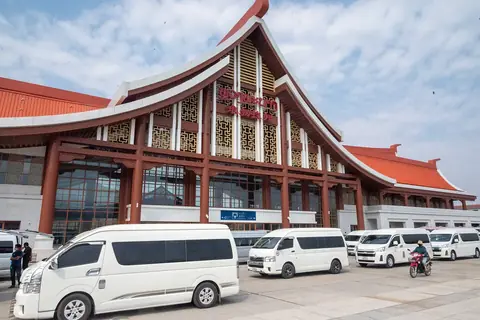
Transport in Laos
Plan Laos by rail from Luang Prabang to Vang Vieng and Vientiane, with station transfers, LCR Ticket, seasonal flights and permitted border crossings.
Read the guide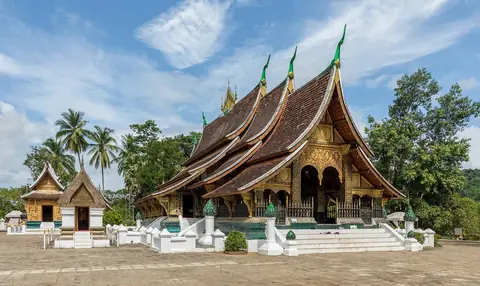
Luang Prabang
Plan four nights in Luang Prabang: peninsula stays, temple and museum tickets, Kuang Si and Pak Ou by tour, Lao food, airport transfers and costs.
Read the guide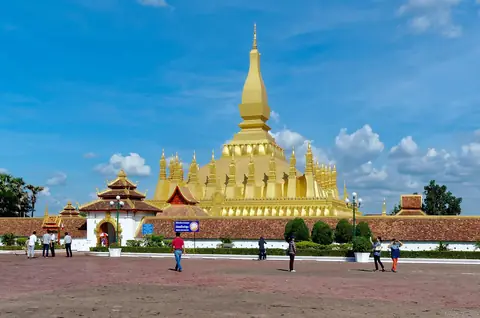
Vientiane
Plan two nights in central Vientiane for Pha That Luang, temple museums, Patuxai, COPE and the Mekong, with airport advice and a budget for two.
Read the guideSources and checks before you travel
(30)
- Tourism Laos (Tourism Marketing Department): before you go ↗ — opens in a new tab
- Tourism Luang Prabang: basic information ↗ — opens in a new tab
- Tourism Luang Prabang: access ↗ — opens in a new tab
- Tourism Luang Prabang: Wat Xieng Thong ↗ — opens in a new tab
- Tourism Luang Prabang: National Museum ↗ — opens in a new tab
- Tourism Luang Prabang: Mount Phousi ↗ — opens in a new tab
- Tourism Luang Prabang: Kuang Si Waterfall ↗ — opens in a new tab
- Tourism Laos: Vientiane Capital ↗ — opens in a new tab
- Tourism Laos: Laos-China Railway raises fares from 1 April 2026 ↗ — opens in a new tab
- BCEL: exchange rates of 6 November 2026 ↗ — opens in a new tab
- BCEL: ATM service ↗ — opens in a new tab
- BCEL: branches and service units ↗ — opens in a new tab
- BCEL: international card service fees (effective 13 July 2026) ↗ — opens in a new tab
- BCEL: currency exchange fee (effective 26 June 2023) ↗ — opens in a new tab
- Vientiane Times: Bank of the Lao PDR rule on exchange units (June 2022) ↗ — opens in a new tab
- Vientiane Times: money changers may sell only kip (October 2022) ↗ — opens in a new tab
- Visa: dynamic currency conversion ↗ — opens in a new tab
- Tourism Laos: how to pay in Laos with Lao QR (28 November 2023) ↗ — opens in a new tab
- Tourism Laos: LOCA Pay for tourist payments (13 February 2024) ↗ — opens in a new tab
- Tourism Laos: BCEL launches EzyKip for tourists (16 February 2024) ↗ — opens in a new tab
- BCEL: EzyKip app description (App Store) ↗ — opens in a new tab
- Tourism Laos: Laos and China launch digital payment link (30 September 2026) ↗ — opens in a new tab
- Tourism Laos: Thai tourists go cashless in Laos (17 July 2024) ↗ — opens in a new tab
- Tourism Laos: Laos and China launch QR payment system (17 January 2025) ↗ — opens in a new tab
- Germany's Foreign Office (Auswärtiges Amt): Laos travel and safety advice (in German) ↗ — opens in a new tab
- UK Foreign Office: Laos safety and security ↗ — opens in a new tab
- UK Foreign Office: Laos entry requirements ↗ — opens in a new tab
- France Diplomatie: Laos travel advice, security (in French) ↗ — opens in a new tab
- France Diplomatie: Laos travel advice, entry and stay (in French) ↗ — opens in a new tab
- France Diplomatie: Laos travel advice, useful information (in French) ↗ — opens in a new tab
Reference sources for the version dated 8 November 2026. Confirm opening times, access, transport and conditions for your travel dates.
Photo credits
(5)
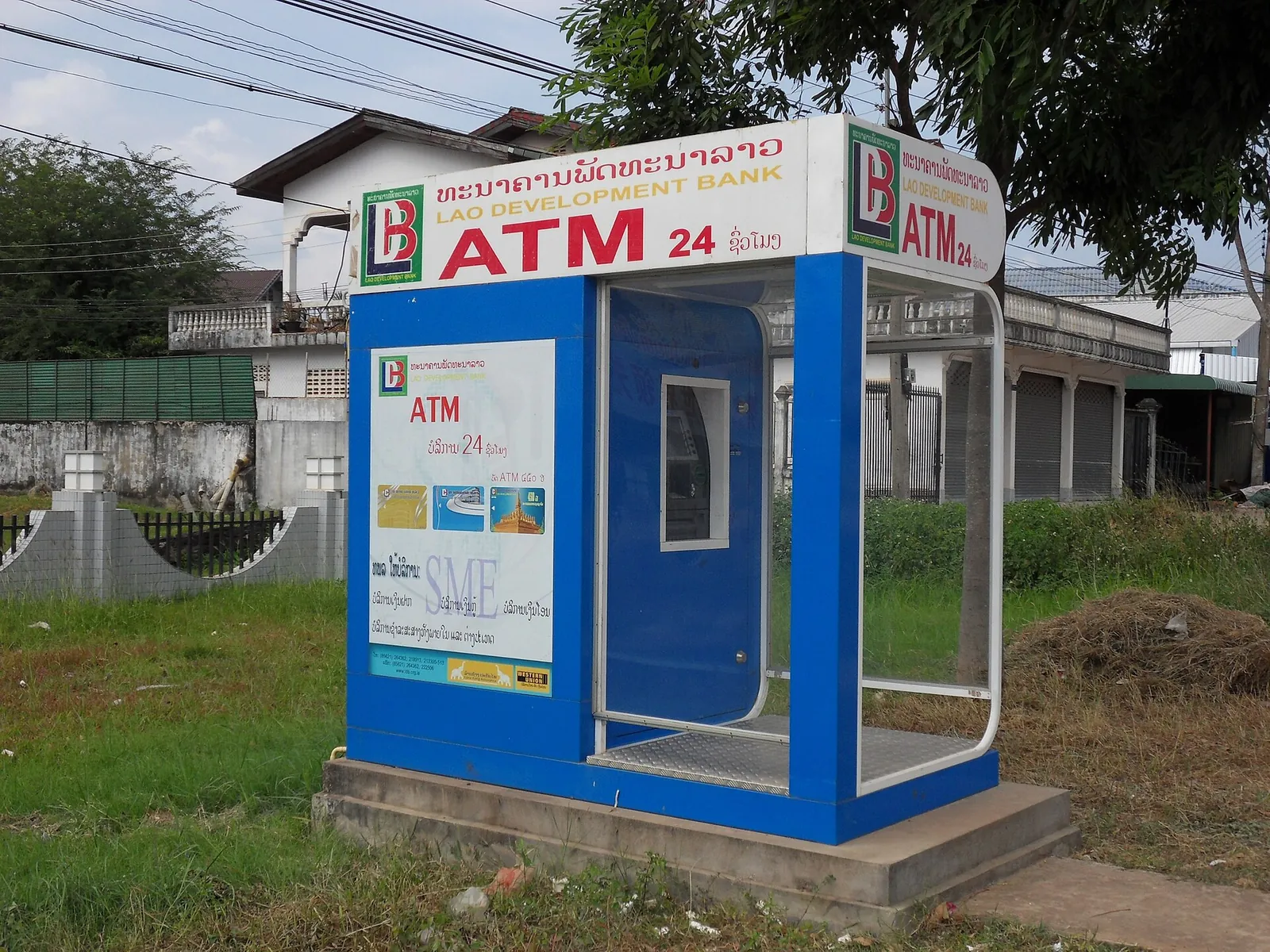
A Lao Development Bank ATM booth in Savannakhet
Photograph: Chaoborus — opens in a new tab · CC BY-SA 3.0 — opens in a new tab
Changes: Resized and converted to WebP; displayed with responsive crops. · Original photograph and licence details ↗ — opens in a new tab
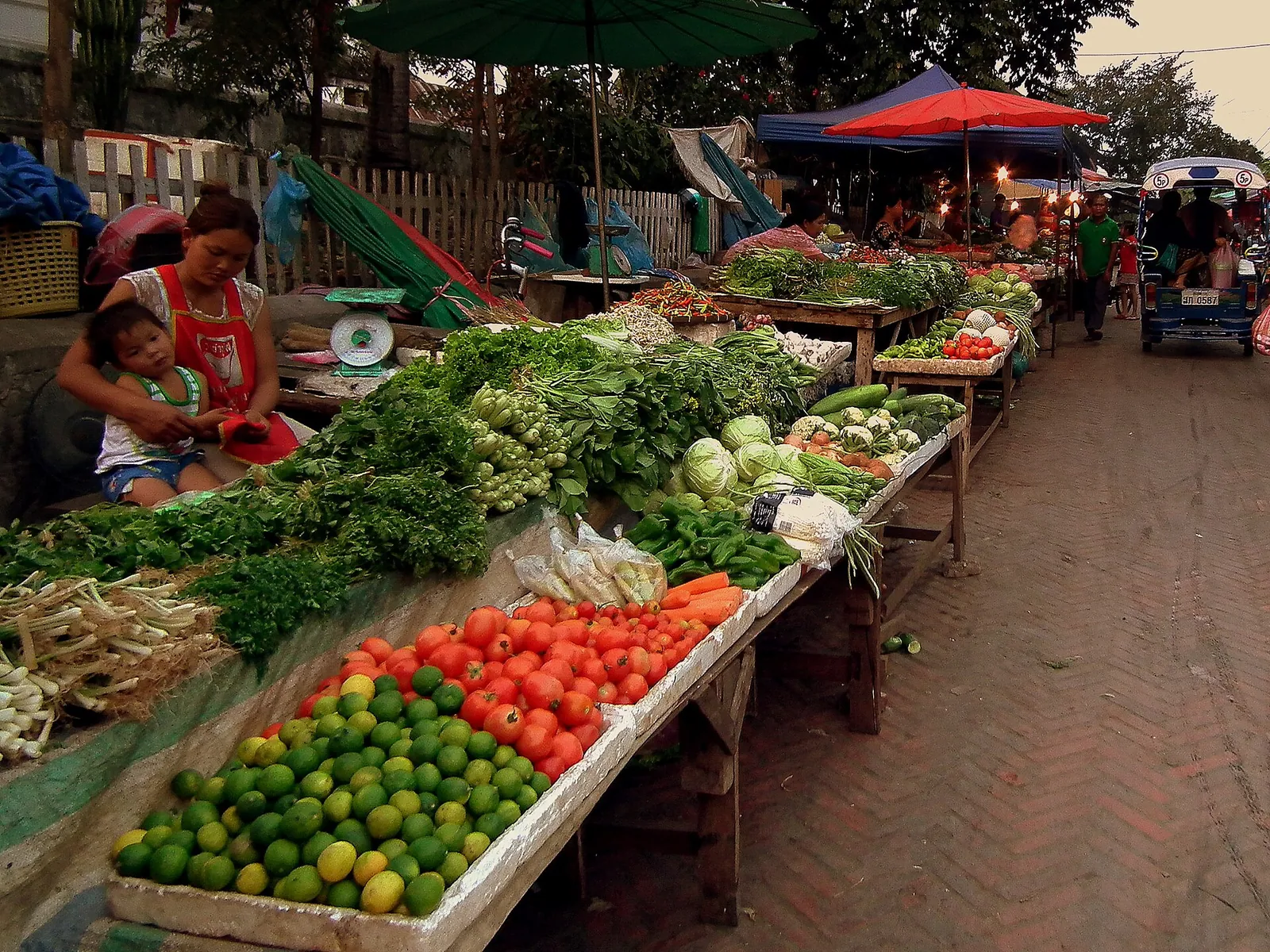
A street market in Luang Prabang, where produce is paid for in kip notes
Photograph: calflier001 — opens in a new tab · CC BY-SA 2.0 — opens in a new tab
Changes: Resized and converted to WebP; displayed with responsive crops. · Original photograph and licence details ↗ — opens in a new tab
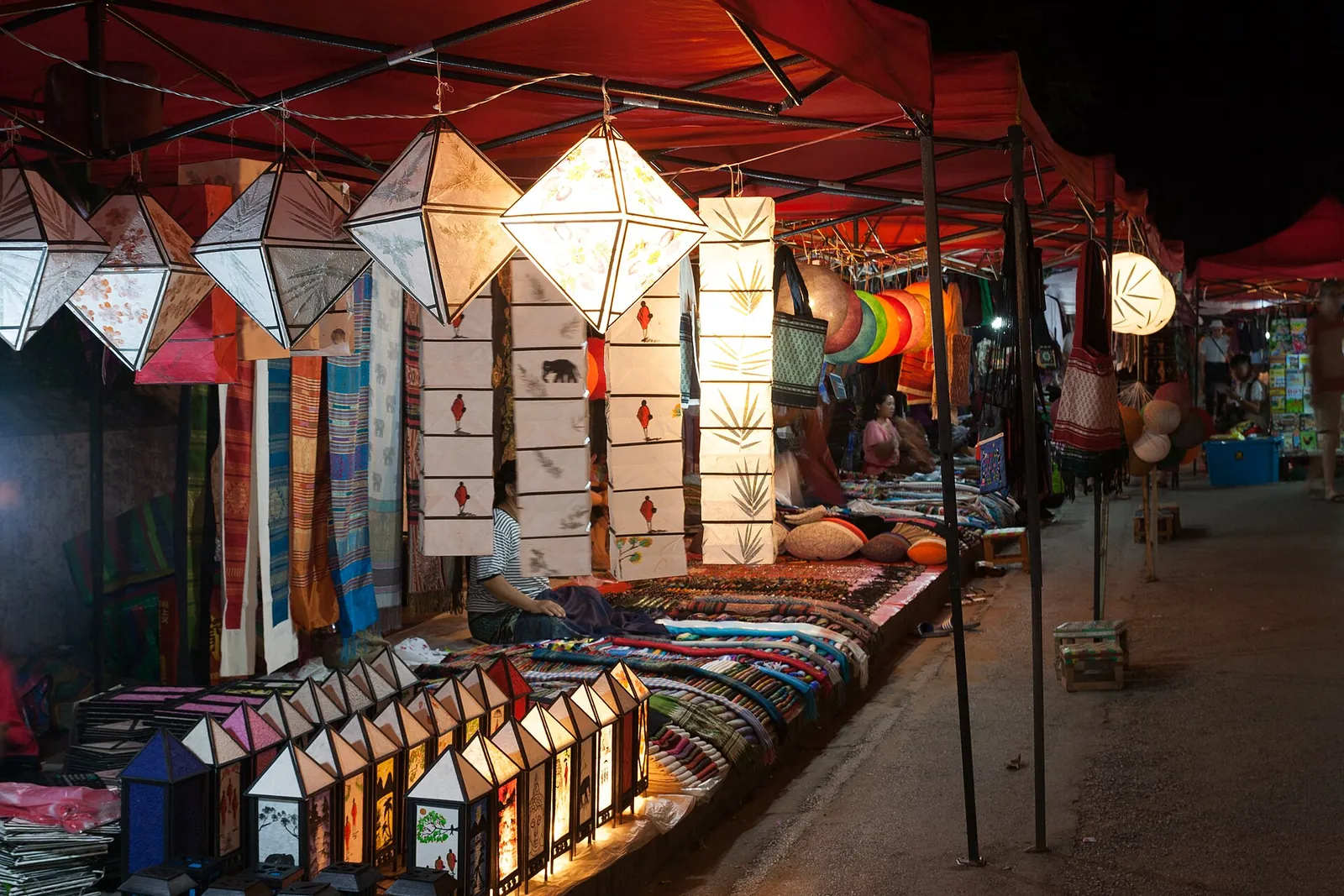
Lanterns and textiles at the Luang Prabang night market, where stalls are paid in cash
Photograph: Ekrem Canli — opens in a new tab · CC BY-SA 4.0 — opens in a new tab
Changes: Resized and converted to WebP; displayed with responsive crops. · Original photograph and licence details ↗ — opens in a new tab
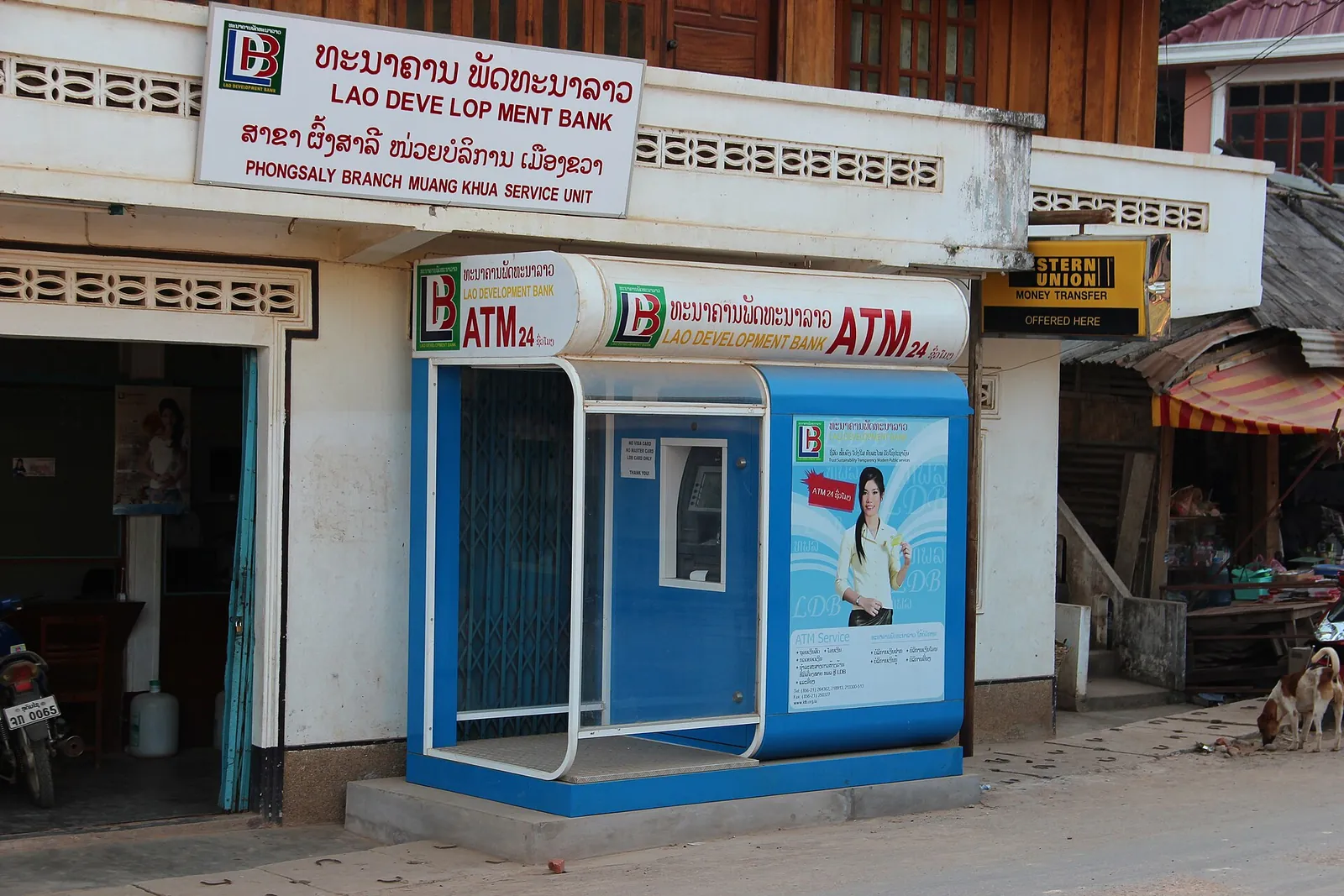
A Lao Development Bank ATM outside its branch in Muang Khua
Photograph: GuillaumeG — opens in a new tab · CC BY-SA 3.0 — opens in a new tab
Changes: Resized and converted to WebP; displayed with responsive crops. · Original photograph and licence details ↗ — opens in a new tab
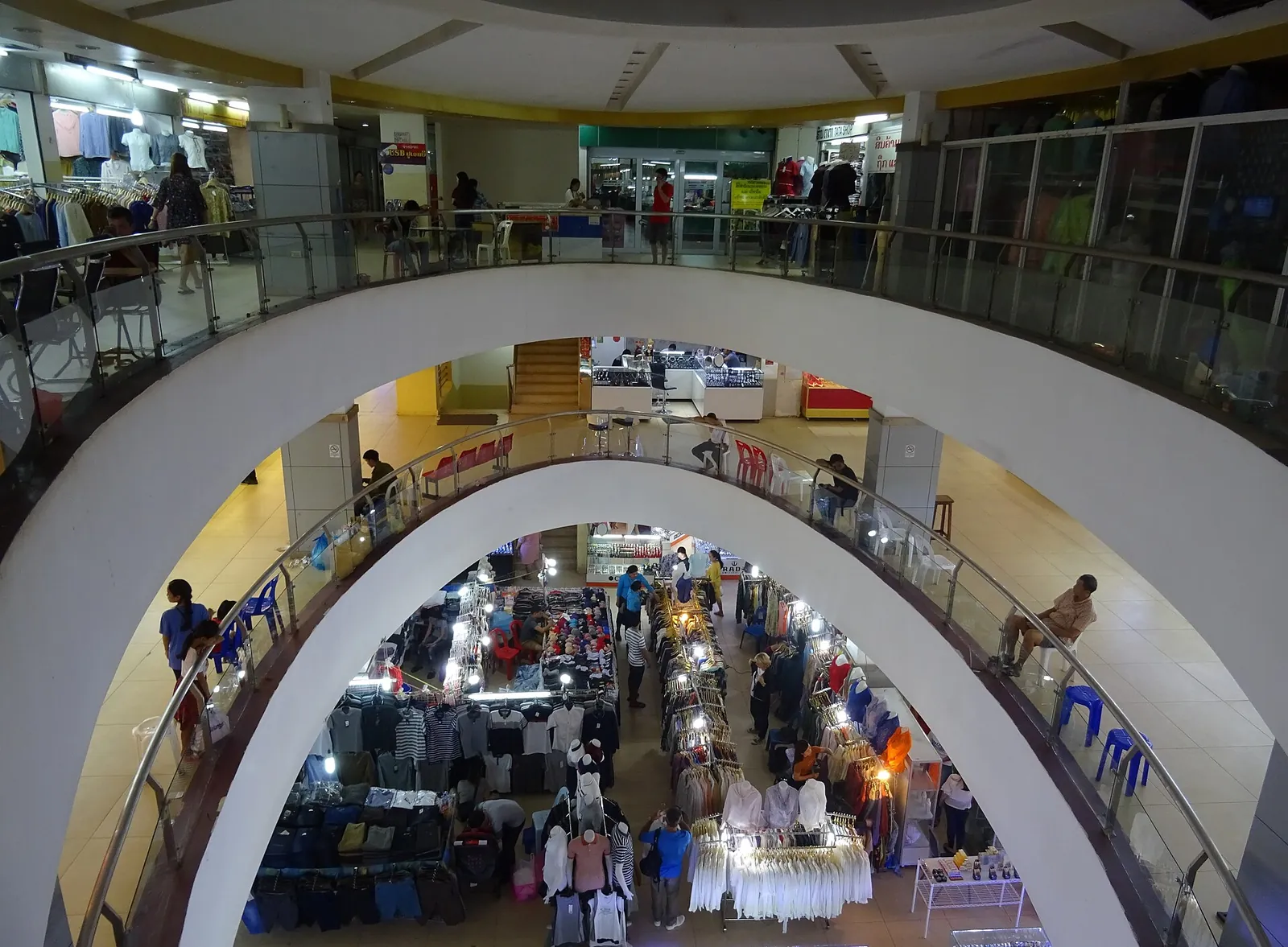
Inside the Talat Sao mall in Vientiane
Photograph: Christophe95 — opens in a new tab · CC BY-SA 4.0 — opens in a new tab
Changes: Resized and converted to WebP; displayed with responsive crops. · Original photograph and licence details ↗ — opens in a new tab