Luang Prabang and the north · Xieng Khouang
Plain of Jars: two nights in Phonsavan and the marked sites
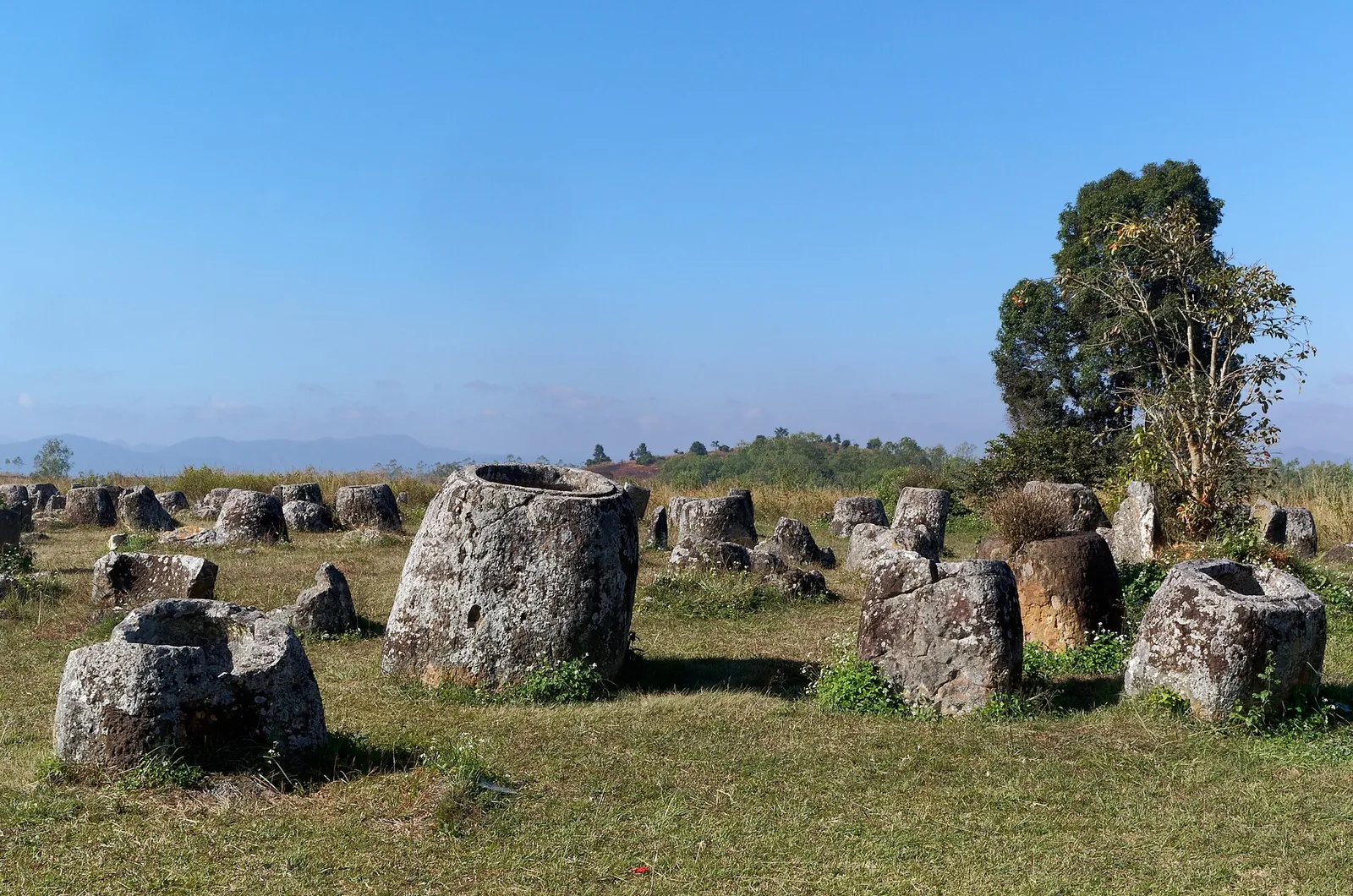
The Plain of Jars is a funerary landscape of carved stone vessels, discs and burial places spread across a plateau. A first visit belongs around Phonsavan, with time to compare the jar groups at the three established visitor sites rather than collect distant stops. The objects are striking, but their setting matters too: hill ridges, rice fields and the traces of a much more recent war. Fly from Vientiane for this short stay and keep the sightseeing within the cleared visitor groups and marked approaches.
- Suggested time
- 3 days / 2 nights in Phonsavan
- Where to stay
- Central Phonsavan for both nights; fly from and back to Vientiane
- Season and timing
- The World Bank and Asian Development Bank climate profile describes Laos’s rainy season as May to mid-October and the dry season as mid-October to April. These are broad seasonal patterns, so leave room for rain outside those months.
The short answer
Book two nights in central Phonsavan, flying from Vientiane, and reserve the room, the airport pickups and the jar-site outing first. For two adults the published prices come to US$120: two nights in a Standard Double at the hotel’s own rate of US$25 a night (US$50) plus Anoulack Khen Lao Hotel’s private full-day Sites 1, 2 and 3 tour, Option 01, at US$70 (both checked on 15 October 2026). Breakfast, taxes, airport transfers, site admissions, other meals and flights are not included. Give the middle day to the marked visitor groups, with noodle soup by Site 3’s ticket booth, and return to Vientiane on day 3.
Sleep in Phonsavan and leave a full day for the jars
Central Phonsavan is the useful base for two nights: it keeps the room, meals and local tour offices together. The provincial tourism authority describes the town as the replacement for the old capital destroyed during the Second Indochina War. Its centre is a place to organise the outings and understand the landscape, rather than another jar site to tick off.
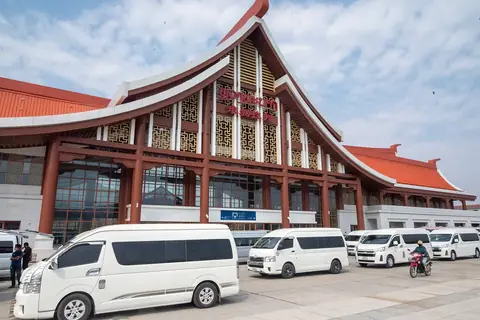
Anoulack Khen Lao Hotel is one concrete city option. Its own facilities page lists air conditioning, hot-water bathrooms, a restaurant and airport pickup for an additional charge. The provincial tourism directory places it in Phonesavanh Xai village. Arrange the XKH pickup when booking the room, with your flight number and the return departure.
Keep the hotel for both nights. A single room booking leaves the middle day free for the jar groups and removes any need to carry luggage on the sightseeing circuit.
What the jars are: a funerary landscape, not just stone pots
UNESCO describes more than 2,100 tubular-shaped megalithic stone jars across a World Heritage property of 15 components. Its summary dates the funerary material to 500 BCE–500 CE and includes large carved jars, stone discs, secondary burials, tombstones, quarries and funerary objects. The short visitor circuit covers only part of that much larger archaeological landscape.
The jars are the most visible objects, but look for stone discs and grave markers as well. The Lao nomination dossier records burial evidence around the jars and ceramic vessels, glass beads, iron and human remains at Site 3. Together these finds give the monuments a funerary context, rather than leaving the visitor only with stories about enormous wine containers.
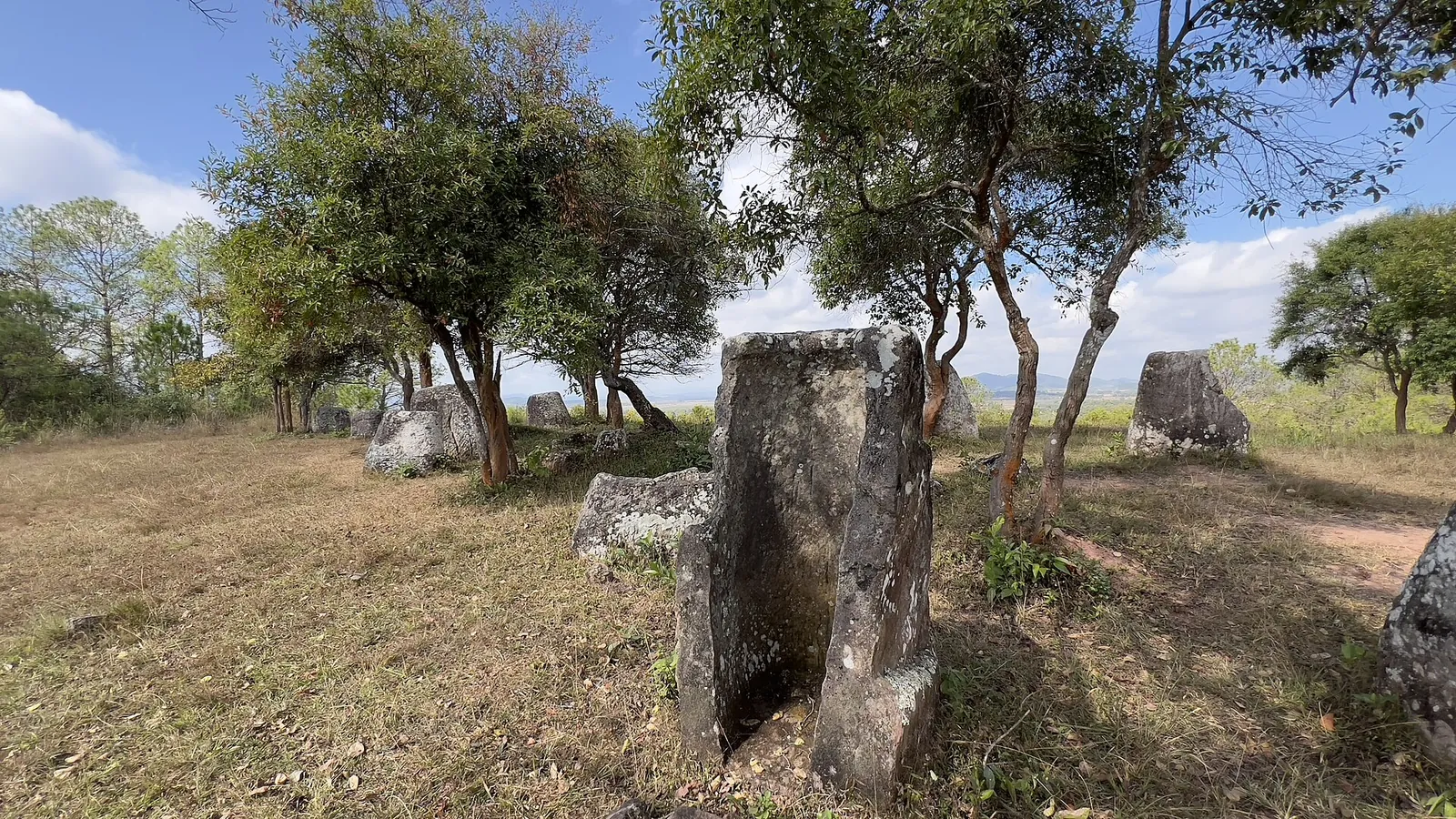
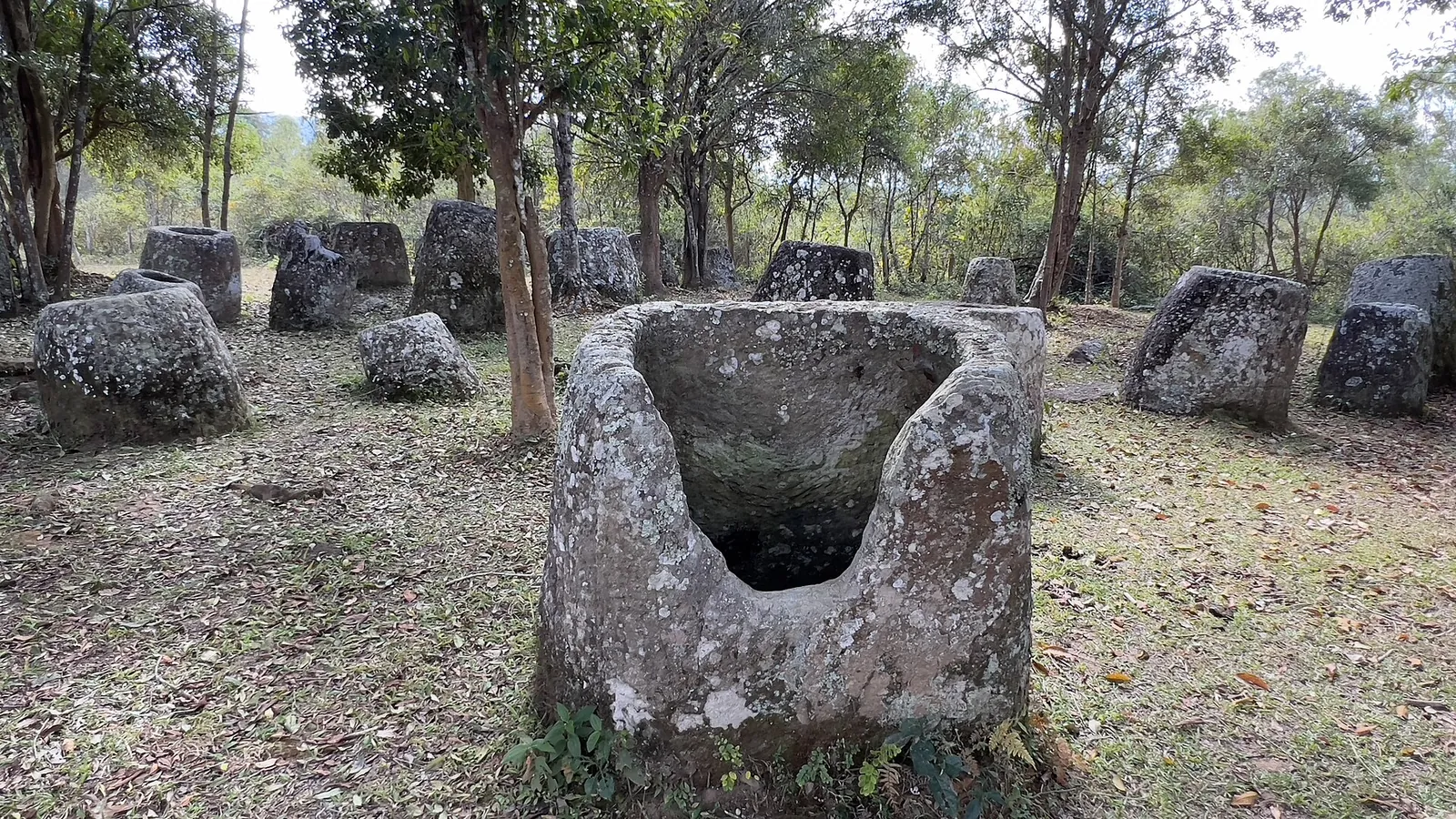
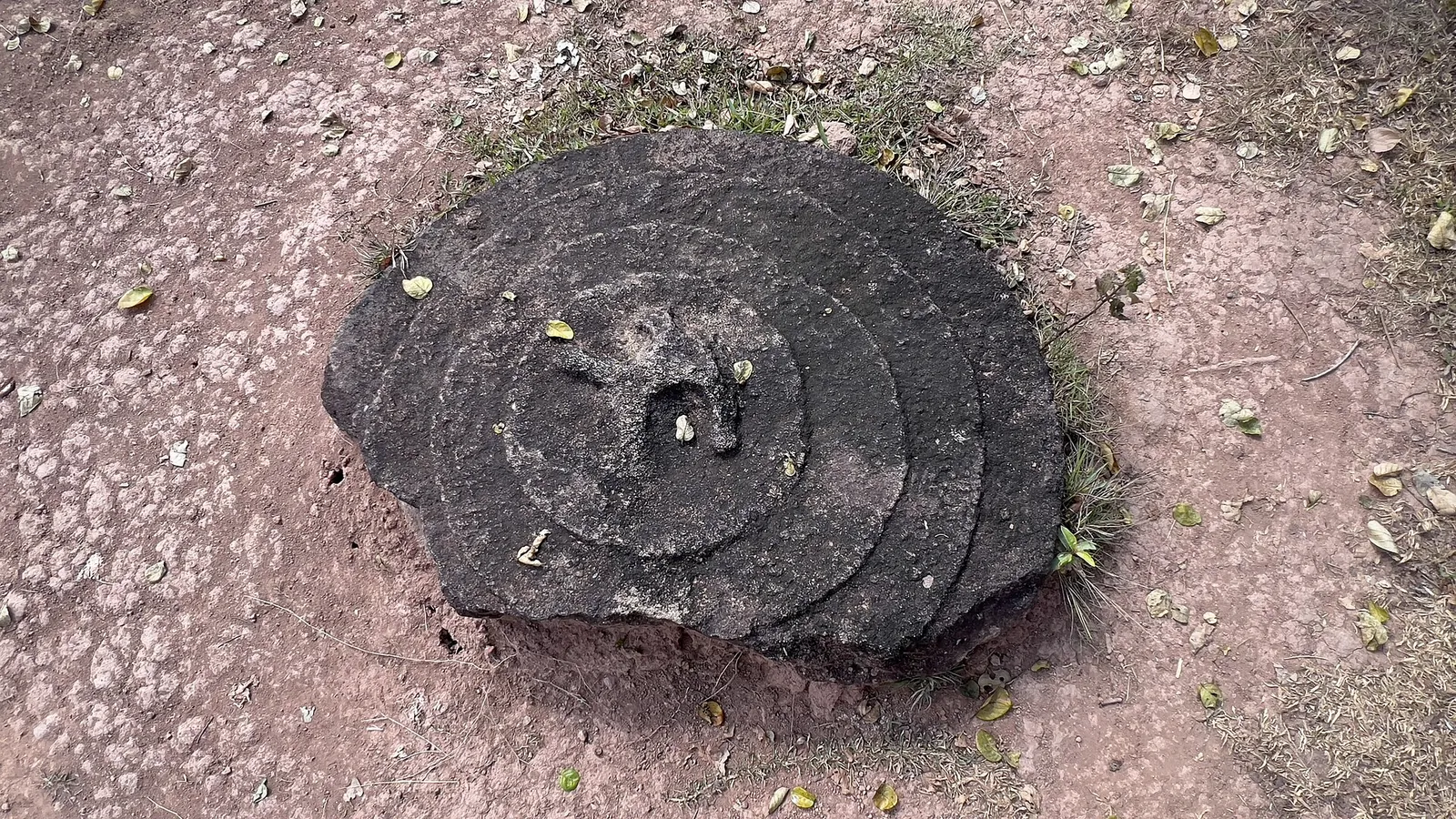
The jar shapes reward a slower look. At Sites 2 and 3, the national tourism page notes rims carved inside some openings, just below the lip. The dossier describes a decorated disc at Site 2 with raised concentric circles and a central figure whose identification is uncertain. A guide can help you distinguish the features without presenting a disputed interpretation as settled history.
The modern scars are part of the view too. Trenches and bomb craters at Site 1 sit beside damaged or displaced jars. They explain why an archaeological outing here also needs the war and clearance context described below.
Site 1 first, then the hill groups at Sites 2 and 3
Site 1, Tong Hai Hin, is the natural starting point for an introduction to the jars. The national tourism authority identifies it as the most popular visitor site and the location of the biggest jar. The nomination dossier describes interpretive displays at a visitor centre and wartime trenches and craters around the jar groups. Look at the vessels and the surrounding ground together, rather than treating each jar as an isolated sculpture.
Site 2, Ban Na Kho, changes the setting to a hill ridge near the edge of the plain. The dossier places it approximately 20 kilometres from Phonsavan and describes groups divided by a road, sandstone jars and decorated stone discs. The national visitor description gives the approach from the parking and ticket area up steps to the first group. Travel between the visitor entrances by vehicle.
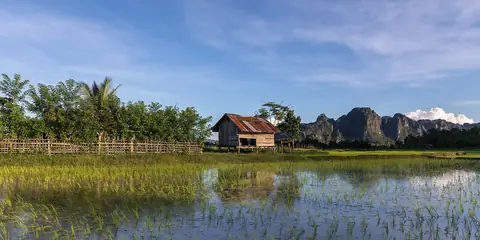
Site 3, Ban Xieng Di, is the rice-field approach. The national tourism authority describes a bridge beyond the entrance booth, a walk beside the fields and then a marked path towards the main hill group. From there the jars overlook the plain and paddies. This is the place to leave time for the setting rather than arriving at the end of an overfilled day.
The national authority names Sites 1, 2 and 3 as visitor sites, while the nomination dossier limits the recorded clearance to jar groups and pathways, not whole sites. Separately, the UK FCDO warns that landmines and unexploded weapons are a hazard throughout Laos, and Germany’s Foreign Office directs visitors to remain on marked paths. Stay within the marked visitor groups and approaches, follow barriers and local instructions, and leave unfamiliar objects untouched. Check your own government’s advice before booking. This itinerary does not include an inter-site trek or other jar groups.
Book a jar-site circuit with a named local operator
Anoulack Khen Lao Hotel sells a jars-only outing on its own services page: Option 01 visits Sites 1, 2 and 3 as a private full-day tour, listed at US$70 on 15 October 2026. It comes with an English-speaking driver and pickup at the airport or the bus station where you arrive. The longer options on the same page add villages, caves or hot springs; this stay uses Option 01 only.
Book Option 01 for the middle day through the hotel’s contact page, together with the room. The hotel publishes no separate guide fee, pickup hour or site admission prices, so admissions are not in the budget. As an alternative, Douangsayjay Travel (Minivan Station and Tour, RD No.7, Phonsavanh Xai village) lists a daily 09:00 programme to Sites 1, 2 and 3 that also adds the museum, a spoon-making village and a Site 1 sunset viewpoint; book it at the office.
On 15 October 2026, the UK FCDO advised against all but essential travel to Xaisomboun province. This stay uses the Vientiane–XKH flight rather than a road shortcut through that province. That warning is separate from the clearance limits at the jar sites.
The provincial museum and the war’s continuing effects
The Xieng Khouang Provincial Museum is an optional way to give the jar visits a wider frame. The national tourism authority describes exhibits, audiovisual material and artefacts covering the megalithic jars, the Muang Phuan polity and the province’s place in French Indochina and the Indochina Wars. It also introduces the culture and society of six ethnic groups.
MAG, the Mines Advisory Group, explains the continuing effects of unexploded bombs on farming, community life and development. The organisation works in Xieng Khouang and Khammouane, combining clearance with risk education. That is useful context for understanding why safe access is a specific cleared route, not a general description of the plateau.
No opening hours or admission price are published for the museum or for a MAG visit, so neither is in the budget; both are optional.
Local meals and a two-night budget for two
The provincial tourism department names actual local places for dinner. Synamkat Restaurant, in Phonesaat Nur village, serves sindard, a combination of meat grilled over heat and vegetables cooked in the surrounding soup. Labxab-xiengkhouang Restaurant, in Phonthong village, lists lab as its main menu item. These give the two evenings a local meal choice rather than a succession of café snacks.
At Site 3, the national visitor information names the small family-run restaurant near the ticket booth as a place for noodle soup and drinks. It is a practical lunch stop on the sightseeing day. Tell restaurants about allergies before ordering.
Budget for two adults, two nights, checked on 15 October 2026: the hotel’s own rate for a Standard Double is from US$25 a night, so two nights are US$50, with breakfast and taxes not included. Option 01, the private full-day jar tour, is US$70. Together that is US$120. The provincial tourism department separately lists the hotel at LAK500,000–1,200,000 a night with breakfast across all its rooms.
One return-gateway lunch: LAK95,700 for two. After the morning flight back to Vientiane, Khop Chai Deu at 54 Setthathirath Road, Nam Phou, serves lunch on the air route. Its menu lists beef or lam at LAK46,000 and mok pa, Mekong fish steamed in banana leaf, at LAK41,000, plus 10% VAT: (46,000 + 41,000) × 1.10 = LAK95,700. Rice and drinks are extra. The lunch is in kip, as the menu shows it, and is not added to the US$ total.
Not included: breakfast and taxes at the hotel, the two XKH hotel transfers (the hotel charges extra and publishes no fare), site admissions, the museum, a MAG visit, other meals and drinks, flights and Vientiane airport journeys.
Make time for the local food
What to eat and where to look
Sindard (Lao hot pot)
Thinly sliced meat is grilled over heat while fresh vegetables cook in soup around it, as the provincial tourism department describes the dish.
- Where to look
- Synamkat Restaurant, Phonesaat Nur village, Phonsavan.
- Fit it into your day
- A shared dinner on arrival, when you have no sightseeing drive afterwards.
Lab (laap)
A Lao herb-and-meat salad. The national tourism authority highlights herbs and toasted rice powder; the provincial directory identifies lab as this restaurant’s main menu item.
- Where to look
- Labxab-xiengkhouang Restaurant, Phonthong village, Phonsavan.
- Fit it into your day
- Dinner on the second evening.
Beef or lam
A beef stew, giving the return meal a different preparation from the banana-leaf steamed fish. Khop Chai Deu’s own menu names it “Beef Stew Or Lam”.
- Where to look
- Khop Chai Deu, 54 Setthathirath Road, Nam Phou, Vientiane.
- Fit it into your day
- Share it with mok pa at lunch after the return flight on day 3.
Noodle soup
Noodles in a hot soup make a practical lunch between the jar groups. The family-run restaurant is beside Site 3’s ticket booth, so the lunch stop fits the sightseeing circuit.
- Where to look
- The family-run restaurant beside the Site 3 ticket booth, Ban Xieng Di.
- Fit it into your day
- Lunch during the jar-site day.
Mok pa
Fish steamed in banana leaf; Khop Chai Deu’s menu specifies Mekong fish. This is a meal in the Vientiane gateway, before or after the Phonsavan stay.
- Where to look
- Khop Chai Deu, 54 Setthathirath Road, Nam Phou, Vientiane.
- Fit it into your day
- Share it with beef or lam after the return flight on day 3.
Fly through Vientiane: the three days and the airport pickup
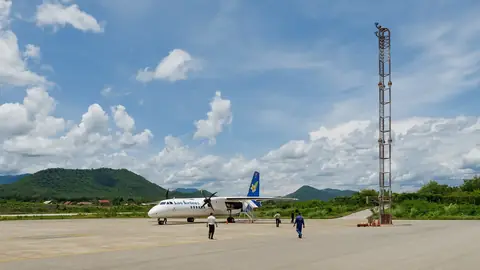
Lao Airlines’ winter timetable, valid from 25 October 2026 to 27 March 2027, lists daily QV401 from Vientiane to Xieng Khouang at 09:00–09:40 and QV402 back at 10:10–10:50. On Monday, Wednesday, Friday and Sunday, QV403 runs at 15:40–16:20 and QV404 returns at 17:00–17:40. The timetable does not give fares.
Book the flight on Lao Airlines’ website for your date, then send the ticket details to the hotel for the airport transfer. Use the fare conditions shown with the flight you buy for baggage and changes. The morning outward flight leaves the rest of day 1 free, and the middle day has no flight.
This route returns to Vientiane on day 3. Keep an onward international flight separate from the short domestic connection unless the airline supplies a protected itinerary. The Vientiane guide covers the capital if you stay longer.
- Day 1 — Vientiane to Phonsavan: take the morning flight to XKH, use the arranged hotel pickup and settle in. The provincial museum is an optional town visit. Dinner in Phonsavan. Night: Phonsavan.
- Day 2 — Jar groups: take the arranged circuit to the visitor entrances at Sites 1, 2 and 3. Stop for noodle soup by Site 3’s ticket booth, then return to the same hotel. Night: Phonsavan.
- Day 3 — Return to Vientiane: transfer to XKH for the morning return flight, then continue into Vientiane for the priced Lao lunch. This completes the two-night Phonsavan stay.
Practical questions
How many nights should I stay in Phonsavan?
Two nights give you one full day for the jar-site circuit and arrival time for optional town visits. Keep both nights in one central hotel.
Are the Plain of Jars sites safe to walk around?
The visitor plan is limited to the marked jar groups and paths at Sites 1, 2 and 3. It does not treat the whole sites or the wider plateau as cleared land.
Can I fly to Phonsavan from Vientiane?
Lao Airlines’ winter timetable for 25 October 2026–27 March 2027 lists daily VTE–XKH and XKH–VTE morning flights, plus afternoon flights on Monday, Wednesday, Friday and Sunday. Book the actual date before fixing the hotel pickup.
Do I need a guide for the jars?
Option 01 comes with an English-speaking driver who connects the three visitor entrances. No guide fee or site admission price is published, so admissions are not in the budget.
Can I fit the jars between two flights on the same day?
Use the two-night stay instead. The full day lets you visit all three visitor groups, eat locally and return to the hotel without a flight deadline.
How much does a two-night Plain of Jars stay cost for two?
The published prices come to US$120: two nights in a Standard Double at the hotel’s own US$25 a night (US$50) plus the US$70 private Option 01 jar tour, checked on 15 October 2026. Breakfast, taxes, airport transfers, admissions, flights and meals are not included, apart from one Vientiane lunch at LAK95,700.
Sources and checks before you travel
Reference sources for the version dated 15 October 2026. Confirm opening times, access, transport and conditions for your travel dates.
- UNESCO: Megalithic Jar Sites in Xiengkhuang ↗ — opens in a new tab
- Lao World Heritage nomination dossier: Plain of Jars ↗ — opens in a new tab
- UNESCO: Plain of Jars periodic reporting, 2023 ↗ — opens in a new tab
- Laos Tourism: Xieng Khouang Province ↗ — opens in a new tab
- Laos Tourism: food and flavours ↗ — opens in a new tab
- Xiengkhouang tourism: official department portal ↗ — opens in a new tab
- Xiengkhouang tourism: restaurants ↗ — opens in a new tab
- Xiengkhouang tourism: travel agents ↗ — opens in a new tab
- Xiengkhouang tourism: hotels ↗ — opens in a new tab
- Xiengkhouang tourism: Phonsavan activities ↗ — opens in a new tab
- Anoulack Khen Lao Hotel: room rates ↗ — opens in a new tab
- Anoulack Khen Lao Hotel: facilities ↗ — opens in a new tab
- MAG: Laos programme ↗ — opens in a new tab
- Inthira: Khop Chai Deu ↗ — opens in a new tab
- Khop Chai Deu: food menu ↗ — opens in a new tab
- World Bank and Asian Development Bank: Lao PDR climate profile ↗ — opens in a new tab
- Lao Airlines: winter 2026–27 domestic timetable ↗ — opens in a new tab
- UK FCDO: Laos travel advice ↗ — opens in a new tab
- France Diplomatie: Laos travel advice ↗ — opens in a new tab
- UK FCDO: Laos travel advice ↗ — opens in a new tab
- UK FCDO: Laos travel advice ↗ — opens in a new tab
- Auswärtiges Amt: Laos travel advice ↗ — opens in a new tab
- Anoulack Khen Lao Hotel: jars-only private tour ↗ — opens in a new tab
- Anoulack Khen Lao Hotel: booking contact ↗ — opens in a new tab
Photo credits
Large stone jars stand on open ground at Site 1.
Photograph: Jakub Hałun — opens in a new tab · CC BY-SA 4.0 — opens in a new tab
Changes: Resized and converted to WebP; displayed with responsive crops. · Original photograph and licence details ↗ — opens in a new tab
A split stone jar stands among trees at Site 2.
Photograph: Stefan Fussan — opens in a new tab · CC BY-SA 4.0 — opens in a new tab
Changes: Resized and converted to WebP; displayed with responsive crops. · Original photograph and licence details ↗ — opens in a new tab
An open stone jar stands in the wooded Site 3 group.
Photograph: Stefan Fussan — opens in a new tab · CC BY-SA 4.0 — opens in a new tab
Changes: Resized and converted to WebP; displayed with responsive crops. · Original photograph and licence details ↗ — opens in a new tab
A circular carved stone lies on the ground at Site 2.
Photograph: Stefan Fussan — opens in a new tab · CC BY-SA 4.0 — opens in a new tab
Changes: Resized and converted to WebP; displayed with responsive crops. · Original photograph and licence details ↗ — opens in a new tab