Plan your trip
Where to stay in Laos: the town, then the street
Laos is easy to plan once you see where the nights fall. The railway ties Luang Prabang, Vang Vieng and Vientiane together, and in each town the street you sleep on decides what is at your door in the morning and the evening. This guide gives the area to choose in each base, from the old-town peninsula in Luang Prabang to the plateau road above Pakse, names hotels at three price levels with the rates they listed, and explains which nights are best spent near an airport.
In this guide
Find the location ↗ — opens in a new tabThe short answer
For a first week of seven days, book six nights: three on the old-town peninsula in Luang Prabang, two by the Nam Song in Vang Vieng and one in central Vientiane (Chanthabouly), flying into Luang Prabang (LPQ) and out of Wattay (VTE) on day 7. Add two nights beside the bridge in Nong Khiaw, by road from Luang Prabang with a Luang Prabang night on the way back, or three on the Bolaven Plateau road, flying to Pakse, as separate extensions. Book the Luang Prabang room first in high season and around Lao New Year in April, then the two train legs. Two key prices, checked on 1 November 2026: Villa Chitdara's Superior room on the peninsula is US$72 a night in high season, with breakfast, tax and service included, and the airport taxi from LPQ to any hotel in town is a flat LAK 50,000 per group. The six nights' rooms for two come to about LAK 3.3 million on a budget, LAK 8.7 million mid-range or LAK 21.8 million in comfort.
- Key point
- 6 nights for a first week: Luang Prabang 3, Vang Vieng 2, Vientiane 1; Nong Khiaw (2 nights) and the Bolaven Plateau (3 nights) as extensions
- Where it applies
- Luang Prabang's old-town peninsula, the Nam Song riverbank in Vang Vieng and central Vientiane in Chanthabouly district; Nong Khiaw by the bridge, Pakse by the Mekong or the Bolaven Plateau road
- Timing
- November to February is the cooler dry-season window for town walks, when the Luang Prabang hotels charge high-season rates, and Luang Prabang celebrates Lao New Year (Pi Mai) in April.
Which towns to sleep in
Most first trips to Laos follow the railway south: three nights in Luang Prabang for the temples and Kuang Si, two in Vang Vieng for the river and the karst, and a last night in Vientiane before the flight home, the six-night week of our first-trip guide. Give any of them a night more if you have it; the destination guides plan four nights in Luang Prabang, three in Vang Vieng and two in Vientiane.
Two extensions leave the line. Nong Khiaw on the Nam Ou is 152 km by road from Luang Prabang, three to four hours by minivan by Nong Khiaw Adventure's timing; Tourism Luang Prabang lists buses from the Northern Bus Station at 09:00, 11:00 and 14:00, and Tanva Mekong Cruises sells a public minivan at US$14 per person each way with hotel pickup. Pakse and the Bolaven Plateau are reached by air: in Lao Airlines' winter timetable (25 October 2026 to 27 March 2027), Vientiane–Pakse runs at least twice a day in 1 hour, and Luang Prabang–Pakse on Tuesday, Thursday and Saturday in 1 hour 40 minutes.
In each base the street matters as much as the hotel. The bases compare like this:
| Base | Where to sleep | Arrive by | Near |
|---|---|---|---|
| Luang Prabang, 3 nights | The old-town peninsula; across the Nam Khan for less | Flight to LPQ, or the train | Wat Xieng Thong, the former palace, Phousi and the night market |
| Vang Vieng, 2 nights | The Nam Song riverbank or the town streets behind it | Train | The kayak and cave trips on the Nam Song, Tham Chang |
| Vientiane, 1 night | Chanthabouly: Ban Mixay, Nam Phou and the Mekong front | Train, or a flight to Wattay | Wat Si Saket, the riverfront night market, That Luang a short ride away |
| Nong Khiaw, 2 nights | Beside the bridge over the Nam Ou | Minivan or bus from Luang Prabang | The boat to Muang Ngoi and the viewpoint |
| Pakse and the Bolaven Plateau, 3 nights | The plateau road east of Pakse, or Pakse by the river | Flight to Pakse (PKZ), then a car | Tad Fane, Tad Yuang and the coffee farms; Vat Phou from Pakse |
Luang Prabang: the peninsula or across the Nam Khan
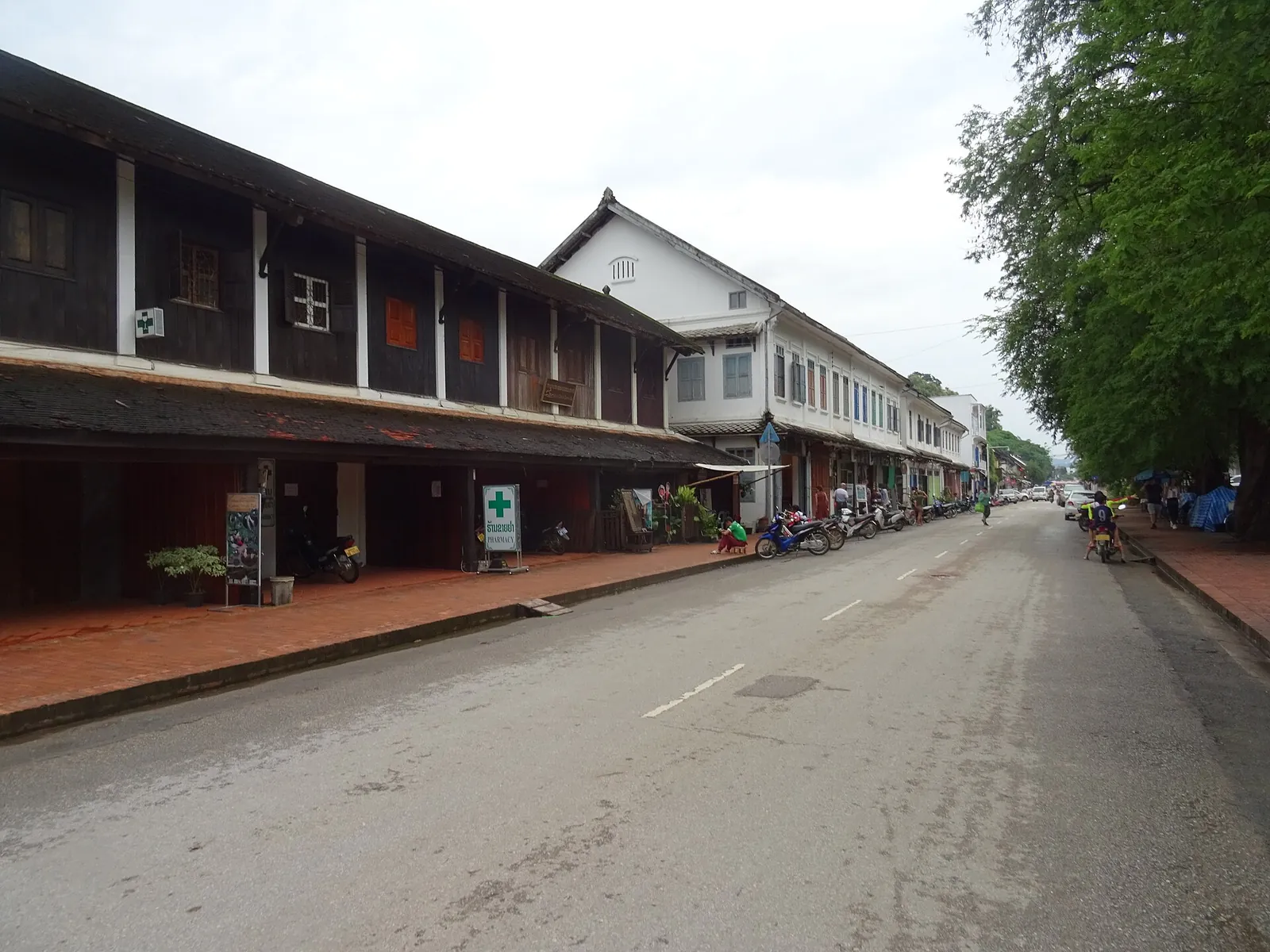
Luang Prabang's old town fills a peninsula between the Mekong and the Nam Khan, with Mount Phousi and its 328 steps in the middle. Sleep on it for a first visit: Wat Xieng Thong, completed in 1560 and one of the most striking examples of Lao temple architecture, the former palace and the river walks are a stroll from your door, and you can come back to the room between outings. Ban Vat Nong, in the lanes behind the Mekong front, is the quieter temple quarter, with small hotels such as Villa Chitdara on Khounsua Road.
The night-market end, around Sisavangvong Road near the National Museum, suits travellers who want the evenings outside. The market sets up daily from 17:00 to about 22:00, when a few hundred metres of the road close to traffic and around 250 handicraft stalls line it, with sticky rice, grilled chicken and fish steamed in banana leaf in the side lanes (Tourism Luang Prabang). The Mekong side of the peninsula is where rooms look across the river: at The Belle Rive, in the historical centre, every room faces the water and breakfast is served on a riverside terrace.
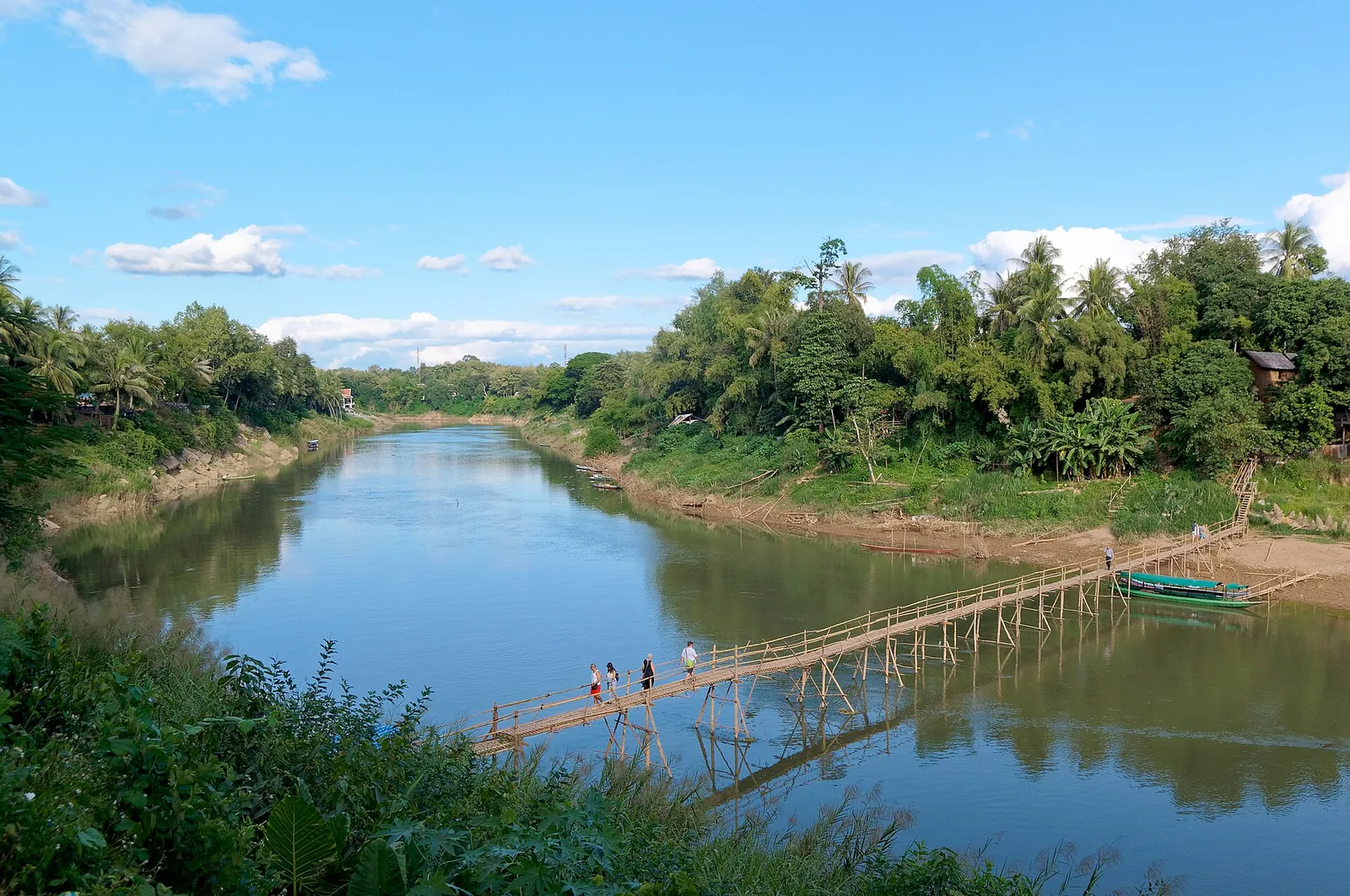
Across the Nam Khan, the guesthouses on the far bank cost less and are quieter after dark. Phonepraseuth Guesthouse stands on that bank, across the bamboo footbridge or a boat ride from the night market. For three nights the peninsula still saves time, including on the day you leave for the train (see the station section below); the far bank suits a longer, slower stay. Our Luang Prabang guide covers the sights and the Pak Ou and Kuang Si day.
Vang Vieng: the riverbank or the town streets
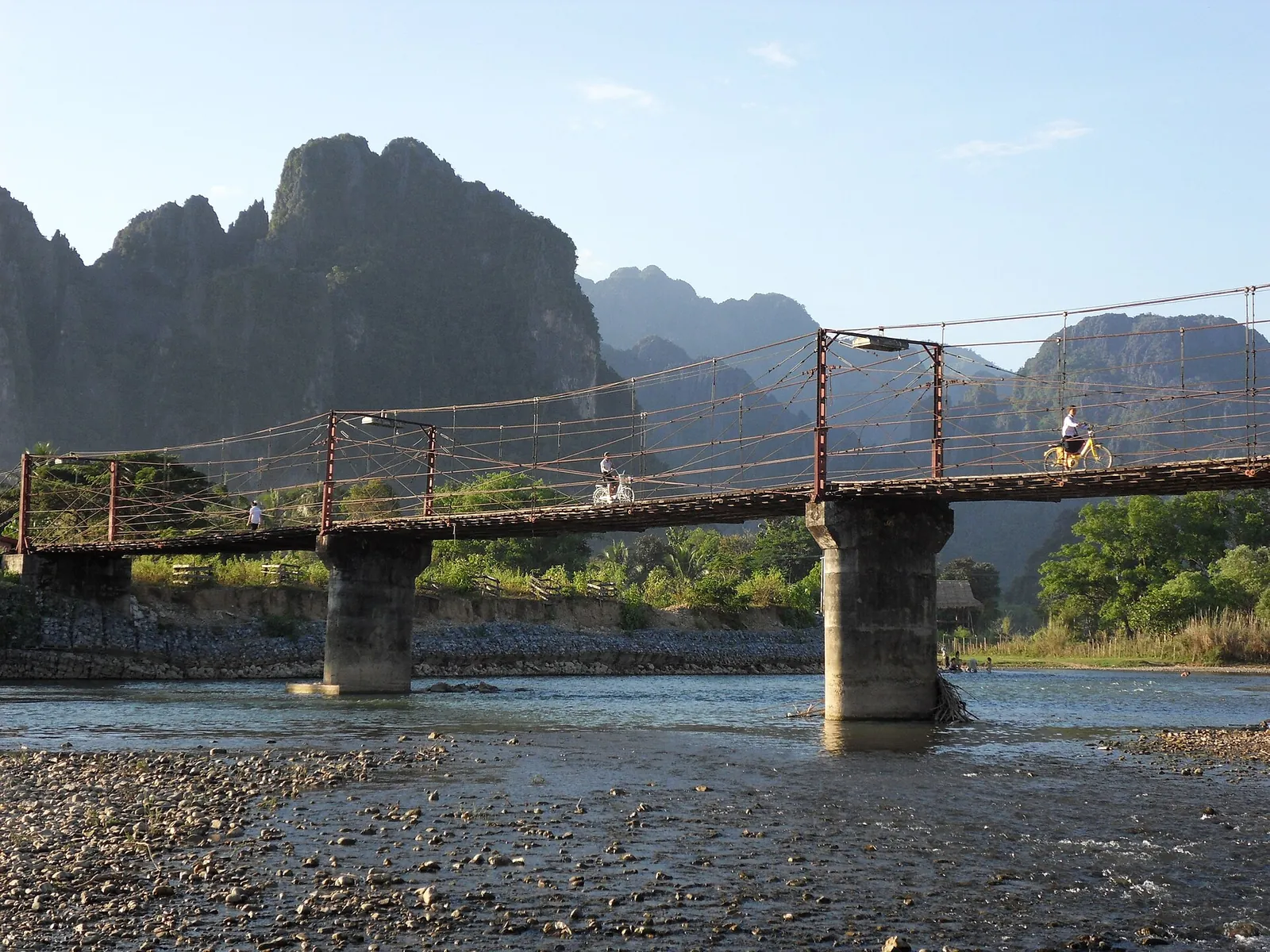
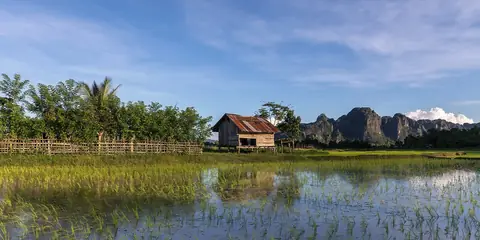
Vang Vieng is a small town 150 km north of the capital, set among limestone peaks with the Nam Song running through it, a network of caves at the foot of the hills and kayaking through the karst on the river (Tourism Laos). The river decides the choice. On the riverbank the rooms face the water and the peaks, and the kayaks come past in the afternoon. Inthira Vang Vieng in Ban Viengkeo gives every room a private balcony over the river, and Riverside Boutique Resort sets 34 rooms and suites around a pool on the same bank.
Stay on the river in the middle of town for the tour offices and the start of the classic day out. Wonderful Tours' kayak day drives 10 km north to the Khmu village of Ban Vieng Sa Mai and paddles back downstream past the karst, with tubing inside Tham Norn, the Sleeping Cave, a stop at Tham Ngangfar, the Angel Cave, and the Blue Lagoon; it lists the day from US$30 per person. Stay towards the south end of town to walk to Tham Chang, which Tourism Laos calls Vang Vieng's most important cave: villagers sheltered in it during the civil war, and you reach it over a bridge across the Nam Song and up steps in the cliff. Domon Riverside, on the riverfront in Savang village, shows that a river view need not cost much. Our Vang Vieng guide plans the river day and a slower second day.
The train from Vientiane takes about an hour; book the station ride with the room (the station section below gives the distances).
Vientiane: Chanthabouly, between the Mekong and Samsenthai Road
Central Vientiane is Chanthabouly district, the old part of town between the Mekong and Samsenthai Road, where colonial villas stand among the temples (ASEAN's tourism portal). Its sights are a short walk apart. Wat Si Saket, built in 1818, is the only old temple left intact after the Siamese destruction of 1828, and its cloister walls hold 6,840 Buddha images; That Luang, the 45-metre golden stupa first built in 1566 and the national symbol, is a short ride east (Tourism Laos).
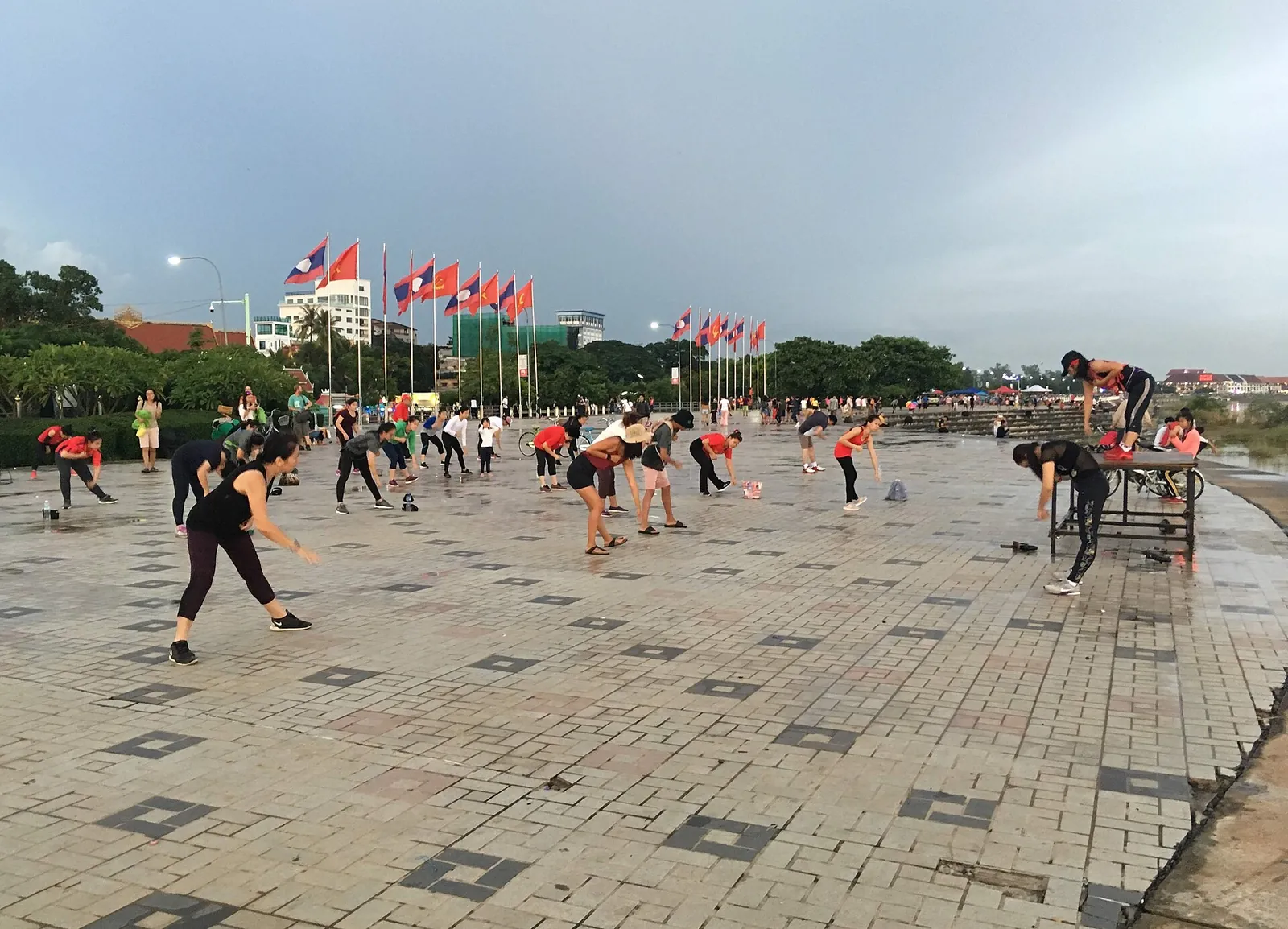
Ban Mixay and the streets around Nam Phou fountain are the place for a one-night stop, with Wat Si Saket and Ho Phra Keo a walk away. Chanthapanya Hotel, at 138 Norkeokoummarn Road in Ban Mixay, is a traditional Lao-style building with a pool. The Mekong front along Chao Anou Road is the other choice: in the evening joggers fill the riverside promenade and the night market sets up its red-roofed stalls there around sunset. The Lao Orchid Hotel stands on Chao Anou Road, and Settha Palace, a colonial hotel at 6 Pangkham Street, is the comfort choice a few blocks inland.
For the train and the airport, see the station section below. Our Vientiane guide plans two nights for the temples, COPE and the Mekong evenings.
Nong Khiaw: beside the bridge over the Nam Ou
Nong Khiaw is a small town among steep karst peaks on the Nam Ou. Ban Saphoun, on the east bank, has the best views and most of the rooms, while Nong Khiaw proper, on the west bank, has the tour and travel businesses (Tourism Luang Prabang). The bridge joins the two, so a room near it puts both a short walk away.
Nong Kiau Riverside has 15 wooden bungalows and a restaurant along the river by the bridge, and takes bookings by email, Facebook Messenger or WhatsApp. Book two nights, as the ten-day route in our first-trip guide does: that leaves one full day between the road journeys for the hour-long boat up the Nam Ou to Muang Ngoi or the steep climb of 1 to 1.5 hours to the viewpoint above the town, best at sunrise; stay on the marked path. Our Nong Khiaw guide adds a third night to do both. Return buses and minivans to Luang Prabang leave at 09:00, 11:00 and 14:00; sleep in Luang Prabang the night before the road trip if you fly in, and again on the way back if you continue south by train.
Pakse, Champasak and the Bolaven Plateau
Pakse, the capital of Champasak Province, sits where the Sedon joins the Mekong, and the choice is between the city and the plateau. Sleep in Pakse by the river for Vat Phou, an evening flight in or a morning flight out. Vat Phou is the pre-Angkorian temple complex on the west bank of the Mekong about 45 km south of the city, laid out along an axis from the mountain top to the river bank with temples, shrines and waterworks spread over some 10 km; its heritage office lists admission for the site and museum at LAK 50,000 for foreign visitors, with the electric car included and the ticket valid all day. The Champasak Grand Hotel stands on the Mekong riverside road by the Lao–Nippon Bridge and has 215 rooms. Champasak town, about 35 km south of Pakse along the Mekong, puts you nearer the temple, among rice fields and villages, with simple guesthouses such as Khounthavy on the main road.
Sleep on the Bolaven Plateau for the waterfalls and coffee, and keep all the nights together. The plateau rises over 1,500 metres, and its volcanic soil grows Arabica coffee. Tad Fane, where two rivers plunge side by side over a 120-metre cliff into a single pool, is at kilometre 38 on Road 16E, and Tad Yuang, on the same road towards Paksong, has paths to lookouts at the top, middle and bottom of its gorge (Tourism Laos). Sinouk's coffee plantation, on the Paksong–Thateng road at Lak Khao, welcomes walk-in visitors to see the Arabica trees. Sabaidee Valley, at Km 33 on Road 16E, has garden villas with breakfast, about 5 km short of Tad Fane. No fare or road time is published for the drive from Pakse airport to the plateau; ask the hotel or a Pakse driver for a car. Our Pakse and Bolaven guide plans three plateau nights with a driver.
Further south, the Mekong islands of Si Phan Don lie close to the Cambodian border; Germany's Foreign Office advises avoiding journeys that lead near that border strip, so, like the Pakse and Bolaven guide, this guide keeps to Pakse and the plateau.
The railway stations stand outside town: the first and last nights
The Laos–China Railway makes the north quick, but none of its stations is in a town centre, so count the road ride at each end of every train. In the railway company's schedule announced on 28 September 2026, the morning train C95 calls at Luang Prabang and Vang Vieng and reaches Vientiane at 11:47; the trains and times for your date are in the LCR Ticket app, which our transport guide explains.
| Arrival point | Where it is | What it means for the night |
|---|---|---|
| Luang Prabang station | Phik village, about 15 km or 30 minutes from town | Book the hotel car to the train; a peninsula room is still the base |
| Vang Vieng station | Around 2–3 km north-east of town | A short ride; Riverside Boutique Resort's 4WD or minivan pickup is US$19 per trip for up to six with luggage |
| Vientiane Station (Laos–China Railway) | Xaythany district, outside the centre | Book a ride out to the train |
| Luang Prabang airport (LPQ) | 4 km from the centre | Fly in and sleep on the peninsula the first night |
Sleep in central Vientiane for the last night rather than going from a train straight to an international flight: the railway station and Wattay airport are two separate rides. The trip south is two tickets, Luang Prabang to Vang Vieng and Vang Vieng to Vientiane; no fare or journey time is published for those single legs, so check them for your date in the railway's LCR Ticket app. For scale, Tourism Laos lists the whole Vientiane–Luang Prabang line at LAK 360,000 in second class and LAK 569,000 in first class since 1 April 2026. Trains from Bangkok arrive at a different Vientiane terminal, Khamsavath, about 8 km from downtown.
When rooms cost more: high season and Lao New Year
Hotels set their prices by season: Villa Chitdara's high season runs from 1 October to 30 April and The Belle Rive's from 1 October to 31 March, when its Superior room costs US$160 against US$115 the rest of the year. November to February is the cooler dry-season window for temple and town walks, so book the Luang Prabang room first for those dates; our best-time guide explains the weather month by month.
Lao New Year (Pi Mai) is the other date to plan around. Its three-day public holiday fell on 14 to 16 April in 2026, and Luang Prabang celebrates from 10 to 25 April, with processions, water fights and most people drenched for much of the festival (Tourism Luang Prabang). Book Luang Prabang early if you want to be there, and keep phones and passports in a waterproof bag. In Vientiane, the week-long That Luang festival falls around mid-November, ending on the full moon; book early if you are going for it.
Named hotels and their rates, at three levels
Each rate below is per room per night for two people, as the hotel or its Kayak page printed it on 1 November 2026. Own-website rates are quoted from the hotel; the Kayak figures are the lowest nightly price including taxes and fees, which moves with your dates. Breakfast is included at Villa Chitdara and The Belle Rive and costs US$6 extra at Phonepraseuth; the Kayak prices are room only.
For the six-night week (Luang Prabang 3, Vang Vieng 2, Vientiane 1, two people sharing), the rooms come to the totals below. They are in kip at BCEL's buying rate of 20 October 2026, USD 1 = LAK 22,279, the rate our Laos trip-cost guide uses, and The Belle Rive's rate includes its 10% VAT.
| Level | Luang Prabang, 3 nights | Vang Vieng, 2 nights | Vientiane, 1 night | Rooms for two, about LAK |
|---|---|---|---|---|
| Budget | Phonepraseuth, US$26 | Domon Riverside, US$13 | Lao Orchid, US$45 | 3.3 million |
| Mid-range | Villa Chitdara, US$72 | Amari Vang Vieng, US$51 | Settha Palace Standard, US$72 | 8.7 million |
| Comfort | The Belle Rive Superior, US$176 with VAT | Riverside Boutique Resort Deluxe, US$141 | Settha Palace Superior, US$169 | 21.8 million |
The trip-cost guide prices the same six-night route for January 2027, with some different hotels: with every meal, both trains, transfers, Kuang Si, the Vang Vieng kayaking day, temple tickets, the visa, a SIM and a 10% buffer, it comes to about LAK 18.6 million for two on a budget, LAK 32.4 million mid-range and LAK 64.6 million in comfort, before flights.
- Luang Prabang, budget: Phonepraseuth Guesthouse, across the Nam Khan. Double or twin room US$26 a night, including 10% tax and 10% service charge; breakfast is US$6 extra.
- Luang Prabang, mid-range: Villa Chitdara, Khounsua Road, Ban Vat Nong. Superior room US$72 a night in high season and US$56 in low season, including 10% tax, 7% service charge and daily breakfast.
- Luang Prabang, comfort: The Belle Rive Boutique Hotel, on the Mekong in the historical centre. Superior room US$160 a night in high season and US$115 in the green season, for two people with breakfast, plus 10% VAT.
- Vang Vieng, budget: Domon Riverside Hotel, Savang village on the riverfront: from US$13.
- Vang Vieng, mid-range: Amari Vang Vieng, Song River Road, Sawang village, 160 rooms: Superior twin from US$51. On the riverbank, Inthira Vang Vieng has 36 m² Deluxe rooms with river-view balconies and breakfast on direct bookings.
- Vang Vieng, comfort: Riverside Boutique Resort, on the Nam Song: Deluxe room US$141 (Classic from US$90).
- Vientiane, budget: Lao Orchid Hotel, Chao Anou Road: from US$45. Chanthapanya Hotel in Ban Mixay is the traditional-style alternative, with a pool.
- Vientiane, mid-range and comfort: Settha Palace Hotel, 6 Pangkham Street: Standard room from US$72, Superior room US$169.
- Nong Khiaw: Nong Kiau Riverside, by the bridge: from US$43 on Kayak; the hotel quotes by email or messaging.
- Pakse: Champasak Grand Hotel, on the Mekong riverside road: Superior room from US$41 on Kayak.
- Bolaven Plateau: Sabaidee Valley, Km 33, Road 16E: Deluxe villas for two, with breakfast.
Practical questions
Which area of Luang Prabang is best for a first stay?
The old-town peninsula between the Mekong and the Nam Khan. Ban Vat Nong is the quieter temple quarter; the night-market end around Sisavangvong Road suits evenings out. The far bank of the Nam Khan is cheaper and quieter, a bamboo footbridge or a boat away.
Should I sleep by the river or in town in Vang Vieng?
By the Nam Song in the middle of town for the tour offices and the kayak day, or towards the south end to walk to Tham Chang. A riverbank room gives you the karst from the balcony.
Where should I spend the last night before flying home?
In central Vientiane: Ban Mixay, the streets around Nam Phou or the Mekong front along Chao Anou Road, with Wat Si Saket and the riverfront night market a walk away.
Should I stay in Pakse or on the Bolaven Plateau?
On the plateau road for Tad Fane, Tad Yuang and the coffee farms, keeping all the nights in one place; in Pakse by the Mekong for Vat Phou, 45 km south, or for a late or early flight.
When do Laos hotels charge high-season rates?
The Luang Prabang hotels named here charge more in their high season, which starts in October, and the section on high season and Lao New Year gives each hotel's dates. Book early for November to February and for Lao New Year in April.
How do I get to Nong Khiaw and Pakse?
By road from Luang Prabang, 152 km and three to four hours by minivan: buses leave the Northern Bus Station at 09:00, 11:00 and 14:00, and Tanva Mekong Cruises' public minivan costs US$14 per person each way with hotel pickup. For Pakse, Lao Airlines' winter timetable has flights from Vientiane at least twice a day (1 hour) and Tuesday, Thursday and Saturday flights from Luang Prabang.
Keep planning your trip
First trip to Laos
Choose five, seven or ten days in Laos: Luang Prabang alone, the railway south, Nong Khiaw, or extra days for Bolaven and the Plain of Jars.
Read the guide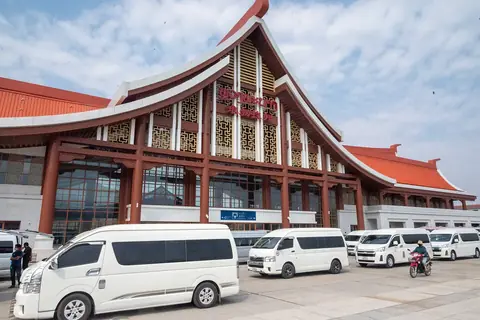
Transport in Laos
Plan Laos by rail from Luang Prabang to Vang Vieng and Vientiane, with station transfers, LCR Ticket, seasonal flights and permitted border crossings.
Read the guide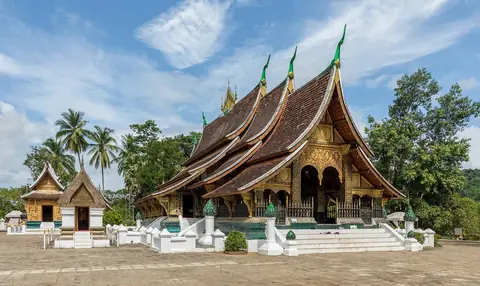
Luang Prabang
Plan four nights in Luang Prabang: peninsula stays, temple and museum tickets, Kuang Si and Pak Ou by tour, Lao food, airport transfers and costs.
Read the guide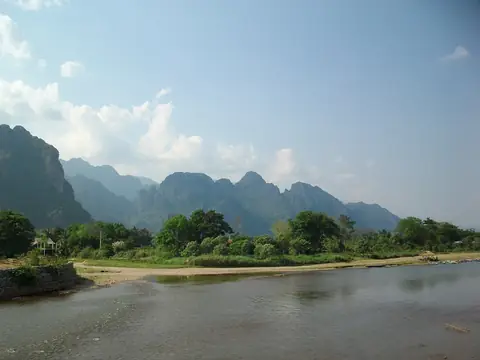
Vang Vieng
Plan three nights in Vang Vieng: town or river stays, guided Nam Song kayaking, caves and lagoon outings, local Lao food and railway arrival details.
Read the guide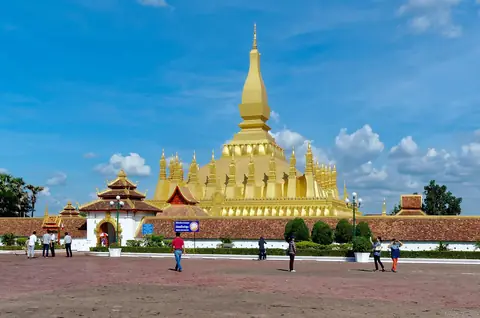
Vientiane
Plan two nights in central Vientiane for Pha That Luang, temple museums, Patuxai, COPE and the Mekong, with airport advice and a budget for two.
Read the guide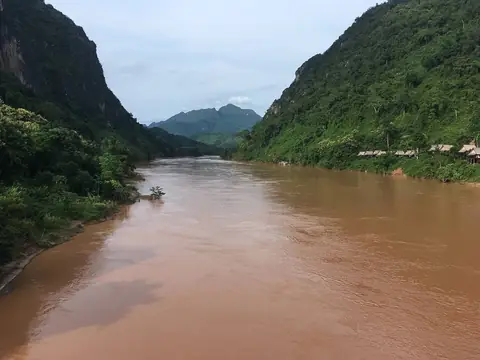
Nong Khiaw
Plan three nights in Nong Khiaw: riverside bases, a guided Nam Ou boat day, village visits, bus times from Luang Prabang and a clear budget for two.
Read the guideSources and checks before you travel
(45)
- Tourism Luang Prabang: access ↗ — opens in a new tab
- Tourism Luang Prabang: night market ↗ — opens in a new tab
- Tourism Luang Prabang: festivals ↗ — opens in a new tab
- Tourism Luang Prabang: Nong Khiaw to Muang Ngoi ↗ — opens in a new tab
- Tourism Laos: Vientiane Capital ↗ — opens in a new tab
- ASEAN tourism: attractions in Laos ↗ — opens in a new tab
- Tourism Laos: Vientiane Province ↗ — opens in a new tab
- Tourism Laos: Champasak Province ↗ — opens in a new tab
- Visit Champasak: accommodations ↗ — opens in a new tab
- Visit Champasak (Champasak tourism project) ↗ — opens in a new tab
- Tourism Laos: Laos–China Railway fares from 1 April 2026 ↗ — opens in a new tab
- Tourism Laos: Bangkok–Vientiane train to Khamsavath ↗ — opens in a new tab
- Lao News Agency (KPL): Laos–China Railway Vientiane Station ↗ — opens in a new tab
- Lao News Agency (KPL): C95 morning service ↗ — opens in a new tab
- MICT: Vang Vieng tourism master plan 2025–2035 ↗ — opens in a new tab
- ASEAN-Japan Centre: public holidays in Lao PDR ↗ — opens in a new tab
- Germany's Foreign Office: Laos travel and safety advice ↗ — opens in a new tab
- Phonepraseuth Guesthouse ↗ — opens in a new tab
- Villa Chitdara: rates ↗ — opens in a new tab
- The Belle Rive Boutique Hotel ↗ — opens in a new tab
- The Belle Rive Boutique Hotel: rates ↗ — opens in a new tab
- Inthira Vang Vieng ↗ — opens in a new tab
- Inthira Vang Vieng: Deluxe room ↗ — opens in a new tab
- Riverside Boutique Resort: rooms ↗ — opens in a new tab
- Riverside Boutique Resort: transfers ↗ — opens in a new tab
- Chanthapanya Hotel ↗ — opens in a new tab
- Settha Palace Hotel ↗ — opens in a new tab
- Nong Kiau Riverside ↗ — opens in a new tab
- Sabaidee Valley: Deluxe villa ↗ — opens in a new tab
- Sabaidee Valley: location ↗ — opens in a new tab
- Kayak: Domon Riverside Hotel, Vang Vieng ↗ — opens in a new tab
- Kayak: Amari Vang Vieng ↗ — opens in a new tab
- Kayak: Riverside Boutique Resort, Vang Vieng ↗ — opens in a new tab
- Kayak: Lao Orchid Hotel, Vientiane ↗ — opens in a new tab
- Kayak: Settha Palace Hotel, Vientiane ↗ — opens in a new tab
- Kayak: Nong Kiau Riverside ↗ — opens in a new tab
- Kayak: Champasak Grand Hotel, Pakse ↗ — opens in a new tab
- Lao Airlines: winter 2026–27 domestic timetable ↗ — opens in a new tab
- Tanva Mekong Cruises: minivan transfers ↗ — opens in a new tab
- Tourism Laos: Luang Prabang Province ↗ — opens in a new tab
- Nong Khiaw Adventure: Pha Daeng trip ↗ — opens in a new tab
- Wonderful Tours: kayaking, tubing in Tham Norn and the Blue Lagoon ↗ — opens in a new tab
- Sinouk Coffee: Bolaven plantation ↗ — opens in a new tab
- Vat Phou Office: visitor information ↗ — opens in a new tab
- BCEL: exchange rates, 20 October 2026 ↗ — opens in a new tab
Reference sources for the version dated 3 November 2026. Confirm opening times, access, transport and conditions for your travel dates.
Photo credits
(4)
A bamboo footbridge crosses the Nam Khan between the old town and the far bank.
Photograph: Jakub Hałun — opens in a new tab · CC BY-SA 4.0 — opens in a new tab
Changes: Resized and converted to WebP; displayed with responsive crops. · Original photograph and licence details ↗ — opens in a new tab
Sakkaline Road runs along the old-town peninsula in Luang Prabang.
Photograph: Christophe95 — opens in a new tab · CC BY-SA 4.0 — opens in a new tab
Changes: Resized and converted to WebP; displayed with responsive crops. · Original photograph and licence details ↗ — opens in a new tab
A footbridge crosses the shallow Nam Song in Vang Vieng, with limestone peaks behind.
Photograph: Chaoborus — opens in a new tab · CC BY-SA 3.0 — opens in a new tab
Changes: Resized and converted to WebP; displayed with responsive crops. · Original photograph and licence details ↗ — opens in a new tab
The Mekong riverfront promenade near Chao Anouvong Park in Vientiane, where the evening crowd gathers.
Photograph: Christophe95 — opens in a new tab · CC BY-SA 4.0 — opens in a new tab
Changes: Resized and converted to WebP; displayed with responsive crops. · Original photograph and licence details ↗ — opens in a new tab