Plan your trip
Cash or card in India? Rupees, UPI, ATMs and tipping
India pays in three ways at once. A foreign card settles the bill in upmarket hotels, restaurants and shopping centres; UPI, India's own phone payment system, is a popular way to pay; and a visitor still needs a fold of rupee notes for everything the card does not reach. This guide sets out which payments take your card, where to change money legally, how the UPI wallet for visitors works, what the big monuments charge, how service charges and tips work, and what to keep for changing rupees back when you leave.
In this guide
Find the location ↗ — opens in a new tabThe short answer
Bring a credit card and a second card, and carry rupees (INR) as well: foreign cards work in larger banks and in upmarket hotels, restaurants and shopping centres, and rupees cover the rest. Change money at the airport counter, a bank or an RBI-approved money changer, keep the encashment certificate, and choose to be charged in rupees, not your home currency. Two prices: the Taj Mahal charges a foreign visitor INR 1,100 plus INR 200 for the main mausoleum (INR 1,250 for both online), and Delhi's Red Fort INR 600 in cash or INR 550 online. Cheq UPI, one of the UPI wallets for visitors, costs about 3.5% to top up by card and takes only INR 5,000 in the first 24 hours. Train tickets on IRCTC's Foreign Tourist quota take only international debit or credit cards. Declare foreign cash above USD 5,000, or above USD 10,000 with travellers cheques, on arrival. No restaurant may add a service charge by default.
- Key point
- Set up before you fly: a credit card, a second card as back-up, and a check of your bank's foreign fees
- Where it applies
- Applies everywhere in India; cash matters most at markets, small shops and in the countryside
- Timing
- The same all year; banks and money changers keep their own hours.
The rupee: notes, coins and the notes to refuse
India's currency is the Indian rupee (INR, written ₹), divided into 100 paise. The Reserve Bank of India (RBI) issues notes of ₹10, ₹20, ₹50, ₹100, ₹200 and ₹500, and coins of 50 paise and 1, 2, 5, 10 and 20 rupees. Older ₹1, ₹2 and ₹5 notes can still turn up in change and remain legal tender, and any bank must exchange a soiled note for its full value, for customers and non-customers alike.
Two notes need a second look. The ₹2000 note has been withdrawn from circulation but is still legal tender; it can now be exchanged only at the RBI's 19 Issue Offices, up to ₹20,000 at a time, so decline one in your change. The old Mahatma Gandhi series ₹500 and ₹1000 notes issued up to 8 November 2016 ceased to be legal tender that night: if someone hands you one, hand it back.
For scale, the reference rates the RBI published at 1.00 pm on 6 November 2026 were INR 94.1402 to the US dollar, INR 105.3758 to the euro, INR 126.3870 to the pound and INR 59.6200 to 100 yen.
Prices and times checked 8 November 2026
Card or cash: where a foreign card works
Debit and credit cards are accepted by most larger banks and in upmarket hotels, restaurants and shopping centres, and India's tourism ministry lists contactless cards and UPI among the popular ways to pay. Use the card in those places, and rupees everywhere else.
Carry a credit card even where you pay in cash, because it helps when cash is hard to get, especially in rural areas. Take out each day only the cash you need that day, and leave other valuables behind. Our estimate from the prices in this guide: two monuments such as the Red Fort and Humayun's Tomb cost INR 1,200 in cash at the gate (INR 1,100 online), not counting meals, small shops and rides; buy the Taj ticket online so it does not come out of your cash. Our India trip-cost guide budgets the meals and rides.
When a card terminal or an ATM offers to charge you in your home currency, choose rupees. Visa explains that this offer, dynamic currency conversion, includes an exchange rate and additional fees, that merchants and ATMs should let you choose and must not choose for you, and that declining does not affect the purchase or withdrawal.
Card skimming is common in India, along with internet and confidence scams, so take the usual care with a card in restaurants, in shops, at ATMs and when you book online, and pay where you can see the terminal.
ATMs, money changers and the encashment certificate
Before you fly, ask your own bank what it charges for a foreign withdrawal and what your daily limit is, read the ATM screen for any fee before you confirm, and pack a second card on a different network (a Visa and a Mastercard, for example) in case one is refused. Keep every ATM slip: with it, a bank or money changer may change up to INR 50,000 back into foreign currency when you leave. A UPI wallet for visitors does not replace an ATM: Cheq UPI's cannot yet withdraw cash.
You can change foreign currency at the airports, at hotels, at money changers approved by the RBI and at selected local banks. Airport exchange counters placed between immigration and customs may only buy foreign currency and sell rupees, and they must always give you an encashment certificate; elsewhere, a money changer issues one when you ask. When a money changer buys foreign currency from a foreign visitor, it may pay out cash only up to the equivalent of USD 3,000 per transaction; it may also sell you rupees against an international credit or debit card.
Four habits cover the rest: count the notes at the counter, change only what you need for the next few days, keep every encashment certificate and ATM slip with your passport for changing rupees back, and keep a second card in a different place from the first.
UPI: the phone wallet for visitors
UPI, India's Unified Payments Interface, is a popular way to pay by phone, and since 2023 the RBI has let foreign visitors use it through a prepaid wallet linked to UPI. The issuer checks your physical passport and visa, you load the wallet with foreign currency, in cash or by card, and the balance may not exceed INR 200,000 at any time. It pays merchants only, so you cannot use it to send money to a person, and unused money can be paid out in foreign currency or sent back to the card or account it came from.
Cheq UPI, whose wallet is topped up at the branches of Transcorp International, one of the first four issuers the RBI named, shows how it works. Download the app and register before you fly. The in-person check needs your original passport, a valid visa and the immigration stamp with your date of entry, so it happens after you land, at a branch or with an agent you book in the app, in listed cities such as Delhi, Mumbai, Jaipur and Agra; no airport counter is listed. Eligibility depends on your passport, so check it in the app when you register. A card top-up costs about 3.5% (a 2.95% fee plus taxes), payments carry no fee, and you can add only INR 5,000 in the first 24 hours. Keep a card and rupees as well.
Prices and times checked 8 November 2026
Monuments, the e-Visa and trains
At the monuments of the Archaeological Survey of India, paying online is cheaper. Visitors in its 'other foreign visitor' category pay INR 600 per head in cash or INR 550 online at the Red Fort, Humayun's Tomb and the Qutb Minar, and children under 15 enter free. The ASI lists Agra Fort at the same INR 600 in cash or INR 550 online.
The Taj Mahal in Agra costs a foreign visitor INR 1,100, which already includes the Agra Development Authority's INR 500 toll, plus INR 200 for a second ticket to enter the main mausoleum. Buy online, where the foreigner's ticket is INR 50 cheaper (INR 1,250 for both tickets); the ticket windows at the Western and Eastern Gates open from one hour before sunrise to 45 minutes before sunset. Children under 15 pay nothing, and the Taj is closed every Friday. Because the toll comes with the Taj ticket, a foreign visitor needs no further toll ticket at Agra Fort, Fatehpur Sikri, Akbar's Tomb or Itimad-ud-Daulah's tomb the same day.
The e-Visa is paid by debit or credit card through the SBIePay gateway, or by PayPal, and bank transaction charges of 3% are added to the fee, which is not refunded. Our India entry guide gives the fee for each passport.
Trains are booked online with IRCTC on the Foreign Tourist quota, as our first trip to India guide explains: the fare is 1.5 times the base fare plus other charges such as the reservation fee, IRCTC adds a service charge of INR 200 plus GST per ticket, payment is taken only by international debit or credit card, and you carry your original passport and visa on the train. The first trip guide also gives IRCTC's fee for opening an account. You can also book at the station itself rather than through tourist agents, who may raise the price or claim that a train is full. At New Delhi Railway Station, Indian Railways' International Tourist Bureau, on the first floor of the station building, helps foreign tourists with bookings and reservations round the clock.
Prices and times checked 8 November 2026
Metro, taxis and app cabs
From Delhi airport, the Airport Express Line of the metro runs from Terminal 3 to New Delhi Railway Station in about 25 minutes, and Terminal 2 is a short walk or shuttle ride from Terminal 3; the Magenta Line serves Terminal 1 from an underground station a 5 to 7 minute walk away. Delhi Airport lists ticket machines in the Terminal 3 and Terminal 2 arrivals areas and at the Terminal 1 metro station, so buy the ticket there; have small rupee notes ready. This guide gives no metro fare. Our trip-cost guide budgets the Airport Express metro, auto-rickshaws and short rides each day.
For rides, app-based taxis such as Uber and Ola are widely available, including in every airport terminal building, and Uber's India site says riders pay in cash or by a payment method such as a credit card, depending on the region. Prepaid taxis are also available at the airports, where you pay before the ride; take the government prepaid taxis, painted black and green, at the airport exit. The UK Foreign Office advises against travelling alone and hailing taxis in the street in India, especially at night.
Prices and times checked 8 November 2026
Service charges, tipping and bargaining
No hotel or restaurant may add a service charge to the bill automatically or by default. Under guidelines of the Central Consumer Protection Authority of 4 July 2022, a restaurant must tell you that any service charge is voluntary, optional and entirely at your discretion, and the Delhi High Court upheld these guidelines on 28 March 2025, holding that mandatory collection is contrary to law. An advisory of 25 March 2026 adds that 'LPG charges', 'gas charges' and similar extras may not be added by default either: the price on the menu is the final price, apart from applicable taxes. The 2022 guidelines also say that a service charge may not be added to the food bill and that no GST may be levied on it. If a service charge or a similar charge is added by default, report it to the National Consumer Helpline on 1915 (toll-free).
Kerala Tourism's advice for visitors to Kerala is that tipping is not mandatory but ensures good service, and that bargaining is common in local markets and shops; it gives no tip amount. Ask the price at a few stalls before you settle on one, and pay with small notes.
Prices and times checked 8 November 2026
Scams that cost money, and who to call
France's travel advice lists three scams that cost money directly. Gem and jewellery deals come first: dishonest sellers, mainly in Rajasthan, Goa and Dharamsala, offer to ship jewellery or precious stones home for you and then make fraudulent charges on your card or raise the price without your consent. Buy only what you can carry away and pay for on the spot.
Touts come second. At Indira Gandhi International Airport and at New Delhi's railway stations, travel-agency touts send visitors to pseudo-official agencies selling overpriced tours; Germany's Foreign Office adds that in New Delhi and other cities, and especially in central New Delhi, tour operators with aggressive sales methods occasionally push visitors into overpriced trips, regularly presenting themselves as 'government approved'. The Ministry of Tourism's helpline, 1800 11 1363, gives advice on reputable services and takes complaints about a company.
Pickpockets come third. They work busy places such as stations and markets, and many work Delhi's buses; 60 to 70% of the thefts reported to the French embassy involve rail travellers, notably between Agra, Varanasi and Kolkata. Keep money and documents on you in an inside pouch, not in a back pocket, a shoulder bag or the pockets of a backpack.
If you lose money to fraud or a card scam, report it to the local police and keep a copy of the report for your insurer; cybercrime can also be reported on the National Cybercrime Helpline, 1930. In an emergency, call 112; the police helpline is 100. Our India health and safety guide covers the risks that are not about money.
Cash at the border, and changing rupees back
You can bring foreign currency into India without any limit, but you must declare it to Customs at the airport on the Currency Declaration Form (CDF) on arrival if your foreign currency notes, bank notes and travellers cheques together exceed USD 10,000, or your foreign currency notes alone exceed USD 5,000. A visitor may bring in rupee notes up to INR 25,000, but only when entering through an airport; this does not apply to citizens of Pakistan or Bangladesh, or to travellers coming from or going to those countries; separate rules apply when arriving from Nepal or Bhutan. When you leave, you may take out no more foreign currency than you brought in. Our India entry guide has the other customs rules.
Before you fly home, spend your rupees or change them back. Banks and money changers convert unspent rupees into foreign currency against a valid encashment certificate. If for a genuine reason you cannot show one, they may at their discretion change up to INR 10,000 if you leave within the next seven days. They may also change back up to INR 50,000 for foreign tourists against ATM slips, if you show your passport and visa, a ticket confirmed for departure within seven days, the original ATM slip and the card you withdrew with.
Prices and times checked 8 November 2026
Practical questions
Can I pay by card everywhere in India?
No. Foreign cards are accepted by most larger banks and in upmarket hotels, restaurants and shopping centres; plan to pay in rupees elsewhere. Carry the cash you need for the day and a credit card, which helps where cash is hard to get, especially in rural areas.
How much cash should I carry in India?
Only what you need for the day, plus a credit card as back-up. Our estimate from the prices in this guide: two Delhi monuments such as the Red Fort and Humayun's Tomb cost INR 1,200 in cash at the gate (INR 1,100 online), not counting meals and rides; buy the Taj ticket online. Markets, small shops and the countryside need cash most.
Can tourists use UPI in India?
Yes, through a prepaid UPI wallet for visitors, such as Cheq UPI. Download the app and register before you fly; eligibility depends on your passport, and the in-person check of your passport, visa and entry stamp happens after you land. The wallet pays merchants only, holds up to INR 200,000, and a card top-up with Cheq UPI costs about 3.5%.
Where can I exchange money in India?
At the airports, at hotels, at money changers approved by the Reserve Bank of India and at selected local banks. Ask for an encashment certificate each time: you need it to change rupees back when you leave.
Can I pay for Indian train tickets with a foreign card?
Yes, and online you must: IRCTC's Foreign Tourist quota takes payment only by international debit or credit card. The fare is 1.5 times the base fare plus other charges, and IRCTC adds a service charge of INR 200 plus GST per ticket. You can also book at the station rather than through tourist agents.
Is the 2000 rupee note still valid?
It has been withdrawn from circulation but is still legal tender. It can now be exchanged only at the Reserve Bank of India's 19 Issue Offices, up to INR 20,000 at a time, so it is best not to accept one in your change.
Do I have to pay the service charge in an Indian restaurant?
No. Under the Central Consumer Protection Authority's guidelines, upheld by the Delhi High Court in March 2025, no hotel or restaurant may add a service charge by default; it is voluntary. Complaints go to the National Consumer Helpline on 1915.
Do you tip in India?
Kerala Tourism says, for Kerala, that tipping is not mandatory but ensures good service. It gives no amount, so a tip in small notes for good service is your choice.
How much cash can I bring into India?
There is no limit on foreign currency, but you declare it on arrival if your foreign banknotes exceed USD 5,000, or your banknotes and travellers cheques together exceed USD 10,000. Rupee notes up to INR 25,000 may be brought in, only through an airport; separate rules apply when arriving from Nepal or Bhutan.
Keep planning your trip
First trip to India
How long a first India trip needs, which route fits one, two or three weeks, the month for each region, arrival airports, money, SIM cards and temple manners.
Read the guide
India entry requirements
Which e-Tourist visa to buy and what it costs for your passport, when to apply, the e-Arrival card, passport rules, customs limits and hotel registration.
Read the guide
India trip cost 2027
A week in Delhi, Agra and Jaipur in February 2027, all in: about INR 49,000 per person on a budget, 74,000 mid-range or 160,300 in comfort.
Read the guide
Health and safety in India
Which vaccines and malaria advice apply, Delhi's winter smog, the pre-monsoon heat, rabies, road and train safety, the scams to expect, women travellers and 112.
Read the guide
Solo female travel in India
Travelling alone as a woman in India: what the UK, German and French advice says, late arrivals in Delhi, women's berths and metro coaches, dress, dorms and 112.
Read the guideSources and checks before you travel
(34)
- Reserve Bank of India: FAQ on Indian currency ↗ — opens in a new tab
- Reserve Bank of India: FAQ on the withdrawal of ₹2000 banknotes ↗ — opens in a new tab
- Reserve Bank of India: home page, FBIL reference rates ↗ — opens in a new tab
- Ministry of Tourism (Incredible India): FAQs ↗ — opens in a new tab
- German Foreign Office (Auswärtiges Amt): India travel and safety advice (in German) ↗ — opens in a new tab
- UK Foreign Office: India safety and security ↗ — opens in a new tab
- UK Foreign Office: India entry requirements ↗ — opens in a new tab
- UK Foreign Office: India, getting help ↗ — opens in a new tab
- France Diplomatie: India travel advice, security (in French) ↗ — opens in a new tab
- Reserve Bank of India: FAQ on miscellaneous forex facilities ↗ — opens in a new tab
- Reserve Bank of India: Master Direction on money changing activities ↗ — opens in a new tab
- Reserve Bank of India: circular on UPI for foreign nationals and NRIs visiting India (10 February 2023) ↗ — opens in a new tab
- Reserve Bank of India: press release on UPI for inbound travellers (21 February 2023) ↗ — opens in a new tab
- Reserve Bank of India: Master Direction on prepaid payment instruments ↗ — opens in a new tab
- Cheq UPI (wallet for foreign visitors; Transcorp International): home page ↗ — opens in a new tab
- Cheq UPI: FAQs ↗ — opens in a new tab
- Cheq UPI: our locations ↗ — opens in a new tab
- Visa: what you should know about dynamic currency conversion ↗ — opens in a new tab
- Indian Visa Online: e-Visa fees and payment ↗ — opens in a new tab
- Archaeological Survey of India: Red Fort ↗ — opens in a new tab
- Archaeological Survey of India: Humayun's Tomb ↗ — opens in a new tab
- Archaeological Survey of India: Qutb Minar ↗ — opens in a new tab
- Archaeological Survey of India: Agra Fort ↗ — opens in a new tab
- Uttar Pradesh Tourism: Taj Mahal ticketing ↗ — opens in a new tab
- Uttar Pradesh Tourism: Taj Mahal visiting hours and ticket price ↗ — opens in a new tab
- Indian Railways: facilities for international tourists ↗ — opens in a new tab
- Press Information Bureau (Ministry of Railways): easing of train travel for foreign nationals and NRIs (15 December 2017) ↗ — opens in a new tab
- Kerala Tourism: 20 things to know before you visit Kerala ↗ — opens in a new tab
- Press Information Bureau: CCPA guidelines on service charge ↗ — opens in a new tab
- Press Information Bureau: CCPA advisory on LPG and gas charges (25 March 2026) ↗ — opens in a new tab
- Delhi Airport: cab or taxi ↗ — opens in a new tab
- Delhi Airport: metro to and from the airport ↗ — opens in a new tab
- Uber India: how Uber works ↗ — opens in a new tab
- IRCTC: Foreign Tourist quota booking (PDF) ↗ — opens in a new tab
Reference sources for the version dated 8 November 2026. Confirm opening times, access, transport and conditions for your travel dates.
Photo credits
(5)
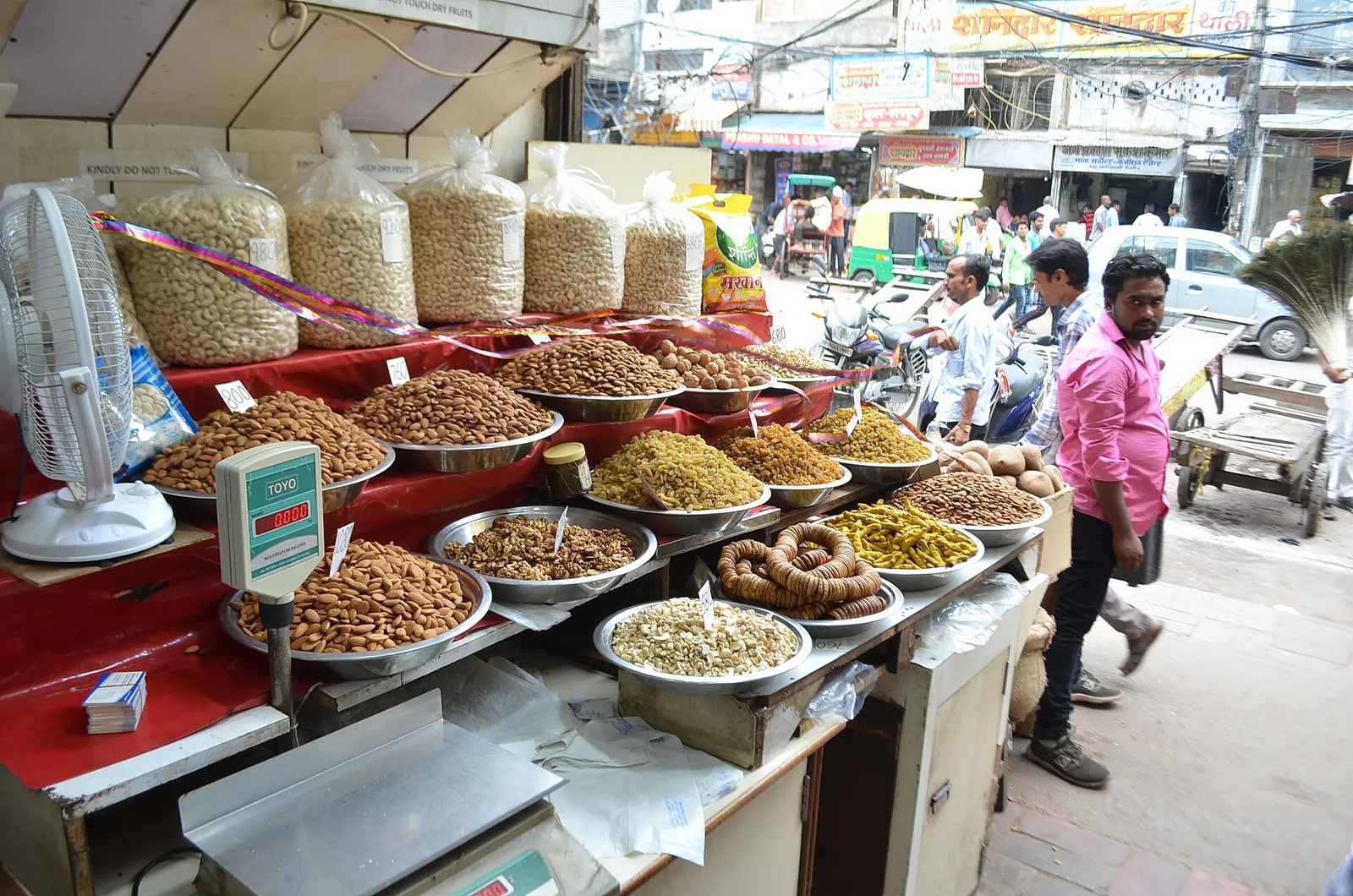
A dried-fruit and spice shop in Chandni Chowk, Old Delhi
Photograph: SimónK — opens in a new tab · CC BY-SA 4.0 — opens in a new tab
Changes: Resized and converted to WebP; displayed with responsive crops. · Original photograph and licence details ↗ — opens in a new tab
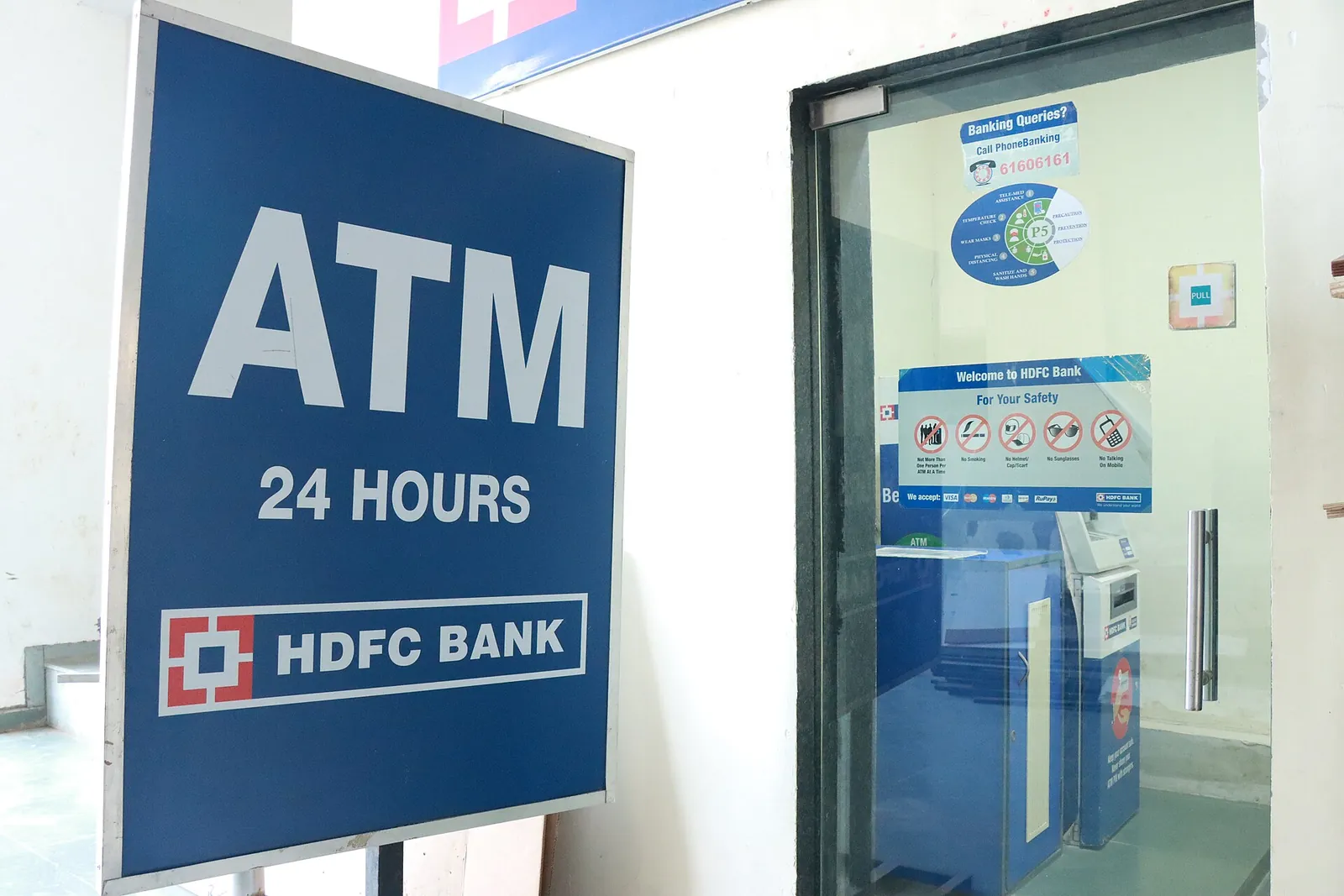
A bank ATM booth in Karjat, Maharashtra
Photograph: ManoBV16 — opens in a new tab · CC0 — opens in a new tab
Changes: Resized and converted to WebP; displayed with responsive crops. · Original photograph and licence details ↗ — opens in a new tab
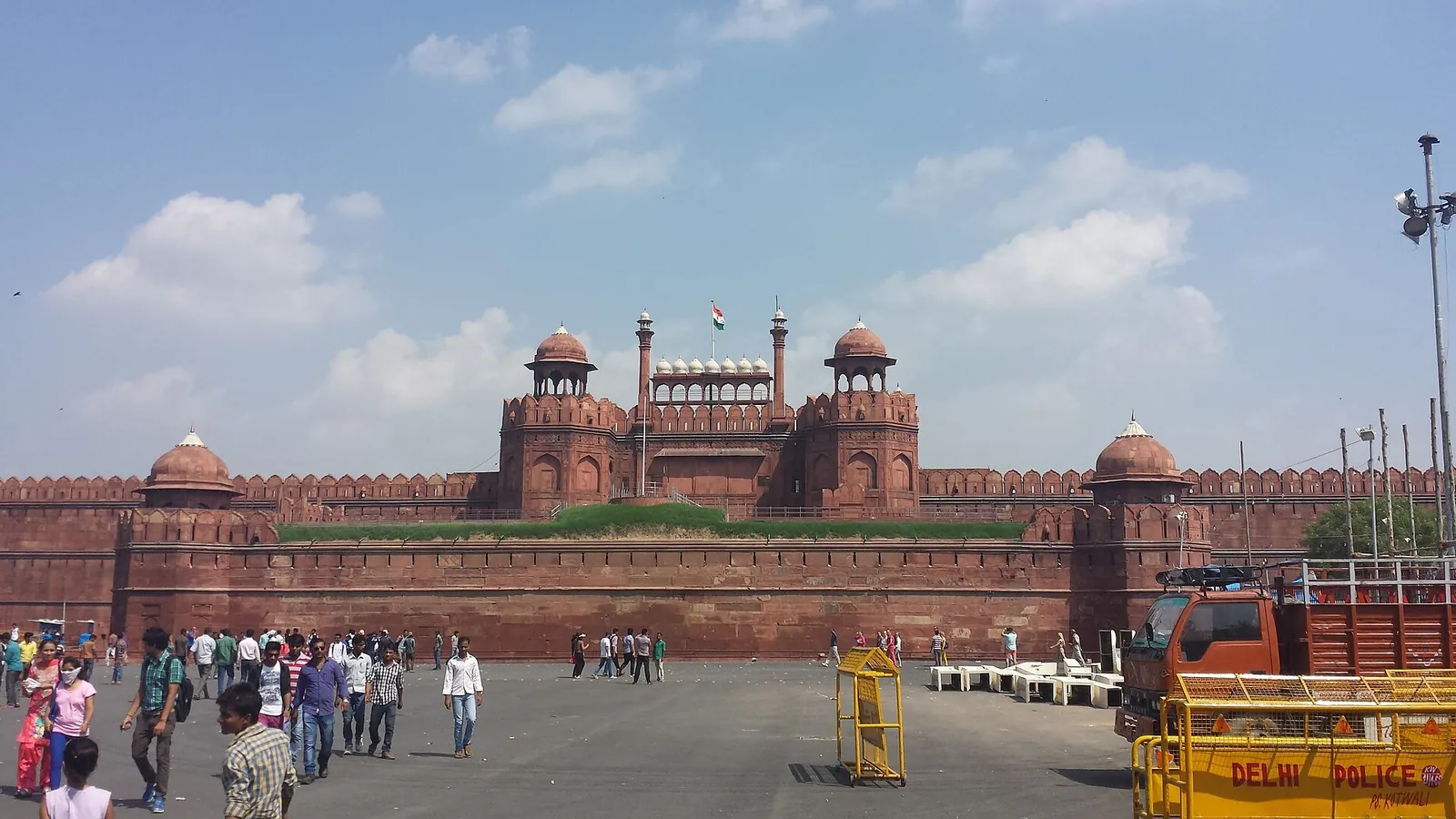
The Lahori Gate of the Red Fort, Delhi
Photograph: Rickard Törnblad — opens in a new tab · CC BY-SA 4.0 — opens in a new tab
Changes: Resized and converted to WebP; displayed with responsive crops. · Original photograph and licence details ↗ — opens in a new tab
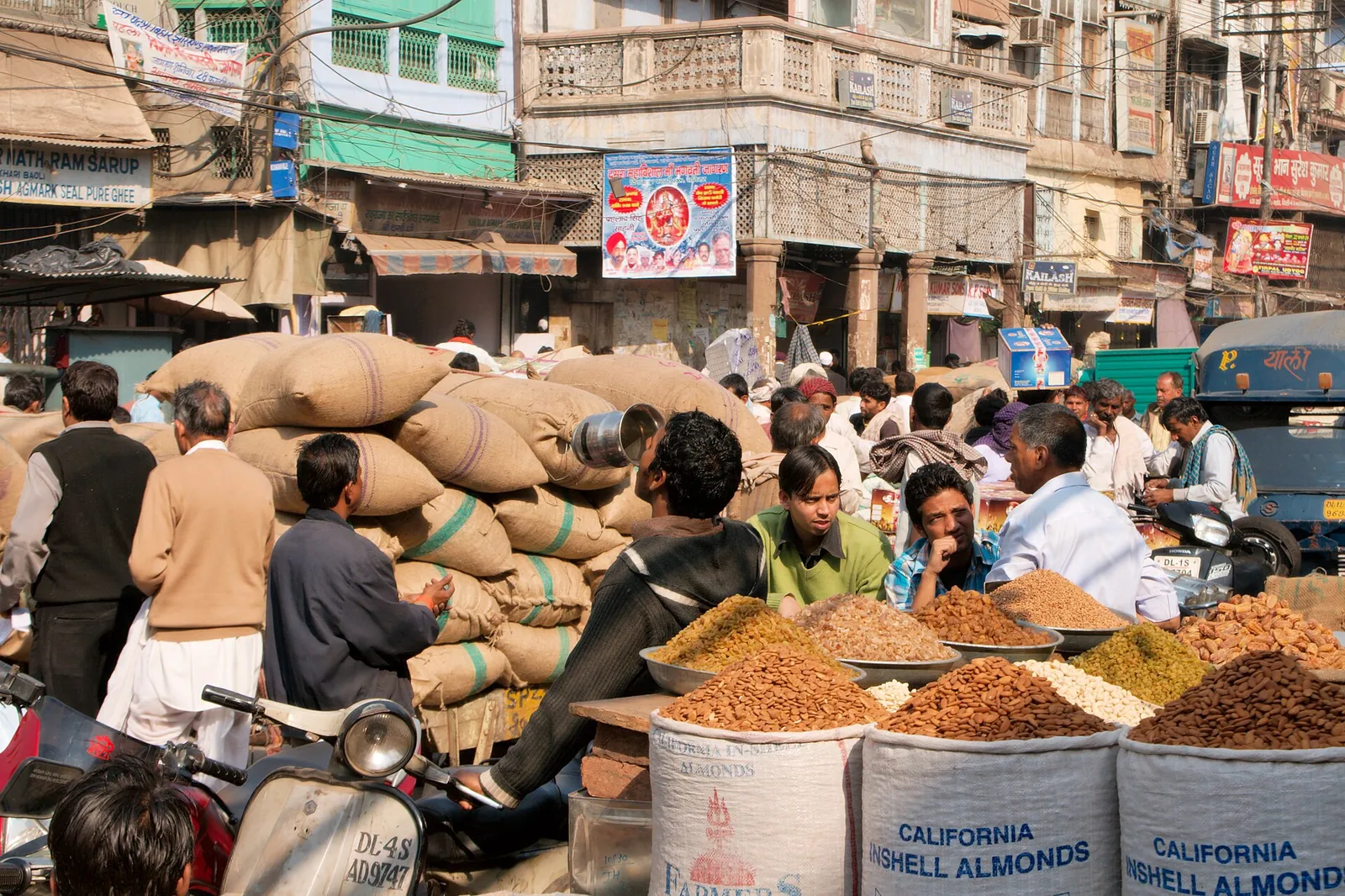
Dried fruit and spices sold from sacks at Khari Baoli market in Old Delhi
Photograph: Christian Haugen from Trondheim, Norway — opens in a new tab · CC BY 2.0 — opens in a new tab
Changes: Resized and converted to WebP; displayed with responsive crops. · Original photograph and licence details ↗ — opens in a new tab
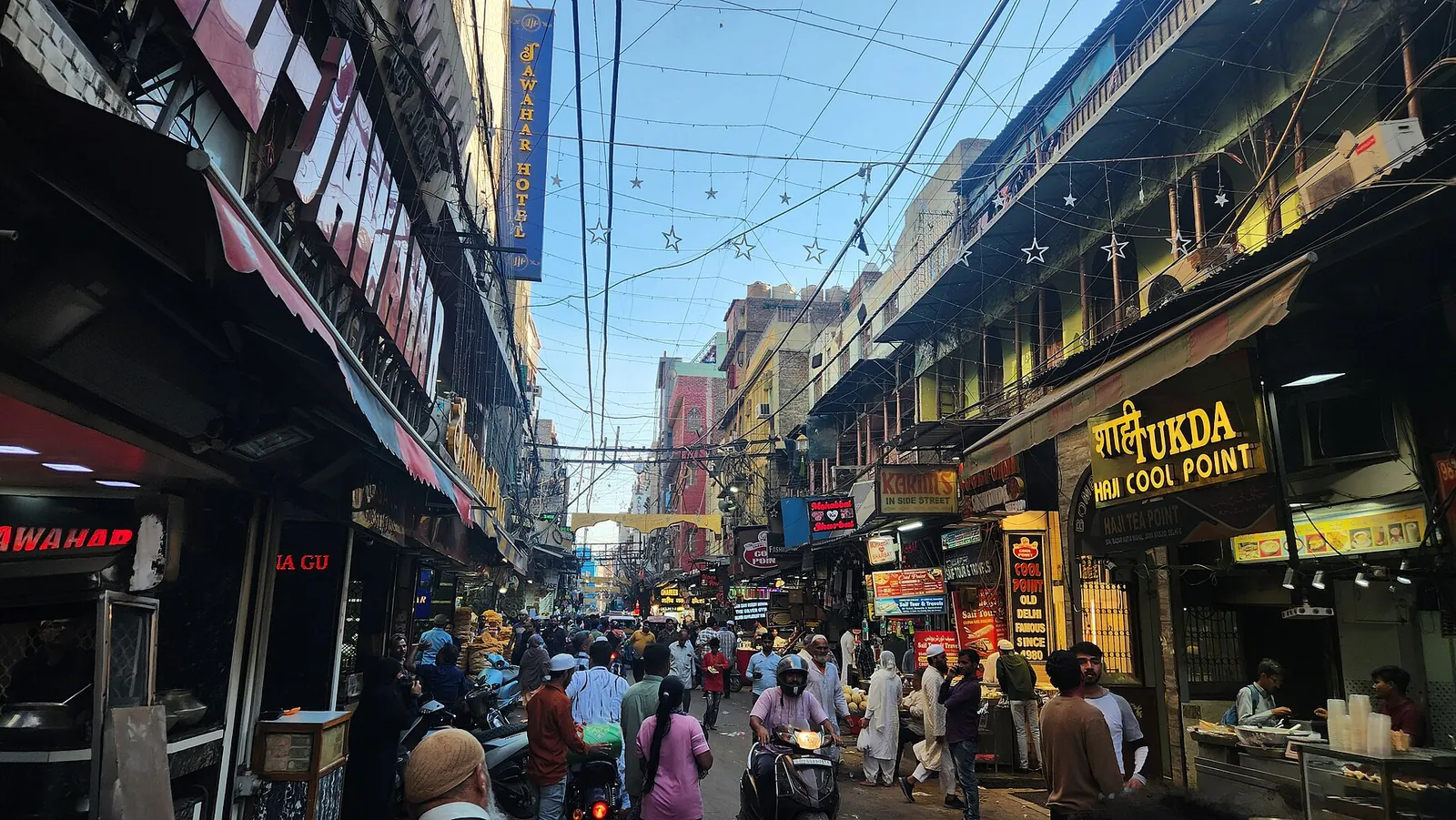
A market street near Jama Masjid in Old Delhi
Photograph: Benison P Baby — opens in a new tab · CC BY-SA 4.0 — opens in a new tab
Changes: Resized and converted to WebP; displayed with responsive crops. · Original photograph and licence details ↗ — opens in a new tab