Plan your trip
What to eat in Hong Kong: dim sum, roast meats and milk tea
Hong Kong eats Cantonese, but it has turned that kitchen into habits of its own: tea and dim sum in the morning, roast goose over rice at lunch, a bowl of wonton noodles late at night, and milk tea with a bun in the afternoon. This guide explains what each of those meals is and where it is done well, how the dim sum order sheet, the cha chaan teng and the street stall work, what dishes cost, how Octopus fits in, and how to eat halal, vegetarian or around an allergy.
In this guide
Find the location ↗ — opens in a new tabThe short answer
Eat along the trip you are already taking: from a four-night Tsim Sha Tsui base, the noodle shops of Jordan, the roast-meat and wonton counters of Central and the dim sum of Tsim Sha Tsui are all a walk, an MTR ride or a ferry crossing away. Order dim sum from the printed sheet, roast goose by the quarter or over rice, and wonton noodles by the bowl. Carry cash first: Mak Man Kee, Yat Lok and Tsim Chai Kee do not take credit cards, and Tsim Chai Kee has a long queue at lunchtime. Two prices to plan with (checked 27 October 2026): Mak Man Kee's own online menu lists wonton noodles in soup at HK$46, and Tim Ho Wan's October 2025 menu for its K11 Art Mall shop lists three baked char siu buns at HK$35. At the same levels as our trip-cost guide, allow about HKD 250 a person a day at cha chaan tengs, noodle shops and dai pai dongs, or about HKD 550 with dim sum and sit-down dinners.
- Key point
- No separate days needed: one breakfast, one lunch and one late bowl on each day of a four- or five-day city stay cover the dishes in this guide
- Where it applies
- Tsim Sha Tsui, as in our first-trip plan: Jordan's noodle shops and a Tim Ho Wan in K11 Art Mall are a walk away, Sham Shui Po a short ride up the Tsuen Wan Line and Central one Star Ferry crossing
- Timing
- Good all year. Hours differ by shop, and some keep different weekday and weekend hours, so check the times given below.
Cantonese cooking, the Hong Kong way
Hong Kong's food is mostly Cantonese, the same tradition you meet in Guangzhou's tea houses, and dim sum is eaten much as it is in Guangzhou: small dishes shared over pots of tea. Our China food guide covers the Guangzhou tea house and the dishes of the mainland route. What Hong Kong adds is a set of forms of its own, shaped by a crowded, fast city and, as the cha chaan teng shows, by British colonial tastes.
Five of them are worth planning around. Yum cha, tea with dim sum, is the morning and lunchtime meal. Siu mei, the roast meats that hang in shop windows, is lunch over rice. Wonton noodles are the city's comfort bowl, served until late. The cha chaan teng, or tea restaurant, grew out of the working-class cafés of the 1940s and 1950s and serves milk tea, toast and buns. The dai pai dong is a licensed on-street cooked-food stall.
Across the water, Macau is a different table again: Macanese cooking mixes Portuguese and Chinese food with ingredients from several continents, and its egg tart is a different pastry from Hong Kong's. Our Macau food guide covers that kitchen, so this guide stays on the Hong Kong side.
- Morning: yum cha with tea, or milk tea and a bun at a cha chaan teng.
- Lunch: roast goose or char siu over rice, or a bowl of wonton noodles.
- Afternoon: an egg tart and a cup of milk tea.
- Evening: noodles, street snacks or a stall dinner.
Yum cha: tea, steamers and the dim sum order sheet
Yum cha means drinking tea, and the tea is where the meal starts; the dim sum come to the table in bamboo steamers for everyone to share. In the old tea houses dim sum was eaten at leisure over tea, and places such as Lin Heung and Luk Yu turned it into a symbol of the city's dining culture.
How you order. At a traditional tea house you choose from a printed dim sum order sheet listing the dim sum, and hand it to the staff. At Luk Yu Tea House, 24 Stanley Street in Central, the sheet is a tradition of many years and the dim sum change every week. Order a few baskets at a time and add more as you go, so that everything arrives hot. Expect a tea charge: Tim Ho Wan's October 2025 menu for its K11 Art Mall shop charges from HK$8 for each diner aged three or over.
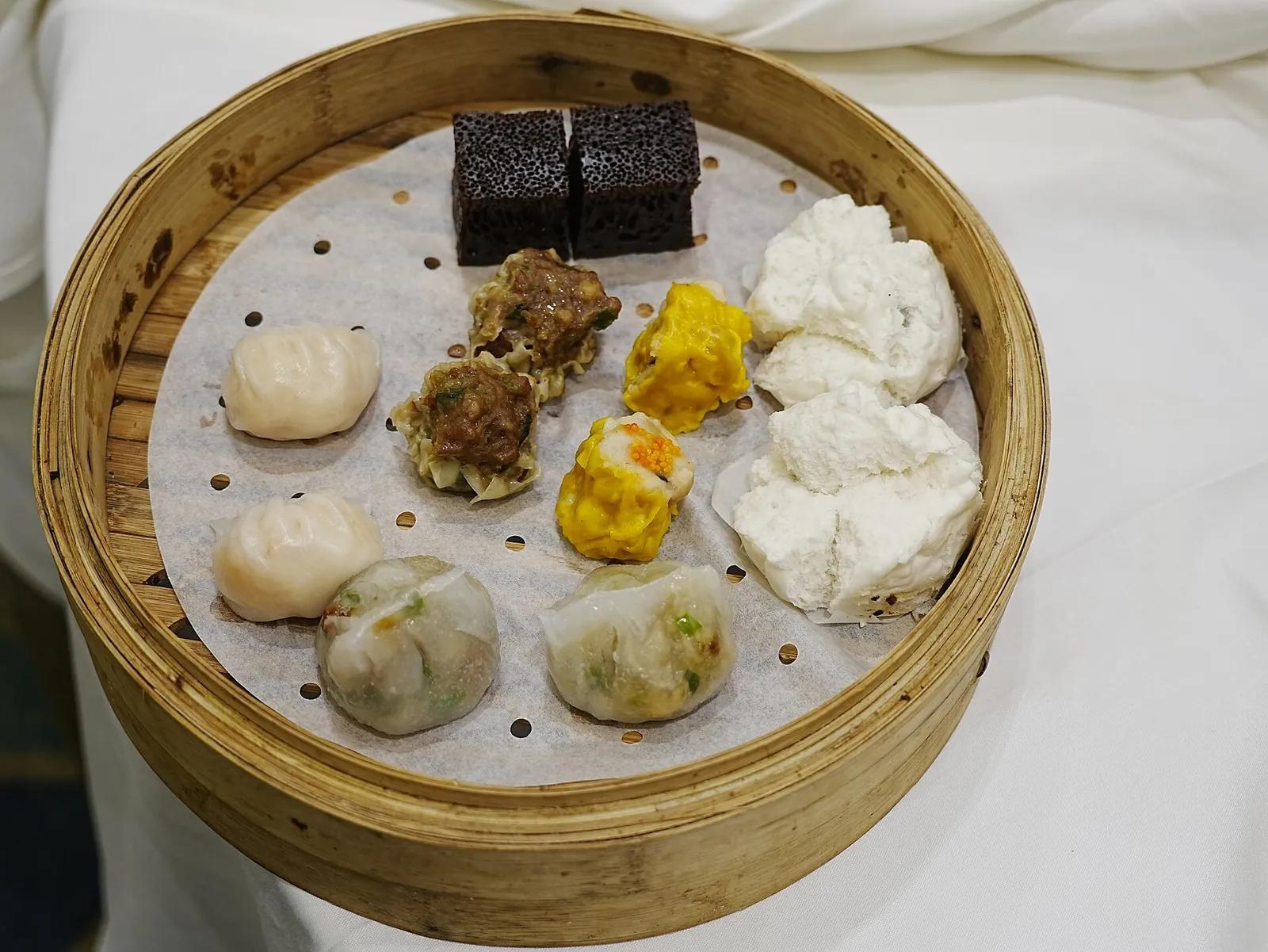
What to order first. Har gow, the shrimp dumpling, is the test of a kitchen: a good one is a half-moon with 12 to 13 folds in a thin skin. Add siu mai, the pork-and-shrimp dumpling, a baked char siu bun with barbecued pork inside, and a plate of cheung fun, the steamed rice roll.
Tim Ho Wan is the easy place to start. Its first shop, at 9–11 Fuk Wing Street in Sham Shui Po, opened as a 20-seat shop in 2009, earned a MICHELIN star and made the baked barbecue pork bun its signature; it opens 08:00–22:00, takes credit cards, and its quick service keeps waits short. From a Tsim Sha Tsui base, its shop on Level 1 of K11 Art Mall, 18 Hanoi Road, opens 10:00–22:00, and its October 2025 menu lists har gow at HK$44, siu mai at HK$42 and three baked char siu buns at HK$35. For a hall with a harbour view, City Hall Maxim's Palace on the second floor of the City Hall Low Block, 5 Edinburgh Place in Central, serves Cantonese food and dim sum; City Hall's page lists Monday–Saturday 11:00–15:00 and 17:30–22:30, and Sundays and public holidays 09:00–15:00 and 17:30–22:30, with an enquiries line on (852) 2521 1303. Lin Heung Tea House is in our Central and Sheung Wan guide.
- Order: choose from the sheet a few baskets at a time; har gow, siu mai, a baked char siu bun and a rice roll make a first round for two.
- Share: baskets are usually shared across the table.
- Tea: it comes first, before the dim sum.
Siu mei: roast goose, char siu and the shop window
Siu mei are the Cantonese roast meats: glossy geese, ducks, strips of char siu and slabs of crackling roast pork hanging in the window of a roast-meat shop. Char siu means fork-roasted, after pork once skewered on forks over a fire; today it is pork glazed with honey or maltose and roasted until the edges char. Ordered over rice with a little greens, it is the city's everyday lunch.
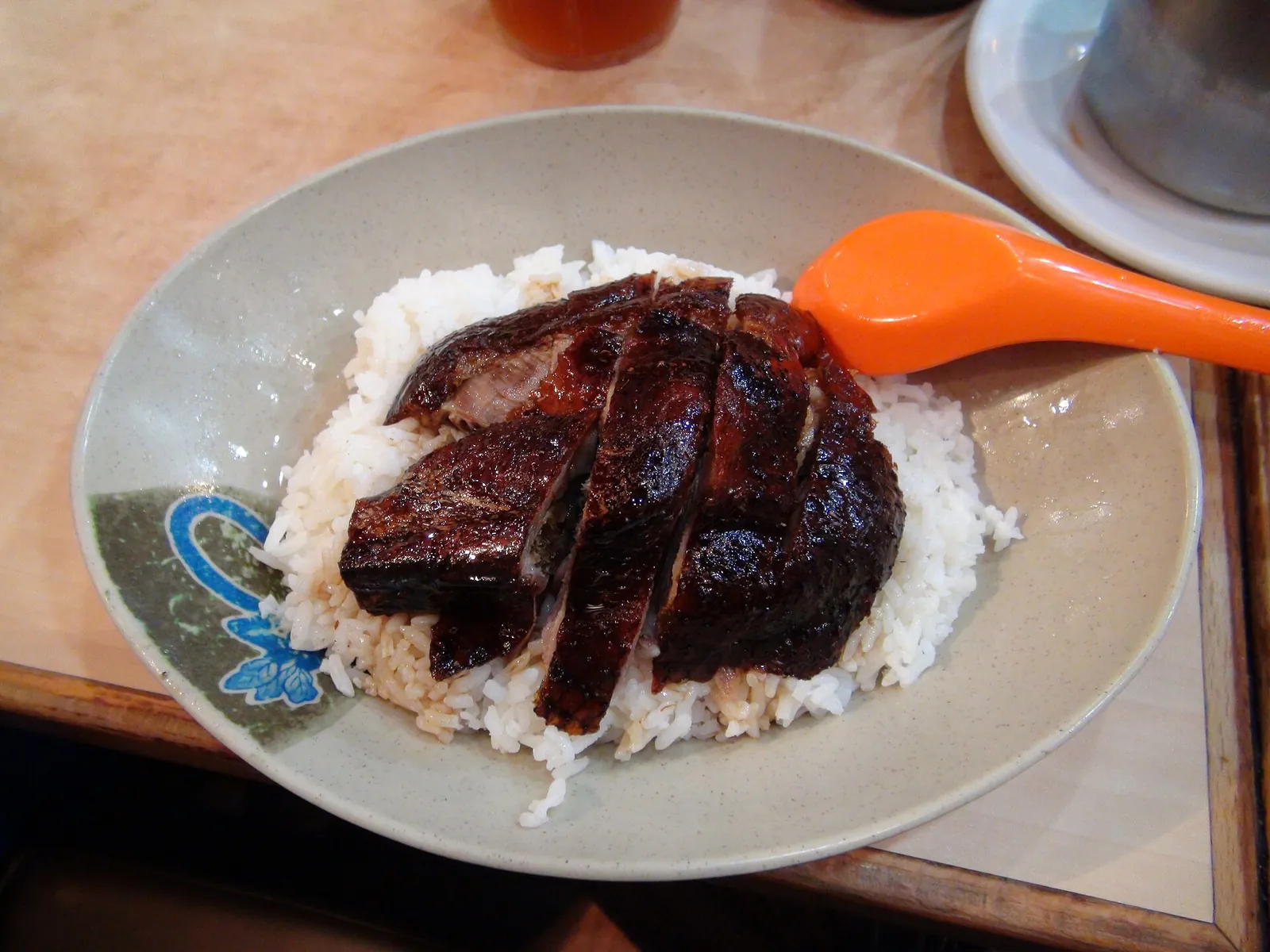
Roast goose is the one to travel for. Yat Lok, a family business founded in 1957 and at its Stanley Street shop in Central since 2011, holds a MICHELIN star and does not take credit cards; its geese are marinated and go through more than 20 steps before roasting. Order a quarter goose with lai fun, round rice noodles in clear broth with a drizzle of goose fat, or the roast goose drumstick rice, listed at HK$179 at lunch in November 2025. Char siu, roast pork belly and soy-marinated chicken are on the same counter.
In Wan Chai, Kam's Roast Goose at 226 Hennessy Road is a second roast-meat counter, open 11:30–21:30 daily.
- How to order: a quarter goose, or a plate of goose, char siu or roast pork over rice.
- With it: lai fun in clear broth, or plain rice and greens.
- Where: Yat Lok in Central, Kam's Roast Goose in Wan Chai.
Wonton noodles, rice rolls and tofu pudding
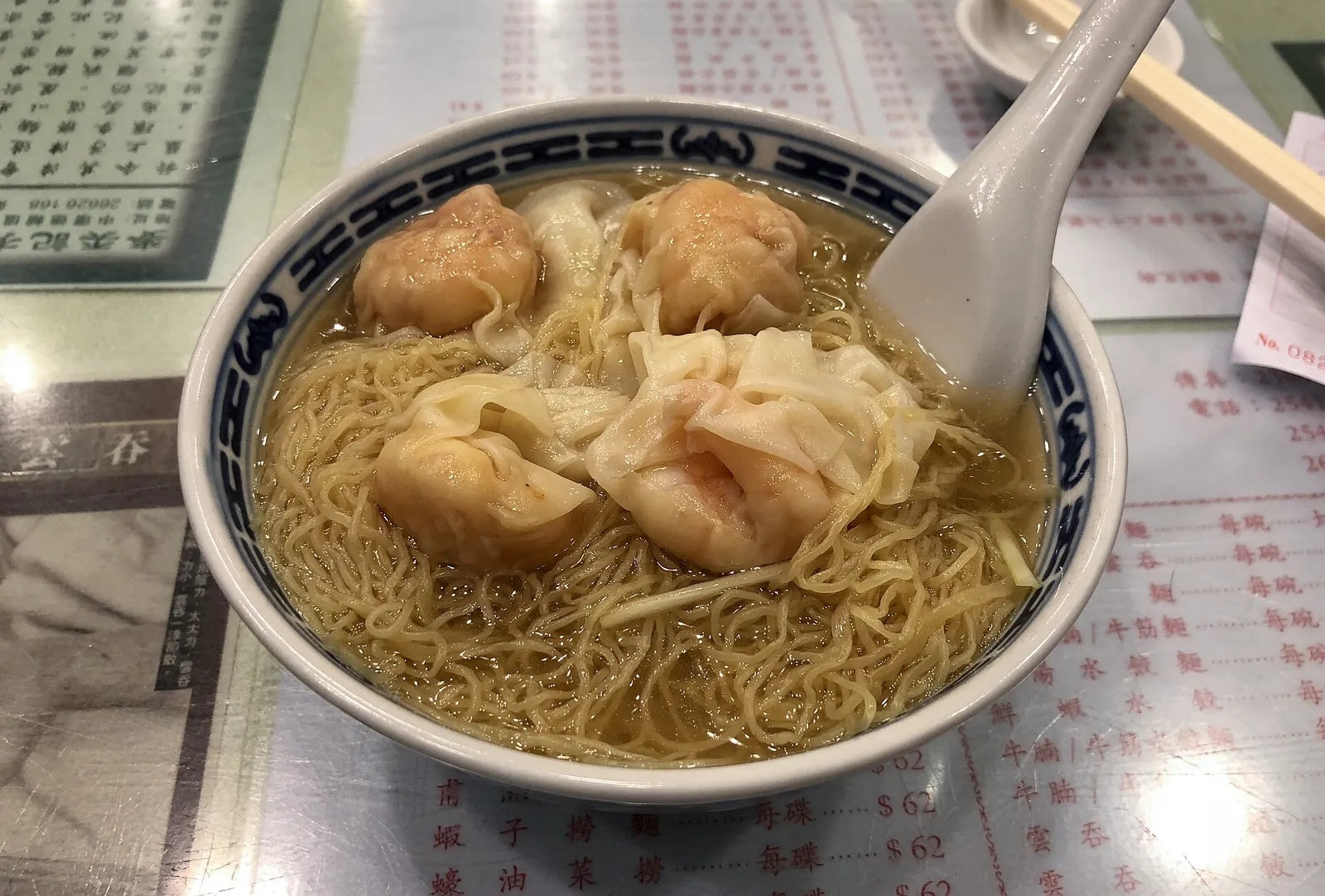
A bowl of wonton noodles looks simple and is not. The Hong Kong style is wontons filled with shrimp and pork in a thin wrapper, springy egg noodles that some shops still press with a bamboo pole, and a clear broth deepened with dried flounder, pork bones and shrimp shells. Hawkers used to put the wontons in the bottom of the bowl, the noodles on top and then the broth, to keep the noodles springy as long as possible. Wonton-making has been recognised as part of Hong Kong's intangible cultural heritage.
Two shops cover most of a trip. Mak Man Kee, 51 Parkes Street in Jordan, began as an alleyway stall about 60 years ago and makes its noodles with duck eggs; its own menu lists tiger prawn wonton noodles in soup at HK$46, it does not take credit cards, and it opens 12:00–00:30 daily, which makes it the late bowl after a Temple Street evening. Tsim Chai Kee, 98 Wellington Street in Central, serves only three toppings — wontons, dace fish balls and sliced beef — in any combination, 11:00–21:30 daily. It is cash only; the queue is long at lunchtime, and when it is busy you share a table with strangers, so eat outside peak times to beat the crowd.
Sham Shui Po keeps the street snacks. At Hop Yik Tai, 121 Kweilin Street, the steamed rice rolls are silky and lightly rich with lard, and the counter also sells fish balls, pork skin and braised radish; it opens 06:00–20:30. Nearby, Kung Wo Beancurd Factory at 118 Pei Ho Street, founded in 1893, is known for its silky tofu pudding, sweetened only with brown sugar and served hot or cold, and pan-fried stuffed tofu. Our Mong Kok and Sham Shui Po guide has the shopping streets around them.
- Late bowl: wonton noodles at Mak Man Kee, open until 00:30.
- Central lunch: Tsim Chai Kee, one, two or all three toppings.
- Sham Shui Po snacks: rice rolls at Hop Yik Tai, tofu pudding at Kung Wo.
Cha chaan teng and dai pai dong
The cha chaan teng began in the 1940s and 1950s, when Western restaurants were for the elite and working people wanted the same flavours for less: macaroni in broth with ham, baked pork chop rice and Hong Kong-style French toast all came out of that kitchen. A licence introduced in the 1960s let these cafés serve full meals, and they became the city's canteens, with menus under the glass tabletop, shared tables and fast, brisk service. Many diners use the first cup of tea or water on the table to rinse their chopsticks and spoon.
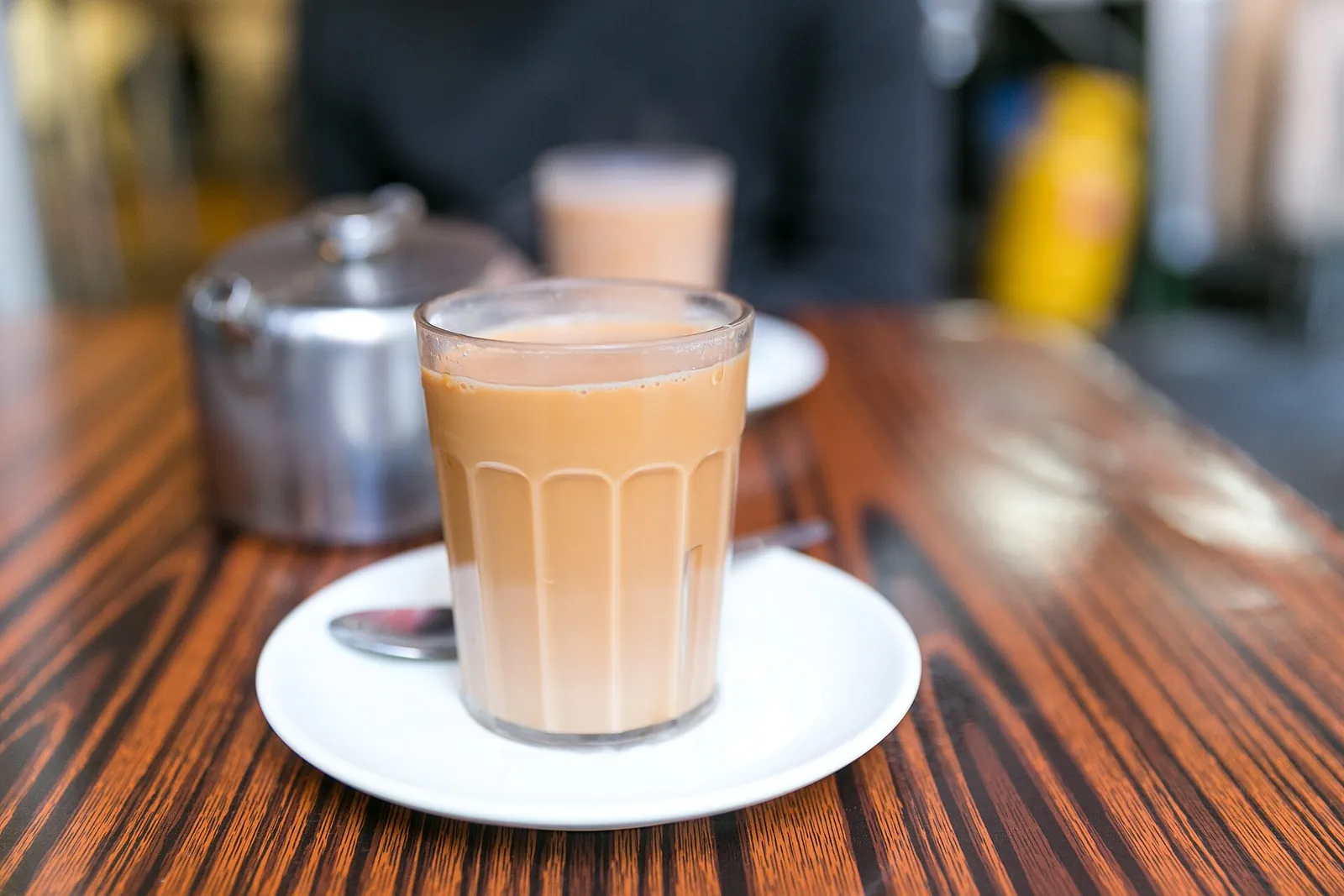
Milk tea is the drink that defines them. Hong Kong's Intangible Cultural Heritage Office lists the making of Hong Kong-style milk tea on the city's Representative List: tea leaves are blended, boiled and infused, then the tea and milk are poured from height, and the drink is also known as silk-stocking milk tea after the cloth it is strained through. Lan Fong Yuen on Gage Street in Central is credited with that silk-stocking tea and with yuen yeung, coffee mixed with milk tea. For a price to plan with, Tim Ho Wan's October 2025 K11 Art Mall menu lists its hot milk tea at HK$18. Kam Wah Cafe is in our Mong Kok guide, and Australian Dairy Company in our Kowloon guide.
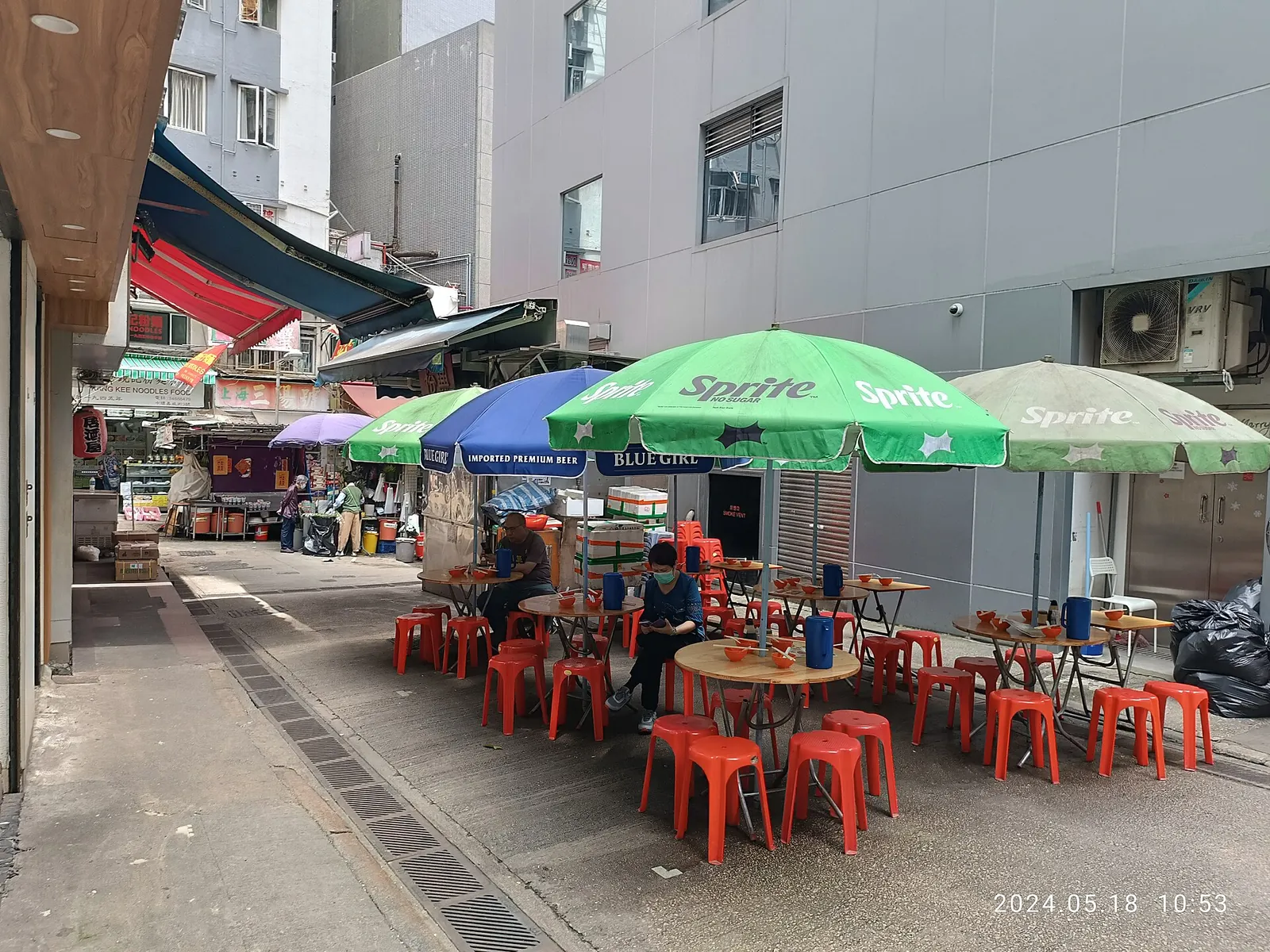
The dai pai dong is a licensed cooked-food stall on the street. Breakfast at one is a bowl of noodles or a crispy bun with lemon, butter and honey, washed down with milk tea while the street goes by. Sing Heung Yuen, the Central example, is in our Central and Sheung Wan guide.
- Cha chaan teng order: milk tea or yuen yeung with French toast, a pineapple bun or a set breakfast.
- Dai pai dong order: noodles or a crispy bun, with milk tea.
Ordering and paying: shared tables, Octopus and the service charge
At a noodle shop, a cha chaan teng or a dai pai dong. Let the stall lead: seating, payment and where to queue vary from shop to shop, so follow the staff. Decide what you want before you reach the front, order in one go, and have notes or your card ready when you pay. Table sharing is usual, and in a cooked-food centre you sit at the tables of the stall you ordered from.
Octopus. The stored-value card you use on the MTR, buses and ferries also pays at shops: it is widely accepted by transport operators, retail shops, parking and self-service kiosks. An adult Standard On-Loan Octopus costs HK$200, a refundable HK$50 deposit and HK$150 of stored value, and is sold at MTR Customer Service Centres; a Tourist Octopus costs HK$39 with no stored value and can be reloaded with cash at transport counters and retailers. Our transport guide explains which card suits your trip.
The bill. Most restaurants add a 10% service charge, though some cafés and diners do not; where none is added, a 10% tip is welcome.
- Share a table when the staff seat you with strangers; it is normal.
- Cash: Mak Man Kee, Yat Lok and Tsim Chai Kee do not take credit cards.
Egg tarts, milk tea and the afternoon break
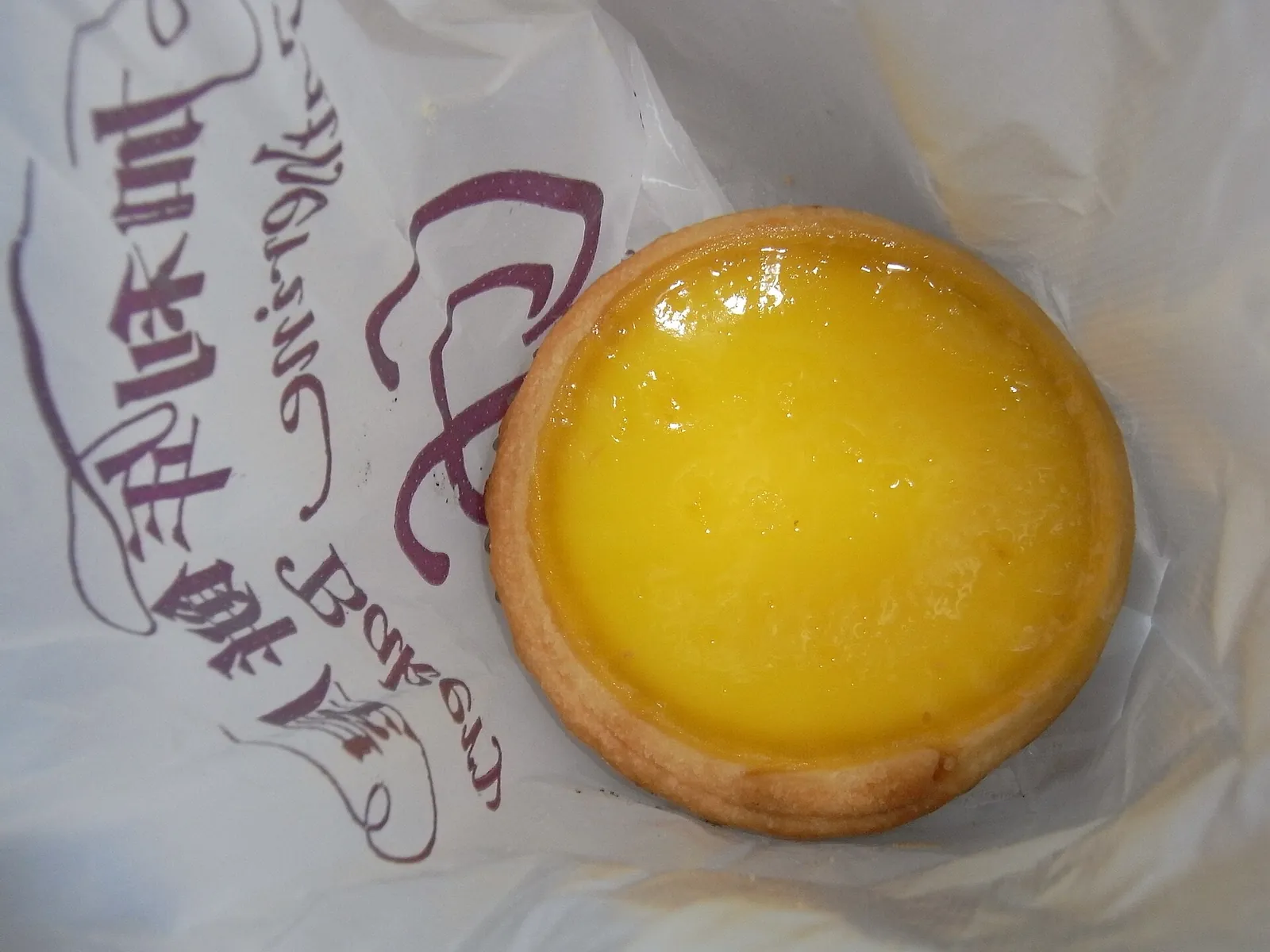
Hong Kong's egg tart, daan tat, arrived in Guangzhou with the British in the 1920s and was adapted in Hong Kong after the Second World War by bakers who brought their dim sum skills to it: a flower-shaped crust, a firm, glossy, sweet custard and a stronger egg flavour than Macau's caramel-topped Portuguese tart. You find it in bakeries, in cha chaan tengs and on dim sum menus, with milk tea.
Tai Cheong Bakery, founded in 1954 and known for its butter-flavoured shortcrust tarts, has its shop at 35 Lyndhurst Terrace in Central, open Monday–Friday 09:30–19:30 and 09:30–20:00 on weekends and public holidays; a Mirror Media report on the shop dated 25 September 2026 gives HK$12 a tart. For the flaky, caramelised version, Lord Stow's original bakery in Coloane is the stop in our Macau food guide.
The pairing has a name: saam dim saam, three-fifteen, the mid-afternoon break of strong milk tea and a pineapple bun that began with the city's office workers and labourers. The pineapple bun has no pineapple; it is named for the grid pattern of its crust, which looks like pineapple skin.
- Egg tart: Tai Cheong on Lyndhurst Terrace, on the Central walk.
- Milk tea: at a cha chaan teng.
What a meal costs
These are dish prices from the shops' own menus, a MICHELIN Guide listing and press reports, each with its own date; all were checked on 27 October 2026. Prices change, so treat them as a guide to the level, not as a bill.
| Dish | Price | Where, and the source's date |
|---|---|---|
| Wonton noodles in soup | HK$46 | Mak Man Kee, Jordan: own online menu |
| Har gow | HK$44 | Tim Ho Wan, K11 Art Mall: own menu, October 2025 |
| Baked char siu buns, three | HK$35 | Tim Ho Wan, K11 Art Mall: own menu, October 2025 |
| Char siu rice rolls | HK$35 | Tim Ho Wan, K11 Art Mall: own menu, October 2025 |
| Hot milk tea | HK$18 | Tim Ho Wan, K11 Art Mall: own menu, October 2025 |
| Roast goose drumstick rice, lunch | HK$179 | Yat Lok, Central: MICHELIN Guide, November 2025 |
| Egg tart | HK$12 | Tai Cheong, Central: Mirror Media report, 25 September 2026 |
| Tofu pudding, small bowl | HK$11 | Kung Wo, Sham Shui Po: Mirror Media report, 31 August 2026 |
For a day, not a dish: about HKD 250 a person at cha chaan tengs, noodle shops and dai pai dongs — a bun and milk tea for breakfast, noodles at lunch, a rice or noodle dinner and a tea and egg tart in between — about HKD 550 with dim sum and sit-down dinners, and about HKD 1,500 with hotel lunches, afternoon tea and a good restaurant at night. These are the same levels as our trip-cost guide, which also costs rooms, transport and sights for the whole trip.
- Cheapest good meal: a bowl of wonton noodles, or tofu pudding and a rice roll in Sham Shui Po.
- Dim sum for two: a first round of har gow, siu mai, buns and a rice roll at Tim Ho Wan's October 2025 K11 prices comes to HK$156 before the tea charge.
Meal by meal on the first-trip route
This day plan follows our first-trip plan: four nights in Tsim Sha Tsui, Central and the Peak on day 2, Lamma on day 3, and M+, Mong Kok and Temple Street on day 4. Opening hours are given with each shop.
- Day 1, arrival: after the waterfront, a late bowl of wonton noodles at Mak Man Kee in Jordan, open until 00:30.
- Day 2, Central: roast goose at Yat Lok on Stanley Street for lunch (10:00–20:30); an egg tart at Tai Cheong on Lyndhurst Terrace in the afternoon (until 19:30 on weekdays, 20:00 at weekends); or swap lunch for wonton noodles at Tsim Chai Kee on Wellington Street (11:00–21:30).
- Day 3, Lamma: the Lamma guide covers where to eat on the island.
- Day 4, Kowloon: dim sum at Tim Ho Wan in K11 Art Mall from 10:00, then KMB HK1 from Star Ferry to M+ as the plan has it. Optional, on the Mong Kok leg: Sham Shui Po is the next Tsuen Wan Line stop north of Prince Edward, for tofu pudding at Kung Wo (until 21:00) or the original Tim Ho Wan (until 22:00). Dinner on Temple Street follows our Kowloon guide.
- Swap day: on a Sai Kung day, our Sai Kung guide covers the waterfront seafood restaurants.
What to eat and where to look
Har gow
Shrimp dumplings in a thin, pleated skin, steamed to order: the test of a dim sum kitchen and the first basket of a yum cha meal.
- Where to look
- Tim Ho Wan, Shop 119, Level 1, K11 Art Mall, 18 Hanoi Road, Tsim Sha Tsui, open 10:00–22:00; HK$44 on its own menu (October 2025).
- Fit it into your day
- A late breakfast near the base on the Kowloon day, before the bus to M+.
Contains shrimp.
Baked char siu buns
Barbecued pork in a sweet, crumbly baked crust: the bun that made Tim Ho Wan's name at its first shop in Sham Shui Po.
- Where to look
- Tim Ho Wan, G/F & M/F, Ka Wui Building, 9–11 Fuk Wing Street, Sham Shui Po, open 08:00–22:00; in the MICHELIN Guide's under-HK$100 band. For comparison, Tim Ho Wan's separate K11 Art Mall shop in Tsim Sha Tsui lists three buns at HK$35 on its October 2025 menu; Sham Shui Po prices may differ.
- Fit it into your day
- The optional Sham Shui Po stop on the Mong Kok leg of the Kowloon day.
Contains pork.
Roast goose
Charcoal-roasted goose with crisp skin, by the quarter or over rice, with round rice noodles in clear broth and a drizzle of goose fat on the side.
- Where to look
- Yat Lok, G/F, Conwell House, 34–38 Stanley Street, Central, open 10:00–20:30 daily; roast goose drumstick rice HK$179 at lunch (MICHELIN Guide, November 2025). No credit cards.
- Fit it into your day
- Lunch on the Central day, before or after the hillside walk.
Roasted in a shop that also roasts pork.
Wonton noodles
Shrimp wontons in paper-thin wrappers, springy duck-egg noodles and a clear broth deepened with dried flounder: the city's comfort bowl.
- Where to look
- Mak Man Kee, 51 Parkes Street, Jordan, open 12:00–00:30 daily; wonton noodles in soup HK$46 on its own menu. No credit cards.
- Fit it into your day
- A late bowl on the arrival night or after a Temple Street evening.
Contains shrimp, egg and wheat.
Egg tart
A firm, glossy custard in a butter-flavoured shortcrust shell, the Hong Kong daan tat rather than Macau's caramelised tart.
- Where to look
- Tai Cheong Bakery, Shop C, G/F, Lyndhurst Building, 35 Lyndhurst Terrace, Central, open Monday–Friday 09:30–19:30, weekends and public holidays 09:30–20:00; HK$12 a tart in a report dated 25 September 2026.
- Fit it into your day
- The afternoon stop on the Central day.
Contains egg, milk and wheat.
Tofu pudding
Warm or cold silky tofu pudding sweetened with brown sugar, from a soy maker founded in 1893, with pan-fried stuffed tofu as the savoury order.
- Where to look
- Kung Wo Beancurd Factory, 118 Pei Ho Street, Sham Shui Po, open 07:00–21:00 daily; HK$11 a small bowl in a report dated 31 August 2026.
- Fit it into your day
- The optional Sham Shui Po stop on the Mong Kok leg of the Kowloon day.
Soya; the stuffed tofu is topped with minced pork.
Halal, vegetarian and allergies
Halal. Char siu, roast pork, wontons and most dumplings contain pork, and goose and duck are roasted beside it in the same shops. Hong Kong's local halal certification authority is the Incorporated Trustees of the Islamic Community Fund of Hong Kong, and the Hong Kong Tourism Board works with it to encourage restaurants to certify. The Financial Secretary put the number of halal-certified restaurants at over 190 in October 2025. For halal dim sum, Cathay Pacific's halal dining guide (February 2025) lists the Islamic Centre Canteen, 5/F, 40 Oi Kwan Road, Wan Chai, as a halal-certified restaurant serving pork-free dim sum until 15:00.
Vegetarian. Cantonese menus lean on pork and seafood, and broths, sauces and fillings often carry them even when a dish looks like vegetables. LockCha in Tai Kwun, which serves vegetarian dim sum, is in our Central and Sheung Wan guide.
Allergies. Shrimp is in har gow, siu mai and most wontons; wonton broth is made with dried fish and shrimp shells; wonton noodles contain egg and wheat; char siu is glazed with honey or maltose; and rice rolls may be made with lard. Tell the staff about an allergy when you order, before the baskets reach the table.
- Halal: look for a certified restaurant.
- Vegetarian dim sum: LockCha in Tai Kwun, Central.
- Shellfish: in har gow, siu mai, wontons and wonton broth.
Practical questions
How do I order dim sum in Hong Kong?
At a traditional tea house you choose from a printed dim sum order sheet and hand it to the staff, a few baskets at a time so that everything arrives hot. Tea comes first. Har gow, siu mai, a baked char siu bun and a rice roll make a good first round for two, shared from the middle of the table.
What is the difference between a cha chaan teng and a dai pai dong?
A cha chaan teng is an indoor tea restaurant serving milk tea, toast, buns and Hong Kong-style Western dishes such as baked pork chop rice. A dai pai dong is a licensed cooked-food stall on the street, where breakfast is noodles or a crispy bun with milk tea.
Is the Hong Kong egg tart the same as the Macau one?
No. Hong Kong's daan tat has a firm, glossy custard with a stronger egg flavour in a flower-shaped crust, often shortcrust; Macau's Portuguese-style tart has a flaky crust and a caramelised top. Our Macau food guide covers the Coloane bakery.
Can I pay for food with Octopus?
Often, yes: Octopus is widely accepted by retail shops as well as transport. An adult Standard On-Loan Octopus costs HK$200, including a refundable HK$50 deposit. Keep some notes for small shops and stalls.
Where can I eat halal food in Hong Kong?
Look for restaurants certified by the Incorporated Trustees of the Islamic Community Fund of Hong Kong, the local halal certification authority; there were over 190 certified restaurants in October 2025. The Islamic Centre Canteen in Wan Chai serves pork-free dim sum.
Keep planning your trip

First trip to Hong Kong
Choose a Hong Kong base and a five-day first visit: harbour ferries, Central heritage, the Peak, West Kowloon, Lamma and the practical arrival decisions.
Read the guide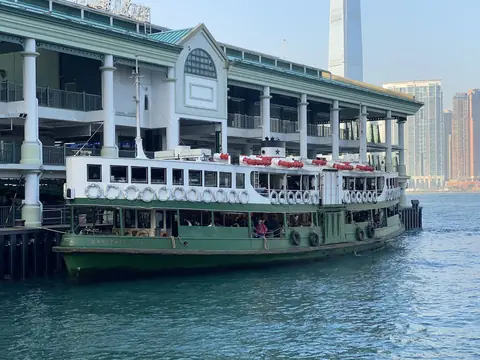
Hong Kong trip cost 2027
What 5 days in Hong Kong cost in November 2027, all in: about HKD 4,470 per person on a budget, HKD 7,630 mid-range or HKD 16,100 in comfort, with the Peak and Lantau.
Read the guide
Central and Sheung Wan
Walk Central and Sheung Wan through Tai Kwun, PMQ, Man Mo Temple and market streets, with escalator directions, a Western Market exterior stop and a harbour finish.
Read the guide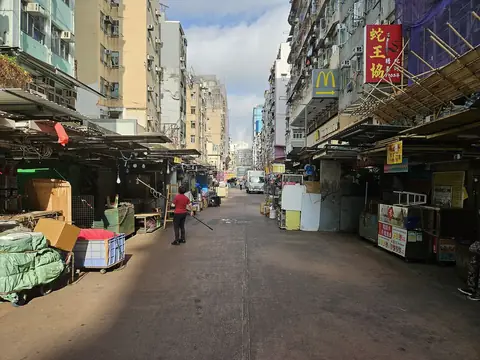
Mong Kok and Sham Shui Po
Choose north Kowloon’s electronics, fabric and leather streets, Flower Market, Bird Garden, Goldfish Market and Mong Kok stalls.
Read the guide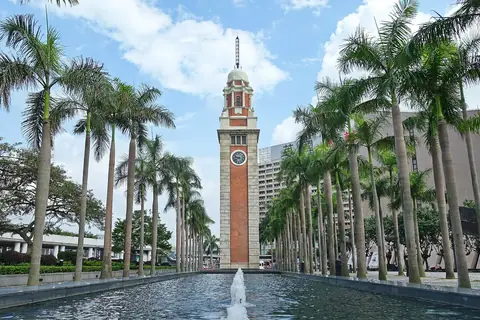
Tsim Sha Tsui and Kowloon
A three-day, two-night Kowloon plan: Avenue of Stars, Star Ferry, Kowloon Park, M+ or the Palace Museum, Temple Street and dated ticket prices.
Read the guide
Sai Kung
Choose Sai Kung waterfront and Sharp Island, or a separate High Island East Dam or Tai Long Wan hiking day, with licensed boats and trails.
Read the guideSources and checks before you travel
(39)
- MICHELIN Guide: the evolution of Hong Kong's yum cha culture ↗ — opens in a new tab
- MICHELIN Guide (Chinese): five dishes at Luk Yu Tea House ↗ — opens in a new tab
- Luk Yu Tea House: contact ↗ — opens in a new tab
- Tim Ho Wan: Hong Kong stores ↗ — opens in a new tab
- Tim Ho Wan: Hong Kong menu (K11 Art Mall shop, PDF modified 17 October 2025) ↗ — opens in a new tab
- Tim Ho Wan: founding story and signature menu ↗ — opens in a new tab
- MICHELIN Guide: Tim Ho Wan (Sham Shui Po) ↗ — opens in a new tab
- MICHELIN Guide: restaurant price ranges ↗ — opens in a new tab
- Leisure and Cultural Services Department: City Hall Maxim's Palace ↗ — opens in a new tab
- MICHELIN Guide: Best char siu in Hong Kong ↗ — opens in a new tab
- MICHELIN Guide: Yat Lok ↗ — opens in a new tab
- MICHELIN Guide: What to eat in Hong Kong, 8 must-try local foods ↗ — opens in a new tab
- MICHELIN Guide: affordable MICHELIN-Starred lunches in Central, Admiralty and Wan Chai (last updated November 2025) ↗ — opens in a new tab
- MICHELIN Guide: Kam's Roast Goose ↗ — opens in a new tab
- MICHELIN Guide: Best wonton noodles in Hong Kong ↗ — opens in a new tab
- MICHELIN Guide: Mak Man Kee ↗ — opens in a new tab
- MICHELIN Guide: Tsim Chai Kee (Wellington Street) ↗ — opens in a new tab
- Mak Man Kee: menu ↗ — opens in a new tab
- MICHELIN Guide: Hop Yik Tai ↗ — opens in a new tab
- MICHELIN Guide: Best street food in Hong Kong ↗ — opens in a new tab
- MICHELIN Guide: Kung Wo Beancurd Factory ↗ — opens in a new tab
- Mirror Media: Kung Wo and Tak Hing Lung tofu pudding (31 August 2026) ↗ — opens in a new tab
- MICHELIN Guide: The evolution of cha chaan teng ↗ — opens in a new tab
- Intangible Cultural Heritage Office: Hong Kong-style milk tea making technique ↗ — opens in a new tab
- MICHELIN Guide: 2 days in Central for food and art lovers ↗ — opens in a new tab
- Hong Kong Government: LCQ3, cooked food hawker licences (2017) ↗ — opens in a new tab
- MICHELIN Guide: 10 tips for Hong Kong's street food ↗ — opens in a new tab
- Octopus: about Octopus ↗ — opens in a new tab
- Octopus: Standard Octopus ↗ — opens in a new tab
- Octopus: Tourist Octopus (sold version) ↗ — opens in a new tab
- MTR: tourist information ↗ — opens in a new tab
- MICHELIN Guide: the best custard tarts in Hong Kong and Macau ↗ — opens in a new tab
- Tao Heung Group: Tai Cheong Bakery ↗ — opens in a new tab
- Tao Heung Group: Tai Cheong Bakery shops ↗ — opens in a new tab
- Mirror Media: three Hong Kong egg tarts (25 September 2026) ↗ — opens in a new tab
- Cathay Pacific: Dining halal in Hong Kong (25 February 2025) ↗ — opens in a new tab
- Hong Kong Government: LCQ7, developing the halal market (2025) ↗ — opens in a new tab
- Hong Kong Government: Financial Secretary's speech on the halal market (October 2025) ↗ — opens in a new tab
- Hong Kong Government: ICH Cuisine carnival (June 2026) ↗ — opens in a new tab
Reference sources for the version dated 27 October 2026. Confirm opening times, access, transport and conditions for your travel dates.
Photo credits
(6)
A mixed steamer of dim sum in Hong Kong: shrimp dumplings, siu mai and steamed buns
Photograph: Peachyeung316 — opens in a new tab · CC BY-SA 4.0 — opens in a new tab
Changes: Resized and converted to WebP; displayed with responsive crops. · Original photograph and licence details ↗ — opens in a new tab
Roast goose over rice at Yat Lok
Photograph: Sakaori ( talk ) — opens in a new tab · CC BY 3.0 — opens in a new tab
Changes: Resized and converted to WebP; displayed with responsive crops. · Original photograph and licence details ↗ — opens in a new tab
Wonton noodles at Mak An Kee, Wing Kut Street, Sheung Wan
Photograph: N509FZ — opens in a new tab · CC BY-SA 4.0 — opens in a new tab
Changes: Resized and converted to WebP; displayed with responsive crops. · Original photograph and licence details ↗ — opens in a new tab
Dai pai dong tables at the west end of Stanley Street, Central
Photograph: DUSOAM 68 HNWUA — opens in a new tab · CC0 — opens in a new tab
Changes: Resized and converted to WebP; displayed with responsive crops. · Original photograph and licence details ↗ — opens in a new tab
Hong Kong-style milk tea at a cha chaan teng
Photograph: City Foodsters — opens in a new tab · CC BY 2.0 — opens in a new tab
Changes: Resized and converted to WebP; displayed with responsive crops. · Original photograph and licence details ↗ — opens in a new tab
A Hong Kong egg tart from Catherine Bakery
Photograph: Cathiniamoa — opens in a new tab · CC BY-SA 3.0 — opens in a new tab
Changes: Resized and converted to WebP; displayed with responsive crops. · Original photograph and licence details ↗ — opens in a new tab