Plan your trip
Solo female travel in Hong Kong: late arrivals, nights out and help
In Hong Kong the airport train runs until after midnight and every taxi is metered by law, so travelling alone comes down to a few specific moments: getting into town after a late landing, getting home after a night out, drinks in the bars, choosing a room, hiking on your own, and whom to call if something goes wrong. This guide takes them in that order, with what the UK, German and French governments say and the numbers to save.
In this guide
Find the location ↗ — opens in a new tabThe short answer
None of the three governments advises against travel to any part of Hong Kong. The UK Foreign Office (advice updated 1 April 2026) says sexual assaults are rare but do happen, including by drink spiking, and that women travelling alone or with other women could be at greater risk. The last Airport Express leaves the airport at 00:48; an adult single to Hong Kong Station (Central) costs HK$120 by Octopus. After it, Citybus night route N21 runs to Tsim Sha Tsui (Star Ferry) for a full fare of HK$23.80; a metered red taxi comes to about HK$375 to Central or HK$290 to Tsim Sha Tsui, tolls included, on the Airport Authority's estimates. The country-park authority asks hikers not to go alone. Save 999 for police, fire and ambulance, and 18281, the 24-hour hotline of the CEASE Crisis Centre for victims of sexual violence.
- Key point
- Set up before you fly: saved numbers, the MTR Trip Planner for last trains, a room with a 24-hour reception if you land late, and your hotel's address written in Chinese
- Where it applies
- No base is needed; the advice applies wherever you stay
- Timing
- The advice applies all year.
What the UK, German and French advice says about women in Hong Kong
None of the three governments advises against travel to any part of Hong Kong. The UK Foreign Office (FCDO), whose advice was updated on 1 April 2026, says personal attacks, including sexual assaults, are rare but do happen, including by drink spiking. For a woman travelling alone, that means taking most care with drinks on nights out, below.
For theft, the German Foreign Office describes the crime rate as low but names pickpocketing at the airport, on public transport and in the main shopping streets, and says isolated robberies, especially at night, cannot be ruled out. France's consulate in Hong Kong reports that pickpocketing has increased around the airport and hotels.
The Hong Kong Police put it the same way: Hong Kong is a safe city, but different types of sexual offences still exist. Other governments may say more or less, so read your own before you book.
Landing late at Hong Kong International Airport
The Airport Express is the simplest way into town after a late landing. MTR's timetable, in effect from 13 September 2026, gives the last train from the airport at 00:48 (the first is at 05:54) and 24 minutes to Hong Kong Station (Central), with trains up to 12 minutes apart late at night. An adult single costs HK$120 by Octopus, contactless bank card or QR code, or HK$130 with an Airport Express QR code ticket.
If you land after the last train, Citybus night routes leave from the airport Ground Transportation Centre. N21 runs to Tsim Sha Tsui (Star Ferry) by way of Mong Kok, Yau Ma Tei and Jordan, for a full fare of HK$23.80 and 99 minutes for the full route; N11 crosses to Hong Kong Island through Causeway Bay, Wan Chai and Admiralty to Central (Macau Ferry), for a full fare of HK$32.10 and 98 minutes for the full route.
A taxi is the other option, and the one that takes you to the door. At the Taxi Station by the left-hand ramp outside the Arrivals Hall, each taxi colour has its own row: join the red urban-taxi row for Kowloon or Hong Kong Island, since green taxis mainly serve the north-east and north-west of the New Territories and blue taxis only Lantau Island and Chek Lap Kok. All taxis must have an electronic fare meter by law, and the police ask visitors not to accept illegal transport services. The Airport Authority estimates the fare at about HK$375 to Central or Admiralty, HK$370 to Wan Chai or Causeway Bay and HK$290 to Tsim Sha Tsui or Yau Ma Tei, tolls included, plus HK$6 for each bag in the boot; the meter, on the Transport Department's fare table in effect since 14 July 2024 (HK$29 for the first 2 km), sets the final amount. Drivers often speak English, but France's consulate suggests having your destination written in Chinese.
Keep your bags in view at the airport, at the hotel and getting in and out of a vehicle, as the police advise. Our Hong Kong transport guide compares every route from the airport.
Prices and times checked 8 November 2026
Getting home at night: MTR, buses and taxis
MTR lists last trains station by station, so look up yours in MTR's Trip Planner before the evening starts; late at night, trains on most lines, including the Airport Express, run at intervals of up to 12 minutes.
On public transport, the police suggest sitting next to the driver if the bus is empty, keeping valuables out of sight and not sleeping while you travel. Walking alone, they advise keeping to well-lit areas, avoiding walking at night where you can, walking facing the oncoming traffic, away from alleys and doorways, and not entering a lift with strangers.
In a taxi home, three Transport Department rules help.
- Note the details: the taxi's registration mark, the driver's name and identity plate number, and the date, time and place, in case you need to comment on the ride.
- Ask for a receipt: a driver who refuses a machine-printed receipt without a reasonable excuse commits an offence.
- Pay without cash: from 1 April 2026, drivers must offer at least two electronic payment methods, one by QR code and one without.
Prices and times checked 8 November 2026
Bars, drinks and nights out
In bars, the FCDO says never to leave a drink unattended or accept one from strangers. The Hong Kong Police add two habits: avoid sharing drinks, and prefer unopened bottled or canned drinks to drinks served in glasses. The police describe drink tampering in bars, nightclubs and discos in the city's nighttime economic areas to obtain credit or ATM cards and their PINs, and say its targets are mainly lone male Western tourists or visitors.
Drugs added to a drink normally cannot be detected, the FCDO's advice for women says, and they also work in non-alcoholic drinks such as coffee and tea. If you feel strange, sick or drunk after only a small amount, seek help: tell a trusted friend, who should take you to a safe place, or phone the local police for advice, and contact the emergency services if you feel in danger. The police ask you to call 999 if something seems suspicious.
France's consulate reports many cases of bank-card fraud: shield your PIN, avoid paying by card in small establishments and never let the card out of your sight.
What to wear, and the rules that apply to everyone
The one dress rule the governments give for Hong Kong is on the beaches: nude bathing and topless sunbathing are prohibited and can be fined.
The law that matters more for a woman travelling alone concerns self-defence devices. Hong Kong strictly prohibits the import, possession and use of stun guns and pulse weapons, with fines of HK$100,000 or prison terms of up to 14 years, and the offence applies even when the item is found only in transit luggage. France reports that travellers found with stun devices in hold or cabin baggage at the airport, on departure or in transit, were invariably arrested and charged. Objects with sharp points or edges and martial-arts equipment are also illegal for visitors arriving at Hong Kong International Airport, the FCDO says. Leave all of these at home; our Hong Kong entry guide covers the other arrival rules.
Female-only dorms and choosing a room
A dorm bed does not have to mean sharing with men. YesInn @Yau Ma Tei, for example, lists female-only dorms and a 24-hour reception among its facilities, sells its four-bed dorm as either mixed or female-only, and is five minutes' walk from Exit C of Yau Ma Tei MTR station. Choose a room explicitly labelled female-only when you book.
If you land after the last train, book a hostel or hotel with a 24-hour reception, so you can check in whenever the night bus or taxi gets you there. Our where-to-stay guide for Hong Kong compares the districts, and our Hong Kong trip-cost guide sets out a full budget for a stay.
Prices and times checked 8 November 2026
Hiking on your own
The country parks are where the official advice is clearest about going alone. The Agriculture, Fisheries and Conservation Department (AFCD) says not to go hiking alone and that a group of at least four is preferable. If you go anyway, leave your route with a contact person such as a friend or family member before you set off.
The FCDO asks hikers to stay on the marked trails and not to carry valuables. On the long-distance and country trails, distance posts stand at intervals of about 500 m, and in an emergency AFCD says to call 999 or 112. Our Hong Kong hiking guide describes the trails.
If something happens: the numbers to save
Save these before you land.
- 999: ambulance, fire and police. The police ask anyone who feels sexually offended to dial 999 or seek help from reliable people nearby, and to keep a phone charged and at hand.
- 18281: the 24-hour hotline of the CEASE Crisis Centre (Tung Wah Group of Hospitals), answered by registered social workers; the Social Welfare Department says it serves victims of sexual violence regardless of age, gender and race, all year round, with 24-hour outreach and crisis intervention for adult victims.
- +852 2375 5322: RainLily, listed by the FCDO, which gives one-stop support to female victims, including going with them to medical appointments, statement taking and trial.
- +852 2508 1234: a hotline for tourists, which the German Foreign Office gives for emergencies in its advice on typhoons and other natural hazards.
- 18222: the Anti-Scam Helpline of the police's Anti-Deception Coordination Centre.
- Your consulate: British nationals can call the British Consulate on +852 2901 3000 (consular staff by phone 24 hours a day), and families in the UK the FCDO in London on 020 7008 5000 (24 hours). Others should save their own consulate's number with a copy of their passport.
Prices and times checked 8 November 2026
After a sexual assault: reporting and treatment
The FCDO's 2022 guide for victims of rape and sexual assault in Hong Kong sets out what happens next. Report the assault to the police as soon as possible so that forensic evidence can be kept; washing yourself or your clothes may make that harder. Tell the police if you think you were drugged, and insist on a police report. You can ask to speak to a male or a female officer, and English-speaking officers or an interpreter are available. You will not be asked to surrender your passport during the investigation. A crime can also be reported through the police e-Report Centre, but without forensic or scene evidence the police may not investigate.
You can be treated without making a police report: the accident and emergency (A&E) departments of the major public hospitals treat victims either way, although a hospital may report a suspected crime to the police, and a forensic examination is possible only once the crime is reported. You can ask for medical staff of the same gender for the examination. Staff can advise on and prescribe HIV post-exposure prophylaxis (PEP), which needs to be taken within 72 hours to be effective. Public hospital A&E departments give victims emergency contraception; elsewhere the morning-after pill comes from Family Planning Association clinics, family doctors and government clinics, not over the pharmacy counter, and is also needed within 72 hours.
Visitors without a Hong Kong identity card pay the non-eligible person fee at public hospitals, but for crime victims under police care the Hospital Authority will in general waive A&E charges at the request of the police. Treatment for uninsured visitors is expensive, so travel with insurance that covers your planned activities and expenses in an emergency, as the FCDO advises; Germany adds cover for repatriation.
Practical questions
Is Hong Kong safe for a woman travelling alone?
None of the UK, German or French governments advises against any part of Hong Kong. The UK Foreign Office says sexual assaults are rare but do happen, including by drink spiking, and that women travelling alone, or with other women, could be at greater risk; take most care with drinks on nights out.
What time is the last Airport Express from the airport?
At 00:48, under MTR's timetable in effect from 13 September 2026. After that, take Citybus night route N21 or N11, or a metered taxi.
Can I hike alone in Hong Kong?
The country-park authority, AFCD, says not to hike alone and that a group of at least four is preferable. If you go, leave your route with a contact person and stay on the marked trails.
Can I bring a stun gun or other self-defence device to Hong Kong?
Not a stun gun: importing, possessing or using stun guns and pulse weapons is strictly prohibited, with fines of HK$100,000 or up to 14 years in prison, and the offence applies even in transit luggage. Objects with sharp points or edges and martial-arts equipment are also illegal for visitors arriving at Hong Kong International Airport.
Whom do I call after a sexual assault in Hong Kong?
Call 999 for the police. The CEASE Crisis Centre answers 18281 around the clock, and RainLily (+852 2375 5322) supports female victims, including at medical appointments and statement taking.
Keep planning your trip
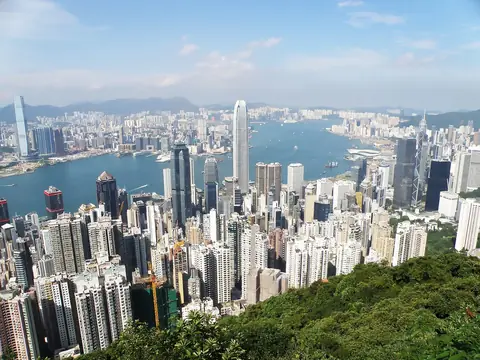
First trip to Hong Kong
Choose a Hong Kong base and a five-day first visit: harbour ferries, Central heritage, the Peak, West Kowloon, Lamma and the practical arrival decisions.
Read the guide
Transport in Hong Kong
Choose Airport Express or an airport bus, pay for MTR and trams, cross the harbour by Star Ferry and reach Cheung Chau or Lamma without losing the last boat.
Read the guide
Where to stay in Hong Kong
Compare Central, Sheung Wan, Tsim Sha Tsui, Jordan, Mong Kok, Wan Chai and Causeway Bay, with named hotels and a four-night room and transport budget.
Read the guide
Hiking in Hong Kong
Choose Dragon’s Back, the Peak Circle Walk, Lantau Peak or MacLehose Trail Section 2, with exact official routes, access, weather limits and a five-day city plan.
Read the guide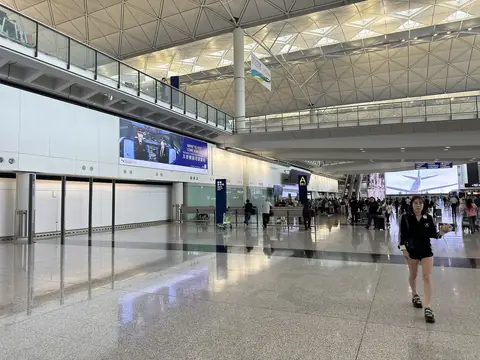
Hong Kong entry requirements
Hong Kong visa-free stays by passport, Indian pre-arrival registration, passport validity, arrival cards, customs and returning from Macau.
Read the guide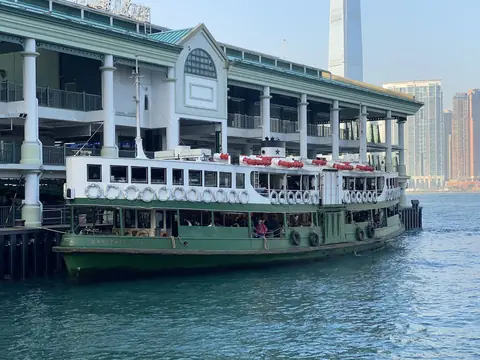
Hong Kong trip cost 2027
What 5 days in Hong Kong cost in November 2027, all in: about HKD 4,470 per person on a budget, HKD 7,630 mid-range or HKD 16,100 in comfort, with the Peak and Lantau.
Read the guideSources and checks before you travel
(29)
- UK Foreign Office (FCDO): Hong Kong travel advice (updated 1 April 2026) ↗ — opens in a new tab
- UK Foreign Office (FCDO): Hong Kong safety and security ↗ — opens in a new tab
- UK Foreign Office (FCDO): Hong Kong entry requirements ↗ — opens in a new tab
- UK Foreign Office (FCDO): Hong Kong health ↗ — opens in a new tab
- UK Foreign Office (FCDO): Hong Kong getting help ↗ — opens in a new tab
- UK Foreign Office (FCDO): advice for women travelling abroad ↗ — opens in a new tab
- UK Foreign Office (FCDO): Hong Kong, information for victims of rape and sexual assault (2022) ↗ — opens in a new tab
- German Foreign Office (Auswärtiges Amt): Hong Kong travel and safety advice (in German) ↗ — opens in a new tab
- France Diplomatie: China security advice, section 2 Hong Kong (in French) ↗ — opens in a new tab
- French Consulate-General in Hong Kong: travelling to Hong Kong and Macao (in French) ↗ — opens in a new tab
- Hong Kong Police Force: sexual assault crime prevention ↗ — opens in a new tab
- Hong Kong Police Force: bar crime prevention ↗ — opens in a new tab
- Hong Kong Police Force: personal safety tips ↗ — opens in a new tab
- Hong Kong Police Force: advice for visitors ↗ — opens in a new tab
- Hong Kong Police Force: home page and e-Report Centre ↗ — opens in a new tab
- Anti-Deception Coordination Centre (Hong Kong Police) ↗ — opens in a new tab
- MTR: Airport Express timetable ↗ — opens in a new tab
- MTR: train service ↗ — opens in a new tab
- MTR: Airport Express tickets and fares ↗ — opens in a new tab
- MTR: Airport Express Hong Kong Station ↗ — opens in a new tab
- Citybus: airport bus routes ↗ — opens in a new tab
- Citybus: airport and night route data ↗ — opens in a new tab
- Transport Department: bus routes, fares and stops (open data) ↗ — opens in a new tab
- Transport Department: taxi ↗ — opens in a new tab
- Transport Department: taxi fare of Hong Kong ↗ — opens in a new tab
- Agriculture, Fisheries and Conservation Department (AFCD): hiking safety ↗ — opens in a new tab
- Social Welfare Department: crisis intervention (CEASE Crisis Centre) ↗ — opens in a new tab
- YesInn @Yau Ma Tei (hostel's own page) ↗ — opens in a new tab
- Airport Authority Hong Kong: taxis to and from the airport (fare estimates and Taxi Station) ↗ — opens in a new tab
Reference sources for the version dated 8 November 2026. Confirm opening times, access, transport and conditions for your travel dates.
Photo credits
(4)
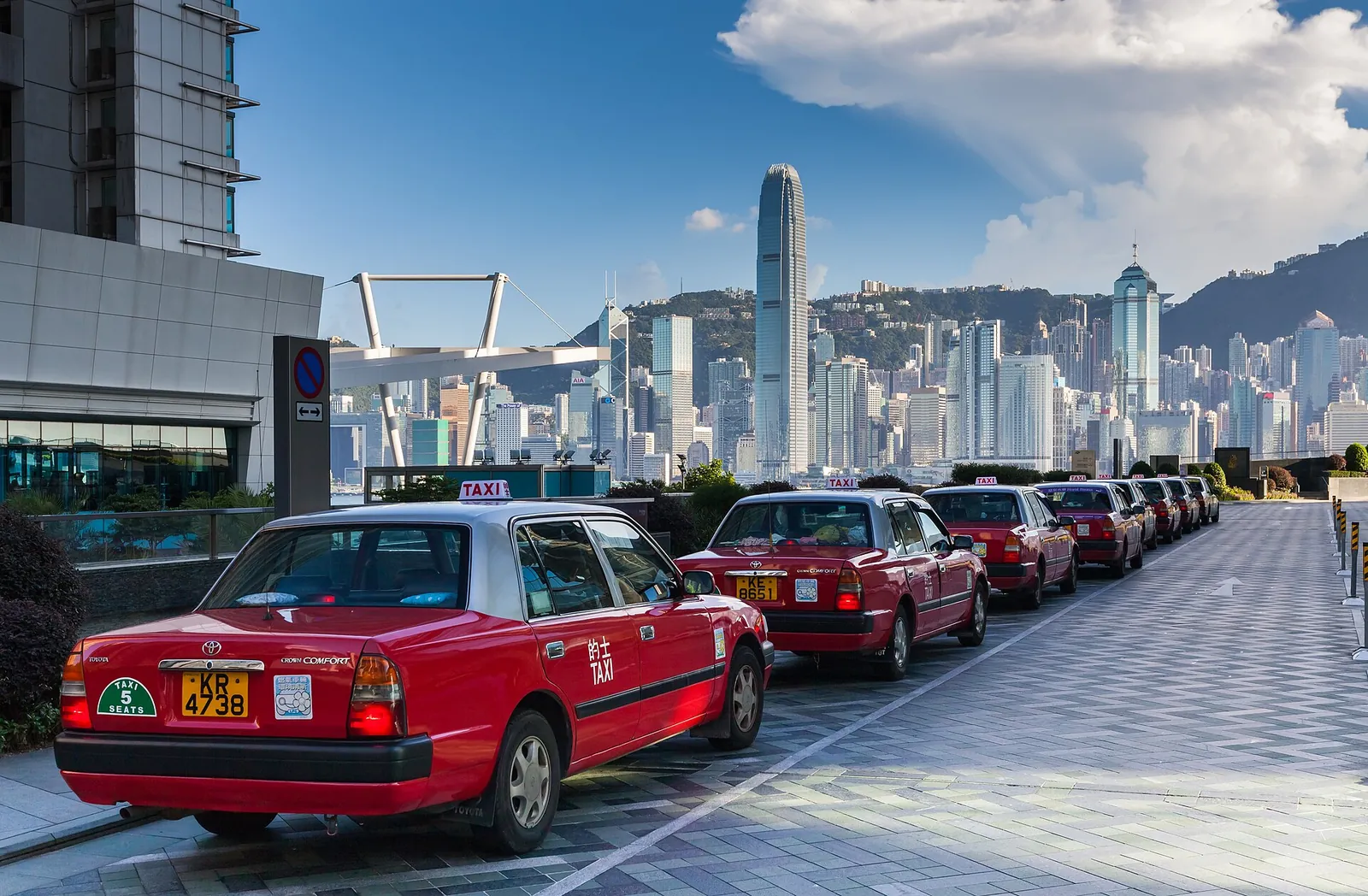
A row of red urban taxis waiting at the International Commerce Centre in Kowloon.
Photograph: Diego Delso — opens in a new tab · CC BY-SA 3.0 — opens in a new tab
Changes: Resized and converted to WebP; displayed with responsive crops. · Original photograph and licence details ↗ — opens in a new tab
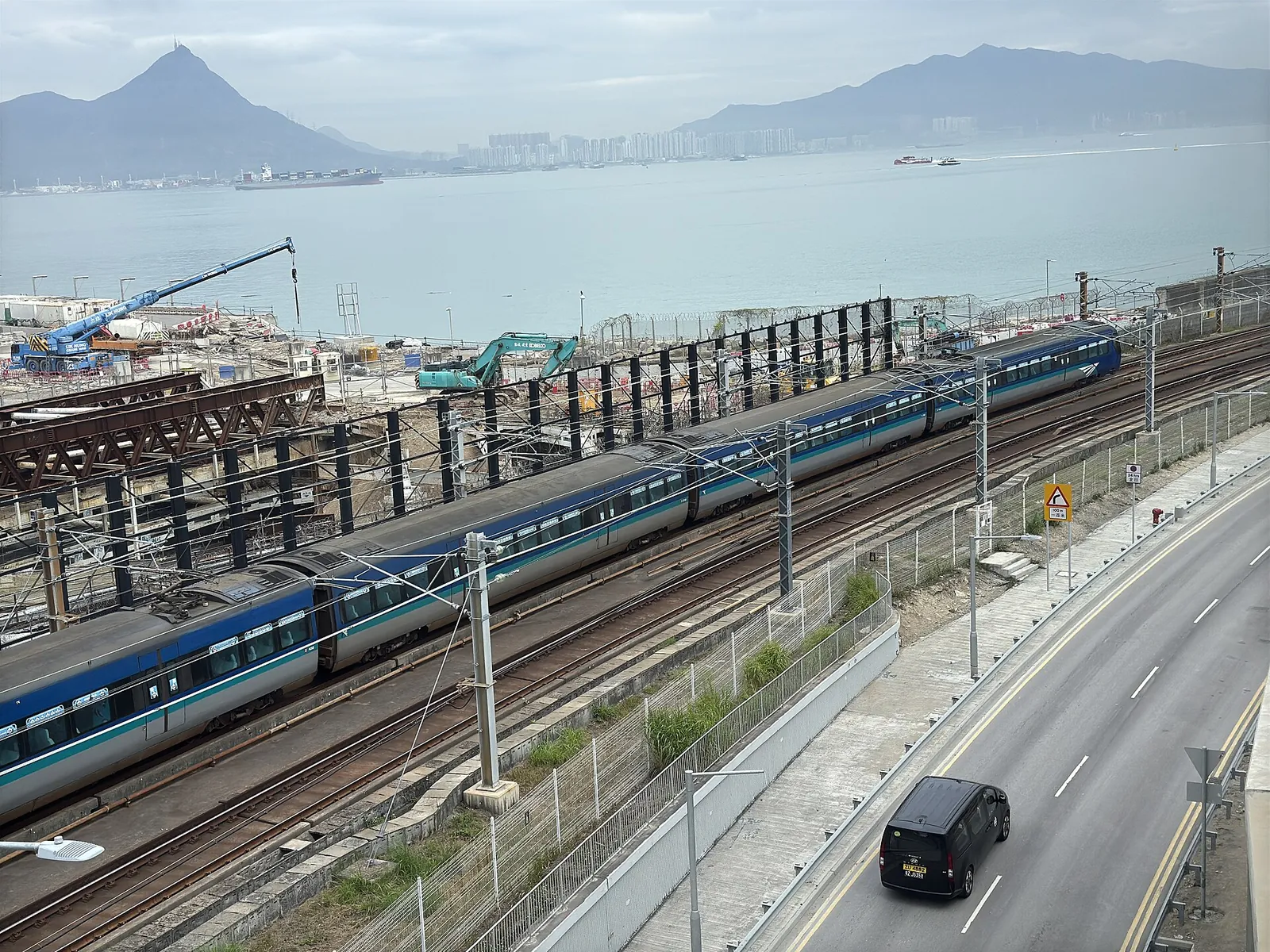
An MTR Airport Express train on the line between the airport and the city.
Photograph: LN9267 — opens in a new tab · CC BY-SA 4.0 — opens in a new tab
Changes: Resized and converted to WebP; displayed with responsive crops. · Original photograph and licence details ↗ — opens in a new tab
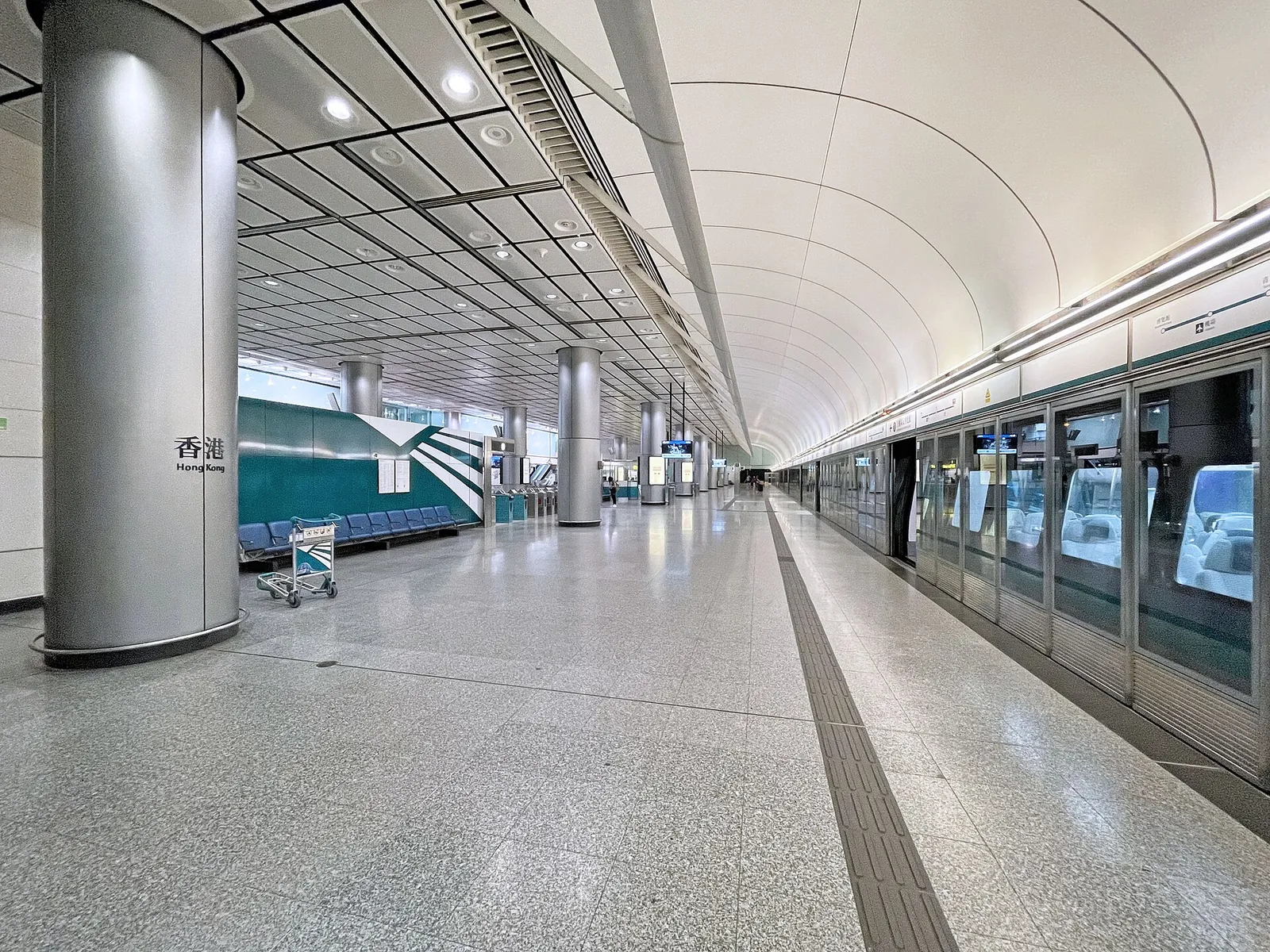
The Airport Express platforms at Hong Kong Station.
Photograph: Qwer132477 — opens in a new tab · CC BY-SA 4.0 — opens in a new tab
Changes: Resized and converted to WebP; displayed with responsive crops. · Original photograph and licence details ↗ — opens in a new tab
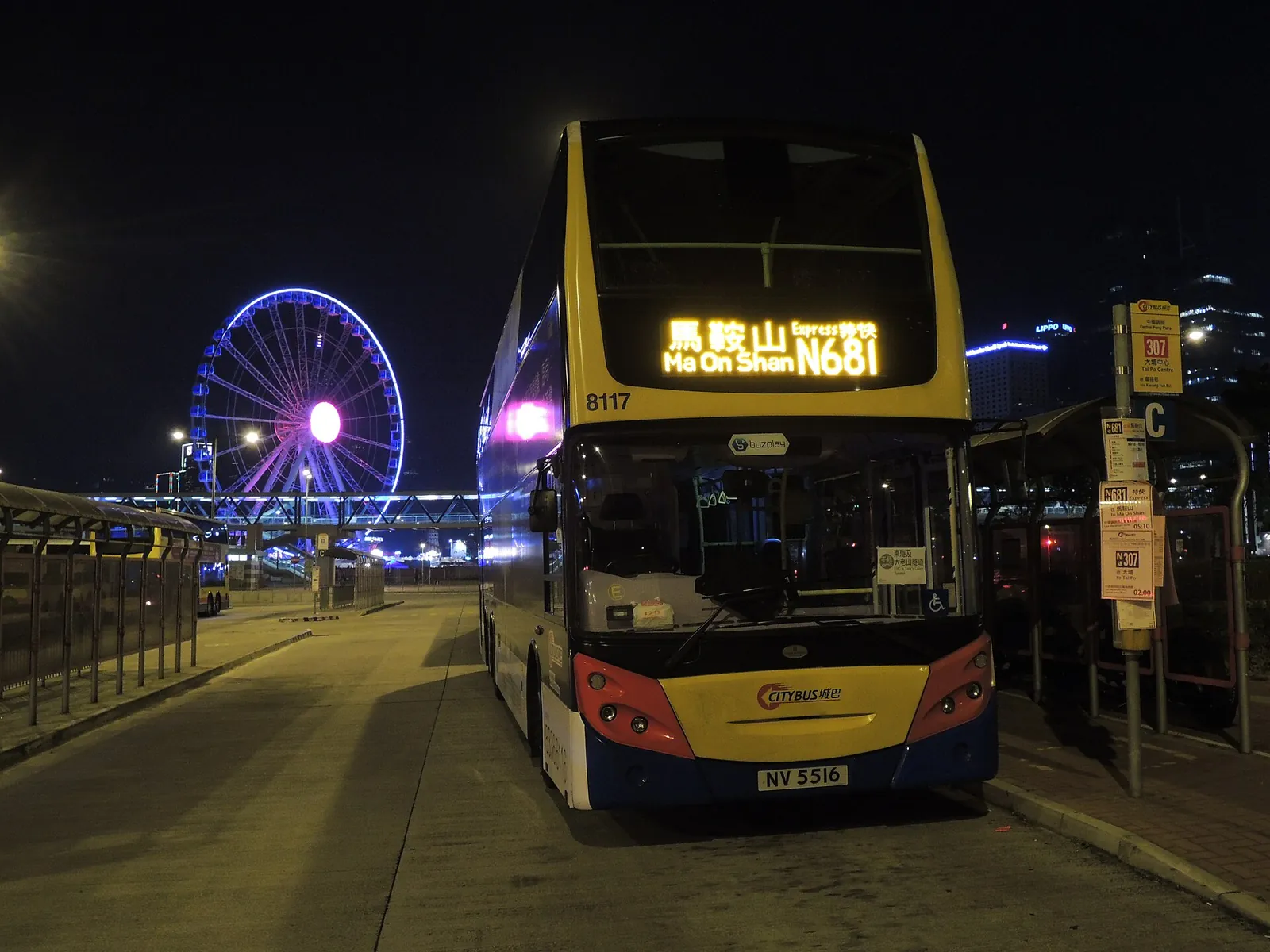
A Citybus N681 night bus at the Central Ferry Piers bus terminus.
Photograph: Dltl2010 — opens in a new tab · CC BY-SA 4.0 — opens in a new tab
Changes: Resized and converted to WebP; displayed with responsive crops. · Original photograph and licence details ↗ — opens in a new tab