Hong Kong Island · Hong Kong Island
Central and Sheung Wan: a heritage, design and food walk
Central changes character as soon as you leave the office towers. Market stalls fill the streets below Hollywood Road, former police buildings hold exhibitions, and designers work in the old married quarters at PMQ. Farther west, Sheung Wan brings temple incense, antique shops and narrow stepped lanes. Give this part of Hong Kong Island a full day: the pleasure is in the changes between streets, rather than collecting a long list of entrances.
- Suggested time
- 1 full walking day within a 3-day, 2-night city stay
- Where to stay
- Two nights in Tsim Sha Tsui; cross the harbour for the Central and Sheung Wan day.
- Season and timing
- Hong Kong’s rainy season normally runs from April to September; May and June can bring particularly heavy, persistent rain. Tropical cyclones normally affect Hong Kong from May to November and are particularly prevalent in September.
The short answer
Keep one full day for Central and Sheung Wan within a three-day stay of two nights in Tsim Sha Tsui. Start at Central, take the uphill escalator after its morning reversal, and walk Tai Kwun, PMQ and Man Mo Temple before descending through Sheung Wan. Finish with a tram towards Central and a Star Ferry crossing back to your hotel. Book the room first; most of this day is a street walk. Checked on 2026-10-16: Hong Kong Tramways charges a flat fare per ride of HK$3.30 for adults, HK$1.60 for children aged 3–11 and HK$1.50 for passengers aged 65 or above. Star Ferry adult single fares between Central and Tsim Sha Tsui are HK$5 on the upper deck or HK$4 on the lower deck Monday–Friday excluding public holidays; on Saturdays, Sundays and public holidays they are HK$6.50 and HK$5.60 respectively.
One full day, with two nights beside the harbour
The two-night base is The Salisbury – YMCA of Hong Kong in Tsim Sha Tsui. It gives this walking day a harbour crossing at each end; staying in Central would shorten the approach, but the model below deliberately prices the real suite offer at this hotel. Read the first-trip Hong Kong guide for the wider arrival plan.
- Day 1: arrive at HKG, travel to Tsim Sha Tsui and settle into the hotel. Keep the rest of the day for the nearby waterfront.
- Day 2: cross to Central after breakfast. Walk the market streets, Tai Kwun, PMQ and Man Mo Temple; descend into Sheung Wan, ride a tram east and return by Star Ferry.
- Day 3: breakfast, check out and return to HKG. This plan adds no third hotel night.
Central Market, the escalator and Graham Street
Begin on the Central side of the harbour. If arriving by MTR, PMQ’s route starts at Central Exit C: follow Des Voeux Road and Queen Victoria Street towards Central Market, then join the Central–Mid-Levels Escalator. The escalator is a series of moving sections through the hillside streets, rather than a ride to the Peak. Leave it around Hollywood Road for the heritage stops.
Checked on 2026-10-16, the Transport Department lists the escalator running one way each day: downhill from 06:00 to 10:00, then uphill from 10:00 to midnight. Plan the uphill approach after 10:00; expect stairs and sloping streets on the walking sections, including the descent. This route is a poor choice for a step-free day.
Make a detour through Graham Street Market around Graham, Gage, Peel and Stanley streets. Vegetable and seafood stalls give this part of Central its everyday rhythm. Browse without blocking the stalls, then return towards Hollywood Road for Tai Kwun. There is no need to follow the escalator to its upper end.
For pacing, set aside the morning for the Central market streets and Tai Kwun, the early afternoon for PMQ and Man Mo Temple, and the later afternoon for Sheung Wan. These are suggested allocations. No official page gives the distance or walking time of the full circuit or of the legs between stops, so allow extra time for the hill and for the final walk from the tram stop to the pier. For PMQ alone, the venue lists a 5–15-minute walk from Sheung Wan Exit E2, Central Exit C or Hong Kong Exit E1, and 5–10 minutes from the Central–Mid-Levels Escalator.
Tai Kwun: police buildings and the former prison
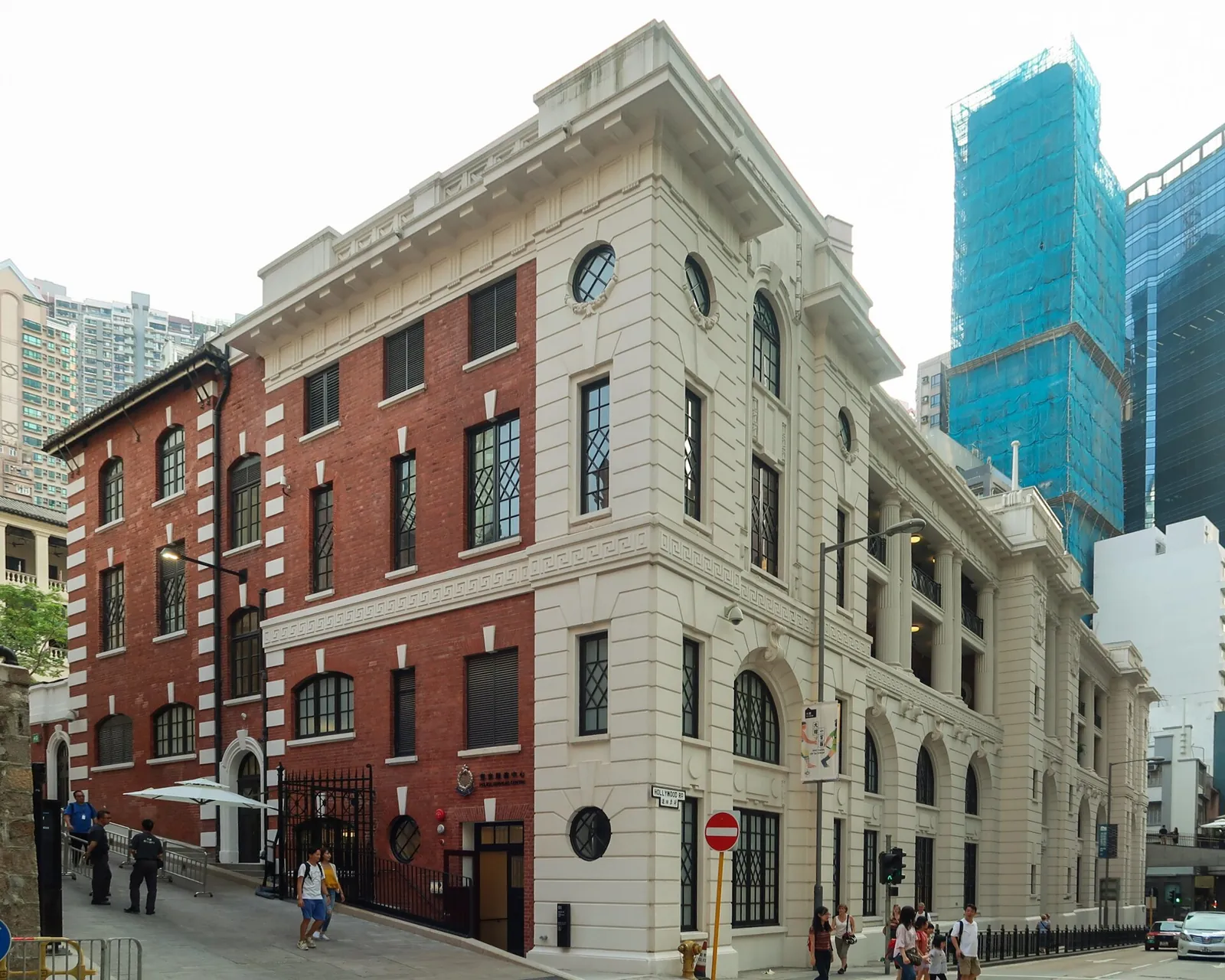
Tai Kwun at 10 Hollywood Road is the major heritage stop. The compound brings together the former Central Police Station, Central Magistracy and Victoria Prison: policing, the courts and imprisonment occupied neighbouring buildings here. The old Police Headquarters Block presents a formal façade to the street, while its simpler red-brick side faces into the compound. The contrast between the old buildings and contemporary additions makes the complex worth exploring even before you enter an exhibition.
The Hong Kong Tourism Board highlights heritage exhibitions in B and D Halls of the former Victoria Prison, where the focus is on the people and lives inside the prison walls. Choose those heritage spaces first if you want the story of the site; contemporary art programmes are a different reason to visit. Tai Kwun sets its own opening hours, admission and booking rules for the compound, the halls and each programme; the operator answers visit enquiries on 3559 2600 and at info@taikwun.hk.
For a meal break in the compound, LockCha offers vegetarian dim sum and Chinese tea. Keep lunch here or choose the Central noodle stop below, rather than trying to fit every listed restaurant into the day.
PMQ, Hollywood Road and Man Mo Temple
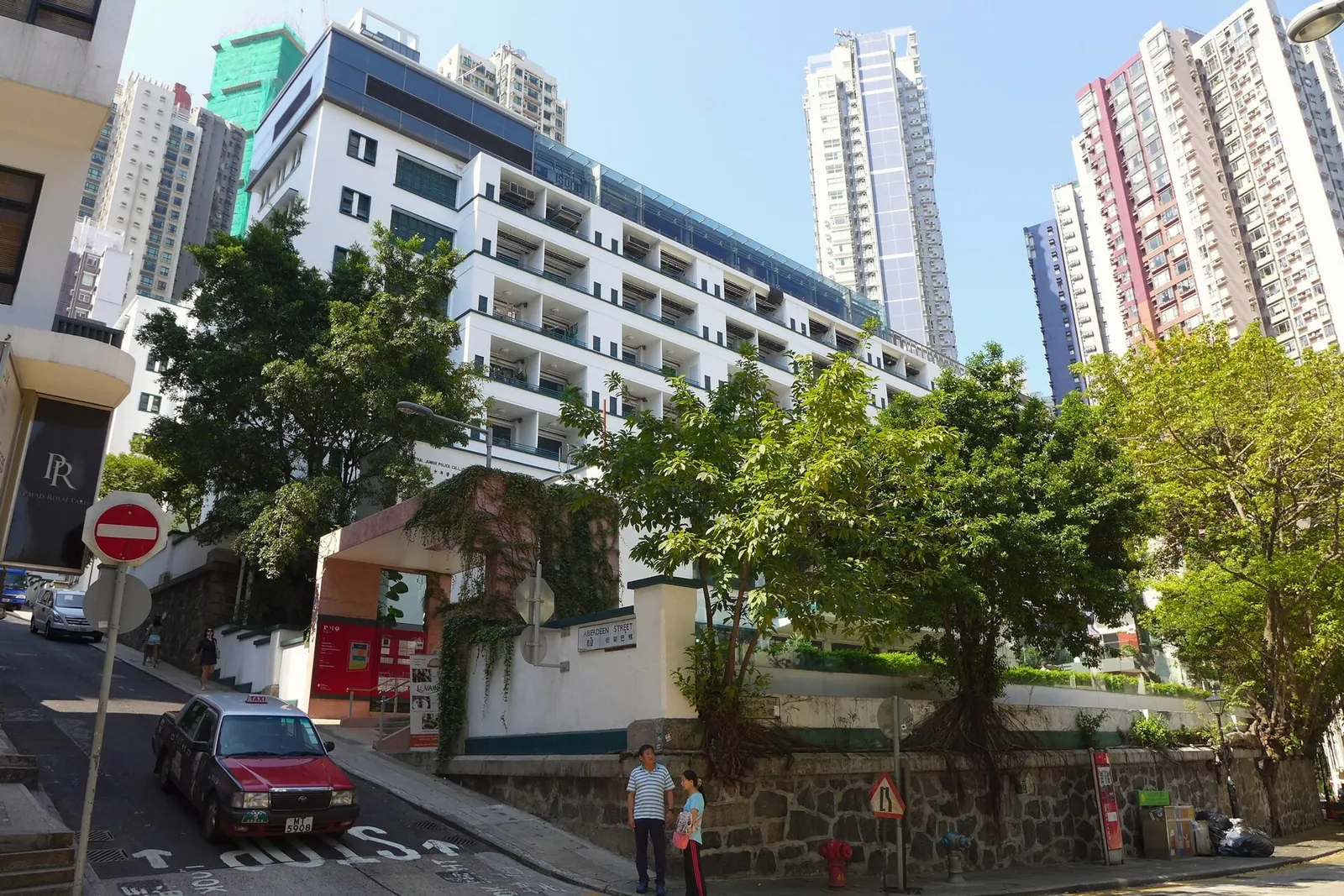
PMQ has studios and shops selling original work by Hong Kong designers and artists. The preserved former Police Married Quarters makes an effective contrast with Tai Kwun: browse the studios for ceramics, jewellery and design work, then look for a workshop in PMQ’s programme if you want to make something rather than only shop. For a shorter approach, PMQ also lists Sheung Wan MTR Exit E2 as an access point; the walk still climbs towards the site.
Checked on 2026-10-16: PMQ lists studio and shop hours as noon to 19:00, with individual opening hours varying, and cafes and restaurants from 09:00 to 23:00. Neither PMQ nor Man Mo Temple states an admission charge on its own pages; PMQ’s Info Centre (2870 2335) and the temple (2540 0350) can say what applies, and workshop bookings are separate. A lunchtime or early-afternoon visit fits the shop hours better than an early start.
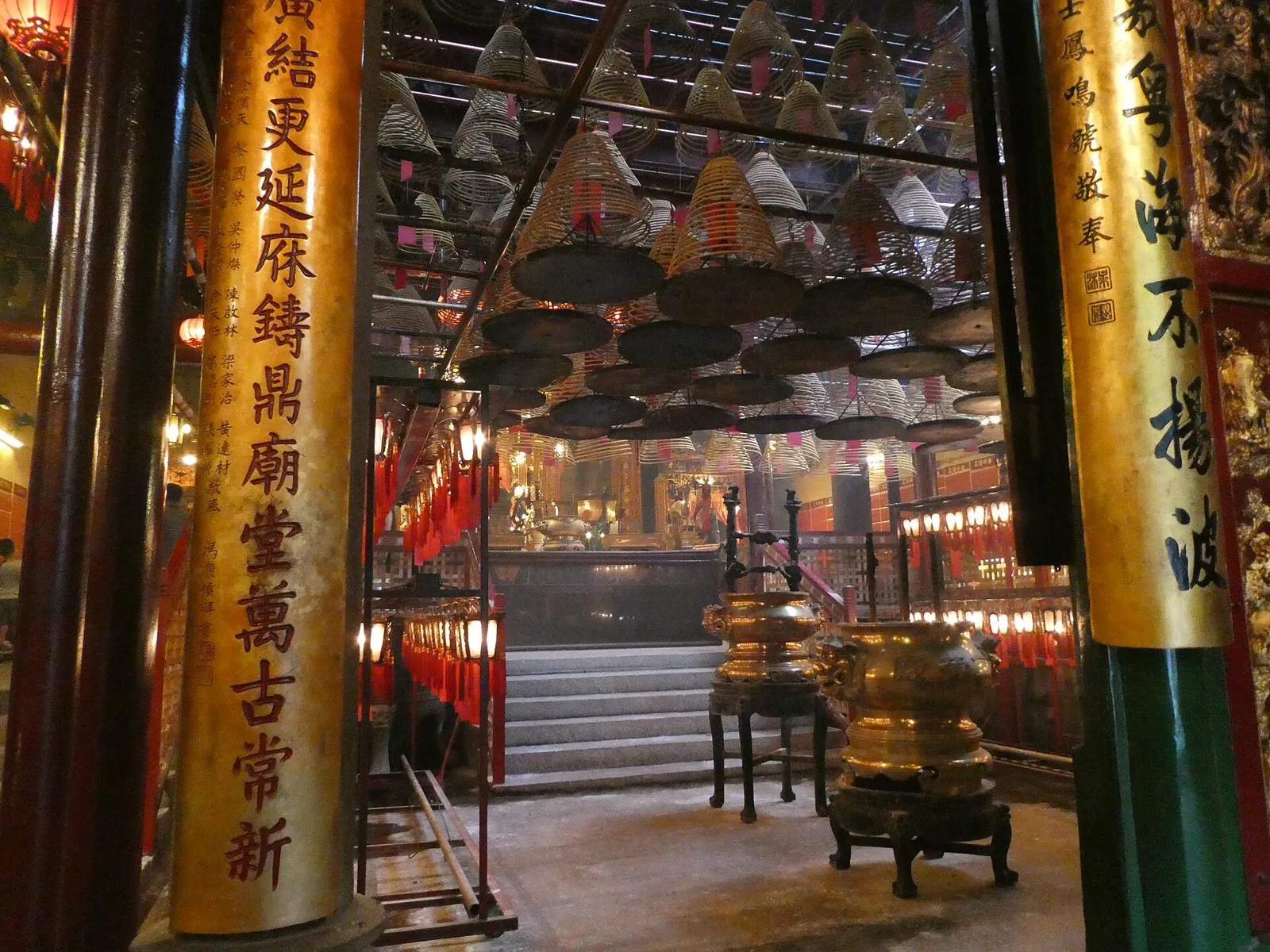
Continue west along Hollywood Road to Man Mo Temple. The Man Mo Temple compound on Hollywood Road includes Man Mo Temple, Lit Shing Kung and Kung Sor. Inside, the hanging incense coils and richly coloured altars give the temple a very different atmosphere from the design shops. This is an active place of worship: keep voices low, leave worshippers room at the altars and ask staff before photographing rituals.
Checked on 2026-10-16: Man Mo Temple opens from 08:00 to 18:00, and from 07:00 to 18:00 on the 1st and 15th of every month and on four Chinese festival days. Man Mo Temple is at 124–126 Hollywood Road in Sheung Wan. Allow a quiet pause here rather than treating the interior as a photo backdrop.
Sheung Wan streets, Western Market and the harbour
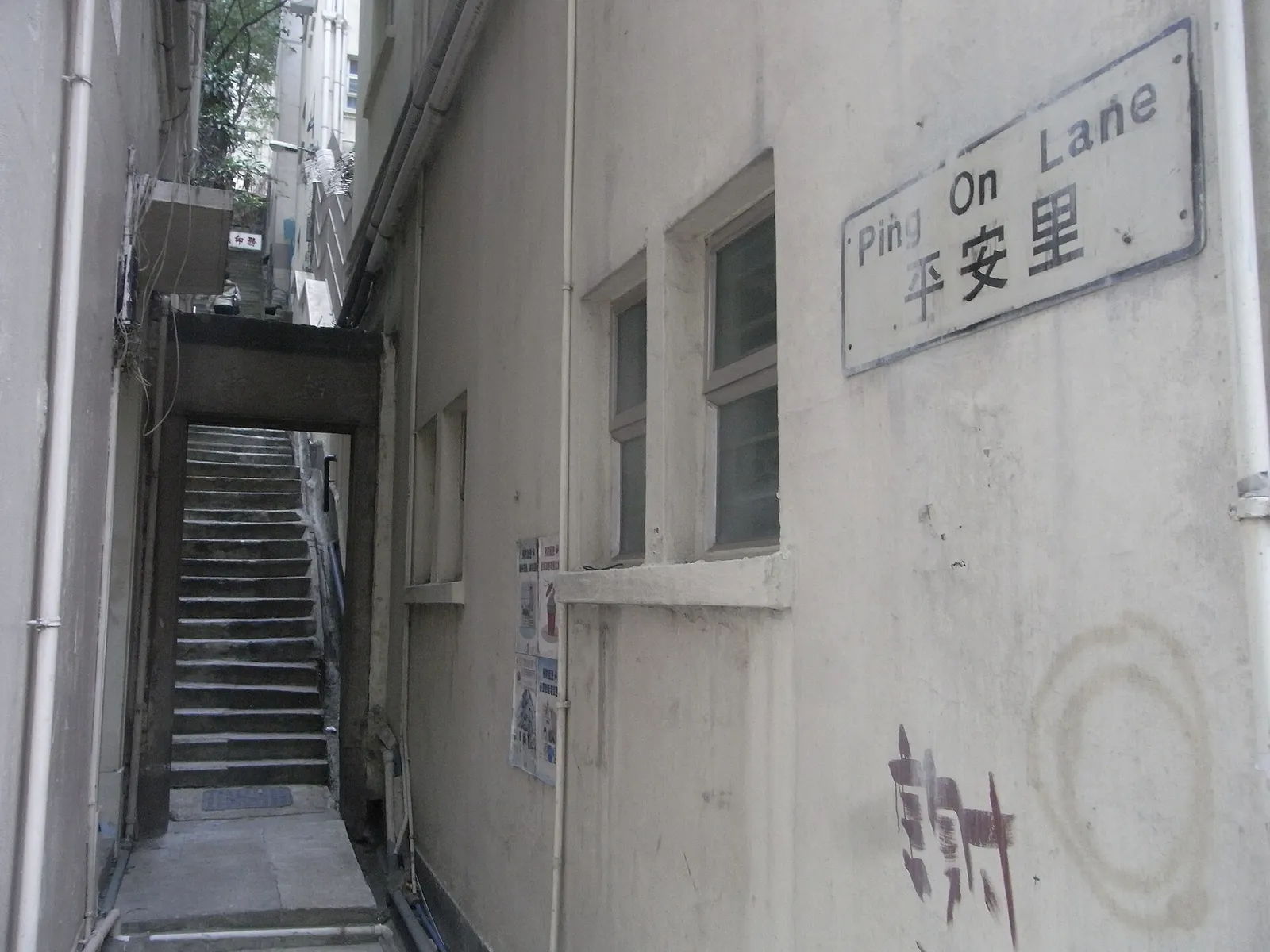
Below Hollywood Road, Upper Lascar Row, also called Cat Street, mixes antique shops, collectibles and newer boutiques. Walk the lane, then descend towards the lower streets of Sheung Wan. The change from incense and small galleries to delivery traffic and tram rails is part of the day, so leave room for wandering.
Western Market’s red-brick Edwardian exterior belongs on the route, but leave its interior out of the day. Pass the exterior at 323 Des Voeux Road Central and continue to the surrounding streets.
Board an eastbound Hong Kong Tramways tram at Western Market Terminus and alight at Jubilee Street, stop 25E. Follow the pedestrian signs towards Central Ferry Piers, then continue to Pier 7 on Man Kwong Street for the Star Ferry to Tsim Sha Tsui. Checked on 2026-10-16, the Transport Department lists this crossing at about 9 minutes. Board a tram at the back and pay at the front when leaving; Octopus, contactless cards, supported mobile and QR payments, and exact cash are accepted, with no change on board. The Hong Kong transport guide explains the payment choices across the rest of the city.
The waterfront is the open-air finish after a day between buildings: look across to Kowloon before boarding the ferry back to Tsim Sha Tsui. Checked on 2026-10-16: Star Ferry runs between Central and Tsim Sha Tsui from 06:30 to 23:30 daily, with departures every 6–12 minutes depending on the time and day. Pay for Star Ferry with Octopus at the gates or with Hong Kong dollar cash, or buy a ticket at the pier’s self-service machine with a credit card or one of the supported digital wallets. Typhoons affect Hong Kong from May to November and can cause flooding and landslides; when Typhoon Signal No. 8 or higher is issued, public offices and public transport shut down, so get indoors and do not set out again until the Hong Kong Observatory lowers the signal and your operator confirms service. From Signal No. 3, stay away from the shore and avoid water activities, and under a Black Rainstorm Warning expect serious disruption and closures of public facilities and follow the Hong Kong Observatory and local authorities’ instructions. Carry only a small day bag on the sightseeing crossings: Star Ferry allows items no larger than 40 cm long, 40 cm wide and 17.5 cm high.
In ordinary rain, shorten the day to PMQ’s studios and a nearby lunch, using MTR for the approach and return instead of the full street circuit and harbour finish. For severe-weather warnings, follow the Observatory guidance above rather than this rainy-day alternative.
Plan meals around the walk
Lunch can be tomato soup noodles in Central or vegetarian dim sum inside Tai Kwun; leave Lin Heung for the later Sheung Wan part of the route. Lin Heung Tea House moved from Central to Sheung Wan in May 2026, so use its current Tung Ning Building address below. A savoury noodle bowl and a few dim sum dishes make a better plan than a string of bakery stops.
The food choices below are separate things to try across the stay, rather than a single oversized meal. Tell the venue about food allergies before ordering; dumplings, broth and sauces can contain ingredients that are not obvious from their names.
Make time for the local food
What to eat and where to look
Shrimp dumplings
Shrimp-filled dim sum to share with tea.
- Where to look
- Lin Heung Tea House, Tung Ning Building, 249–253 Des Voeux Road Central, Sheung Wan.
- Fit it into your day
- A later lunch after the temple and street walk.
Steamed rice rolls
Soft rice rolls served with soy sauce.
- Where to look
- Lin Heung Tea House at the same Sheung Wan address.
- Fit it into your day
- Share alongside the dumplings rather than ordering a second full meal.
Tomato soup noodles
A savoury noodle bowl with a tomato soup base.
- Where to look
- Sing Heung Yuen in Central.
- Fit it into your day
- An early lunch before PMQ.
Steamed truffle siu mai
Vegetarian dim sum paired with Chinese tea.
- Where to look
- LockCha in Tai Kwun, Central.
- Fit it into your day
- An alternative lunch inside the heritage compound.
Airport legs and an itemised model for two
Use the Hong Kong entry guide before buying flights. For this three-day model, arrive and depart through HKG and use the same urban route in each direction. Buy Airport Express single or round-trip tickets at a Customer Service Centre, a ticket machine or online; online QR tickets let you enter the gates directly. Use the MTR Trip Planner for your stations’ fare, route and first and last trains. Pay the Central–Tsim Sha Tsui MTR legs separately with a contactless bank card; the budget does not assume a free Airport Express connection.
Checked on 2026-10-16: Airport Express adult round-trip smart tickets cost HK$215 for Hong Kong Station, HK$195 for Kowloon and HK$130 for Tsing Yi; each is station-specific and valid for one return journey within 30 days of issue. Airport Express trains from the airport towards the city run from 05:54 to 00:48; the timetable effective from 13 September 2026 gives 24 minutes to Hong Kong Station, 22 minutes to Kowloon and 14 minutes to Tsing Yi. Towards the airport, Airport Express departures run from 05:50 to 00:48 at Hong Kong Station, 05:53 to 00:52 at Kowloon and 06:00 to 00:59 at Tsing Yi. Airport Express normally runs every 10 minutes, with gaps of up to 12 minutes in the early morning and late evening. The Tsuen Wan Line links Central and Tsim Sha Tsui; the adult Octopus or contactless single fare is HK$10.60.
Checked on 2026-10-16: The Salisbury – YMCA of Hong Kong’s 125 Memories of Love offer costs HK$1,901 per City View Suite per night, plus a 10% service charge. The Salisbury offer includes buffet breakfast for two registered guests at The Haven. The Salisbury offer runs until 15 December 2026, excluding 1–5 May, 1–7 July and 1–7 October, with all blackout dates inclusive. Friday, Saturday and Sunday nights add HK$200 per room per night, plus a 10% service charge on that supplement.
The model is two adults sharing one City View Suite on 26 and 27 October 2026, checking out on 28 October. Allow about HK$4,681 for the priced items below, including the 10% hotel service charge. The Salisbury is exempt from hotel accommodation tax. This is a calculation from the offer, not a live room quotation.
The Salisbury offer is subject to availability, must be confirmed and guaranteed at least 7 days before check-in, and is non-refundable, with cancellation charged at 100% of the entire stay. The Salisbury offer cannot be combined with other promotions and does not apply to existing reservations or groups.
Not included: flights, lunches, dinners, drinks, shopping, any attraction admission charges, workshops, ticketed exhibitions and other optional visits. The priced total covers the room and transport; Tai Kwun, PMQ and Man Mo Temple admission charges are outside it.
- Suite, both nights: HK$3,802 room rate + HK$380.20 service charge = HK$4,182.20; breakfast for two registered guests is included and hotel accommodation tax does not apply.
- Airport Express: 2 adult Hong Kong Station round-trip smart tickets × HK$215 = HK$430.
- Central–Tsim Sha Tsui MTR for arrival and departure: 4 adult Octopus/contactless journeys × HK$10.60 = HK$42.40.
- Central–Tsim Sha Tsui Star Ferry on the Tuesday walking day: 4 adult weekday upper-deck journeys × HK$5 = HK$20.
- One eastbound tram ride per adult after Sheung Wan: 2 × HK$3.30 = HK$6.60.
- Priced route total: HK$4,681.20 for two adults over three days.
Practical questions
How much time do Central and Sheung Wan need?
Give them one full day within a three-day, two-night city stay. Tai Kwun, PMQ and Man Mo Temple are the main stops; the streets between them need breathing room.
Which direction should I walk?
Start in Central after the escalator’s morning reversal, visit Tai Kwun and PMQ, then walk west to Man Mo Temple and descend through Sheung Wan. The eastbound tram brings you back towards the Central waterfront.
Can I go inside Western Market?
The plan treats Western Market as an exterior stop at 323 Des Voeux Road Central; leave its interior out of the day.
Is this walk suitable if I cannot manage stairs?
The full hillside route includes stairs and steep streets. Choose a shorter visit focused on one venue, use its access information and arrange transport between venues rather than following the whole walk.
Where is Lin Heung Tea House now?
Use Tung Ning Building, 249–253 Des Voeux Road Central in Sheung Wan. The Hong Kong Tourism Board lists the move from Central in May 2026; the old Central address is not the meal stop for this walk.
Sources and checks before you travel
Reference sources for the version dated 16 October 2026. Confirm opening times, access, transport and conditions for your travel dates.
- Hong Kong Tramways — Schedules and Fares ↗ — opens in a new tab
- Hong Kong Tourism Board — Getting around Hong Kong ↗ — opens in a new tab
- Star Ferry — Ferry Services ↗ — opens in a new tab
- Hong Kong Observatory — Rainstorm Warning System ↗ — opens in a new tab
- Hong Kong Observatory — Tropical cyclone precautions ↗ — opens in a new tab
- PMQ — Explore PMQ ↗ — opens in a new tab
- PMQ — Location & Transportation ↗ — opens in a new tab
- Tung Wah Group of Hospitals — Man Mo Temple ↗ — opens in a new tab
- Tung Wah Group of Hospitals — Opening Hours & Location ↗ — opens in a new tab
- MTR — Airport Express Tickets and Fares ↗ — opens in a new tab
- MTR — Train service frequencies ↗ — opens in a new tab
- MTR — Airport Express Timetable ↗ — opens in a new tab
- MTR — Adult Octopus and Contactless Fare Chart, page 4 ↗ — opens in a new tab
- The Salisbury – YMCA of Hong Kong — 125 Memories of Love room offer ↗ — opens in a new tab
- Hong Kong Tourism Board — Lin Heung Tea House ↗ — opens in a new tab
- Hong Kong Tourism Board — Dai pai dongs ↗ — opens in a new tab
- Hong Kong Tourism Board — Dim sum restaurants ↗ — opens in a new tab
- Hong Kong Tourism Board — Tai Kwun heritage ↗ — opens in a new tab
- Hong Kong Tourism Board — Western Market ↗ — opens in a new tab
- Transport Department — Hillside Escalator ↗ — opens in a new tab
- Hong Kong Tourism Board — Graham Street Market ↗ — opens in a new tab
- Hong Kong Tourism Board — Upper Lascar Row ↗ — opens in a new tab
- Commissioner for Heritage’s Office — Tai Kwun (Central Police Station Compound) ↗ — opens in a new tab
- Hong Kong Tramways — Interactive map stop data ↗ — opens in a new tab
- Transport Department — Ferry service details ↗ — opens in a new tab
- Inland Revenue Department — hotels exempt from accommodation tax, 30 September 2026 ↗ — opens in a new tab
- MTR — Airport Express stations: Hong Kong Station ↗ — opens in a new tab
Photo credits
PMQ’s former married quarters rise above Aberdeen Street.
Photograph: Wpcpey — opens in a new tab · CC BY 4.0 — opens in a new tab
Changes: Resized and converted to WebP; displayed with responsive crops. · Original photograph and licence details ↗ — opens in a new tab
Hanging incense coils and red and gold details inside Man Mo Temple.
Photograph: Aethelfirth — opens in a new tab · CC BY-SA 4.0 — opens in a new tab
Changes: Resized and converted to WebP; displayed with responsive crops. · Original photograph and licence details ↗ — opens in a new tab
Ping On Lane shows the stepped streets of Sheung Wan.
Photograph: Richcoco — opens in a new tab · CC BY-SA 3.0 — opens in a new tab
Changes: Resized and converted to WebP; displayed with responsive crops. · Original photograph and licence details ↗ — opens in a new tab
The former Police Headquarters Block at Tai Kwun in Central.
Photograph: Wpcpey — opens in a new tab · CC BY-SA 4.0 — opens in a new tab
Changes: Resized and converted to WebP; displayed with responsive crops. · Original photograph and licence details ↗ — opens in a new tab