Central Region
Singapore River and Civic District: museums, bridges and the quays
Modern Singapore began on this river bank. Stamford Raffles landed here in 1819, the British put their courthouse, town hall and parliament on the north bank, and merchants filled the south bank with godowns and shophouses. Today the civic buildings hold the National Gallery, the Asian Civilisations Museum and the city's concert hall, the 19th-century bridges still cross the water, and the quays where cargo boats once unloaded are lined with restaurants and bars. It is compact enough to walk in an afternoon and rich enough for a museum morning on either side.
In this guide
Find the location ↗ — opens in a new tabThe short answer
Book two nights near City Hall or by the river and give the district one full day between an arrival evening and a departure morning. Book the room first; museum and cruise tickets can be bought on the day. The two prices to plan around: National Gallery Singapore's General Admission ticket is S$20 for a non-resident adult (the National Museum is S$18), and the 40-minute Singapore River Cruise is S$28 per adult, sold at the jetty counters (both checked on 14 October 2026). Walk from the Padang past Victoria Concert Hall, the Old Parliament House and Raffles' Landing Site, cross Cavenagh Bridge to the Merlion, then follow Boat Quay upstream to Clarke Quay and take the cruise after dark.
- Suggested time
- 1 full day within a 3-day, 2-night central Singapore stay
- Where to stay
- City Hall for the museums and the Padang; Boat Quay or Clarke Quay for river evenings; Robertson Quay for a quieter upstream stay
- Season and timing
- The Meteorological Service Singapore describes high temperatures, humidity and abundant rainfall all year, with thunderstorms often in the afternoon or evening. Walk in the morning or late afternoon and keep a museum for the storm.
Where to sleep: City Hall or the quays
Two nights give you an arrival evening on the river, one full day for the civic walk and a museum, and a morning before you leave. City Hall is the civic side: National Gallery Singapore is a 7-minute walk from City Hall station (Exit B) through the Art Connector, and the Padang, the Peranakan Museum on Armenian Street, the National Museum and Fort Canning Park are all on foot from there.
Boat Quay is the lower river: restored shophouses facing the water with the towers of Raffles Place behind them, and restaurants and bars that fill with the after-work crowd. Clarke Quay, upstream, is the nightlife quay. Robertson Quay, farther upstream, is quieter; the Singapore Tourism Board describes it as an alfresco dining and family-outing area. Rooms that face the busiest riverside venues are the noisiest.
Rooms in the centre are dear. The Singapore Tourism Board's figures, published by SingStat, put the average room in a licensed hotel at S$284.4 a night in August 2026 and S$260.7 in June 2026, the lowest month of 2026 so far (checked on 14 October 2026). The all-in budget below uses a private-room estimate for City Hall.
The civic quarter: the Padang, Victoria Concert Hall and the Old Parliament House
The Padang is the playing field in front of the Former Supreme Court and the Former City Hall, the two buildings that now make up National Gallery Singapore. It is one of the oldest public open spaces in Singapore: cleared by the early colonial settlement, it was called the Plain and the Esplanade before it became the Padang around 1907. Cricket is played at its south-western end, and the Singapore Cricket Club and the Singapore Recreation Club stand at either end. Returning British forces held a victory parade here on 12 September 1945, after the Japanese surrender was signed in the Municipal Building next door (now the Former City Hall), and the first National Day Parade was held here in 1966. It became a National Monument in 2022, and a footpath across it is open at all times.
Victoria Theatre and Victoria Concert Hall, Singapore's oldest performing arts venue, are two buildings joined by a clock tower. The theatre was completed in 1862 as the Town Hall; the concert hall and the tower were built in 1905 as the Victoria Memorial Hall, in memory of Queen Victoria. After the war the buildings held the trials for Japanese war crimes, and the concert hall is home to the Singapore Symphony Orchestra. In front of it stands the original black bronze statue of Raffles by Thomas Woolner, unveiled on the Padang in 1887 and moved here in 1919.
Next door, The Arts House at the Old Parliament (Former Parliament House, 1 Old Parliament Lane) is likely the oldest surviving building in Singapore. It was built in 1827 as a house for the merchant John A. Maxwell, who never lived in it and leased it to the government as the first courthouse; it was the Supreme Court until 1939, the Legislative Assembly met in its chamber from 1955, and after independence in 1965 it was Parliament House until 1999. It reopened as an arts centre in 2004. The bronze elephant at the entrance was a gift marking King Chulalongkorn of Siam's visit in 1871.
Behind it, on the river bank, a polymarble copy of the Raffles statue, unveiled in 1972, marks Raffles' Landing Site, believed to be where Raffles came ashore in 1819. The National Heritage Board's Civic District Heritage Trail links all of these; one of its short routes, Functions of the Civic District, is 2.2 km and about 1.5 hours on foot.
Three museums and their tourist prices
National Gallery Singapore fills the Former Supreme Court and the Former City Hall and holds what the Singapore Tourism Board calls the world's largest collection of Southeast Asian art. The General Admission ticket covers the DBS Singapore Gallery, with Singapore Stories: Pathways & Detours in Art and Lai Foong Moi: Crossings, and Art Remembers in the City Hall Chamber, with free guided highlights tours. The UOB Southeast Asia Gallery is closed until late 2027, while works from the National Collection stay on show elsewhere in the building. Some spaces are free without a ticket, among them the Chief Justice's Chamber on Level 3, the Ng Teng Fong Roof Garden Gallery on Level 5 and the Padang and Coleman Deck on Level 6. The Gallery says visitors typically spend 3 hours.
The National Museum of Singapore on Stamford Road, at the foot of Fort Canning, is the nation's oldest museum, in a building completed in 1887 for the Raffles Library and Museum, with a modern wing added in 2003-2006. Its revamped Singapore History Gallery reopened in October 2026, and Singapore Odyssea: A Journey Through Time is a multi-sensorial time-travel experience in the Shaw Foundation Glass Rotunda. Restoration and upgrading works are under way on the building.
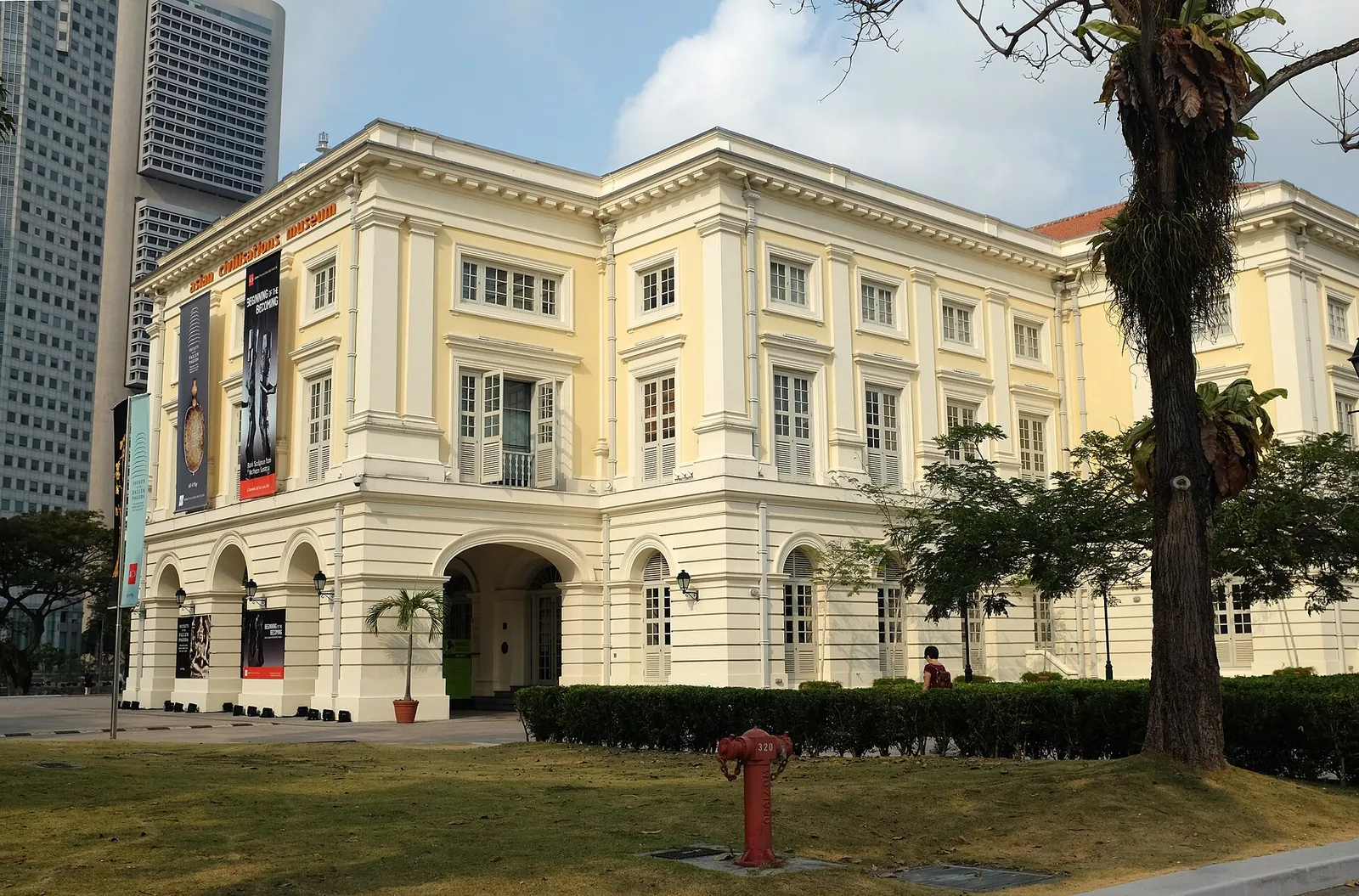
The Asian Civilisations Museum (ACM) occupies the Empress Place Building beside the river. Its ground floor begins with the Tang Shipwreck: an Arab ship about 18 metres long, built of timber sewn together, that sank nearly 1,100 years ago after loading cargo in Canton and was found off Belitung Island, Indonesia, in 1998. On show are some of the more than 50,000 hand-painted Changsha bowls it carried and a gold cup with musicians and a dancer, the largest of its type known. Two exhibitions run alongside: Sacred Caves: Dunhuang, Buddhism, and the Silk Road, with life-size reproductions of the Mogao cave interiors (25 September 2026 to 7 March 2027), and Crosscurrents, one hundred Mughal, Safavid and Ottoman masterpieces from the Louvre (until 24 January 2027). Check the museum's website for what runs after these dates.
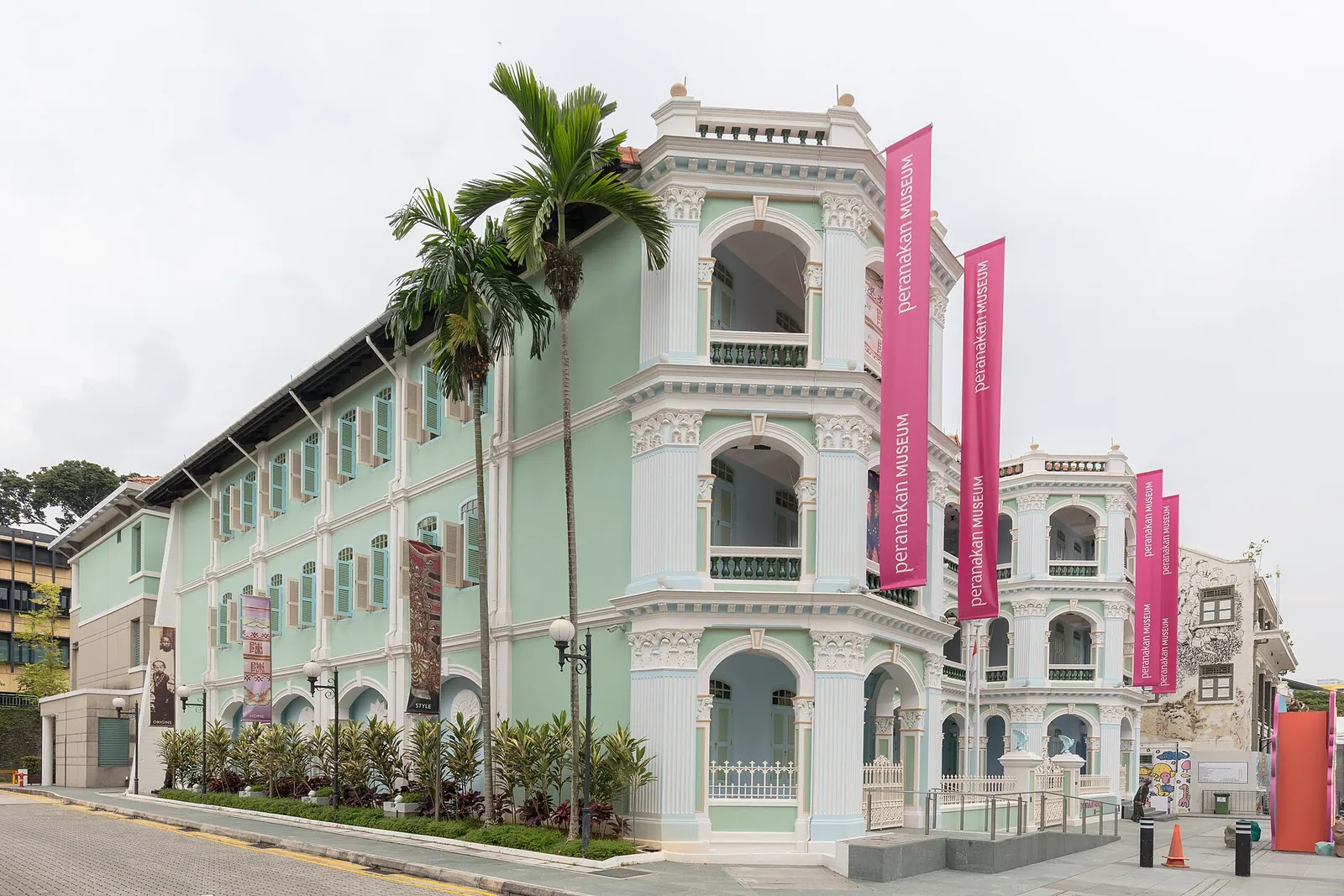
Adult prices for tourists, checked on 14 October 2026: the Gallery's General Admission is S$20 (S$5 off for children aged 7-12 and seniors aged 60 and over; the All Access ticket with the special exhibitions is S$30); the National Museum is S$18 (concession S$13); ACM's all-access ticket for tourists, listed on its admissions page for the Sacred Caves exhibition, is S$25 (concession S$20). The Peranakan Museum, 39 Armenian Street, charges S$12 for its permanent galleries. Children aged 6 and under go free at all four. The Gallery and the National Museum open 10:00-19:00 daily (Gallery admission ends at 18:30, Museum ticket sales at 18:00); ACM and the Peranakan Museum open 10:00-19:00, Fridays until 21:00, with last admission 30 minutes before closing. Tickets at the National Museum, ACM and the Peranakan Museum are non-refundable. One museum fills a morning; pick the Gallery for art, the National Museum for Singapore's own story, or ACM for the trade that built the river.
Fort Canning Park: the hill above the river
Fort Canning Park is the green hill between the National Museum and Clarke Quay, bounded by Hill Street, Canning Rise, Clemenceau Avenue and River Valley Road. Malays called it Bukit Larangan, Forbidden Hill, the home of the old Malay kings, and a keramat (shrine) believed to be the tomb of the last of them is still on the hill. Raffles built his house here in 1822 and started Singapore's first botanic garden; the fort completed in 1861 was mostly demolished by 1926, and the Fort Gate is its last remnant. In a bunker on the hill, Lieutenant-General Arthur Percival and his commanders decided in 1942 to surrender Singapore to the Japanese.
NParks keeps nine historical gardens on the hill, among them the Spice Garden, Singapore's most diverse, with over 180 varieties of herbs and spices and the story of the spice trade. There is a tree trail, 15 heritage trees, a former Christian cemetery, the old British barracks (now Fort Canning Centre) and the Fort Canning Heritage Gallery, with artefacts dating back to the 1300s. Go early, before the heat.
The bridges, the Merlion and the quays
Cavenagh, Anderson and Elgin bridges together became a National Monument in 2019. Cavenagh Bridge (1869), between Empress Place and the Fullerton Building, is the oldest surviving suspension bridge across the river, made of cast iron by P & W MacLellan of Glasgow and tested before it was shipped to Singapore with a load four times its own weight. The old signs at both ends still ban cattle, horses and any vehicle over 3 cwt (about 152 kg), so it carries only walkers. Anderson Bridge (completed in 1909, opened in 1910), a steel truss bridge, was built to ease the heavy traffic on Cavenagh; look for its granite pedestrian archways and cast-iron latticework.
Across Cavenagh Bridge, Merlion Park is in front of the Fullerton Hotel, overlooking Marina Bay. The Merlion, with a lion's head and a fish's body, is 8.6 metres tall and weighs 70 tonnes; it was unveiled in 1972 at the mouth of the river and moved here after the Esplanade Bridge, completed in 1997, hid it from the waterfront. The bay itself is covered in the Marina Bay guide.
Upstream on the south bank, Boat Quay began in 1823, when a hillock was levelled for Commercial Square (renamed Raffles Place in 1858) and the earth filled the swampy bank. Merchants built godowns and offices with their own jetties, and in the 1860s Boat Quay still handled three-quarters of all shipping business. The Chinese called this wide bend the belly of the carp, where good fortune lives. Its terraces of mostly two-storey shophouses, about 4-6 metres wide, were conserved in 1989.
Elgin Bridge (1929), between North and South Bridge Road, stands on the site of the first bridge across the river, built in the 1820s; T. C. Hood encased its three steel bowstring arches in concrete, and its medallions with a palm tree and a lion and its cast-iron lamps are by the Italian sculptor Rudolfo Nolli. Coleman Bridge, between Boat Quay and Clarke Quay, links Hill Street with New Bridge Road. The first one, of brick with nine arches, was built in 1840 and named after its architect, George Drumgold Coleman; today's wider bridge dates from 1990 but keeps the ornate columns, lamp posts and railings of the 1886 bridge, has murals in its underpass and is floodlit at night.
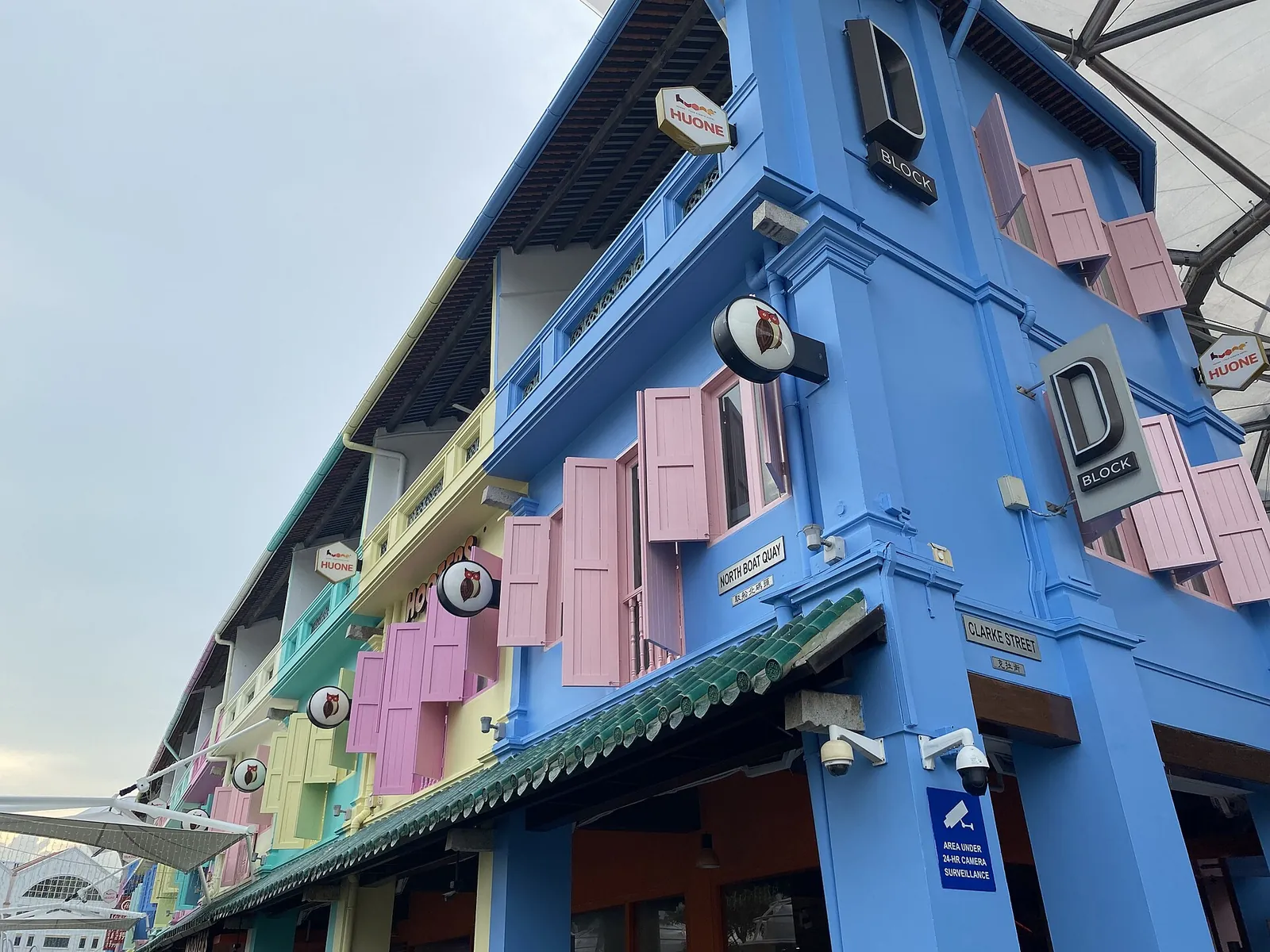
Clarke Quay, on the north bank and named after Sir Andrew Clarke, the second Governor of the Straits Settlements, has the largest conserved cluster of riverside warehouses in Singapore, some of fine brick, beside two- and three-storey shophouses restored in 1993. Its oldest building is River House, a Teochew-style mansion of the 1880s that later stored gambier and biscuits. The conserved Read Bridge (1886-87) and Ord Bridge (1886) cross to the south bank. Robertson Quay, farther upstream, is the quieter dining end of the river.
On the water: the Singapore River Cruise
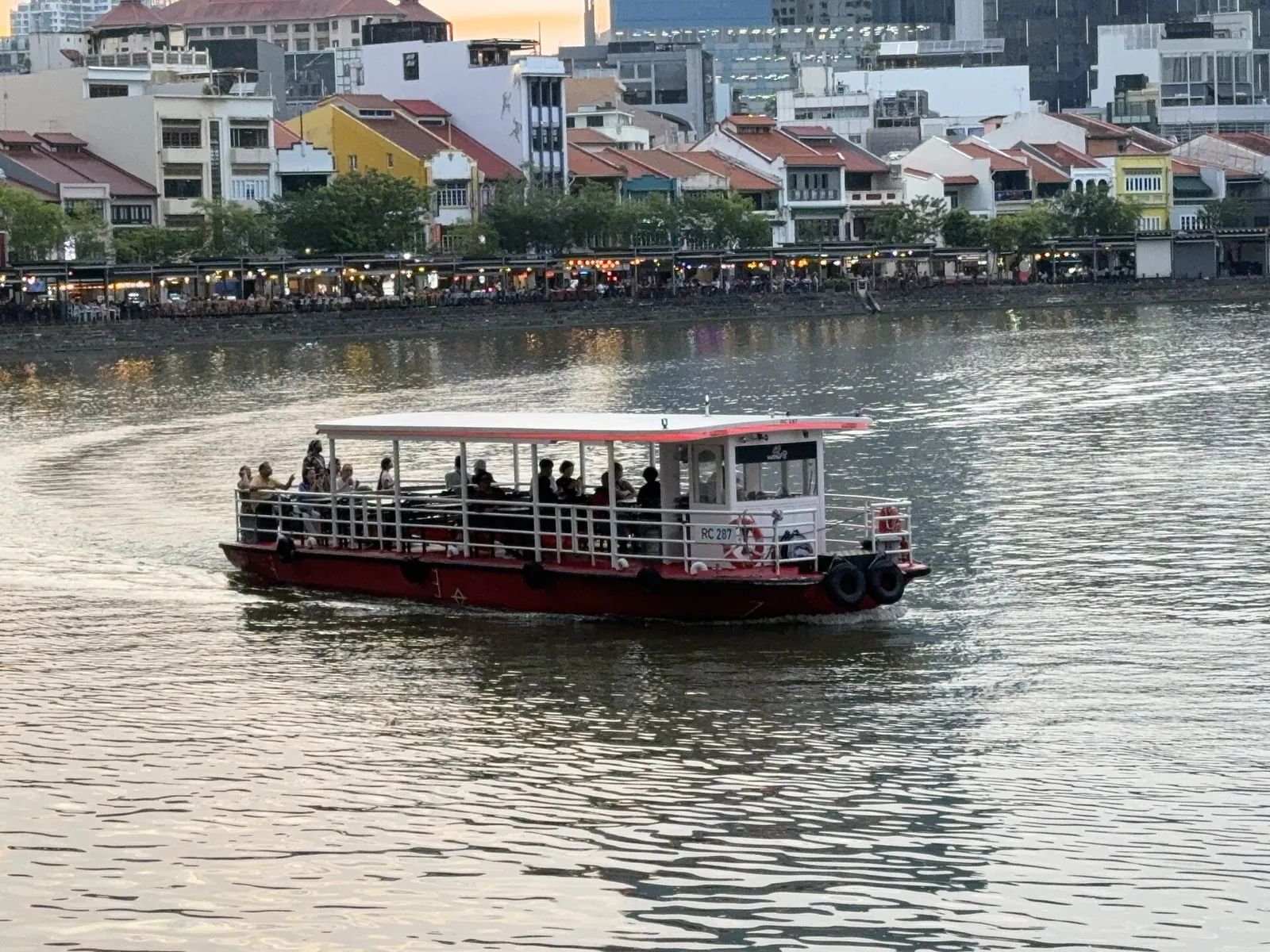
Singapore River Cruise runs its 40-minute trip, The Tale of 2 Quays, by bumboat; it takes in Boat Quay, Clarke Quay and Marina Bay. Tickets cost S$28 for adults and S$18 for children aged 3-11 (checked on 14 October 2026); walk-ins are welcome, with tickets sold at the counters before departure. Clarke Quay Jetty operates 11:00-22:00 Monday to Thursday and 10:00-22:30 Friday to Sunday; Bayfront South and Clifford Pier jetties have departures 10:30-21:00 daily, and Read Bridge Jetty 13:00-22:00 daily. The operator publishes no departure frequency. A Laser Show Cruise leaves from Clarke Quay Jetty only.
Go after dark, when Coleman Bridge is floodlit and the heat has gone. On a stormy evening, move the cruise to the next day and spend the time in a museum or at dinner.
Three days and two nights: the walk in order
Day 1, arrival. Take the MRT from Changi (see the last section), check in and walk down Boat Quay in the late afternoon. Cross Cavenagh Bridge to the Merlion as the lights come on, then have dinner at Lau Pa Sat: chicken rice inside the market, or satay on Boon Tat Street from 19:00.
Day 2, the civic walk and the river. Have kaya toast at Ya Kun in Far East Square, then be at National Gallery Singapore when it opens at 10:00 and give it the morning. After lunch, walk across the Padang to Victoria Concert Hall, the Old Parliament House and Raffles' Landing Site, along Empress Place past the Asian Civilisations Museum, over Cavenagh Bridge and up Boat Quay, past Elgin and Coleman bridges to Clarke Quay. The distances are short: from the Gallery to Clarke Quay station the stops add up to about 1.5 km in straight lines (OneMap positions), a little more on foot, and the Gallery puts the station a 10-minute stroll along the river from its door. The stops fill the afternoon. Rest at the hotel, take the river cruise after dark and eat at Song Fa on New Bridge Road or along the quays.
Day 3, departure. Walk up Fort Canning Park early, then come down to the National Museum for 10:00, or spend the morning with ACM's Tang Shipwreck instead. Have lunch, collect your bags and take the MRT back to Changi. With only one day here, keep day 2 and add the Merlion at dusk.
What to eat and where to look
Satay
Skewers of marinated meat grilled over charcoal. Satay Street at Lau Pa Sat is Singapore's largest open-air satay street: 9 satay carts set up tables on Boon Tat Street every evening.
- Where to look
- Satay Street at Lau Pa Sat, Boon Tat Street beside 18 Raffles Quay (Raffles Place or Downtown MRT): weekdays 19:00-03:00, weekends 15:00-03:00.
- Fit it into your day
- Dinner on the arrival evening, after Cavenagh Bridge and the Merlion.
Tell the stall or restaurant about any allergy before ordering.
Chicken rice
Poached chicken with aromatic rice, chilli sauce and a ginger-and-garlic paste; SingStat's average retail price in August 2026 was S$4.23 a plate.
- Where to look
- Lau Pa Sat, 18 Raffles Quay, a national monument and hawker centre open 24 hours, which lists chicken rice among the favourites of its more than 80 stalls.
- Fit it into your day
- The first dinner, or a quick lunch from Boat Quay.
Kaya toast
Toast with kaya, a spread of egg and coconut, and a cup of local coffee. Ya Kun began as Loi Ah Koon's coffee stall at Telok Ayer Basin and has been at Far East Square since 1998.
- Where to look
- Ya Kun Kaya Toast, 18 China Street, #01-01, Far East Square: Monday-Friday 07:30-19:00, weekends and public holidays 07:30-17:00.
- Fit it into your day
- Breakfast on day 2, before the National Gallery opens.
Bak kut teh
Pork ribs in a hot, peppery soup; Song Fa started as a pushcart on Johor Road in 1969, and its New Bridge Road shop holds a 2026 MICHELIN Bib Gourmand.
- Where to look
- Song Fa Bak Kut Teh, 11 New Bridge Road, #01-01 (nearest MRT Clarke Quay): 09:30-21:30 daily.
- Fit it into your day
- Dinner on day 2, before or after the river cruise.
Ayam buah keluak
The Peranakan chicken stew with black nut gravy. National Kitchen by Violet Oon lists it at S$28 on its menu of 29 September 2025, plus service charge and GST.
- Where to look
- National Kitchen by Violet Oon, 1 St Andrew's Road, #02-01, National Gallery Singapore (City Hall Wing; enter from Coleman Street): lunch 12:00-15:00, dinner 18:00-22:30, daily.
- Fit it into your day
- A sit-down lunch on day 2 between the Gallery and the walk.
What three days by the river cost, all in
About S$390 per person, S$770 for two, for three days and two nights before flights. The room, every meal, airport MRT, both museums, the river cruise, two SIMs and a 10% buffer are all in.
| Stay | Per person | For two |
|---|---|---|
| City Hall private room, 3 days / 2 nights | S$390 | S$770 |
Prices assume two adults sharing one private City Hall room on ordinary weekdays outside major holidays, from arrival dinner to departure lunch. Ground-price comparisons were checked on 14–21 October 2026; MRT fares use the rates from 26 December 2026. The room is Grand Park City Hall on Coleman Street, which Kayak's Singapore site showed from S$165 a night with taxes for a Friday night at the end of October, checked on 26 October 2026; rates change by date, and the budget assumes no breakfast.
Food covers two breakfasts, two lunches and two dinners each, plus drinks and snacks on all three days. Ya Kun-style breakfasts, a chicken-rice or satay dinner at Lau Pa Sat and a Song Fa-style dinner use ordinary local meal comparisons; the sit-down lunch at National Kitchen includes an ayam buah keluak each, service charge and GST.
The sights are National Gallery Singapore, the National Museum and Singapore River Cruise. ACM or the Peranakan Museum can replace a museum visit; swap the ticket price rather than adding every museum. In the district you walk; getting around covers the airport MRT returns for two and two days of admin fees on two foreign-issued Mastercard or Visa cards.
- Rooms: S$330 for two nights.
- Food: S$210 for two.
- Getting around: S$10 for two.
- Sights and cruise: S$130 for two.
- SIMs: S$20 for two.
- 10% buffer: S$70.
- Flights: about GBP 800–900 per person for return economy from London to Singapore via Hong Kong on Cathay Pacific, based on the airline’s lowest advertised prices for selected dates checked on 23 October 2026. With flights, the stay comes to about S$1,760–1,930 per person; fares and availability vary.
Getting there from Changi and around the district
Changi Airport MRT station (CG2) sits between Terminals 2 and 3. For the city, ride two stops, via Expo, to Tanah Merah (EW4) and change to the East-West Line towards Tuas Link, or ride to Expo (CG1/DT35) and change to the Downtown Line towards Bukit Panjang. The Land Transport Authority puts the current MRT journey from Changi Airport to Marina Bay at about 50 minutes. The last train that connects at Tanah Merah for the city (towards Tuas Link) leaves at 23:18 daily. Taxi stands are in the arrival areas of all four terminals. Changi gives a ride to the city as about 30 minutes and S$25-S$45 on the meter.
Adult card fares on the MRT, LRT and basic buses depend on distance: S$1.28 for up to 3.2 km, rising to S$2.57 for over 40.2 km (fares in force since 27 December 2025). From 26 December 2026, adult card fares rise by 12 cents for trips up to 3.2 km and 13 cents for longer trips, to S$1.40-S$2.70 on the MRT, LRT and basic buses; adult cash bus fares rise by 20 cents, to S$2.30-S$3.40. You can tap a contactless American Express, Mastercard, Visa or NETS card, or a card in Apple Pay, Google Pay or Samsung Pay, at the MRT gates and bus readers and pay the adult fare; no sign-up is needed. Foreign-issued Mastercard and Visa cards pay an admin fee of S$0.60 per day of use, and your bank may add its own fees.
In the district you walk. The nearest stations: City Hall (Exit B, 7 minutes to the National Gallery through the Art Connector), Clarke Quay (Exit E, a 10-minute stroll along the river to the Gallery) and Raffles Place (Exit H, a 5-minute walk to the Asian Civilisations Museum; Exit B, 10 minutes through the business district to the Gallery).
Practical questions
How much time do I need for the Singapore River and Civic District?
One full day within a two-night stay: a museum in the morning, the walk from the Padang over Cavenagh Bridge and up the river to Clarke Quay in the afternoon, and the river cruise after dark. Fort Canning Park and a second museum fit the next morning.
How much do the museums cost for tourists?
In October 2026 an adult tourist paid S$20 for National Gallery Singapore's General Admission, S$18 for the National Museum, S$25 for the Asian Civilisations Museum's Sacred Caves exhibition and S$12 for the Peranakan Museum. Children aged 6 and under go free.
How long is the Singapore River cruise and what does it cost?
Singapore River Cruise's bumboat trip takes 40 minutes past Boat Quay, Clarke Quay and Marina Bay and costs S$28 for adults and S$18 for children aged 3-11, sold at the jetty counters. Clarke Quay Jetty operates until 22:00 Monday to Thursday and 22:30 Friday to Sunday.
What is the difference between Boat Quay, Clarke Quay and Robertson Quay?
Boat Quay is the row of restored shophouses on the lower river, busy with restaurants and the after-work crowd; Clarke Quay is the warehouse quarter and nightlife quay; Robertson Quay, farthest upstream, is the quieter dining end.
Can I see the Merlion on the same walk?
Yes. Cross Cavenagh Bridge from Empress Place: Merlion Park is in front of the Fullerton Hotel, a short detour from the civic walk. Go at dusk.
Where should I stay for the museums and the river?
City Hall for the museums and the Padang, Boat Quay or Clarke Quay for evenings by the water, Robertson Quay for a quieter upstream base. One central hotel serves the whole stay.
Keep planning your trip
Marina Bay
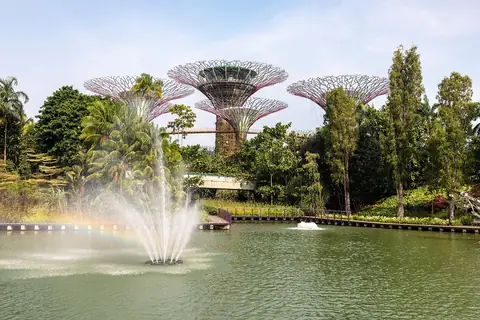
Two nights at Marina Bay: Supertrees, Flower Dome and Cloud Forest, SkyPark, the waterfront loop, the free shows, hawker dinners and a budget for two.
Read the guide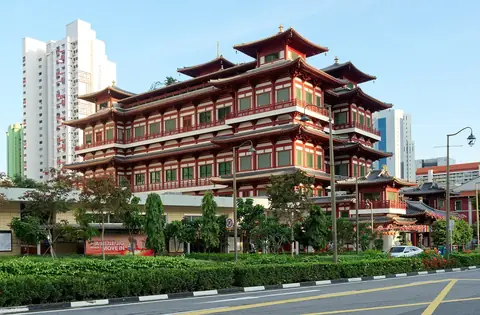
Chinatown
Chinatown in half a day: Buddha Tooth Relic Temple, Sri Mariamman, Thian Hock Keng, the S$25 Heritage Centre, Maxwell and Chinatown Complex, with a dated cost for two.
Read the guide
Where to stay in Singapore
Marina Bay, City Hall, Chinatown, Little India, Orchard, the quays, Sentosa, Katong or Changi: who each area suits, its MRT line and dated room rates.
Read the guide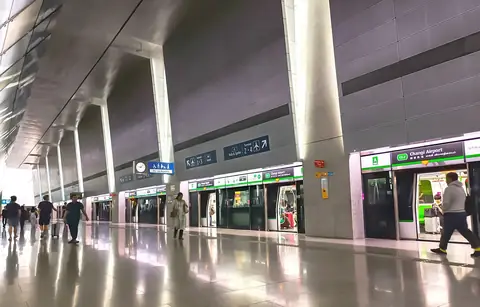
Getting around Singapore
Changi to the city, the six MRT lines, fares and the Tourist Pass, taxis, Sentosa, Pulau Ubin and Batam boats, the train to Johor Bahru and a budget for two.
Read the guide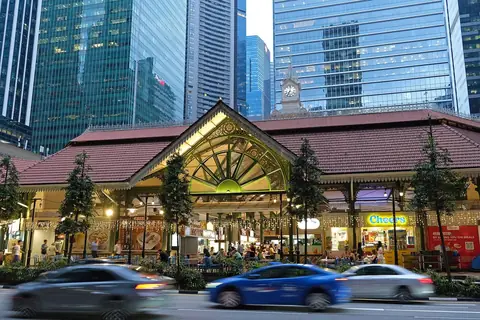
Singapore hawker food
Nine Singapore hawker centres with MRT stations and stall hours, ten classic dishes, tray, seat and payment rules, and a dated food budget for two.
Read the guide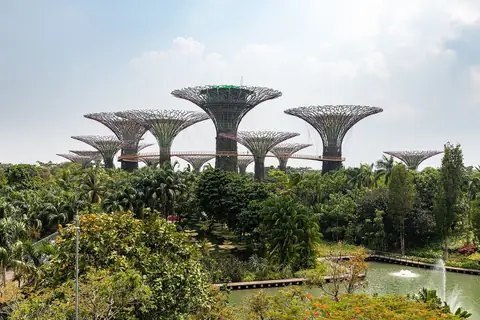
Singapore in 3 days
Two nights in one Chinatown hotel: Kampong Gelam and Little India, Gardens by the Bay and the river, Chinatown's temples, with tickets, food and a budget for two.
Read the guideSources and checks before you travel
(47)
- Singapore Tourism Board: Civic District ↗ — opens in a new tab
- Singapore Tourism Board: Singapore River ↗ — opens in a new tab
- Singapore Tourism Board: Merlion Park ↗ — opens in a new tab
- National Heritage Board (Roots): Singapore River Bridges ↗ — opens in a new tab
- National Heritage Board (Roots): Singapore River Walk map ↗ — opens in a new tab
- Government of Singapore (SG101): Coleman Bridge ↗ — opens in a new tab
- National Heritage Board (Roots): The Padang ↗ — opens in a new tab
- National Heritage Board (Roots): Victoria Theatre and Victoria Concert Hall ↗ — opens in a new tab
- National Heritage Board (Roots): Statue of Sir Stamford Raffles at the Singapore River ↗ — opens in a new tab
- National Heritage Board (Roots): Former Parliament House ↗ — opens in a new tab
- National Heritage Board (Roots): Civic District Heritage Trail ↗ — opens in a new tab
- National Heritage Board (Roots): Fort Canning Park ↗ — opens in a new tab
- National Parks Board: Fort Canning Park ↗ — opens in a new tab
- National Heritage Board (Roots): National Museum of Singapore ↗ — opens in a new tab
- National Museum of Singapore: Admissions & Opening Hours ↗ — opens in a new tab
- National Museum of Singapore: home page ↗ — opens in a new tab
- National Gallery Singapore: Visitor Information ↗ — opens in a new tab
- Asian Civilisations Museum: admissions ↗ — opens in a new tab
- Asian Civilisations Museum: plan your visit ↗ — opens in a new tab
- Asian Civilisations Museum: home page ↗ — opens in a new tab
- Asian Civilisations Museum: Tang Shipwreck gallery ↗ — opens in a new tab
- Peranakan Museum: plan your visit ↗ — opens in a new tab
- Urban Redevelopment Authority: Boat Quay Conservation Area ↗ — opens in a new tab
- Urban Redevelopment Authority: Clarke Quay Conservation Area ↗ — opens in a new tab
- Singapore River Cruise: River Cruise ↗ — opens in a new tab
- Lau Pa Sat: Satay Street ↗ — opens in a new tab
- Lau Pa Sat: home page ↗ — opens in a new tab
- Ya Kun Kaya Toast: The Ya Kun Story ↗ — opens in a new tab
- Ya Kun Kaya Toast: find us ↗ — opens in a new tab
- Song Fa Bak Kut Teh: outlets ↗ — opens in a new tab
- Song Fa Bak Kut Teh: about us ↗ — opens in a new tab
- National Kitchen by Violet Oon: location and hours ↗ — opens in a new tab
- National Kitchen by Violet Oon: menu (29 September 2025) ↗ — opens in a new tab
- Singapore Tourism Board: Katong and Joo Chiat ↗ — opens in a new tab
- Singapore Tourism Board: local food and drinks ↗ — opens in a new tab
- SingStat: Hotel Statistics, Monthly (data from the Singapore Tourism Board) ↗ — opens in a new tab
- SingStat: Average Retail Prices of Selected Consumer Items, Monthly ↗ — opens in a new tab
- Changi Airport Group: Leaving Changi Airport ↗ — opens in a new tab
- Land Transport Authority: TELe and CRL to Changi Airport (25 July 2025) ↗ — opens in a new tab
- SimplyGo: Adult fares ↗ — opens in a new tab
- SimplyGo: FAQs on contactless bank cards ↗ — opens in a new tab
- Public Transport Council: Outcome of Fare Review Exercise 2026 ↗ — opens in a new tab
- Meteorological Service Singapore: climate of Singapore ↗ — opens in a new tab
- Singapore Land Authority: OneMap ↗ — opens in a new tab
- StarHub: tourist SIM ↗ — opens in a new tab
- Cathay Pacific: London to Singapore fares ↗ — opens in a new tab
- KAYAK Singapore: Grand Park City Hall ↗ — opens in a new tab
Reference sources for the version dated 26 October 2026. Confirm opening times, access, transport and conditions for your travel dates.
Photo credits
(5)
The Asian Civilisations Museum occupies the historic Empress Place Building beside the Singapore River.
Photograph: Jnzl's Photos — opens in a new tab · CC BY 2.0 — opens in a new tab
Changes: Resized and converted to WebP; displayed with responsive crops. · Original photograph and licence details ↗ — opens in a new tab
The pale green façade of the Peranakan Museum, with white arches, palms and banners.
Photograph: Diego Delso — opens in a new tab · CC BY-SA 4.0 — opens in a new tab
Changes: Resized and converted to WebP; displayed with responsive crops. · Original photograph and licence details ↗ — opens in a new tab
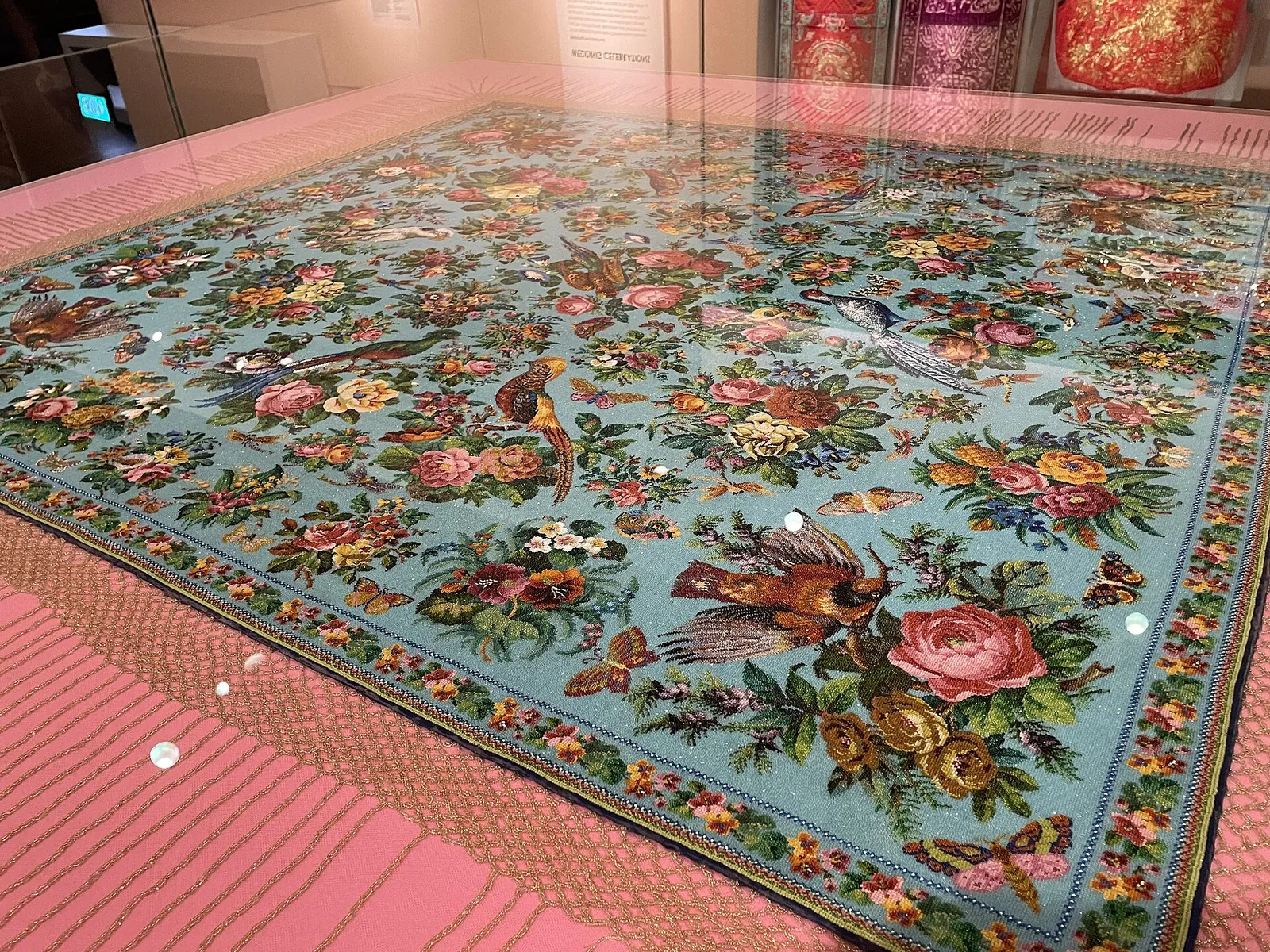
A richly patterned textile on display in the Peranakan Museum.
Photograph: Sgconlaw — opens in a new tab · CC BY-SA 4.0 — opens in a new tab
Changes: Resized and converted to WebP; displayed with responsive crops. · Original photograph and licence details ↗ — opens in a new tab
A passenger boat on the Singapore River, photographed near Raffles Place.
Photograph: LN9267 — opens in a new tab · CC BY-SA 4.0 — opens in a new tab
Changes: Resized and converted to WebP; displayed with responsive crops. · Original photograph and licence details ↗ — opens in a new tab
Colourful buildings form part of the riverside dining and nightlife area at Clarke Quay.
Photograph: LN9267 — opens in a new tab · CC BY-SA 4.0 — opens in a new tab
Changes: Resized and converted to WebP; displayed with responsive crops. · Original photograph and licence details ↗ — opens in a new tab