Plan your trip · Central Region
Singapore entry requirements: visa-free stays, SG Arrival Card, customs
Getting into Singapore is quick for most readers of this guide: no visa, an online arrival card that costs nothing, and automated gates at Changi. What trips people up is the detail. The number of days you get is decided at the border, not printed on a website; paid "arrival card" sites charge for a free form; and some everyday things, from vapes to a duty-free bottle bought in Malaysia, are treated far more strictly than at home.

- Suggested time
- The stay is set by the immigration officer and shown on your e-Pass; foreign ministries usually quote 30 to 90 days, depending on nationality. ICA can extend it if you apply online in the last 14 days.
- Where to stay
- Most visitors arrive at Changi; the same rules apply at Woodlands and Tuas if you come overland from Malaysia, and at the ferry terminals.
- Season and timing
- Entry rules do not change with the seasons, but Changi's passenger charges rise on 1 April 2027, and the land checkpoints are very busy in school holidays.
The short answer
UK, Irish, EU, Swiss, Norwegian, US, Canadian, Australian, New Zealand and Brazilian passport holders need no visa for a short visit to Singapore. The officer decides how long you may stay, and the e-Pass emailed to you after immigration shows your last day; foreign ministries usually quote between 30 and 90 days, depending on nationality. Your passport needs 6 months' validity, and you submit the free SG Arrival Card within 3 days before arrival, including the arrival day, on ICA's website or the MyICA app. Vapes are banned, and alcohol bought in Malaysia gets no duty-free allowance.
Who can visit without a visa, and for how long
Singapore's Immigration & Checkpoints Authority (ICA) publishes the list of passports that need a visa. The UK, Ireland, the EU countries, Switzerland, Norway, the US, Canada, Australia, New Zealand and Brazil are not on it, so their ordinary passport holders can visit without one. That is not a promise of entry: an ICA officer still clears you at the border.
There is no fixed number of days by nationality. The officer decides, and the e-Pass you receive by email after immigration states how long you may stay; it is the only figure that counts. Foreign ministries give a guide to what is usual:
- UK: normally 30 to 90 days.
- Ireland, Canada and Brazil: up to 30 days, according to their foreign ministries.
- US and New Zealand: up to 90 days.
- Germany, Austria, France, the Netherlands, Denmark, Czechia, Hungary, Poland, Portugal, Sweden, Norway and Switzerland: up to 90 days, according to their foreign ministries; Italy says less than 90 days.
- Australia, Spain, Finland, Belgium and Romania: no visa needed; go by the number of days on your e-Pass.
Staying longer, and what a visit pass does not cover
If you want to stay beyond the date on your e-Pass, you can apply to ICA online once your short-term visit pass has 14 days or less left. ICA decides whether to extend it and for how long, so do not book a later flight until it agrees.
A visit pass does not allow work, paid or unpaid, or running a business in Singapore, unless you hold a work pass or the activity is on the official list of work-pass-exempt activities.
Passport and what to carry
Your passport must be valid for at least 6 months when you arrive. Every traveller, children included, needs their own travel document; group (collective) passports are not accepted. ICA does not set a number of blank pages, because the visit pass is now sent digitally rather than stamped.
ICA asks short-term visitors to carry enough money for the stay and proof of onward travel, meaning a ticket out and any visa you need for the next country. It names no fixed cash amount and does not ask for a paid hotel booking; your address in Singapore goes on the arrival card.
If you have been in a country with a risk of yellow fever in the 6 days before arrival, including an airport transit of more than 12 hours there, you need a yellow fever vaccination certificate.
The SG Arrival Card and the automated gates
Every foreign visitor submits the SG Arrival Card (SGAC), which includes a health declaration, whether arriving by air, by sea or overland. Submit it within 3 days before arrival, counting the arrival day: for a 30 June arrival, ICA's own example allows it from 28 June. It is not a visa.
The SGAC is free. Use only ICA's SGAC e-Service (eservices.ica.gov.sg/sgarrivalcard) or the MyICA Mobile app; ICA says paid commercial services that offer to file it for you are not affiliated with it. Passengers who transit or transfer at Changi without passing through immigration do not file one.
At the airport, foreign visitors aged 6 and over with an ICAO-compliant passport (an e-passport) valid for at least 6 months can use the automated immigration lanes, whatever their nationality and without enrolling first. Then collect your bags and walk through Customs.
Medicines, vapes and chewing gum
Singapore's Health Sciences Authority (HSA) lets visitors bring in up to 3 months' supply of personal medicine without approval, provided the medicine does not need approval and is not prohibited. Carry the prescription or a doctor's letter and keep the medicine in its original pharmacy-labelled packaging. Medicines with controlled substances need HSA approval first: apply at least two weeks before you arrive. Passengers staying airside in transit need no approval, but prohibited medicines remain prohibited.
Vapes are banned. E-cigarettes, vaporisers and their parts cannot be brought into Singapore. Since 1 May 2026 the maximum fine for buying, using or possessing one is S$10,000, up from S$2,000, and importing them can mean prison. Do not pack one, even to pass straight through.
Chewing gum cannot be imported either, except dental or medicinal gum approved by HSA.
Customs: alcohol, cigarettes and cash
Visitors aged 18 or over who have spent at least 48 hours outside Singapore can bring in one of these duty-free alcohol combinations for their own use, but not if they are arriving from Malaysia. Clearing Malaysian immigration on the way, for example on a bus or the train from Johor Bahru, counts as arriving from Malaysia.
- 1 litre of spirits and 1 litre of wine
- 1 litre of spirits and 1 litre of beer
- 1 litre of wine and 1 litre of beer
- 2 litres of wine
- 2 litres of beer
Cigarettes, cash and airport charges
There is no duty-free allowance for cigarettes or tobacco: you pay duty and GST on every pack, even Singapore duty-paid cigarettes you are bringing back. Declare cash and bearer instruments (such as traveller's cheques) worth more than S$20,000 in total when you enter or leave; this is a reporting rule, not a limit on what you may carry.
Singapore charges no separate arrival or departure fee at the counter. Changi's passenger charges are built into your ticket price: for a flight leaving Singapore they come to S$65.20 until 31 March 2027 and S$70.20 from 1 April 2027 (the passenger service and security fee, the aviation levy and the airport development levy). Passengers who only connect at Changi pay less.
Arriving overland or by sea
From Malaysia you cross at Woodlands (the Causeway, also used by the Shuttle Tebrau train from Johor Bahru) or Tuas (the Second Link). The SG Arrival Card applies here too. Bus and car passengers can usually clear immigration with the QR code in the MyICA app, but first-time visitors and anyone using a different passport from their last visit show the passport instead.
The land checkpoints get very congested in school holidays; ICA warned of heavy traffic at both for the September 2026 break. The new RTS Link train between Johor Bahru and Woodlands is not yet carrying passengers: Malaysia and Singapore say service is expected in February 2027, subject to safety certification and final approvals.
Leaving Singapore for Malaysia, you will need Malaysia's own arrival card (MDAC); see Malaysia entry requirements.
Practical questions
Do I need a visa for Singapore?
Not for a short visit if you hold an ordinary UK, Irish, EU, Swiss, Norwegian, US, Canadian, Australian, New Zealand or Brazilian passport; none of these is on ICA's visa-required list. An ICA officer still decides whether to admit you.
How many days can I stay in Singapore?
As many as the e-Pass you are emailed after immigration says. There is no fixed number by nationality; foreign ministries usually quote up to 30 days (Ireland, Canada, Brazil) or up to 90 days (the US, New Zealand and most European countries), and the UK says 30 to 90 days.
Is the SG Arrival Card free?
Yes. Submit it within 3 days before arrival, including the arrival day, on ICA's SGAC e-Service or the MyICA Mobile app. Websites that charge for it are not run by ICA.
Can I bring my vape to Singapore?
No. Vapes and their parts are prohibited imports, and since 1 May 2026 the fine for possessing one can reach S$10,000.
Can I bring duty-free alcohol from Malaysia?
No. The duty-free alcohol allowance does not apply to anyone arriving from Malaysia, including by train or bus from Johor Bahru. Cigarettes never have a duty-free allowance.
Do I pay a departure tax at Changi?
Not at the airport. The passenger charges, S$65.20 for a departing passenger until 31 March 2027 and S$70.20 from 1 April 2027, are included in the ticket price.
Sources and checks before you travel
Reference sources for the version dated 22 October 2026. Confirm opening times, access, transport and conditions for your travel dates.
- ICA: visa requirements ↗ — opens in a new tab
- ICA: entering Singapore ↗ — opens in a new tab
- Ask Gov: how long can I stay in Singapore ↗ — opens in a new tab
- ICA: extending your stay ↗ — opens in a new tab
- ICA: SG Arrival Card ↗ — opens in a new tab
- ICA: automated lanes ↗ — opens in a new tab
- ICA: QR code clearance at Woodlands and Tuas ↗ — opens in a new tab
- ICA: heavy traffic at land checkpoints ↗ — opens in a new tab
- ICA: cash and bearer negotiable instruments ↗ — opens in a new tab
- Singapore Customs: duty-free concession and GST relief ↗ — opens in a new tab
- Singapore Customs: controlled and prohibited goods ↗ — opens in a new tab
- Gov.sg: Tobacco and Vaporisers Control Act ↗ — opens in a new tab
- HSA: travelling with personal medications ↗ — opens in a new tab
- Changi Airport Group: airport charges annex ↗ — opens in a new tab
- CAAS: airport development levy ↗ — opens in a new tab
- Changi Airport: arriving ↗ — opens in a new tab
- Changi Airport: leaving the airport ↗ — opens in a new tab
- LTA: RTS Link service targeted for February 2027 ↗ — opens in a new tab
- GOV.UK: Singapore entry requirements ↗ — opens in a new tab
- Department of Foreign Affairs (Ireland): Singapore ↗ — opens in a new tab
- US Department of State: Singapore ↗ — opens in a new tab
- Government of Canada: Singapore ↗ — opens in a new tab
- New Zealand MFAT: Singapore ↗ — opens in a new tab
- Federal Foreign Office (Germany): Singapore ↗ — opens in a new tab
- French Ministry of Foreign Affairs: Singapore ↗ — opens in a new tab
- Embassy of Italy in Singapore: entry rules ↗ — opens in a new tab
- Singapore MFA: joint statement with Brazil, May 2018 ↗ — opens in a new tab
- Embassy of Sweden in Singapore: visa FAQ ↗ — opens in a new tab
- Swiss Business Hub Singapore: business guide 2025 ↗ — opens in a new tab
Photo credits
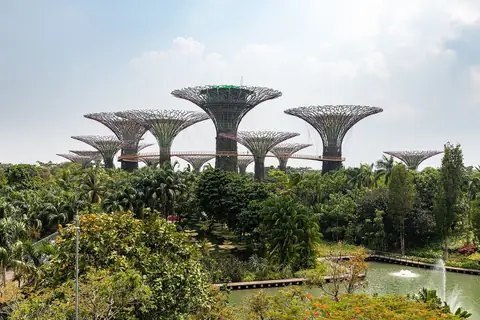
Jewel, the garden and shopping dome beside Changi's terminals.
Photograph: Takeshi Aida from Hong Kong, Hong Kong — opens in a new tab · CC BY-SA 2.0 — opens in a new tab
Changes: Resized and converted to WebP; displayed with responsive crops. · Original photograph and licence details ↗ — opens in a new tab
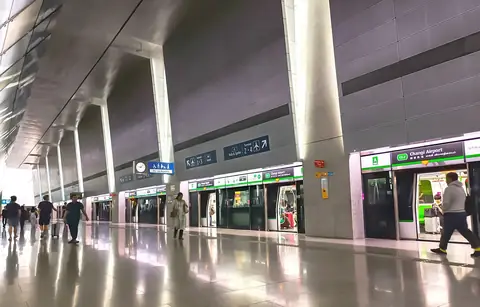
Changi Airport MRT station, the start of the train ride into the city.
Photograph: Sharon Hahn Darlin — opens in a new tab · CC BY 2.0 — opens in a new tab
Changes: Resized and converted to WebP; displayed with responsive crops. · Original photograph and licence details ↗ — opens in a new tab
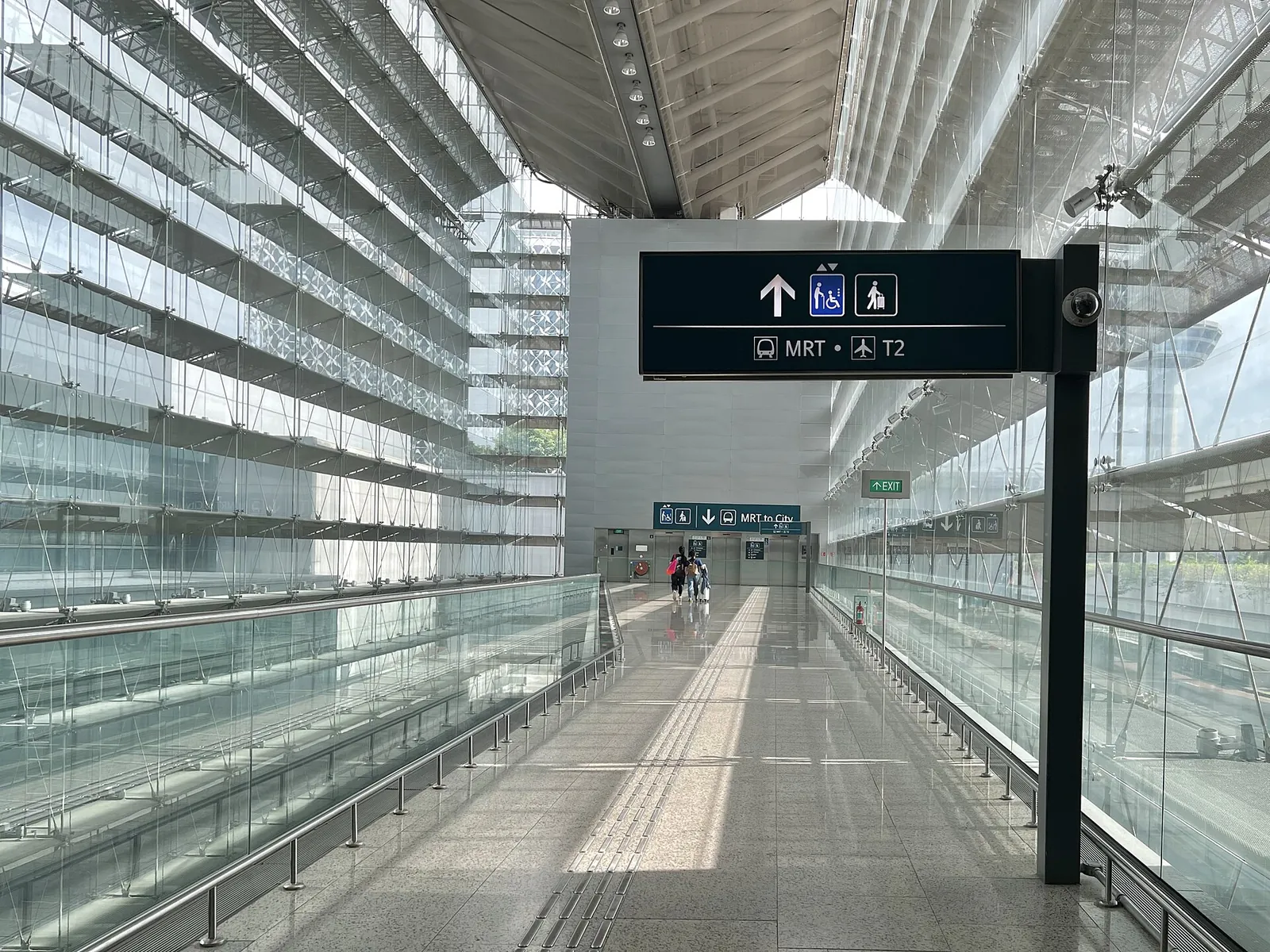
Signs at Changi point the way to the MRT.
Photograph: Sharon Hahn Darlin — opens in a new tab · CC BY 2.0 — opens in a new tab
Changes: Resized and converted to WebP; displayed with responsive crops. · Original photograph and licence details ↗ — opens in a new tab
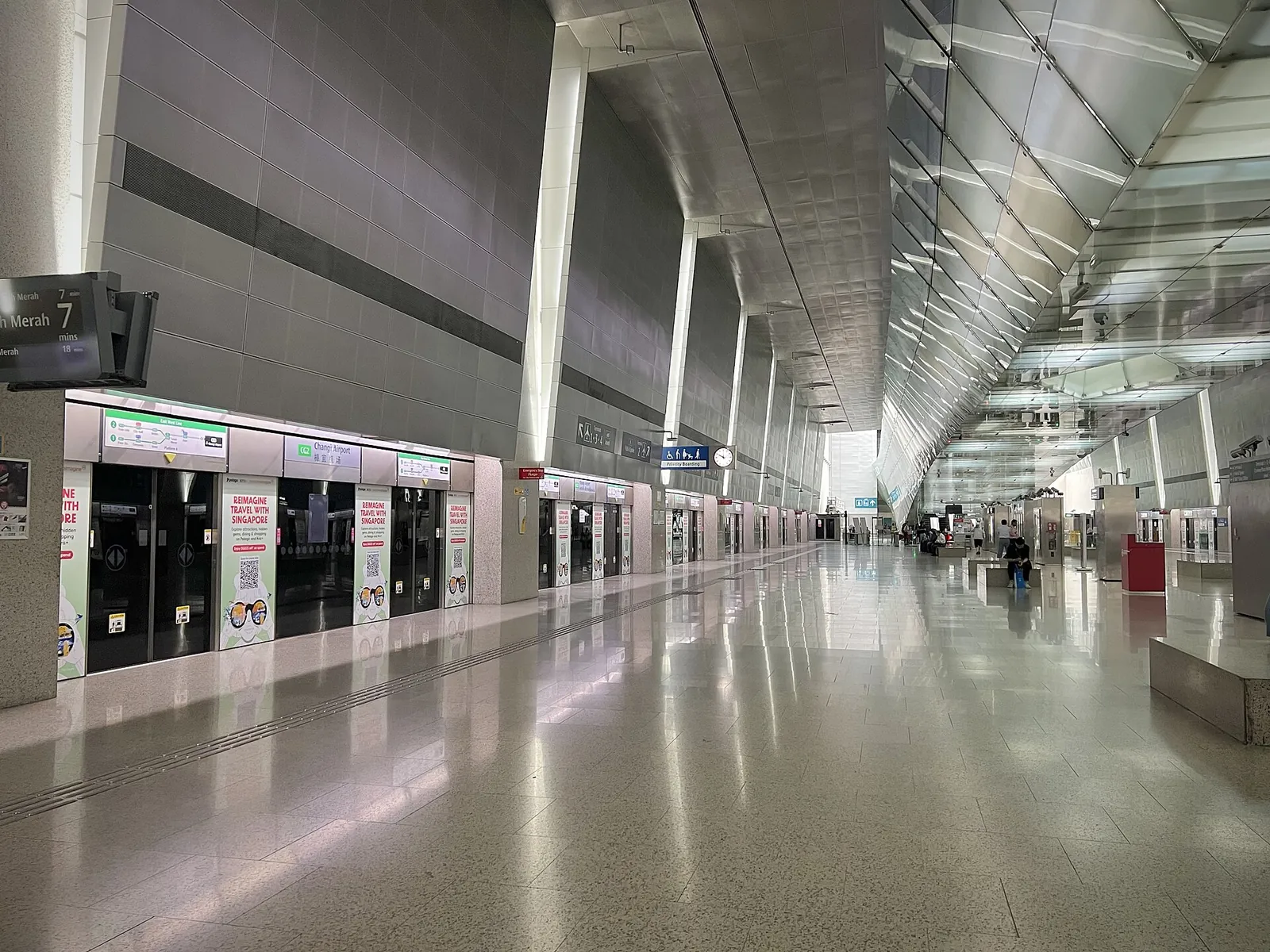
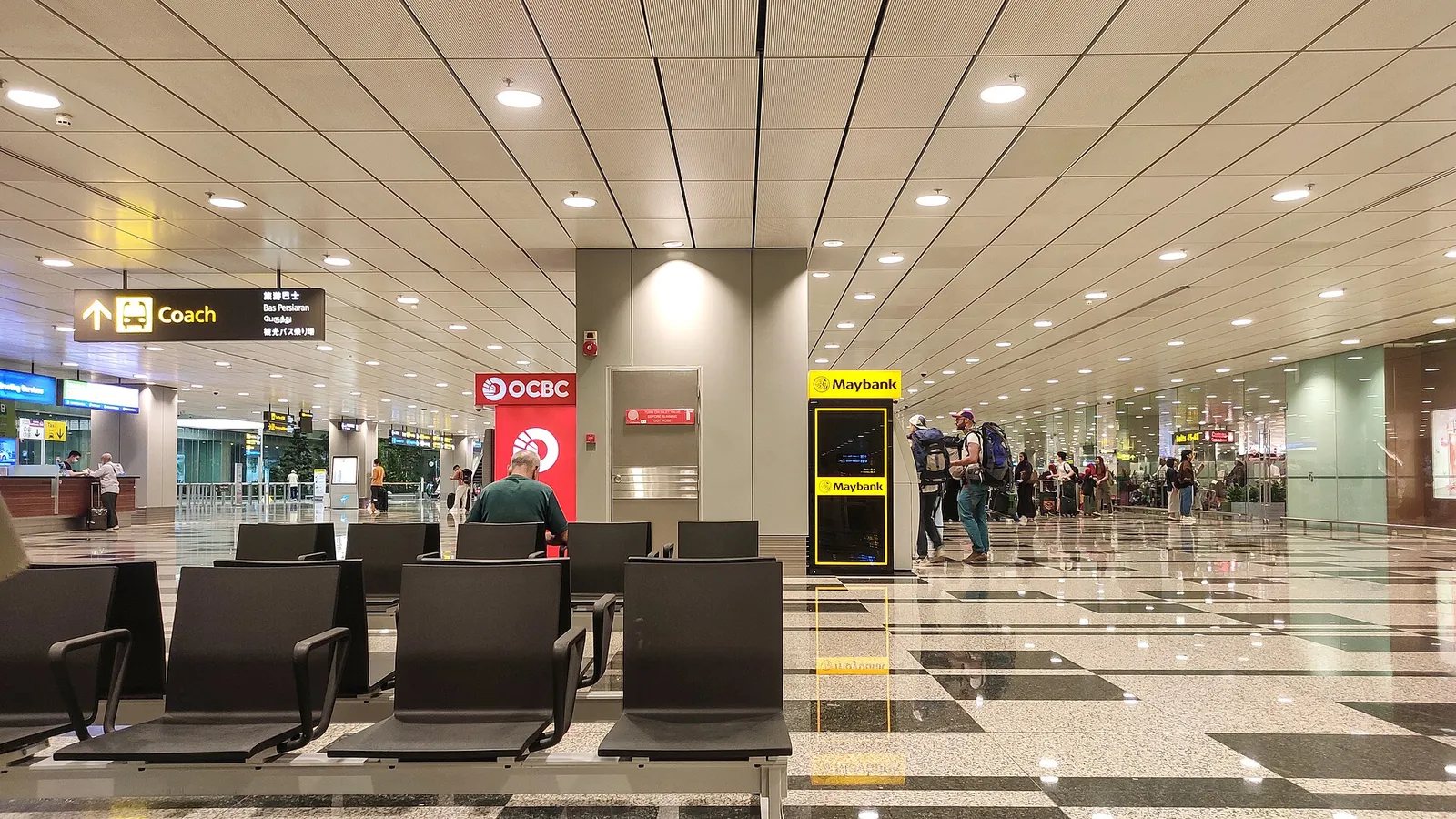
A quiet hall at Changi Airport.
Photograph: Moheen Reeyad — opens in a new tab · CC BY-SA 4.0 — opens in a new tab
Changes: Resized and converted to WebP; displayed with responsive crops. · Original photograph and licence details ↗ — opens in a new tab