Plan your trip · Singapore
Singapore hawker food: centres, dishes and how to plan
Singapore's hawker centres are shared dining spaces, not a single market or one fixed menu. The useful choice is where a centre fits into the day: Maxwell with Chinatown, Lau Pa Sat after the Civic District, Tekka while exploring Little India, or an eastern centre when the trip reaches Katong. A little structure lets you try several dishes without reducing every meal to a race between famous stalls.
- Suggested time
- Two or three unhurried hawker meals across a 3-night or longer stay
- Where to stay
- Chinatown or City Hall for the broadest first-trip food route; Bugis for heritage neighbourhoods
- Season and timing
- Hawker meals work year-round; pair exposed walks with an indoor alternative during heavy rain
The short answer
Give Singapore at least three nights in one central base, then plan two hawker meals around neighbourhoods you already intend to visit. Start with Maxwell or Chinatown Complex for a Chinatown day, use Lau Pa Sat and evening satay after the Civic District, and save an eastern centre for Katong. Share dishes when practical, ask each stall about dietary needs, and leave enough time for a proper meal instead of treating the centre as a checklist.
Choose centres by neighbourhood, not by fame alone
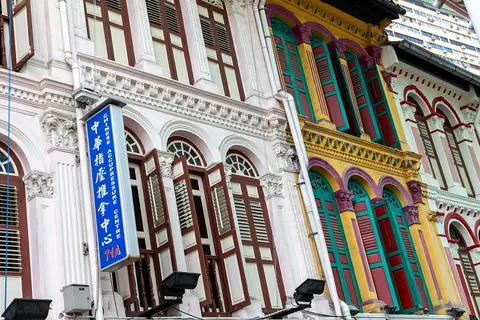
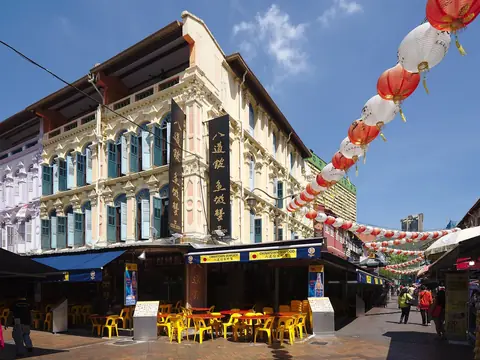
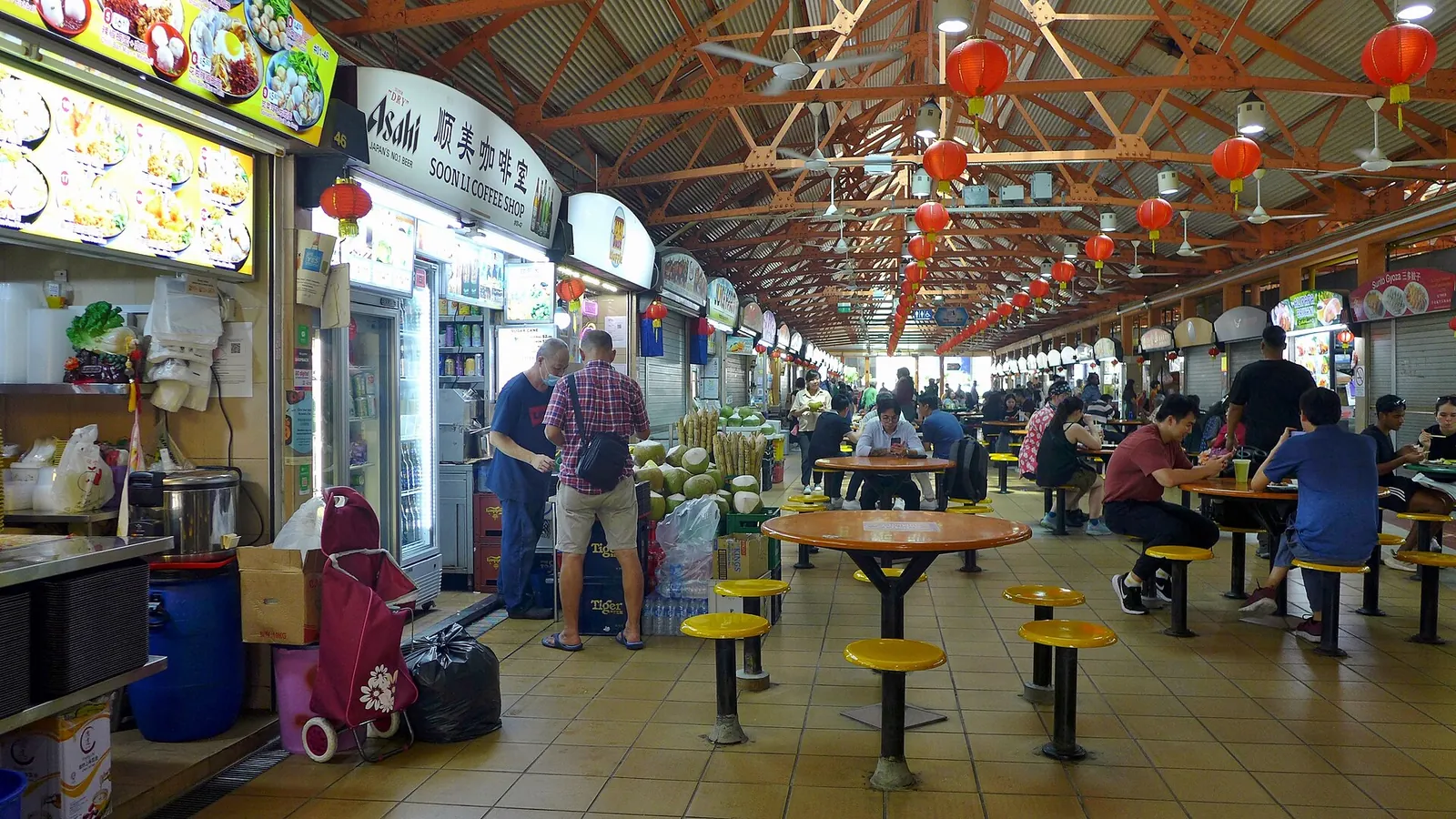
A first food plan works best when every centre belongs to the surrounding day. Maxwell Food Centre and Chinatown Complex sit naturally inside a Chinatown visit; the Singapore Tourism Board associates Maxwell with chicken rice and presents Chinatown Complex as a place with food from several cuisines. Neither requires a separate cross-city expedition when the temples, heritage centre and shophouse streets are already on the itinerary.
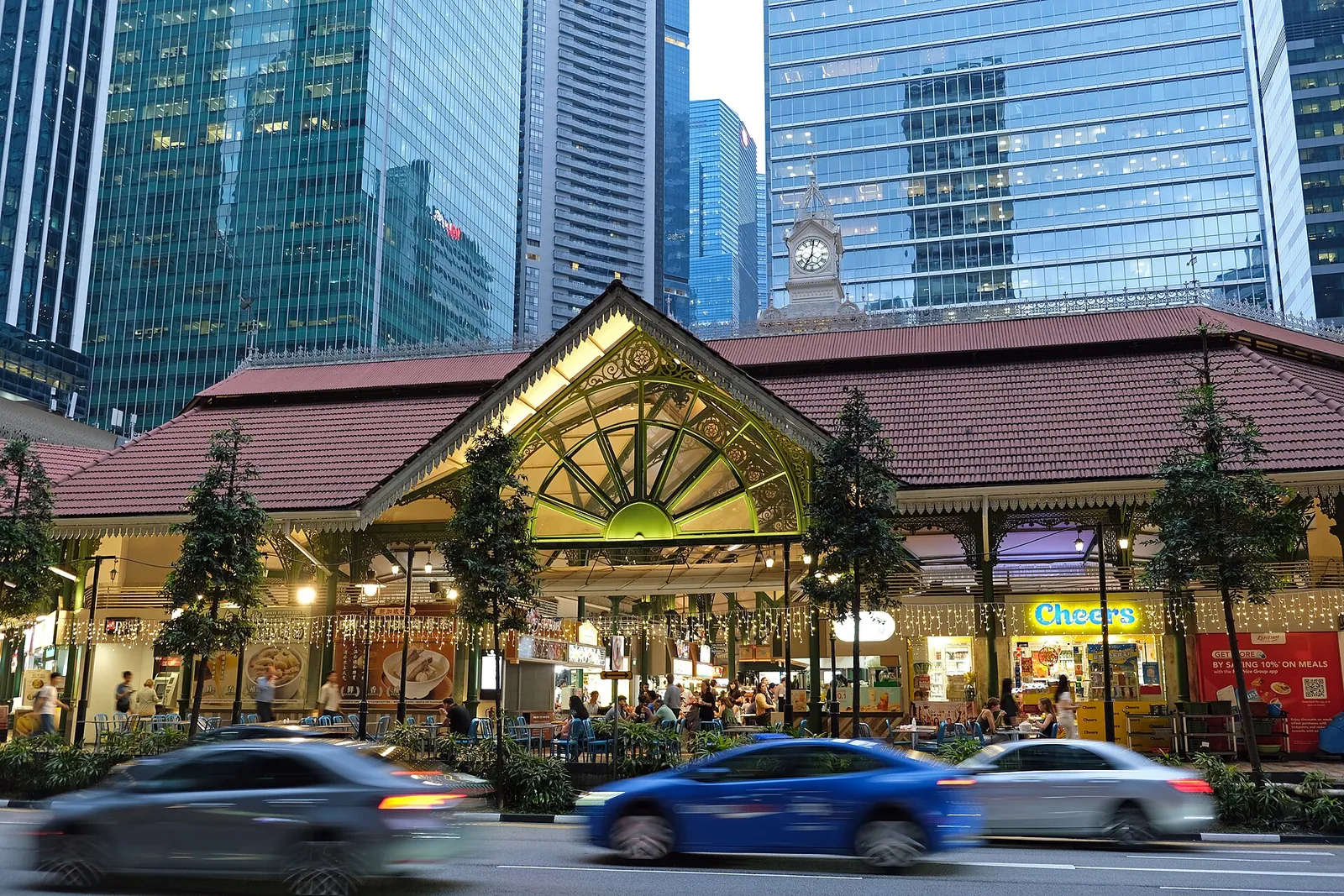
After the Civic District or river, continue into the central business district for Lau Pa Sat, which is a separate walk from the museums. The tourism board specifically links the adjacent stretch of Boon Tat Street with evening satay. Tekka Centre belongs with Little India, while Old Airport Road Food Centre makes more sense on an eastern day. Let that geography shape the meal instead of making a cross-city journey for every centre.
Build one meal around contrasts
Walk the centre once before ordering, then combine dishes with different textures and weight: perhaps chicken rice followed by a shared plate of char kway teow, or roti prata before a lighter second stop. The National Heritage Board describes hawker centres as places with many food and drink stalls around common seating, so a group can split up, order different dishes and meet at one table.
Do not plan five full portions because five dishes sound essential. One substantial main, one shared plate and a drink is a better first meal; return elsewhere for the dishes that suit breakfast or supper. This pacing also leaves room for a neighbourhood pastry, coffee or dessert without turning the day into continuous eating.
Use four areas for four different food outings
Chinatown is the easiest introduction: Maxwell, Chinatown Complex and traditional pastry shops can sit within the same walking route. Little India changes the meal completely, with Tekka Centre and nearby South Indian food; the tourism board specifically identifies fish head curry, dum biryani and vegetarian South Indian fare in its neighbourhood guide.
Kampong Gelam suits a Malay-led meal around nasi padang, beef rendang, mee soto or nasi lemak, with Bugis MRT as the practical rail approach. Katong and Joo Chiat is the more deliberate eastern outing for Katong laksa, popiah, Nyonya kueh and Peranakan dishes. Choose two of these areas on a short trip to give the meals a different character.
Know what is inside the headline dishes
Names alone rarely answer a dietary question. The tourism board's Katong guide describes laksa with coconut milk, cockles, prawns and fishcake, while the National Heritage Board describes roti prata as flatbread made with stretched dough and ghee. Those examples make seafood and dairy useful questions to raise, but they are not a complete ingredient list for every stall's version.
Halal signs and vegetarian labels should be read at the individual stall. The Chinatown guide says Maxwell and Chinatown Complex include halal options, and the Little India guide says Tekka includes halal choices; that guidance does not certify every stall. Ask about broth, sauces, cooking fat and shared utensils when an allergy or religious requirement affects the meal.
Make time for the local food
What to eat and where to look
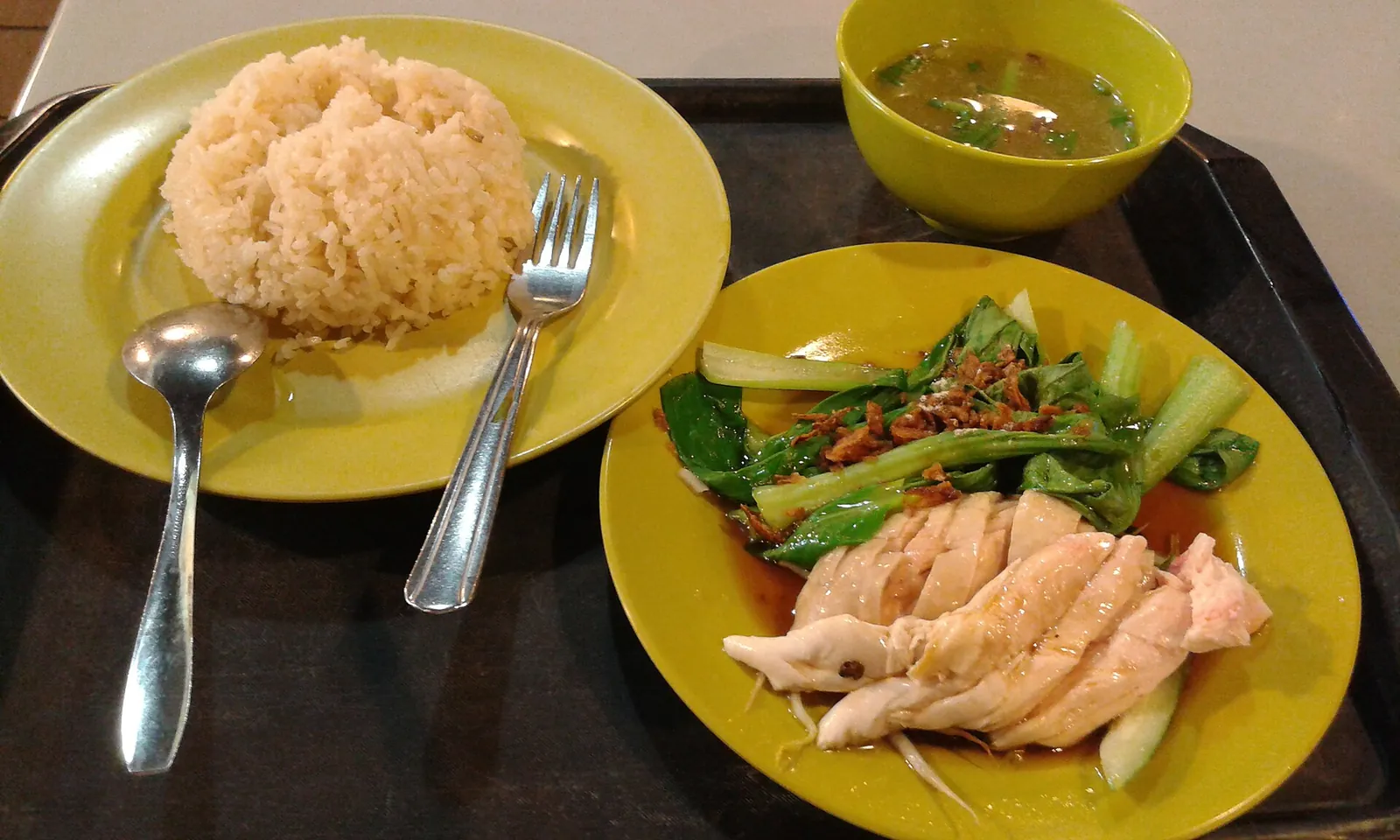
Chicken rice
Chicken served with rice makes a straightforward main for a first hawker meal. Build lunch around one plate and leave room for a smaller second dish.
- Where to look
- Maxwell Food Centre during a Chinatown visit; the official neighbourhood guide explicitly connects the centre with chicken rice.
- Fit it into your day
- Make it the main plate at lunch, then share a smaller second dish instead of ordering another full rice meal.
Ask the stall about stock, sauces and preparation if an allergy or dietary restriction matters.
Char kway teow
Stir-fried flat noodles, identified by the National Heritage Board as an iconic hawker dish. They provide a noodle course for a shared meal.
- Where to look
- A mixed hawker centre such as Chinatown Complex or Old Airport Road Food Centre.
- Fit it into your day
- Share one plate after a lighter first dish so the noodles do not end the tasting too early.
Ask specifically about pork, seafood, sauces and cooking fat; the dish name does not give a complete ingredient list.
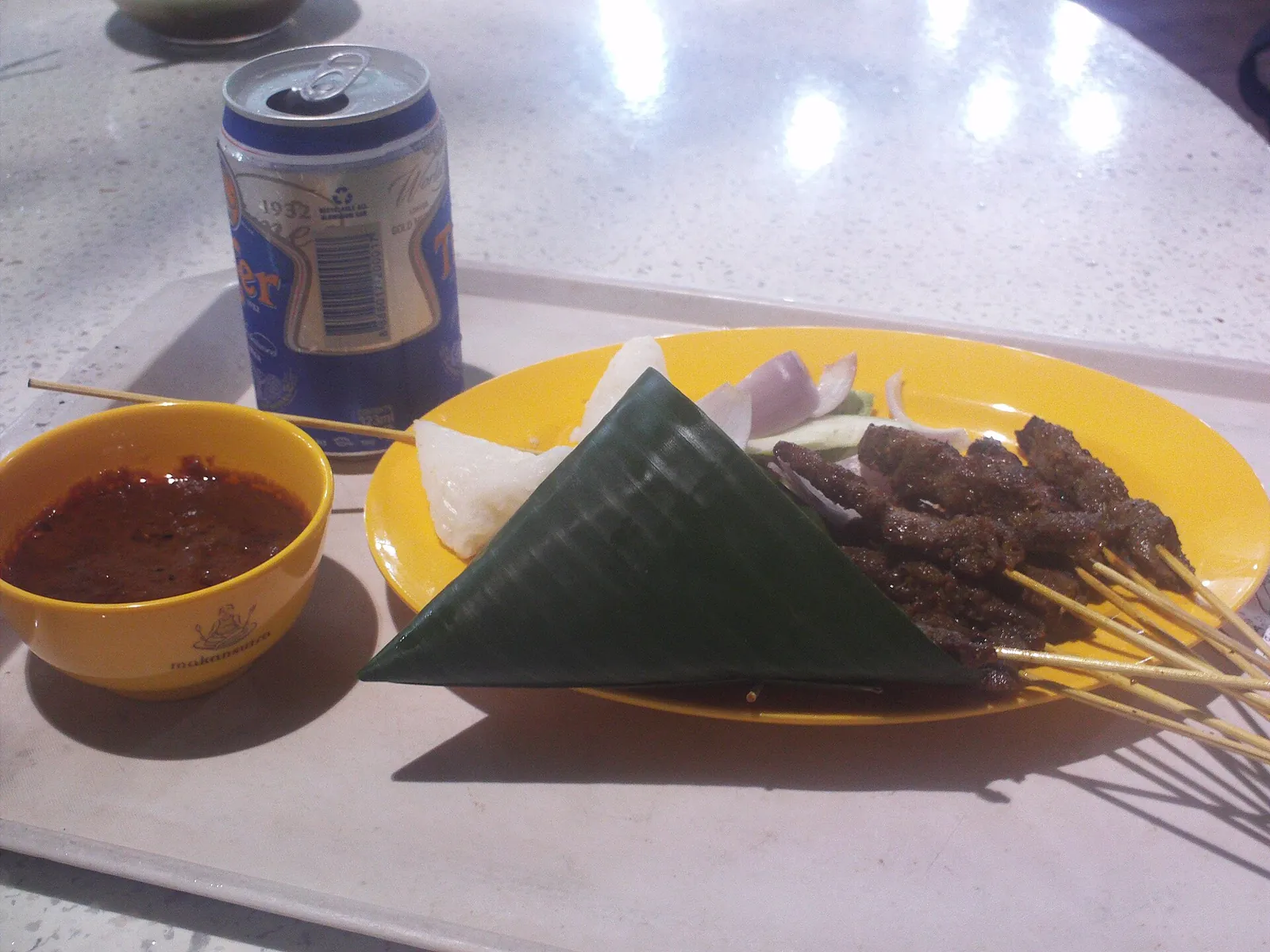
Satay
Skewered meat that works well as a shared order, with the evening meal built around several skewers instead of one large main.
- Where to look
- Boon Tat Street beside Lau Pa Sat in the evening, as highlighted in the official Civic District guide.
- Fit it into your day
- Use it as a shared dinner course after a Civic District or Singapore River walk.
Ask about the sauce and grill handling when peanuts, other allergens or dietary separation are important.
Katong laksa
A spicy noodle soup with coconut-milk broth; the tourism board's Katong description includes cockles, prawns and fishcake and notes that the Katong version is eaten with a spoon.
- Where to look
- Katong and Joo Chiat as part of an eastern heritage-and-food outing.
- Fit it into your day
- Choose it as the main meal before an unhurried shophouse walk, not as one of several full noodle bowls.
Seafood and coconut are central to common versions; ask the stall about the broth and toppings.
Roti prata
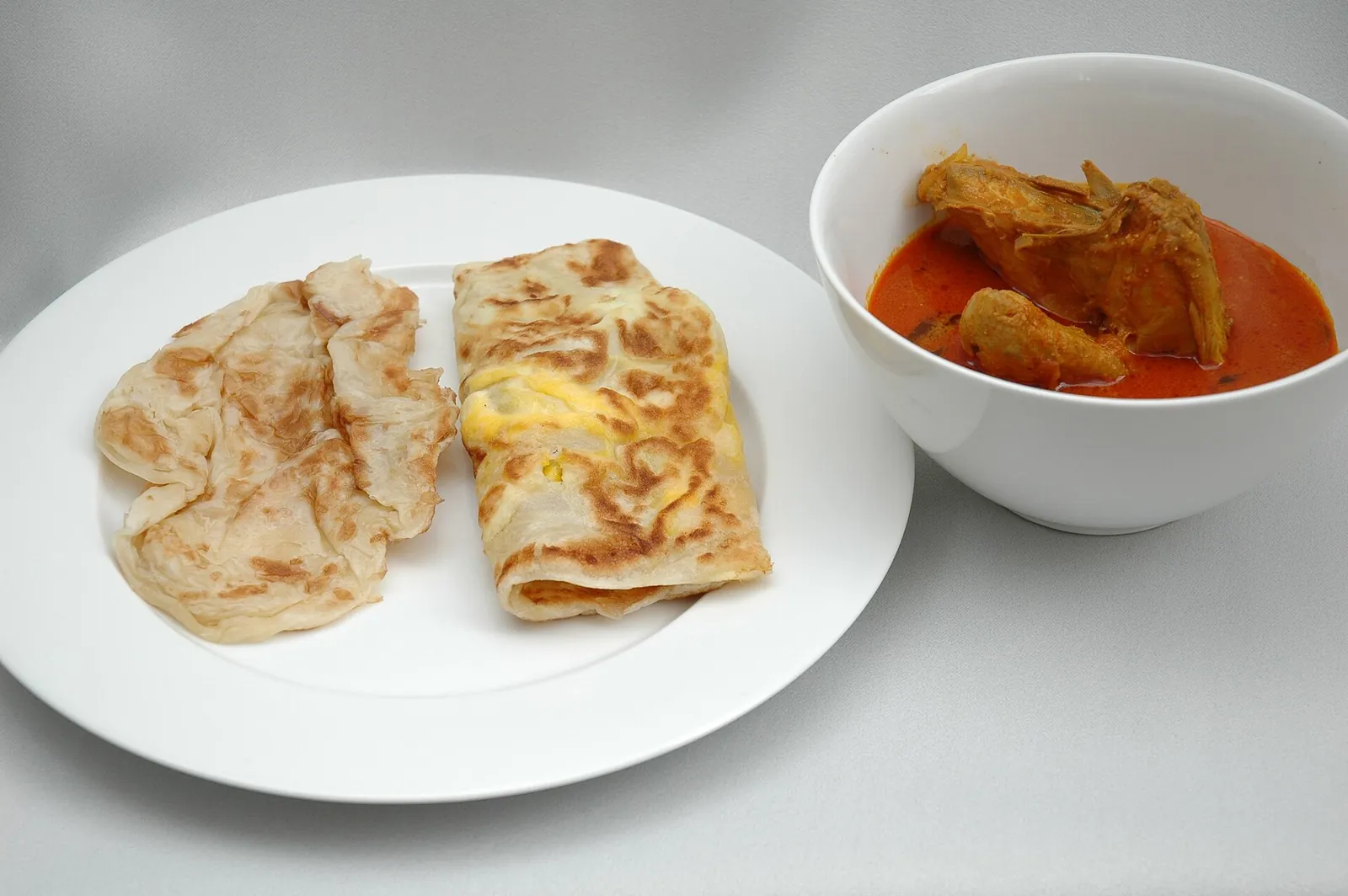
Flatbread made from stretched dough and ghee, as described by the National Heritage Board. It provides a different starting point from another full rice or noodle plate.
- Where to look
- Tekka Centre and the surrounding Little India food area.
- Fit it into your day
- Use a plain prata as breakfast or a lighter first stop before choosing a larger curry or rice dish.
Ask about wheat, dairy, egg, cooking fat and shared surfaces when an allergy or dietary restriction matters.
Treat hawker culture as more than a list of dishes
The National Environment Agency calls hawker centres Singapore's community dining rooms and records the inscription of Hawker Culture in Singapore on UNESCO's Representative List on 16 December 2020. The National Heritage Board describes the culture as a meeting of Chinese, Malay, Indian and other traditions, with diners from different backgrounds sharing tables.
That context changes how to plan the visit. Make time to sit, eat and observe the centre as a working communal space; do not hold a table for a long photo session or expect every stall to explain a national food history during a queue. A guided outing can add cultural interpretation, but an independent meal remains straightforward when it is anchored to the surrounding neighbourhood.
Keep changing details out of the fixed itinerary
Stall opening days differ, and centres publish scheduled closures. Consult the NEA's official hawker-centre closure calendar and the named centre's current information close to the meal instead of building the whole day around one stall schedule.
A strong plan survives a closed stall because the centre and neighbourhood offer alternatives. Fix the district and meal window, keep two dish ideas in mind, and let the exact order respond to what is visibly open and suitable when you arrive.
For the hotel, choose Chinatown when Maxwell and Chinatown Complex anchor the food plan, City Hall when museums and waterfront walks take equal priority, or Bugis for Kampong Gelam and Little India outings. Katong and Marine Parade suit a deliberately eastern food-led stay, with a longer journey back to central sights. Keep one base for a short visit; the separate hotel-area guide compares the wider trade-offs.
Practical questions
Which hawker centre should I visit first in Singapore?
Choose the centre that fits your sightseeing day. Maxwell or Chinatown Complex is easiest with Chinatown, while Lau Pa Sat follows naturally from the Civic District and Tekka Centre belongs with Little India.
Can I try several Singapore dishes in one hawker meal?
Yes, especially when travelling with someone who can share. Start with one main and one shared dish, then save another speciality for a different neighbourhood instead of ordering several full portions at once.
Are Singapore hawker centres good for vegetarians?
Some stalls offer vegetarian food, but dish names do not reveal every broth, sauce or shared utensil. Little India's official guide identifies vegetarian South Indian fare nearby; ask the individual stall about ingredients and preparation.
Is all food at Maxwell or Chinatown Complex halal?
No. The official Chinatown guide says both centres include halal options, not that every stall is halal. Look for the individual stall's current certification or ask before ordering.
Do Singapore hawker centres have the same opening hours?
No. Centres have scheduled closures, while individual stalls set their own days and may sell out. Keep the neighbourhood fixed but verify any must-visit stall or centre close to the meal.
Is a Singapore food tour worth booking?
A well-matched tour can add cultural context and remove ordering uncertainty, particularly on a short visit. Independent meals are easy to organise when you choose a neighbourhood first and remain flexible about the exact stall.
Sources and checks before you travel
Reference sources for the version dated 11 October 2026. Confirm opening times, access, transport and conditions for your travel dates.
- Changi Airport: leaving the airport ↗ — opens in a new tab
- National Environment Agency: Hawker Culture ↗ — opens in a new tab
- National Heritage Board Roots: Hawker Culture ↗ — opens in a new tab
- National Environment Agency: hawker management overview ↗ — opens in a new tab
- Singapore Tourism Board: dining in Singapore ↗ — opens in a new tab
- Singapore Tourism Board: Chinatown ↗ — opens in a new tab
- Singapore Tourism Board: Civic District ↗ — opens in a new tab
- Singapore Tourism Board: Little India ↗ — opens in a new tab
- Singapore Tourism Board: Kampong Gelam ↗ — opens in a new tab
- Singapore Tourism Board: Katong and Joo Chiat ↗ — opens in a new tab
Does this experience fit your route?
Compare the programme, departure point and practical requirements with your travel plans.
Check dates and details on Viator ↗ — opens in a new tabAffiliate link · Book with ViatorPhoto credits
Prata offers a different texture from a rice or noodle meal.
Photograph: Jpatokal — opens in a new tab · CC BY-SA 3.0 — opens in a new tab
Changes: Resized and converted to WebP; displayed with responsive crops. · Original photograph and licence details ↗ — opens in a new tab
Lau Pa Sat links a central sightseeing day with an evening hawker meal.
Photograph: kallerna — opens in a new tab · CC BY-SA 4.0 — opens in a new tab
Changes: Resized and converted to WebP; displayed with responsive crops. · Original photograph and licence details ↗ — opens in a new tab
Poached chicken over fragrant rice is a gentle first hawker plate.
Photograph: Pauloleong2002 — opens in a new tab · CC BY-SA 4.0 — opens in a new tab
Changes: Resized and converted to WebP; displayed with responsive crops. · Original photograph and licence details ↗ — opens in a new tab
Satay is served with peanut sauce, rice cake, onion and cucumber.
Photograph: Ypsilon from Finland — opens in a new tab · CC0 — opens in a new tab
Changes: Resized and converted to WebP; displayed with responsive crops. · Original photograph and licence details ↗ — opens in a new tab
Maxwell Food Centre in Chinatown has a wide hall of stalls to browse before choosing a plate.
Photograph: Bahnfrend — opens in a new tab · CC BY-SA 4.0 — opens in a new tab
Changes: Resized and converted to WebP; displayed with responsive crops. · Original photograph and licence details ↗ — opens in a new tab