Central Singapore · Singapore
Singapore Chinatown guide: temples, hawker food and where to stay
Singapore's Chinatown works best when lunch is part of the route rather than a stop squeezed between sights. Give the temples and shophouse streets your attention first, then sit down at a hawker centre and order something you cannot identify from a souvenir-shop menu. The district can fill a half-day without a tour bus, and it can also be a useful hotel base for a longer Singapore stay. Keep its religious sites, working food centres and evening restaurant streets distinct: they do not all run to the same rhythm.
- Suggested time
- Half a day to 1 day
- Where to stay
- Chinatown near its MRT entrances, or the Maxwell and Tanjong Pagar side for food and shophouse streets
- Season and timing
- Warm and humid throughout the year, with rain possible in every season. Break up the outdoor walk with a seated meal and a sheltered stop.
The short answer
Allow a half-day for a first Chinatown walk, or most of a day if you want both temples and an unhurried food stop. Start around Pagoda Street, follow South Bridge Road to the Buddha Tooth Relic Temple, and choose Maxwell Food Centre or Chinatown Complex for your main meal. Stay near Chinatown or Maxwell station if food and heritage walks are central to your trip; compare the exact hotel address and station entrance. Keep Marina Bay for a separate afternoon or evening rather than trying to finish both districts before lunch.
Choose the side of Chinatown that fits your evenings
A Chinatown hotel suits travellers who would like to walk to breakfast and return to the same district for dinner. Before booking, locate the hotel on a map and compare the walk to the station entrance, not just the distance to the station label. A room described as being in Chinatown may sit on a different side of the neighbourhood from the sights you expect.
The Pagoda Street side puts the familiar shopping streets at the centre of your visit. The Maxwell side makes the temple and a hawker meal a natural pair. Towards Tanjong Pagar, plan around restaurants and shophouse streets rather than assuming every meal will be at a food centre. If a quiet room matters, ask about street-facing rooms and nearby evening venues; the charm of an old frontage says little about its sound insulation.
Walk the temples as separate religious places
The Singapore Tourism Board identifies Thian Hock Keng and the Buddha Tooth Relic Temple among Chinatown's principal temples. South Bridge Road also brings different religious traditions into the same walk. Decide which site you actually want to enter instead of treating every doorway as another photograph on a checklist.
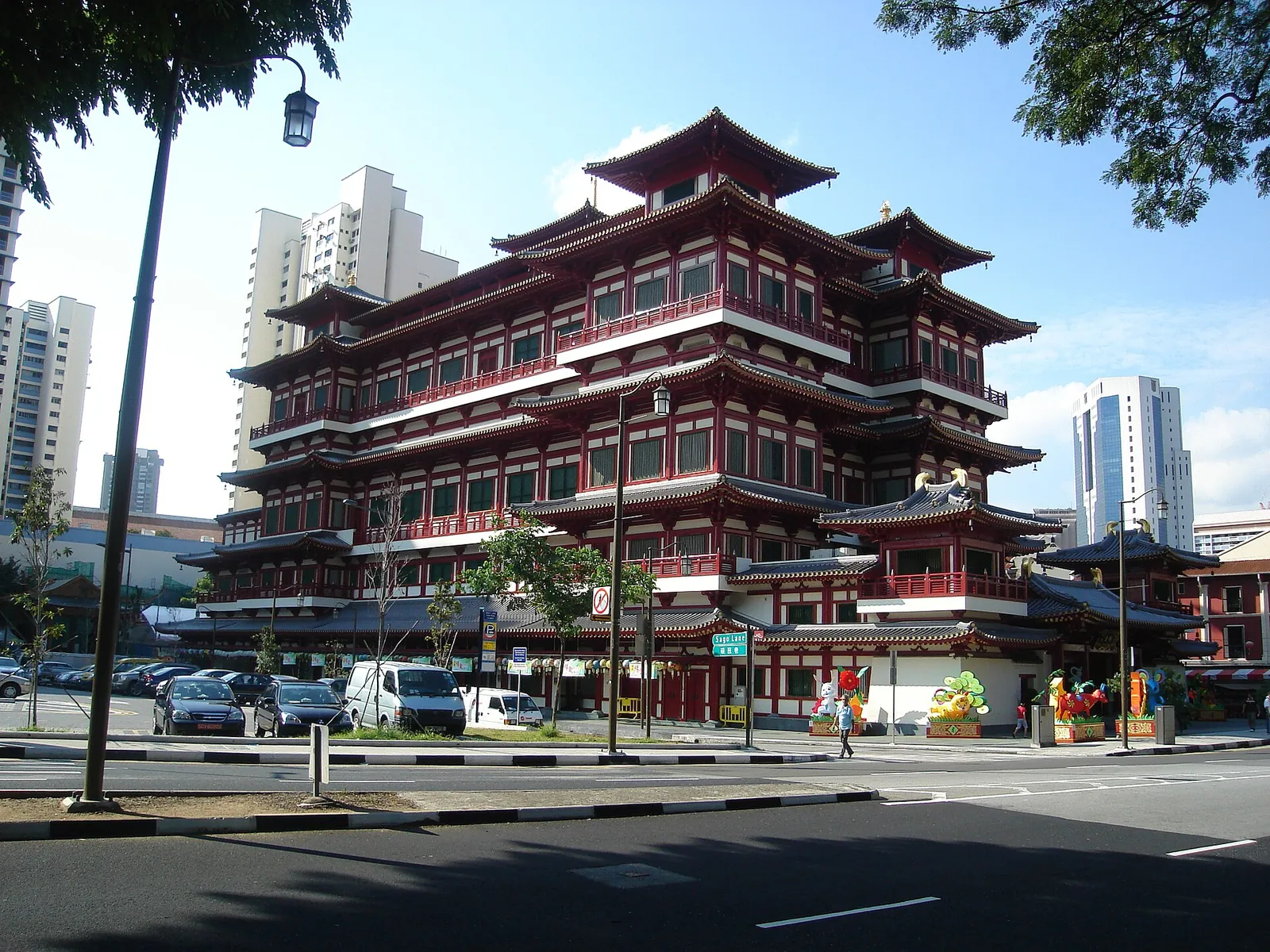
For a simple first route, start with the shophouse streets around Pagoda Street, continue along South Bridge Road and finish around the Buddha Tooth Relic Temple. Add Thian Hock Keng as a deliberate detour if temple architecture is your priority. The Buddha Tooth Relic Temple's Tang-inspired design is documented by the tourism board; its appearance does not mean it is an ancient surviving building.
These are places of worship. Check the notices at each entrance for visitor access, clothing and photography rules, and step aside during religious activity. This guide does not quote admission fees or opening hours: consult each site's current visitor information before arranging a visit around a particular interior.
Make time for the local food
What to eat and where to look
Hainanese chicken rice
Chicken with seasoned rice and accompanying sauces; poached and roasted versions offer different textures.
- Where to look
- Chicken-rice stalls in Maxwell Food Centre and the wider Chinatown district.
- Fit it into your day
- Make it the main lunch after the temple walk, then share a smaller snack if you still have room.
Ask which sauces and stock are used if you have dietary restrictions; a plain-looking plate is not proof that it meets them.
Popiah
A filled roll that makes a useful lighter order between larger meals.
- Where to look
- Look for popiah on menus in Chinatown's food streets and hawker settings, rather than assuming every centre has a serving stall.
- Fit it into your day
- Share a portion when you want to taste something else without ordering a second rice meal.
Fillings and sauces differ; confirm ingredients and preparation with the stall.
Chendol
An iced dessert to consider after a savoury lunch.
- Where to look
- Dessert stalls and eateries around the Chinatown food and market streets.
- Fit it into your day
- Save it for the end of lunch or a seated afternoon break.
Ask about the ingredients and sweetness; recipes differ between vendors.
Make the hawker meal the middle of the day
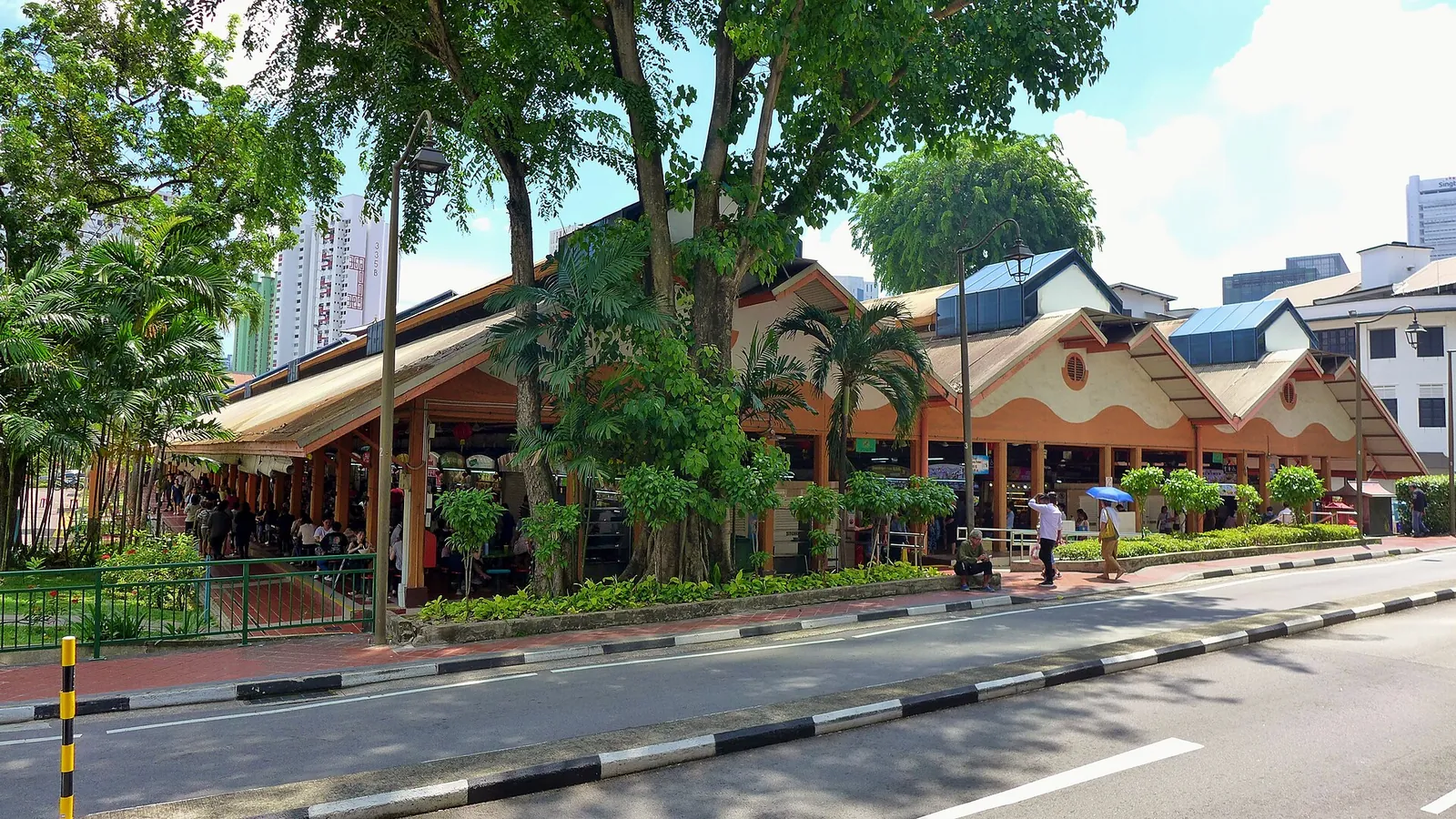
Maxwell Food Centre and Chinatown Complex are both identified by the tourism board as places to explore local cooking. Choose one for a proper meal rather than trying to tick off two centres in quick succession. Chicken rice is a useful first order; popiah and chendol can turn the stop into a smaller tasting sequence.
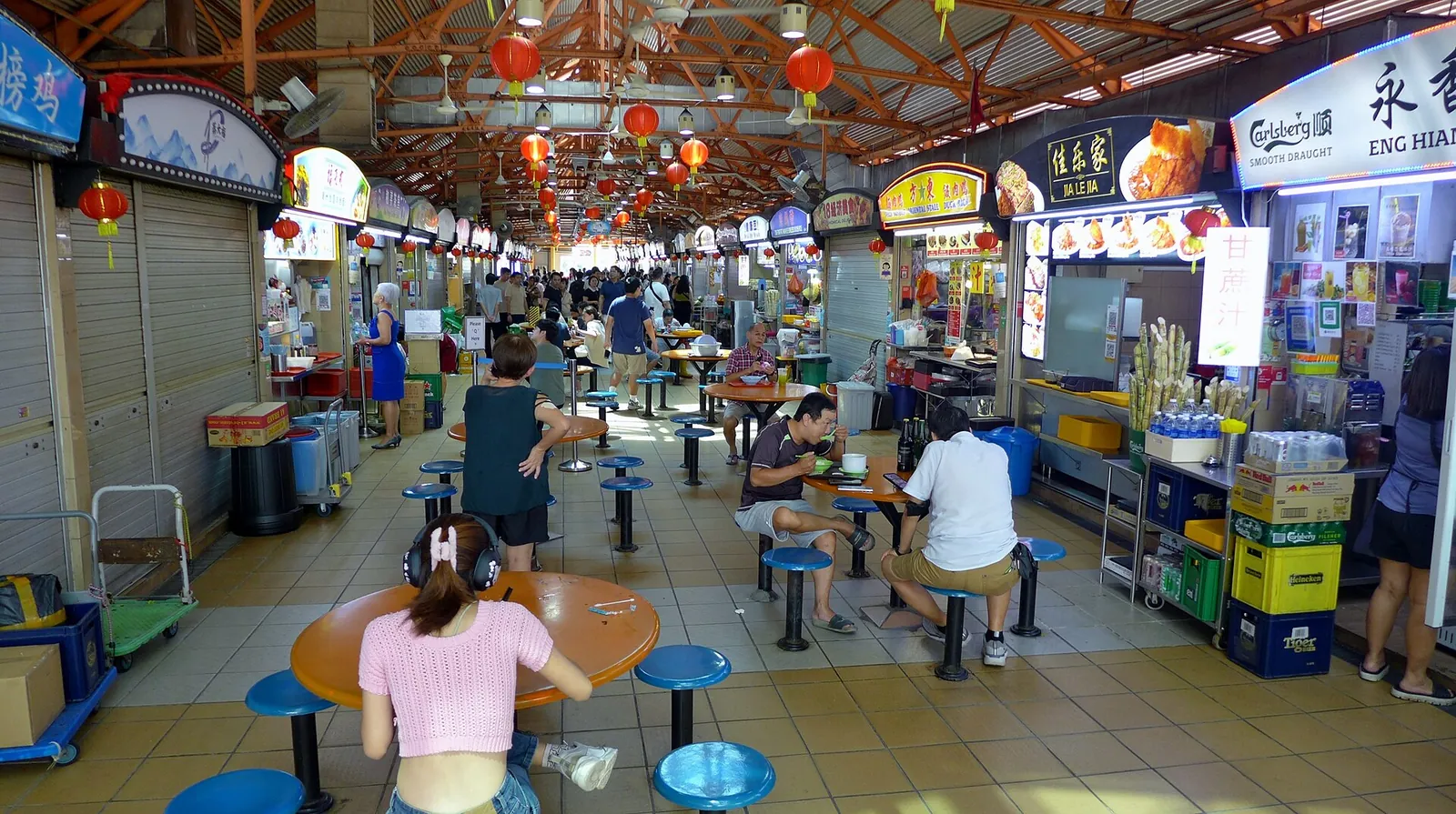
Look around before joining a queue. A stall may be preparing a different dish from the one on the sign, and individual businesses keep their own hours. Ask what is being served, find a table and order a manageable amount. If you are travelling together, sharing small dishes gives you room to compare tastes without turning lunch into a competition.
Keep a separate budget for a restaurant dinner if that is part of your plan. A hawker lunch and a sit-down evening meal are different experiences; neither requires you to choose only establishments with awards. A guided food walk is most useful when you want help reading menus and understanding the dishes, not simply because a queue is long.
A relaxed route with room for a second look
The following is an editorial route, not a timed schedule. Reverse it if a temple or a chosen food stall is only available later in your day.
- Begin with Pagoda Street and the surrounding shophouse lanes before choosing a temple interior.
- Follow South Bridge Road towards the Buddha Tooth Relic Temple, keeping worship and photography separate.
- Sit down at Maxwell Food Centre or Chinatown Complex for lunch; leave room for a snack rather than ordering every dish at once.
- Spend the afternoon on a temple detour or the quieter side streets, then rest before a restaurant evening or a separate Marina Bay visit.
Arrival, weather and onward plans
Changi Airport is the international gateway. When checked on 3 October 2026, the airport operator described rail connections into the city via a transfer at Tanah Merah to the East West Line or at Expo to the Downtown Line. Use the current journey planner for the final connection to your hotel rather than assuming the airport train runs directly to Chinatown.
Put the outdoor part of the visit before your longest indoor or seated stop. Rain is possible throughout Singapore's year; a compact Chinatown plan is easier to rearrange than an itinerary with a distant island departure immediately afterwards. Keep the day before a flight flexible enough to pack and reach the correct terminal.
Practical questions
How long should I spend in Singapore Chinatown?
Allow a half-day for a walk and one hawker meal. Extend it towards a full day if you want several temple interiors and a restaurant evening. These are suggested durations rather than fixed tour timings.
Is Chinatown a good base for a first Singapore stay?
It can suit a trip focused on heritage walks and food. Compare each hotel's exact station access and the streets around it; do not book solely because the listing says Chinatown.
Should I eat at Maxwell or Chinatown Complex?
Choose one for your main meal and decide from the dishes being served that day. Visiting both is optional, and individual stalls do not necessarily share the food centre's opening pattern.
Can I combine Chinatown with Marina Bay?
Yes, as separate parts of a day: Chinatown with lunch, a break, then the bay later. Leave out extra temple detours if this turns the visit into a rushed walk.
Do I need a food tour?
Independent eating is possible. A food tour can help with unfamiliar dishes, menus and cultural context; compare the tasting list, walking route and dietary arrangements before booking.
Sources and checks before you travel
Reference sources for the version dated 2 October 2026. Confirm opening times, access, transport and conditions for your travel dates.
- Singapore Tourism Board: Chinatown ↗ — opens in a new tab
- Singapore Tourism Board: Buddha Tooth Relic Temple ↗ — opens in a new tab
- Singapore Tourism Board: Chinatown Street Market ↗ — opens in a new tab
- Changi Airport: leaving the airport ↗ — opens in a new tab
- Meteorological Service Singapore: climate ↗ — opens in a new tab
Does this experience fit your route?
Choose a Chinatown food walk if menu help and the stories behind the dishes would improve your visit. Check what the current booking includes before paying.
Check dates and details on Viator ↗ — opens in a new tabAffiliate link · Book with ViatorPhoto credits
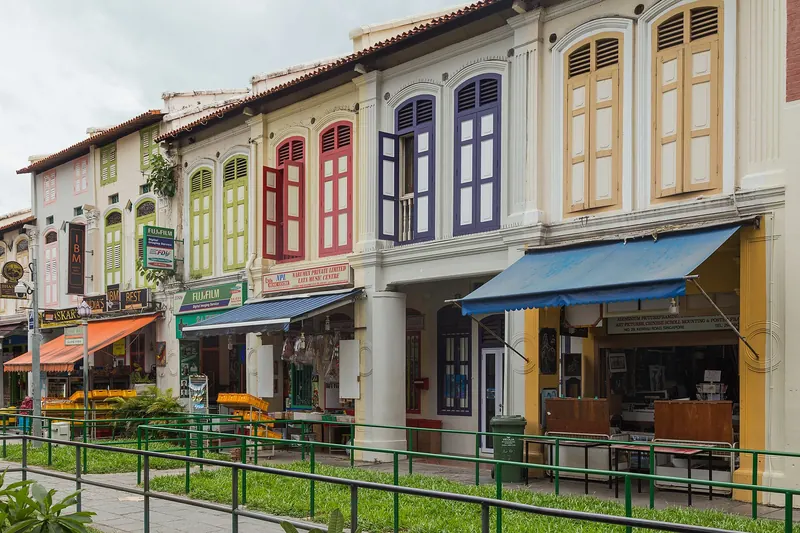
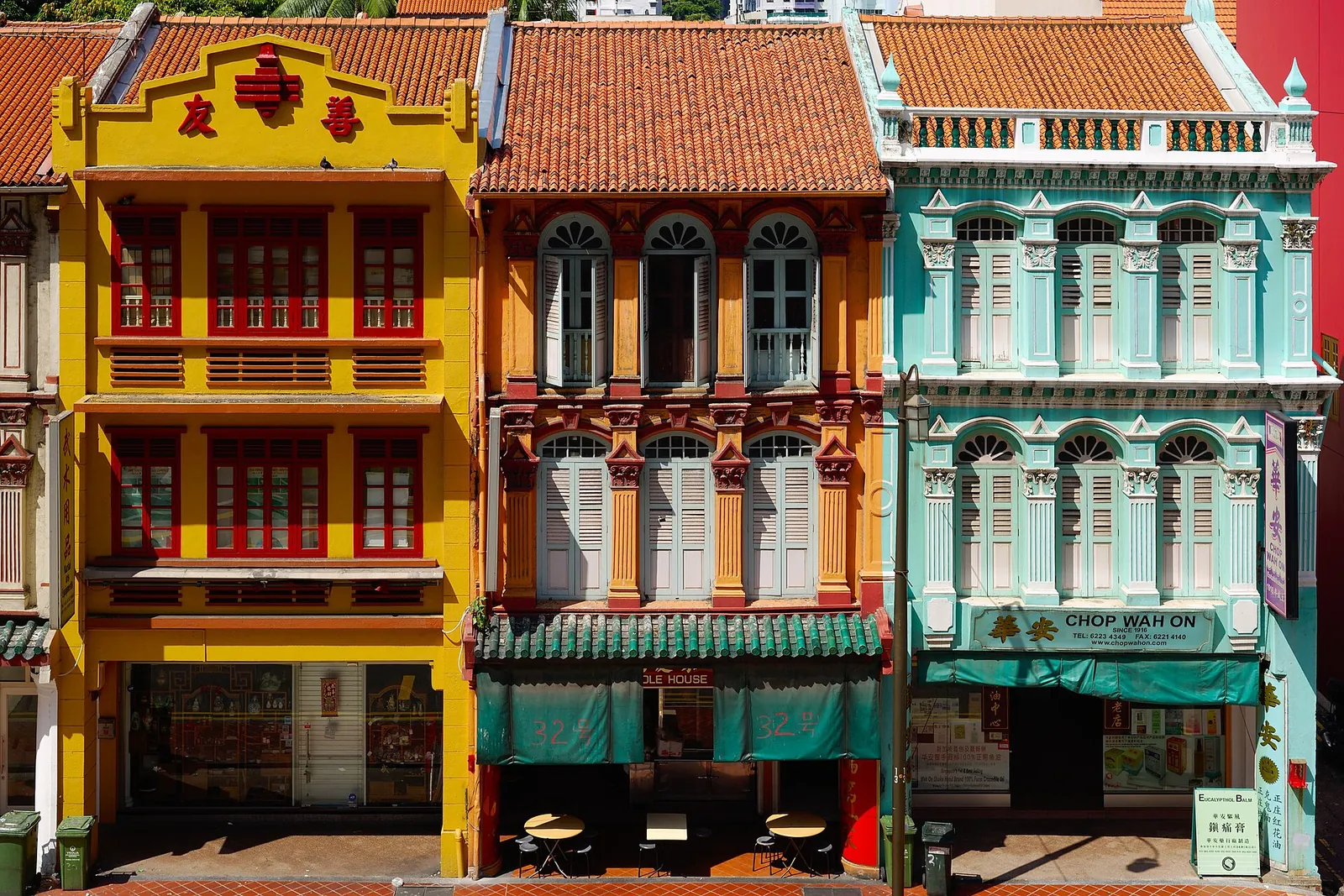
Traditional shophouses on Upper Cross Street in Chinatown.
Photograph: Nicolas Lannuzel from Singapore, Singapore — opens in a new tab · CC BY-SA 2.0 — opens in a new tab
Changes: Resized and converted to WebP; displayed with responsive crops. · Original photograph and licence details ↗ — opens in a new tab
The Buddha Tooth Relic Temple exterior, photographed in 2007.
Photograph: Jorge.maturana — opens in a new tab · CC BY-SA 3.0 — opens in a new tab
Changes: Resized and converted to WebP; displayed with responsive crops. · Original photograph and licence details ↗ — opens in a new tab
Maxwell Food Centre exterior, photographed in 2024.
Photograph: Bahnfrend — opens in a new tab · CC BY-SA 4.0 — opens in a new tab
Changes: Resized and converted to WebP; displayed with responsive crops. · Original photograph and licence details ↗ — opens in a new tab
A seating and stall area inside Maxwell Food Centre in 2024.
Photograph: Bahnfrend — opens in a new tab · CC BY-SA 4.0 — opens in a new tab
Changes: Resized and converted to WebP; displayed with responsive crops. · Original photograph and licence details ↗ — opens in a new tab