Plan your trip
Do you need cash in Singapore? Cards, QR codes and ATMs
Singapore is one of the easiest places in Asia to pay by card: contactless bank cards and phone wallets work in shops, restaurants, taxis and at every MRT gate. Cash still matters at hawker stalls and for some small purchases, and the QR codes you see everywhere mostly need a Singapore bank account. This guide explains the notes, what a foreign card and phone can do, where to get cash, how to spot a licensed money changer, what the "++" on a menu means, and how to claim back GST.
In this guide
Find the location ↗ — opens in a new tabThe short answer
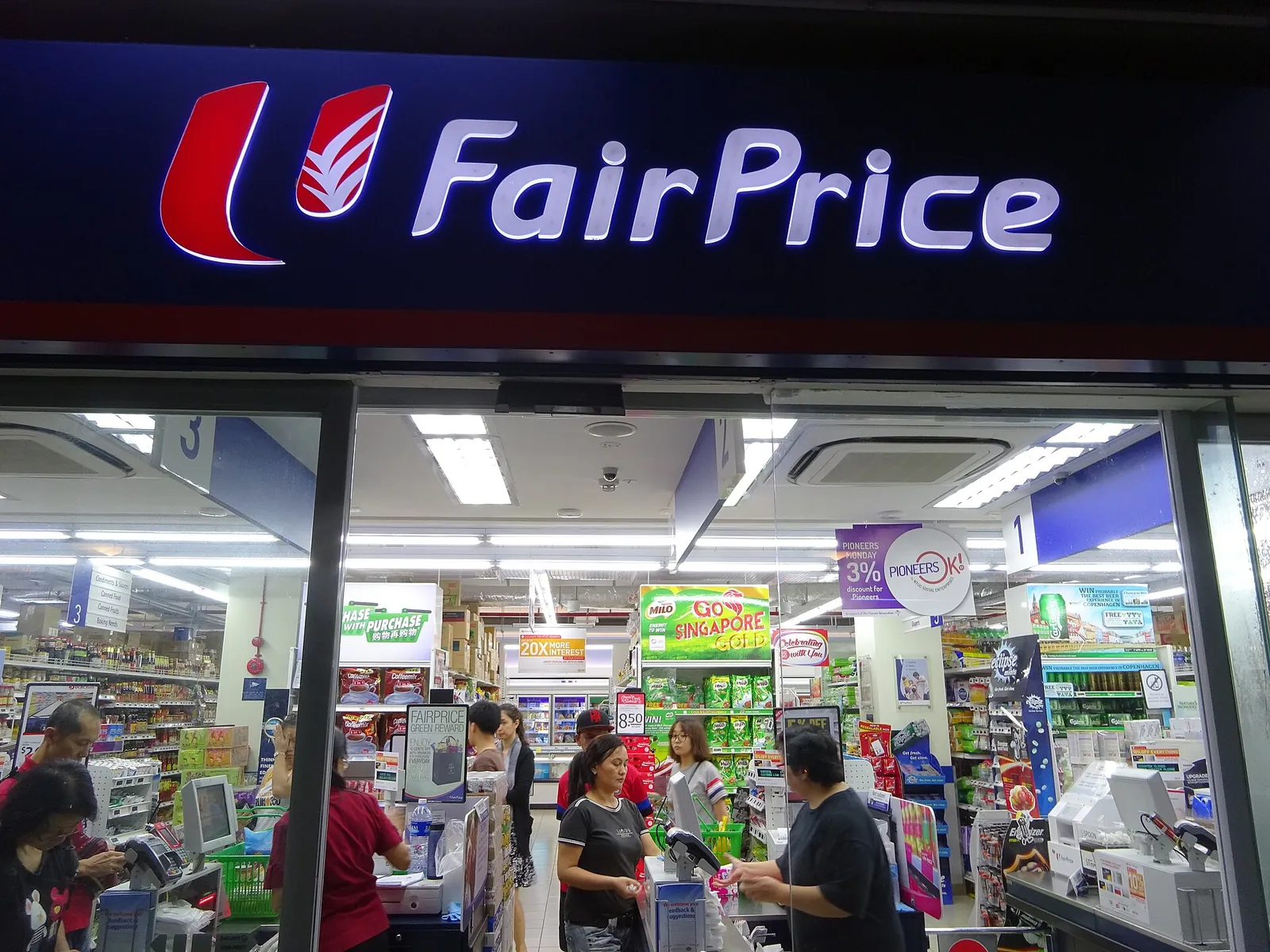
Bring a contactless Visa or Mastercard and a phone wallet; they cover hotels, restaurants, shops, taxis and the MRT and buses, where you tap your own card at the gate. Keep some cash in small notes and coins for hawker stalls. The SGQR codes on counters and PayNow transfers need a Singapore bank or e-wallet account, so most visitors cannot use them, although customers of participating Malaysian and Indonesian banks and e-wallets can pay at NETS QR merchants with their own apps. Withdraw Singapore dollars at bank ATMs, which Changi has in the arrival halls of every terminal, and choose to be charged in Singapore dollars. Expect a 10% service charge and 9% GST on restaurant bills, no need to tip, and a GST refund on goods if you spend at least S$100 in one shop.
- Key point
- Set up a contactless card or phone wallet before you fly; carry a little cash for hawker centres
- Where it applies
- Applies across our Singapore guides; cash matters most at hawker centres and older shops
- Timing
- All year; adult public transport fares change from 26 December 2026
Singapore dollars: notes, coins and how prices are written
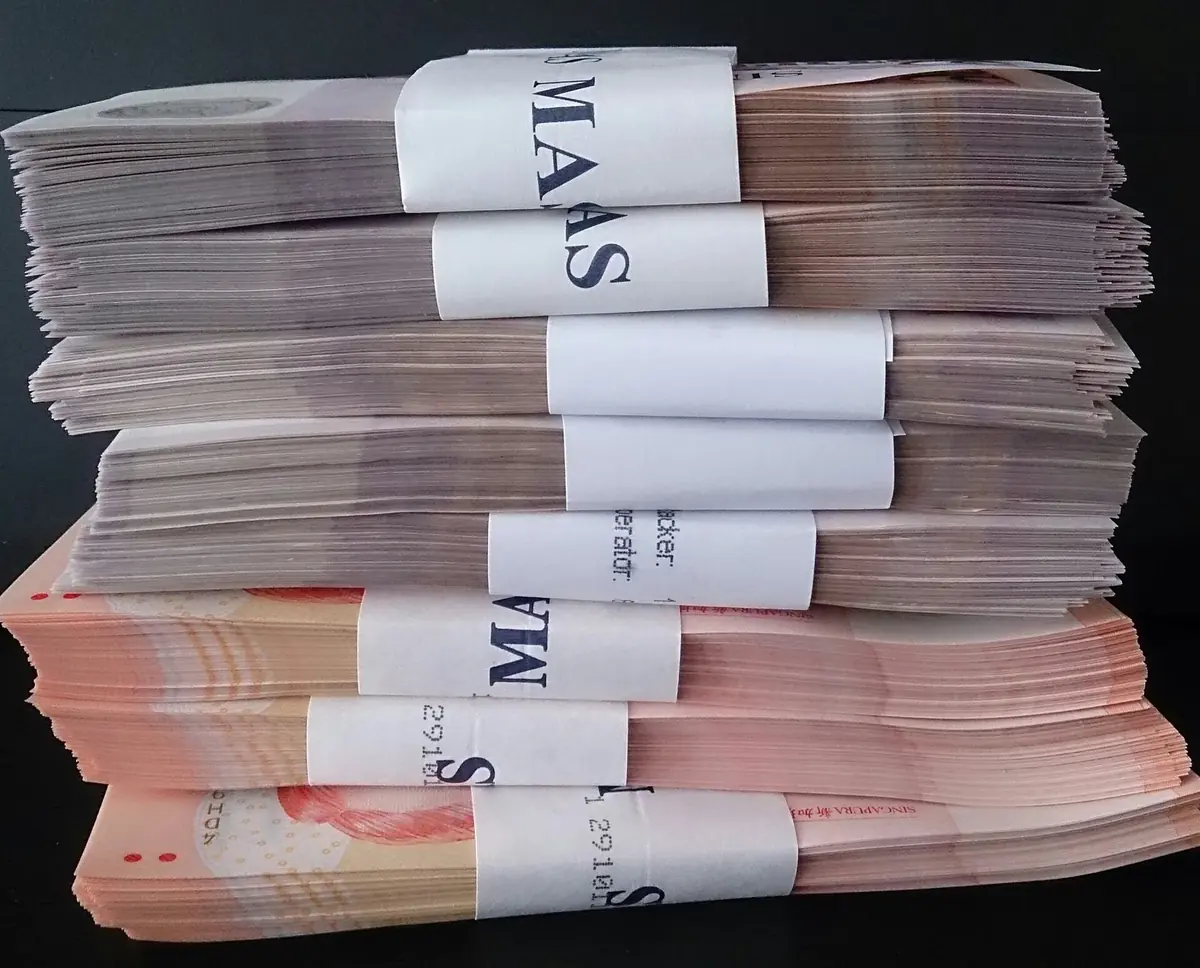
Prices are in Singapore dollars, written S$ or simply $, and split into cents. The notes in use are the Portrait Series, launched by the Monetary Authority of Singapore (MAS) on 9 September 1999 and showing the first President, Yusof Ishak: $2, $5, $10, $50 and $100, plus $1,000 and $10,000 notes that MAS no longer issues but that remain legal tender. MAS says all notes and coins issued in Singapore since 1967 are legal tender. In practice you will handle $2, $5, $10 and $50 notes and coins, and large notes are hard to break at a hawker stall.
Restaurants and hotels often add a service charge, typically 10%, and the 9% GST is then charged on the total including that service charge, as the tax authority IRAS explains: a S$100 meal becomes S$119.90. Places that add a service charge may show prices before both, with a note saying so; this is what the "++" after a hotel rate or menu price means. Hawker stalls and most shops show the price you pay.
That is a legal rule, not a habit: IRAS requires GST-registered businesses to show GST-inclusive prices on displays, advertisements and brochures, and to quote GST-inclusive prices aloud. Only hotels and food and drink businesses that add a service charge may show prices before GST, and they must then display a prominent statement that prices are subject to GST and service charge. If a menu carries that statement, add about a fifth to the listed price.
How to pay in Singapore: cards and phone wallets, and where cash still helps
The Singapore Tourism Board says you can tap and pay with credit cards, Apple Pay, Samsung Pay and other contactless options, and in hotels, malls, restaurants, taxis and attractions a foreign Visa or Mastercard is the normal way to pay. Bring two cards from different networks in case one is declined, and tell your bank you are travelling if it asks.
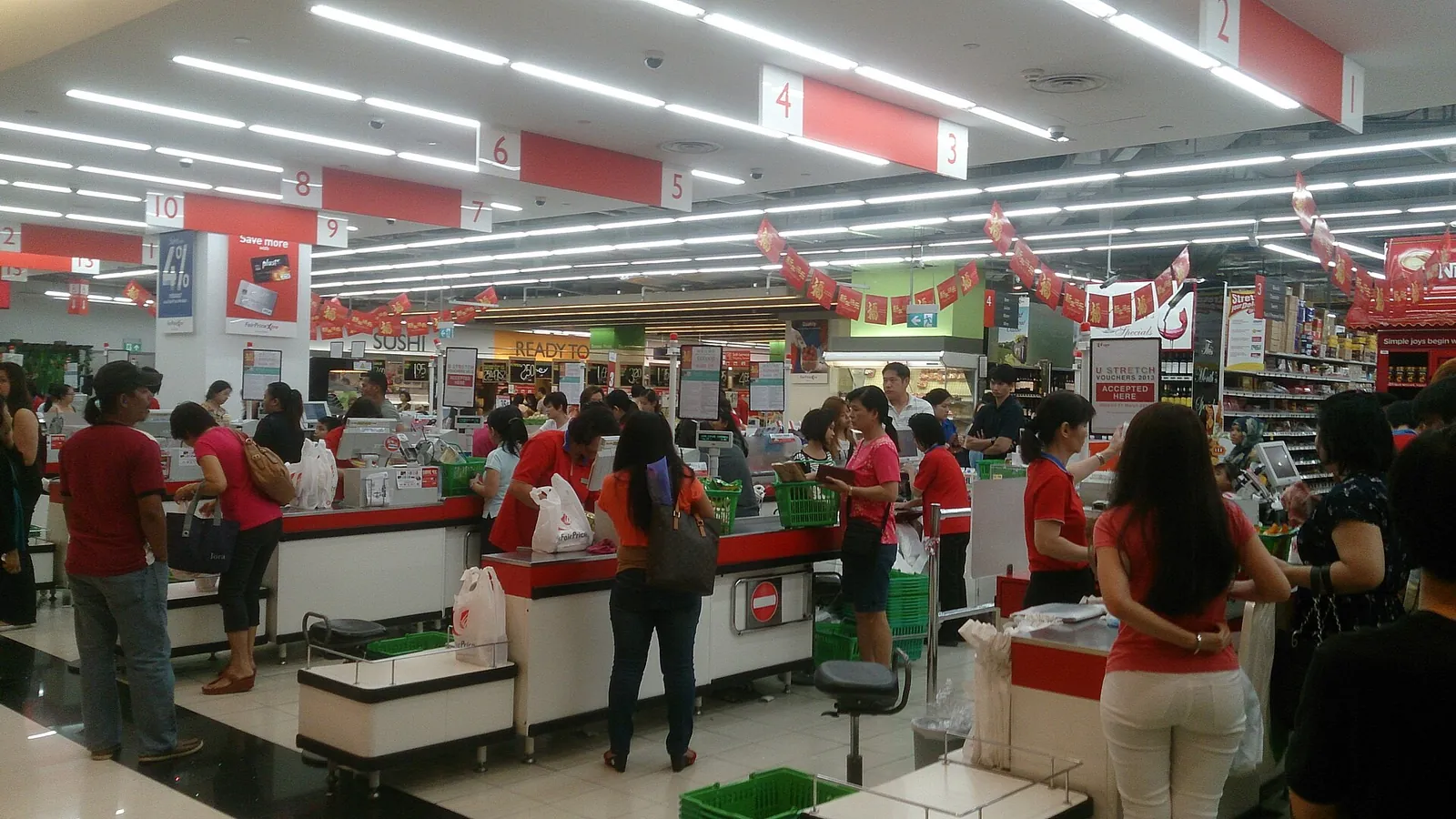
Carry some cash in small notes and coins for hawker stalls: in August 2026 a plate of chicken rice averaged S$4.23 and a bowl of fishball noodles S$4.43. Some stalls take cards or QR payments, but not all, and the queue moves faster if you have the exact amount. Our hawker food guide explains how ordering works.
Some card terminals and ATMs offer to charge a foreign card in its home currency; OCBC, for example, offers this dynamic currency conversion to foreign Mastercard holders at most of its ATMs in Singapore. Choose Singapore dollars. With the conversion, the rate is set by the merchant or its conversion provider, and DBS warns its own cardholders that such rates may be higher than paying in the local currency.
SGQR, NETS and PayNow: which QR codes a visitor can use
The square QR stickers on counters are SGQR, which MAS describes as a single label that combines several payment schemes. Anyone with a phone, data and an account set up for one of the schemes on the label can pay: pick your payment option on the label, open that app, scan the code and check the merchant name before you confirm. Look at the logos on the sticker first and check whether your app is among them. Most schemes on the label, including PayNow, are for Singapore accounts.
PayNow, run by Singapore's banks, lets retail customers of participating banks and major payment institutions send Singapore dollars using a mobile number, NRIC or FIN, or a virtual payment address. It needs a Singapore bank or e-wallet account, so a tourist without one cannot pay by PayNow.
Two neighbours are the exception. MAS and Malaysia's central bank linked NETS QR and DuitNow QR in March 2023, so customers of participating Malaysian banks and e-wallets, such as Maybank, CIMB and Touch 'n Go, can scan NETS QR codes in Singapore with their own apps. Bank Indonesia lists Singapore as a QRIS cross-border partner, and Indonesian users of participating apps can pay at merchants showing the NETS QR logo; our Indonesia money guide explains QRIS from the other side. Everyone else should treat the QR codes as unavailable and pay by card.
Paying for the MRT and buses
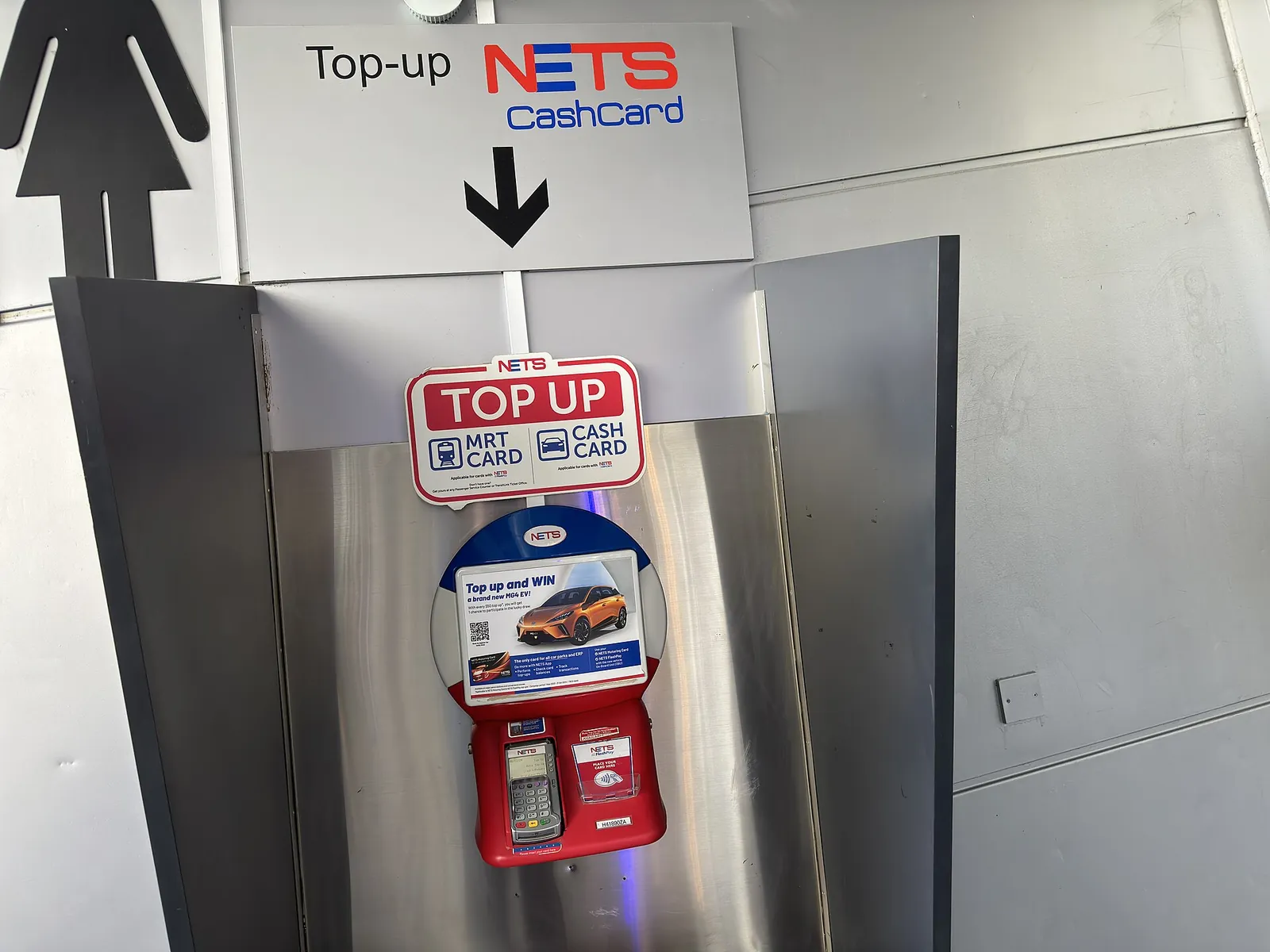
You can tap a contactless American Express, Mastercard, Visa or NETS card, or a card in Apple Pay, Google Pay or Samsung Pay, at the MRT gates and bus readers and pay the adult fare; no sign-up is needed. Foreign-issued Mastercard and Visa cards pay an admin fee of S$0.60 per day of use, and your bank may add its own fees. Tap in and out with the same card on the same phone, or you may be charged twice.
Adult card fares on the MRT, LRT and basic buses depend on distance: S$1.28 for up to 3.2 km, rising to S$2.57 for over 40.2 km (fares in force since 27 December 2025). From 26 December 2026, adult card fares rise by 12 cents for trips up to 3.2 km and 13 cents for longer trips, to S$1.40-S$2.70 on the MRT, LRT and basic buses. Paying cash on a basic bus costs S$2.10 to S$3.20, needs the exact amount because no change is given, and rises by 20 cents on the same date.
The Singapore Tourist Pass gives unlimited rides on basic buses, the MRT and the LRT for S$17 (1 day), S$24 (2 days), S$29 (3 days), S$37 (4 days) or S$45 (5 days), and a stored-value EZ-Link card costs S$10: S$5 for the card (not refundable) and S$5 of travel value. Our Singapore transport guide explains where to buy each and when the pass pays off.
Taxis, ride-hailing apps and a day trip to Johor Bahru
Taxis are metered, and the Land Transport Authority (LTA) says you can pay by the methods the taxi offers, subject to the payment devices fitted in each car, and that cashless payment charges may apply. Ask before you set off if you want to pay by card, and keep a S$10 or S$20 note for a short ride in case the reader is not working. Ride-hailing apps such as Grab, Gojek, Zig, Tada, Ryde and Geolah take payment in the app, so set up a card in the app before you land.
Crossing to Malaysia needs a little planning. Since 1 October 2026, Causeway Link cross-border buses take no cash on board: pay by tapping a contactless debit or credit card or a ManjaLink card, or buy a Single Journey Ticket in the LUGO app. On the Shuttle Tebrau train from Woodlands to JB Sentral, Malaysian citizens pay RM5 and everyone else pays S$5, charged in ringgit, so your bank will convert the fare. Bring some ringgit for Johor Bahru itself, or rely on your card there.
ATMs, cash from home and licensed money changers
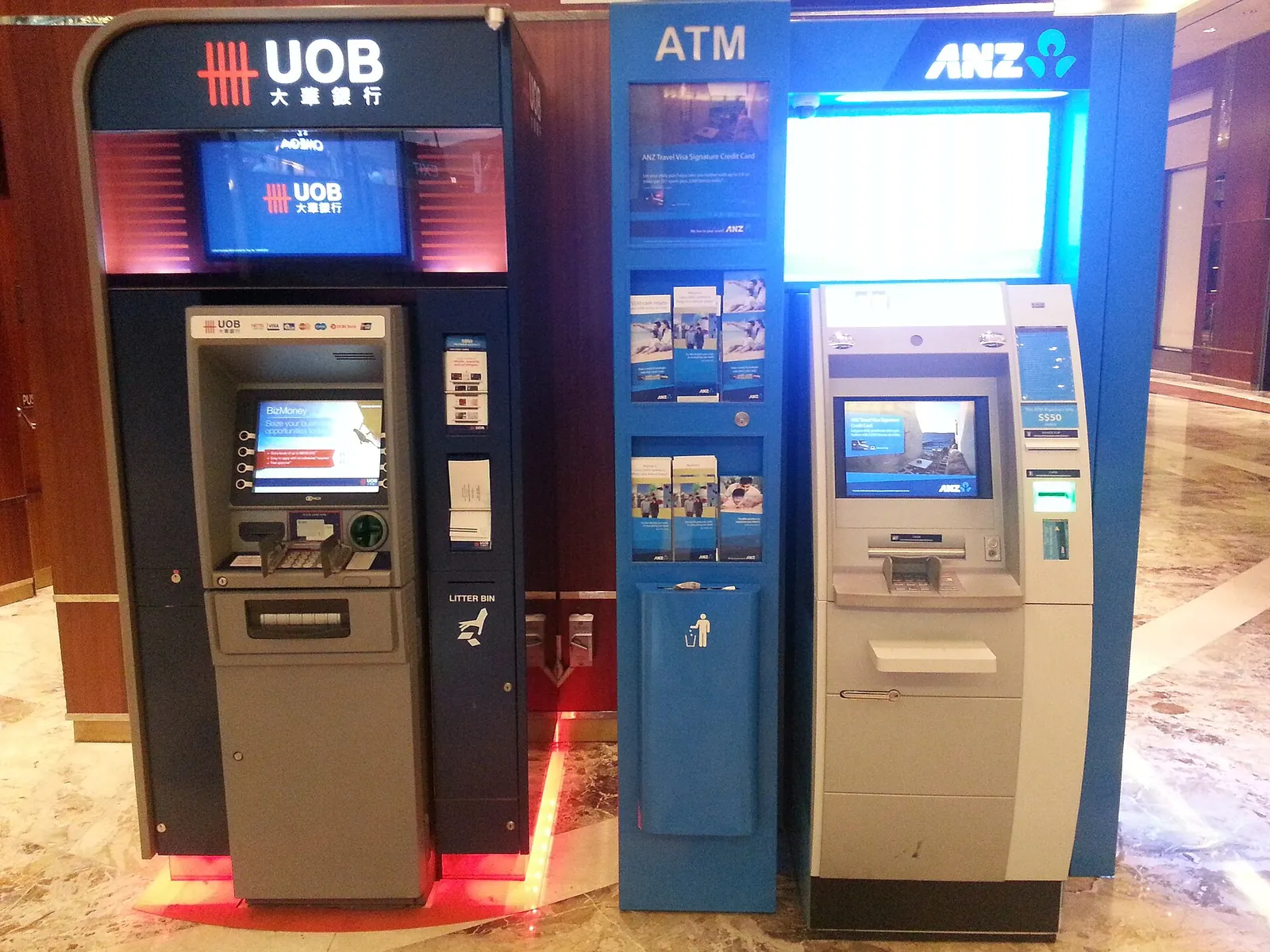
Changi Airport lists bank ATMs in the arrival halls of all four terminals, including OCBC and UOB machines in each, and more in the departure and transit areas; Terminal 1's arrival hall also has HSBC, ICBC and State Bank of India machines, and Terminal 2's has Citibank and Maybank. Your own bank may charge for a foreign withdrawal, so check its fee before you fly, take out larger amounts less often, and choose to be charged in Singapore dollars when the machine asks.
To change notes, use a licensed money changer. Money-changing licensees are licensed and regulated by MAS under the Payment Services Act and may only buy and sell foreign currency notes, according to the government's GoBusiness licensing portal. You can check a business by name in MAS's Financial Institutions Directory, which also warns that scammers impersonate MAS-regulated firms. Changi also has money changers; its ATM directory places some beside the machines in Terminal 1's departure transit halls.
Declare cash and bearer instruments (such as traveller's cheques) worth more than S$20,000 in total when you enter or leave; this is a reporting rule, not a limit on what you may carry. Our Singapore entry guide covers the declaration and the other customs rules.
Tips and the GST tourist refund
The Singapore Tourism Board says tipping is not customary, though you are encouraged to tip if you receive good service. Where a bill already carries a 10% service charge, there is no need to add more.
Visitors aged 16 or over can reclaim GST on goods from shops in the Tourist Refund Scheme if they spend at least S$100 including GST (up to 3 same-day receipts from the same shop count together); show your original passport in the shop so it can issue an eTRS transaction. Claim at an eTRS self-help kiosk at Changi or Seletar Airport when you fly out within 2 months of purchase: before check-in in the Departure Check-in Hall for goods going in the hold, after immigration in the Departure Transit Lounge for hand luggage. The refund is not available when you leave by land or sea, does not cover services or hotel stays, and a handling fee is deducted.
At the kiosk you scan your passport, confirm the purchases you are taking out of Singapore and choose how to be paid. At Changi, IRAS lists three options: a credit card refund, credited within 10 days; an Alipay refund, paid at once; or cash, collected at the GST Cash Refund counter in the Departure Transit Lounge after immigration. Seletar offers card or Alipay only. If the kiosk asks for an inspection, take the goods, the original receipts and your boarding pass to the Customs Inspection counter, so keep shopping in your hand luggage until then, and arrive early. Shops that use a refund agency show its sign; IRAS names two, Global Blue and Global Tax Free.
Scams and keeping your money safe
FCDO says online and phone scams are common in Singapore and may involve people pretending to be officials or bank employees, and that some scams involving false claims of molestation and extortion have been reported. A real bank or government agency will not ask you to move money or read out a one-time password over the phone; hang up and call the number on your card. FCDO also warns that offering money to officials is an offence. The government's ScamShield portal publishes the latest scam alerts, lets you check a suspicious call or message in its app or by its helpline, and explains what to do if you have been scammed; government-official impersonation and investment scams are the costliest it lists.
Book money changers, tours and tickets only through businesses you can verify, and keep a second card separate from your wallet. For what a whole trip costs, from rooms to hawker meals, see our Singapore trip cost guide.
Practical questions
Do I need cash in Singapore?
Only a little. Contactless cards and phone wallets pay for hotels, restaurants, shops, taxis and public transport, but carry some small notes and coins for hawker stalls, where a plate of chicken rice averaged S$4.23 in August 2026.
Can I use my credit card on the MRT?
Yes. Tap a contactless American Express, Mastercard, Visa or NETS card, or a phone wallet, at the gates and pay the adult fare with no sign-up. Foreign-issued Mastercard and Visa cards pay an admin fee of S$0.60 per day of use, and your bank may add its own fees.
Can tourists pay with SGQR or PayNow?
Usually not. PayNow and most SGQR schemes need a Singapore bank or e-wallet account. Customers of participating Malaysian banks and e-wallets can pay at NETS QR merchants through the NETS-DuitNow link, and Indonesian users of participating QRIS apps can too.
Should I tip in Singapore?
It is not expected. The Singapore Tourism Board says tipping is not customary but encouraged for good service. Many restaurants already add a 10% service charge, with 9% GST on top.
Where can I change money at Changi Airport?
Changi has money changers, including beside the ATMs in Terminal 1's departure transit halls, and every terminal has bank ATMs in its arrival hall. In the city, use a money changer licensed by MAS, which you can check in MAS's Financial Institutions Directory.
How do I get the GST refund?
Spend at least S$100 including GST in one participating shop (up to 3 same-day receipts), show your original passport so the shop issues an eTRS transaction, and claim at an eTRS kiosk at Changi or Seletar when you fly out within 2 months. It does not apply when you leave by land or sea.
Keep planning your trip
First trip to Singapore
Four nights in Singapore: where to base yourself, visa and SG Arrival Card, Changi to the city, cards and cash, what to book first and weather.
Read the guide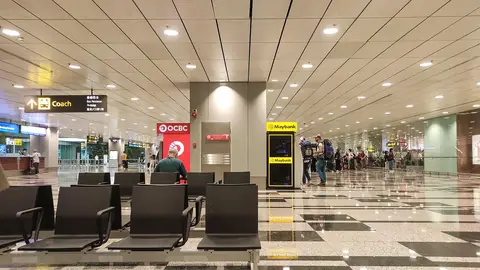
Singapore entry requirements
Singapore entry rules for 2026-27: who needs no visa, how long you can stay, the free SG Arrival Card, passport rules, medicines, vapes, customs and airport charges.
Read the guide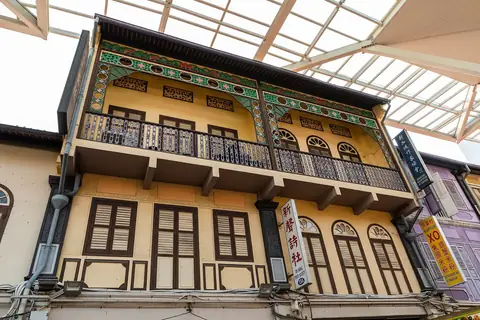
Singapore trip cost 2027
What a week in Singapore costs in February 2027, all in: about SGD 1,200 per person on a budget, SGD 1,850 mid-range or SGD 3,090 in comfort, with Mandai and Sentosa.
Read the guide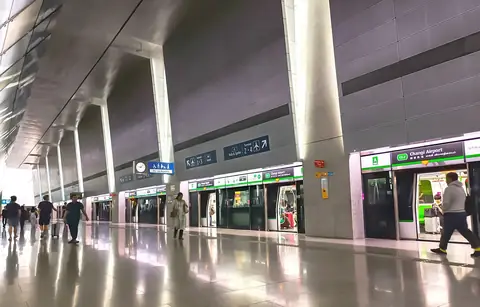
Getting around Singapore
Changi to the city, the six MRT lines, fares and the Tourist Pass, taxis, Sentosa, Pulau Ubin and Batam boats, the train to Johor Bahru and a budget for two.
Read the guide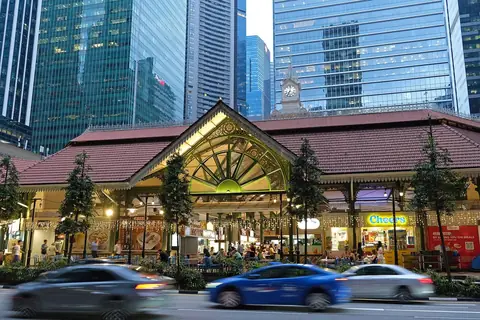
Singapore hawker food
Nine Singapore hawker centres with MRT stations and stall hours, ten classic dishes, tray, seat and payment rules, and a dated food budget for two.
Read the guide
Best time to visit Singapore
Singapore month by month: rainfall and heat from MSS, the haze season, festival and holiday dates for 2026-27, school holidays and what hotels cost.
Read the guideSources and checks before you travel
(28)
- Monetary Authority of Singapore: Portrait Series currency notes ↗ — opens in a new tab
- Monetary Authority of Singapore: Currency ↗ — opens in a new tab
- IRAS: Hotel and Food & Beverage ↗ — opens in a new tab
- OCBC Bank: ATM dynamic currency conversion ↗ — opens in a new tab
- DBS Bank: overseas card transaction fees and dynamic currency conversion ↗ — opens in a new tab
- Singapore Tourism Board: Essential travel information ↗ — opens in a new tab
- Singapore Department of Statistics: average retail prices of selected consumer items, monthly ↗ — opens in a new tab
- Monetary Authority of Singapore: Singapore Quick Response Code (SGQR) ↗ — opens in a new tab
- Association of Banks in Singapore: PayNow ↗ — opens in a new tab
- Monetary Authority of Singapore: NETS-DuitNow QR payment linkage (31 March 2023) ↗ — opens in a new tab
- Bank Indonesia: QRIS Cross-Border ↗ — opens in a new tab
- SimplyGo: FAQs on contactless bank cards ↗ — opens in a new tab
- SimplyGo: Adult fares ↗ — opens in a new tab
- Public Transport Council: Outcome of Fare Review Exercise 2026 ↗ — opens in a new tab
- Public Transport Council: Fare Review Exercise 2026, Annex B ↗ — opens in a new tab
- Singapore Tourist Pass: FAQ ↗ — opens in a new tab
- Changi Airport Group: Leaving Changi Airport ↗ — opens in a new tab
- Changi Airport Group: Cash machines (ATMs) ↗ — opens in a new tab
- GoBusiness Singapore: Money-Changing Licence ↗ — opens in a new tab
- Monetary Authority of Singapore: Financial Institutions Directory ↗ — opens in a new tab
- ICA: cash and bearer negotiable instruments ↗ — opens in a new tab
- IRAS: Tourist Refund Scheme ↗ — opens in a new tab
- Singapore Customs: Tourist Refund Scheme ↗ — opens in a new tab
- Land Transport Authority: Taxi fares and payment methods ↗ — opens in a new tab
- Causeway Link: cashless FAQs ↗ — opens in a new tab
- KTMB: Shuttle Tebrau FAQ ↗ — opens in a new tab
- ScamShield (Singapore government): home page ↗ — opens in a new tab
- UK Foreign Office (FCDO): Singapore safety and security ↗ — opens in a new tab
Reference sources for the version dated 29 October 2026. Confirm opening times, access, transport and conditions for your travel dates.
Photo credits
(5)
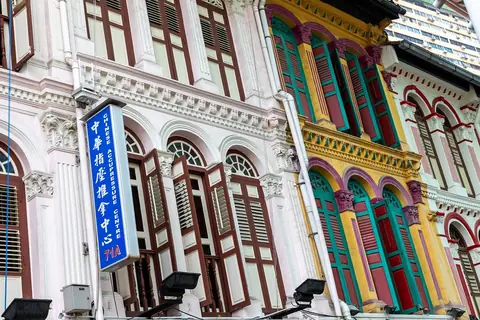
Victoria Gift Centre, an authorised money changer on Pagoda Street in Chinatown.
Photograph: Anna Hanks . — opens in a new tab · CC BY 2.0 — opens in a new tab
Changes: Resized and converted to WebP; displayed with responsive crops. · Original photograph and licence details ↗ — opens in a new tab
A currency exchange counter at Changi Airport Terminal 4.
Photograph: LN9267 — opens in a new tab · CC BY-SA 4.0 — opens in a new tab
Changes: Resized and converted to WebP; displayed with responsive crops. · Original photograph and licence details ↗ — opens in a new tab
Fare gates at Dhoby Ghaut MRT station, held open for a free-travel day in August 2015.
Photograph: Lyg 2001 — opens in a new tab · CC BY-SA 4.0 — opens in a new tab
Changes: Resized and converted to WebP; displayed with responsive crops. · Original photograph and licence details ↗ — opens in a new tab
A money exchanger at Tanah Merah Ferry Terminal.
Photograph: LN9267 — opens in a new tab · CC BY-SA 4.0 — opens in a new tab
Changes: Resized and converted to WebP; displayed with responsive crops. · Original photograph and licence details ↗ — opens in a new tab
Bundles of Singapore dollar notes.
Photograph: ProjectManhattan — opens in a new tab · CC BY-SA 3.0 — opens in a new tab
Changes: Resized and converted to WebP; displayed with responsive crops. · Original photograph and licence details ↗ — opens in a new tab