Central Region
Kampong Gelam, Singapore: Sultan Mosque and Malay heritage
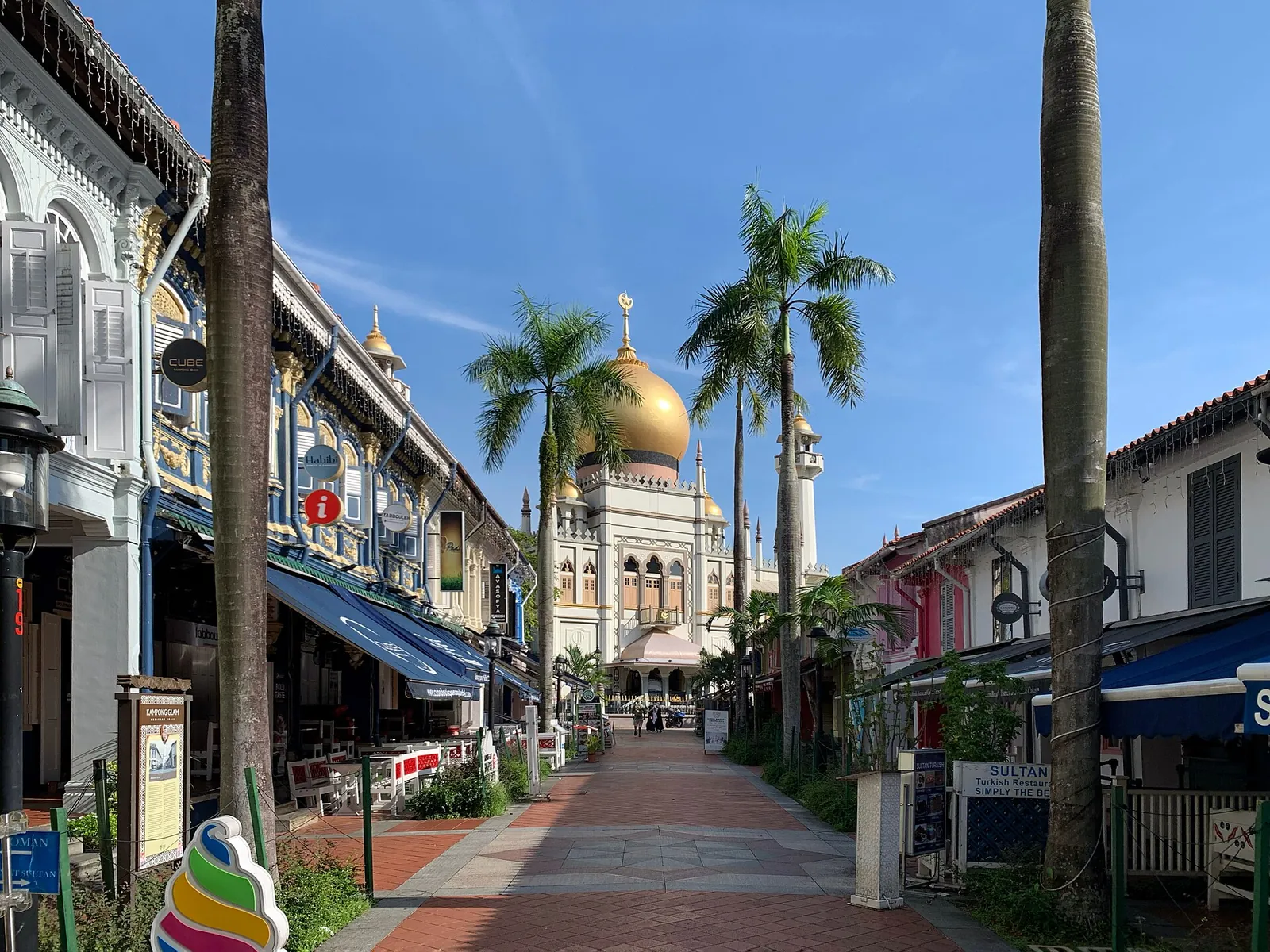
Kampong Gelam, often written Kampong Glam, is Singapore's oldest urban quarter: the former palace of the Sultan, a gold-domed mosque finished in 1932, and shophouse streets planned in 1822 for the traders who settled around them. Today it is a working Muslim neighbourhood as much as a sight. You walk from the mosque's prayer-hall foyer to the six galleries of the Malay Heritage Centre, then through Arab Street's textile shops and the murals of Haji Lane, and end with murtabak or nasi padang on North Bridge Road.
In this guide
Find the location ↗ — opens in a new tabThe short answer
Give Kampong Gelam an afternoon and evening from any central hotel; if you want to sleep close by, book in Bugis (EW12/DT14), a 10-12 minute walk away. Go on a Tuesday, Wednesday, Thursday, Saturday or Sunday: the Malay Heritage Centre closes on Mondays and Sultan Mosque is closed to walk-in visitors on Fridays. Gallery tickets cost S$10 for adult tourists, the mosque's walk-in periods (10:00-12:00 and 14:00-16:00) need no booking, and an MRT ride of up to 3.2 km costs S$1.28 on a contactless card. Nothing has to be booked ahead; the one thing worth reserving is the centre's docent-led Kampong Gelam walk on Wednesday and Saturday mornings. Our sample afternoon with dinner for two comes to S$79.08.
- Suggested time
- An afternoon and evening (no extra night needed)
- Where to stay
- Bugis for the closest hotel; any central hotel on the East West or Downtown Line works
- Season and timing
- Any month. Avoid Mondays (heritage centre closed) and Fridays (mosque closed to walk-in visitors); in Ramadan, the month before Hari Raya Aidilfitri on 10 March 2027, afternoon food bazaars fill the streets around the mosque.
Where to sleep: Bugis or inside the quarter
You do not need a separate night for Kampong Gelam. Bugis (EW12/DT14) is the nearest station in the Singapore Tourism Board's guide; Sultan Mosque gives about 10 minutes' walk from it, and the Malay Heritage Centre 12 minutes. A Bugis hotel keeps the quarter's restaurants within walking distance at night and puts both the East West and Downtown lines at the door for the rest of the city.
Sleeping inside the quarter suits a trip built around the heritage streets. The Sultan, featured by the tourism board, has 61 rooms in early-1900s shophouses on Jalan Sultan, including the old Al-Ahmadiah Press Building; Andaz Singapore stands on the Bugis side. These hotels show rates only for your dates in their booking engines, so the budget below leaves the room out.
Sultan Mosque: golden domes and a prayer hall for 5,000
Sultan Mosque (Masjid Sultan), at 3 Muscat Street, has a golden dome that towers over the shophouses around it. It began as a royal mosque. In 1824 Sultan Hussein Shah, whose palace stood nearby, signed an agreement with the British East India Company that effectively ceded Singapore to it; land was set aside for a royal mosque, and Stamford Raffles pledged 3,000 Spanish dollars to the building fund. That first mosque was a single-storey brick building with a two-tiered roof. By 1924 it needed replacing, and the trustees commissioned the Irish architect Denis Santry of Swan & Maclaren. Built in phases as donations came in, the present mosque was completed on 26 February 1932, according to the National Heritage Board.
The two golden onion domes, at the eastern and western ends of the prayer hall, are its signature: one crowns the entrance foyer, the other the mausoleum of Sultan Alauddin Alam Shah, Sultan Hussein's grandson, and other members of the royal family. Look at the base of each dome for the band of glass bottle ends, collected and given by poor families as their share of the building. The style is Indo-Saracenic, with arabesque mouldings on the Muscat Street and North Bridge Road facades, a crest of merlons and miniature minarets along the roof, and cast-iron railings around the grounds. The two-storey prayer hall holds up to 5,000 worshippers and is set at an angle to face Mecca; its mihrab niche is framed by a pointed arch and decorated with arabesque scrolls, leaves, flowers and vines. After a 17-month restoration, the mosque won the Urban Redevelopment Authority's Architectural Heritage Award in 2016.
When we checked on 14 October 2026, walk-in visits ran Saturday-Thursday, 10:00-12:00 and 14:00-16:00, and the mosque was closed to walk-in visitors on Fridays. Enter through Gate No. 5, facing Bussorah Street; numbers per entry are limited, and you walk the permitted areas on your own. The main and second-floor prayer halls are open to visitors only with a mosque official. Men need sleeved tops and long trousers; women need long-sleeved tops with no cleavage and a skirt or trousers to the ankle; nothing may be see-through. Robes are lent at the counter, first come, first served, and shoes come off at the door. Photography without flash is allowed; video needs the mosque's approval.
Malay Heritage Centre: the Sultan's palace and its six galleries
The quarter is named after the gelam tree, which grew here and was used for boat-building, medicine and even food seasoning. When the Sultan signed his 1819 treaty with the East India Company, the tourism board says, he brought his family here and built a 56-acre istana (palace) between the Rochor River and Beach Road. Arab merchants and settlers from Sulawesi, Java, Sumatra and the Malay Peninsula followed, and Kampong Gelam became a market for timber, ceramics, gems, spices and textiles.
The palace that survives, the 19th-century Istana Kampong Gelam, is a National Monument and houses the Malay Heritage Centre, run by the National Heritage Board with the Malay Heritage Foundation and open again after a full restoration. Its permanent exhibition, *From Region to Home*, runs through six galleries: the courts of the Johor-Riau Sultanate, the 19th-century treaties that changed who ruled, the migrants and Hajj pilgrims who passed through Kampong Gelam, the Malay film actresses, writers and fashion of the 1950s and 1960s, the family rituals of birth, marriage and remembrance, and a closing room of work by today's Malay artists.
When we checked on 14 October 2026, the galleries opened Tuesday-Sunday, 10:00-18:00 (last admission 17:30) and the compound Tuesday-Sunday, 08:00-21:00; both close on Mondays. Foreign residents and tourists pay S$10 per adult, or S$8 for seniors aged 60 and over, students and persons with disabilities (bring ID for the lower rate); children under 6 and Singaporeans and permanent residents enter free. Groups of five or more get 20% off, and tickets are non-refundable. The entrance is at 85 Sultan Gate.
Free English gallery tours run on Tuesdays and Wednesdays at 11:00 and Thursday-Sunday at 11:00 and 14:00, booked through the centre's GO.gov link. The centre's docents also lead a Kampong Gelam walk on Wednesdays and Saturdays, 09:30-11:00, with sign-up on its guided-tours page: the easiest way to hear the stories of the quarter's families and trades from someone who knows them.
Arab Street, Bussorah Street and Haji Lane
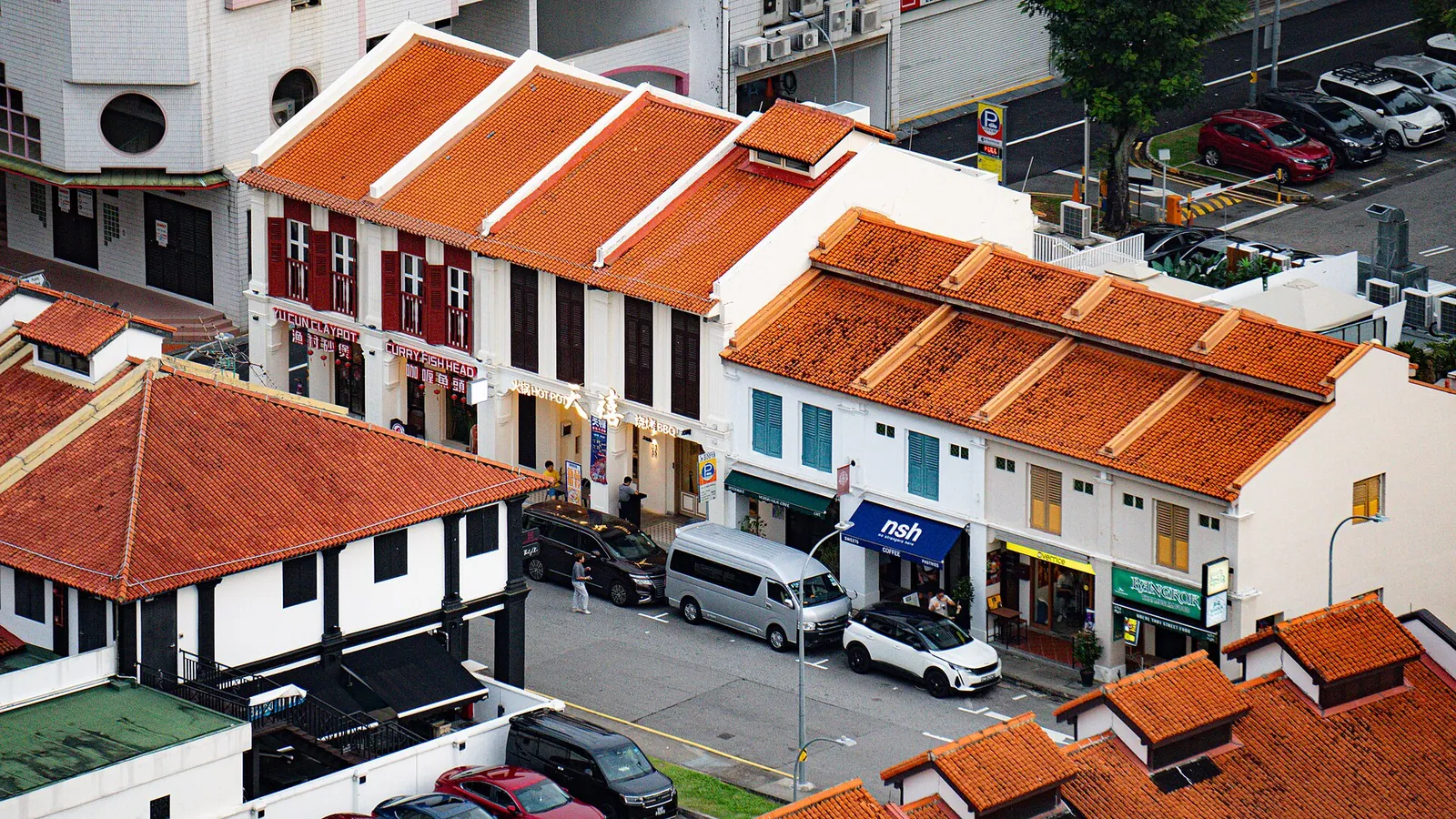
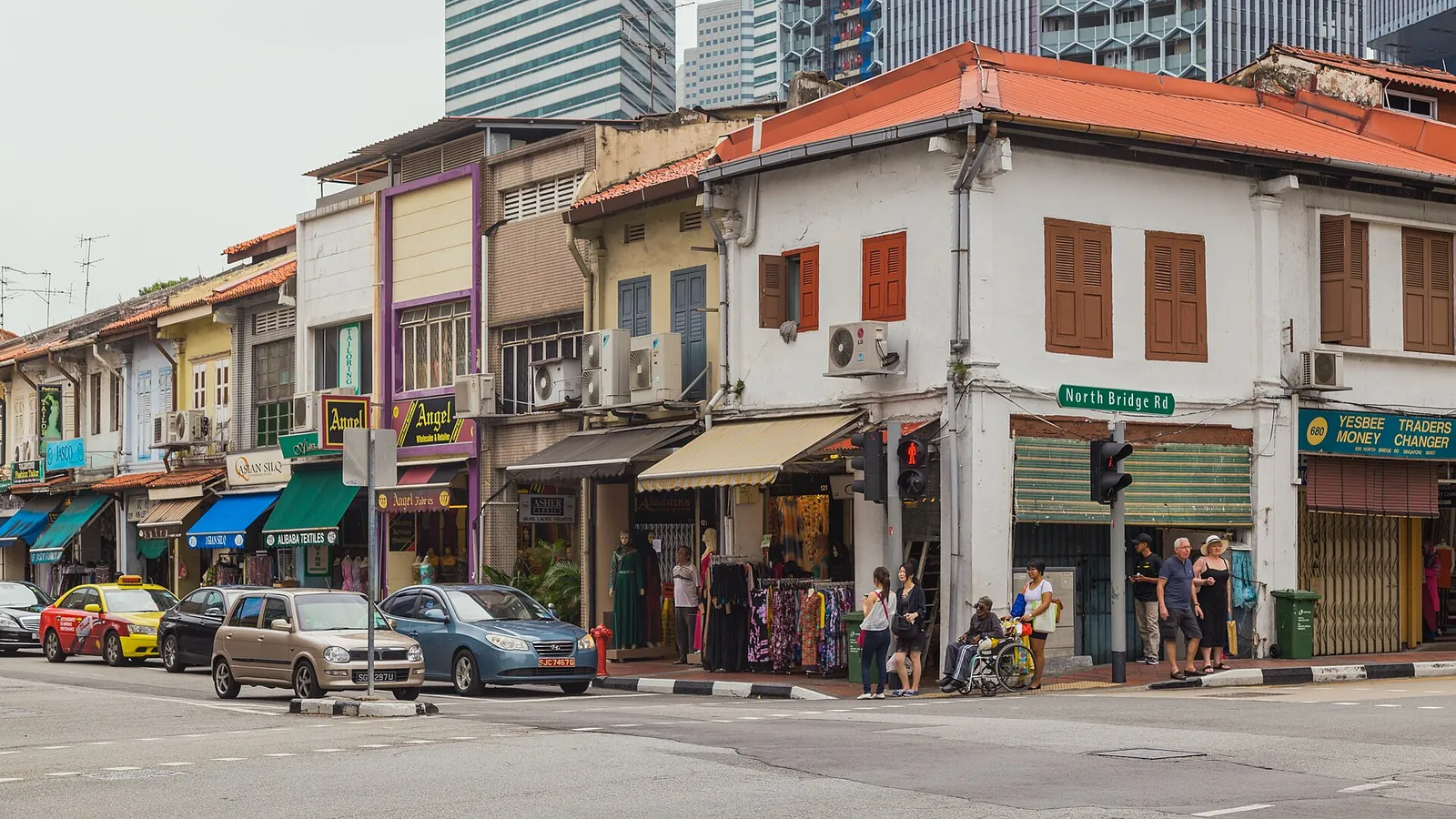
Each street had its trade. The tourism board's precinct map recalls baskets and textiles on Arab Street, bookshops, blacksmiths, jewellers and coppersmiths on Bussorah Street, and pilgrims lodging on Haji Lane before sailing for Mecca. On Arab Street today, Toko Aljunied (91 Arab Street), a traditional store whose history goes back to 1940, sells batik fabrics and hand-sewn clothes. Jamal Kazura Aromatics, a perfumery that has been around since 1933, will help you create your own scent.
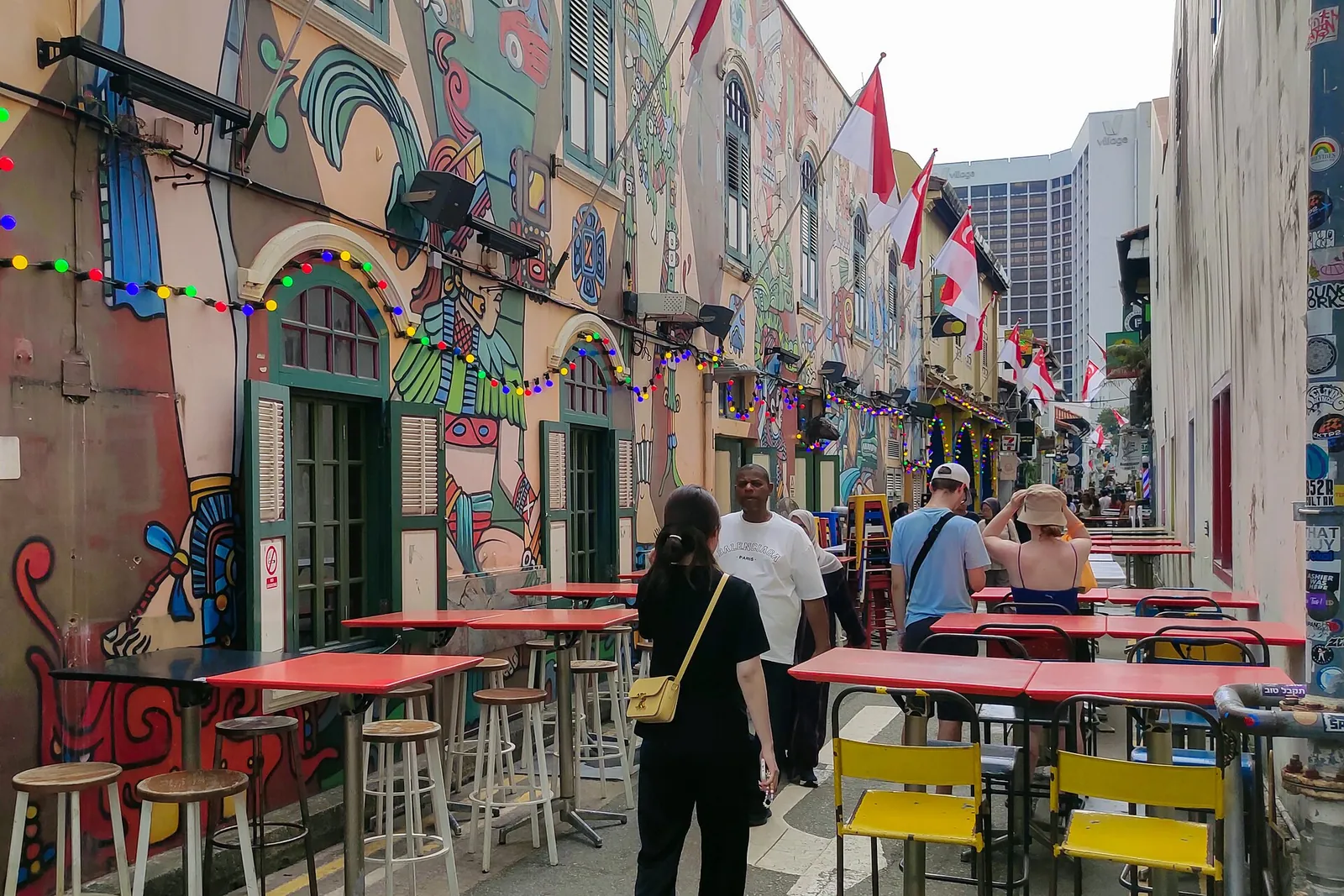
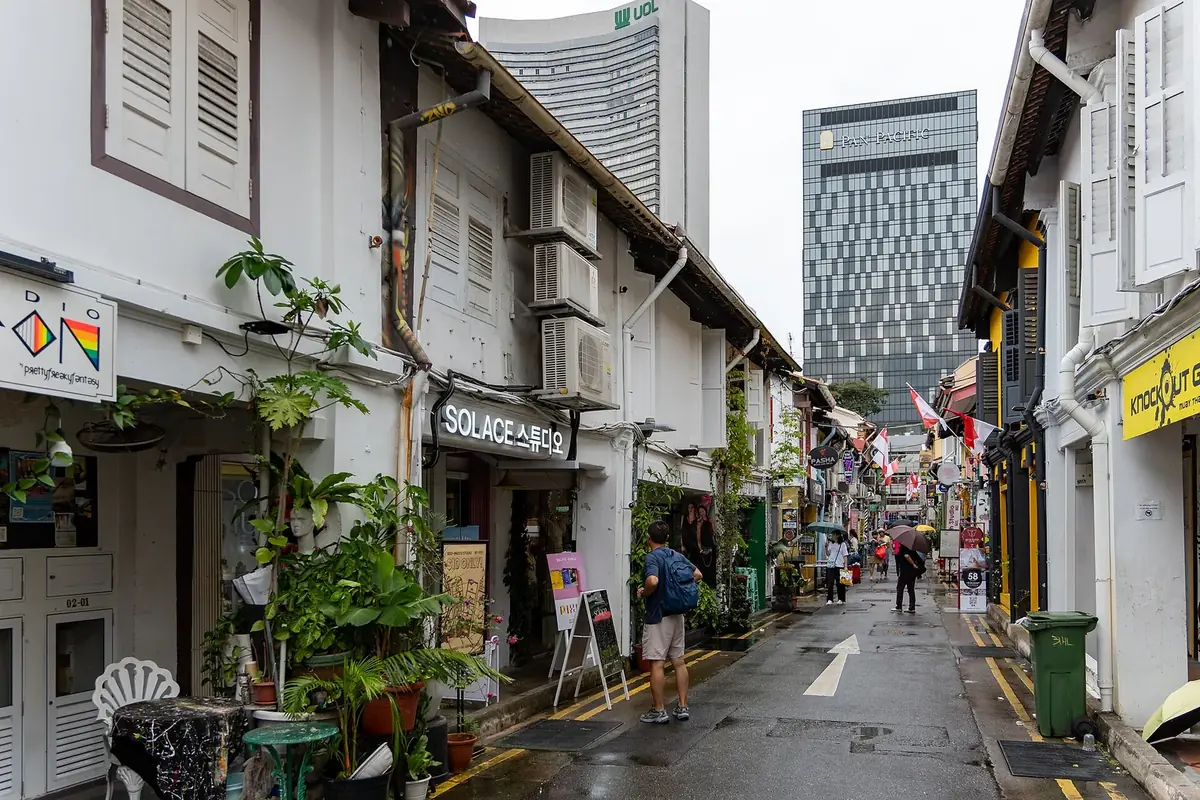
Bussorah Street runs straight to the mosque's Gate No. 5, with the golden dome at its end; its restored shophouses are now a colourful row of restaurants and cafes, and Kebaya by Ratianah at number 23 tailors kebaya and baju kurung. Haji Lane, just south of Arab Street, is a narrow lane of small boutiques, thrift stores and sweet shops that the tourism board calls Singapore's original indie neighbourhood, with murals and graffiti by local and international artists on its walls.
Two more mosques are a short walk away. Hajjah Fatimah Mosque on Beach Road, built in 1845 by the philanthropist Hajjah Fatimah on the site of her own house, was the first local mosque named after a woman; it mixes an onion dome, Chinese glazed tiles and a minaret like a church spire that leans about 6 degrees. Malabar Mosque, at 471 Victoria Street on the corner of Jalan Sultan, is a blue-tiled building with gold-coloured domes, built and run by the Malabar Muslim community from Kerala.
Evenings, Ramadan and Hari Raya
The galleries close at 18:00, but the Malay Heritage Centre's compound stays open until 21:00 (Tuesday-Sunday), and the centre stages Beats on Baghdad Street, a series of outdoor performances of Malay performing arts, announced on its social media. Dinner is the evening's anchor: murtabak and biryani on North Bridge Road or nasi lemak at The Coconut Club on Beach Road (see the food box), then a drink on Haji Lane or at Bar Stories, whose bartenders mix a cocktail from your answers to their questions.
During Ramadan the start of the fasting month is announced at Sultan Mosque each year, and the streets around it turn into a bazaar of Malay food in the afternoons. Hari Raya Aidilfitri, which ends the fast, falls on 10 March 2027 in the Singapore Tourism Board's listing, so the bazaar runs in the month before that date. The main Hari Raya street lights are in Geylang Serai, along Paya Lebar and Eunos stations, not in Kampong Gelam.
An afternoon and evening, in order
Pick the day first. Monday closes the Malay Heritage Centre, Friday closes the mosque to walk-in visitors, and Hjh Maimunah's restaurant on Jalan Pisang closes on Sundays, so Tuesday, Wednesday, Thursday or Saturday gives you everything; on a Sunday the centre and the mosque are open too, so eat somewhere else that day.
12:30, lunch on North Bridge Road. Murtabak at Victory Restaurant or Singapore Zam Zam, or nasi padang at Hjh Maimunah (07:30-19:00, Monday-Saturday). Rumah Makan Minang at 18 Kandahar Street serves Minangkabau food such as tahu telur and mee soto daily from 07:30 to 18:30, so it fits lunch, not dinner.
14:00, Sultan Mosque. Arrive at the start of the afternoon visitor period, dressed for it, and enter at Gate No. 5 from Bussorah Street. 15:00, Malay Heritage Centre, a short walk away on Sultan Gate, until the galleries close at 18:00 (last admission 17:30).
18:00, the streets. Walk Bussorah Street, Arab Street and Haji Lane while the shops are open, with a teh tarik at Bhai Sarbat on Baghdad Street. 19:30, dinner at The Coconut Club or back on North Bridge Road, then the centre's lit compound or a drink on Haji Lane.
On a Wednesday or Saturday you can start in the morning instead: the centre's 09:30 docent walk, the mosque's 10:00-12:00 period, lunch, then the galleries. With only two hours, take the mosque in a visitor period and walk Bussorah Street and Haji Lane, and keep the galleries for a day when you can give them the afternoon.
What to eat and where to look
Murtabak
A South Indian flatbread stuffed with egg, onion and mutton or chicken, eaten on its own or with a side of savoury curry. The restaurants on North Bridge Road beside the mosque have made it for more than a century.
- Where to look
- Singapore Zam Zam (697-699 North Bridge Road), which the tourism board recommends for murtabak with a side of curry, or Victory Restaurant at 701 North Bridge Road, founded in 1910 and one of Singapore's oldest murtabak restaurants.
- Fit it into your day
- Lunch before the mosque's 14:00 visitor period; one murtabak shared between two leaves room for more.
Say mutton or chicken when you order.
Biryani
The Indian rice staple: spiced rice cooked with meat or vegetables, served on North Bridge Road in heritage restaurants, including dum biryani, cooked sealed in its pot.
- Where to look
- Islamic Restaurant on North Bridge Road, which has served biryani since 1921, or Singapore Zam Zam, a family-run eatery since 1908.
- Fit it into your day
- Lunch, or dinner after the shopping streets.
Portions are generous; share one if murtabak is also on the table.
Nasi padang
Steamed rice with your pick of Malay and Indonesian dishes from the counter. Hjh Maimunah, a Michelin Bib Gourmand restaurant, is known for beef rendang, ayam bakar Sunda (Sundanese grilled chicken) and tahu telur.
- Where to look
- Hjh Maimunah, 11 Jalan Pisang, open 07:30-19:00 Monday-Saturday; Rumah Makan Minang, 18 Kandahar Street, cooks Minangkabau dishes such as tahu telur daily from 07:30 to 18:30.
- Fit it into your day
- Lunch on a weekday or Saturday before the mosque visit.
Hjh Maimunah's Jalan Pisang restaurant is closed on Sundays.
Nasi lemak
Coconut-milk rice with sambal and side dishes. The Coconut Club's version uses two-year-old jasmine rice and organic chicken marinated for 12 hours in rempah, its house spice paste.
- Where to look
- The Coconut Club, in a restored shophouse on Beach Road; its June 2026 menu listed Ayam Goreng Berempah Nasi Lemak at S$22, plus service charge and GST.
- Fit it into your day
- Dinner after the streets, booked through the restaurant's reservations page if you want a set time.
Coconut milk runs through the rice and much of the menu; tell the staff about any allergies.
Teh tarik
Freshly 'pulled' milk tea, poured from one cup to another until it froths, and the usual drink with murtabak or prata.
- Where to look
- Bhai Sarbat on Baghdad Street, a drinks stall that began as a tea cart in the 1950s; most regulars order teh tarik, teh halia or teh masala.
- Fit it into your day
- A break on Bussorah Street between the mosque and the shops.
It comes sweet; say 'kurang manis' for less sugar.
What the afternoon costs for two
A sample budget for two adults coming from a central hotel, following the plan above (prices checked on 14 October 2026):
Malay Heritage Centre: 2 × S$10 = S$20. Sultan Mosque: walk-in visits are free, as the tourism board describes them.
MRT: Adult card fares on the MRT, LRT and basic buses depend on distance: S$1.28 for up to 3.2 km, rising to S$2.57 for over 40.2 km (fares in force since 27 December 2025). A return trip each from a station within 3.2 km is 4 × S$1.28 = S$5.12. Foreign-issued Mastercard and Visa cards pay an admin fee of S$0.60 per day of use, and your bank may add its own fees: S$1.20 for two cards.
Dinner at The Coconut Club, Beach Road: two Ayam Goreng Berempah Nasi Lemak at S$22 each on the restaurant's June 2026 menu = S$44, plus the 10% dine-in service charge and 9% GST on the total = S$52.76.
Total: S$79.08 for two (S$20 + S$5.12 + S$1.20 + S$52.76).
From 26 December 2026, adult card fares rise by 12 cents for trips up to 3.2 km and 13 cents for longer trips, to S$1.40-S$2.70 on the MRT, LRT and basic buses; adult cash bus fares rise by 20 cents, to S$2.30-S$3.40. The four short rides then cost S$5.60.
Getting there: MRT from the city, Changi and Little India
Bugis (EW12/DT14) is the usual approach. Sultan Mosque gives about 10 minutes' walk from Bugis or from Jalan Besar (DT22); the Malay Heritage Centre gives 12 minutes from either, or 10 minutes from Lavender. Buses 7, 32, 51, 61, 63, 80, 145, 175 and 197 stop on North Bridge Road beside the quarter.
From the airport: Changi Airport MRT station (CG2) sits between Terminals 2 and 3. For the city, ride two stops, via Expo, to Tanah Merah (EW4) and change to the East-West Line towards Tuas Link, or ride to Expo (CG1/DT35) and change to the Downtown Line towards Bukit Panjang. Both lines call at Bugis. The Land Transport Authority puts the current MRT journey from Changi Airport to Marina Bay at about 50 minutes. Taxi stands are in the arrival areas of all four terminals. Changi gives a ride to the city as about 30 minutes and S$25-S$45 on the meter.
Little India pairs well with Kampong Gelam on the same day. Its station, Little India (NE7/DT12), is two stops from Bugis on the Downtown Line, and Jalan Besar station serves both quarters, so you can walk from the mosque past Jalan Besar towards Serangoon Road and Tekka Centre, Singapore's largest indoor wet market.
Practical questions
How long should I spend in Kampong Gelam?
An afternoon and evening: the mosque's 14:00-16:00 visitor period, the Malay Heritage Centre's galleries until 18:00, the shopping streets and dinner. Avoid Mondays, when the centre is closed, and Fridays, when the mosque is closed to walk-in visitors.
Can tourists enter Sultan Mosque, and what does it cost?
Yes. Walk-in visits run Saturday-Thursday, 10:00-12:00 and 14:00-16:00, through Gate No. 5 facing Bussorah Street, with no booking; the tourism board describes them as free. The main and second-floor prayer halls are open to visitors only with a mosque official.
What should I wear to visit Sultan Mosque?
Men need sleeved tops and long trousers; women need long-sleeved tops with no cleavage and a skirt or trousers to the ankle. Clothes must not be see-through and shoes come off. Robes are lent at the counter, first come, first served.
How much is the Malay Heritage Centre?
For foreign residents and tourists, S$10 per adult and S$8 for seniors aged 60 and over, students and persons with disabilities; children under 6 enter free. The galleries open Tuesday-Sunday, 10:00-18:00, last admission 17:30, and close on Mondays.
Where can I eat murtabak in Kampong Gelam?
On North Bridge Road beside the mosque: Singapore Zam Zam (697-699), founded in 1908, and Victory Restaurant (701), founded in 1910. Both also serve biryani.
When is the Ramadan bazaar at Sultan Mosque?
In the afternoons of the fasting month of Ramadan, which ends with Hari Raya Aidilfitri; the tourism board lists Hari Raya on 10 March 2027, so the bazaar runs in the month before.
How do I get to Kampong Gelam from Changi Airport?
Take the MRT from Changi Airport station to Tanah Merah and change to the East-West Line, or to Expo and change to the Downtown Line; both call at Bugis, about 10 minutes' walk from the mosque. A taxi takes about 30 minutes and costs S$25-S$45 on the meter, plus the airport surcharge.
Keep planning your trip
Where to stay in Singapore
Marina Bay, City Hall, Chinatown, Little India, Orchard, the quays, Sentosa, Katong or Changi: who each area suits, its MRT line and dated room rates.
Read the guide
Getting around Singapore
Changi to the city, the six MRT lines, fares and the Tourist Pass, taxis, Sentosa, Pulau Ubin and Batam boats, the train to Johor Bahru and a budget for two.
Read the guide
Singapore hawker food
Nine Singapore hawker centres with MRT stations and stall hours, ten classic dishes, tray, seat and payment rules, and a dated food budget for two.
Read the guide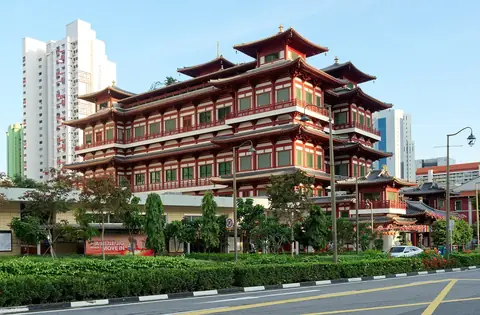
Chinatown
Chinatown in half a day: Buddha Tooth Relic Temple, Sri Mariamman, Thian Hock Keng, the S$25 Heritage Centre, Maxwell and Chinatown Complex, with a dated cost for two.
Read the guide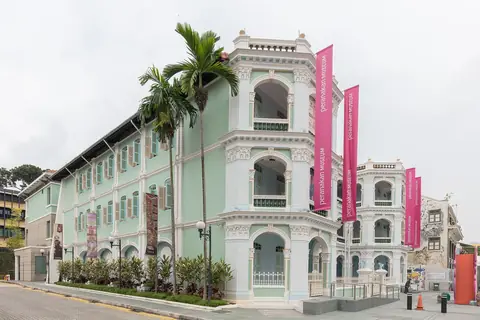
Singapore River and Civic District
Two nights by the Singapore River: the civic buildings, museum prices, the historic bridges, Boat Quay and Clarke Quay, the river cruise and a dated budget.
Read the guide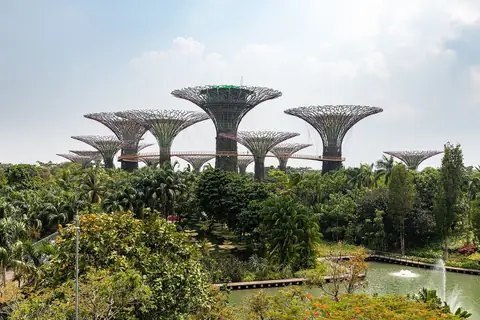
Singapore in 3 days
Two nights in one Chinatown hotel: Kampong Gelam and Little India, Gardens by the Bay and the river, Chinatown's temples, with tickets, food and a budget for two.
Read the guideSources and checks before you travel
(34)
- Singapore Tourism Board: Kampong Gelam ↗ — opens in a new tab
- Singapore Tourism Board: Kampong Gelam cultural precinct map (PDF, January 2023) ↗ — opens in a new tab
- Singapore Tourism Board: 24 hours in Singapore ↗ — opens in a new tab
- National Heritage Board (Roots): Victory Restaurant ↗ — opens in a new tab
- National Heritage Board (Roots): Bhai Sarbat ↗ — opens in a new tab
- Islamic Restaurant ↗ — opens in a new tab
- MUIS: Malabar Mosque ↗ — opens in a new tab
- Urban Redevelopment Authority: 471 Victoria Street ↗ — opens in a new tab
- Singapore Tourism Board: Sultan Mosque ↗ — opens in a new tab
- National Heritage Board (Roots): Sultan Mosque ↗ — opens in a new tab
- Sultan Mosque: about us and history ↗ — opens in a new tab
- Sultan Mosque: visitor information ↗ — opens in a new tab
- Malay Heritage Centre: home page ↗ — opens in a new tab
- Malay Heritage Centre: location and opening hours ↗ — opens in a new tab
- Malay Heritage Centre: about the centre ↗ — opens in a new tab
- Malay Heritage Centre: about Kampong Gelam ↗ — opens in a new tab
- Malay Heritage Centre: permanent galleries ↗ — opens in a new tab
- Malay Heritage Centre: guided tours ↗ — opens in a new tab
- Singapore Tourism Board: Hajjah Fatimah Mosque ↗ — opens in a new tab
- Singapore Tourism Board: Hari Raya Aidilfitri ↗ — opens in a new tab
- Singapore Tourism Board: Little India ↗ — opens in a new tab
- The Sultan: hotel ↗ — opens in a new tab
- Hjh Maimunah: locations ↗ — opens in a new tab
- Hjh Maimunah: home page ↗ — opens in a new tab
- Rumah Makan Minang: home page ↗ — opens in a new tab
- The Coconut Club: Beach Road ↗ — opens in a new tab
- The Coconut Club: Beach Road menu (June 2026, PDF) ↗ — opens in a new tab
- The Coconut Club: menu ↗ — opens in a new tab
- IRAS: GST for hotels and food and beverage ↗ — opens in a new tab
- Changi Airport Group: leaving Changi Airport ↗ — opens in a new tab
- Land Transport Authority: TEL extension and CRL to Changi Airport (25 July 2025) ↗ — opens in a new tab
- SimplyGo: adult fares ↗ — opens in a new tab
- SimplyGo: contactless bank cards ↗ — opens in a new tab
- Public Transport Council: Fare Review Exercise 2026 ↗ — opens in a new tab
Reference sources for the version dated 26 October 2026. Confirm opening times, access, transport and conditions for your travel dates.
Photo credits
(5)
Bussorah Street frames Sultan Mosque at the heart of the quarter.
Photograph: GoAheadFan95 — opens in a new tab · CC BY-SA 4.0 — opens in a new tab
Changes: Resized and converted to WebP; displayed with responsive crops. · Original photograph and licence details ↗ — opens in a new tab
The former palace houses the Malay Heritage Centre.
Photograph: GoAheadFan95 — opens in a new tab · CC BY-SA 4.0 — opens in a new tab
Changes: Resized and converted to WebP; displayed with responsive crops. · Original photograph and licence details ↗ — opens in a new tab
Rock-like objects on wooden stands in a gallery at the Malay Heritage Centre, photographed in 2026.
Photograph: Btcprox — opens in a new tab · CC BY-SA 4.0 — opens in a new tab
Changes: Resized and converted to WebP; displayed with responsive crops. · Original photograph and licence details ↗ — opens in a new tab
Blue, yellow and pink shophouses with arcaded ground floors on North Bridge Road.
Photograph: Marcin Konsek — opens in a new tab · CC BY-SA 4.0 — opens in a new tab
Changes: Resized and converted to WebP; displayed with responsive crops. · Original photograph and licence details ↗ — opens in a new tab
Haji Lane, a narrow street of white shophouses with shopfronts, plants and signs.
Photograph: Rainer Halama — opens in a new tab · CC BY-SA 4.0 — opens in a new tab
Changes: Resized and converted to WebP; displayed with responsive crops. · Original photograph and licence details ↗ — opens in a new tab