The Cultural Triangle · Central Province
Sigiriya and Dambulla travel guide: tickets, the climb and where to stay
Sigiriya is a rock about 200 m high with the ruins of a fifth-century palace on top and frescoes of celestial maidens on its flank. Dambulla, which Sri Lanka Tourism puts about 25 km away, has a cave temple of five painted caves high on a granite rock. Beside Sigiriya rises Pidurangala, a second rock with the best view of Sigiriya, and to the east, towards Polonnaruwa, lie the tanks where wild elephants gather. Two nights cover the rock and the cave temple. The decisions are how to split two hot mornings, where to sleep so that you reach the rock when the counters open, and whether Pidurangala at sunrise or elephants in the afternoon is worth the extra effort.
- Suggested time
- 2 nights in the Sigiriya area
- Where to stay
- Sigiriya village for an early start at the rock, or Dambulla for buses and the cave temple
- Season and timing
- The German Foreign Office (page of 17 October 2026) puts the north-east monsoon rains from December to March and the south-west monsoon rains from June to October, and adds that long, heavy rain is possible anywhere in any month. Sri Lanka Tourism's Minneriya page says May to October is a popular time to visit because of the Elephant Gathering.
The short answer
Book two nights in the Sigiriya area, see the cave temple at Dambulla on the afternoon you arrive, and climb Sigiriya the next morning as the ticket counters open at 07:00. Buy the Sigiriya ticket first, in the Central Cultural Fund's e-ticket system, and collect it at the counter with your order receipt number. A full ticket costs USD 35 for a foreign visitor and a half ticket for ages 6 to 12 costs USD 20, payable in rupees at the day's rate (as listed when we checked on 17 October 2026). Between Sigiriya and Dambulla a bus runs every 30 minutes from 06:30 to 18:00, and Sri Lanka Tourism lists a tuk-tuk from Dambulla at LKR 800 to 1,000. Add Pidurangala at sunrise for the best view of Sigiriya itself, or a jeep safari to Minneriya in the afternoon.
Sigiriya: the rock, the gardens and the climb
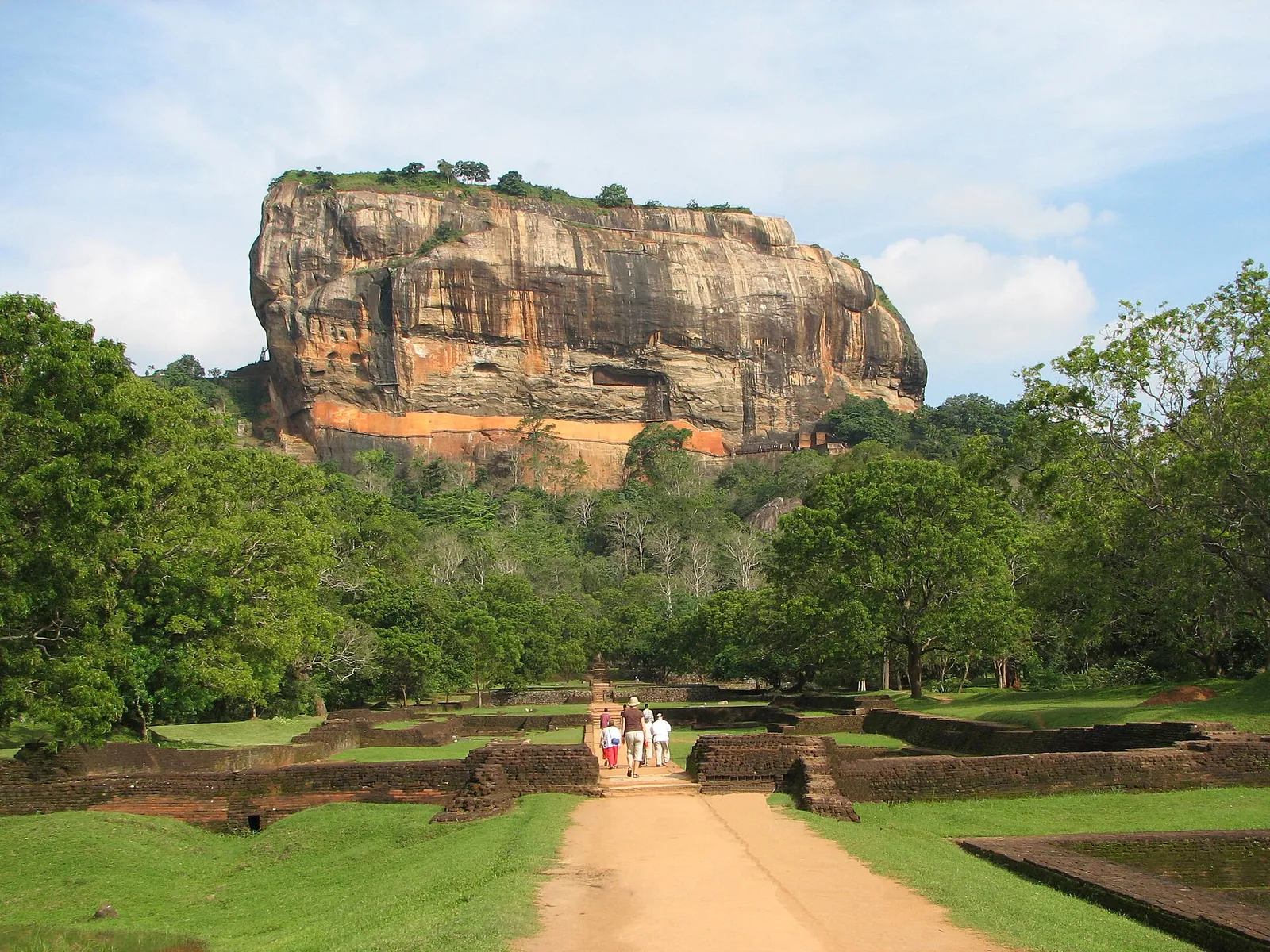
Sigiriya is a rock about 200 m high, the plug of an ancient extinct volcano, surrounded by the remains of an extensive network of gardens, reservoirs and other structures. The palace and its hydraulic systems date from the fifth century, and Sri Lanka Tourism adds that from about the fifth century BC the rock was already a rock-shelter monastery, with caves prepared and donated by devotees.
The climb follows the old processional route. It starts in the western gardens: the Water Gardens, with symmetrical pools, channels and fountains that still run in the rainy season, then the Boulder Gardens, where massive boulders carry brick foundations, meditation platforms and cave dwellings, and the terraced gardens above them. Midway up the rock a shallow shelter holds the Sigiriya frescoes of celestial maidens, twenty-two of the hundreds once painted on the western face; they resemble those at the Ajanta Caves in India but are generally agreed to be a uniquely Sri Lankan style. Below them runs the Mirror Wall, where visitors scratched more than 1,800 poems and reflections between the 6th and 14th centuries. On the Lion's Paws Terrace two stone paws, each about 3 m long, are all that is left of a lion-shaped gateway, and the stairs end on a summit with the foundations of the royal palace, rock-cut cisterns and views in every direction. The Fund puts the ascent at 1.5 to 2 hours and about 1,200 steps, with steep staircases.
Start as early as possible, go straight to the rock and wear a hat; drinks are sold only at the tourist exit, so bring water into the paid area. France Diplomatie (checked 16 October 2026) says hornet attacks are possible at the site, and the Fund's e-ticket terms ask visitors to follow its officers' instructions about wasps.
The German Foreign Office (page of 17 October 2026) says photographing the so-called cloud-maiden frescoes is forbidden and that breaking the ban can mean heavy fines and the seizure of your camera by the police. Photography permissions come with the ticket; professional filming needs prior written approval from the Central Cultural Fund.
Sigiriya tickets, hours and the museum
When we checked on 17 October 2026, a full ticket to Sigiriya cost USD 35 (LKR 11,760) and a half ticket USD 20 (LKR 6,720), at the Central Cultural Fund's rate of LKR 336 per USD on its table of 14 October 2026. For foreign visitors these are the Foreign Tourist Full and Foreign Tourist Half tickets, the half being for children aged 6 to 12. Prices are quoted in USD and payable in rupees at the current rate. SAARC citizens get a 50% discount, and the prices include 18% VAT.
A ticket is valid for a single entry on the day. You can book through the Fund's e-ticket system and collect the physical ticket at the Sigiriya counter by showing the order receipt number; an order is valid for 90 days and payments are not refunded. The Fund opens its ticket counters at all heritage sites from 07:00 to 17:00 daily, and the Department of Archaeology gives the site's own hours as 06:30 to 17:30, so do not plan to reach the counter at closing time.
The Sigiriya Museum stands outside the main entrance and takes about an hour; it shows reproductions of the frescoes, photographs of the excavation and translations of some of the graffiti on the Mirror Wall. The Fund's tickets page lists it as open from 08:00 to 17:00, while its museums page says most museums are open Tuesday to Sunday, 09:00 to 17:00. The Central Cultural Fund's tickets page says the museum is included with the Sigiriya ticket, but its price table lists the museum at USD 6 (LKR 2,016); ask at the counter. Photography and filming are not allowed inside Central Cultural Fund museums.
The Fund also sells a Cultural Triangle round ticket that covers Sigiriya, Anuradhapura, Polonnaruwa, all archaeological museums and photography permissions. It is valid for two months from first use, allows one entry per site and must be used within three months of purchase. The Central Cultural Fund's tickets page lists no price for the Cultural Triangle round ticket; Sri Lanka Tourism's travel-tips page prints USD 50, which differs from the Fund's single-site table of 14 October 2026, so ask at the counter. The single tickets for the three sites total USD 95 (Sigiriya USD 35, Anuradhapura USD 30, Polonnaruwa USD 30), so buy the round ticket only if the counter quotes less than that.
Pidurangala: the view of Sigiriya from the next rock
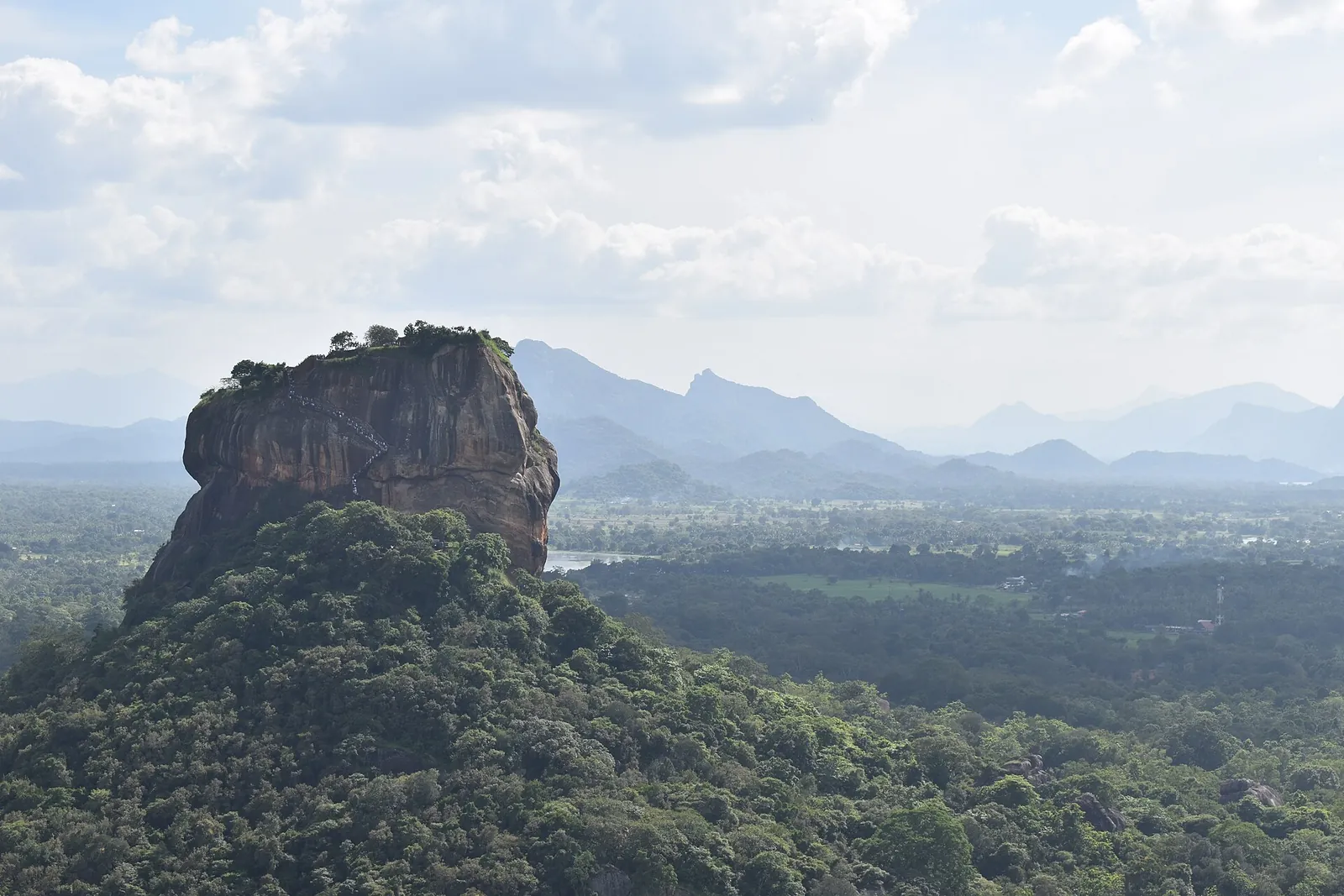
Pidurangala is the rock beside Sigiriya, and it answers a question the main climb cannot: from Sigiriya you cannot see Sigiriya. It is an ancient rock temple with the best panoramic views of the Sigiriya rock fortress, a challenging climb that rewards walkers with a sunrise view and a different angle on the Lion Rock. The monastery goes back to the first and second centuries BCE and became prominent under King Kasyapa; Sri Lanka Tourism lists a stupa, a chapter house, a bodhi-tree shrine, a preaching hall and an image house at Pidurangala, and on the rock itself a cave with a recumbent Buddha image and the ruins of a stupa. No official page publishes the Pidurangala fee or hours; pay and ask at the temple gate.
It is a temple, so dress for one: the German Foreign Office (page of 17 October 2026) says temples may be entered only with covered shoulders and with trousers or skirts that reach below the knee. France Diplomatie (checked 17 October 2026) adds that photographing Buddhist monks can expose you to criminal prosecution, so ask before you photograph a monk. A sunrise climb of Pidurangala followed by Sigiriya later in the morning is a long day in the heat, so give each its own morning if you have a third night.
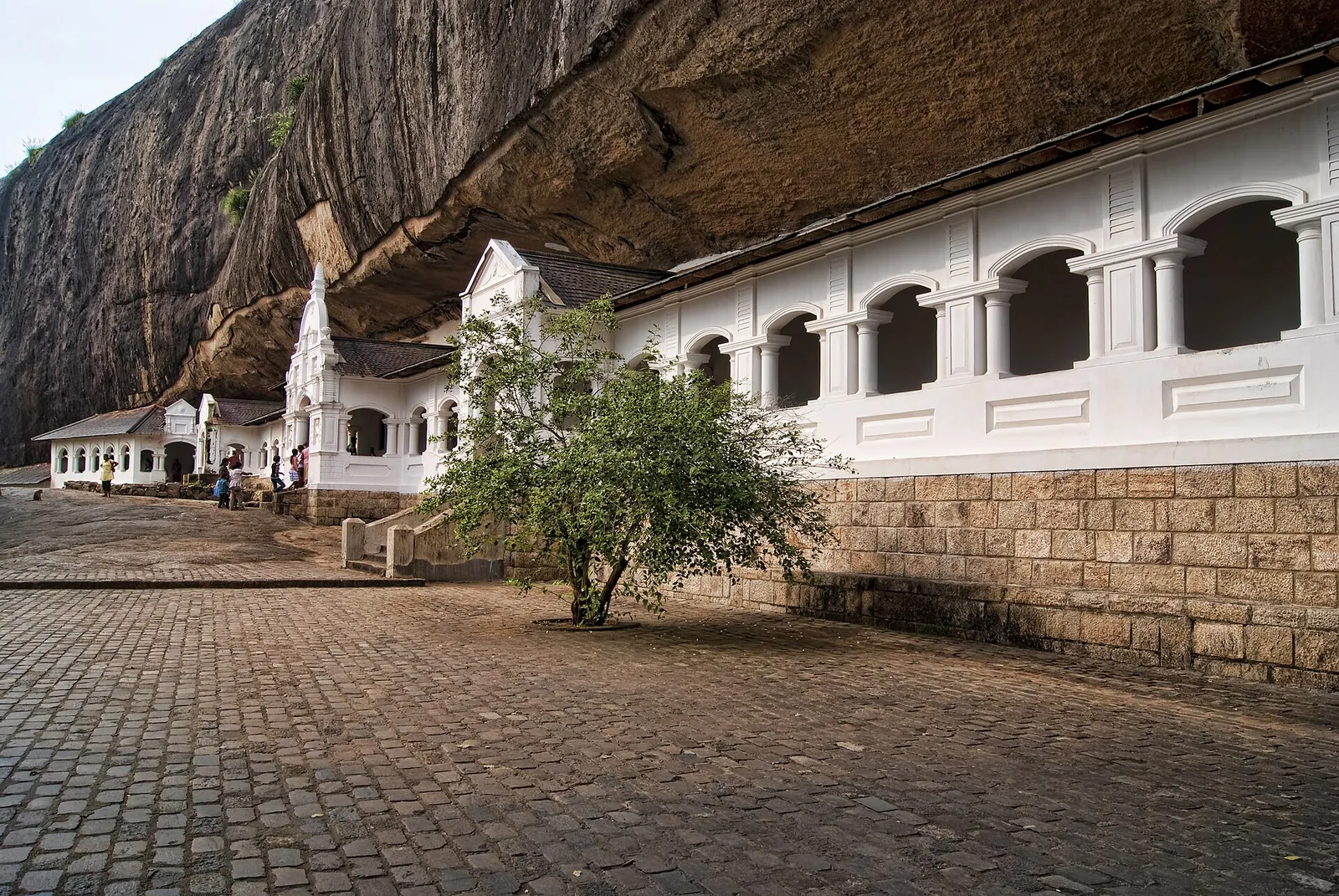
Dambulla cave temple: five caves high on the rock
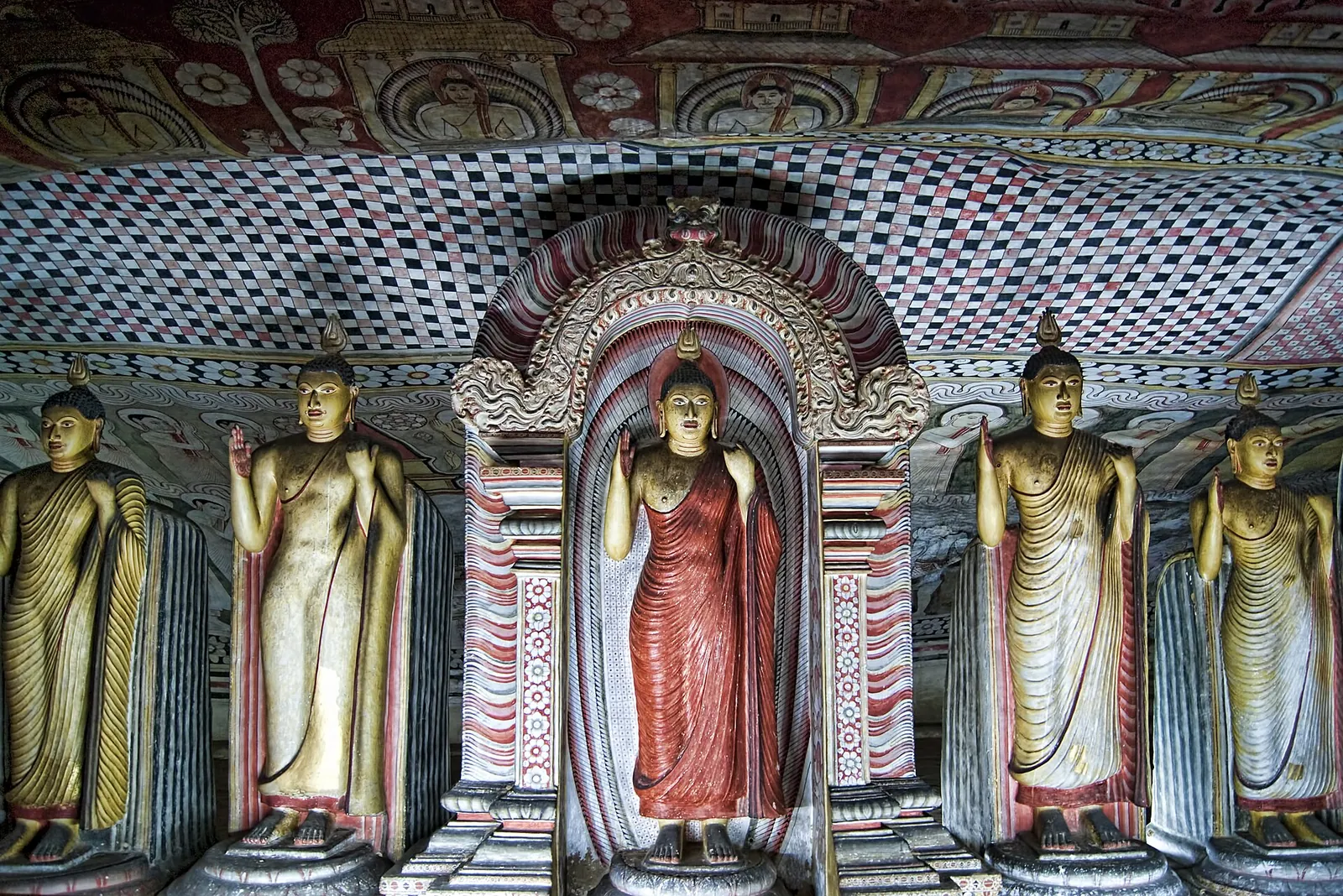
The cave temple at Dambulla dates from the first century BCE and is the most notable cave temple in the country. The Central Cultural Fund describes the temple as perched atop a granite outcrop rising 160 metres above the surrounding plains, and Sri Lanka Tourism gives the rock as 150 m high. The five caves have a drip line carved into the rock to keep the interiors dry. Inside, the ceilings are covered with colourful religious images, and there are more than 150 Buddha statues and murals dating back 2,000 years, among images of the Buddha and bodhisattvas. The Central Cultural Fund describes Cave I as holding a 14 m reclining Buddha carved from the rock, and Cave II, the largest at about 52 m wide, as holding 56 Buddha statues under about 2,100 square metres of ceiling and wall paintings. The caves are called Devaraja Lena, Maharaja Lena, Maha Alut Viharaya, Paccima Viharaya and Devana Alut Viharaya.
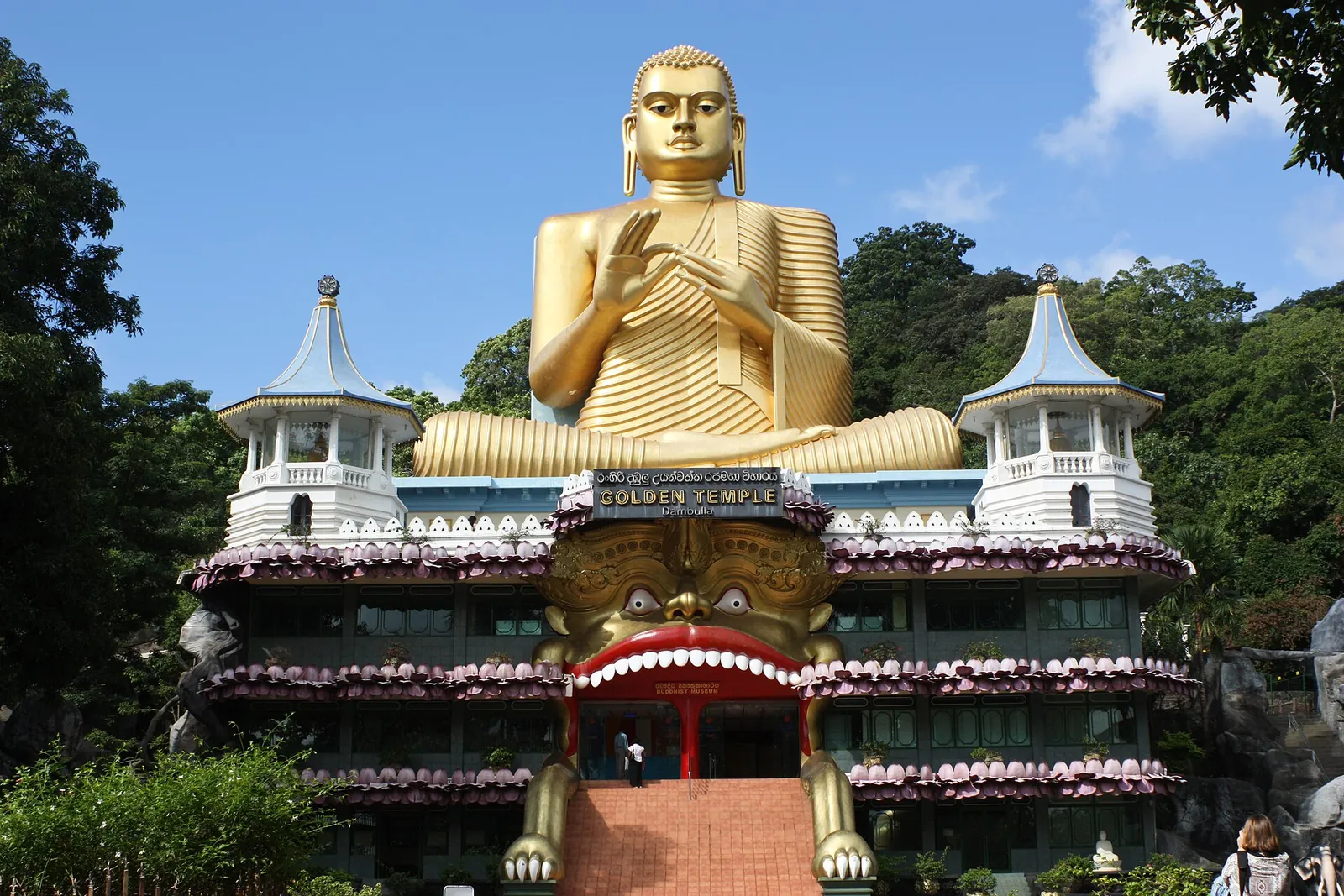
Visitors can reach the temple by four entrances: two from the Kandy road (A-9), one from the Kurunegala to Dambulla road (A-6) and one from the Valagamba pirivena. Each route is a long flight of granite steps, best climbed in the morning or evening. Foreign visitors buy tickets at the office at the entrance near the golden temple, and the Fund's tickets page lists the temple as open from 07:00 to 17:00 with a single entry. Sri Lanka Tourism lists the cave-temple entrance at USD 10; confirm the price at the ticket office. The Dambulla Painting Museum is a separate museum, at USD 3 (LKR 1,008) for a full ticket and USD 1.50 (LKR 504) for a half ticket.
The temple is a place of worship, so the dress rule from Pidurangala applies, and the German Foreign Office (page of 17 October 2026) adds that you must not be photographed with your back to a Buddha statue. Sri Lanka Tourism's travel-tips page (checked 16 October 2026) says being photographed in front of statues and murals is forbidden and that flash can damage murals.
Choosing a base: Sigiriya, Dambulla or both
Sigiriya is a village around a rock fortress; Dambulla, about 25 km away by Sri Lanka Tourism's figure, is the closest city, with the cave temple on the rock above it.
For a first visit, sleep in the Sigiriya area for two nights. That puts you at the ticket counters at opening time and lets you climb before the heat, and Dambulla becomes an afternoon. Sleep in Dambulla instead if you rely on public transport: a regular bus links the two places every 30 minutes, and the last one back leaves at around 18:00, so do not stay late at the rock unless you have a room in Sigiriya. For rooms in either place, see the where-to-stay guide.
In the ten-day first-trip loop these two nights come between the arrival night in Colombo and the move to Kandy.
Minneriya: elephants in the afternoon
The area around Polonnaruwa is one of the best in the country for spotting wild elephants, with Minneriya National Park the place to head for. Elephants gather around the park's tank in growing numbers towards the end of the dry season, most famously at Minneriya's "Gathering", and Sri Lanka Tourism's Minneriya page says May to October is a popular time to visit because of it. A jeep safari from the Sigiriya area fits the afternoon after the rock.
The Department of Wildlife Conservation sets the fees in Gazette 2292/11, applying from 2 September 2022; that link was dead when we checked on 17 October 2026, and the ePermit shows no amount until you choose a park and date; the charge depends on the park, the group and the vehicle. Take a printout of the permit and the receipt: the booking page calls the printout mandatory. Under the Department's permit conditions you may enter between 05:00 and 18:00 and must leave by 18:30. The UK Foreign Office (page of 17 October 2026) warns that wild elephants will attack humans on occasion, so stay with the jeep and the guide. The Polonnaruwa guide gives the booking steps.
Getting there and a two-night plan
Sri Lanka Tourism gives the distance from Colombo to Sigiriya as 169 km, and no official page gives a drive time, so ask your driver or hotel and plan to arrive in the afternoon. The transport guide covers drivers, buses and the fuel quota.
Cinnamon Air's winter air-taxi offer for Colombo to Sigiriya is USD 100++ one way per person (regular fare USD 150++) for travel from 1 November to 15 December 2026, booked and paid by 15 December 2026. For travel after 15 December 2026, ask the airline for the fare.
No official page gives the road distance from Sigiriya to Kandy or from Colombo to Dambulla, or a Colombo to Dambulla bus fare. Keep day 3, the road to Kandy, free of fixed plans.
- Day 1, afternoon: drive from Colombo, climb the steps at the Dambulla cave temple before it closes at 17:00, then check in at Sigiriya.
- Day 2, early: be at the Sigiriya ticket counter as it opens at 07:00 and climb straight away, and keep the museum for the hour after you come down.
- Day 2, afternoon: rest through the heat, then a jeep to Minneriya if you want the elephants.
- Day 3: leave for Kandy, or for Polonnaruwa if you are continuing round the Cultural Triangle; with a third night, climb Pidurangala at sunrise first.
Make time for the local food
What to eat and where to look
Rice and curry
Sri Lanka Tourism calls rice and curry the main meal of Sri Lanka, with several kinds of curry made from vegetables, meat and fish.
- Where to look
- Any guesthouse or rice-and-curry shop in Sigiriya village or Dambulla town; no official page names a restaurant for these dishes.
- Fit it into your day
- Lunch after the cave temple.
Spiciness is a defining feature of Sri Lankan food, according to Sri Lanka Tourism, so say so when you order if you avoid chilli.
Hoppers
Bowl-shaped pancakes of fermented rice flour and coconut milk, crisp at the edges and thicker at the bottom, according to Sri Lanka Tourism. A plain hopper comes with lunumiris and a spicy curry, and an egg hopper adds an egg.
- Where to look
- Breakfast or dinner at guesthouses and small restaurants in Sigiriya village.
- Fit it into your day
- Dinner after a day at the rock.
Lunumiris, the usual accompaniment, is made with onion and chilli, so ask for it on the side if you avoid heat.
String hoppers with pol sambol
Nests of steamed rice-flour strands, normally a breakfast or dinner dish, served with a curry of dhal, potato, fish or meat and with pol sambol, a coconut sambol of coconut, chilli and onion, according to Sri Lanka Tourism.
- Where to look
- Breakfast at guesthouses and hotel restaurants in the Sigiriya area.
- Fit it into your day
- Breakfast on the morning of the climb.
Pol sambol is spicy and, according to Sri Lanka Tourism's food page, can contain Maldive fish; the curry that comes with the strands may be fish or meat, so say what you avoid.
Kottu roti
Chopped godhamba roti cooked with vegetables, egg and/or meat, and spices, the street dish that Sri Lanka Tourism names as one of the most defining of the country's street food.
- Where to look
- Small restaurants and street stalls in Dambulla town.
- Fit it into your day
- A quick dinner on arrival.
Check the filling when you order if you avoid meat or egg.
Pol roti
A rustic flatbread of flour and grated coconut with green chilli and onion, eaten with a spicy sambol or curry, or sweet with jaggery and bananas, according to Sri Lanka Tourism.
- Where to look
- Hotel breakfasts and guesthouse kitchens in the Sigiriya area.
- Fit it into your day
- Breakfast before you leave for the rock.
The sambol is spicy; the sweet version with jaggery and bananas suits those who avoid heat.
Practical questions
How much does a Sigiriya ticket cost for a foreign visitor?
When we checked on 17 October 2026, a full foreign-tourist ticket cost USD 35 and a half ticket, for children aged 6 to 12, USD 20. The amount is payable in rupees at the day's rate.
What are the opening hours at Sigiriya?
The site is open from 06:30 to 17:30 daily, and the ticket counters from 07:00 to 17:00. Plan around the counters.
Can I photograph the Sigiriya frescoes?
No. The German Foreign Office (page of 17 October 2026) says photographing the cloud-maiden frescoes is forbidden and that breaking the ban can lead to heavy fines and the seizure of your camera.
Is Sigiriya worth a night, or can I visit in a day?
A day from Dambulla works: Sri Lanka Tourism puts Sigiriya about 25 km from Dambulla, and the last bus back leaves at around 18:00. Sleeping in Sigiriya gives you the counter opening and a cooler climb.
How long does the Sigiriya climb take?
The Central Cultural Fund puts the ascent at 1.5 to 2 hours and about 1,200 steps, with steep staircases, past the gardens, the frescoes, the Mirror Wall and the Lion's Paws Terrace to the summit.
Where do I see wild elephants near Sigiriya?
Minneriya National Park, where elephants gather around the tank; Sri Lanka Tourism's Minneriya page says May to October is a popular time because of the Elephant Gathering. The Polonnaruwa guide has the booking steps.
Can I fly a drone at Sigiriya?
Not without approval. Drone filming needs prior written approval from the Central Cultural Fund, and the Ministry of Defence says no drone may be operated within archaeological sites without prior approval.
Sources and checks before you travel
Reference sources for the version dated 18 October 2026. Confirm opening times, access, transport and conditions for your travel dates.
- Central Cultural Fund: ticket prices ↗ — opens in a new tab
- Central Cultural Fund: Tickets ↗ — opens in a new tab
- Central Cultural Fund: e-ticket terms ↗ — opens in a new tab
- Central Cultural Fund: ticket issuance ↗ — opens in a new tab
- Central Cultural Fund: Permission for filming and photographs ↗ — opens in a new tab
- Central Cultural Fund: Heritage Sites ↗ — opens in a new tab
- Central Cultural Fund: Destinations ↗ — opens in a new tab
- Central Cultural Fund: Museums ↗ — opens in a new tab
- Department of Archaeology: Sigiriya ↗ — opens in a new tab
- Sri Lanka Tourism: Sigiriya ↗ — opens in a new tab
- Sri Lanka Tourism: Dambulla Cave Temple ↗ — opens in a new tab
- Sri Lanka Tourism: Travel Tips ↗ — opens in a new tab
- German Foreign Office (Auswärtiges Amt): Sri Lanka, Reise- und Sicherheitshinweise ↗ — opens in a new tab
- France Diplomatie: Sri Lanka, Sécurité ↗ — opens in a new tab
- Ministry of Defence: drone clearance ↗ — opens in a new tab
- Sri Lanka Tourism: Culinary Tourism ↗ — opens in a new tab
- Sri Lanka Tourism: Buddhist places, Pidurangala ↗ — opens in a new tab
- Sri Lanka Tourism: Polonnaruwa ↗ — opens in a new tab
- UK Foreign Office: Sri Lanka safety and security ↗ — opens in a new tab
- Cinnamon Air: Colombo to Sigiriya winter offer ↗ — opens in a new tab
- Central Cultural Fund: Sigiriya Rock Fortress ↗ — opens in a new tab
- Central Cultural Fund: Dambulla Cave Temple ↗ — opens in a new tab
- Department of Wildlife Conservation: ePermit terms ↗ — opens in a new tab
- Department of Wildlife Conservation: Day Visitor ePermit ↗ — opens in a new tab
- Sri Lanka Tourism: Minneriya National Park ↗ — opens in a new tab
- Sri Lanka Tourism: culinary tourism ↗ — opens in a new tab
- France Diplomatie: Informations utiles ↗ — opens in a new tab
- Department of Wildlife Conservation: fee revision notice ↗ — opens in a new tab
Photo credits
The Sigiriya rock and the garden paths at its foot
Photograph: Bernard Gagnon — opens in a new tab · CC BY-SA 3.0 — opens in a new tab
Changes: Resized and converted to WebP; displayed with responsive crops. · Original photograph and licence details ↗ — opens in a new tab
Sigiriya seen from Pidurangala Rock
Photograph: Gayomiw — opens in a new tab · CC BY-SA 4.0 — opens in a new tab
Changes: Resized and converted to WebP; displayed with responsive crops. · Original photograph and licence details ↗ — opens in a new tab
The cave temple façade under the Dambulla rock overhang
Photograph: Philip Nalangan — opens in a new tab · CC BY 4.0 — opens in a new tab
Changes: Resized and converted to WebP; displayed with responsive crops. · Original photograph and licence details ↗ — opens in a new tab
Painted walls and Buddha statues inside a Dambulla cave
Photograph: Philip Nalangan — opens in a new tab · CC BY 4.0 — opens in a new tab
Changes: Resized and converted to WebP; displayed with responsive crops. · Original photograph and licence details ↗ — opens in a new tab
The Golden Temple and its giant Buddha at Dambulla
Photograph: Julie Anne Workman — opens in a new tab · CC BY-SA 3.0 — opens in a new tab
Changes: Resized and converted to WebP; displayed with responsive crops. · Original photograph and licence details ↗ — opens in a new tab