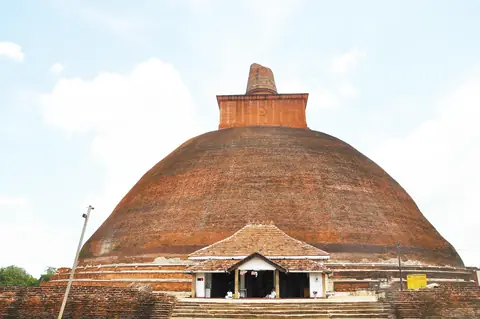
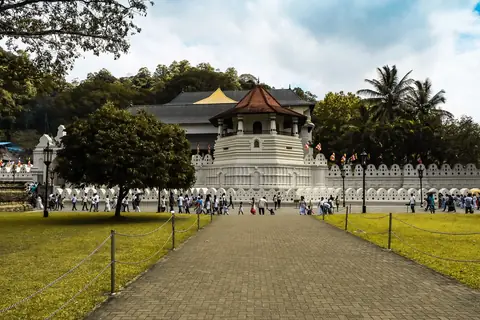
The Cultural Triangle · North Central Province
Polonnaruwa travel guide: tickets, the ruins and how to spend a day
Polonnaruwa is the Cultural Triangle stop that repays a slower pace. Sigiriya is one climb and Dambulla one flight of steps, but the medieval capital is a spread of brick palaces, round shrines and carved rock faces among trees, and the question is how to cover them in one day without the heat deciding for you. This guide gives the ticket price, the order to see the groups in, the elephant safari at Minneriya, how to get here and what a day costs for two.
- Suggested time
- 1 full day; 1 night in Polonnaruwa town if you want to be at the gate at opening; a second afternoon for the elephants
- Where to stay
- Polonnaruwa town for an early start at the ticket counter, or the Sigiriya area for a day trip with a driver
- Season and timing
- The German Foreign Office (page of 17 October 2026) puts the north-east monsoon rains from December to March and the south-west monsoon rains from June to October, and adds that long, heavy rain is possible anywhere in any month. Sri Lanka Tourism's Minneriya page says May to October is a popular time to visit because of the Elephant Gathering.
The short answer
Give Polonnaruwa one full day and be at the ticket counter when it opens at 07:00. Book your room first, in Polonnaruwa town for the early start or in the Sigiriya area with a driver for the day; the ticket can be bought at the counter or ordered beforehand in the Central Cultural Fund's e-ticket system. A full ticket costs USD 30 for a foreign visitor and a half ticket for ages 6 to 12 costs USD 15 (read on 17 October 2026); the Polonnaruwa Museum is included. By train from Colombo Fort, a reserved second-class seat costs LKR 1,600 one way on the railway's 2022 table, on the Udaya Devi leaving at 06:05 or the Pulathisi at 15:15. See the Quadrangle with its round Vatadage first, then the palace, the museum and Gal Vihara, where the Buddha figures are carved into the rock, and keep the elephants of Minneriya for a second afternoon.
Choosing a base: a night in Polonnaruwa or a day from Sigiriya
Polonnaruwa is a single archaeological site in the North Central Province, and the whole visit hangs on one decision: how early you can be at the gate. A night in Polonnaruwa town lets you be at the Central Cultural Fund's ticket counter when it opens at 07:00 and be finished before the worst of the afternoon. It also keeps the day free of a transfer.
The other way is to visit from a base in the Sigiriya area with a driver, which suits a trip that already gives two nights to the rock and the cave temple. The Sigiriya and Dambulla guide covers that base. Book the driver for the whole day, and keep the Sigiriya climb for a different morning.
Book a room in the town for the early start; our where-to-stay guide lists rooms in the Sigiriya area only, not in Polonnaruwa town. One night is enough; the ruins fill a day, not two. A second day makes sense only if you add the elephants of Minneriya.
The second capital: what you are walking through
Polonnaruwa, a World Heritage site in the dry zone, was the island's second great capital, in the medieval era of the 11th to 13th centuries CE. Its history goes back further. A Brahmi inscription of the 2nd century BCE on a cave-shelter in the rocky outcrop of Gopala Pabbata records that the cave was donated to Buddhist monks. In the Anuradhapura period the town was a provincial capital, and around the mid-11th century it became the capital of the country. Three rulers made it great: Vijayabahu the Great (1055 to 1110 CE), Parakramabahu the Great (1153 to 1186 CE) and, later in the century, Nissanka Malla, whose dates the Fund gives as 1167 to 1196 CE.
The layout explains the visit. The city had a citadel, or inner city, with the king's palace, the royal household and administrative buildings such as the Council Chamber, and a wide outer city of shrines, of which the Sacred Quadrangle was the chief. Brick ramparts and water moats surrounded it, with gate-houses facing the four main directions. This was the golden age of agriculture: Parakramabahu built a huge reservoir, Parakrama Samudra, the Sea of Parakrama, and the country exported rice.
Brick is the material to look for. At Anuradhapura builders used stone widely, while at Polonnaruwa they used brick, which made it possible to put up a large number of buildings in a short time. The site is not only Buddhist either: several Hindu shrines were built in South Indian traditions, among them the stone-built Siva Devale Nos. 1 and 2, and Hindu influence shows in the carving on the image houses and in sculpture. Expect a site of many separate groups spread out, not one monument.
Tickets, hours and the site rules
When we read the table on 17 October 2026, a full ticket to Polonnaruwa cost USD 30 (LKR 10,080) and a half ticket USD 15 (LKR 5,040), at the Central Cultural Fund's rate of LKR 336 per USD on its table dated 14 October 2026. For foreign visitors these are the Foreign Tourist Full and Foreign Tourist Half tickets, the half being for children aged 6 to 12. Prices are quoted in USD and payable in rupees at the current rate, so the rupee amount moves with the exchange rate. SAARC citizens get a 50% discount, and the prices include 18% VAT.
Buy the ticket at the Polonnaruwa Museum, which Sri Lanka Tourism names as the place where tickets to the site are sold. The ticket counters are open from 07:00 to 17:00 daily, and a ticket is valid for a single entry on the day. You can also book through the Fund's e-ticket system and collect the physical ticket at the site counter by showing the order receipt number; an order is valid for 90 days and payments are not refunded. No official page says whether the counter takes cards; ask at the counter.
The Fund also sells a Cultural Triangle round ticket that covers Sigiriya, Anuradhapura, Polonnaruwa, all archaeological museums and photography permissions. It is valid for two months from first use, allows one entry per site and must be used within three months of purchase. The Central Cultural Fund's tickets page lists no price for the Cultural Triangle round ticket; Sri Lanka Tourism's travel-tips page prints USD 50, which differs from the Fund's single-site table of 14 October 2026, so ask at the counter.
The site has firm rules. Damaging, removing or writing on monuments and objects, and damaging or removing trees and plants, are forbidden and carry penalties under the Archaeology Ordinance. Never pose with your back to a Buddha image, which is prohibited, or in front of one, which the UK Foreign Office (page of 17 October 2026) advises against; touching the images in a way that shows disrespect is also prohibited. Photographs and videos for commercial or professional purposes need the Fund's prior permission, and drones need its prior written approval; the Ministry of Defence also says no drone may be operated within archaeological sites without prior approval. Polythene or plastic containers may not be brought in, and no official page says how this applies to drinking water. Loudspeakers, radios, musical instruments and liquor should be avoided, and food should be eaten only in suitable places.
Dress as for a place of worship: the German Foreign Office (page of 17 October 2026) says temples may be entered only with covered shoulders and trousers or skirts that reach below the knee. Some heritage sites lie inside sanctuaries and nature reserves, so follow the Fund's officers' instructions about wasps; the ticket is not valid for the strict nature reserves near the sites.
The Sacred Quadrangle and the Vatadage
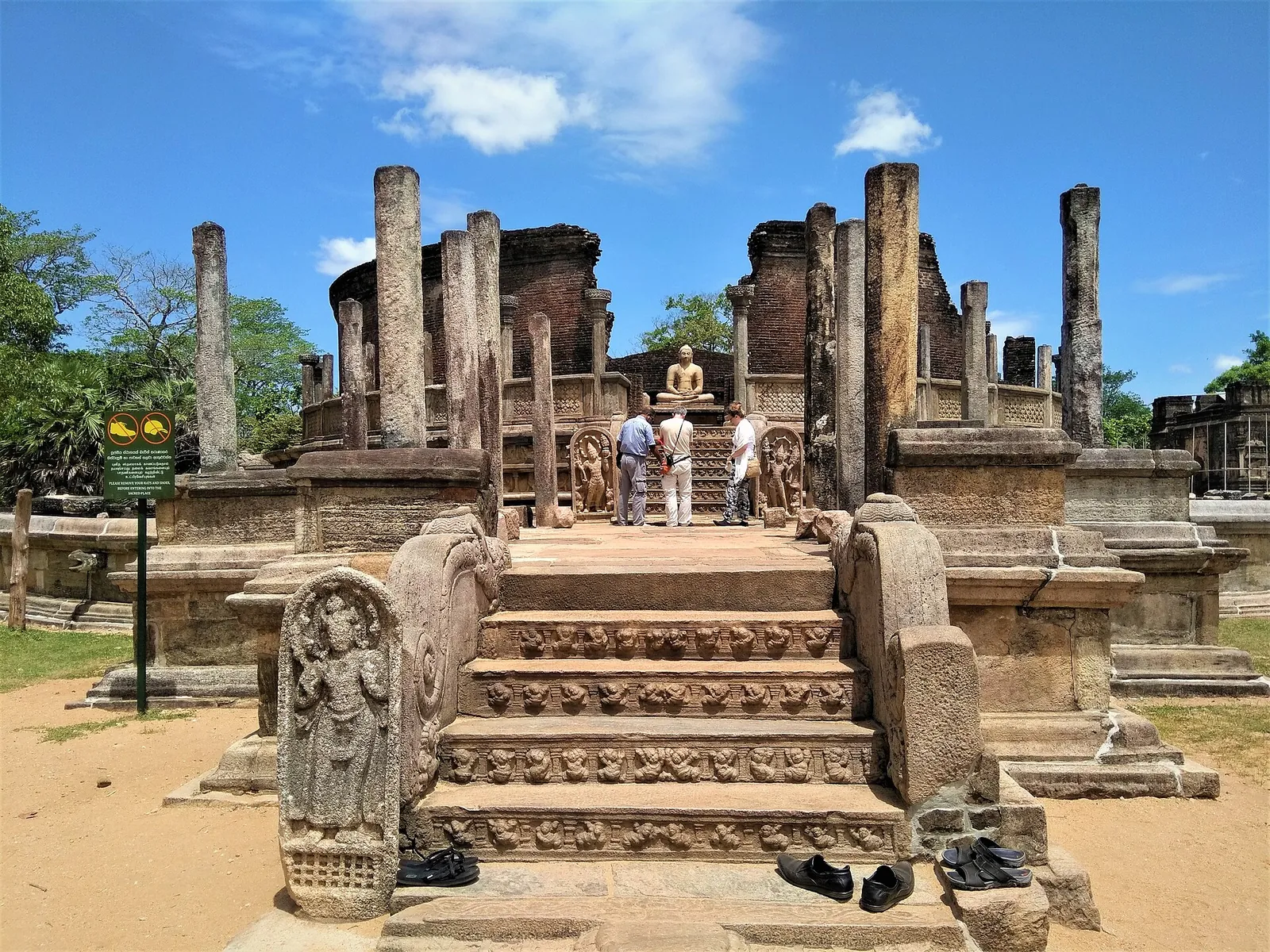
Start where the city kept its most sacred things. The Sacred Quadrangle, the Dalada Maluwa or Terrace of the Tooth Relic, was the chief of the outer city's shrines and the place where the Tooth Relic of the Buddha was enshrined. Its centrepiece is the Vatadage, a circular stupa-shrine, with stone carvings on the vertical face of its raised plinth, slender stone pillars that held up its conical roof, friezes of lions, dwarfs and lotuses on the outer walls and, at each of the four entrances, elaborate moonstones and guardstones with seven-hooded cobra kings. Look down at the entrances: Polonnaruwa's moonstones leave out the ox that appears on those at Anuradhapura, a result of the Hindu presence.
The smaller Nissankalata Mandapa has rows of pillars shaped like lotus stems, and the tiered stupa called the Satmahal Prasada stands at the Quadrangle. Its style resembles stupas in Southeast Asian countries, a sign of the religious and diplomatic links that Polonnaruwa's rulers kept with countries such as Thailand. The Quadrangle is a place of worship as well as a ruin, so the photo rule above applies.
Gal Vihara, the image houses and the monastery
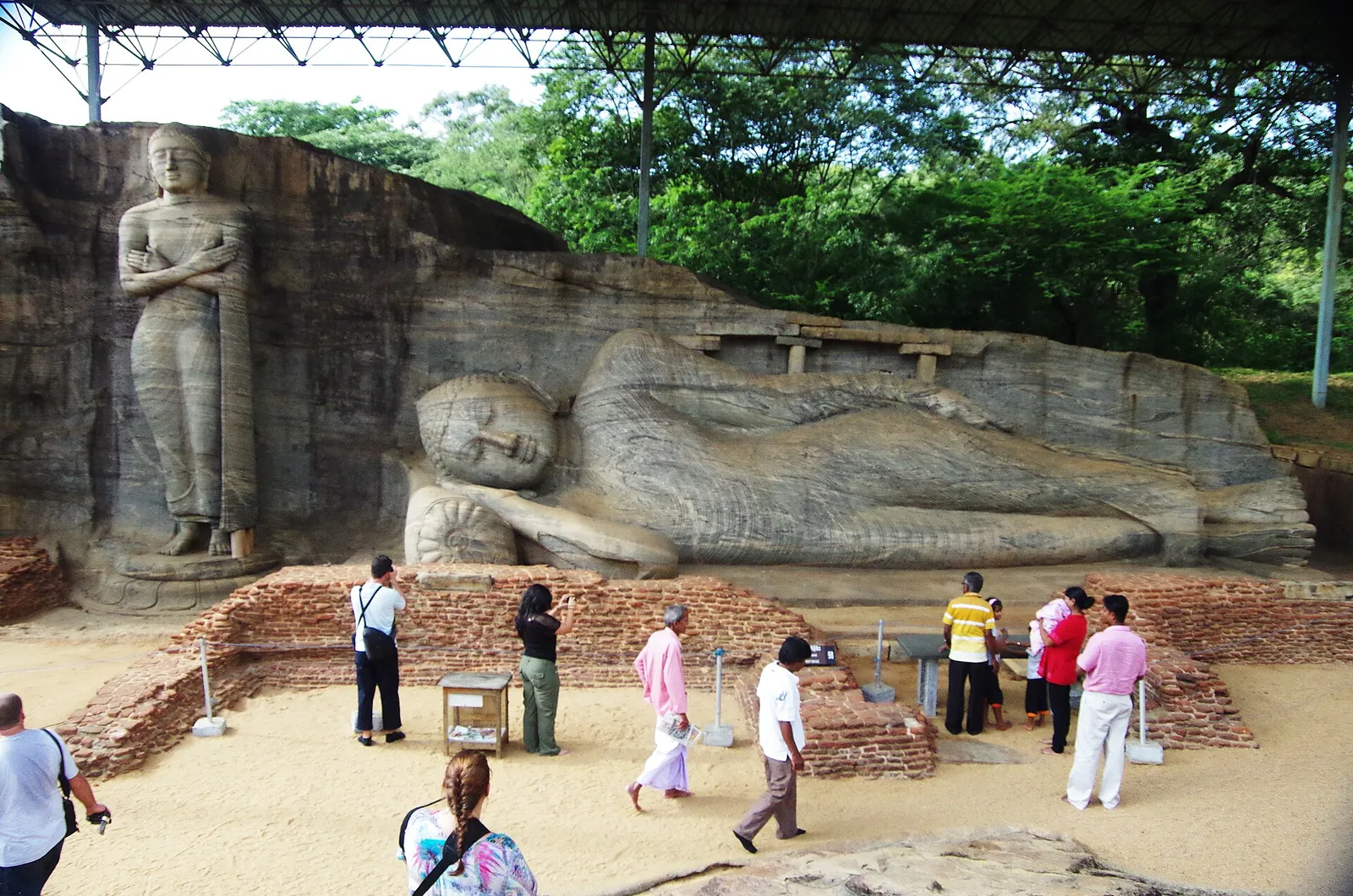
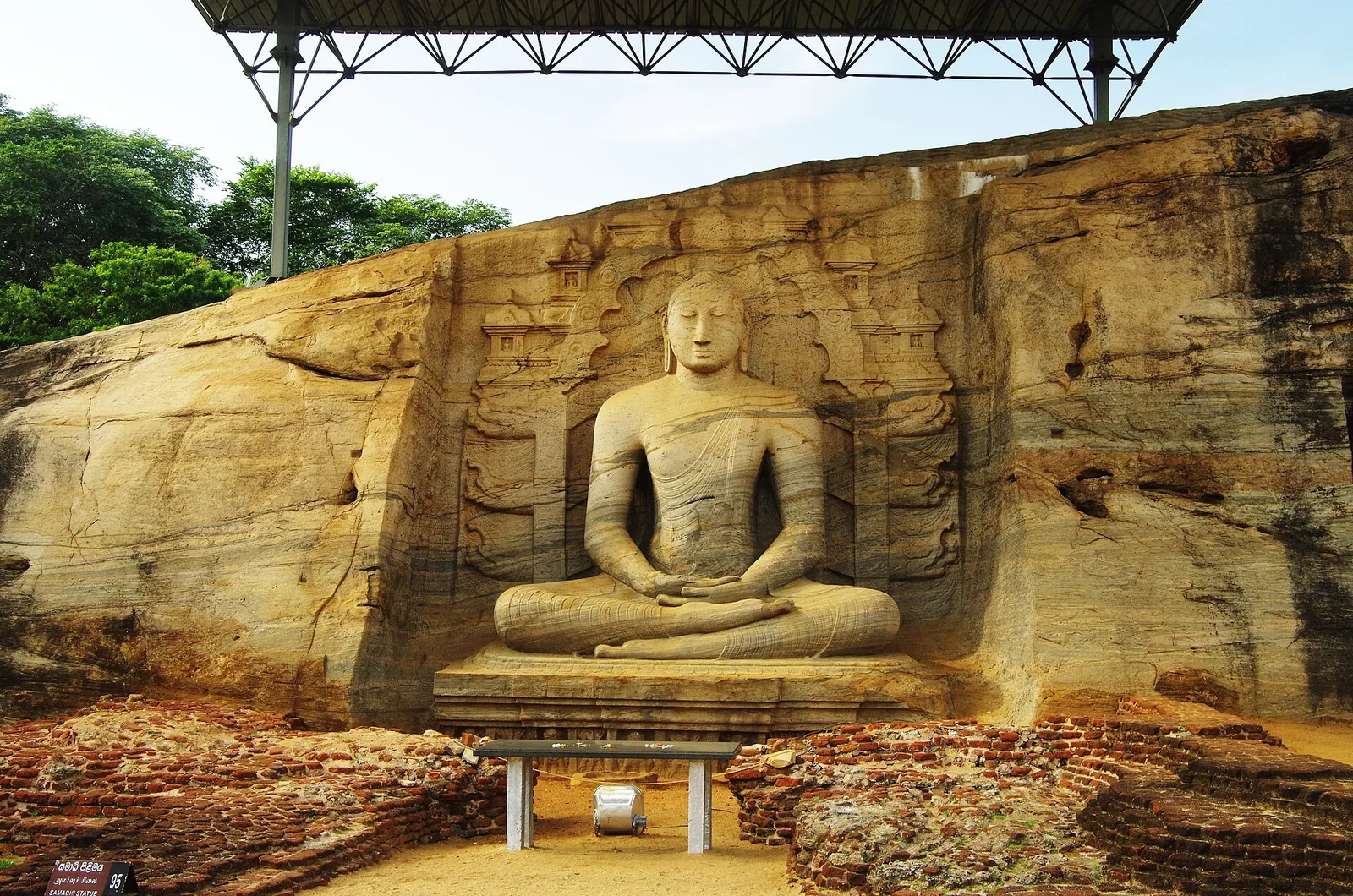
Gal Vihara is the most celebrated group at Polonnaruwa: four Buddha figures cut into one granite cliff face by unknown sculptors. Its centrepiece is the 14-metre (46 ft) reclining Buddha, where dark strata in the rock run across the face and body like ripples, and one of the other figures is a standing Buddha. The Fund writes that the figures arouse loving kindness in the viewer. Allow time to stand and look, because the figures are the reason the site is famous.
Two other groups show the brick side of the city. The Lankatilaka, Tivanka and Thuparama Image Houses are massive brick-built structures. The walls of the Lankatilaka image house rise 16 metres around a large standing Buddha whose head is missing, in a narrow space, and the carved reliefs outside show multi-storey houses that Sri Lanka Tourism reads as imagined homes of the gods, not as a picture of the ancient city. The weathered brick Buddha images of Lankatilaka and Tivanka rank with the figures of Gal Vihara, according to the Fund. Wall paintings were common in the Polonnaruwa period, and most of those that survive are in the Tivanka Image House, where the Fund says the line drawing is finer than at Sigiriya. The colossal statue at Potgul Vehera has been read as the likeness of a king or a sage.
The monastic university of Alahana Parivena is the other noteworthy foundation. Its Chapter House, the Baddhasima Prasada, had nine storeys, and the monastic hospital in its precincts treated residents and outpatients: surgical tools were recovered there, and a stone trough in one ward, called a medicine boat, held herbal baths for patients. These are foundations and fragments, so read the signs at each group before you walk on.
The royal palace, the ponds and the great stupas
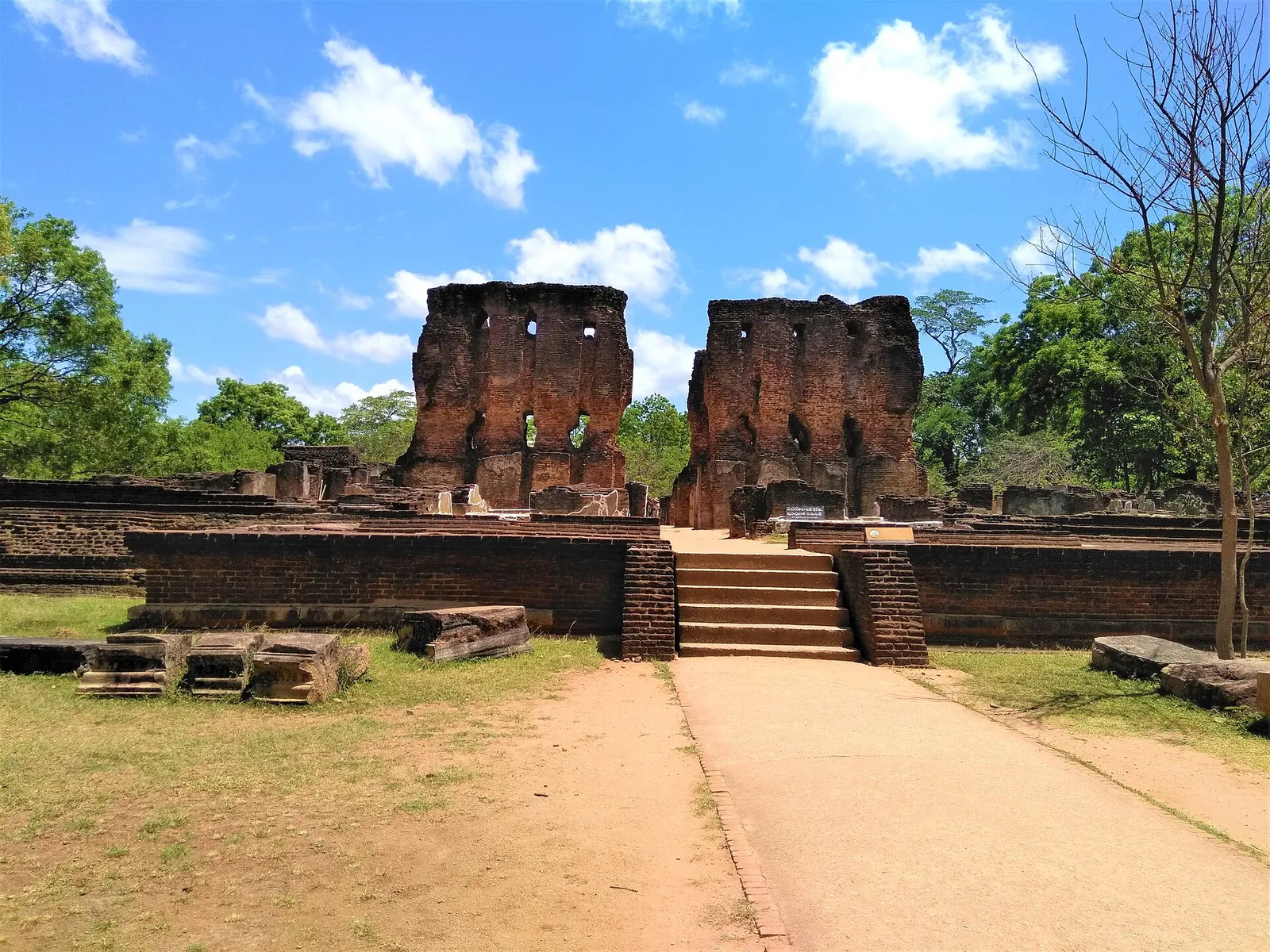
The Palace of King Parakramabahu the Great is the best place in the country to picture a royal home. Sigiriya's palace survives only as foundations, so for what an ancient royal residence looked like one depends on this one. Its massive brick walls were reinforced with huge timber members, and the seven-storied palace is preserved to a height of two storeys. The historical chronicles credit it with a thousand rooms, a dancing hall and a banqueting hall. Stand in the courtyard and look at how thick the walls are before you read the plan.
Around the palace, the citadel held the Council Chamber among its administrative buildings, and ponds were built to supply water and adorn the royal and monastic parks, the Kumara Pokuna and the Lotus Pond among them. The stone-built Siva Devale Nos. 1 and 2 show the South Indian side of the city, and exquisite statuettes of Siva-Parvati and Siva-Nataraj are among its Hindu sculpture.
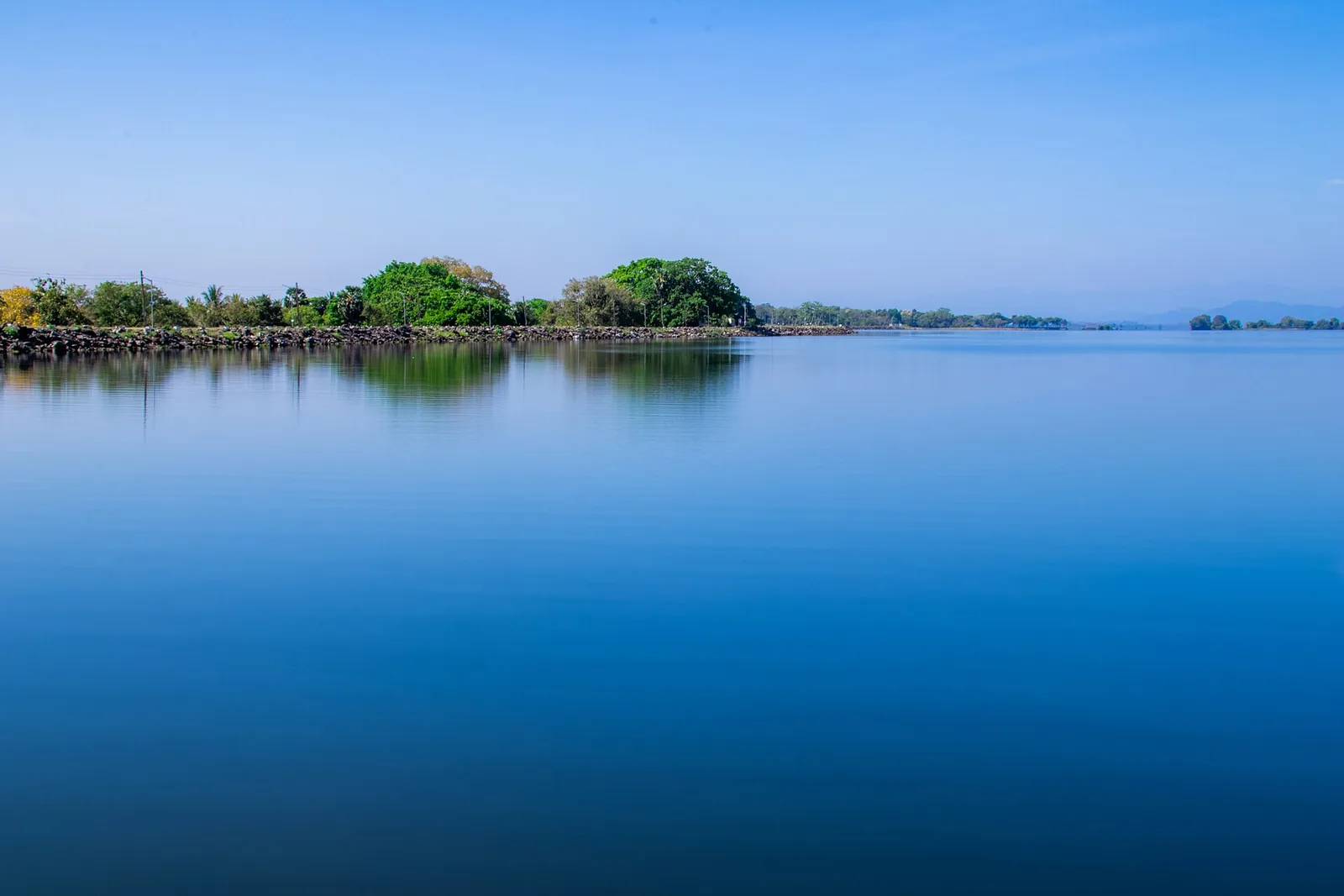
The colossal stupas that mark Anuradhapura continued at Polonnaruwa; Rankot Vehera and Kiri Vehera are two of them. The reservoir Parakramabahu built, Parakrama Samudra, crowns the irrigation works behind the city's rice surplus and explains how a dry-zone city could be so large; the ruins lie on its east shore, in a fenced archaeological site.
The Polonnaruwa Museum
The museum is included with the Polonnaruwa ticket. It holds sculptures, architectural pieces and artefacts from the city's most prosperous era, among them a large clay lamp, and Sri Lanka Tourism adds Chola bronzes recovered from the site. Large clay pot-holders of unusual design, coins minted by the Polonnaruwa kings, Chinese coins of the 12th century CE and part of a tea-pot called Timokku, linked to a Chinese envoy's visit, were also found at Polonnaruwa.
The Fund's Polonnaruwa page gives the museum's hours as 07:00 to 18:00 and its tickets page as 08:00 to 17:00; the ticket counters open at 07:00. No motion filming or photography is allowed at Central Cultural Fund museums.
Minneriya: elephants on the tank
Elephants are the other reason to stay near Polonnaruwa. The area around the city is one of the best in the country for spotting wild elephants, with Minneriya National Park the place to head for. The park is centred on a large tank where elephants gather in growing numbers towards the end of the dry season, most famously at Minneriya's "Gathering".
Sri Lanka Tourism's Minneriya page says May to October is a popular time to visit because of the Elephant Gathering, and that the elephants disperse once the rains set in. The Department of Wildlife Conservation sets the fees in Gazette 2292/11, applying from 2 September 2022; that link was dead when we checked on 17 October 2026, and the ePermit shows no amount until you choose a park and date; the charge depends on the park, the group and the vehicle. No official page gives the distance from Polonnaruwa town. The permit takes the date, the park, every person in the group including the driver and guide, and the vehicle details, and ends with a receipt to show at the entrance; take a printout of the permit, which the Department's terms call mandatory. Its general permit conditions allow entry between 05:00 and 18:00 and require you to leave by 18:30. The UK Foreign Office (page of 17 October 2026) warns that wild elephants and crocodiles will attack humans on occasion and advises following authorised guides. The ruins fill a day, so put the safari on a second afternoon.
Getting there and getting around
Polonnaruwa station is 259.7 km from Colombo Fort on the railway's fare table. The railway's reserved-seat leaflet lists three Colombo Fort departures on this line: the Udaya Devi at 06:05 and the Pulathisi at 15:15, both with reserved second-class seats, and the Meenagaya night mail at 19:00. No official page lists the arrival time at Polonnaruwa; check the booking site's train list for your date.
A reserved seat from Colombo Fort to Polonnaruwa costs LKR 2,500 in first class, LKR 1,600 in second class and LKR 1,200 in third class on the railway's 2022 table, the whole price of the seat. The booking site adds a 5% fee on the total, and reservations open 30 days before the date of travel. Ordinary unreserved fares, last updated in September 2022, are LKR 1,700, LKR 850 and LKR 420. Our transport guide explains how foreign visitors book trains and covers buses and drivers.
No official page lists the road distance or time between Polonnaruwa and Sigiriya, Dambulla, Habarana or Minneriya; ask your driver. The plan you can fix in advance is a car with a local driver, since the German Foreign Office (page of 17 October 2026) strongly advises against renting a car in Sri Lanka.
Most of the ruins are protected within a fenced archaeological site north of the modern town, with a scattering of other buildings north of the main complex, outside the city walls, close to the main road to Habarana and Dambulla. The groups are spread out and the dry-zone sun is strong, so water and a hat matter more than the order of the sights; the best-time guide explains how the seasons affect the Cultural Triangle. No official page gives the distances between the groups, bicycle rules inside the site or tuk-tuk prices.
From Polonnaruwa go back towards Sigiriya and Dambulla, or on to Kandy.
A one-day plan
The plan below is an editorial suggestion for one day, not a timetable.
- Before 07:00: be at the ticket counter with rupees and your e-ticket receipt if you booked online.
- Morning: the Sacred Quadrangle and the Vatadage first, then the royal palace, the citadel and the ponds.
- Late morning to early afternoon: the Polonnaruwa Museum, then a long lunch in the shade away from the monuments, since food is only for suitable places.
- Afternoon: Gal Vihara, then the Lankatilaka and Tivanka image houses if you still have the energy before the site closes at 17:00.
- Second afternoon, if you add it: the elephants at Minneriya.
- Next day: go back towards the Sigiriya area, or on to Kandy.
Make time for the local food
What to eat and where to look
String hoppers with pol sambol
Nests of steamed rice-flour strands, normally a breakfast or dinner dish, served with a curry of dhal, potato, fish or meat and with pol sambol, a coconut sambol of grated coconut, red onion, chilli, lime juice and salt, sometimes with Maldive fish, according to Sri Lanka Tourism.
- Where to look
- Breakfast at your guesthouse or hotel in Polonnaruwa town, outside the archaeological site.
- Fit it into your day
- Breakfast before the 07:00 counter opening.
Pol sambol is made with chilli, and some versions contain Maldive fish; ask for it on the side if you avoid heat or fish.
Kiribath (milk rice)
Rice cooked in coconut milk, a traditional dish served at auspicious moments and usually eaten with lunumiris, made from red onion, chilli flakes, salt and lime, or with seeni sambol, jaggery and bananas, according to Sri Lanka Tourism.
- Where to look
- Breakfast tables at guesthouses and small cafes in Polonnaruwa town.
- Fit it into your day
- Breakfast, with the sweet jaggery and banana version for a gentler start.
Lunumiris is hot; ask for the sweet accompaniment instead if you avoid chilli.
Pittu
Crumbly cylinders of rice or karukan flour with fresh shredded coconut, steamed in tubes and served with sweetened coconut milk, according to Sri Lanka Tourism, which lists it as a breakfast dish.
- Where to look
- Small restaurants in Polonnaruwa town that serve a local breakfast.
- Fit it into your day
- A filling breakfast before a long day on foot.
Sometimes served with lunumiris, so say if you want it plain.
Buffalo curd with treacle
Thick curd made from filtered and boiled buffalo milk, usually served in clay pots and taken with treacle or sugar, according to Sri Lanka Tourism, which says it can be found across the country.
- Where to look
- As a dessert at the end of a rice and curry lunch in Polonnaruwa town, or ask your guesthouse.
- Fit it into your day
- After lunch, once the museum visit is done.
It is a dairy dessert with a high fat content; leave it if you avoid milk.
Rice and curry with nelum ala (lotus stem)
Sri Lanka Tourism calls rice and curry the main meal of the country, and lists nelum ala, lotus stem cooked as a curry or tempered, as a delicious side dish.
- Where to look
- Rice and curry lunches at restaurants in Polonnaruwa town, when lotus stem is on the day's menu.
- Fit it into your day
- Lunch after the museum, as part of a rice and curry spread.
Which vegetable curries are cooked changes by the day, so lotus stem is not guaranteed.
What it costs for two
These are the prices listed when we read on 17 October 2026, for two adults on one day at the site.
Tickets: two full tickets at USD 30, USD 60 (LKR 20,160 at the Fund's rate of LKR 336 per USD).
Train from Colombo Fort, reserved second class, one way: LKR 1,600 a seat, LKR 3,200 for two seats, plus the 5% online fee of LKR 160, LKR 3,360.
Priced items in all: USD 60 for tickets, and LKR 3,360 for each direction by train.
Not in these figures: a room (book one in the town; the where-to-stay guide lists the Sigiriya area only), a driver or tuk-tuk for the day, bicycle hire, meals, and the Minneriya park fee and jeep. The park fee is set by the Department of Wildlife Conservation and depends on the park, the group and the vehicle (see the Minneriya section); no official page prints a rate for the jeep, driver, tuk-tuk or bicycle.
Practical questions
How much is the Polonnaruwa ticket for a foreign visitor?
When we read the table on 17 October 2026, the Central Cultural Fund's price table listed USD 30 for a full ticket and USD 15 for a half ticket, which its e-ticket terms call the foreign-tourist tickets, the half being for children aged 6 to 12. The museum is included.
What are the opening hours at Polonnaruwa?
The ticket counters are open from 07:00 to 17:00 daily. Arrive in the morning.
Can I see the elephants on the same trip?
Yes, as a separate half day: Minneriya National Park is the place to head for, where elephants gather on the tank towards the end of the dry season. Put the safari on a second afternoon, since the ruins fill a full day.
Is the Polonnaruwa Museum a separate ticket?
No. The museum is included with the Polonnaruwa ticket.
Where do I buy the Polonnaruwa ticket?
At the Polonnaruwa Museum, which Sri Lanka Tourism names as the place where tickets to the site are sold; the counters are open from 07:00 to 17:00. The Fund's e-ticket system sells the ticket beforehand, and you collect it at the site counter with your order receipt number.
Sources and checks before you travel
Reference sources for the version dated 18 October 2026. Confirm opening times, access, transport and conditions for your travel dates.
- Central Cultural Fund: Polonnaruwa ↗ — opens in a new tab
- Central Cultural Fund: ticket prices ↗ — opens in a new tab
- Sri Lanka Tourism: Polonnaruwa ↗ — opens in a new tab
- Central Cultural Fund: Tickets ↗ — opens in a new tab
- Central Cultural Fund: e-ticket terms ↗ — opens in a new tab
- Central Cultural Fund: ticket issuance ↗ — opens in a new tab
- Central Cultural Fund: Museums ↗ — opens in a new tab
- Central Cultural Fund: Permission for filming and photographs ↗ — opens in a new tab
- Ministry of Defence: drone clearance ↗ — opens in a new tab
- Sri Lanka Railways: fares from Colombo Fort ↗ — opens in a new tab
- Sri Lanka Railways: revision of charges for seat reservation ↗ — opens in a new tab
- Sri Lanka Railways: list of ticket fares and charges 2022 ↗ — opens in a new tab
- Sri Lanka Tourism: Culinary Tourism, food range ↗ — opens in a new tab
- German Foreign Office (Auswärtiges Amt): Sri Lanka, Reise- und Sicherheitshinweise ↗ — opens in a new tab
- Department of Wildlife Conservation: Day Visitor ePermit steps ↗ — opens in a new tab
- UK Foreign Office: Sri Lanka safety and security ↗ — opens in a new tab
- Sri Lanka Railways: reserved-seat leaflet ↗ — opens in a new tab
- Sri Lanka Railways: online seat booking FAQ ↗ — opens in a new tab
- Department of Wildlife Conservation: Day Visitor ePermit terms ↗ — opens in a new tab
- Sri Lanka Tourism: Sigiriya ↗ — opens in a new tab
- Department of Wildlife Conservation: Day Visitor ePermit ↗ — opens in a new tab
- Sri Lanka Tourism: Minneriya National Park ↗ — opens in a new tab
Photo credits
The Vatadage in the Quadrangle at Polonnaruwa
Photograph: Nahid Sultan This work was made by Nahid Sultan and released under the license(s) stated below. Please feel free to use it for any purpose as long as you credit Nahid Sultan as author and follow the terms of the chosen license. If you use this work outside of the Wikimedia projects, I would very much like to get a note from you. Thanks! — opens in a new tab · CC BY-SA 4.0 — opens in a new tab
Changes: Resized and converted to WebP; displayed with responsive crops. · Original photograph and licence details ↗ — opens in a new tab
Gal Vihara: the reclining and standing Buddha carved from the granite face
Photograph: Balou46 — opens in a new tab · CC BY-SA 3.0 — opens in a new tab
Changes: Resized and converted to WebP; displayed with responsive crops. · Original photograph and licence details ↗ — opens in a new tab
The brick ruin of the royal palace at Polonnaruwa
Photograph: Nahid Sultan This work was made by Nahid Sultan and released under the license(s) stated below. Please feel free to use it for any purpose as long as you credit Nahid Sultan as author and follow the terms of the chosen license. If you use this work outside of the Wikimedia projects, I would very much like to get a note from you. Thanks! — opens in a new tab · CC BY-SA 4.0 — opens in a new tab
Changes: Resized and converted to WebP; displayed with responsive crops. · Original photograph and licence details ↗ — opens in a new tab
Parakrama Samudra, the reservoir beside Polonnaruwa
Photograph: Samal Nadeeshan — opens in a new tab · CC BY-SA 4.0 — opens in a new tab
Changes: Resized and converted to WebP; displayed with responsive crops. · Original photograph and licence details ↗ — opens in a new tab
The seated Buddha at Gal Vihara
Photograph: Balou46 — opens in a new tab · CC BY-SA 3.0 — opens in a new tab
Changes: Resized and converted to WebP; displayed with responsive crops. · Original photograph and licence details ↗ — opens in a new tab