Selangor
Batu Caves: train from KL, dress code, 272 steps, Thaipusam
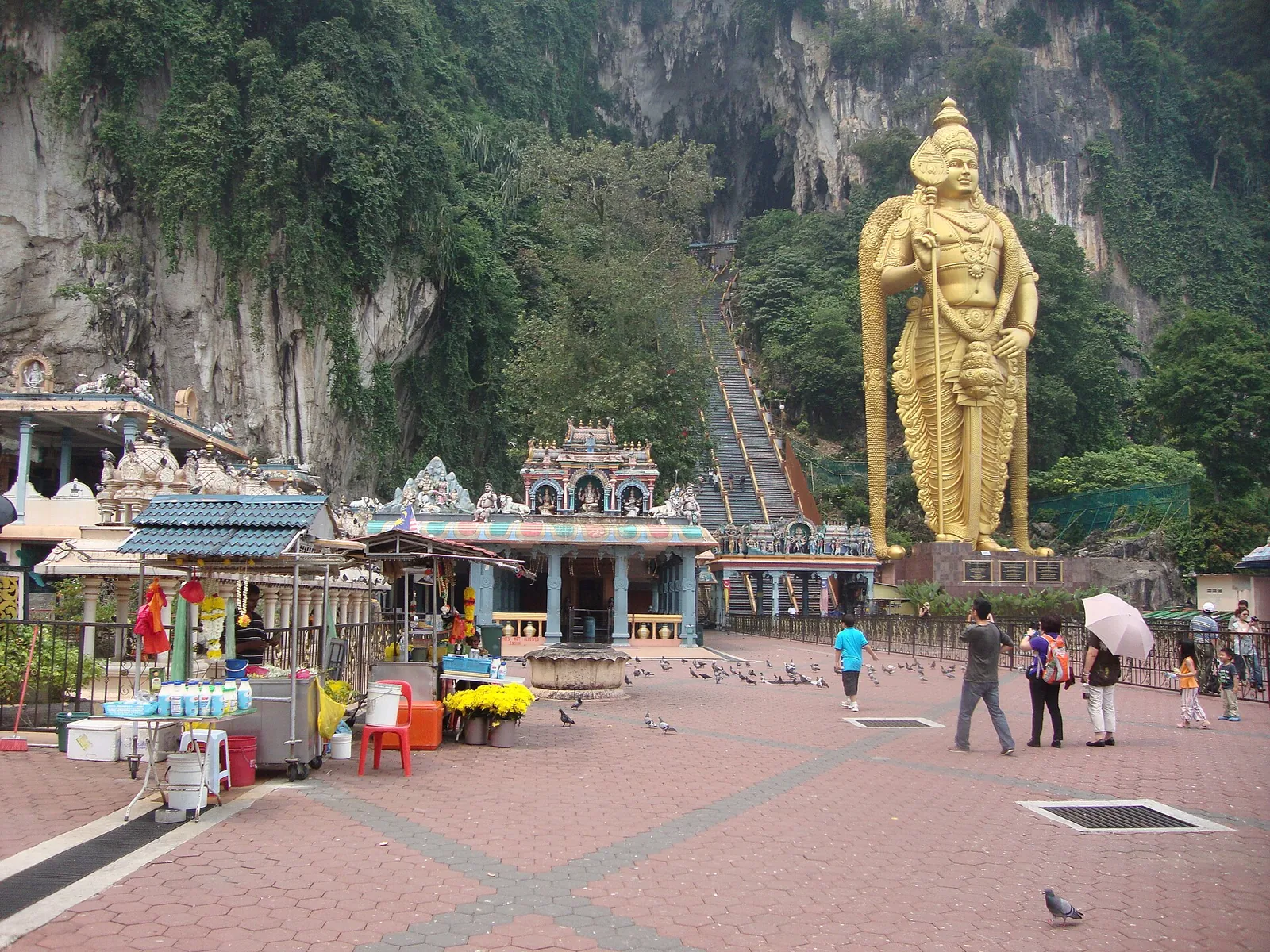
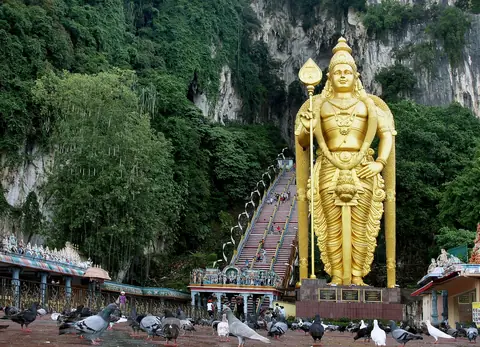
Batu Caves rises out of the northern edge of Kuala Lumpur as a wall of limestone, and at its foot stands a giant golden statue of Lord Murugan. Behind him, 272 steps painted in every colour climb to the Temple Cave, a vast cavern open to the sky where Hindu worshippers come to pray. It is the city's most striking half-day out, and an easy one: a suburban train runs almost to the gate. This guide covers the train, what to wear, the climb and the monkeys, the other caves, and the festival day each year when devotees fill the steps.
In this guide
Find the location ↗ — opens in a new tabThe short answer
Take the KTM Komuter from KL Sentral to Batu Caves, the end of the line: on KTMB's published timetable, trains take 29–30 minutes, with 24 departures on weekdays (first 07:12) and 18 at weekends, mostly about an hour apart. Walk to the entrance, climb the 272 steps to the Temple Cave, and allow a half-day there and back. Go early, before the heat and the crowds. Batu Caves is a working temple, so we advise covering your shoulders and knees. Children aged 6 and under ride the Komuter free with a ticketed parent or guardian, and children aged 7 to 12 pay half. Avoid Thaipusam, the Hindu festival in January or February, unless the festival is why you came. Stay in Brickfields, by KL Sentral, so the train is a short walk away.
- Suggested time
- A half-day from Kuala Lumpur
- Where to stay
- Brickfields and KL Sentral in Kuala Lumpur
- Season and timing
- All year; go early in the morning, and on another day than Thaipusam
Where to stay for an early start
Batu Caves is a half-day outing from the city, not a place to sleep. Stay in Brickfields, next to KL Sentral, where the KTM Komuter to Batu Caves, the KLIA Ekspres from the airport and the ETS trains to Penang and Johor all leave from one station. Brickfields is Kuala Lumpur's Little India, so the banana-leaf restaurants and the flower stalls that supply the temples are on the doorstep.
From there, an early train puts you at the foot of the steps before the heat; our Kuala Lumpur where-to-stay guide compares Brickfields with Chinatown, Bukit Bintang and KLCC.
What you see: the statue, the steps and the Temple Cave
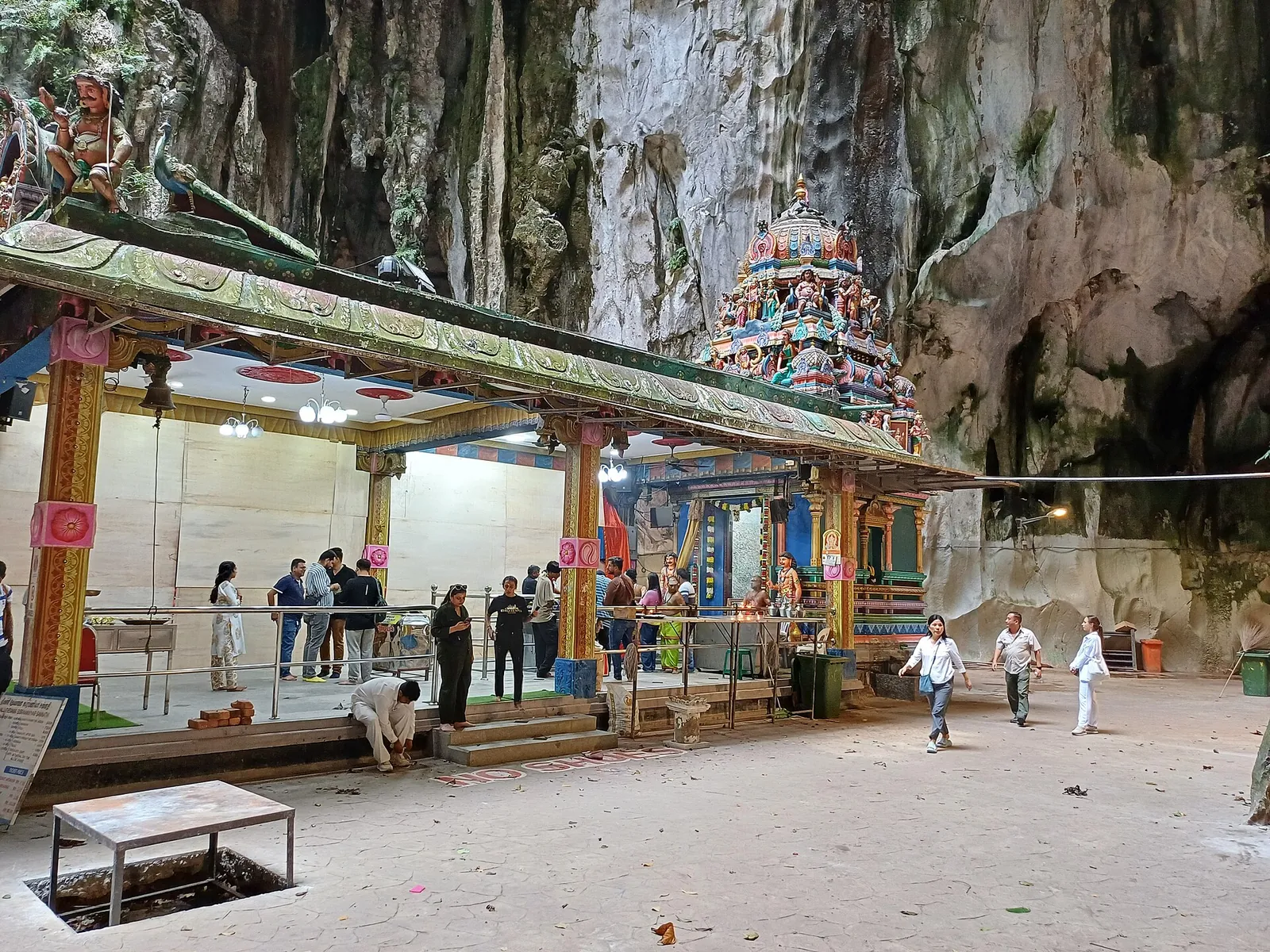
Batu Caves is a limestone outcrop just north of Kuala Lumpur, in Gombak, Selangor. Tourism Selangor describes three main caves with temples and Hindu shrines, and a hill of some 20 caves, of which the Temple Cave is the biggest and best known. A giant golden statue of Lord Murugan stands at the entrance, and behind it 272 steps, repainted in bright colours, climb to the Sri Subramaniar Swamy Temple inside the Temple Cave.
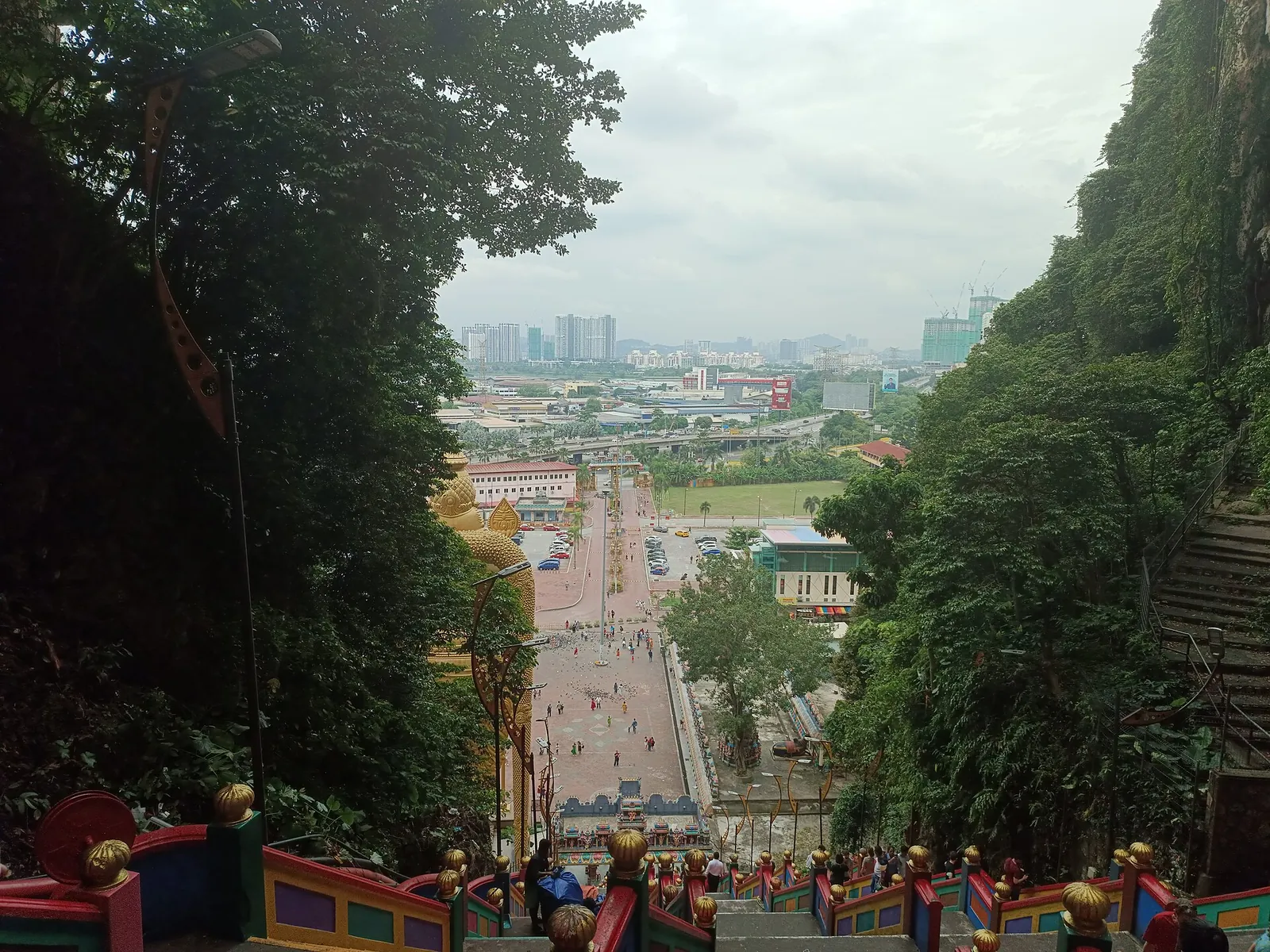
At the top the cave opens into a great chamber, its roof broken by shafts of daylight, with shrines and a temple at the back. Turn round at the top step for the view the climb earns you: the statue below and the skyline of the city centre beyond. Tourism Selangor also points to the Ramayana Cave, near the foot of the hill, where paintings and scenes of the Hindu gods line the walls.
The site is a pilgrimage place first. Devotees climb with offerings, bells ring, and on festival days the steps fill with families. Visitors are welcome, and the quiet way to visit is to keep to the side of the stairs and let worshippers pass.
What to eat and where to look
Banana-leaf rice
Rice served on a banana leaf with vegetable sides, pickles and poppadoms, with curries ladled on top and meat or fish ordered separately. It is a full meal, usually eaten at lunch.
- Where to look
- The Indian restaurants of Little India in Brickfields, next to KL Sentral.
- Fit it into your day
- Lunch back in Brickfields after the morning at the caves.
Curries range from mild to very hot; try a little of each before pouring it over the rice.
Roti canai and teh tarik
Flaky flatbread griddled on a hot plate and served with dhal and curry, with sweet milky tea pulled between two jugs until it froths: the breakfast of the mamak, the Indian-Muslim coffee shop.
- Where to look
- Any mamak shop around KL Sentral and Brickfields, open from early morning.
- Fit it into your day
- Breakfast before the early train to Batu Caves.
Teh tarik comes very sweet; ask for "kurang manis" for less sugar.
Thosai (dosa)
A thin, crisp pancake of fermented rice and lentil batter, served with coconut chutney and sambar, a lentil and vegetable stew; a South Indian vegetarian staple that fits a temple morning.
- Where to look
- The vegetarian South Indian restaurants of Brickfields, near KL Sentral.
- Fit it into your day
- A light breakfast or a late-morning snack after the climb.
Sambar and chutneys can be spicy; ask for them on the side for children.
Getting there: the KTM Komuter from KL Sentral
KTM Komuter's Batu Caves-Pulau Sebang line runs from KL Sentral to the Batu Caves stop, and Tourism Selangor says to walk from there to the main entrance. On KTMB's timetable published through the government's open-data portal, Komuter trains take 29-30 minutes from KL Sentral to Batu Caves, with 24 departures on weekdays (first 07:12, last 23:22) and 18 at weekends (first 08:12), mostly about an hour apart. These were the figures in KTMB's published timetable when we checked on 10 November 2026; check KTMB's current timetable before travelling.
KTMB expects its upgrade works on the line to run from 18 April to 31 December 2026, depending on progress, and, during the works, outside peak hours its trains run only from Batu Caves to Mid Valley and from Salak Selatan to Batu Caves. You can tap in and out with a Visa, Mastercard or MyDebit card, Apple Pay, Samsung Pay or Google Pay, a Touch 'n Go card or a QR ticket from the machine, but you must use the same ticket or payment medium to enter and leave and, for digital cards, the same device.
Children aged 6 and under ride free and need no ticket, but must travel with a parent or guardian who has a valid ticket; the parent or guardian must show the child's identification if a ticket inspector asks. Children aged 7 to 12 pay half fare with a QR ticket from the counter or the machine. Tourism Selangor also lists bus No. 11 from Bangkok Bank near Central Market, and advises public transport or an early arrival because parking at the site is limited, especially on public holidays. A taxi or ride-hailing car is the alternative for a family with small children.
The 272 steps, the heat and the monkeys
The climb is steep: 272 steps lead to the Temple Cave. Plan the upper-cave visit around the stairs, and leave pushchairs out of the climb.
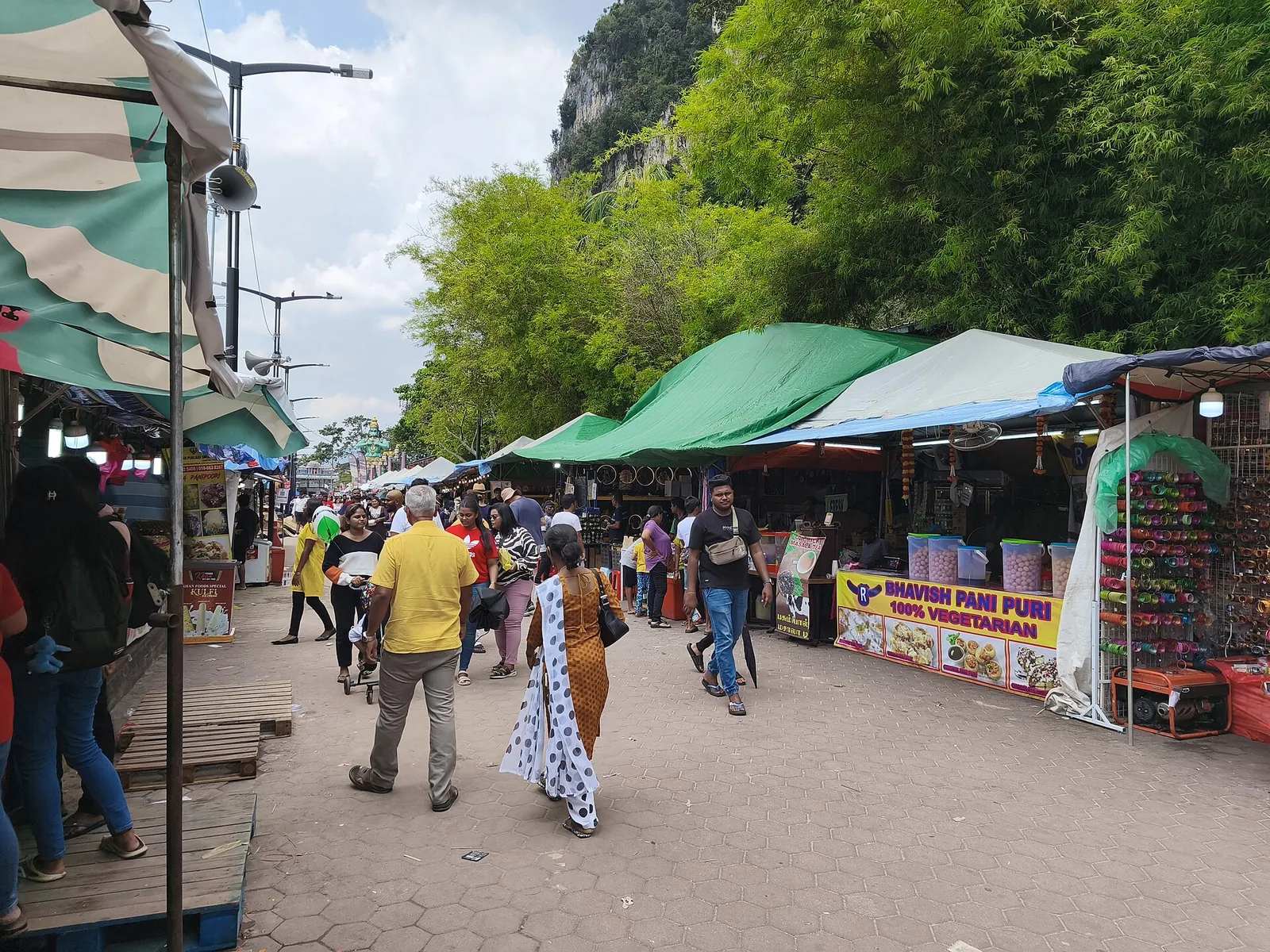
Go early. The forecourt and the steps have little shade by midday, and the site fills up as the morning goes on. Carry water in a closed bag, wear shoes with grip, because the steps can be wet after rain, and come back down before lunch.
Monkeys live all over the site and know that visitors carry food. Keep snacks, drinks and plastic bags out of sight, do not feed or touch them, hold phones and sunglasses firmly, and keep small children close on the stairs. A monkey that grabs a bag is best left alone.
What to wear: the dress code
Batu Caves is a working temple, so we advise covering your shoulders and knees. Light long trousers or a long skirt and a T-shirt with sleeves are cool enough for the climb and respectful at the top. A scarf or sarong in the day bag lets you cover up if your clothes fall short.
Inside the shrines, follow what worshippers do: take off your shoes where others do, do not point your feet at the altars, and ask before photographing a ceremony or a priest. Keep the approach clear for worshippers.
Thaipusam: the festival days
Batu Caves draws thousands of worshippers for Thaipusam, the annual Hindu festival held in January or February; plan your visit for another morning unless the festival is the reason you came. On Thaipusam, devotees carry kavadi, ornate frames and pots of milk, in procession up the steps in fulfilment of vows, and the crowds around the hill, the station and the roads are enormous over the festival days.
If you come for the festival, come on foot or by train, start before dawn, keep to the edges, and leave room for the processions. The Komuter is packed on Thaipusam, and a family with small children will find the crowds overwhelming. Our festivals and events guide for Malaysia puts Thaipusam beside the year's other festivals.
The other caves and a half-day plan
Besides the Temple Cave, the hill has the Ramayana Cave, with its painted scenes of the Hindu gods, and the Dark Cave, beside the Temple Cave. Tourism Selangor describes Batu Caves as among the most researched caves in Southeast Asia. Its listing describes separate Dark Cave tours, but check the current operator before planning around a tour. The limestone cliffs are also a climbing area.
A half-day that works: an early Komuter from KL Sentral, the statue and the climb before the heat, the Temple Cave, the view, the Ramayana Cave on the way back down, and a train back to KL Sentral by lunch. Combine it with the Petronas Towers in the afternoon, as our Kuala Lumpur guide suggests, or with a family trip to Malaysia if the children can manage the steps.
Practical questions
How do I get to Batu Caves by train?
Take KTM Komuter from KL Sentral to the Batu Caves stop, 29–30 minutes on KTMB's published timetable, and walk to the entrance. Trains run mostly about an hour apart, with 24 departures on weekdays and 18 at weekends.
What is the dress code at Batu Caves?
It is a working temple, so we advise covering your shoulders and knees. Carry a scarf or sarong in case your clothes fall short.
How many steps are there at Batu Caves?
272, painted in bright colours, from the Lord Murugan statue up to the Temple Cave. Plan the upper-cave visit around the stairs.
When is Thaipusam at Batu Caves?
Thaipusam falls in January or February, on the full-moon day of the Tamil month of Thai; check the year's date on Malaysia's official public holiday list before you plan. The crowds are enormous; visit on another morning unless the festival is why you came.
What is the best time to visit Batu Caves?
Early in the morning, before the heat and the tour coaches; Tourism Selangor also advises arriving early because parking is limited, especially on public holidays.
Keep planning your trip
Kuala Lumpur
Three nights in Kuala Lumpur: where to sleep, the old city, Batu Caves by Komuter, the Petronas Towers, the ETS from KL Sentral and a dated budget for two.
Read the guide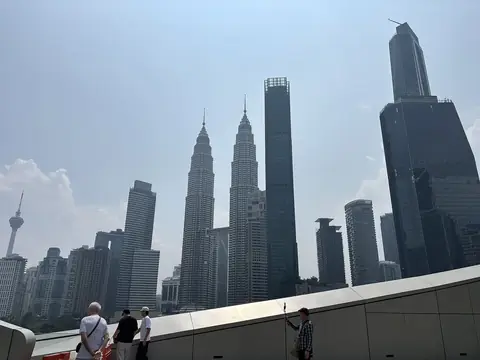
Where to stay in Kuala Lumpur
Choose between KLCC, Bukit Bintang, Chinatown and KL Sentral with an honest comparison of hotel style, food, airport access, noise and rail convenience.
Read the guide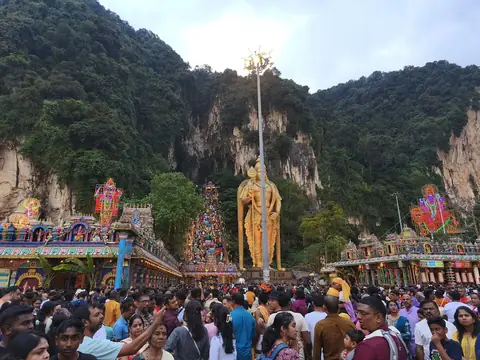
Malaysia festivals and events 2027
Malaysia's 2027 holidays and festivals month by month: Thaipusam at Batu Caves, Chinese New Year, Hari Raya, Kaamatan in Sabah, Gawai in Sarawak, Merdeka and Deepavali.
Read the guide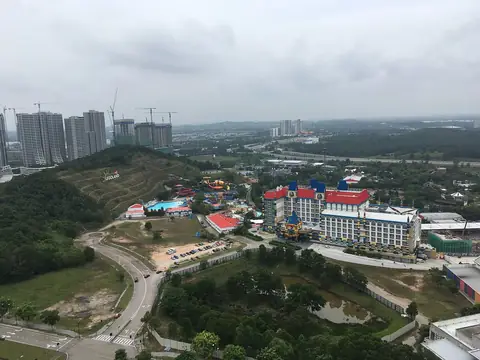
Malaysia with children
Planning Malaysia with kids: KLIA Ekspres child fares and free tickets, LEGOLAND Malaysia prices and height limits, family rooms, Batu Caves and the pace.
Read the guide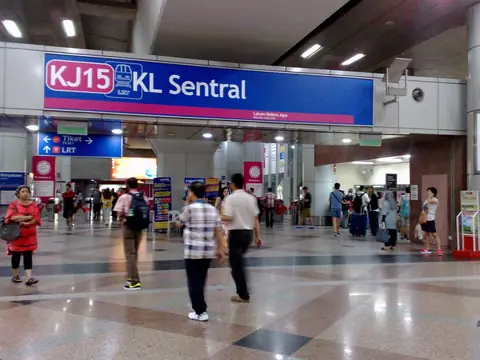
Getting around Malaysia
Malaysia transport with fares and times: KLIA Ekspres, ETS from Butterworth to JB Sentral, Shuttle Tebrau to Singapore, coaches, island ferries and Borneo flights.
Read the guide
First trip to Malaysia
Seven days in Kuala Lumpur and George Town: where to base yourself, visa by nationality and the MDAC, the ETS train to Penang and what to see.
Read the guideSources and checks before you travel
(11)
- Tourism Selangor: Batu Caves ↗ — opens in a new tab
- Malaysian government open-data portal: KTMB timetable data (GTFS) ↗ — opens in a new tab
- KTMB: FAQ on the KVDT2 upgrade and the Batu Caves-Pulau Sebang timetable (Malay) ↗ — opens in a new tab
- KTMB: Komuter terms and conditions (June 2026, Malay) ↗ — opens in a new tab
- KLIA Ekspres: products and fares ↗ — opens in a new tab
- KLIA Transit: products and fares ↗ — opens in a new tab
- Immigration Department of Malaysia: MDAC portal and linked infographics ↗ — opens in a new tab
- Tourism Malaysia: Batu Caves ↗ — opens in a new tab
- Tourism Malaysia: Kuala Lumpur map and visitor brochure (PDF) ↗ — opens in a new tab
- Tourism Malaysia Japan: Malaysian food ↗ — opens in a new tab
- Singapore National Heritage Board (Roots): Thaipusam and the Tamil calendar ↗ — opens in a new tab
Reference sources for the version dated 10 November 2026. Confirm opening times, access, transport and conditions for your travel dates.
Photo credits
(4)
Lord Murugan's statue at the foot of the 272 steps to the Temple Cave
Photograph: Chainwit. — opens in a new tab · CC BY-SA 4.0 — opens in a new tab
Changes: Resized and converted to WebP; displayed with responsive crops. · Original photograph and licence details ↗ — opens in a new tab
A shrine beneath the limestone walls inside Batu Caves
Photograph: Aumars — opens in a new tab · CC BY-SA 4.0 — opens in a new tab
Changes: Resized and converted to WebP; displayed with responsive crops. · Original photograph and licence details ↗ — opens in a new tab
A KTM Komuter train at Batu Caves station, the end of the line from KL Sentral
Photograph: *angys* — opens in a new tab · CC BY-SA 4.0 — opens in a new tab
Changes: Resized and converted to WebP; displayed with responsive crops. · Original photograph and licence details ↗ — opens in a new tab
The forecourt at Batu Caves on a Thaipusam day
Photograph: *angys* — opens in a new tab · CC BY-SA 4.0 — opens in a new tab
Changes: Resized and converted to WebP; displayed with responsive crops. · Original photograph and licence details ↗ — opens in a new tab