Perak
Ipoh travel guide: two nights, Old Town and cave temples
Ipoh grew rich on tin. The money built a domed railway station, a white town hall and streets of shophouses beside the Kinta River, and the miners' clubs and coffee shops of that era still stand in Old Town. Around the city, limestone hills rise straight out of the plain, and nearly thirty cave temples have been built into them. Add the white coffee, the bean sprout chicken and the salt-baked chicken the city is known for, and Ipoh fills two nights well: one afternoon and evening for Old Town, one day for the cave temples, Tasik Cermin and Kellie's Castle, and a last morning for Perak Tong and a tour of a Hakka miners' club before the train. The ETS stops at Ipoh on the line between Butterworth for Penang and KL Sentral, so it makes an easy break on a rail trip down the west coast.
In this guide
Find the location ↗ — opens in a new tabThe short answer
Book two nights in Ipoh Old Town, near the station: Sarang Paloh Heritage Stay on Jalan Sultan Iskandar, about 600 m from the platform, listed its loft double at RM298 a night on 14 October 2026, plus tourism tax. Book the ETS first: KL Sentral-Ipoh fares started at RM48 for a Wednesday in November 2026, and Butterworth-Ipoh tickets go on sale only 48 hours before departure. Then book a Han Chin Pet Soo tour slot, by donation (up to 30 days ahead; closed Mondays). Walk Old Town on day 1, take the Gunung Rapat cave temples, Tasik Cermin (RM12 entry for foreign visitors) and Kellie's Castle (RM10) on day 2, and Perak Tong and Han Chin Pet Soo on the morning of day 3. The all-in budget is about MYR 1,470 per person, or MYR 2,940 for two, before international flights.
- Suggested time
- 2 nights
- Where to stay
- Old Town and the railway-station quarter for the heritage trail on foot; New Town across the river for evening restaurants; Tambun only for a resort stay
- Season and timing
- Perak is hot, humid and rainy throughout the year. Tourism Perak lists October to December as its wettest period and May to August as the hottest. Walk Old Town early or late in the day, and climb Perak Tong's stairs in the morning.
Where to sleep: Old Town, the station quarter or New Town
Ipoh's sights fall into two groups: the heritage streets of Old Town, which you walk, and the cave temples and lakes in the limestone hills outside the centre, which need a car. Sleep in the walkable part. Old Town and the railway-station quarter lie beside the Kinta River: the station, the Town Hall, the clock tower, Concubine Lane and Han Chin Pet Soo are all a short walk apart, and the ETS drops you at the edge of them.
Sarang Paloh Heritage Stay is a small hotel in the restored Oversea and Yick Woh buildings at 16 Jalan Sultan Iskandar, the old Hugh Low Street, about 600 m from the station. When we checked on 14 October 2026 it listed the Red Throated Sunbird room, a junior loft with a queen bed upstairs and the living space and bathroom below, at RM298 a night, and garden-view double rooms at RM328. Foreign tourists pay a tourism tax of RM10 per room per night at hotels and other paid accommodation in Malaysia; it is charged per room, not per person, and the hotel collects it from you, usually at check-in, or it is added when you book through an online platform. Malaysian citizens and permanent residents are exempt.
New Town, across the river, is the newer commercial grid, with more evening restaurants; Old Town is a short ride away. Tambun, outside the centre, is resort country around the Lost World of Tambun theme park, set among limestone cliffs. It suits a family stay built around the park, not a heritage visit without a car.
Old Town on foot: the station, the clock tower and Concubine Lane
Start where the train leaves you. Ipoh railway station is the building that Tourism Malaysia's Perak map guide says is often called the Taj Mahal of Ipoh. It was designed by the British architect A. B. Hubback, who also designed the Kuala Lumpur Railway Station, in a Moorish style. Nearby are the Town Hall and the Birch Memorial Clock Tower, built in 1909 in memory of J. W. W. Birch, the first British Resident of Perak, who was assassinated in 1875. Its panels show 44 figures from world history, and terracotta figures of Loyalty, Patience, Justice and Fortitude guard the corners of the belfry.
Beyond it begin the shophouse streets. Concubine Lane (Panglima Lane, Lorong Panglima) is the narrow lane near the clock tower where Tourism Perak points you to snacks and street food; come in the morning before the crowds. The Ipoh Mural Art Trail, a booming mural art scene, is marked on Tourism Malaysia's Perak map of Ipoh's old centre, a short walk from the lane and the Town Hall. The shophouses also hold boutique souvenir shops, and Old Town is easy by foot or bicycle.
For the tin-mining story in more detail, the Darul Ridzuan Museum, in a building more than 80 years old, displays artefacts from the state's tin-mining industry, and the Geological Museum, opened in 1957, holds fossils, minerals and samples of cassiterite (tin ore) with a diorama of mining methods, according to Tourism Malaysia's map guide. In the evening, the Kinta Riverwalk has trees strung with coloured LED lights and restaurants along the bank, and Gerbang Malam on Jalan Tahwil Azhar, near the clock tower, is Ipoh's liveliest night market: more than a hundred stalls of clothes, fashion accessories and bargains, open from 19:00 until late at night and busiest at weekends.
Han Chin Pet Soo: inside a Hakka miners' club
The most rewarding hour in Old Town is a guided tour of Han Chin Pet Soo, at 3 Jalan Bijeh Timah (Treacher Street). Towkay Leong Fee founded it in 1893 as a club for Hakka tin miners, and for most of its life only members and their guests could enter. Today it houses a private exhibition run by Ipoh World, a not-for-profit heritage group, on the club and the tin-mining days.
Entry is by appointment only, through Ipoh World's own booking system. Slots open up to 30 days ahead; when we looked on 14 October 2026 the schedule showed English tours at 11:00, 14:00 and 15:30, closed on Mondays, with some sessions already full or closed. The confirmation e-mail carries a passcode, so bring it on your phone or printed. There is no fixed entry fee for the public on scheduled tours; visitors are asked for a donation for the upkeep of the building.
The cave temples of Gunung Rapat and Gunung Tasek, and Tasik Cermin
Tourism Perak counts nearly thirty cave temples in Ipoh, built into rock chambers that water carved out of the limestone. Four of the best known are in Gunung Rapat, the hill about 6-7 km south-east of Old Town in a straight line, so one morning there covers most of what you need. They are working temples, so our advice is to cover shoulders and knees, keep your voice down and step round people who are praying.
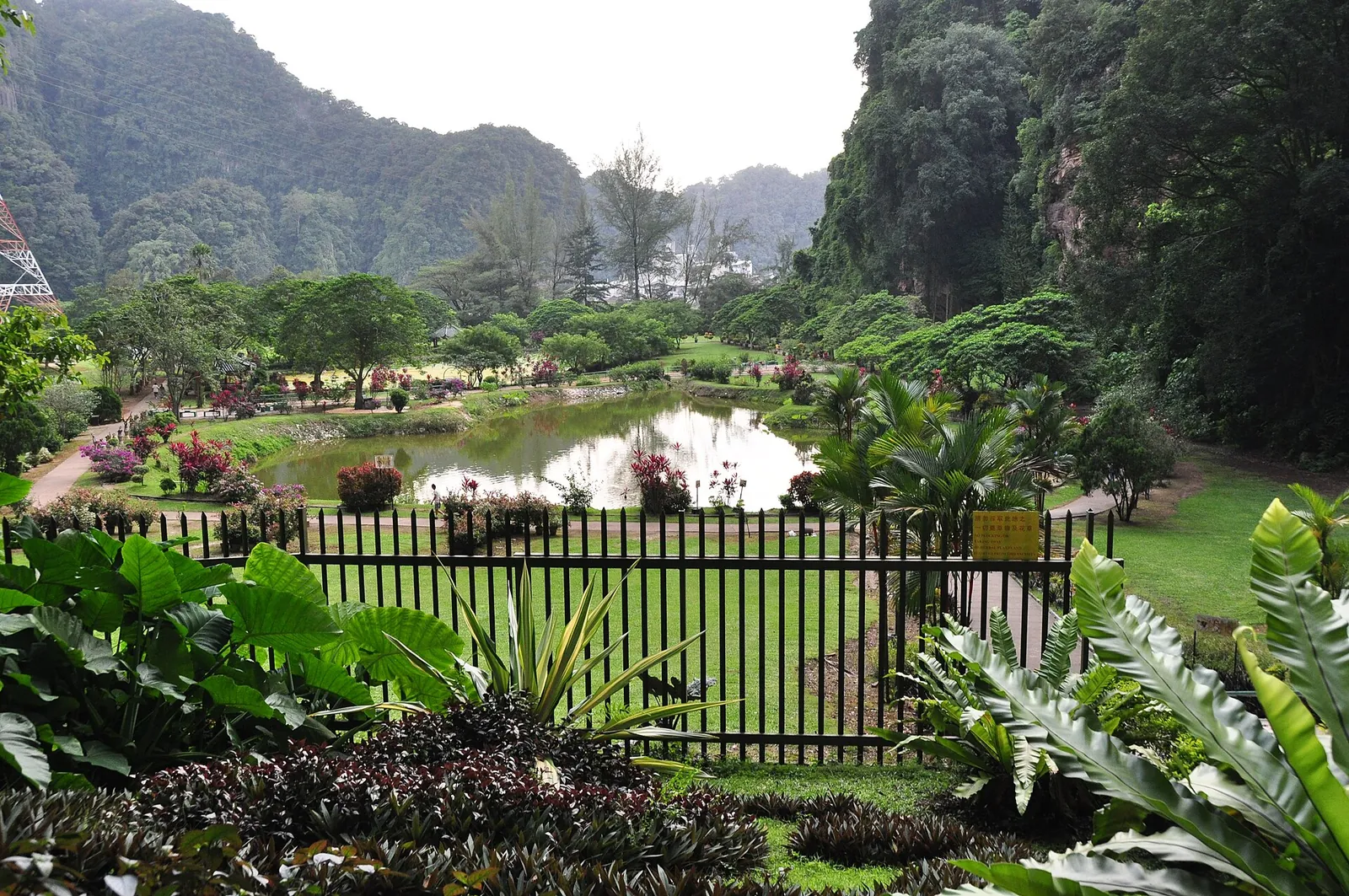
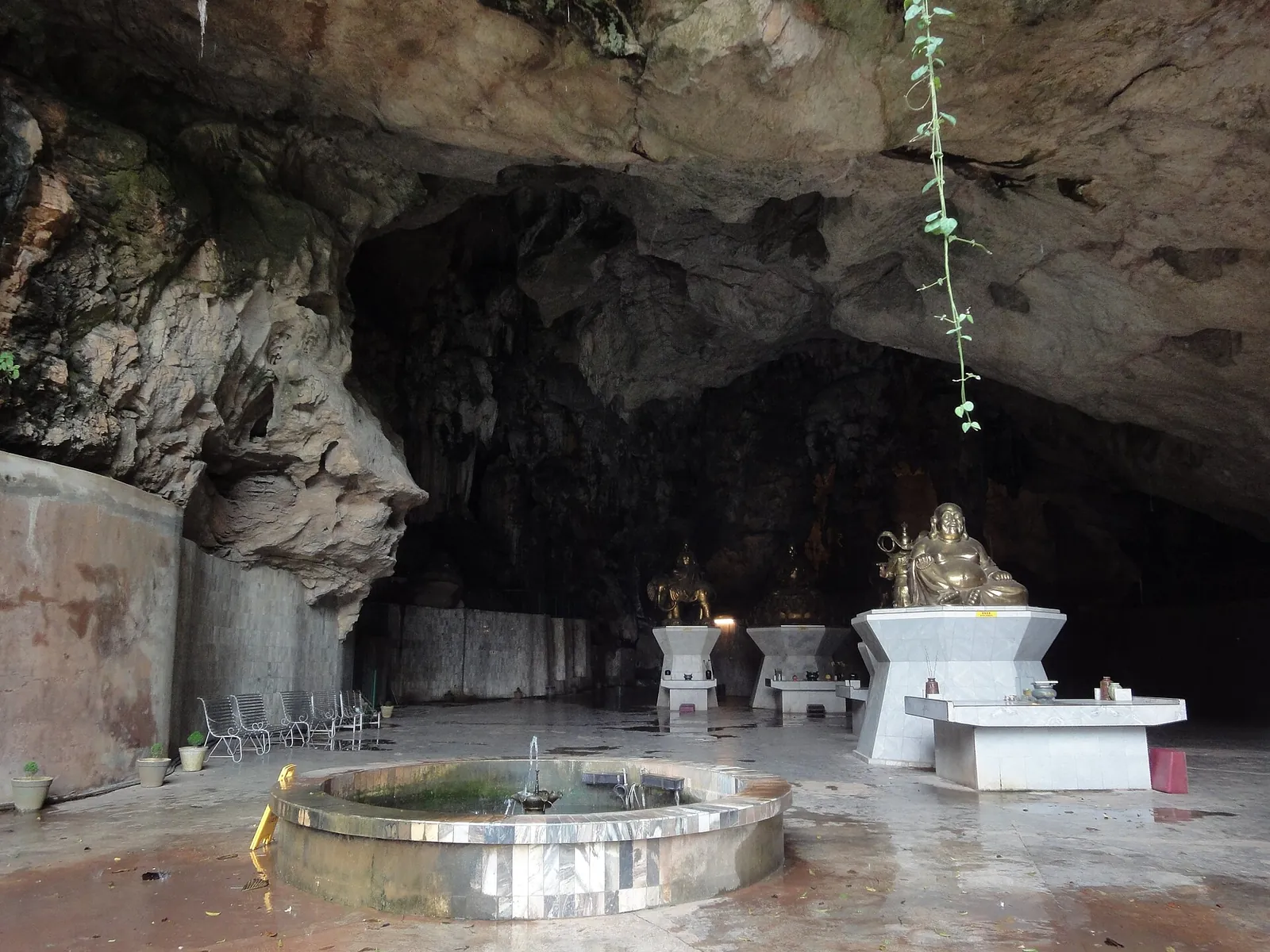
Kek Lok Tong, the Cave of Ultimate Bliss, is one of the most-visited temples in Perak, set among towering limestone outcrops behind Gunung Rapat. Tourism Malaysia's map guide describes a natural interior of stalactites, stalagmites and rock formations, with bronze Buddha statues in the cool cave, and there are Zen gardens beside the cave. Sam Poh Tong, the Cave of Triple Gems, also in Gunung Rapat, is said to be the country's biggest cave temple; at its entrance are a landscaped garden, an elaborately decorated pavilion and a Japanese fish pond. Go in the morning.
Tasik Cermin (Mirror Lake) is hidden inside the same hill: Tourism Perak says a walk through a cave tunnel leads to a lake enclosed by the rock walls. Its operator runs two parts. At Tasik Cermin 1 you walk in through the Miner's Tunnel to the Mirror Lake, which you can also tour by boat; Tasik Cermin 2, the Hidden World, is a second lake reached by boat through a water tunnel. When we checked on 14 October 2026, its ticket page listed, for visitors without a Malaysian MyKad, entry at RM12 for adults, a Mirror Lake entry-and-boat ticket at RM42 and the Hidden World boat tour at RM30 (Malaysians pay RM7, RM32 and RM25). Entrance is open daily 09:00-17:45 and boat tours 09:00-17:30, including public holidays. Online sales stop in peak season; tickets are then sold at the counter.
Perak Tong, about 6 km north of Old Town, is a Buddhist temple built into the limestone hill at the foot of Gunung Tasek, a spot that draws devotees and tourists alike. Long flights of stairs lead up to a panoramic view of the city, so climb in the cool of the morning.
Kellie's Castle and the Kinta Valley
Kellie's Castle, in Greater Ipoh, is the unfinished mansion of William Kellie Smith, a wealthy Scottish planter. Building stopped when he died suddenly in 1926, and the house is believed to hide secret rooms and underground passages, the setting of several ghost stories, according to Tourism Malaysia's map guide. It is open daily 09:00-18:00, at RM10 for foreign adults and RM8 for foreign children (Malaysians RM5 and RM3). It stands on Jalan Gopeng in Batu Gajah, which Tourism Malaysia puts at about 30 minutes' drive from Ipoh town, and it fits the afternoon after the Gunung Rapat temples. ETS trains stop at Batu Gajah station on the line south of Ipoh; plan the last leg by car or taxi.
The limestone hills belong to the Kinta Valley National Geopark, which Tourism Perak says covers 1,952 km² of the Kinta and Kampar districts and was the country's second national geopark after Langkawi. Two more places need extra time. Gunung Lang Recreational Park, about 2 km north of Old Town, is a 75-acre park on former tin-mining land, nearly half of it a turquoise lake below limestone hills. Gua Tempurung near Gopeng, about 23 km south-east, is the longest natural limestone cave in Peninsular Malaysia: 4.5 km long, with about 1.9 km open to visitors, five giant domes and a 1.6 km underground river, explored with guides on dry and wet routes. It needs a half-day of its own and is worth a third night only if caving is the point of the trip.
Kuala Kangsar, the royal town, is the half-day to add by train: the ETS reaches it from Ipoh in about 28 minutes. Tourism Malaysia's Perak map guide describes Masjid Ubudiah, built between 1913 and 1917 by Sultan Idris Mursyidul Adzam Shah, the 28th ruler of Perak, as one of the town's most beautiful landmarks, with golden domes and minarets in classic Islamic architecture, and the Sultan Azlan Shah Gallery, in the former Istana Hulu (Hulu Palace), on the history of the Perak sultanate. The town is also the home of the labu sayong, the gourd-shaped clay vessel that is Perak's best-known handicraft.
Two nights, day by day
This plan suits a stay in Old Town, arriving from Penang and leaving for Kuala Lumpur; reverse it if you come from the south. Han Chin Pet Soo closes on Mondays, so check the weekdays of your dates.
- Day 1, Old Town: the 13:05 Express from Butterworth reaches Ipoh at 14:39 (from KL Sentral, the 12:00 Express arrives at 14:00). Walk 600 m to the hotel, then the station front, the Town Hall and the clock tower and Concubine Lane in the late afternoon, the Kinta Riverwalk at dusk and bean sprout chicken in New Town for dinner. Gerbang Malam opens at 19:00 if you still have energy.
- Day 2, the limestone hills: a ride to Kek Lok Tong early in the morning, then Sam Poh Tong on the same hill and Tasik Cermin when it opens at 09:00 and the boat to the Hidden World. After lunch, Kellie's Castle, back to Ipoh for a bowl of sar hor fun.
- Day 3, Perak Tong and the miners' club: Perak Tong early for the stairs before the heat, the 11:00 English tour of Han Chin Pet Soo, dim sum for breakfast beforehand, nasi ganja and white coffee in Old Town, then the 15:55 Express to KL Sentral (17:55), or a train north to Butterworth.
What to eat and where to look
Bean sprout chicken (tauge ayam)
Tender poached chicken served with a plate of short, fat, crunchy bean sprouts in soy and oil, with rice or flat rice noodles.
- Where to look
- The food courts Tourism Malaysia's Perak guide names for the state's local specialities: Golden Point Food Court, Stadium Food Court, Leaning Tower Food Court and Woolley Food City, as well as the chicken-rice shops of New Town.
- Fit it into your day
- Dinner on day 1, shared with a separate plate of sprouts.
The sauce contains soy and sesame oil.
Ipoh white coffee
Coffee roasted in the local style and served with condensed milk, hot or iced, smoother and sweeter than ordinary kopi. Tourism Perak treats Ipoh White Coffee as one of the state's tourism icons, and its Ipoh Coffee Vibes Festival on the Old Town riverfront first ran from 10 to 13 September 2026.
- Where to look
- The coffee shops of Old Town, around Concubine Lane.
- Fit it into your day
- Breakfast on day 3, or a break between Concubine Lane and Han Chin Pet Soo.
The standard cup is sweet; ask for kurang manis (less sweet) or kosong (no sugar).
Nasi ganja
Ipoh's version of nasi kandar: rice under spooned curries and gravies with fried chicken, a dish Tourism Perak calls one of Old Town's famous foods.
- Where to look
- Nasi Kandar Ayam Merah in Old Town, the shop Tourism Perak names on its Old Town page.
- Fit it into your day
- Lunch on day 3, before the train.
Mixed curries can be spicy and are hard to separate for allergies.
Sar hor fun
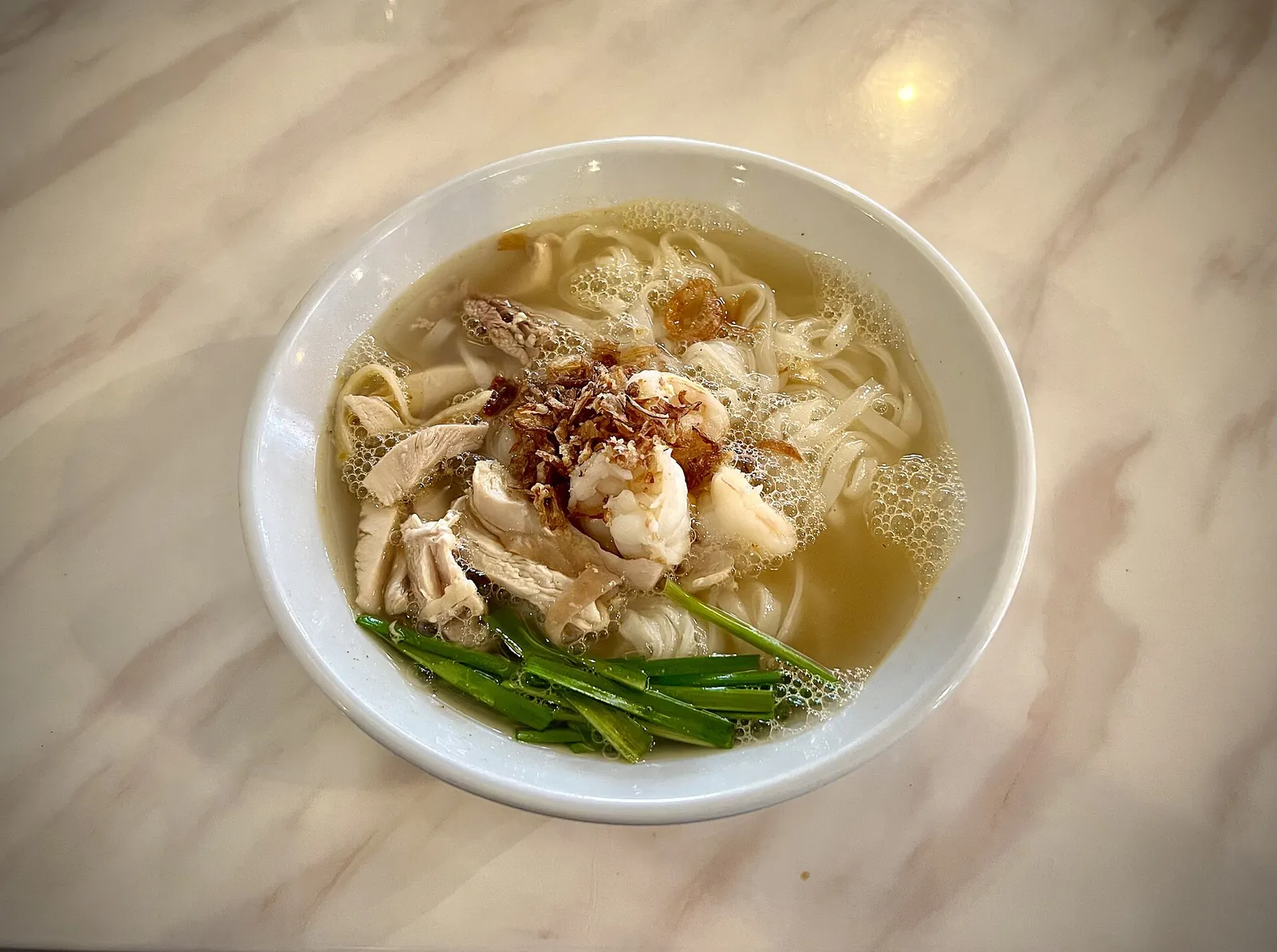
Silky flat rice noodles in a clear chicken-and-prawn broth with shredded chicken and prawns, the noodle dish Tourism Malaysia's Perak guide lists first among Ipoh's Chinese specialities.
- Where to look
- Woolley Food City or MBI Terrace, two of the food courts Tourism Malaysia's Perak guide names for Perak's local specialities.
- Fit it into your day
- A light lunch or supper on day 2.
The broth and toppings contain chicken and shellfish.
Dim sum
Steamed dumplings, buns and small plates eaten in the morning with tea; Tourism Malaysia's Perak guide lists dim sum among Ipoh's popular Chinese dishes, and Tourism Perak's own geopark tour programme schedules an Ipoh dim sum lunch.
- Where to look
- Golden Point Food Court, which Tourism Malaysia's Perak guide names for local food, or a dim sum restaurant near your hotel. Restoran Tasik Raban in Simpang Pulai, also on that list, is known for Malay cooking, so it is not the place for dim sum.
- Fit it into your day
- Breakfast on day 3 before the Han Chin Pet Soo tour.
Most baskets contain pork, shrimp or both.
What three days in Ipoh cost, all in
About MYR 1,470 per person, or MYR 2,940 for two, before international flights.
| Level | Per person, about MYR | For two, about MYR |
|---|---|---|
| Heritage loft | 1,470 | 2,940 |
The budget assumes two adults sharing Sarang Paloh’s Red Throated Sunbird queen loft for two nights on ordinary January or February weekdays; price comparisons checked on 21 October 2026. Room taxes are included. Food covers two breakfasts, three lunches and three dinners each, plus drinks and snacks, including lunch on the arrival train and dinner before the flight home. Ipoh meals take the middle of the ranges in Malaysia4U’s Ipoh food guide (updated 11 July 2026): RM10–16 for a kopitiam breakfast, RM8–14 for a hawker lunch, RM12–20 a person for bean sprout chicken, about RM11 for a big bowl of kai see hor fun and RM2.20–4.50 for a white coffee. The train lunch is a George Town hawker meal with a drink (RM10–18 in the same publisher’s Penang guide), and the last dinner is Moghul Mahal’s RM14 biryani set in Brickfields, Kuala Lumpur; meal prices checked on 26 October 2026. The total includes both ETS legs, airport links, cars for the cave temples, Tasik Cermin and Kellie’s Castle, the boat tour, voluntary temple and Han Chin Pet Soo donations, a SIM each and a 10% buffer. Getting around includes a Kuala Lumpur–Penang flight to reach the starting point.
MYR 2,940 for two. Rooms 660, food 280, getting around 1,540, sights and donations 140, SIM 50, buffer 270.
Flights: An Etihad economy return from London to Kuala Lumpur is about GBP 650–800 per person on selected dates; fares vary. With it, the trip comes to MYR 5,020–5,830 per person. The Kuala Lumpur–Penang connection is already in getting around.
Arriving by ETS from KL Sentral or Butterworth
ETS is KTMB's electric intercity train on the west-coast line, running at up to 140 km/h. KTMB's current timetable has three ETS service types: Express (train numbers EX, fewest stops), Platinum (EP, main stations only) and Gold (EG, more stops). There are two seat types: Standard and Business Class. 18 ETS trains a day run each way between Ipoh and KL Sentral. From Ipoh the first leaves at 05:00 and the last at 20:26; from KL Sentral the first leaves at 07:20 and the last at 22:50 (arriving 01:12). Express trains take 2 h to 2 h 3 min, Platinum trains about 2 h 22 min to 2 h 25 min and Gold trains up to 2 h 34 min.
KTMB's timetable effective 1 June 2026 has 7 ETS trains a day each way between Butterworth and KL Sentral. The same 7 trains a day each way link Butterworth and Ipoh. From Butterworth the first leaves at 05:15 and the last at 18:45; from Ipoh the first leaves at 10:29 and the last at 22:39. The trip takes 1 h 34 min to 1 h 46 min. Butterworth is on the mainland, across the strait from George Town; the Penang guide covers the ferry.
ETS fares are flexible, not fixed: the price depends on the route, the day and time of travel, the train type, the seat type and how early you buy. When we checked on 14 October 2026, KTMB's ticketing site showed these lowest one-way adult fares for Wednesday 11 November 2026: KL Sentral-Ipoh RM48-54. Bought for the next day (15 October 2026), Butterworth-Ipoh was RM40-54, Ipoh-KL Sentral RM47-65.
Book ETS tickets on KTMB's website (online.ktmb.com.my) or in the KTMB Mobile app, after registering a KITS account; ticket machines and station counters also sell them. Foreign visitors enter their passport number when booking and must show the passport with the ticket at inspection. When we checked on 14 October 2026, tickets were on sale for travel up to 31 December 2026.
KTMB holds back seats on long-distance ETS trains for long journeys, and every Butterworth train is covered by the Butterworth-Ipoh sale limit given at the top of this guide. KL Sentral-Ipoh tickets on Platinum and Express trains to Butterworth or Padang Besar, and on Gold trains running beyond Ipoh, go on sale only 24 hours before departure; the five Gold and Express trains a day each way that run only between KL Sentral and Ipoh can be booked as far ahead as any other train. KTMB asks ETS passengers to be at the station 30 minutes before departure. You scan your ticket's QR code at the gate on departure and again on arrival; the departure gate closes 5 minutes before the train leaves, and a passenger who misses it gets no refund.
Ipoh also has an airport, Sultan Azlan Shah Airport (IPH), a short drive from Old Town. Its network is small; Tourism Perak reported that Batik Air launched a direct Singapore-Ipoh route on 8 December 2025. From Kuala Lumpur or Penang, the train is the simpler journey.
Getting around: on foot in Old Town, by car to the hills
Old Town is compact: the station, the Town Hall and Han Chin Pet Soo are a short walk apart. Everything else on this plan is outside the walkable centre. In straight lines from Old Town, Gunung Rapat with Kek Lok Tong, Sam Poh Tong and Tasik Cermin is about 6-7 km south-east, Perak Tong about 6 km north and Gunung Lang about 2 km north. These are straight-line figures; no official source lists road distances or ride times. Kellie's Castle, in Batu Gajah, is about 30 minutes' drive from Ipoh town according to Tourism Malaysia. Tourism Malaysia's Perak map guide says buses, taxis and e-hailing services are readily available around Ipoh, with taxis at the city's bus stations. Keep one driver for the morning or arrange the ride back before you go in, as Kek Lok Tong is off the main roads. Outstation buses, including those for Cameron Highlands (see that guide), leave from the Meru Raya Terminal in Ipoh.
Practical questions
Do I need a car for Ipoh's cave temples?
Yes, or a ride-hailing app. Old Town is walkable, but Gunung Rapat (Kek Lok Tong, Sam Poh Tong and Tasik Cermin) is about 6-7 km south-east and Perak Tong about 6 km north.
How do I visit Han Chin Pet Soo?
Book a slot on Ipoh World's website, up to 30 days ahead. Tours are guided, closed on Mondays, and ask for a donation instead of a fixed fee. Bring the confirmation e-mail with its passcode.
What do foreign visitors pay that Malaysians do not?
Higher entry prices at some sights: RM12 instead of RM7 at Tasik Cermin (as listed on 14 October 2026) and RM10 instead of RM5 at Kellie's Castle (as listed by Tourism Malaysia). Hotels also charge foreign guests a tourism tax, explained under Where to sleep.
Can I buy the Butterworth-Ipoh train ticket in advance?
Not far ahead: see the sale limit in the answer box at the top of this guide. Book the KL Sentral leg early instead; five trains a day each way between KL Sentral and Ipoh can be booked as far ahead as any other.
Can I fly to Ipoh?
Sultan Azlan Shah Airport (IPH) has a small network, including Batik Air's direct Singapore route launched on 8 December 2025. From Kuala Lumpur or Penang the ETS is simpler.
Is Gua Tempurung one of the cave temples?
No. It is a natural limestone cave near Gopeng, about 23 km south-east of Ipoh, explored on guided routes from a dry walk to a wet river trip. Give it its own half-day.
Keep planning your trip
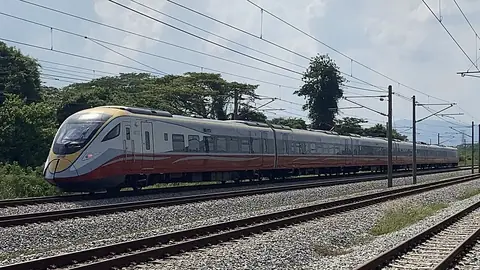
Penang to Singapore by train
Penang to Singapore by ETS train in five days: George Town, Kuala Lumpur and an optional Ipoh night, fares, Shuttle Tebrau, both border checks, a budget for two.
Read the guide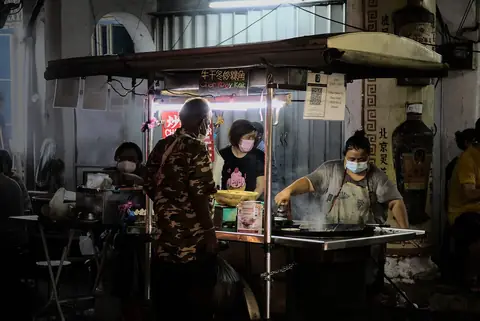
George Town and Penang
Three nights in Penang: where to sleep in George Town, mansion tours and fees, Penang Hill fares, the national park, the ferry, the airport bus and a priced stay for two.
Read the guide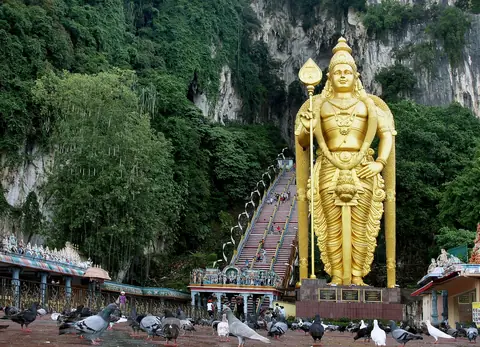
Kuala Lumpur
Three nights in Kuala Lumpur: where to sleep, the old city, Batu Caves by Komuter, the Petronas Towers, the ETS from KL Sentral and a dated budget for two.
Read the guide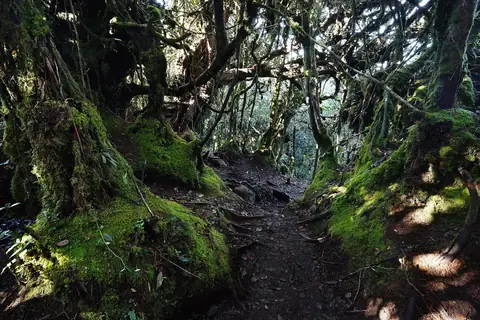
Cameron Highlands
Plan two nights in the Cameron Highlands: choose Tanah Rata or Brinchang, reach the tea estates, walk Mossy Forest and organise the road journey.
Read the guide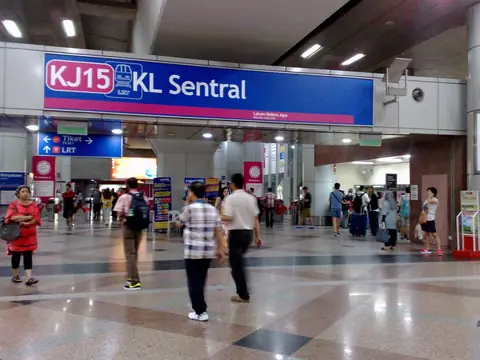
Getting around Malaysia
Malaysia transport with fares and times: KLIA Ekspres, ETS from Butterworth to JB Sentral, Shuttle Tebrau to Singapore, coaches, island ferries and Borneo flights.
Read the guideSources and checks before you travel
(32)
- Tourism Perak: Ipoh Old Town ↗ — opens in a new tab
- Tourism Perak: about Perak ↗ — opens in a new tab
- Tourism Perak: clusters (Greater Ipoh) ↗ — opens in a new tab
- Tourism Perak: Gunung Rapat ↗ — opens in a new tab
- Tourism Perak: Gunung Tasek ↗ — opens in a new tab
- Tourism Perak: Gunung Lang ↗ — opens in a new tab
- Tourism Perak: Tempurung Cave (Gua Tempurung) ↗ — opens in a new tab
- Tourism Perak: Gua Tempurung (geopark page) ↗ — opens in a new tab
- Tourism Perak: Lembah Kinta National Geopark ↗ — opens in a new tab
- Tourism Perak: Ipoh Coffee Vibes Festival 2026 ↗ — opens in a new tab
- Tourism Perak: Kinta Valley Geopark tour packages brochure (PDF) ↗ — opens in a new tab
- Tourism Perak: Batik Air launches direct Singapore-Ipoh route ↗ — opens in a new tab
- Tourism Malaysia: Perak Map & Guide (PDF) ↗ — opens in a new tab
- Tourism Malaysia: Kellie's Castle ↗ — opens in a new tab
- Ipoh World: Han Chin Pet Soo booking page ↗ — opens in a new tab
- Ipoh World: Han Chin Pet Soo reservation schedule ↗ — opens in a new tab
- Tasik Cermin Ipoh: tickets ↗ — opens in a new tab
- Tasik Cermin Ipoh: attractions ↗ — opens in a new tab
- Sarang Paloh Heritage Stay: rooms ↗ — opens in a new tab
- Sarang Paloh Heritage Stay: Red Throated Sunbird room ↗ — opens in a new tab
- KTMB: ETS page ↗ — opens in a new tab
- KTMB: ETS timetable effective 1 June 2026 (PDF) ↗ — opens in a new tab
- KTMB: KITS public trip search ↗ — opens in a new tab
- KTMB: Terms and Conditions for ETS, KTM Intercity and Shuttle Tebrau tickets (January 2026) ↗ — opens in a new tab
- KTMB: Important notice, ETS passengers to arrive 30 minutes early (PDF) ↗ — opens in a new tab
- Royal Malaysian Customs Department: Tourism Tax (Rate of Tax) Order 2025 (PDF) ↗ — opens in a new tab
- Royal Malaysian Customs Department: MyTTx, legislation, guides and forms ↗ — opens in a new tab
- Moghul Mahal, Brickfields, Kuala Lumpur: menu ↗ — opens in a new tab
- Hotlink — seven-day Travel Pass ↗ — opens in a new tab
- Etihad — London to Kuala Lumpur economy fares ↗ — opens in a new tab
- Malaysia4U: what to eat in Ipoh (updated 11 July 2026) ↗ — opens in a new tab
- Malaysia4U: what to eat in Penang (updated 11 July 2026) ↗ — opens in a new tab
Reference sources for the version dated 30 October 2026. Confirm opening times, access, transport and conditions for your travel dates.
Photo credits
(4)
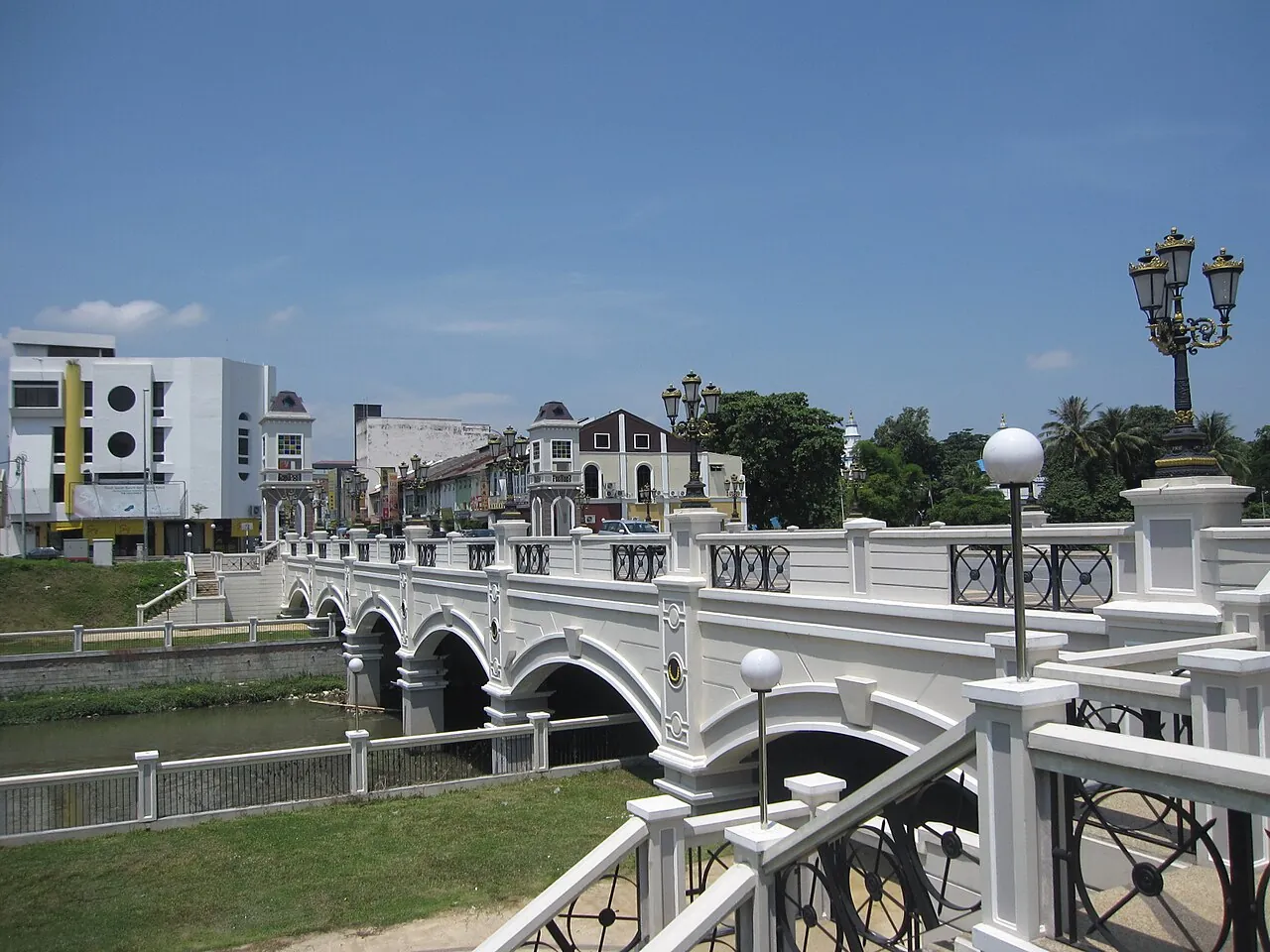
Ipoh railway station places ETS arrivals at the edge of the old civic quarter.
Photograph: FBilula — opens in a new tab · CC BY-SA 4.0 — opens in a new tab
Changes: Resized and converted to WebP; displayed with responsive crops. · Original photograph and licence details ↗ — opens in a new tab
Kek Lok Tong opens through a limestone cavern into a landscaped garden.
Photograph: Marufish from Alor Setar, Malaysia — opens in a new tab · CC BY-SA 2.0 — opens in a new tab
Changes: Resized and converted to WebP; displayed with responsive crops. · Original photograph and licence details ↗ — opens in a new tab
Sam Poh Tong is one of the active cave temples south of central Ipoh.
Photograph: Bruce Poon — opens in a new tab · CC BY-SA 4.0 — opens in a new tab
Changes: Resized and converted to WebP; displayed with responsive crops. · Original photograph and licence details ↗ — opens in a new tab
A mural of an old man with a cup of white coffee on a shophouse wall in Ipoh Old Town.
Photograph: Natsudragon — opens in a new tab · CC BY-SA 4.0 — opens in a new tab
Changes: Resized and converted to WebP; displayed with responsive crops. · Original photograph and licence details ↗ — opens in a new tab