Northeastern Singapore
Pulau Ubin day trip: bumboat, Chek Jawa, quarries and cycling
Pulau Ubin is a 1,036-hectare granite island off Singapore's north-eastern corner, ten minutes by bumboat from Changi Point. Quarrying once supported a few thousand settlers; today the old quarries are scenic lookouts, forest and grassland have grown back over the old plantations, and a small village of seafood restaurants and bike shops sits by the jetty. Come for Chek Jawa's boardwalks over mangrove and shore, a ride past quarry lakes to the 74-metre Puaka Hill, hornbills in the trees, and a slower day than anywhere on the mainland.
In this guide
Find the location ↗ — opens in a new tabThe short answer
Give Pulau Ubin one full day from your mainland hotel; no extra night is needed. The two prices that matter: the bumboat from Changi Point Ferry Terminal typically costs S$4 per person each way, plus S$2 for a bicycle, and bus 2 from Bugis to Changi Village costs S$2.33 by card (checked on 14 October 2026). Nothing has to be booked ahead for an independent day, because the boats run on demand and the guided Chek Jawa Wetlands Tour is suspended. Rent bikes in the village, ride 3 km east to Chek Jawa for the boardwalks and the Jejawi Tower, and spend the afternoon on the quarries and Puaka Hill.
- Suggested time
- One full day (no night on the island)
- Where to stay
- Your mainland hotel, ideally near bus 2 (Bugis) or the East-West Line to Tanah Merah; Changi Village for a stay beside the jetty
- Season and timing
- Any month; plan around the day's thunderstorm forecast. NParks forecasts flood-risk high tides of 3.3 m on 25-27 December 2026; keep off low-lying paths then.
Where to sleep: a mainland hotel for an island day
There is no need to move hotels for Ubin. Bugis is the easiest city base for the day because bus 2 stops there on its way to Changi Village, so you can ride to the jetty without a change. Katong and Joo Chiat suit a trip built around the east coast and its food; from there bus 2 also passes Eunos station, or you can take the East-West Line to Tanah Merah and change to bus 2.
Changi Village is the choice for a stay centred on the north-east: the ferry terminal is beside the village, so you can be on an early boat with no journey at all. The trade-off is a long bus or taxi ride to the city on your other days.
Camping on Ubin is possible at three NParks campsites (Jelutong, Mamam and Endut Senin) with a permit. Tourists apply through NParks' online form at least two weeks before the camping date.
Changi Point and the bumboat
Boats leave from Changi Point Ferry Terminal, 51 Lorong Bekukong, beside Changi Village, where the buses terminate. This is not Changi Airport. NParks lists buses 2, 29, 59 and 109 to Changi Village Bus Terminal, with three MRT links: bus 59 from Tampines East station (Exit B), bus 29 from Tampines Bus Interchange beside Tampines station, and bus 2 from Tanah Merah station.
Bus 2 (Go-Ahead Singapore) is the one-seat ride from the city: it starts at Kampong Bahru, passes Chinatown, Clarke Quay and Bugis, and reaches Changi Village Terminal after 26.5 km. From Bugis station (Exit A) the ride is 22.1 km on a stopping bus across eastern Singapore; from Tanah Merah station it is 11.1 km. Buses towards Changi Village run every 11-16 minutes on weekday daytimes; the first leaves Kampong Bahru at 05:40, and the last leaves Changi Village at 23:45 (23:30 on Sundays and public holidays). A taxi or ride-hailing car to the terminal address saves the changes.
Adult card fares on the MRT, LRT and basic buses depend on distance: S$1.28 for up to 3.2 km, rising to S$2.57 for over 40.2 km (fares in force since 27 December 2025). By that table, bus 2 from Bugis to Changi Village costs S$2.33 by card, rising to S$2.46 from 26 December 2026, when adult card fares rise by 12 cents for trips up to 3.2 km and 13 cents for longer trips. You can tap a contactless American Express, Mastercard, Visa or NETS card, or a card in Apple Pay, Google Pay or Samsung Pay, at the MRT gates and bus readers and pay the adult fare; no sign-up is needed.
The bumboat. When we checked on 14 October 2026, NParks described the bumboats as privately run boats that usually operate on demand from 06:00 to 19:00 daily, leaving when 12 passengers are on board. The crossing takes 10 minutes and typically costs S$4 per person each way, plus S$2 for a bicycle. Operators may leave with fewer passengers, or outside those hours, at a higher fare per person by private arrangement. Bring cash in small notes: the boat, the bike shops, the vans and the village food stalls are the costs of the day.
The one thing that can go wrong is the return. Boats wait to fill, so start back to the jetty well before 19:00, and do not put Ubin on the day of a flight or a fixed evening booking. If no boat is at Ubin jetty for your return, NParks' helpline is 1800-471 7300.
Chek Jawa: boardwalks, Jejawi Tower and House No. 1
Chek Jawa is the island's key attraction. It is a 100-hectare wetland at the island's eastern tip where six ecosystems meet: sandy beach, rocky beach, seagrass lagoon, coral rubble, mangroves and coastal forest. It was slated for land reclamation in 1992, but when its shore life was revealed in December 2000, thousands of Singaporeans came to see it, and in 2001 the government deferred reclamation for as long as Ubin is not needed for development. NParks records about 500 marine species here, and the site holds Singapore's only two mangrove Heritage Trees, both Perepat (mangrove apple).
It lies about 3 km from the jetty: a short ride, a van, or a walk of about 40 minutes. Cyclists leave their bikes at the designated parking near Punai Hut, so take a lock from the bike shop. The entrance is House No. 1, a Tudor-style cottage built in the 1930s by the then Chief Surveyor as a holiday retreat, with what is probably Singapore's last original fireplace. It became the Chek Jawa Visitor Centre in 2007 and holds displays on the wetland; pouched tomb bats live in its chimney and Malayan false vampire bats in the old water tower beside it.
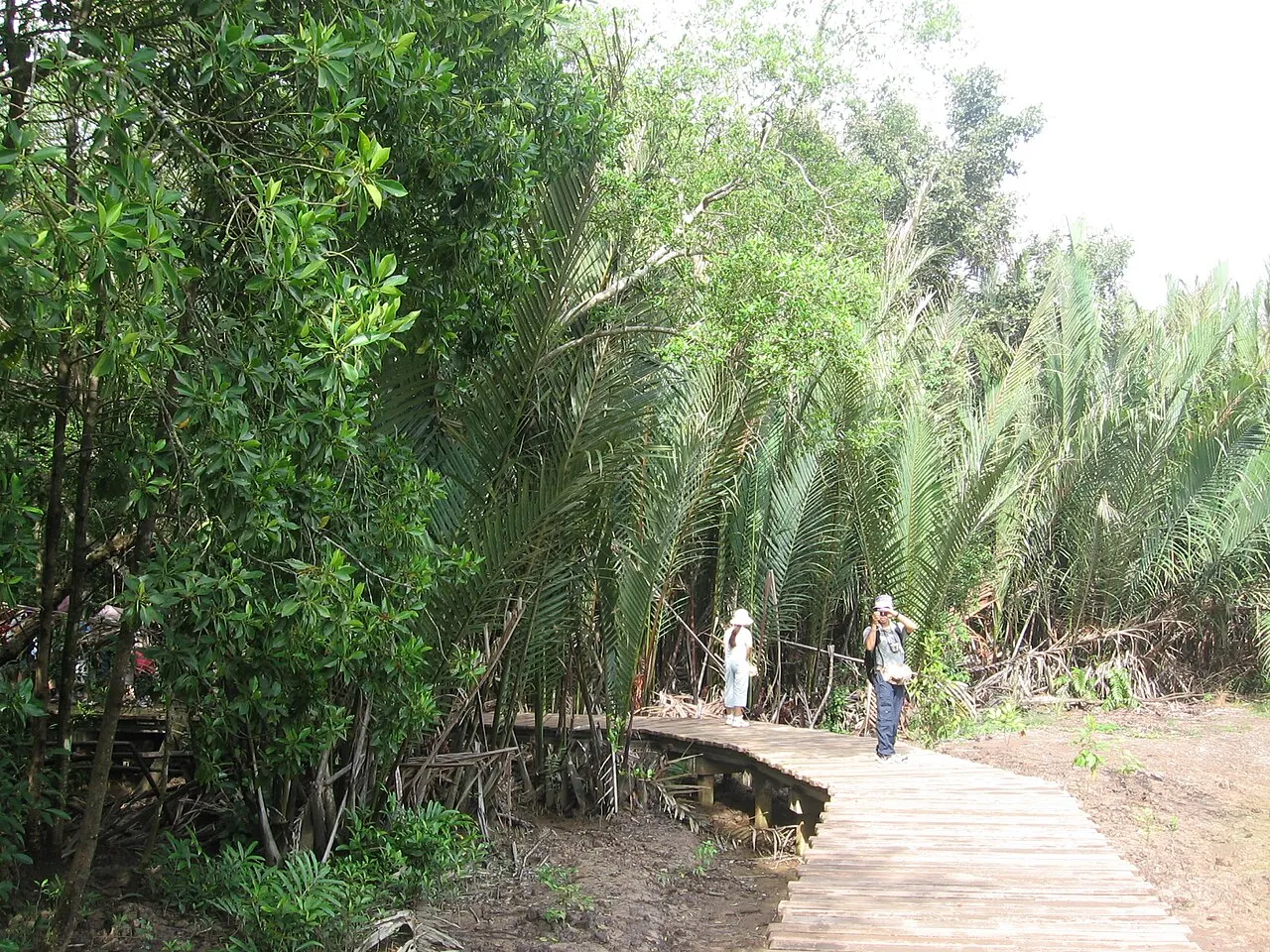
From the visitor centre two boardwalks run out: the Coastal Loop (600 m) over the shore and seagrass, and the Mangrove Loop (500 m) through the mangroves, with lookout platforms and shelters; NParks allows about an hour and a half for both. On the way, the seven-storey Jejawi Tower (21 m), named after the Malayan banyan beside it, looks out over the forest canopy and is the place to watch for birds. The intertidal flats show most of their life at low tides of 0.5 m and below; at higher tides they are under water, so check NParks' tide table if the shore is what you want to see.
NParks' notices list Chek Jawa, including both boardwalks, the Jejawi Tower and the visitor centre, as open 07:00-19:00 daily. A section of the Coastal Loop is closed for maintenance from 15 September 2026, with completion expected on 30 April 2027; the Mangrove Loop and the rest of the Coastal Loop stay open. A separate track out of Chek Jawa is closed until further notice, with a marked detour. The guided Chek Jawa Wetlands Tour is suspended until further notice while its floating pontoon is repaired.
Granite quarries, Puaka Hill and the mountain-bike park
Granite from Ubin built early public housing and roads, the Causeway, the Istana and Raffles Lighthouse, and the Horsburgh Lighthouse on Pedra Branca. Six quarries remain, all disused, mined to around 40 m below sea level: Balai, Kekek, Ketam, Pekan, Petai and Ubin.
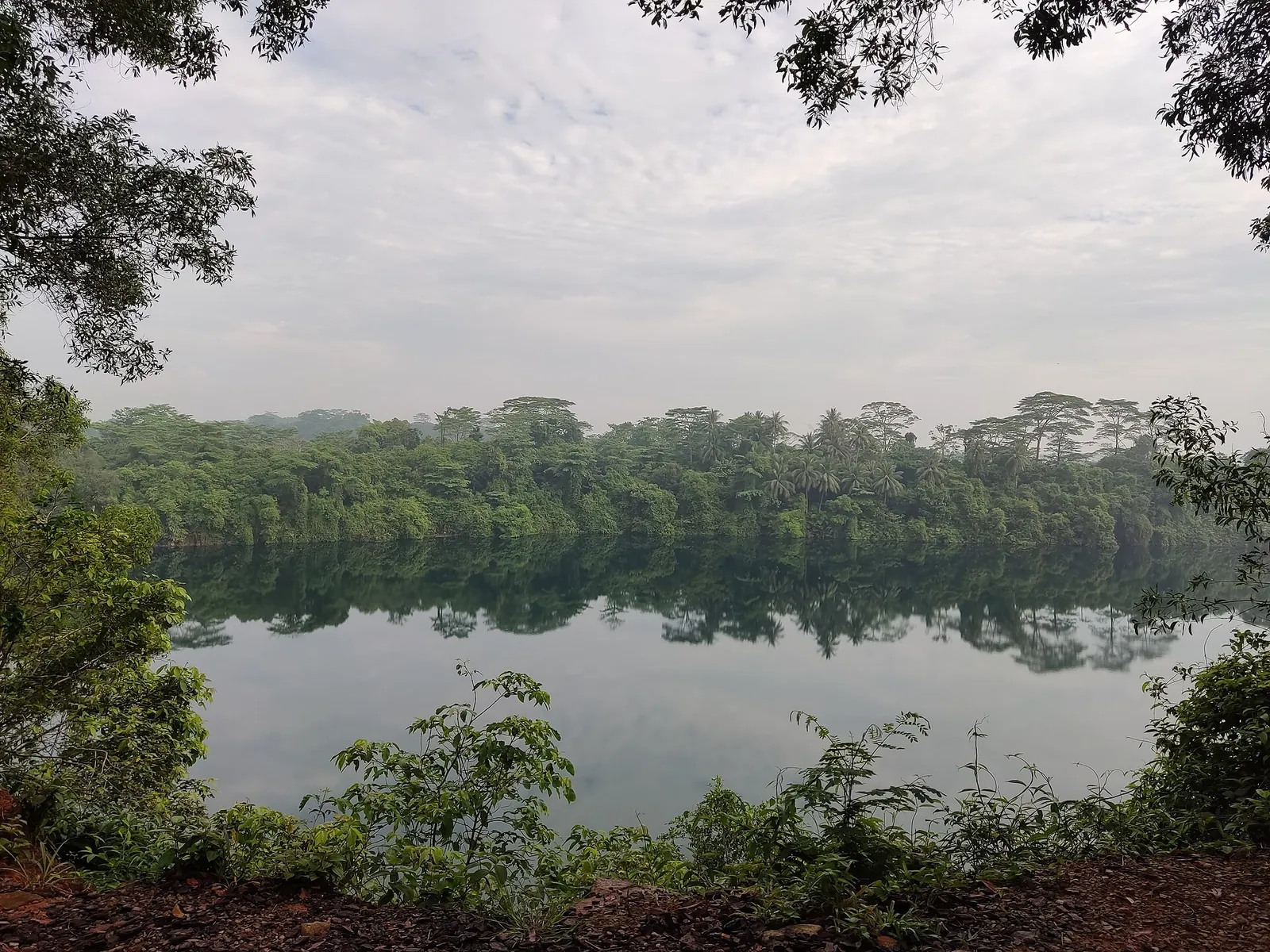
Pekan Quarry is the one by the village. Its two pits merged as they filled with rainwater, and the lookout built in 2007 is where visitors stop for photos. Four clusters of floating wetlands, about 4,000 m² in all, now give herons, kingfishers, waterhens and otters places to nest and feed; grey, purple and black-crowned night herons roost on the platforms.
Ketam Quarry was the last to close. As Aik Hwa Quarry it worked from 1964 to May 1999, employed more than 100 people, most of them islanders, and in the 1990s supplied 30 to 40 percent of Singapore's construction granite. Around its rim, the Ketam Mountain Bike Park covers 45 ha with about 10 km of trails, the first in Singapore built to international competition standards. Its three tracks are graded Blue Square for beginners (still with steep slopes and narrow, loose sections), Black Diamond for intermediate riders and Double Black Diamond for experts. The re-planted slopes, with over 2,000 native shrubs and trees, attract red-wattled lapwings and baya weavers.
Puaka Hill, at 74 m, is Ubin's highest point. A winding path climbs through tembusu trees and resam ferns to a summit view over Ubin Quarry, mainland Singapore and, across the strait, Malaysia. On steeper slopes around the island, signs ask cyclists to dismount and push.
The village, the temple and the kampong house
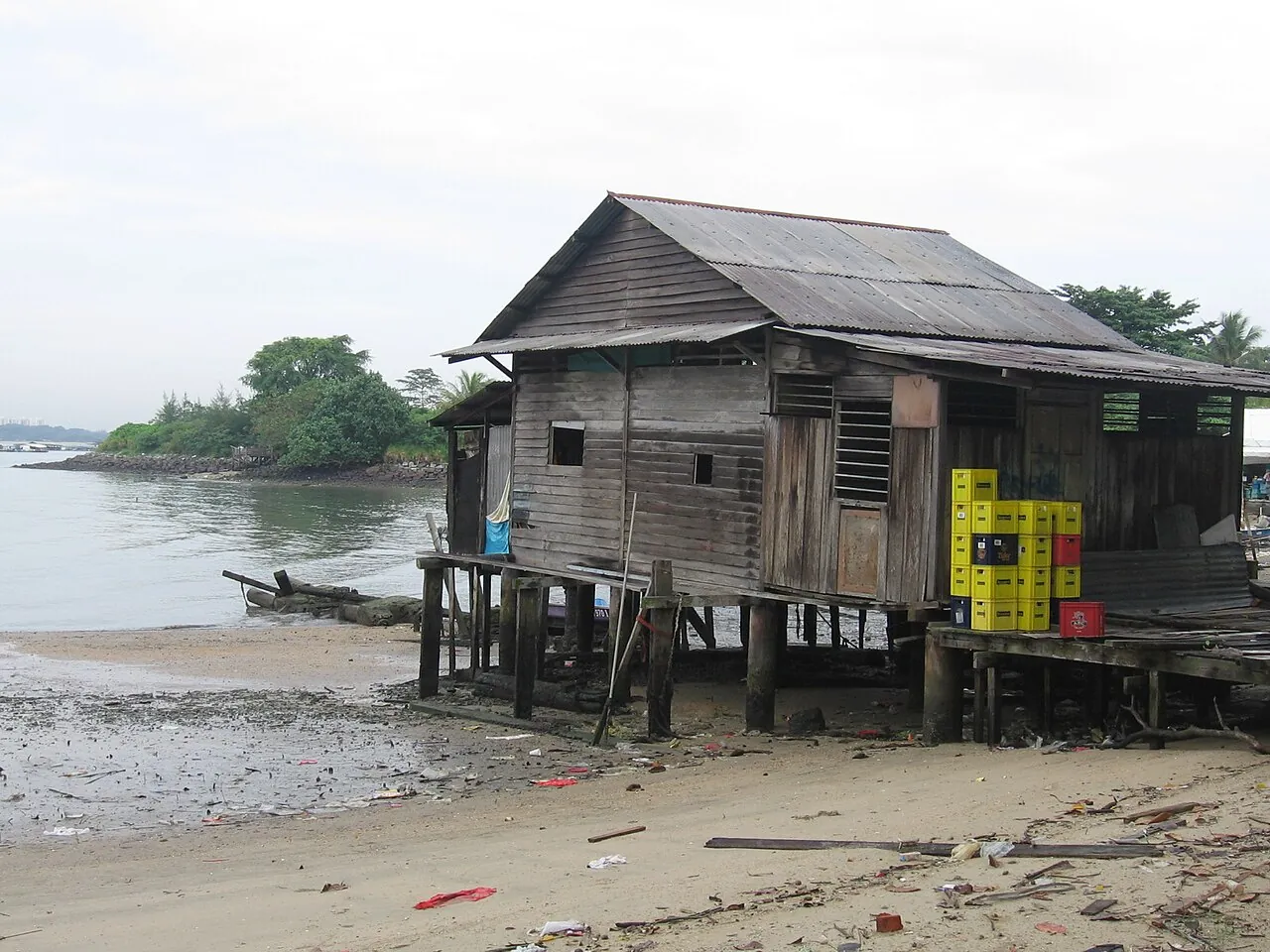
Between the 1950s and the early 1970s, when quarrying peaked, about 2,000 people lived on Ubin. The Fo Shan Ting Da Bo Gong Temple near Pekan Quarry, with its wayang (opera) stage opposite, was where the village gathered for Chinese New Year, the Hungry Ghost Festival and the Mid-Autumn Festival. Its biggest event is the birthday of the deity Tua Pek Kong, five days of Chinese opera ending with a getai stage show, which still draws former residents back.
Teck Seng's Place (House 363B) is a Chinese kampong house refurbished to show village life in the 1970s, with furniture, kitchen things and photographs donated by past and present residents; the Chew family, who ran a provision shop in the village, lived here until 2005. It opens Wednesday to Sunday, 09:30-16:30, closed 12:00-13:00. It sits on the hill above the Sensory Trail, an easy 1.5 km, roughly one-hour walk past the fruit trees, herbs and crops villagers grew, through mangroves to a former fish-farm pond now kept for waterbirds and dragonflies.
The German Girl Shrine is Ubin's best-known story. When the First World War broke out in 1914, the British rounded up a German coffee planter's family on Ubin; their daughter, about 18, fled into the woods and was found dead days later, believed to have fallen from a cliff. Workers buried her on the crest of the quarry's hill, and islanders have tended the shrine for over a century. Butterfly Hill, a knoll about the size of a football field inside Jelutong Campsite, was planted in 2005 with more than 50 species of nectar and host plants and draws about 140 butterfly species; on a sunny day, half an hour there usually shows more than 20.
Wildlife: hornbills, wild boar and otters
Ubin's secondary forest is a stronghold of the oriental pied hornbill, a black bird with white patches and a large yellow bill, first recorded in Singapore here; NParks' 2018-2019 survey found it common, mostly in the south of the island. The same survey counted 173 bird species, including straw-headed bulbuls and white-rumped shamas at almost every point surveyed.
Wild boar were the mammal most often caught on NParks' camera traps, recorded at every camera location, followed by greater mouse-deer and long-tailed macaques. Boar are generally shy but unpredictable, and mothers with piglets defend them. Watch from a distance, keep your voice down and do not use flash. Smooth-coated otters also live on the island, and Pekan Quarry's floating wetlands (above) are the easiest place to look for herons.
Feeding any wild animal is illegal under Singapore's Wildlife Act, with a fine of up to S$10,000. Keep your lunch and snacks in a closed bag.
Getting around: bikes, vans and walking
Bike-hire shops in the main village also rent helmets, which NParks recommends. App-hired shared bicycles, e-scooters and other personal mobility devices may not be brought onto the island, and motorised bicycles may only use the roads, at up to 25 km/h. Bringing your own bike costs S$2 each way on the boat.
Vans can be hired in the main village for Chek Jawa and other parts of the island. On foot, the village, Pekan Quarry, the temple and the Sensory Trail fit into a morning, and Chek Jawa is about 40 minutes' walk each way from the jetty.
NParks staffs first-aid posts daily at Ubin Volunteer Hub in the main village and at the Ubin Living Lab in the south-west; map boards around the island show where they are. For an emergency, call 995 or 999.
A timed day on Ubin
08:00 Bus 2 from Bugis, or the MRT to Tanah Merah and bus 2 from there, to Changi Village. 09:15 Bumboat to Ubin (10 minutes). Rent bikes and helmets in the village and look at Pekan Quarry from its lookout and the temple and wayang stage on the way out.
10:00 Ride east about 3 km to Chek Jawa and leave the bikes near Punai Hut. Walk the Mangrove Loop and the open part of the Coastal Loop, climb the Jejawi Tower and look round House No. 1: allow about two hours. A walking day does the same stretch on foot, about 40 minutes each way.
12:30 Back in the village for lunch (see the food below). 14:00 Ride to Ketam Quarry and, if you are a confident rider, try the Blue Square trail in the mountain-bike park; or climb Puaka Hill for the view over Ubin Quarry. Add Butterfly Hill at Jelutong Campsite in the afternoon sun, or the Sensory Trail and Teck Seng's Place (Wednesday to Sunday, open until 16:30).
16:30 Return the bikes and walk to the jetty, so you are on a boat well before the 19:00 end of the usual operating hours. Back in Changi Village, have dinner before bus 2 back to the city.
What to eat and where to look
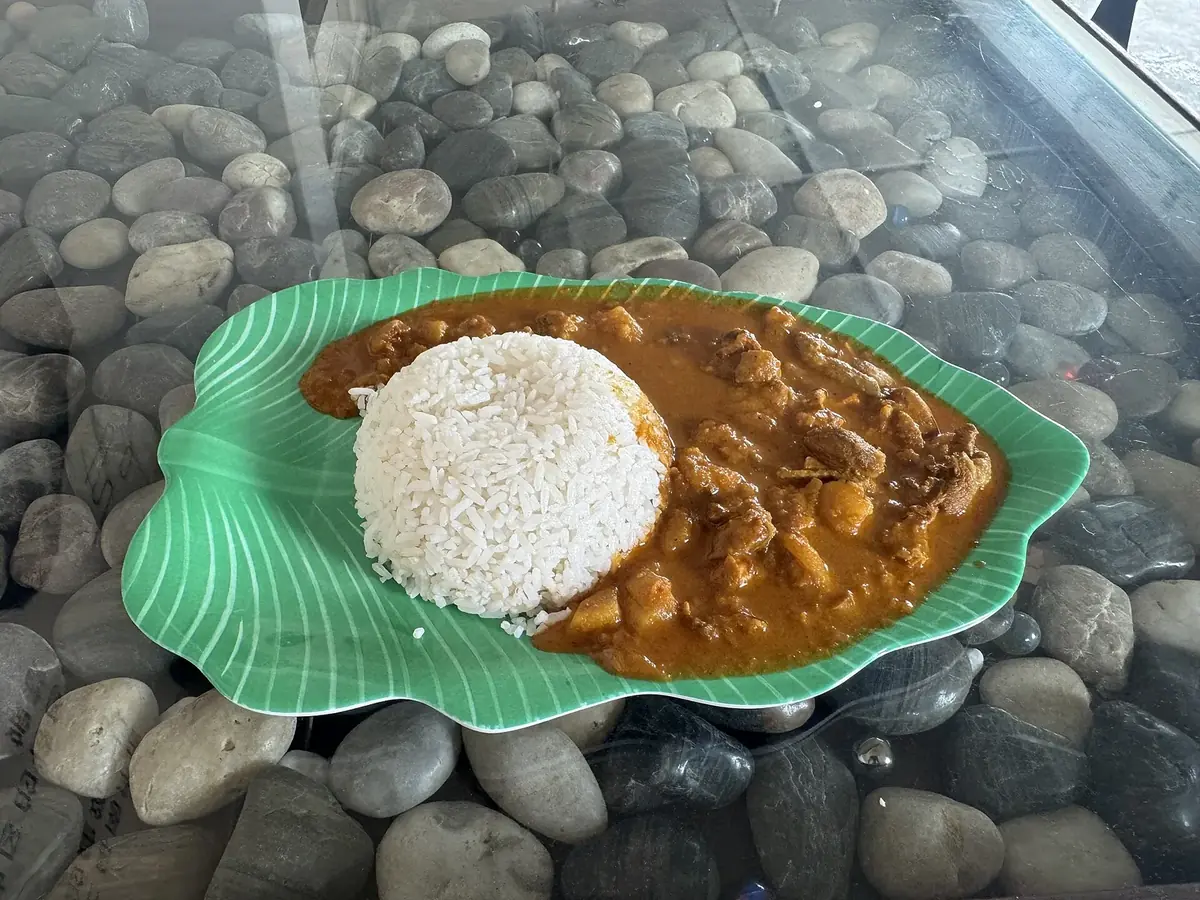
Mee rebus and mee siam
Two Malay noodle dishes: mee rebus in a thick, sweet potato-based gravy, and mee siam in a tangy, spicy broth. NParks lists both among the homemade dishes at Encik Hassan's shop, which has stood by the jetty for more than 30 years.
- Where to look
- Encik Hassan's shop, next to Ubin Jetty; NParks lists it as open at weekends.
- Fit it into your day
- A quick weekend lunch on the way back to the boat.
Weekends only; on a weekday, eat at one of the seafood restaurants.
Nasi lemak
Rice cooked with coconut milk and pandan leaves, served with sambal and toppings such as anchovies and fried chicken wings; Encik Hassan's shop makes its own.
- Where to look
- Encik Hassan's shop, next to Ubin Jetty (weekends).
- Fit it into your day
- Breakfast straight off the first boat, before the ride to Chek Jawa.
The sambal is spicy; ask for it on the side if you prefer.
Seafood lunch at a village restaurant
Shared seafood dishes with rice, at the restaurants that NParks names: Cheong Lian Yuen with its small alfresco area near the jetty, Sin Nam Huat opposite the wayang stage with old photos of Ubin on the walls, and Season Live Seafood Restaurant, whose terrace looks across to the jetty and the mainland.
- Where to look
- Cheong Lian Yuen (near the jetty), Sin Nam Huat (opposite the wayang stage) or Season Live Seafood Restaurant (on the road towards Ubin Volunteer Hub).
- Fit it into your day
- The main meal of the day, at 12:30 between Chek Jawa and the afternoon ride.
Seafood is often priced by weight; check the price when you order. Tell the staff about any shellfish allergy.
Chendol and ice kacang
Shaved-ice desserts: chendol with pandan jelly, coconut milk and palm sugar, ice kacang with syrups, beans and jelly. NParks lists both at the drink stalls and provision shops in the village centre.
- Where to look
- Drink stalls and provision shops in Ubin Village centre.
- Fit it into your day
- The cooling stop when you return the bikes, before the walk to the jetty.
Eat it in the shade; it melts fast.
Durian and seasonal fruit
Ubin was an island of orchards and plantations, and fruit is still sold when it is in season: durian, rambutan, mangosteen and chempedak at the provision stores, and drinks and durians from a family's own trees at Ah Ma Drink Stall.
- Where to look
- Provision stores in the village, and Ah Ma Drink Stall just before Jelutong Bridge.
- Fit it into your day
- A mid-afternoon snack on the ride.
Sold only in season and when the trees fruit.
Bus and boat costs for two
Prices checked on 14 October 2026, for two adults from a hotel near Bugis, paying by contactless card on the bus: bus 2 Bugis-Changi Village and back, 4 rides x S$2.33 = S$9.32; the SimplyGo admin fee on foreign-issued Mastercard and Visa cards, S$0.60 per card per day of use = S$1.20; bumboat there and back, 4 crossings x S$4 = S$16. Total for transport: S$26.52 for two. From 26 December 2026 the bus rides cost S$2.46 each, making S$27.04.
Weather, tides and busy days
Wear covered shoes rather than sandals, a hat and sunscreen, and use insect repellent; NParks' wetland advice adds plenty of water. In a thunderstorm, NParks asks visitors to take cover at the nearest shelter and keep out of forested areas during and just after heavy rain; NEA publishes a 2-hour nowcast, a 24-hour forecast and rain-area maps; a forecast of thundery showers means an imminent risk of lightning.
Some low-lying areas flood at very high tides or after heavy rain; do not enter a flooded path. NParks' forecast flood-risk tides for the rest of 2026 are 3.3 m on 25 December (about 01:00-01:30), 26 December (01:00-02:30) and 27 December (02:00-03:30, and again at 13:00). NParks' notices also warn that box jellyfish have been seen in Singapore waters.
Encik Hassan's shop by the jetty opens at weekends. Boats leave when 12 passengers are aboard, so on a quiet weekday the wait for one can be longer.
Practical questions
How much does the Pulau Ubin bumboat cost?
NParks gives a typical fare of S$4 per person each way, plus S$2 for a bicycle, for the 10-minute crossing from Changi Point Ferry Terminal. Bring cash. A boat leaving with fewer than 12 passengers or outside 06:00-19:00 costs more per person by private arrangement.
How do I get to Changi Point Ferry Terminal by public transport?
Take bus 2 from Bugis, Clarke Quay or Chinatown straight to Changi Village (22.1 km from Bugis, S$2.33 by card), or the East-West Line to Tanah Merah and bus 2 from there. NParks also lists bus 59 from Tampines East station and bus 29 from Tampines. The terminal is next to Changi Village bus interchange, at 51 Lorong Bekukong.
How long should I spend on Pulau Ubin?
A full day: about two hours for Chek Jawa, lunch in the village, and an afternoon on the quarries, Puaka Hill or the bike park. Changi Point is 22.1 km from Bugis by bus 2.
Can I visit Chek Jawa now?
Yes. Chek Jawa, its visitor centre, the Jejawi Tower, the Mangrove Loop and the open part of the Coastal Loop are open 07:00-19:00 daily. A section of the Coastal Loop is closed for maintenance from 15 September 2026 to an expected 30 April 2027, and the guided Chek Jawa Wetlands Tour is suspended until further notice.
Do I need to cycle?
No. Chek Jawa is about 40 minutes' walk from the jetty, and the village, Pekan Quarry and the Sensory Trail are all within walking distance; island vans also carry passengers. Cycling lets you add Ketam Quarry, Puaka Hill and the mountain-bike park in the same day.
Can I stay overnight on Pulau Ubin?
Only by camping, at Jelutong, Mamam or Endut Senin campsites, with an NParks permit applied for at least two weeks ahead (tourists use NParks' online form). For most visitors a day trip from a mainland hotel is simpler.
Keep planning your trip

Getting around Singapore
Changi to the city, the six MRT lines, fares and the Tourist Pass, taxis, Sentosa, Pulau Ubin and Batam boats, the train to Johor Bahru and a budget for two.
Read the guide
Where to stay in Singapore
Marina Bay, City Hall, Chinatown, Little India, Orchard, the quays, Sentosa, Katong or Changi: who each area suits, its MRT line and dated room rates.
Read the guide
Singapore nature walks
Two nature days from one Singapore base: Bukit Timah's summit and the Botanic Gardens, then the Southern Ridges, with fares and admission costs.
Read the guide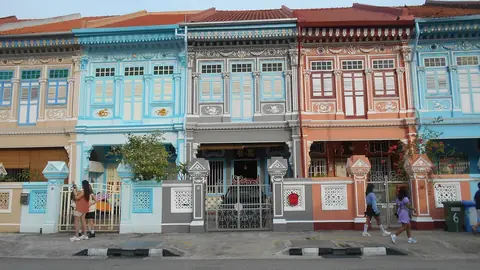
Katong and Joo Chiat
Two nights or a day in Katong and Joo Chiat: Koon Seng Road's Peranakan terraces, The Intan, Geylang Serai Market, East Coast Park by bike, the MRT and a budget for two.
Read the guide
Singapore in 5 days
Four nights at Outram Park: Marina Bay, Chinatown, Kampong Gelam, a Sentosa day, Mandai zoo day, Botanic Gardens, tickets and a budget for two.
Read the guide
Mandai Wildlife Parks
Singapore's five Mandai wildlife parks described, with 2026 ticket prices, the M2 bus from Khatib, a one-day plan and local dishes to eat on site.
Read the guideSources and checks before you travel
(34)
- National Parks Board (NParks): Visit Pulau Ubin ↗ — opens in a new tab
- NParks: Pulau Ubin notices ↗ — opens in a new tab
- NParks: Chek Jawa track closure notice (PDF) ↗ — opens in a new tab
- NParks: Chek Jawa Wetlands ↗ — opens in a new tab
- NParks: Flora and Fauna of Ubin ↗ — opens in a new tab
- NParks: Chek Jawa Wetlands Tour ↗ — opens in a new tab
- NParks: House 1 ↗ — opens in a new tab
- NParks: Community, Heritage and History ↗ — opens in a new tab
- NParks: Quarries of Pulau Ubin ↗ — opens in a new tab
- NParks: Pekan Quarry Floating Wetlands ↗ — opens in a new tab
- NParks: Cycling on Pulau Ubin ↗ — opens in a new tab
- NParks: Nature-based recreation on Pulau Ubin ↗ — opens in a new tab
- NParks: Fo Shan Ting Da Bo Gong Temple ↗ — opens in a new tab
- NParks: Teck Seng's Place ↗ — opens in a new tab
- NParks: Sensory Trail Garden ↗ — opens in a new tab
- NParks: German Girl Shrine ↗ — opens in a new tab
- NParks: Butterfly Hill ↗ — opens in a new tab
- NParks: An update of the biodiversity in Pulau Ubin (2026), avifauna paper ↗ — opens in a new tab
- NParks: An update of the biodiversity in Pulau Ubin (2026), amphibians, reptiles and mammals paper ↗ — opens in a new tab
- Animal and Veterinary Service (NParks): Wild boars ↗ — opens in a new tab
- Animal and Veterinary Service (NParks): Oriental pied hornbills ↗ — opens in a new tab
- NParks: When encountering animals ↗ — opens in a new tab
- NParks: Notice on bicycles, personal mobility devices and motorised vehicles ↗ — opens in a new tab
- NParks: Camping on Pulau Ubin ↗ — opens in a new tab
- NParks: Pulau Ubin permits ↗ — opens in a new tab
- NParks: Flood risk on Pulau Ubin ↗ — opens in a new tab
- NParks: Ubin Living Lab ↗ — opens in a new tab
- Go-Ahead Singapore: Service 2 ↗ — opens in a new tab
- SimplyGo: Adult fares ↗ — opens in a new tab
- Public Transport Council: Fare Review Exercise 2026 ↗ — opens in a new tab
- SimplyGo: Contactless bank cards FAQ ↗ — opens in a new tab
- Changi Airport Group: Leaving Changi Airport ↗ — opens in a new tab
- National Environment Agency: weather ↗ — opens in a new tab
- Singapore Tourism Board: local food and drinks ↗ — opens in a new tab
Reference sources for the version dated 23 October 2026. Confirm opening times, access, transport and conditions for your travel dates.
Photo credits
(5)
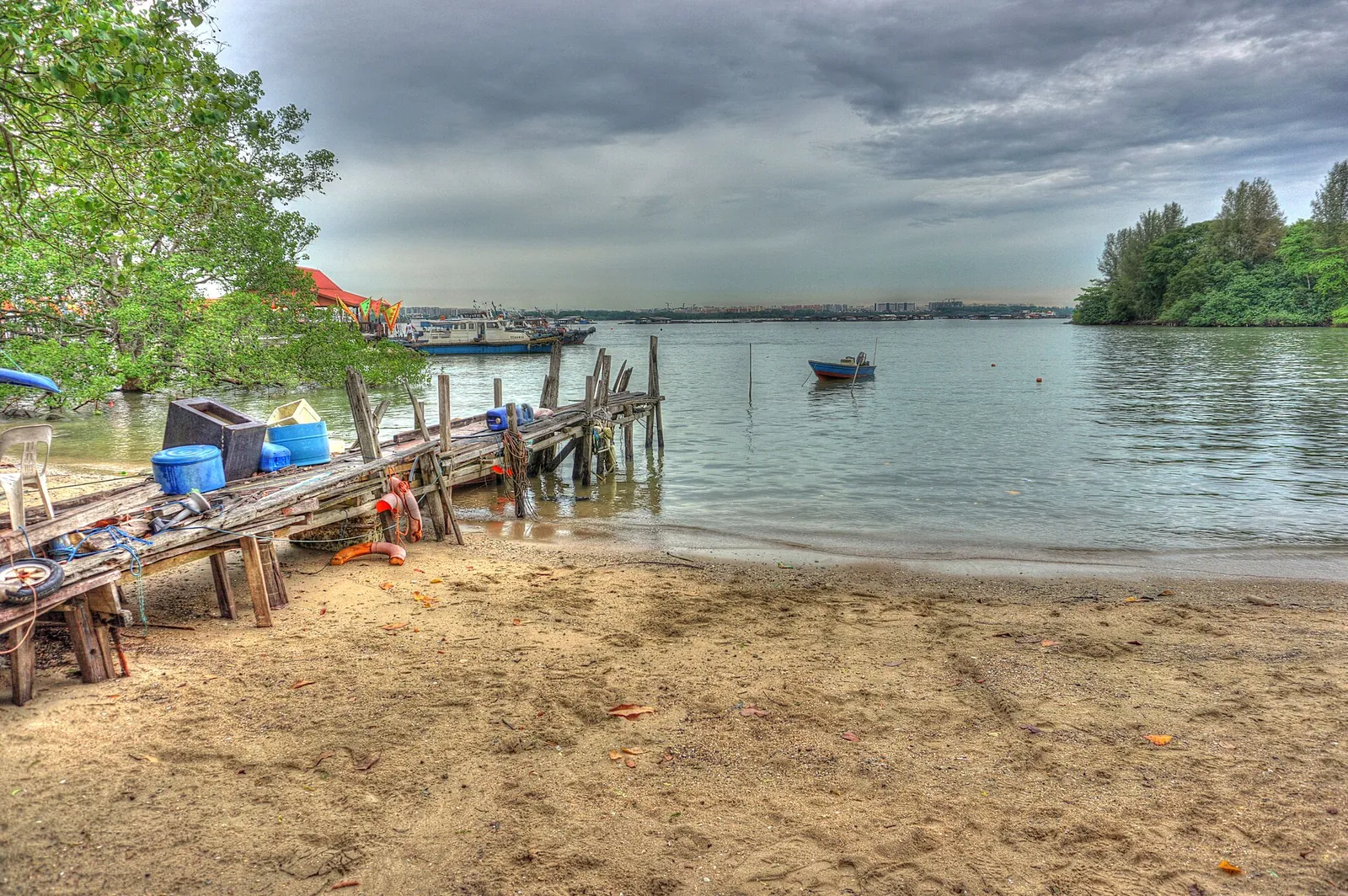
The village near Pulau Ubin’s arrival area, with bicycles ready for island outings.
Photograph: LN9267 — opens in a new tab · CC BY-SA 4.0 — opens in a new tab
Changes: Resized and converted to WebP; displayed with responsive crops. · Original photograph and licence details ↗ — opens in a new tab
Woodland surrounds one of Pulau Ubin’s former granite quarries.
Photograph: Zairon — opens in a new tab · CC BY-SA 4.0 — opens in a new tab
Changes: Resized and converted to WebP; displayed with responsive crops. · Original photograph and licence details ↗ — opens in a new tab
The mangrove boardwalk at Chek Jawa on Pulau Ubin.
Photograph: Zairon — opens in a new tab · CC BY-SA 4.0 — opens in a new tab
Changes: Resized and converted to WebP; displayed with responsive crops. · Original photograph and licence details ↗ — opens in a new tab
Boats moored at Changi Point, where the crossing to Pulau Ubin starts, with a work boat in the foreground.
Photograph: LN9267 — opens in a new tab · CC BY-SA 4.0 — opens in a new tab
Changes: Resized and converted to WebP; displayed with responsive crops. · Original photograph and licence details ↗ — opens in a new tab
A rice-and-curry meal photographed at a Pulau Ubin restaurant.
Photograph: LN9267 — opens in a new tab · CC BY-SA 4.0 — opens in a new tab
Changes: Resized and converted to WebP; displayed with responsive crops. · Original photograph and licence details ↗ — opens in a new tab