Okinawa · Okinawa
Okinawa travel guide: Naha, Shuri Castle, Churaumi and where to base
Okinawa's main island stretches more than 100 km from north to south, and almost every visitor lands at its southern end, in Naha. The island works as two trips: a capital with a monorail, a market street and a castle whose main hall, lost to fire in 2019, reopens on 23 November 2026, and a long west coast of resort beaches that runs north to the Churaumi Aquarium. The question that shapes everything else is whether you will drive. This guide settles the base, says what is open at Shurijo Castle Park, and explains what a day trip to the Kerama Islands depends on.
- Suggested time
- 4–6 nights
- Where to stay
- Naha for the monorail, Shuri and the Kerama ferries; the Onna coast or the Motobu Peninsula for beaches and the aquarium if you drive
- Season and timing
- Visit Okinawa gives the rainy season as mid-May to late June and says typhoons are possible from June to September. October averages about 26°C by day with a sea temperature near 27°C, and November about 23°C.
The short answer
Book five nights: three in Naha for Kokusai-dori, Shurijo Castle Park and a flexible Kerama ferry day, then two on the west coast near Onna or Motobu if you will rent a car. Without a car, stay in Naha throughout and treat the Churaumi Aquarium as one long day by bus or tour. Shurijo Castle Park opens the rebuilt main hall to ticket holders from 23 November 2026, by timed reservation. Keep the Kerama ferry day flexible.
Naha or the west coast: choose your base before you book
Naha, the prefectural capital, has the airport, the Yui Rail monorail, Shurijo Castle Park and the ferries to the Kerama Islands. The beach resorts are up the west coast. Visit Okinawa Japan, the official guide run by the Okinawa Convention & Visitors Bureau, calls the Onna coast Okinawa's premier beach resort destination, and the Okinawa Churaumi Aquarium stands on the Motobu Peninsula, further north still.
The distances decide the base. Visit Okinawa puts the drive from Naha Airport to the Onna area at around one hour, or around 75 minutes by bus. The aquarium's own page gives about 2 hours by car on the expressway, or about 2 hours 30 minutes by express bus, from the airport. A hotel on the Onna coast makes the aquarium a short outing; a hotel in Naha makes it most of a day on the road.
For a first visit, split five nights: three in Naha, then two on the west coast near Onna or on the Motobu Peninsula with a rental car for the drive north. If you would rather not drive, stay in Naha for the whole trip and give the aquarium a single long day. If the beach is the point and you have only three or four nights, go straight to the coast and give Naha a day at the end, before the flight home.
Naha: Kokusai-dori, Makishi market and the Yui Rail
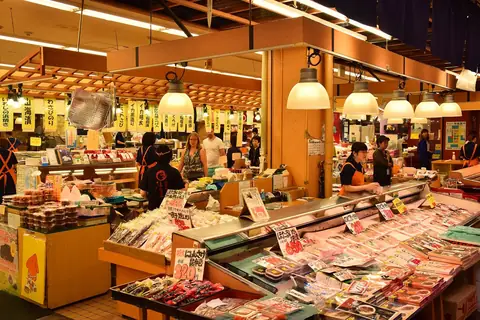
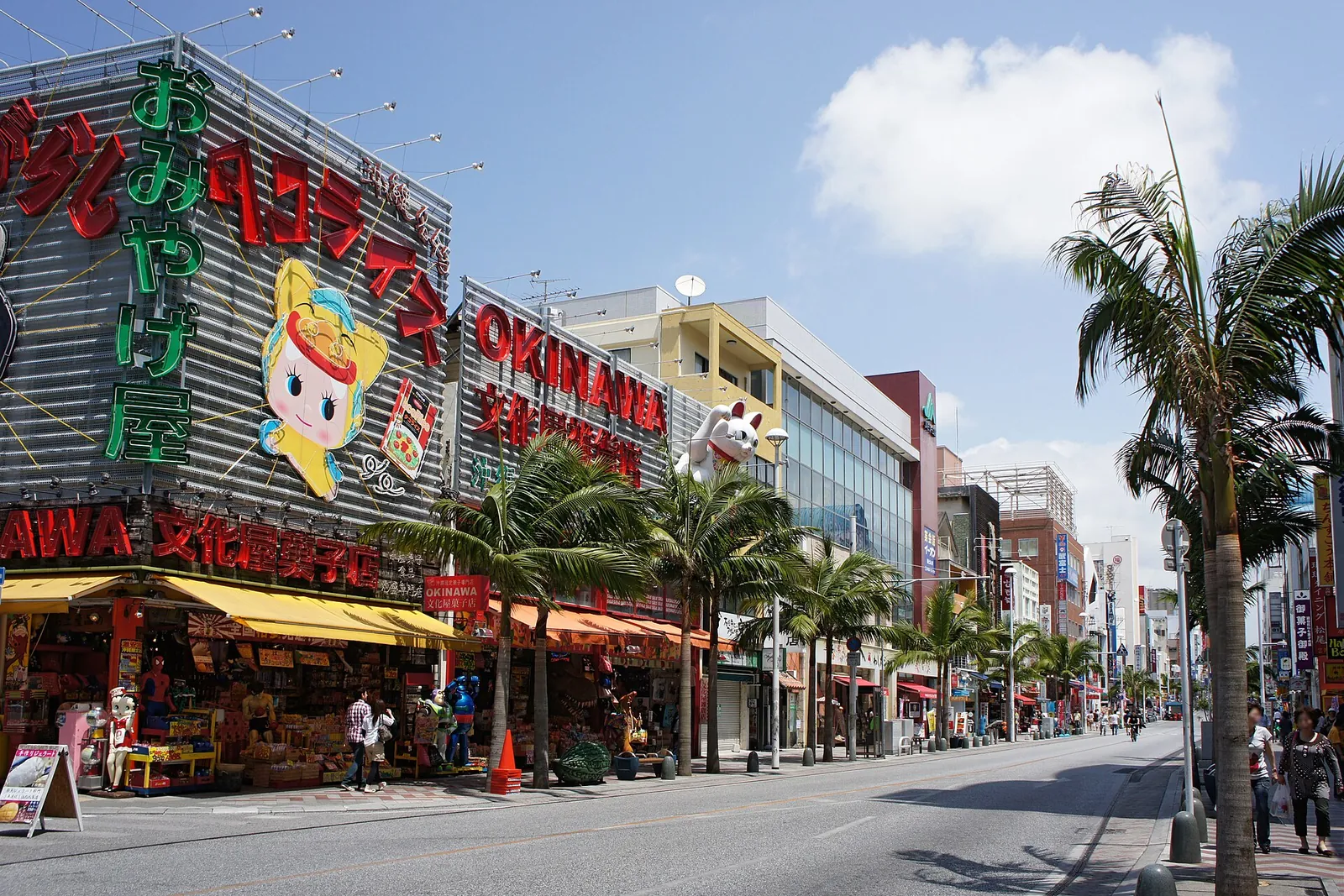
Kokusai-dori is Naha's main thoroughfare, a 1.6 km stretch of shops, cafes and bars that Visit Okinawa also names as the venue for some of the city's biggest festivals. The covered arcades and narrow lanes that branch off it sell kariyushi shirts, Okinawa's answer to the aloha shirt, and lead to Makishi Public Market, where fishmongers, butchers and grocers share a hall with a dine-in space for visitors. Just outside the market area is Tsuboya, the Ryukyu Kingdom's pottery district, where family-run workshops still operate. For the evening, Visit Okinawa points to izakaya serving dishes such as goya champuru, to the lively pubs and cocktail bars of Kokusai-dori and to more upmarket restaurants in Omoromachi.
The Yui Rail is a single monorail line from Naha Airport through the city centre; Visit Okinawa counts 19 stations in around 40 minutes and notes that several are close to Kokusai-dori. When we checked on 2026-10-12, Yui Rail's fare table listed Makishi at ¥320 and 16 minutes from Naha Airport, and Shuri at ¥360 and 27 minutes. Yui Rail also sells QR tickets valid for 24 hours (¥1,000) or 48 hours (¥1,800) from the time of purchase, with children under 12 at half price. Compare those with the single fares for the days you plan before buying.
Make time for the local food
What to eat and where to look
Goya champuru
A stir-fry of bitter melon with tofu and egg, and often pork. Visit Okinawa calls it a staple of the everyday cooking that grew up beside the Ryukyu court cuisine, and the sharp bitterness of goya is part of the point.
- Where to look
- Izakaya in Naha, where Visit Okinawa says traditional dishes such as goya champuru are served.
- Fit it into your day
- An evening dish to share in Naha.
Contains egg and soy, and often pork or luncheon meat; ask if you avoid meat.
Okinawa soba
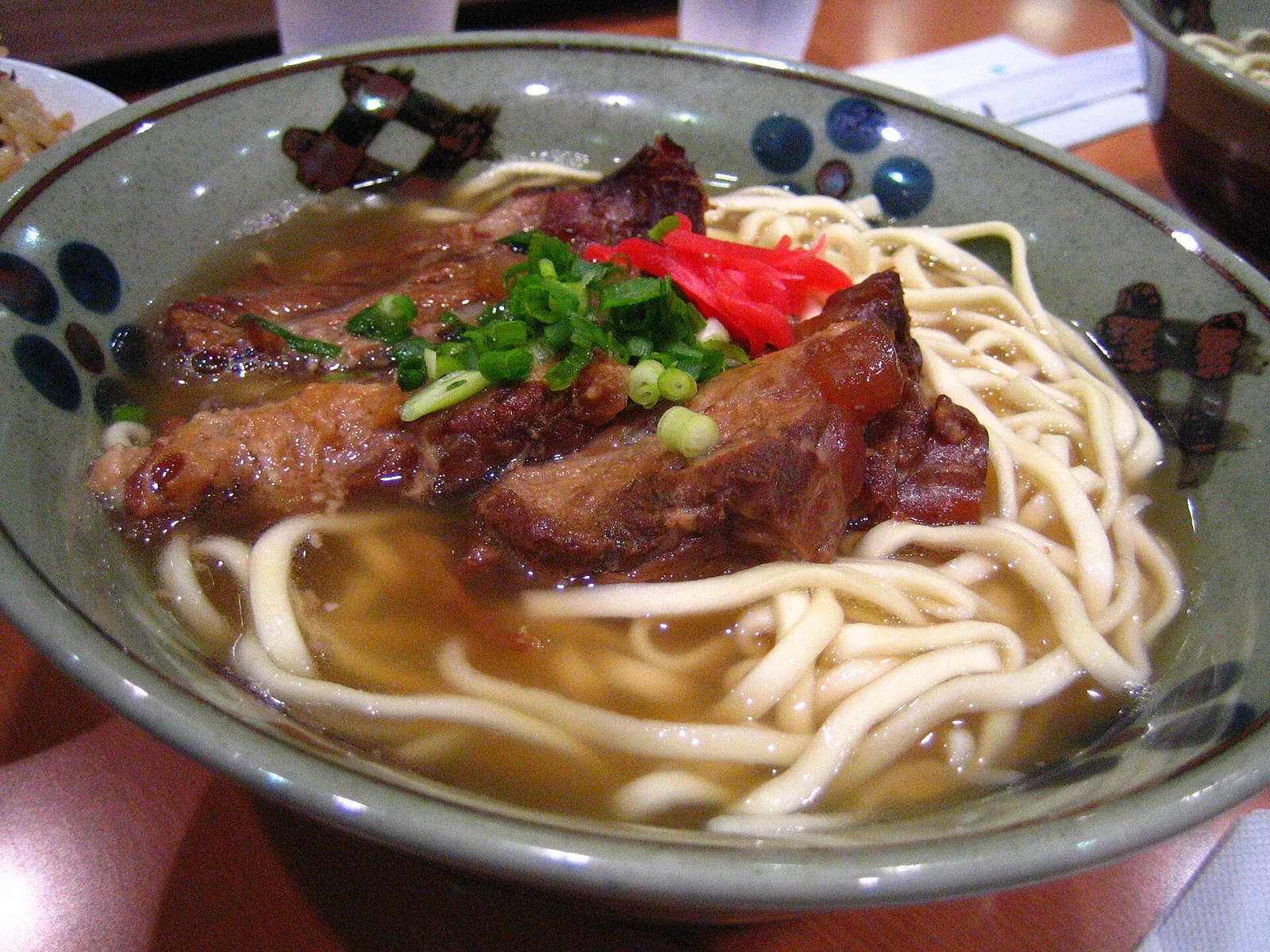
Noodles made from flour rather than the buckwheat used on the mainland. Visit Okinawa notes many regional variations and original recipes, and that 17 October is celebrated as Okinawa Soba Day.
- Where to look
- Soba restaurants on every part of the island; try a different shop in Naha and on the drive north.
- Fit it into your day
- A lunch stop between Shuri and Tsuboya, or on the road north.
Made with flour, so check the ingredients if you avoid gluten; ask about the broth if you avoid pork or fish.
Umibudo (sea grapes)
A seaweed Visit Okinawa calls iconically Okinawan, with a slightly crunchy texture that pops in the mouth. It is eaten as it is, in salads or on rice with sea urchin and other seafood.
- Where to look
- Market stalls, supermarkets and izakaya across the island; Onna Village is one of the prime growing areas.
- Fit it into your day
- A side dish at dinner on the west coast.
A raw seaweed served cold; check how it is dressed if you avoid soy or fish sauce.
Agu pork and shima shabu-shabu
Agu is a breed of pig bred on the islands for more than 600 years, prized for its marbling and sweetness. Visit Okinawa suggests shima shabu-shabu, where thin slices are cooked in a lightly flavoured broth, as the best way to taste it.
- Where to look
- Restaurants advertising Agu pork or shabu-shabu in Naha and on the Onna coast.
- Fit it into your day
- A slower dinner on an evening without an early start.
Pork; the broth and dipping sauces may contain soy or fish.
Sata-andagi
An Okinawan doughnut of sugar, flour and eggs, crisp outside and moist within. Visit Okinawa notes plain, brown-sugar, pineapple and sweet-potato versions.
- Where to look
- Snack shops and market stalls, including around Kokusai-dori.
- Fit it into your day
- A snack for the ferry or the drive north.
Contains egg and flour.
Shurijo Castle Park: what the 2019 fire left and what opens on 23 November 2026
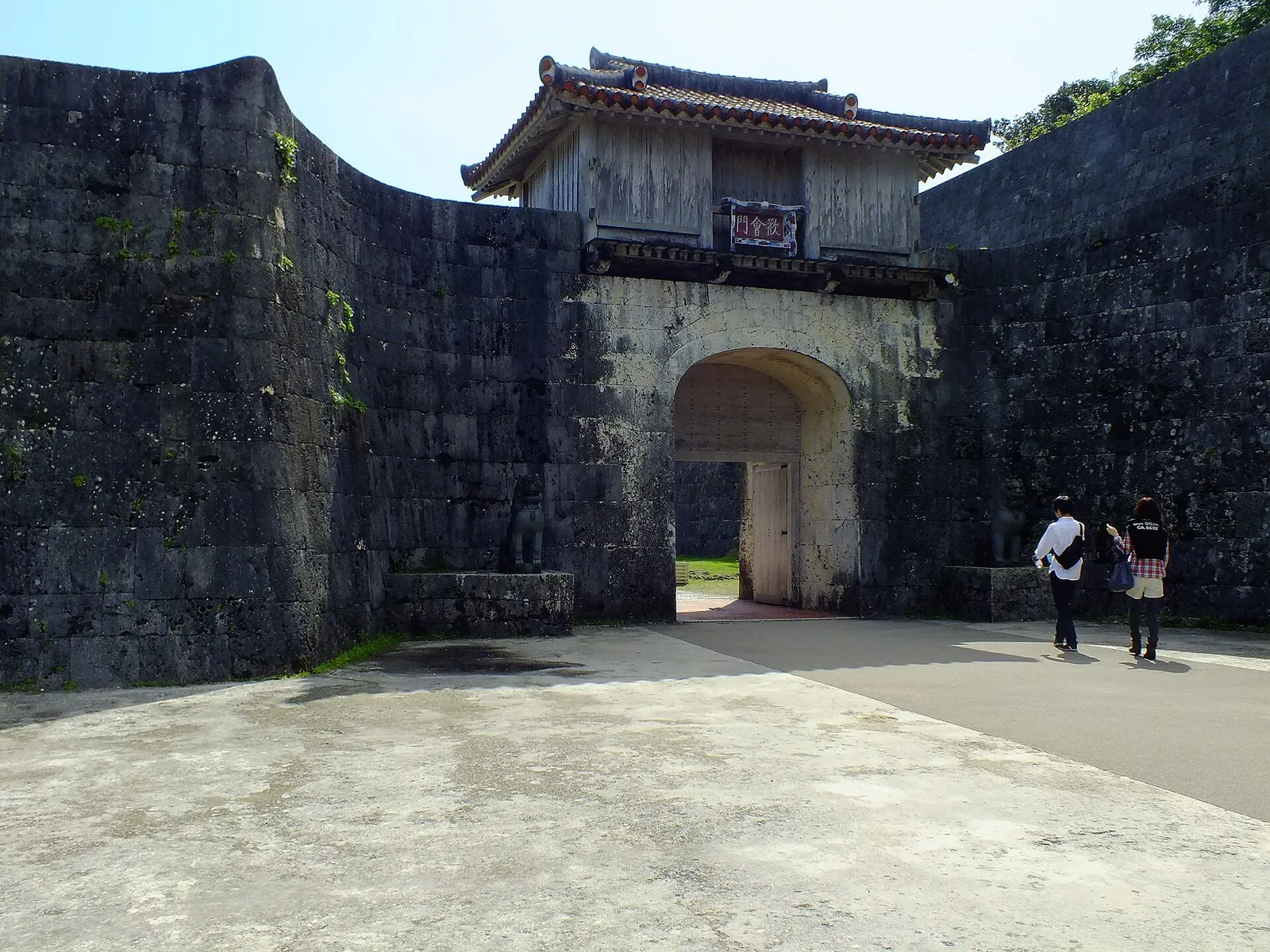
Shuri was the seat of the Ryukyu Kingdom, and Shurijo Castle (Shuri Castle) belongs to the Gusuku Sites and Related Properties of the Kingdom of Ryukyu, which earned World Heritage status in 2000. The Seiden, its vermilion main hall, burned down on 31 October 2019. The park stayed open during the rebuilding, and its paid area has an observation deck for viewing the Seiden's exterior and a Reconstruction Exhibition Room.
When we checked on 2026-10-12, the park's official site said the restored Seiden would open to the public on 23 November 2026. The whole park is closed on 22 November for the completion ceremony; on 23 November the free area opens at 11:15, the paid area at 12:00, and the Seiden at noon. The interior needs the ticket called Admission Ticket (with Seiden Interior Viewing Reservation), which fixes a date and time slot at no extra charge. Slots for 23 November to 31 December 2026 went on sale in two first-come rounds, on 1 September and 1 October; for 2027 they go on sale at 13:00 on the first day of the month two months before your visit. If slots remain, they can be bought online until 15 minutes before your time or at the Kofukumon ticket office. Free-admission visitors other than preschool children, and annual passport holders, also need a slot. A ticket without the interior is sold online from one month before your visit and at the ticket window on the day.
The paid area charges by age, whether or not you enter the Seiden. For entries up to 21 November 2026 the individual fee is ¥400 for adults, ¥300 for high-school students and ¥160 for elementary and junior-high students, with children under 6 free. From 23 November it is ¥1,000, ¥760 and ¥370, again with under-6s free; groups of 20 or more pay less. The paid area is open 08:30–19:00 from April to November, with last entry at 18:30, and 08:30–18:00 from December to March, with last entry at 17:30.
The park estimates 90 to 120 minutes from its Suimuikan visitor centre, including about 15 minutes inside the Seiden, and about 20 minutes on foot from Shuri Station to Suimuikan. For a monorail visitor it suggests booking a slot 40 to 50 minutes after reaching Shuri Station, and it asks visitors to use public transport because the surrounding roads are expected to be congested. Anyone arriving before 23 November 2026 will see the Seiden from outside only.
Why a rental car changes the plan
Without a car, the main island is a Naha trip with one long excursion. Visit Okinawa says the regular bus from Naha to Nago, at the foot of the Motobu Peninsula, takes 2–3 hours, and that bus service around the rest of the peninsula is infrequent. The aquarium's access page says its nearest stop, Kinen-koen-mae, is about 10 minutes' walk from the entrance. With a car, the aquarium, the Bise Fukugi Tree Avenue, Kouri Island and Cape Manzamo can be linked in a day, and the west-coast resorts stop being a transfer problem.
JNTO says you must hold an International Driving Permit obtained before you leave home: a booklet-type permit issued under the 1949 Geneva Convention. Card and smartphone versions are not valid. The permit is valid for up to one year from issue and no longer than one year from your date of arrival, which is the entry stamp in your passport, so use a non-automated gate or ask customs for a stamp. JNTO adds that visitors with licences from Switzerland, Germany, France, Belgium, Monaco and Taiwan follow a different route: carry the original licence with a Japanese translation.
Traffic drives on the left, in right-hand-drive cars. Visit Okinawa recommends a rental with an ETC card for expressway tolls, warns that coin car parks use locking plates that rise after you park and release only when you pay, and notes that Okinawa's limestone asphalt can be slippery after rain and that about 80% of accidents happen in car parks. Leave the car for the Naha days; the monorail and the ferry port do not need one.
The west coast: Chatan, Yomitan and the Onna resorts
Visit Okinawa describes Chatan as a cosmopolitan seafront town of diners, beaches, shopping and sunsets, and Yomitan as the modern home of Okinawan pottery, with workshops and galleries you can visit. Both lie on the way north, which makes Chatan the choice if you want restaurants and shops within reach of the beach.
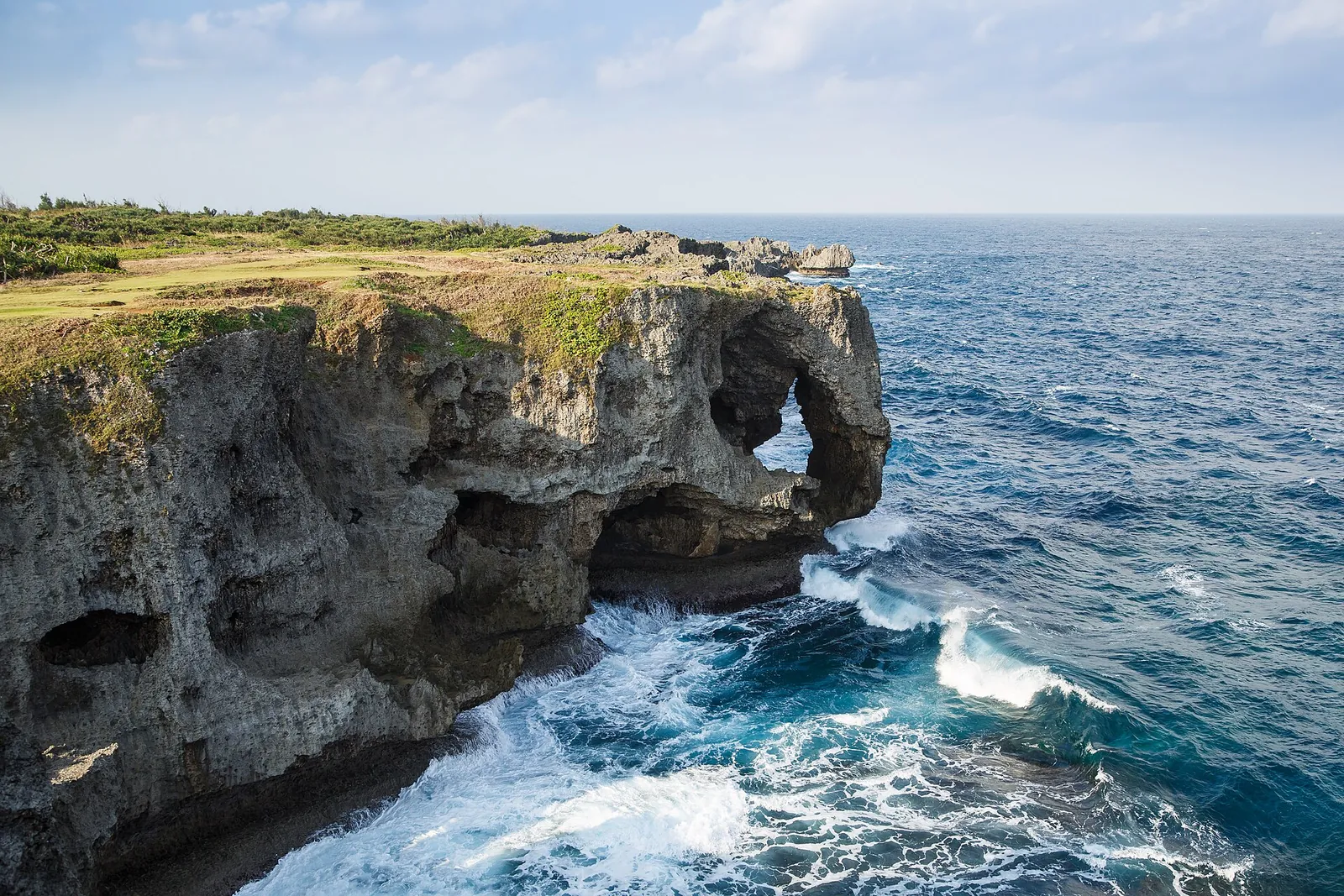
The Onna coast runs from Yomitan to Nago, nearly 30 km long and less than 5 km wide, with resort hotels strung along Route 58. Visit Okinawa names Moon Beach, Sun Marina Beach, Manza Beach, Mission Beach and Tiger Beach among the popular beaches; some are free, some charge a fee and some sell barbecue packages. It also points to the 20-metre limestone cliff of Cape Manzamo, the snorkelling and Blue Cave at Cape Maeda, and the underwater observatory at Busena Marine Park.
Budget travellers, Visit Okinawa says, find more choice a little further along Route 58 than in Onna itself. Without a car, its bus guide says the airport limousine bus links Naha Airport with the major resort hotels in the north and centre.
Churaumi Aquarium, Ocean Expo Park and the Motobu Peninsula
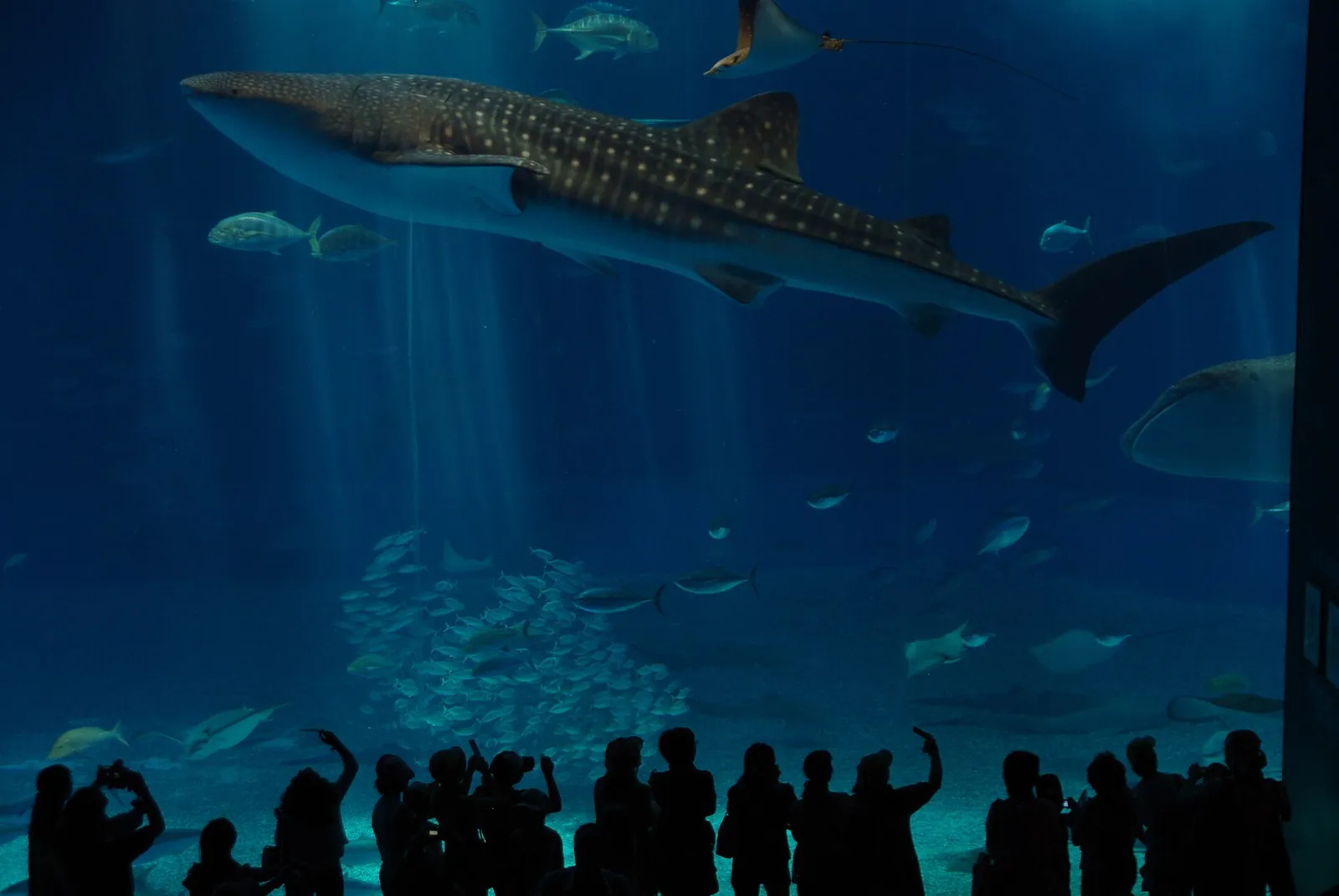
The Okinawa Churaumi Aquarium stands in Ocean Expo Park, a state park set up to commemorate the 1975 Okinawa International Ocean Exposition. Visit Okinawa describes the huge acrylic window onto manta rays, tiger sharks and whale sharks, and a park of about 70 hectares that also holds the Okinawan Village and the Omoro Botanical Garden. The aquarium says the park's car parks are all free. Some car navigation systems cannot find the aquarium by name, so search for Ocean Expo Park (Kaiyohaku Park) or enter mapcode 553075797.
When we checked on 2026-10-12, the aquarium's Japanese-language visitor pages listed opening hours of 08:30–18:30 with last admission at 17:30, extended on some dates, and said no closing days were planned before 31 March 2027 apart from temporary closures for typhoons and similar. Admission was ¥2,180 for adults, ¥1,440 for high-school students and ¥710 for elementary and junior-high students, with a lower rate for groups of 20 or more. Arrive at opening if you can.
Beyond the aquarium, Visit Okinawa picks out the Bise Fukugi Tree Avenue, a village lane of evergreen trees suited to a bicycle, and the ruins of Nakijin Castle, a UNESCO World Heritage site with drystone walls built without mortar. It also describes Kouri Island, reached by bridge from Yagaji Island and known for a heart-shaped rock. The peninsula has hotels and guesthouses, with the premium resorts and holiday rentals mostly along the coast.
The Kerama Islands by ferry from Tomari Port, and typhoon season
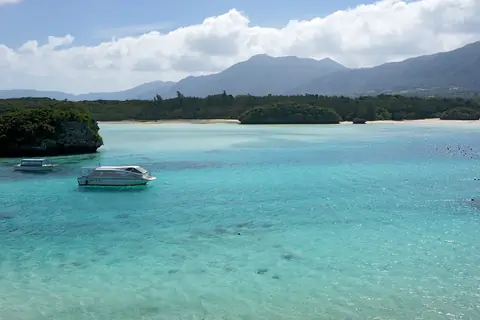
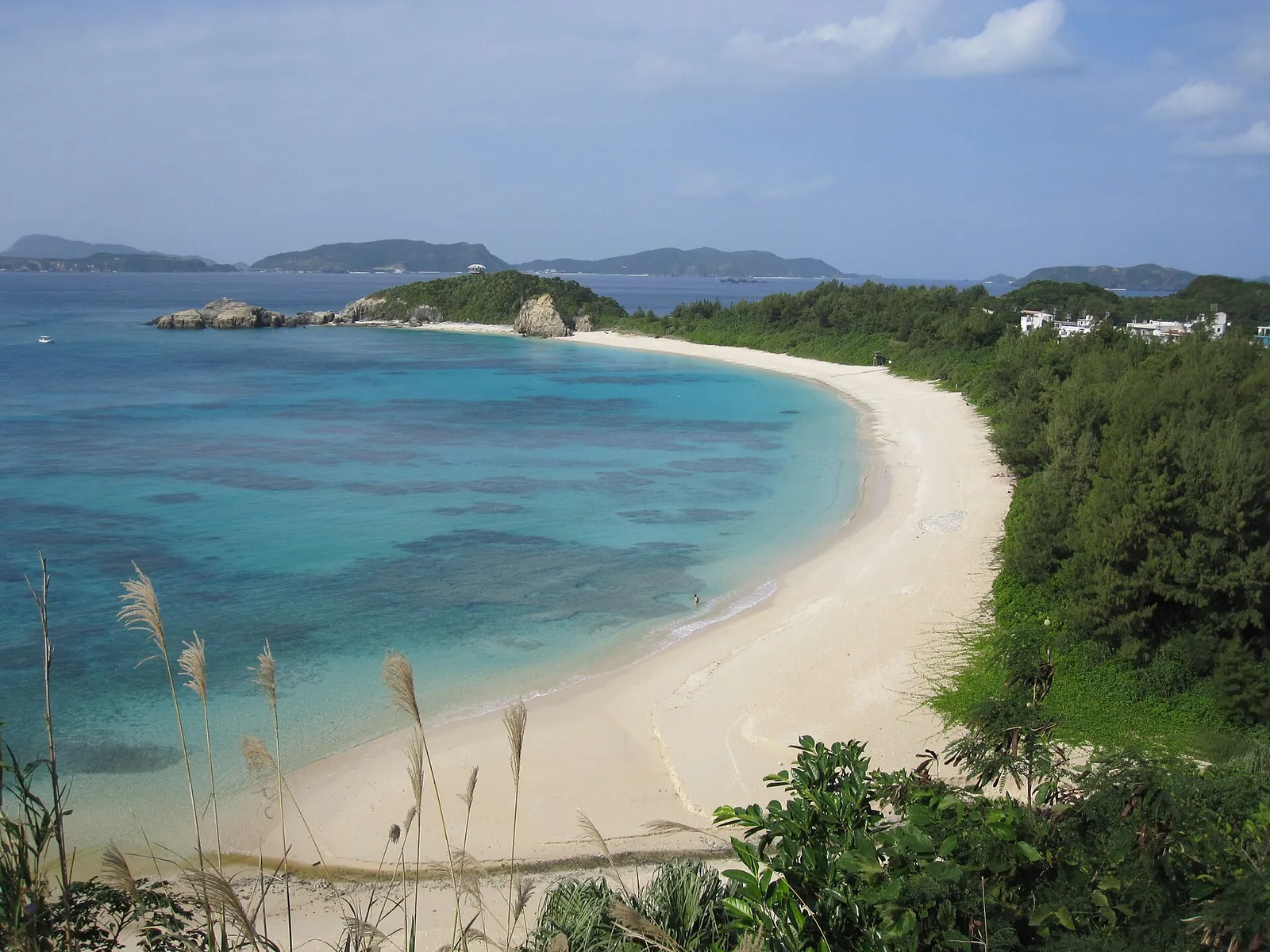
The Keramas are four inhabited islands, Tokashiki, Zamami, Aka and Geruma, in Keramashoto National Park. Visit Okinawa calls them close enough to Naha for a day trip and lists winter humpback whales among the draws. Every crossing leaves from Tomari Port, at the Tomarin passenger terminal in Naha, and each village runs its own boats. Visit Okinawa's ferry table, as of July 2026, lists Tokashiki at 40 minutes by express ferry or 1 hour 10 minutes by regular ferry, and Zamami, via Aka, at 50 minutes to 1 hour 10 minutes by express or 2 hours by regular ferry.
Tokashiki Village runs the express Marine Liner Tokashiki and the regular Ferry Tokashiki. Zamami Village runs the express Queen Zamami and the regular Ferry Zamami. The express boats board at the north quay, a walk that Tokashiki Village puts at 7 to 8 minutes and Zamami Village at about 10 minutes from the Tomarin building, and Ferry Zamami boards on the south quay in front of Tomarin, so check the quay on your ticket. Zamami Village takes reservations from one month before the same date. Tokashiki Village directs bookings to its ferry portal, issues tickets on the day and warns that the Tomari counter is very crowded between 09:30 and 09:50.
When we checked on 2026-10-12, one-way adult fares from Naha were ¥2,200 on Ferry Tokashiki and ¥3,300 on Marine Liner Tokashiki (rates from 1 October 2026), and ¥2,900 on Ferry Zamami and ¥3,950 on Queen Zamami, with children paying roughly half. Boats to Zamami also collect a Churashima tax of ¥100 per person, waived up to junior-high age. Scheduled work affects two periods in late 2026. Zamami Village's timetable shows Queen Zamami out of service from 20 October to 3 December for dock work, which leaves the regular ferry, about two hours each way. Tokashiki Village's timetables show Marine Liner Tokashiki running only its morning round trip on 15 November and not at all from 16 November to 11 December for inspection, leaving Ferry Tokashiki.
Any crossing can be cancelled for weather. Zamami Village's timetable says schedules can change or sailings be cancelled in rough sea conditions, and Visit Okinawa tells travellers to treat all ferry times as estimates. Visit Okinawa lists June to September as the months when typhoons are possible, and its October guide says they may still occur then. The Japan Meteorological Agency's 1991–2020 averages for the Okinawa region, counting typhoons whose centre came within 300 km of a weather station there, are 1.5 a month in July, 2.2 in August, 1.9 in September, 1.1 in October and 0.3 in November, with 7.7 in a year. Typhoons also close sights: Shurijo Castle Park shut for the whole of 1 June 2026 for one, and the aquarium reserves the right to close in storms. Treat the Kerama day as a flexible day, keep a spare day before any onward flight, and check JMA's typhoon information and the village's operating notice on the morning.
A workable five-night plan
This is an editorial suggestion, not a timetable. Swap days as the weather and your ferry booking require.
- Day 1, Naha: Yui Rail from the airport, Kokusai-dori and Makishi Public Market, and an izakaya dinner.
- Day 2, Shuri: Shurijo Castle Park with a Seiden slot booked if you are there from 23 November 2026, then the cobbled Kinjo Stone Road, of which about 300 m survive, and Tsuboya on the way back.
- Day 3, Kerama or a spare day: an early boat from Tomari Port if the sea allows; otherwise Naminoue, the city's only swimming beach, or a rest day.
- Day 4, drive north: collect the rental car, take Route 58 up the Onna coast with a stop at Cape Manzamo or a beach, and sleep on the coast.
- Day 5, Churaumi: at the aquarium for 08:30, then the Bise Fukugi Tree Avenue and Kouri Island; second night on the coast or the Motobu Peninsula.
- Day 6, departure: return the car at Naha Airport and fly out.
- Without a car: stay in Naha for all five nights and replace days 4 and 5 with one bus or tour day to the aquarium and a free day.
Practical questions
How many nights do you need on Okinawa's main island?
Five nights suit a first visit: three in Naha for Kokusai-dori, Shurijo Castle Park and a flexible Kerama ferry day, then two on the west coast near Onna or Motobu if you will drive. With a shorter trip, stay in Naha or go straight to the coast.
Should I stay in Naha or at a west-coast resort?
Stay in Naha if you want the monorail, Shuri and the Kerama ferries without a car, and on the Onna coast or the Motobu Peninsula if the beach and the aquarium matter more. Splitting the stay covers both.
Do I need a rental car on Okinawa?
You do not need one in Naha, but it changes the north: the bus from Naha to Nago takes 2–3 hours and service around the Motobu Peninsula is infrequent. Drivers need a booklet-type International Driving Permit under the 1949 Geneva Convention, or, for Swiss, German, French, Belgian, Monégasque and Taiwanese licences, the original licence with a Japanese translation.
Can you go inside Shuri Castle now?
Not inside the Seiden until 23 November 2026, when the rebuilt main hall opens to ticket holders with a reserved date and time. Until then the park's paid area lets you see the Seiden's exterior from an observation deck and visit the Reconstruction Exhibition Room.
Can you visit the Kerama Islands as a day trip from Naha?
Yes, by ferry from Tomari Port: Visit Okinawa lists Tokashiki at 40 minutes by express ferry and Zamami at 50 minutes to 1 hour 10 minutes. Sailings are cancelled in rough weather, and Queen Zamami is out of service from 20 October to 3 December 2026, so check the village's notice before you book.
When is typhoon season in Okinawa?
Visit Okinawa lists June to September as the months when typhoons are possible and says they may still occur in October. The Japan Meteorological Agency's 1991–2020 averages are highest in August (2.2 approaches) and September (1.9).
Sources and checks before you travel
Reference sources for the version dated 12 October 2026. Confirm opening times, access, transport and conditions for your travel dates.
- Visit Okinawa Japan: Okinawa Main Island ↗ — opens in a new tab
- Visit Okinawa Japan: Naha ↗ — opens in a new tab
- Visit Okinawa Japan: Shuri ↗ — opens in a new tab
- Visit Okinawa Japan: Shurijo Castle Park ↗ — opens in a new tab
- Visit Okinawa Japan: Seiden general release and reservations ↗ — opens in a new tab
- Visit Okinawa Japan: Onna Coast ↗ — opens in a new tab
- Visit Okinawa Japan: Motobu Peninsula ↗ — opens in a new tab
- Visit Okinawa Japan: Central Okinawa Main Island ↗ — opens in a new tab
- Visit Okinawa Japan: Getting Around Okinawa ↗ — opens in a new tab
- Visit Okinawa Japan: Rental Vehicles in Okinawa ↗ — opens in a new tab
- Visit Okinawa Japan: Okinawa by Bus ↗ — opens in a new tab
- Visit Okinawa Japan: Ferries Between Islands ↗ — opens in a new tab
- Visit Okinawa Japan: Kerama Islands ↗ — opens in a new tab
- Visit Okinawa Japan: When to Visit, climate and seasons ↗ — opens in a new tab
- Visit Okinawa Japan: Okinawa in October ↗ — opens in a new tab
- Visit Okinawa Japan: Okinawan food culture ↗ — opens in a new tab
- Visit Okinawa Japan: Healthy and Nutritious, island vegetables ↗ — opens in a new tab
- Visit Okinawa Japan: Fresh from the Sea, seafood in Okinawa ↗ — opens in a new tab
- Visit Okinawa Japan: Tender and Tasty, premium meats ↗ — opens in a new tab
- Visit Okinawa Japan: 10 Must-Try Okinawa Street Foods ↗ — opens in a new tab
- Shurijo Castle Park: Seiden interior viewing reservation (official, English) ↗ — opens in a new tab
- Shurijo Castle Park: admission fees (official, Japanese) ↗ — opens in a new tab
- Shurijo Castle Park: hours and closures (official, Japanese) ↗ — opens in a new tab
- Shurijo Castle Park: closure on 22 November (official notice, Japanese) ↗ — opens in a new tab
- Shurijo Castle Park: typhoon closure on 1 June 2026 (official notice, Japanese) ↗ — opens in a new tab
- Shurijo Castle Park: reconstruction (official, Japanese) ↗ — opens in a new tab
- Okinawa Churaumi Aquarium: hours and closures (official, Japanese) ↗ — opens in a new tab
- Okinawa Churaumi Aquarium: admission (official, Japanese) ↗ — opens in a new tab
- Okinawa Churaumi Aquarium: access and parking (official, Japanese) ↗ — opens in a new tab
- Ocean Expo Park (official) ↗ — opens in a new tab
- Yui Rail: tickets and fares (official) ↗ — opens in a new tab
- Yui Rail: fare table from Naha Airport (official) ↗ — opens in a new tab
- Zamami Village: ship fares (official, Japanese) ↗ — opens in a new tab
- Zamami Village: ship timetable (official) ↗ — opens in a new tab
- Tokashiki Village: ferry information (official, Japanese) ↗ — opens in a new tab
- Tokashiki Village: fares from 1 October 2026 (official PDF, Japanese) ↗ — opens in a new tab
- Tokashiki Village: November 2026 timetable (official PDF, Japanese) ↗ — opens in a new tab
- Tokashiki Village: December 2026 timetable (official PDF, Japanese) ↗ — opens in a new tab
- Japan Meteorological Agency: normal values for typhoons (Japanese) ↗ — opens in a new tab
- Japan Meteorological Agency (English home page) ↗ — opens in a new tab
- JNTO: things to know when renting a car ↗ — opens in a new tab
- Okinawa Convention & Visitors Bureau (Visit Okinawa Japan): Okinawa in November ↗ — opens in a new tab
Does this experience fit your route?
If you are not driving, a guided day from Naha can take the northern coast off your hands, and a boat day can cover the Keramas in good weather. Check the pick-up point, what is included and the weather policy before you book.
Check dates and details on Viator ↗ — opens in a new tabAffiliate link · Book with ViatorPhoto credits
Cape Manzamo on the Onna coast, a clifftop stop on the drive up Route 58
Photograph: CEphoto, Uwe Aranas — opens in a new tab · CC BY-SA 3.0 — opens in a new tab
Changes: Resized and converted to WebP; displayed with responsive crops. · Original photograph and licence details ↗ — opens in a new tab
Kankaimon, one of the gates in the free area of Shurijo Castle Park, which stayed open while the main hall was rebuilt
Photograph: 松岡明芳 — opens in a new tab · CC BY-SA 4.0 — opens in a new tab
Changes: Resized and converted to WebP; displayed with responsive crops. · Original photograph and licence details ↗ — opens in a new tab
A whale shark swims behind the huge acrylic window of the Okinawa Churaumi Aquarium.
Photograph: pelican from Tokyo, Japan — opens in a new tab · CC BY-SA 2.0 — opens in a new tab
Changes: Resized and converted to WebP; displayed with responsive crops. · Original photograph and licence details ↗ — opens in a new tab
Kokusai-dori, Naha's 1.6 km main street of shops, cafes and bars
Photograph: 663highland — opens in a new tab · CC BY 2.5 — opens in a new tab
Changes: Resized and converted to WebP; displayed with responsive crops. · Original photograph and licence details ↗ — opens in a new tab
Aharen Beach on Tokashiki Island, one of the Kerama Islands reached by ferry from Tomari Port
Photograph: Tomaž Vajngerl — opens in a new tab · CC BY-SA 3.0 — opens in a new tab
Changes: Resized and converted to WebP; displayed with responsive crops. · Original photograph and licence details ↗ — opens in a new tab
Soki soba, Okinawa noodles with stewed pork ribs, as served at a restaurant in Naha
Photograph: ayustety from Naha, Okinawa — opens in a new tab · CC BY-SA 2.0 — opens in a new tab
Changes: Resized and converted to WebP; displayed with responsive crops. · Original photograph and licence details ↗ — opens in a new tab