Plan your trip
Best time to visit Kyrgyzstan: treks, Issyk-Kul and snow
Kyrgyzstan is a mountain country with a dry continental climate, hot in summer and cold in winter, so the question is less about rain than about altitude. The high valleys around Karakol and Ala-Archa open up in summer, Issyk-Kul's beaches have a short season of their own, and in winter the same mountains become a ski destination. This guide sets out what each season is like on the Bishkek and Issyk-Kul route, and which dates to plan around.
In this guide
Find the location ↗ — opens in a new tabThe short answer
Come between late June and mid-September for the mountains, the lake and the summer pastures together. July averages 25.5°C over day and night in Bishkek and 18.5°C on the lake shore at Cholpon-Ata. The summer train from Bishkek to the lake cost KGS 150 per adult seat by card in 2026. July and August are the warmest lake weeks, so book the lake rooms first; the high passes on the Ala-Kul trek are crossed from June to September, and September brings fewer crowds and autumn colour around Karakol. For skiing, plan for December to February at Karakol Ski Base, where standard ski rental started at KGS 700 a day on 3 November 2026; the base announces its opening when snow allows. Book six to nine nights, two or three in Bishkek and the rest on the lake.
- Key point
- 7 to 10 days on the Bishkek and Issyk-Kul route
- Where it applies
- Bishkek, then Cholpon-Ata or Karakol on Issyk-Kul
- Timing
- Late June to mid-September for the mountains, the lake and the Song-Kol yurt camps; September for walks around Karakol with fewer crowds; December to February for skiing at Karakol, subject to the base’s opening announcement and snow
Summer: the mountains open up
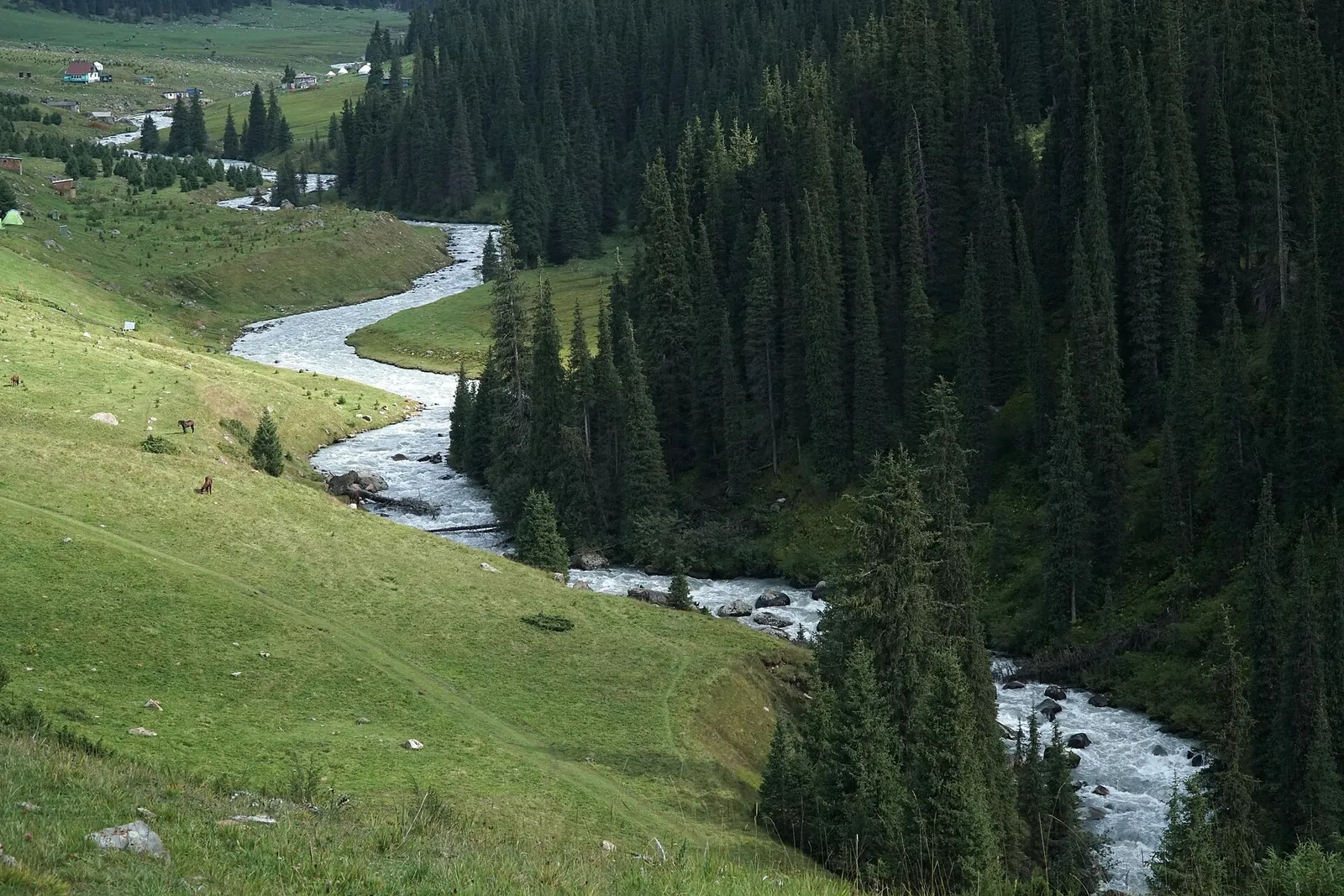
The climate is dry and continental, with hot summers, cold winters and large swings between day and night, and on this route altitude matters more than the date. Bishkek, at 756 m, averages 25.5°C over day and night in July; Cholpon-Ata, on the lake's north shore at 1,613 m, averages 18.5°C; Kyzyl-Suu, on the south shore west of Karakol at 1,767 m, averages 18.0°C. June to early September is the high season for trekking, with some lower routes open earlier and later. That is the window for the valleys of Ala-Archa above Bishkek and of Karakol, Jeti-Oguz and Altyn-Arashan at the eastern end of Issyk-Kul.
Summer in the mountains is not mild everywhere. Sudden cold snaps are common even in high summer, especially above 3,000 m, and the weather can change very quickly, so pack a warm layer and waterproofs for any walk, however hot Bishkek is.
Higher still, the summer pastures (jailoo) fill up: shepherds move their herds and yurts up to grasslands such as those around Song-Kol, a lake at 3,016 m in Naryn region. CBT Kyrgyzstan, the community-based tourism association, gives late June to mid-September as the season for its yurt-camp and horse trips there; in winter the lake freezes over. The same months bring the CBT village festivals, with kok-boru and eagle displays: in 2027 the Tamchy horse games and birds-of-prey days on 24 June and 22 August, the Kyzyl-Oi horse games on 29 June and 3 August and Kochkor Fest at Song-Kol on 28 July; our festivals and events guide gives the prices and programmes.
Whatever the month, on anything beyond a marked day path, go with a guide or an agency and leave your route at your guesthouse. Our Issyk-Kul and Karakol guide covers the valleys, the walks and the mountain-rescue contacts.
Issyk-Kul's beach season
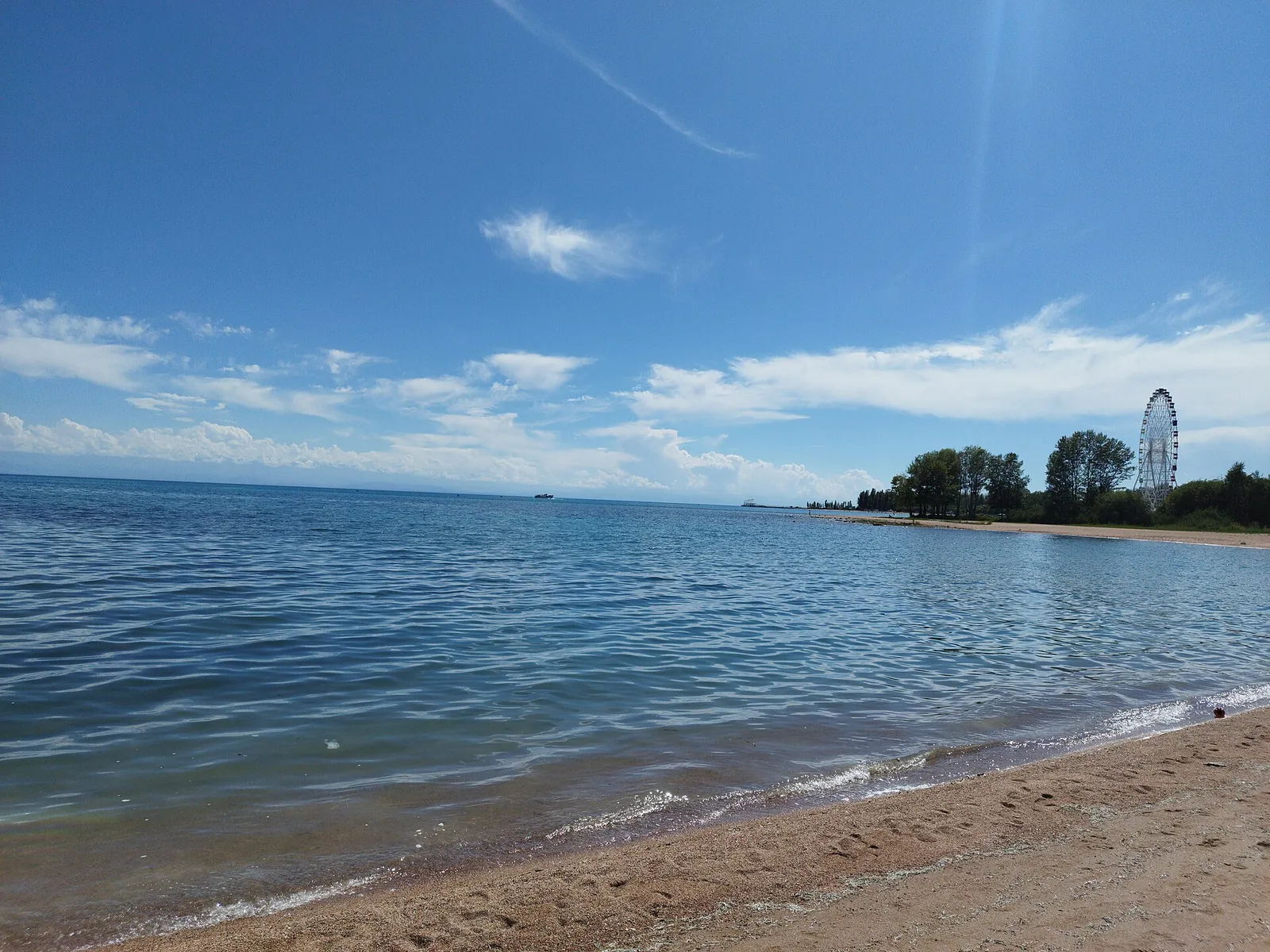
Issyk-Kul is a mountain lake, and its beach life is concentrated in high summer on the north shore, around Cholpon-Ata and Bosteri. The transport follows the season: Kyrgyz Temir Zholu's train from Bishkek-2 to Balykchy Plyazh, at the lake's western tip, ran at weekends from 5 June and daily from 26 June to 13 September in 2026, and Issyk-Kul International Airport at Tamchy works as an international border checkpoint only during the summer tourist season.
July and August are the warmest months, the time for swimming and kayaking on the lake, and lake rooms cost most in those weeks; our where-to-stay guide compares the shore towns. The shore lies at about 1,600 m; the Central-Asian Institute for Applied Geosciences in Bishkek posts live water temperatures from its stations at Balykchy and Ton on caiag.kg. For walking as well as the beach, consider late August or early September: Destination Karakol recommends autumn for day hikes with fewer crowds.
Spring and autumn: shoulder seasons with a catch
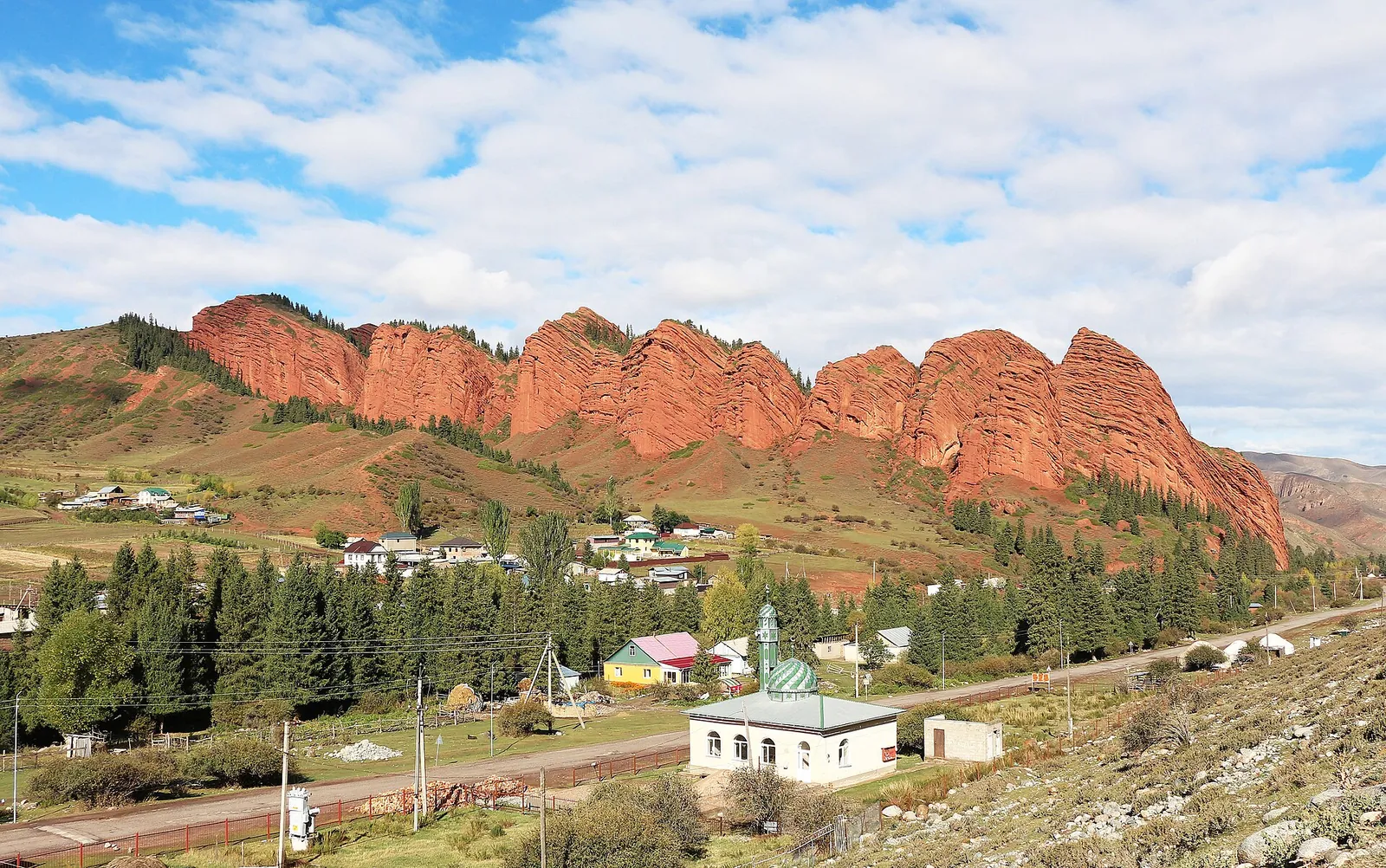
Spring is when the lower valleys turn green: Destination Karakol describes fruit trees in blossom and wildflowers from March to May, and the red rocks of Jeti-Oguz against fresh grass. It is also Bishkek's wet season, with about 70 mm of rain in April and 62 mm in May, its wettest months, against 14 mm in August, and averages 12.9°C in April and 18.0°C in May. Avalanches and landslides often block mountain roads, particularly in spring, so April and May suit Bishkek and the lowland sights better than the high valleys; on the lake shore, Cholpon-Ata still averages only 8.3°C in April.
Autumn starts dry and turns quickly. From September, Destination Karakol describes golden forests around Karakol and in Jeti-Oguz against the first snow on the peaks. In September Bishkek has about 18 mm of rain and averages 18.8°C, and Cholpon-Ata 15.0°C; by October the lake shore averages 9.5°C and Kyzyl-Suu 8.0°C, and heavy snowfall can block roads and trekking routes, particularly in autumn and winter. Early October still works for Bishkek and the lake shore; for high walks, aim for September.
Winter: skiing at Karakol, snow on the roads
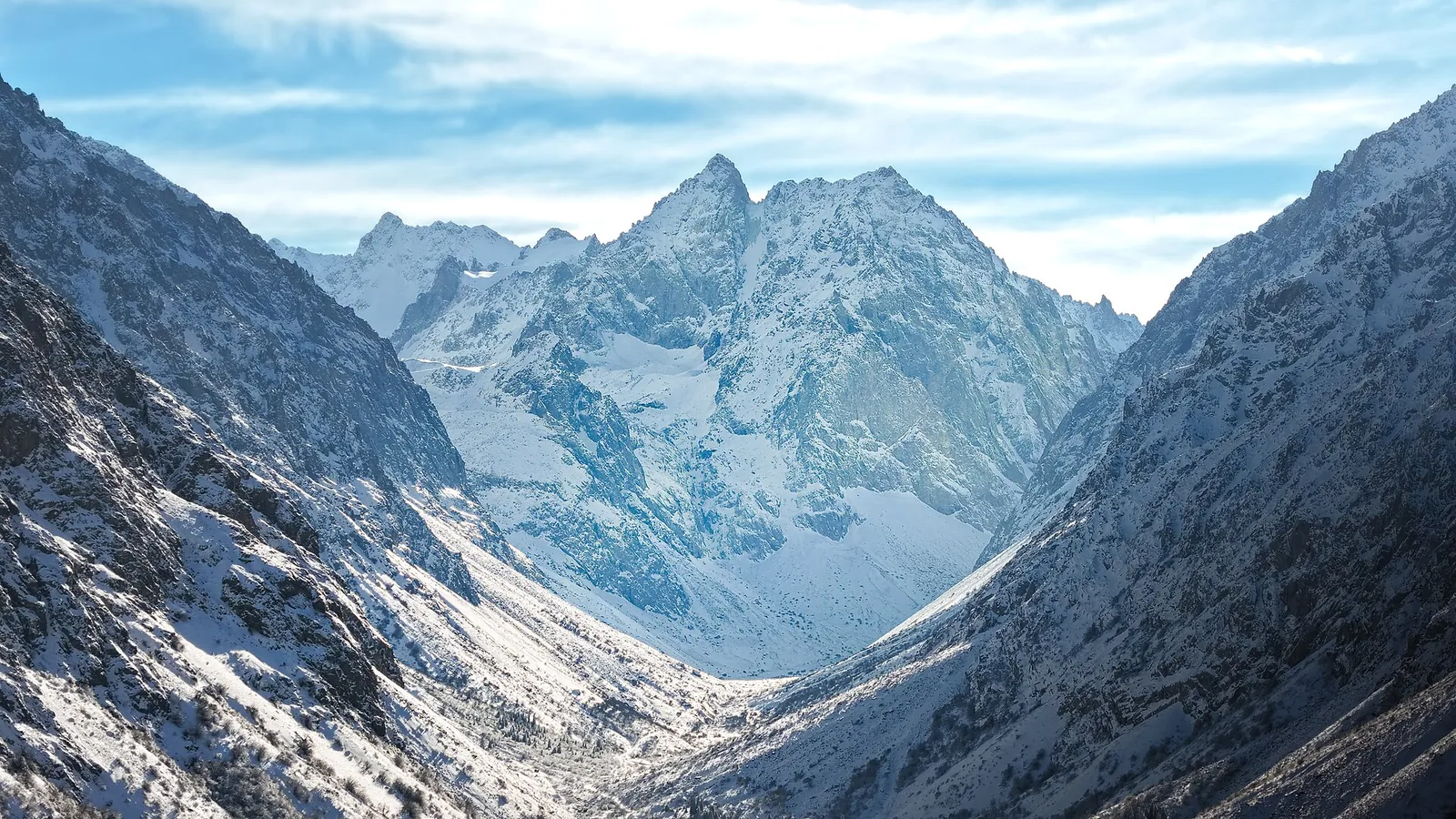
Winter is cold: January averages −2.5°C in Bishkek, −1.6°C at Cholpon-Ata and −4.3°C at Kyzyl-Suu. It is also the ski season. Karakol Ski Base, above the town, has more than 20 km of runs served by four chairlifts, up to 3,040 m. The base announces its opening on its news page: it opened on 18 November in 2023, while rain brought the 2022 season to an end on 14 March. When we checked on 3 November 2026, the base listed standard ski and snowboard rental at KGS 700 to 900 a day, depending on the equipment collection; bring a passport, with one set issued per passport. Its rooms cost most over New Year, from 26 December 2026 to 12 January 2027. Its price list gives no lift-pass price, and its room rates exclude the lifts. Destination Karakol, the town's tourism organisation, puts the best of the winter at December to February, with cross-country skiing, snowshoeing and winter yurt stays too; Ala-Archa above Bishkek is a snowy day trip from the capital. Book off-piste days with a guide.
The roads are the limit in winter: roads outside Bishkek are often blocked by snow. Travel to Karakol by day, allow a spare day at the end of the trip, and see our transport guide for transfers, flights and the rules for the road.
Osh, Arslanbob and the centre
The south is lower and hotter than the Issyk-Kul route. Kara-Suu, just north of Osh at 867 m, averages 25.6°C over day and night in July and −1.3°C in January, so Osh and the Fergana Valley are best from April to June and in September and October, when the days are warm rather than hot. Arslanbob, a village at 1,600 m above Jalal-Abad, sits in about 11,000 hectares of natural walnut forest; every autumn families from the region camp among the trees to gather the nuts, and the village's guest-house families spend September on the harvest. CBT Kyrgyzstan's Arstanbap group arranges homestays and walks to the Big and Small Waterfalls.
The centre has a short summer. Naryn, at 2,039 m, averages 17.8°C in July and −14.9°C in January, and the 15th-century stone caravanserai of Tash-Rabat lies in the mountains south of the town, so June to September is the window for Naryn, Tash-Rabat and the Song-Kol yurt camps. On the road from Osh towards the Pamirs, Sary-Tash at 3,150 m averages only 10.2°C in July and −15.5°C in January: cross it in high summer.
Holidays that change a trip
The Ministry of Labour’s 2027 production calendar lists these non-working holidays: 1 to 7 January, 8 March, Nooruz on 21 March, 1 to 9 May (the May holidays, with Constitution Day on 5 May and Victory Day on 9 May), Independence Day on 31 August, and the two religious holidays, Orozo Ait (Eid al-Fitr) and Kurman Ait (Eid al-Adha). It also lists 27 January 2027, the presidential election day, as a day off. Since 2025 a holiday that falls on a weekend is no longer moved to a weekday. Nooruz, the spring new year, fills Ala-Too Square in Bishkek: in 2026 the programme opened at 11:00 with the alas ritual and dance troupes, and stalls around the square sold sumolok, the holiday's traditional dish. The World Nomad Games, held around Issyk-Kul in 2026, move to Kazan, Russia, for their next edition in 2028.
The two Aits follow the lunar calendar, so their Gregorian dates move each year; in 2026 Orozo Ait fell on 20 March, the day before Nooruz. Ramadan is expected to start around 8 February 2027, so Orozo Ait is expected around 9 or 10 March 2027 and Kurman Ait around 16 May; Kyrgyzstan confirms the dates a few days before.
These are non-working days, so plan banking and official paperwork around them. Our festivals and events guide describes what happens on each day.
Month by month
Average temperatures are over day and night (1991–2020); rain is Bishkek’s monthly average for 1981–2010.
| Month | Bishkek °C | Bishkek rain | Cholpon-Ata °C | Kyzyl-Suu °C | Rating |
|---|---|---|---|---|---|
| January | −2.5 | 27 mm | −1.6 | −4.3 | hard |
| February | −0.4 | 34 mm | −0.7 | −3.1 | hard |
| March | 6.2 | 52 mm | 3.2 | 2.3 | fair |
| April | 12.9 | 70 mm | 8.3 | 8.3 | fair |
| May | 18.0 | 62 mm | 12.3 | 12.2 | fair |
| June | 23.1 | 33 mm | 16.1 | 15.9 | good |
| July | 25.5 | 19 mm | 18.5 | 18.0 | best |
| August | 24.3 | 14 mm | 18.2 | 17.2 | best |
| September | 18.8 | 18 mm | 15.0 | 13.9 | best |
| October | 11.6 | 42 mm | 9.5 | 8.0 | fair |
| November | 4.2 | 46 mm | 4.4 | 2.2 | hard |
| December | −1.1 | 34 mm | 0.5 | −2.3 | fair |
January and February: deep winter, New Year holidays to 7 January and the heart of Karakol's ski season; roads outside Bishkek can be blocked by snow. 27 January 2027 is also a day off for the presidential election. Ramadan is expected from about 8 February 2027.
March to May: Nooruz on 21 March, Orozo Ait expected around 9 or 10 March 2027, the May holidays from 1 to 9 May and Kurman Ait around 16 May; spring in Bishkek, snow in the mountains and landslides on mountain roads.
June: the valleys turn green and the yurt camps go up on the high pastures; the summer train to the lake starts at weekends.
July and August: the lake's warmest months and the peak for lake rooms, with the mountain valleys and the Ala-Kul pass open; cold snaps are still possible above 3,000 m. Independence Day is 31 August.
September: fewer crowds for day walks from Karakol, autumn colour in the valleys and the last weeks of the summer train; the walnut harvest begins in the south.
October and November: Karakol’s autumn shoulder season, with the risk of heavy snowfall blocking roads and trekking routes.
December: Karakol's ski season gets going once the base announces its opening; travel between towns by day.
What to book first
For a summer trip, the scarce pieces are the train, a good guide, a July or August room on the lake and, for Song-Kol, a yurt-camp place. The railway opened 2026 ticket sales on 21 May, so watch railway.kg from May for 2027 and buy weekend seats early. A trekking guide or agency, and the border-zone permit if your route runs towards the Chinese border (see our entry guide), are best arranged before you arrive.
Then book rooms in Bishkek and on the lake, the lake first for July and August. Hotels and guesthouses on Issyk-Kul set their own seasonal rates, so price your exact nights; our trip-cost guide builds a full budget. For a winter trip, book Karakol rooms early for New Year, when the ski base charges most, and check its opening announcement before you fix the dates.
Practical questions
What is the best month to visit Kyrgyzstan?
July, August and September rate best: the mountain valleys are open, July averages 25.5°C in Bishkek and 18.5°C on the lake shore, and the Ala-Kul trek runs from June to September. September offers fewer crowds and autumn colour for day walks from Karakol.
When is the Issyk-Kul beach season?
High summer, with July and August the warmest months on the lake shore and the weeks when lake rooms cost most. The summer train from Bishkek runs to Balykchy at the lake's western tip; the beach-season section gives the 2026 dates.
When can I stay in a yurt at Song-Kol?
From late June to mid-September, when shepherds are on the summer pastures and the yurt camps are open; CBT Kyrgyzstan runs its Song-Kol trips from Kochkor in that season. The lake is at 3,016 m and freezes over in winter.
When can I ski in Kyrgyzstan?
Destination Karakol recommends December to February for winter activities at Karakol Ski Base; the base announces its opening on its news page. On 3 November 2026, standard ski or snowboard rental cost KGS 700 to 900 a day, depending on the collection.
Is spring a good time to visit Kyrgyzstan?
For Bishkek, yes; for the mountains, less so. April and May are Bishkek's wettest months (about 70 mm and 62 mm), and avalanches and landslides often block mountain roads in spring.
When are Orozo Ait and Kurman Ait in 2027?
They follow the lunar calendar and are confirmed a few days before. Orozo Ait is expected around 9 or 10 March 2027 and Kurman Ait around 16 May.
Keep planning your trip
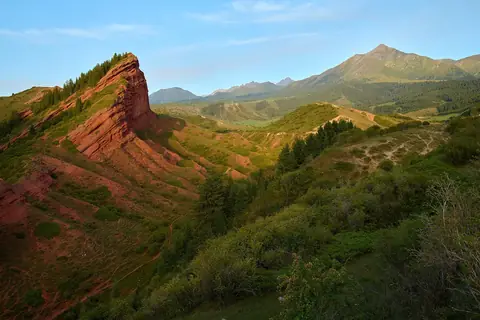
First trip to Kyrgyzstan
Plan eight days from Bishkek along Issyk-Kul to Karakol, with a day on the south shore: nights, buses and drivers, season, money, a SIM, etiquette and a daily budget.
Read the guide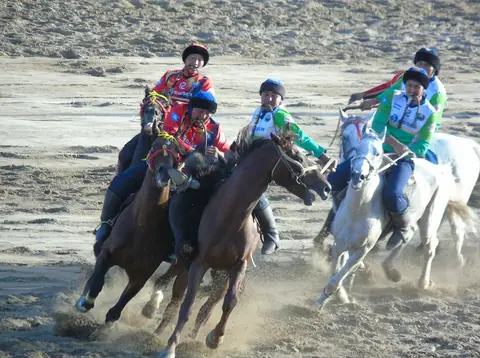
Festivals and events in Kyrgyzstan
Kyrgyzstan's 2027 holidays and festivals: Nooruz on 21 March, the Aits, the May holidays, summer horse games and eagle festivals, and Independence Day.
Read the guide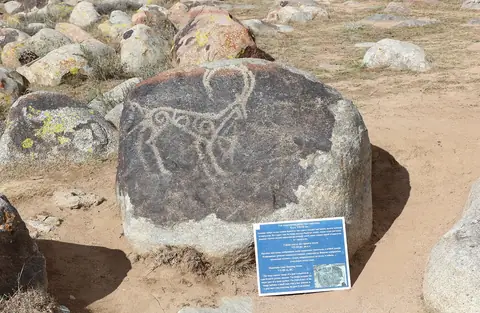
Issyk-Kul and Karakol
Plan five nights around Issyk-Kul: Cholpon-Ata's petroglyphs, Karakol's mosque and cathedral, Jeti-Oguz, Altyn-Arashan and Skazka Canyon, with buses, hotels and costs.
Read the guide
Getting around Kyrgyzstan
How to get from Manas airport into Bishkek, east to Cholpon-Ata and Karakol by summer train, marshrutka, shared taxi or hired driver, and across to Almaty and Tashkent.
Read the guide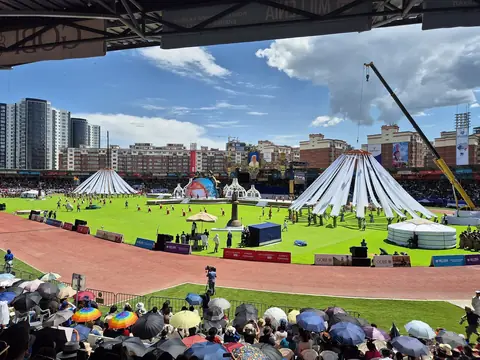
Where to go in Asia in July
July is Naadam in Mongolia and dry season in Bali, while monsoon rain covers much of Asia. Six trips with daily costs, the festival dates and the places to skip.
Read the guide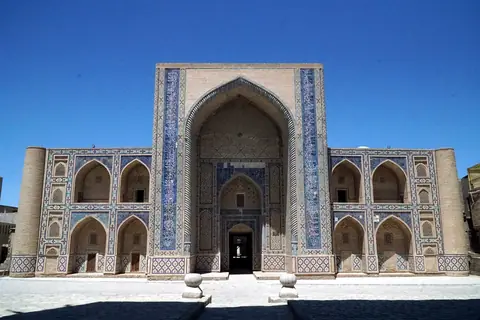
Where to go in Asia in September
September brings autumn to Central Asia, northern China, Korea and Hanoi, and dry days to Bali. Six trips with daily costs, key holidays and places to skip.
Read the guideSources and checks before you travel
(34)
- World Meteorological Organization, World Weather Information Service: Bishkek climatological information (Kyrgyzhydromet) ↗ — opens in a new tab
- German Foreign Office: Kyrgyzstan travel and safety advice (open-data feed) ↗ — opens in a new tab
- UK FCDO: Kyrgyzstan safety and security ↗ — opens in a new tab
- France Diplomatie: Kyrgyzstan security ↗ — opens in a new tab
- Destination Karakol: when to visit ↗ — opens in a new tab
- Destination Karakol: trekking ↗ — opens in a new tab
- Kyrgyz Temir Zholu: Bishkek–Balykchy summer train 2026 (notice of 19 May 2026) ↗ — opens in a new tab
- Manas International Airport: Issyk-Kul International Airport ↗ — opens in a new tab
- Ministry of Labour, Social Security and Migration: May holidays and work on non-working days (8 April 2025) ↗ — opens in a new tab
- Ministry of Labour, Social Security and Migration: days off for Orozo Ait and Nooruz (11 March 2026) ↗ — opens in a new tab
- Ministry of Labour, Social Security and Migration: Orozo Ait on Sunday 30 March, no transfer of days off (27 March 2025) ↗ — opens in a new tab
- Ministry of Labour, Social Security and Migration: changes in the new Labour Code (17 April 2024) ↗ — opens in a new tab
- Turkish Diyanet: religious days of 2027 ↗ — opens in a new tab
- World Meteorological Organization climate normals 1991–2020 (NOAA NCEI archive): Bishkek, station 38353 ↗ — opens in a new tab
- World Meteorological Organization climate normals 1991–2020 (NOAA NCEI archive): Cholpon-Ata, station 36934 ↗ — opens in a new tab
- World Meteorological Organization climate normals 1991–2020 (NOAA NCEI archive): Kyzyl-Suu, station 36944 ↗ — opens in a new tab
- Karakol Ski Base: winter ↗ — opens in a new tab
- Karakol Ski Base: price list ↗ — opens in a new tab
- Central-Asian Institute for Applied Geosciences (CAIAG): water temperature in Issyk-Kul ↗ — opens in a new tab
- Karakol Ski Base: news ↗ — opens in a new tab
- CBT Kyrgyzstan: Jailoo hopping to Song-Kol ↗ — opens in a new tab
- CBT Kyrgyzstan: Song-Kol Lake ↗ — opens in a new tab
- CBT Kyrgyzstan: festivals and events ↗ — opens in a new tab
- Ministry of Labour: approved production calendar for 2027, order 197 of 20 August 2026 (PDF) ↗ — opens in a new tab
- World Meteorological Organization climate normals 1991–2020 (NOAA NCEI archive): Kara-Suu, station 38616 ↗ — opens in a new tab
- World Meteorological Organization climate normals 1991–2020 (NOAA NCEI archive): Naryn, station 36974 ↗ — opens in a new tab
- World Meteorological Organization climate normals 1991–2020 (NOAA NCEI archive): Sary-Tash, station 38871 ↗ — opens in a new tab
- RFE/RL (news report): poor harvest in the Arslanbob walnut forest ↗ — opens in a new tab
- CBT Kyrgyzstan: CBT Arstanbap ↗ — opens in a new tab
- CBT Kyrgyzstan: Tash-Rabat Caravanserai ↗ — opens in a new tab
- Destination Karakol: The Pearl Ala-Kul Lake trek ↗ — opens in a new tab
- Kaktus.media (news report): how Bishkek celebrated Nooruz ↗ — opens in a new tab
- World Nomad Games: official site ↗ — opens in a new tab
- CBT Kyrgyzstan: Mirzarahim's Guest House, Arstanbap ↗ — opens in a new tab
Reference sources for the version dated 3 November 2026. Confirm opening times, access, transport and conditions for your travel dates.
Photo credits
(4)
Bosteri beach on the north shore of Issyk-Kul in June
Photograph: Arthur Dolchenko — opens in a new tab · CC BY-SA 4.0 — opens in a new tab
Changes: Resized and converted to WebP; displayed with responsive crops. · Original photograph and licence details ↗ — opens in a new tab
The Arashan river at Altyn-Arashan, above Karakol, in summer
Photograph: Adam Harangozó — opens in a new tab · CC BY-SA 4.0 — opens in a new tab
Changes: Resized and converted to WebP; displayed with responsive crops. · Original photograph and licence details ↗ — opens in a new tab
The Seven Bulls rocks at Jeti-Oguz, south-west of Karakol
Photograph: Bernard Gagnon — opens in a new tab · CC0 — opens in a new tab
Changes: Resized and converted to WebP; displayed with responsive crops. · Original photograph and licence details ↗ — opens in a new tab
Ala-Archa National Park above Bishkek in winter
Photograph: Nuraikaaah — opens in a new tab · CC BY-SA 4.0 — opens in a new tab
Changes: Resized and converted to WebP; displayed with responsive crops. · Original photograph and licence details ↗ — opens in a new tab