Plan your trip
Is Kyrgyzstan safe? Mountains, altitude, insurance, vaccines
Most trips to Kyrgyzstan that go wrong do so in the mountains or on the road: a hiker caught by summer snow on a high trail, a car that climbs to a base camp faster than any body can adjust, a shared taxi without seat belts on the road to Issyk-Kul, a tick bite in a spring meadow. Crime against visitors is mostly petty and gathers around Bishkek's bazaars, and the UK, French and German governments do not advise against travel to any part of the country. This guide covers the advisories and the border areas they single out, the mountain and altitude rules, rescue insurance, hospitals and emergency numbers, vaccines and the diseases that come from ticks, livestock and raw milk, roads and earthquakes, and the laws that catch visitors out.
In this guide
Find the location ↗ — opens in a new tabThe short answer
Buy insurance that covers mountain rescue, helicopter evacuation and medical repatriation before anything else: medical care does not reach European standards and mountain rescue is a basic, volunteer-staffed service with limited equipment. No official source publishes a price for mountain rescue or evacuation, and without cover the costs on the spot are yours and can quickly eat up all your savings. In the mountains, never trek alone and take a local guide into remote terrain; above 3,000 m, gain no more than 500 m of sleeping height a day, and descend at once if symptoms of altitude sickness appear. Hepatitis A and tetanus vaccines are recommended for most travellers, and measles protection should be up to date. Save 112 (rescue and emergency), 103 (ambulance), 102 (police) and the Issyk-Kul tourist police on +996 705 00 91 02. The UK, French and German governments do not advise against travel to any part of Kyrgyzstan, but a permit is needed in advance for the border areas with China and Tajikistan: it comes from the OVIR registration office or the local border authorities, takes 5 to 12 days for treks to Enylchek or Khan-Tengri, and a tour operator can arrange it.
- Key point
- Start at least 8 weeks before you fly: vaccines, insurance that covers the mountains and saved numbers
- Where it applies
- No base is needed; the advice applies in Bishkek, around Issyk-Kul and on the trails
- Timing
- Ticks are most active from early spring to late autumn; snow is possible at altitude even in summer; Bishkek's air is worst in winter, when power cuts are frequent and snow often blocks roads outside the capital
Travel advice, and the border areas it singles out
None of the UK, French and German governments advises against travel to Kyrgyzstan or to any part of it: the UK has no areas it advises against, and Germany has no travel warning. France places the whole country under enhanced vigilance, but says the risks, from natural hazards, health and petty crime, are limited and that none of them compromises tourism.
The warnings that change a plan concern the borders. Germany says a permit must be obtained in advance to visit the border areas with China and Tajikistan, and that the border area with Tajikistan is partly mined. Special rules such as photo bans apply near the Uzbek, Tajik, Kazakh and Chinese borders. There have been no clashes on the Tajik border since the 2025 border agreement, but there might be a risk of unexploded ordnance and mines, particularly in the border areas of the Batken region, and movement there can be restricted suddenly. Use only officially recognised border crossings, which can close at short notice. Villages in the Isfara basin in Batken oblast were in conflict for years, with the last clashes in 2022; the March 2025 border treaty has brought positive cooperation.
The route in our first-trip guide stays on the main roads of Bishkek and the Issyk-Kul region, well away from these areas. For a trek near a border, apply for the permit in person at the OVIR registration office or the local border authorities, or let a travel agency or tour operator arrange it; Destination Karakol, the town's tourism organisation, says permits for treks to Enylchek or Khan-Tengri take 5 to 12 days to secure, and neither source gives a fee. Our entry guide covers the permit with the other entry rules. Other governments may draw a wider line than these three, so read your own government's advice before you book and again before you fly.
The political situation is calm overall, but protests cannot be ruled out, especially in the capital and the densely populated south. Demonstrations happen regularly in Bishkek and elsewhere; most are peaceful but can turn violent with little or no warning, so keep away from crowds and protests. Terrorist attacks cannot be ruled out either and could be indiscriminate, including in places foreigners visit; Western facilities could be targets, so stay alert in busy places, especially in the south.
Prices and times checked 8 November 2026
In the mountains: guides, weather and who to tell
Trekking in Kyrgyzstan often leads into very remote country, with a high risk of avalanches, landslides and rockfalls and weather that changes very quickly. At higher altitudes snow is possible even in the summer months, and sudden cold snaps are frequent in the mountains even in high summer, especially above 3,000 m. Most mountain trails are not marked, and mudflows and flash floods are among the hazards; in a downpour, find safe shelter and keep away from watercourses and gorges. Heavy snow can block roads and routes, particularly in autumn and winter, and our guide to the best time to visit Kyrgyzstan gives the months.
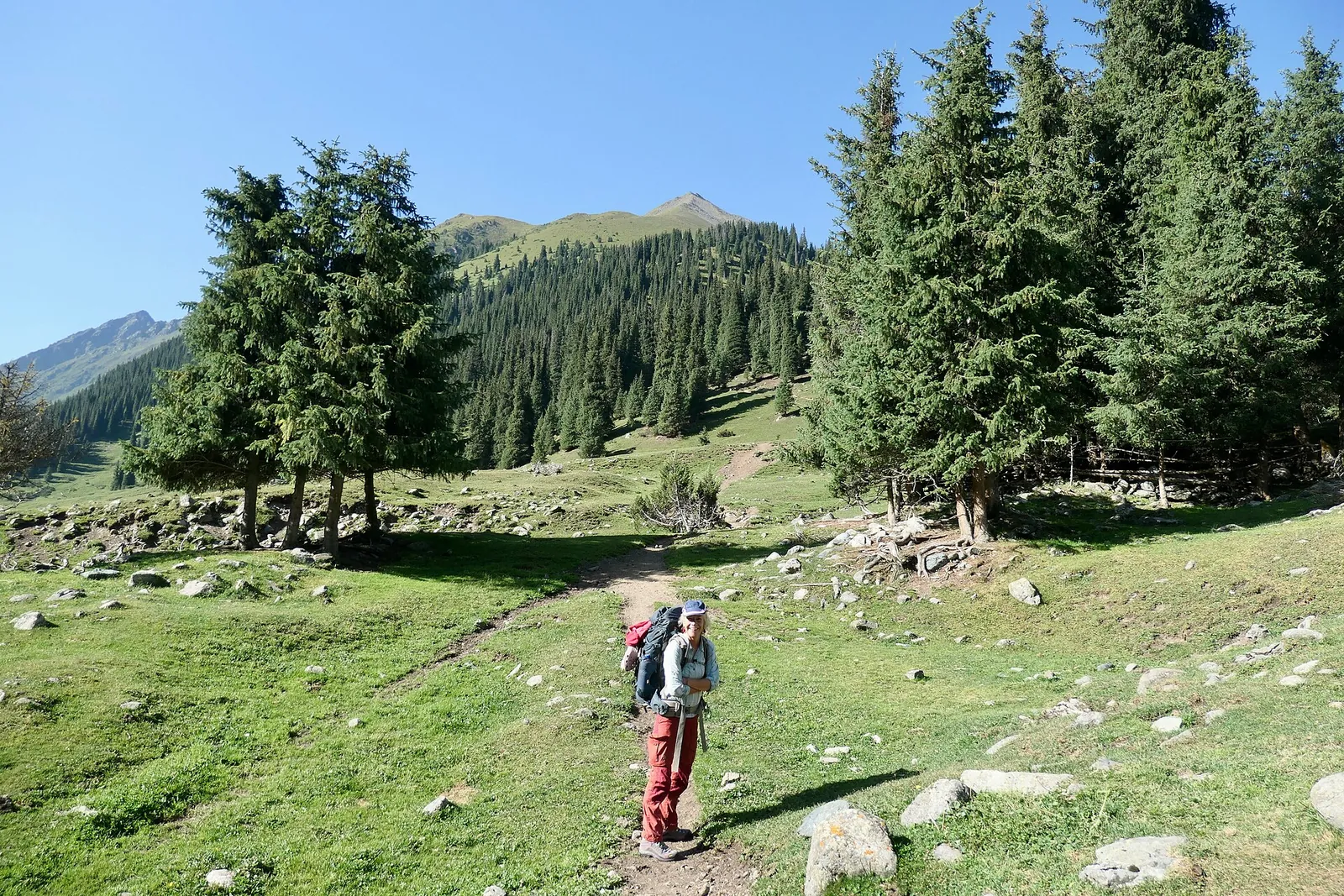
Never trek alone. In unknown or remote terrain, hike only well equipped and with a local guide, use a reputable trekking agency, and before you set off leave your route with your lodging and your high-mountain itinerary with the Ministry of Emergency Situations on 112; tell someone when you expect to be back. Do not camp wild without a local operator, and do not go riding, ski touring or onto glaciers without knowledgeable company, because help does not arrive quickly in remote areas.
Mobile and satellite phone coverage can be extremely limited in remote areas, and the terrain can, in some circumstances, make it impossible for emergency services to reach you. Mountain rescue is a basic service, staffed by volunteers with limited equipment, and is still slow and badly organised; helicopter rescue is limited unless you travel with a specialist operator. Its 24-hour number is in the list of emergency numbers below. Ski touring has caused several deaths in recent years, and the snowpack is generally more unstable than in the Alps.
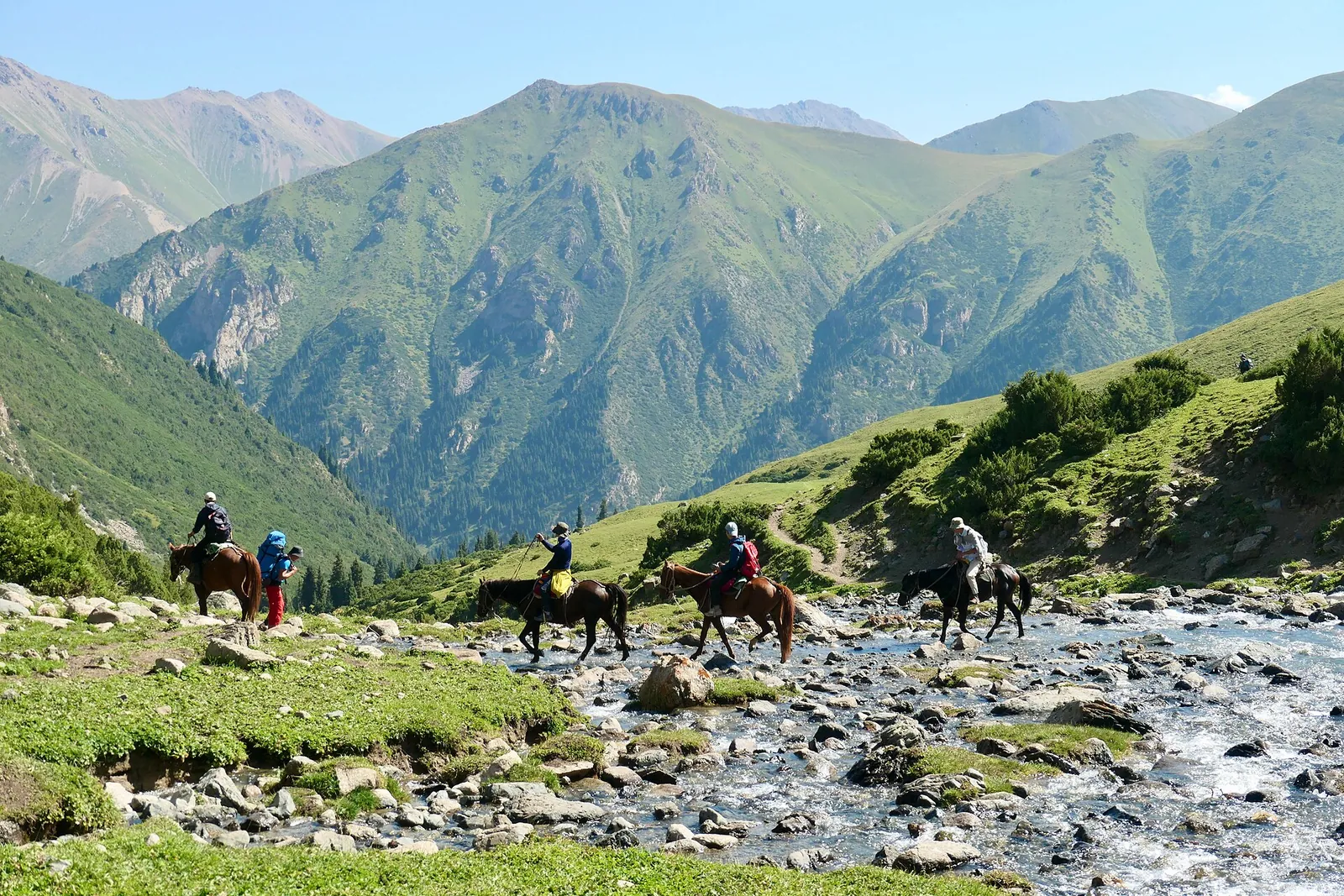
Horse riding is popular and generally open to beginners. Wear a helmet, check the horse before you set off, refuse a horse that is visibly injured and, in summer, cross rivers only with an experienced guide. On walks, long, covering clothes also protect against burns from Yugan (hogweed), mainly in April, May, June and July; ticks are covered with the vaccines below.
Altitude: how high, and how fast
Altitude illness becomes a risk from 2,500 m, according to TravelHealthPro, the UK's travel health service, and altitude sickness is a risk in parts of Kyrgyzstan. Before any trip above 2,300 m, see a doctor experienced in altitude medicine.
Above 3,000 m, gain height gradually: raise your sleeping elevation by no more than 500 m a day, take a rest day every three or four days and avoid going from under 1,200 m to over 3,500 m in a single day. A road can be the trap. The base camp for Peak Lenin, at nearly 4,000 m, is reached by asphalt road, so the drive gives no acclimatisation, and several fatal accidents are recorded there every year.
Karakol's best-known trek is above that line too. The Ala-Kul trek, in our Issyk-Kul and Karakol guide, crosses a pass of about 3,860 m to a lake at 3,533 m before coming down to Altyn-Arashan. On the four-day itinerary Visit Karakol Tour Company publishes through Destination Karakol, the second day gains about 850 m over the pass and ends at a campsite in the Keldike gorge at 3,200 m, so the sleeping-height rule applies from that night. If symptoms appear before the pass, turn back down the Karakol gorge; beyond it, the third day loses about 1,100 m on the way down to Altyn-Arashan.
Song-Kol, the summer-pasture lake with yurt camps, lies at 3,016 m and is cut off in winter; even in summer its weather can change rapidly. CBT Kyrgyzstan's three-day express trip sleeps the first night in a yurt camp near the south shore of Issyk-Kul and drives over the Kalmak-Ashuu pass to the lake the next day, arriving by late lunchtime, so the first night at Song-Kol is spent above the 2,500 m line and the symptoms below apply from that evening. Its walking route from Kochkor crosses passes of 3,061 m and 3,400 m on the way. Ala-Archa National Park above Bishkek is a day trip: the cable car climbs from 2,166 m to 2,494 m, the marked walk to the Ak-Sai waterfall gains about 700 m and takes 4 to 6 hours there and back, and you sleep in the city.
Headache, fatigue, loss of appetite, nausea and disturbed sleep are signs of acute mountain sickness. If they appear, go no higher and descend at once; high-altitude cerebral or pulmonary oedema (HACE or HAPE) needs immediate descent. Sunstroke and serious sunburn are risks at height too: the US CDC advises a sunscreen of SPF 15 or more and shade between 10 a.m. and 4 p.m., with extra care in summer and at high elevation.
Insurance and rescue: what the policy must pay for
Insurance comes first. The policy should cover your itinerary and planned activities, including any activity at high altitude, and your expenses in an emergency: all medical costs, including surgery and hospital stays, medical repatriation and, for the mountains, mountain rescue and helicopter evacuation. Keep money you can reach for treatment and repatriation as well; there is no reciprocal healthcare agreement between the UK and Kyrgyzstan.
The reason is the state of care. Medical care does not reach European standards, and even in the capital emergencies can mostly be treated only inadequately; there is no rescue system with intensive care comparable to Germany's, helicopters included, so serious cases may need a medical evacuation. Facilities are often badly equipped and unhygienic, with limited drugs and sterilisation that is not guaranteed, especially in rural hospitals, and the UK advises avoiding all but basic or essential treatment in an emergency.
No official source publishes a price for mountain rescue, helicopter evacuation or repatriation from Kyrgyzstan. Private care in Bishkek does publish reference prices: NEOMED lists KGS 1,800 for a first consultation, KGS 3,600 for a consultation with extra time for translation and KGS 6,600 for a doctor outside working hours. Without adequate cover, the costs on the spot, such as treatment, hospital and the flight home, are in principle yours to pay and can quickly eat up all your savings, so evacuation and repatriation cover is the item that decides which policy you buy.
If you are referred to a hospital, contact your insurer quickly. In many countries doctors' and hospitals' bills must be paid before discharge, and a hospital may obtain a ban on leaving the country against a patient who has not paid. You may also need to pay cash for medication, so keep some som in reserve.
Emergency numbers to save before you land
Save these before you land. The list comes from the UK Foreign Office, and Kyrgyzstan's Ministry of Emergency Situations gives 112 as its unified dispatch service.
- 112: rescue and emergency, the unified dispatch service; also the number for leaving a high-mountain itinerary.
- 103: ambulance.
- 102: police.
- 101: fire.
- +996 705 00 91 02: the tourist police call centre for Issyk-Kul Oblast, by phone or WhatsApp; staff speak English and Russian.
- +996 312 651 404: mountain rescue, 24 hours.
- 1511: Medical Service, a private ambulance on the UK's list of medical facilities.
Hospitals, clinics and the medicines you bring
The UK's list of medical facilities, which it does not endorse, names three places in Bishkek where staff speak English: Eldik family medicine clinic, a private clinic at 2/1 Molodaya Gvardiya boulevard (+996776652079); NEOMED, a private clinic at 46 Orozbekova street, where some staff do; and the Presidential Hospital, a public hospital with emergency medicine at 110 Kievskaya street, also with some English-speaking staff. France advises preferring the private sector. Around Issyk-Kul the list names only the regional family medicine centre in Balykchi, a public facility without English-speaking staff, and nothing in Karakol or Cholpon-Ata.
Basic medicines, painkillers included, are sold without a prescription. Most UK prescriptions are accepted, but phone a pharmacy in advance to check, and you may need a translation into Russian or Kyrgyz. Some prescription drugs are not widely available and brand names differ, so ask for the generic name. Never take medicines bought in the street, which may be counterfeit, and bring your own in their original packaging with a prescription that gives the generic names. The customs rules, including the ban on e-cigarettes and vapes, are in our entry guide.
Vaccines, ticks, livestock, water and air
Start at least 8 weeks before the trip, when the UK Foreign Office says to check vaccine recommendations, and have the travel-health appointment itself ideally at least four to six weeks before you travel, as TravelHealthPro advises. Germany lists no compulsory vaccines for travellers arriving directly from Germany, and yellow fever vaccine is neither required for entry nor recommended. The table gives TravelHealthPro's recommendations, with the conditions France and Germany add.
| Vaccine | TravelHealthPro (UK) | What France or Germany adds |
|---|---|---|
| Hepatitis A | Most travellers | Germany recommends it as a travel vaccine |
| Tetanus | Most travellers | No addition |
| Measles (MMR) | Up to date for everyone | Germany and France stress measles in the routine schedule |
| Typhoid | Some travellers | France: depending on conditions and length of stay |
| Hepatitis B | Some travellers | France: frequent or long stays |
| Rabies | Some travellers | France: notably young children and rural or remote stays |
| Tick-borne encephalitis | Some travellers | France: hiking and stays in the countryside |
| Tuberculosis | Some travellers | Germany: more than 100 new cases per 100,000 people a year |
Measles deserves attention: France posted an alert on a rise in measles cases on 10 September 2026. Tuberculosis is a relevant health problem in Kyrgyzstan, with relatively high drug resistance.
Ticks carry two diseases here. Tick-borne encephalitis is a risk in some areas, and ticks are most active from early spring to late autumn, with peaks in April and May and again in August and September. Crimean-Congo haemorrhagic fever, for which there is no vaccine, causes small outbreaks every year in rural regions from April to October and is passed on by ticks from livestock. Wear long, covering clothes on walks, use a repellent with 20% or more DEET, check your whole body after a day outdoors and keep your distance from animals.
Rabies is a risk and has been reported in domestic animals, so avoid contact with all animals. Dogs with rabies are commonly found, and rabies vaccine after a bite may only be available in larger towns and cities; clean any bite or scratch and get medical help straight away. Anthrax and brucellosis come from livestock: small anthrax outbreaks occur every year in rural regions, with a risk only from contact with animals or their products such as hides, raw milk or meat, and there have been several cases, mainly in the south, because animals are not sufficiently vaccinated. Brucellosis is recorded especially in rural areas, so do not eat or drink raw milk products.
Drink only bottled or sealed drinks, or water made safe by filtering, boiling or disinfecting it. Avoid raw or undercooked fish, meat, poultry and milk, raw vegetables, reheated dishes and cold buffets, and peel or wash fruit. Typhoid is known or presumed to occur, so food and water hygiene matter even after a vaccine. Air quality in Bishkek has deteriorated, particularly in the winter months; to limit your exposure, stay indoors as much as possible with the windows and doors closed.
Roads, taxis, earthquakes and winter
The road is the everyday risk. France counts between 900 and 1,000 road deaths every year and names the main roads from Bishkek to Osh, to Issyk-Kul and to Naryn as particularly risky, for speed, old vehicles, faulty or missing seat belts, especially in shared taxis and marshrutkas, drink-driving, herds on the road in May and June and in September and October, and snow and ice. Avoid overland journeys after dark, on the drive to Issyk-Kul too, and note that the higher accident risk includes the Bishkek–Almaty road.
If you take a shared taxi, check the car's condition and prefer a left-hand-drive vehicle. Marshrutkas are the cheapest way between towns, but the UK advises avoiding local buses and minibuses if possible, because they are not always properly maintained and pickpockets work on them. To Karakol, the alternatives are a GoBus coach seat, bought ahead, on its seasonal daytime service, or a car with a driver; Destination Karakol can help arrange trusted local drivers. If you do take a marshrutka, ride in daylight and keep sight of your bag. Do not flag down taxis in the street: use licensed taxis ordered in advance, whose dispatchers are more reputable and speak English. Our transport guide has the timetables and fares.
Avoid driving yourself within Kyrgyzstan where possible, and hire vehicles and drivers from trustworthy companies. Many roads are poorly lit and not maintained, roads outside Bishkek are often blocked by snow in winter, and in the mountains avalanches and landslides often block roads, particularly in spring. Driving after any alcohol can bring a fine and a licence revoked for 1 year. A police fine comes as a paper copy with payment instructions: pay it at a terminal or a bank, never in cash to an officer, and do not give lifts to hitchhikers. In Bishkek, take care as a pedestrian even on crossings; unregulated electric scooters cause accidents there.
Kyrgyzstan lies in a highly active seismic zone: earthquakes above magnitude 6.0 are recorded regularly in the region, and tremors are frequent. The areas named include the border regions with China and Tajikistan, the Issyk-Kul region in the Tian Shan and the Fergana valley, and the last significant tremor in Bishkek was in March 2025. Learn the earthquake safety procedures before you travel, and in a quake follow the advice of the local authorities. Power cuts are frequent throughout Kyrgyzstan in winter, so a torch and a charged power bank are worth packing.
Crime, drinks, police and the laws that catch visitors out
Germany reports no case in several years in which German travellers were specifically targeted for robbery or attack, but foreigners can be robbed or pickpocketed in busy places such as markets, and street crime, including bag-snatching and mugging, is a risk. Three situations account for most of the advice.
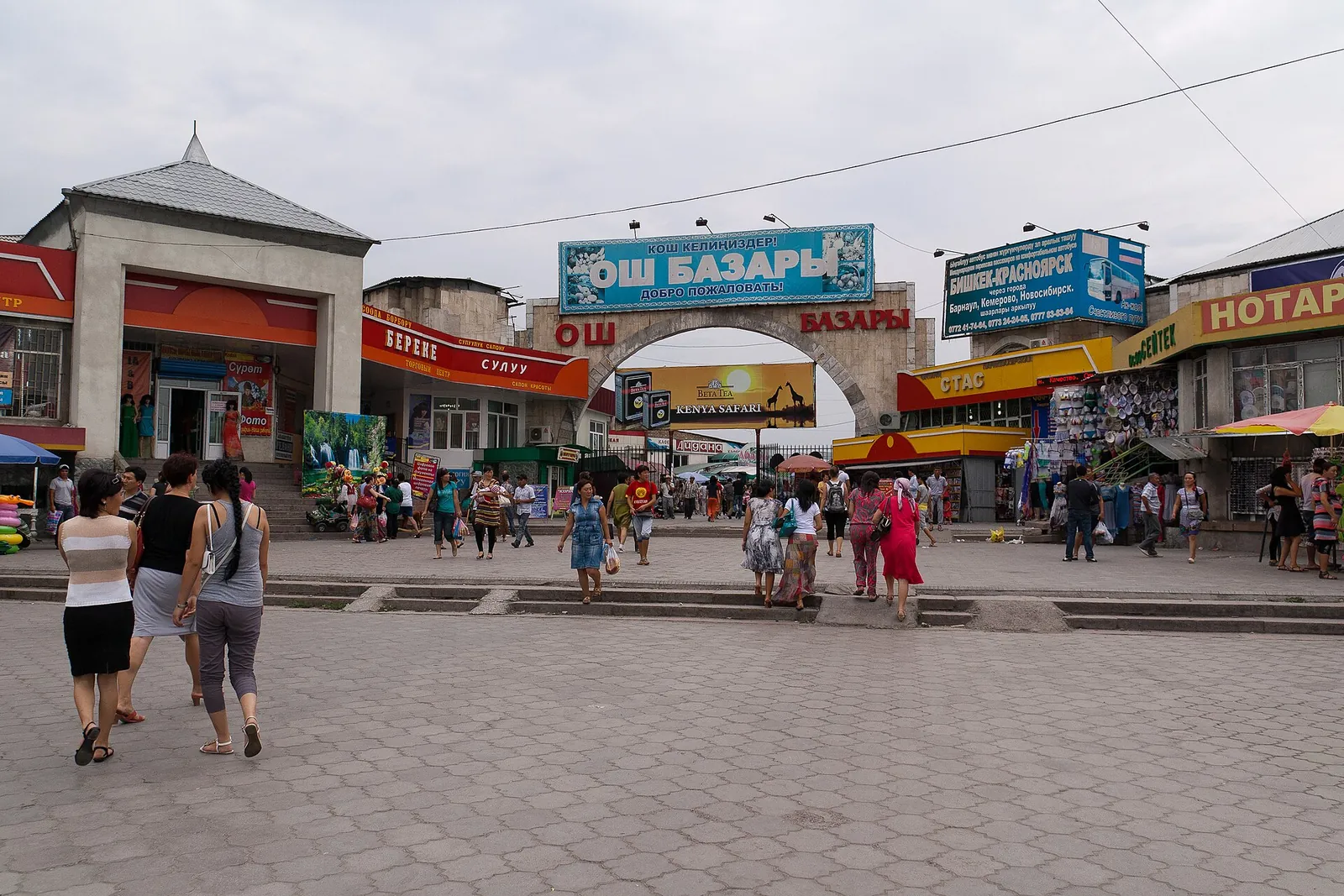
At Osh Bazaar and the exchange offices. Pickpockets target tourists at Bishkek's bazaars, particularly Osh Bazaar, and thieves there use distraction techniques. Keep sight of your bag, do not show large amounts of money and do not carry all your valuables in one place; the same care applies around exchange offices and ATMs and on buses. Be wary of strangers who offer help or are over-friendly.
On a night out. Drink spiking is a risk in nightclubs and bars and can lead to sexual assault: buy your own drinks and keep them in sight. Getting home is the other risk, so do not walk alone or through poorly lit districts after dark; order a taxi by app from a known provider, or use a private car or pre-arranged taxi.
France, which reports sexual assaults on foreign women tourists, advises women not to be alone in isolated or little-frequented places, especially after dark, and not to go on mountain excursions without at least one trusted man; in the more conservative south, it advises dressing accordingly.
When someone in uniform asks for money. Police may check your passport, but they have no right to search bags or frisk you during a normal check. Tourists have occasionally been pressed for "fees" on the pretext of a drug check, and criminals may pose as security forces; if a payment is demanded, pay by card where possible and insist on a receipt. Extortion by uniformed police and by customs officers at some border crossings has also been reported. Away from the street, be sceptical of unusual emails, phone calls, prize notices and requests for help from supposed acquaintances.
Carry your passport, or a notarised copy of it, at all times, because the police can arrest you without ID; if you carry the copy, leave the original and spare money at your lodging. Possession or use of drugs is illegal and can bring a lengthy prison sentence, and even minor offences are punished harshly. Police carry out regular drug raids in bars and nightclubs, masked and armed; stay calm and follow their instructions. Drinking in public is prohibited and can bring a KGS 1,000 fine or even imprisonment, and e-cigarettes and vaping devices are illegal to bring in, buy or sell.
Taking photos or flying a drone near anything military or security-related is illegal, including border checkpoints, military sites and police stations, as well as airfields and strategic sites; ask before photographing people or their homes. Take care with images or comments online about public buildings, the Kyrgyz flag, national food or customs, since disrespectful content could result in fines or detention. Most Kyrgyz people are Muslim, so respect local traditions, especially during Ramadan and at religious sites. Same-sex relationships are legal but not often discussed, and showing affection in public could result in a violent attack or unwanted attention.
Practical questions
Is Kyrgyzstan safe for tourists?
For most visitors, yes, with care. The UK, French and German governments do not advise against travel to any part of Kyrgyzstan, and France says none of the limited risks compromises tourism. The real risks are the mountains, the roads, petty theft in Bishkek's bazaars and the gaps in medical care.
What is the emergency number in Kyrgyzstan?
Call 112 for rescue and emergencies, 103 for an ambulance, 102 for the police and 101 for fire. Around Issyk-Kul, the tourist police call centre answers in English and Russian on +996 705 00 91 02, also on WhatsApp, and mountain rescue is on +996 312 651 404.
Can I trek in Kyrgyzstan without a guide?
Not into unknown or remote terrain. Book a reputable trekking agency, leave your high-mountain itinerary with 112, and do not go riding, ski touring or onto glaciers without knowledgeable company, because help does not arrive quickly in remote areas.
Does travel insurance need to cover helicopter rescue in Kyrgyzstan?
For any mountain trip, yes. The policy should cover mountain rescue, helicopter evacuation, medical repatriation and all medical costs, including any activity at high altitude. Mountain rescue is a basic volunteer service, no official source publishes a price for rescue or evacuation, and without cover the costs on the spot are yours.
What vaccinations do I need for Kyrgyzstan?
TravelHealthPro recommends hepatitis A and tetanus for most travellers and MMR up to date for everyone; hepatitis B, rabies, tick-borne encephalitis, tuberculosis and typhoid depend on the trip. Yellow fever vaccine is neither required nor recommended, and France posted an alert on a rise in measles cases on 10 September 2026.
Can you drink the tap water in Kyrgyzstan?
No. Drink only bottled or sealed drinks, or water made safe by filtering, boiling or disinfecting it. Avoid raw milk products too, because of brucellosis in rural areas.
Is altitude sickness a risk in Kyrgyzstan?
Yes, in parts of the country. TravelHealthPro puts the risk from 2,500 m. Song-Kol, at 3,016 m, is reached by road in a single day from Issyk-Kul on CBT Kyrgyzstan's express trip, Karakol's Ala-Kul trek crosses a pass of about 3,860 m, and the road to the Peak Lenin base camp, at nearly 4,000 m, gives no acclimatisation.
What should I do if I lose my passport in Kyrgyzstan?
Carry your passport or a notarised copy at all times; the UK says the copy can be notarised in the UK and translated into Kyrgyz or Russian, or notarised in Kyrgyzstan. If a UK passport is lost or stolen and you need to travel within 6 weeks, you can apply for a UK emergency travel document, usually valid for one single or return journey. Other travellers should check before they fly which embassy can help them, because not every country, France included, has a consular section in Bishkek.
Keep planning your trip
First trip to Kyrgyzstan
Plan eight days from Bishkek along Issyk-Kul to Karakol, with a day on the south shore: nights, buses and drivers, season, money, a SIM, etiquette and a daily budget.
Read the guide
Entering Kyrgyzstan
Who enters Kyrgyzstan visa-free for 30 days, passport validity in UK, German and French advice, registration, customs limits and the crossings from Almaty.
Read the guide
Getting around Kyrgyzstan
How to get from Manas airport into Bishkek, east to Cholpon-Ata and Karakol by summer train, marshrutka, shared taxi or hired driver, and across to Almaty and Tashkent.
Read the guide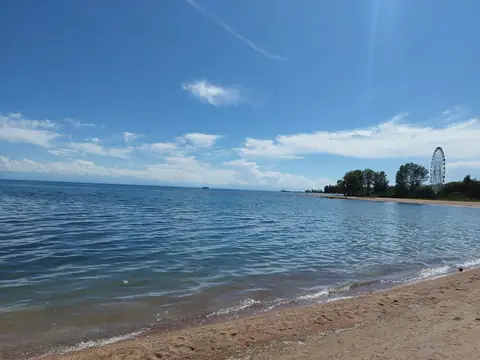
Best time to visit Kyrgyzstan
When to go to Kyrgyzstan for mountain walks, the Issyk-Kul beach season or skiing at Karakol, with the climate month by month and the holidays that change a trip.
Read the guide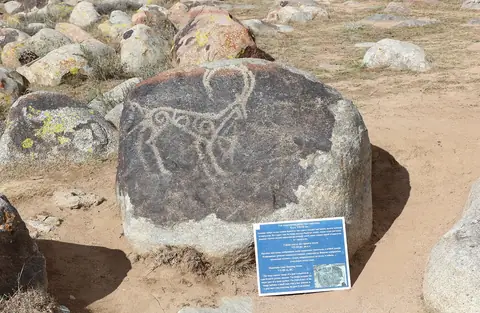
Issyk-Kul and Karakol
Plan five nights around Issyk-Kul: Cholpon-Ata's petroglyphs, Karakol's mosque and cathedral, Jeti-Oguz, Altyn-Arashan and Skazka Canyon, with buses, hotels and costs.
Read the guide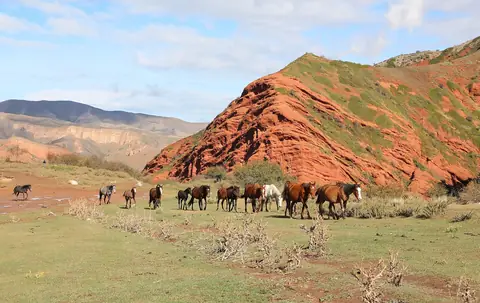
Kyrgyzstan trip cost
Eight days from Bishkek along Issyk-Kul to Karakol, with a day on the south shore: about KGS 28,800 per person on a budget, 62,200 mid-range or 96,000 in comfort.
Read the guideSources and checks before you travel
(23)
- UK Foreign Office (GOV.UK): Kyrgyzstan travel advice ↗ — opens in a new tab
- UK Foreign Office (GOV.UK): Kyrgyzstan safety and security ↗ — opens in a new tab
- UK Foreign Office (GOV.UK): Kyrgyzstan regional risks ↗ — opens in a new tab
- UK Foreign Office (GOV.UK): Kyrgyzstan health ↗ — opens in a new tab
- UK Foreign Office (GOV.UK): getting help in Kyrgyzstan ↗ — opens in a new tab
- British Embassy Bishkek (GOV.UK): list of medical facilities in Kyrgyzstan ↗ — opens in a new tab
- Auswärtiges Amt: Kirgisistan, Reise- und Sicherheitshinweise ↗ — opens in a new tab
- France Diplomatie: Kirghizstan, sécurité ↗ — opens in a new tab
- France Diplomatie: Kirghizstan, santé ↗ — opens in a new tab
- France Diplomatie: Kirghizstan, dernières minutes ↗ — opens in a new tab
- TravelHealthPro (NaTHNaC): Kyrgyzstan ↗ — opens in a new tab
- US CDC: Kyrgyzstan traveler view ↗ — opens in a new tab
- Kyrgyzstan's Ministry of Emergency Situations (mchs.gov.kg) ↗ — opens in a new tab
- Destination Karakol: Ala-Kul trek (Visit Karakol Tour Company) ↗ — opens in a new tab
- NEOMED (Bishkek private clinic): price list ↗ — opens in a new tab
- NEOMED: home page ↗ — opens in a new tab
- CBT Kyrgyzstan: express trip to Issyk-Kul and Song-Kol ↗ — opens in a new tab
- CBT Kyrgyzstan: jailoo trek to Song-Kol ↗ — opens in a new tab
- Ala-Archa State Natural Park: visitor page ↗ — opens in a new tab
- Destination Karakol: trekking from Karakol ↗ — opens in a new tab
- Destination Karakol: transportation ↗ — opens in a new tab
- GOV.UK: emergency travel document ↗ — opens in a new tab
- Manas Airport Taxi: fixed fares ↗ — opens in a new tab
Reference sources for the version dated 8 November 2026. Confirm opening times, access, transport and conditions for your travel dates.
Photo credits
(5)
Riders crossing a stream on the Ala-Kul trek in Kyrgyzstan, where France advises river crossings only with an experienced guide.
Photograph: Bruno Rijsman — opens in a new tab · CC BY-SA 2.0 — opens in a new tab
Changes: Resized and converted to WebP; displayed with responsive crops. · Original photograph and licence details ↗ — opens in a new tab
A trekker on the Ala-Kul trek in Kyrgyzstan; the governments advise against trekking alone in remote terrain.
Photograph: Bruno Rijsman — opens in a new tab · CC BY-SA 2.0 — opens in a new tab
Changes: Resized and converted to WebP; displayed with responsive crops. · Original photograph and licence details ↗ — opens in a new tab
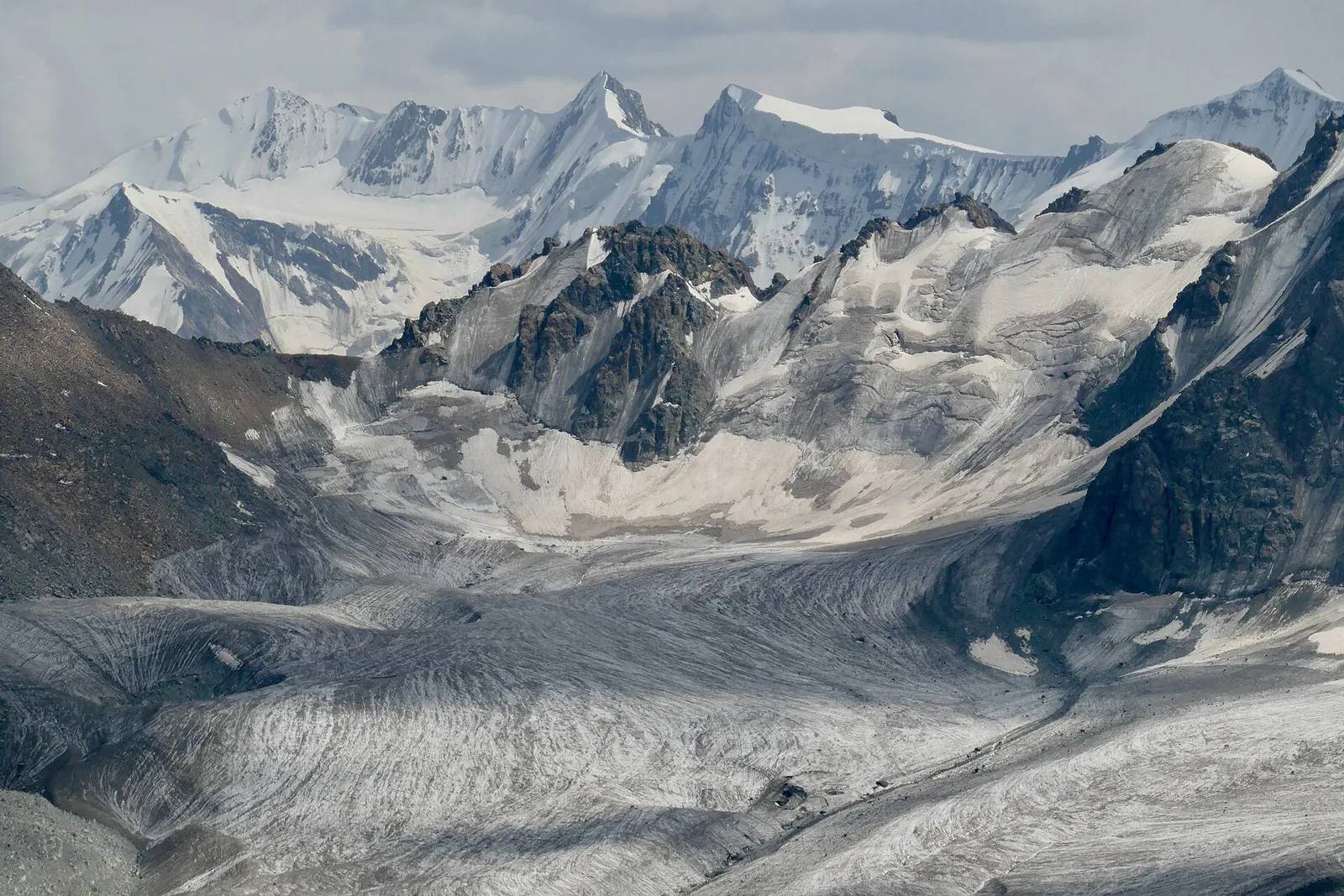
Glaciers seen from the Ala-Kul trek, high in the Kyrgyz mountains.
Photograph: Bruno Rijsman — opens in a new tab · CC BY-SA 2.0 — opens in a new tab
Changes: Resized and converted to WebP; displayed with responsive crops. · Original photograph and licence details ↗ — opens in a new tab
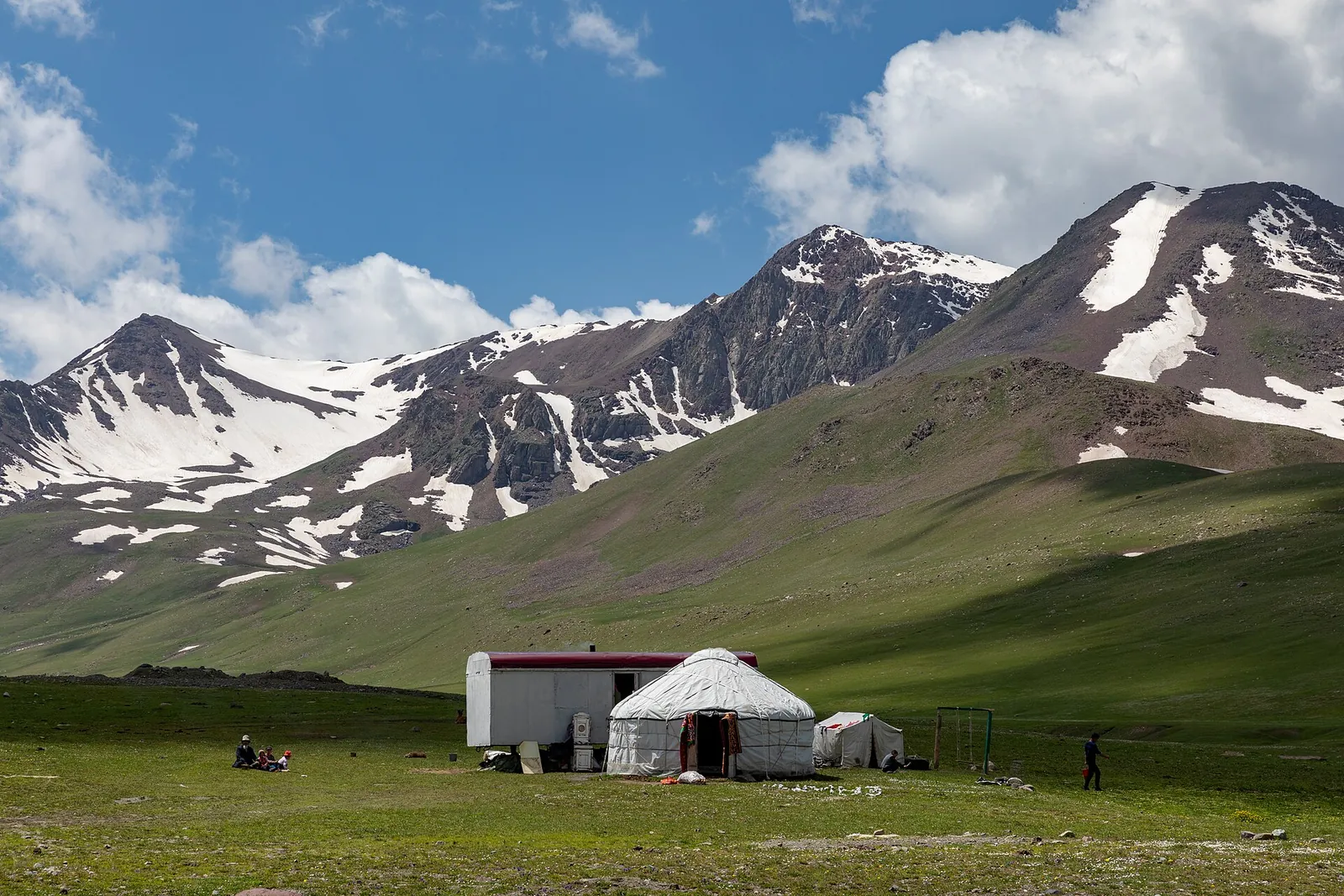
The Ala-Bel pass, at 3,175 m in the Talas Ala-Too range, on the road between Bishkek and Osh.
Photograph: Ninara from Helsinki, Finland — opens in a new tab · CC BY 2.0 — opens in a new tab
Changes: Resized and converted to WebP; displayed with responsive crops. · Original photograph and licence details ↗ — opens in a new tab
The entrance to Osh Bazaar in Bishkek, where pickpockets target tourists.
Photograph: Ekrem Canli — opens in a new tab · CC BY-SA 3.0 — opens in a new tab
Changes: Resized and converted to WebP; displayed with responsive crops. · Original photograph and licence details ↗ — opens in a new tab