Plan your trip
Cash or card in Kyrgyzstan? Som, ATMs, the Tulpar card and countryside cash
Kyrgyzstan pays in two ways. In Bishkek a Visa card usually settles the hotel and the restaurant bill, and even pays the bus fare; around Karakol and in the villages, som in cash does most of the work. This guide sets out the som's notes and coins, which foreign cash to bring and in what condition, how much cash a few days in the countryside take, where to withdraw and change money, how Bishkek's Tulpar transport card works, and how to pay a fine without handing cash to an officer.
In this guide
Find the location ↗ — opens in a new tabThe short answer
Plan to pay in som (KGS), with a contactless Visa card, a back-up card and some clean, newer US dollar or euro notes. The som is usually not sold outside Kyrgyzstan, so withdraw or change it after you land. Cards are widely used and Visa is accepted in most places, but the villages run on som, so carry cash there. Optima Bank's own ATMs add no fee of their own for other banks' cards and let foreign cards take up to KGS 25,000 a withdrawal. Around Karakol, a yurt-camp bed with breakfast and two meals comes to about KGS 2,000 a person a day, not counting transport. In Bishkek a city bus costs KGS 17 cashless.
- Key point
- Set up before you fly: a contactless Visa card, a second card as back-up, and clean US dollar or euro notes
- Where it applies
- Applies everywhere in Kyrgyzstan; cash matters most in rural and remote areas
- Timing
- The same all year; Bishkek's night-bus fares apply from 23:00 to 05:00
The som: notes, coins and the rate
Kyrgyzstan's currency is the som (KGS), and it is usually not available in currency exchanges outside the country, so you get it after you land. The coins in circulation are 50 tyiyn and 1, 3, 5 and 10 som; every one is legal tender and must be accepted at its face value.
Banknotes come in 20, 50, 100, 200, 500, 1,000 and 5,000 som, plus a commemorative 2,000 som note, and the National Bank lists several designs (series) of the same value.
For a sense of scale, the National Bank's official rate for 7 November 2026 was KGS 87.4478 to the US dollar and KGS 97.7492 to the euro, and its weekly rate from 7 November 2026 was KGS 117.0882 to the pound, so the largest note, 5,000 som, is worth a little over USD 57. The official rate is a reference set for accounting: the National Bank does not buy or sell currency at it.
Prices and times checked 8 November 2026
Which cash to bring, and in what condition
US dollars are the most easily exchanged foreign currency, and euros or US dollars in cash can be changed in the larger towns. Pay in som wherever you can: the US dollar may be accepted in certain situations, but it is not the everyday currency. Travellers' cheques are not normally accepted.
The condition of the notes matters. Bring newer notes in perfect condition if possible, because notes with small tears, creases or dirt are often not exchanged. Small euro notes of 5, 10 and 20 euros are often changed only at a somewhat worse rate, and US dollar notes from before 2007 are usually not accepted, or are changed into som only with an additional charge. So pack dollar notes printed in 2007 or later, and euros in notes larger than 20.
If you end up with a torn or worn som note, the National Bank exchanges damaged and old notes and coins for individuals on weekdays from 09:00 to 15:00, at its office at 101 T. Umetaliev Street in Bishkek and at its regional offices, including 265 Toktogul Street in Karakol.
There is no limit on the foreign currency you bring in or take out, but cash from USD 10,000 per person must be declared. Our Kyrgyzstan entry guide has the rest of the customs rules.
Prices and times checked 8 November 2026
Cards and QR codes: Bishkek and the countryside
Credit and debit cards are widely used around the country. Visa is accepted in most places, but Mastercard is sometimes not, so make a Visa card your main card and carry a second card as a back-up, kept apart from the first. In Bishkek, hotels and restaurants usually accept credit and debit cards; in rural areas they do so only more rarely, and in remote areas cards are mostly not accepted. ATMs may not be available in rural areas either.
Karakol sits in between. Destination Karakol, the town's visitor centre, says credit cards are widely accepted at bigger accommodation providers, trekking agencies and tour operators, and that guest houses and restaurants increasingly take cards, but you will definitely need some cash for smaller purchases and shops, and for street food and markets.
Payment by QR code is also common, but as a visitor, plan to pay by card or in som. On Bishkek's buses the QR code is paid with the Tulpar mobile app (see the fares section below); elsewhere, pay with a contactless Visa card where cards are taken, and with som where they are not.
One gate refuses cash altogether. At Ala-Archa National Park, entry costs KGS 250 for adults and KGS 180 for children aged 7 to 14, and payment is cashless only: by the payment terminals at the checkpoint, by QR code or by bank card. Bring a card for the gate; our transport guide prices the drive out from Bishkek.
Prices and times checked 8 November 2026
How much cash for the countryside
Since the villages run on som, the question is how much. As a guide, Happy Nomads Yurt Camp in Karakol, listed by Destination Karakol, charges KGS 1,000 a person a night with breakfast, and KGS 500 a person for lunch or dinner. A day there with all three meals comes to about KGS 2,000 a person (about USD 23 at the official rate), not counting transport.
Getting around adds less than you might think. Karakol's town marshrutkas (shared minibuses) cost a set KGS 20 a person for local stops, and the marshrutka from Karakol to Ak-Suu, for the walk up to Altyn-Arashan, costs from KGS 50 a person plus KGS 30 for a trekking bag. From Bishkek to Karakol, Destination Karakol lists marshrutkas from KGS 500 and shared taxis at KGS 1,000 to 1,500; our transport guide has the GoBus coach. If you walk up to Altyn-Arashan on your own, keep som for the valley's entry fee: Central Asia Guide, a tour company, lists KGS 220 a person for foreign visitors at 2025 prices, charged since June 2025 to independent visitors but not to groups with a guide or driver. The big item is a 4x4: Adventures KG lists a four-seat UAZ from Karakol to Altyn-Arashan at KGS 12,000 for the vehicle, or KGS 3,000 each if four of you share it.
Two or three days around Karakol with yurt nights, all three meals, the Ak-Suu marshrutka there and back and the Altyn-Arashan fee come to about KGS 4,400 to 6,400 a person, plus any 4x4. Heading for Song-Kol, Naryn or Osh instead, the same transport guide prices the drivers and minibuses for those routes, and our Kyrgyzstan trip-cost guide prices a whole trip, rooms, meals and transport, level by level.
Prices and times checked 8 November 2026
ATMs, changing money and the home-currency offer
ATMs are widely available in the main cities and usually pay out both som and US dollars. Some set a maximum per withdrawal: it varies from bank to bank, but is often around KGS 10,000 (about USD 114 at the official rate), so a larger sum may take several withdrawals. Optima Bank's tariff for other banks' cards, in force from 1 January 2026, makes withdrawals at its own ATMs free and pays out som only; foreign cards may take up to KGS 25,000 a withdrawal and KGS 100,000 a day there. The bank that issued your card may add its own fee and limits.
Away from Bishkek, withdraw in a larger town before heading for the villages or Song-Kol: ATMs are usually available in towns, but are common only in the larger ones, and dollars may be more difficult to withdraw outside the main cities. Karakol is well served: Destination Karakol says most of its ATMs support international bank cards.
To change cash, use a currency exchange office in Bishkek or another larger town, where euros and US dollars in cash can be changed. The National Bank's official rate is only a reference, so the rate you are offered may differ from it. Arriving overland from Almaty with tenge left over, use the National Bank's daily rate as the reference for an offer: KGS 0.1956 to the tenge for 7 November 2026, so KZT 10,000 is worth about KGS 1,956 (for the Russian rouble, KGS 1.0759). Count the notes at the counter and put them away before you step outside. Be careful at currency exchange offices and in Bishkek's bazaars, particularly Osh Bazaar, where pickpockets target tourists; do not show large amounts of money, and take only the cash you need for the day or a card.
If the ATM or the card terminal offers to charge you in your home currency, decline and choose som. Visa explains that this offer, dynamic currency conversion, includes an exchange rate and additional fees; merchants and ATMs should give you the choice to accept or decline and must not choose on your behalf, and if you feel pressured, Visa recommends declining.
Prices and times checked 8 November 2026
Bishkek buses, the Tulpar card and the airport
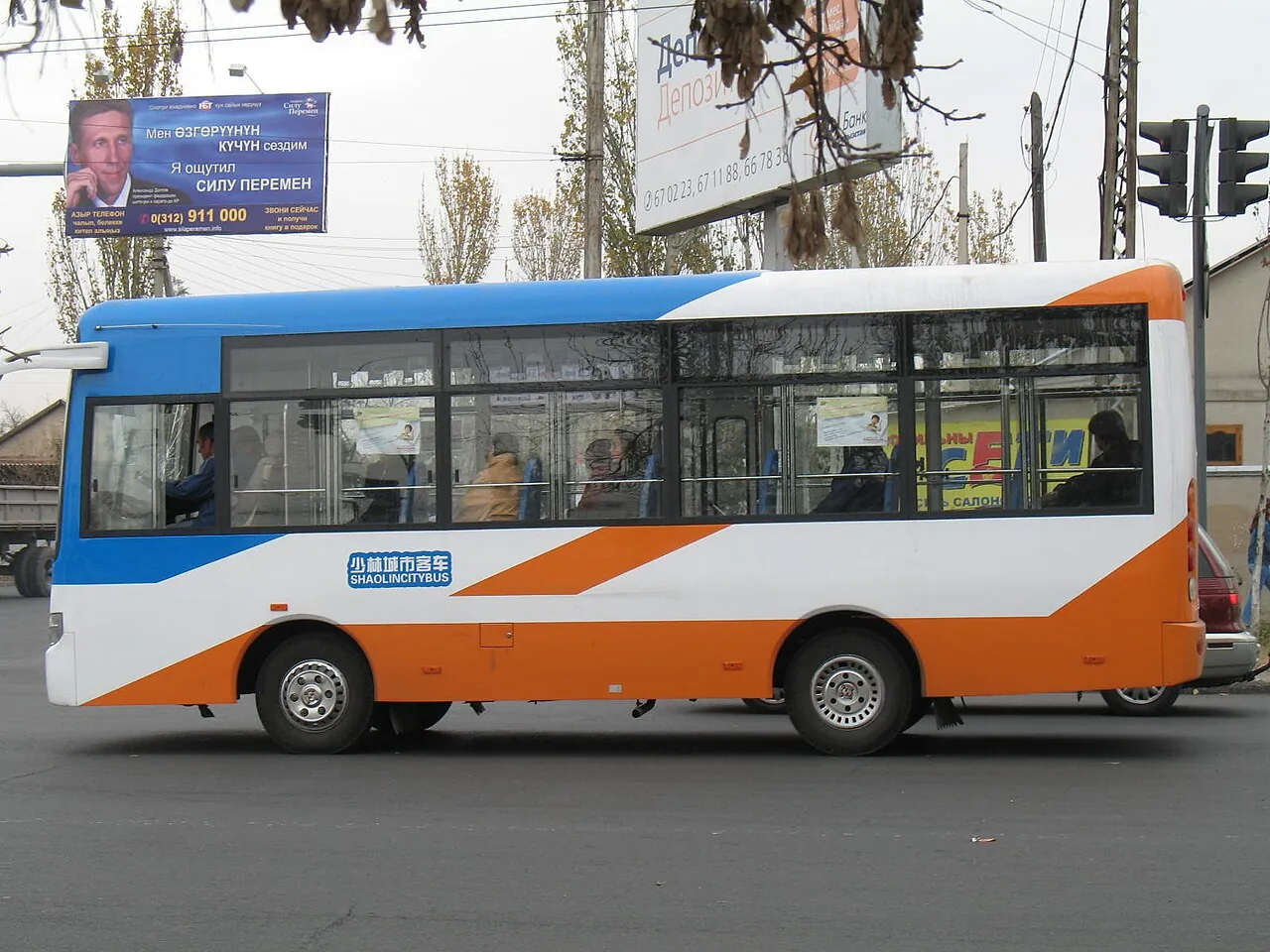
Bishkek's fares reward paying without cash. Under the city's tariff decree, a ride on a city bus or electric bus costs KGS 17 cashless, while buses and electric buses marked for cash fares charge KGS 20 in cash. Small buses and minibuses cost KGS 20, cash or cashless. Night buses between 23:00 and 05:00 cost KGS 70 cashless or KGS 90 in cash.
You may not need a transport card at all: Tulpar, the operator of the city's single transport card, says its validators accept contactless Visa and Elcart cards of any bank, and Google Pay, so a contactless Visa card pays the cashless fare. The QR codes on stickers inside the buses are paid with the Tulpar mobile app. Without a card, you can buy a special ticket for cash from a machine at stops, in public places or on the bus, and hold it to the validator; this works on buses and electric buses, not on small buses.
For a longer stay, Tulpar's blue card is open to any passenger and costs KGS 60, from Kyrgyz Post branches, mobile operators' sales points, bus and trolleybus drivers, and sales points at stops, including Osh Bazaar. Top it up at Tulpar's service centres, ticket offices, retail points or payment machines. Paying with a transport card on municipal transport also buys you transfers: after the first 5 minutes, you may change as often as you like within 60 minutes.
From Manas airport, the official airport taxi (Manas Airport Taxi) charges fixed fares: KGS 800 to central Bishkek and KGS 650 to 1,200 to other parts of the city (700 to the north, 650 to the west, 1,000 to the south and 1,200 to the east), and KGS 9,000 to Karakol. Express bus No. 153 costs KGS 122 cashless to the airport and KGS 40 cashless within the city (fares from 27 May 2025). Our transport guide covers the routes to Issyk-Kul and beyond.
Prices and times checked 8 November 2026
Everyday prices, fixed fares and taxi apps
For a sense of everyday prices in Bishkek, Chaikhana Navat's delivery menu lists home-style lagman (500 g) at KGS 520, a 450 g plate of plov at KGS 520, a 100 g meat samsa at KGS 150 and a flat bread at KGS 85; these are its delivery prices. Around Karakol, a yurt-camp lunch or dinner is KGS 500 (see the countryside section above).
Many of the prices in this guide are fixed: city bus fares, Karakol's KGS 20 marshrutka, park gates and the airport taxi's list. For taxis in town, Destination Karakol suggests ordering through the Yandex Go app, which avoids the need to negotiate or watch the meter; some phones registered in Europe or North America may have trouble downloading it. Shared taxis between towns leave when the car is full and usually cost slightly more than marshrutkas, and if you tire of waiting you can often offer to pay for the missing passengers so the driver leaves at once.
Prices and times checked 8 November 2026
Police fines, "fees" and the border
If the police fine you, for example while you are driving, they should give you a paper copy with payment instructions: pay through a payment terminal or in a bank, never in cash directly to an officer (some officers carry a terminal, and some fines are reduced if you pay quickly). Germany reports that in the past tourists were in isolated cases pressed for "fee payments" on the pretext of drug checks, and that criminals posing as security forces cannot be ruled out, so if you have to pay an official, pay by card or electronically where possible and insist on a receipt. France reports cases of extortion by uniformed police and by customs officers at certain border crossings, to be reported to your embassy; our Kyrgyzstan entry guide covers what a land crossing needs.
Practical questions
Can I pay by card in Kyrgyzstan?
Yes, in many places: cards are widely used, Visa is accepted in most places and Mastercard sometimes not. In Bishkek even the city buses take a contactless Visa card. Keep som for small purchases and markets.
How much cash do I need for the countryside?
Around Karakol, a yurt-camp bed with breakfast costs KGS 1,000 a person and lunch or dinner KGS 500 each, about KGS 2,000 a day, not counting transport. Local marshrutkas cost KGS 20 in Karakol and from KGS 50 to Ak-Suu; walking up to Altyn-Arashan on your own, keep KGS 220 for the entry fee (2025 price); a four-seat UAZ to Altyn-Arashan costs KGS 12,000 for the vehicle.
Can I buy Kyrgyz som before I travel?
Usually not: currency exchanges outside Kyrgyzstan usually do not sell the som. Withdraw som from an ATM or change US dollars or euros after you arrive.
How much can I withdraw from an ATM in Kyrgyzstan?
It depends on the bank. Some ATMs set a maximum per withdrawal, often around KGS 10,000; Optima Bank's own ATMs let foreign cards take up to KGS 25,000 a withdrawal, in som, with no Optima fee (its 2026 tariff). ATMs in the main cities usually pay out som and US dollars; dollars may be more difficult to withdraw outside the main cities.
Which currency should I bring to Kyrgyzstan?
US dollars are the most easily exchanged, and euros can be changed in the larger towns too. Bring newer notes in perfect condition: US dollar notes from before 2007 are usually not accepted, or are changed only with an additional charge, and small euro notes often get a somewhat worse rate.
How do I pay for a bus in Bishkek?
Tap a contactless Visa or Elcart card, Google Pay or a Tulpar transport card (KGS 60) on the validator: KGS 17 on a city bus or electric bus. In cash it is KGS 20 on buses marked for cash fares and on minibuses; night buses from 23:00 to 05:00 cost KGS 70 cashless or KGS 90 in cash.
How much cash can I bring into Kyrgyzstan?
Any amount of foreign currency, but cash from USD 10,000 per person must be declared.
Keep planning your trip
First trip to Kyrgyzstan
Plan eight days from Bishkek along Issyk-Kul to Karakol, with a day on the south shore: nights, buses and drivers, season, money, a SIM, etiquette and a daily budget.
Read the guide
Entering Kyrgyzstan
Who enters Kyrgyzstan visa-free for 30 days, passport validity in UK, German and French advice, registration, customs limits and the crossings from Almaty.
Read the guide
Kyrgyzstan trip cost
Eight days from Bishkek along Issyk-Kul to Karakol, with a day on the south shore: about KGS 28,800 per person on a budget, 62,200 mid-range or 96,000 in comfort.
Read the guide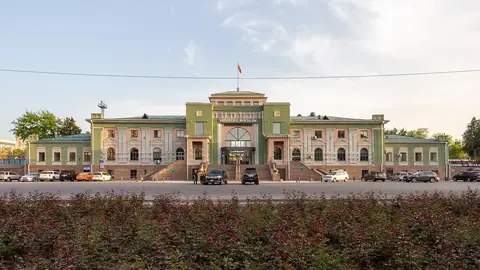
Getting around Kyrgyzstan
How to get from Manas airport into Bishkek, east to Cholpon-Ata and Karakol by summer train, marshrutka, shared taxi or hired driver, and across to Almaty and Tashkent.
Read the guide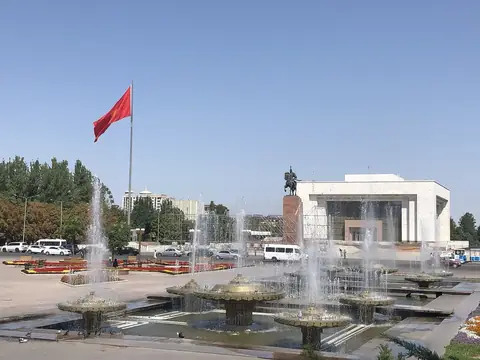
Bishkek
Plan two nights in Bishkek: Ala-Too Square and the museum, Osh Bazaar, a day in Ala-Archa National Park, Burana Tower, hotels, the airport taxi and the road to Issyk-Kul.
Read the guide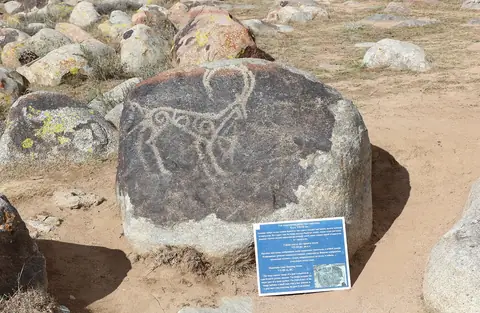
Issyk-Kul and Karakol
Plan five nights around Issyk-Kul: Cholpon-Ata's petroglyphs, Karakol's mosque and cathedral, Jeti-Oguz, Altyn-Arashan and Skazka Canyon, with buses, hotels and costs.
Read the guideSources and checks before you travel
(24)
- UK Foreign Office (GOV.UK): Kyrgyzstan safety and security ↗ — opens in a new tab
- Germany's Foreign Office (Auswärtiges Amt): Kyrgyzstan travel and safety advice (in German) ↗ — opens in a new tab
- France Diplomatie: Kyrgyzstan travel advice, security (in French) ↗ — opens in a new tab
- National Bank of the Kyrgyz Republic: circulation coins ↗ — opens in a new tab
- National Bank of the Kyrgyz Republic: banknotes ↗ — opens in a new tab
- National Bank of the Kyrgyz Republic: banknote series ↗ — opens in a new tab
- National Bank of the Kyrgyz Republic: official exchange rates (home page) ↗ — opens in a new tab
- National Bank of the Kyrgyz Republic: weekly official rates ↗ — opens in a new tab
- National Bank of the Kyrgyz Republic: exchange of damaged banknotes and coins ↗ — opens in a new tab
- Visa: what you should know about dynamic currency conversion ↗ — opens in a new tab
- Optima Bank: tariffs for VISA, Mastercard, UPI and Elcart cards of other banks, 2026 (PDF, in Russian) ↗ — opens in a new tab
- Bishkek City Hall: public transport tariffs (in Russian) ↗ — opens in a new tab
- Bishkek City Hall: express bus No. 153 fare (27 May 2025, in Russian) ↗ — opens in a new tab
- Manas Airport Taxi: fixed fares (in Russian) ↗ — opens in a new tab
- Ala-Archa National Park: visitor information (in Russian) ↗ — opens in a new tab
- Tulpar (Bishkek's transport card operator): how to pay (in Russian) ↗ — opens in a new tab
- Tulpar: buy a card (in Russian) ↗ — opens in a new tab
- Destination Karakol: practical travel information ↗ — opens in a new tab
- Destination Karakol: transportation ↗ — opens in a new tab
- Destination Karakol: Happy Nomads Yurt Camp listing ↗ — opens in a new tab
- Adventures KG: mountain transport price list ↗ — opens in a new tab
- Central Asia Guide (tour company): Altyn Arashan ↗ — opens in a new tab
- Chaikhana Navat, Bishkek: delivery menu, main dishes (in Russian) ↗ — opens in a new tab
- Chaikhana Navat, Bishkek: delivery menu, home baking (in Russian) ↗ — opens in a new tab
Reference sources for the version dated 8 November 2026. Confirm opening times, access, transport and conditions for your travel dates.
Photo credits
(5)
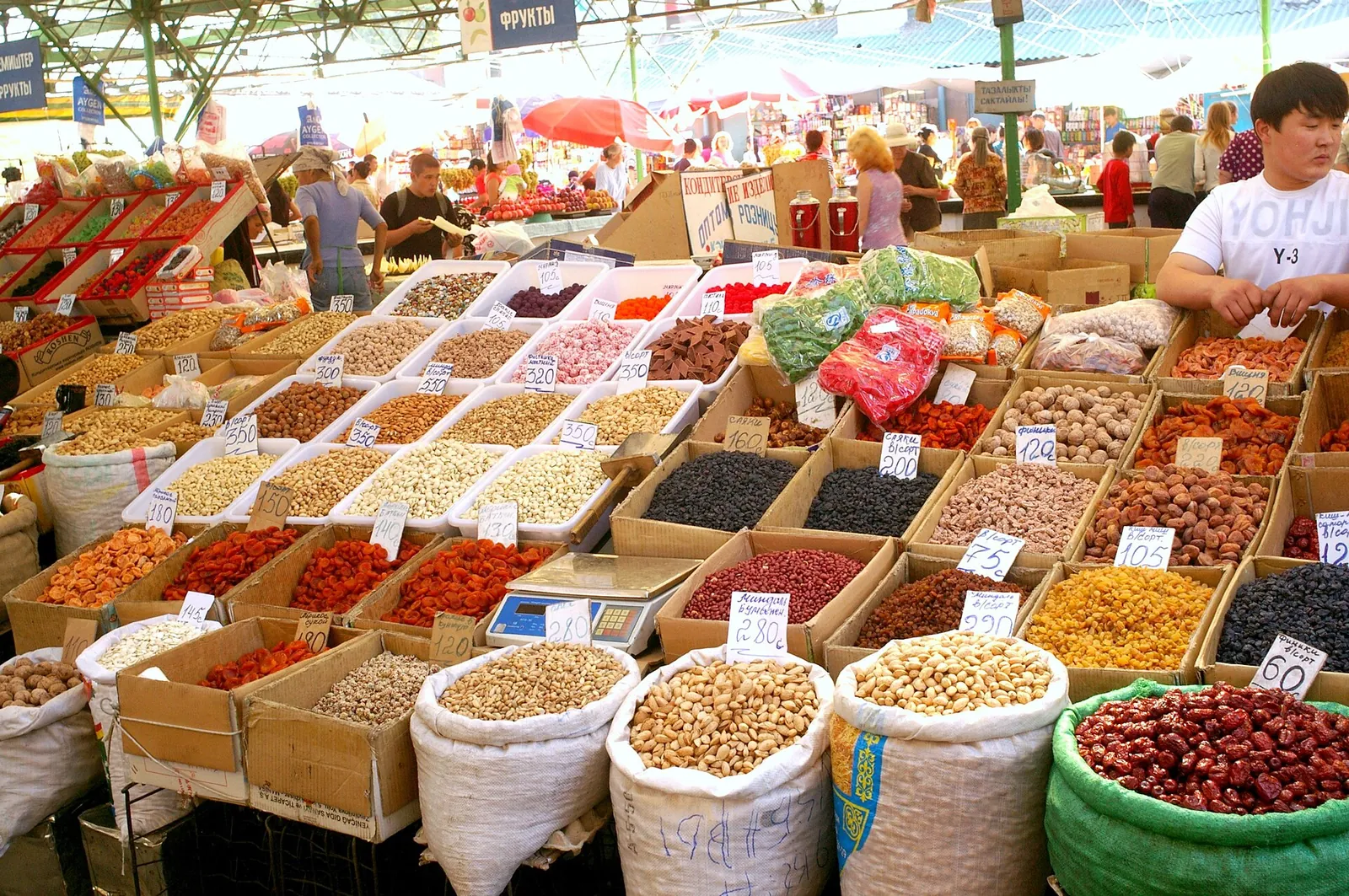
Spices, nuts and dried fruit on a stall at Osh Bazaar in Bishkek
Photograph: Thomas Depenbusch (Depi) from Cologne, Germany — opens in a new tab · CC BY 2.0 — opens in a new tab
Changes: Resized and converted to WebP; displayed with responsive crops. · Original photograph and licence details ↗ — opens in a new tab
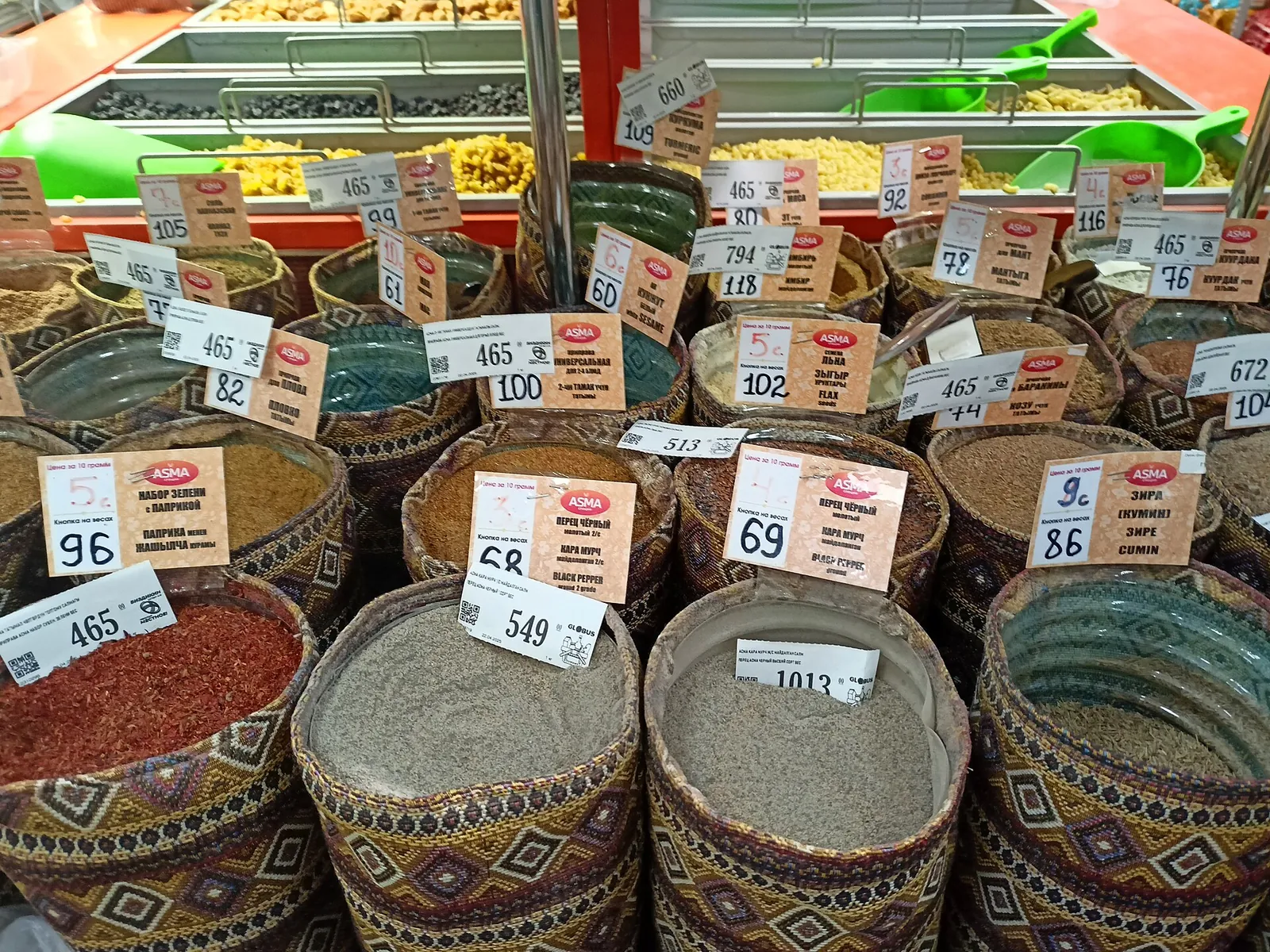
Spices with printed price tags in a Bishkek supermarket
Photograph: Екатерина Борисова — opens in a new tab · CC BY-SA 4.0 — opens in a new tab
Changes: Resized and converted to WebP; displayed with responsive crops. · Original photograph and licence details ↗ — opens in a new tab
A route 149 bus in Bishkek
Photograph: Firespeaker — opens in a new tab · CC BY-SA 4.0 — opens in a new tab
Changes: Resized and converted to WebP; displayed with responsive crops. · Original photograph and licence details ↗ — opens in a new tab
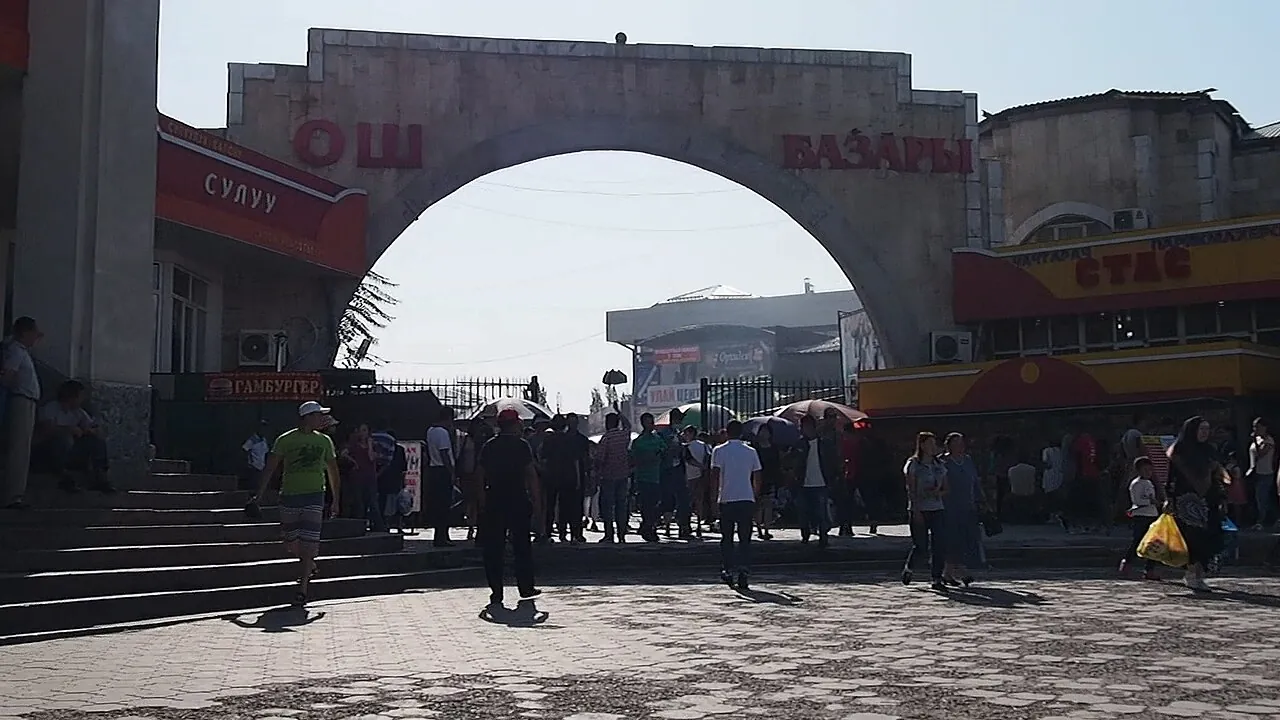
The arched gateway of Osh Bazaar in Bishkek
Photograph: t_y_l — opens in a new tab · CC BY-SA 2.0 — opens in a new tab
Changes: Resized and converted to WebP; displayed with responsive crops. · Original photograph and licence details ↗ — opens in a new tab
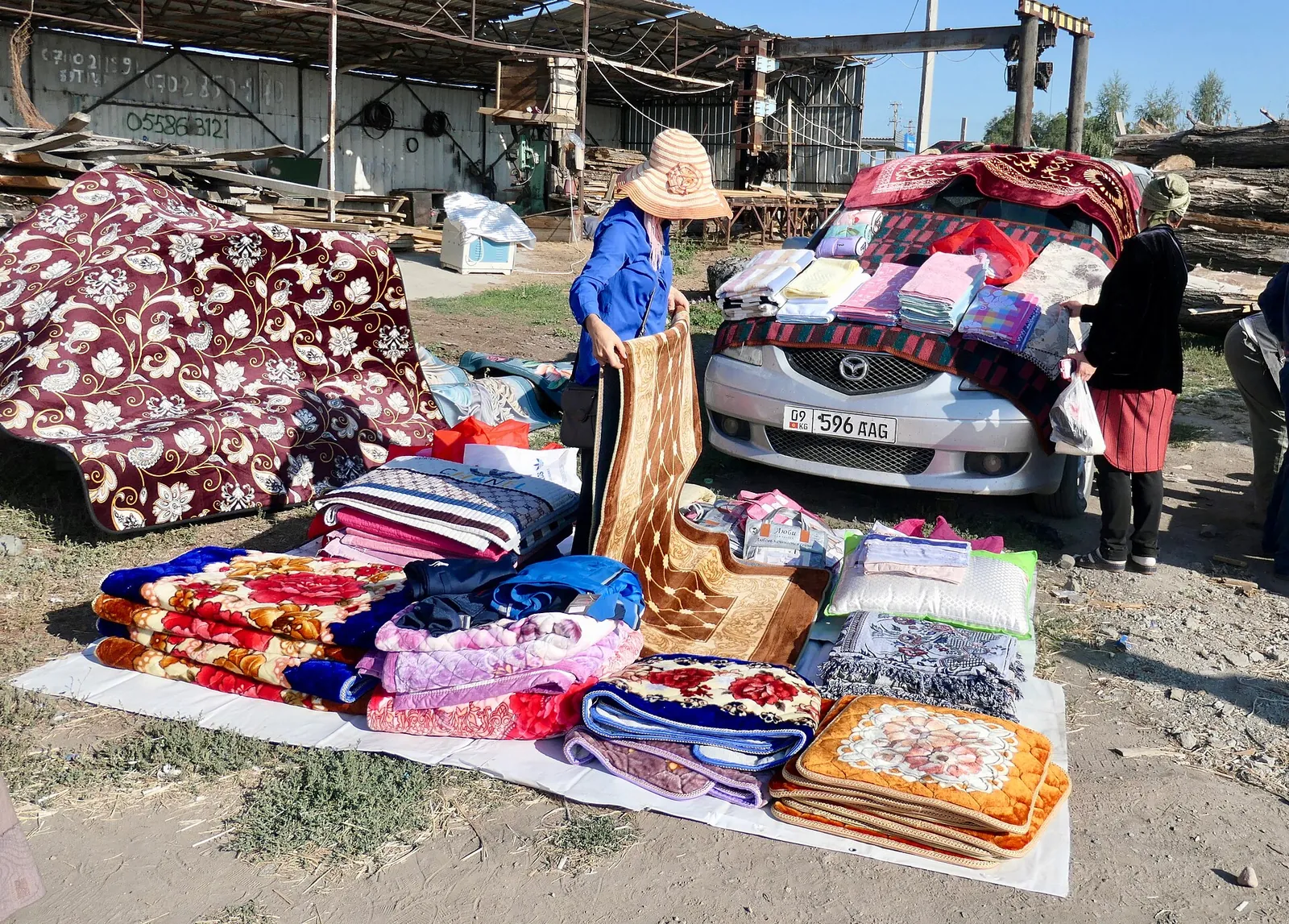
Textiles for sale at the Slavic Bazaar flea market in Karakol
Photograph: Bruno Rijsman — opens in a new tab · CC BY 2.0 — opens in a new tab
Changes: Resized and converted to WebP; displayed with responsive crops. · Original photograph and licence details ↗ — opens in a new tab