Issyk-Kul
Issyk-Kul and Karakol: the lake loop, Jeti-Oguz and Altyn-Arashan
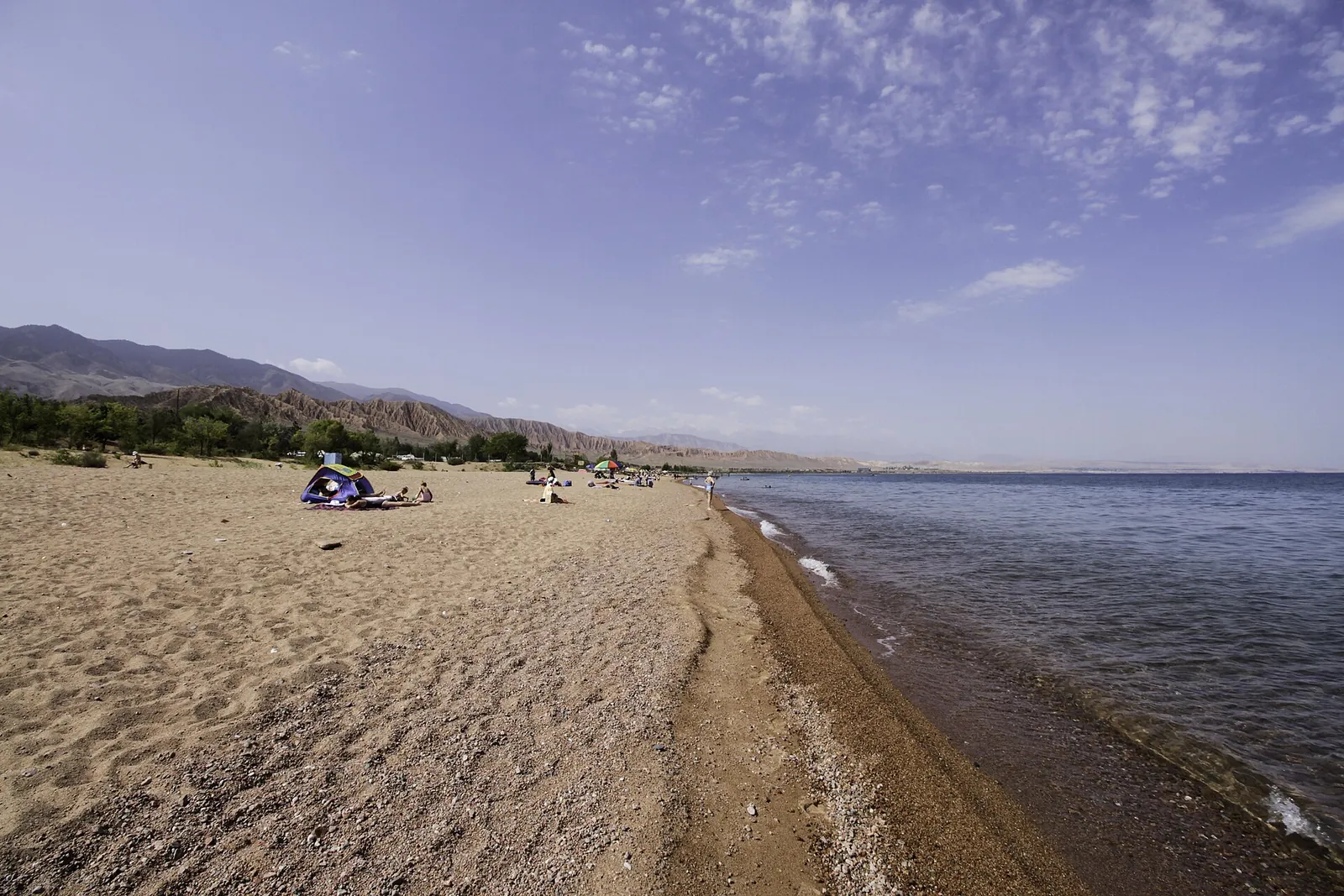
Issyk-Kul is the great blue lake of the Tian Shan, one of the largest and deepest mountain lakes in the world, with snow ranges on both shores. A first trip runs as a loop from Bishkek: along the north shore to Cholpon-Ata, with its beaches and a field of Bronze Age rock carvings, on to Karakol at the eastern end, a frontier town of wooden churches and a Chinese-style mosque, and back along the quieter south shore past the red clay of Skazka Canyon. Karakol is the base for the valleys: the red cliffs of Jeti-Oguz and the hot springs of Altyn-Arashan are each a day out.
In this guide
Find the location ↗ — opens in a new tabThe short answer
Book five nights around the lake: two in Cholpon-Ata on the north shore and three in Karakol, then return to Bishkek along the south shore past Skazka Canyon. Book first the GoBus seat from Bishkek (KGS 750, often sold out days ahead) or a driver, then your Karakol room. Marshrutkas from Cholpon-Ata to Karakol cost from KGS 200 a seat; for Altyn-Arashan, a four-seat UAZ 4x4 from Karakol costs KGS 12,000 for the vehicle. For two sharing rooms, with two full-board nights at Raduga in Sary-Oi, three nights in Karakol and a driver both ways between Bishkek and the lake, the six-day model comes to about KGS 114,600, KGS 57,300 per person, before flights; estimated local transfers and admissions are counted before the 10% buffer.
- Suggested time
- 5 nights: 2 in Cholpon-Ata, 3 in Karakol
- Where to stay
- Cholpon-Ata town centre near the beach, then central Karakol
- Season and timing
- June to mid-September for the beaches, the summer train and the high valleys; spring and autumn are quieter for walks around Karakol, and in winter Karakol turns to skiing.
Where to stay: Cholpon-Ata, then Karakol
Split the trip between two bases. In Cholpon-Ata, stay in the town, within a walk of the beach and the petroglyphs. Olimp (Kabay Alamanov Street 34) lists a comfort double at KGS 6,000 with a buffet breakfast; its simpler guest-house category is advertised at KGS 2,000 without a clear per-person or per-room unit. For a resort with the meals included, Raduga at Sary-Oi, 14 km west of the town, charges KGS 16,200 for a standard double with a terrace and three meals in May, June and September, and KGS 18,200 in July and August.
In Karakol, stay in the grid of streets between the bazaars and the parks, so the mosque, the cathedral and the bus stations are all a walk away. Ak-Maral (Koenkozova Street 70) lists a standard double at KGS 4,500 a night and a Lux double at KGS 5,500. Both rates include breakfast. For a night under felt, Happy Nomads Yurt Camp (Sulaiman-Ata Street), 2 km from the centre, charges KGS 1,000 a person with breakfast and KGS 500 for a home-cooked lunch or dinner (its October 2026 listing on Destination Karakol, the town's tourism organisation). The own-site prices were checked on 1 November 2026; the pages give no exact-date or tax conditions, so treat them as advertised rates rather than final booking quotes.
Cholpon-Ata: rock carvings, Ruh Ordo and the beach
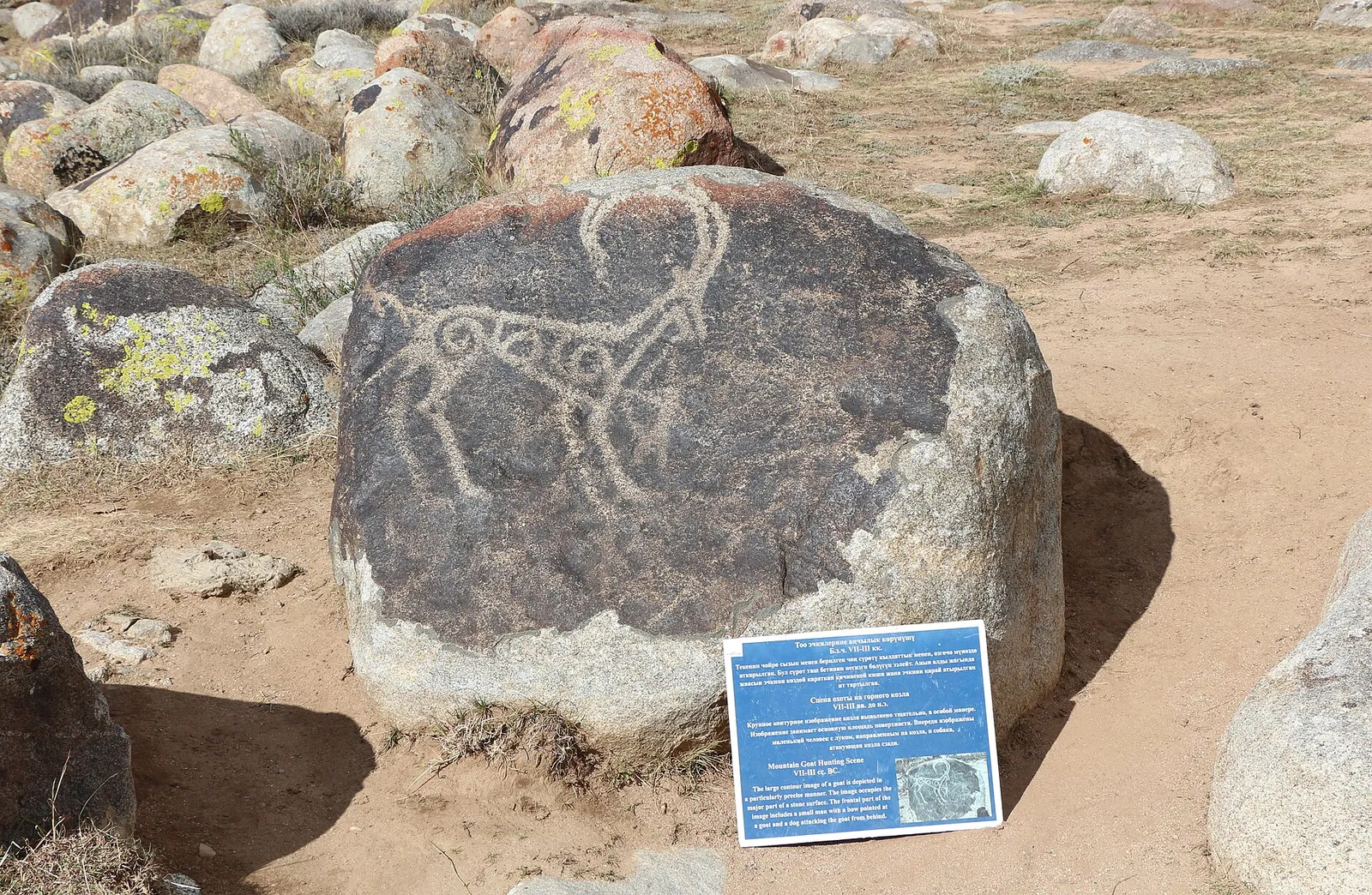
Cholpon-Ata is the north shore's resort town, with the lake in front and the Kungey range behind. Its great sight is the open-air petroglyph museum on the slope above the town: a field of glacial boulders, many carved with ibex, deer and hunting scenes that date back to the second millennium BC. Go early or late in the day, when the low sun picks out the lines, and walk among the stones rather than along the edge.
Down by the shore, the Ruh Ordo cultural complex, named after the writer Chingiz Aitmatov, sets small chapels of different faiths in a lakeside park, and the town's central beach is sand and shingle with clear water. Spend a whole day here: the petroglyphs in the morning, Ruh Ordo and a swim in the afternoon. The lake is cold outside high summer, and the beach is at its liveliest in July and August. The petroglyph field and Ruh Ordo have separate admissions; budget for both when you visit.
Karakol: the Dungan Mosque, the cathedral and Przhevalsky
Karakol was founded in 1869 as a military fort at the foot of the Terskey Ala-Too, near the south-east shore of the lake, and was called Przhevalsk in Soviet times. Kyrgyz, Russians, Dungans, Uyghurs, Tatars and others live here, and each left its mark on the town: the old Russian quarter along Jamansariev Street, between Toktogul and Gagarin Streets, is lined with carved wooden houses built by merchants.
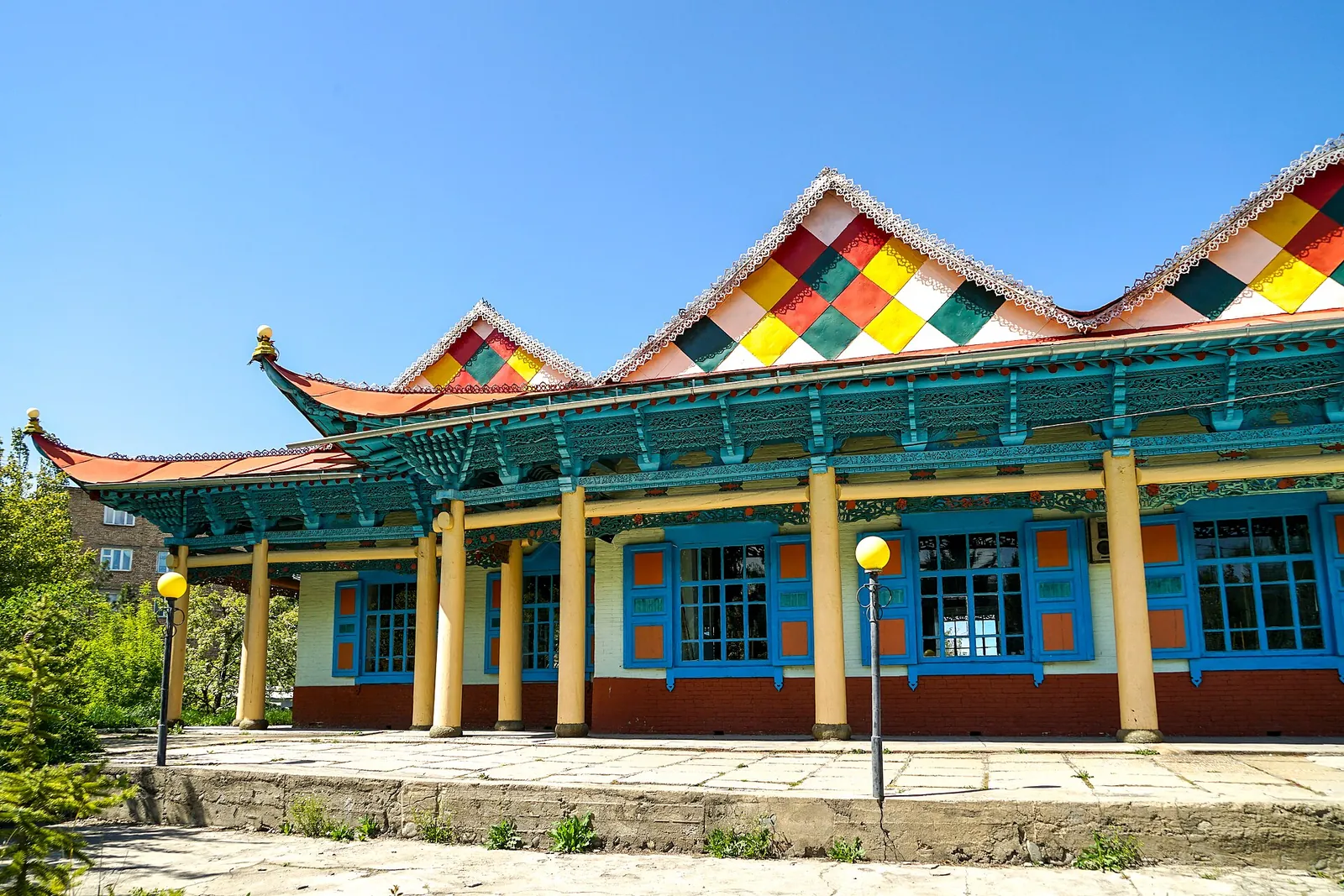
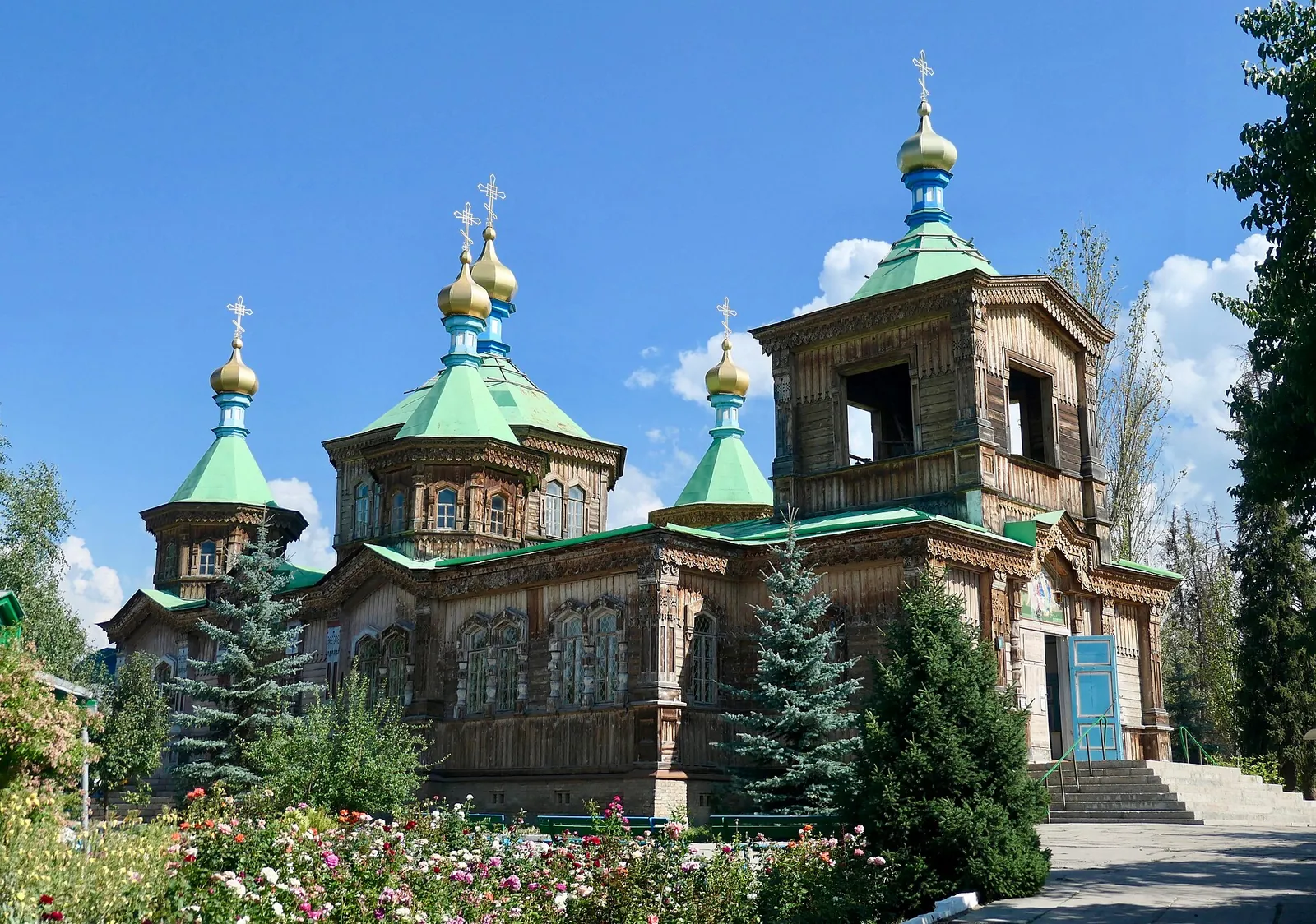
The Dungan Mosque is the sight you will not see anywhere else: built between 1907 and 1910 for the town's Dungan Muslims, to a Chinese design, entirely of wood and without nails, it has a pagoda in place of a minaret and a roof of painted, interlocking brackets. Entry is KGS 20, a little more in high summer, and women cover arms, legs and head; the mosque lends hooded coats. Holy Trinity Cathedral, the wooden Orthodox church of 1895 with green roofs and gilded cupolas, recalls the garrison years; in Soviet times it served, among other things, as a dance hall. Women cover their heads, and scarves are lent at the door.
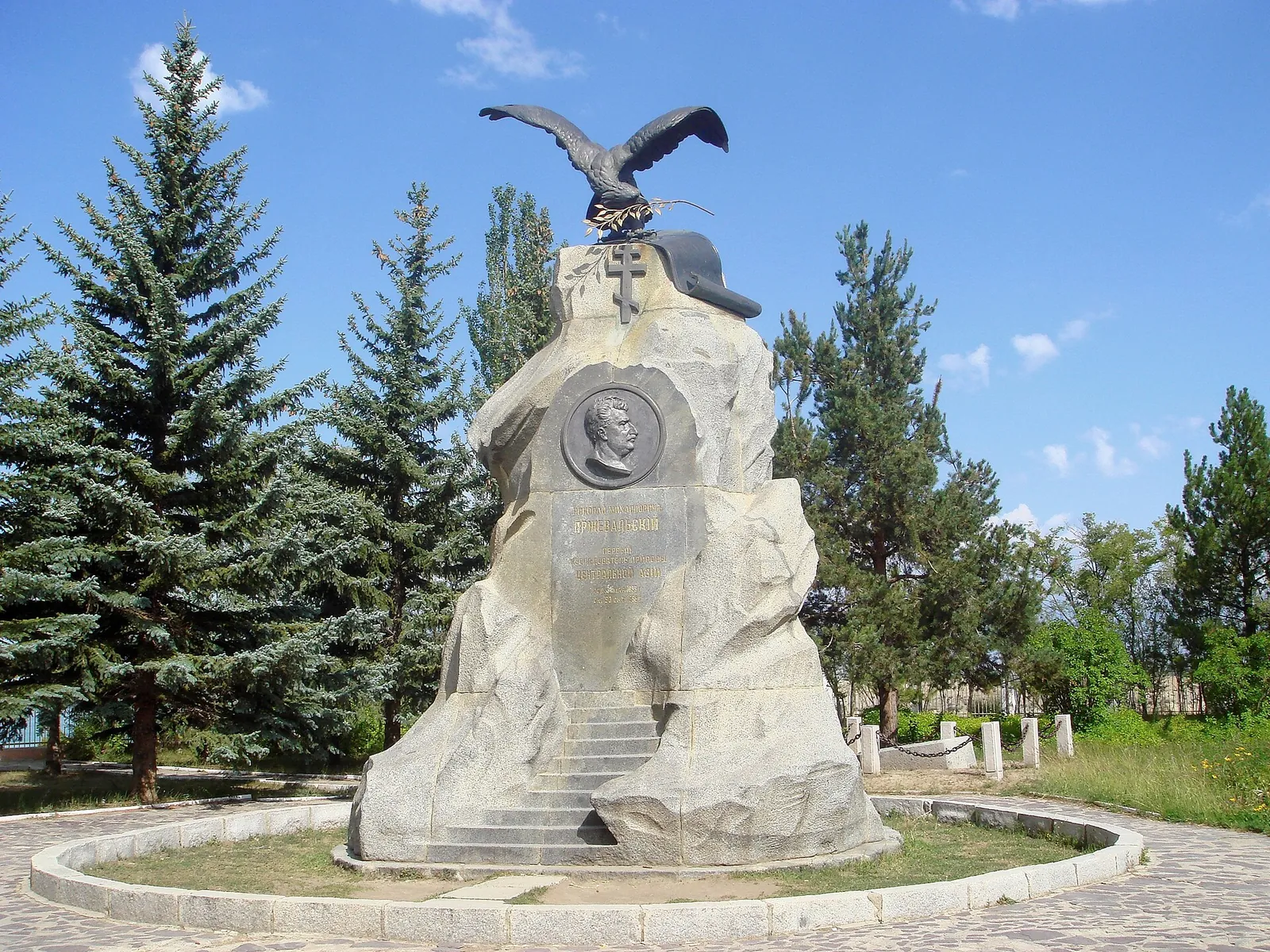
North of town at Pristan-Przhevalsk, about 15 minutes by taxi or marshrutka, the Przhevalsky Museum tells the story of Nikolai Przhevalsky, the Russian explorer whose expeditions sought a route to Tibet, with a giant ceramic map of his routes; his grave in the park is marked by a bronze eagle, said to face Lhasa. It opens daily from 09:00 to 17:00, from KGS 100 a person. Back in the centre, the Karakol History Museum (Jamansariev and Orozova Streets) shows Kyrgyz nomadic life and a permanent exhibition of photographs by the Swiss traveller Ella Maillart; foreign visitors pay from KGS 70. On Sunday mornings, the animal market on the edge of town is worth an early start.
The Destination Karakol Visitor Center, at Lenin Street 150, sells maps, books local drivers and guides and can help with trekking permits.
What to eat and where to look
Ashlan-fu
Karakol's signature dish, from its Dungan cooks: a spicy, cold soup with two kinds of noodles, thick rice and thinner wheat, in a vinegar and chilli sauce under a spoonful of chopped herbs, often with a fried potato pirozhki on the side.
- Where to look
- Ashlan-fu Alley, across the street from the Small Bazaar (Bugu Bazaar) at Alybakov and Gagarin Streets, and cafés all over town.
- Fit it into your day
- A lunch on your first afternoon in Karakol, and again on the hottest day.
Lagman
Hand-pulled noodles with a meat and vegetable sauce; in Karakol you can taste the Uyghur, Uzbek and Dungan styles side by side, soupy, boiled or stir-fried (boso lagman).
- Where to look
- Uyghur and Dungan cafés in central Karakol; several will make a vegetable version on request.
- Fit it into your day
- Dinner after Jeti-Oguz.
Manty with juisai
Steamed dumplings, usually of lamb and onion, but Karakol is known for its version filled with juisai, a wild mountain chive; eat them with laza, the local roasted chilli sauce.
- Where to look
- Cafés and canteens in central Karakol.
- Fit it into your day
- A lunch in town between the mosque and the cathedral.
Beshbarmak
The Kyrgyz feast dish of mutton cooked in its own broth and served over hand-cut noodles, the meal shepherds and trekkers eat in the mountains.
- Where to look
- Kyrgyz restaurants in Karakol and the yurt camps of Altyn-Arashan.
- Fit it into your day
- Dinner after the Altyn-Arashan walk.
Lagman, manty and beshbarmak are usually made with lamb or beef, and ashlan-fu is often meat-free; ask before you order.
Kymyz
Fermented mare's milk, tangy and slightly fizzy, the drink of the summer pastures; try a small bowl first, as it is strong on an unused stomach.
- Where to look
- Yurt camps in the valleys and along the south shore in summer.
- Fit it into your day
- With beshbarmak in the mountains.
Jeti-Oguz: red cliffs and the Kok-Jayik valley
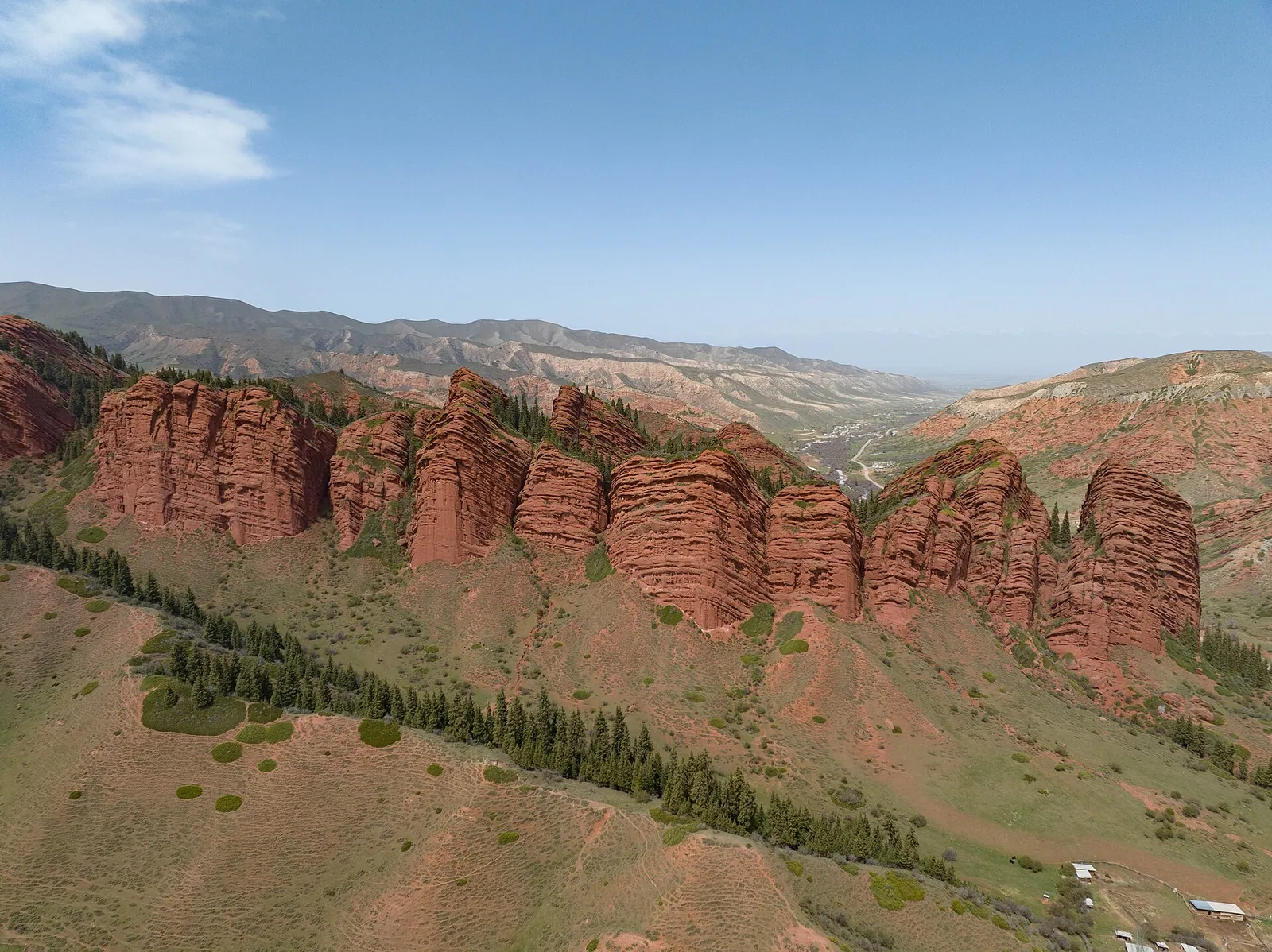
Jeti-Oguz, 28 km west of Karakol in the foothills of the Terskey Ala-Too, is a valley of red sandstone cliffs: the "Seven Bulls", a row of rounded rock towers, and the split cliff called the "Broken Heart". Beyond the old Jeti-Oguz resort, a walk of about three hours leads up into the Kok-Jayik valley, a meadow of wildflowers in early summer, and to the waterfall known as Girl's Braids.
Marshrutka 372 and shared taxis leave from Ak-Tilek by the Big Bazaar (Jamansariev and Bektenov Streets). Destination Karakol's transport table lists the resort from KGS 150 a seat, while its day-trip page still says from KGS 100. The transport table gives no fixed departure schedule: buses continue to Jeti-Oguz Kurort only when enough passengers want the resort; otherwise they stop at the village, 15 km short, with a taxi onward. Leave early and arrange the return before walking into the valley. A private taxi costs about KGS 1,500 to 2,000 a car each way.
Altyn-Arashan: hot springs in Karakol National Park
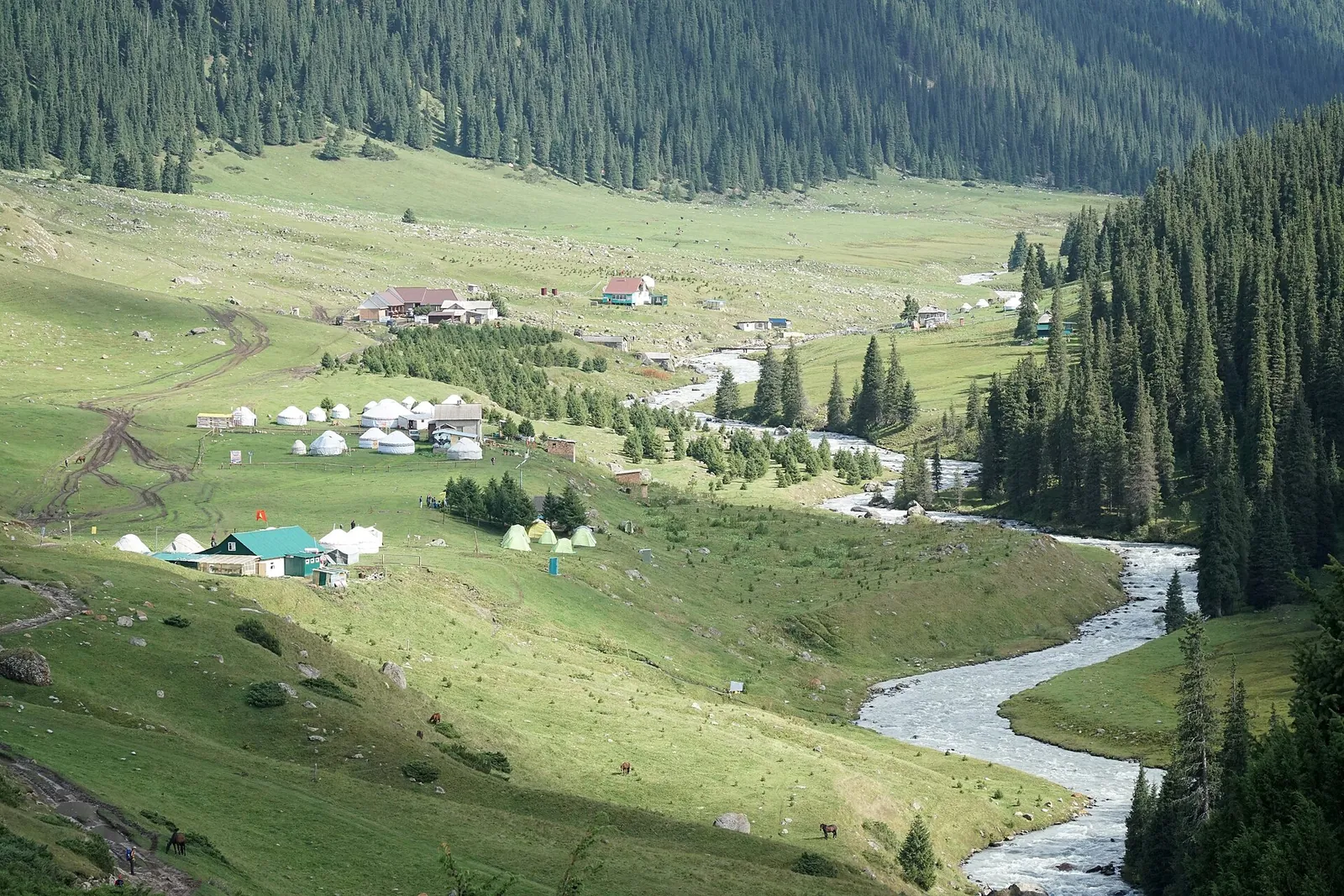
Altyn-Arashan, "golden spring", is a high valley east of Karakol inside Karakol National Park: a river runs through meadows between spruce forest, with yurt camps, guesthouses and natural hot springs rich in radon. It is the most popular walk from Karakol, and the reward at the top is a soak in the springs.
Visit Karakol's trek programme gives the descent from Altyn-Arashan to its vehicle pickup as 10 km, losing 450 metres, over three to four hours; that is the walking section rather than the full distance to Karakol. The Ak-Suu marshrutka leaves the Ak-Tilek bus station every 10 minutes from 07:20 (from KGS 50 a person, plus KGS 30 per trekking bag) and drops walkers at the turn-off for the valley. Walking up and back is a long day, so the easier plan is to ride up and walk down: Adventures KG, a Karakol agency, lists a four-seat UAZ 4x4 from Karakol to Altyn-Arashan at KGS 12,000 for the vehicle. To soak at leisure, swap one Karakol night for a guesthouse or yurt camp in the valley; the Kok-Jar route makes it an 18 km trek over two days. Budget for park entry and bathing as well as the vehicle fare.
Mountain weather here changes fast, and snow can fall at altitude even in summer. Trek with a reputable agency or guide and never alone; most mountain trails are unmarked, so leave your route with someone and with the Ministry of Emergency Situations (112), and keep off glaciers without a companion who knows them. The volunteer mountain rescue service answers on +996 312 651 404. Border-zone treks need a permit arranged in advance; Destination Karakol advises five to twelve days specifically for Enylchek or Khan-Tengri. Have your trek operator check the permit boundary for the route you book. These rules take the strictest of the UK, French and German advice, which covers mountain safety and the Chinese border zone here; other governments may draw a wider line, so check your own government's advice.
Ala-Kul, Jyrgalan and Barskoon: further from Karakol
Ala-Kul is Karakol's best-known trek: a turquoise lake at 3,533 m, 2.3 km long, under the glaciers of the Terskey Ala-Too, frozen from October to May. The usual route climbs the Karakol gorge, crosses the pass above the lake at about 3,860 m and comes down through the Keldike valley to the hot springs of Altyn-Arashan: about 65 km in four days, 39 km of it on foot, from June to September. Go with a guide or a Karakol agency; Visit Karakol Tour Company runs this route with a guide, cook, porters, tents and the national park fee included, and quotes the price on request. If you have the time, swap the Altyn-Arashan day for it and add three nights, plus the trek price, to the budget below.
Jyrgalan, a valley village 1.5 to 2 hours east of Karakol, is a quieter base for day hikes to waterfalls, riding and the three-day Boz-Uchuk lakes trek; its guesthouses cook dinner. Marshrutka 331 leaves Ak-Tilek for Jyrgalan; Destination Karakol's day-trip page lists 08:30, 13:30 and 17:30 from KGS 80, while its transport table lists fares from KGS 100. A private car is listed at KGS 3,500 to 4,000. Barskoon, 100 km south-west of Karakol on the south shore, has three waterfalls a few hours' walk up its valley and yurts selling kymyz in summer; the marshrutka (KGS 100) stops in the village, 15 km short of the falls, so take a car (KGS 3,500 one way) and head back before 17:00, when transport thins out. In winter, Karakol Ski Base above the town is the reason to come; our best time to visit guide gives the season.
The south shore and Skazka Canyon on the way back
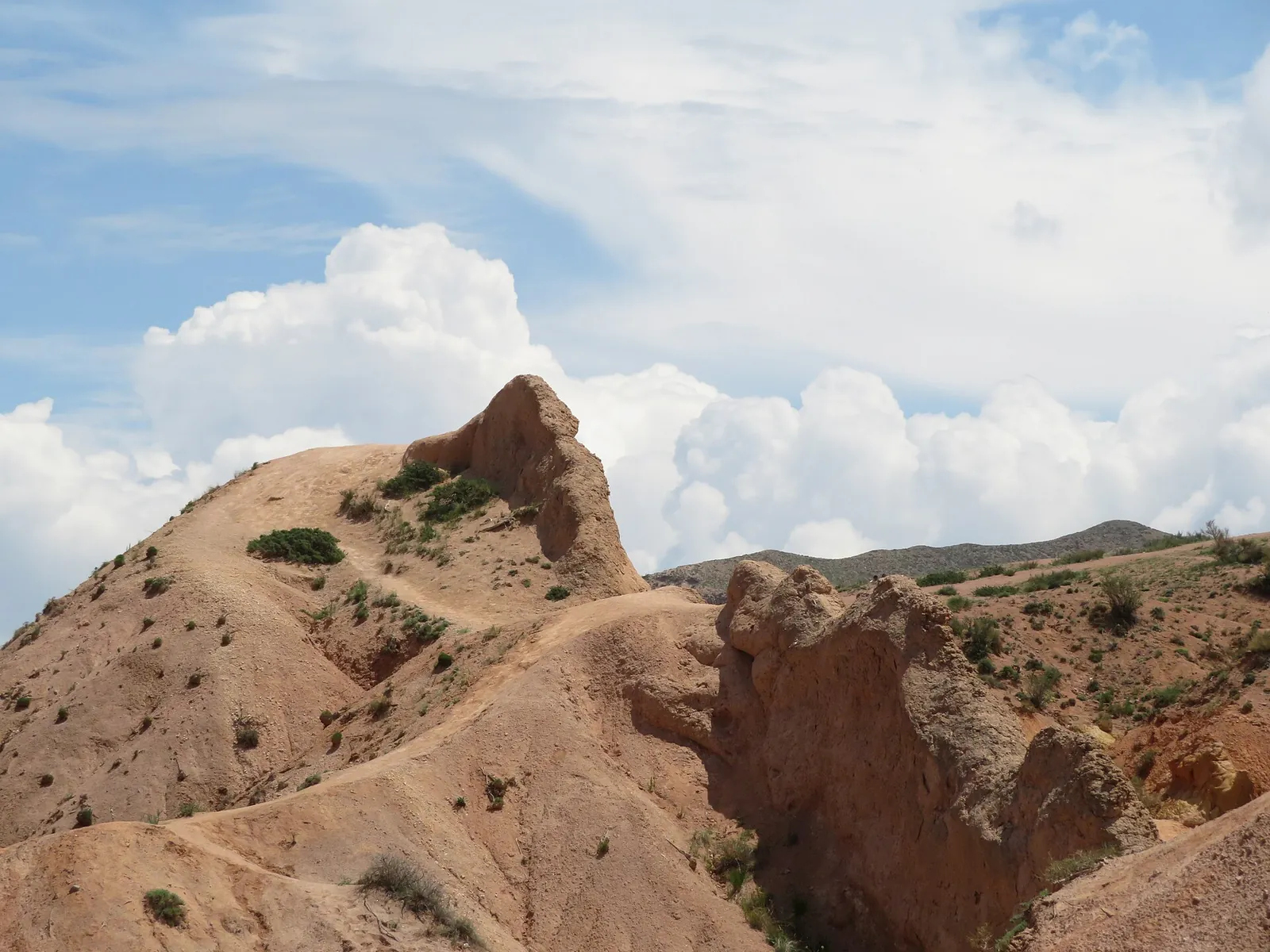
Return to Bishkek along the south shore, the quieter side of the lake, where villages and yurt camps sit between the water and the Terskey range. The stop not to miss is Skazka Canyon, "Fairy Tale Canyon", about 120 km and two hours west of Karakol, 4 km from the village of Tosor: wind and rain have carved its red, pink, orange and yellow clay into ridges, towers and fins that you can walk among and climb. It is part of a national park, with an entrance fee of KGS 50. Allow one to two hours, wear shoes with grip, and skip it after rain, when the clay is slippery.
With a car and driver, Skazka fits into a long day from Karakol to Bishkek: an estimated 440 km by the south shore, adding Teskei Geopark's 160 km Karakol-Bokonbaevo and 280 km Bokonbaevo-Bishkek distances, so leave early and keep the canyon stop within daylight. The slower plan is a night at Bokonbaevo, 40 km past the canyon, in a guesthouse or yurt camp, and the 280 km to Bishkek the next day. By public transport, marshrutkas and shared taxis from Karakol's Southern Bus Station (Toktogul and Torgoev Streets) run past the turning for about KGS 150 a seat, and marshrutkas to Bokonbaevo leave at 12:20, 14:20, 15:20 and 16:30 (from KGS 200). A private taxi from Karakol to the canyon costs about KGS 4,000 a car.
Getting there and around the lake
From Bishkek, the road runs east through the Boom Gorge to Balykchy at the western tip of the lake and along the north shore to Cholpon-Ata and Karakol: about 400 km and six to seven hours to Karakol. GoBus coaches leave from the Eternal Flame stop (Ibraimov and Frunze Streets) at KGS 750 a seat and take 4 hours to Cholpon-Ata and 6 h 40 to 6 h 45 to Karakol; it runs a night coach all year and a day bus for most of the year, so for a summer trip book a day-bus seat in its app as soon as your dates are fixed, since seats often sell out days ahead. Marshrutkas leave the Bishkek Bus Station (Alma-Atinskaya Street 1/1) through the morning, from KGS 500 a seat to Karakol, and shared taxis charge KGS 1,000 to 1,500 a seat and go when full (the old Western bus station closed in late 2024). For a private car, Trip to Kyrgyzstan, a Bishkek agency, charges KGS 12,000 for an SUV with a driver to Cholpon-Ata and KGS 16,500 to Karakol. Manas Airport Taxi sells fixed prices from the airport of KGS 6,000 a car to Cholpon-Ata (about 240 km, 3 h 30) and KGS 9,000 to Karakol. A summer train also links Bishkek with Balykchy; the 2027 season has not been announced, and you continue along the shore by road. Our Kyrgyzstan transport guide covers each option in detail.
Between the two bases the ride takes about two hours: from Cholpon-Ata to Karakol a marshrutka costs from KGS 200 and a shared taxi KGS 300 to 400 a seat, and from Karakol back to Cholpon-Ata both cost from KGS 300. In Karakol they use the main bus station at Przhevalsky Street 149. Town marshrutkas cost KGS 20, taxis from KGS 100 a car, and Yandex Go works. Travel between towns by day, since seat belts are often missing in shared taxis and marshrutkas; the night coaches drive the whole road in the dark, so the day services are the safer choice.
Karakol International Airport (IKG) reopened in December 2024, and Asman Airlines flies to it from Bishkek and Osh. Issyk-Kul International Airport (IKU) at Tamchy, west of Cholpon-Ata, also receives seasonal flights; use the airline's actual-date search before making it your gateway. From Almaty, the direct road to Karakol, about 420 km and seven to eight hours, crosses the border at Kegen; take a private transfer or an organised tour, since taxis are hard to find at that remote border.
For weather, June to early September is the high season for walking, swimming and the summer train; spring brings blossom and wildflowers to the lower valleys, autumn turns the poplars gold, and in winter Karakol Ski Base opens once the operator announces the season. Our Bishkek guide covers the nights before and after the loop.
What five nights cost
About KGS 114,600 for two, KGS 57,300 per person, for six days and five nights from Bishkek and back: two north-shore nights at Raduga and three in Karakol, rooms, full-board meals and the separately priced Karakol meals and drinks, drivers between Bishkek and the lake, resort-to-town transfers, the marshrutka to Karakol, Jeti-Oguz and Altyn-Arashan day trips, admissions and a hot-spring bath, two SIMs and a 10% buffer for snacks and tips.
| Level | Per person | For two |
|---|---|---|
| Full-board resort and mid-range hotel | KGS 57,300 | KGS 114,600 |
The model is two adults sharing a standard double with a terrace for two nights at Raduga in Sary-Oi, 14 km west of Cholpon-Ata, then a standard double for three nights at Ak-Maral in Karakol. Raduga lists KGS 16,200 for two with three meals in May, June and September; the budget uses those months, not its KGS 18,200 July-August rate. Ak-Maral lists KGS 4,500 a night with breakfast. These advertised rates were read on 1 November 2026; the pages give no year or tax conditions, so an exact-date booking may differ. At the National Bank of the Kyrgyz Republic's rates (EUR 1 = KGS 97.54, daily rate of 28 October 2026; GBP 1 = KGS 116.98, weekly rate from 24 October 2026), the total is about EUR 1,180 or GBP 980 for two. The historical London-Bishkek flight example, read on Turkish Airlines' page on 27 October 2026 for November 2026 to March 2027 travel, is GBP 600-1,000 per person, rounded from GBP 596-959; with those flights the trip comes to about GBP 2,180-2,980 for two.
Raduga's two full-board nights cover two days of meals. The other four days cost about KGS 1,500 per person for lunch, dinner and drinks, based on Happy Nomads' published KGS 500 lunch or dinner in Karakol: two meals at that price plus an estimated KGS 500 for drinks and a larger café or restaurant meal. Breakfast comes with both rooms; the route begins in Bishkek after breakfast. On the long south-shore return, buy the day's food in Karakol before leaving.
Getting around uses Trip to Kyrgyzstan's KGS 12,000 Bishkek-Cholpon-Ata SUV fare as an estimate for the shorter journey ending at Sary-Oi. Two separate resort-town car bookings, for the Cholpon-Ata sightseeing day and the next day's transfer to the Karakol marshrutka, are estimated at KGS 2,800 each. Their basis is the Bishkek agency's published other-route rate of KGS 28 a km with a 100 km minimum; these are planning estimates for locally arranged cars, not quoted Cholpon-Ata fares or a promise that the agency has cars based there. Add the marshrutka to Karakol at KGS 200 a seat, Jeti-Oguz marshrutkas at KGS 150 each way, Adventures KG's four-seat UAZ up to Altyn-Arashan at KGS 12,000, the walk down and Ak-Suu marshrutka back at KGS 50 each, and an estimated KGS 600 for Karakol town taxis. The south-shore driver with a Skazka stop is estimated at KGS 12,320: 440 km, from Teskei Geopark's 160 km Karakol-Bokonbaevo and 280 km Bokonbaevo-Bishkek distances, times the same published KGS 28 a km. The kilometre price does not specify the driver's return, so this is a route estimate, not a booked fare. Each intercity driver drops you off that day; no driver overnight is planned. The model follows the direct outward road, without a Burana visit.
Sights total KGS 2,220 before rounding: tickets for two at the Dungan Mosque (from KGS 20), Przhevalsky Museum (from KGS 100), Karakol History Museum (from KGS 70) and Skazka Canyon (KGS 50), from Destination Karakol. The other charges are attributed travel-site estimates, read on 1 November 2026, rather than current official tariffs: Central Asia Guide lists KGS 80 per person for the petroglyph museum and KGS 500 for Ruh Ordo on its Cholpon-Ata page, updated in September 2025. Jeti-Oguz is counted at KGS 150 per person, the top of Matt's Next Steps' KGS 100-150 range, updated in March 2026; an hour in an Altyn-Arashan spring pool is counted at KGS 100 per person, as Eurasia.Travel reports. For Altyn-Arashan entry, Central Asia Guide's 2025 prices exempt guide- or driver-accompanied groups from the person fee and add KGS 80 for a passenger car, so this driver-accompanied UAZ visit counts KGS 80 for the vehicle; independent foreign walkers instead pay its reported KGS 220 per person. These fees are in sights, before the buffer. The SIMs are two O! plans at KGS 230 each for 50 GB over four weeks, with eSIM connection free in O! stores with a passport.
- Rooms: KGS 45,900 for two, five nights: two at Raduga at KGS 16,200 with three meals and three at Ak-Maral at KGS 4,500 with breakfast.
- Food and drinks: KGS 12,000 for two: four days of lunch, dinner and drinks at KGS 1,500 each. Bar drinks at Raduga are extra because its restaurant publishes no drinks prices.
- Getting around: KGS 43,600 for two: outward SUV estimate KGS 12,000, two resort-town car bookings estimated at KGS 5,600, south-shore SUV estimate KGS 12,320, UAZ KGS 12,000, Karakol marshrutka KGS 400, Jeti-Oguz marshrutkas KGS 600, Ak-Suu marshrutka KGS 100 and estimated Karakol taxis KGS 600.
- Sights: KGS 2,200 for two, including the separate gate and spring estimates.
- SIMs and extras: KGS 500 for two.
- 10% buffer: KGS 10,400 for two.
Practical questions
How many nights do I need for Issyk-Kul and Karakol?
Five nights: two in Cholpon-Ata for the petroglyphs and the beach, and three in Karakol for the town, Jeti-Oguz and Altyn-Arashan. Return to Bishkek along the south shore with a stop at Skazka Canyon.
How do I get from Bishkek to Karakol?
By road, about 400 km: GoBus coaches at KGS 750 a seat (6 h 40 to 6 h 45 on the November 2026 search, book days ahead), marshrutkas from the Bishkek Bus Station from KGS 500 a seat (six to seven hours), shared taxis from KGS 1,000, or an SUV with a driver for KGS 16,500 with Trip to Kyrgyzstan. Asman Airlines also flies from Bishkek to Karakol International Airport.
Is there a train to Issyk-Kul?
A summer train links Bishkek with Balykchy at the western end of the lake; the 2027 season has not been announced. Continue along the shore by road.
How do I get to Jeti-Oguz from Karakol?
Take marshrutka 372 or a shared taxi from Ak-Tilek. Destination Karakol's transport table gives the resort fare from KGS 150 and no fixed departure time; some buses stop at the village, 15 km short, when too few passengers want the resort. A private taxi costs about KGS 1,500 to 2,000 a car each way.
Do I need a permit for Altyn-Arashan?
Have your trek operator check the permit boundary for your actual route. Destination Karakol advises 5 to 12 days for permits for Enylchek or Khan-Tengri; ask your trekking agency whether the valley you plan needs one too. Karakol National Park entry and hot-spring charges are separate from the vehicle fare.
How long is the Ala-Kul trek?
About 65 km over four days, 39 km of it on foot, from the Karakol gorge over a pass of about 3,860 m to the lake (3,533 m) and down to Altyn-Arashan. It runs from June to September; go with a guide or a Karakol agency.
How much does the Issyk-Kul loop cost?
About KGS 57,300 per person, KGS 114,600 for two, for six days and five nights from Bishkek and back: two full-board nights at Raduga in Sary-Oi and three nights at Ak-Maral in Karakol with breakfast, driver transfers, the Altyn-Arashan UAZ, full-board meals and the separately priced Karakol meals and drinks, admissions, a spring bath, SIMs and a 10% buffer. The budget uses May-June or September room rates; local car and gate charges are estimates with stated sources. The historical London flight example makes it about GBP 2,180-2,980 for two.
Keep planning your trip
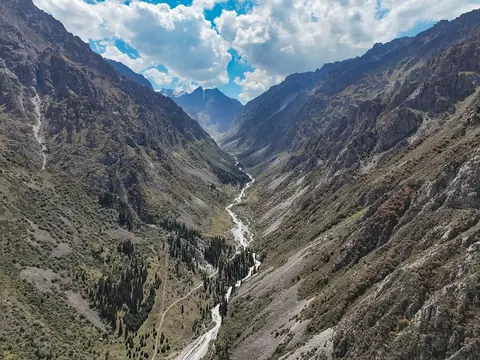
Kyrgyzstan in 7 days
Seven days and six nights in Bishkek and Karakol: Ala-Archa, Jeti-Oguz and Altyn-Arashan, with local transport, hotels and an all-in budget for two.
Read the guide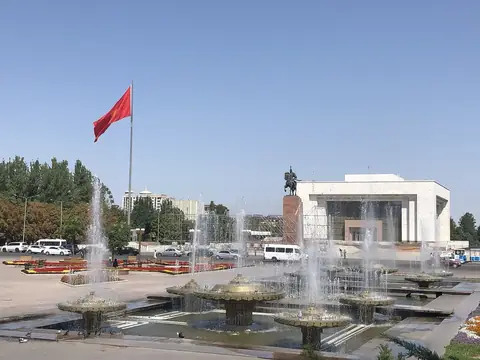
Bishkek
Plan two nights in Bishkek: Ala-Too Square and the museum, Osh Bazaar, a day in Ala-Archa National Park, Burana Tower, hotels, the airport taxi and the road to Issyk-Kul.
Read the guide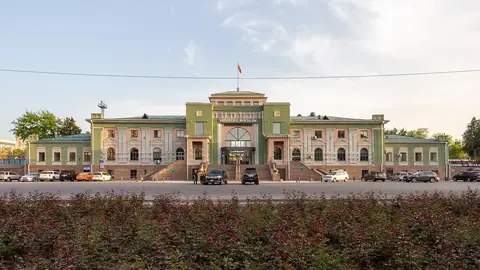
Getting around Kyrgyzstan
How to get from Manas airport into Bishkek, east to Cholpon-Ata and Karakol by summer train, marshrutka, shared taxi or hired driver, and across to Almaty and Tashkent.
Read the guide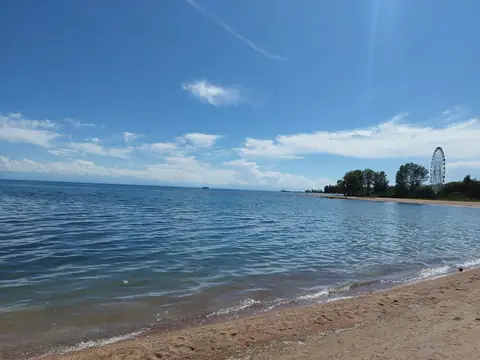
Best time to visit Kyrgyzstan
When to go to Kyrgyzstan for mountain walks, the Issyk-Kul beach season or skiing at Karakol, with the climate month by month and the holidays that change a trip.
Read the guide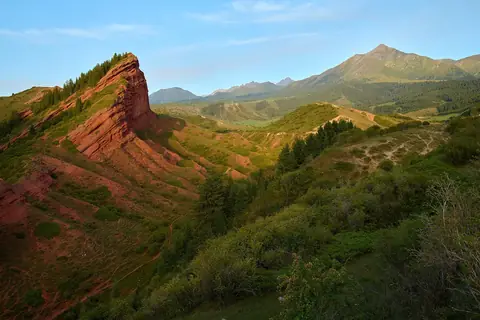
First trip to Kyrgyzstan
Plan eight days from Bishkek along Issyk-Kul to Karakol, with a day on the south shore: nights, buses and drivers, season, money, a SIM, etiquette and a daily budget.
Read the guide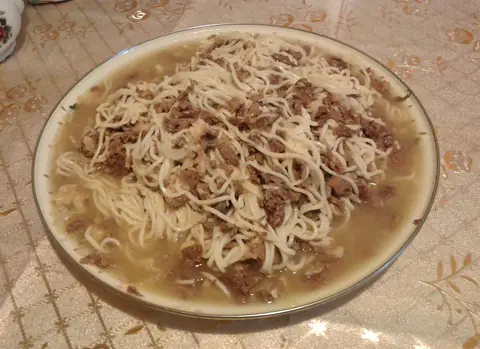
Kyrgyzstan food
What to eat in Kyrgyzstan, from beshbarmak and kymyz to Karakol’s cold ashlan-fu, with named places in Bishkek and Karakol and what a day of meals costs.
Read the guideSources and checks before you travel
(44)
- Destination Karakol: about the organisation ↗ — opens in a new tab
- Destination Karakol: attractions and museums ↗ — opens in a new tab
- Destination Karakol: day trips ↗ — opens in a new tab
- Destination Karakol: transportation ↗ — opens in a new tab
- Destination Karakol: trekking ↗ — opens in a new tab
- Destination Karakol: Ala-Kul and Altyn-Arashan trek ↗ — opens in a new tab
- Destination Karakol: when to visit ↗ — opens in a new tab
- Destination Karakol: Kyrgyz food and Karakol dishes ↗ — opens in a new tab
- Destination Karakol: Happy Nomads Yurt Camp listing ↗ — opens in a new tab
- 24.kg (news report): Karakol at 156 ↗ — opens in a new tab
- weproject.media (magazine): Cholpon-Ata guide ↗ — opens in a new tab
- Department of Tourism of Kyrgyzstan: about Kyrgyzstan ↗ — opens in a new tab
- Manas Airport Taxi: routes and fixed prices ↗ — opens in a new tab
- Asman Airlines: flight connections ↗ — opens in a new tab
- UK Foreign Office: Kyrgyzstan safety and security ↗ — opens in a new tab
- France Diplomatie: Kyrgyzstan security advice ↗ — opens in a new tab
- German Federal Foreign Office: Kyrgyzstan travel advice ↗ — opens in a new tab
- O!: eSIM for customers ↗ — opens in a new tab
- National Bank of the Kyrgyz Republic: official exchange rates ↗ — opens in a new tab
- Turkish Airlines: flights from London to Bishkek ↗ — opens in a new tab
- Olimp, Cholpon-Ata: comfort double ↗ — opens in a new tab
- Olimp, Cholpon-Ata: guest-house room ↗ — opens in a new tab
- Raduga, Sary-Oi: standard room with terrace ↗ — opens in a new tab
- Ak-Maral, Karakol: standard double ↗ — opens in a new tab
- Ak-Maral, Karakol: Lux double ↗ — opens in a new tab
- Destination Karakol: markets and souvenirs ↗ — opens in a new tab
- Adventures KG (Karakol): Soviet trucks and 4x4 price list ↗ — opens in a new tab
- Trip to Kyrgyzstan: getting around, SUV with driver ↗ — opens in a new tab
- Teskei Geopark: Ulukbek guest house ↗ — opens in a new tab
- O!: plans for smartphones ↗ — opens in a new tab
- GoBus: booking search ↗ — opens in a new tab
- Bishkek and Kyrgyzstan Diocese: Holy Trinity Cathedral ↗ — opens in a new tab
- Destination Karakol: visitor centre contacts ↗ — opens in a new tab
- GoBus: Bishkek-Cholpon-Ata booking search ↗ — opens in a new tab
- Asman Airlines: own flight-connections data ↗ — opens in a new tab
- National Bank: official historical sterling rate ↗ — opens in a new tab
- Central Asia Guide (travel guide): Cholpon-Ata ↗ — opens in a new tab
- Central Asia Guide (travel guide): Altyn-Arashan ↗ — opens in a new tab
- Matt's Next Steps (travel report): Jeti-Oguz day trip ↗ — opens in a new tab
- Eurasia.Travel (travel guide): Altyn-Arashan springs ↗ — opens in a new tab
- Raduga: restaurant ↗ — opens in a new tab
- Ak-Maral hotel, Karakol: home page ↗ — opens in a new tab
- Bishkek City Hall: changed intercity departure points ↗ — opens in a new tab
- 2GIS: Bishkek Bus Station ↗ — opens in a new tab
Reference sources for the version dated 3 November 2026. Confirm opening times, access, transport and conditions for your travel dates.
Photo credits
(8)
The sand beach at Kadji-Sai on the south shore of Issyk-Kul, with the lake running out to the hills
Photograph: Mzximvs VdB from Brussels, belgium — opens in a new tab · CC BY-SA 2.0 — opens in a new tab
Changes: Resized and converted to WebP; displayed with responsive crops. · Original photograph and licence details ↗ — opens in a new tab
An ibex carved on a boulder in the Cholpon-Ata petroglyph field
Photograph: Bgag — opens in a new tab · CC0 — opens in a new tab
Changes: Resized and converted to WebP; displayed with responsive crops. · Original photograph and licence details ↗ — opens in a new tab
The Dungan Mosque in Karakol, built of wood in a Chinese style with a pagoda-like roof
Photograph: Kalpak Travel — opens in a new tab · CC BY 2.0 — opens in a new tab
Changes: Resized and converted to WebP; displayed with responsive crops. · Original photograph and licence details ↗ — opens in a new tab
Holy Trinity Cathedral in Karakol, the town's wooden Orthodox church
Photograph: Bruno Rijsman — opens in a new tab · CC BY 2.0 — opens in a new tab
Changes: Resized and converted to WebP; displayed with responsive crops. · Original photograph and licence details ↗ — opens in a new tab
The Przhevalsky memorial at Pristan, north of Karakol, with its bronze eagle
Photograph: Ondřej Žváček — opens in a new tab · CC BY 2.5 — opens in a new tab
Changes: Resized and converted to WebP; displayed with responsive crops. · Original photograph and licence details ↗ — opens in a new tab
The red sandstone cliffs of Jeti-Oguz above the valley floor
Photograph: Nikolai Bulykin — opens in a new tab · CC BY-SA 4.0 — opens in a new tab
Changes: Resized and converted to WebP; displayed with responsive crops. · Original photograph and licence details ↗ — opens in a new tab
The Altyn-Arashan valley, with its hot-spring camps beside the Arashan river
Photograph: Adam Harangozó — opens in a new tab · CC BY-SA 4.0 — opens in a new tab
Changes: Resized and converted to WebP; displayed with responsive crops. · Original photograph and licence details ↗ — opens in a new tab
Skazka Canyon on the south shore, where wind and rain have carved the clay into ridges and towers
Photograph: Incall — opens in a new tab · CC BY-SA 4.0 — opens in a new tab
Changes: Resized and converted to WebP; displayed with responsive crops. · Original photograph and licence details ↗ — opens in a new tab