Plan your trip
Dollars or riel in Cambodia? Cash, cards, ATMs and QR payments
Cambodia runs on two currencies at once. Prices come in US dollars or in riel, and change can come back in both. Cards cover larger hotels, the Angkor pass bought online and a Grab ride; almost everything else is paid in cash. This guide explains how the dollar and the riel work together, which dollar notes are refused, where a foreign card and an ATM help, how visitors can pay by QR code with the central bank's Bakong Tourists app, and which fees, from the visa to the overstay fine, are paid in dollars.
In this guide
Find the location ↗ — opens in a new tabThe short answer
Carry US dollar notes in good condition and some riel, and use a card where it is taken: credit cards are, as a rule, accepted only in larger hotels and restaurants. Cambodia's currency is the riel (KHR), and cash payments use both riel and US dollars; the official rate was KHR 4,088 to the dollar on 6 November 2026. There are many ATMs in Phnom Penh, Siem Reap and Sihanoukville, fewer in smaller cities and none on Koh Rong, and some may not accept international cards; decline any offer to charge you in your home currency. Two prices: a one-day Angkor pass costs US$37, paid online by card or KHQR code, and a num pang sach, the Khmer baguette sandwich sold at Phnom Penh market stalls and roadside carts, normally costs around US$1 to US$2, or 4,000 to 8,000 riel. Declare cash of US$10,000 or more at the border.
- Key point
- Set up before you fly: clean US dollar notes, a Visa or Mastercard and a back-up card, and the Bakong Tourists app if you want to pay by QR code
- Where it applies
- Applies everywhere in Cambodia; cash matters most at markets, on the islands and in the countryside
- Timing
- All year; the riel and the dollar are used side by side in every season
The riel and the dollar: two currencies, mostly cash
Cambodia's currency is the riel (KHR), and cash payments use both riel and US dollars. Because the economy is dollarised, US dollars are widely accepted in place of riel, and the central bank, the National Bank of Cambodia, calls the country a highly cash-based society. Payments are mostly made in cash, and change comes back in both currencies, so it helps to know that just over 4,000 riel make a dollar (the official rate is below). In this guide, a price in dollars always means US dollars.
Riel come as banknotes; coins are rarely used. The central bank lists notes from 50 to 200,000 riels in circulation, the 200,000-riel note issued in October 2024; new 100,000- and 50,000-riel notes were issued on 25 September 2026, and the older issues of both are still listed as in circulation. For scale, the official rate published by the central bank was KHR 4,088 to the US dollar on 6 November 2026.
Prices are quoted in either currency, so expect both on the same day: the National Museum in Phnom Penh charges foreign adults over 18 US$10, while the SOSORO money museum charges foreigners 20,000 riels (about US$5). Everyday sums are small: the tourism board says a num pang sach, the Khmer baguette sandwich sold at Phnom Penh market stalls and roadside carts, normally costs around US$1 to US$2, or 4,000 to 8,000 riel, a little more at larger or well-known stalls. Our Cambodia trip-cost guide turns prices like these into a full budget.
Prices and times checked 8 November 2026
Dollar notes: what gets refused, and checking your change
Bring US dollars in good condition. Older-series US$100 notes without the blue security band woven vertically through the middle are practically no longer accepted, and occasionally older US$5 and US$10 notes printed before 2000 are refused too, even ones you were given in Cambodia. Damaged dollar notes, with tears, folds or colour marks, are generally not accepted in Cambodia.
So check every note you are handed as change, in both currencies, before you walk away: travellers have reported being given fake dollar bills as change in shops and clubs, and a torn or damaged note is one you may not be able to spend. Hand back any doubtful note on the spot.
Small riel notes are the easiest way to pay for the market sandwich, the bottle of water or the short ride, and they keep the dollar change question out of small purchases altogether.
Prices and times checked 8 November 2026
Cards: larger hotels, online tickets and Grab
Credit cards are, as a rule, accepted only in larger hotels and restaurants, and are not widely accepted outside the major cities. Plan to pay for the rest in cash: the Tuol Sleng Genocide Museum, for example, only accepts cash, in riel or US dollars, for its US$5 adult ticket (18 and over) and its US$5 audio guide for non-Cambodians.
Some of the biggest costs of a trip do take a card. The Angkor pass can be bought online with a credit or debit card or a KHQR code; the Cambodia e-Visa is paid online with a Visa card, Mastercard, UnionPay, Alipay or WeChat Pay; and the Koh Ker archaeological site, which charges adults US$15, accepts US dollars, riel or cards. In the Grab app, a GrabTukTuk ride has an upfront fixed fare, and the app accepts cash or a credit card, Visa or Mastercard only.
If a card terminal or ATM offers to charge you in your home currency, decline and pay in the local amount. This offer, dynamic currency conversion, includes an exchange rate and additional fees, and Visa says merchants and ATMs should give you the choice to accept or decline it and must not choose on your behalf.
Card and ATM fraud occasionally occurs, including skimming devices that copy card data. Pay where you can see the terminal.
Prices and times checked 8 November 2026
ATMs: in the cities, not on the islands
The number of ATMs is constantly increasing. There are many in Phnom Penh, Siem Reap and Sihanoukville but fewer in smaller cities, and Canadia Bank alone lists about 430 ATMs across Cambodia; outside the major cities and tourist areas they are not widely available, and some ATMs may not accept international cards, so carry a second card and keep it apart from the first. Ask your bank before you fly what it charges for each withdrawal abroad; the ATM operator may add a charge of its own, so take larger sums less often rather than small amounts every day.
Use ATMs in public areas or inside a bank or business, cover the keypad with one hand when you enter your PIN, and count and examine your cash at the machine. Most snatch thefts target handbags, shoulder bags and phones, so put the cash away before you step back onto the street. To report a theft, call the Tourism Police Department on 016 654 736 or the National Police on 117; our health and safety guide covers the risks that are not about money.
Take enough cash before you leave the cities. On Koh Rong there are no ATMs on the island, and cash, in riel and US dollars, is essential; on Koh Sdach, bring cash too. In the Cardamom Mountains, the Chi Phat community-based ecotourism site highly recommends bringing some cash, as online payment might be limited.
Prices and times checked 8 November 2026
Changing money: where to go and what to check
You may not need to change money at all: US dollars are widely accepted in place of riel, and change comes back in both currencies. Bring dollars in cash from home, in small denominations where possible.
If you bring euros or pounds, change them at a bank or at a licensed money changer, and compare what you are offered with the central bank's published average rates of about KHR 4,598 per euro and about KHR 5,508 per pound sterling. Some banks in Phnom Penh also accept certain credit cards for cash advances.
At the counter, count and examine your cash before you leave the teller, and check the dollar notes for authenticity at once, even at an official exchange office.
Under Cambodia's Law on Foreign Exchange, only banks permanently established in Cambodia are authorised intermediaries for foreign exchange, and money changers need the central bank's prior authorisation.
Prices and times checked 8 November 2026
Bakong Tourists and KHQR: paying by QR code
Cambodia's QR payments run on KHQR, the single code prescribed by the central bank's Bakong system: one KHQR code accepts payments through the different payment service operators that are KHQR members. Visitors can use it too. The National Bank of Cambodia launched the Bakong Tourists app in Siem Reap province on 19 August 2024, and since its launch with Visa on 22 January 2025, international tourists can download the app, register, connect a Visa card issued in their home country, transfer money to their Bakong account and pay by KHQR code at about 4.5 million merchants in Cambodia.
KHQR also covers small fares: the Airport Express bus from Phnom Penh's Techo International Airport takes riel in cash or a KHQR payment through the Bakong app.
Prices and times checked 8 November 2026
Visas, overstays and the border: fees paid in dollars
The e-Visa is paid online by debit or credit card; the e-Visa fee for Visa T is US$30, and paying it in advance means no dollar cash is needed for the visa at the airport. If you take a visa on arrival instead, at an airport or a land crossing, you provide a photo and pay in US dollars; bring them in cash, as card payment is not always available. France lists the airports and the equipped land posts separately; at the other land and river crossings from Laos and Vietnam, it says the visa is paid in US dollars cash and is variable, around US$40, and that the price can vary by a few dollars depending on the method. Land crossings between Cambodia and Thailand are closed. Our Cambodia entry guide has the visa rules in full.
Overstaying costs US$10 per day, payable at the airport when you leave, and you also need a paid exit visa from immigration, valid for at most seven days.
If you carry means of payment equal to or exceeding US$10,000 in foreign currency, or the same value in riel, into or out of Cambodia, you must declare it to customs at the border under Article 13 of the Law on Foreign Exchange. The fine for not declaring is 10% of the amount involved.
Prices and times checked 8 November 2026
Bargaining, fares, tips and how much cash to carry
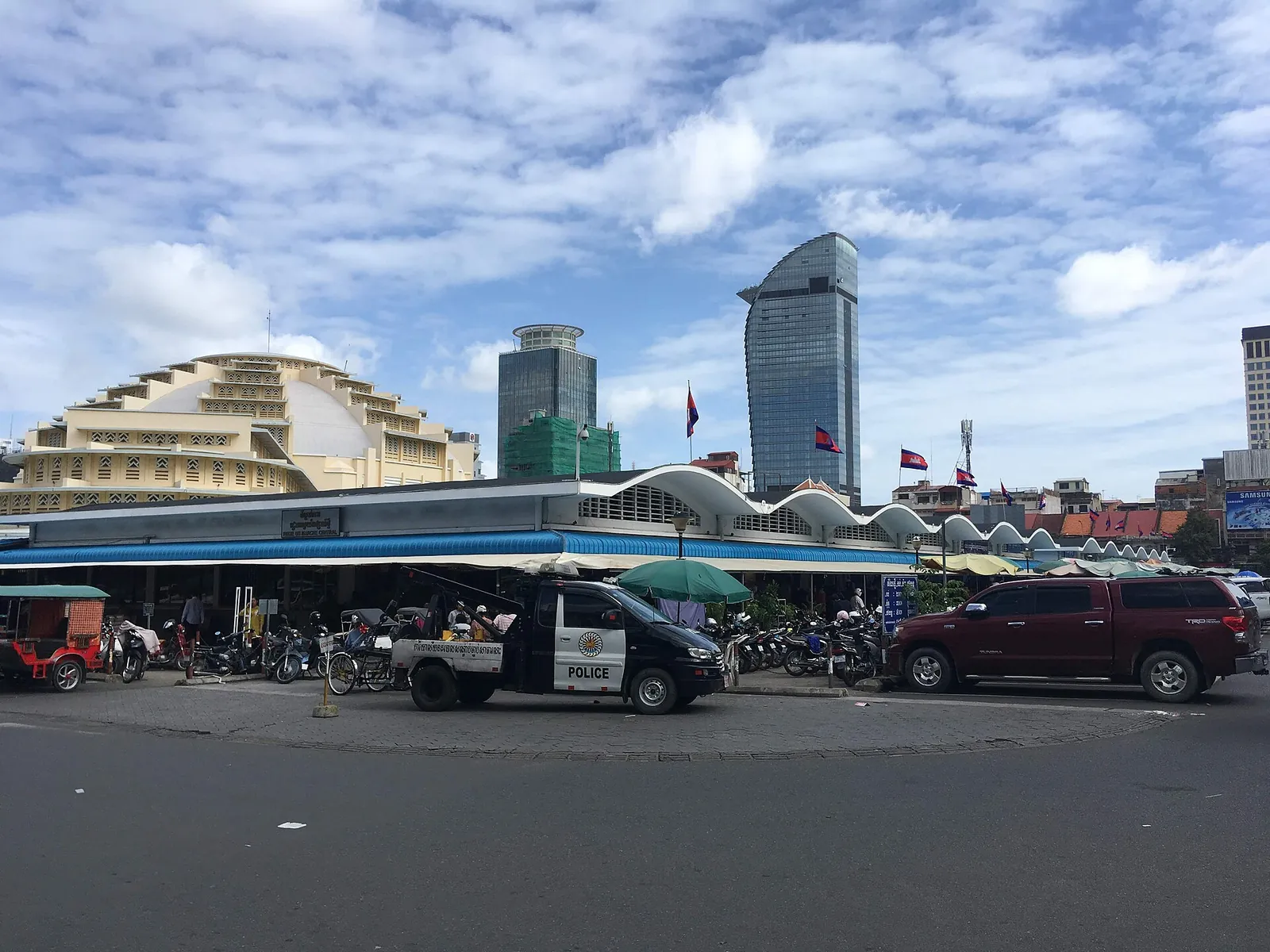
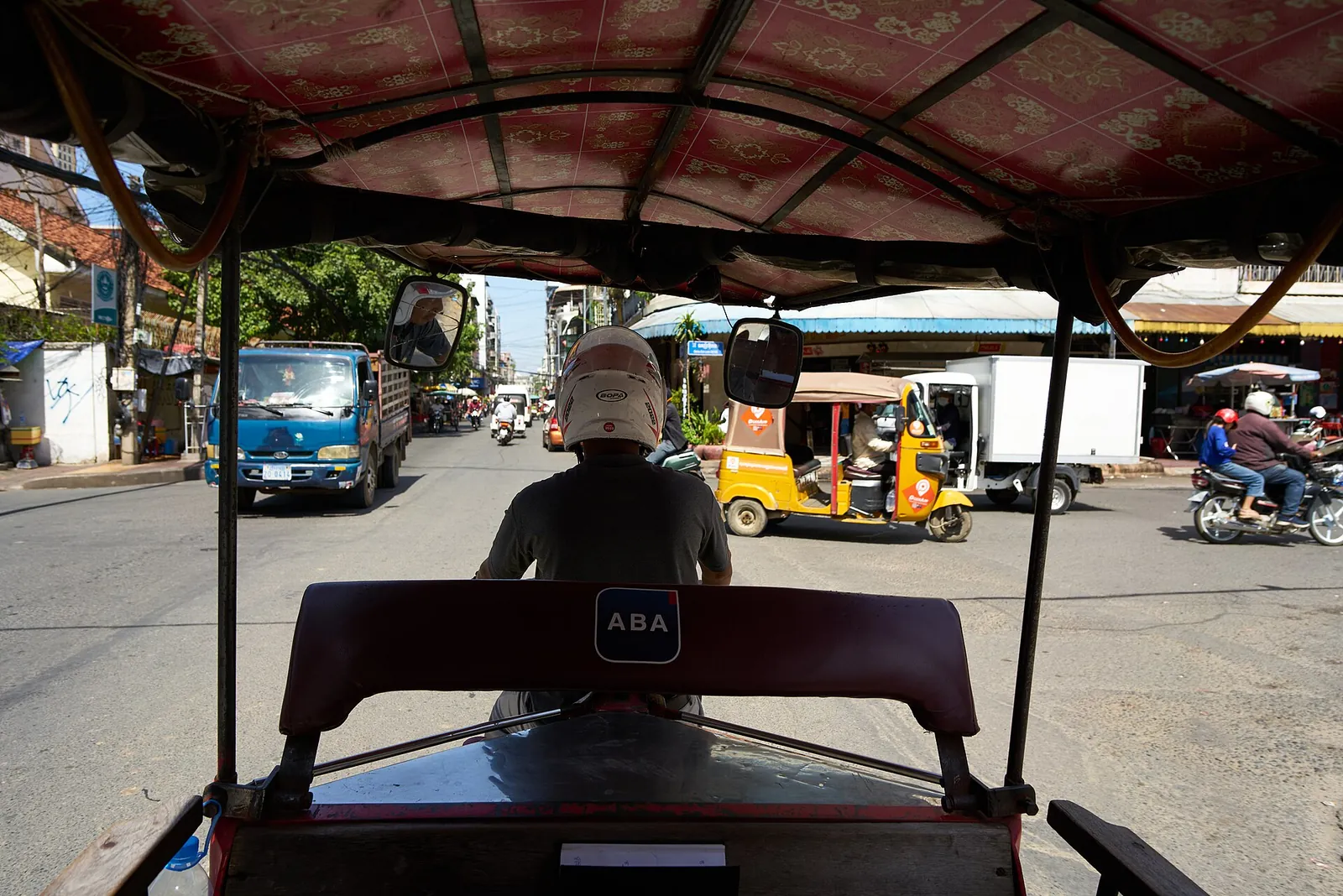
At Phnom Penh's Central Market, bargaining is expected for most non-food items, like clothing and souvenirs. Rides booked in the Grab app need no bargaining: a GrabTukTuk has an upfront fixed fare, and renting one through Grab Rent in Phnom Penh costs KHR 32,000 (about US$8) for two hours in a three-seater, within the city only, ending no later than 8pm, tolls and parking extra.
No official Cambodian source sets a tipping rate. Grab Rent fares already include the driver's tip, and anything extra is at your discretion.
Take only the cash you need for the day and leave the rest, with your passport and cards, in the hotel safe. Built from prices in this guide, a Phnom Penh day with a morning at Tuol Sleng (US$5, cash only), a two-hour Grab Rent tuk-tuk (about US$8) and two num pang sach baguette sandwiches from market stalls (around US$1 to US$2 each) comes to about US$15 to US$17, not counting other meals or any souvenirs bargained for at the Central Market. Most of these prices are a few dollars or a few thousand riel, so bring US$1, US$5 and US$10 notes and keep riel for small change.
Prices and times checked 8 November 2026
Practical questions
Should I use US dollars or riel in Cambodia?
Both. Cambodia's currency is the riel (KHR), and cash payments use both riel and US dollars; change can come back in both. Riel notes are handiest for small purchases, and dollars for larger ones. The official rate was KHR 4,088 to the dollar on 6 November 2026.
Which US dollar notes are not accepted in Cambodia?
Older-series US$100 notes without the vertical blue security band are practically no longer accepted, and occasionally older US$5 and US$10 notes printed before 2000 are refused. Damaged notes with tears, folds or marks are generally not accepted, so check any you are given as change.
Can I pay by card in Cambodia?
Only in some places. Credit cards are, as a rule, accepted only in larger hotels and restaurants and not widely outside the major cities. The Angkor pass bought online, the e-Visa and the Grab app take cards; markets, stalls and most small shops take cash.
Are there ATMs in Cambodia?
Yes, and their number keeps growing: there are many in Phnom Penh, Siem Reap and Sihanoukville but fewer in smaller cities, and none on Koh Rong; some ATMs may not accept international cards. Ask your bank what it charges for each withdrawal abroad, take larger sums less often, and choose not to be charged in your home currency.
Can tourists pay with KHQR codes in Cambodia?
Yes, with the central bank's Bakong Tourists app: register, connect a Visa card issued in your home country, transfer money to your Bakong account and scan the KHQR code at about 4.5 million merchants.
Do I need US dollars for the Cambodian visa?
For a visa on arrival, yes: you pay in US dollars, in cash, as card payment is not always available; France puts the fee at around US$40 at the land and river crossings from Laos and Vietnam that are not equipped posts. The e-Visa (Visa T, US$30) is paid online by card in advance and avoids the cash payment. An overstay costs US$10 per day, paid at the airport when you leave.
How much cash should I carry in Cambodia?
Only what you need for the day, in small notes. A Phnom Penh day with Tuol Sleng (US$5, cash only), a two-hour Grab Rent tuk-tuk (about US$8) and two street-food baguette sandwiches comes to about US$15 to US$17, not counting other meals; US$1, US$5 and US$10 notes plus some riel cover most prices.
How much cash can I bring into Cambodia?
Cash and other means of payment equal to or exceeding US$10,000, or the same value in riel, must be declared to customs at the border when you enter or leave. Not declaring brings a fine of 10% of the amount.
Keep planning your trip
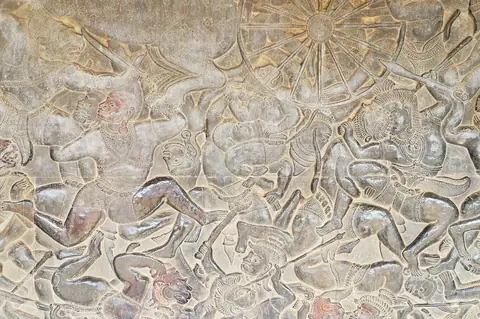
Your first trip to Cambodia
Plan a first week in Cambodia: four nights in Siem Reap, two in Phnom Penh, Angkor, visa steps and the intercity bus.
Read the guide
Cambodia trip cost 2027
What a week in Siem Reap, Angkor and Phnom Penh costs in January 2027, all in: about USD 545 per person on a budget, 820 mid-range or 1,520 in comfort.
Read the guide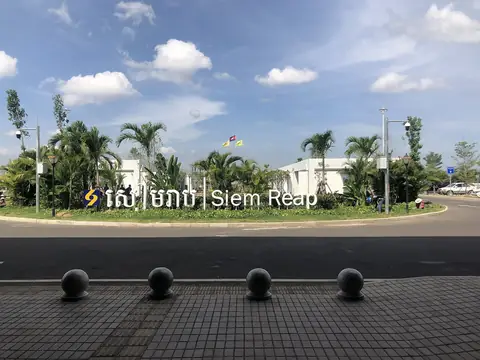
Entering Cambodia
Which Cambodia visa you need, the US$30 tourist e-Visa, passport validity, the free e-Arrival form, cash rules and whether to fly into SAI or KTI.
Read the guide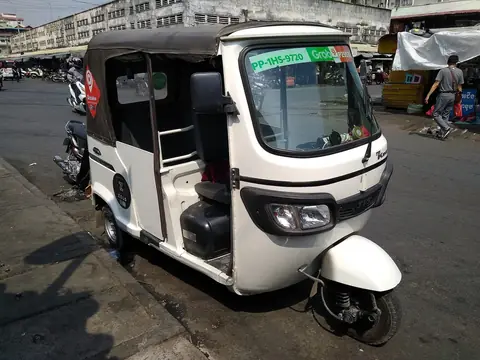
Transport in Cambodia
Plan Cambodia through SAI and Techo airports, Giant Ibis buses and Sihanoukville island ferries, with dated fares, piers, baggage and the Vietnam border.
Read the guide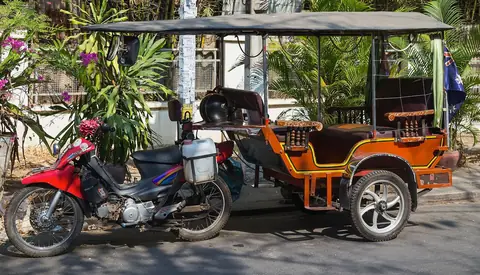
Health and safety in Cambodia
Where governments advise against travel in Cambodia, landmines, vaccines, malaria and dengue, road and boat risks, scams, drug laws, emergency numbers and hospitals.
Read the guide
Angkor
Plan four nights in Siem Reap for Angkor Wat, Bayon and Ta Prohm, with pass prices, sunrise timing, temple rules, Khmer meals and a dated budget.
Read the guideSources and checks before you travel
(25)
- German Foreign Office (Auswärtiges Amt): Cambodia travel and safety advice (in German) ↗ — opens in a new tab
- National Bank of Cambodia: cash and cheques ↗ — opens in a new tab
- National Bank of Cambodia: banknotes in circulation ↗ — opens in a new tab
- General Department of Taxation: exchange rate (National Bank of Cambodia official rate) ↗ — opens in a new tab
- National Bank of Cambodia: exchange rates ↗ — opens in a new tab
- National Bank of Cambodia: Bakong Tourists with Visa ↗ — opens in a new tab
- National Bank of Cambodia: launch of the Bakong Tourists app ↗ — opens in a new tab
- National Bank of Cambodia: Bakong ↗ — opens in a new tab
- Cambodia National Trade Repository: Law on Foreign Exchange ↗ — opens in a new tab
- UK Foreign Office: Cambodia travel advice ↗ — opens in a new tab
- UK Foreign Office: Cambodia safety and security ↗ — opens in a new tab
- UK Foreign Office: Cambodia entry requirements ↗ — opens in a new tab
- France Diplomatie: Cambodia travel advice, security (in French) ↗ — opens in a new tab
- France Diplomatie: Cambodia travel advice, entry and stay (in French) ↗ — opens in a new tab
- Government of Canada: Cambodia travel advice ↗ — opens in a new tab
- Cambodia Tourism Board: travel tips ↗ — opens in a new tab
- Angkor Enterprise: help centre, buying tickets online ↗ — opens in a new tab
- Angkor Enterprise: available tickets ↗ — opens in a new tab
- Tuol Sleng Genocide Museum ↗ — opens in a new tab
- Visa: dynamic currency conversion ↗ — opens in a new tab
- Canadia Bank: find us ↗ — opens in a new tab
- Grab Cambodia: GrabTukTuk ↗ — opens in a new tab
- Grab Cambodia: Grab Rent in Phnom Penh ↗ — opens in a new tab
- Ireland, Department of Foreign Affairs: Cambodia travel advice ↗ — opens in a new tab
- Austria, Federal Ministry for European and International Affairs: Cambodia travel information (in German) ↗ — opens in a new tab
Reference sources for the version dated 8 November 2026. Confirm opening times, access, transport and conditions for your travel dates.
Photo credits
(5)
Phnom Penh's Central Market, where bargaining is expected for clothing and souvenirs.
Photograph: Christophe95 — opens in a new tab · CC BY-SA 4.0 — opens in a new tab
Changes: Resized and converted to WebP; displayed with responsive crops. · Original photograph and licence details ↗ — opens in a new tab
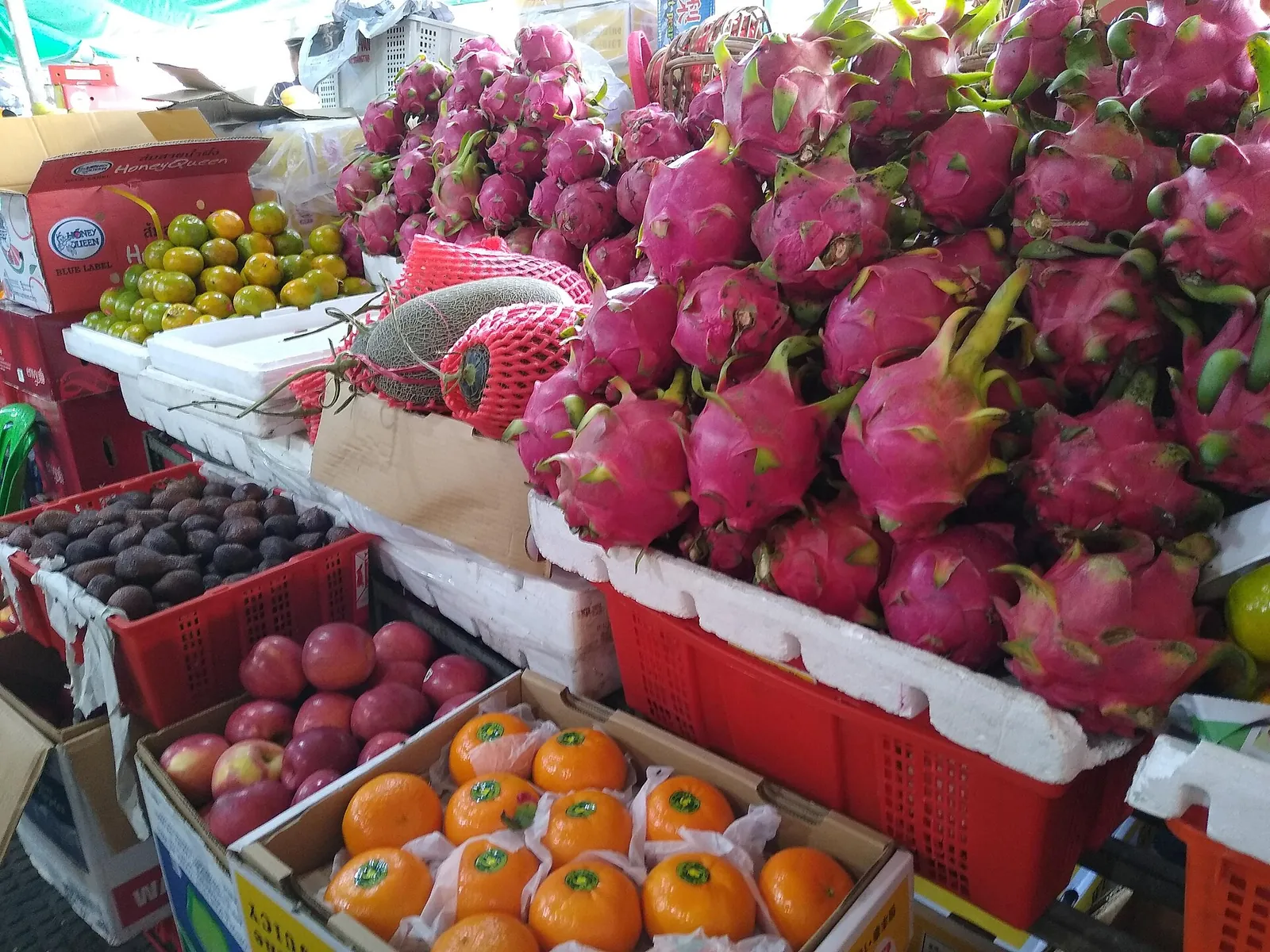
Fruit for sale at the Central Market in Phnom Penh.
Photograph: Mx. Granger — opens in a new tab · CC0 — opens in a new tab
Changes: Resized and converted to WebP; displayed with responsive crops. · Original photograph and licence details ↗ — opens in a new tab
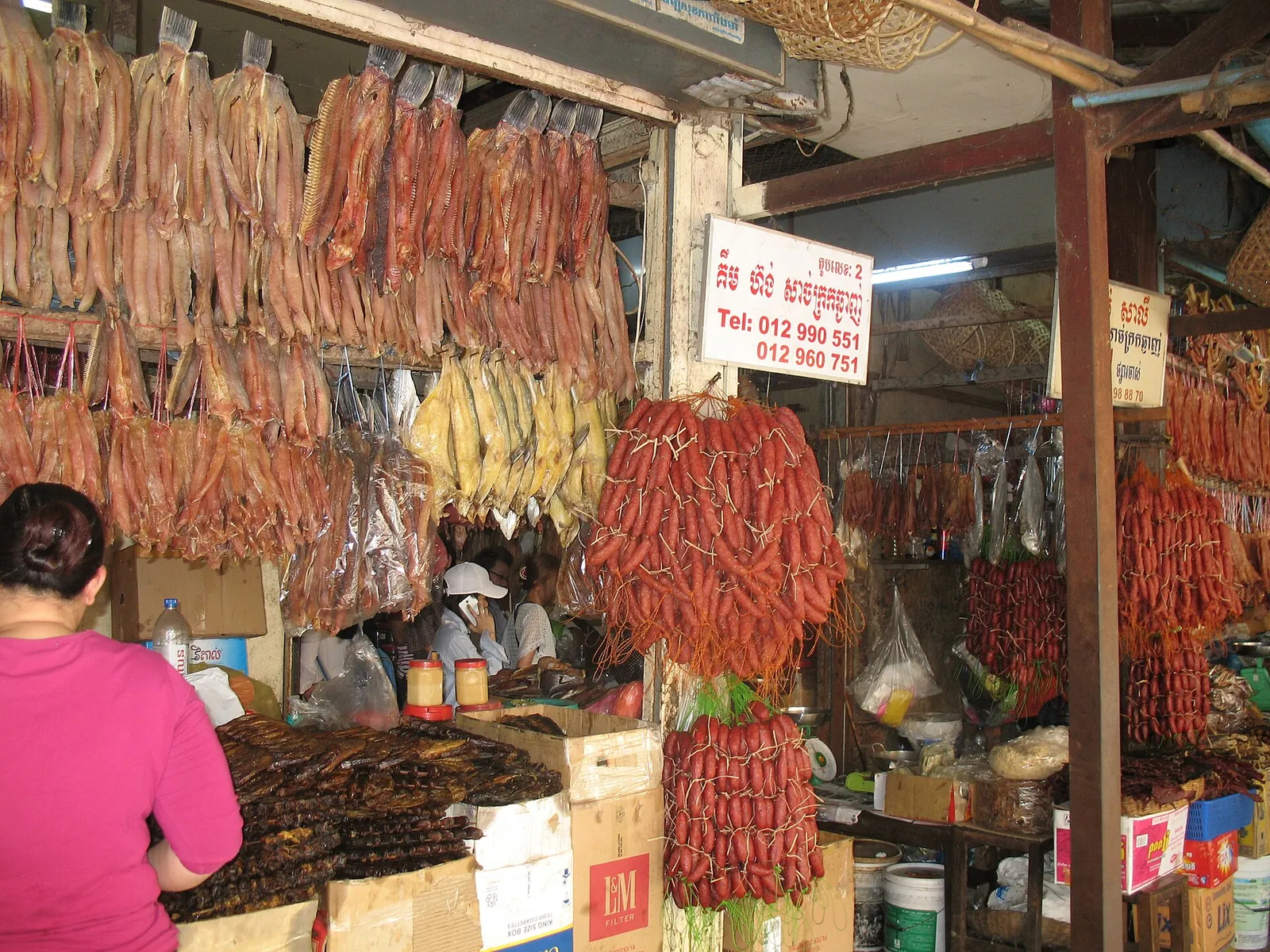
Stalls at Psah Chas, the Old Market in Siem Reap.
Photograph: Hzh — opens in a new tab · CC BY-SA 4.0 — opens in a new tab
Changes: Resized and converted to WebP; displayed with responsive crops. · Original photograph and licence details ↗ — opens in a new tab
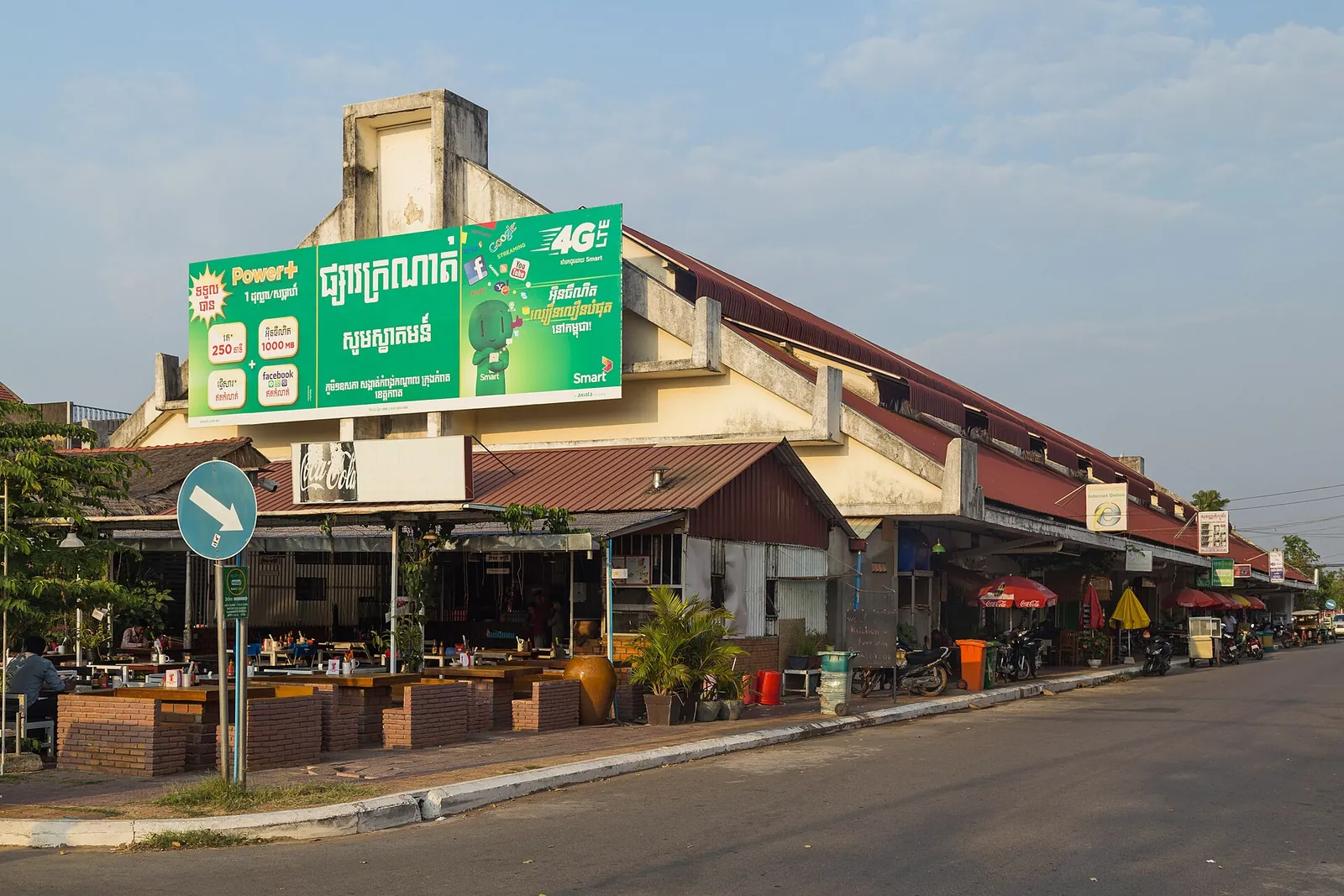
The old market in Kampot town.
Photograph: Marcin Konsek — opens in a new tab · CC BY-SA 4.0 — opens in a new tab
Changes: Resized and converted to WebP; displayed with responsive crops. · Original photograph and licence details ↗ — opens in a new tab
Riding a tuk-tuk through the streets of Phnom Penh.
Photograph: Radek Kucharski — opens in a new tab · CC BY 2.0 — opens in a new tab
Changes: Resized and converted to WebP; displayed with responsive crops. · Original photograph and licence details ↗ — opens in a new tab