Plan your trip
Is Cambodia safe? Thai border, landmines, dengue and scams
Most trips to Cambodia pass without trouble, and the problems visitors meet are mostly small and predictable: a bag snatched from a tuk-tuk, a scooter crash, a fever after a mosquito bite, a fake note in the change. Two risks are particular to Cambodia: the tense border with Thailand and the landmines left by decades of war. This guide covers both, then health, roads, crime, the law and hospitals.
In this guide
Find the location ↗ — opens in a new tabThe short answer
Most of Cambodia is open to visitors, but not the area along the Thai border. When we checked on 28 October 2026, the UK advised against all but essential travel within 20 km of the land border with Thailand, Germany warned against travel within 20 km, France formally advised against travel within 30 km and Canada advised against all travel within 50 km; the land crossings were closed. Siem Reap and the Angkor temples, Phnom Penh, Kampot, Kep, Sihanoukville and the Koh Rong islands lie outside all four zones. In an emergency call 117 for the police or 119 for an ambulance, and save a private hospital's emergency line too. See a travel clinic at least 8 weeks before you fly: hepatitis A is recommended for all unvaccinated travellers, Phnom Penh has no malaria and the Angkor area very little, and dengue is the larger risk, so use repellent by day. Stay on marked paths at temples and in the countryside, because mined areas are often unmarked, buy insurance with medical evacuation, and check your change for fake dollar notes.
- Key point
- Start at least 8 weeks before departure with the travel clinic; the rest applies throughout the trip
- Where it applies
- Applies to every route in our Cambodia guides, from Siem Reap and Angkor to Phnom Penh, Battambang, Kampot, Kep and the islands
- Timing
- Rainy season with river floods and flash floods from about June to October, which France extends to November; dengue usually peaks in the rainy season
The Thai border, and what this guide leaves out
When we checked on 28 October 2026, the UK Foreign Office advised against all but essential travel within 20 km of Cambodia's land border with Thailand, the German Foreign Office warned against travel within 20 km, France formally advised against travel within 30 km, and Canada advised against all travel within 50 km. Heavy fighting took place along parts of the border in 2025; a ceasefire was signed on 27 December 2025, but the UK Foreign Office calls the situation tense. The land crossings with Thailand remain suspended, and the Preah Vihear, Ta Krabey and Tamone Thom temples are closed. Unexploded weapons are an added danger in the border area, especially in Banteay Meanchey and Oddar Meanchey provinces, says the German Foreign Office, which also warns that security forces may overreact to behaviour they find suspicious, such as taking photographs.
Beyond the border zone, the UK, German and French advice names no area to avoid, and Canada asks for a high degree of caution countrywide because of an increase in petty crime. Our routes keep at least 50 km from the Thai border and use flights from Bangkok rather than the closed land crossings, so this guide does not cover Preah Vihear temple or the border towns. Canada's 50 km line is the widest of these four, and other governments may draw a wider one, so read your own government's advice before you book; our entry guide covers flights and arrival.
Landmines and unexploded weapons
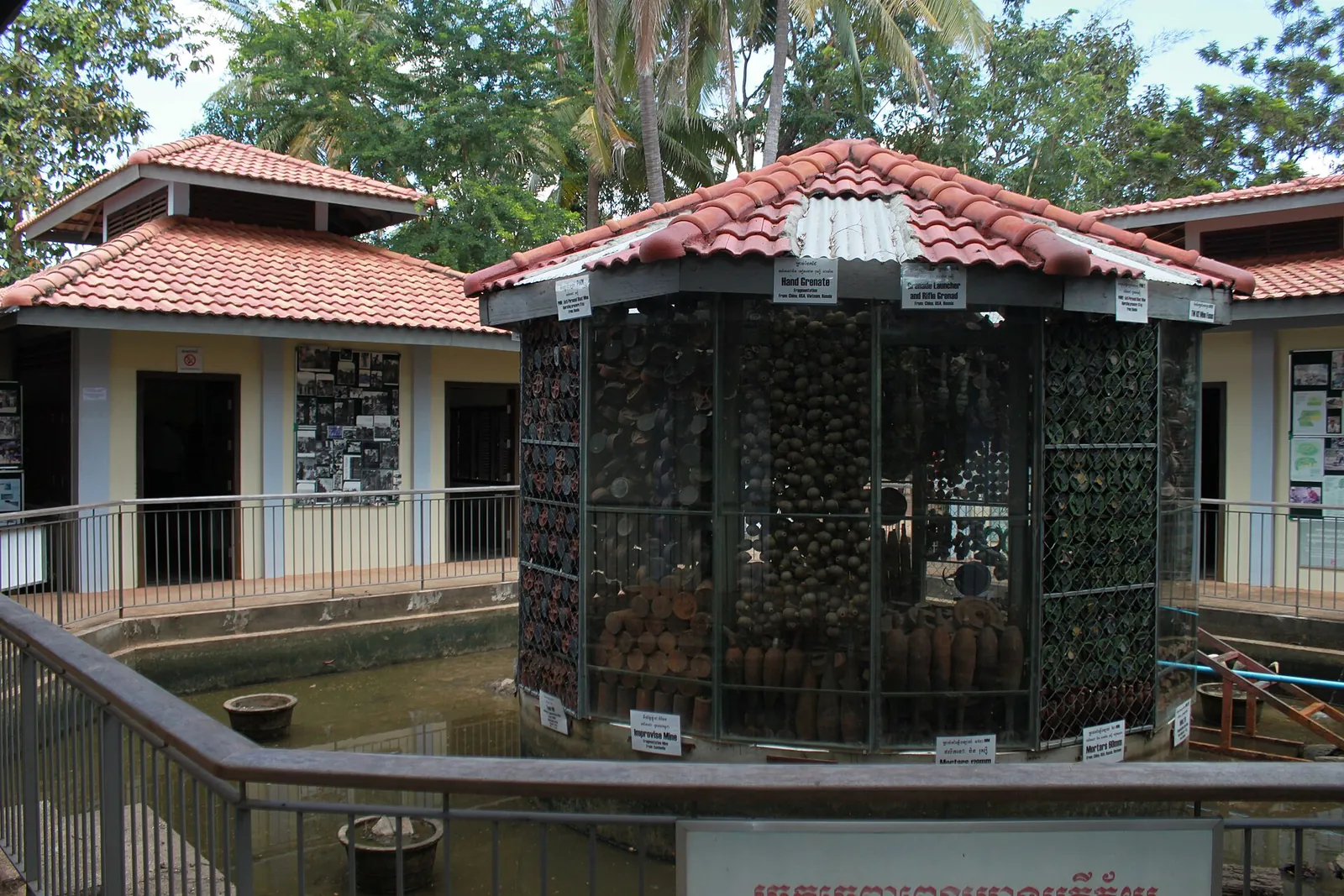
Cambodia remains heavily affected by landmines and unexploded weapons, and the UK Foreign Office says mined areas are often unmarked: do not stray off main routes in rural areas, including around temple complexes, and do not pick up metal objects. The German Foreign Office says the main tourist areas have been cleared, but mines remain a risk in parts of the country outside the cities, especially near the borders with Thailand and Vietnam. Canada still lists reports of landmines in 'the Preah Vihear Phnom Kulen temple areas', the border areas and 'the River of a Thousand Lingas', and in rural parts of Banteay Meanchey, Battambang, Kampong Thom, Pursat and Siem Reap provinces; it notes that the Cambodian government considers Siem Reap town and the Angkor temples clear.
At Phnom Kulen, Kbal Spean and the outlying temples, stay on the marked paths, as the German Foreign Office asks; the official Angkor visitor code also asks you to follow all signs on the site. In the countryside, Canada advises against walking in forests, fields or dry rice paddies without a local guide and asks you to keep off roadside ditches, shoulders and unmarked trails; report anything suspicious to the local authorities rather than touching it.
Vaccines, malaria, dengue and rabies
Check vaccines at least 8 weeks before your trip, as the UK Foreign Office advises. TravelHealthPro, the UK's National Travel Health Network and Centre, recommends hepatitis A for all previously unvaccinated travellers and tetanus and typhoid for most, and says Japanese encephalitis occurs countrywide, with seasonal peaks from May to October. There is no yellow fever in Cambodia, but a vaccination certificate is required from travellers over 1 year old arriving from a country with yellow fever transmission or after more than 12 hours in transit at an airport in one; the German Foreign Office says no vaccination is compulsory for a direct arrival from Germany.
Malaria risk is low and patchy. TravelHealthPro finds no risk in Phnom Penh and a very low risk at the Angkor temples and around Lake Tonle Sap, including Siem Reap, where it does not advise tablets; elsewhere it rates the risk as low and recommends bite avoidance for most travellers. The US Centers for Disease Control and Prevention (CDC) finds no or negligible transmission in Phnom Penh, Siem Reap and the main Angkor complex and recommends tablets only for rural and forested areas; France says only certain forest areas carry malaria, and the German Foreign Office rates parts of the east and the south-west, including Pursat province, as medium risk. If your route takes in forest treks, as in our Mondulkiri guide, ask your travel clinic about tablets.
Dengue is the larger risk. Cases rose sharply in 2026: TravelHealthPro counted 28,074 cases and 38 deaths by 12 July, 58.1% more than in the same period of 2025, and the German Foreign Office warned that health facilities could be overloaded. France says dengue is present in every region, Phnom Penh included, and usually peaks in the rainy season from June to November. The mosquitoes that spread it bite mainly by day, so use repellent from morning to evening. A dengue vaccine exists, but the German Foreign Office notes it needs 2 doses 3 months apart, and TravelHealthPro mainly considers it for people who have had dengue before.
Rabies is endemic in towns and the countryside alike, France says. After any bite or scratch, wash the wound and get care quickly: France names the Institut Pasteur rabies centres in Phnom Penh, Battambang and Kampong Cham, which hold vaccine and serum, and the CDC says rabies vaccine is typically available in most of the country. Along the Mekong and its branches, contact with fresh water carries a risk of schistosomiasis, the German Foreign Office warns, so avoid swimming or wading in rivers and lakes.
Water, food, alcohol and air
Drink only bottled or sealed drinks, or water made safe by filtering or boiling, as France advises, and peel fruit or wash it in safe water. The German Foreign Office says diarrhoea from water, food and poor hand hygiene is common among travellers, and that hepatitis A and typhoid also occur. It adds that air pollution in the big cities can cause health problems, which matters most if you have a heart or lung condition.
The UK Foreign Office reports deaths and serious illness in Cambodia from alcoholic drinks containing methanol. It cannot be detected by taste or smell, and even small amounts can kill, so get urgent medical help if anyone feels ill after drinking. Police have also reported drink spiking in some bars used by foreign visitors, so do not leave a drink unattended.
Roads, tuk-tuks, boats and the rainy season
Cambodia has one of the highest rates of road accidents in South-east Asia, says the UK Foreign Office, and travel after dark significantly increases the risk; Canada advises travelling by road in daylight. The German Foreign Office advises against cycling and riding motorcycles for road-safety reasons and notes that motorcycle-taxi drivers usually carry no helmet for their passengers, and the UK Foreign Office calls riding as a passenger on a moto dop dangerous. Helmets are compulsory; the police can fine you on the spot for riding without one, and riding without one may invalidate your insurance.
To hire a car or a motorcycle over 125 cc you may need the 1949 international driving permit with your licence, says the UK Foreign Office, and the German Foreign Office says permits issued under the 1968 and 1926 conventions are not accepted. Never hand over your passport as a guarantee: the German Foreign Office reports rental shops claiming for alleged damage and holding passports. After an accident, France advises staying at the scene and calling the police, and Canada warns that a driver found at fault may be detained until fines are paid. Our transport guide covers buses, taxis and ride-hailing.
On the water, the UK Foreign Office says accidents have happened on overloaded or poorly maintained boats, and that tourist boats sometimes sail despite weather warnings, particularly between Sihanoukville and the nearby islands. Rivers run high and fast from June to October, while exposed sandbars make river trips difficult from March to May. When swimming, take extra care in the rainy season, watch for river currents, which have caused deaths, and beware of jellyfish close to the shore, whose sting can be fatal. Our Koh Rong guide covers the island boats.
The UK Foreign Office says heavy monsoon storms from June to October damage roads, that landslides can restrict travel to some provinces, and that poor drainage floods streets in Phnom Penh, including the route to the airport; lakes, caves and waterfalls are prone to flash floods in the same months. France puts the rainy season from June to November and refers travellers to the Mekong River Commission for river levels. Our best-time guide sets out the seasons.
Crime, scams and the law
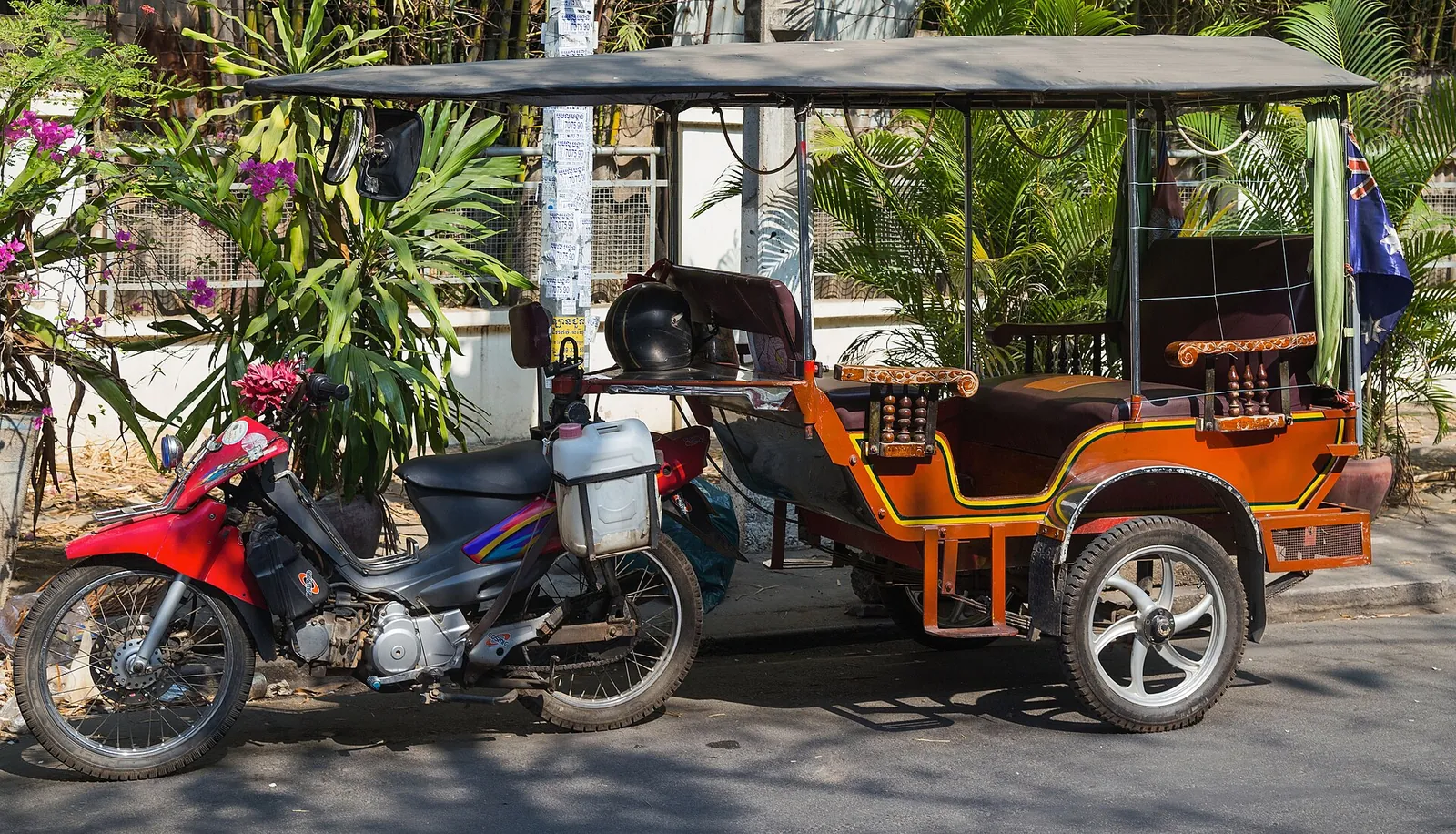
Most theft is bag-snatching by thieves on motorbikes, who cut straps and grab bags and phones from people on foot, in tuk-tuks and on motorbikes, often causing injury, says the UK Foreign Office; the hotspots it names are the riverfront and BKK areas of Phnom Penh and the beaches and tourist areas of Sihanoukville and the nearby islands. Carry bags on the side away from the road, keep valuables in the hotel safe and choose tuk-tuks with metal grilles on the back and sides. Canada adds thefts from bags in bus luggage holds, especially between Phnom Penh and Siem Reap. If you are robbed, hand over your valuables without resisting.
France advises caution when moving around at night in Phnom Penh, Siem Reap and Sihanoukville, especially on foot, by cyclo, tuk-tuk or moto-taxi. The UK Foreign Office reports sexual assaults on women in Siem Reap and Sihanoukville, including by men posing as motorbike-taxi drivers around Pub Street in Siem Reap, and France warns of visitors drugged and robbed after meeting someone through a dating app. Parties on the islands carry risks of assault, robbery and injury, and medical help there may be limited or non-existent.
Check your change: travellers have been given fake dollar bills in shops and clubs, and the German Foreign Office says older US$100 notes without the blue security band are practically no longer accepted. In Phnom Penh, strangers invite visitors home on a pretext and draw them into rigged card games, then press them for money, sometimes at an ATM. Offers of easy, well-paid jobs are run by organised crime groups that hold victims in compounds in and around Sihanoukville, the border areas and Kandal.
Drug laws are zero-tolerance: possessing even a small amount, cannabis included, can bring a long jail sentence, up to life, and police raid venues used by foreigners and may require a urine or blood test. Critical remarks about the royal family, on social media too, can be punished as lèse-majesté with 1 to 5 years in prison and fines of USD 500 to USD 2,500. Drones are banned in Phnom Penh and at Angkor Wat and other historic temples, taking fragments of temples or statues is strictly prohibited, and you should never photograph near military bases. Same-sex relationships are legal. A copy of your passport's photo page is useful, but carrying it is not a legal requirement.
At Angkor and other religious sites you may be refused entry in shorts or skirts above the knee or with bare shoulders. The official Angkor visitor code also forbids touching carvings, sitting on fragile structures and climbing on loose stones, and Angkor has been a smoke-free site since 2012.
Emergency numbers, police and hospitals
Call 117 for the police, 118 for the fire brigade or 119 for an ambulance. The UK Foreign Office warns that foreigners reporting crimes have found police stations closed, emergency numbers unanswered and officers unable to speak English, so save a hospital's emergency line as well. To report a crime, go to the tourist police: in Phnom Penh on Street 598, and in Siem Reap next to the Angkor temple ticket office. A police report for your insurer should be free; if police ask for a fee, the UK Foreign Office asks British nationals to tell the embassy in Phnom Penh.
Medical care is not comparable with Europe's, says the German Foreign Office, and people on anticoagulants face a high risk if injured, because drugs to stop bleeding are not available; France calls public hospitals uneven, especially in the provinces. The UK Foreign Office's list of medical facilities, updated on 16 January 2026, includes these, all reporting English-speaking staff except where noted:
- Phnom Penh: Royal Phnom Penh Hospital (888 Russian Confederation Blvd, Sen Sok; 24-hour emergency line +855 23 991 222), a branch of Bangkok Hospital and Cambodia's first JCI-accredited hospital, with an air ambulance; Raffles Medical (161 Street 51), open 24/7 with only the emergency room on Sundays; Khema Hospital, with 24/7 emergency services at Toul Kork, BKK and Sen Sok; and Calmette Hospital (3 Monivong Blvd), the country's biggest public hospital, where language is the main problem for foreigners, many doctors speak French and foreigners may pay up to twice the local price.
- Siem Reap: Royal Angkor International Hospital (National Road 6; +855 63 761 888, emergency +855 12 235 888), with an ambulance and air evacuation.
- Kampot and Battambang: Sonja Kill Memorial Hospital, 6 km west of Kampot on National Road 3 (emergency +855 78 265 782), whose outpatient department is closed at weekends and on public holidays; Handa Medical Centre, 614 National Road 5, Battambang.
Insurance and travelling with medicines
France calls insurance that covers all medical costs, including surgery, hospital stays and medical repatriation, imperative, and the German Foreign Office advises health insurance that includes evacuation. The hospitals on the UK list take cash, cards or insurance where the insurer has approved the treatment, and the UK Foreign Office asks you to contact your insurer quickly if you are referred to a hospital. Check that the policy covers any motorbike riding, diving or other activities you plan.
Bring a full supply of any regular medicine. France advises keeping medicines in their original packaging with the original labels and a prescription that gives their international non-proprietary names, checking that they are allowed in Cambodia, and never buying medicines in the street because of fakes. The German Foreign Office suggests carrying a doctor's note in English confirming that you need them.
Practical questions
Is Cambodia safe for tourists?
Generally, yes, away from the Thai border. When we checked on 28 October 2026, the UK and German governments advised against travel within 20 km of the border with Thailand, France within 30 km and Canada within 50 km. Elsewhere, the main risks are road accidents, bag-snatching, landmines off marked paths and dengue.
Is it safe to visit Angkor Wat?
Yes. Siem Reap and the Angkor temples lie well outside the border zones, and Canada notes that the Cambodian government considers Siem Reap town and the Angkor temples clear of mines. Stay on marked paths at outlying sites such as Phnom Kulen and Kbal Spean, and cover your knees and shoulders.
Do I need malaria tablets for Cambodia?
Not for Phnom Penh, Siem Reap or Angkor: TravelHealthPro finds no risk in Phnom Penh and a very low risk around Angkor and Siem Reap, and the CDC finds no or negligible transmission there. Tablets may be advised for rural and forested areas, so ask your travel clinic about your route.
Which vaccinations do I need for Cambodia?
None is required for a direct arrival from Europe, but a yellow fever certificate is required if you arrive from a country with yellow fever transmission. TravelHealthPro recommends hepatitis A for all previously unvaccinated travellers and tetanus and typhoid for most.
What is the emergency number in Cambodia?
117 for the police, 118 for the fire brigade and 119 for an ambulance. Calls may go unanswered, so also save the emergency line of a private hospital, such as Royal Phnom Penh Hospital or Royal Angkor International Hospital in Siem Reap.
Can I drink the tap water in Cambodia?
No. France advises drinking only bottled or sealed drinks, or water made safe by filtering or boiling.
Is it safe to ride a motorbike or a tuk-tuk in Cambodia?
Choose tuk-tuks with metal grilles to deter bag-snatchers. The German Foreign Office advises against riding motorcycles, the UK Foreign Office calls motorcycle taxis dangerous, and helmets are compulsory.
Keep planning your trip
Your first trip to Cambodia
Plan a first week in Cambodia: four nights in Siem Reap, two in Phnom Penh, Angkor, visa steps and the intercity bus.
Read the guide
Entering Cambodia
Which Cambodia visa you need, the US$30 tourist e-Visa, passport validity, the free e-Arrival form, cash rules and whether to fly into SAI or KTI.
Read the guide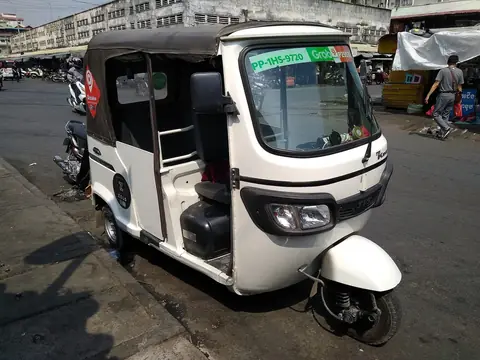
Transport in Cambodia
Plan Cambodia through SAI and Techo airports, Giant Ibis buses and Sihanoukville island ferries, with dated fares, piers, baggage and the Vietnam border.
Read the guide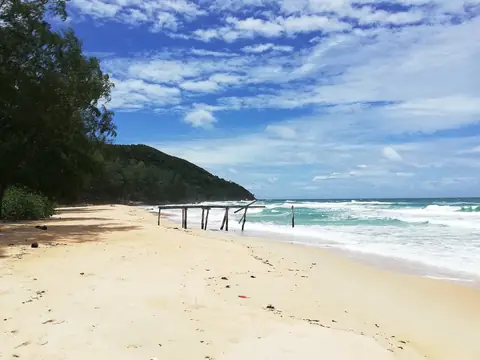
Best time to visit Cambodia
Choose Cambodia dates for Angkor, Tonle Sap or the islands, with official season guidance and rain alternatives.
Read the guide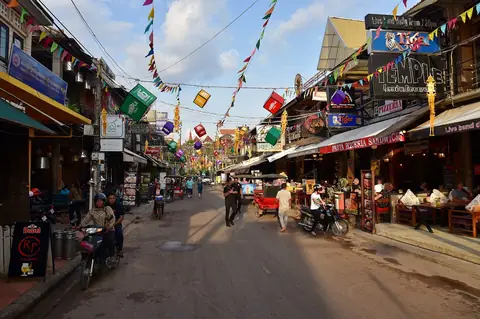
Siem Reap
Plan four nights in Siem Reap: Angkor Wat, Bayon and Ta Prohm, the museum, Old Market, Khmer meals, SAI airport buses and a budget for two.
Read the guide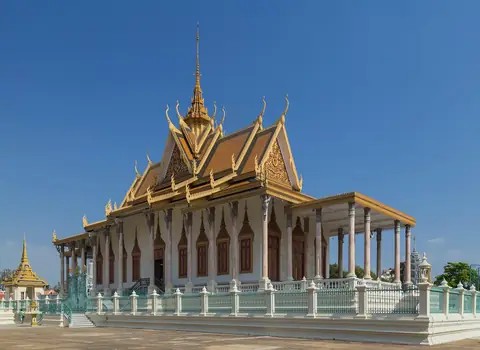
Phnom Penh
Plan three nights in Phnom Penh: the Royal Palace, National Museum, Tuol Sleng and Choeung Ek, Khmer meals, central bases and Techo airport transfers.
Read the guideSources and checks before you travel
(19)
- UK Foreign Office: Cambodia travel advice, warnings and insurance ↗ — opens in a new tab
- UK Foreign Office: Cambodia safety and security ↗ — opens in a new tab
- UK Foreign Office: Cambodia health ↗ — opens in a new tab
- UK Foreign Office: Cambodia, getting help ↗ — opens in a new tab
- UK Foreign Office: Cambodia entry requirements ↗ — opens in a new tab
- UK Foreign Office: list of English-speaking doctors and medical facilities in Cambodia (updated 16 January 2026) ↗ — opens in a new tab
- German Foreign Office (Auswärtiges Amt): Cambodia travel and safety advice (in German) ↗ — opens in a new tab
- France Diplomatie: Cambodia travel advice, security (in French) ↗ — opens in a new tab
- France Diplomatie: Cambodia travel advice, health (in French) ↗ — opens in a new tab
- France Diplomatie: Cambodia alerts (in French) ↗ — opens in a new tab
- Government of Canada: Cambodia travel advice and advisories ↗ — opens in a new tab
- TravelHealthPro (UK National Travel Health Network and Centre): Cambodia ↗ — opens in a new tab
- US Centers for Disease Control and Prevention (CDC): Cambodia traveler view ↗ — opens in a new tab
- Angkor Enterprise: Angkor visitor code of conduct ↗ — opens in a new tab
- Royal Phnom Penh Hospital ↗ — opens in a new tab
- Royal Angkor International Hospital ↗ — opens in a new tab
- SAI airport operator: request for qualification notice with the airport's location ↗ — opens in a new tab
- Mekong River Commission ↗ — opens in a new tab
- Siem Reap Airport Bus: fares, timetable and stops ↗ — opens in a new tab
Reference sources for the version dated 29 October 2026. Confirm opening times, access, transport and conditions for your travel dates.
Photo credits
(4)
A tuk-tuk parked on a street in Phnom Penh
Photograph: Marcin Konsek — opens in a new tab · CC BY-SA 4.0 — opens in a new tab
Changes: Resized and converted to WebP; displayed with responsive crops. · Original photograph and licence details ↗ — opens in a new tab
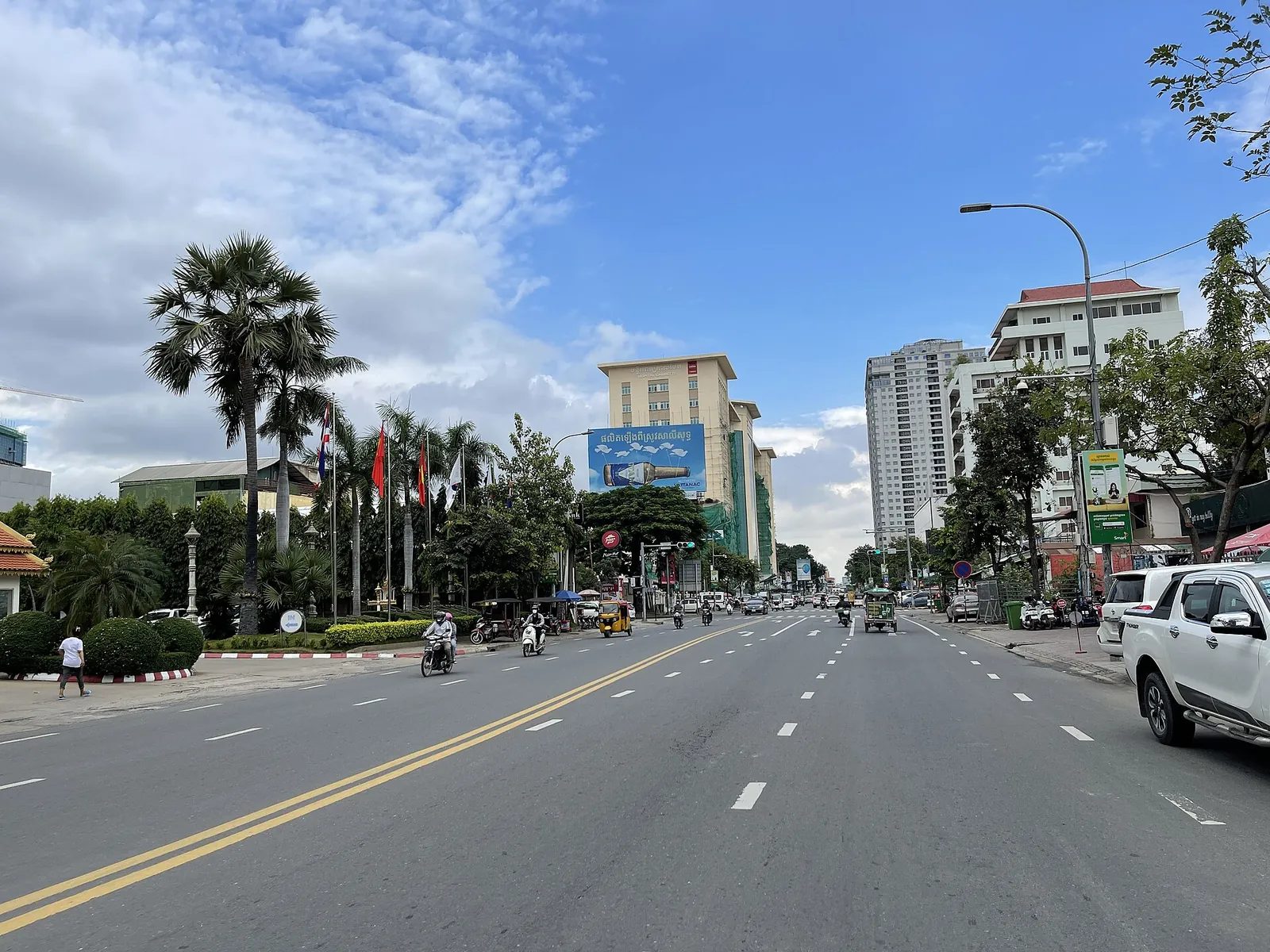
Preah Monivong Boulevard in Phnom Penh, near Calmette Hospital
Photograph: Kiensvay — opens in a new tab · CC BY-SA 3.0 — opens in a new tab
Changes: Resized and converted to WebP; displayed with responsive crops. · Original photograph and licence details ↗ — opens in a new tab
The Cambodia Landmine Museum
Photograph: Jwslubbock — opens in a new tab · CC BY-SA 4.0 — opens in a new tab
Changes: Resized and converted to WebP; displayed with responsive crops. · Original photograph and licence details ↗ — opens in a new tab
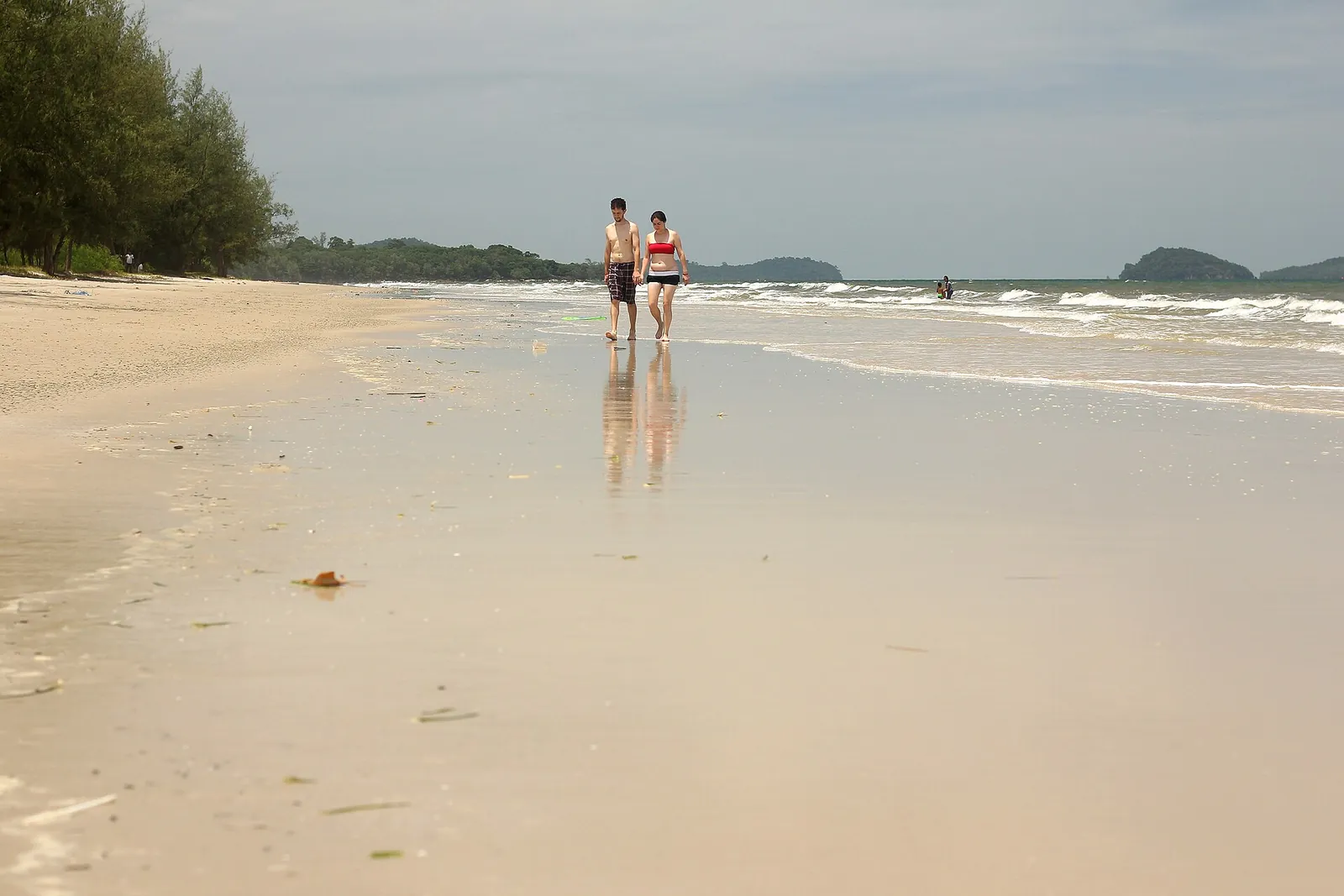
Otres Beach in Sihanoukville
Photograph: Dmitry Makeev — opens in a new tab · CC BY-SA 4.0 — opens in a new tab
Changes: Resized and converted to WebP; displayed with responsive crops. · Original photograph and licence details ↗ — opens in a new tab