Central Vietnam · Da Nang
My Son Sanctuary guide: Cham temples from Hoi An, timing and tickets
My Son is a closed green valley in the hills west of Hoi An where the kings of Champa built brick tower-temples to Shiva for roughly nine centuries, from the 4th to the 13th. What survives is partly ruined, some of it by time and much of it by the wars of the 20th century, and that is exactly why a visit rewards a little preparation. Read up on what a kalan, a gopura and a linga are before you go, arrive when the gates open, and the valley turns from a hot walk among broken brick into one of the most absorbing sites in Southeast Asia. Since the 2025 provincial merger, the sanctuary sits in Thu Bon commune of the new Da Nang City.
- Suggested time
- Half a day (2–3 hours on site)
- Where to stay
- Hoi An (closest) or Da Nang
- Season and timing
- The national tourism site calls March to May the best months for the Hoi An area; June to August is hot, and October to January brings rain and storms. The management board notes that heavy rain, flash floods and humidity are the main threats to the monuments, so in the wet season expect muddy paths and check the weather before you set off.
The short answer
Treat My Son as a half-day from Hoi An, or a long morning from Da Nang. Sleep in Hoi An (about 45 km away, according to the site's management board) or Da Nang (about 68 km), leave early by private car, a tour or your own motorbike, and be at the ticket office close to the 06:00 opening so you see the main tower groups before the heat and the tour buses. The ticket covers the electric buggy into the monument zone, the site museum and the Cham folk performances; allow two to three hours inside. Spend an hour at the Museum of Cham Sculpture in Da Nang before or after, because many of the carvings found at My Son are displayed there rather than in the valley.
Why the timing matters more than the transport
My Son lies in a valley about 2 kilometres across, ringed by mountains, with the sacred peak the Cham called Mahaparvata to the south and a stream running north through the site to the Thu Bon River. That setting is the point of the visit, and it is at its best early. Vietnam's national tourism site recommends sunrise tours for the light, and an early start also keeps you ahead of the central-coast heat, which the same site describes as strong from June to August.
When we checked on 2026-10-03, the management board's hours page listed the site as open every day of the week, including public and Tet holidays, from 06:00 to 17:00 in both summer and winter. Its visitor guide (posted in 2020) gives ticket sales from 06:00 to 17:00 and visiting until 18:00, and the site museum from 06:00 to 17:00. In practice, aim to buy your ticket within the first hour of opening and to be walking back to the buggy by mid-morning.
Getting there is simple: the national tourism site describes it as a drive from Hoi An, and the Hoi An page suggests asking your hotel about a private car for trips further afield. Organised tours run from Hoi An and Da Nang; if you book one, check the departure time and choose an early or sunrise start. Vehicles are not allowed into the monument zone itself, according to the site rules, so everyone transfers to the electric buggy at the entrance.
The ticket, the buggy, the guides and the shows
When we checked on 2026-10-03, the management board's visitor guide listed admission at 150,000 VND for international visitors, 100,000 VND for Vietnamese visitors and 30,000 VND for children aged 5 to 15. The ticket includes the My Son Museum, the electric buggy transfer, the Cham folk performances and the monuments. The board's online ticket site, linked from its homepage, showed a foreign-visitor ticket at 148,000 VND on the same date, so expect small differences between channels.
An on-site guide is sold separately: the same guide listed 100,000 VND per guide ticket, with one ticket covering 1–5 visitors, two for 6–15 and three for 16–30, arranged at the buggy stop. The board also lists a multilingual audio guide among its services, and a heritage bicycle service at 30,000 VND per bike on a set route from the lotus-pond area to the performance zone.
The free performances are worth planning around. When we checked, the hours page listed shows at the performance house at 09:45, 10:30, 11:15, 14:00 and 16:00, performances at the foot of Group G at 09:00 and 14:45, Cham folk singing on the slope of Group H on Mondays, Wednesdays and Fridays at 09:00 and 14:45, and a larger programme, Echoes of My Son, at the B–C–D group on the 15th of every month. The board notes that outdoor shows are suspended in bad weather.
Make time for the local food
What to eat and where to look
Mi Quang
Wide rice noodles with a small amount of rich broth, pork, shrimp or chicken, herbs, peanuts and a toasted rice cracker. It takes its name from Quang Nam, the former province that included My Son, and the Hoi An heritage centre lists it among the town's best-known dishes.
- Where to look
- Breakfast and lunch shops in Hoi An, and roadside eateries along the way back from My Son.
- Fit it into your day
- A late breakfast or early lunch after a dawn visit.
Contains peanuts and usually fish sauce.
Banh mi
A crusty baguette filled with pâté, cold cuts, pickles and herbs. The Hoi An heritage centre names Hoi An's banh mi among the dishes visitors come for.
- Where to look
- Bakeries and street carts in Hoi An that open early.
- Fit it into your day
- Buy one the evening before or on the way out, to eat after a 06:00 start.
Usually contains pork and pâté; ask for an egg or vegetable filling if needed.
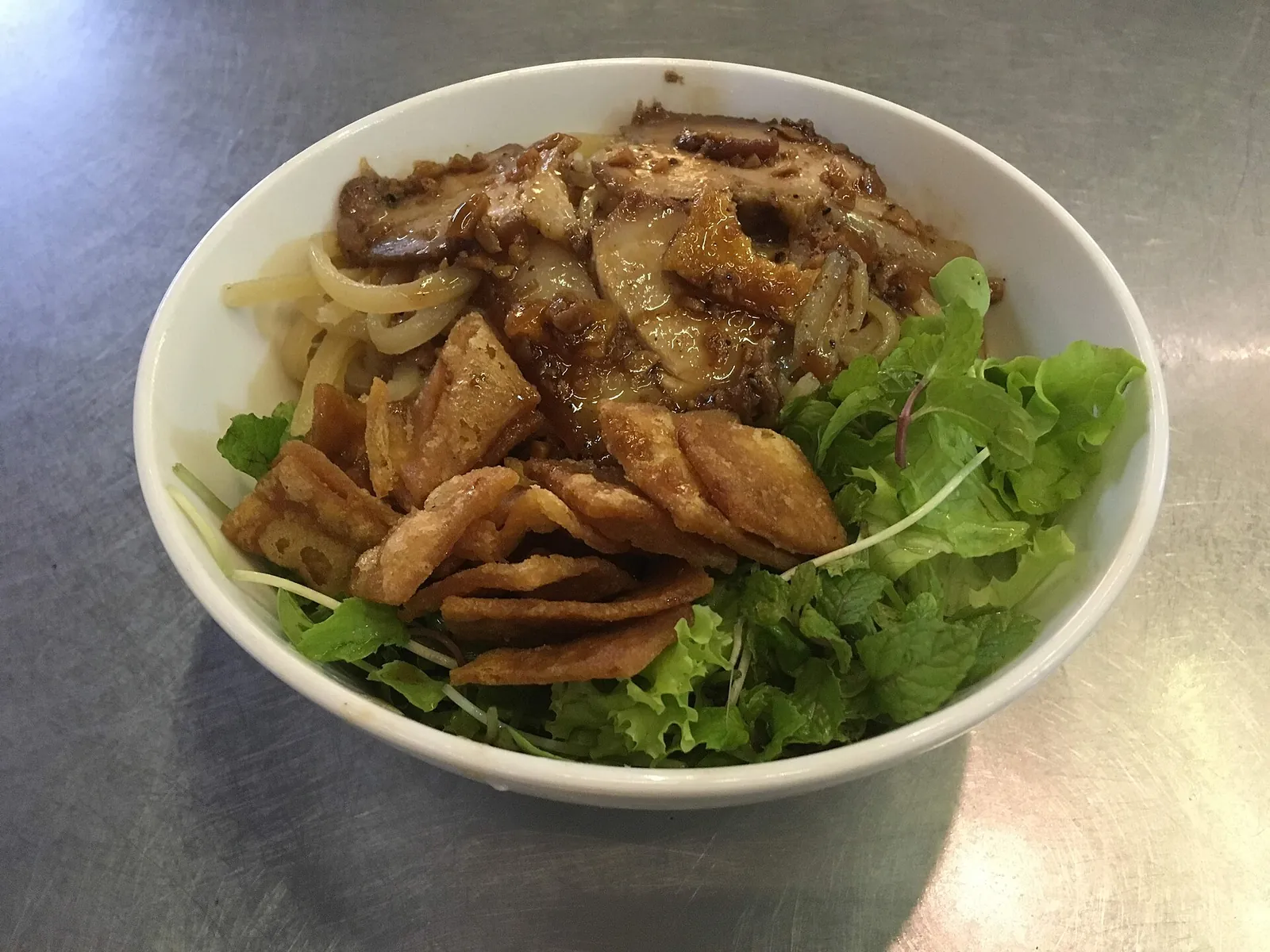
Cao lau
Chewy, thick noodles with sliced pork, crisp crackers and herbs over a little sauce rather than a soup, the dish most closely tied to Hoi An.
- Where to look
- Market stalls and family restaurants in Hoi An's Old Town.
- Fit it into your day
- Lunch back in Hoi An after the morning at My Son.
Pork-based.
Hoi An chicken rice (com ga)
Rice cooked in chicken stock, tinted yellow, served with shredded chicken, herbs and pickled onion. The heritage centre lists it with mi Quang and cao lau as a Hoi An speciality.
- Where to look
- Specialist com ga shops in Hoi An.
- Fit it into your day
- A light lunch or an early dinner.
Choose a busy shop where the chicken turns over quickly.
What to read before you go: how a Cham temple group works
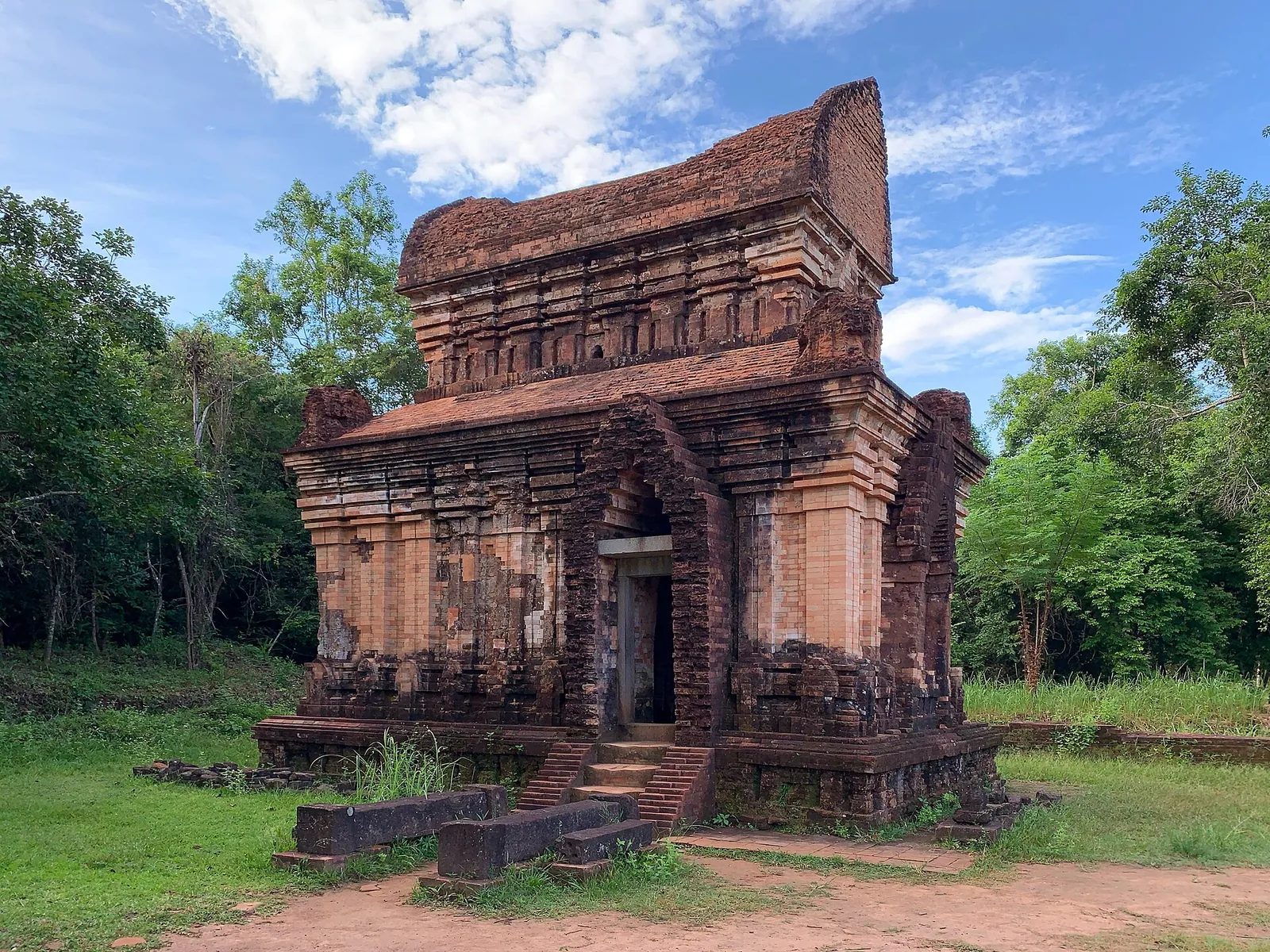
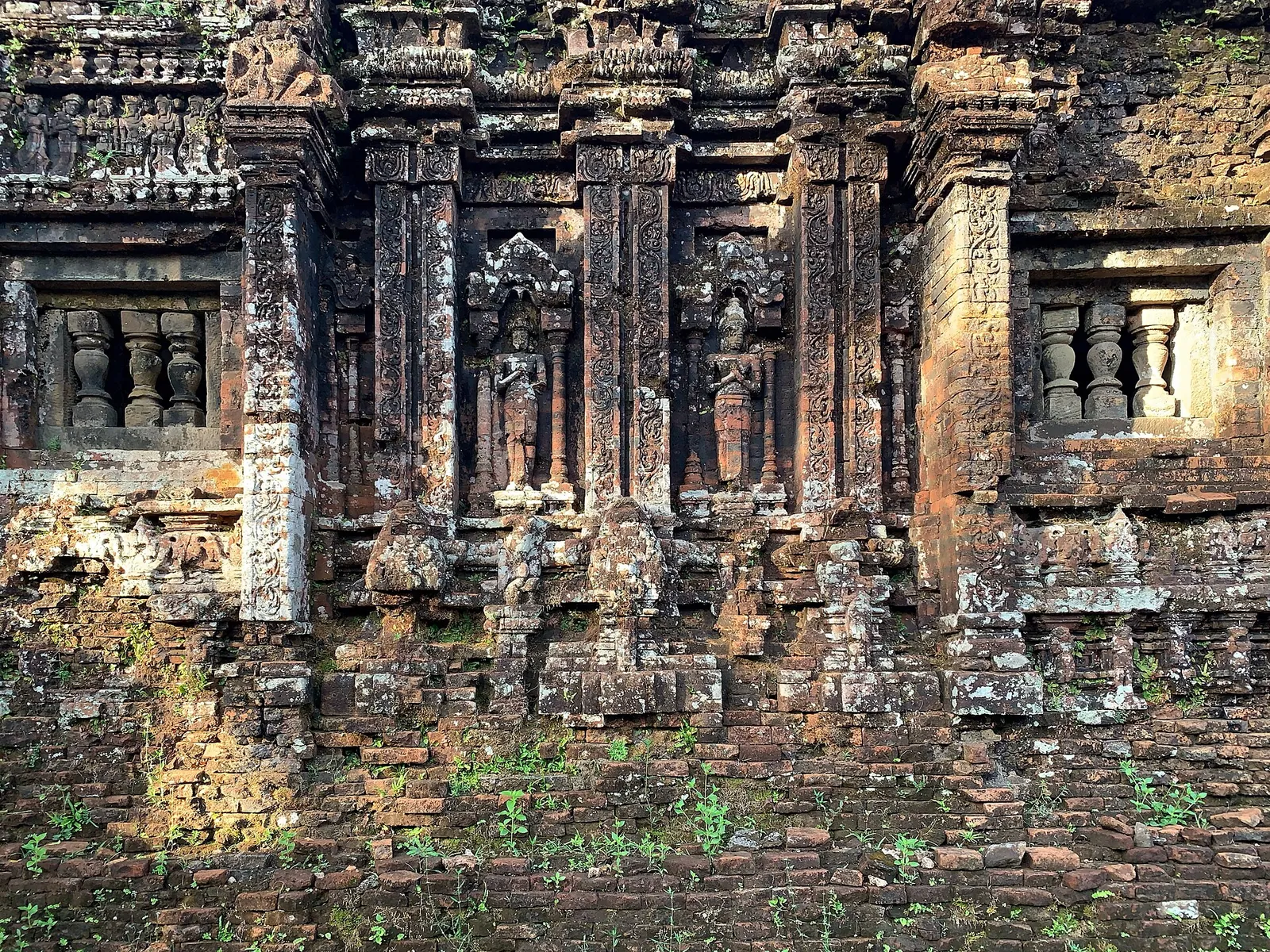
Five minutes of vocabulary makes the ruins legible. The management board explains that the towers stand in groups, each enclosed by a thick brick wall, with the main sanctuary, the kalan, at the centre and its main door usually facing east, towards the gods. In front of it stands a gate tower, the gopura, and next to that a long tiled hall, the mandapa, where pilgrims were received, offerings made and ritual dances performed. Smaller shrines and service buildings surround the kalan. The board counts 13 related groups, labelled with letters from A to M.
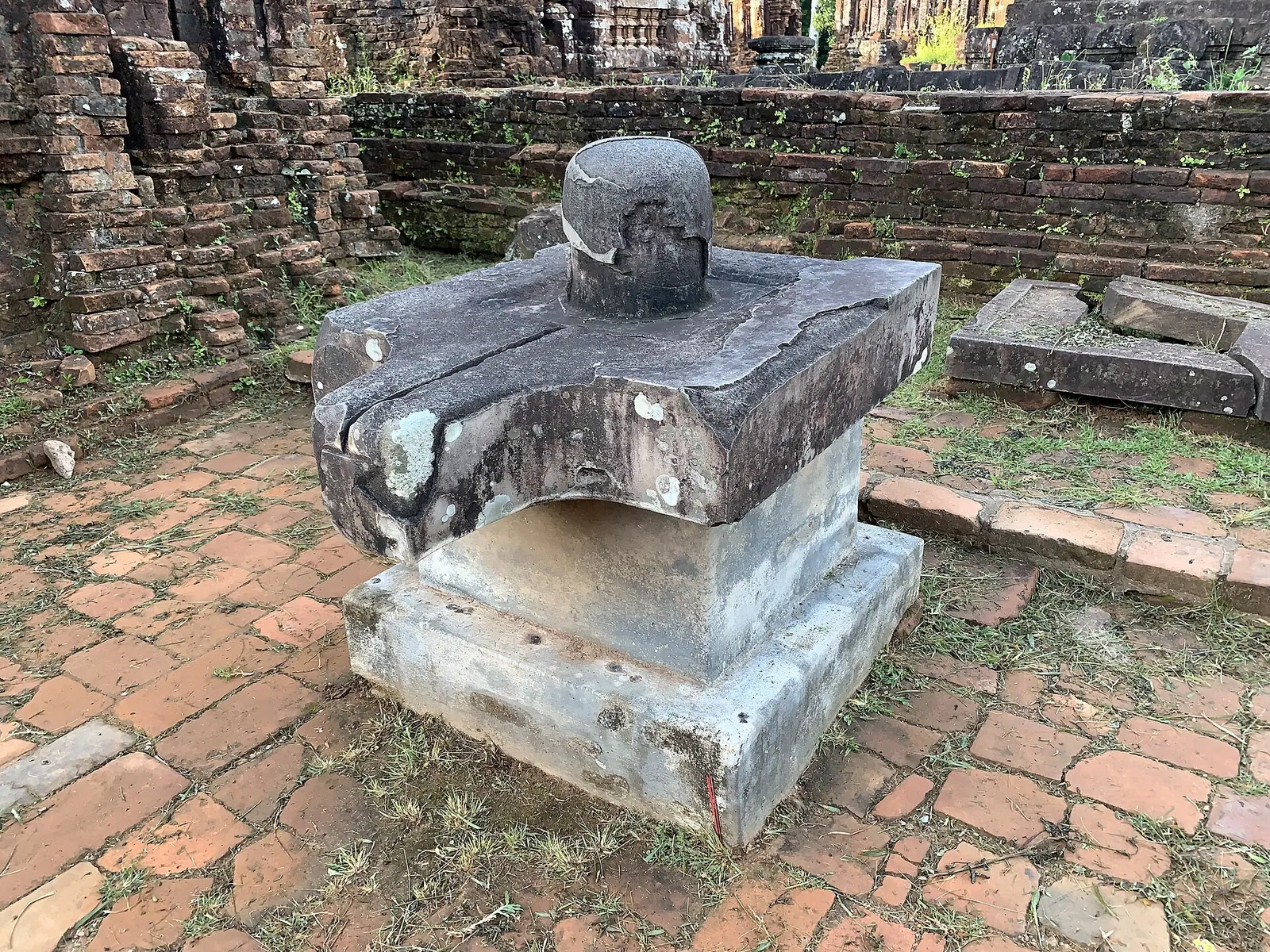
The religion behind it was Hindu, centred on Shiva. The board's history page says the first temple, built in wood under King Bhadravarman in the 4th century, enshrined a linga that joined the god's name with the king's; it burned in the 6th century and was restored under Sambhuvarman in the 7th. Later kings each added or restored towers, so the valley became a museum of Cham styles, from the early Mỹ Sơn E1 style to Hoa Lai, Dong Duong, Mỹ Sơn A1 and Binh Dinh. The last recorded king to embellish the site did so in 1234.
UNESCO's statement, quoted by the national tourism site, describes the towers as symbolising Mount Meru, home of the Hindu gods, built of fired brick with stone pillars and sandstone reliefs. Look closely at the brickwork as well as the carvings: the board points out that the precision of the masonry is part of what made My Son's towers last.
Which groups to see, and the scars of war
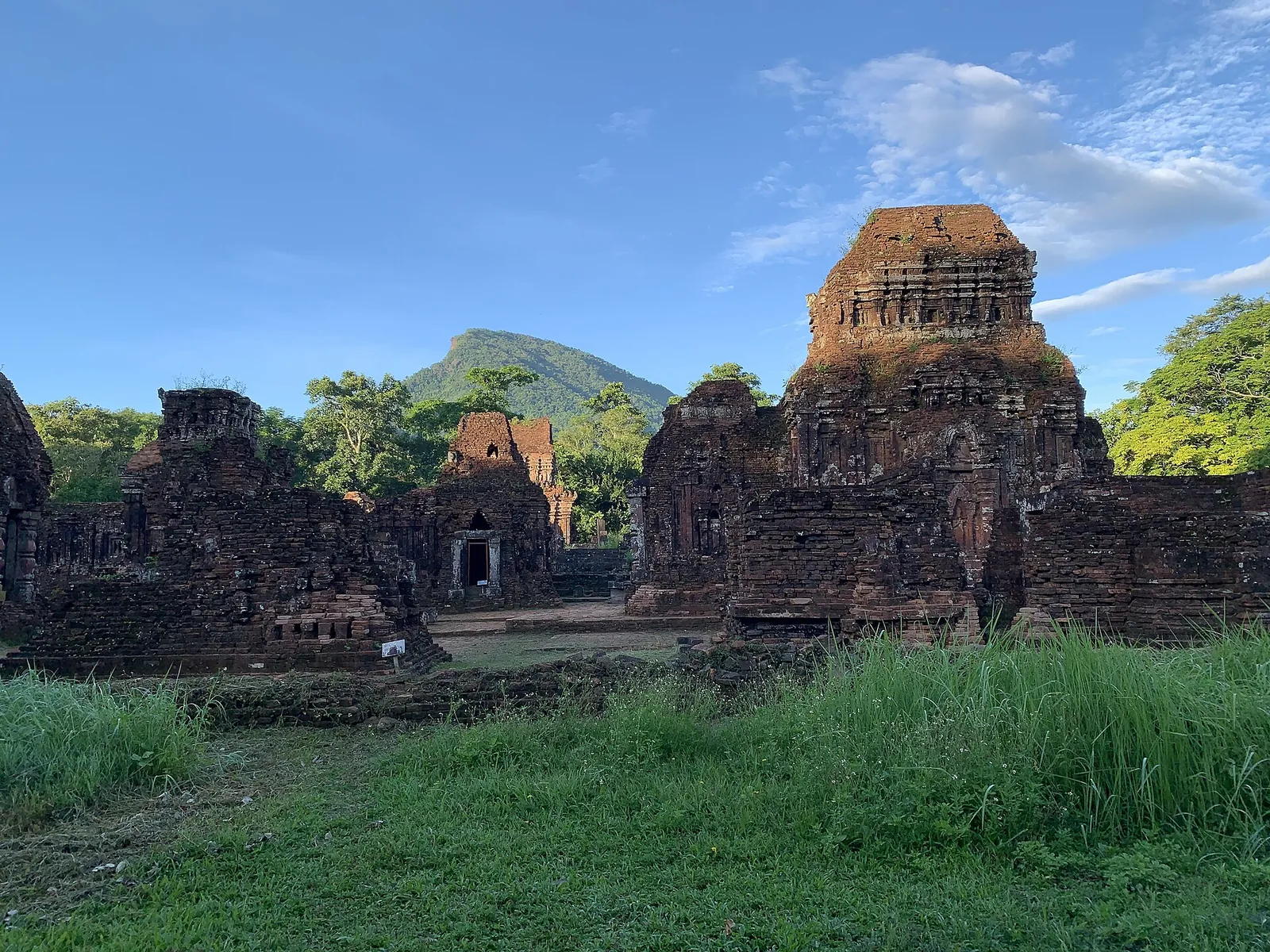
With two to three hours on site, let the performance schedule shape the walk. The central cluster of Groups B, C and D is where the monthly Echoes of My Son programme is staged; Group G hosts the outdoor performances at 09:00 and 14:45; and the slope of Group H is where Cham folk singing is held on Mondays, Wednesdays and Fridays. An early start lets you see B, C and D quietly, reach G for the first show and still be out before the midday heat.
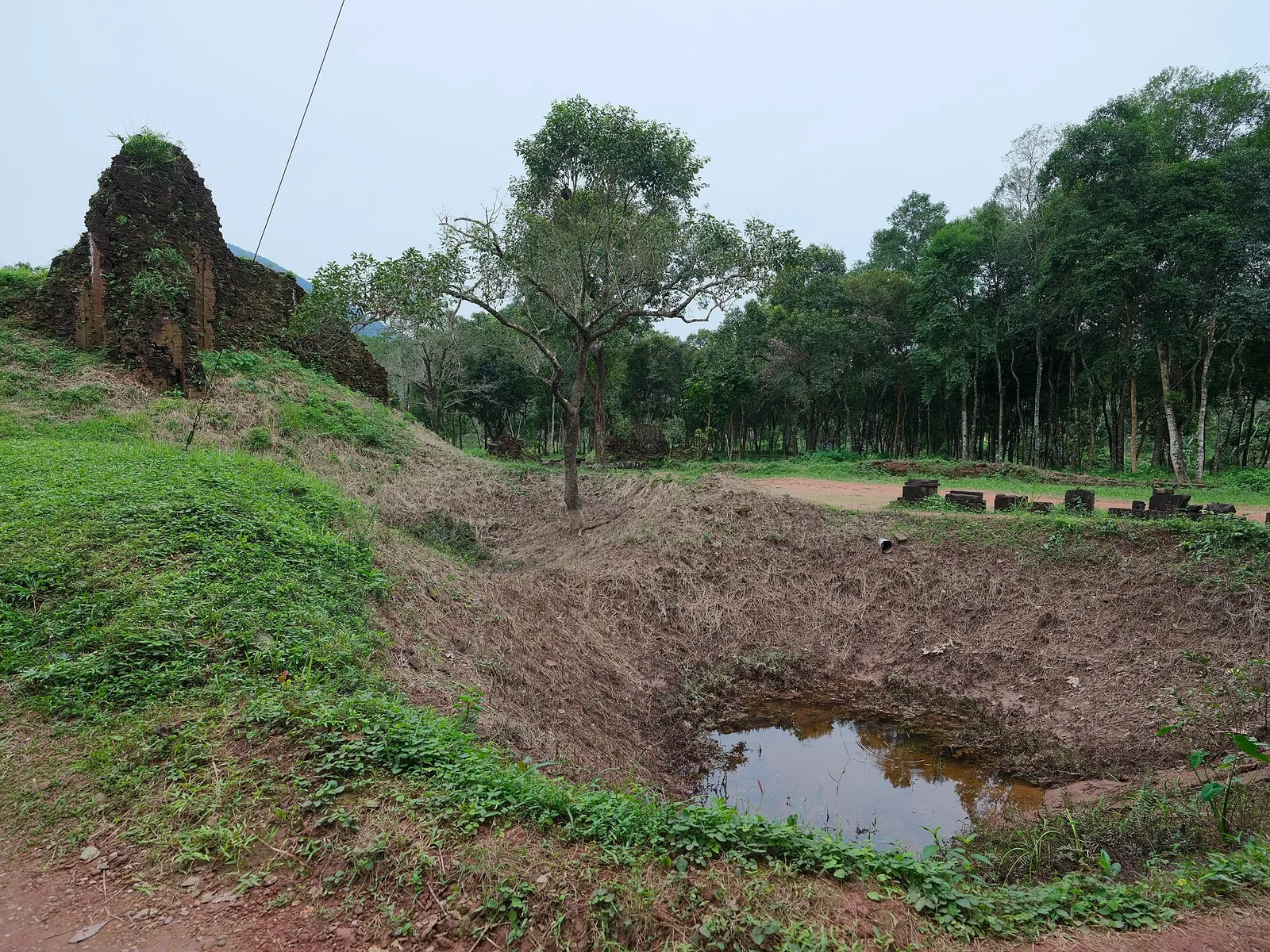
The management board's statement of outstanding value says many towers were destroyed during the Second World War and the First and especially the Second Indochina War, and that the site was badly damaged by continuous fighting from 1940 to 1975. Restoration resumed after 1975, with French, Polish and Italian specialists involved over the decades; the board quotes the architect Kazimierz Kwiatkowski, known as Kazik, who worked here for many years.
Treat the ruins gently. The site rules forbid climbing or writing on towers and artefacts, moving objects, littering and making noise, and the board's code of conduct asks visitors to wear neat, respectful clothing and follow the signs.
The two museums that complete the visit
The My Son Museum, included in the ticket, sits by the Khe The stream about 2 kilometres north-west of the monuments. It was built in 2004–2005 with a grant from the Japanese government, and the board describes it as the place to get an overall picture of the site before walking in; it displays pieces such as a linga-yoni from tower B1, a Shiva from A4 and a dancing-Shiva relief from H1.
Many sculptures from My Son are not in the valley at all but in Da Nang. The Museum of Cham Sculpture at 02, 2 Thang 9 Street has a dedicated My Son room among its galleries, and lists the My Son E1 altar among its national treasures. When we checked on 2026-10-03, the Da Nang tourism portal listed opening hours of 07:30 to 11:00 and 13:00 to 17:00, closed on Mondays, and a ticket of 60,000 VND. If you are flying in or out of Da Nang, it is an easy stop, and it shows the quality of carving the towers were built to frame.
If the visit leaves you wanting more Cham architecture, look further south along the coast. The board's history notes that between 749 and 875 power shifted to a southern clan and a new sanctuary, Po Nagar in the Kauthara region around Nha Trang, rose to prominence while My Son received less attention.
Practical questions
How far is My Son from Hoi An and Da Nang?
The management board gives about 45 km from Hoi An and 68 km from Da Nang (the national tourism site says about 40 km from Hoi An). Most visitors go by private car, tour or motorbike from Hoi An.
What time does My Son open?
When we checked on 2026-10-03, the management board's hours page listed 06:00 to 17:00 every day, including holidays. Arrive near opening to avoid the heat and the busiest hours.
How much is the My Son ticket?
When we checked on 2026-10-03, the board's visitor guide listed 150,000 VND for international visitors and 30,000 VND for children aged 5 to 15. It includes the buggy, the site museum and the Cham performances.
How long do I need at My Son?
Two to three hours on site is enough for Groups B, C, D and G, the museum and a performance. With the drive, it is a half-day trip from Hoi An.
Is My Son worth it after Angkor?
It is much smaller and more ruined than Angkor, so go for the setting and the story rather than scale. The management board stresses that it is the only site in the region with nearly nine centuries of continuous building.
When are the Cham dance shows?
When we checked, the board listed shows at the performance house at 09:45, 10:30, 11:15, 14:00 and 16:00, and outdoor performances at Group G at 09:00 and 14:45. Outdoor shows are suspended in bad weather.
Sources and checks before you travel
Reference sources for the version dated 3 October 2026. Confirm opening times, access, transport and conditions for your travel dates.
- My Son World Cultural Heritage Management Board: visitor guide and ticket prices ↗ — opens in a new tab
- My Son Management Board: opening hours and performance schedule ↗ — opens in a new tab
- My Son Management Board: about the site ↗ — opens in a new tab
- My Son Management Board: history and culture ↗ — opens in a new tab
- My Son Management Board: architecture and art ↗ — opens in a new tab
- My Son Management Board: statement of outstanding universal value ↗ — opens in a new tab
- My Son Management Board: site rules and code of conduct ↗ — opens in a new tab
- My Son Management Board: My Son Museum ↗ — opens in a new tab
- My Son Management Board: code of conduct for visitors ↗ — opens in a new tab
- My Son Management Board: heritage bicycle service ↗ — opens in a new tab
- My Son online ticket site ↗ — opens in a new tab
- Vietnam Tourism: the global cultural and historical values of My Son Sanctuary ↗ — opens in a new tab
- Vietnam Tourism: Hoi An ↗ — opens in a new tab
- Danang Fantasticity: Da Nang Museum of Cham Sculpture ↗ — opens in a new tab
- Danang Fantasticity: guide for visitors arriving at Da Nang International Airport ↗ — opens in a new tab
- Hoi An World Heritage Conservation Centre: Hoi An dishes to try ↗ — opens in a new tab
Does this experience fit your route?
A sunrise or early departure from Hoi An is the best way to see My Son before the heat and the crowds. Check the start time, the ticket and what the guide covers before you book.
Browse relevant experiences on Viator ↗ — opens in a new tabAffiliate link · Book with ViatorPhoto credits
Kalan E7, one of the restored tower-temples in the jungle valley of My Son Sanctuary
Photograph: Chainwit. — opens in a new tab · CC BY 4.0 — opens in a new tab
Changes: Resized and converted to WebP; displayed with responsive crops. · Original photograph and licence details ↗ — opens in a new tab
Groups B, C and D, the central cluster of towers at My Son, with the valley's hills behind
Photograph: Chainwit. — opens in a new tab · CC BY 4.0 — opens in a new tab
Changes: Resized and converted to WebP; displayed with responsive crops. · Original photograph and licence details ↗ — opens in a new tab
Carved pilasters, false windows and niches on a tower wall in Groups B, C and D
Photograph: Chainwit. — opens in a new tab · CC BY 4.0 — opens in a new tab
Changes: Resized and converted to WebP; displayed with responsive crops. · Original photograph and licence details ↗ — opens in a new tab
A stone linga-yoni pedestal in Groups B, C and D, the symbol of Shiva at the heart of Cham worship
Photograph: Chainwit. — opens in a new tab · CC BY 4.0 — opens in a new tab
Changes: Resized and converted to WebP; displayed with responsive crops. · Original photograph and licence details ↗ — opens in a new tab
Bomb craters left by the wars of the 20th century, which destroyed many of My Son's towers
Photograph: [Tycho] talk , http://shansov.net — opens in a new tab · CC BY 3.0 — opens in a new tab
Changes: Resized and converted to WebP; displayed with responsive crops. · Original photograph and licence details ↗ — opens in a new tab
Cao lau in a Hoi An restaurant, a good lunch back in town after a morning at My Son
Photograph: Christophe95 — opens in a new tab · CC BY-SA 4.0 — opens in a new tab
Changes: Resized and converted to WebP; displayed with responsive crops. · Original photograph and licence details ↗ — opens in a new tab