Itineraries · Bangkok, Siem Reap, Phnom Penh, Ho Chi Minh City, Quang Nam and Hanoi
Thailand, Cambodia and Vietnam in 3 weeks: Bangkok to Hanoi
Three weeks are enough to cross three countries without rushing: Bangkok's temples and river, the ruins of Angkor, Phnom Penh, Ho Chi Minh City, the old trading port of Hoi An and Hanoi. The route flies from Bangkok to Siem Reap, because the land border between Thailand and Cambodia is suspended, then goes by bus to Phnom Penh and across the Bavet–Moc Bai border into Vietnam, flies to Da Nang for Hoi An, and ends with a night on the Reunification Express to Hanoi.
- Suggested time
- 21 days / 20 nights
- Where to stay
- Bangkok for 3 nights; Siem Reap for 4; Phnom Penh for 2; Ho Chi Minh City for 3; Hoi An for 4; one night on the train; Hanoi for 3
- Season and timing
- Late February and March, after Tet, are a good compromise for all three countries; central Vietnam's rains and floods can last into November.
The short answer
Plan 21 days and 20 nights: Bangkok 3, Siem Reap 4, Phnom Penh 2, Ho Chi Minh City 3, Hoi An 4, a night on the sleeper train and Hanoi 3. Fly from Bangkok to Siem Reap on day 4, since the UK Foreign Office says the Thailand–Cambodia land crossings remain suspended; take Giant Ibis buses to Phnom Penh on day 8 and across the Bavet–Moc Bai border to Ho Chi Minh City on day 10 (about 7 hours); fly to Da Nang on day 13; and take the sleeper from Da Nang to Hanoi on day 17, which the timetable puts at 16 to 19 hours. All in, it costs about USD 1,900 per person for two sharing a room, checked on 23 October 2026, plus a Vietnamese eVisa if your passport needs one.
One route, three countries
The route runs from southwest to north: Thailand, then Cambodia, then the length of Vietnam. It uses two flights where the land route is closed or too long, two daytime buses in Cambodia and one night train in Vietnam. Each country gets about a week: three nights in Bangkok, four in Siem Reap for two temple days and a free day, two in Phnom Penh, three in Ho Chi Minh City, four in Hoi An, a night on the train and three in Hanoi.
The UK Foreign Office says the land borders between Thailand and Cambodia remain suspended, so do not plan the old Poipet crossing, even if a bus company still shows the route; we will update this guide if it reopens. Three weeks do not leave room for Ha Long Bay, Sa Pa or a night in the Mekong Delta; add days for those.
- Days 1–3: Bangkok: the Grand Palace, Wat Pho, Wat Arun and Chinatown.
- Days 4–7: fly to Siem Reap; two days at Angkor and a free day.
- Days 8–9: bus to Phnom Penh; the Royal Palace and Tuol Sleng.
- Days 10–12: bus across the border to Ho Chi Minh City; the Independence Palace and the War Remnants Museum.
- Days 13–16: fly to Da Nang; Hoi An's old town.
- Day 17: the night train from Da Nang to Hanoi.
- Days 18–20: Hanoi: Hoan Kiem Lake, the Old Quarter and the Temple of Literature.
- Day 21: fly home from Hanoi.
Days 1–3: Bangkok
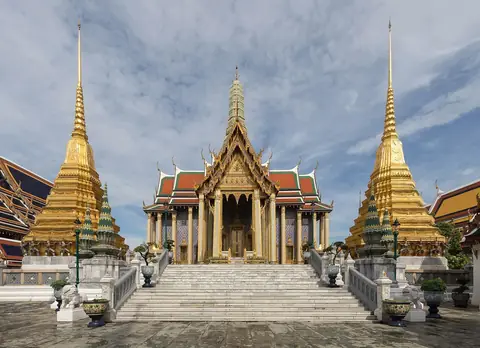
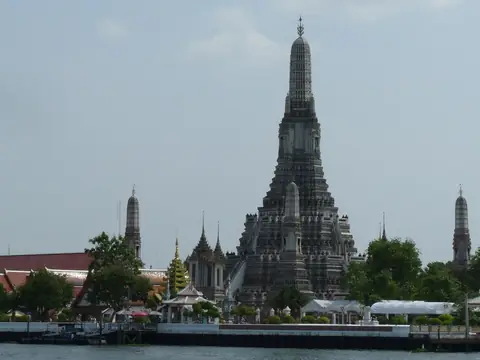
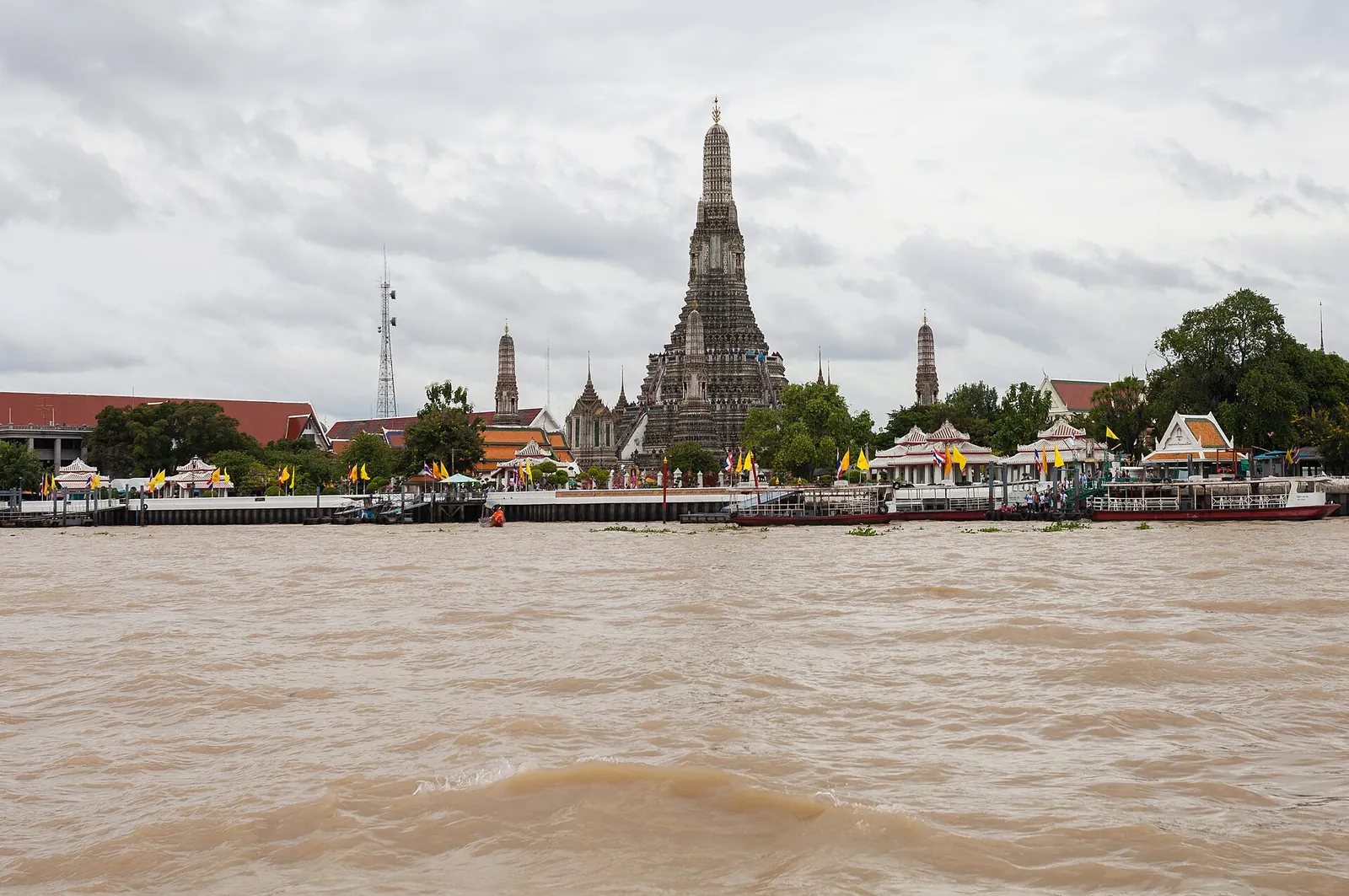
Sleep in Bang Lamphu, the old quarter by the river. On day 2, see the Grand Palace, where foreign visitors pay THB 500, including Wat Phra Kaew, the Temple of the Emerald Buddha, with shoulders and knees covered, and Wat Pho next door, with its 46-metre reclining Buddha (08:00 to 19:30, THB 300). On day 3, cross the river to Wat Arun, walk the old-city lanes, and eat in Yaowarat, Chinatown, in the evening; the MRT Blue Line links the old city and Chinatown. Our Bangkok guide has more.
Days 4–7: Siem Reap and Angkor
Day 4, the flight. Thai Airways sells Bangkok to Siem Reap on its own site; check the operating airline, the baggage and the time for your date, and search Bangkok Airways too. You land at Siem Reap Angkor International Airport (SAI), well outside town: Royal Angkor Tours runs a private car for one to three passengers for USD 45 one way, and the airport bus costs USD 8 per person. Get the Cambodian tourist eVisa and fill in the free e-Arrival form before you fly.
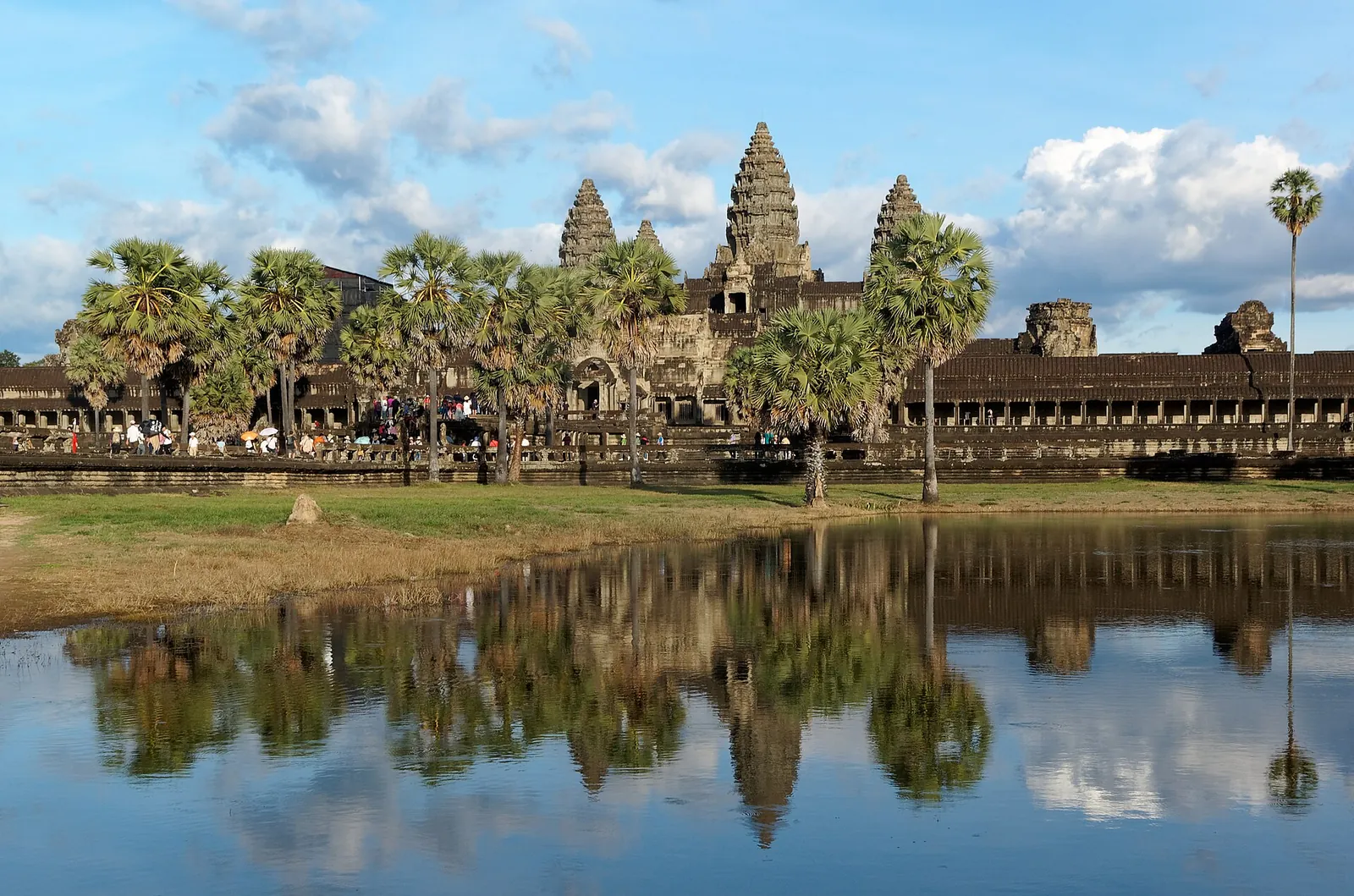
Days 5–6, the temples. Buy a three-day Angkor pass online from Angkor Enterprise (USD 62, valid on any three days within seven). On day 5, Angkor Friendly Driver's Small Circuit car (USD 55 for up to three people) picks you up at 04:30 or 05:00 for sunrise at Angkor Wat, then the Bayon with its stone faces and Ta Prohm, where trees grow through the ruins; it finishes around 16:00. On day 6, its Big Circuit car (USD 50) takes in the quieter temples of Preah Khan, Neak Pean, Ta Som, East Mebon and Pre Rup. Cover shoulders and knees, as Angkor Enterprise's code of conduct asks.
Day 7, Siem Reap. Rest, walk the Old Market and the river, or use the pass's third day for a temple you missed.
Days 8–9: Phnom Penh
Day 8. Take a daytime Giant Ibis bus to Phnom Penh; for a date in February 2027 its site showed departures from 07:45 to 14:30, taking 5 to 6 hours, at USD 17 to 26. Be at the terminal 35 minutes before departure. In the evening, walk the riverside.
Day 9. Visit the Royal Palace and the Silver Pagoda in the morning, dressed modestly; the palace opens for a morning and an afternoon session with a break at midday. Then choose between the National Museum, with its Khmer sculpture, and the Tuol Sleng Genocide Museum, the former school that the Khmer Rouge turned into a prison, where admission is USD 5 and the audio guide USD 5. Keep the rest of the day light; Tuol Sleng is a hard visit. Our Phnom Penh guide covers both.
Day 10: across the border to Ho Chi Minh City
Take the Giant Ibis bus from Phnom Penh to Ho Chi Minh City, through Bavet on the Cambodian side and Moc Bai on the Vietnamese side. For a February 2027 date its site showed four departures, at 06:00, 08:00, 09:45 and 13:35, each taking 7 hours including the border, at USD 28 to 36. The crew leads you through both passport checks and the baggage scan; check your entry stamp before you leave the desk. Keep the rest of the day free and book nothing timed for the evening.
Vietnam has no visa on arrival at a land border. Many European passports, including the UK's, Germany's, France's, Italy's, Spain's and the Nordic countries', can enter visa-free for up to 45 days; others, including the US, Canadian, Australian, Irish, Austrian and Portuguese passports, need an eVisa approved before you travel, and it must allow entry at Moc Bai. Our Vietnam entry guide has the lists.
Days 11–12: Ho Chi Minh City
Day 11. Start at the Independence Palace, open every day from 07:00 to 18:00 (VND 80,000), the palace where the war ended in April 1975, with its basement command rooms. Walk on to the Central Post Office, Nguyen Hue walking street and City Hall, and end at Ben Thanh Market for dinner.
Day 12. Visit the War Remnants Museum (VND 40,000, 07:30 to 16:30), then spend the afternoon in a neighbourhood: Cho Lon, the old Chinese district, or District 4's seafood street in the evening. A day trip to the Mekong Delta does not fit without an extra day. Our Ho Chi Minh City guide has more.
Days 13–16: Hoi An
Day 13. Fly from Ho Chi Minh City to Da Nang; Vietnam Airlines' own page showed economy fares from VND 666,181 for a February 2027 date. Check which airport and terminal your ticket uses. Da Nang airport is 29 km from Hoi An's old town; the national tourism site gives VND 250,000 to 350,000 for a hotel car and upwards of VND 450,000 for a metered taxi.
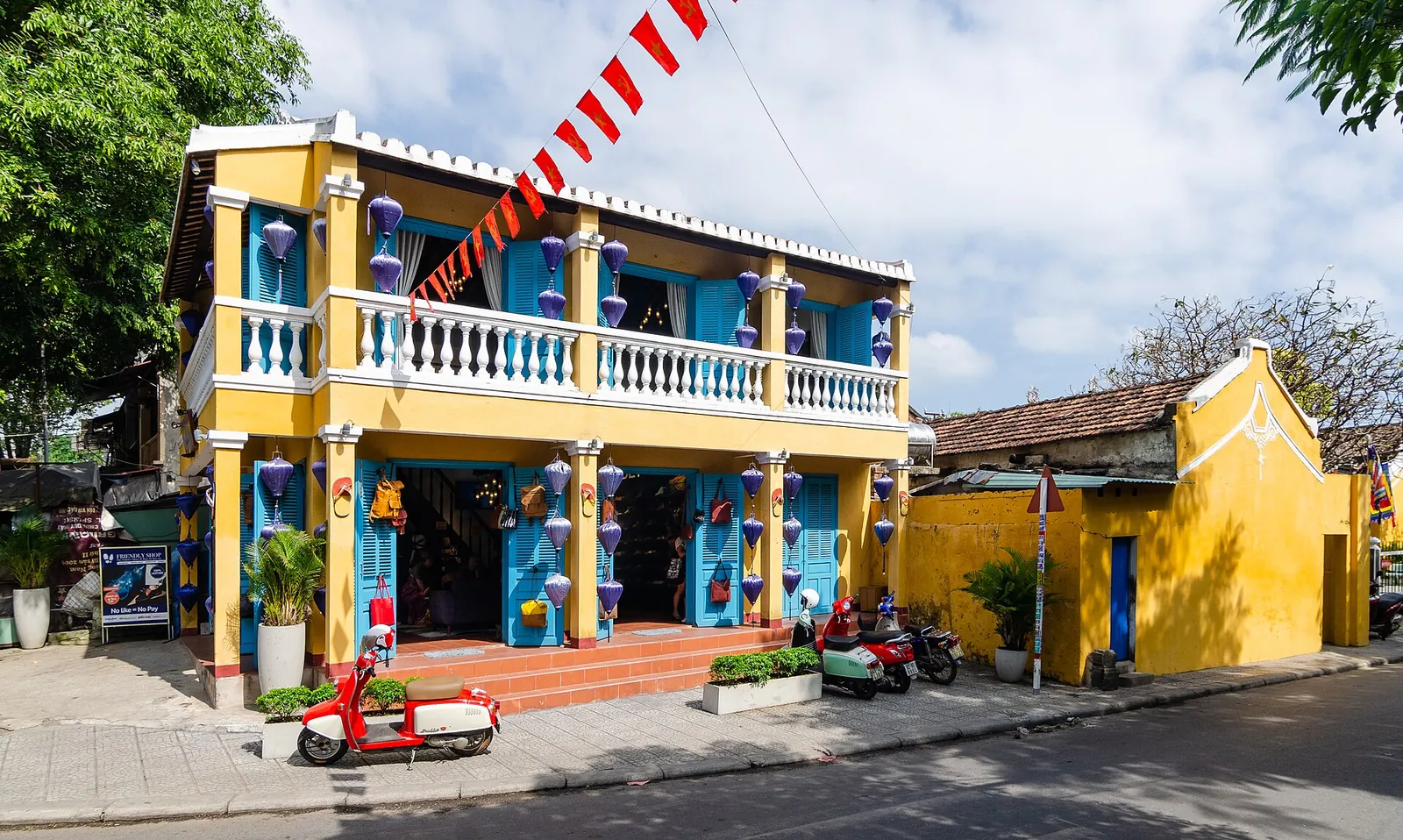
Days 14–16. Hoi An was a trading port from the 15th to the 19th centuries, and its old town keeps the merchant houses, assembly halls and the Japanese Covered Bridge. The heritage centre sells two old-town tickets, at VND 80,000 and VND 120,000, which cover a choice of the listed buildings. Walk the old town in the morning, before the heat, and come back to the riverside after dark, when the lanterns are lit; no particular monthly lantern festival is promised. Keep one day for the market, a cooking class or the beach, and the last for rest before the train. Our Hoi An guide has the details.
Days 17–20: the night train and Hanoi
Day 17, the sleeper. Take a taxi to Da Nang railway station and the Reunification Express north. Vietnam Railways' timetable for August to December 2026 lists five through trains from Da Nang to Hanoi, taking from 16 hours 8 minutes to 18 hours 41 minutes; the afternoon departures, at 12:28 and 13:21, reach Hanoi at 04:36 and 05:42 the next morning. Book two berths in a four-berth air-conditioned compartment on dsvn.vn, with your passport details, and check the 2027 timetable for your date. The line runs along the coast and over the Hai Van Pass.
Day 18. Leave your bags at the hotel, since your room will not be ready at dawn, and walk around Hoan Kiem Lake and the 36 guild streets of the Old Quarter at an easy pace.
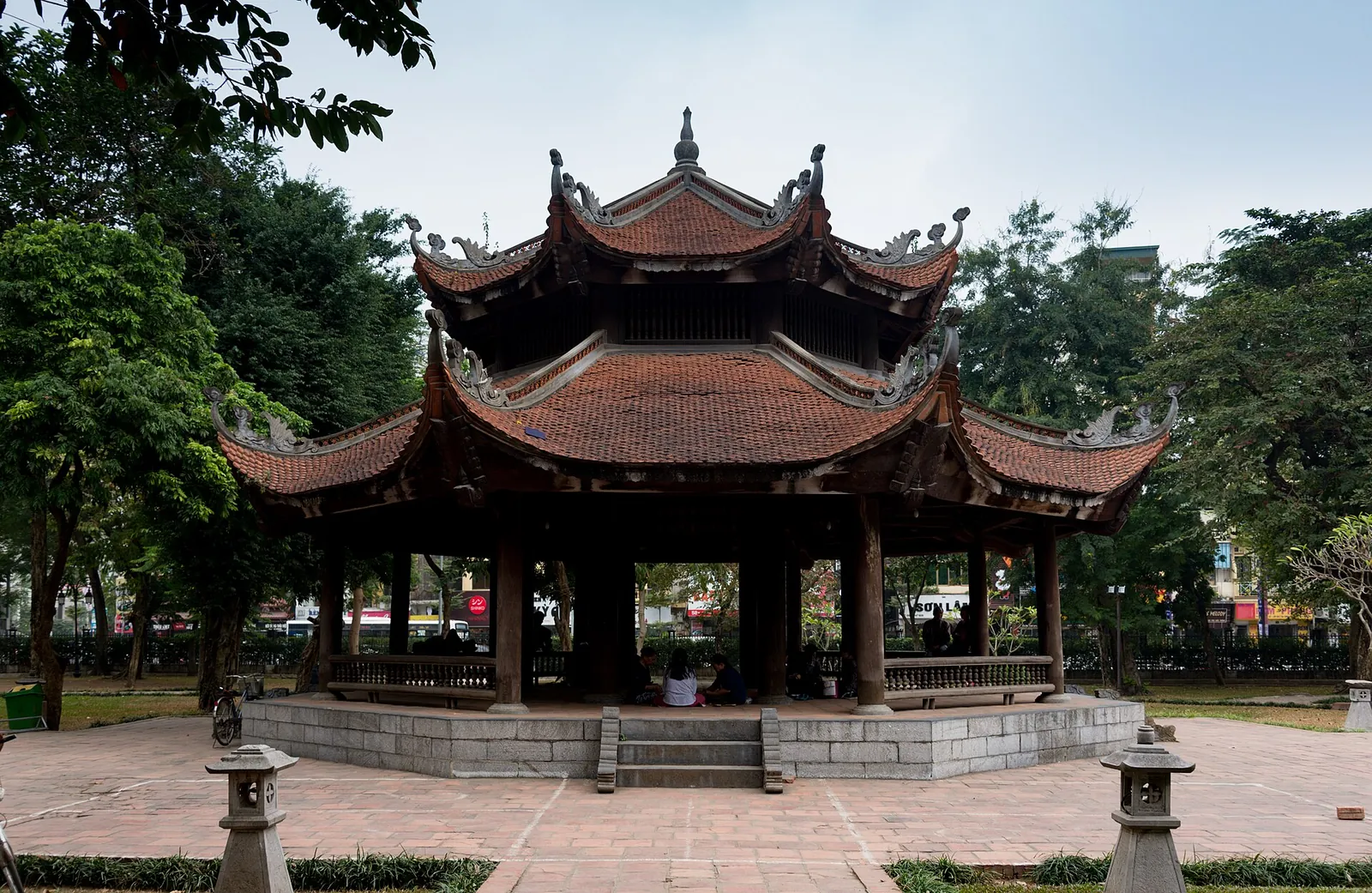
Days 19–20. See the Temple of Literature, built in 1070, whose college became Vietnam's first university in 1076 (08:00 to 17:00, VND 70,000), the Thang Long Citadel and a museum of your choice, such as the Vietnamese Women's Museum. Keep day 20 as a free day or a weather buffer; our Hanoi guide has more.
Day 21. Noi Bai airport is about 27 km from the city, usually an hour by taxi; the national tourism site gives VND 300,000 to 400,000 for a metered taxi, plus a toll.
What three weeks cost, all in
For two adults sharing a room, the whole trip costs about USD 1,900 per person, everything on the ground included, checked on 23 October 2026 and converted at round planning rates of USD 1 = THB 35 = VND 25,000. The flights and the train are estimates, because 2027 fares were not all on sale.
- Rooms, about USD 510. Half of a double each night: Lamphu Tree House in Bangkok (THB 1,450 for two, with breakfast), about USD 40 a night in Siem Reap and USD 45 in Phnom Penh, 108 Nguyen Du at the Independence Palace in Ho Chi Minh City (VND 1,600,000 with breakfast and a palace visit), about USD 60 a night in Hoi An and Hanoi Garden Hotel (VND 1,350,000).
- Flights, buses and the train, about USD 320. Bangkok–Siem Reap about THB 6,000, the two Giant Ibis buses about USD 55 together, Ho Chi Minh City–Da Nang about VND 1,000,000 and the sleeper berth about VND 1,400,000.
- Food, about USD 525. About USD 25 a day each for three meals and drinks.
- Angkor cars and city transport, about USD 190. Half of the two Angkor cars (USD 105 together), airport cars and taxis in six cities.
- Tickets, about USD 130. The three-day Angkor pass (USD 62), the Grand Palace and Wat Pho, the Royal Palace, Tuol Sleng with its audio guide, the Independence Palace and War Remnants Museum, a Hoi An old-town ticket and the Temple of Literature.
- Visa and SIM cards, about USD 65. The Cambodian tourist eVisa (USD 30) and a SIM in each country. If your passport needs a Vietnamese eVisa, add USD 25.
- Buffer, about USD 170. About 10% for price changes and extra rides.
Make time for the local food
What to eat and where to look
Pad thai goong
Stir-fried rice noodles with prawns, sweet, sour and salty.
- Where to look
- Samsen Street Hotel, 66 Soi Woraphong, Phra Nakhon, Bangkok, a walk from Bang Lamphu.
- Fit it into your day
- Lunch on day 2, after the Grand Palace.
Fish amok
A mild, fragrant coconut curry of freshwater fish, steamed or simmered, served at HAVEN with mushrooms, noni leaves, a tamarind dip and red rice.
- Where to look
- HAVEN, Siem Reap; USD 7.50 on its Khmer menu.
- Fit it into your day
- Dinner on day 5, after the Small Circuit.
Com tam (broken rice)
Broken rice under a honey-glazed grilled pork chop with a fried egg, pickled papaya and sweet fish sauce; the national tourism site calls it the city's go-to breakfast.
- Where to look
- Com tam Ba Ghien, 84 Dang Van Ngu Street, Phu Nhuan District, Ho Chi Minh City.
- Fit it into your day
- Breakfast on day 11.
Cao lau
Hoi An's own noodle dish: thick, firm noodles topped with slices of pork belly, bean sprouts and fresh herbs.
- Where to look
- Cao Lau Thanh, 26 Thai Phien, Hoi An, one of the places the national tourism site names.
- Fit it into your day
- Lunch on day 14.
Bun cha
Chargrilled pork belly and patties in diluted vinegar fish sauce, eaten with cold rice noodles and herbs; almost exclusively a lunch dish in Hanoi.
- Where to look
- Bun cha at 40 Cua Dong Street, Hanoi, listed by the national tourism site.
- Fit it into your day
- Lunch on day 19.
Visas, arrival cards and the season
Many European passports can enter Thailand visa-free for up to 30 days. Fill in the free Thailand Digital Arrival Card within three days before you arrive. Cambodia needs a visa for most visitors: the tourist eVisa (type T) costs USD 30, allows a 30-day stay, and the e-Arrival form for air arrivals is free. Vietnam's rules are in the border section above. Use only the official sites for each visa and form.
Late February and March are a good compromise: after Vietnam's Tet holiday, which for the public sector runs from 4 to 10 February 2027, when trains, flights and hotels fill and many businesses close, and before the April heat and the Thai and Khmer New Year holidays in mid-April. Central Vietnam's rainy season brings floods that can cut roads and the railway from September to November, so keep a flight as a fallback for the train.
Practical questions
Can I go overland from Bangkok to Siem Reap?
Not at the moment. The UK Foreign Office says the land borders between Thailand and Cambodia remain suspended, so this plan flies from Bangkok to Siem Reap. We will update the guide if the crossings reopen.
How do I cross from Cambodia to Vietnam by bus?
Take a Giant Ibis bus from Phnom Penh to Ho Chi Minh City through Bavet and Moc Bai; for a February 2027 date it showed four departures a day, each about 7 hours including the border, at USD 28 to 36. Vietnam has no visa on arrival at land borders, so arrange an eVisa first if your passport is not visa-free.
Do I need visas?
Thailand lets many European passports in visa-free for up to 30 days. Cambodia needs a visa for most visitors (the tourist eVisa costs USD 30). Vietnam is visa-free for up to 45 days for passports such as the UK's, Germany's and France's, and needs an eVisa for others.
How long is the train from Da Nang to Hanoi?
Between 16 hours 8 minutes and 18 hours 41 minutes on Vietnam Railways' timetable for late 2026, depending on the train. The afternoon trains arrive in Hanoi early the next morning.
How much do three weeks in Thailand, Cambodia and Vietnam cost?
About USD 1,900 per person for two sharing a room, all in: 19 hotel nights and a train berth, meals, two flights, two buses, the train, Angkor cars, city transport, tickets, the Cambodian eVisa, SIM cards and a 10% buffer. Add USD 25 if you need a Vietnamese eVisa; flights to Bangkok and home from Hanoi are extra.
Sources and checks before you travel
Reference sources for the version dated 23 October 2026. Confirm opening times, access, transport and conditions for your travel dates.
- UK Foreign Office (FCDO): Cambodia travel advice ↗ — opens in a new tab
- UK Foreign Office (FCDO): Thailand warnings and insurance ↗ — opens in a new tab
- France Diplomatie: Thaïlande, sécurité (French) ↗ — opens in a new tab
- Thai Airways: Bangkok to Siem Reap ↗ — opens in a new tab
- The Grand Palace: practical information ↗ — opens in a new tab
- Wat Pho: visit and massage services ↗ — opens in a new tab
- Lamphu Tree House: room tariff ↗ — opens in a new tab
- Samsen Street Hotel: actual lunch and dinner menus ↗ — opens in a new tab
- Mad Monkey Siem Reap: Superior Double ↗ — opens in a new tab
- Royal Angkor Tours: SAI private transfers ↗ — opens in a new tab
- Siem Reap Airport Bus: fares, timetable and stops ↗ — opens in a new tab
- YACA: Siem Reap airport background ↗ — opens in a new tab
- Angkor Enterprise: available passes ↗ — opens in a new tab
- Angkor Enterprise: visitor code of conduct ↗ — opens in a new tab
- Angkor Enterprise: Angkor Wat ↗ — opens in a new tab
- Angkor Enterprise: Bayon ↗ — opens in a new tab
- Angkor Friendly Driver: Small Circuit Option 1 ↗ — opens in a new tab
- SPOONS: breakfast menu ↗ — opens in a new tab
- HAVEN: Khmer main-course menu ↗ — opens in a new tab
- AKP: electronic visa fee ↗ — opens in a new tab
- Cambodia General Department of Immigration: e-Arrival ↗ — opens in a new tab
- Royal Embassy of Cambodia in Canberra: tourist visa ↗ — opens in a new tab
- Royal Thai Embassy Helsinki: nationality-specific entry schemes ↗ — opens in a new tab
- World Bank and Asian Development Bank: Cambodia climate profile ↗ — opens in a new tab
- TAT Newsroom: Old City and Yaowarat by MRT Blue Line ↗ — opens in a new tab
- Giant Ibis: published bus schedule ↗ — opens in a new tab
- Giant Ibis: terms and conditions ↗ — opens in a new tab
- Giant Ibis: Siem Reap to Phnom Penh, 8 February 2027 ↗ — opens in a new tab
- Giant Ibis: Phnom Penh to Ho Chi Minh City, 10 February 2027 ↗ — opens in a new tab
- Giant Ibis: Ho Chi Minh City to Phnom Penh ↗ — opens in a new tab
- Royal Embassy of Cambodia in Berlin: border crossings accepting the e-Visa ↗ — opens in a new tab
- Vietnam National Authority of Tourism: Vietnam visa requirements ↗ — opens in a new tab
- Angkor Friendly Driver: Big Circuit private tour ↗ — opens in a new tab
- Cambodia Tourism Board: bamboo sticky rice ↗ — opens in a new tab
- National Museum of Cambodia: admission ↗ — opens in a new tab
- Tuol Sleng Genocide Museum ↗ — opens in a new tab
- Ministry of Foreign Affairs: Viet Nam's visa exemption list ↗ — opens in a new tab
- Vietnam Tourism: new visa exemption policies from 15 August 2025 ↗ — opens in a new tab
- Vietnam Immigration Department: e-visa portal notice and conditions ↗ — opens in a new tab
- UK Foreign Office: Vietnam, entry requirements ↗ — opens in a new tab
- 108 Nguyen Du Guesthouse (Independence Palace) ↗ — opens in a new tab
- Vietnam Tourism: 7 must-see attractions in HCMC ↗ — opens in a new tab
- Vietnam Tourism: Vietnam's must-see museums ↗ — opens in a new tab
- Vietnam Airlines: flights from Ho Chi Minh City to Da Nang ↗ — opens in a new tab
- VNAT: Travellers' guide to Vietnam's airports ↗ — opens in a new tab
- Hoi An World Cultural Heritage Conservation Centre: notice on visiting the Old Town (English, 28 January 2026) ↗ — opens in a new tab
- Vietnam National Authority of Tourism: the best ways to explore the ancient town of Hoi An ↗ — opens in a new tab
- Vietnam Railways: Thong Nhat timetable, northbound ↗ — opens in a new tab
- Vietnam Tourism: Vietnam railway ↗ — opens in a new tab
- Vietnam Railways: passenger rules (identity papers) ↗ — opens in a new tab
- Hanoi Garden Hotel & Spa: official site ↗ — opens in a new tab
- Temple of Literature (Van Mieu - Quoc Tu Giam): official site ↗ — opens in a new tab
- VNAT: Six heritage sites that capture the story and spirit of Ha Noi ↗ — opens in a new tab
- VNAT: Explore the Old Quarter your way ↗ — opens in a new tab
- Vietnamese Women's Museum: visit page ↗ — opens in a new tab
- VNAT: 10 must-try Hanoian dishes ↗ — opens in a new tab
- Government of Viet Nam: 2027 public holiday schedule ↗ — opens in a new tab
- Vietnam National Authority of Tourism: Tet, Lunar New Year ↗ — opens in a new tab
- Vietnam Tourism: weather and climate in Vietnam ↗ — opens in a new tab
- France Diplomatie: Vietnam safety advice ↗ — opens in a new tab
Photo credits
Hoi An's old town, four nights near the end of the three weeks.
Photograph: Steffen Schmitz ( more photos ) — opens in a new tab · CC BY-SA 4.0 — opens in a new tab
Changes: Resized and converted to WebP; displayed with responsive crops. · Original photograph and licence details ↗ — opens in a new tab
Wat Arun across the Chao Phraya, on the third Bangkok day.
Photograph: Diego Delso — opens in a new tab · CC BY-SA 3.0 — opens in a new tab
Changes: Resized and converted to WebP; displayed with responsive crops. · Original photograph and licence details ↗ — opens in a new tab
Angkor Wat, the first stop of the Small Circuit on day 5.
Photograph: Jakub Hałun — opens in a new tab · CC BY-SA 4.0 — opens in a new tab
Changes: Resized and converted to WebP; displayed with responsive crops. · Original photograph and licence details ↗ — opens in a new tab
The Temple of Literature in Hanoi, built in 1070, on day 19.
Photograph: Xiquinho Silva — opens in a new tab · CC BY 2.0 — opens in a new tab
Changes: Resized and converted to WebP; displayed with responsive crops. · Original photograph and licence details ↗ — opens in a new tab