Northern Thailand · Chiang Rai
Chiang Saen travel guide: Lanna ruins and the Golden Triangle
Chiang Saen is an old walled city on the Mekong, one of the cradles of the Lanna kingdom, whose brick chedis stand among trees and modern houses. A few kilometres upstream, the river meets the Ruak at the Golden Triangle, where Thailand, Laos and Myanmar face each other across the water. Most visitors rush through on a tour; staying a night lets you see the ruins quietly and the river at sunset.
- Suggested time
- 1 day; 2 with an overnight
- Where to stay
- Chiang Saen old town by the Mekong
- Season and timing
- November to February is coolest and clearest over the river.
The short answer
Give Chiang Saen a full day from Chiang Rai, or one night. Walk or cycle among the ruins inside the old walls, climb to Wat Phra That Chom Kitti for the view, then head to the Golden Triangle viewpoints and the Hall of Opium museum. Have dinner on the Mekong riverfront. Chiang Saen is about an hour's drive north of Chiang Rai.
The old city and its ruins
Chiang Saen's ramparts and moats enclose dozens of ruined temples, from small brick chedis to large monasteries. They are free to wander, scattered among houses and orchards, and best explored by bicycle in the morning or late afternoon.
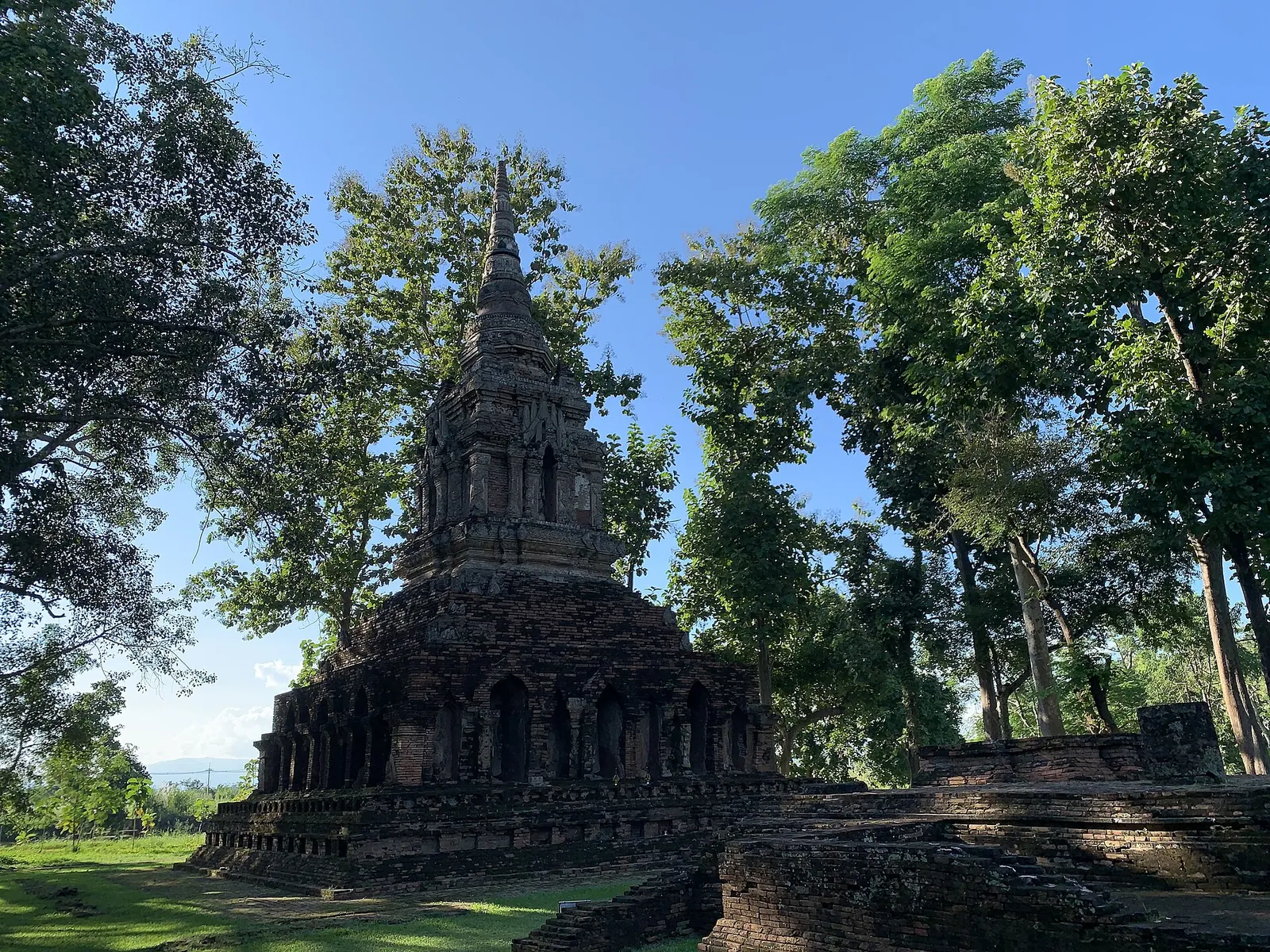
Just outside the main western gate, Wat Pa Sak — the 'teak forest' temple — was founded in the reign of Phaya Saen Phu (1325–1336), according to the Fine Arts Department, which cites the northern chronicle Jinakalamali: the king had a stupa built for a relic of the Buddha and 300 teak trees planted around it. Its square main stupa, with niches for Buddha images on each side, carries fine stucco decoration; pieces of it are displayed in the museum.
The Chiang Saen National Museum, run by the Fine Arts Department, holds Lanna Buddha images, stucco ornaments and stone inscriptions from the old city, as well as prehistoric tools found by the Mekong. Check its current opening status on the department's page before you go.
Wat Phra That Chom Kitti
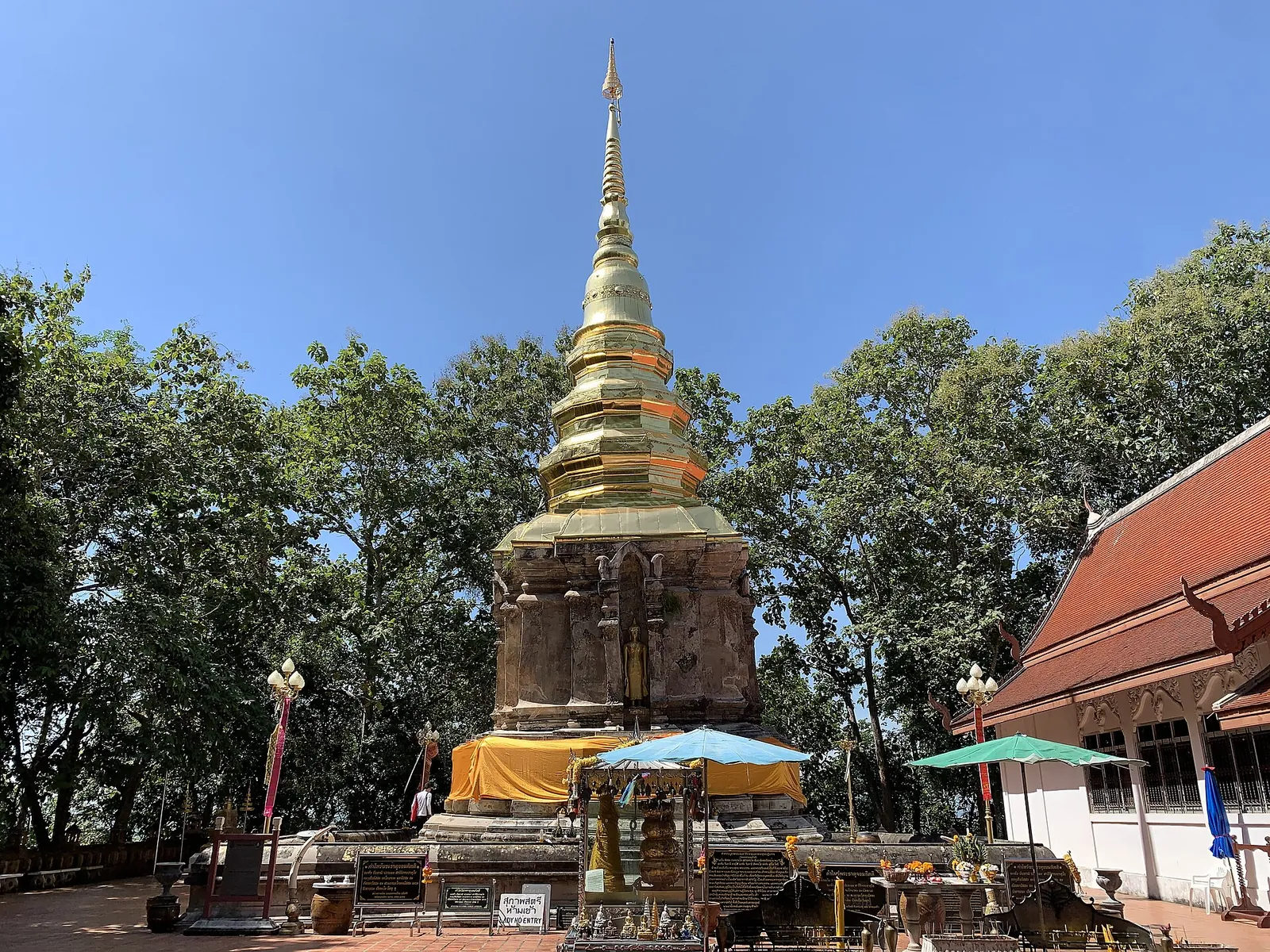
On a hill just outside the walls, Wat Phra That Chom Kitti is one of the nine sacred relic temples of Chiang Rai, as the Ministry of Tourism and Sports' directory records. Its bell-shaped chedi in Chiang Saen style was built to house relics, and later rebuilt by a ruler of Chiang Saen.
Climb the steps for a view over the old city and the Mekong. It is a quiet place at the end of the day.
Make time for the local food
What to eat and where to look
Mekong river fish
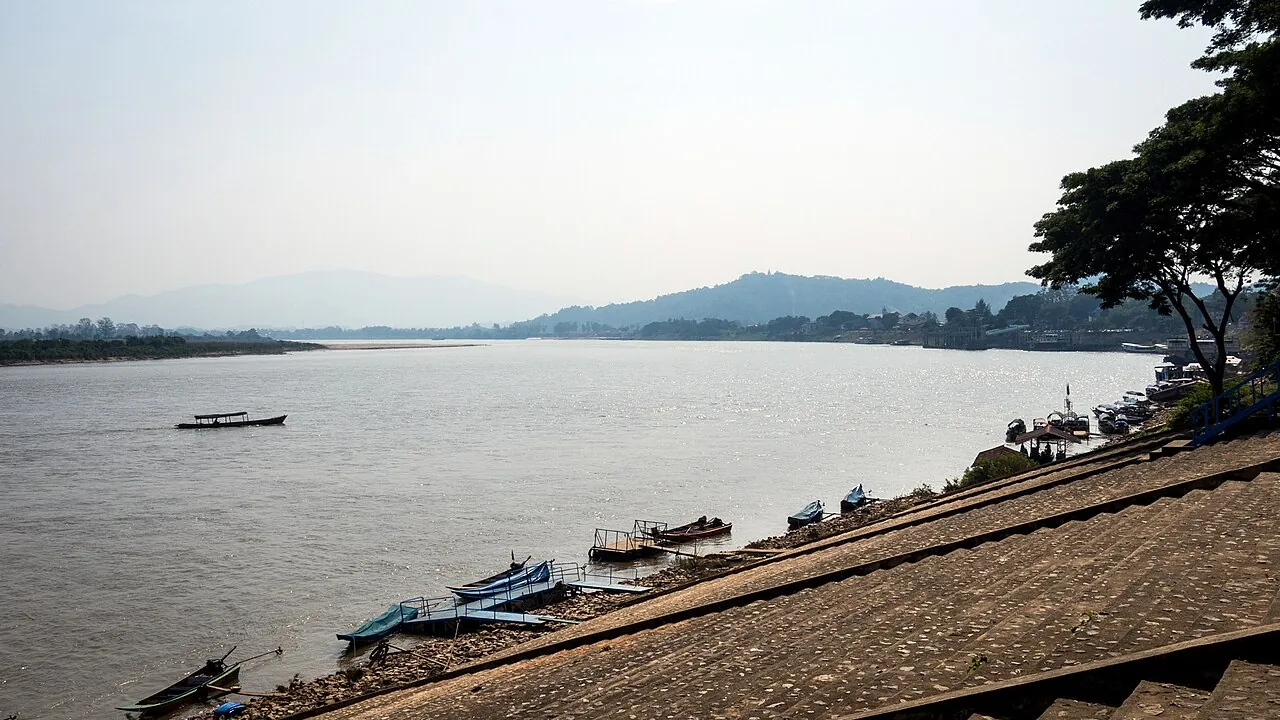
Fish from the Mekong, grilled, steamed or in curries, at restaurants along the riverfront.
- Where to look
- Riverside restaurants in Chiang Saen.
- Fit it into your day
- Dinner facing the river at sunset.
Fish bones; prices are often by weight.
Khao soi
The north's coconut-curry noodle soup, served at simple shops in town.
- Where to look
- Noodle shops in the old town.
- Fit it into your day
- Lunch between the ruins and the Golden Triangle.
Contains coconut and wheat noodles.
Northern sausage and sticky rice
Sai ua and other northern snacks from the market.
- Where to look
- The town market in the morning.
- Fit it into your day
- A picnic for a day of cycling among the ruins.
Pork; often spicy.
The Golden Triangle
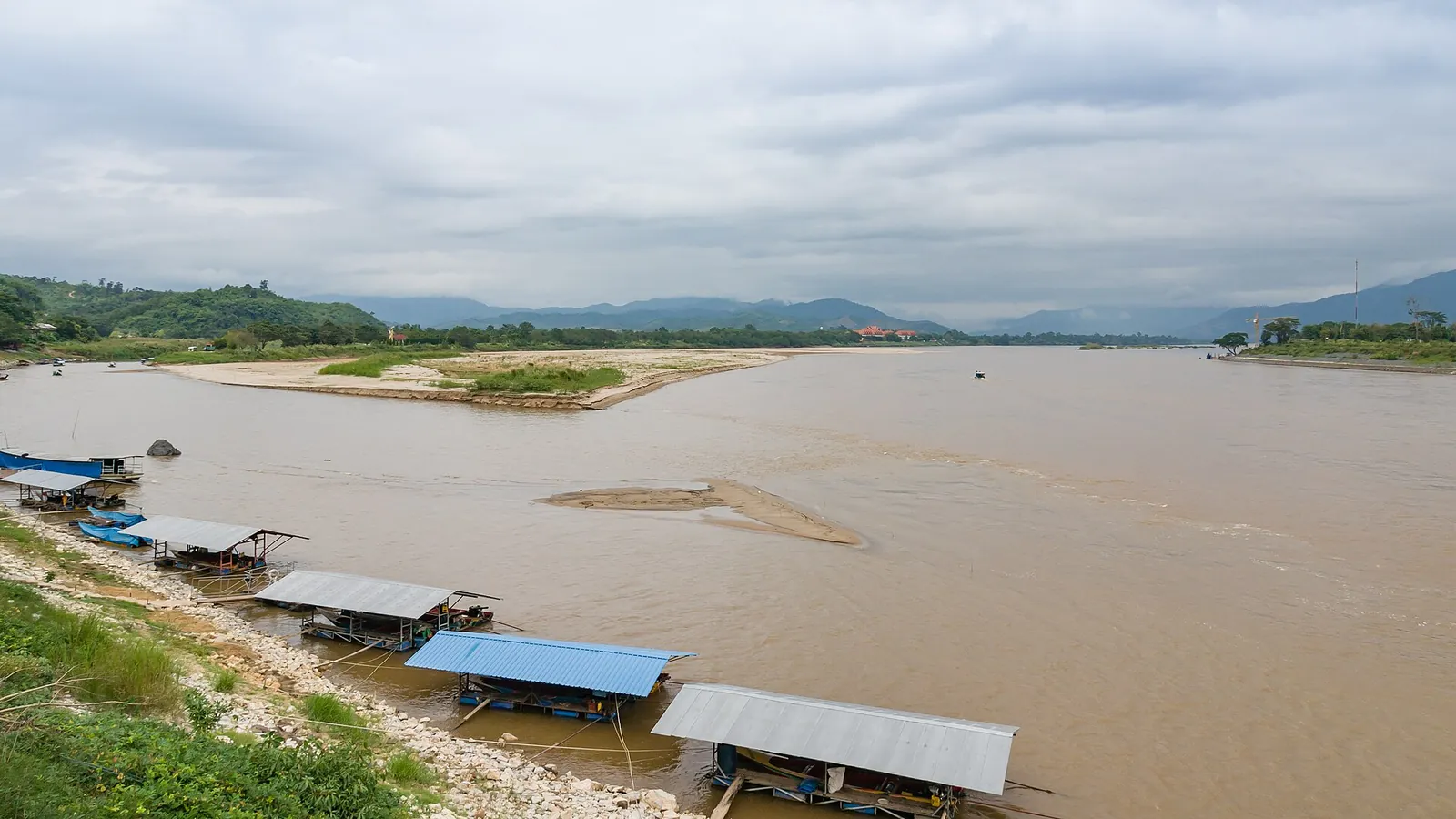
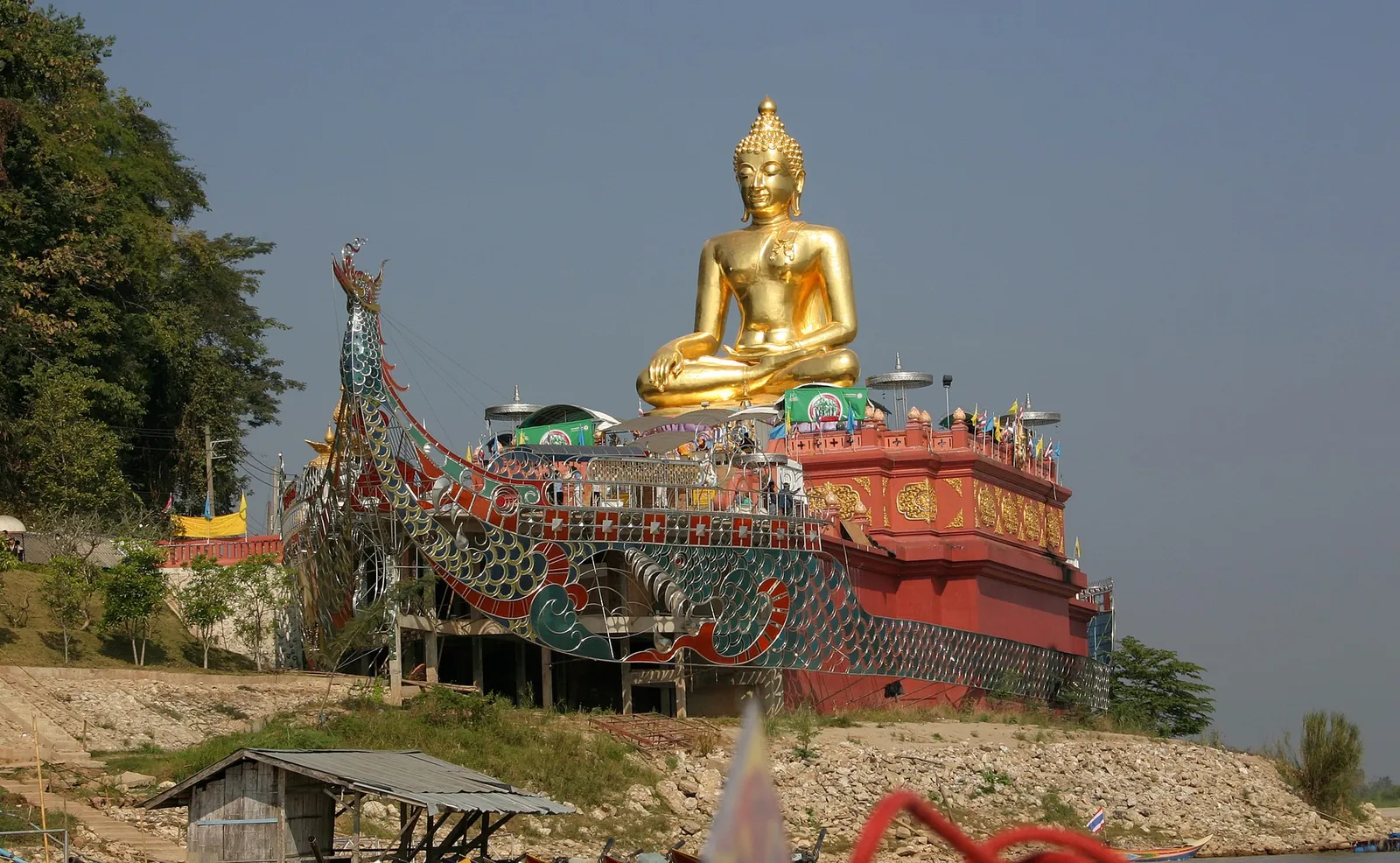
At Sop Ruak, a few kilometres north, the Mekong and the Ruak meet at the point where Thailand, Laos and Myanmar converge — the Golden Triangle. Viewpoints and a large seated Buddha look over the confluence; longtail boats take visitors onto the river.
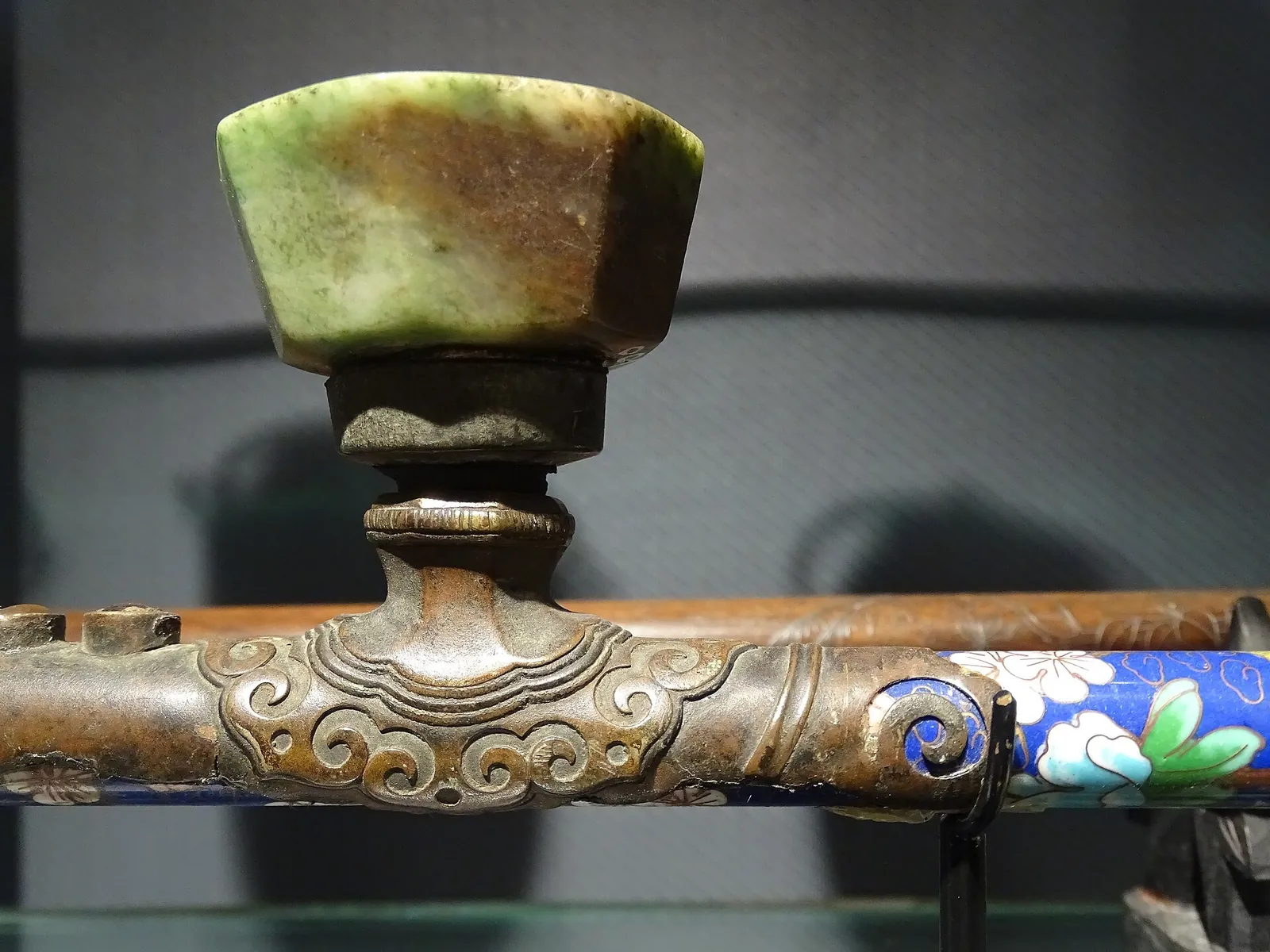
The name once meant the region's opium trade. The Hall of Opium museum near Sop Ruak explains that history and its human cost; give it at least an hour.
Border caution
Boat trips sometimes stop at a market on the Lao side. Check the current rules before you go: you may need your passport, and crossing into Laos or Myanmar requires the proper border procedures and visas. Do not cross on an informal stop.
Follow official advice on the border area, and keep to licensed operators.
Getting there
Chiang Saen is roughly an hour's drive north of Chiang Rai town. Buses run from Chiang Rai's old bus terminal; a car or driver lets you combine Chiang Saen, the Golden Triangle and the hill viewpoints in one day.
Fly into Mae Fah Luang–Chiang Rai International Airport, which TAT reports now has a direct flight from Singapore as well as Bangkok services.
Practical questions
How far is Chiang Saen from Chiang Rai?
Roughly an hour by road north of Chiang Rai town.
What is the Golden Triangle?
The confluence of the Mekong and Ruak rivers where Thailand, Laos and Myanmar meet, once known for the opium trade.
Can I cross into Laos by boat?
Only through official border procedures with the right documents. Check the current rules and do not cross on an informal stop.
Is Chiang Saen worth an overnight stay?
Yes, if you want to cycle among the ruins in the cool of the morning and see the river at sunset without a tour group.
Sources and checks before you travel
Reference sources for the version dated 1 October 2026. Confirm opening times, access, transport and conditions for your travel dates.
- Thailand Tourism Directory: Wat Phra That Chom Kitti ↗ — opens in a new tab
- Fine Arts Department: Chiang Saen National Museum ↗ — opens in a new tab
- Fine Arts Department: Chiang Saen National Museum history ↗ — opens in a new tab
- TAT Newsroom: Singapore–Chiang Rai flight ↗ — opens in a new tab
- Thailand.go.th: the seasons of Thailand ↗ — opens in a new tab
Does this experience fit your route?
Compare the programme, departure point and practical requirements with your travel plans.
Check dates and details on Viator ↗ — opens in a new tabAffiliate link · Book with ViatorPhoto credits
Wat Pa Sak, among the ruins of old Chiang Saen.
Photograph: Chainwit. — opens in a new tab · CC BY 4.0 — opens in a new tab
Changes: Resized and converted to WebP; displayed with responsive crops. · Original photograph and licence details ↗ — opens in a new tab
The Golden Triangle, where the Ruak meets the Mekong.
Photograph: CEphoto, Uwe Aranas — opens in a new tab · CC BY-SA 3.0 — opens in a new tab
Changes: Resized and converted to WebP; displayed with responsive crops. · Original photograph and licence details ↗ — opens in a new tab
The giant seated Buddha at the Golden Triangle.
Photograph: Gerd Eichmann — opens in a new tab · CC BY-SA 4.0 — opens in a new tab
Changes: Resized and converted to WebP; displayed with responsive crops. · Original photograph and licence details ↗ — opens in a new tab
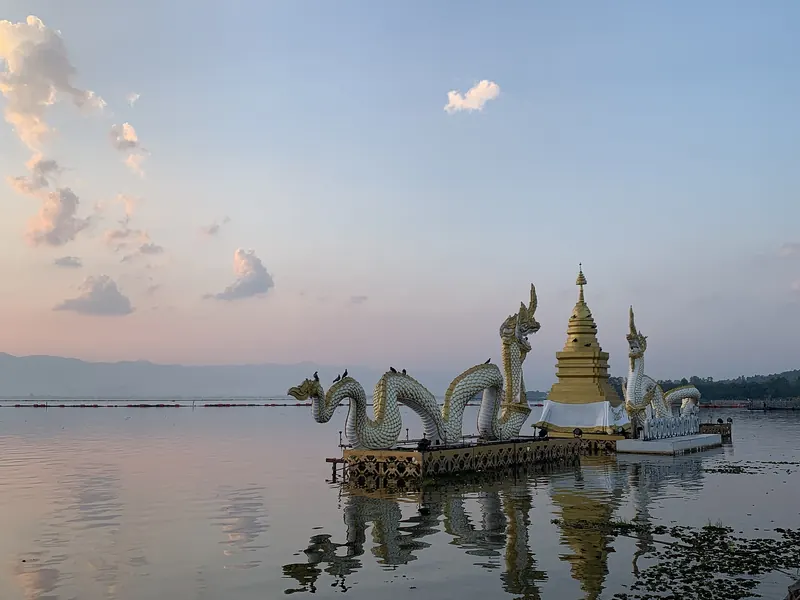
The Mekong riverfront at Chiang Saen.
Photograph: Takeaway — opens in a new tab · CC BY-SA 3.0 — opens in a new tab
Changes: Resized and converted to WebP; displayed with responsive crops. · Original photograph and licence details ↗ — opens in a new tab
An opium pipe in the Hall of Opium museum.
Photograph: Adam Jones from Kelowna, BC, Canada — opens in a new tab · CC BY-SA 2.0 — opens in a new tab
Changes: Resized and converted to WebP; displayed with responsive crops. · Original photograph and licence details ↗ — opens in a new tab
Wat Phra That Chom Kitti, outside the old city walls.
Photograph: Chainwit. — opens in a new tab · CC BY-SA 4.0 — opens in a new tab
Changes: Resized and converted to WebP; displayed with responsive crops. · Original photograph and licence details ↗ — opens in a new tab