Northern Thailand · Lamphun
Lamphun travel guide: Hariphunchai temples and an easy day from Chiang Mai
Lamphun is older than Chiang Mai. TAT describes it as the capital of the Hariphunchai Kingdom, the northernmost city of the Mon world of the Dvaravati period, brought into Lanna by King Mengrai in 1281. Today it is a quiet provincial town of moats and temples, 40 minutes south of Chiang Mai, and one of the most rewarding short trips from the city.
- Suggested time
- Half a day to 1 day
- Where to stay
- Day trip from Chiang Mai; or Lamphun town
- Season and timing
- November to February is coolest; Lamphun's longan harvest comes in the hot, early rainy season.
The short answer
Lamphun makes an easy half-day or day trip from Chiang Mai: Wat Phra That Hariphunchai and the Hariphunchai National Museum in the centre, Wat Chamthewi a short ride away, and a visit to see yok dok silk. TAT notes it is a 40-minute drive; take the old Highway 106 for the rubber-tree avenue. Stay overnight only if you want the town to yourself in the evening.
Wat Phra That Hariphunchai
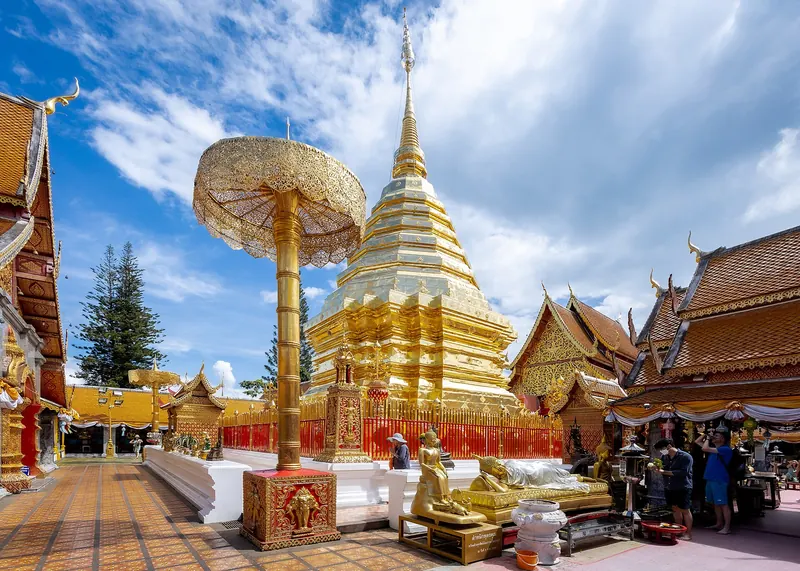
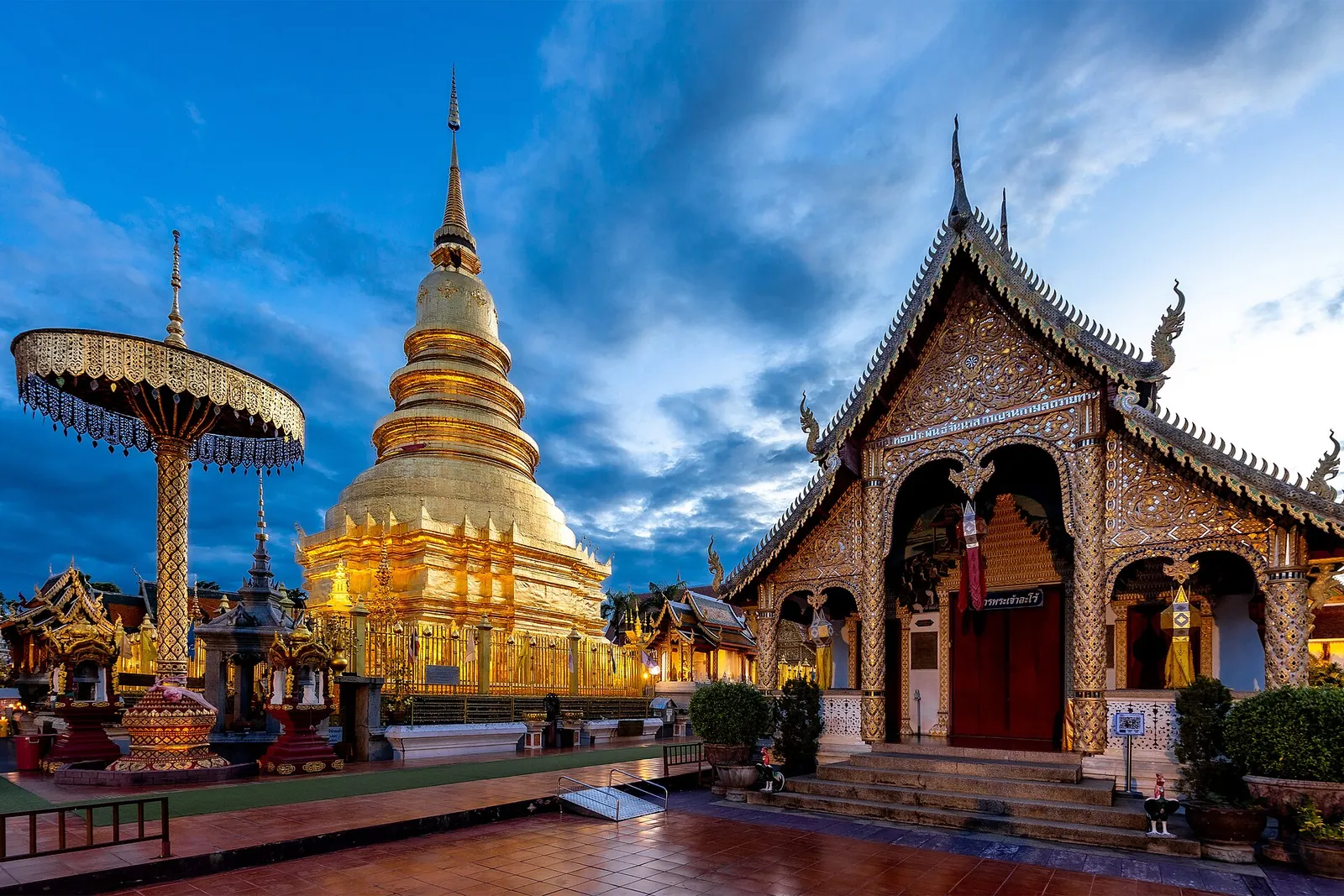
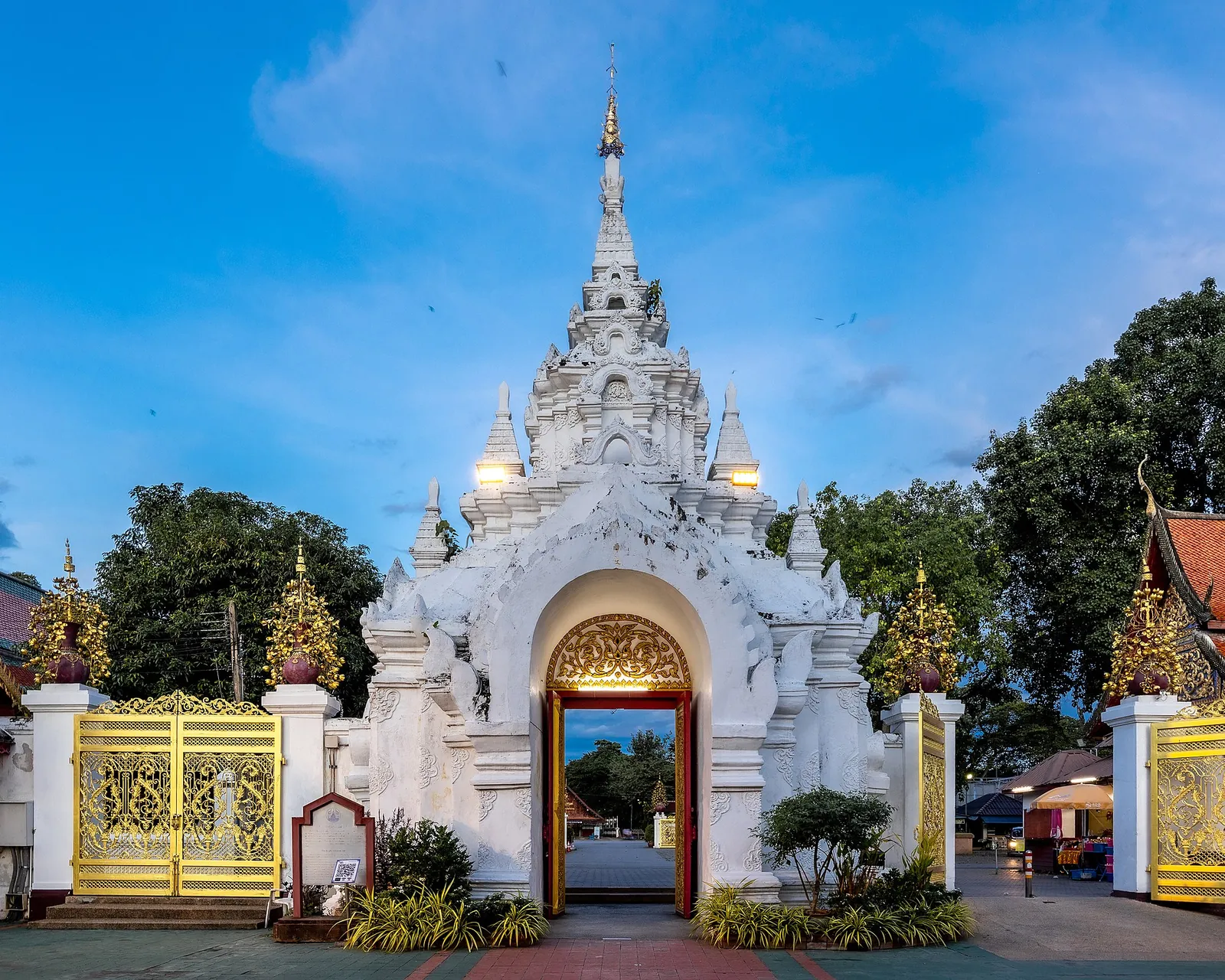
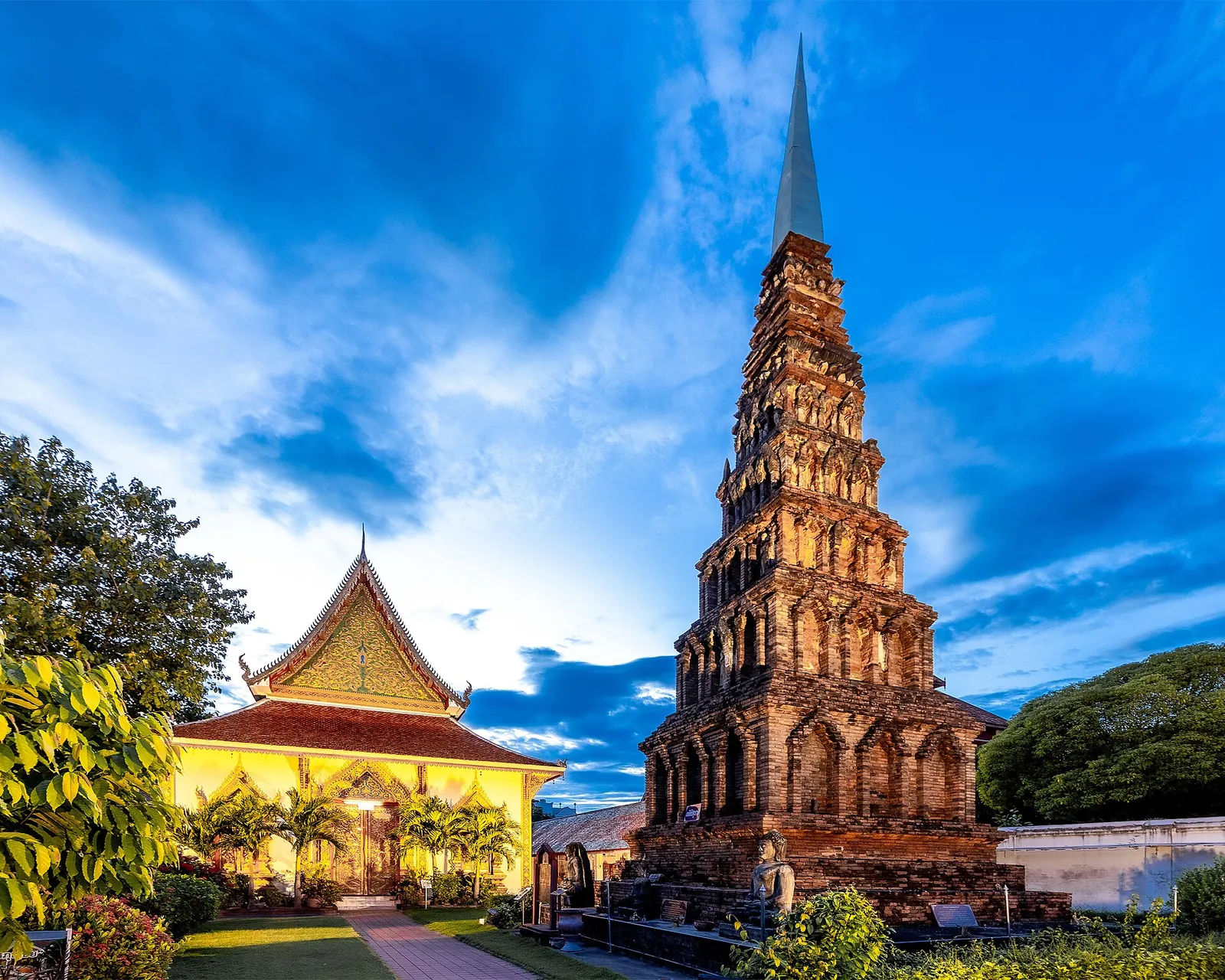
Wat Phra That Hariphunchai, in the centre of town, is the province's most famous temple. TAT explains that its central stupa is said to date from around 897, built to house a hair of the Buddha, while the compound itself dates from the 11th century; the Ministry of Tourism and Sports' directory notes that it stands on the site of King Athitayaraj's palace. Chiang Mai's Doi Suthep temple was modelled on it.
Look for the 19th-century library, the giant bronze gong and the gold nine-tiered umbrella on the main chedi. Enter through the lion-guarded gate facing the river, dress modestly and remove shoes in the halls.
Wat Chamthewi and the queen of Hariphunchai
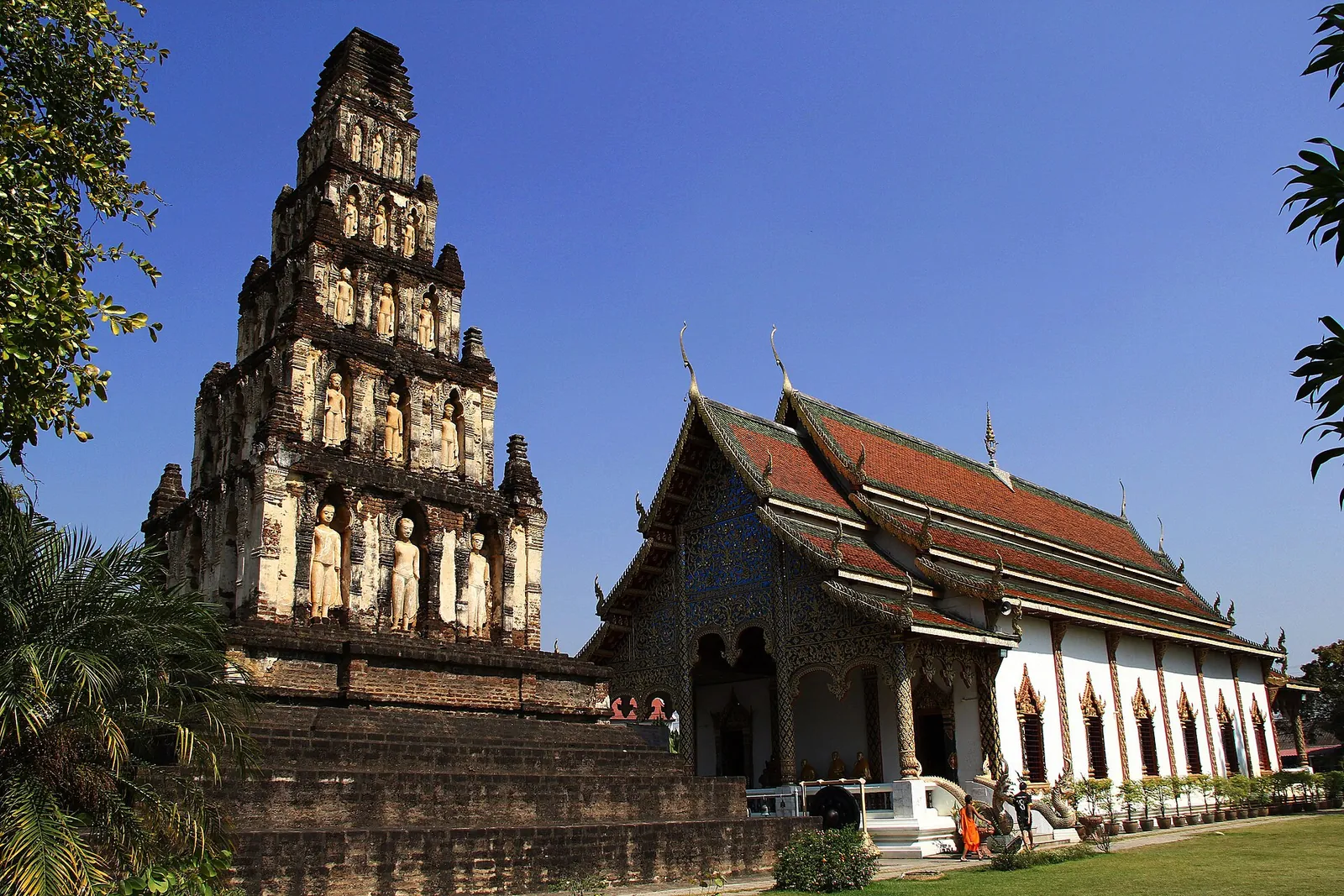
A short ride west, Wat Chamthewi (Wat Ku Kut) is revered because the ashes of Queen Chamthewi, the legendary first ruler of Hariphunchai, are believed to be enshrined in one of its pagodas. TAT describes murals of her life in the wihan and a small museum.
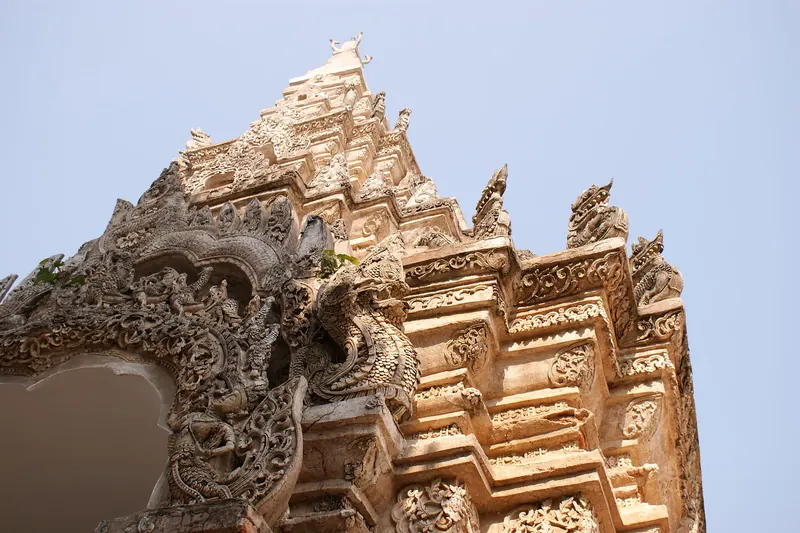
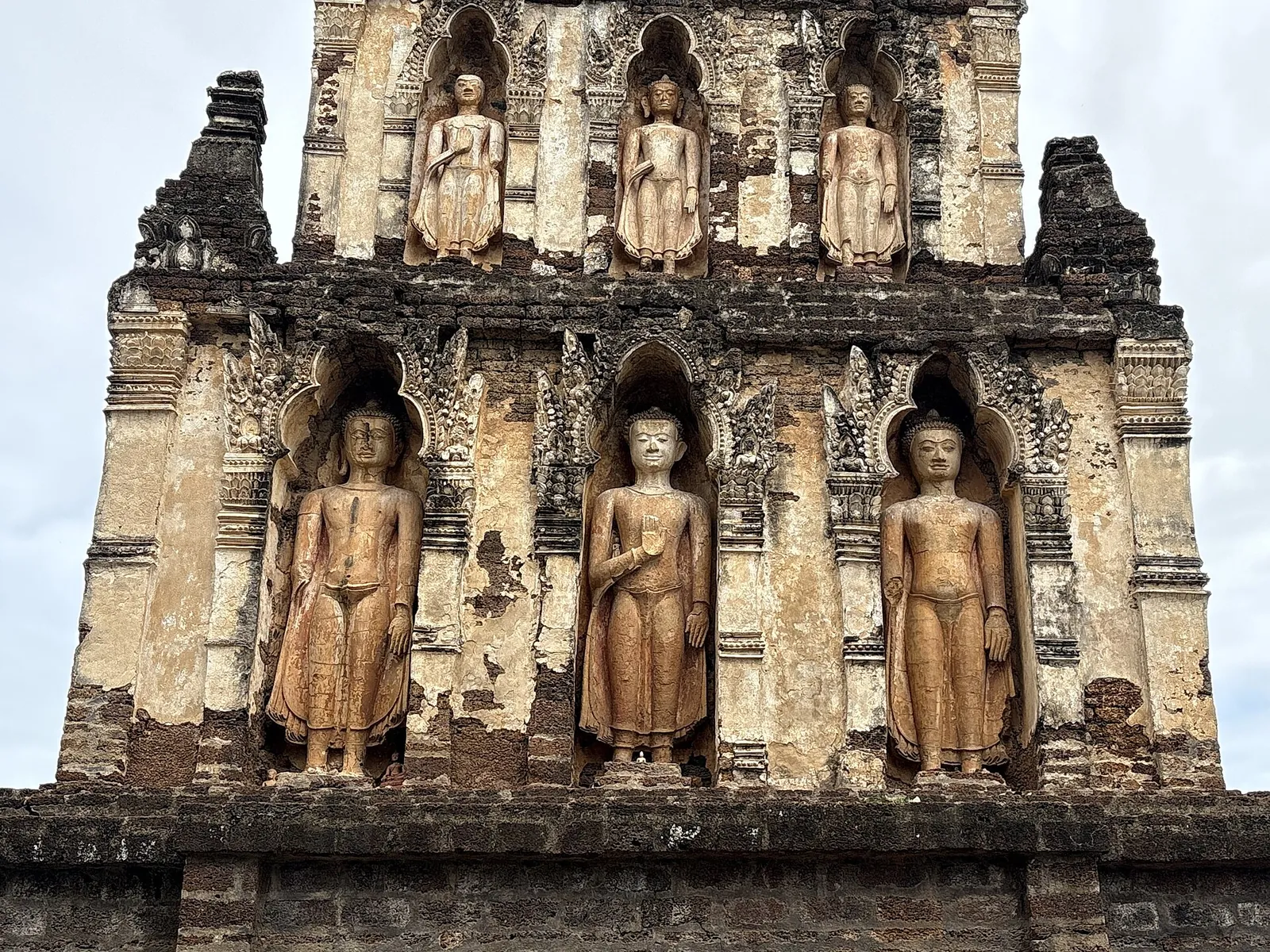
Its stepped chedis with niches of standing Buddha images are some of the oldest architecture in northern Thailand. Visit in the morning light.
Make time for the local food
What to eat and where to look
Lamphun longan
The province is Thailand's best-known longan-growing area; the small, sweet fruit is sold fresh in season and dried all year.
- Where to look
- Markets and roadside stalls around town.
- Fit it into your day
- A fresh snack in season, or dried longan to take home.
Seasonal; check whether the harvest is on.
Khanom jeen nam ngiao
Rice noodles in a tomato and pork-rib broth, the classic northern breakfast and lunch.
- Where to look
- Noodle shops near the main temple and the market.
- Fit it into your day
- Lunch after the morning temples.
Pork and often blood cubes.
Northern rice-and-curry
Gaeng hang lay pork curry, stir-fried vegetables and chilli dips served with sticky rice.
- Where to look
- Local restaurants in the old town.
- Fit it into your day
- A filling lunch before returning to Chiang Mai.
Ask about spice levels.
Museums and yok dok silk
Next to the main temple, the Hariphunchai National Museum displays finds from the Dvaravati, Hariphunchai, Lanna and Rattanakosin periods, including inscription stones in Mon and Lanna scripts, according to TAT. Behind it, the Lamphun Community Museum covers the town's last century.
Lamphun is famous for yok dok silk, a brocade weave whose geographical indication was granted in 2007, as TAT notes. The town's weaving centres sell cloth and sometimes show the looms at work.
Getting there from Chiang Mai
TAT describes the trip as a 40-minute drive south of Chiang Mai. On the old Highway 106, a stretch of tall rubber trees lines both sides of the road — a pleasant start to the day.
Lamphun is also on the northern railway line, and songthaews run between the two towns. In town, the main sights are within walking distance of each other or a short tuk-tuk ride.
A half-day plan
One way to fit Lamphun into a morning from Chiang Mai.
- 08:00: leave Chiang Mai on the old road through the rubber trees.
- 09:00: Wat Phra That Hariphunchai, then the national museum next door.
- 11:00: Wat Chamthewi.
- 12:00: lunch in town, then a weaving shop before heading back.
Practical questions
Is Lamphun worth a day trip from Chiang Mai?
Yes. It is only about 40 minutes away and has some of the oldest and most important temples in the north.
What is Wat Phra That Hariphunchai?
Lamphun's great temple, whose central stupa is said to date from around 897; Chiang Mai's Doi Suthep was modelled on it.
How do I get from Chiang Mai to Lamphun?
By car or taxi (about 40 minutes), songthaew or train.
What is yok dok silk?
A Lamphun brocade weave with raised patterns, protected by a geographical indication since 2007.
Should I stay overnight?
Only if you want a quiet evening; most visitors return to Chiang Mai the same day.
Sources and checks before you travel
Reference sources for the version dated 1 October 2026. Confirm opening times, access, transport and conditions for your travel dates.
Does this experience fit your route?
Compare the programme, departure point and practical requirements with your travel plans.
Check dates and details on Viator ↗ — opens in a new tabAffiliate link · Book with ViatorPhoto credits
The main chedi of Wat Phra That Hariphunchai, Lamphun.
Photograph: This Photo was taken by Supanut Arunoprayote . Feel free to use any of my images, but please mention me as the author and may send me a message. (สามารถใช้ภาพได้อิสระ แต่กรุณาใส่เครดิตผู้ถ่ายและอาจส่ง ข้อความบอกกล่าวด้วย ) Please do not upload an updated image here without consultation with the Author. The author would like to make corrections only at his own source. This ensures that the changes are preserved. Please if you think that any changes should be required, please inform the author. Otherwise you can upload a new image with a new name. Please use one of the templates derivative or extract . — opens in a new tab · CC BY 4.0 — opens in a new tab
Changes: Resized and converted to WebP; displayed with responsive crops. · Original photograph and licence details ↗ — opens in a new tab
A gate of Wat Phra That Hariphunchai.
Photograph: This Photo was taken by Supanut Arunoprayote . Feel free to use any of my images, but please mention me as the author and may send me a message. (สามารถใช้ภาพได้อิสระ แต่กรุณาใส่เครดิตผู้ถ่ายและอาจส่ง ข้อความบอกกล่าวด้วย ) Please do not upload an updated image here without consultation with the Author. The author would like to make corrections only at his own source. This ensures that the changes are preserved. Please if you think that any changes should be required, please inform the author. Otherwise you can upload a new image with a new name. Please use one of the templates derivative or extract . — opens in a new tab · CC BY 4.0 — opens in a new tab
Changes: Resized and converted to WebP; displayed with responsive crops. · Original photograph and licence details ↗ — opens in a new tab
The Suwan Chedi at Wat Phra That Hariphunchai.
Photograph: This Photo was taken by Supanut Arunoprayote . Feel free to use any of my images, but please mention me as the author and may send me a message. (สามารถใช้ภาพได้อิสระ แต่กรุณาใส่เครดิตผู้ถ่ายและอาจส่ง ข้อความบอกกล่าวด้วย ) Please do not upload an updated image here without consultation with the Author. The author would like to make corrections only at his own source. This ensures that the changes are preserved. Please if you think that any changes should be required, please inform the author. Otherwise you can upload a new image with a new name. Please use one of the templates derivative or extract . — opens in a new tab · CC BY 4.0 — opens in a new tab
Changes: Resized and converted to WebP; displayed with responsive crops. · Original photograph and licence details ↗ — opens in a new tab
Wat Chamthewi (Wat Ku Kut), Lamphun.
Photograph: Warin~commonswiki — opens in a new tab · CC BY-SA 4.0 — opens in a new tab
Changes: Resized and converted to WebP; displayed with responsive crops. · Original photograph and licence details ↗ — opens in a new tab
Buddha niches on the chedi at Wat Chamthewi.
Photograph: Chainwit. — opens in a new tab · CC BY 4.0 — opens in a new tab
Changes: Resized and converted to WebP; displayed with responsive crops. · Original photograph and licence details ↗ — opens in a new tab