Itineraries · South Korea
South Korea in 2 weeks: Seoul, Seoraksan, Andong, Gyeongju, Busan, Jeju
Two weeks is enough to see Korea as more than Seoul, Busan and a beach. The classic first trip runs down the high-speed line from Seoul to Busan and flies on to Jeju; this one adds the three places that most first itineraries leave out: the granite peaks of Seoraksan above the fishing town of Sokcho, a night in Andong's Hahoe Village, and two unhurried days in Gyeongju, the old Silla capital. The catch is the east. Sokcho has no fast train, and we found no official direct service from Sokcho to Andong, so the route goes back through Seoul for one long travel day. Planned around that, and around the days on which each sight closes, the route needs eight beds, counting a night inside Hahoe and a split stay on Jeju, and one domestic flight.
- Suggested time
- 15 days (14 nights): Seoul 3, Sokcho 2, Andong 2, Gyeongju 2, Busan 2, Jeju 3
- Where to stay
- Six bases in order: Jongno or the Seoul Station area in Seoul; downtown Sokcho by the intercity bus terminal; central Andong, then a Hahoe Village hanok; Hwangnam-dong in Gyeongju; Nampo-dong or near Busan Station in Busan; Jeju City for one night and central Seogwipo for two
- Season and timing
- Autumn is the strongest season for this route. VisitKorea's 2026 foliage forecast put the first colour on Seoraksan on 3 October and its peak around 25 October, with most of the country peaking from mid-October to early November and Hallasan on Jeju last, around 13 November. That also means crowds on Seoraksan at weekends, so keep the hiking day on a weekday. VisitKorea lists closures of Seoraksan's upper trails for forest-fire prevention from 2 March to 15 May and 15 November to 15 December (in a column last updated in 2024); the lower valley stays open, but the long summit routes do not. Summer is hot and wet; winter shortens Hahoe Village's opening hours.
The short answer
Plan 15 days and 14 nights: 3 in Seoul, 2 in Sokcho, 2 in Andong (one in town, one in a Hahoe Village hanok), 2 in Gyeongju, 2 in Busan and 3 on Jeju (one in Jeju City, two in Seogwipo). Land at Incheon and take the AREX into Seoul. Go to Sokcho by express or intercity bus from Seoul Express Bus Terminal or Dong Seoul Terminal and give a full day to Seoraksan. Travel back through Seoul to Andong by KTX-Eum from Cheongnyangni. Go on to Gyeongju by train, via Dongdaegu if no direct train suits, then take the KTX to Busan Station. Fly from Gimhae to Jeju, and fly home from Jeju through Incheon or Gimpo, or direct if your city has a route. If you can land on a Thursday, the weekly closing days in this plan fall on days you are elsewhere.
How the fortnight is split, and why it goes back through Seoul
The route is a loop down the east side of the country and a hop to Jeju: Seoul (3 nights), Sokcho (2), Andong (2), Gyeongju (2), Busan (2) and Jeju (3). Two nights is the minimum at each mainland stop because each one needs a full day that is not also a travel day: Seoraksan, Hahoe Village, Gyeongju's centre and Bulguksa, Busan's old port and east coast. Seoul gets only three nights because it is easy to come back to; if you can add a 15th night, add it to Seoul or to Jeju.
The weak link is Sokcho to Andong. Sokcho is not on a high-speed line: VisitKorea's bus guide lists Sokcho from Seoul Express Bus Terminal and Dong Seoul Terminal, and the Seorak Cable Car operator gives about 2 hours 30 minutes by express bus and 2 hours 10 minutes by intercity bus, with departures about every 30 minutes. We found no official source for a direct Sokcho–Andong bus, so the plan rides back to Seoul and continues to Andong the same day, by KTX-Eum from Cheongnyangni (about 1 hour 50 minutes, according to VisitKorea's Andong guide) or by bus from Dong Seoul Terminal, which VisitKorea lists for Andong. It is a long day, and the itinerary treats it as one. If you are driving, a cross-country route is possible, but we have not timed it.
Mind the closing days. VisitSeoul lists Gyeongbokgung as closed on Tuesdays and Changdeokgung on Mondays; VisitKorea's Andong guide lists the Hahoe mask dance at 14:00 from Tuesday to Sunday, closed on Mondays; in Busan, VisitKorea lists Jagalchi Market as closed on the first and third Tuesdays and Gukje Market on Sundays. A Thursday arrival lines these up: the palaces fall on Friday and Saturday, Seoraksan on a Monday, Hahoe on a Wednesday and Busan's markets on a Saturday. With any other start day, check each closing day against the plan and swap days within a stop where you need to.
Book the long legs as soon as you can. The trains between Seoul, Andong, Gyeongju and Busan are sold on KORAIL's site and app; the Jeju flight is a domestic one from Gimhae, which VisitKorea lists with routes to Gimpo and Jeju only.
Days 1–3: Seoul, palaces and markets
Day 1: arrive. VisitKorea lists the AREX Express Train from Incheon at about 43 minutes from Terminal 1 to Seoul Station (51 minutes from Terminal 2), and the All-Stop Train at about 59 and 66 minutes. Sleep in Jongno, for the palaces, or by Seoul Station, which is where the AREX ends and the KTX leaves. For the Sokcho bus on day 4 you will need Seoul Express Bus Terminal (Lines 3, 7 and 9) or Dong Seoul Terminal (Line 2, Gangbyeon Station), so either base means one subway ride on the departure morning.
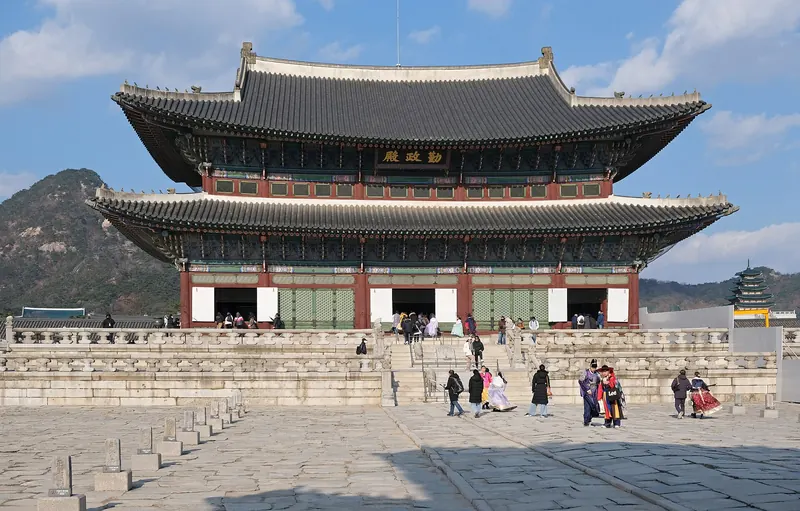
Day 2: Gyeongbokgung and Bukchon (not a Tuesday). The main Joseon palace and the hanok lanes east of it fill a day. Day 3: Changdeokgung and its Secret Garden (not a Monday). VisitSeoul says Secret Garden visits are booked through the palaces' integrated reservation service, so book before you fly and plan the day around your slot; finish with dinner in a market. Our Seoul guide has the hours, tickets and the rest of the city; with only two full days, leave the DMZ, Suwon and the river islands for another trip.
If you land late or leave early, the cut to make is not here but at the end: a 14-night trip with a late arrival effectively has two Seoul days, which is still enough for the two great palaces.
Make time for the local food
What to eat and where to look
Dakgangjeong (Sokcho)
Crispy fried chicken pieces in a sweet and spicy glaze. VisitKorea describes the chicken alley of the Sokcho Tourist & Fishery Market as lined with dakgangjeong stores, each with its own recipe.
- Where to look
- The chicken alley of the Sokcho Tourist & Fishery Market, a short walk from the intercity bus terminal.
- Fit it into your day
- Buy a box on the evening of day 4 and keep some for the Seoraksan hike; VisitKorea notes it is still good cold.
Deep-fried and often coated with nuts; ask if you have a nut allergy.
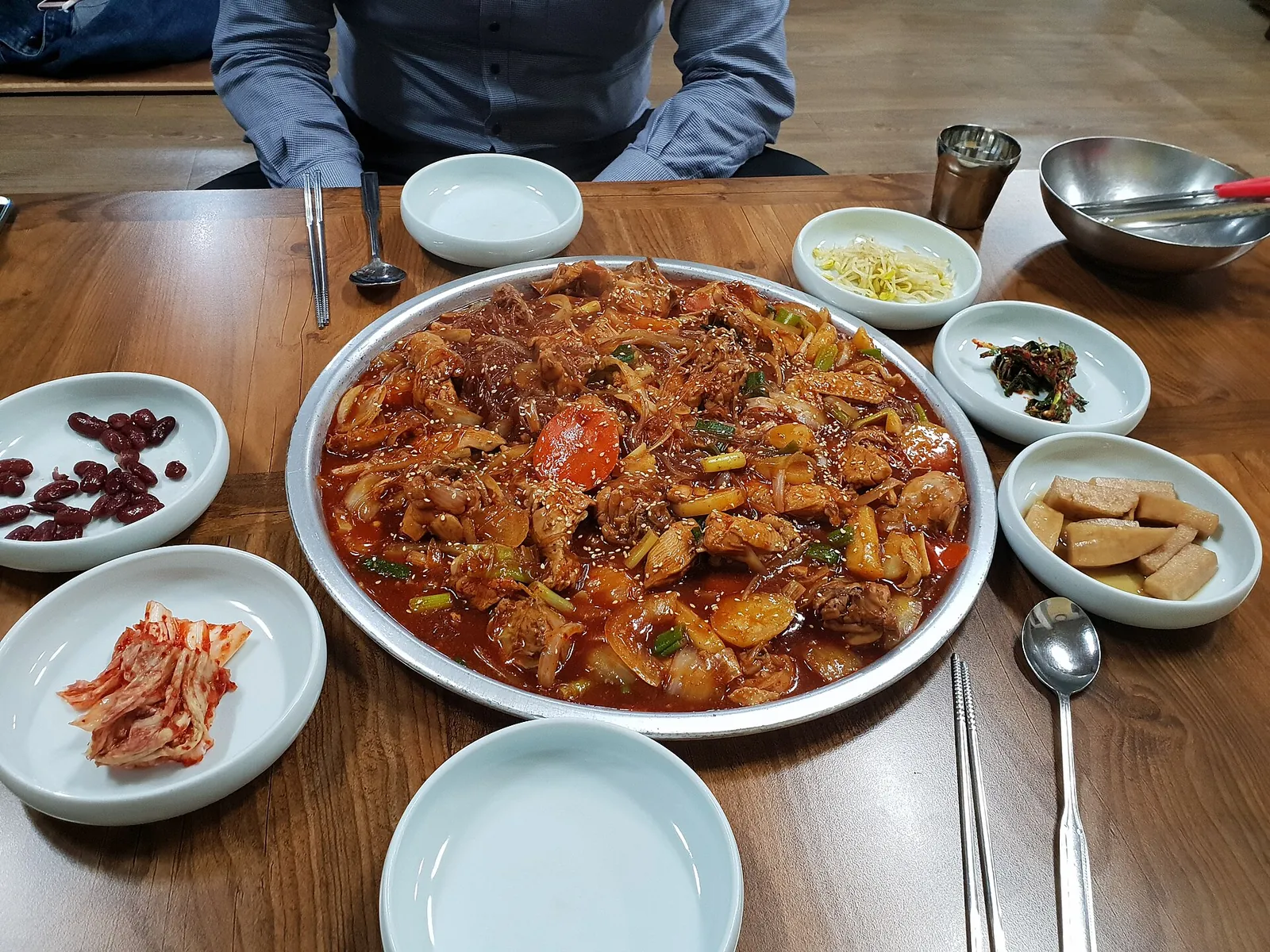
Andong jjimdak (braised chicken)
Chicken, glass noodles and vegetables braised in a sweet, savoury and mildly spicy soy-based sauce, which VisitKorea names as Andong's signature dish.
- Where to look
- The jjimdak alley in Andong Old Market, in the centre of town.
- Fit it into your day
- Dinner on day 6, the night you sleep in central Andong; there are few restaurants in Hahoe the following night.
VisitKorea notes the generous portions, so share one; the sauce is mildly spicy.
Ssambap (Gyeongju)
Rice eaten wrapped in fresh leaves, with substantial side dishes such as fish, meat and doenjang jjigae, served on the ssambap street that VisitKorea describes around the Daereungwon tombs.
- Where to look
- Gyeongju Ssambap Street by Daereungwon, in Hwangnam-dong.
- Fit it into your day
- Lunch on day 9 between Tohamsan and the afternoon in the centre.
The side dishes include fish and meat, so ask if you eat neither.
Dwaeji gukbap and milmyeon (Busan)
VisitKorea calls dwaeji gukbap, pork and rice soup, Busan's representative local dish; milmyeon are the city's cold wheat noodles in a broth of beef, pork or chicken bones, eaten mainly in summer.
- Where to look
- Restaurants around Nampo-dong and the market streets of the old port.
- Fit it into your day
- Gukbap as a quick breakfast or lunch on day 10 or 11; milmyeon on a hot day.
Both are meat-based broths.
Jeju black pork and dombegogi
Jeju heukdwaeji, the island's black pork, is grilled or served as dombegogi: freshly steamed pork sliced on a wooden board in front of you, as VisitKorea describes it.
- Where to look
- Black pork restaurants in Jeju City and Seogwipo, and the stalls of the Dongmun Market night market.
- Fit it into your day
- Dinner on day 12 in Jeju City, or the last night in Seogwipo.
Pork is the point of both dishes; ask for fish dishes such as galchiguk instead if you do not eat it.
Days 4–5: Sokcho and Seoraksan
Day 4: bus to Sokcho. Take a morning bus from Seoul Express Bus Terminal or Dong Seoul Terminal and sleep downtown near the Sokcho Intercity Bus Terminal. That is where city buses 7 and 7-1 start for the national park, and the market and the harbour are on foot. Spend the afternoon at the Sokcho Tourist & Fishery Market, where VisitKorea describes a chicken alley of dakgangjeong stalls and a raw fish center, then walk to the shore at Yeonggeumjeong. Our Sokcho guide covers Abai Village and its hand-pulled ferry as well.
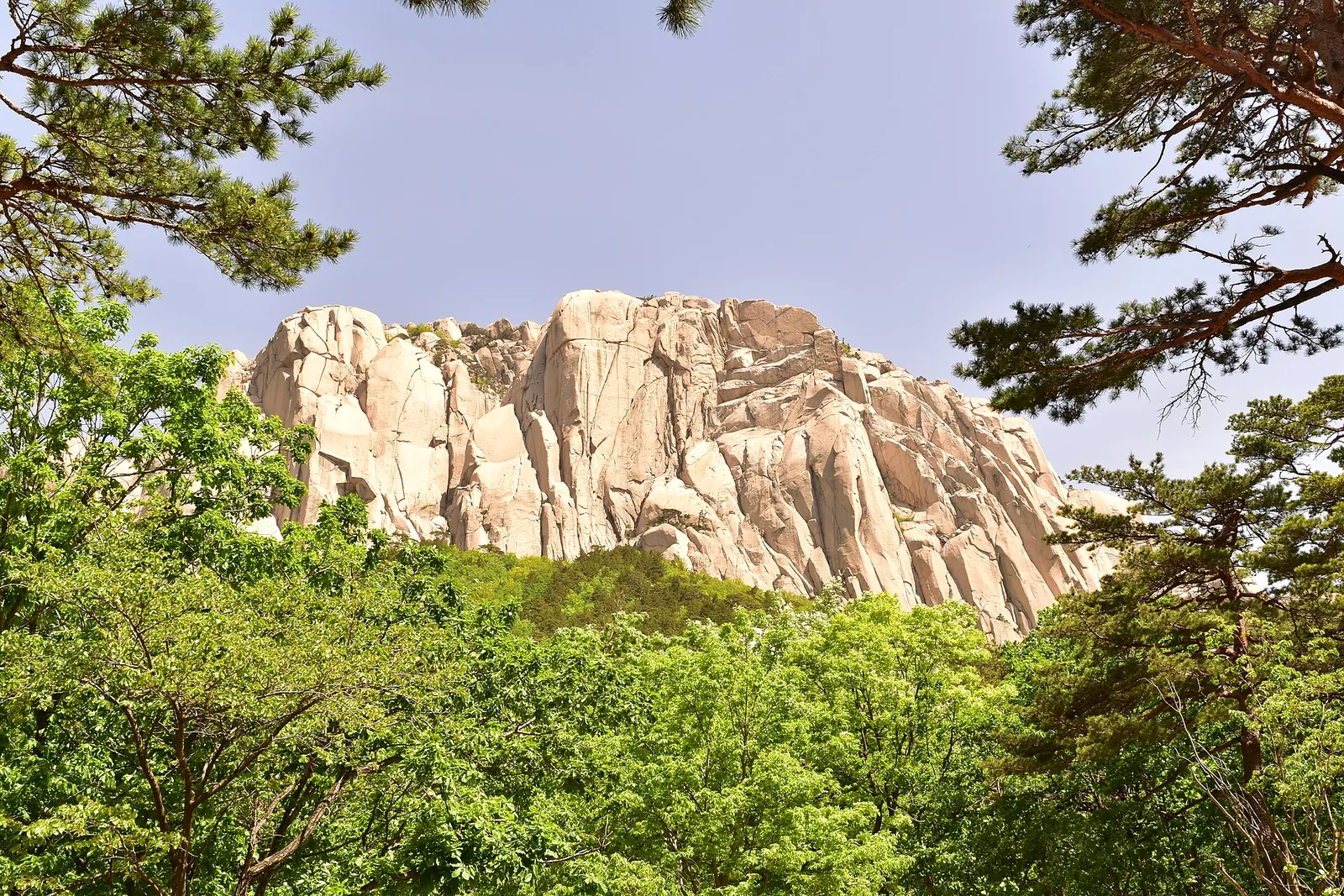
Day 5: Seoraksan. City bus 7 or 7-1 runs from the intercity terminal past the express terminal to the Seoraksan car park at Sogongwon, according to the cable car operator. The classic half day is Ulsanbawi via Sinheungsa and Heundeulbawi; VisitKorea's hiking guide gives the loop from Sogongwon Park as 7.6 kilometres and about four hours, gentle as far as Heundeulbawi and steep after it. The easy alternative is the cable car to Gwongeumseong: the operator says hours change with the season and the weather and posts each day's operating hours on its website, so check that morning. Climb first and ride the cable car later only if the queue is short.
In October, this is the stop that decides the trip. VisitKorea's forecast put Seoraksan's peak colour around 25 October, and its cable car page warns of crowds at weekends, on holidays and in the foliage season. A weekday hiking day is worth reshuffling the rest of the plan for. Our Seoraksan guide has the longer routes and the trail entry hours.
Days 6–8: Andong and a night in Hahoe Village
Day 6: travel day. Bus back to Seoul, then on to Andong: the KTX-Eum leaves from Cheongnyangni (also Seoul Station and Sangbong, VisitKorea says) and takes about 1 hour 50 minutes; Dong Seoul Terminal also has buses to Andong. Sleep in central Andong, eat jjimdak in the Old Market, and walk out to Woryeonggyo, which VisitKorea calls Korea's longest wooden pedestrian bridge and which is lit after dark.
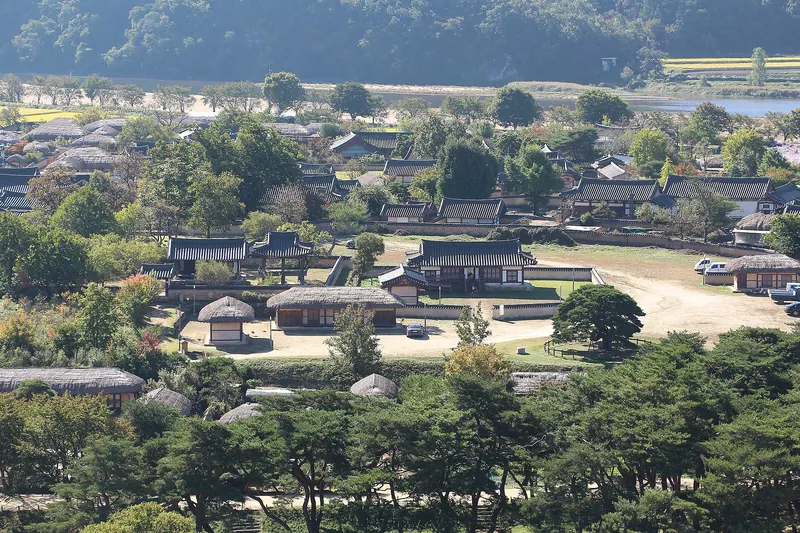
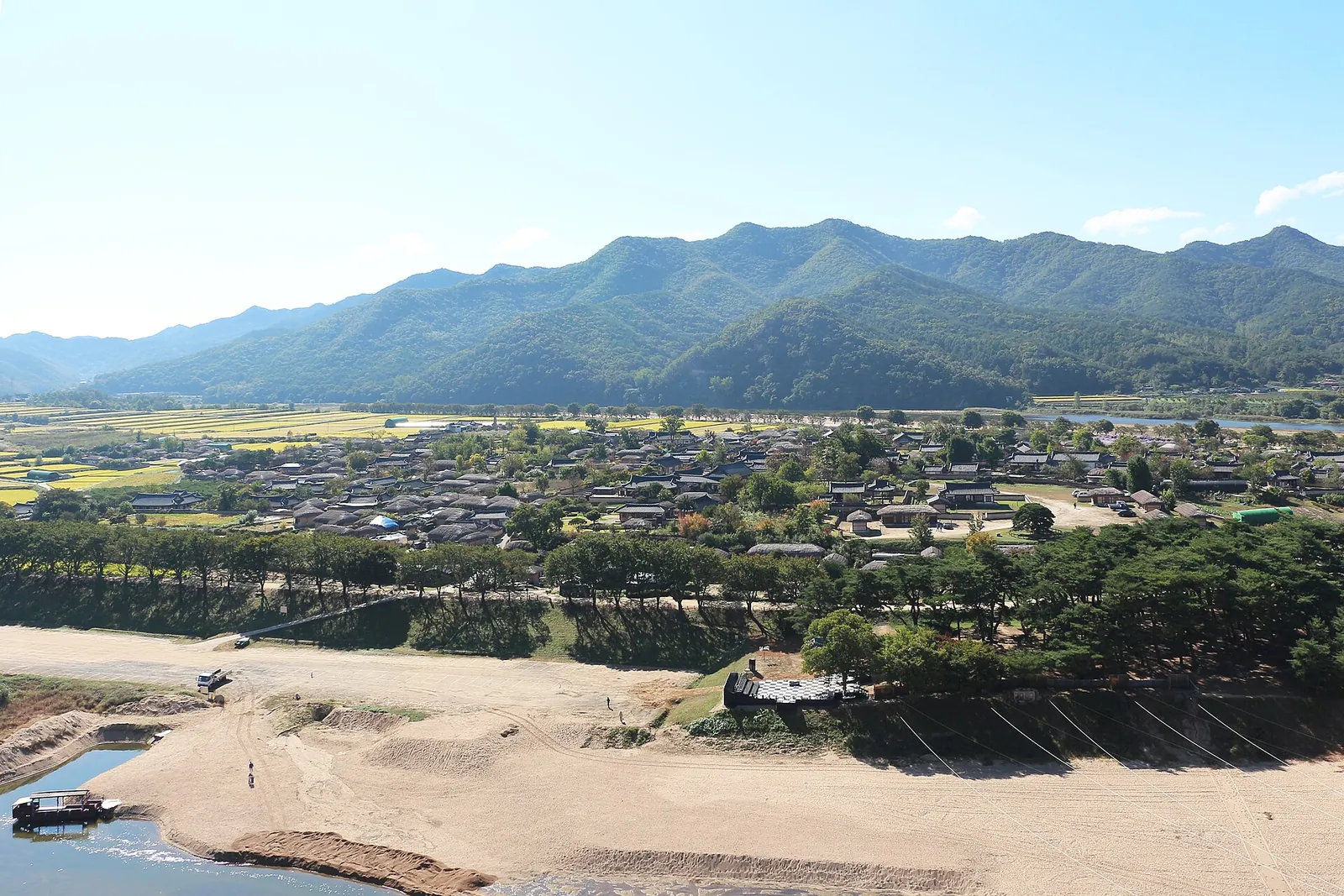
Day 7: Hahoe Village (not a Monday). VisitKorea's Andong guide lists buses Express 2, 210, Pungcheon 2 and the Hahoe shuttle to the village. When we checked on 2026-10-03, VisitKorea listed Hahoe's hours as 09:00–18:00 from April to September and 09:00–17:00 from October to March, with last admission 30 minutes before closing. See the mask dance at 14:00 at the Hahoe Village Mask Dance Theater (Tuesday to Sunday), cross to the Buyongdae cliff for the view of the river bend, and spend the night in a village hanok. VisitKorea's own guide puts it plainly: the village's real charm appears after the day-trippers leave. These are old houses that people still live in, so check the bedding, the bathroom and whether breakfast is included when you book.
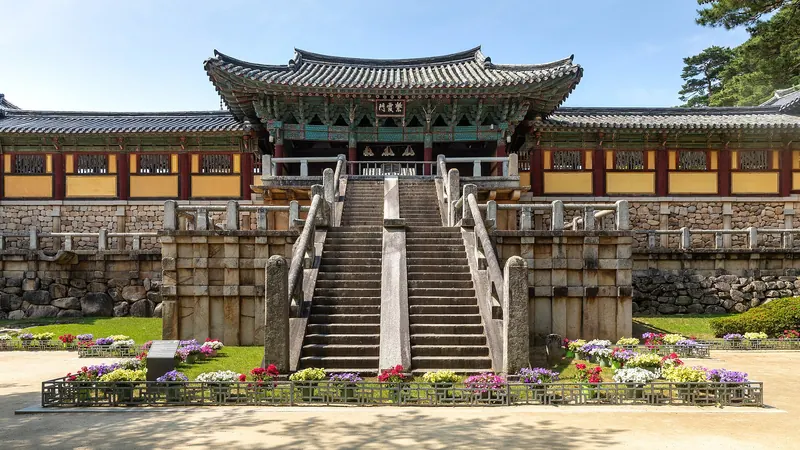
Day 8: Byeongsanseowon, then Gyeongju. Bus 210 also serves Byeongsanseowon, the riverside Confucian academy, so see it first thing, then return to Andong for the train or bus south. Two ways are confirmed: VisitKorea lists a Mugunghwa train or intercity bus between Andong and Dongdaegu (about 1 hour 20 minutes) and a KTX or SRT from Dongdaegu to Gyeongju Station (about 20 minutes). Korean Wikipedia's route list also shows the Jungang Line KTX-Eum continuing from Andong through Gyeongju towards Busan; search Andong to Gyeongju on KORAIL to confirm it before you settle on the change in Daegu. Arrive in time for the evening in Gyeongju.
Days 8–10: Gyeongju by night, by bike and on Tohamsan
Sleep in Hwangnam-dong, among the small hanok stays near Daereungwon and Hwangnidan Street, so that the evening sights are a walk away. With luggage, a taxi from Gyeongju Station to your guesthouse is the simplest option. On the evening of day 8, go to Donggung Palace and Wolji Pond: when we checked on 2026-10-03, VisitKorea listed it as open 09:00–22:00, with last ticketing and admission at 21:30. Woljeonggyo Bridge, first built in 760 and rebuilt in 2018 as the largest wooden bridge in Korea, VisitKorea says, is nearby.
Day 9 is the full Gyeongju day. Give the morning to Bulguksa and Seokguram on Tohamsan, a bus or taxi ride from town, and the afternoon to the flat centre on foot or by rented bike: the Daereungwon tombs, Cheomseongdae, Gyochon village and the Gyeongju National Museum. Our Gyeongju guide has the hours, the shuttle up to Seokguram and the bike route. Day 10: a slow morning, then the train to Busan; VisitKorea gives about 30 minutes by KTX from Gyeongju Station to Busan Station. The Donghae Line KTX-Eum also runs from Gyeongju via Taehwagang to Busan's Bujeon station, but VisitKorea lists only three trains a day each way on that line.
Gyeongju is the stop to protect if something slips. A day trip from Busan is possible, but the old centre and Tohamsan do not connect well, and the city is at its best after dark.
Days 10–11: Busan's old port and east coast
Busan Station is on Metro Line 1, the line to the old port, which makes Nampo-dong or the station area the easy base for two nights. On the afternoon of day 10, eat at Jagalchi Market: when we checked on 2026-10-03, VisitKorea listed it as open 05:00–22:00 and closed on the first and third Tuesdays of the month. Gukje Market next door closes on Sundays, VisitKorea notes. Finish at Busan Tower, the 120-metre tower in Yongdusan Park that VisitKorea says looks over Busan Port and Yeongdo.
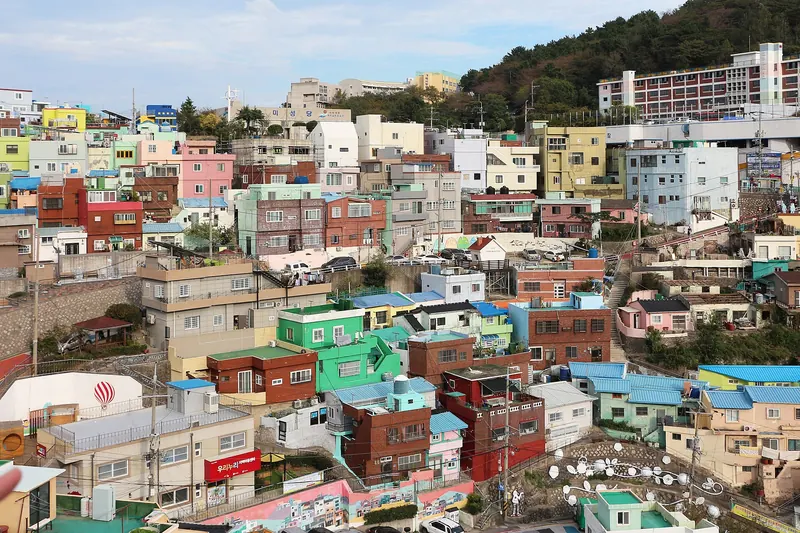
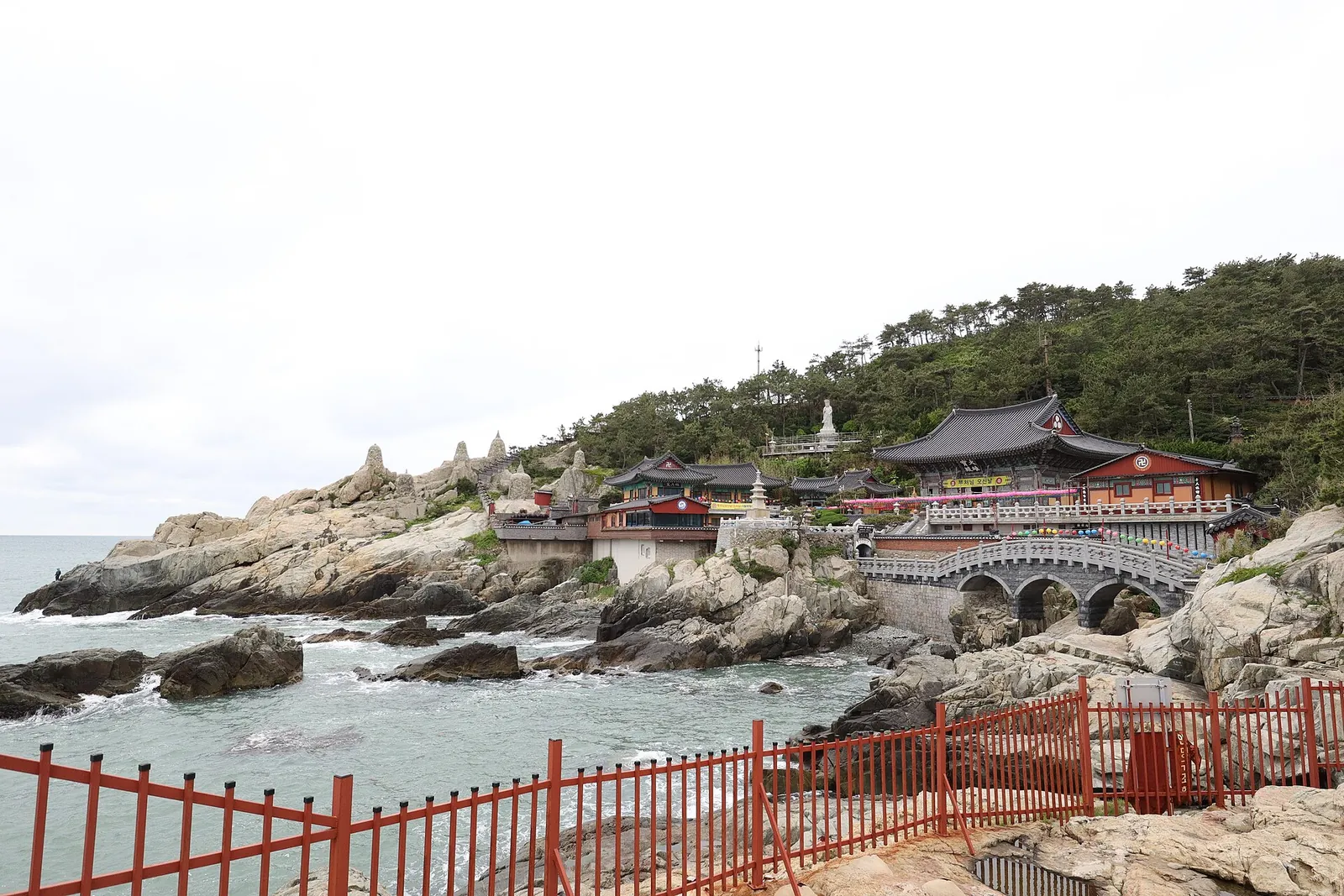
Day 11: the east coast. Start at Haedong Yonggungsa, the temple set on the rocks above the sea; when we checked, VisitKorea listed it as open 04:30–19:20, with last admission at 18:50. Then ride the Beach Train or Sky Capsule of Haeundae Blueline Park, which VisitKorea describes as 4.8 kilometres of the old Donghae Nambu railway between Mipo, Cheongsapo and Songjeong, and end the day on Haeundae Beach or at Gwangalli Beach, west of Haeundae, among its restaurants and cafés. If you would rather see Gamcheon Culture Village, swap it in for the morning; our Busan guide has the visiting hours and the rules for its residential lanes.
Two nights is the minimum here. If your dates allow, Busan is the easiest place on the route to add a night, because the flight to Jeju leaves from the city's own airport.
Days 12–15: Jeju, north to south
Day 12: fly to Jeju. Busan's Gimhae airport has domestic flights to Gimpo and Jeju, according to VisitKorea. Sleep one night in Jeju City, near the airport, and eat at the Dongmun Market night market, which VisitKorea says is known for Jeju black pork, dakgangjeong and skewers.
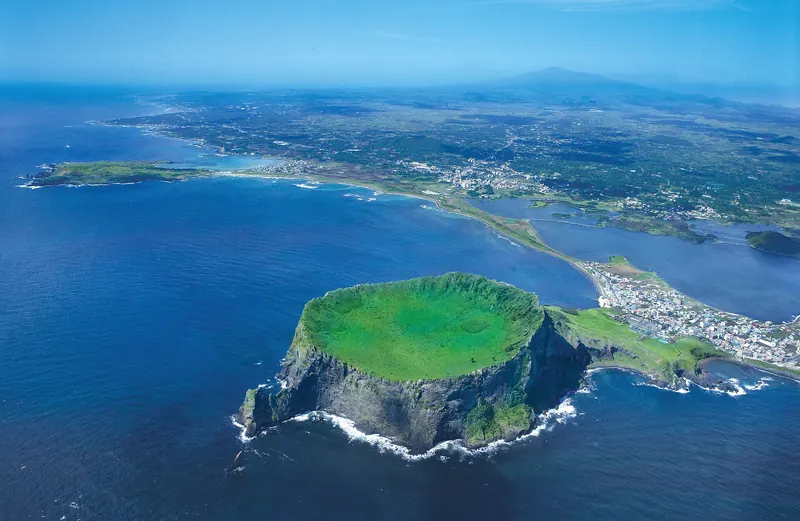
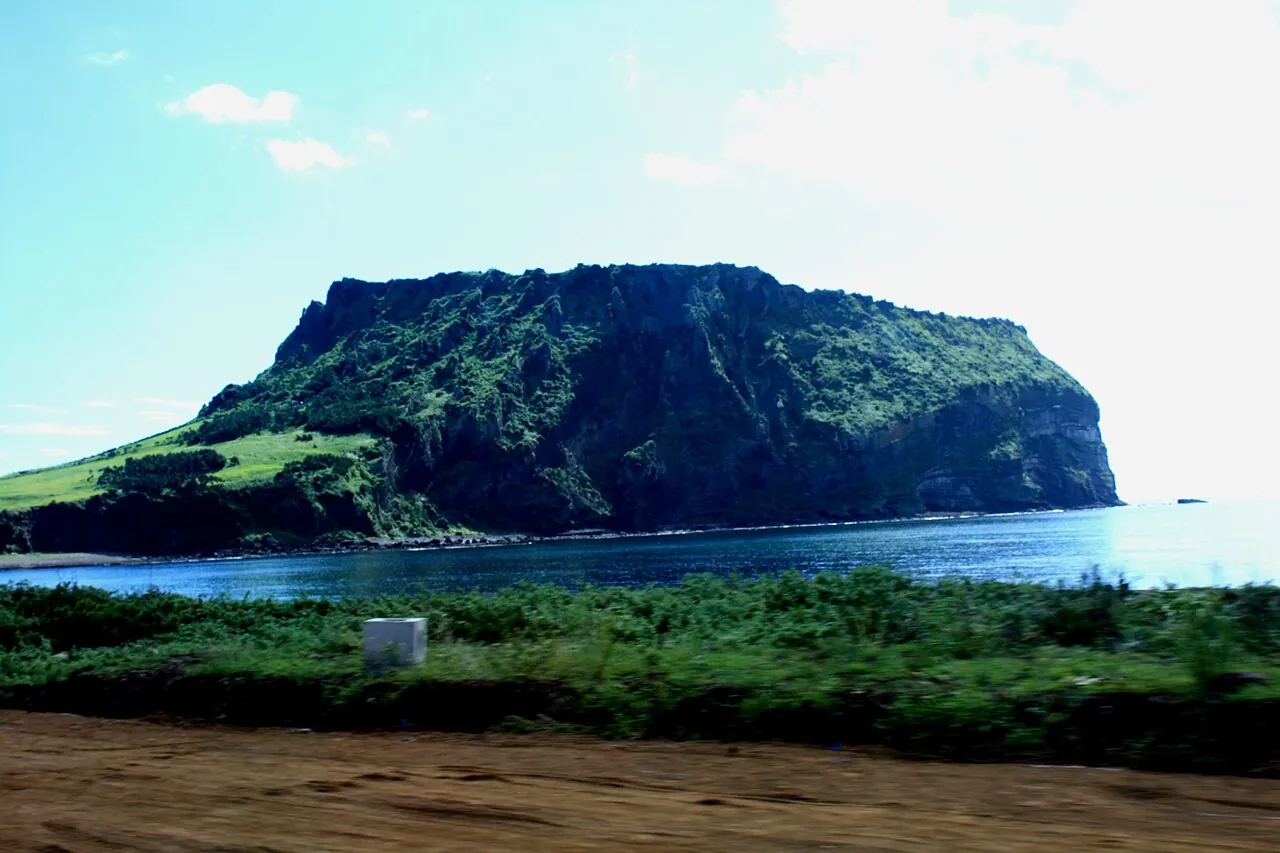
Day 13: the east coast, ending in Seogwipo. Seongsan Ilchulbong is the tuff cone formed in a shallow-sea eruption about 5,000 years ago; VisitKorea says the summit is about a 30-minute walk. The ferry from Seongsan Port to Udo takes about 15 minutes. Without a car, bus 201 follows the east coast from Jeju Bus Terminal to Seogwipo Bus Terminal and stops at almost every stop, but VisitKorea gives intervals of 30 to 80 minutes; Jeju's city buses have not taken cash since 1 October 2024. With luggage, a rental car or a taxi for this day is the simpler choice; renting needs an international driving permit.
Day 14: the south coast. From central Seogwipo, walk to the waterfalls and the Maeil Olle Market and follow part of the Olle Trail, or, if you booked the summit trail, climb Hallasan. Our Jeju guide has the routes. Day 15: fly out. VisitKorea gives about 90 minutes by bus or 70 by taxi from central Seogwipo to Jeju airport. Jeju has domestic flights to Incheon and Gimpo, and VisitKorea counted direct international services to 23 cities in China, Japan, Taiwan, Hong Kong, Singapore and other regions as of July 2026. Leave a generous margin between the island flight and a long-haul connection.
Practical questions
Is two weeks enough for South Korea?
For a first trip, yes: it covers Seoul, the east coast mountains, two heritage towns, Busan and Jeju with two or three nights at each. It is not enough to add the south-west (Jeonju, the Jeolla coast) as well; leave that for a second trip or swap it for Sokcho and Andong.
Is there a direct bus from Sokcho to Andong?
We could not confirm one from an official source, so this itinerary goes back through Seoul. VisitKorea lists Sokcho buses from Seoul Express Bus Terminal and Dong Seoul Terminal, and Andong is served by the KTX-Eum from Cheongnyangni and by buses from Dong Seoul Terminal. Check the bus booking sites before you travel in case a direct route suits your dates.
Should I buy a Korail Pass for this route?
Probably not. The trains here are Seoul to Andong, Andong to Gyeongju (directly or via Dongdaegu) and Gyeongju to Busan, a few short legs spread over a week, and the longest stretch of the trip, Seoul to Sokcho, is a bus. Price the individual tickets on KORAIL first.
Can I do this route in reverse?
Yes. Fly into Jeju or Busan, travel north and fly home from Incheon. Keep the Seoraksan day on a weekday in autumn and check the closing days again, because reversing the order moves every day of the week.
Do I need a car?
Only on Jeju, and only if you want the west coast and the inland forests; on the mainland, trains, buses and taxis cover every stop in this plan. VisitKorea's driving guide says visitors need an international driving permit and a passport, must be over 21 and must pay with a credit card in the driver's name.
What if I have only 10 days?
Drop Sokcho and Andong, the two stops that need the long bus day, and keep Seoul, Gyeongju, Busan and Jeju. Our first-trip guide sets out the 7- and 10-day versions.
Sources and checks before you travel
Reference sources for the version dated 3 October 2026. Confirm opening times, access, transport and conditions for your travel dates.
- VisitKorea: Airport Transportation Guide ↗ — opens in a new tab
- VisitSeoul: Gyeongbokgung Palace ↗ — opens in a new tab
- VisitSeoul: Changdeokgung Palace ↗ — opens in a new tab
- VisitKorea: Express Bus & Intercity Bus ↗ — opens in a new tab
- Seorak Cable Car (official): guide ↗ — opens in a new tab
- VisitKorea: Seoraksan Cable Car ↗ — opens in a new tab
- VisitKorea: Sokcho Tourist & Fishery Market ↗ — opens in a new tab
- VisitKorea: Best hiking trails in Korea's national parks ↗ — opens in a new tab
- VisitKorea: Andong Travel Guide ↗ — opens in a new tab
- VisitKorea: Andong Hahoe Village ↗ — opens in a new tab
- Korean Wikipedia: KTX-Eum (route list) ↗ — opens in a new tab
- VisitKorea: Fly to Daegu International Airport ↗ — opens in a new tab
- VisitKorea: Explore Beyond Seoul at SONO Hotels & Resorts ↗ — opens in a new tab
- VisitKorea: East Coast Train Trip by KTX-Eum ↗ — opens in a new tab
- VisitKorea: Woljeonggyo Bridge ↗ — opens in a new tab
- VisitKorea: Haeundae Blueline Park ↗ — opens in a new tab
- VisitKorea: Busan Tower ↗ — opens in a new tab
- VisitKorea: Gwangalli Beach ↗ — opens in a new tab
- VisitKorea: Driving in Korea ↗ — opens in a new tab
- VisitKorea: Sokcho Tourism and Fisheries Market (2023 feature) ↗ — opens in a new tab
- VisitKorea: Donggung Palace and Wolji Pond ↗ — opens in a new tab
- VisitKorea: Gyeongju Ssambap Street ↗ — opens in a new tab
- VisitKorea: Jagalchi Market ↗ — opens in a new tab
- VisitKorea: Gukje Market ↗ — opens in a new tab
- VisitKorea: Haedong Yonggungsa Temple ↗ — opens in a new tab
- VisitKorea: Feel the Sea, Enjoy the City — discover Busan ↗ — opens in a new tab
- VisitKorea: Domestic flights ↗ — opens in a new tab
- VisitKorea: Fly to Jeju International Airport and Enjoy Jeju ↗ — opens in a new tab
- VisitKorea: Jeju's East Coast Itinerary by City Bus ↗ — opens in a new tab
- VisitKorea: Jeju Island, a Picturesque Paradise ↗ — opens in a new tab
- VisitKorea: 2026 Fall Foliage Forecast ↗ — opens in a new tab
Photo credits
Ulsanbawi in Seoraksan National Park, the half-day climb from Sokcho on day 5
Photograph: Eugenia15 — opens in a new tab · CC BY-SA 3.0 — opens in a new tab
Changes: Resized and converted to WebP; displayed with responsive crops. · Original photograph and licence details ↗ — opens in a new tab
Hahoe Village in Andong, inside its bend of the Nakdonggang, where this route spends night 7
Photograph: Bernard Gagnon — opens in a new tab · CC0 — opens in a new tab
Changes: Resized and converted to WebP; displayed with responsive crops. · Original photograph and licence details ↗ — opens in a new tab
Seongsan Ilchulbong on Jeju's east coast, the first stop on day 13
Photograph: J. Patrick Fischer — opens in a new tab · CC BY-SA 3.0 — opens in a new tab
Changes: Resized and converted to WebP; displayed with responsive crops. · Original photograph and licence details ↗ — opens in a new tab
Haedong Yonggungsa on the Busan coast, the first stop on day 11
Photograph: Mobius6 — opens in a new tab · CC BY-SA 4.0 — opens in a new tab
Changes: Resized and converted to WebP; displayed with responsive crops. · Original photograph and licence details ↗ — opens in a new tab
Andong jjimdak, braised chicken with glass noodles
Photograph: Choi2451 — opens in a new tab · CC BY-SA 4.0 — opens in a new tab
Changes: Resized and converted to WebP; displayed with responsive crops. · Original photograph and licence details ↗ — opens in a new tab