Gangwon · Gangwon State
Sokcho travel guide: Seoraksan base, fish market, Abai Village
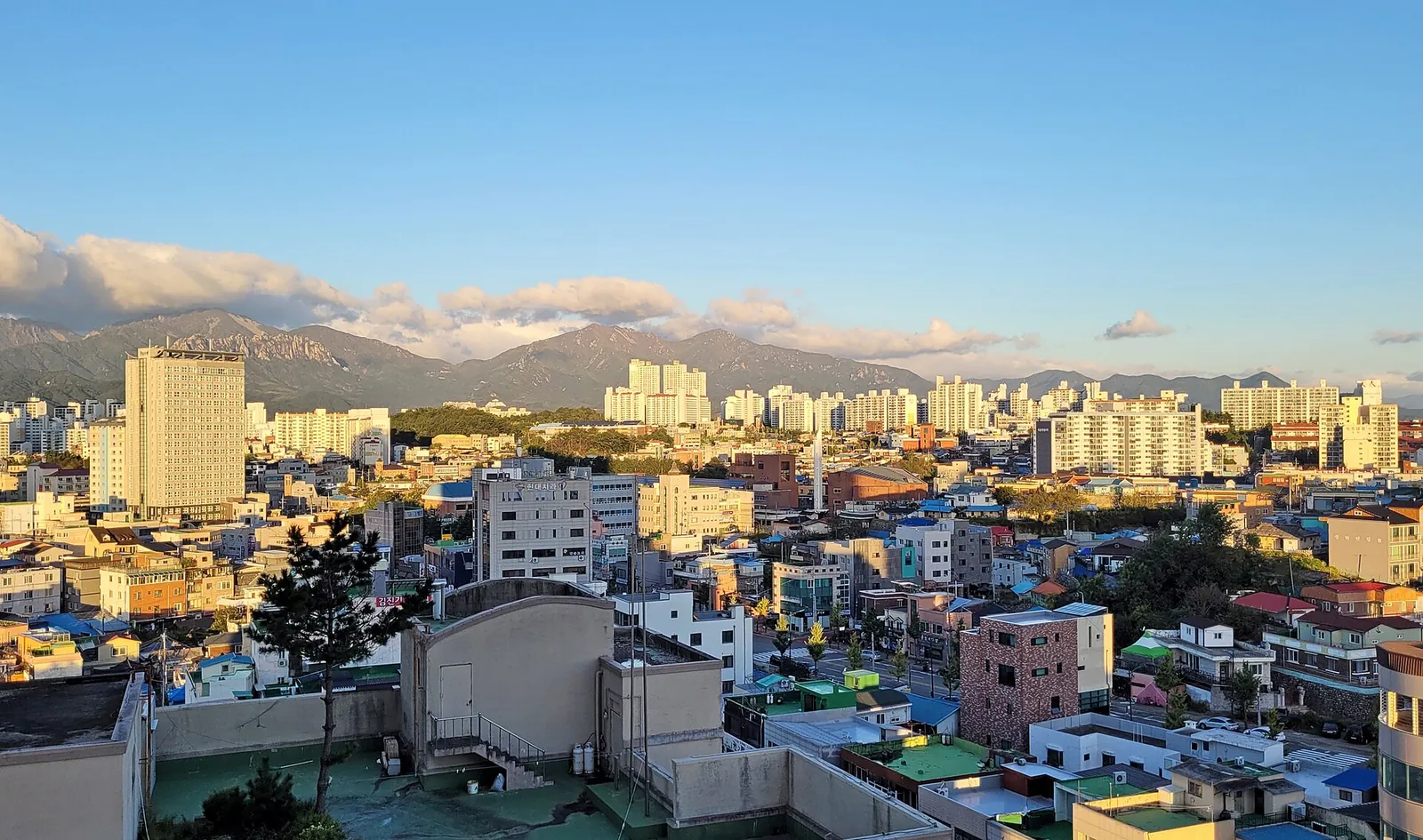
Sokcho is a fishing port on the East Sea in Gangwon State, and for most visitors it is the town at the foot of Seoraksan. Seoraksan Sogongwon Park, the trailhead for the Outer Seorak hikes and the cable car, has a Sokcho address and is a city-bus ride from the intercity bus terminal. The town itself is more than a dormitory for hikers. Its Tourist & Fishery Market is one of the busiest in the country, the Abai Village sandbar was settled by refugees from North Korea during the Korean War and still serves their Hamgyeong-do dishes, and a hand-pulled barge crosses the channel to reach it. Two coastal lagoons, a city beach and a rocky headland with a pavilion fill the time between mountain days.
- Suggested time
- 2–3 nights
- Where to stay
- Downtown Sokcho around the intercity bus terminal and the market for buses and food; Sokcho Beach for the sea; hotels on Seoraksan-ro near the park entrance only for very early hikes
- Season and timing
- Autumn is the high season. VisitKorea's 2026 foliage forecast put the first colour on Seoraksan on 3 October and the peak around 25 October, the earliest in the country, and VisitKorea warns that the cable car is crowded at weekends, on holidays and in foliage season. July and August are beach months, when VisitKorea says Sokcho Beach is so crowded there is nowhere to walk. In spring and late autumn the upper Seoraksan trails close for forest-fire prevention (VisitKorea gives 2 March to 15 May and 15 November to 15 December), though the lower valley stays open.
The short answer
Stay two nights, or three if you want a full hiking day on Seoraksan as well as the town. Arrive by bus from Seoul, sleep downtown near the intercity bus terminal and the market, and give one day to Seoraksan: city bus 7 or 7-1 from the terminal to Sogongwon Park, then the cable car to Gwongeumseong or the Ulsanbawi trail. Spend the other day on foot in town: the market for dakgangjeong, the gaetbae ferry to Abai Village for sundae and cold noodles, Yeonggeumjeong and the lighthouse at the end of the afternoon. Choose a room by Sokcho Beach instead if you are arriving by express bus and want the sea on your doorstep.
Why Sokcho is the base for Seoraksan
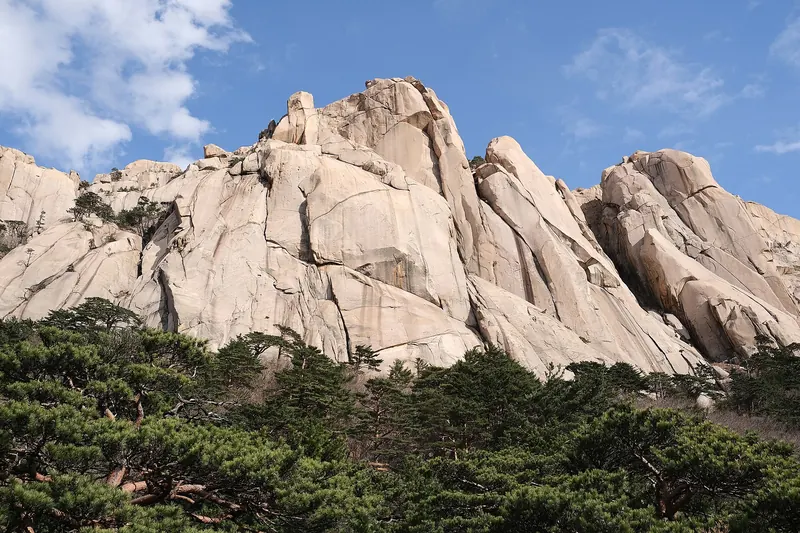
Seoraksan National Park is split into Outer, Inner and South Seorak, and the side most first-time visitors want — the cable car, Sinheungsa, Ulsanbawi and the Biseondae valley — begins at Seoraksan Sogongwon Park, 1055 Seoraksan-ro, Sokcho. VisitKorea's hiking guide gives the same directions for its trails from there: bus 7 or 7-1 from the Sokcho Intercity Bus Terminal to the Seoraksan Sogongwon Park stop. That one bus line is the reason to stay in Sokcho rather than in a resort further down the coast: you eat and sleep in town, and the park is a single ride away.
Downtown, around the Sokcho Intercity Bus Terminal, is the practical base. VisitKorea puts the Tourist & Fishery Market about five minutes' walk from the terminal, and the Dongmyeong Live Fish Center, Yeonggeumjeong and the lighthouse are next to it, so dinner and the morning bus to the park are both on foot. Sokcho Beach is the alternative for a sea view: VisitKorea notes the express bus terminal is within walking distance, and the beach has hotels, restaurants, the Sokcho Eye Ferris wheel and a pine-wood park behind it; the market is about 15 minutes' walk from the express terminal.
Seoraksan-ro near the park entrance, where VisitKorea lists hotels such as the Kensington Hotel Seorak a short way below Sogongwon Park, makes sense only if you want to be on the trail at first light. VisitKorea lists trail entry hours starting at 03:00 in summer and 04:00 in winter, for hikers going up Daecheongbong. Evenings there are quiet, and you will come down to town to eat.
The market, the fish center and the headland
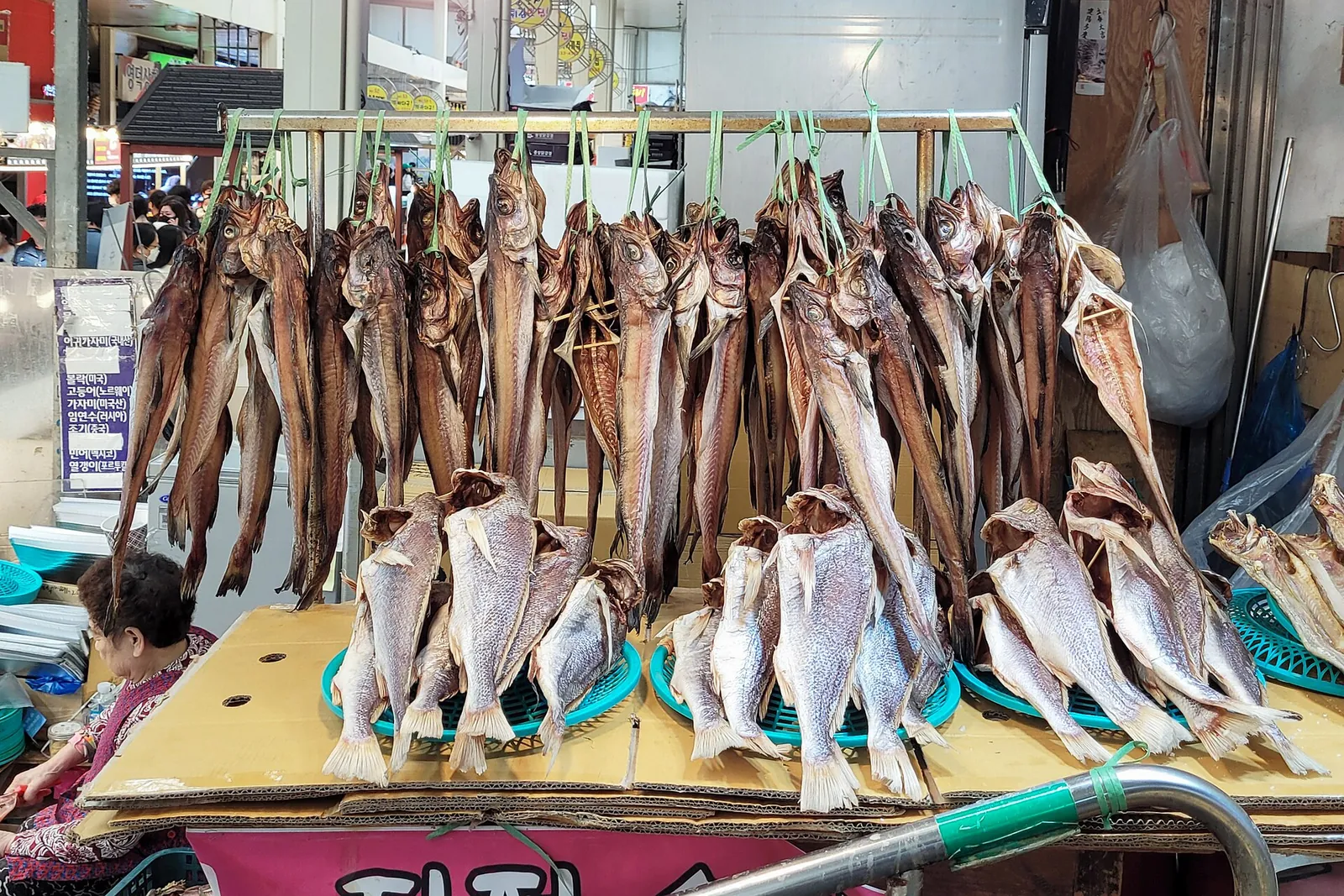
Sokcho Tourist & Fishery Market, formerly Jungang Market, is a covered market with a main building and a grid of specialised alleys: vegetables and fruit, chilli, blood sausage, salted seafood and the chicken alley, where competing stalls sell dakgangjeong, fried chicken pieces in a sweet-spicy glaze. VisitKorea's 2023 market feature says more than 19 million people visited in 2022, and the canopy means it works in rain. The raw fish center in the basement sells live fish from tanks. When we checked on 2026-10-03, VisitKorea listed the market as open 08:00–24:00, with hours varying by shop.
For a sit-down raw fish meal by the water, the Dongmyeong Live Fish Center, run by the Sokcho Fisheries Cooperative at Dongmyeong Port, works the same way as the market's fish hall: you choose fish from tanks on the ground floor, it is sliced on the spot, and you eat upstairs. When we checked, VisitKorea listed it as open 07:00–21:00 every day, next to the intercity bus terminal.
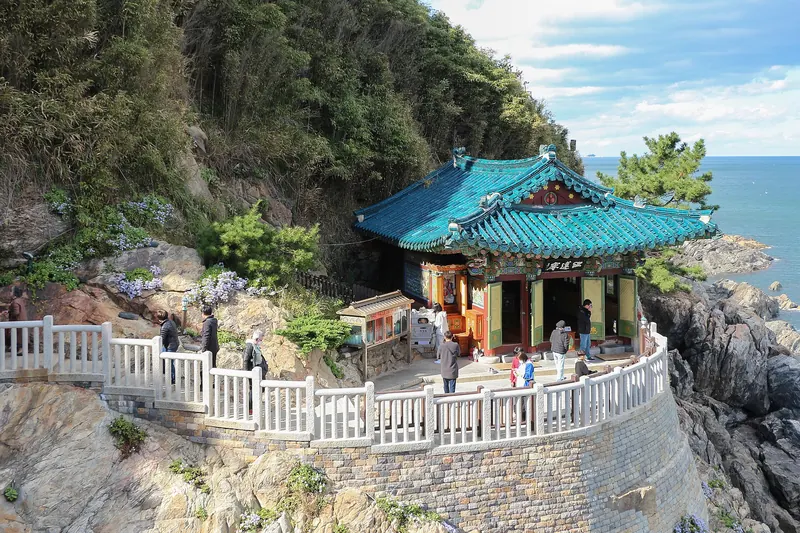
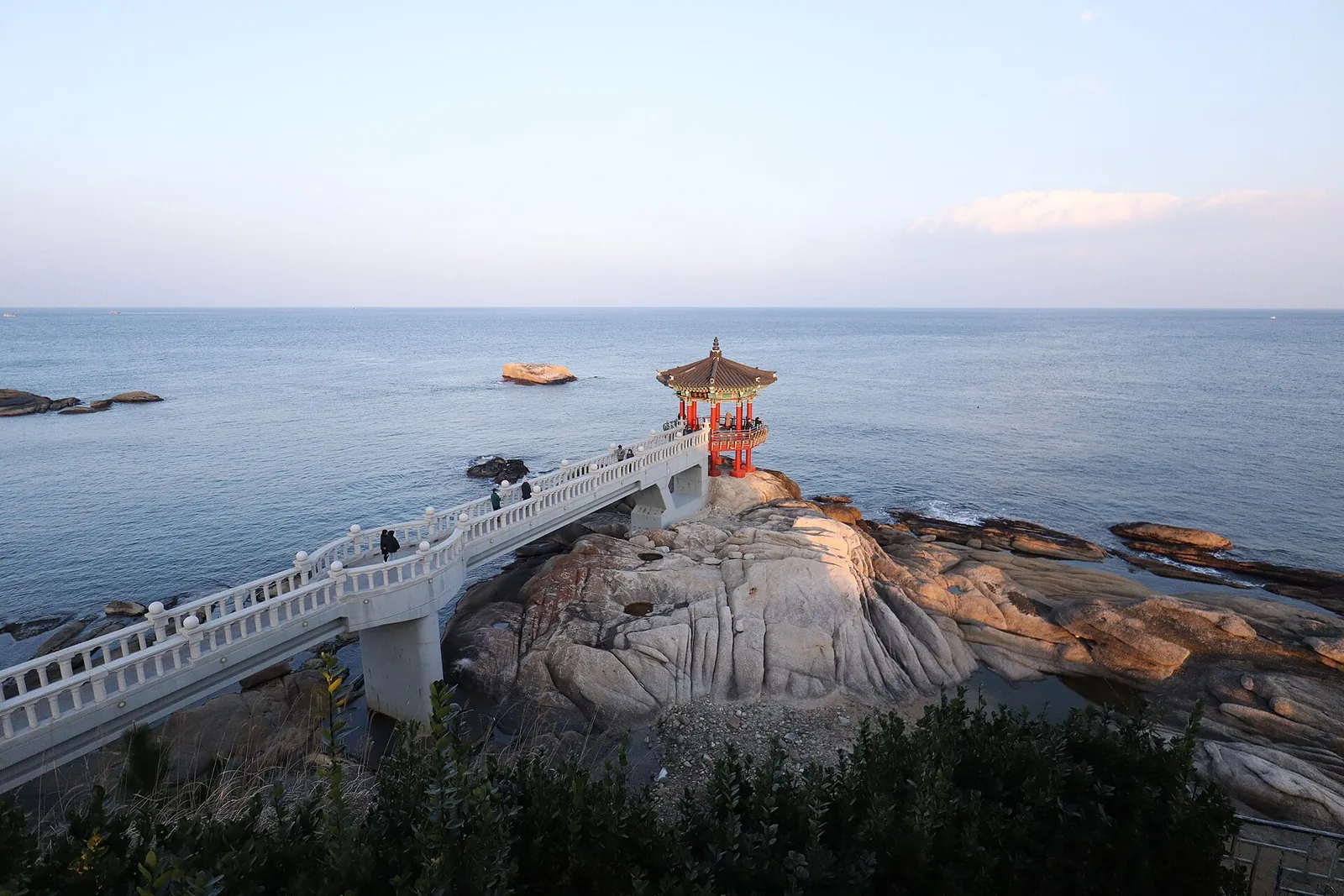
From there it is a short walk to Yeonggeumjeong, a rocky shore by the lighthouse whose name compares the sound of the waves to the geomungo, a six-string zither. A 50-metre bridge leads over the rocks to a pavilion facing the East Sea; it is a sunrise spot and is open around the clock. Above it, the Sokcho Lighthouse Observatory, built in 1957 and still working, looks over the sea, Cheongchoho Lake and Seoraksan. When we checked, VisitKorea listed the observatory as free, open 09:00–17:00 (outdoor area until 18:00). VisitKorea's market feature also points to a street of food tents and snack carts uphill from Yeonggeumjeong for the evening.
Make time for the local food
What to eat and where to look
Dakgangjeong (glazed fried chicken)
Crunchy fried chicken pieces tossed in a sweet, spicy sauce with nuts. It is the signature snack of the market's chicken alley, where VisitKorea notes each shop has its own recipe, and its market feature adds that it tastes even better once it has cooled.
- Where to look
- The chicken alley of Sokcho Tourist & Fishery Market downtown.
- Fit it into your day
- Buy a box to take back to your room or on the bus, rather than as a sit-down meal.
Many versions are coated with nuts; ask if you have an allergy, and expect queues at the best-known stalls.
Abai sundae and ojingeo sundae
Hamgyeong-do-style sausage: VisitKorea describes abai sundae as pork large intestine stuffed with blood and sweet rice, then steamed. Ojingeo sundae is whole squid stuffed with a filling and sliced. Both came south with the refugees who founded Abai Village.
- Where to look
- The restaurant alley in Abai Village; VisitKorea features Dancheon Sikdang, run by the third generation of its family, which when we checked listed hours of 08:30–19:00 with a break from 15:30 to 16:00. The market also has a blood-sausage alley.
- Fit it into your day
- Lunch after crossing on the gaetbae; a sundae platter or sundae gukbap (sausage and rice soup) is a full meal.
Abai sundae contains pork intestine and blood.
Myeongtae hoe naengmyeon (cold noodles with raw pollack)
Chewy cold noodles under a generous heap of spicy, sour raw pollack salad. VisitKorea says the dish was first made by refugees from Hamheung and is now one of Sokcho's specialities.
- Where to look
- Abai Village's North Korean-style restaurants, which list it alongside sundae.
- Fit it into your day
- A lighter lunch or the second dish shared next to a sundae platter.
Spicy and vinegary, and the fish is raw.
Hoe and mulhoe (raw fish and cold raw fish soup)
Sliced raw fish chosen live from the tank, typically followed by a spicy fish stew. In summer, look for ojingeo mulhoe, julienned raw squid and vegetables in a chilled chilli-vinegar broth, which VisitKorea ties to the Gangwon coast towns including Sokcho.
- Where to look
- The basement raw fish center of the Tourist & Fishery Market, the Dongmyeong Live Fish Center at Dongmyeong Port, and the fish restaurants at Daepohang Port.
- Fit it into your day
- Dinner on your first evening, with the stew to finish.
Ask the price before the fish is sliced, and avoid raw seafood if you are pregnant or immunocompromised.
Abai Village and the gaetbae ferry
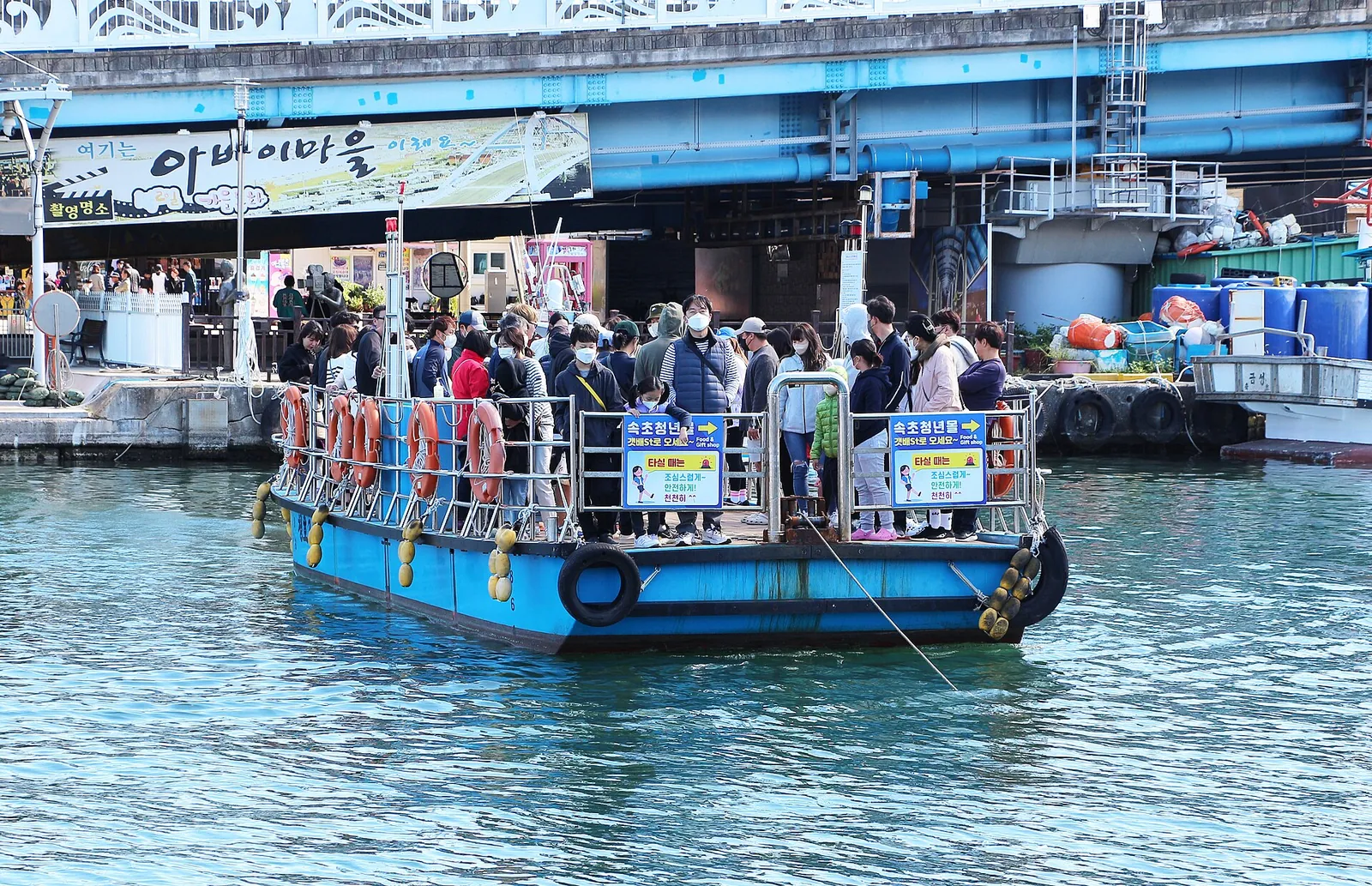
Abai Village, in Cheongho-dong, sits on the sandbar across the channel at the mouth of Cheongchoho Lake. It was formed by Korean War refugees from North Korea, mainly from Hamgyeong-do, and 'abai' is the Hamgyeong dialect word for a kindly old man, a grandfather. Most of the original shacks are gone, but VisitKorea notes a few gateless houses and murals about the lost hometown, and an alley of restaurants serving the refugees' food: Hamheung-style cold noodles, stuffed squid and abai sundae. The village also appeared in the TV drama 'Autumn in My Heart', which is why it fills up with visitors.
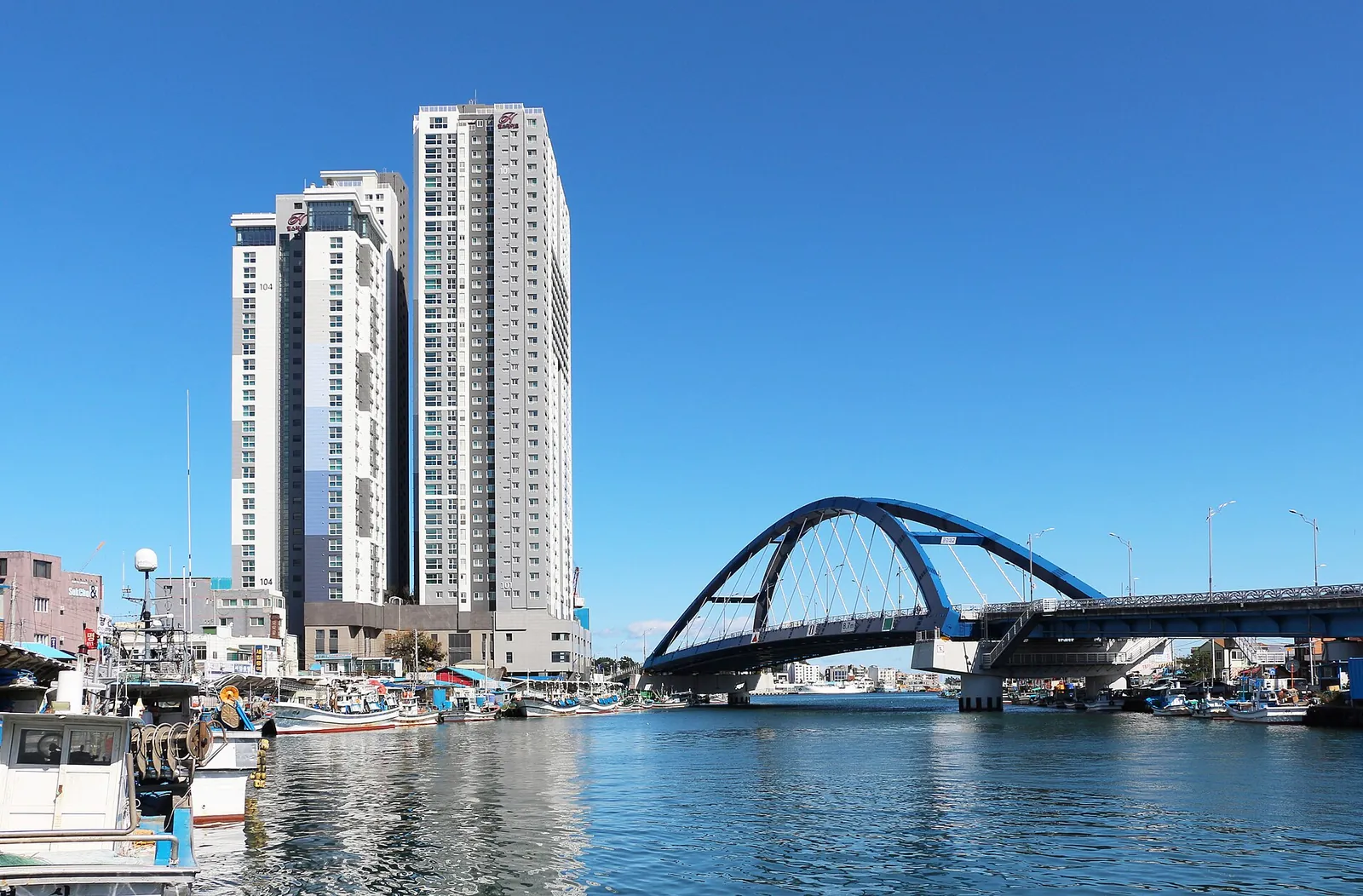
Cross on the gaetbae, a flat barge without an engine that runs on a steel wire across a channel of about 50 metres. There is no boatman: passengers pull the boat along the wire with a hook, and the crossing takes about five minutes, according to VisitKorea. Its 2023 market feature describes paying with a 500-won coin and listed operating hours of 05:00–23:00 in summer and 05:30–22:30 in winter; check on the spot, as these may have changed. The Seorak Geumgang Bridge above crosses the same channel if you would rather walk back.
To understand what you are looking at, pair the village with the Sokcho Museum, which has a refugee village of reconstructed Cheongho-dong houses alongside halls on the fishing-village culture of the coast. When we checked on 2026-10-03, VisitKorea listed opening hours of 09:00–18:00 from March to October and 09:00–17:00 from November to February, closure on Mondays and 1 January, and an adult ticket of 2,000 won.
A Seoraksan day from Sokcho
The easy option is the Seoraksan Cable Car from Sogongwon Park to Gwongeumseong, the remains of a Goryeo-period stone fortress high above the valley; the ride takes about ten minutes, and from the top you see Outer Seorak's rock formations and the East Sea. VisitKorea says only round-trip tickets are sold and that the operator announces the next day's operating hours on its website the day before, so check the evening before you go. Expect queues at weekends, on holidays and in foliage season.
For a proper walk, VisitKorea's hiking guide recommends the Ulsanbawi trail: 7.6 kilometres and about four hours return from Sogongwon Park via Sinheungsa Temple and Heundeulbawi, the 'wobbling rock'. The first part is gentle; the climb from Heundeulbawi to Ulsanbawi, a fence-like line of six massive peaks, is steep. The valley path towards Biseondae is the gentler alternative. The full Daecheongbong route, 16 kilometres and about ten hours over the 1,708-metre summit to Osaek, is a different trip; many hikers spend a night in a mountain shelter, so plan it separately.
Upper trails beyond Biseondae close for forest-fire prevention each spring and late autumn, and VisitKorea gave the periods as 2 March to 15 May and 15 November to 15 December. The lower trail from Sogongwon to Biseondae stays open.
Lagoons, the beach and the coastal path
Sokcho is built around two coastal lagoons. Cheongchoho Lake, right in the centre, has a 5-kilometre shore, a pavilion reached by a 75-metre bridge that VisitKorea calls the town's best night-view spot, lit paths, and the 73.4-metre Expo Tower left from the 1999 Gangwon International Travel Expo. Yeongnangho Lake is larger, with a 7.8-kilometre lakeside path, cherry blossom and azaleas in spring, reeds in autumn, and Beombawi, a rock shaped like a crouching tiger that counts among the 'Eight Sights of Sokcho'.
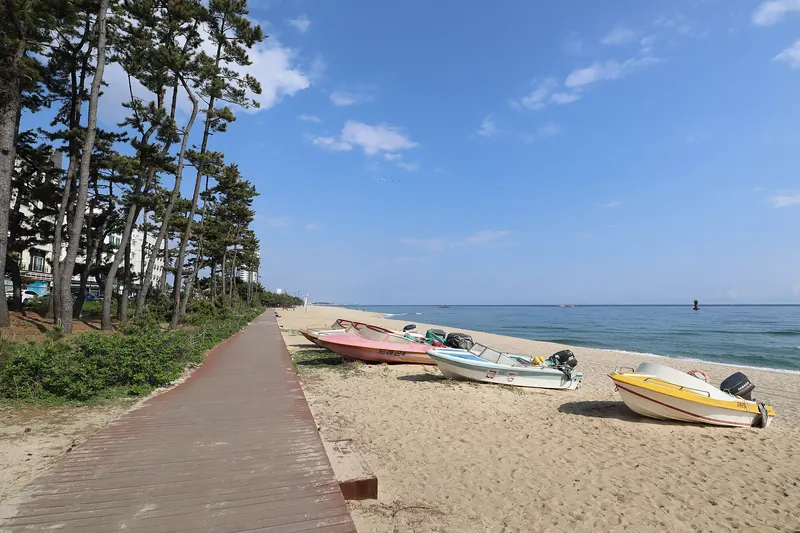
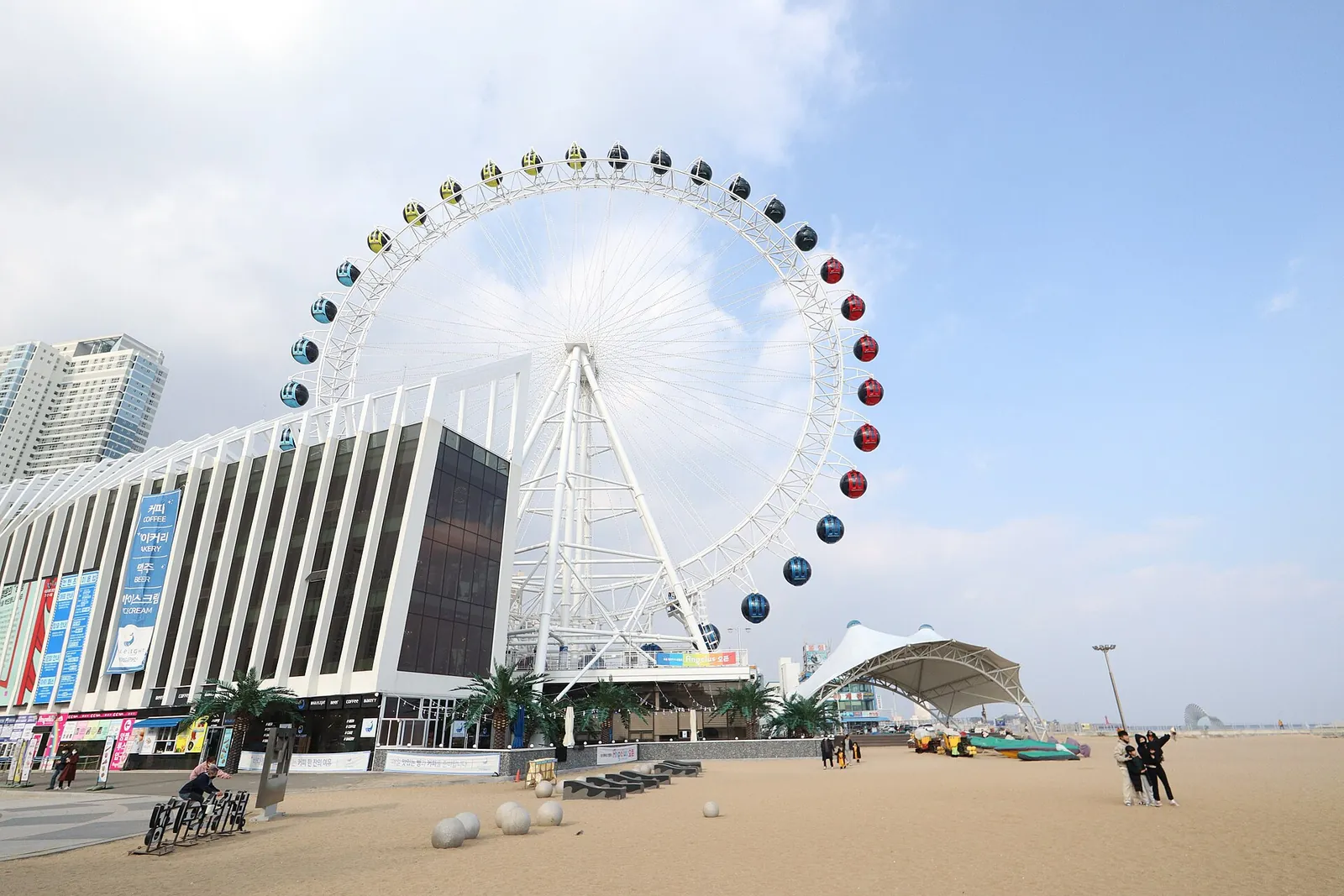
Sokcho Beach, opened in 1976, has shallow, gently shelving water and a pine-wood park behind the sand. At its edge stands the Sokcho Eye, a Ferris wheel of about 65 metres with 36 transparent cabins. When we checked on 2026-10-03, VisitKorea listed it as open 10:00–20:00 on weekdays and 10:00–21:00 at weekends and on holidays, with last entry an hour before closing, and an adult ticket of 12,000 won.
From the beach, the Oeongchi Badahyanggiro trail runs 1.74 kilometres south to Oeongchi Port on boardwalk and dirt path. The Oeongchi half was closed to civilians for decades after a 1970 guerrilla infiltration, and stretches of the old barbed-wire fence are still there. VisitKorea listed it as open 06:00–20:00 in summer and 07:00–18:00 in winter, and closed in high seas. Further south, Daepohang Port is the other harbour known for fresh fish; VisitKorea notes it was a well-known port before the town of Sokcho existed.
Practical questions
Should I stay in Sokcho or at the Seoraksan entrance?
In Sokcho, for most trips. Bus 7 or 7-1 runs from the Sokcho Intercity Bus Terminal to Seoraksan Sogongwon Park, and the town has the market, the fish restaurants and Abai Village within walking distance. Stay on Seoraksan-ro near the park entrance only if you plan a pre-dawn start on a long hike.
How do I get from Seoul to Sokcho?
By bus. VisitKorea lists Sokcho on the routes from both Seoul Express Bus Terminal and Dong Seoul Terminal, and suggests checking kobus.co.kr for express buses and txbus.t-money.co.kr for intercity buses. Express buses arrive near Sokcho Beach; intercity buses arrive downtown near the market.
How does the Abai Village ferry work?
The gaetbae is a flat barge without an engine on a steel wire across a channel of about 50 metres. Passengers pull it across with hooks, and the crossing takes about five minutes. VisitKorea's 2023 market feature describes paying with a 500-won coin.
When is the best time to visit Sokcho?
October, if you want Seoraksan at its best: VisitKorea's 2026 forecast put the first foliage on 3 October and the peak around 25 October. Expect crowds and cable-car queues then. July and August are for the beach. Avoid the forest-fire closure periods in spring and late autumn if you want to hike the upper trails.
Is the Seoraksan cable car worth it?
Yes, if you cannot hike far: it reaches the Gwongeumseong fortress in about ten minutes, with views of Outer Seorak and the sea. Tickets are round-trip only, and the operator posts the next day's hours on its website the evening before.
How long is the Ulsanbawi hike?
VisitKorea gives 7.6 kilometres and about four hours return from Sogongwon Park, gentle as far as Heundeulbawi and steep from there to the top.
Sources and checks before you travel
Reference sources for the version dated 3 October 2026. Confirm opening times, access, transport and conditions for your travel dates.
- VisitKorea: Abai Village ↗ — opens in a new tab
- VisitKorea: Abai Village Ferry (gaetbae) ↗ — opens in a new tab
- VisitKorea: Sokcho Tourist & Fishery Market ↗ — opens in a new tab
- VisitKorea: 【Gangwon】 Sokcho Tourism and Fisheries Market (2023 feature) ↗ — opens in a new tab
- VisitKorea: Dongmyeong Live Fish Center ↗ — opens in a new tab
- VisitKorea: Yeonggeumjeong ↗ — opens in a new tab
- VisitKorea: Sokcho Lighthouse Observatory ↗ — opens in a new tab
- VisitKorea: Sokcho Museum ↗ — opens in a new tab
- VisitKorea: Best hiking trails in Korea's national parks ↗ — opens in a new tab
- VisitKorea: Seoraksan Cable Car ↗ — opens in a new tab
- VisitKorea: Seoraksan Gwongeumseong Fortress ↗ — opens in a new tab
- VisitKorea: Seoraksan National Park (Outer Seorak) ↗ — opens in a new tab
- VisitKorea: Cheongchoho Lake ↗ — opens in a new tab
- VisitKorea: Yeongnangho Lake ↗ — opens in a new tab
- VisitKorea: Sokcho Beach ↗ — opens in a new tab
- VisitKorea: Sokcho Eye ↗ — opens in a new tab
- VisitKorea: Sokcho Oeongchi Badahyanggiro Trail ↗ — opens in a new tab
- VisitKorea: Daepohang Port ↗ — opens in a new tab
- VisitKorea: Dancheon Sikdang ↗ — opens in a new tab
- VisitKorea: Cold buckwheat noodles with raw pollack ↗ — opens in a new tab
- VisitKorea: Cold raw squid soup (ojingeo mulhoe) ↗ — opens in a new tab
- VisitKorea: 2026 Fall Foliage Forecast ↗ — opens in a new tab
- VisitKorea: Express Bus & Intercity Bus ↗ — opens in a new tab
- VisitKorea: Airport Transportation Guide ↗ — opens in a new tab
Does this experience fit your route?
Sokcho is easy to do on your own by bus. If you would rather have a guide and transport for a single Seoraksan day, check that the tour really goes to Seoraksan and how much time it leaves you there.
Browse relevant experiences on Viator ↗ — opens in a new tabAffiliate link · Book with ViatorPhoto credits
Sokcho with the Seoraksan range behind the town
Photograph: Bernard Gagnon — opens in a new tab · CC0 — opens in a new tab
Changes: Resized and converted to WebP; displayed with responsive crops. · Original photograph and licence details ↗ — opens in a new tab
The hand-pulled gaetbae ferry to Abai Village
Photograph: Bernard Gagnon — opens in a new tab · CC0 — opens in a new tab
Changes: Resized and converted to WebP; displayed with responsive crops. · Original photograph and licence details ↗ — opens in a new tab
Dried fish at Sokcho Tourist & Fishery Market
Photograph: Bernard Gagnon — opens in a new tab · CC0 — opens in a new tab
Changes: Resized and converted to WebP; displayed with responsive crops. · Original photograph and licence details ↗ — opens in a new tab
Yeonggeumjeong pavilion on the rocks by Sokcho Lighthouse
Photograph: Mobius6 — opens in a new tab · CC BY-SA 4.0 — opens in a new tab
Changes: Resized and converted to WebP; displayed with responsive crops. · Original photograph and licence details ↗ — opens in a new tab
The Sokcho Eye Ferris wheel at Sokcho Beach
Photograph: Mobius6 — opens in a new tab · CC BY-SA 4.0 — opens in a new tab
Changes: Resized and converted to WebP; displayed with responsive crops. · Original photograph and licence details ↗ — opens in a new tab
Seorak Geumgang Bridge over the channel between Abai Village and downtown Sokcho
Photograph: Bernard Gagnon — opens in a new tab · CC0 — opens in a new tab
Changes: Resized and converted to WebP; displayed with responsive crops. · Original photograph and licence details ↗ — opens in a new tab