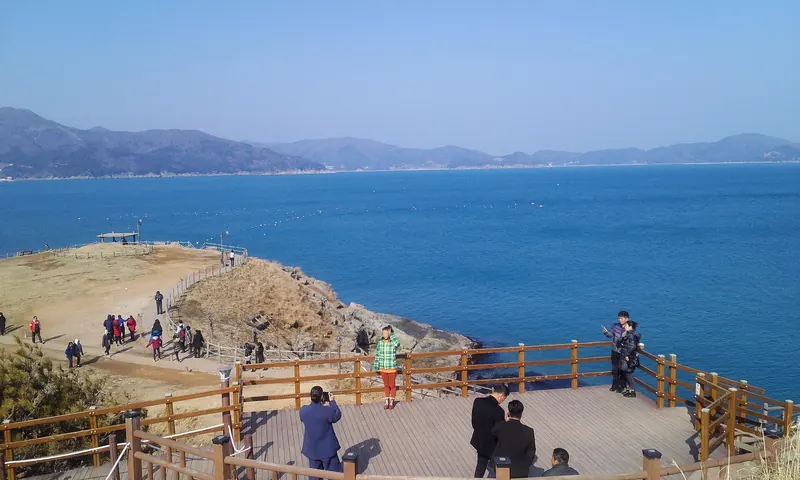
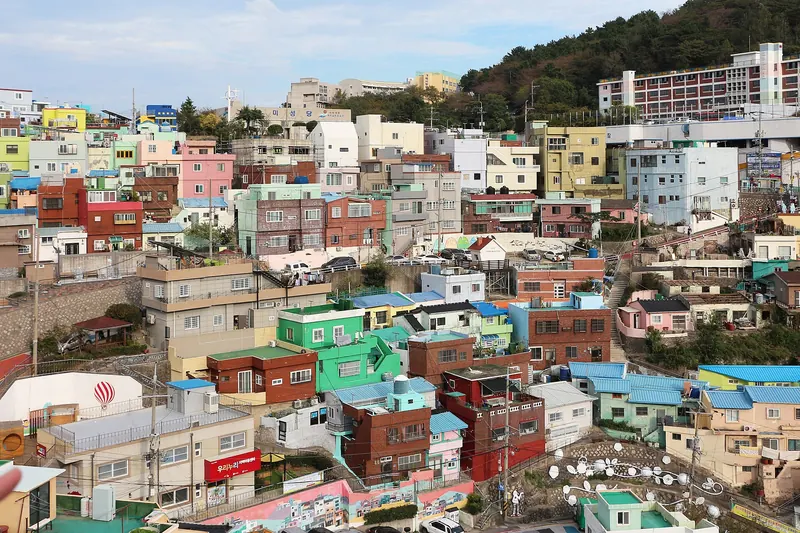
Itineraries · South Jeolla / South Gyeongsang
Korea's south coast in 7 days: Suncheon, Yeosu, Namhae, Tongyeong, Geoje
Between Suncheon and Busan, Korea's south coast breaks into bays, peninsulas and islands joined by bridges, and the towns along it each do one thing well: Suncheon's reed beds, Yeosu's night harbour, Namhae's terraced paddies, Tongyeong's market and mural hills, Geoje's headlands and garden island. The catch is that the railway runs well inland of most of it. This plan uses the train for the Jeolla half, where Suncheon and Yeosu sit on the same line, and a rental car for the Gyeongsang half, where the islands are linked by road but not by rail, and it ends at Gimhae Airport so you never drive back the way you came.
- Suggested time
- 7 days (6 nights)
- Where to stay
- Suncheon Station area (1 night); Yeosu EXPO Station or the old harbour (2 nights); Sangju Silver Sand Beach, Namhae (1 night); Gangguan Port, Tongyeong (1 night); Hakdong or Gujora, Geoje (1 night)
- Season and timing
- Spring and autumn suit the whole route: Odongdo's camellias peak in March, and April and May bring canola around Geoje's Sinseondae; autumn is reed season on Suncheon Bay. Summer is the beach season at Sangju and Gujora, with the longest daylight for the drive days. In winter, Suncheon Bay hosts wintering hooded cranes, and Odongdo's camellias begin to flower in January. In 2026, Yeosu's World Island Exhibition runs until 4 November. Plan around the Monday closures in Suncheon and Namhae and the twice-monthly Wednesday closure of the Tongyeong cable car.
The short answer
Give it seven days and six nights in five beds: one night near Suncheon Station, two in Yeosu by the EXPO station or the old harbour, one at Sangju beach on Namhae, one at Gangguan Port in Tongyeong, and one on Geoje's south-east coast at Hakdong or Gujora. Take the KTX from Seoul to Suncheon and spend the afternoon on Suncheon Bay; ride the same line on to Yeosu for Odongdo, the sea cable car and Hyangiram. On day four pick up a rental car in Yeosu and drive round to Namhae by the Noryang bridges; on day five leave Namhae by the Samcheonpo bridges for Tongyeong; on day six take the cable car up Mireuksan and cross to Geoje; on day seven catch the morning boat to Oedo-Botania and drive over the Busan link to return the car at Gimhae Airport. Do not start on a Monday, and keep the Tongyeong day off the second and fourth Wednesdays of the month.
How the route fits together: train first, then a car
The route splits cleanly in two. Suncheon and Yeosu are on the Jeolla Line, which VisitKorea traces from Seoul via Iksan, Jeonju and Namwon to Suncheon, Yeocheon and Yeosu EXPO, the end of the line. VisitKorea puts Yeosu at around three hours from the Seoul area by KTX, and notes that KTX trains leave from Seoul, Yongsan and Cheongnyangni stations, so check which one your ticket names. Neither town needs a car: VisitKorea's own Yeosu guide says the Expo station area, Odongdo, the cable car and Goso-dong are easy on foot or by public transport.
East of Yeosu the railway turns inland. Namhae, Tongyeong and Geoje have no stations, and they are tied together by bridges rather than trains. Namhae has two road links: the Namhae and Noryang bridges cross the Noryang strait from the Hadong side, and the Samcheonpo bridges carry the road from its eastern island, Changseon, to Sacheon. Geoje, which VisitKorea calls Korea's second-largest island, is joined to Tongyeong by the Geojedaegyo bridge and to Busan by the Geogadaegyo link. Driving in by one bridge and out by the next turns the whole stretch into a one-way line with no backtracking.
That is why we recommend a rental car for days four to seven. VisitKorea's driving guide singles out small towns and islands with inconvenient public transport as the case for a car. It says short-term visitors can rent with an international driving permit if they are over 21, must show a passport, and must pay by credit card in the driver's name; Google Maps navigation does not work in Korea, so use Naver Map or Kakao Map. If the rental car has no Hi-pass device, keep out of the blue Hi-pass lanes at motorway toll gates.
Pick the car up in Yeosu and return it at Gimhae Airport in Busan. When we checked on 2026-10-03, the Korea Airports Corporation listed a Lotte Rent-a-Car desk at Yeosu Airport, opposite arrivals on the ground floor, and SK, Lotte and Jeju One Car rental at Gimhae. Ask before you book whether the company allows a one-way return between the two and what it charges; we could not verify one-way fees. Day by day the plan is: Suncheon, Yeosu twice, Namhae, Tongyeong, Geoje, and Busan on the last afternoon.
Days 1–3: Suncheon Bay and Yeosu by train
Day 1, Suncheon. Take a morning KTX on the Jeolla Line and get off at Suncheon, the stop before Yeocheon and Yeosu. Leave your bag at a hotel near the station and go straight to the bay: the official Suncheon Bay site lists bus 66 from the stop opposite Suncheon Station to the National Garden (East Gate) in about 21 minutes. Suncheon Bay is two places 7 kilometres apart, the national garden and the wetland, and when we checked on 2026-10-03 the official site listed an adult day ticket of 10,000 won that is valid on the same day at both, or 14,000 won with the SkyCube, the small driverless rail car that links them. The SkyCube timetable listed the last car from the garden at 18:00 from March to October and 17:00 from November to February, and the SkyCube does not run on Mondays; the garden and the wetland both close on the last Monday of each month.
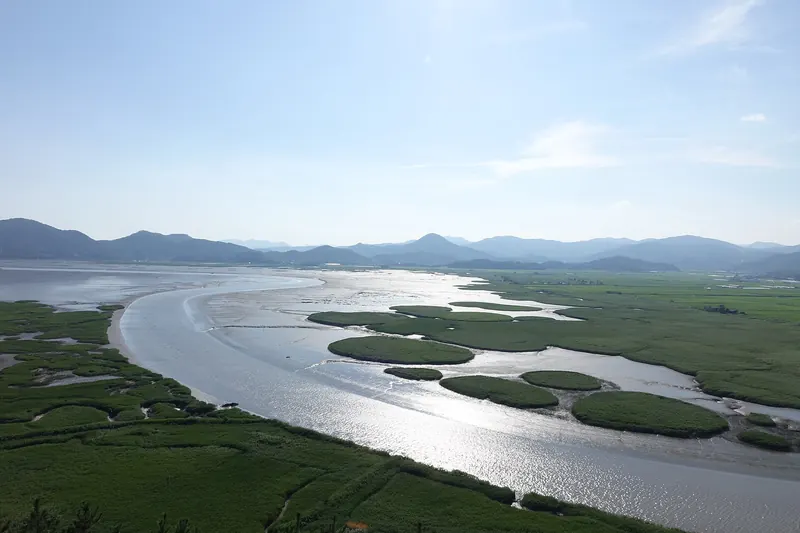
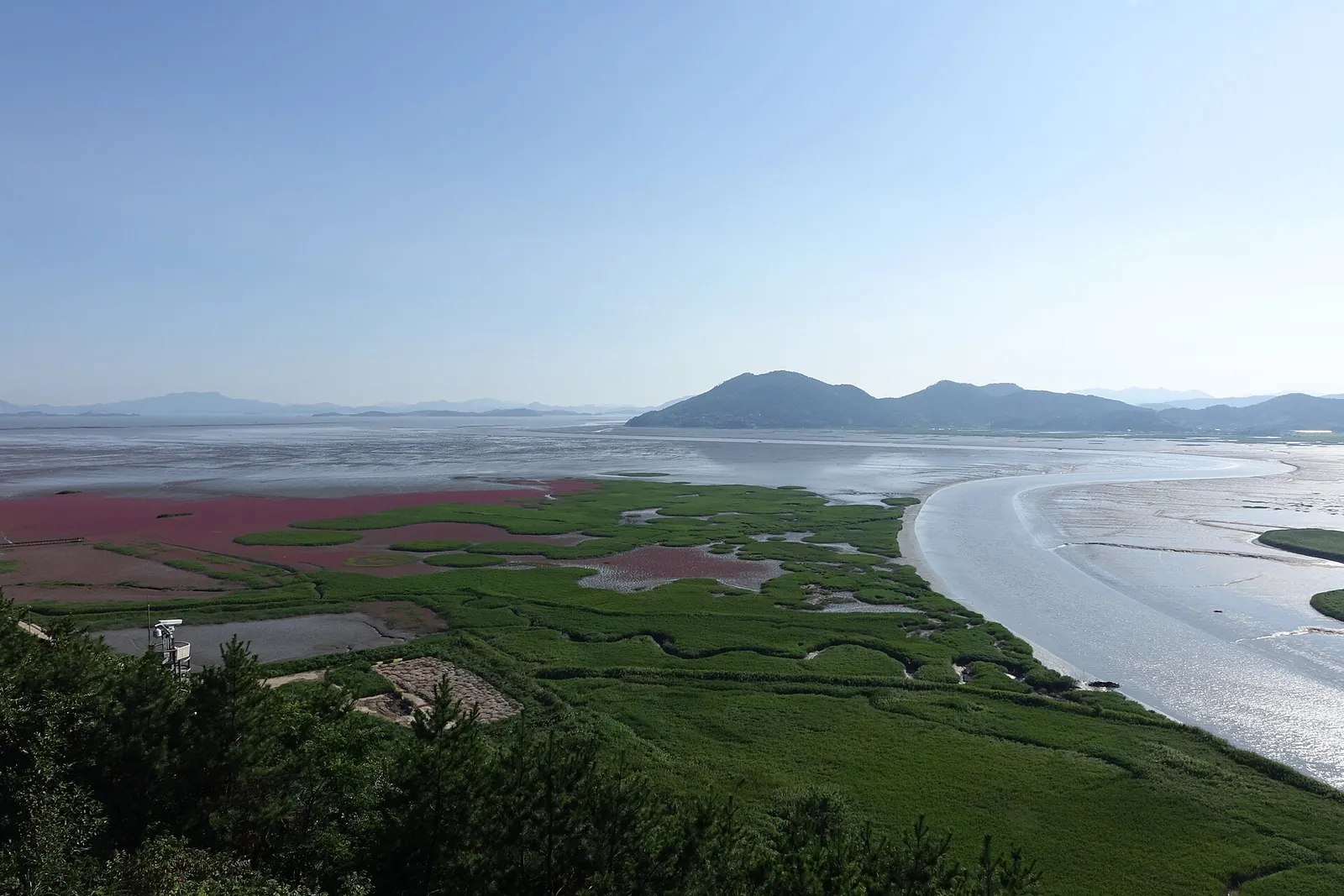
Walk the garden first, ride the SkyCube across, and save the wetland for late afternoon. VisitKorea describes a three-kilometre waterway through reed beds and mudflats, with sunsets over the S-shaped channel from the observatory and wintering hooded cranes. The official site gives about 30 minutes on foot from the Yongsan entrance up to Yongsan Observatory, rebuilt as a two-storey timber structure in 2025, and warns that the path lights go off at closing time, so check the posted closing time and walk down before it is dark. Sleep near the station.
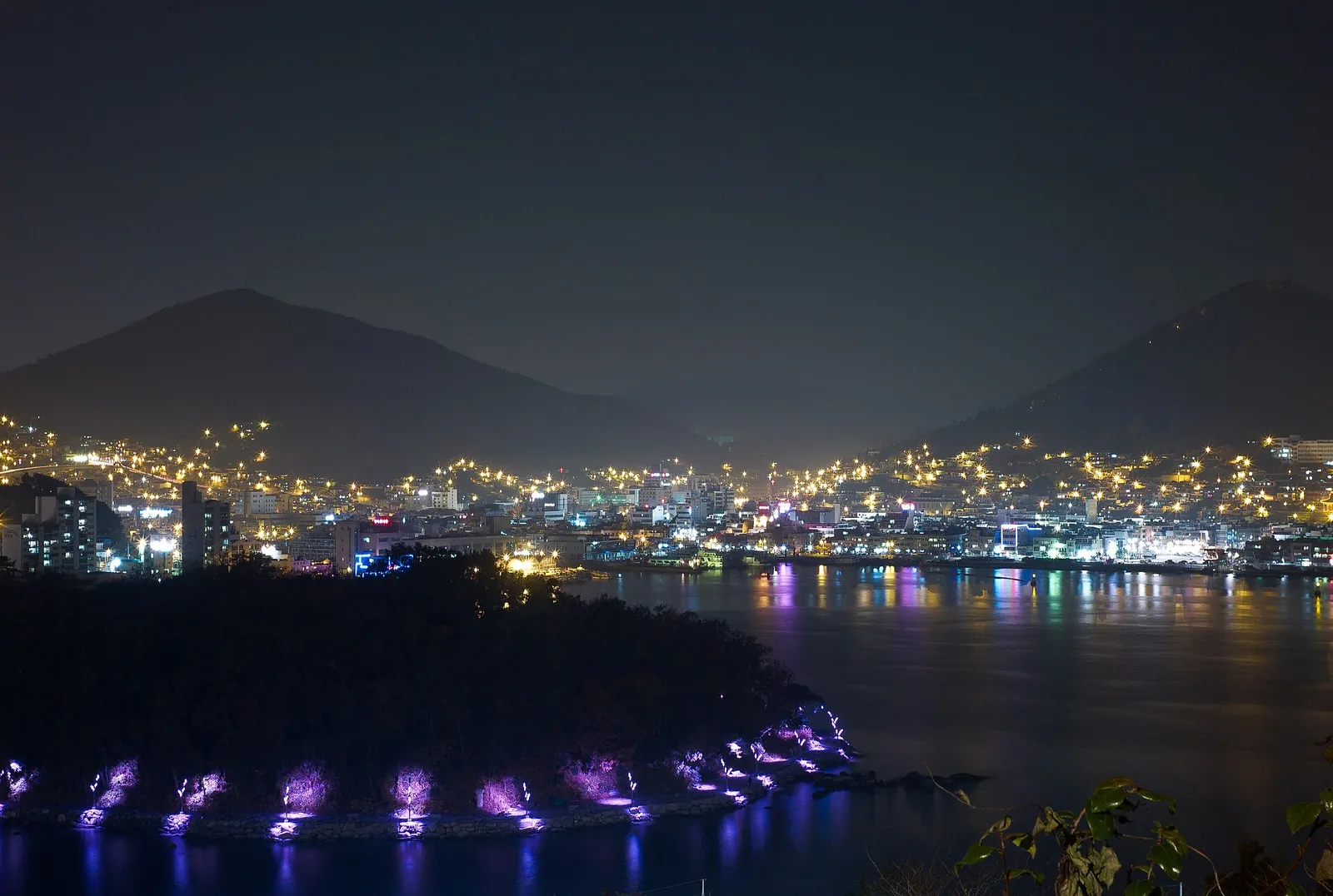
Day 2, on to Yeosu. Take the train down the line to Yeosu EXPO Station, the terminus. In the afternoon walk out to Odongdo, joined to the mainland by a 768-metre breakwater; VisitKorea describes Korea's largest camellia grove, about 3,600 trees, and a 2.5-kilometre trail along the cliffs. When we checked on 2026-10-03, VisitKorea listed the little Dongbaek Train across the breakwater at 1,000 won, running 9:30 to 17:00 with a break from 12:00 to 13:00. Ride the Yeosu Maritime Cable Car, Korea's first over the sea, at dusk: VisitKorea gives 13 minutes one way and listed hours of 9:30 to 21:30 (last tickets 21:00) and adult round trips of 17,000 won in a standard cabin or 24,000 won in a glass-floored Crystal Cabin. Then eat at the Romantic Cart Bars, the 18 food trucks under Geobukseon Bridge, which VisitKorea listed from 18:00 to 1:00 between March and October.
Day 3, Hyangiram and the old harbour. Go early to Hyangiram, the hermitage among the rocks of Dolsando, which VisitKorea lists as open from sunrise to sunset and traces to the monk Wonhyo in 644. VisitKorea's Yeosu guide advises a taxi or rental car for Hyangiram rather than relying on buses. Have lunch on Bongsan Gejang Baekban Street, designated in 2009, for the city's marinated crab set meal. Until 4 November 2026 you can spend the afternoon at the World Island Exhibition, whose main venue is in the Jinmo district of Dolsan with sub-venues including the Expo site; when we checked, the official site listed 6 October as a closed day and posted notices about its free shuttle buses. VisitKorea lists the Big-O fountain show at Expo Ocean Park, about 30 minutes, at 20:00 from Wednesday to Sunday through 8 November.
Make time for the local food
What to eat and where to look
Gejang baekban (marinated crab set meal), Yeosu
Yeosu's signature meal: crab marinated in soy sauce and in a spicy sauce, served with a generous spread of side dishes. VisitKorea says the restaurants on Bongsan-dong's crab street, designated in 2009, grew up around fishing boats landing their catch nearby, and that the spread can include tongue-sole salad and gat kimchi.
- Where to look
- Bongsan Gejang Baekban Street in Bongsan-dong, Yeosu.
- Fit it into your day
- Lunch on day three, after Hyangiram.
Soy-marinated crab is served raw; if you avoid raw shellfish, choose the cooked dishes on the table instead.
Yeosu samhap
A sizzling griddle of octopus, Dolsan gat kimchi (leaf mustard kimchi) and pork belly cooked together, the dish VisitKorea names as the speciality of the waterfront pocha near Hamel Lighthouse.
- Where to look
- The pocha near Hamel Lighthouse and the Romantic Cart Bars under Geobukseon Bridge.
- Fit it into your day
- Dinner on day two, after the cable car.
Gat kimchi is tangy and spicy, and VisitKorea notes it is seasoned with salted anchovies.
Myeolchi ssambap (anchovy and leaf-wrap rice)
Large, plump anchovies simmered in a small amount of seasoning and eaten wrapped in fresh leaves with rice and pickled garlic or garlic-stem salad; the leftover sauce is mixed into rice. VisitKorea says restaurants specialising in it are common in Namhae and Tongyeong.
- Where to look
- Seafood restaurants around Namhae's harbours and near Sangju.
- Fit it into your day
- Dinner on day four in Namhae, or lunch on day five before the drive to Tongyeong.
Check whether the sauce is spicy before you order, and expect whole fish.
Chungmu gimbap
Tongyeong's own gimbap, from the town's old name, Chungmu: finger-sized rolls of plain rice in seaweed with no filling and no sesame oil, served with spicy diced radish kimchi and squid salad on the side.
- Where to look
- The gimbap shops around Gangguan Port and Jungang Market.
- Fit it into your day
- Dinner on day five, or a takeaway box for the drive to Geoje.
The diced radish kimchi on the side is spicy; the rice itself is plain.
Meongge bibimbap (sea squirt bibimbap), Geoje
Rice mixed with sea squirt (sea pineapple), laver, sesame seeds and sesame oil, one of the local dishes VisitKorea names for Geoje alongside sea urchin and seaweed soup.
- Where to look
- Seafood restaurants across Geoje, including one VisitKorea features near the P.O.W. Camp Historic Park.
- Fit it into your day
- Dinner on day six on the south-east coast, or lunch on day seven after the Oedo boat.
Sea squirt has a strong taste of the sea that not everyone likes; try a little before ordering a full bowl.
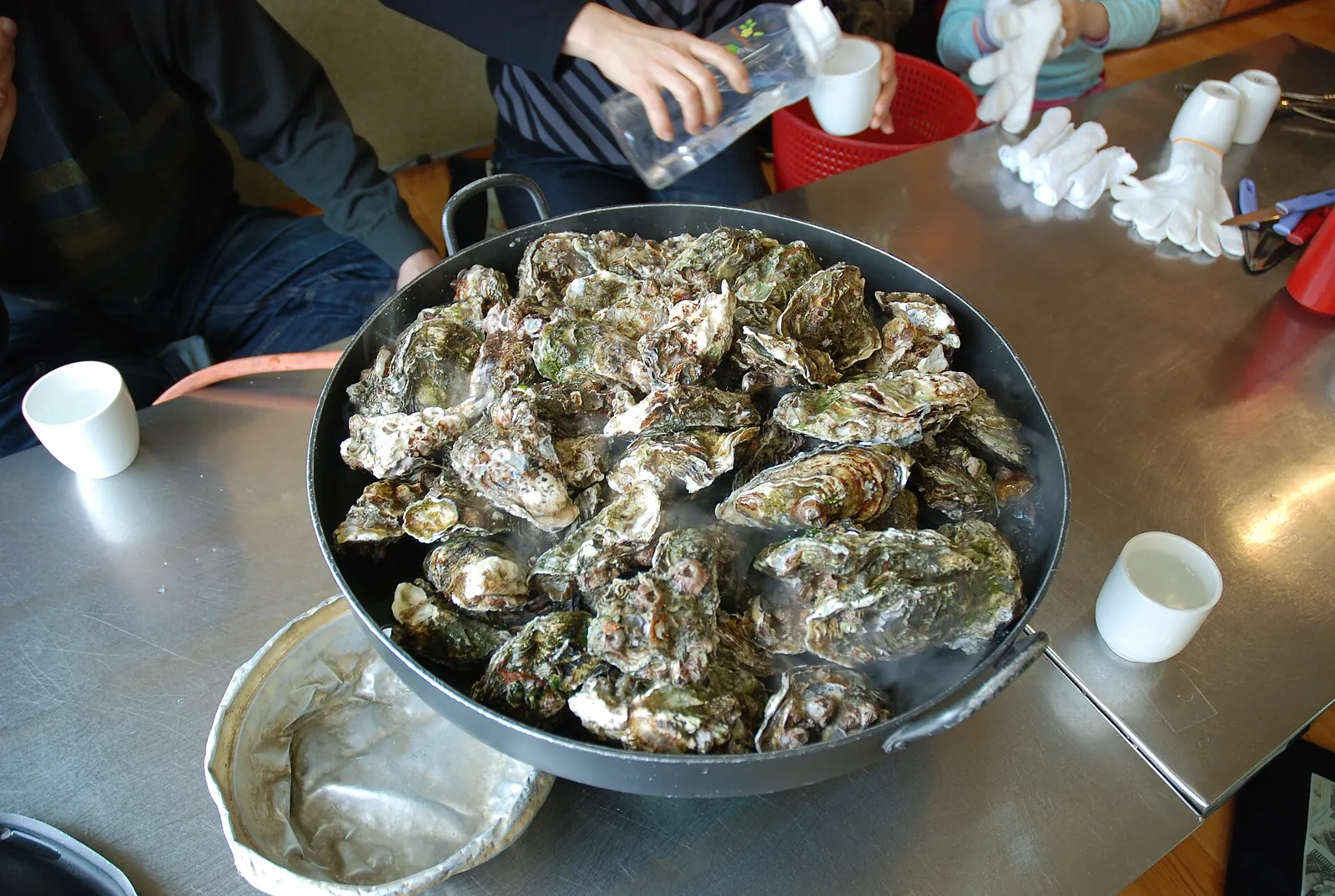
Oysters in Tongyeong and Geoje
Oyster dishes such as gul bossam (napa wraps with pork and oyster), guljeon (oyster pancakes) and oyster hot-stone-pot rice. VisitKorea notes that it is rare to find a Tongyeong restaurant serving oysters all year round, which tells you they are a seasonal treat.
- Where to look
- Oyster restaurants in Tongyeong, some of which serve set menus of several oyster dishes.
- Fit it into your day
- Lunch on day six between the cable car and the drive to Geoje, if they are in season.
Raw oysters carry a food-safety risk; choose cooked dishes if you are unsure.
Days 4–5: driving round to Namhae, then on to Tongyeong
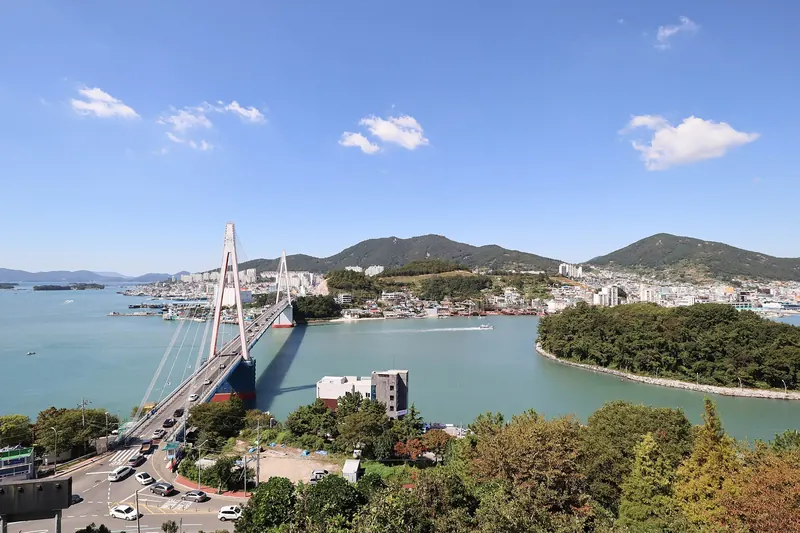
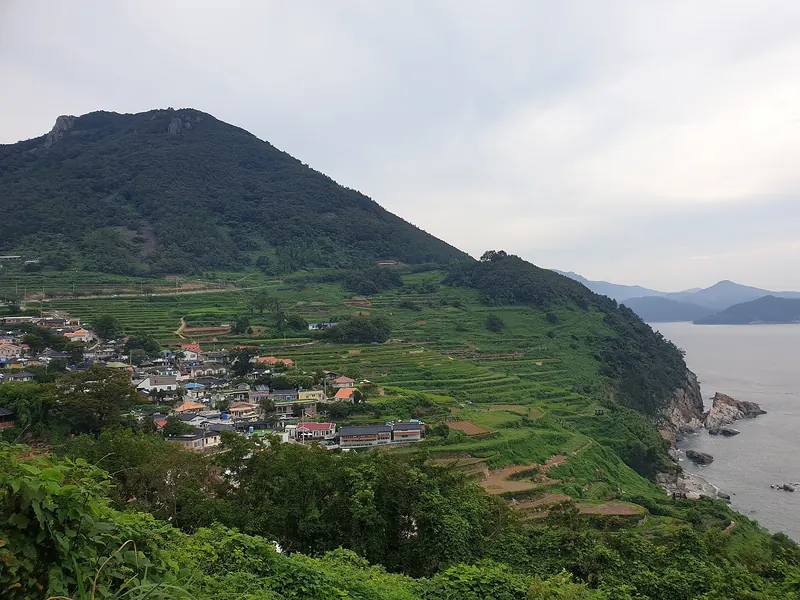
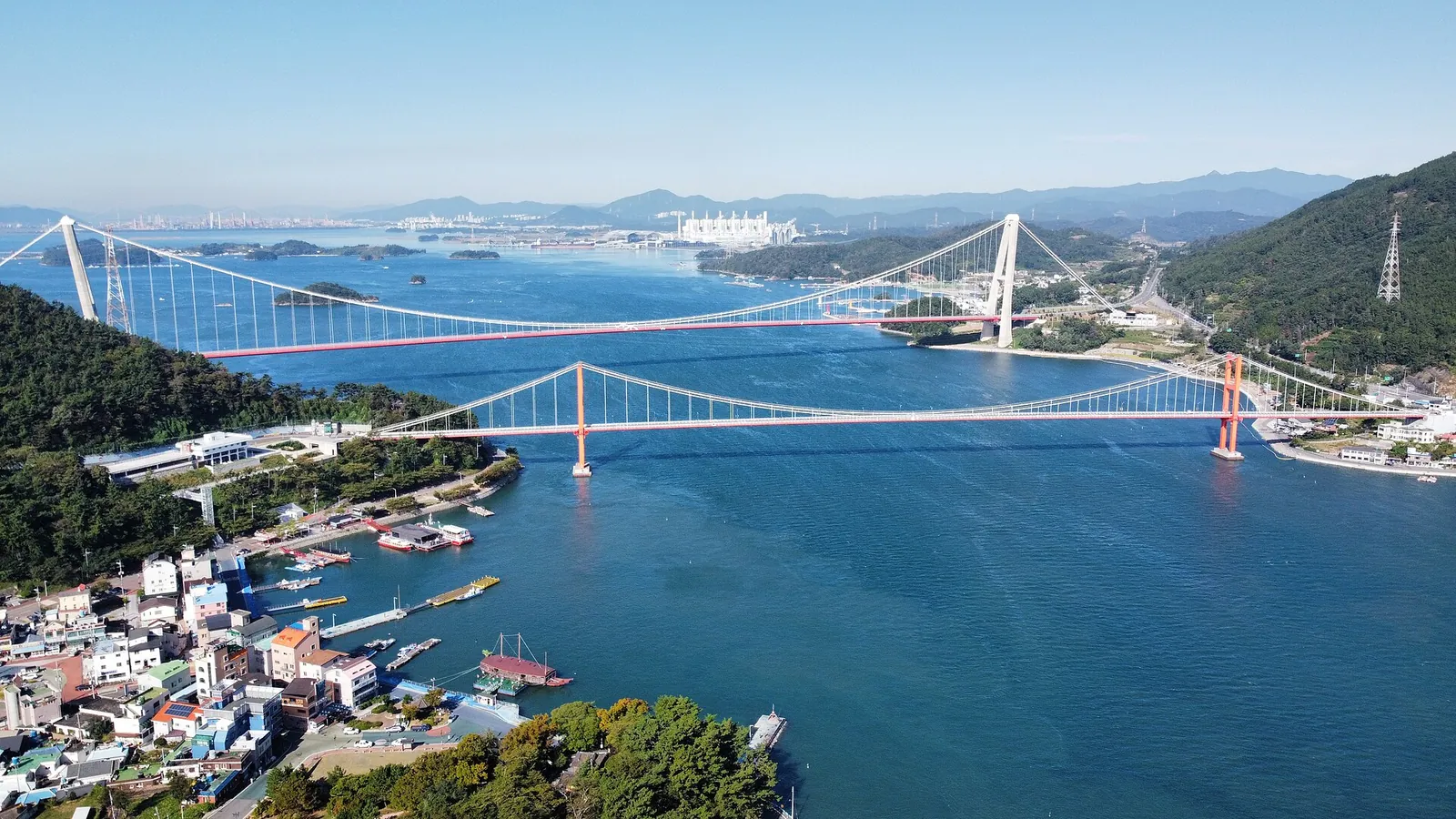
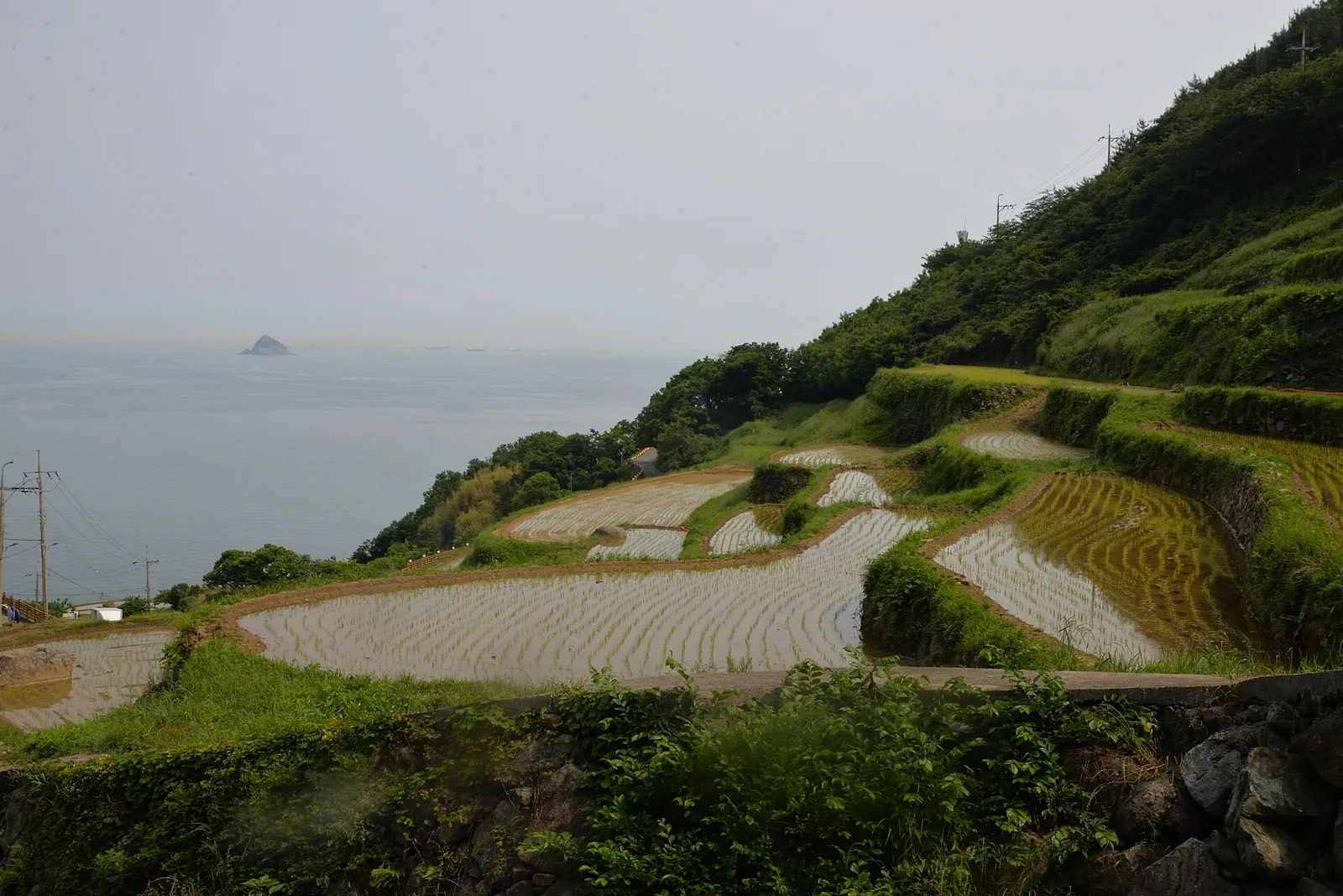
Day 4, Namhae. Collect the car and head north-east towards Hadong. Namhae's northern entrance is the Noryang strait, where the 1973 Namhae Bridge and the newer Noryang Bridge connect Hadong with Namhae; from there the Seolcheon coastal road, which VisitKorea describes as 35 kilometres from Noryang to Jijok, follows the shore and is lined with cherry blossom and mustard flowers in spring. Spend the afternoon at Gacheon Daraengi Village, where VisitKorea describes 108 steps of stone-and-soil terraced paddies on a steep slope above the sea and allows about an hour for the key points, including Amsubawi Rock and the pebble beach. It is a working village: stay on the paths and off the paddy walls.
Sleep at Sangju Silver Sand Beach, about 2 kilometres of white sand sloping into shallow water, with accommodation behind it. VisitKorea's advice for Sangju is the one to follow: arrive in the evening, go up to Boriam on Geumsan for the sunrise, and spend the day by the sea.
Day 5, Boriam, the German Village and Tongyeong. Boriam Hermitage sits atop Geumsan (704 metres) and is counted with Bomunsa on Ganghwado and Hongnyeonam at Naksansa among Korea's most revered prayer sites; when we checked on 2026-10-03, VisitKorea listed admission at 1,000 won, with parking at the Bokgok car parks. Then cross to the east coast for the German Village in Mulgeon-ri, built from 2001 for Koreans returning from work in Germany. The German Exhibition Hall there tells the story of the Korean miners and nurses sent to Germany in the 1960s; VisitKorea listed it as closed on Mondays, with admission at 1,000 won. In 2026, the German Village Oktoberfest runs from 9 to 11 October, 10:00 to 21:30, so book Namhae beds early if your dates overlap.
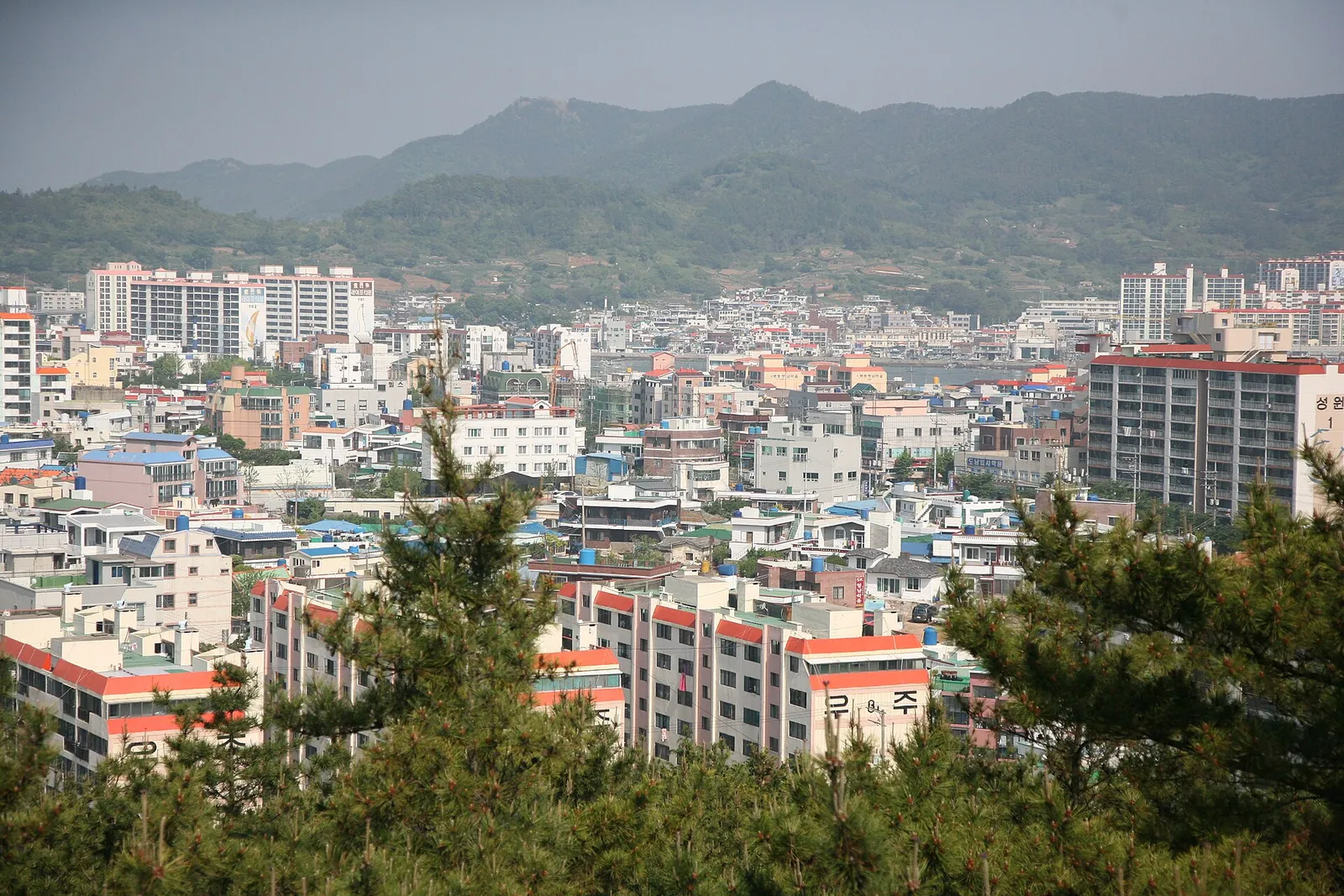
Leave Namhae by the eastern side, across Changseon and the Samcheonpo bridges to Sacheon, and continue to Tongyeong. Park near the hotel and spend the rest of the day on foot around Gangguan Port, where replicas of Admiral Yi Sun-sin's turtle ships are moored: Jungang Market behind it has almost 400 years of history according to VisitKorea, and next to it the lanes of Dongpirang, painted with murals since a 2007 project, climb to a view over the sea and the port. Eat Chungmu gimbap for dinner and walk the waterfront after dark.
Days 6–7: Mireuksan, Geoje's coast and the drive to Busan
Day 6, the cable car and over to Geoje. Be at the Tongyeong Cable Car on Mireuksan when it opens. VisitKorea describes a 1,975-metre line with eight-person gondolas and about nine minutes to the upper station; when we checked on 2026-10-03, it listed hours of 10:00 to 18:00 on weekdays and 9:00 to 18:00 at weekends, last tickets 50 minutes before closing, closure on the second and fourth Wednesdays of each month, and an adult round trip of 17,000 won. If it is not running, the fall-back is Sebyeonggwan in the town centre, built in 1605 and counted by VisitKorea among the widest buildings of the Joseon period, with an adult ticket listed at 3,000 won.
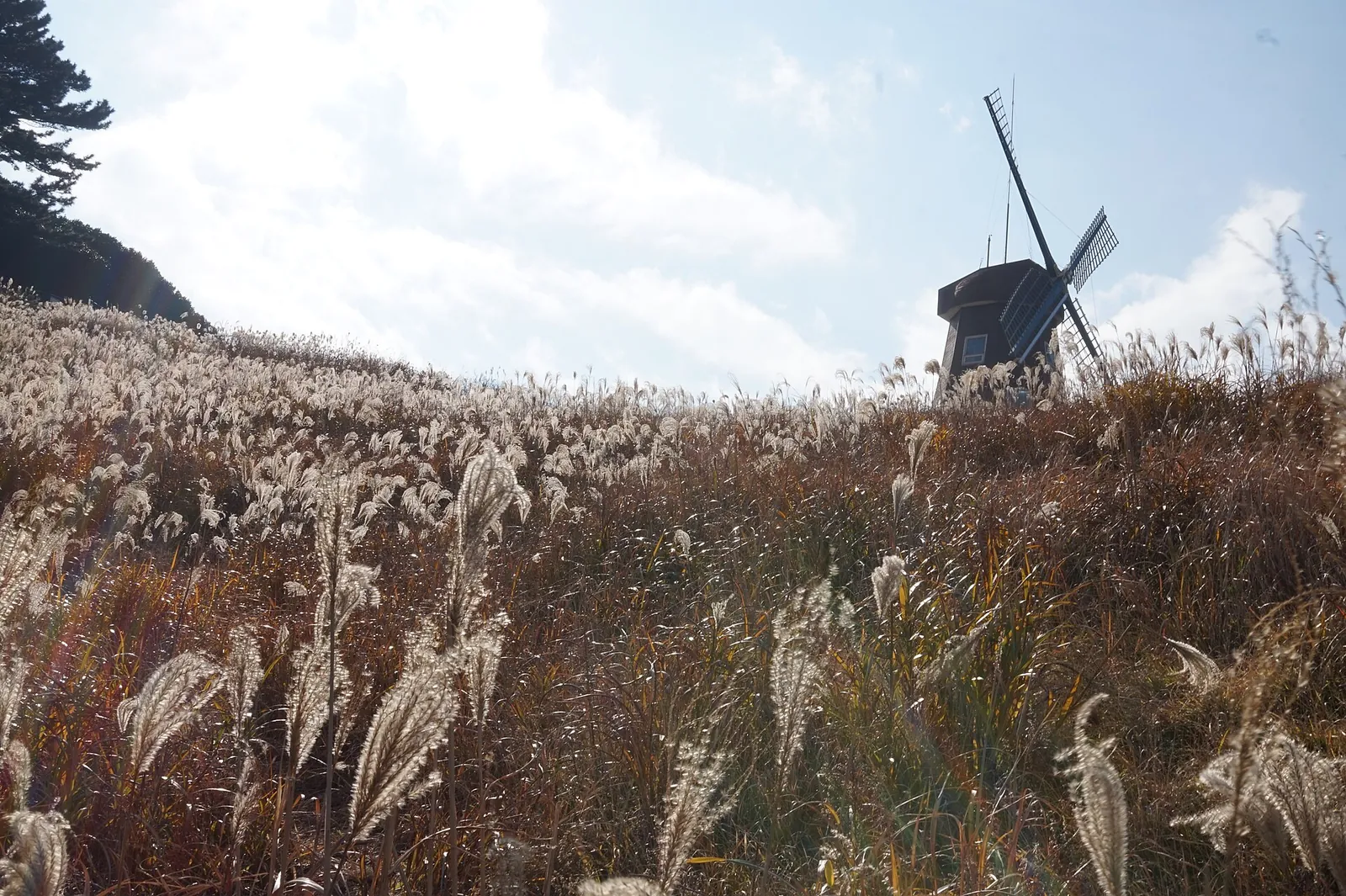
After lunch, drive across the Geojedaegyo bridge onto Geoje and down to the south-east coast. Spend the late afternoon at Windy Hill, the grassy headland with a windmill at the end of the fishing village of Dojangpo, at the entrance to the Haegeumgang islets; VisitKorea lists it as free and open at all hours, and the plants grow short because of the wind. Sleep at Hakdong, a 1.2-kilometre beach of black pebbles where VisitKorea notes a dock for boat excursions, or at Gujora, a shallower, calmer beach with raw-fish restaurants and cruise boats to Haegeumgang, Naedo and Oedo. Hakdong's water is deep with rough waves, so Gujora is the one for a swim.
Day 7, Oedo-Botania and Busan. Take the earliest boat you can to Oedo-Botania, the garden island designed with Buckingham Palace Garden as its motif. VisitKorea says visitors sail from one of seven ports on Geoje and get two hours of free viewing time on the island, so allow half a day. When we checked on 2026-10-03, VisitKorea listed opening hours of 8:30 to 17:00 in winter and 8:00 to 19:00 in summer and adult admission of 11,000 won; the boat fare is separate and we could not verify it. Ferries can be cancelled in rough seas, so confirm the sailing the evening before.
In the afternoon drive north to the Geogadaegyo link and stop at Maemiseong, the castle-like sea wall a local man, Baek Soon-sam, built by hand after Typhoon Maemi destroyed his fields in 2003. Then cross to Busan and return the car at Gimhae Airport. From there, VisitKorea gives the Busan–Gimhae Light Rail to Sasang (Line 2) or Daejeo (Line 3) as the quickest way into the city, and about an hour by public transport to Haeundae or Gwangalli.
The plan day by day
This is an editorial suggestion, not a timetable. We give no train, bus or ferry times we could not read on an official page; check trains in the KORAIL app, ferries on the morning of sailing, and the opening days of each place. A Sunday start fits the closures well: Suncheon falls on a Sunday, the Namhae exhibition hall on a Thursday and the Tongyeong cable car on a Friday.
- Day 1 — Seoul to Suncheon: KTX on the Jeolla Line; bus 66 to the national garden; SkyCube to the wetland; Yongsan Observatory in the late light. Night near Suncheon Station.
- Day 2 — Suncheon to Yeosu: train to Yeosu EXPO; Odongdo; the maritime cable car at dusk; dinner at the Romantic Cart Bars. Night in Yeosu.
- Day 3 — Yeosu: taxi to Hyangiram early; crab set lunch on Bongsan Gejang Baekban Street; the World Island Exhibition (until 4 November 2026) or Goso-dong; the Big-O Show. Night in Yeosu.
- Day 4 — Yeosu to Namhae (car): pick up the car; Noryang bridges; Seolcheon coastal road; Daraengi Village. Night at Sangju.
- Day 5 — Namhae to Tongyeong: Boriam at sunrise; German Village and exhibition hall (not Mondays); Samcheonpo bridges; Jungang Market and Dongpirang. Night at Gangguan.
- Day 6 — Tongyeong to Geoje: cable car up Mireuksan (not the 2nd or 4th Wednesday); Geojedaegyo bridge; Windy Hill. Night at Hakdong or Gujora.
- Day 7 — Geoje to Busan: morning boat to Oedo-Botania; Maemiseong; Geogadaegyo link; return the car at Gimhae Airport.
Doing it without a car
The first three days need no car at all. The difficulty is the middle: we could not find an official timetable for buses between Yeosu and Namhae or between Namhae and Tongyeong, and our Namhae guide warns that once on the island you rely on taxis. The honest car-free version therefore drops Namhae.
In that version, go back up the line from Yeosu to Suncheon on day four and take the Gyeongjeon Line, which VisitKorea lists from Suncheon through Hadong, Jinju and Masan to Busan. From Busan, VisitKorea gives about 80 minutes by intercity bus from Busan Seobu Intercity Bus Terminal to Tongyeong Bus Terminal, which is outside the centre, so allow a taxi to Gangguan. Spend two nights in Tongyeong and use the extra day for an island ferry (our Tongyeong guide covers the options). For Geoje, VisitKorea notes that intercity bus tickets to Geoje are sold at Gimhae Airport; on the island, both Hakdong and Gujora have boats to Oedo.
If you are coming from Seoul rather than following the route, VisitKorea lists direct intercity buses from Seoul Nambu Terminal to Namhae, Tongyeong and Geoje. Intercity timetables are on txbus.t-money.co.kr and bustago.or.kr; check them before you commit to a day.
Practical questions
Do I need a car for Korea's south coast?
Not for Suncheon and Yeosu, which are on the Jeolla railway line. For Namhae, Tongyeong and Geoje a car makes the route work: none of them has a railway station, the sights are spread out, and VisitKorea's own driving guide recommends a car for islands and small towns with inconvenient public transport. Without one, drop Namhae and reach Tongyeong and Geoje by intercity bus from Busan.
Can foreign visitors rent a car in Korea?
VisitKorea says short-term visitors can rent with an international driving permit if they are over 21, must show a passport, and must pay by credit card in the driver's name; some companies also ask for your home licence. Use Naver Map or Kakao Map for navigation, because Google Maps navigation does not work in Korea.
Is there a bridge from Yeosu to Namhae?
Namhae's road links are the Namhae and Noryang bridges from the Hadong side in the north and the Samcheonpo bridges from Sacheon in the east, so from Yeosu you drive towards Hadong and cross at Noryang. Leave Namhae by the Samcheonpo side for Tongyeong.
Which days of the week should I avoid?
Do not start on a Monday: Suncheon's SkyCube does not run on Mondays, and the garden and wetland close on the last Monday of each month. Namhae's German Exhibition Hall is closed on Mondays, and the Tongyeong Cable Car closes on the second and fourth Wednesdays. A Sunday start avoids all three.
Where do I fly in and out?
Most international visitors arrive at Incheon, take AREX to Seoul Station and the KTX south to Suncheon. The route ends at Gimhae International Airport in Busan, which has rental-car desks for returning the car and international flights home, so book an open-jaw ticket if you can.
Is seven days enough?
Seven days covers one highlight-rich day in each place, with Yeosu getting two nights. It does not leave time for outer islands such as Geumodo, Bijindo or Jisimdo, or for Busan itself; add a night in Tongyeong for an island ferry and two or three days in Busan at the end.
Sources and checks before you travel
Reference sources for the version dated 3 October 2026. Confirm opening times, access, transport and conditions for your travel dates.
- VisitKorea: tourist trains and city tour buses ↗ — opens in a new tab
- VisitKorea: trains in Korea ↗ — opens in a new tab
- VisitKorea: a complete guide to Yeosu ↗ — opens in a new tab
- VisitKorea: driving in Korea ↗ — opens in a new tab
- Korea Airports Corporation: Yeosu Airport car rental ↗ — opens in a new tab
- Korea Airports Corporation: Gimhae Airport car rental ↗ — opens in a new tab
- Suncheon Bay: ticket prices ↗ — opens in a new tab
- Suncheon Bay: opening hours ↗ — opens in a new tab
- Suncheon Bay: directions ↗ — opens in a new tab
- Suncheon Bay Wetland: visiting hours ↗ — opens in a new tab
- Suncheon Bay Wetland: Yongsan Observatory ↗ — opens in a new tab
- VisitKorea: Suncheonman Bay Wetland ↗ — opens in a new tab
- VisitKorea: Odongdo ↗ — opens in a new tab
- VisitKorea: Odongdo (Camellia Island) ↗ — opens in a new tab
- VisitKorea: Yeosu Maritime Cable Car ↗ — opens in a new tab
- VisitKorea: Romantic Cart Bars ↗ — opens in a new tab
- VisitKorea: Hyangiram Hermitage ↗ — opens in a new tab
- VisitKorea: Bongsan-dong Gejang Baekban Street ↗ — opens in a new tab
- 2026 World Island Exhibition Yeosu Korea ↗ — opens in a new tab
- Wikipedia: Namhae Bridge and Noryang Bridge ↗ — opens in a new tab
- VisitKorea: Seolcheon Namhae Coastal Road ↗ — opens in a new tab
- VisitKorea: Samcheonpodaegyo Park ↗ — opens in a new tab
- VisitKorea: Gacheon Daraengi Village ↗ — opens in a new tab
- VisitKorea: Sangju Silver Sand Beach ↗ — opens in a new tab
- VisitKorea: Boriam Hermitage ↗ — opens in a new tab
- VisitKorea: Namhae German Village ↗ — opens in a new tab
- VisitKorea: Namhae German Exhibition Hall ↗ — opens in a new tab
- VisitKorea: Namhae German Village Oktoberfest ↗ — opens in a new tab
- VisitKorea: Tongyeong Jungang Market ↗ — opens in a new tab
- VisitKorea: Dongpirang Village ↗ — opens in a new tab
- VisitKorea: Tongyeong Cable Car ↗ — opens in a new tab
- VisitKorea: Sebyeonggwan Hall ↗ — opens in a new tab
- VisitKorea: Geojedo Island ↗ — opens in a new tab
- VisitKorea: Windy Hill ↗ — opens in a new tab
- VisitKorea: Sinseondae Observatory ↗ — opens in a new tab
- VisitKorea: Hakdong Mongdol Beach ↗ — opens in a new tab
- VisitKorea: Gujora Beach ↗ — opens in a new tab
- VisitKorea: Oedo-Botania ↗ — opens in a new tab
- VisitKorea: Geoje feature (Oedo Botania) ↗ — opens in a new tab
- VisitKorea: Maemiseong Fortress ↗ — opens in a new tab
- VisitKorea: Gimhae International Airport guide ↗ — opens in a new tab
- VisitKorea: express and intercity buses ↗ — opens in a new tab
- VisitKorea: airport transport ↗ — opens in a new tab
- VisitKorea: myeolchi ssambap ↗ — opens in a new tab
- VisitKorea: Chungmu gimbap ↗ — opens in a new tab
- VisitKorea: Baekmanseok, Geoje ↗ — opens in a new tab
- VisitKorea: Tongyeong GulMadang ↗ — opens in a new tab
- VisitKorea: Dolsan leaf mustard ↗ — opens in a new tab
Does this experience fit your route?
This route is easiest as a self-drive trip, but a guided day from Busan can cover Geoje or Tongyeong if you would rather not drive. Check the starting point and the stops before you book.
Browse relevant experiences on Viator ↗ — opens in a new tabAffiliate link · Book with ViatorPhoto credits
Suncheon Bay from the hill above the wetland: the reed circles and the channel are the view you climb for on day one.
Photograph: 최광모 — opens in a new tab · CC0 — opens in a new tab
Changes: Resized and converted to WebP; displayed with responsive crops. · Original photograph and licence details ↗ — opens in a new tab
Yeosu by night: the harbour lights are the reason to ride the cable car at dusk.
Photograph: thomas park from Bundang, s. korea — opens in a new tab · CC BY 2.0 — opens in a new tab
Changes: Resized and converted to WebP; displayed with responsive crops. · Original photograph and licence details ↗ — opens in a new tab
The Namhae and Noryang bridges over the Noryang strait, the way onto Namhae on day four.
Photograph: Glabb — opens in a new tab · Public domain — opens in a new tab
Changes: Resized and converted to WebP; displayed with responsive crops. · Original photograph and licence details ↗ — opens in a new tab
Gacheon Daraengi Village on Namhae, where the paddies are built in terraces above the sea.
Photograph: Dittwjfsdgkvkdjg — opens in a new tab · CC BY-SA 4.0 — opens in a new tab
Changes: Resized and converted to WebP; displayed with responsive crops. · Original photograph and licence details ↗ — opens in a new tab
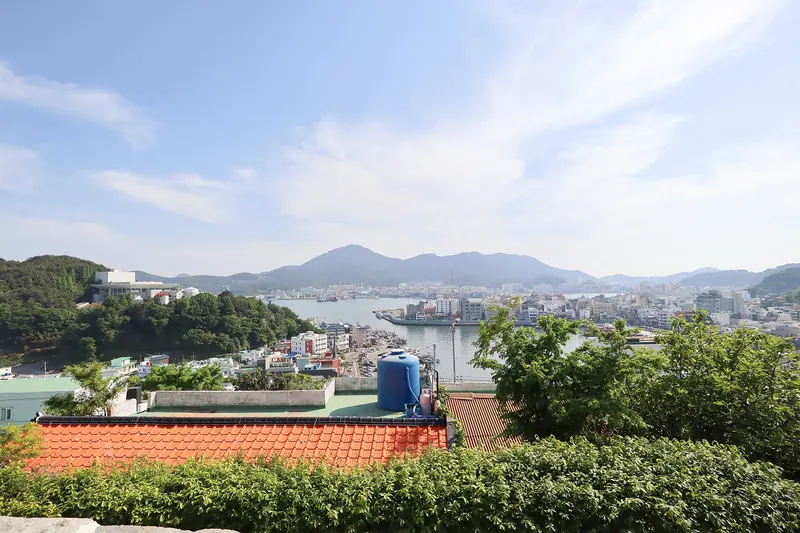
Tongyeong from above, a harbour town packed between hills and the sea.
Photograph: by Junho Jung at Flickr from South Korea — opens in a new tab · CC BY-SA 3.0 — opens in a new tab
Changes: Resized and converted to WebP; displayed with responsive crops. · Original photograph and licence details ↗ — opens in a new tab
A pan of steamed oysters, photographed on Geoje.
Photograph: Kang Byeong Kee — opens in a new tab · CC BY 3.0 — opens in a new tab
Changes: Resized and converted to WebP; displayed with responsive crops. · Original photograph and licence details ↗ — opens in a new tab
A windmill on a hillside of silver grass on Geoje.
Photograph: Peterkorea0913 — opens in a new tab · CC BY-SA 3.0 — opens in a new tab
Changes: Resized and converted to WebP; displayed with responsive crops. · Original photograph and licence details ↗ — opens in a new tab