Jeolla · South Jeolla
Suncheon travel guide: Suncheon Bay reeds, Naganeupseong and Seonamsa
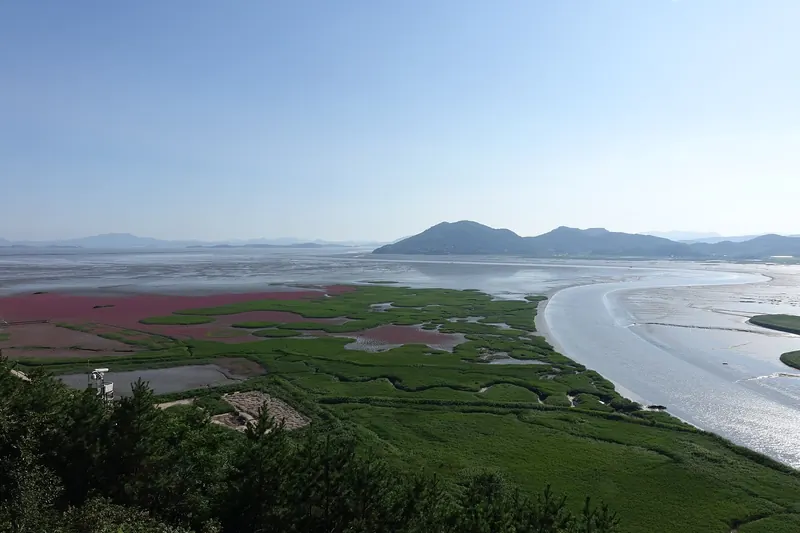
Suncheon is a mid-sized city in South Jeolla that most people know for one view: the reed beds and S-shaped tidal channel of Suncheon Bay, seen from a low hill as the sun goes down. The bay is a Ramsar wetland, part of the UNESCO-listed Korean tidal flats and the country's largest wintering ground for hooded cranes, and the city built Korea's first national garden on its edge to keep development away from it. Around that sit two quieter reasons to stay longer: Naganeupseong, a stone-walled Joseon-era town where people still live in thatched houses, and Seonamsa, a UNESCO-listed mountain temple reached by an old arched stone bridge. None of it is fast. Suncheon suits travellers who want to walk, look and eat well, and it sits one stop up the railway from Yeosu, so the two pair naturally.
- Suggested time
- 2 nights (1 full day for Suncheon Bay, 1 for Naganeupseong and Jogyesan's temples)
- Where to stay
- Near Suncheon Station for KTX and onward travel to Yeosu; the bus terminal and old centre for markets; a guesthouse inside Naganeupseong for a village night
- Season and timing
- Spring (March–May) for Seonamsa's plum blossom and the garden's tulips, azaleas and canola; autumn for the reed beds; winter for hooded cranes on the bay. Summer is hot on the open boardwalks, so go early or late.
The short answer
Give Suncheon two nights. Spend the first full day on Suncheon Bay: the national garden in the morning, the SkyCube or a bus to the wetland after lunch, and the walk up to Yongsan Observatory for the late-afternoon light over the reeds; one ticket covers the garden and the wetland on the same day. Use the second day for Naganeupseong Walled Town in the morning and Seonamsa (or Songgwangsa) on Jogyesan in the afternoon, with taxis or local buses out of the city. Sleep near Suncheon Station if you arrive by KTX and plan to go on to Yeosu, around the bus terminal and old centre for markets and gukbap, or in a hanok guesthouse inside Naganeupseong for a quiet evening. With only one night, do the bay and choose either the walled town or the temple.
Choose your base by how you will move
Suncheon is spread out. The station, the bus terminal and the markets are in the city; Suncheon Bay is on its edge, by the coast; Naganeupseong is a separate rural town in Nagan-myeon; and the two temples sit on opposite sides of Jogyesan, a mountain outside the city. No base puts everything within walking distance, so choose the one that shortens the journeys you will repeat.
If you come by KTX, or plan to continue down the line to Yeosu, the streets around Suncheon Station are the practical choice: Aretjang, which VisitKorea calls Korea's largest five-day market, is less than a kilometre away, and the official garden site lists a direct city bus (No. 66) from the stop opposite the station to the garden's East Gate. The area around the intercity bus terminal works better if you arrive by bus from Gwangju or Seoul: buses 66, 67 and 101 run from there to the garden, and VisitKorea puts Utjang's gukbap alley about 15 minutes away by public transport.
Naganeupseong is the alternative for a slower night. VisitKorea notes that many of the residents who still live in the walled town's thatched houses run guesthouses, and VisitKorea also lists a hanok pension area near the walled town. You trade transport convenience for an evening in the village after the day visitors have gone; plan on a car, taxi or limited local buses to reach it.
Suncheon Bay: the garden by day, the reeds at sunset
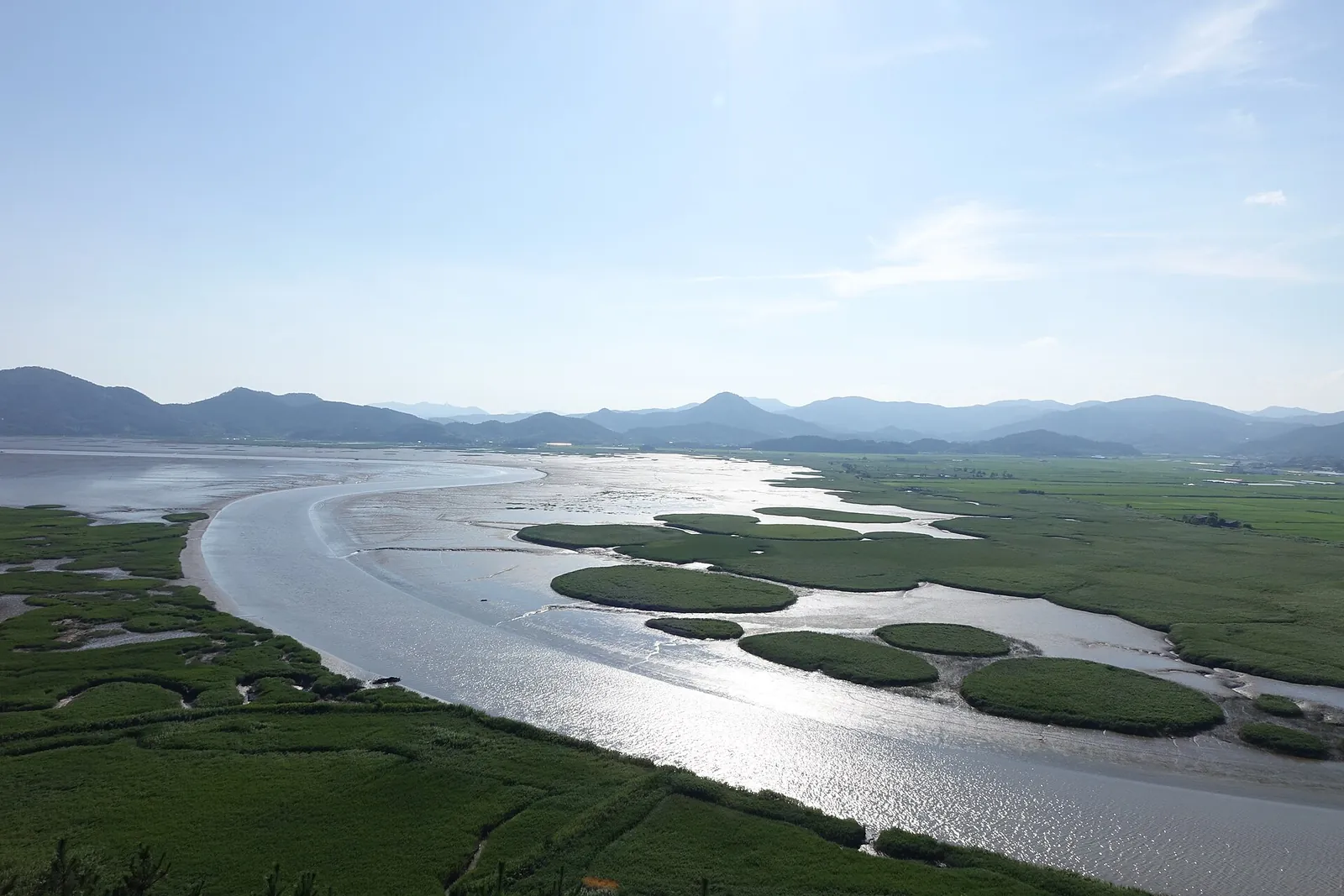
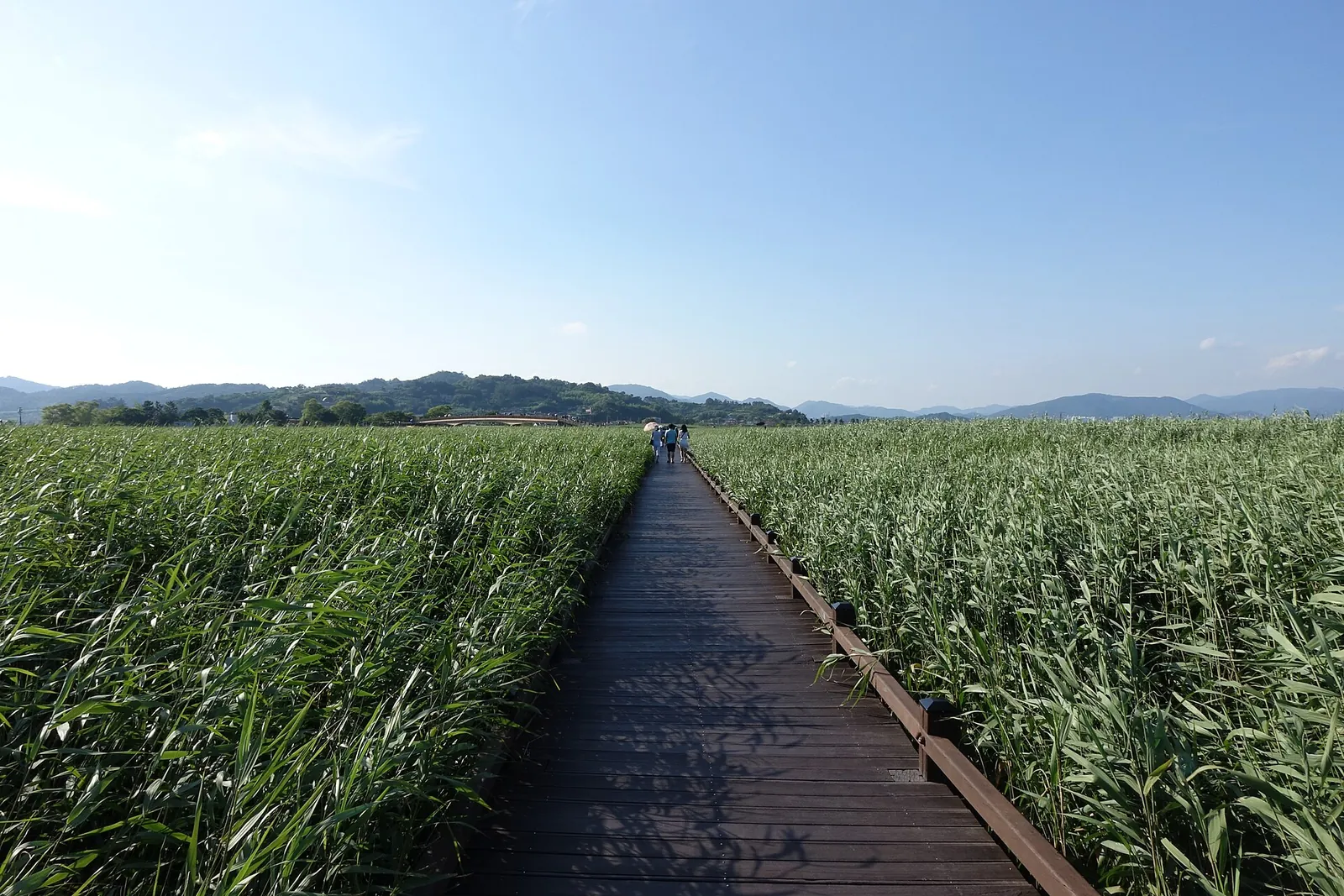
Suncheon Bay is two places about 7 km apart. Suncheonman Bay National Garden, Korea's first national garden, covers 1.12 million square metres with themed and international gardens (a lake garden by Charles Jencks, Dutch, French and Korean gardens among them). Suncheonman Bay Wetland Reserve, downstream, is the real bay: reed beds of about 5.4 square kilometres and 22.6 square kilometres of mudflat, crossed on boardwalks over the Daedae estuary and Mujingyo Bridge.
When we checked on 3 October 2026, the official site listed day tickets at 10,000 won for adults, 7,000 won for teenagers and 5,000 won for children, valid for the same day at both the garden and the wetland. A cheaper night ticket for the garden after 17:00 does not admit you to the wetland, and a combined ticket with the SkyCube (adults 14,000 won) covers the ride between them. Both sites close on the last Monday of every month. The official page listed garden ticket sales until 19:00, and wetland entry from 08:00 to 17:00 in November–February, to 18:00 in March–April and September–October and to 19:00 in May–August; hours can change with the weather.
Do the garden first, while it is cool, then move to the wetland for the afternoon. The SkyCube, a small driverless rail car, runs from the garden to the Suncheon Literature Museum station, and VisitKorea says the wetland is about a five-minute walk from there. Inside the wetland, the official site describes a walk of about 30 minutes from the Yongsan entrance up to Yongsan Observatory, rebuilt as a new two-storey timber structure completed in July 2025, for the view down over the S-shaped channel, the round islands of reed and, on clear evenings, the sunset. Leave enough daylight for the walk back: the official page warns that the path lights go off at closing time.
In winter the bay is the country's largest wintering ground for hooded cranes, and the reserve posts regular bird counts; in the 2024–25 season these were above 5,000 winter birds in December. Bring binoculars, keep to the boardwalks and do not try to approach the cranes in the fields.
Make time for the local food
What to eat and where to look
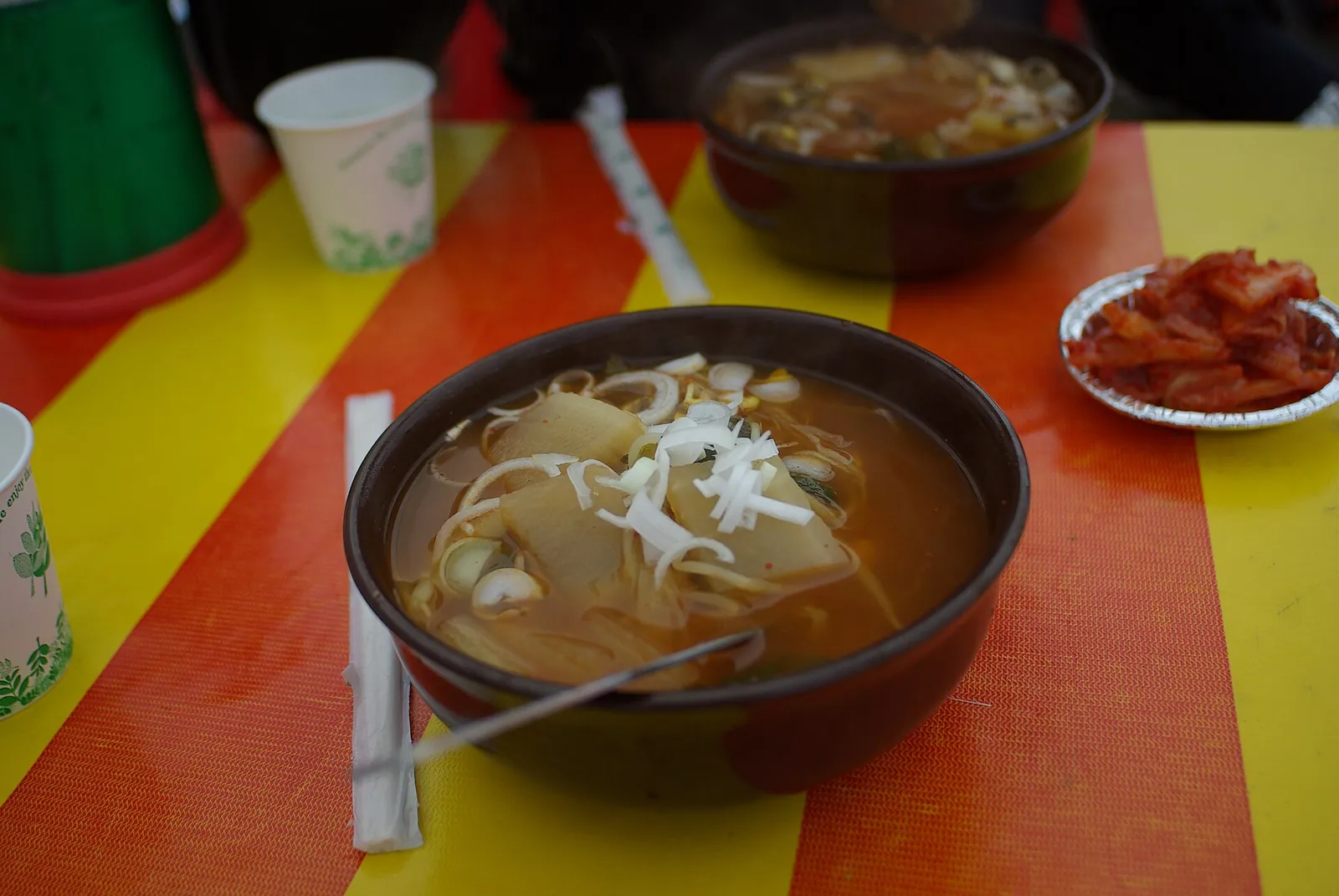
Dwaeji gukbap at Utjang (pork and rice soup)
Suncheon's signature market meal: a bowl of rice soup with pork, cooked with bean sprouts for a clean, not greasy, broth. Utjang's gukbap alley is a designated Namdo food street, and VisitKorea says diners ordering two or more servings receive a complimentary plate of boiled pork or blood sausage.
- Where to look
- Suncheon Utjang Gukbap Alley, 40 Bukmun-gil; VisitKorea puts it about 20 minutes by public transport from Suncheon Station and 15 from the bus terminal.
- Fit it into your day
- Breakfast or an early lunch before heading out to Naganeupseong; come on a market day ending in 5 or 0 for the full market.
VisitKorea lists the alley as closed on Tuesdays and Wednesdays unless they are market days, and hours vary by shop.
Jjangttungeo-tang and eel (mudskipper stew, grilled eel)
Mudskippers from the bay's mudflats are a Suncheon speciality, usually cooked as a spicy stew with vegetables; grilled eel and eel soup are on the same menus.
- Where to look
- Restaurants near Daedae port at the entrance to Suncheon Bay Wetland Reserve, along Suncheonman-gil; also in Utjang market.
- Fit it into your day
- An early dinner after the sunset walk at the wetland, before heading back into the city.
A spicy, strongly flavoured stew and an unfamiliar fish for most visitors; grilled eel is the gentler choice. Check menus and prices at the restaurant, as VisitKorea notes they change.
Kkomak jeongsik (cockle set meal)
Cockles from Yeojaman Bay, the water between Goheung, Boseong, Suncheon and Yeosu, served several ways at once: steamed, in a sweet-and-sour salad and blanched and seasoned over rice.
- Where to look
- Market restaurants at Utjang and around the city; Beolgyo, just across the county line in Boseong, specialises in them.
- Fit it into your day
- A shared lunch or dinner, or a detour to Beolgyo on the way to or from Boseong.
Shellfish, served in several dishes at once; not for anyone with a shellfish allergy, and the salad is usually dressed with chilli paste.
Aretjang night market snacks
Aretjang, near Suncheon Station, is a five-day market for local produce and seafood, and on Friday and Saturday evenings it runs a night market with pancakes, fried chicken and other street food.
- Where to look
- Suncheon Aretjang Market, 60 Jangpyeong-ro, less than a kilometre from Suncheon Station.
- Fit it into your day
- A casual Friday or Saturday dinner if you stay near the station.
The night market runs only on Fridays and Saturdays; the day market is busiest on dates ending in 2 or 7.
Naganeupseong: a walled town that is still lived in
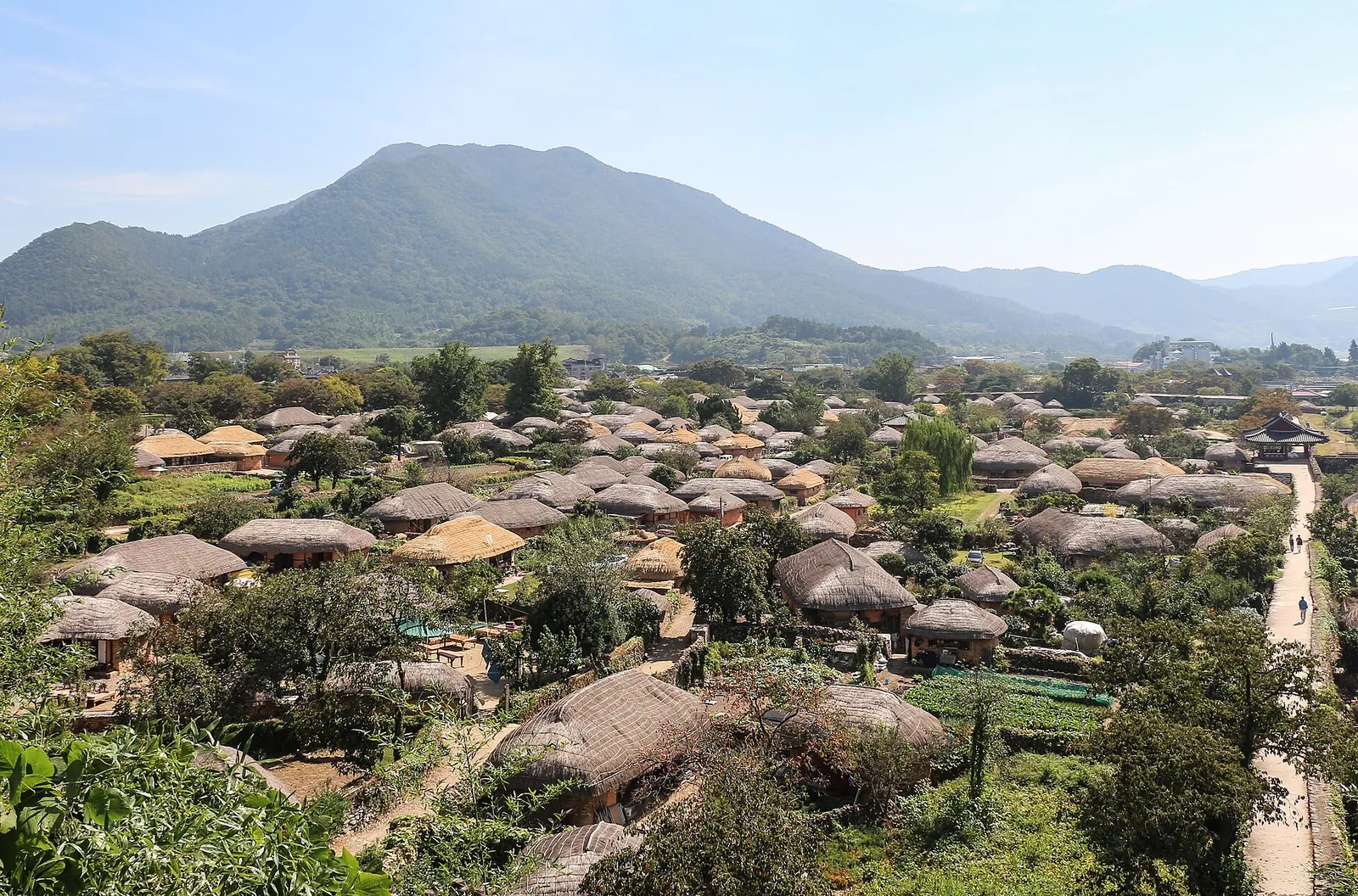
Naganeupseong is a Joseon-era walled town, one of the three best-known of the period, inside a square-stone wall about 1,410 m long and up to 4 m high, with three neighbourhoods of thatched houses on its east, south and west sides. It is not a rebuilt museum village: VisitKorea counts 218 thatched houses, and residents still live, cook and farm here. The best first view is from the top of the wall, looking down over the roofs; then walk the lanes between the houses.
When we checked on 3 October 2026, VisitKorea listed opening hours of 09:00–17:30 in January, November and December, 09:00–18:00 in February–April and October, and 08:30–18:30 in May–September, with adult admission at 4,000 won. A Suncheon integrated ticket (adults 12,000 won on the official garden site) covers the garden, the wetland, Naganeupseong, the drama filming set and the Deep Rooted Tree Museum, which is worth it only if you will really visit most of them.
Daily hands-on programmes — weaving, natural dyeing, gayageum, a village-school class — and performances run in the village, but VisitKorea notes that fees, times and booking vary by programme and suggests phoning ahead. Fans of the drama Jewel in the Palace will find its filming site here. Give the town a morning: it pairs well with Seonamsa or Songgwangsa in the afternoon.
Seonamsa and Songgwangsa: two temples on Jogyesan
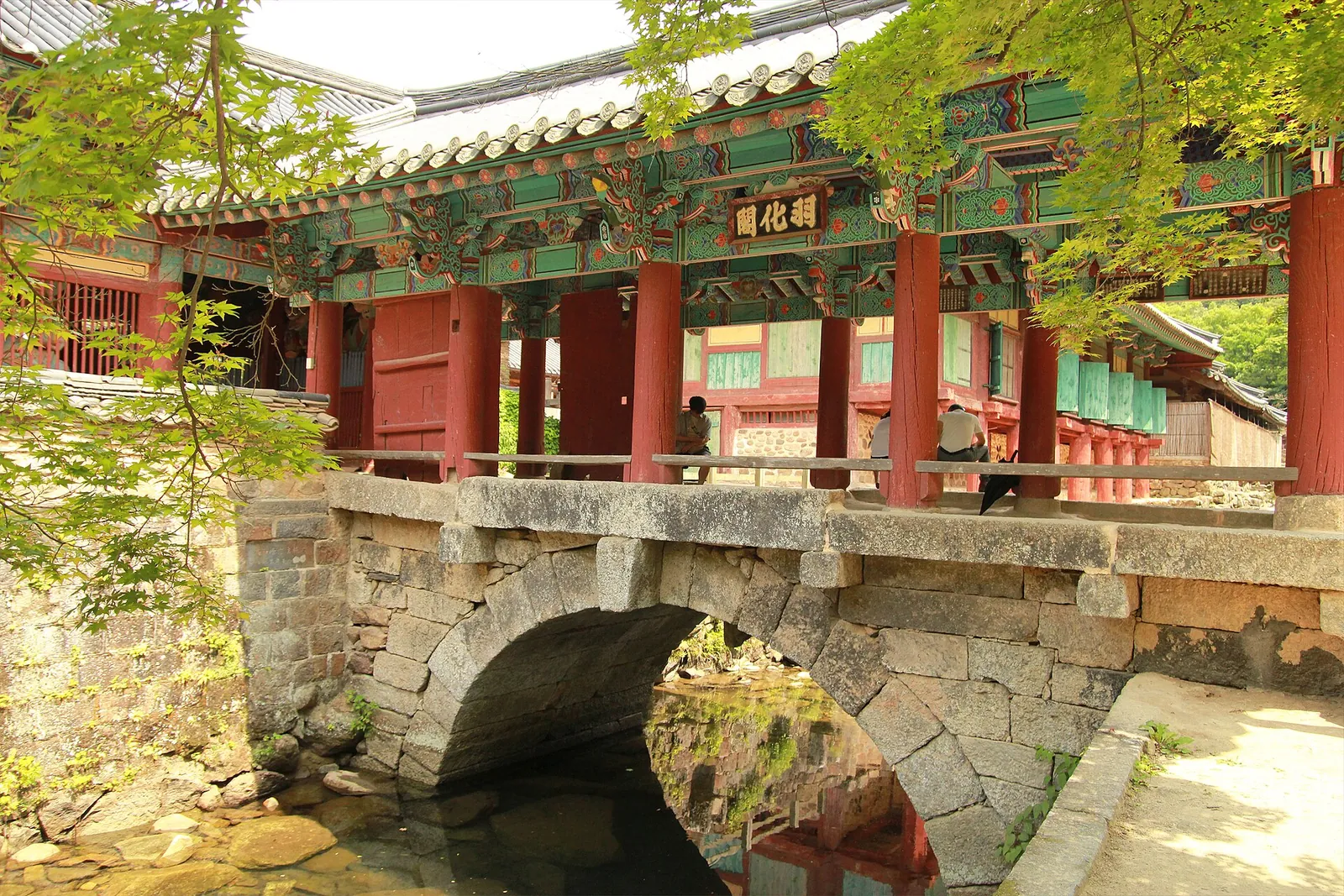
Jogyesan is a relatively low, rounded mountain with a major temple on each side. Seonamsa, on the eastern side, is one of the seven Korean mountain monasteries on UNESCO's World Heritage list. The approach is the reason to come: about a kilometre on foot from the entrance through old forest to Seungseongyo, an arched stone bridge set on bedrock over the stream, with Gangseonru Pavilion just beyond it. VisitKorea dates the temple to the early sixth century and notes an apricot (maehwa) tree more than 600 years old by the path; the temple is at its best when the blossom opens from March and in autumn colour. When we checked, VisitKorea listed no admission fee.
Songgwangsa, on the western side, is one of Korea's three "jewel" temples, alongside Haeinsa and Tongdosa, and VisitKorea lists four national treasures, 26 treasures and more than 80 buildings, a Buddhist museum and a templestay programme. It is the larger of the two; choose it if you want a templestay or a fuller sense of a working monastery. VisitKorea listed hours of 06:00–17:00 in summer and 07:00–14:00 in winter; confirm before a winter afternoon visit.
The two temples are on opposite sides of the mountain, so visiting both in one afternoon by public transport is ambitious. Pick one and arrive by early afternoon. These are working monasteries: dress modestly and keep your voice down in the halls.
Getting there and getting around
Suncheon Station is on the Jeolla Line, the railway that runs from Seoul through Jeonju and Namwon to Suncheon, Yeocheon and Yeosu EXPO. VisitKorea notes that KTX trains leave from several Seoul stations (Seoul, Yongsan and Cheongnyangni) and that Yeosu is among their routes, so check which station your ticket names. Suncheon is also on the Gyeongjeon Line, towards Jinju and Busan in one direction and Boseong county and Mokpo in the other. By road, VisitKorea gives about 1 hour 15 minutes from Gwangju Bus Terminal to Suncheon Bus Terminal, and express buses from Seoul leave from the Central City Terminal.
For Suncheon Bay, the official garden site lists bus 66 from opposite Suncheon Station to the National Garden (East Gate) stop in about 21 minutes, and buses 66, 67 and 101 from the Nonghyup stop across from the bus terminal in about 30 minutes. Between the garden and the wetland, use the SkyCube, a city bus or a taxi. For Naganeupseong and the temples, local buses run from the city but are infrequent; check the Suncheon bus information system or ask at the tourist office, and consider a taxi for the second day if you are short of time.
A two-day plan, and how to pair it with Yeosu
This is an editorial suggestion, not a timetable. Check closing days, especially the last Monday of the month at Suncheon Bay.
- Day 1 — Suncheon Bay: the national garden from opening, lunch near the garden, the SkyCube to the wetland, the reed boardwalks and the walk up to Yongsan Observatory for the late light; dinner of eel or mudskipper stew near Daedae port, or back in town.
- Day 2 — Walled town and temple: Naganeupseong in the morning (walk the wall first), then Seonamsa for the bridge and the forest path, or Songgwangsa if you prefer the larger monastery.
- Market mornings: if your dates fall on a 5 or a 0, go to Utjang for gukbap; on days ending in 2 or 7, Aretjang near the station.
- Onward: Yeosu is a short train ride further down the same line; Boseong's tea fields and Beolgyo's cockles are a bus ride west.
When to come
Suncheon changes character by season rather than being better or worse. Spring brings Seonamsa's plum blossom from March and the garden's tulips and royal azaleas, with a canola field near the garden's Forest of Sharing in mid-May. Autumn is reed season in the wetland and leaf colour at the temples. Winter is cold and bare on the boardwalks but brings the hooded cranes.
Summer days are long and the wetland stays open later, but there is little shade on the boardwalks: start early, rest at midday and return for the evening light. On weekends and public holidays the official site warns that the east and west gate ticket offices may stop selling the SkyCube combined ticket because of queues; you can still buy a single SkyCube ticket at the kiosk in the garden's SkyCube station (card only), or simply arrive early.
Practical questions
How many days do I need in Suncheon?
Two nights are ideal: one full day for the national garden and the wetland, and one for Naganeupseong and a temple on Jogyesan. With one night, do Suncheon Bay and choose either the walled town or the temple.
Does one ticket cover Suncheonman Bay National Garden and the wetland?
Yes. When we checked on 3 October 2026, the official site said a day ticket bought at the garden also admits you to the wetland on the same day (and vice versa, if you show it). The garden's evening ticket after 17:00 does not include the wetland.
When is the best time to see the reeds and the sunset?
Autumn is reed season, and the late afternoon is the time to be at Yongsan Observatory, about a 30-minute walk from its entrance inside the wetland. Check the closing time for the month and leave time to walk back before the path lights go off.
Is Suncheon closed on any day?
The national garden and the wetland close on the last Monday of every month. Naganeupseong and Seonamsa were listed by VisitKorea as open all year when we checked.
Can I combine Suncheon with Yeosu?
Yes. Suncheon is on the same railway as Yeosu, the stop before Yeocheon and Yeosu EXPO. Two nights in each makes an unhurried south-coast trip; with less time, base in one and visit the other for a day.
How do I get from Suncheon Station to Suncheon Bay?
The official garden site lists bus 66 from the stop opposite Suncheon Station to the National Garden (East Gate) stop, about 21 minutes. From the garden, the SkyCube runs towards the wetland.
Sources and checks before you travel
Reference sources for the version dated 3 October 2026. Confirm opening times, access, transport and conditions for your travel dates.
- Suncheonman Bay National Garden (official): admission fees ↗ — opens in a new tab
- Suncheonman Bay National Garden (official): visiting hours ↗ — opens in a new tab
- Suncheonman Bay National Garden (official): directions ↗ — opens in a new tab
- Suncheonman Bay Wetland (official): opening hours ↗ — opens in a new tab
- Suncheonman Bay Wetland (official): introduction ↗ — opens in a new tab
- Suncheonman Bay Wetland (official): Yongsan Observatory ↗ — opens in a new tab
- Suncheonman Bay Wetland (official): hooded crane monitoring ↗ — opens in a new tab
- VisitKorea: Suncheonman National Garden ↗ — opens in a new tab
- VisitKorea: Suncheonman Bay ↗ — opens in a new tab
- VisitKorea: Suncheonman Bay National Garden and Wetland Reserve (wellness feature) ↗ — opens in a new tab
- VisitKorea: Naganeupseong Walled Town ↗ — opens in a new tab
- VisitKorea: Suncheon Upper Market (Utjang) feature ↗ — opens in a new tab
- VisitKorea: Suncheon Utjang Market ↗ — opens in a new tab
- VisitKorea: Suncheon Aretjang Market ↗ — opens in a new tab
- VisitKorea: Seonamsa Temple ↗ — opens in a new tab
- VisitKorea: UNESCO World Heritage cultural sites (Sansa) ↗ — opens in a new tab
- VisitKorea: UNESCO natural heritage (Getbol, Korean Tidal Flats) ↗ — opens in a new tab
- VisitKorea: Suncheon Songgwangsa Temple ↗ — opens in a new tab
- VisitKorea: Jogyesan Provincial Park ↗ — opens in a new tab
- VisitKorea: Daedaeseonchangjip (restaurant listing) ↗ — opens in a new tab
- VisitKorea: An Autumn Culinary Journey through Korea's Seasonal Flavors ↗ — opens in a new tab
- VisitKorea: Unique Transportation (S-Train routes) ↗ — opens in a new tab
- VisitKorea: Train ↗ — opens in a new tab
- VisitKorea: Express Bus & Intercity Bus ↗ — opens in a new tab
- VisitKorea: Nature, Tradition & Culinary Delights in Gwangju & Jeollanam-do ↗ — opens in a new tab
- VisitKorea: Domestic Flights ↗ — opens in a new tab
Photo credits
Suncheon Bay from above: the S-shaped channel, reed beds and mudflats of the wetland reserve
Photograph: 최광모 — opens in a new tab · CC0 — opens in a new tab
Changes: Resized and converted to WebP; displayed with responsive crops. · Original photograph and licence details ↗ — opens in a new tab
The boardwalk through the reed beds of Suncheon Bay Wetland Reserve in summer
Photograph: 최광모 — opens in a new tab · CC0 — opens in a new tab
Changes: Resized and converted to WebP; displayed with responsive crops. · Original photograph and licence details ↗ — opens in a new tab
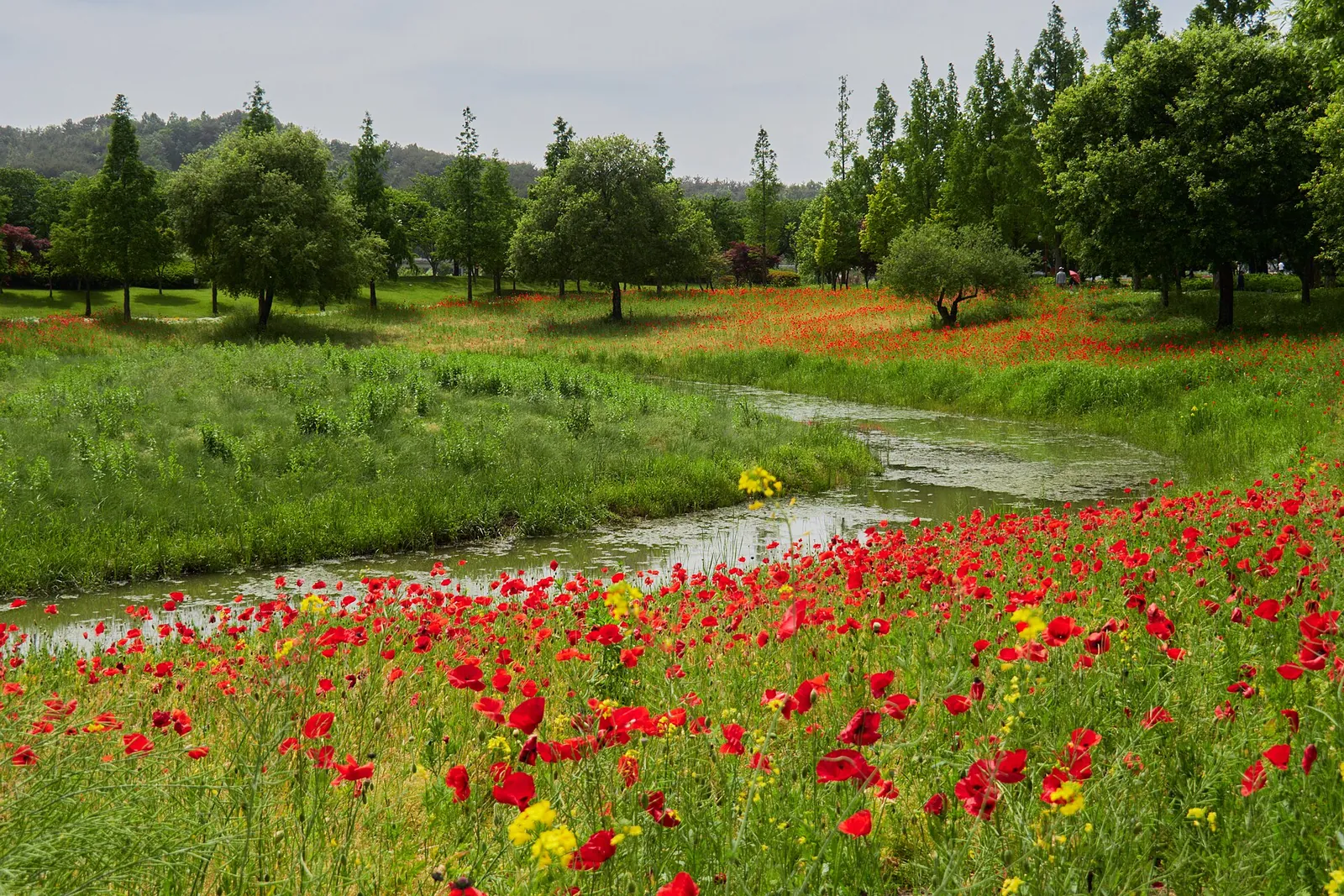
Poppies beside a stream in Suncheonman Bay National Garden
Photograph: lumoplank — opens in a new tab · CC0 — opens in a new tab
Changes: Resized and converted to WebP; displayed with responsive crops. · Original photograph and licence details ↗ — opens in a new tab
Naganeupseong Walled Town, Suncheon: thatched houses inside the walls, seen from above
Photograph: Bernard Gagnon — opens in a new tab · CC0 — opens in a new tab
Changes: Resized and converted to WebP; displayed with responsive crops. · Original photograph and licence details ↗ — opens in a new tab
The stone bridge and pavilion over the stream at Songgwangsa, on the western side of Jogyesan
Photograph: Oadde — opens in a new tab · CC BY-SA 4.0 — opens in a new tab
Changes: Resized and converted to WebP; displayed with responsive crops. · Original photograph and licence details ↗ — opens in a new tab
Gukbap, Korean rice soup: Suncheon's Utjang market is known for its pork version
Photograph: egg (Hong, Yun Seon) — opens in a new tab · CC BY 2.0 — opens in a new tab
Changes: Resized and converted to WebP; displayed with responsive crops. · Original photograph and licence details ↗ — opens in a new tab