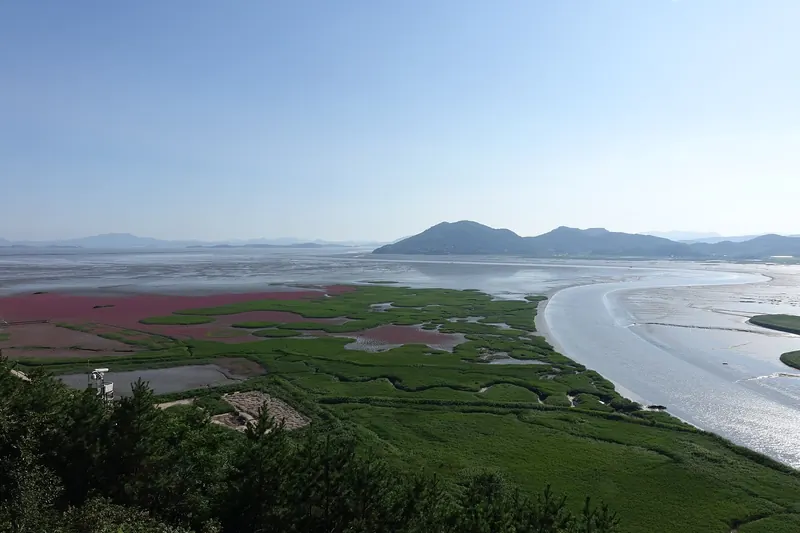
Busan and South Gyeongsang · South Gyeongsang
Geoje travel guide: Windy Hill, Oedo-Botania and the POW camp
Geojedo is South Korea's second-largest island, tied to the mainland by bridges at both ends: the Geogadaegyo link runs to Busan and the Geojedaegyo bridge to Tongyeong. It is a working island, with big shipyards around Okpo and Gohyeon, but about two-thirds of the city's area lies within Hallyeohaesang National Park, and its south-east coast is where the postcards come from: a windmill on a grassy headland above Dojangpo, the sea cliffs of Haegeumgang, and a small island laid out as a terraced garden. Away from the beaches is a harder story: the site of the largest prisoner-of-war camp of the Korean War. Geoje rewards a slow loop by car or bus more than a quick tick-list, because the sights are spread along a long, ragged coast.
- Suggested time
- 2 nights (1 long day trip from Busan or Tongyeong is possible but rushed)
- Where to stay
- Hakdong or Gujora on the south-east coast; Jangseungpo for the Jisimdo ferry; Gohyeon for the town centre
- Season and timing
- Spring brings canola flowers to the Sinseondae and Windy Hill coast in April and May, according to VisitKorea. Summer is beach season, and Oedo-Botania keeps longer summer hours. Camellias, which VisitKorea says usually bloom from late November to early March, fill Jisimdo and nearby Jangsado in winter. Boats to Oedo and around Haegeumgang depend on the weather, and national-park areas can close abruptly in bad weather, so keep a spare half-day.
The short answer
Give it two nights. Sleep on the south-east coast, at Hakdong or Gujora in Irun-myeon, where the pebble beaches, the boats to Oedo and Haegeumgang and the Windy Hill headland are all close. Spend one day on the coast: an early boat to Oedo-Botania, then Windy Hill, Sinseondae and a seafood dinner at Haegeumgang. Use the second for the Geoje P.O.W. Camp Historic Park and Maemiseong on the way out. Fly into Gimhae (Busan), where VisitKorea says intercity bus tickets to Geoje are sold at the airport. A car makes the island far easier.
Where to stay: the south-east coast or the town
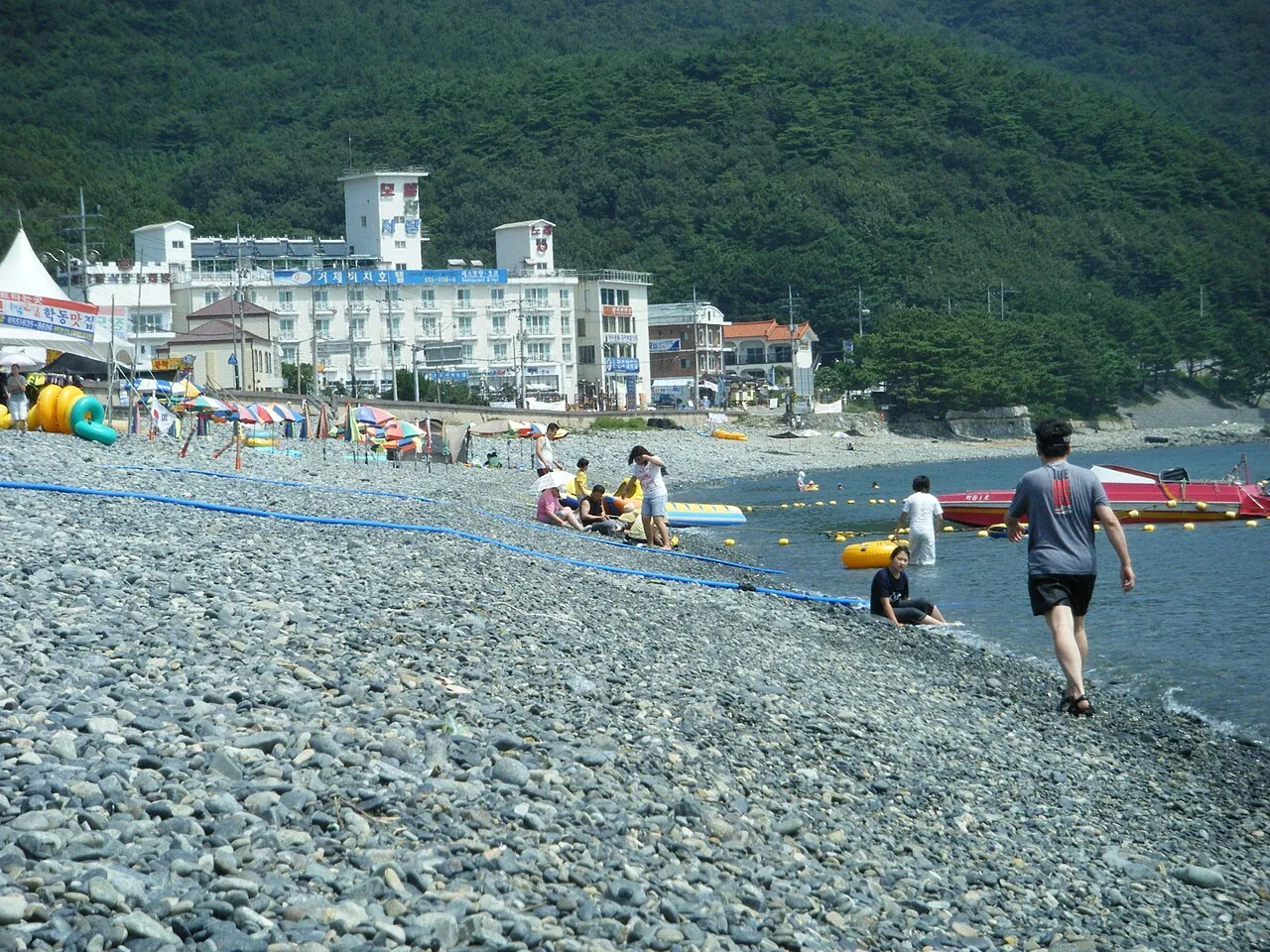
Geoje is large — VisitKorea counts 10 inhabited and 50 uninhabited islands within the city — and the places most visitors come for are on the south-east coast, well away from both bridges. Sleeping there saves you doing that drive twice. Hakdong, in Dongbu-myeon, sits on a 1.2-kilometre beach of black pebbles; VisitKorea notes accommodation and restaurants behind it and a dock offering boat excursions to the nearby sights. The Geoje Hawaii Condo Beach Hotel there, for example, is listed by VisitKorea as 100 metres from a ferry dock for Oedo and Haegeumgang.
Gujora, in Irun-myeon, is the calmer, family-friendly beach: VisitKorea describes the water as shallow and warm, with a 1.1-kilometre beach, raw-fish restaurants and cruise boats to Haegeumgang, Naedo and Oedo. The large Sono Calm Geoje resort, with ocean-view rooms, a marina and the Ocean Adventure water park, is on Geoje-daero in Irun-myeon. Jangseungpo is a harbour town on the east coast, with its own seafood restaurants and the ferry to Jisimdo.
Gohyeon is one of the city's main districts, with shops and chain stores. It suits a late arrival or a trip focused on the POW camp, but you will be driving or taking buses to every coastal sight.
Windy Hill, Sinseondae and Haegeumgang
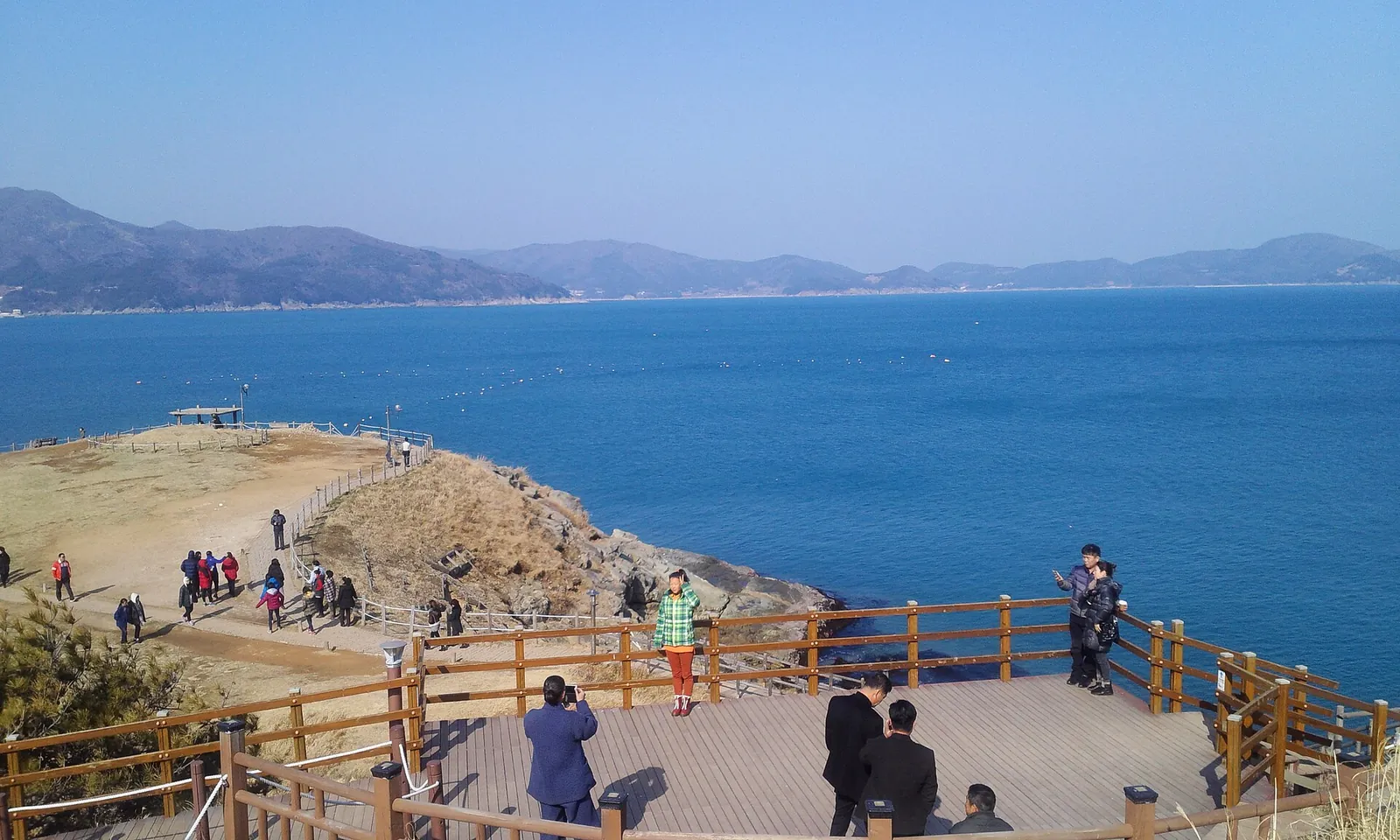
Windy Hill (Baramui Eondeok) is the grassy headland at the end of the fishing village of Dojangpo, at the entrance to the Haegeumgang islets, with a windmill on top. VisitKorea explains that the name is literal: the site is very windy, and the plants on the hill grow short because of it. Cafés and restaurants around Dojangpo take advantage of the view. VisitKorea lists it as free and open at all hours, so you can come early in the morning or late in the afternoon, when the light is softer.
A short way along the coast road, Sinseondae Observatory is a rock platform reached by a stairway from the road, between Dojangpo and Haegeumgang. The layered blue and yellow rock is the draw, and VisitKorea notes that April and May bring bright-yellow canola flowers across the area. Hammok Beach and a camellia habitat are also close by.
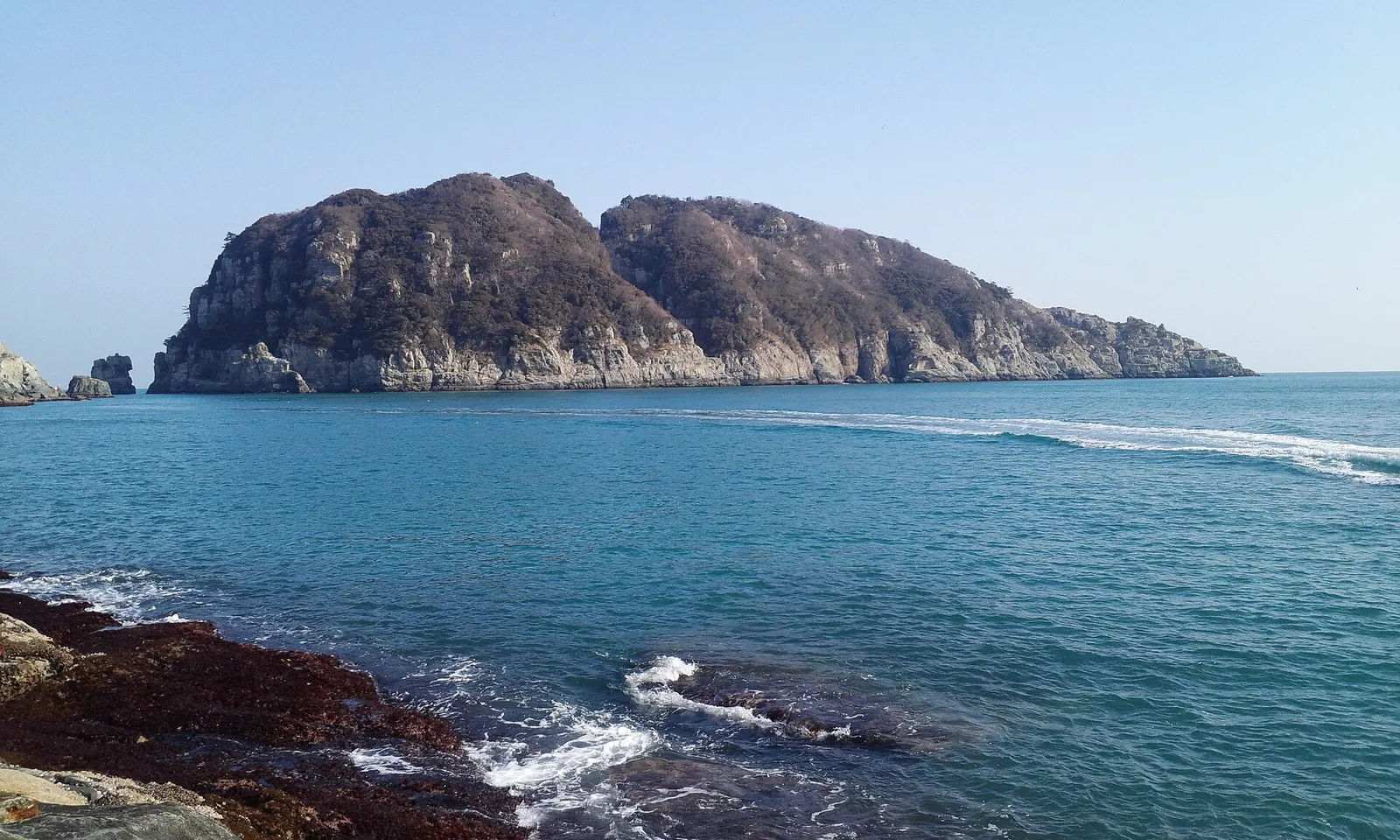
Haegeumgang — 'the Geumgangsan of the sea' — is a rocky islet group in Hallyeohaesang National Park, designated Scenic Site No. 2, also called Galdo. VisitKorea recommends watching sunrise or sunset from Ilwolbong Peak or Sajabawi Rock. To see Sipja Cave, Chotdaebawi Rock and the 1,300-year-old pine on the islets you need a boat: the Haegeumgang Cruise leaves from a quay in Galgot-ri and circles the islets about 500 metres offshore. When we checked on 2026-10-03, VisitKorea listed departures at 10:50 and 13:50 on weekdays and 10:00, 12:00 and 14:00 at weekends, subject to the weather, and noted that a valid ID is required to board. Call ahead (+82-55-633-1352) or check hggtour.net.
Make time for the local food
What to eat and where to look
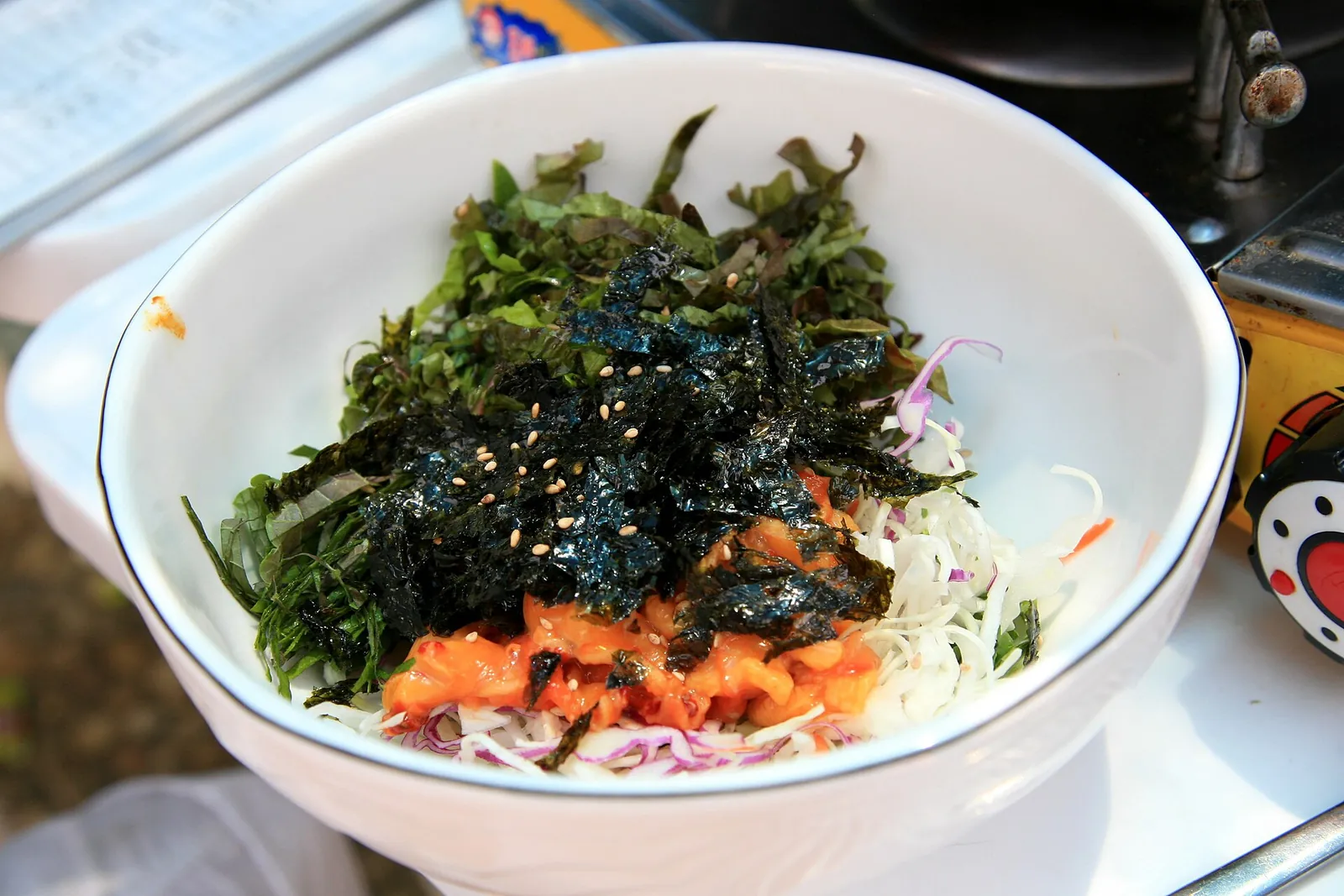
Meongge bibimbap (sea squirt bibimbap)
Geoje's signature rice bowl: chopped sea squirt (meongge, also called sea pineapple) mixed into rice with laver, sesame seeds and sesame oil. It tastes strongly of the sea. VisitKorea names it, with sea urchin and seaweed soup, as Geoje's best-known local food.
- Where to look
- Baekmanseok, 47 Gyeryong-ro, near the P.O.W. Camp Historic Park, which VisitKorea describes as a renowned meongge bibimbap restaurant; when we checked on 2026-10-03 it listed hours of 09:30 to 20:00. Its set also comes with cod stew and marinated crab.
- Fit it into your day
- Lunch after the POW camp, or the first dinner on the island.
Raw shellfish; the flavour is strong and not for everyone. Marinated crab sides are raw too.
Sea urchin and seaweed soup (seongge miyeokguk)
Miyeokguk — seaweed soup — enriched with sea urchin roe. VisitKorea lists it among Geoje's famous dishes; sea urchin bibimbap is also on local menus.
- Where to look
- Seafood restaurants around the coast and in town; Baekmanseok lists sea urchin bibimbap and seaweed soup on its menu.
- Fit it into your day
- A gentle breakfast or lunch before a boat trip.
Shellfish allergy; sea urchin quality and price vary with the season.
Hoe (sliced raw fish) by the sea
Raw-fish restaurants line Geoje's harbours and beaches. At Haegeumgang, VisitKorea describes Haegeumgang Cheonyeonsong Hoe Restaurant as serving fish caught by haenyeo (women divers), with assorted raw fish, cold raw-fish soup (mulhoe) and raw-fish rice bowls, and a view of the sun setting between the islets and Sajabawi Rock.
- Where to look
- Haegeumgang Cheonyeonsong Hoe Restaurant, 17 Haegeumgang 3-gil (listed 08:00–22:00 when we checked); in Jangseungpo, Buil Hoetjip, 101 Jangseungpo-ro, which VisitKorea says has more than 30 years of history; and the restaurants behind Gujora Beach.
- Fit it into your day
- Dinner on the south-east coast, timed for sunset.
Agree the price per person or by weight before the fish is chosen.
Baemaltot gimbap (limpet and seaweed gimbap)
A south-coast gimbap in which the rice is cooked with ground limpet, giving it a deep savoury flavour, and rolled around brown seaweed (tot) with egg, pickled radish and spinach. VisitKorea traces it to Gyeongsangnam-do ports such as Sacheon and Geoje, and suggests dipping it in a sesame-oil sauce.
- Where to look
- A regional speciality rather than a standard menu item: ask for baemaltot gimbap at gimbap shops and snack counters, and do not count on finding it everywhere.
- Fit it into your day
- A takeaway pack for the boat to Oedo or a picnic at Windy Hill.
Contains shellfish.
Oedo-Botania: a garden island by boat
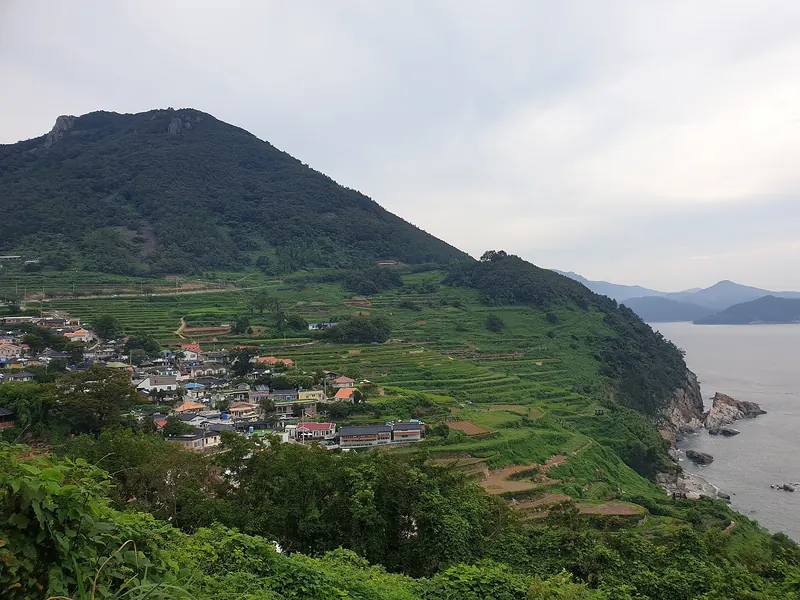
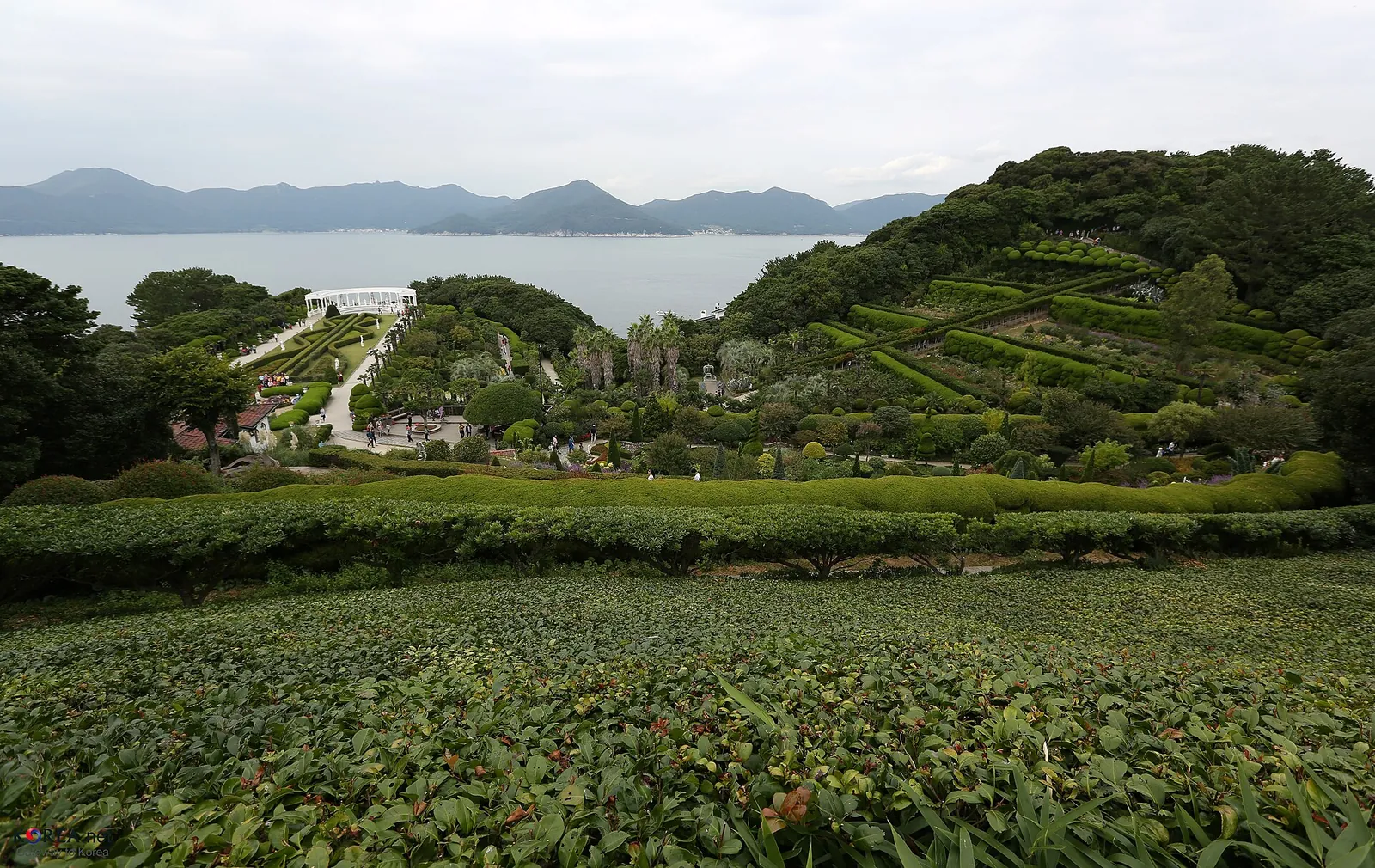
Oedo-Botania is a small island off the south-east coast laid out as a garden; the name joins *botanic* and *utopia*. VisitKorea gives the whole island as 148,760 square metres in two parts: Seodo, developed as the garden, and Dongdo, kept in its natural state. The garden was designed with Buckingham Palace Garden as its motif. Look for the Venus Garden with its twelve statues, the 'Stairway to Heaven' (replanted with ornamental trees after Typhoon Maemi), a 300-year-old guardian tree on the second Hill of Love, and a lighthouse you can walk inside. K-drama fans know it from the last episode of *Winter Sonata* (2002).
You can only reach it by boat, and VisitKorea's 2023 feature on Geoje says visitors take a ferry from one of seven ports on the island, with two hours of free viewing time on Oedo. In practice that means a round trip of half a day. Hakdong and Gujora both have boats, and some sail past Haegeumgang on the way. When we checked on 2026-10-03, VisitKorea listed Oedo-Botania's hours as 08:30 to 17:00 in winter and 08:00 to 19:00 in summer, and adult admission at 11,000 won; the boat fare is separate and we could not verify it. Book the earliest boat you can in summer and at weekends, and plan your day around the return sailing.
The Geoje P.O.W. Camp and Admiral Yi at Okpo
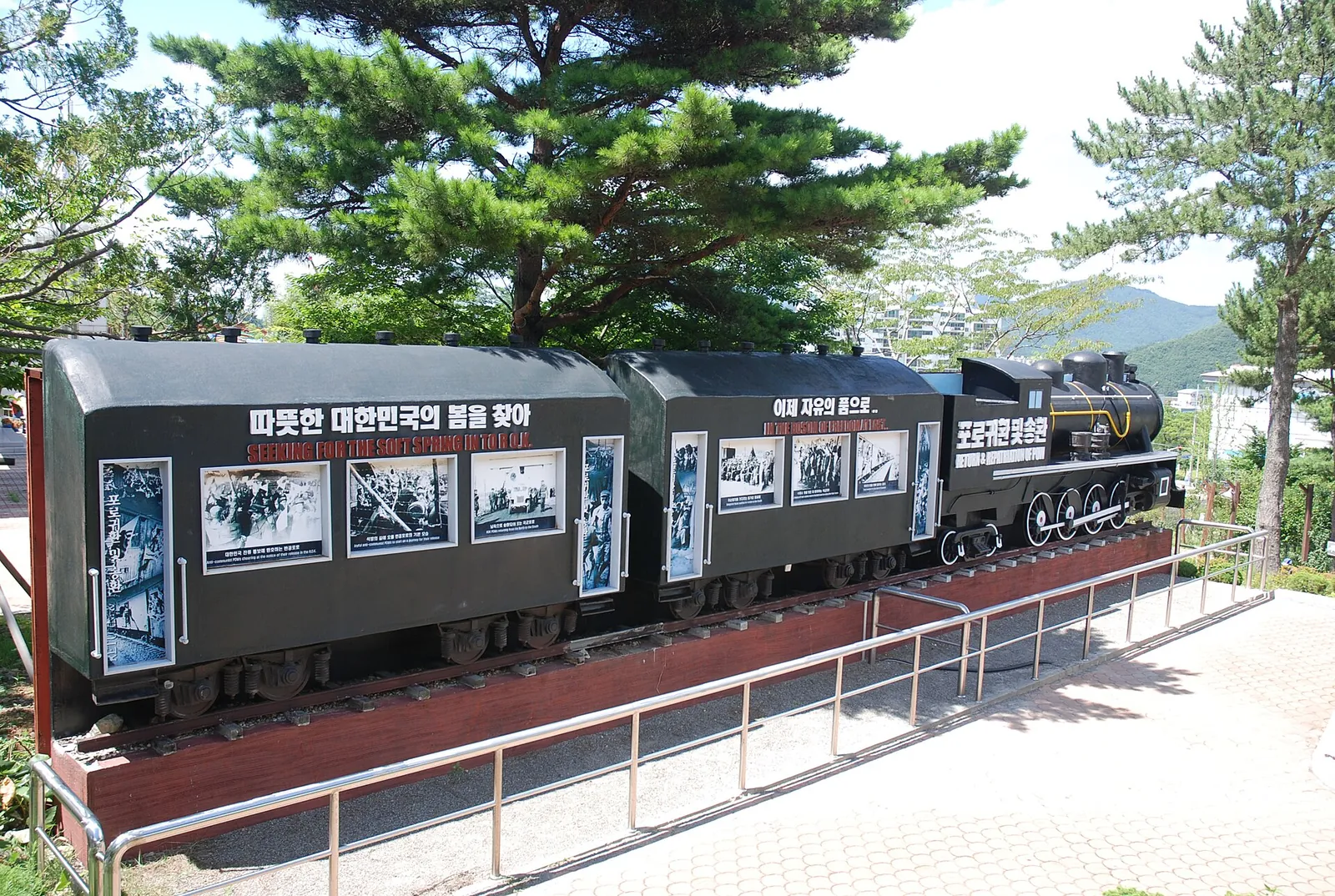
Between 1951 and the armistice, Geoje held the largest prisoner-of-war camp in South Korea. VisitKorea says it accommodated up to 173,000 North Korean and Chinese prisoners captured by South Korean and UN forces. The camp was overcrowded and violent, and in May 1952 prisoners seized its American commandant, Brigadier General Francis Dodd, an episode well documented in histories of the war. The Geoje P.O.W. Camp Historic Park on Gyeryong-ro is built on part of the site, with an exhibition hall, dioramas of camp life, a repatriation train and outdoor displays of weapons.
Allow about two hours, as VisitKorea suggests. When we checked on 2026-10-03, VisitKorea listed it as open 09:00 to 18:00, closed on Tuesdays and on Seollal and Chuseok days, with adult admission of 7,000 won. The domain long given as the park's website (pow.or.kr) now shows an unrelated site, so rely on VisitKorea's listing or call +82-55-639-0625.
Geoje's older war history is at Okpo, where Admiral Yi Sun-sin won his first victory of the Imjin War in 1592. The Okpo Great Victory Commemorative Park, built in 1996, has a memorial tower, Okporu Pavilion and a shrine to the admiral, with a view over Okpo Bay. VisitKorea listed it as free, open 09:00 to 18:00 and closed on Mondays and public holidays when we checked.
Beaches, Maemiseong and the camellia islands
Geoje is known for its pebble beaches — VisitKorea names Hakdong, Yeocha, Mangchi and Nongso. At Hakdong Mongdol Beach the small black pebbles rattle in the surf; VisitKorea warns that, unlike most south-coast beaches, the water here is deep with rough waves. Gujora is the gentle alternative. From the cruise dock there, the short Sound of the Breeze Path climbs through bamboo and village lanes to the remains of Gujora Fortress, a Joseon-era defence; VisitKorea recommends sneakers and long trousers.
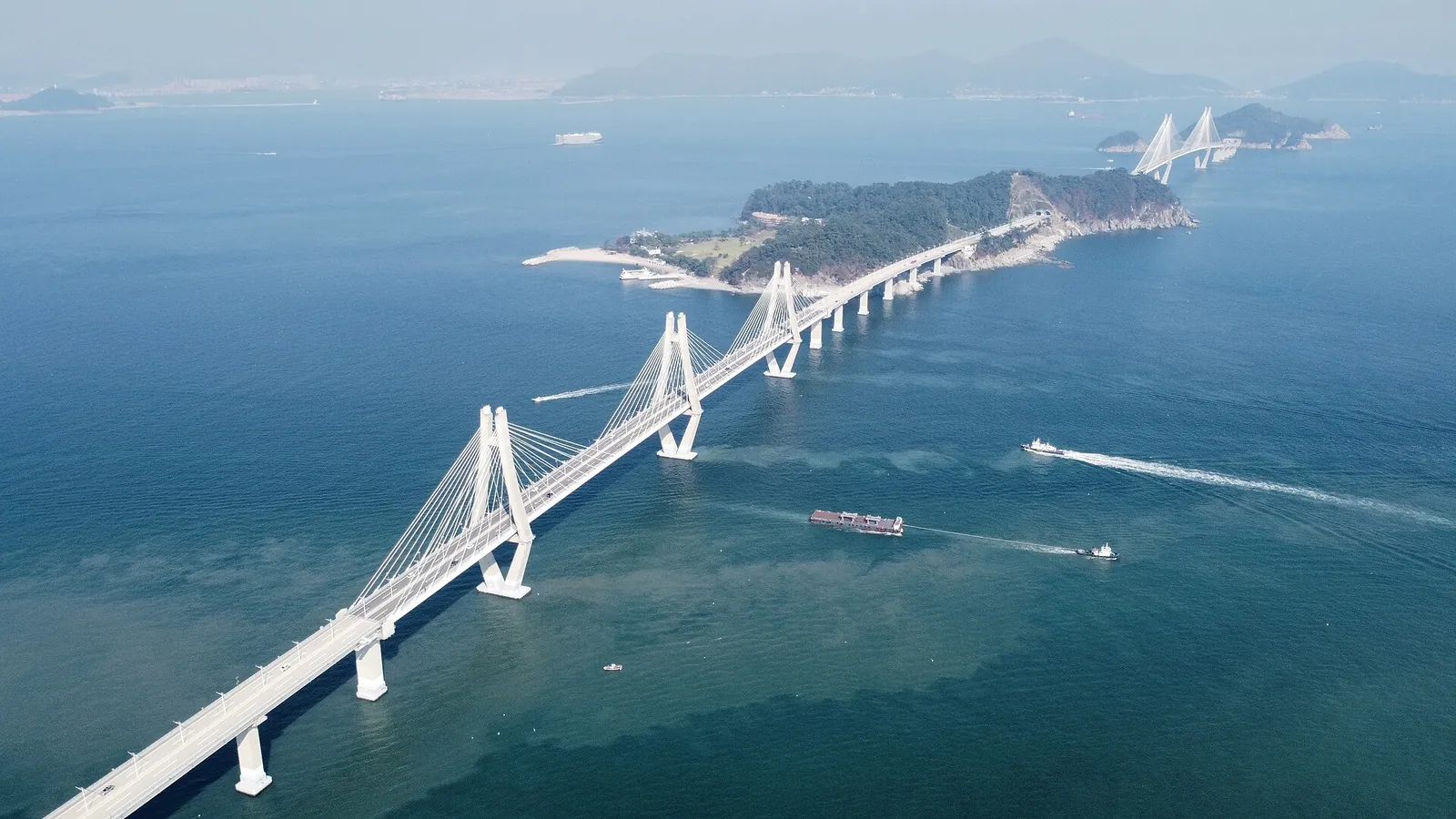
In the north, near the Busan bridge, Maemiseong is the island's most unlikely sight: a castle-like sea wall built single-handedly by a local man, Baek Soon-sam, after Typhoon Maemi destroyed his fields in 2003, by stacking square stones and filling them with cement, without any blueprint. Cafés nearby, such as Café Sibang-ri, look out over the Geogadaegyo link. It makes a good last stop on the way back to Busan.
Off the east coast, Jisimdo is a tiny camellia island — VisitKorea says it has more old camellia trees than any other island on the south coast — about 15 minutes by ferry from Jangseungpo port, and small enough to walk round in two hours. Jangsado Sea Park, a garden island famous for its camellia tunnel, belongs to Tongyeong but is closest to Geoje: VisitKorea gives about ten to fifteen minutes by boat from Geunpo Port in southern Geoje. Rain or wind? The Geoje Botanic Garden (Jungle Dome), a glass dome of tropical plants, is a covered option; VisitKorea listed it as closed on Wednesdays, with adult admission of 5,000 won, when we checked.
A workable two-night plan
This is an editorial suggestion, not a timetable. Confirm boat sailings, bus times and opening days for your dates.
- Day 1 — Arrival: come in from Busan over the Geogadaegyo link, stop at Maemiseong, then drive or ride down to Hakdong or Gujora; sea squirt bibimbap or raw fish for dinner.
- Day 2 — The south-east coast: the first boat to Oedo-Botania, back by lunch; afternoon at Windy Hill and Sinseondae, then sunset over Haegeumgang, or the Haegeumgang Cruise if you skipped the Oedo boat that passes it.
- Day 3 — History and onward: the P.O.W. Camp Historic Park when it opens (not on Tuesdays), Okpo on the way north, or Jisimdo from Jangseungpo in camellia season; then on to Busan or west over the Geojedaegyo bridge to Tongyeong.
Practical questions
How many days do I need on Geoje?
Two nights is comfortable: one full day for Oedo-Botania, Windy Hill and Haegeumgang, and a morning for the POW camp park and Maemiseong. A day trip from Busan is possible but leaves little time once you add the drive and a boat.
How do I get to Geoje from Busan or Gimhae Airport?
By road: the Geogadaegyo link joins Geoje to Busan. VisitKorea says intercity bus tickets to Geoje are sold at Gimhae International Airport. From Seoul, Nambu Terminal has direct intercity buses; check txbus.t-money.co.kr. A rental car is the easiest way to cover the island.
How do I get to Oedo-Botania?
Only by boat. VisitKorea says ferries leave from seven ports on Geoje, including Hakdong and Gujora, and visitors get about two hours on the island. When we checked on 2026-10-03, garden admission was listed at 11,000 won for adults, separate from the boat fare.
Is Windy Hill free?
Yes. VisitKorea lists Windy Hill as free and open at all hours. It is at the end of Dojangpo village in Nambu-myeon, near Sinseondae and Haegeumgang.
When is the Geoje P.O.W. Camp Historic Park open?
When we checked on 2026-10-03, VisitKorea listed 09:00 to 18:00, closed on Tuesdays and on Seollal and Chuseok days, with adult admission of 7,000 won. Allow about two hours.
Can I swim at Geoje's beaches?
Yes, in summer. Gujora Beach is shallow and warm, according to VisitKorea; Hakdong's pebble beach has deep water and rough waves, so swim only when conditions are calm and lifeguards are on duty.
Sources and checks before you travel
Reference sources for the version dated 3 October 2026. Confirm opening times, access, transport and conditions for your travel dates.
- VisitKorea: Geojedo Island ↗ — opens in a new tab
- Wikipedia: Geoje ↗ — opens in a new tab
- VisitKorea: Hallyeohaesang National Park (Geoje District) ↗ — opens in a new tab
- VisitKorea: Windy Hill ↗ — opens in a new tab
- VisitKorea: Sinseondae Observatory ↗ — opens in a new tab
- VisitKorea: Geojedo Haegeumgang Islets ↗ — opens in a new tab
- VisitKorea: Haegeumgang Cruise ↗ — opens in a new tab
- VisitKorea: Oedo-Botania ↗ — opens in a new tab
- VisitKorea Hallyu with you: A Tour of Geojedo Island (2023) ↗ — opens in a new tab
- VisitKorea: Geoje P.O.W. Camp Historic Park ↗ — opens in a new tab
- Wikipedia: Geoje POW camp (citing the U.S. Army official history, Truce Tent and Fighting Front) ↗ — opens in a new tab
- VisitKorea: Okpo Great Victory Commemorative Park ↗ — opens in a new tab
- VisitKorea: Hakdong Mongdol Beach ↗ — opens in a new tab
- VisitKorea: Gujora Beach ↗ — opens in a new tab
- VisitKorea: Gujora Fortress Sound of the Breeze Path ↗ — opens in a new tab
- VisitKorea: Maemiseong Fortress ↗ — opens in a new tab
- VisitKorea: Café Sibang-ri (Maemiseong) ↗ — opens in a new tab
- VisitKorea: Jisimdo Island ↗ — opens in a new tab
- VisitKorea: Jangsado Island ↗ — opens in a new tab
- VisitKorea: Must-Visit Camellia Attractions ↗ — opens in a new tab
- VisitKorea: Geoje Botanic Garden ↗ — opens in a new tab
- VisitKorea: Baekmanseok ↗ — opens in a new tab
- VisitKorea: Haegeumgang Cheonyeonsong Hoe Restaurant ↗ — opens in a new tab
- VisitKorea: Buil Hoetjip ↗ — opens in a new tab
- VisitKorea Traditional Markets: Limpet and Brown Seaweed Gimbap ↗ — opens in a new tab
- VisitKorea: Sono Calm Geoje ↗ — opens in a new tab
- VisitKorea: Geoje Hawaii Condo Beach Hotel ↗ — opens in a new tab
- VisitKorea: [Korea Beyond Seoul ④] Gimhae International Airport ↗ — opens in a new tab
- VisitKorea: Express and intercity buses ↗ — opens in a new tab
Photo credits
Windy Hill above Dojangpo on Geoje's south-east coast
Photograph: Choi2451 — opens in a new tab · CC BY-SA 4.0 — opens in a new tab
Changes: Resized and converted to WebP; displayed with responsive crops. · Original photograph and licence details ↗ — opens in a new tab
The terraced gardens of Oedo-Botania, reached only by boat
Photograph: Korea.net / Korean Culture and Information Service (Jeon Han) — opens in a new tab · CC BY-SA 2.0 — opens in a new tab
Changes: Resized and converted to WebP; displayed with responsive crops. · Original photograph and licence details ↗ — opens in a new tab
Haegeumgang seen from near the ferry terminal in Galgot-ri
Photograph: Choi2451 — opens in a new tab · CC BY-SA 4.0 — opens in a new tab
Changes: Resized and converted to WebP; displayed with responsive crops. · Original photograph and licence details ↗ — opens in a new tab
Hakdong's black-pebble beach in Dongbu-myeon
Photograph: gary4now — opens in a new tab · CC BY 3.0 — opens in a new tab
Changes: Resized and converted to WebP; displayed with responsive crops. · Original photograph and licence details ↗ — opens in a new tab
The repatriation train at the Geoje P.O.W. Camp Historic Park
Photograph: Kang Byeong Kee — opens in a new tab · CC BY-SA 3.0 — opens in a new tab
Changes: Resized and converted to WebP; displayed with responsive crops. · Original photograph and licence details ↗ — opens in a new tab
The Geogadaegyo link between Busan and Geoje
Photograph: Glabb — opens in a new tab · Public domain — opens in a new tab
Changes: Resized and converted to WebP; displayed with responsive crops. · Original photograph and licence details ↗ — opens in a new tab
Meongge (sea squirt) bibimbap, the rice bowl of this coast, photographed in neighbouring Tongyeong
Photograph: by Junho Jung at Flickr from South Korea — opens in a new tab · CC BY-SA 3.0 — opens in a new tab
Changes: Resized and converted to WebP; displayed with responsive crops. · Original photograph and licence details ↗ — opens in a new tab