Itineraries · Jeonbuk State / South Jeolla
Jeolla in 6 days: Jeonju, Gwangju, Damyang, Boseong and Suncheon
Jeolla is where Koreans go to eat, and it rewards a slow route rather than a fast one. This plan links five places that each do one thing well: Jeonju's hanok village and its bibimbap, bean sprout soup and makgeolli; Gwangju's May 1980 history and its tteokgalbi; Damyang's bamboo; the tea terraces of Boseong; and the reed beds of Suncheon Bay. It runs on trains and intercity buses, needs no car, and is built so that the Monday closures and the Friday and Saturday night market fall in the right places.
- Suggested time
- 6 days (5 nights)
- Where to stay
- Jeonju Hanok Village (2 nights); downtown Gwangju around Chungjang-ro (2 nights); Suncheon, near the station (1 night)
- Season and timing
- Spring is the strongest window: Boseong's premium tea is made from the earliest spring leaves, VisitKorea lists a Boseong tea festival in May, and Suncheon's national garden has tulips and royal azaleas in spring and canola in mid-May; summer is when Damyang's Metasequoia road is at its greenest; winter brings hooded cranes to Suncheon Bay. Plan around Monday closures in Gwangju and Boseong, and the last Monday of each month at Suncheon Bay.
The short answer
Start on a Friday and give the route five nights: two in Jeonju's hanok village, two in downtown Gwangju and one near Suncheon Station. Take the KTX from Yongsan to Jeonju (about 1 hour 40 minutes), eat at Nambu Market's Friday and Saturday night market, and spend day two on bibimbap, the shrine and a makgeolli house. On day three, ride the train to Iksan and change for Gwangju Songjeong; see the May 18 sites downtown. Day four is a day trip from Gwangju to Juknokwon and the Metasequoia road in Damyang. On day five, take the bus to Boseong's tea fields, then on to Suncheon. Finish on Suncheon Bay and take the Jeolla Line train back north.
How the route fits together
The five stops sit on two railway lines and one bus corridor. Jeonju and Suncheon are both on the Jeolla Line, which VisitKorea's rail page traces from Seoul via Iksan and Jeonju down to Suncheon and Yeosu. Gwangju is on the Honam Line, whose major stops VisitKorea lists as Iksan, Jeongeup, Gwangju-Songjeong, Naju and Mokpo. The two lines meet at Iksan, which is why the route goes Jeonju first, then across to Gwangju, and comes home from Suncheon without going back through Gwangju.
Damyang is a day trip from Gwangju, so it costs you no hotel change. Boseong is the one stop reached by road: intercity buses connect it with Gwangju and with Suncheon, which turns the tea fields into a stop on the way between them rather than a separate excursion. That gives five nights in three beds: two in Jeonju, two in Gwangju and one in Suncheon.
Start on a Friday. Nambu Market's night market in Jeonju runs only on Fridays and Saturdays, Gwangju's archives and culture centre close on Mondays, and Boseong's tea museum also closes on Mondays. Starting on Friday puts both Jeonju nights on market nights, Gwangju on a Sunday, Damyang (Juknokwon is open all year) on the Monday, and Boseong on a Tuesday.
One change of name to be aware of: since 1 July 2026, VisitKorea notes, Jeollanam-do and Gwangju have been merged into the Jeonnam–Gwangju Special Metropolitan City. Official addresses for Gwangju, Damyang, Boseong and Suncheon now carry the new name, though you will still see the old province names on many pages.
Days 1–2: Jeonju, bibimbap and the night market
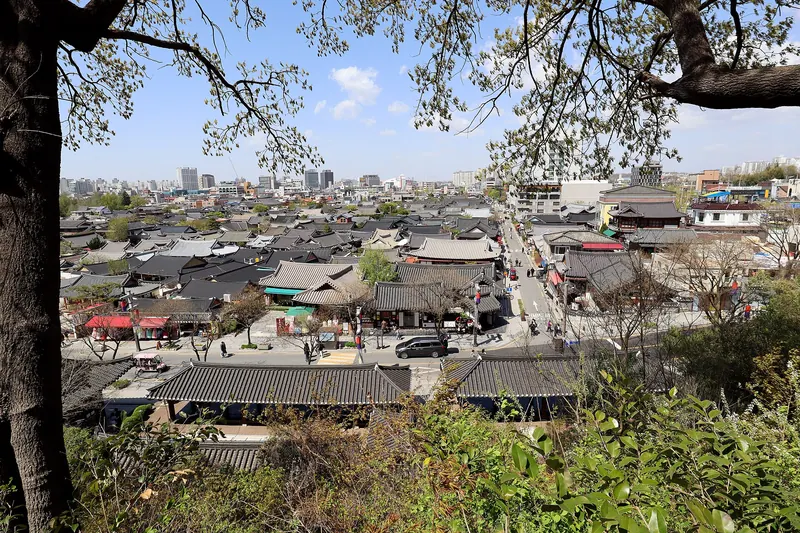
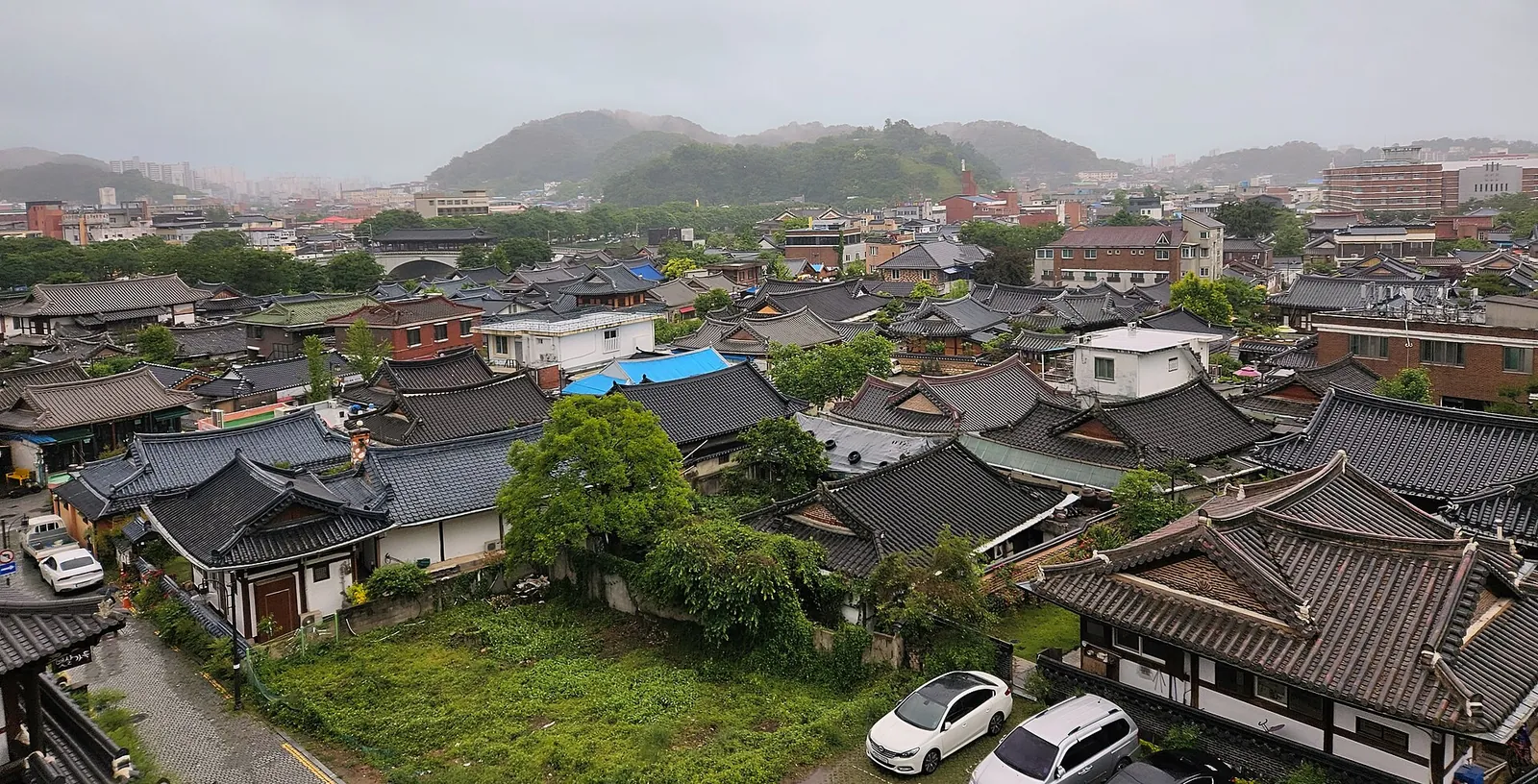
Visit Jeonju, the city's tourism site, gives about 1 hour 40 minutes by KTX from Seoul, and advises searching from Yongsan Station rather than Seoul Station because Jeonju trains from Yongsan are far more frequent. It also warns that Jeonju trains sell out at weekends, on holidays and during festivals, so book the Friday train as soon as your dates are firm. Drop your bags and walk into the Jeonju Hanok Village, which VisitKorea describes as about 700 hanok and Korea's largest, and only urban, traditional hanok village; it is free to enter and open all year.
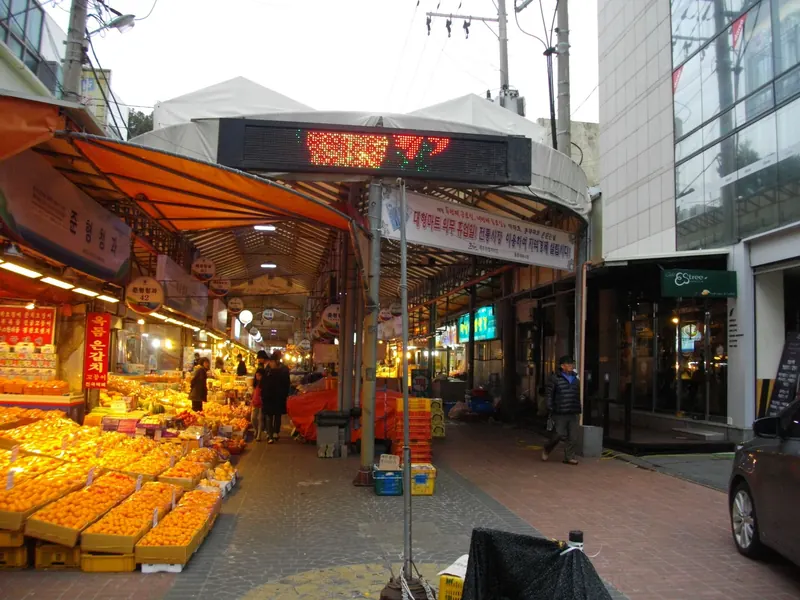
Spend the first afternoon around Gyeonggijeon Shrine, founded in 1410 to hold the portrait of King Taejo, the founder of the Joseon dynasty. When we checked on 2026-10-03, VisitKorea listed opening hours of 9:00 to 19:00 in September and October and 9:00 to 18:00 from November to February, last entry an hour before closing, and an adult ticket of 3,000 won. Then cross to Nambu Market for dinner. VisitKorea's report on the market listed the night market on Fridays and Saturdays from 17:00 to midnight, on a car-free stretch of Pungnammun 2-gil with tables down the middle of the road, and noted that many stalls close after 23:00 when they run out of food. Go early.
Day two is a food day. Have breakfast at Nambu Market: VisitKorea describes the Nambu Market style of kongnamul gukbap, bean sprout and rice soup warmed by pouring hot broth repeatedly over the rice and served with a separate soft-poached egg, and notes that Hyundaiok's market branch opens at 6:00. For lunch, eat Jeonju bibimbap in or near the hanok village. In the evening, go to the makgeolli houses: VisitKorea describes the Samcheon-dong makgeolli street as a 200-metre row of bars on Geomasan-ro, and says a kettle of makgeolli there comes with an abundant spread of side dishes. Samcheon-dong is outside the hanok village, so check the distance in a map app and take a taxi. Alternatively, Gaengnidan Street (also called Gaeksa), which VisitKorea calls the city's premier hangout, fills in the evening with people drinking gamaek, beer from corner stores with dried pollack and rolled omelette.
Make time for the local food
What to eat and where to look
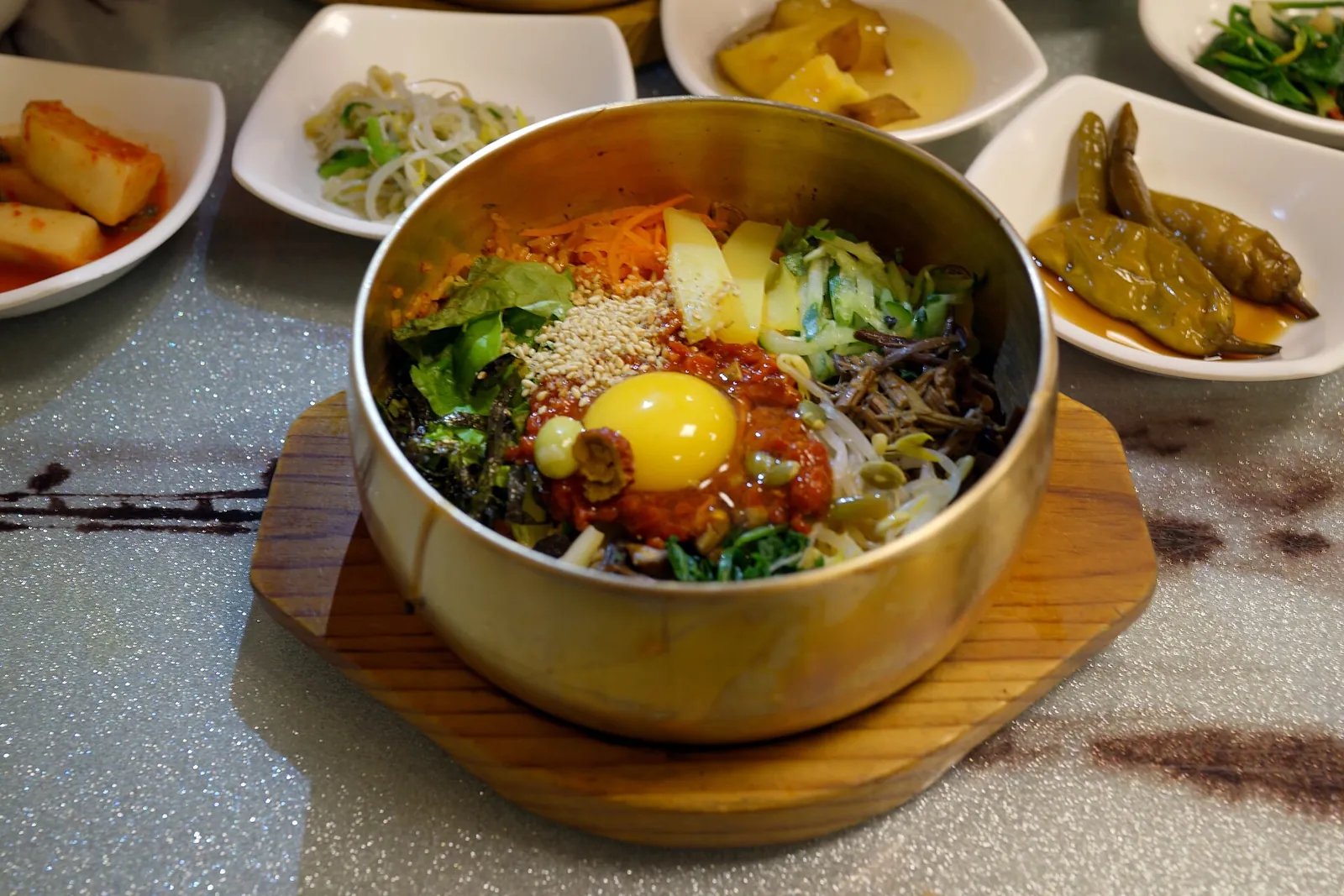
Jeonju bibimbap
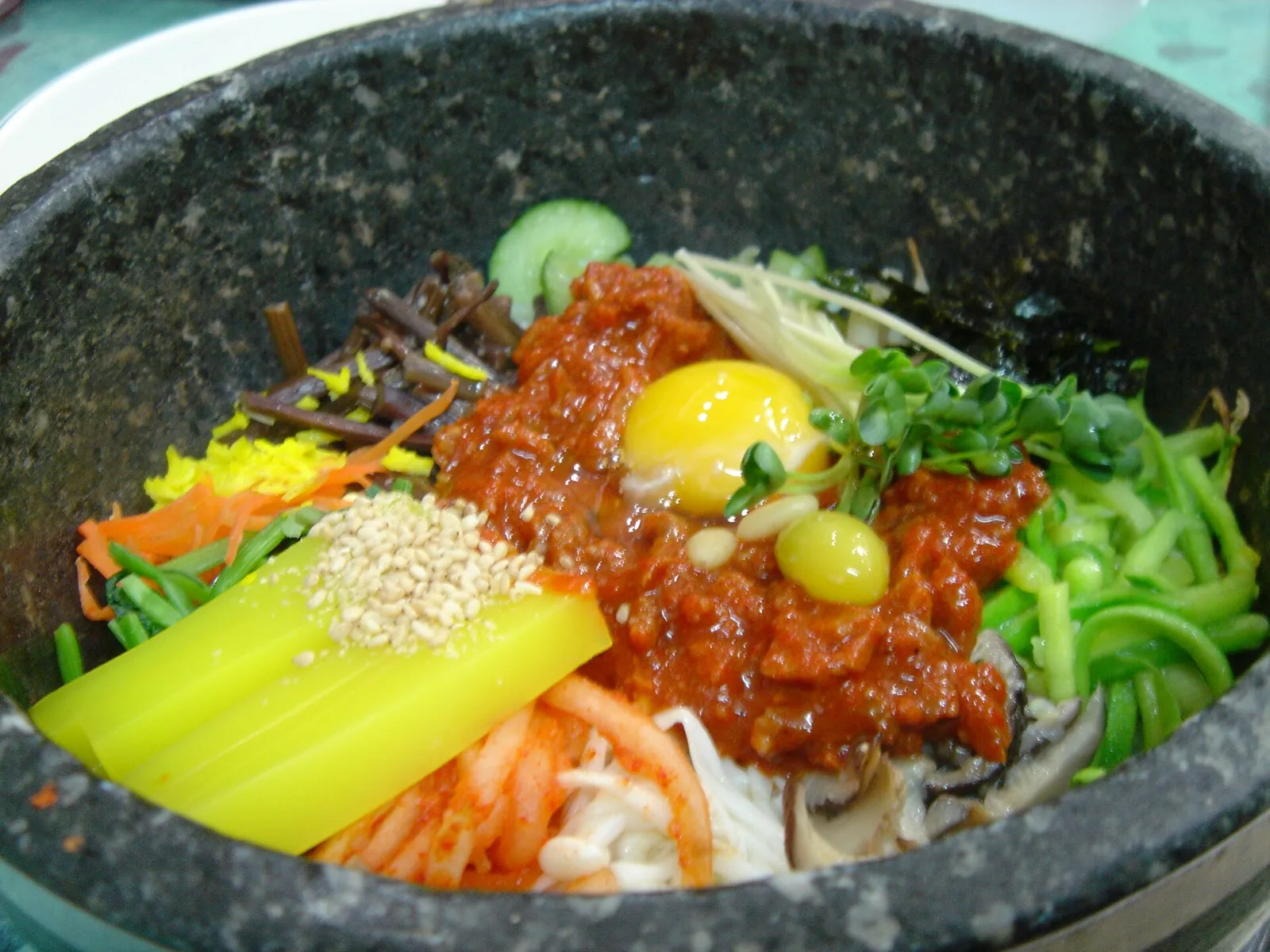
Warm rice topped with individually blanched or stir-fried vegetables such as bean sprouts, bracken and spinach, with beef and hwangpomuk, mung bean jelly coloured yellow with gardenia, arranged in a circle and mixed with red chilli paste. VisitKorea describes Hankookjib, opened in 1952, as said to be the origin of the Jeonju version.
- Where to look
- Specialist bibimbap restaurants in and around the Jeonju Hanok Village and the old downtown near Gaeksa.
- Fit it into your day
- Lunch on day two, at a restaurant rather than a street stall, so you can see it served in the traditional brass bowl or a hot stone pot.
The chilli paste is spicy and some versions include raw beef (yukhoe); ask for it on the side if you prefer.
Kongnamul gukbap, Nambu Market style
Bean sprout and rice soup, refreshing with a spicy kick. In the Nambu Market style, hot broth is poured repeatedly over the rice to warm it (toryeom) and a soft-poached egg comes separately, to mix with a little soup and laver flakes. Some soup restaurants also serve moju, a sweet, low-alcohol drink of makgeolli boiled with medicinal herbs.
- Where to look
- The soup restaurants inside Nambu Market, some of them open around the clock, and the bean-sprout-soup specialists around Gyo-dong.
- Fit it into your day
- Breakfast on day two, or a late-night bowl after the night market.
Usually seasoned with chilli and served with salted squid on the side; moju contains alcohol.
A kettle of makgeolli with side dishes
Jeonju's makgeolli houses bring rice wine by the kettle, and VisitKorea notes that an abundant spread of side dishes comes with it, so a few rounds become dinner.
- Where to look
- The 200-metre makgeolli street on Geomasan-ro in Samcheon-dong, a taxi ride from the hanok village.
- Fit it into your day
- Dinner on day two; go as a group of two or more and order by the kettle.
Check opening hours locally, and pace yourself: the kettles keep coming.
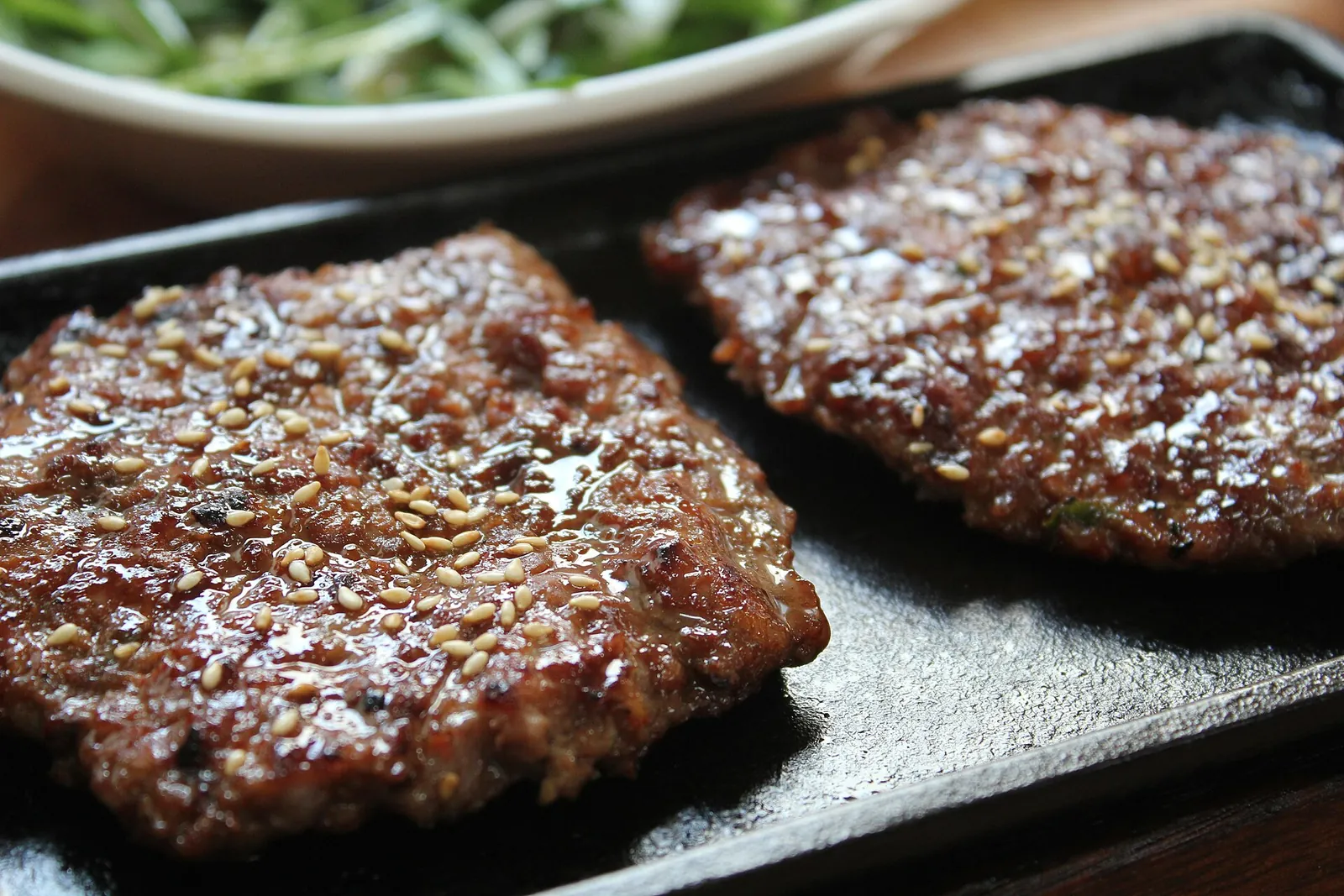
Tteokgalbi (grilled galbi patties)
Minced short-rib meat, marinated with soy sauce, pounded and grilled, a dish VisitKorea says was once served at the royal court. VisitKorea names it as a speciality of both Gwangju and Damyang; in Gwangju's Songjeong-dong the patties mix beef and pork and come with a pork-bone broth.
- Where to look
- Songjeong-dong Tteokgalbi Street in Gwangsan-gu, on arrival day in Gwangju, or restaurants in Damyang-eup on day four.
- Fit it into your day
- Lunch on day three or day four; it is a sit-down meal with side dishes.
Check whether the patty is all beef or beef and pork if you avoid either.
Daetongbap (rice in bamboo)
Rice cooked inside a section of bamboo with grains, beans, jujube and nuts, served with a long row of side dishes and finished with bamboo-leaf tea.
- Where to look
- Restaurants in Damyang-eup, including one opposite the Korea Bamboo Museum that VisitKorea features.
- Fit it into your day
- Lunch in Damyang after Juknokwon, as an alternative to tteokgalbi.
Side dishes can include salted shrimp and marinated crab; ask if you avoid shellfish.
Gukbap at Suncheon's Utjang market
Rice soup, notably dwaeji meori gukbap made with pork head meat, from the gukbap alley that Jeonnam–Gwangju has designated a Namdo Food Street. VisitKorea says diners ordering two or more servings receive complimentary boiled pork or blood sausage.
- Where to look
- The gukbap alley at Utjang market in Suncheon.
- Fit it into your day
- Dinner on day five after the bus from Boseong, or breakfast before Suncheon Bay.
VisitKorea lists Tuesdays and Wednesdays as closing days outside market days, varying by restaurant — exactly the days this route is in Suncheon, so have a back-up near the station.
Days 3–4: Gwangju's May 1980 history and a day in Damyang
Jeonju and Gwangju are on different lines. Take a train from Jeonju to Iksan — Visit Jeonju gives 15 to 20 minutes between the two — and change there to a Honam Line train for Gwangju Songjeong. Check the connection in the KORAIL app the night before. Gwangju has a single metro line, Line 1, which runs from Gwangju Songjeong Station through Sangmu to Geumnamno 4-ga and Culture Complex in the centre; a Tmoney card gives free transfers to city buses.
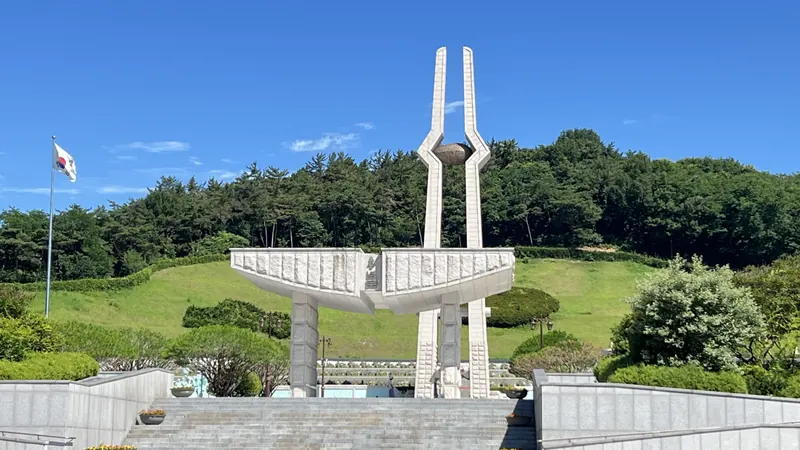
If you arrive by lunchtime, consider eating in Gwangsan-gu before heading downtown: VisitKorea describes Songjeong-dong Tteokgalbi Street there as about 20 restaurants serving tteokgalbi made from a mix of beef and pork, a change made in the 1990s to hold prices, with a pork-bone broth on the side. Then ride Line 1 downtown. The May 18 Democratic Uprising Archives on Geumnam-ro, opened in 2015 in the former Gwangju Catholic Center, hold the records inscribed on UNESCO's Memory of the World Register in 2011. When we checked on 2026-10-03, VisitKorea listed the archives as open 9:00 to 18:00, free, closed on Mondays, with regular guided tours on Sundays at 10:00, 11:00, 14:30 and 16:00. VisitKorea's page for the National Asian Culture Center (ACC), also in Dong-gu, listed indoor facilities open 10:00 to 18:00 and closure on Mondays.
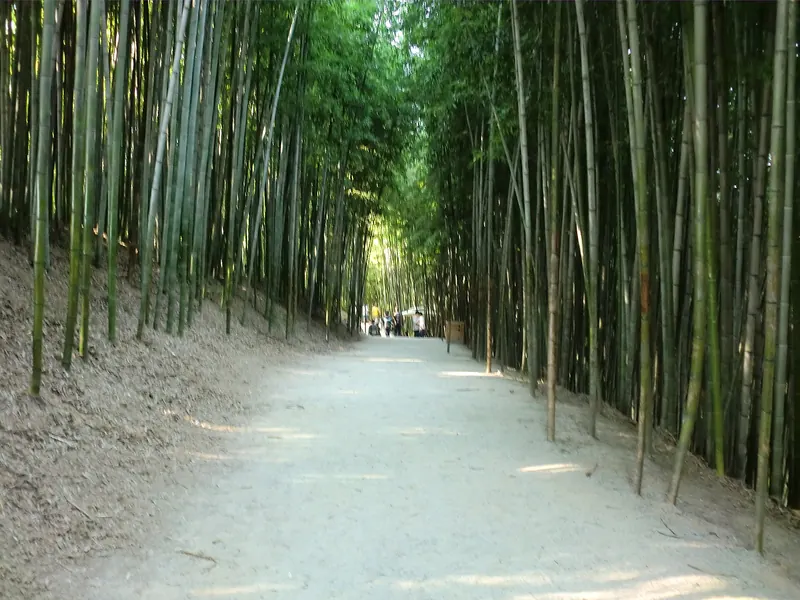
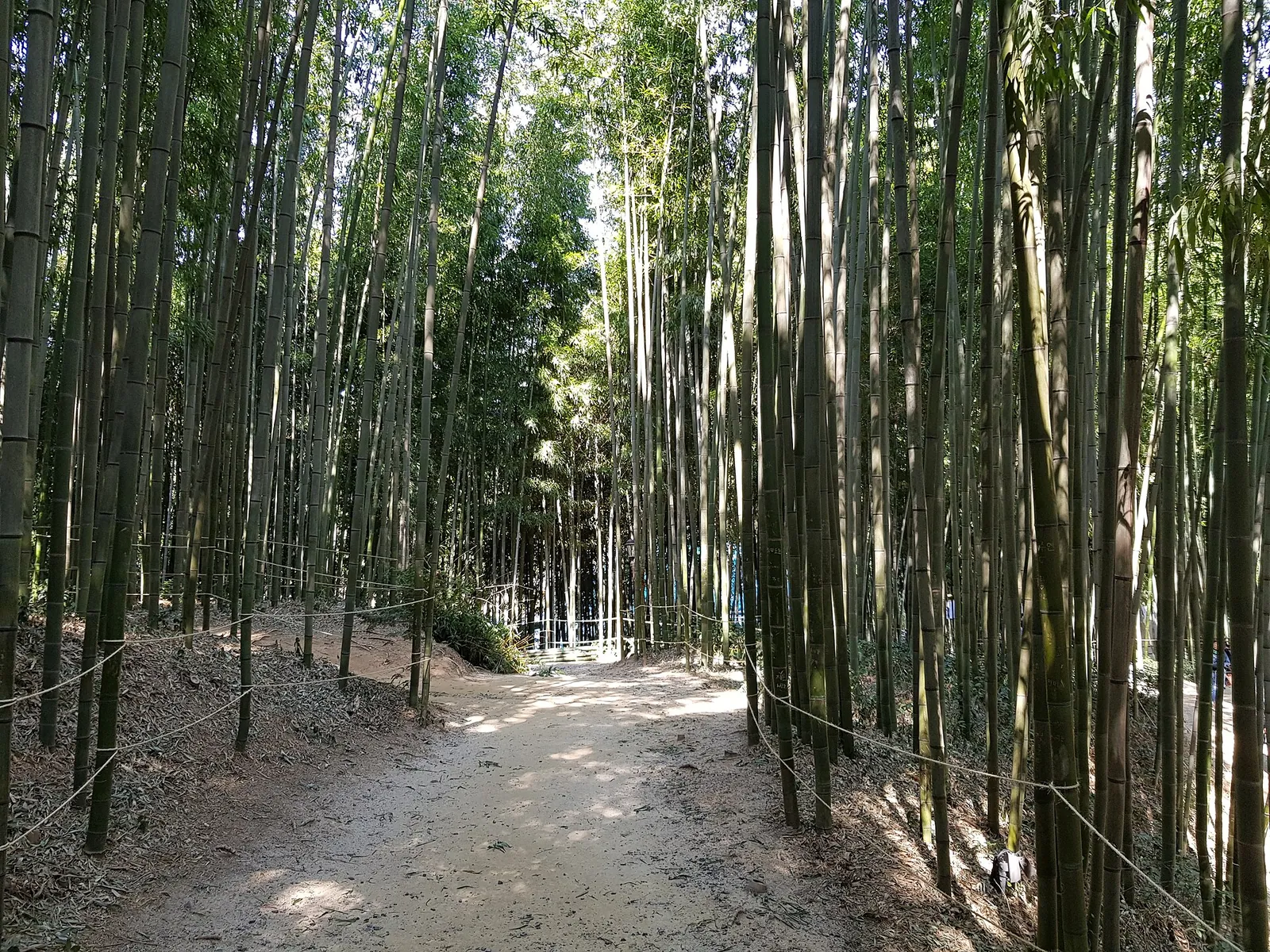
Day four is the Monday, so leave the city. Damyang is close enough to Gwangju to visit without moving hotels; our Damyang guide gives the city-bus route from Gwangju's bus terminal and Gwangju Station to Juknokwon, the bamboo garden, and a taxi is the simple fall-back. When we checked on 2026-10-03, VisitKorea listed Juknokwon as open every day, 9:00 to 19:00 from March to October (last entry 18:00) and 9:00 to 18:00 from November to February (last entry 17:30), with an adult ticket of 3,000 won, and suggested ending the visit with bamboo-leaf tea.
Then go on to the Damyang Metasequoia-lined Road, also in Damyang-eup, planted in the early 1970s and 8.5 kilometres long in all; VisitKorea listed it as open 9:00 to 18:00 from September to April and 9:00 to 19:00 from May to August, with an adult ticket of 2,000 won. Eat lunch in Damyang-eup: VisitKorea's list of regional specialities names tteokgalbi as Damyang's dish, and a restaurant opposite the Korea Bamboo Museum that VisitKorea features serves daetongbap, rice cooked in bamboo. Head back to Gwangju for a second night downtown.
Day 5: Boseong's tea fields on the way to Suncheon
Check out of Gwangju and take an intercity bus from Gwangju Bus Terminal to Boseong. Daehan Dawon's own access page gives about 1 hour 10 minutes on a direct bus and about 1 hour 35 minutes on buses that stop on the way; its timetable is dated November 2021, so treat it as a guide. Boseong County's timetable, dated 31 May 2025, also lists a Gwangju route that runs via the tea fields and Yulpo. From Boseong Bus Terminal, the county's rural-bus timetable shows buses that reach the tea plantation stop (Dawon) about 10 minutes after leaving town, continuing to Yulpo; there are only a handful a day, so photograph the timetable at the terminal or take a taxi.
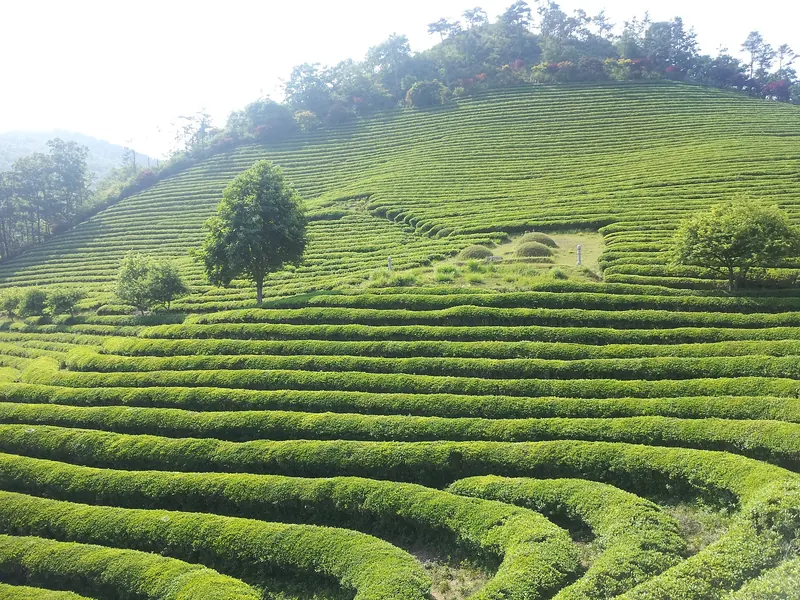
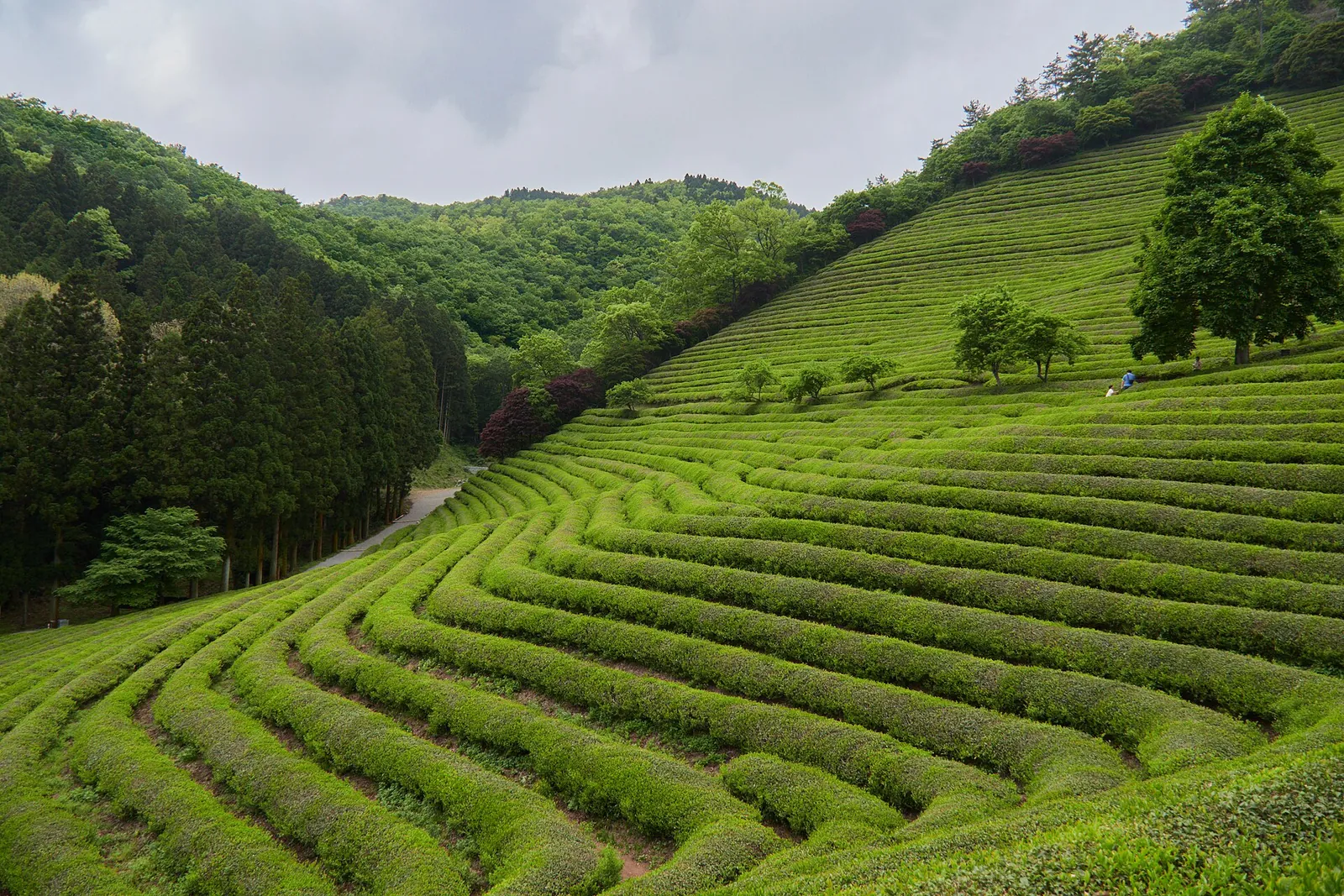
Daehan Dawon is the plantation most people mean by Boseong's tea fields. Boseong County says tea has been grown there since 1957, making it the oldest tea field in Korea, and the entrance is a path through tall cedars. VisitKorea describes the rows climbing a small peak of about 350 metres, with a view of the sea from the top on clear days. When we checked on 2026-10-03, VisitKorea listed it as open 9:00 to 18:00 from March to October and 9:00 to 17:00 from November to February, with an adult ticket of 4,000 won.
Nearby, the Tea Museum of Korea covers tea production, tea history and tea cultures across three floors; VisitKorea listed it as closed on Mondays, which is why this day falls on a Tuesday. If you have time and the weather is warm, the bus continues to Yulpo Beach, a 1.2-kilometre beach backed by a pine forest. Then go back to Boseong Bus Terminal: the county's timetable lists several departures a day towards Suncheon and Yeosu. Sleep near Suncheon Station so the last morning starts close to the bus and the train home.
Day 6: Suncheon Bay and the train home
Spend the last day on Suncheon Bay, which has two halves: the national garden and the wetland. The official garden site lists bus 66 from the stop opposite Suncheon Station to the national garden's east gate, about 21 minutes, and buses 66, 67 and 101 from the stop opposite the bus terminal, about 30 minutes. VisitKorea describes the garden as Korea's first national garden, with tulips and royal azaleas in spring and canola in mid-May, and describes a small unmanned transit line, the SkyCube, running from the garden to the Suncheon Literary Museum.
When we checked on 2026-10-03, the official site listed a single adult ticket at 10,000 won and a combined SkyCube ticket covering the garden, the wetland and the SkyCube at 14,000 won; the cheaper night ticket, sold from 17:00, does not admit you to the wetland. VisitKorea listed the garden as open 9:00 to 20:00 from October to June with last entry at 19:00, and the official wetland page listed ticket sales from 8:00 to 18:00 in September and October and 8:00 to 17:00 from November to February. Both are closed on the last Monday of each month.
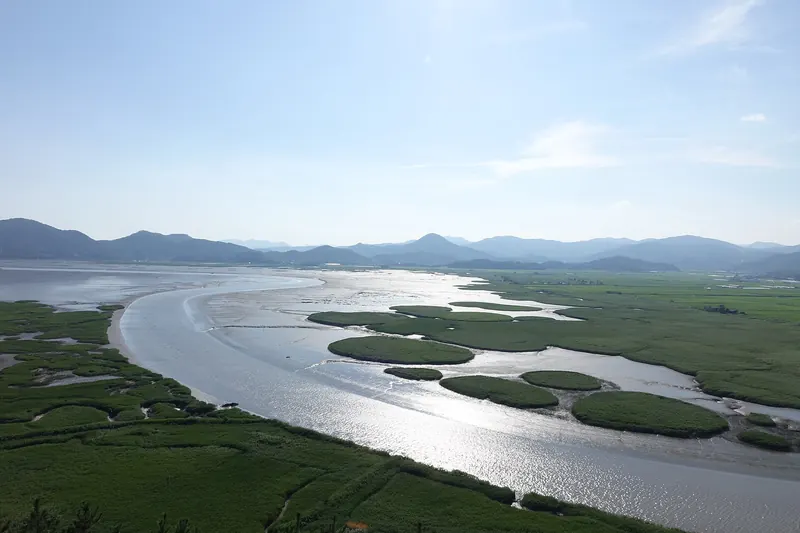
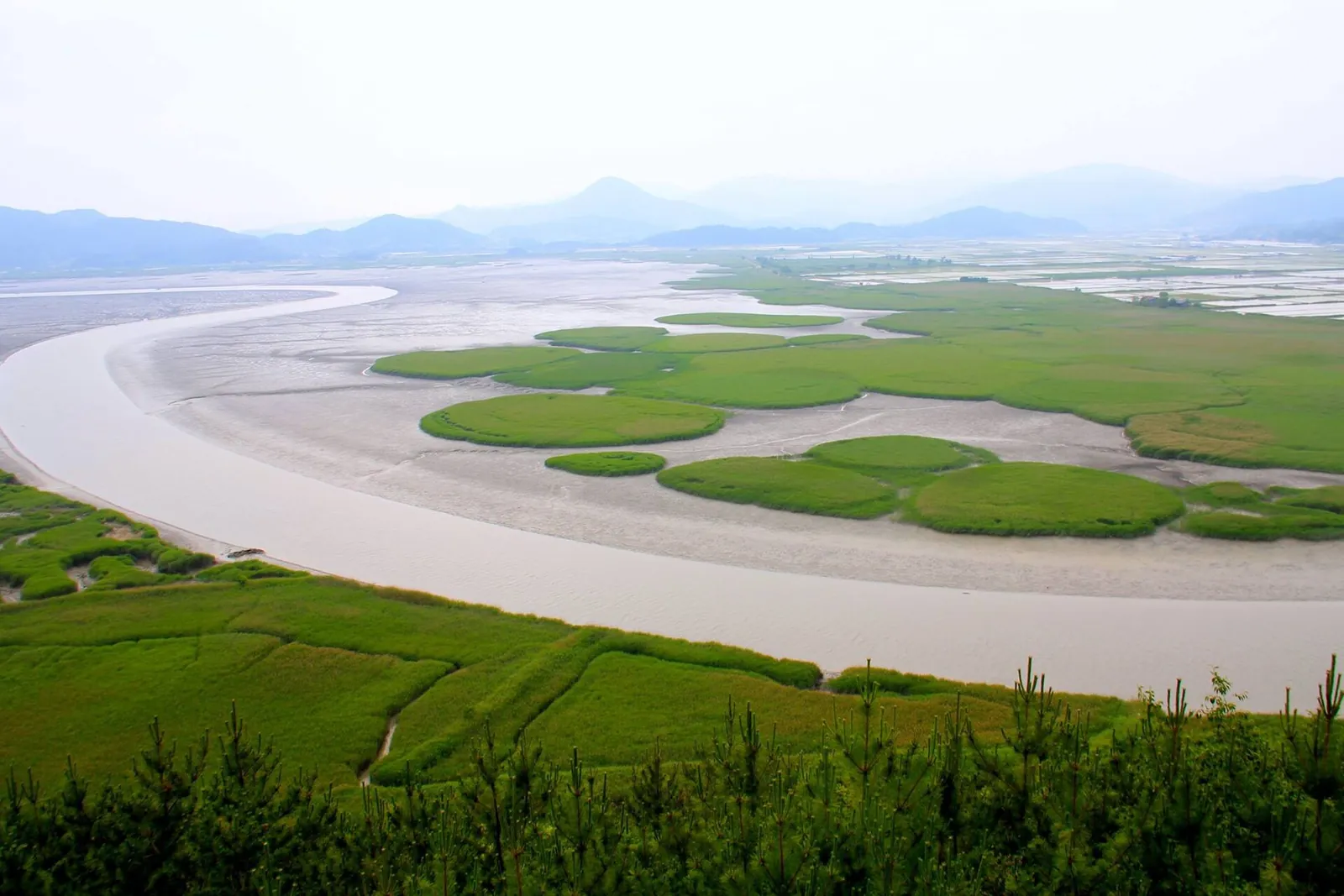
The wetland is the part to linger over: VisitKorea describes a three-kilometre waterway through reed beds and mudflats, wintering hooded cranes, and sunsets over the S-shaped channel from the observatory. A sunset there and a late train is possible, but on a departure day the safer plan is the garden in the morning, the wetland after lunch, and an afternoon Jeolla Line train north from Suncheon Station. Check in the KORAIL app whether your train ends at Yongsan or Seoul Station.
The plan day by day
This is an editorial suggestion, not a timetable. Check each train and bus in the KORAIL app or at the terminal, and confirm opening days before you set out.
- Day 1 (Friday) — Seoul to Jeonju: KTX from Yongsan; afternoon in the hanok village and Gyeonggijeon; dinner at the Nambu Market night market.
- Day 2 (Saturday) — Jeonju: bean sprout soup breakfast at Nambu Market; Jeonju bibimbap for lunch; evening at the Samcheon-dong makgeolli street, or the night market again.
- Day 3 (Sunday) — Jeonju to Gwangju: train to Iksan and on to Gwangju Songjeong; tteokgalbi in Songjeong-dong; afternoon at May 18 Democracy Square, the Archives and the ACC.
- Day 4 (Monday) — Damyang: city bus or taxi to Juknokwon; the Metasequoia road; tteokgalbi or daetongbap in Damyang-eup; back to Gwangju.
- Day 5 (Tuesday) — Boseong to Suncheon: bus to Boseong; Daehan Dawon and the Tea Museum of Korea; optional Yulpo Beach; bus to Suncheon.
- Day 6 (Wednesday) — Suncheon Bay: national garden in the morning, wetland after lunch, afternoon train north.
Ending on the coast at Mokpo instead
If you would rather finish by the sea and do not mind skipping the tea fields, stay on the Honam Line after Gwangju. VisitKorea's rail page lists Mokpo as the line's terminus after Gwangju-Songjeong and Naju, and VisitKorea's regional guide says the KTX reaches Mokpo from Seoul in under three hours, so the return from Mokpo is as easy as the return from Suncheon.
In that version, day five is the move to Mokpo and day six is spent there. VisitKorea describes Mokpo as a city for walking, with modern-era buildings near Mokpo Station, a marine cable car and a dancing sea fountain, and names nakjitangtangi, chopped live octopus with sesame oil, as its signature dish. Boseong and Suncheon then need their own trip.
Practical questions
Is six days enough for Jeolla?
Six days covers Jeonju, Gwangju, Damyang, Boseong and Suncheon at a comfortable pace with five nights in three beds. It leaves out Mokpo, Yeosu and the islands; add two or three days for those, or swap the Boseong and Suncheon days for Mokpo.
Do I need a car for this route?
No. Jeonju, Gwangju and Suncheon are on the rail network, Damyang is a short bus or taxi ride from Gwangju (see our Damyang guide for the route), and Boseong is reached by intercity bus from Gwangju with county buses to the tea fields. Only the Boseong day has infrequent buses; a taxi from Boseong Bus Terminal is the fall-back.
How do I get from Jeonju to Gwangju by train?
Take a train from Jeonju to Iksan, which Visit Jeonju gives as 15 to 20 minutes, and change there to a Honam Line train to Gwangju Songjeong. Check the connection in the KORAIL app before you travel.
Which day of the week should I start?
Friday. Jeonju's Nambu Market night market runs on Fridays and Saturdays only, and starting on Friday keeps you out of Gwangju and Boseong on the Monday, when the May 18 archives, the Asian Culture Center and the Tea Museum of Korea close.
Does a Korail Pass cover this trip?
The train legs are Seoul–Jeonju, Jeonju–Iksan–Gwangju Songjeong and Suncheon–Seoul; the Boseong and Damyang legs are by bus. VisitKorea notes that SRT trains are not included in the Korail Pass. Price the individual tickets before buying a pass.
When is the best time to go?
Spring, for the first tea leaves in Boseong, VisitKorea's May tea festival listing and the tulips, azaleas and mid-May canola in Suncheon's garden. In winter, Suncheon Bay has wintering hooded cranes. Avoid the last Monday of a month for Suncheon Bay.
Sources and checks before you travel
Reference sources for the version dated 3 October 2026. Confirm opening times, access, transport and conditions for your travel dates.
- Visit Jeonju: getting to Jeonju ↗ — opens in a new tab
- VisitKorea: Jeonju Hanok Village ↗ — opens in a new tab
- VisitKorea: Gyeonggijeon Shrine ↗ — opens in a new tab
- VisitKorea: an all-day adventure at Jeonju Nambu Market ↗ — opens in a new tab
- VisitKorea: Gaengnidan Street, Jeonju ↗ — opens in a new tab
- VisitKorea: Jeonju Bibimbap ↗ — opens in a new tab
- VisitKorea: Jeonju and Jeollabuk-do food ↗ — opens in a new tab
- VisitKorea: Samcheon 2-dong Makgeolli Street ↗ — opens in a new tab
- VisitKorea: trains in Korea ↗ — opens in a new tab
- VisitKorea: tourist trains ↗ — opens in a new tab
- VisitKorea: Gwangju and Jeollanam-do ↗ — opens in a new tab
- VisitKorea: May 18 Democratic Uprising Archives ↗ — opens in a new tab
- VisitKorea: National Asian Culture Center ↗ — opens in a new tab
- VisitKorea: Songjeong-dong Tteokgalbi Street ↗ — opens in a new tab
- VisitKorea: Tteokgalbi ↗ — opens in a new tab
- VisitKorea: subway ↗ — opens in a new tab
- Wikipedia: Gwangju Metro Line 1 ↗ — opens in a new tab
- VisitKorea: Juknokwon ↗ — opens in a new tab
- VisitKorea: Damyang Metasequoia-lined Road ↗ — opens in a new tab
- VisitKorea: K-Local Food Trip 33 ↗ — opens in a new tab
- VisitKorea: House by the Museum, Damyang ↗ — opens in a new tab
- Daehan Dawon: directions ↗ — opens in a new tab
- Boseong County: intercity and express bus timetable ↗ — opens in a new tab
- Boseong County: rural buses ↗ — opens in a new tab
- Boseong County: Boseong tea fields ↗ — opens in a new tab
- VisitKorea: Daehan Dawon Tea Plantation ↗ — opens in a new tab
- VisitKorea: Tea Museum of Korea ↗ — opens in a new tab
- VisitKorea: Yulpo Beach ↗ — opens in a new tab
- VisitKorea: Boseong green tea and Jangheung tea ↗ — opens in a new tab
- Suncheon Bay: directions ↗ — opens in a new tab
- Suncheon Bay: ticket prices ↗ — opens in a new tab
- Suncheon Bay: opening hours ↗ — opens in a new tab
- Suncheon Bay Wetland: ticket hours ↗ — opens in a new tab
- VisitKorea: Suncheonman National Garden ↗ — opens in a new tab
- VisitKorea: Suncheonman Bay Wetland ↗ — opens in a new tab
- VisitKorea: Suncheon Utjang Market ↗ — opens in a new tab
- VisitKorea: airport transport ↗ — opens in a new tab
Does this experience fit your route?
This route works well on public transport, but a private guide in Gwangju adds context to the May 1980 sites. Check the meeting point, the stops and the day of the week before you book.
Check dates and details on Viator ↗ — opens in a new tabAffiliate link · Book with ViatorPhoto credits
Terraced green tea rows on a hillside in Boseong, the day-five stop on this route
Photograph: lumoplank — opens in a new tab · CC0 — opens in a new tab
Changes: Resized and converted to WebP; displayed with responsive crops. · Original photograph and licence details ↗ — opens in a new tab
The tiled roofs of Jeonju Hanok Village, where the route spends its first two nights
Photograph: lumoplank — opens in a new tab · CC0 — opens in a new tab
Changes: Resized and converted to WebP; displayed with responsive crops. · Original photograph and licence details ↗ — opens in a new tab
Jeonju bibimbap in a brass bowl with side dishes
Photograph: lovelyheewon — opens in a new tab · CC0 — opens in a new tab
Changes: Resized and converted to WebP; displayed with responsive crops. · Original photograph and licence details ↗ — opens in a new tab
A path through the bamboo groves at Juknokwon, Damyang
Photograph: Christian Bolz (크리스티안 볼츠) — opens in a new tab · CC BY-SA 4.0 — opens in a new tab
Changes: Resized and converted to WebP; displayed with responsive crops. · Original photograph and licence details ↗ — opens in a new tab
Tteokgalbi, grilled galbi patties, a speciality of Gwangju and Damyang
Photograph: https://pixabay.com/users/ArgentumFerrum-990817/ ArgentumFerrum] — opens in a new tab · CC0 — opens in a new tab
Changes: Resized and converted to WebP; displayed with responsive crops. · Original photograph and licence details ↗ — opens in a new tab
Suncheon Bay Wetland from the observatory, the last stop on the route
Photograph: Joycekim77 — opens in a new tab · CC BY-SA 3.0 — opens in a new tab
Changes: Resized and converted to WebP; displayed with responsive crops. · Original photograph and licence details ↗ — opens in a new tab
Jeonju bibimbap in a hot stone pot, with yellow hwangpomuk on top
Photograph: by cube300 at Flickr — opens in a new tab · CC BY-SA 2.0 — opens in a new tab
Changes: Resized and converted to WebP; displayed with responsive crops. · Original photograph and licence details ↗ — opens in a new tab