Jeolla · South Jeolla
Boseong travel guide: green tea fields, Yulpo Beach and the bus there
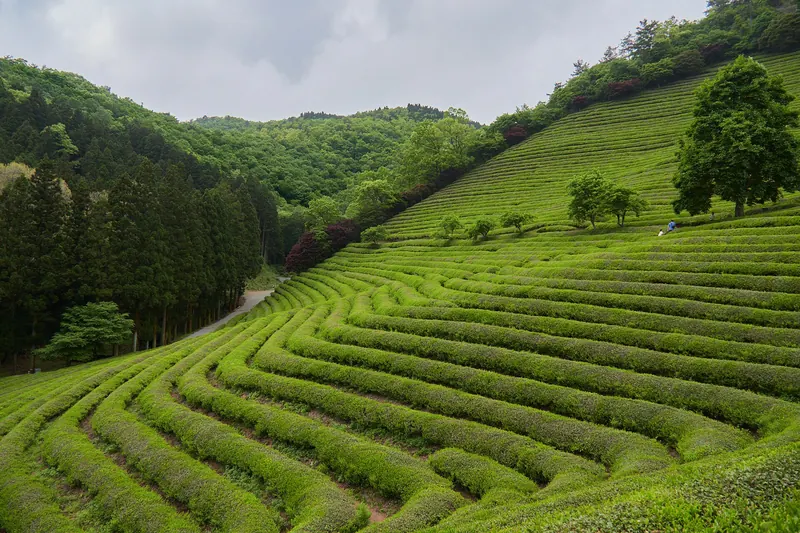
Boseong is a farming county on the south coast of South Jeolla, and its name is shorthand in Korea for green tea. The county's own tourism site says the Daehan Dawon estate began growing tea here in 1957 and calls it the oldest tea field in the country; the rows of clipped bushes climbing the hills above Nokcha-ro are the picture most people come for. The road then drops about ten minutes to Yulpo, a small fishing village with a pine-backed beach on Deungnyang Bay and a county-run bathhouse that steeps green tea in seawater. The decisions are simple but worth getting right: which bus to take, whether a day is enough, and whether to come in spring, when the first leaves are picked and the tea festival runs.
- Suggested time
- 1 full day; 1 night if you add Yulpo at leisure or Beolgyo
- Where to stay
- Gwangju or Suncheon for a day trip; Boseong-eup or Yulpo (Hoecheon-myeon) for an overnight
- Season and timing
- Spring (late April–May) for fresh tea growth and the early-May tea festival; summer for Yulpo Beach; Beolgyo cockles are a winter dish (December–March).
The short answer
Most travellers see Boseong as a long day out of Gwangju or Suncheon: about two hours at Daehan Dawon, an hour at the Tea Museum of Korea in the Korean Tea Culture Park nearby, then the short ride down to Yulpo Beach for seafood and the green-tea seawater bath. Take an intercity bus to Boseong Bus Terminal, then one of the frequent county buses that stop at the tea plantation ("Dawon") on the way to Yulpo; some Gwangju buses also serve the tea fields and Yulpo directly. Stay a night only if you want the tea rows early and quiet, or if you are continuing to Beolgyo for cockles: sleep in Boseong-eup for transport, or at Yulpo for the sea. Late April and May are the best weeks, with fresh spring growth and the Boseong Green Tea Festival, held 1–5 May in 2026.
Boseong in one day: tea fields first, the sea in the afternoon
Boseong's sights sit along one road. Nokcha-ro ("green tea road") runs south from the county town, Boseong-eup, past the tea estates, and the road continues down to the coast at Yulpo in Hoecheon-myeon. Daehan Dawon (763-65 Nokcha-ro) and the Korean Tea Culture Park with the Tea Museum of Korea (775 Nokcha-ro) are next to each other on that road; Yulpo Beach is at the bottom of it.
The natural order is uphill in the morning and seaside in the afternoon. The tea paths are quieter early, the climb to the top of Daehan Dawon is cooler in the morning, and Yulpo is a better place for a late lunch of seafood and a long soak than for a 9 a.m. start. If you are travelling from Gwangju, some buses also run in the opposite order — Yulpo, the tea fields, then Boseong terminal — which makes it easy to finish the day at the beach and ride home from there.
Boseong-eup itself is a working county town with the bus terminal, Boseong Station, motels and restaurants. It is the practical place to sleep for transport and an early start at the tea fields rather than a sight in itself.
Daehan Dawon and the other tea estates
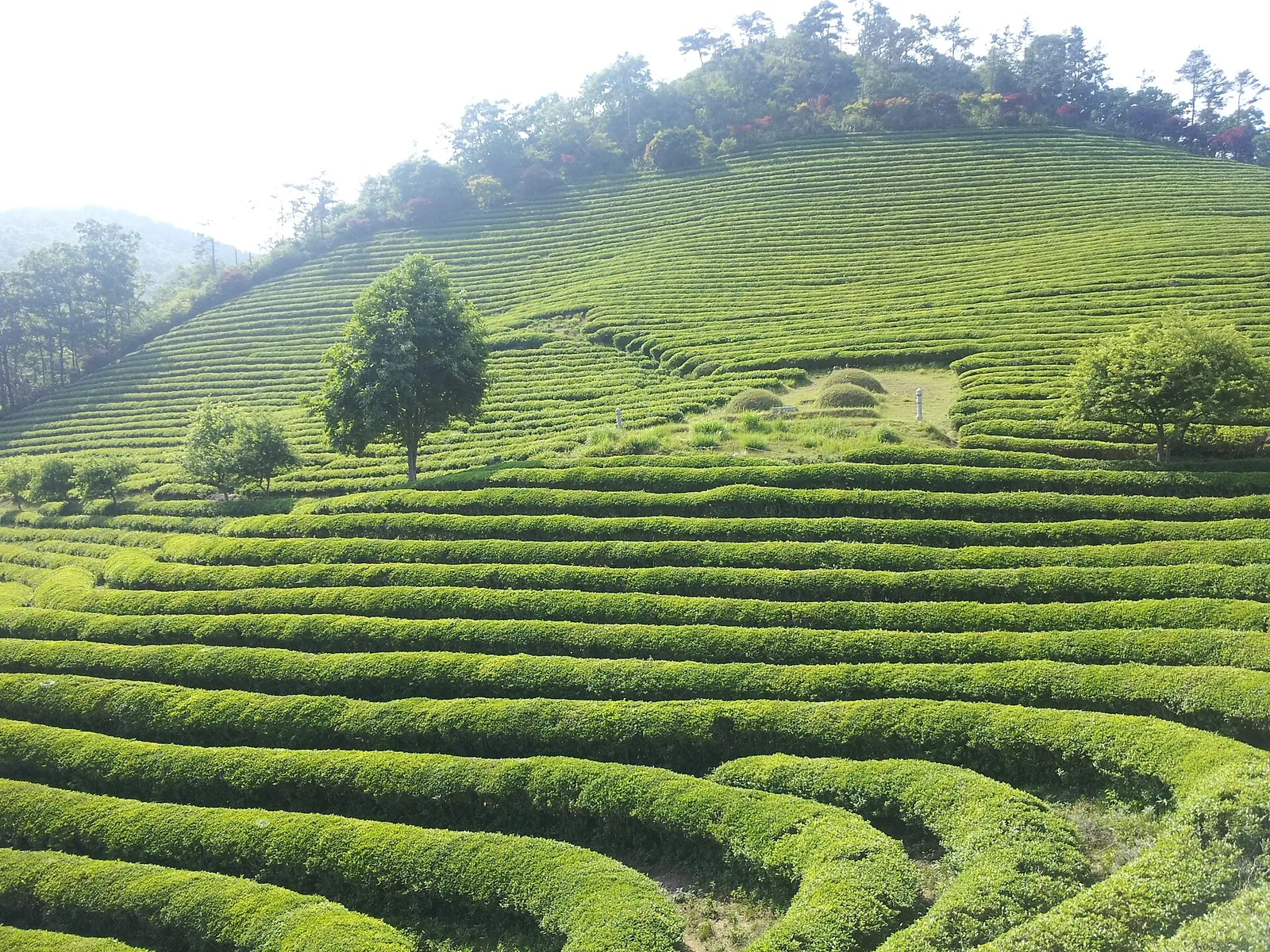
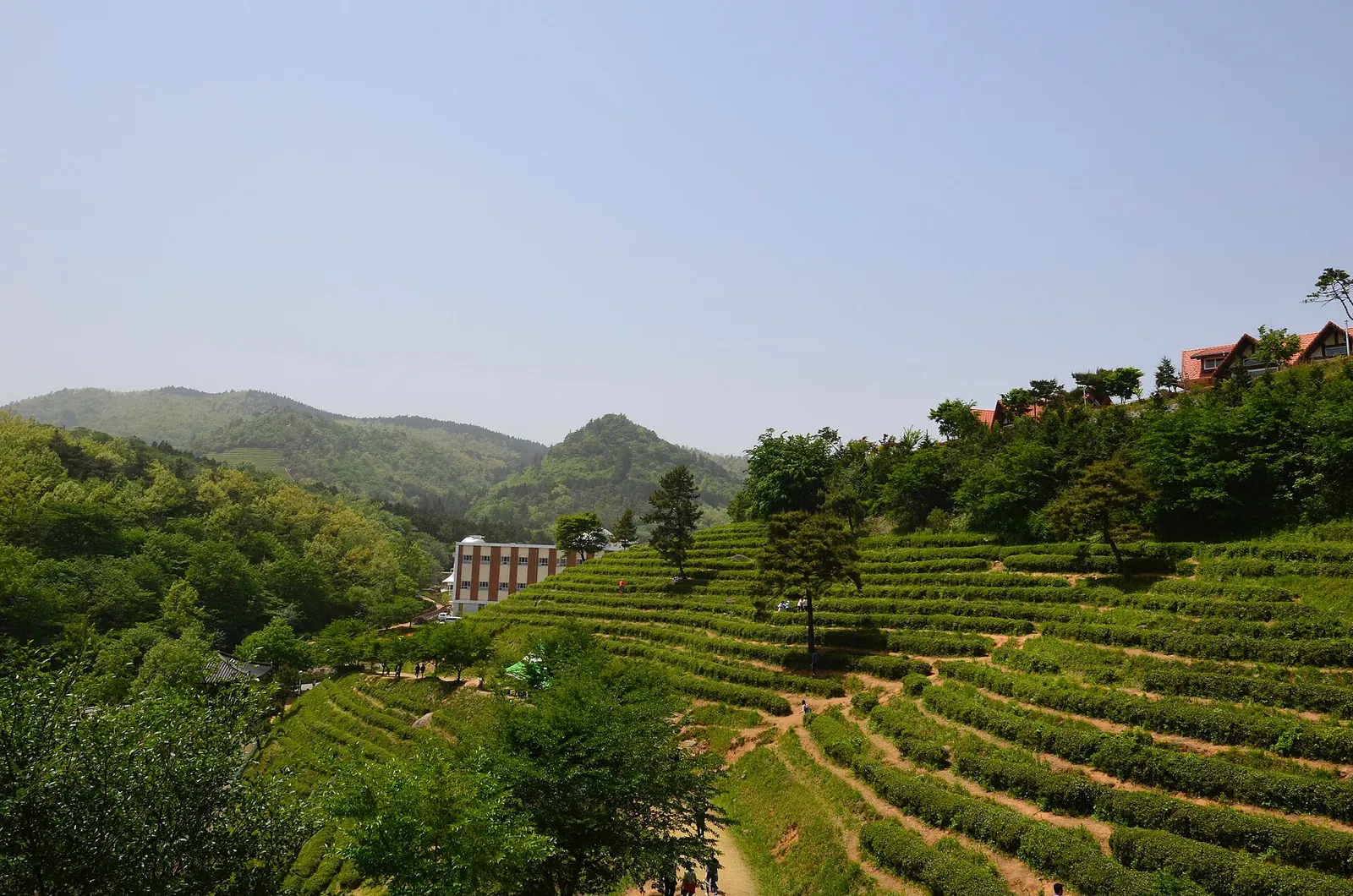
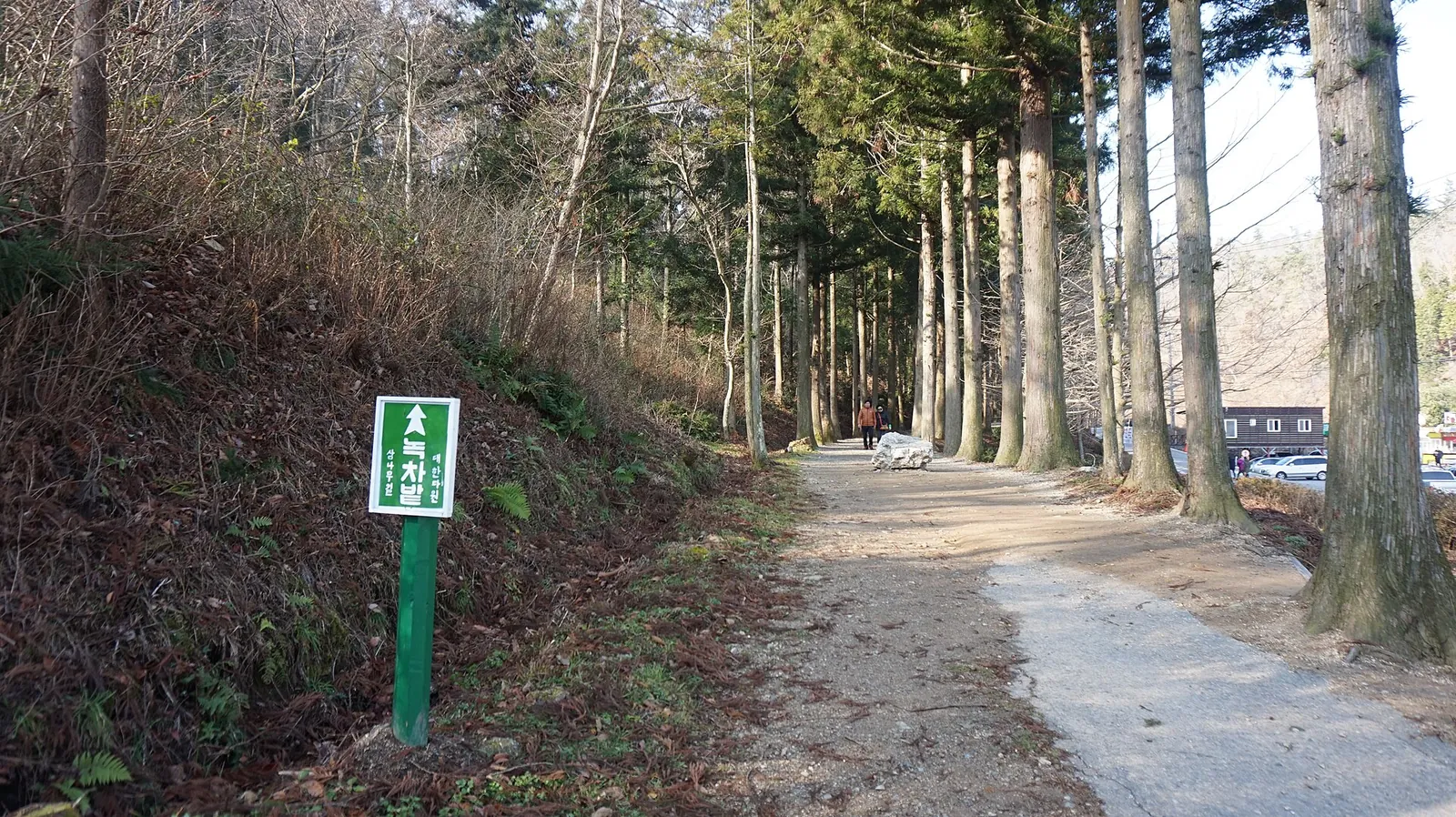
Daehan Dawon is the estate in most Boseong photographs. The county describes it as Korea's only tea tourism farm, planted from 1957 and the largest tea estate on the mainland outside Jeju. You walk in along an avenue of tall cedars, then climb paths and steps through the clipped rows; VisitKorea notes that the observation deck at the top, at about 350 metres, looks out to the sea on clear days, and the estate has been used as a set for television dramas such as Summer Scent and Legend of the Blue Sea. Allow a good two hours if you want to reach the top without hurrying, and wear comfortable shoes: the way up is by paths and steps.
When we checked on 2026-10-03, VisitKorea listed opening hours of 9:00 to 18:00 from March to October and 9:00 to 17:00 from November to February, open every day, and the estate's own price list showed 4,000 won for adults and 3,000 won for 7- to 18-year-olds and visitors aged 65 and over, with children under six free. There is a tea-tasting room, a shop and a rest area by the entrance.
Daehan Dawon is not the only estate. VisitKorea's Boseong pages also point to Myeongnyang Dawon (745-8 Nokcha-ro), which serves its tea on a hanok-style terrace, and to the hillside village of Gunhak, where tea fields run down towards Deungnyang Bay. If the main estate is crowded on a spring weekend, these quieter plantations along the same road are the alternative.
Make time for the local food
What to eat and where to look
Nokcha tteokgalbi (green-tea grilled short-rib patties)
Minced rib meat shaped into flat patties and grilled. The county lists it among Boseong's signature dishes, made with pork from green-tea-fed pigs or green-tea Hanwoo beef, and served with a full spread of Jeolla side dishes.
- Where to look
- Korean restaurants in Boseong-eup and along the tea road near the plantations.
- Fit it into your day
- A filling lunch between the tea fields and Yulpo.
Check whether the restaurant uses the pork or the beef version before you order.
Boseong nokdon (green-tea pork)
Pork from pigs raised on feed mixed with green-tea powder, which the county promotes as lean and free of the usual porky smell. It is mostly eaten as grilled belly wrapped in lettuce and other leaves.
- Where to look
- Barbecue restaurants in Boseong-eup and at Yulpo; the county says it is also sold in local supermarkets.
- Fit it into your day
- An evening barbecue if you stay the night in Boseong-eup.
Some barbecue restaurants expect a minimum order per table; ask if you are eating alone.
Beolgyo kkomak (cockles)
The cockles of Beolgyo, from the mudflats of Yeoja Bay, are Boseong's most famous seafood. They come boiled, seasoned with soy or chilli, in pancakes and fritters, in soybean-paste soup, or over rice as kkomak bibimbap, usually as a set meal of many small dishes.
- Where to look
- Beolgyo-eup, around the market; VisitKorea points to a cockle set-menu restaurant in the Beolgyo Kkomak Wellbeing Center (15-24 Sijang 1-gil).
- Fit it into your day
- Worth a detour to Beolgyo for lunch on the way to or from Suncheon, especially in winter.
VisitKorea gives the season as December to March; out of season, ask whether the cockles are fresh. Shellfish allergy warning.
Boseong yangtang (goat soup)
A local folk dish: goat broth simmered with taro stalks, butterbur stems, chilli powder and soybean paste, with shredded goat meat added at the end. VisitKorea notes that the meat is close to beef in texture and has no strong odour.
- Where to look
- Traditional restaurants in Boseong-eup; look for 양탕 on the sign.
- Fit it into your day
- A warming lunch on a cold-weather visit.
Not every restaurant serves it; ask before you sit down.
Boseong hanjeongsik and green-tea set meals
The full South Jeolla table d'hôte: rice, soup and a crowded table of side dishes that change with the season. The county says Boseong's versions use local green-tea pork, cockles, sea squirt, octopus and other seafood, and that many restaurants serve green-tea water instead of plain water.
- Where to look
- Hanjeongsik restaurants in Boseong-eup and Beolgyo.
- Fit it into your day
- Best shared by two or more as the main meal of the day.
Set meals are often meant for two or more; ask before ordering alone.
When to go: spring leaves and the Green Tea Festival
Boseong's tea is a spring crop. VisitKorea describes the most prized local teas as made from the first, smallest leaves picked in spring, and the county's warm, foggy climate as what keeps the bushes moist and shaded through the growing season. That is why late April and May are the busiest weeks: the rows are at their brightest green and the leaves are being picked.
The Boseong Green Tea Festival (Boseong Dahyang Daechukje) is the main event. The county traces it back to a first tea ceremony held in 1985 and says it now runs around May each year in the Korean Tea Culture Park and the surrounding tea fields, with leaf-picking, tea-making and green-tea foot baths. When we checked on 2026-10-03, VisitKorea listed the 2026 festival as 1–5 May, 10:00 to 19:00, with free entry. Expect full buses and car parks on festival days; arriving on an early bus matters more than ever.
The rest of the year still works: the bushes are evergreen, and summer adds Yulpo Beach to the day. Do not plan a winter visit around the light festival you may see in older guides. When we checked on 2026-10-03, the county's festival page said there were no plans to hold the Boseong Tea Field Light Festival for the time being, while a new tea garden is created in the area.
The Tea Museum of Korea and the Tea Culture Park
Next to the main estates, the Korean Tea Culture Park groups the Tea Museum of Korea, a performance hall and a pavilion. VisitKorea describes the museum's three floors as covering how tea is produced, the history of tea wares in Korea and hands-on tea culture from Korea, China, Japan and Europe, with a workshop for making green tea. It is an easy hour, and a good shelter if it rains.
When we checked on 2026-10-03, VisitKorea listed the museum's hours as 10:00 to 18:00 from March to October and 10:00 to 17:00 from November to February, with last admission 30 minutes before closing, closed on Mondays, 1 January, Seollal and Chuseok, and adult admission of 1,000 won. Check the museum's own site before a Monday visit or a holiday.
Yulpo Beach and the green-tea seawater bath
Yulpo is where the tea road meets Deungnyang Bay. VisitKorea describes a 1.2-kilometre beach of silver sand, about 60 metres wide, between the sea and a forest of century-old pines; the county adds that the bay is calm and the water shallow, which suits families in summer, and that the sandy flats yield clams and cockles. Outside the swimming season it is a quiet seafront with fish restaurants and a long walk under the pines.
Right by the beach, the Yulpo Seawater Green Tea Centre is the county-run bathhouse that gives Boseong its other speciality. The county says it opened in 1998 and fills its baths with seawater pumped from 120 metres underground and steeped with tea leaves from Boseong's estates; men's and women's baths are on the second floor, and an indoor seawater pool and an open-air bath on the third. It is a good end to a day on the tea paths. Hours and fees were not on the county page we read, so call ahead (+82-61-850-8740) or check on arrival.
Further up the Hoecheon coast, Jeamsan Recreational Forest in Ungchi-myeon has forest cabins and, according to VisitKorea, a green-tea wellness centre with foot baths and tea-steam programmes. It is a destination for travellers with a car and a night to spare rather than for a bus day trip.
Getting there and around by bus
Boseong Bus Terminal in Boseong-eup is the hub. When we checked on 2026-10-03, the county's intercity timetable (dated 31 May 2025) listed several departures a day from Boseong towards Gwangju — both direct buses and slower ones via Hwasun — and around seven a day towards Suncheon, some continuing to Yeosu, plus two express buses a day to Seoul. One group of Gwangju buses starts at Yulpo Beach and calls at the tea fields before Boseong terminal, so on the way back you can board at the plantation or the beach. Daehan Dawon's own directions page, last updated in 2021, gives about 1 hour 10 minutes for the direct buses between Gwangju and Boseong and about 1 hour 35 minutes for those that stop on the way.
From the terminal, the county's rural buses run frequently along Nokcha-ro: the timetable shows the tea-plantation stop ("Dawon") about ten minutes from Boseong and Yulpo a further ten to fifteen minutes on, with many departures between early morning and evening. Leaving Daehan Dawon, Boseong-bound buses stop across the main road, reached by going left from the estate entrance and under the overpass; buses towards Yulpo and the south go from the right-hand side. Taxis are the fallback if you miss a bus.
Beolgyo, the cockle town in the east of the county, has its own terminal with frequent buses to Suncheon and Yeosu, and the county lists a regular local service between Boseong and Beolgyo. Timetables change: check the county's bus pages on the day.
- Morning: intercity bus to Boseong Bus Terminal, then a county bus to the "Dawon" stop for Daehan Dawon.
- Midday: cross to the Tea Culture Park for the Tea Museum (closed Mondays).
- Afternoon: county bus down to Yulpo for a seafood lunch, the beach and the seawater green-tea bath.
- Evening: a Gwangju bus from Yulpo or the tea fields, or back to Boseong terminal for Suncheon.
Practical questions
Is Boseong worth a day trip from Gwangju or Suncheon?
Yes. Intercity buses connect Boseong with both cities, and county buses link Boseong terminal, Daehan Dawon and Yulpo Beach. A full day is enough for the tea fields, the Tea Museum and an afternoon at Yulpo.
When is the best time to see the Boseong tea fields?
Late April and May, when the spring leaves are fresh and the Boseong Green Tea Festival runs (1–5 May in 2026). The bushes are evergreen, so the fields are green all year, but spring is the picking season.
How much does Daehan Dawon cost and when is it open?
When we checked on 2026-10-03, adult entry was 4,000 won and VisitKorea listed 9:00–18:00 from March to October and 9:00–17:00 from November to February, open every day. Check before you travel.
How do I get from Boseong Bus Terminal to the tea fields?
Take one of the county buses towards Yulpo and get off at the "Dawon" stop; the county timetable shows it about ten minutes from Boseong. A taxi is the alternative.
Can I combine the tea fields with the beach?
Yes. Yulpo Beach is about ten to fifteen minutes beyond the tea fields on the same bus routes, and some Gwangju buses start at Yulpo and stop at the tea fields on the way.
Is there still a winter light festival at the tea fields?
Not for now. When we checked on 2026-10-03, the county said it had no plans to hold the Boseong Tea Field Light Festival for the time being.
Sources and checks before you travel
Reference sources for the version dated 3 October 2026. Confirm opening times, access, transport and conditions for your travel dates.
- VisitKorea: Daehan Dawon Tea Plantation ↗ — opens in a new tab
- Daehan Dawon (official site): admission and opening ↗ — opens in a new tab
- Daehan Dawon (official site): directions ↗ — opens in a new tab
- Boseong County tourism: Boseong tea fields (Daehan Dawon) ↗ — opens in a new tab
- Boseong County tourism: Yulpo Beach ↗ — opens in a new tab
- Boseong County tourism: Yulpo Seawater Green Tea Centre ↗ — opens in a new tab
- Boseong County tourism: intercity and express bus timetable ↗ — opens in a new tab
- Boseong County tourism: rural (county) buses ↗ — opens in a new tab
- Boseong County tourism: Boseong Green Tea Festival overview ↗ — opens in a new tab
- Boseong County tourism: Tea Field Light Festival ↗ — opens in a new tab
- Boseong County tourism: green-tea tteokgalbi ↗ — opens in a new tab
- Boseong County tourism: Boseong nokdon ↗ — opens in a new tab
- Boseong County tourism: Beolgyo cockles ↗ — opens in a new tab
- Boseong County tourism: hanjeongsik and green-tea set meals ↗ — opens in a new tab
- Boseong County tourism: hotels, motels and resorts ↗ — opens in a new tab
- VisitKorea: Tea Museum of Korea ↗ — opens in a new tab
- VisitKorea: Korean Tea Culture Park ↗ — opens in a new tab
- VisitKorea: Boseong Green Tea Festival ↗ — opens in a new tab
- VisitKorea: Yulpo Beach (Solbat Beach) ↗ — opens in a new tab
- VisitKorea: Jeonnam Area Environmental Disease Prevention and Control Center ↗ — opens in a new tab
- VisitKorea: Like A Local, Boseong green tea ↗ — opens in a new tab
- VisitKorea: Cockle Bibimbap ↗ — opens in a new tab
- VisitKorea: An Autumn Culinary Journey through Korea's Seasonal Flavors ↗ — opens in a new tab
- VisitKorea: Boseong Goat Soup ↗ — opens in a new tab
- VisitKorea: Express bus and intercity bus ↗ — opens in a new tab
Photo credits
Terraced tea rows on a hillside in Boseong
Photograph: revi — opens in a new tab · CC BY 2.0 kr — opens in a new tab
Changes: Resized and converted to WebP; displayed with responsive crops. · Original photograph and licence details ↗ — opens in a new tab
Looking down over the tea fields at Daehan Dawon
Photograph: Jakob Reichmann — opens in a new tab · CC BY-SA 3.0 — opens in a new tab
Changes: Resized and converted to WebP; displayed with responsive crops. · Original photograph and licence details ↗ — opens in a new tab
The tree-lined path towards the tea fields at Daehan Dawon
Photograph: Jocelyndurrey — opens in a new tab · CC BY-SA 4.0 — opens in a new tab
Changes: Resized and converted to WebP; displayed with responsive crops. · Original photograph and licence details ↗ — opens in a new tab
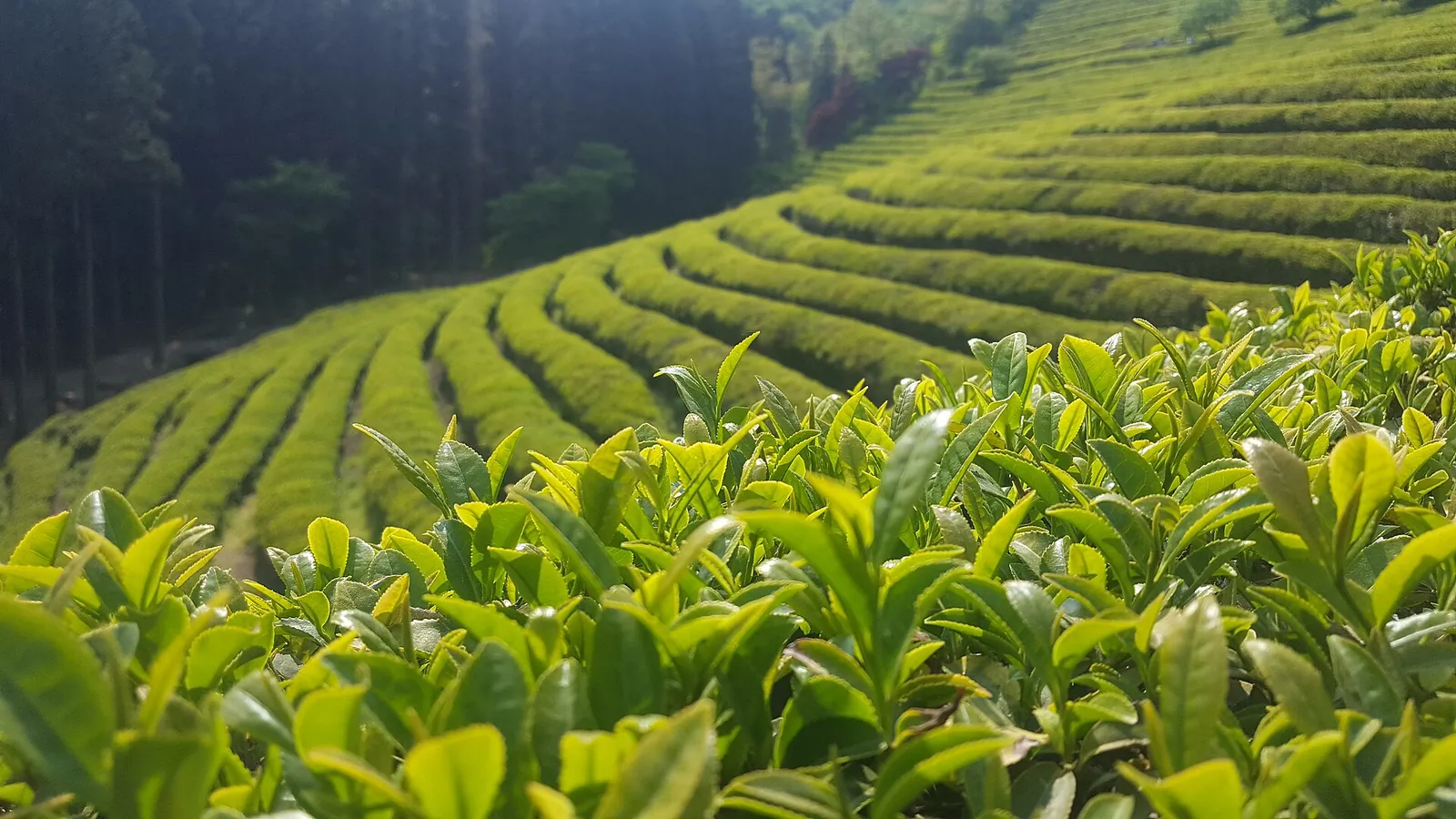
Tea leaves and rows at a Boseong tea field
Photograph: S Shamima Nasrin — opens in a new tab · CC BY-SA 4.0 — opens in a new tab
Changes: Resized and converted to WebP; displayed with responsive crops. · Original photograph and licence details ↗ — opens in a new tab