Jeolla · Gwangju
Gwangju travel guide: May 18 sites, the Biennale, food and where to stay
Gwangju is the city where the May 18th Democratic Uprising of 1980 took place, and the sites of those ten days are still the centre of town: the square in front of the former provincial office, the archives on Geumnam-ro, the markets whose traders fed the protesters. Around them the city has built an arts quarter, from the Asia Culture Center to the Biennale, and it sits at the foot of Mudeungsan, a national park reached by city bus or subway. Add the generous Jeolla table and Gwangju makes a strong two- or three-night base for the southwest.
- Suggested time
- 2–3 days
- Where to stay
- Downtown Dong-gu (Chungjang-ro, Culture Complex station) for the sights; Songjeong-dong by the KTX station for short stays and early trains
- Season and timing
- Spring and autumn are the comfortable months for walking and for Mudeungsan; autumn adds the Gwangju Biennale in even-numbered years (5 September to 15 November in 2026) and the Gwangju Kimchi Festival.
The short answer
Give Gwangju two full days: one downtown for May 18 Democracy Square, the May 18 Democratic Uprising Archives, the Asia Culture Center and Yangnim-dong, and one for the May 18th National Cemetery or Mudeungsan, with a tteokgalbi dinner in Songjeong-dong. Sleep downtown around Chungjang-ro and the Culture Complex subway station for walking access, or by Gwangju Songjeong Station if you are moving on by KTX. A third day fits Damyang or the Biennale when it is running.
Where to base yourself: downtown or by the KTX station
Most of what a first visit is about lies within a walk of the old provincial office in Dong-gu: May 18 Democracy Square, the Asia Culture Center, the archives on Geumnam-ro and the Chungjang-ro shopping streets. VisitKorea calls Chungjang-ro Gwangju's main fashion district and notes that it was a key site of the uprising. Staying here means you can walk to the sights, to Daein Market for dinner and to Yangnim-dong, a short taxi ride south. The nearest Gwangju Metro Line 1 stations are Culture Complex and Geumnamno 4-ga.
Gwangju Songjeong Station, in Gwangsan-gu on the west side of the city, is where the KTX stops. It is a practical base if you arrive late, leave early or plan to use Gwangju as a hub for day trips by rail; the 1913 Songjeong Station Market and the tteokgalbi street are on the doorstep, and Line 1 runs from the station to downtown. The Sangmu district in Seo-gu, between the two, has a cluster of business hotels near Sangmu station and the 5·18 Memorial Park.
Since 1 July 2026, VisitKorea notes, Jeollanam-do and Gwangju Metropolitan City have been merged into the Jeonnam–Gwangju Special Metropolitan City. Addresses on official pages now carry the new name; you will still see plain "Gwangju" widely, and both refer to the same city.
Downtown: the May 18 sites in one walk
Start at May 18 Democracy Square. VisitKorea describes it as the plaza stretching from the former provincial government office to Geumnam-ro, where the office served as the headquarters of the civil resistance in May 1980; it has carried its present name since 1996. The uprising lasted ten days, from 18 to 27 May 1980.
From the square, walk along Geumnam-ro to the May 18 Democratic Uprising Archives, opened in 2015 in the former Gwangju Catholic Center, itself a site of May 1980. It holds the records inscribed on UNESCO's Memory of the World Register in 2011. When we checked on 3 October 2026, VisitKorea listed opening hours of 9:00 to 18:00, free admission, closure on Mondays (and the day after a Monday public holiday), 1 January, Seollal and Chuseok, and regular guided tours several times a day from Tuesday to Sunday. Give it at least an hour and a half; this is the place that explains what you see on the square.
The National Asian Culture Center (ACC) stands beside the old office building on the square. When we checked, VisitKorea listed its indoor facilities as open 10:00 to 18:00 (two spaces open until 22:00 on Wednesdays and Saturdays), outdoor areas from 6:00 to 22:00, and closure on Mondays and 1 January; fees depend on the exhibition. Its main facilities include ACC Creation, ACC Culture Exchange, ACC Children and the ACC Theater, so check what is on before you go.
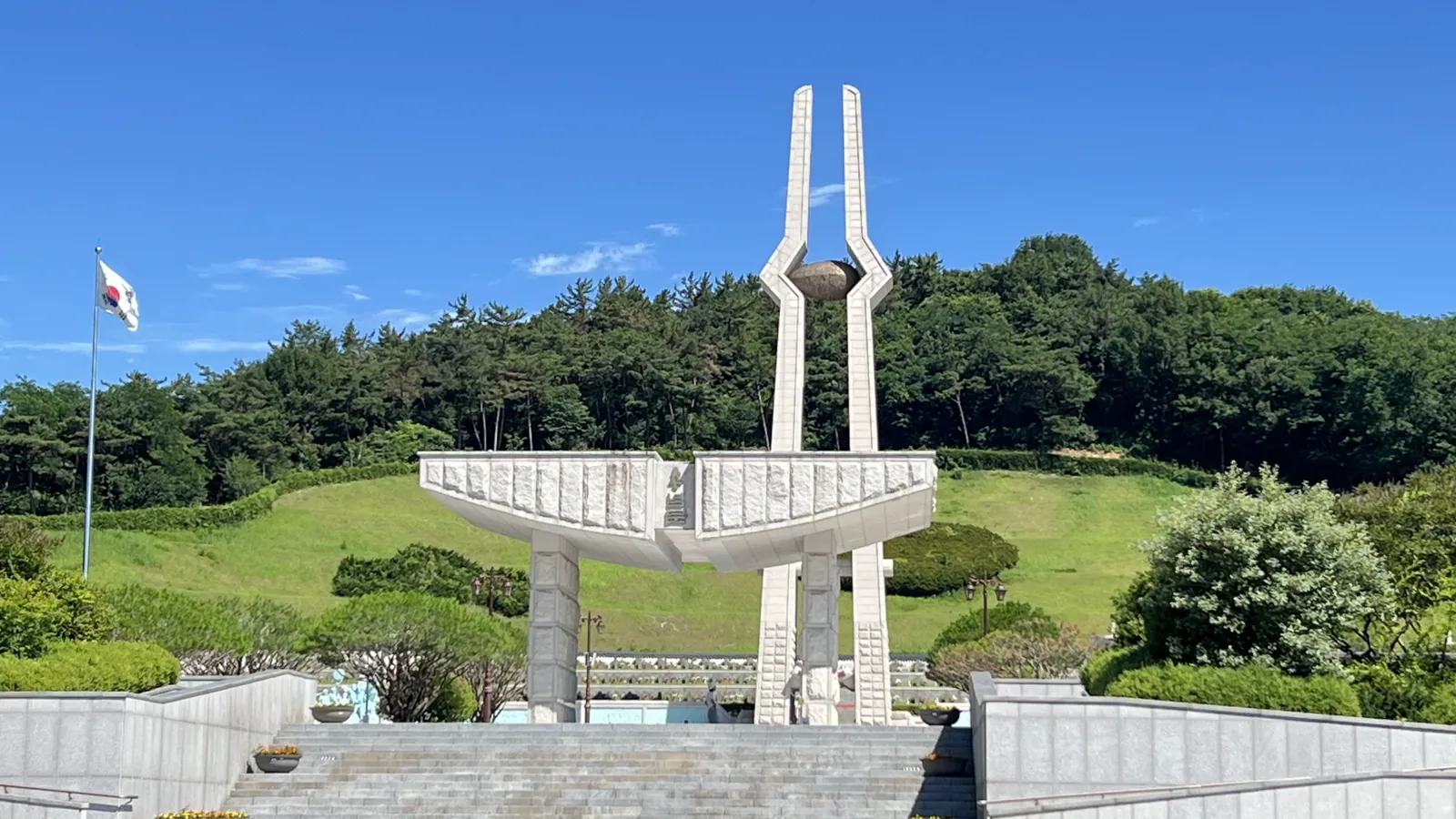
To see the graves, go out to the May 18th National Cemetery in Buk-gu on the city's northern edge. VisitKorea says it holds the graves of 764 victims of the uprising, with a memorial and monuments, and listed it as open 9:00 to 18:00 with free entry when we checked. It is a separate half-day by bus or taxi, not a stop to squeeze in between other plans. It is not the same place as the 5·18 Memorial Park in Sangmu, Seo-gu, which has the May 18th Memorial Culture Center.
Make time for the local food
What to eat and where to look
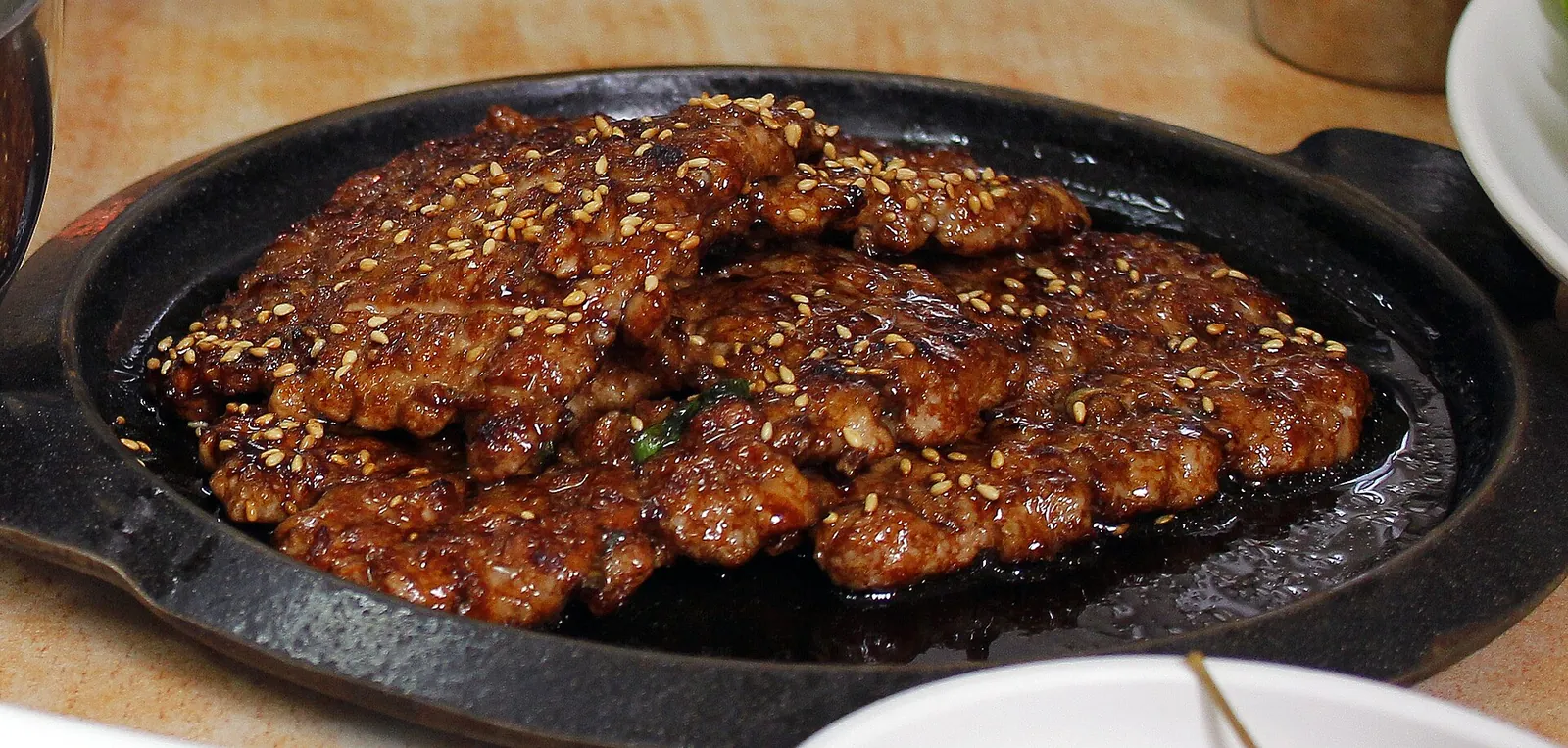
Tteokgalbi (grilled short-rib patties)
Minced short-rib meat, seasoned, pressed and grilled, once a royal-court dish and now Gwangju's signature. VisitKorea notes that Songjeong-dong's version differs from most: since the 1990s its patties have mixed beef with pork, and they come with a long-simmered pork-bone soup.
- Where to look
- Songjeong-dong Tteokgalbi Street in Gwangsan-gu, around 20 restaurants near Gwangju Songjeong Station.
- Fit it into your day
- A first or last dinner if you are staying by the KTX station, or lunch on the day you arrive or leave by train.
Ask whether the patties are all beef or a beef-and-pork mix; check the beef's origin and the price per portion on the menu.
Ori-tang (duck stew)
Duck simmered in a thick broth with ground perilla seeds and finished at the table with heaps of water parsley (minari). VisitKorea traces Gwangju's duck-stew street to a duck farmer in the 1970s; the same restaurants serve grilled duck (ori roseu) and spicy stir-fried duck (ori jumulleok).
- Where to look
- The Street of Duck Stew on Gyeongyang-ro in Buk-gu, where VisitKorea lists long-established restaurants such as Yeongmi Oritang.
- Fit it into your day
- A shared dinner for two or more people.
The perilla-seed broth is rich and contains seeds, a problem for some allergies.
Namdo hanjeongsik (Jeolla table d'hôte)
The full Jeolla spread: rice, soup and a table covered in side dishes, fish, meat and fermented vegetables. VisitKorea names it first among the dishes that define Gwangju and Jeollanam-do, along with Mudeungsan barley rice.
- Where to look
- Hanjeongsik restaurants downtown and in the residential districts; for something simpler, look for a barley-rice set (boribap jeongsik), served with seasoned vegetables to mix in and a soybean-paste stew.
- Fit it into your day
- One long, unhurried lunch or dinner, ideally in a group.
Check whether the set is priced per person and whether there is a minimum order; many side dishes contain fish sauce or fermented seafood.
Hongeo samhap (fermented skate, pork and kimchi)
Fermented skate served with boiled pork and aged kimchi, a Jeolla specialty. VisitKorea warns that the skate's powerful smell and taste divide opinion; the fatty pork and sour kimchi are there to balance it.
- Where to look
- Yangdong Market, a traditional market dating from the 1910s, where VisitKorea lists skate among the main goods, and Jeolla-style restaurants around it.
- Fit it into your day
- Order it as a shared dish to try, alongside something milder, rather than as your whole meal.
The smell is strong; try a single piece before committing to a full plate.
Market snacks at the 1913 Songjeong Station Market
The station market, opened in 1913 with the railway and redesigned around the theme of time, sells classic snacks such as hotteok (filled griddle cakes), gyeran-bap (rice with egg) and eomuk (fish cake), along with bakeries and sweet shops.
- Where to look
- Directly across the road from Gwangju Songjeong Station.
- Fit it into your day
- A light meal or snacks while waiting for a train. When we checked, VisitKorea listed opening from 11:00 to 22:00 Monday to Thursday and to 23:00 Friday to Sunday, with closure on the second and fourth Monday of the month.
Individual stalls keep their own hours; on closed Mondays, eat on Tteokgalbi Street instead.
Art city: the Biennale, Daein Market and Yangnim-dong
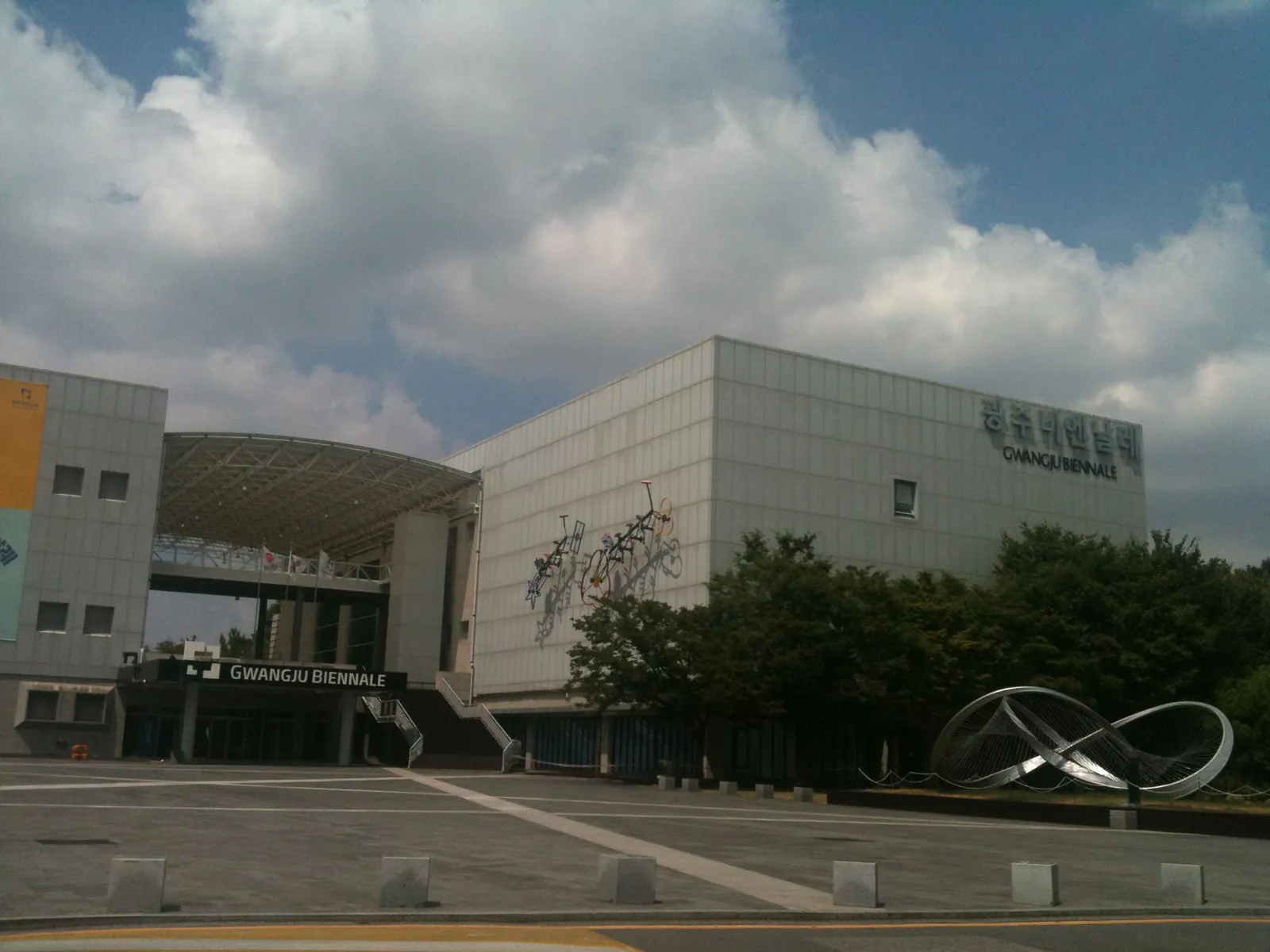
The Gwangju Biennale has been held since 1994, and its exhibition hall is in Buk-gu, north of downtown. The Biennale foundation's website lists the 16th edition for 2026, and VisitKorea's 2026 Korea Art Festival page gives its dates as 5 September to 15 November 2026 at the exhibition hall and other venues, with a regular ticket of 20,000 won. Check the foundation's site for current venues and opening days; when we checked, VisitKorea listed the hall as closed on Mondays. Outside Biennale years the hall hosts other exhibitions, and the Gwangju Design Biennale runs in odd-numbered years.
Back downtown, Daein Market shows how the Biennale changed the city. VisitKorea explains that the declining market was revived in 2008, during the Biennale, when empty stalls were rented to artists; vendors and artists now share it, and a night market runs every Saturday. It is a good place for an informal dinner after the archives.
South of the centre, Yangnim-dong is where Western missionaries settled more than a century ago, and VisitKorea describes a mix of Western-style buildings and hanok, the Owen Memorial Hall and a cemetery of the missionaries who worked here. In its Penguin Village, residents have decorated the lanes with everyday objects from the 1970s and 1980s, and craft workshops line the alley; VisitKorea lists the craft street as open 10:00 to 18:00 and closed on Mondays. Go in the afternoon and walk it slowly, since people still live here.
Mudeungsan: the mountain at the city's edge
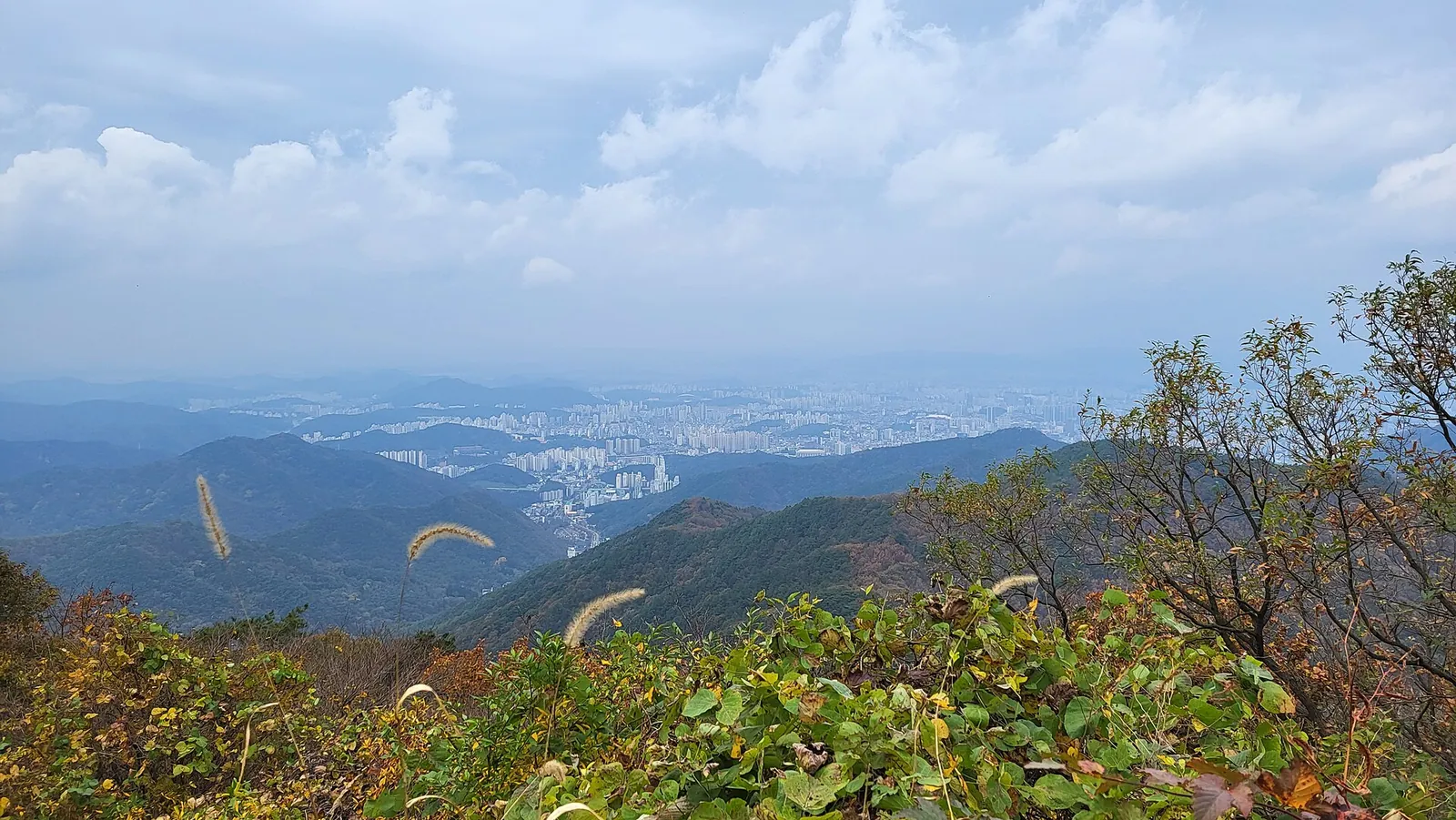
Mudeungsan National Park rises to 1,186 metres east of the city and was designated a UNESCO Global Geopark in 2018. VisitKorea describes the three rock summits of Cheonwangbong, Jiwangbong and Inwangbong, the rock formations of Seoseokdae and Ipseokdae, autumn colour around Gyubongam Hermitage and silver grass on Baengma Ridge. When we checked, the park was listed as open around the clock and free, with closures in bad weather; check the Korea National Park Service before setting out and keep to marked trails.
Jeungsimsa Temple on the western slope is a common starting point. Line 1's Hakdong·Jeungsimsa station carries its name, but check the onward bus or walk on the park map. The temple, rebuilt in the 1970s after its destruction in the Korean War, is a destination even if you go no higher. VisitKorea notes that it runs Templestay programmes popular with international visitors.
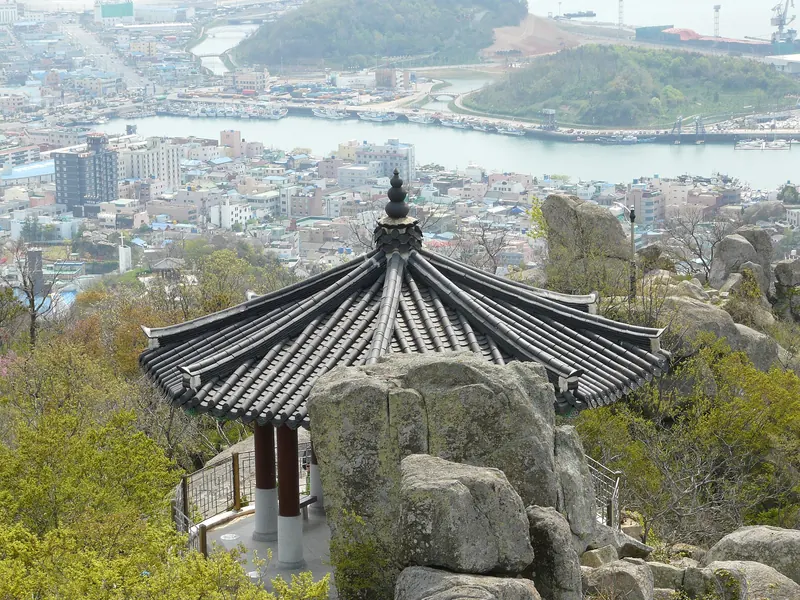
For the view without the climb, the Mudeungsan lift and monorail start from Jisan Park. VisitKorea describes a 745-metre chairlift ride of about 20 minutes to Bitgoeul Station, then a monorail to the Palgakjeong observatory over the city. When we checked, it listed hours of 10:00 to 18:00 on weekdays and 9:00 to 18:30 at weekends and on holidays, with adult fares of 12,000 won for the lift, 10,000 won for the monorail or 19,000 won for both.
A workable two- or three-day plan
This is an editorial suggestion, not a timetable. Check opening days, especially Monday closures, for each place you choose.
- Day 1 — Downtown: May 18 Democracy Square in the morning, the Archives (book a guided slot if you can), lunch near Chungjang-ro, the ACC in the afternoon, then dinner at Daein Market (on Saturday, the night market).
- Day 2 — Memory and the mountain: the May 18th National Cemetery in the morning, then Jeungsimsa and a short Mudeungsan walk or the lift and monorail at Jisan in the afternoon; duck stew or tteokgalbi for dinner.
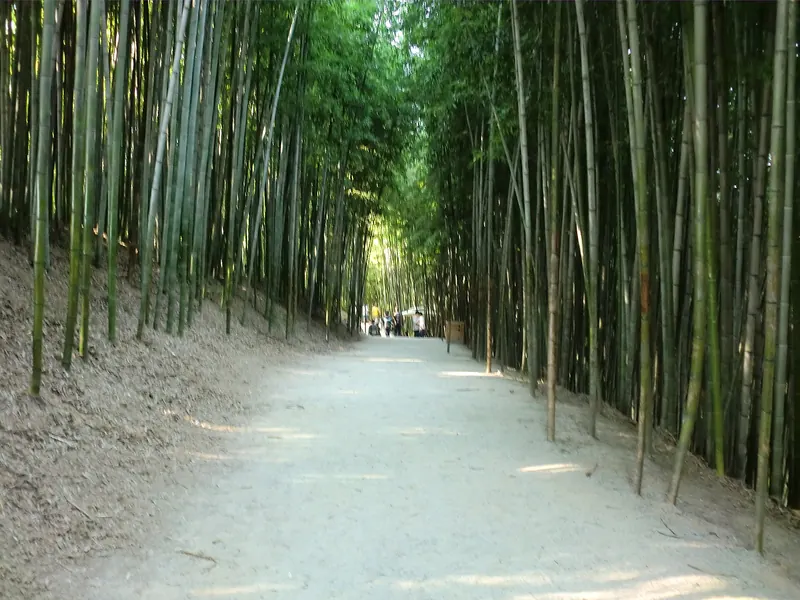
- Day 3 (optional): the Biennale while it is open, Yangnim-dong and Yangdong Market — or a day out to Damyang's bamboo forest.
- Avoid Mondays for the Archives, the ACC and the Biennale hall.
Arriving, getting around and moving on
KTX trains on the Honam Line start from Yongsan Station in Seoul, and SRT trains from Suseo Station; VisitKorea says the KTX gets you to Gwangju in under two hours. Tickets can be bought on the Korail website or app, at stations or kiosks; SRT trains are not covered by the Korail Pass. From Gwangju Songjeong Station, Line 1 runs east through Sangmu, Yangdong Market, Geumnamno 4-ga and Culture Complex to Hakdong·Jeungsimsa. Gwangju has a single metro line, so for Yangnim-dong, the Biennale hall and the cemetery you will use buses or taxis; a Tmoney card works on both and gives free bus transfers.
Intercity buses leave from Gwangju Bus Terminal (U-Square); VisitKorea gives about 1 hour 15 minutes to Suncheon. Damyang, Mokpo, Jeonju and Suncheon each have their own guide, with ways to get there from Gwangju.
Practical questions
How many days do I need in Gwangju?
Two full days cover the downtown May 18 sites, the Asia Culture Center, the National Cemetery and either Mudeungsan or Yangnim-dong. Add a third day for the Biennale when it is running, or a day trip to Damyang.
Where should I stay in Gwangju?
Downtown Dong-gu, around Chungjang-ro and Culture Complex station, puts you within walking distance of the May 18 sites, the ACC and Daein Market. Stay near Gwangju Songjeong Station if you mainly want quick KTX connections.
How do I get from Seoul to Gwangju?
Take a KTX from Yongsan Station or an SRT from Suseo Station to Gwangju Songjeong Station; VisitKorea says the KTX takes under two hours. Gwangju Airport also has domestic flights from Gimpo and Jeju.
Which May 18 site should I visit first?
Start with May 18 Democracy Square and the May 18 Democratic Uprising Archives on Geumnam-ro, which explain what happened over the ten days of the uprising. Go to the National Cemetery in Buk-gu afterwards, as a separate trip.
When is the Gwangju Biennale?
The Biennale is held in even-numbered years. VisitKorea lists the 2026 edition from 5 September to 15 November 2026; check the Gwangju Biennale Foundation's website for venues and opening days.
Can I hike Mudeungsan as a day trip from the city?
Yes. Jeungsimsa Temple on the western slope is a common starting point (Line 1's Hakdong·Jeungsimsa station carries its name), and the Jisan lift and monorail give a view without the climb. Check the national park's notices for weather closures before you go.
Sources and checks before you travel
Reference sources for the version dated 3 October 2026. Confirm opening times, access, transport and conditions for your travel dates.
- VisitKorea: Nature, Tradition & Culinary Delights in Gwangju & Jeollanam-do ↗ — opens in a new tab
- VisitKorea: May 18 Democracy Square ↗ — opens in a new tab
- VisitKorea: May 18 Democratic Uprising Archives ↗ — opens in a new tab
- VisitKorea: National Asian Culture Center ↗ — opens in a new tab
- VisitKorea: May 18th National Cemetery ↗ — opens in a new tab
- VisitKorea: 5·18 Memorial Park ↗ — opens in a new tab
- VisitKorea: 2026 Korea Art Festival ↗ — opens in a new tab
- Gwangju Biennale Foundation ↗ — opens in a new tab
- VisitKorea: Gwangju Biennale Exhibition Hall ↗ — opens in a new tab
- VisitKorea: Gwangju Daein Market & Daein Art Market ↗ — opens in a new tab
- VisitKorea: Yangnim History & Culture Village and Penguin Village Craft Street ↗ — opens in a new tab
- VisitKorea: Yangnim-dong Penguin Village Craft Street ↗ — opens in a new tab
- VisitKorea: Mudeungsan National Park (Gwangju) ↗ — opens in a new tab
- VisitKorea: Gwangju Jeungsimsa Temple ↗ — opens in a new tab
- VisitKorea: Mudeungsan Lift Monorail ↗ — opens in a new tab
- VisitKorea: Gwangju Songjeong-dong Tteokgalbi Street ↗ — opens in a new tab
- VisitKorea: Grilled galbi patties (tteokgalbi) ↗ — opens in a new tab
- VisitKorea: Street of Duck Stew ↗ — opens in a new tab
- VisitKorea: Yeongmi Oritang ↗ — opens in a new tab
- VisitKorea: Gwangju Yangdong Market ↗ — opens in a new tab
- VisitKorea: Skate, pork and kimchi combo (hongeo samhap) ↗ — opens in a new tab
- VisitKorea: Steamed barley rice set menu (boribap jeongsik) ↗ — opens in a new tab
- VisitKorea: 1913 Songjeong Station Market ↗ — opens in a new tab
- VisitKorea: Korea's top 14 autumn festivals in 2026 ↗ — opens in a new tab
- VisitKorea: Train ↗ — opens in a new tab
- VisitKorea: Domestic flights ↗ — opens in a new tab
- VisitKorea: Subway ↗ — opens in a new tab
- Wikipedia: Gwangju Metro Line 1 ↗ — opens in a new tab
Does this experience fit your route?
Gwangju is easy on foot and by subway, but the May 18 story is better with someone to explain it. If you book a guided day, check which sites it covers and how long you spend at each.
Check dates and details on Viator ↗ — opens in a new tabAffiliate link · Book with ViatorPhoto credits
The memorial tower at the May 18th National Cemetery in Buk-gu, Gwangju
Photograph: Jjw — opens in a new tab · CC BY-SA 4.0 — opens in a new tab
Changes: Resized and converted to WebP; displayed with responsive crops. · Original photograph and licence details ↗ — opens in a new tab
Gwangju seen from Mudeungsan National Park
Photograph: VaneTrz20 — opens in a new tab · CC BY-SA 4.0 — opens in a new tab
Changes: Resized and converted to WebP; displayed with responsive crops. · Original photograph and licence details ↗ — opens in a new tab
The Gwangju Biennale Exhibition Hall in Buk-gu
Photograph: Kgw1226 — opens in a new tab · CC BY-SA 4.0 — opens in a new tab
Changes: Resized and converted to WebP; displayed with responsive crops. · Original photograph and licence details ↗ — opens in a new tab
Tteokgalbi, grilled short-rib patties, served in Songjeong-dong, Gwangju
Photograph: Minseong Kim — opens in a new tab · CC BY-SA 4.0 — opens in a new tab
Changes: Resized and converted to WebP; displayed with responsive crops. · Original photograph and licence details ↗ — opens in a new tab