Itineraries · Jeju
Jeju in 5 days: Jeju City, Hallasan, Udo, Seogwipo and the west coast
Jeju looks small on a map, but the island is split by Hallasan, and the slow part of any trip is the road between the north and south coasts. VisitKorea's airport guide puts Seogwipo's Maeil Olle Market about 90 minutes from Jeju International Airport by bus and Seongsan Ilchulbong about two hours. This route uses that geography instead of fighting it: it starts in Jeju City by the airport, climbs Hallasan while you are still on the north side, follows the east coast round to Seogwipo with Seongsan and Udo on the way, and returns to the airport along the west coast. No day goes back over ground you have already covered.
- Suggested time
- 5 days, 4 nights
- Where to stay
- Jeju City for nights 1–2; central Seogwipo (or Jungmun) for nights 3–4
- Season and timing
- Any season works, but check two things before you fix the dates. Hallasan's summit rules change twice a year: when we checked, the reservation system's Seongpanak page told hikers in October to March to pass the Jindallaebat checkpoint by 11:30 and leave the summit by 13:30 (12:30 and 14:30 from April to September), and the park closes trails under heavy-rain, typhoon and heavy-snow warnings. Ferries to Udo and Biyangdo also depend on the weather. VisitKorea's 2026 forecasts put Jeju's first cherry blossoms around 25 March and Hallasan's autumn colour from 31 October, peaking around 13 November.
The short answer
Sleep two nights in Jeju City and two in Seogwipo, and fly out on the evening of day 5. Day 1: arrive, Dongmun Market and the Yongduam coast. Day 2: Hallasan by bus from Jeju City, up Seongpanak and down Gwaneumsa if you have a summit reservation, which opens at 09:00 on the first business day of the month before. Day 3: drive or bus down the east coast, with Seongsan Ilchulbong in the morning and Udo by ferry from Seongsan Port, and sleep in Seogwipo. Day 4: Seogwipo on foot: Jeongbang and Cheonjiyeon falls, Oedolgae and the Maeil Olle Market. Day 5: Jusangjeolli in Jungmun, then Hallim Park and Hyeopjae Beach on the west coast, and the Aewol coast back to the airport. A rental car from day 3 makes the last three days much easier; without one, take Udo only if you add a night in Seongsan, and leave the west coast for another trip.
The shape of the route: two bases, one loop
Everything starts at Jeju International Airport on the north coast, on the edge of Jeju City. The two summit trails up Hallasan, Seongpanak and Gwaneumsa, are both reached by city bus from the Jeju Bus Terminal. That makes Jeju City the right base for the first two nights: arrival day and the hike, with no hotel move in between.
The second base is Seogwipo on the south coast, where two waterfalls, the Oedolgae sea stack and the Maeil Olle Market are all close to the town centre. Moving between the two by the east coast rather than the direct road across the mountain turns the transfer into a sightseeing day: VisitKorea's bus column describes bus 201 running along the east coast from Jeju Bus Terminal to Seogwipo Bus Terminal, stopping at almost every attraction, including Seongsan Ilchulbong. The last day then runs west from Seogwipo through Jungmun and round the west coast back to the airport, closing the loop.
Five days is enough for this outline but not for everything on the island. It leaves out the inland forests, the Manjanggul lava tube (kept here as a rainy-day swap), Marado and a full Olle Trail walk. If you only have three or four days, drop the west-coast day or the hike rather than squeezing everything in.
Days 1 and 2: Jeju City and Hallasan
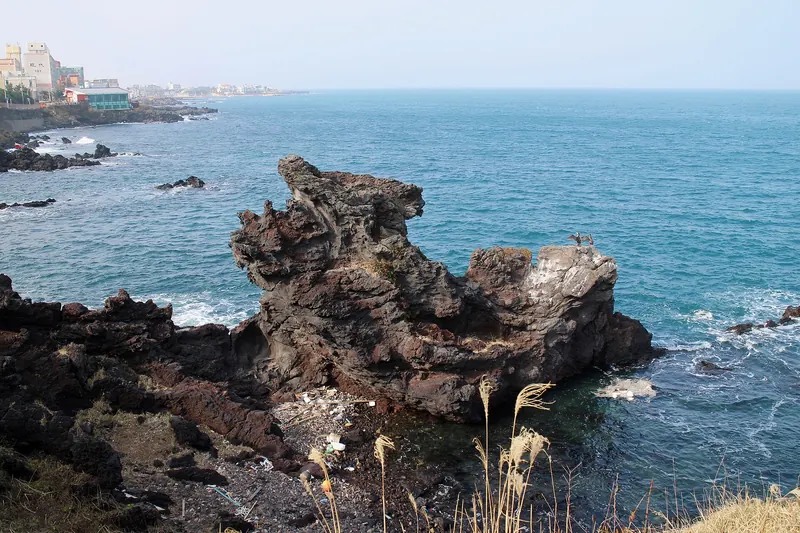
Day 1. VisitKorea gives about 20 minutes by bus or 15 by taxi from the airport to Dongmun Traditional Market, the island's largest traditional market; its listing gave hours of 08:00 to 21:00 when we checked, varying by shop. In the evening the area around Gate 8 becomes a night market. Before dark, go to Yongduam on the seafront, a rock of about 10 metres worn into the shape of a dragon's head, where VisitKorea says you may see haenyeo, Jeju's women divers, at work. Go to bed early: the hike starts before dawn.
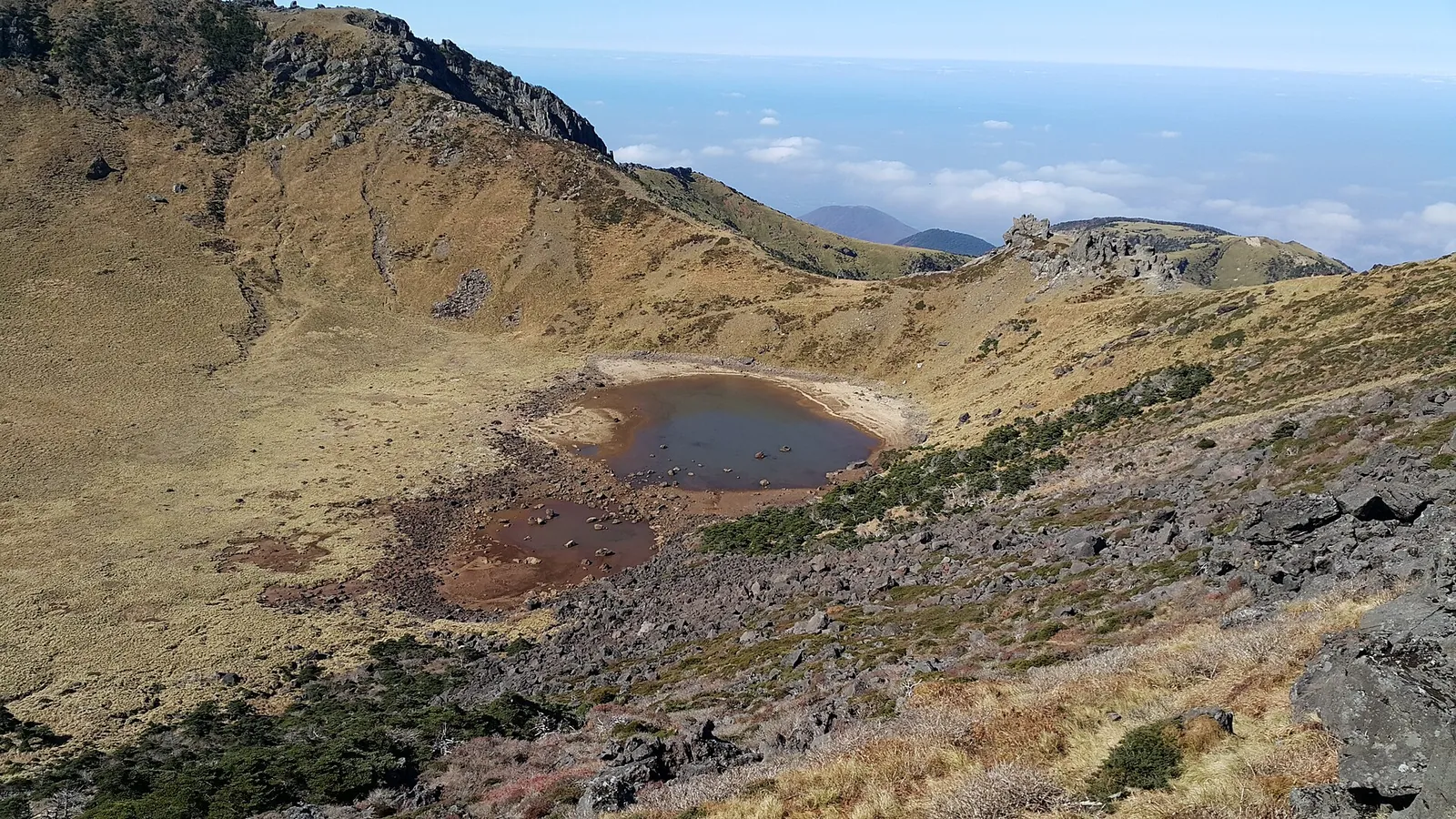
Day 2: Hallasan. Only the Seongpanak and Gwaneumsa trails reach Baengnokdam, the crater lake at the summit (about 1,950 metres, according to the park), and that final section needs a reservation on the official Hallasan reservation system. When we checked, its English notice said bookings open at 09:00 on the first business day of the month before your hike, for up to four people, and that every hiker must show a QR code and ID. Book before you fix the rest of the trip.
The classic day is up Seongpanak, down Gwaneumsa. The reservation system lists Seongpanak as 9.6 km and 4 hours 30 minutes one way, with the trail open from 05:00, and Gwaneumsa as 8.7 km and about 5 hours one way, steeper and with deeper valleys. When we checked, bus 281 ran from the Jeju Bus Terminal to Seongpanak in about 45 minutes, from 06:00 every 10 to 14 minutes. The park asks hikers to use the bus: the Seongpanak car park is small and fills very early. Coming down, Gwaneumsa has no direct bus to the city; the system's page says bus 475 links the trailhead with Sancheondan, where you change to bus 281, and listed the 475 every 45 to 90 minutes, so check the next departure before you start down.
Watch the cut-off times above: in October to March you must pass Jindallaebat by 11:30, and the system gives three hours from the trailhead to Jindallaebat, so take one of the first buses and be walking by 08:30 at the latest. There are no shops on the mountain, so carry all your food, water and rain gear, and crampons in winter. If you have no reservation, or no recent hiking experience, the park recommends the Eorimok and Yeongsil trails, which climb to about 1,700 metres without a booking and still give you the mountain.
Make time for the local food
What to eat and where to look
Gimbap for the Hallasan day
Rice and fillings rolled in seaweed and sliced, easy to carry and eat cold. It matters here because of a park rule: the Hallasan reservation system says single-use lunch boxes are banned on the mountain to keep it clean, but gimbap and hamburgers are allowed.
- Where to look
- Convenience stores and gimbap shops in Jeju City; buy it the evening before, since you will be leaving on the first buses.
- Fit it into your day
- Lunch on the summit day, with snacks and plenty of water — there are no shops on the trails.
Carry your rubbish down; fires, alcohol and smoking are banned in the park.
Dongmun night market snacks
Every evening the area around Gate 8 of Dongmun Market turns into a night market. VisitKorea lists black pork kimchi rolls, abalone gimbap, dakgangjeong (crisp glazed fried chicken), skewers and fusion snacks; in the day, the market's listing mentions sliced raw cutlassfish and tteokgalbi served with whole abalone.
- Where to look
- Dongmun Traditional Market, Gwandeok-ro 14-gil, central Jeju City.
- Fit it into your day
- Dinner on day 1, grazing from stall to stall rather than one sit-down meal.
Busy in the evening; check prices and contents before you order, especially raw seafood.
Jeju black pork, dombegogi and gogi-guksu
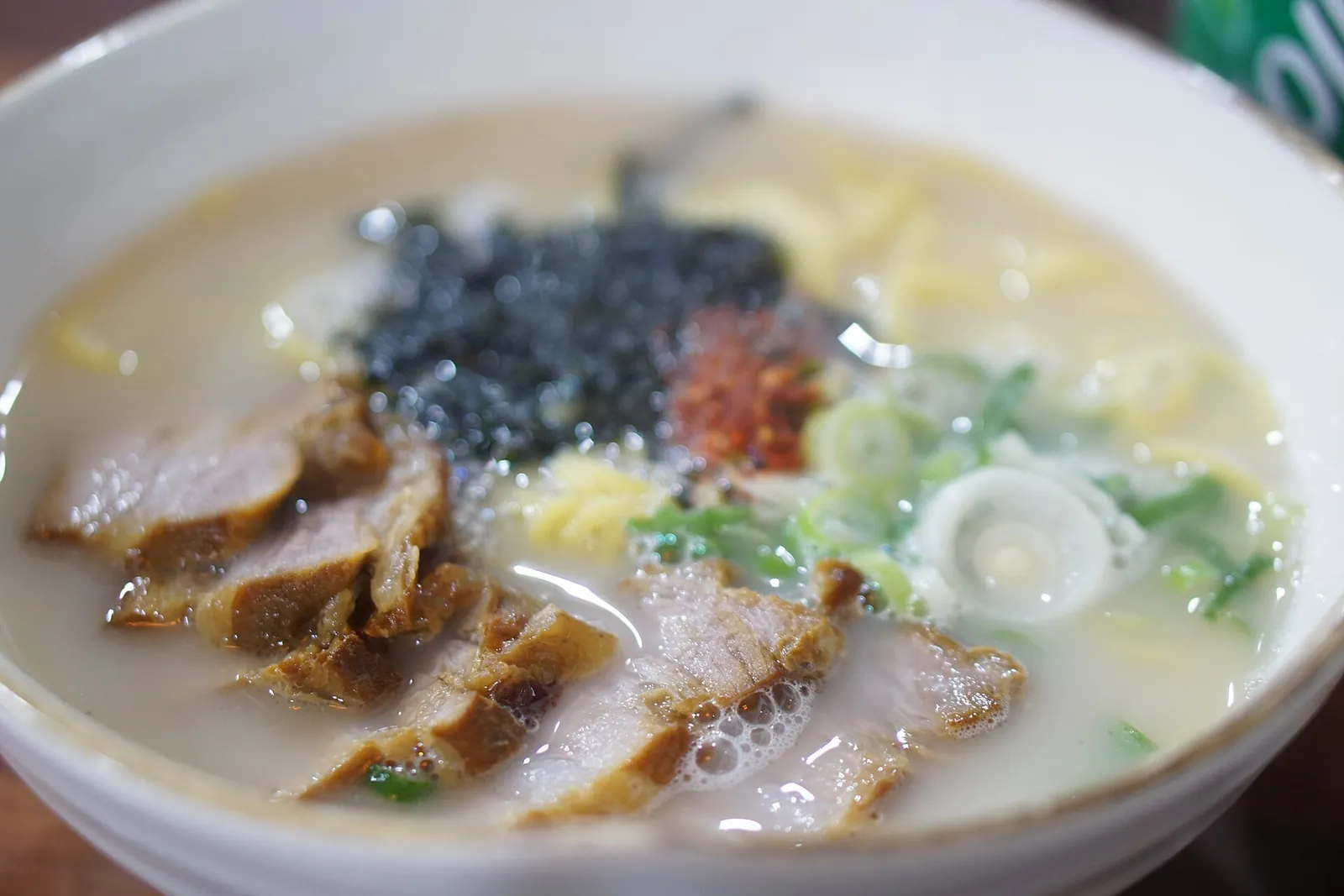
Jeju's black pork is grilled at barbecue restaurants all over the island. Dombegogi is the same pork steamed and sliced on a wooden board at the table, and gogi-guksu, pork noodle soup, is noodles in a rich pork-bone broth topped with sliced boiled pork, which VisitKorea describes as a dish once served at special events.
- Where to look
- Barbecue and noodle restaurants in Jeju City and Seogwipo.
- Fit it into your day
- Gogi-guksu for a quick lunch on the drive south; a black pork barbecue for dinner after the hike.
Pork-based; table grills are smoky.
Galchiguk and okdomgui
Two everyday Jeju fish dishes: galchiguk, cutlassfish soup boiled with vegetables such as pumpkin and cabbage, and okdomgui, grilled red tilefish, which VisitKorea calls the best of its kind for its mild flavour.
- Where to look
- Fish restaurants in central Seogwipo and Jeju City.
- Fit it into your day
- A sit-down lunch or dinner on the Seogwipo day.
Both fish have fine bones.
Maeil Olle Market: omegitteok, hallabong juice and takeaway hoe
Seogwipo's covered market sells Jeju specialities to eat on the spot or take back to your room: omegitteok, millet rice cakes rolled in bean powder or red bean, hallabong citrus juice, grilled abalone, and hoe (sliced raw fish) packed for takeaway, according to VisitKorea.
- Where to look
- Seogwipo Maeil Olle Market, Jungang-ro 62beon-gil, central Seogwipo.
- Fit it into your day
- Lunch or a picnic dinner on day 4, and rice cakes as snacks for the drive on day 5.
Rice cakes are best the same day; keep raw fish cold and eat it promptly.
Day 3: Seongsan Ilchulbong and Udo on the way south
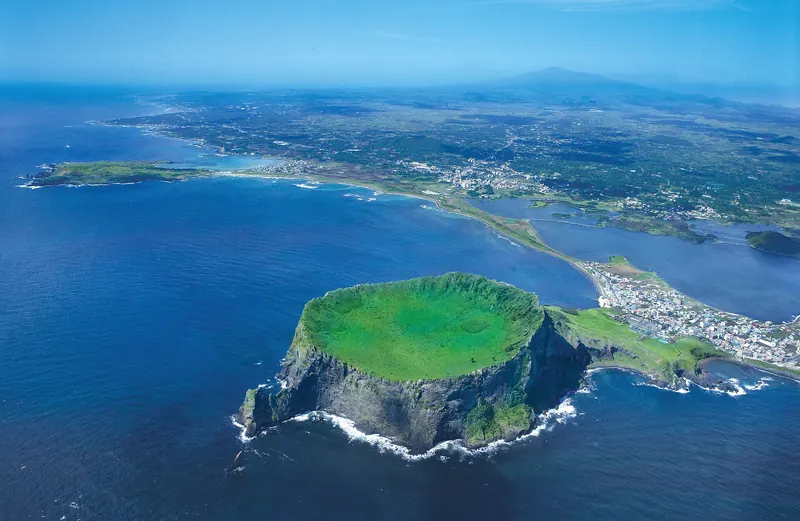
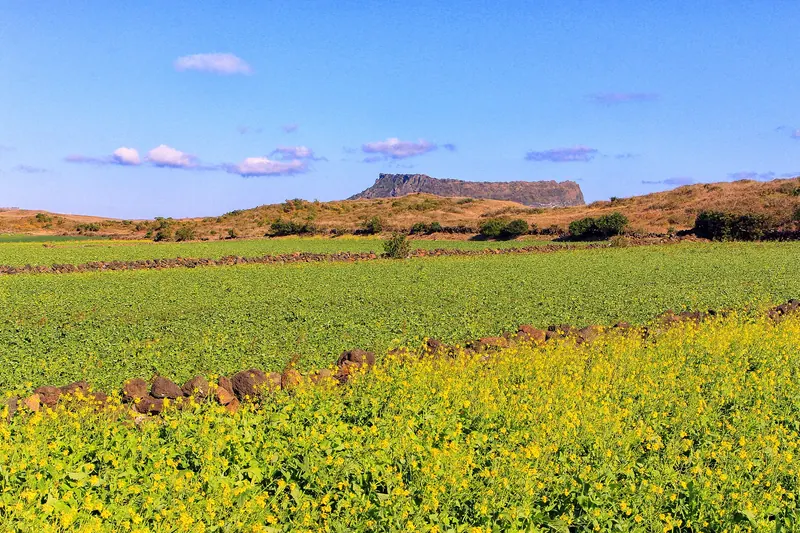
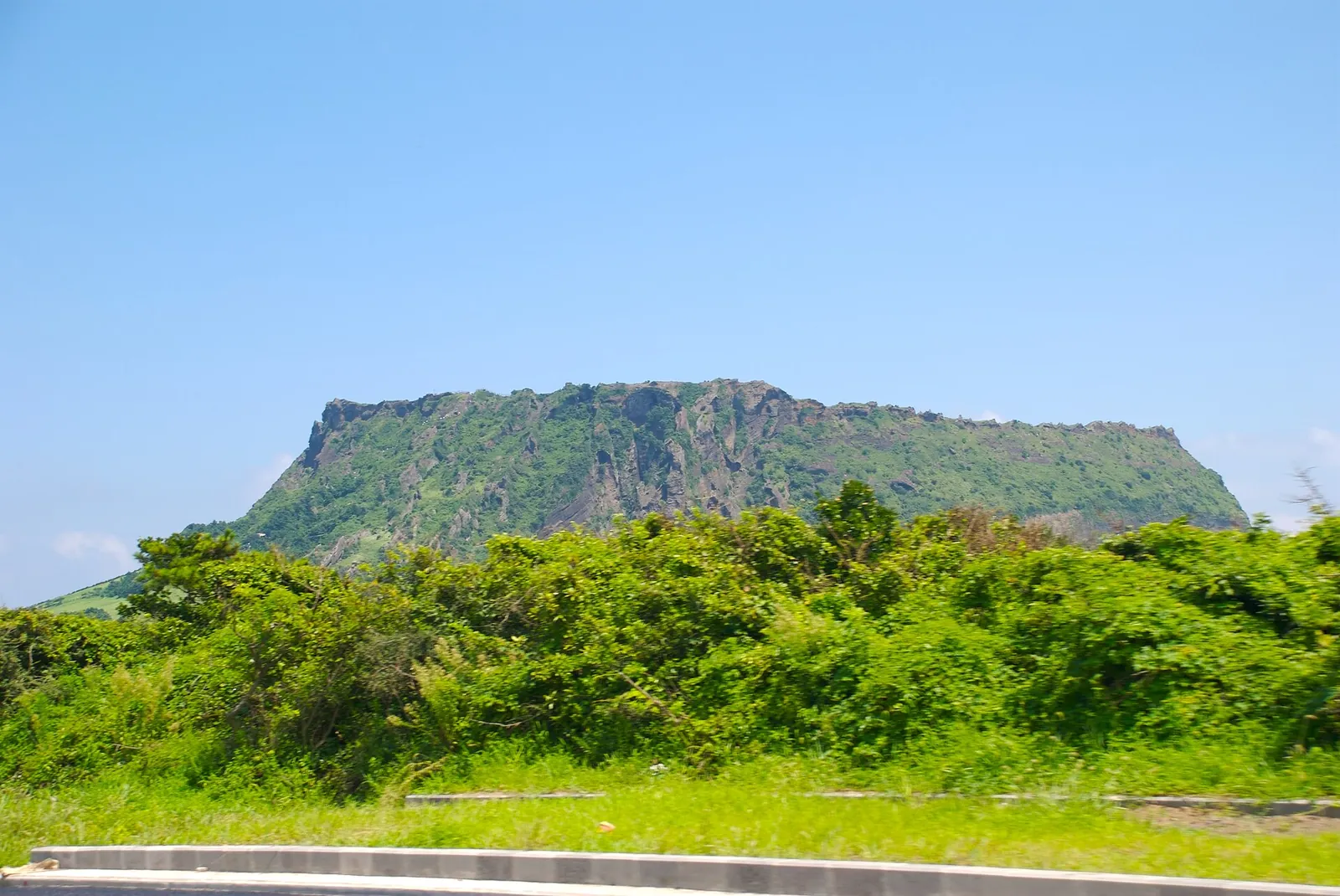
Check out of Jeju City and head east. VisitKorea gives about 80 minutes by taxi from the airport area to Seongsan Ilchulbong, the tuff cone that rose from the sea more than 5,000 years ago and whose summit crater is about 600 metres across. The climb to the top takes about 30 minutes. When we checked, VisitKorea's listing gave opening from 05:00 to 19:00 in March–April and September–October, 04:30 to 20:00 in May–August and 06:00 to 18:00 in November–February, last tickets one hour before closing, closed on the first Monday of each month, and 5,000 won for adults. Do not put this day on a first Monday.
From Seongsan Port the ferry to Udo takes about 15 minutes. VisitKorea describes a 17 km loop that takes two to three hours by electric bike, with a shuttle bus and scooters as alternatives, and Sanho Beach, whose pale sand is made of rhodolith fragments. VisitKorea's Udobong listing says you must show ID to board, and gave adult fares of 10,500 won return including the island's admission and utility fee. Ferries change with the weather, so check before you go; on a windy day, swap Udo for the Manjanggul lava tube (09:00–18:00, last admission 17:00, closed the first Wednesday of the month, according to VisitKorea).
Late in the afternoon, continue down the coast to Seogwipo. By car this is simple: the luggage stays in the boot while you are on Udo, and you avoid the road after dark, which VisitKorea advises against because animals can appear suddenly. By bus it is a long day: bus 201 links the Jeju Bus Terminal, the Seongsan Ilchulbong stop and Seogwipo Bus Terminal, but VisitKorea gave intervals of 30 to 80 minutes in February 2025, and we could not verify luggage storage at the port. If you travel without a car, either skip Udo on this day or add a night in Seongsan and make the trip six days.
Day 4: Seogwipo on foot
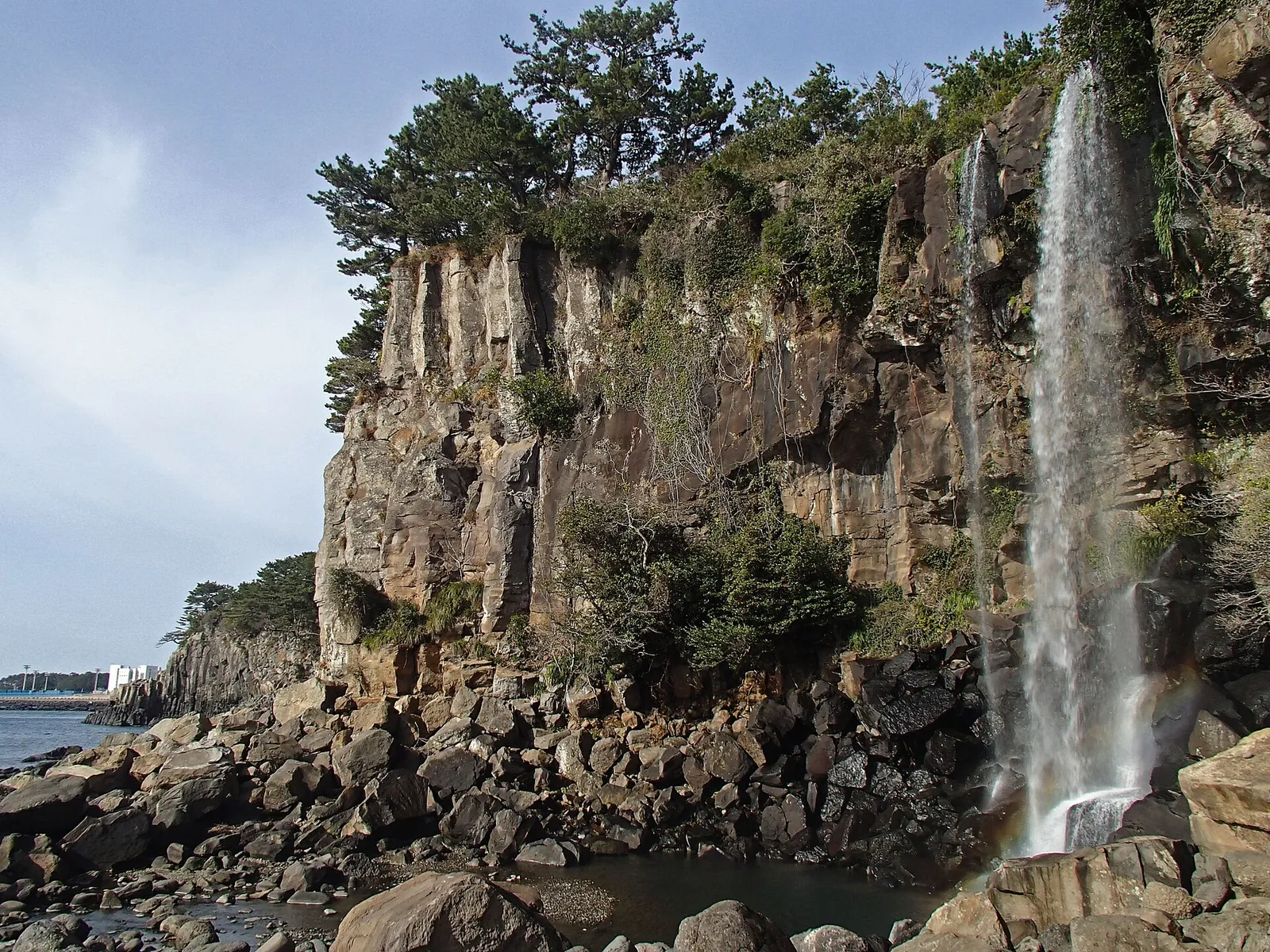
This is the slow day, and it needs no car. Jeongbang Falls, about 1.5 km south-east of central Seogwipo, drops 23 metres straight into the sea; when we checked, VisitKorea listed 09:00 to 17:20 and 2,000 won for adults. Cheonjiyeon Falls, 22 metres high in a wooded gorge, stays open into the evening: its listing gave 09:00 to 22:00, last tickets at 21:20, also 2,000 won for adults, so you can keep it for after dinner.
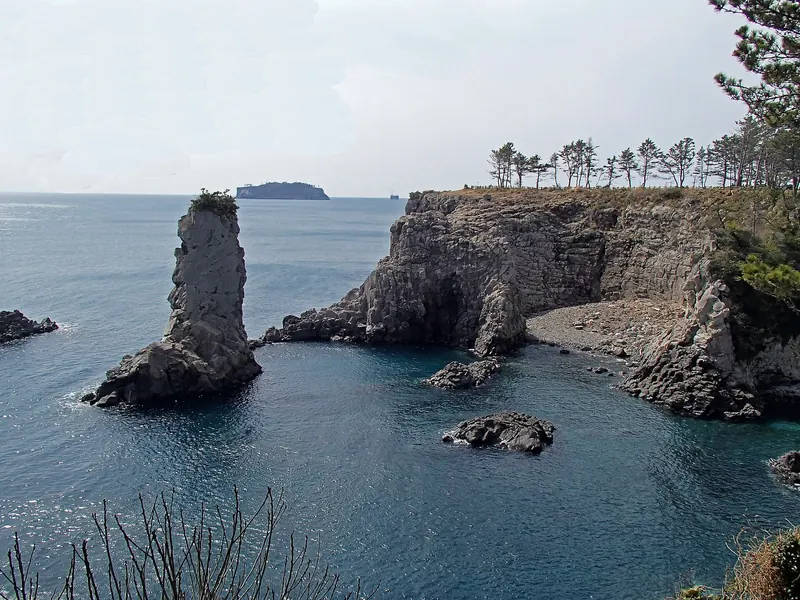
West of the centre is Oedolgae, a 20-metre sea stack below Sammaebong Peak, free and open around the clock; VisitKorea calls the sunset over Beomseom island from here a long-admired view, and recommends the cliffs around it for walking. For lunch or an early dinner, the Maeil Olle Market is Seogwipo's largest market, more than 620 metres long and covered, which makes it a good rainy-day fallback; VisitKorea listed 07:00 to 21:00 in summer and 07:00 to 20:00 in winter.
Day 5: Jungmun and the west coast to the airport
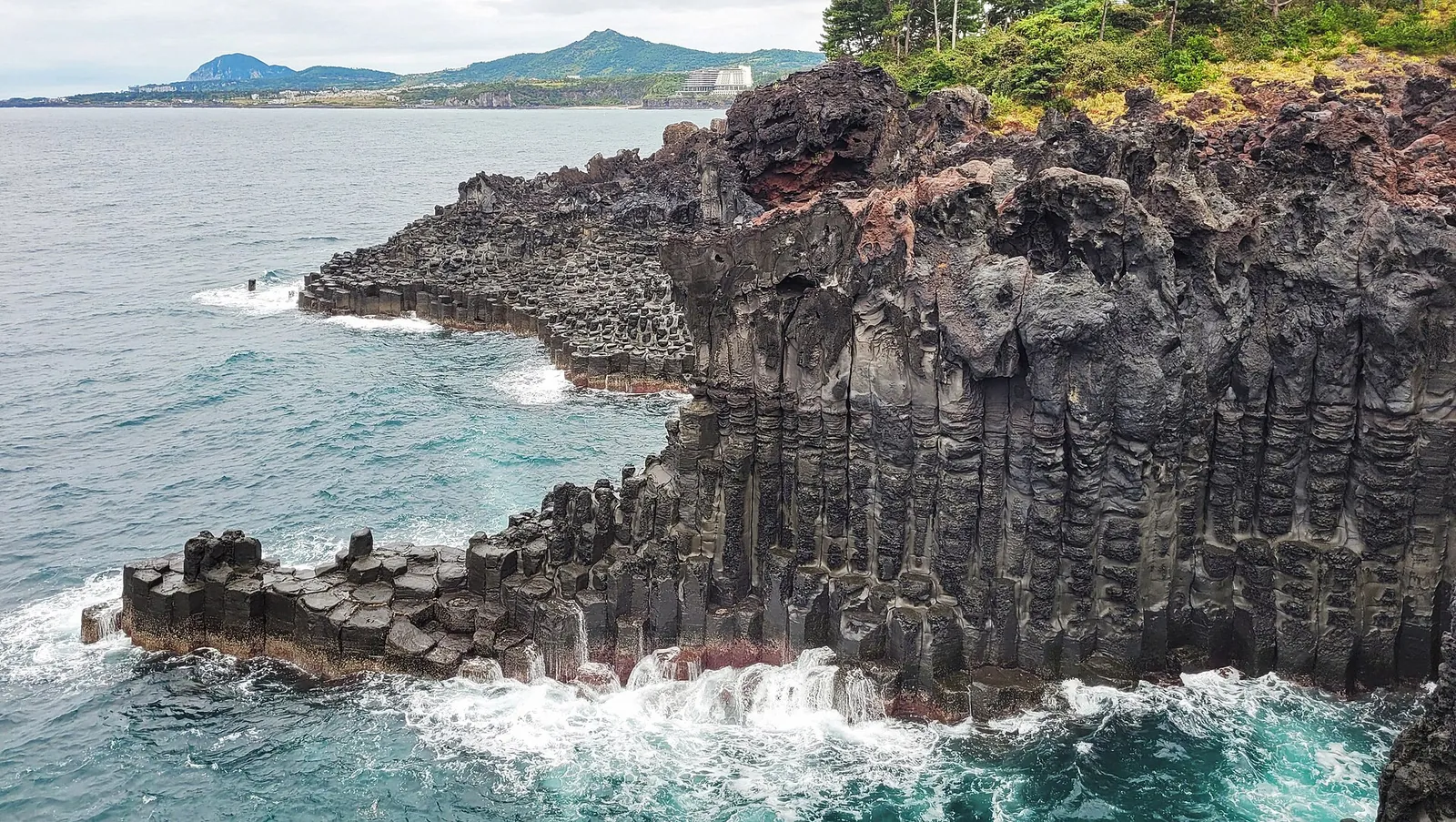
Check out and drive west. Daepo Jusangjeolli in Jungmun is a coast of hexagonal lava columns 30 to 40 metres high along about a kilometre of shore; when we checked, VisitKorea listed 09:00 to 18:00 (last entry 17:40) and 2,000 won for adults, with paid parking. Then continue round the south-west corner to the west coast.
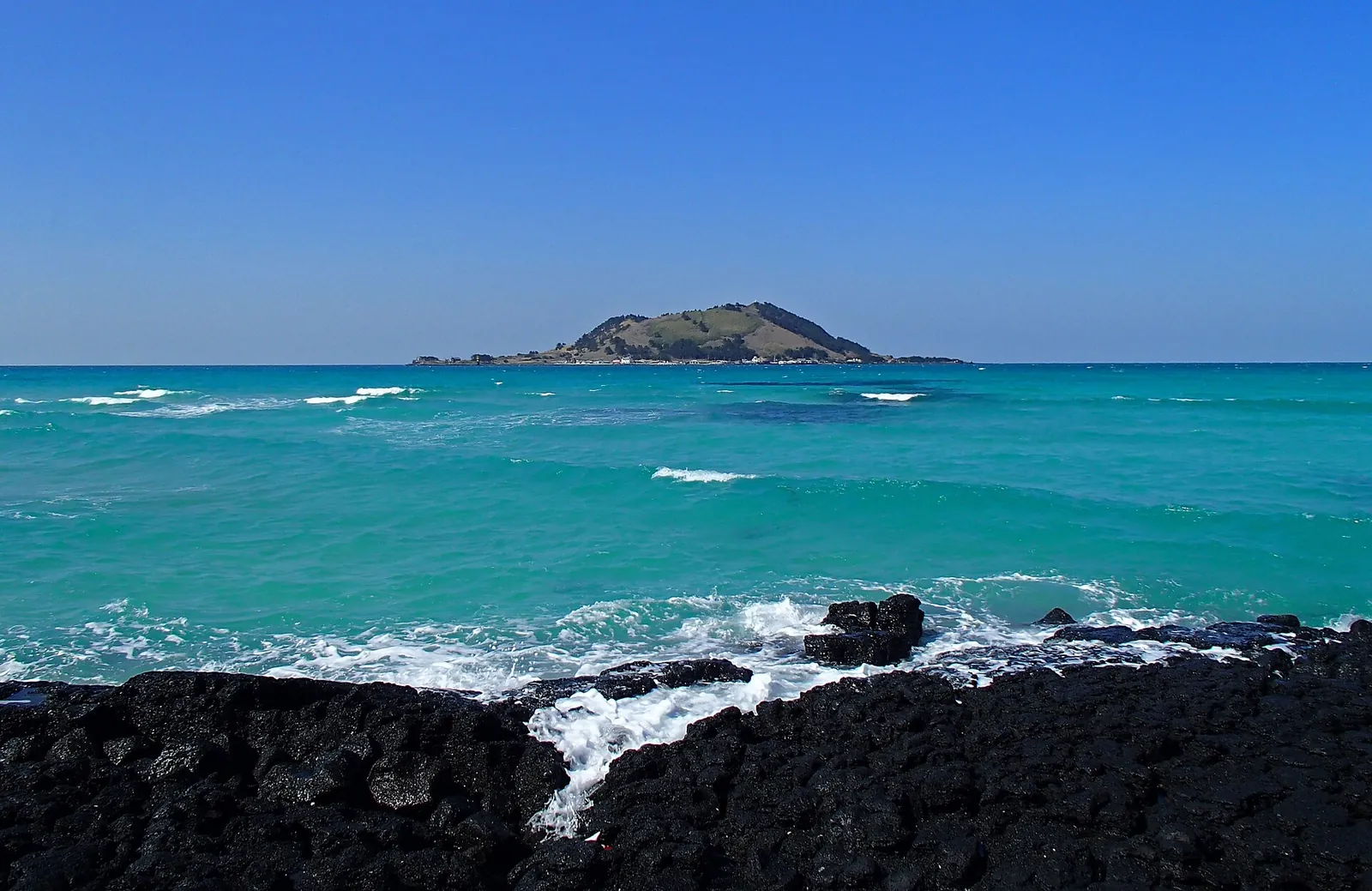
On the west coast, Hallim Park has gardens and two lava caves, Hyeopjaegul and Ssangyonggul; its VisitKorea listing gave 09:00 to 17:30 in September and October and 15,000 won for adults. Facing the park, Hyeopjae Beach has white sand, shallow water and the island of Biyangdo offshore, and is open all year. Biyangdo itself is about 15 minutes by ferry from Hallim Port, but VisitKorea counted only about four sailings a day, so it fits only if your flight is late and the timetable works.
From Hallim, follow the coast road east through Aewol towards Jeju City; VisitKorea notes the cafés and seafood restaurants along the coastal road between Aewol and Yongduam. VisitKorea's taxi estimate from the airport to Aewol is about 40 minutes, so allow at least that plus time to return the car. Without a car, the simple version of this day is Jusangjeolli and then airport limousine bus 600 or 601, which serve Jungmun and the Jusangjeolli area directly from the airport and are card-only.
Car or bus, and how to swap days for the weather
The most practical mix is no car for days 1 and 2, when you are in Jeju City and the hike is better by bus, and a rental car for days 3 to 5. VisitKorea's driving guide says short-term visitors need an international driving licence, a passport and a credit card in the driver's name, and must be over 21; some companies also ask for your home licence. Google Maps navigation does not work in Korea, so install Naver Map or Kakao Map, and check what the insurance covers, since damage to the rental car itself is not always included.
Jeju's city buses stopped taking cash on 1 October 2024, according to VisitKorea; pay with a transportation card or by scanning the QR code next to the driver. Bus 101, an express from the airport along the east coast towards Namwon, has a luggage hold and leaves from Platform 2 in front of Gate 2.
Plan the weather swaps before you go. If Hallasan is closed on day 2 (cancel or change your booking on the reservation system), use the day for Hamdeok Beach and the Seoubong cone east of the city instead. If the sea is rough on day 3, do Manjanggul instead of Udo. The Seogwipo day and the market are the easiest to move, so keep them as your buffer.
- Day 1 — Jeju City: arrive, Yongduam coast, Dongmun Market and its night market. Night in Jeju City.
- Day 2 — Hallasan: bus 281 to Seongpanak at first light, summit by the cut-off, down by Gwaneumsa (reservation needed), or Eorimok/Yeongsil without one. Night in Jeju City.
- Day 3 — East coast: Seongsan Ilchulbong in the morning, Udo by ferry from Seongsan Port (or Manjanggul if the ferry is off), then south to Seogwipo. Night in Seogwipo.
- Day 4 — Seogwipo: Jeongbang Falls, Oedolgae, the Maeil Olle Market, Cheonjiyeon Falls in the evening. Night in Seogwipo.
- Day 5 — West coast: Jusangjeolli, Hallim Park and Hyeopjae Beach, the Aewol coast and an evening flight.
Practical questions
Is five days enough for Jeju?
Yes, for this outline: Jeju City, a Hallasan hike, Seongsan and Udo, Seogwipo and the west coast. It does not leave time for the inland forests, Marado or a full Olle Trail route; add a sixth day for those, or for a night in Seongsan if you travel by bus.
Why stay in Jeju City and Seogwipo rather than one hotel?
Because the island is split by Hallasan. VisitKorea estimates about 90 minutes by bus from the airport to central Seogwipo and about two hours to Seongsan Ilchulbong. Two bases, joined by the east coast, mean no journey is repeated.
Do I need a reservation for Hallasan?
For the summit, yes. Only the Seongpanak and Gwaneumsa trails reach Baengnokdam, and the final section needs a booking on the official Hallasan reservation system, which opens at 09:00 on the first business day of the previous month. Eorimok, Yeongsil and the shorter trails need no booking.
Can I do this itinerary without a car?
Days 1, 2 and 4 work well by bus and on foot. Day 3 is possible on bus 201 along the east coast, but Udo with luggage is impractical, so add a night in Seongsan or skip Udo. On day 5, take Jusangjeolli and then limousine bus 600 or 601 to the airport rather than the west coast.
Can I pay cash on Jeju buses?
No. VisitKorea reports that Jeju's city buses stopped accepting cash on 1 October 2024, and the airport limousine buses are card-only. Use a transportation card or the QR code on the bus.
What happens if the weather is bad?
Hallasan closes trails under heavy-rain, typhoon and heavy-snow warnings, and ferries to Udo and Biyangdo depend on the sea. Swap Hallasan for Hamdeok and Seoubong, Udo for the Manjanggul lava tube, and keep the Seogwipo day, with its covered market, as your buffer.
Sources and checks before you travel
Reference sources for the version dated 3 October 2026. Confirm opening times, access, transport and conditions for your travel dates.
- VisitKorea: [Korea Beyond Seoul ③] Fly to Jeju International Airport and Enjoy Jeju (July 2026) ↗ — opens in a new tab
- VisitKorea: Jeju's East Coast Itinerary by City Bus! (February 2025) ↗ — opens in a new tab
- VisitKorea: Airport Transportation Guide (updated May 2026) ↗ — opens in a new tab
- Hallasan reservation system: reservation guide ↗ — opens in a new tab
- Hallasan reservation system: Seongpanak trail ↗ — opens in a new tab
- Hallasan reservation system: Gwaneumsa trail ↗ — opens in a new tab
- Hallasan reservation system: adjustment of the reservation section (English notice) ↗ — opens in a new tab
- Hallasan reservation system: Gwaneumsa trail reopening (18 September 2026) ↗ — opens in a new tab
- VisitKorea: Seongsan Ilchulbong Tuff Cone ↗ — opens in a new tab
- VisitKorea: Udo Island ↗ — opens in a new tab
- VisitKorea: Someorioreum Volcanic Cone (Udobong Peak) ↗ — opens in a new tab
- VisitKorea: Manjanggul Lava Tube ↗ — opens in a new tab
- VisitKorea: Jeongbangpokpo Falls ↗ — opens in a new tab
- VisitKorea: Cheonjiyeonpokpo Falls ↗ — opens in a new tab
- VisitKorea: Oedolgae Sea Stack ↗ — opens in a new tab
- VisitKorea: Seogwipo Maeil Olle Market ↗ — opens in a new tab
- VisitKorea: Dongmun Traditional Market ↗ — opens in a new tab
- VisitKorea: Yongduam Rock ↗ — opens in a new tab
- VisitKorea: Daepo Jusangjeolli Cliff ↗ — opens in a new tab
- VisitKorea: Hallim Park ↗ — opens in a new tab
- VisitKorea: Hyeopjae Beach ↗ — opens in a new tab
- VisitKorea: Biyangdo Island ↗ — opens in a new tab
- VisitKorea: Jeju Island, a Picturesque Paradise for a Peaceful Retreat ↗ — opens in a new tab
- VisitKorea: Pork Noodles (Gogiguksu) ↗ — opens in a new tab
- VisitKorea: Driving in Korea ↗ — opens in a new tab
- VisitKorea: 2026 Cherry Blossom Forecast ↗ — opens in a new tab
- VisitKorea: 2026 Fall Foliage Forecast ↗ — opens in a new tab
Photo credits
Seongsan Ilchulbong, the tuff cone on Jeju's east coast, seen from the road on the way in
Photograph: Yoo Chung — opens in a new tab · CC BY-SA 3.0 — opens in a new tab
Changes: Resized and converted to WebP; displayed with responsive crops. · Original photograph and licence details ↗ — opens in a new tab
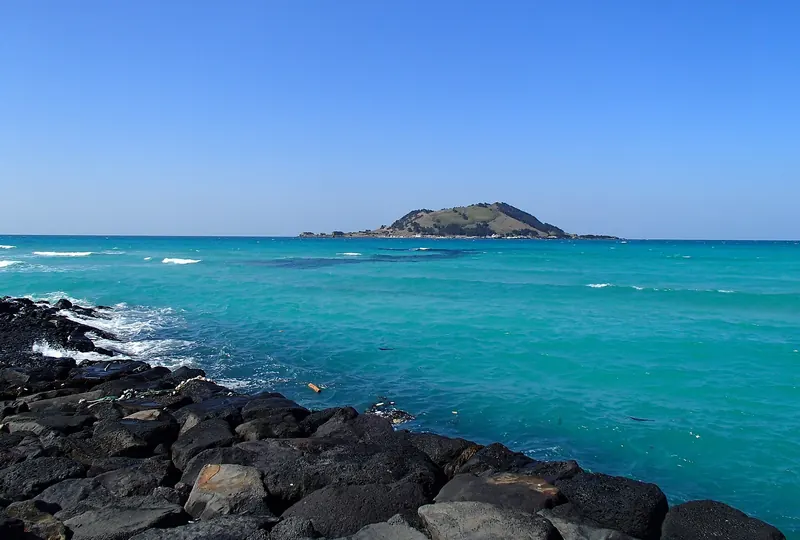
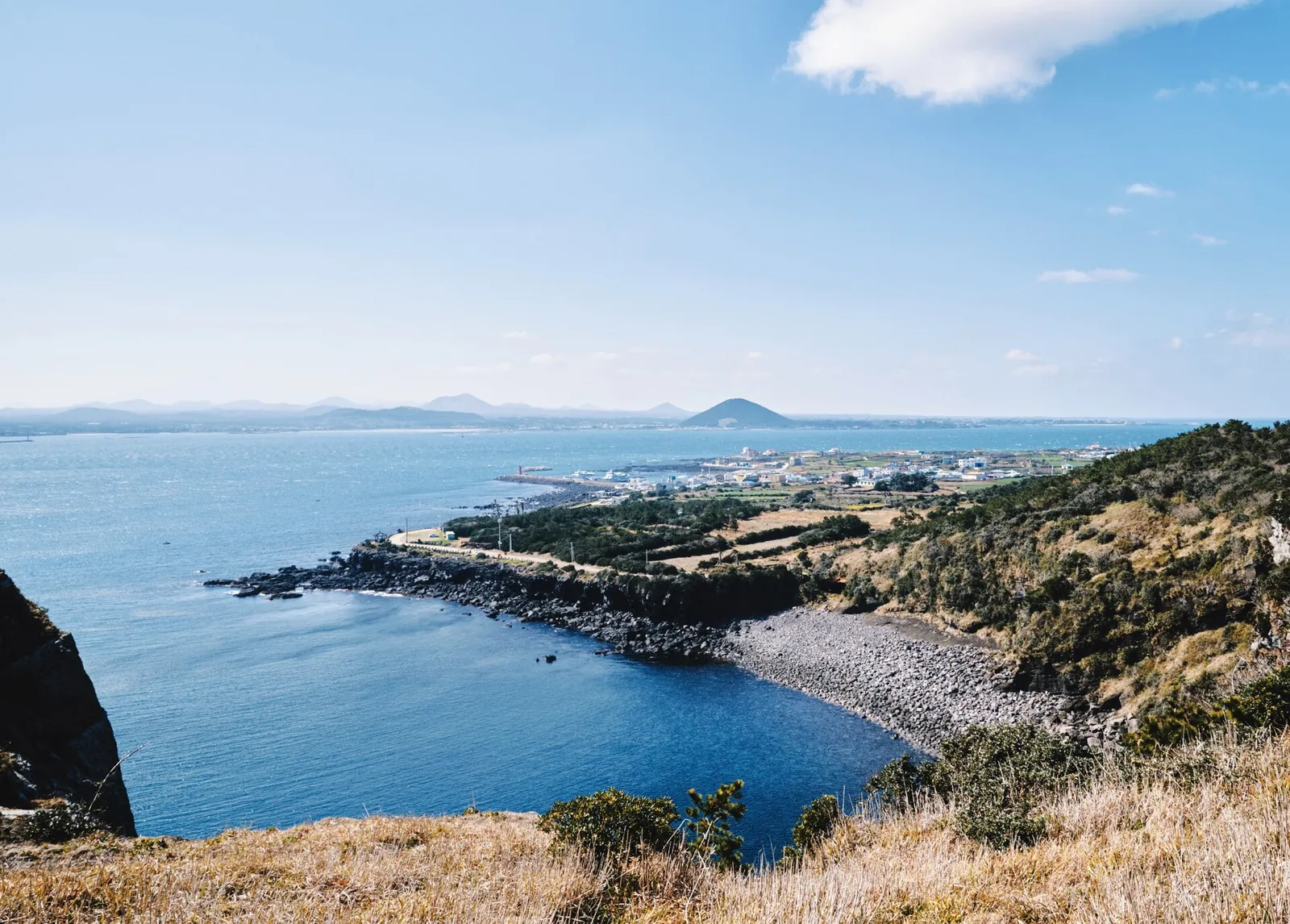
The Jeju coast seen from Udo Island, along the Olle walking route on Udo
Photograph: Jeju Olle Foundation — opens in a new tab · CC BY-SA 4.0 — opens in a new tab
Changes: Resized and converted to WebP; displayed with responsive crops. · Original photograph and licence details ↗ — opens in a new tab
Baengnokdam, the crater lake at the summit of Hallasan, reached by the Seongpanak and Gwaneumsa trails
Photograph: Joshua0608 — opens in a new tab · CC BY-SA 4.0 — opens in a new tab
Changes: Resized and converted to WebP; displayed with responsive crops. · Original photograph and licence details ↗ — opens in a new tab
Daepo Jusangjeolli Cliff in Jungmun, the first stop on the last day
Photograph: Bernard Gagnon — opens in a new tab · CC0 — opens in a new tab
Changes: Resized and converted to WebP; displayed with responsive crops. · Original photograph and licence details ↗ — opens in a new tab
Jeongbang Falls in Seogwipo, which drops 23 metres onto the shore by the sea
Photograph: Lcarrion88 — opens in a new tab · CC BY-SA 4.0 — opens in a new tab
Changes: Resized and converted to WebP; displayed with responsive crops. · Original photograph and licence details ↗ — opens in a new tab
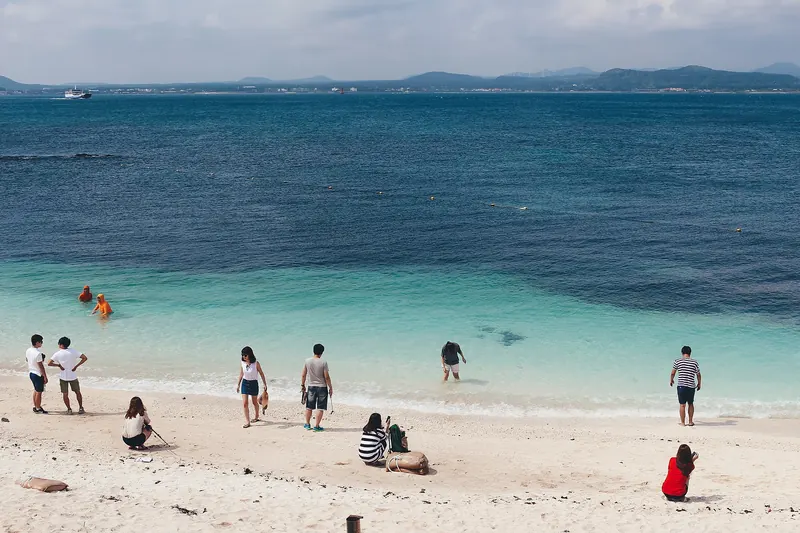
Biyangdo seen across the water from Hyeopjae Beach on the west coast
Photograph: Lcarrion88 — opens in a new tab · CC BY-SA 4.0 — opens in a new tab
Changes: Resized and converted to WebP; displayed with responsive crops. · Original photograph and licence details ↗ — opens in a new tab
Gogi-guksu, the pork noodle soup that is a Jeju speciality
Photograph: 신동혁 — opens in a new tab · CC0 — opens in a new tab
Changes: Resized and converted to WebP; displayed with responsive crops. · Original photograph and licence details ↗ — opens in a new tab