Jeju · Jeju
Udo Island guide: ferry from Seongsan, coral beach, peanut ice cream
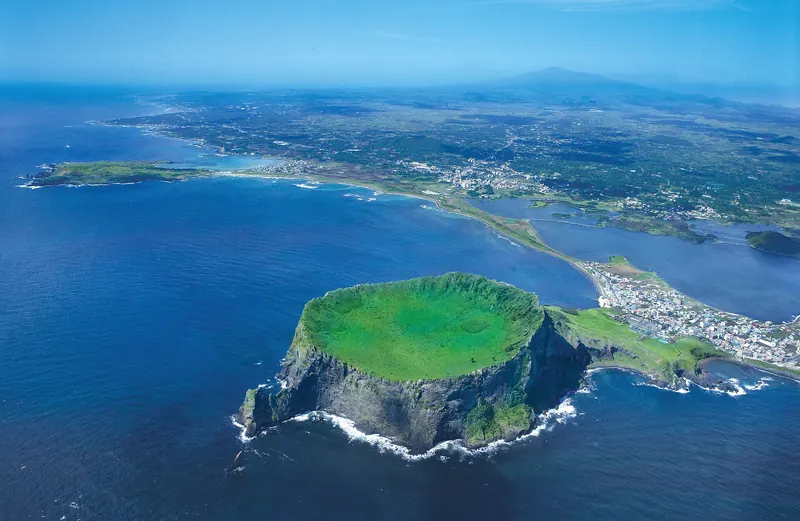
Udo is the low island that faces Seongsan Ilchulbong across the water, a quarter of an hour away by ferry. Its name means 'cow island', from its outline of a cow lying down, and its pleasures are small and specific: a beach of white rhodolith nodules with water that VisitKorea describes as shading from emerald to sapphire, a grassy volcanic cone with a lighthouse on top, black-stone field walls around peanut and barley plots, and the peanut ice cream sold in cafés and restaurants around the island. VisitKorea puts visitor numbers at around two million a year, and every one of them arrives by ferry, so how you time the day matters as much as what you put in it.
- Suggested time
- 1 day (a night on Udo only if you want it quiet)
- Where to stay
- Seongsan-ri on the Jeju side, near the port and Seongsan Ilchulbong; guesthouses on Udo itself for an overnight
- Season and timing
- Udo is a year-round day trip, but every plan depends on the ferry, which VisitKorea warns can change with the weather; keep a spare day in your Jeju itinerary in windy or stormy spells. In summer, VisitKorea says Hagosudong's shallow, sandy water suits swimming and canoeing, and on summer nights the lights of fishing boats fill the sea off the beach. The Olle Foundation's recommended walking hours for Route 1-1 are 09:00–18:00 in summer and 09:00–17:00 in winter, a fair guide to how much daylight a loop needs.
The short answer
Give Udo one full day and sleep on the Jeju side in Seongsan, so that you can be at the port for an early ferry. VisitKorea, quoting Visit Jeju, recommends taking a morning ferry over and an afternoon ferry back rather than a rushed half-day. Cross from Seongsan Port (or Jongdal Port) to Cheonjin Port in about 15 minutes, rent an electric bike or scooter or use the island shuttle bus, and go round the 17-kilometre coast road: Seobin Baeksa beach, Hagosudong, Udobong Peak and the lighthouse, Geommeolle Beach. Walkers can follow Olle Route 1-1 (13.2 km, 4–5 hours). Bring ID for the ferry, and check the weather the night before: sailings depend on the sea.
Seongsan or Jongdal: the crossing and where to sleep
Udo sits off the eastern tip of Jeju, and the ferries leave from two ports on the Jeju side. According to VisitKorea's Udo listing, which draws on Visit Jeju, boats run from Seongsan Port, below Seongsan Ilchulbong, and from Jongdal Port, a little further north, and the crossing takes about 15 minutes from either. On Udo they arrive at one of two docks, Cheonjin Port or Haumokdong Port; VisitKorea calls Cheonjin the island's main gateway, where most visitors get off and where the electric scooter rental shops are.
When we checked on 2026-10-03, VisitKorea's Udobong listing gave a combined ferry, island admission and utility fee of 10,500 won return for adults (6,000 won one way to Udo, 4,500 won back), with reduced fares for teenagers, seniors and children, and said that ID must be presented to board. The same listing shows car-transport fares, but we could not confirm current rules on taking a rental car across, so plan to go as a foot passenger. Ferries do not run in bad weather, and VisitKorea advises checking conditions before you plan the day.
Because the first boats are the quiet ones, the place to sleep is Seongsan-ri, the village at the foot of Seongsan Ilchulbong, rather than Jeju City: VisitKorea's airport guide puts the Seongsan Ilchulbong area about an hour to an hour and a half from Jeju International Airport by public transport. A night here also lets you climb Seongsan Ilchulbong for sunrise and do Udo the same morning. Staying on Udo itself — the Olle Foundation's Route 1-1 page lists a guesthouse on the island — gives you the island after the last day-trippers leave, but some places, such as the restaurant On Off, close altogether on days when the ferries do not run.
Getting round the island
Udo is 3.8 kilometres long and 17 kilometres round, according to VisitKorea; walking the whole coast without stopping takes three to four hours, which is why most visitors ride. VisitKorea's 2026 Jeju guide suggests the shuttle bus or a rented electric bike or scooter, and estimates two to three hours for the 17-kilometre loop by e-bike. VisitKorea's Udo listing also names small electric cars as an option. Rental shops cluster at Cheonjin Port; we did not verify prices, so compare a few before you choose.
Expect the coast road to be shared with rental scooters, e-bikes, small cars and the shuttle bus. Ride slowly, especially on the narrow lanes between stone walls, and stop where you can pull fully off the road.
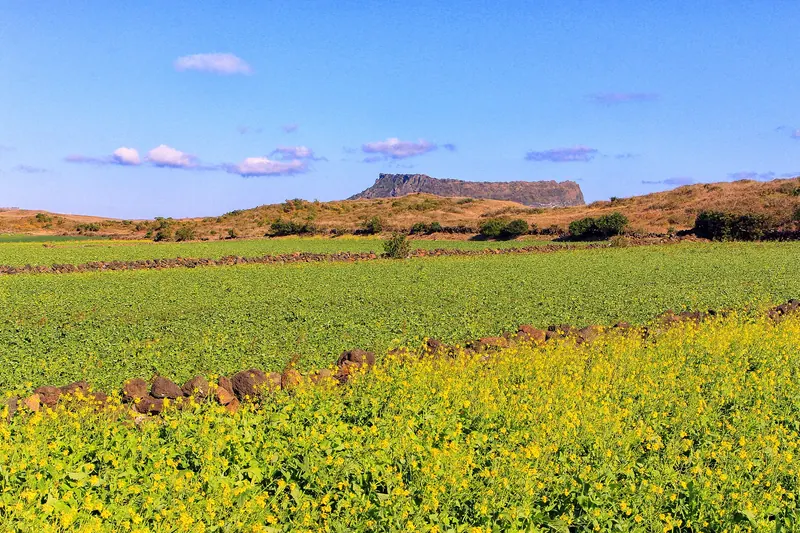
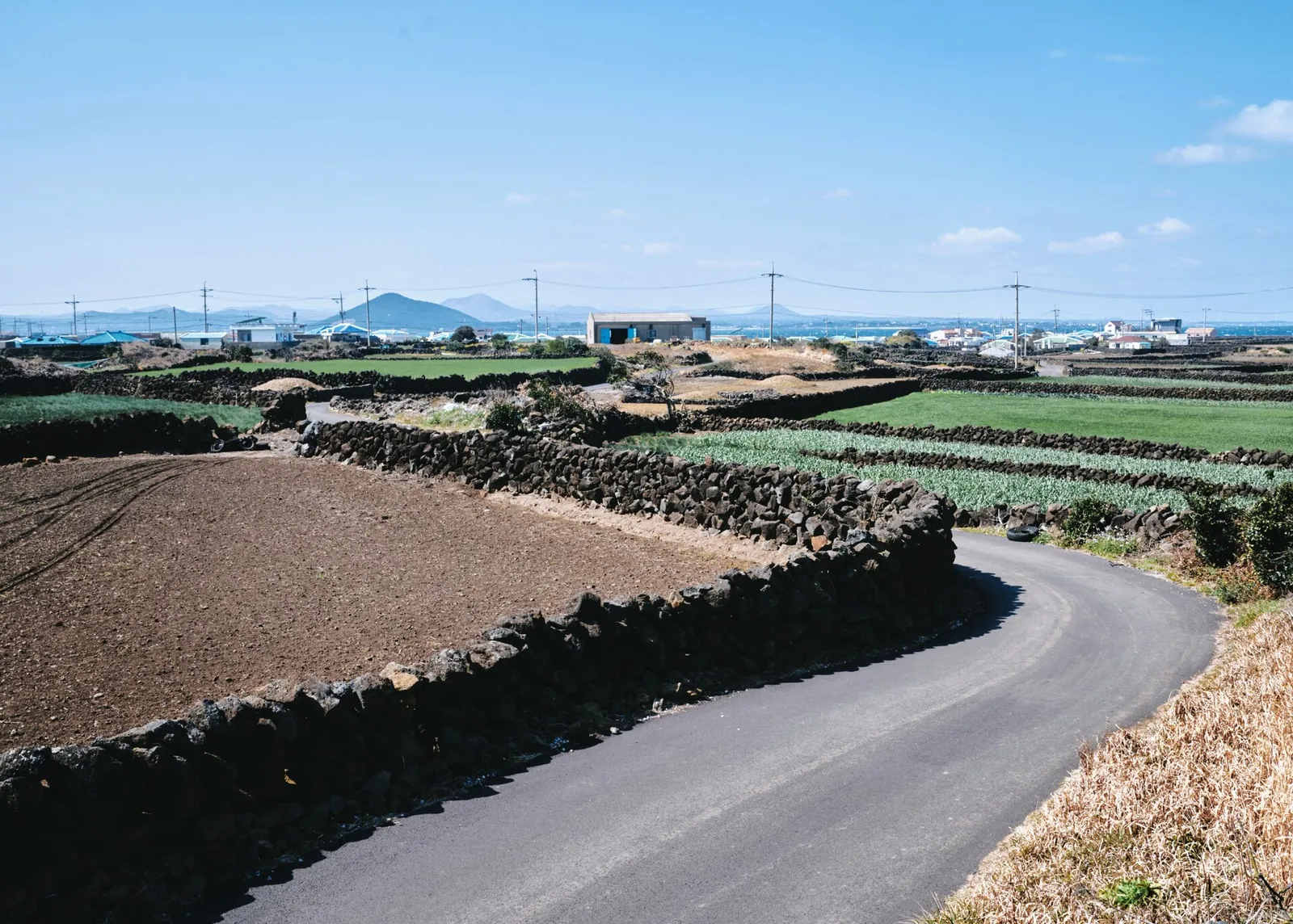
To walk, use Jeju Olle Route 1-1, the Udo Olle. The Jeju Olle Foundation lists it as 13.2 kilometres and 4–5 hours with a medium difficulty rating, mixing the coast with stone-walled field paths where rye, barley and peanuts grow, and the climb over Udobong. Its mid-route stamp is at Hagosudong Beach, where the foundation notes several restaurants serving tot (hijiki) kalguksu, grilled fish and jjamppong — the natural lunch stop.
Make time for the local food
What to eat and where to look
Udo peanut ice cream
Udo's peanuts are the island's renowned speciality, and its signature snack is ice cream made with them. VisitKorea lists 'original Udo peanut ice cream' as the main menu item at Jimmy's Natural Ice Cream, alongside a peanut cream latte.
- Where to look
- Jimmy's Natural Ice Cream at 1132 Udohaean-gil; when we checked on 2026-10-03, VisitKorea listed 08:30–18:00, and 08:30–16:30 in winter. Udo Haenyeo Sikdang also serves it.
- Fit it into your day
- The afternoon stop between Hagosudong and Seobin Baeksa.
Contains peanuts; anyone with a peanut allergy should be careful everywhere on the island, where peanut turns up in lattes, makgeolli and desserts.
Bomal kalguksu (turban-shell noodle soup)
Knife-cut noodles in soup with bomal (brown turban shell). VisitKorea says Udo Haenyeo Sikdang serves seafood harvested by the island's women divers and kneads its noodles with brown seaweed; it also serves sea urchin and seaweed soup.
- Where to look
- Udo Haenyeo Sikdang, 440 Udohaean-gil; when we checked on 2026-10-03, VisitKorea listed 08:30–17:00, open all year.
- Fit it into your day
- A late breakfast after an early ferry, or lunch on the ride.
Shellfish; the restaurant closes in the late afternoon.
Mulhoe (cold raw fish soup)
Sliced raw fish served in a cold soup. VisitKorea describes Udo Bapsang as a raw-fish restaurant whose signature is cold raw fish soup, with a seafood hot pot as the alternative.
- Where to look
- Udo Bapsang, 170 Udohaean-gil; when we checked, VisitKorea listed 08:00–21:00.
- Fit it into your day
- Lunch on a hot day; the hot pot is the cold-weather choice.
Raw fish; avoid it if you are pregnant or immunocompromised.
Hijiki noodles and grilled fish at Hagosudong
The Jeju Olle Foundation notes several restaurants around Hagosudong Beach, the Route 1-1 midpoint, serving tot kalguksu (noodles with hijiki seaweed), grilled fish and jjamppong. Nearby, VisitKorea lists On Off for Jeju black pork cutlets with perilla leaf, with a sea view.
- Where to look
- Around Hagosudong Beach; On Off is at 876 Udohaean-gil, and when we checked VisitKorea listed 11:00–16:00, closed on days when the ferries do not run.
- Fit it into your day
- The main lunch of the day, followed by time on the beach.
Lunch-only hours are common on Udo; do not leave eating until the evening.
Peanut makgeolli
VisitKorea names Udo's peanut makgeolli among Korea's regional rice wines: the milky, low-alcohol makgeolli flavoured with the island's peanuts.
- Where to look
- Shops and restaurants on Udo and around Seongsan.
- Fit it into your day
- With dinner back in Seongsan, not before riding a scooter.
Never drink and ride; contains peanuts.
Seobin Baeksa and Hagosudong: two different beaches
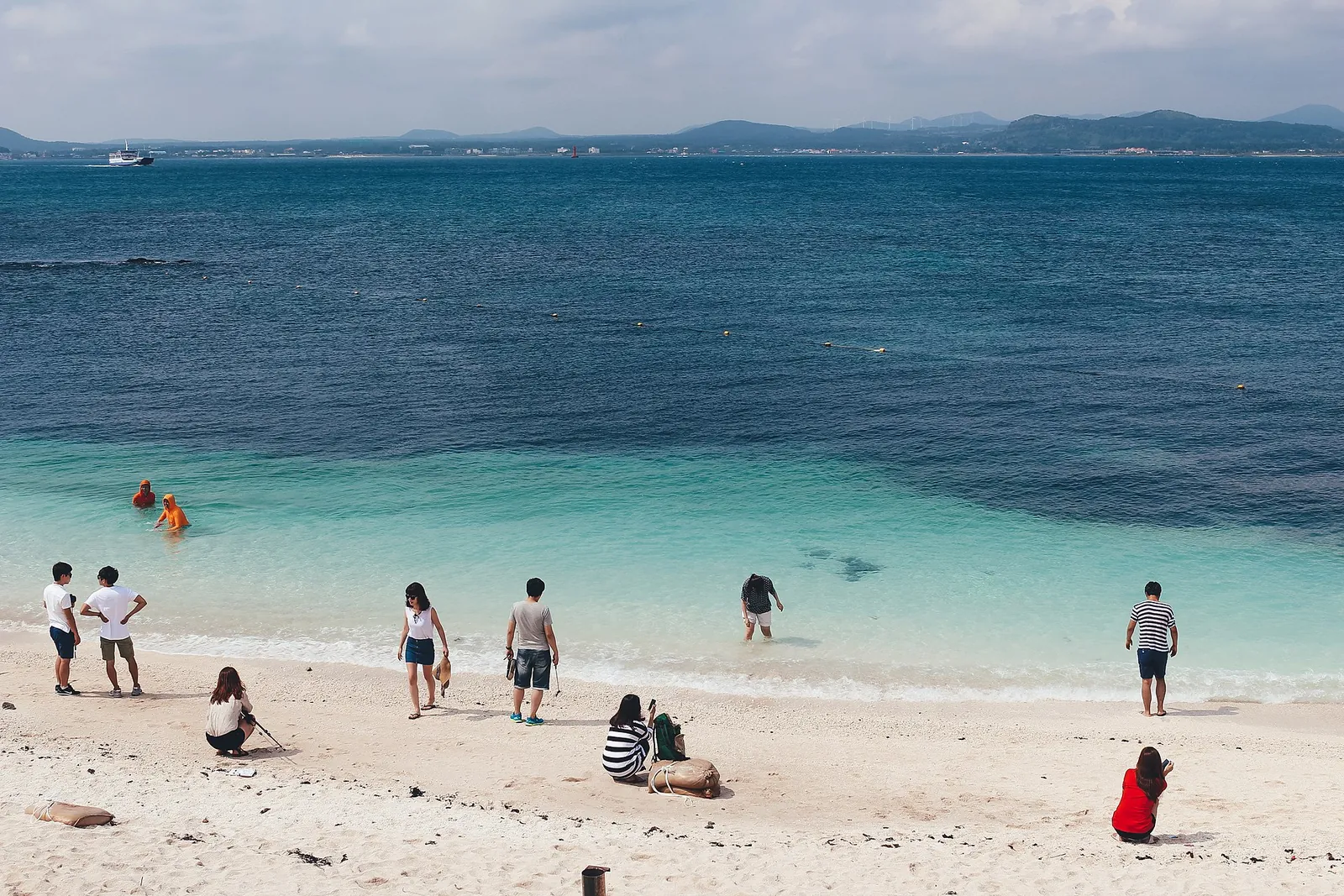
Udo Sanho Beach, usually called Seobin Baeksa, is on the west shore, and VisitKorea calls it one of the island's most popular photo spots. Its white 'sand' is not sand: VisitKorea's 2026 Jeju guide explains that it is made of fragments of rhodoliths, a red alga that calcifies into stone-like nodules on the seabed, a geologically rare beach found in few places in the world. The Jeju Olle Foundation adds that the rhodolith beach was designated Natural Monument No. 438 in 2004. It is free and open at all hours, VisitKorea says. Do not take nodules away as souvenirs.
Hagosudong Beach, on the north-east coast with Udobong in the background, is the better place to swim and sit. VisitKorea describes shallow water and soft sand suitable for visitors of all ages, with swimming and canoeing in the jade-coloured sea, facing the islet of Biyangdo, which VisitKorea notes is connected to Udo. It is the beach to aim for if you have children with you, and the Olle Foundation notes several restaurants around it.
Seobin Baeksa is the big sight nearest the main port at Cheonjin, so it is the obvious first stop for everyone stepping off a ferry. Our suggestion is to ride the other way round first and come back to it in the late afternoon, before your return ferry.
Udobong, the lighthouse and Geommeolle
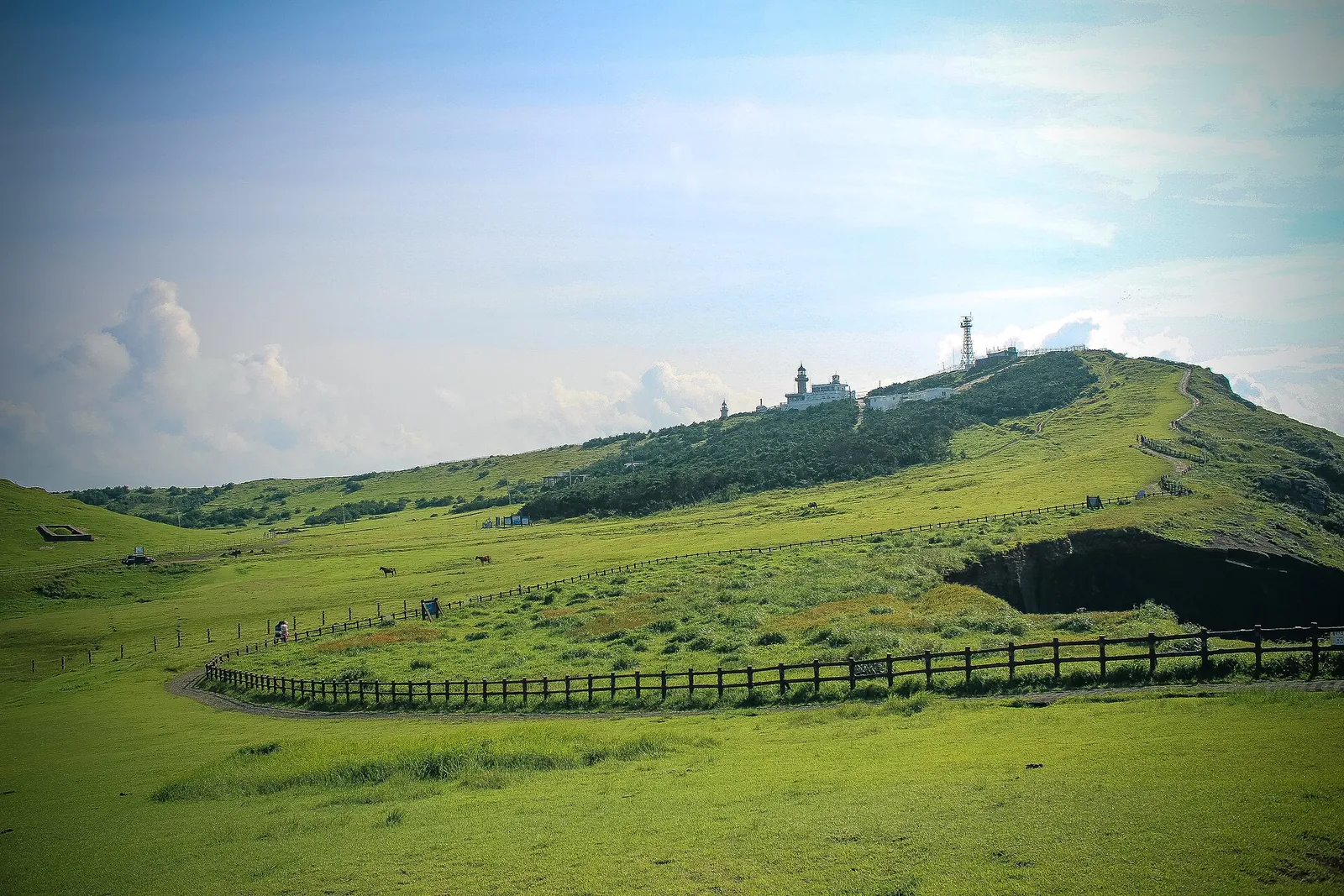
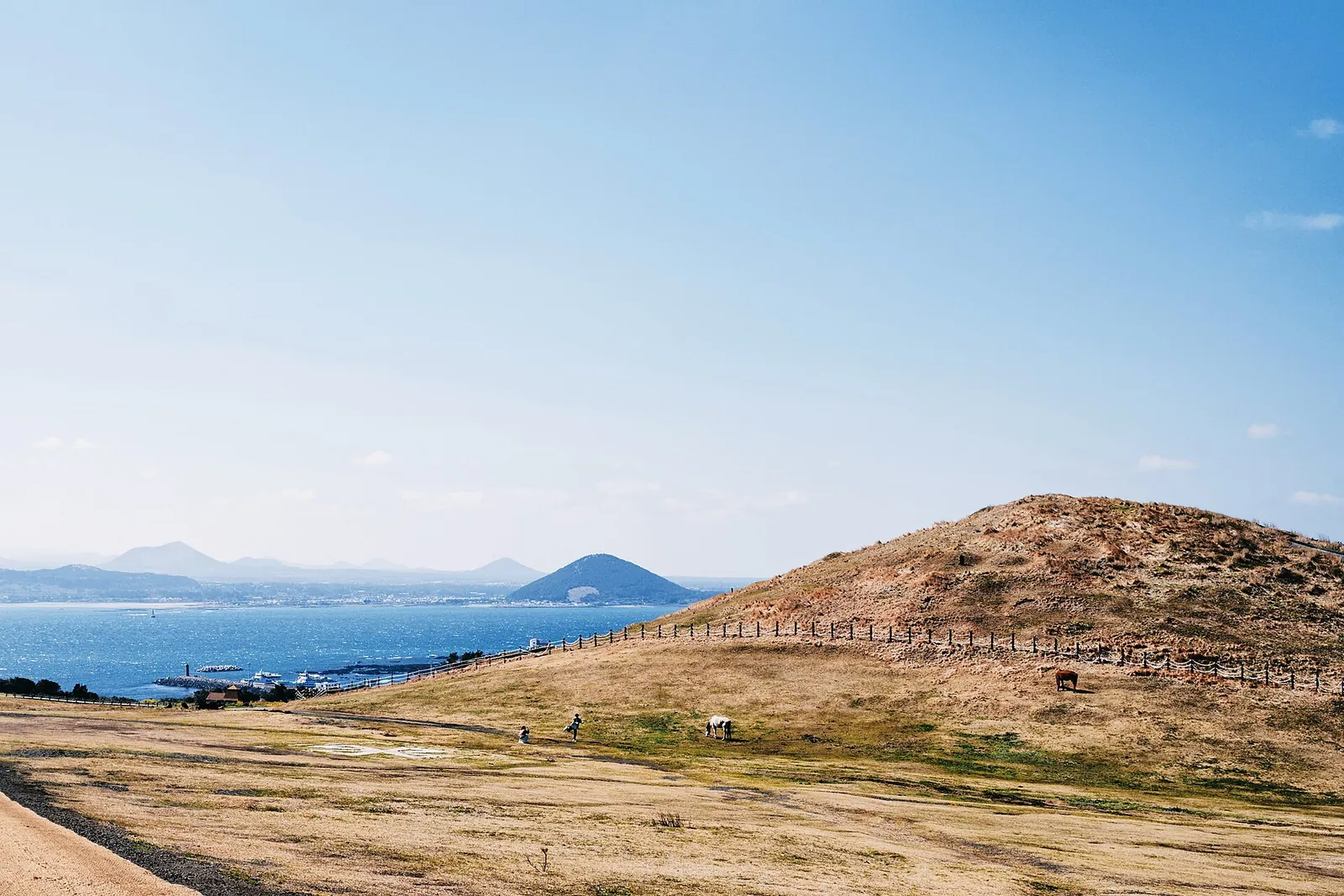
Udobong — Someorioreum, the 'cow's head' cone — is the island's high point at 132 metres above sea level, according to VisitKorea's 2026 Jeju guide, with a gentle path to a summit that looks over the whole island and back to Seongsan Ilchulbong. Up here is the Udo Lighthouse Park, which the Olle Foundation describes as Korea's first lighthouse theme park, with an observatory, walking paths and fourteen models of famous lighthouses including the Pharos of Alexandria.
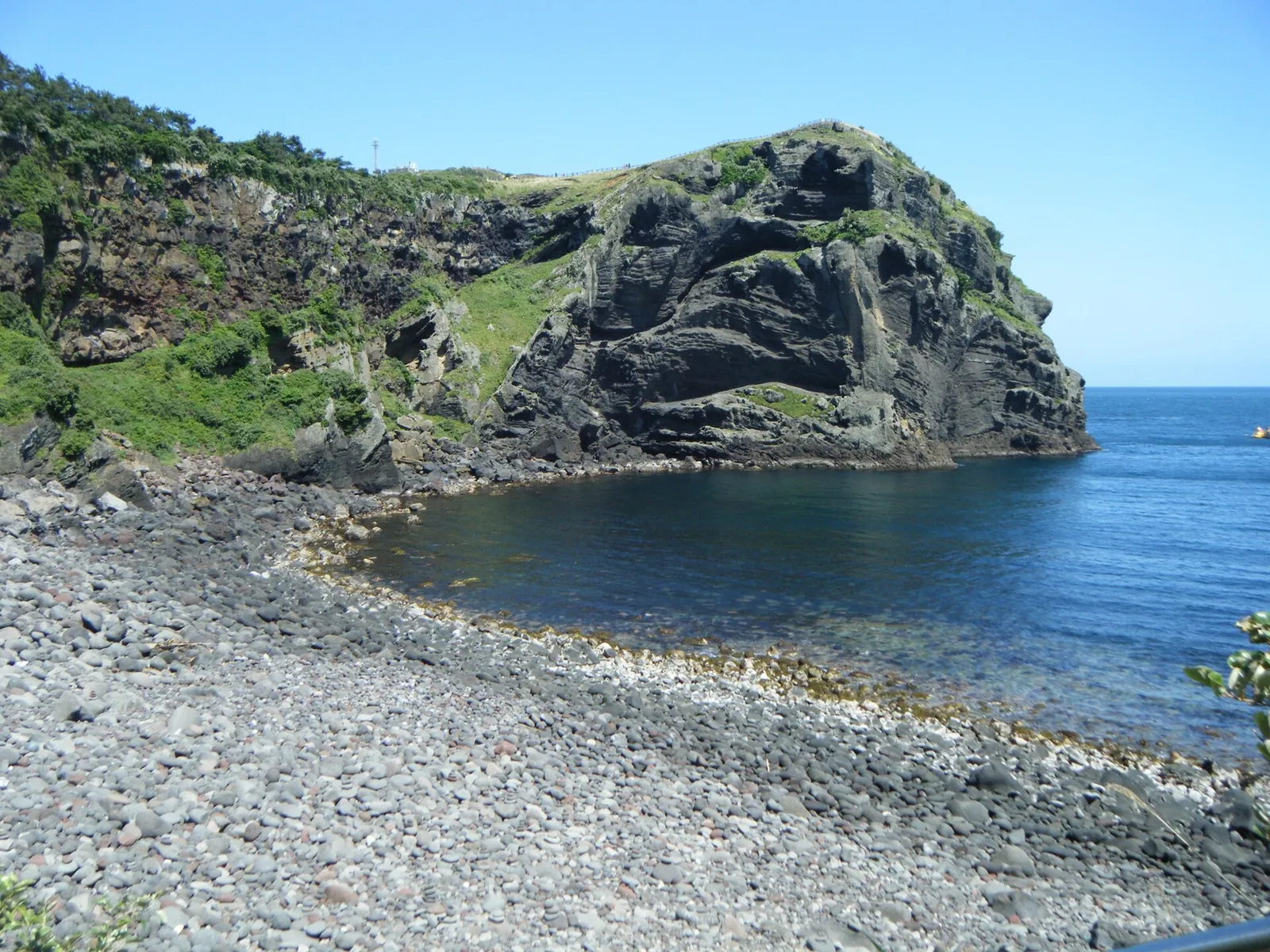
Below the cone's cliffs lies Geommeolle Beach, a strip of black sand only about 100 metres long — the name means 'black sand' in the Jeju dialect, VisitKorea says. At its end is Geommeolle Cave, a large sea cave that can be entered only at low tide; boat tours from Geommeolle Beach run along the cliffs and into the cave, according to VisitKorea. Check the tide before you count on walking in, and ask about the boat's weather limits at the beach.
On the Olle route you also pass the memorial to the Udo haenyeo who joined the women divers' anti-Japanese uprising in eastern Jeju; the Olle Foundation records that about 300 Udo divers took part alongside some 17,000 from the east of the island.
A one-day plan that avoids the midday crush
Udo's day-trippers arrive together and leave together, so the main trick is to be slightly out of step with them. The plan below is our suggestion, not a timetable: check the day's sailings at the port, because we could not verify the ferry timetable from an official page.
- Early morning: sunrise on Seongsan Ilchulbong if you slept in Seongsan-ri, then one of the first ferries from Seongsan Port to Cheonjin.
- Morning: pick up an e-bike at Cheonjin and ride straight to Udobong and the lighthouse park while it is cool and quiet, then down to Geommeolle Beach (check the tide for the cave).
- Lunch: Hagosudong Beach — noodles or grilled fish, then a swim or an hour on the sand.
- Afternoon: the stone-walled field lanes inland, peanut ice cream, and Seobin Baeksa beach last, when the morning crowd has moved on.
- Late afternoon: return the bike and take an afternoon ferry back, leaving margin in case the sea gets up.
- Walkers: do Olle Route 1-1 instead, starting early; the foundation's 4–5 hours means a full day with stops.
Practical questions
How long do I need on Udo?
A full day. VisitKorea, quoting Visit Jeju, recommends taking a morning ferry over and an afternoon ferry back. Going round the 17-kilometre coast takes two to three hours by e-bike, before any stops, and Olle Route 1-1 takes 4–5 hours on foot.
Where does the Udo ferry leave from?
From Seongsan Port on Jeju's east coast or from Jongdal Port, according to VisitKorea; the crossing takes about 15 minutes and arrives at Cheonjin Port or Haumokdong Port on Udo. Bring ID: VisitKorea says it must be presented to board.
How much is the Udo ferry?
When we checked on 2026-10-03, VisitKorea listed 10,500 won return for an adult, covering the ferry, island admission and a utility fee, with lower fares for teenagers, seniors and children. Check at the port, as fares change.
Can I take a rental car to Udo?
We could not confirm the current rules from an official page, so do not plan on it. Most visitors cross on foot and rent an electric bike, scooter or small electric car at Cheonjin Port, or use the shuttle bus.
Is Seobin Baeksa really a coral beach?
Not quite. It is often called a coral beach, but its white grains are rhodolith fragments, a calcified red alga, as VisitKorea explains. The rhodolith beach is a natural monument, so leave the nodules where they are.
Which Udo beach is best for swimming?
Hagosudong, on the north-east coast. VisitKorea describes shallow water and soft sand suited to all ages, with swimming and canoeing in summer.
Sources and checks before you travel
Reference sources for the version dated 3 October 2026. Confirm opening times, access, transport and conditions for your travel dates.
- VisitKorea: Udo Island ↗ — opens in a new tab
- VisitKorea: Cheonjin Port ↗ — opens in a new tab
- VisitKorea: Someorioreum Volcanic Cone (Udobong Peak) ↗ — opens in a new tab
- VisitKorea: Udo Sanho Beach (Seobinbaeksa) ↗ — opens in a new tab
- VisitKorea: Hagosudong Beach ↗ — opens in a new tab
- VisitKorea: Medical & Wellness — Jewonhaneul Farm (Udo section) ↗ — opens in a new tab
- VisitKorea: Geommeolle Beach ↗ — opens in a new tab
- VisitKorea: [Korea Beyond Seoul ③] Fly to Jeju International Airport ↗ — opens in a new tab
- VisitKorea: Jeju's East Coast Itinerary by City Bus ↗ — opens in a new tab
- VisitKorea: Jeju Olle Trail Route 1-1 (Udo Island Olle) ↗ — opens in a new tab
- Jeju Olle Foundation: trail route pages (Route 1-1) ↗ — opens in a new tab
- VisitKorea: Jimmys Natural Ice Cream ↗ — opens in a new tab
- VisitKorea: Udo Haenyeo Sikdang ↗ — opens in a new tab
- VisitKorea: Udo Bapsang ↗ — opens in a new tab
- VisitKorea: On Off ↗ — opens in a new tab
- VisitKorea: Beverages & Desserts ↗ — opens in a new tab
Does this experience fit your route?
Udo is easiest on your own: a ferry ticket, ID and a rented e-bike. If you would rather have a guide for eastern Jeju, check that the tour really crosses to Udo and leaves you enough hours there.
Browse relevant experiences on Viator ↗ — opens in a new tabAffiliate link · Book with ViatorPhoto credits
Seobin Baeksa (Udo Sanho Beach), the rhodolith beach on Udo's west shore
Photograph: Sohyeon Bak — opens in a new tab · CC BY-SA 3.0 — opens in a new tab
Changes: Resized and converted to WebP; displayed with responsive crops. · Original photograph and licence details ↗ — opens in a new tab
The grassy slopes of Udobong, with the lighthouse on top
Photograph: Sohyeon Bak — opens in a new tab · CC BY-SA 3.0 — opens in a new tab
Changes: Resized and converted to WebP; displayed with responsive crops. · Original photograph and licence details ↗ — opens in a new tab
Olle Route 1-1 seen from the top of Udobong
Photograph: Jeju Olle Foundation — opens in a new tab · CC BY-SA 4.0 — opens in a new tab
Changes: Resized and converted to WebP; displayed with responsive crops. · Original photograph and licence details ↗ — opens in a new tab
Stone-walled fields along Olle Route 1-1 on Udo
Photograph: Jeju Olle Foundation — opens in a new tab · CC BY-SA 4.0 — opens in a new tab
Changes: Resized and converted to WebP; displayed with responsive crops. · Original photograph and licence details ↗ — opens in a new tab
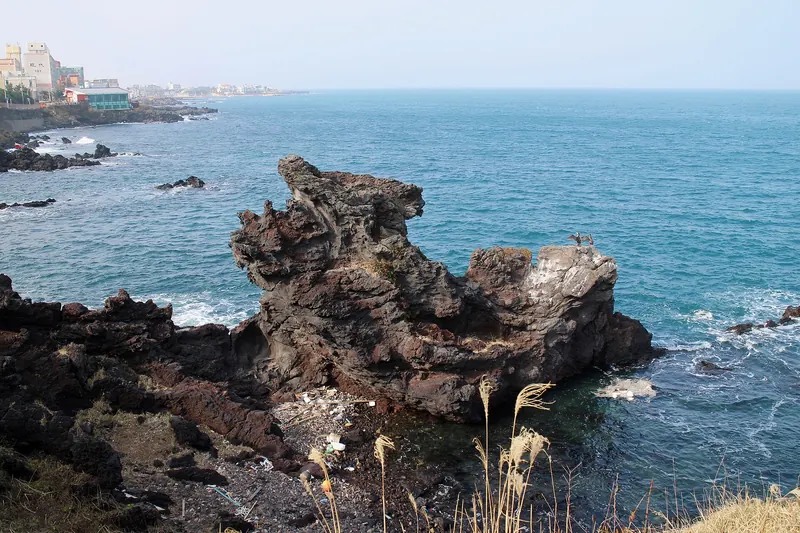
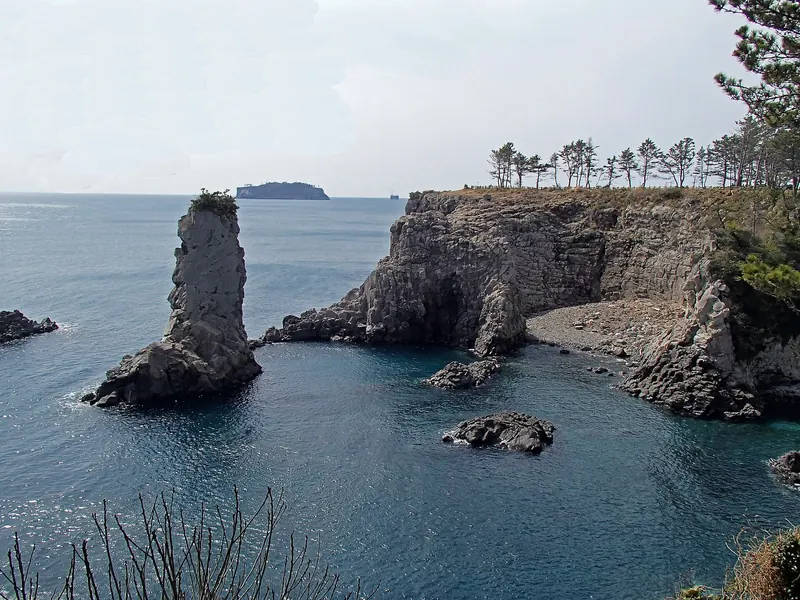
Volcanic cliffs and a pebble shore on Udo's coast
Photograph: gary4now — opens in a new tab · CC BY 3.0 — opens in a new tab
Changes: Resized and converted to WebP; displayed with responsive crops. · Original photograph and licence details ↗ — opens in a new tab