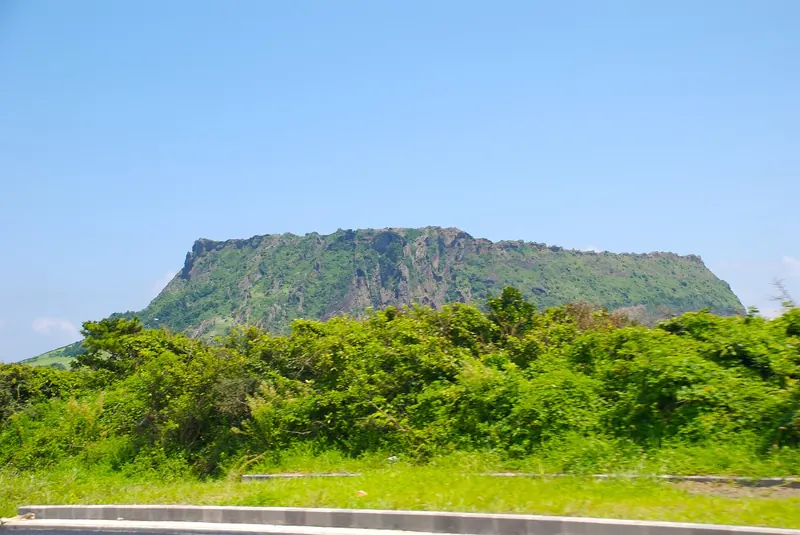
Jeju · Jeju
Aewol and West Jeju guide: Hyeopjae Beach, Hallim Park, Osulloc tea
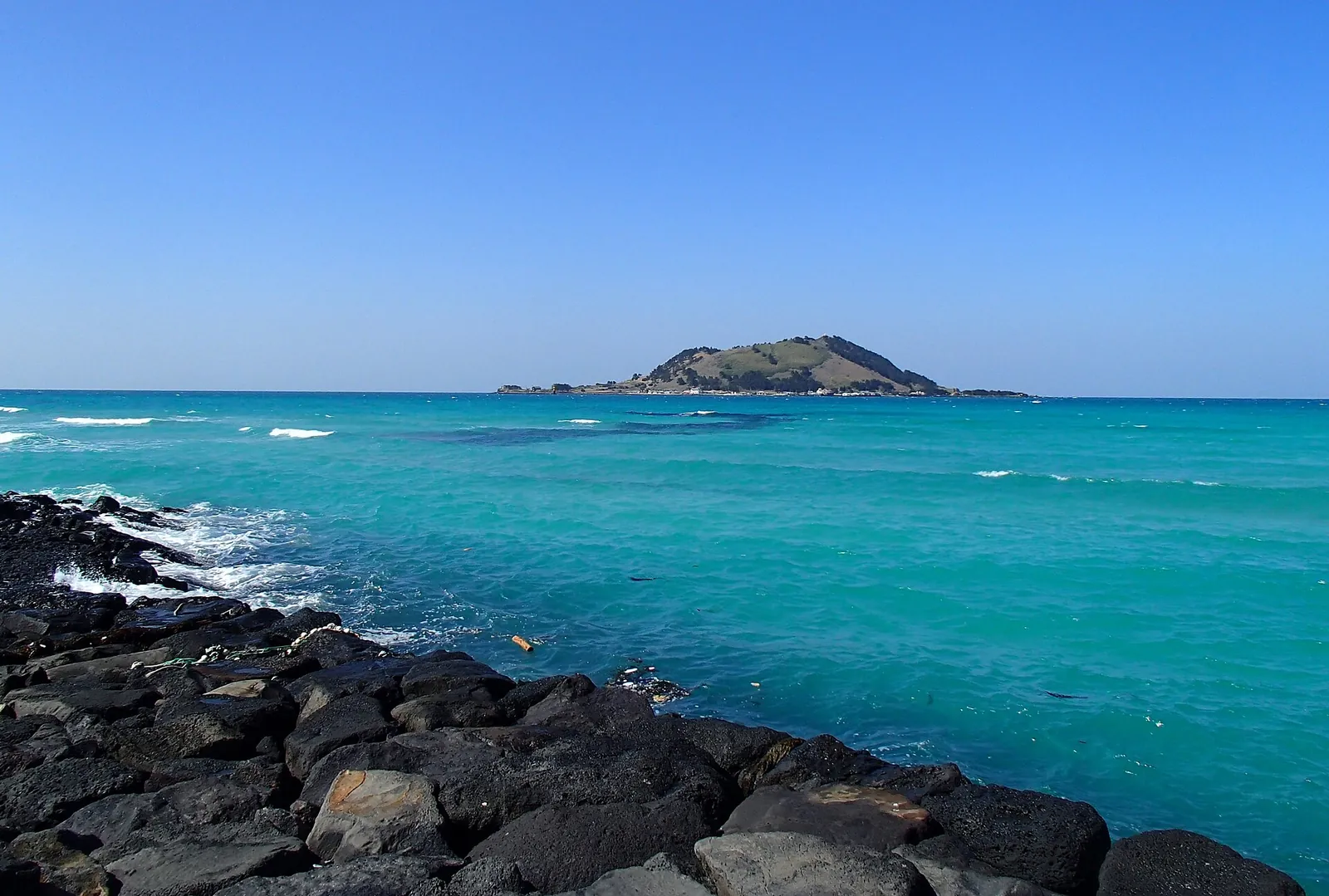
Aewol is the stretch of Jeju's north-west coast that begins where the Hagwi–Aewol coastal road leaves the city, about ten kilometres from the airport, and West Jeju is everything beyond it as far as the island's western tip. Aewol itself is known for a short lava-rock walk lined with sea-view cafés; further west, around Hallim, the sea turns emerald over the white sand of Hyeopjae and Geumneung beaches, with the volcanic islet of Biyangdo sitting just offshore. Inland are Saebyeol Oreum, a grassy volcanic cone that hosts the island's fire festival, and, a short drive south, the green-tea fields of Seogwang and the Osulloc Tea Museum. None of it is a city: this is a base for people who want beaches, sunsets and short walks, and who are willing to drive or plan around the buses.
- Suggested time
- 2–3 nights
- Where to stay
- Aewol village and the Handam coast for cafés and quick airport access; Hyeopjae and Hallim for the beaches, Biyangdo and Hallim Park
- Season and timing
- Each season has its own reason to come. Hallim Park holds a plum festival in February, and in March Saebyeol Oreum hosts the Jeju Fire Festival (14–16 March in 2025, according to VisitKorea's listing). Summer is beach season at Hyeopjae, Geumneung and Gwakji, and the shallow water at Hyeopjae and Geumneung suits families; check the patrolled bathing period locally before swimming. In autumn VisitKorea singles out Saebyeol Oreum for its silver grass in full bloom. The clear-kayak rental on Handam beach was listed as closed from November to February in VisitKorea's 2023 column, and the Biyangdo ferry depends on the weather all year.
The short answer
Stay two or three nights, ideally with a rental car. Sleep in Aewol if you want cafés and restaurants on the doorstep and a short run from the airport (VisitKorea estimates about 40 minutes by taxi); sleep near Hyeopjae Beach in Hallim if the beach and the sunset over Biyangdo are the point. Spend one day on the coast between Aewol and Hyeopjae (the Handam walk, Gwakji Beach, an afternoon on the sand), one day on Hallim Park, its lava caves and the ferry to Biyangdo, and half a day inland at Saebyeol Oreum and the Osulloc tea fields. Without a car, base yourself at Hyeopjae, where buses from the airport's Gate 4 run, and keep the inland sights for a taxi or a tour.
Aewol or Hyeopjae: choose the base first
Aewol is the eastern end of the area and the closer one to the airport. VisitKorea's food column on Aewol explains that after Jeju City named the Handam Coastal Trail one of its '31 hidden views' in 2009, cafés and restaurants moved in along it, and that is what Aewol is now: a small harbour village with sea-view cafés and restaurants, and hotels and pensions along the coast road. VisitKorea estimates about 40 minutes by taxi from Jeju International Airport. Choose it if you want to walk to dinner and coffee, or if you have an early flight.
Hyeopjae, in Hallim-eup further west, is the beach base. VisitKorea describes Hyeopjae Beach as smooth white sand and shallow water with a gentle slope, backed by pine forest and running straight into Geumneung Beach, with Biyangdo Island across the water and sunsets that are 'particularly breathtaking'. Hallim Park is beside the beach and Hallim Port, for the Biyangdo ferry, is a short drive away. It is quieter in the evening than Aewol, and the better choice without a car: VisitKorea's airport guide lists city buses to Aewol and Hyeopjae from Gate 4 on the airport's first floor.
Both are part of Jeju City, not Seogwipo, and neither is a town in the urban sense. If you want a nightlife or shopping base, stay in Jeju City and come here for a day; if you want the beach, stay here.
The Aewol coast: Handam walk, Gwakji Beach and the Silk Bridge
The Handam Coastal Trail, also called the Gwakgeum Olle, follows the shore for 1.2 kilometres from Aewol Port to Gwakji Beach, VisitKorea says, winding over black rocks formed from cooled lava with the waves breaking right beside the path. It is free and open at all hours, and because it faces west it is a sunset walk. Aewol Handam Park, above the path, gives a wider view of the trail and the sea; on Handam beach at the trail's entrance, VisitKorea's column lists clear-kayak rental (weather permitting, and closed in winter when it was written).
About 20 minutes along the trail, Gwakji Beach is a 350-metre strip of white sand with an average depth of 1.5 metres, according to VisitKorea. Its oddity is the Gwamul outdoor pool, filled with yongcheonsu, spring water that rises from the rock and stays at about 15°C even in high summer; it opens seasonally and is small, best for cooling your feet. Gwakji-ri is an old village too: VisitKorea notes that prehistoric shell mounds were excavated here.
Ten minutes' walk on, at Geumseong Port, the illuminated Silk Bridge (Geumseong Bidangyo) crosses the Geumseongcheon stream between Aewol-eup and Hallim-eup; VisitKorea suggests watching the sunset and then walking the lit bridge. East of Aewol, the Hagwi–Aewol Coastal Road runs from Gamun-dong Port past ocean-view cafés and pensions and is part of Jeju Olle Route 16, popular with cyclists and walkers.
Make time for the local food
What to eat and where to look
Jeonbok dolsotbap and jeonbok ttukbaegi (abalone)
Jeju abalone is cooked in two ways in Aewol: dolsotbap, rice cooked in a hot stone pot under sliced abalone, finished by pouring water into the pot to make sungnyung, a scorched-rice soup; and ttukbaegi, a hot pot of abalone, shrimp, crab, mussels and conch in soybean-paste broth. VisitKorea's Aewol column describes both.
- Where to look
- Aewol Eunhye Jeonbok at the entrance to the Handam Coastal Trail (1F, 24-3 Aewol-ro 1-gil), which VisitKorea's column features; it listed 09:40–20:00 with last orders at 19:00 when last updated in October 2023.
- Fit it into your day
- Lunch before or after the Handam walk.
Contains shellfish. The listed hours date from 2023; check before you go.
Grilled Jeju black pork with meljeot
Thick slices of Jeju black pork grilled at the table, with a small bowl of meljeot (salted anchovy sauce) heated on the grill as a dip; VisitKorea calls this the best-known way to eat it.
- Where to look
- Barbecue restaurants along the west coast; VisitKorea's column features Haejeo, Hallim Hyeopjae main branch (4169-3 Gwideok-ri, Hallim-eup), where every table has a sea view.
- Fit it into your day
- Dinner for two or more after sunset at Hyeopjae or Gwakji.
Contains pork; meljeot is very salty, so use it sparingly.
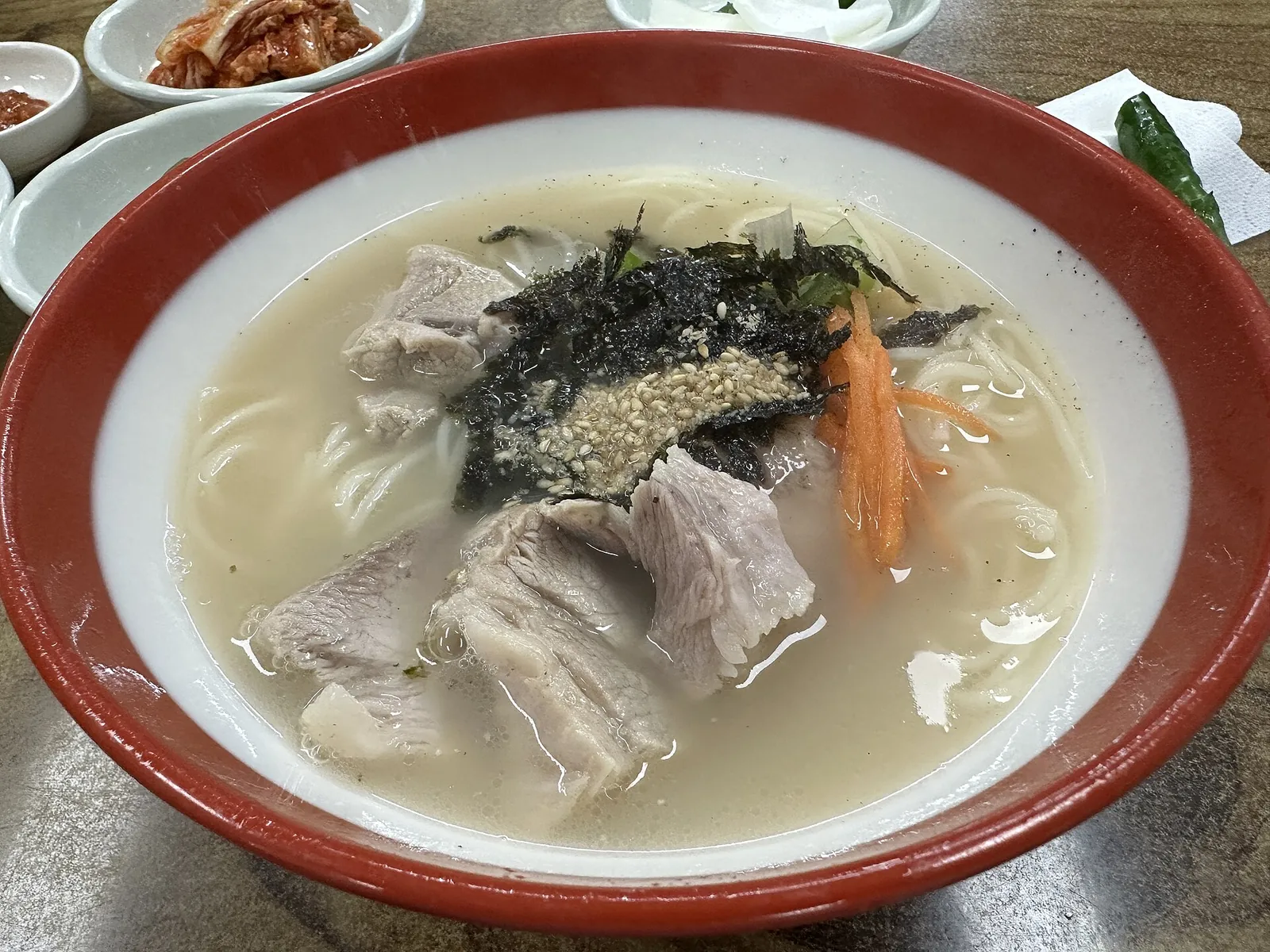
Gogi guksu (pork noodle soup)
Noodles in a rich broth made from black pork, topped with a generous amount of sliced boiled pork. VisitKorea describes it as a Jeju speciality traditionally served at special events.
- Where to look
- Noodle restaurants in Aewol, Hallim and Jeju City.
- Fit it into your day
- A quick, filling lunch between the beach and Hallim Park.
Pork broth; not suitable for vegetarians.
Hallabong desserts in the sea-view cafés
Hallabong is a Jeju-grown citrus whose raised top, VisitKorea explains, gave it a name borrowed from the peak of Hallasan; Aewol's cafés turn it into ades, sorbets and soufflés.
- Where to look
- Cafés along the Handam coast; VisitKorea's column features TRIBE (11 Aewol-ro) for its hallabong soufflé and sorbet-ade.
- Fit it into your day
- An afternoon break after the coastal walk or kayaking.
The column's menu and hours date from 2023; check before you go.
Bingtteok and umu pudding
Bingtteok are buckwheat crêpes with a radish filling, a traditional Jeju food that VisitKorea mentions at the Hallim market. Umu is a pudding made from gar seaweed gathered by Jeju's women divers.
- Where to look
- The Hallim Traditional 5-Day Market (dates ending in 4 and 9) for bingtteok; Umu's Hallim branch (542-1 Hallim-ro) for the pudding, take-out only and listed by VisitKorea as open 09:00–20:00 when we checked.
- Fit it into your day
- Snacks on the way to Hallim Park or the beach.
Bingtteok contain buckwheat, a common allergen.
Hyeopjae and Geumneung beaches, and the ferry to Biyangdo
Hyeopjae Beach is the one in the photographs: emerald water over white sand, black basalt at the edges and the cone of Biyangdo on the horizon. VisitKorea calls its shallow water ideal even for visitors who cannot swim, and notes camping in the Songlim pine grove behind it. When we checked on 2026-10-03, VisitKorea listed the beach as open 24 hours and free, with parking.
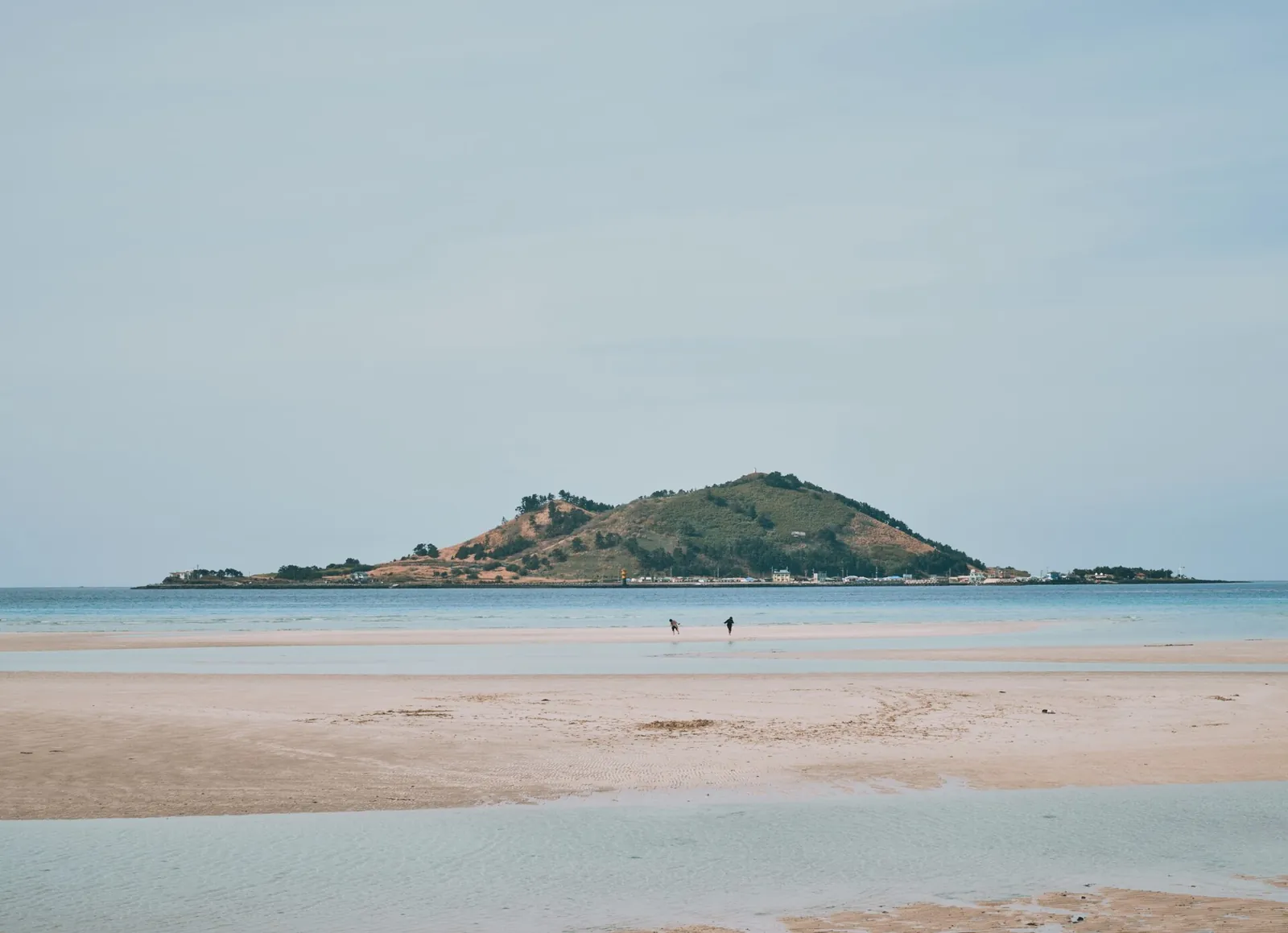
Geumneung Beach, joined to Hyeopjae, has the same water but, VisitKorea says, far fewer visitors. Its car park is right by the sand, there are warm-water showers, and it recommends coming at low tide, when the sea pulls back to leave a wide beach and shallow natural pools where small children can play safely. If Hyeopjae is crowded, walk west to Geumneung.
Biyangdo, the island you look at from both beaches, is the youngest of Jeju's volcanic bodies and only about 0.5 square kilometres, small enough to walk round in two to three hours, according to VisitKorea. Its central peak, Biyangbong, is 114 metres high, a 20-minute climb to a viewing platform and white lighthouse looking back over Hyeopjae. Along the north coast are roughly 20 hornitos, chimney-shaped lava formations, the best known being 'Aegi eobeun dol', the Baby-Carrying Rock, and there is a seawater salt marsh rarely seen on the mainland. VisitKorea puts the ferry from Hallim Port at about 15 minutes and, when we checked, about four sailings a day; the timetable changes with the weather, so check it before you plan the day around it.
Hallim Park and its two lava caves
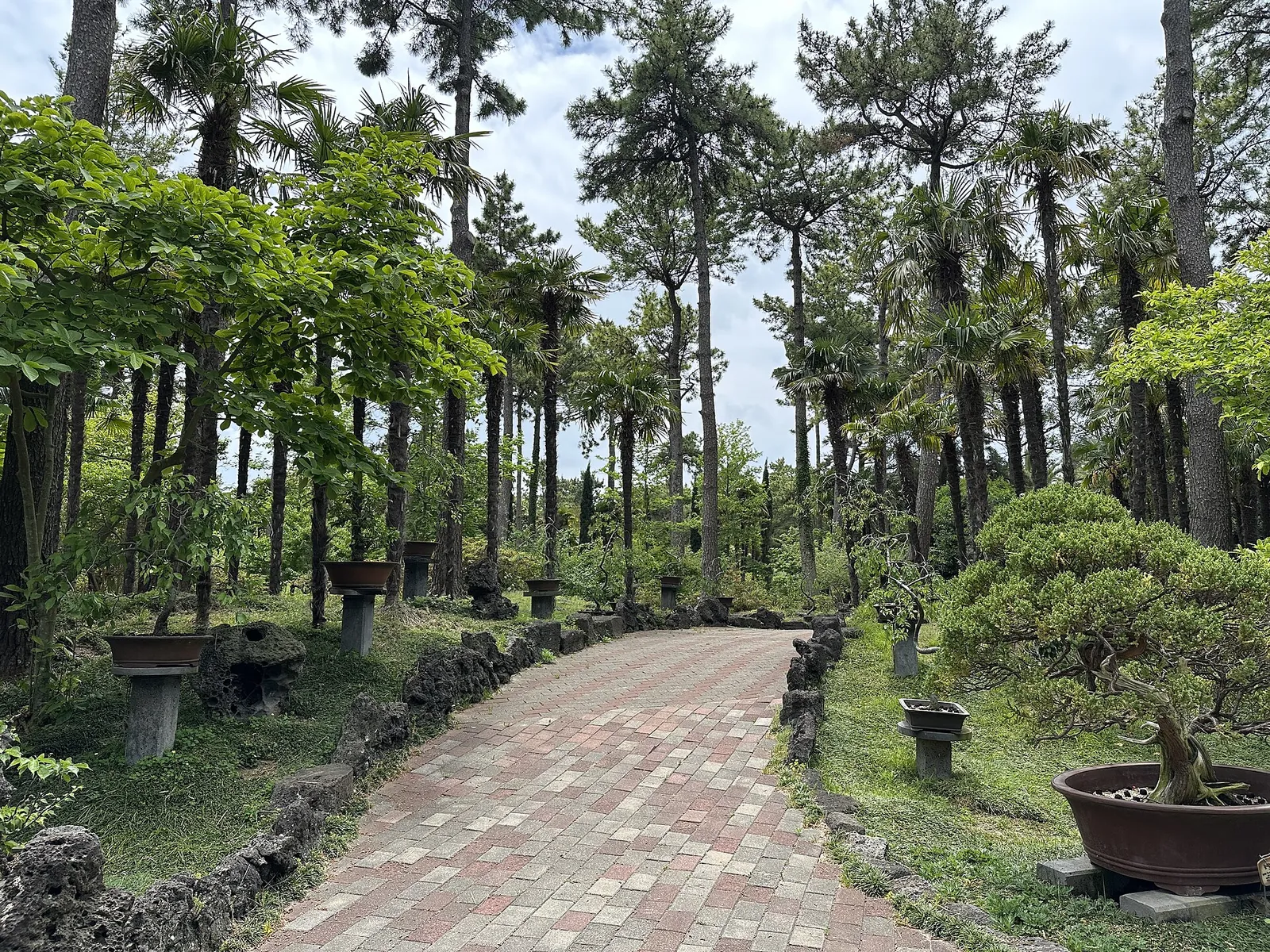
Hallim Park sits on the shore opposite Biyangdo, about 33 kilometres west of Jeju City. VisitKorea explains that it was started in 1971 on barren land, with earth brought in and subtropical plants planted, and that it now covers almost 100,000 square metres: a Palm Tree Road, a Jeju stone and bonsai garden, a water garden, a subtropical botanic garden and a folk village of thatched stone houses.
The real reason to go is underground. Hyeopjaegul, about 200 metres long, and Ssangyonggul, about 400 metres long, are lava tubes that run beneath a thick layer of seashell sand, and VisitKorea notes that they also have the features of limestone caves: stalactites, stalagmites and walls streaked with lime. Hyeopjaegul is Natural Monument No. 236, both stay at about 17–18°C all year, and Ssangyonggul is named for its two branches, said to look like the paths of two dragons. Cave entry is included in the park ticket.
When we checked on 2026-10-03, VisitKorea listed opening hours of 09:00–17:30 from March to May and in September and October, 09:00–18:00 from June to August and 09:00–16:30 from November to February, open every day, with adult admission of 15,000 won and free parking. We would allow about two hours, and pair it with a swim at Hyeopjae, a few minutes away. Nearby, the small Geumneung Seokmulwon is a stone park of dol hareubang and Buddhist figures carved by the master stone-carver Jang Gong-ik.
Inland: Saebyeol Oreum and the Osulloc tea fields
Saebyeol Oreum, in Bongseong-ri inland from Aewol, is a mid-sized volcanic cone standing alone on the plain, named for its resemblance to a lonely star in the night sky, VisitKorea says. VisitKorea describes the view from the peak along its chain of connected ridges as stunning. Entry is free. It is at its best in autumn, when the slopes are covered with silver grass, and in March, when the city of Jeju holds the Jeju Fire Festival here, with an opening ceremony, concerts and a fire march; check firefestivaljeju.com for the year's dates.
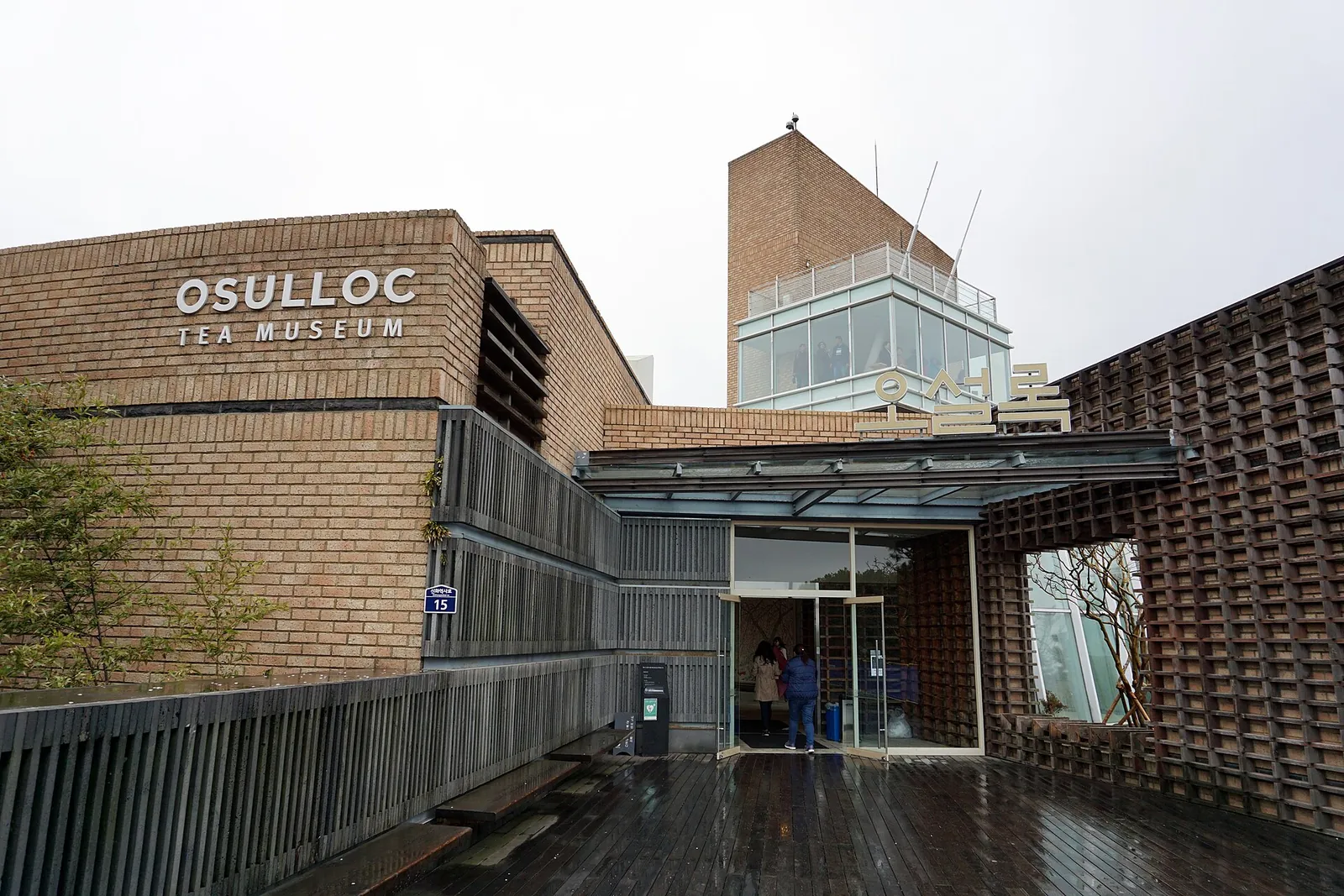
South of the Hallim area, in Andeok-myeon (administratively part of Seogwipo), the Seogwang Tea Garden is what VisitKorea calls Korea's largest and best-managed tea plantation, about 529,000 square metres of tea bushes spread across the slopes of Seogwangseo-ri, on what was once rocky, infertile ground. Next to it, the Osulloc Tea Museum was opened by Amorepacific in 2001 as Korea's first tea museum, with a tea gallery, a shop and a café serving green-tea desserts, and you can walk out into the fields. When we checked on 2026-10-03, VisitKorea listed the museum and tea garden as free and open every day, 09:00–19:00 in summer and 09:00–18:00 in winter, subject to change in bad weather; experience programmes, such as the Tea Stone tea course, are charged separately.
Both are hard to reach by bus from the coast and easy by car, which is one reason VisitKorea's own Jeju guide says a rental car may be more convenient for the island's west coast and inland areas.
Getting around and a two- or three-day plan
West Jeju rewards a car. VisitKorea's driving guide lists the conditions for foreign drivers: you must be 21 or older and hold an international driving permit (check with your rental company which permit it accepts), and reverse parking in narrow bays is the norm, though most rental cars have rear cameras. Without a car, airport buses from Gate 4 reach Aewol and Hyeopjae, and taxis cover the rest; some bus routes do not take cash, so carry a transport card.
Walkers can link the area on the Jeju Olle Trail: Route 15 runs from Hallim inland through forest and fields, past Geumsan Park, to Gonae Port, and Route 16 continues from Gonae past a saltern, a reservoir and an old fortress towards Gwangnyeong. VisitKorea recommends starting by 09:00 and finishing by about 18:00 in summer and 17:00 in winter. The plan below is an editorial suggestion, not a timetable.
- Day 1 — Aewol coast: coffee or an abalone lunch in Aewol, the Handam trail to Gwakji Beach, on to Geumseong Port, and sunset on the Silk Bridge.
- Day 2 — Hallim: Hallim Park and its caves in the morning, a swim or a low-tide walk at Hyeopjae and Geumneung, and, if the sea is calm, the ferry from Hallim Port to Biyangdo for the climb to Biyangbong.
- Day 3 — Inland and the far west: Saebyeol Oreum in the morning, the Osulloc Tea Museum and Seogwang fields, then the Sinchang Windmill Coastal Road, where VisitKorea describes rows of offshore wind turbines, a view of Chagwido Island and good sunsets.
- Market day: the Hallim Traditional 5-Day Market, the largest in west Jeju according to VisitKorea, opens on dates ending in 4 and 9; fit it in if your dates allow.
Practical questions
Should I stay in Aewol or Hyeopjae?
Aewol for cafés, restaurants and the shortest run from the airport (about 40 minutes by taxi, VisitKorea estimates). Hyeopjae, in Hallim, for the beach, the sunset over Biyangdo, Hallim Park and the ferry from Hallim Port. Without a car, Hyeopjae is the more self-contained choice.
Do I need a car in West Jeju?
Not for the coast between Aewol and Hyeopjae, which airport buses from Gate 4 and taxis serve, but VisitKorea notes that a rental car may be more convenient for the west coast and inland areas such as Saebyeol Oreum and the Osulloc tea fields. VisitKorea's driving guide says foreign drivers must be 21 or older and hold an international driving permit.
How do I get to Biyangdo?
By ferry from Hallim Port, about 15 minutes. When we checked, VisitKorea listed about four sailings a day, changing with the weather, so check the timetable before you go. The island can be walked round in two to three hours.
Is the Osulloc Tea Museum free?
When we checked on 2026-10-03, VisitKorea listed free entry to the museum and the Seogwang tea fields, open 09:00–19:00 in summer and 09:00–18:00 in winter. Experience programmes are charged separately.
How long do I need at Hallim Park?
We would allow about two hours for the gardens and both lava caves, Hyeopjaegul and Ssangyonggul, which are included in the ticket. When we checked, VisitKorea listed adult admission of 15,000 won and closing times between 16:30 and 18:00 depending on the season.
Is Hyeopjae Beach good for children?
Yes: VisitKorea describes its water as shallow with a gentle slope, and recommends neighbouring Geumneung Beach at low tide, when natural pools form where small children can play. Swim only in the patrolled season and area.
Sources and checks before you travel
Reference sources for the version dated 3 October 2026. Confirm opening times, access, transport and conditions for your travel dates.
- VisitKorea: Hyeopjae Beach ↗ — opens in a new tab
- VisitKorea: Geumneung Beach ↗ — opens in a new tab
- VisitKorea: Hallim Park ↗ — opens in a new tab
- VisitKorea: Hyeopjaegul Lava Tube (Hallim Park) ↗ — opens in a new tab
- VisitKorea: Ssangyonggul Cave (Hallim Park) ↗ — opens in a new tab
- VisitKorea: Biyangdo Island ↗ — opens in a new tab
- VisitKorea: [Korea Beyond Seoul ③] Fly to Jeju International Airport ↗ — opens in a new tab
- VisitKorea: Handam Coastal Trail ↗ — opens in a new tab
- VisitKorea: Aewol Handam Coastal Trail, Jeju (food column) ↗ — opens in a new tab
- VisitKorea: Gwakji Beach ↗ — opens in a new tab
- VisitKorea: Hagwi Aewol Coastal Road ↗ — opens in a new tab
- VisitKorea: Saebyeol Oreum Volcanic Cone ↗ — opens in a new tab
- VisitKorea: Visit TOP 10 Jeju Destinations with a Taxi Tour ↗ — opens in a new tab
- VisitKorea: Jeju Fire Festival ↗ — opens in a new tab
- VisitKorea: Festival Schedule_Jeju (cruise) ↗ — opens in a new tab
- VisitKorea: O'sulloc Tea Museum ↗ — opens in a new tab
- VisitKorea: Seogwang Tea Garden ↗ — opens in a new tab
- VisitKorea: Osulloc Tea Museum (Tea Stone) ↗ — opens in a new tab
- VisitKorea: Sinchang Windmill Coastal Road ↗ — opens in a new tab
- VisitKorea: Jeju Olle Trail Route 15 ↗ — opens in a new tab
- VisitKorea: Jeju Olle Trail Route 16 ↗ — opens in a new tab
- VisitKorea: Hallim Traditional 5-Day Market ↗ — opens in a new tab
- VisitKorea: Umu Hallim Branch ↗ — opens in a new tab
- VisitKorea: Geumneung Seokmulwon ↗ — opens in a new tab
- VisitKorea: Pork Noodles (Gogiguksu) ↗ — opens in a new tab
- VisitKorea: Airport Transportation Guide ↗ — opens in a new tab
- VisitKorea: Your Guide to Driving in Korea ↗ — opens in a new tab
Photo credits
Hyeopjae Beach on Jeju's west coast, looking across to Biyangdo Island
Photograph: Lcarrion88 — opens in a new tab · CC BY-SA 4.0 — opens in a new tab
Changes: Resized and converted to WebP; displayed with responsive crops. · Original photograph and licence details ↗ — opens in a new tab
Geumneung Beach at low tide, next to Hyeopjae, with Biyangdo offshore
Photograph: Jeju Olle Foundation — opens in a new tab · CC BY-SA 4.0 — opens in a new tab
Changes: Resized and converted to WebP; displayed with responsive crops. · Original photograph and licence details ↗ — opens in a new tab
A garden path in Hallim Park, Hallim-eup
Photograph: Grapesurgeon — opens in a new tab · CC BY-SA 4.0 — opens in a new tab
Changes: Resized and converted to WebP; displayed with responsive crops. · Original photograph and licence details ↗ — opens in a new tab
The Osulloc Tea Museum beside the Seogwang tea fields
Photograph: Matt Kieffer — opens in a new tab · CC BY-SA 2.0 — opens in a new tab
Changes: Resized and converted to WebP; displayed with responsive crops. · Original photograph and licence details ↗ — opens in a new tab
Gogi guksu, the pork noodle soup that is a Jeju speciality
Photograph: Seefooddiet — opens in a new tab · CC BY-SA 4.0 — opens in a new tab
Changes: Resized and converted to WebP; displayed with responsive crops. · Original photograph and licence details ↗ — opens in a new tab