Itineraries · Central Java
Central Java in 5 days: Yogyakarta, Borobudur, Prambanan, Merapi, Solo
Yogyakarta, Borobudur, Prambanan, Merapi and Solo sit close together on the map, and that is the trap: a tour that does two temples and a volcano in one day leaves you seeing them at the hottest, busiest hours, from the window of a car. This route keeps one hotel in Yogyakarta for four nights, gives each big sight its own day, and ends with the commuter train east to Solo, the quieter court city. It also fits the week around the closing days of the palaces and museums and the Ramayana ballet nights, which decide more of the plan than the distances do.
- Suggested time
- 5 days (5 nights)
- Where to stay
- Yogyakarta (Malioboro or Sosrowijayan) for nights 1–4; Solo (Jalan Slamet Riyadi or near Solo Balapan station) for night 5
- Season and timing
- The Ministry of Tourism gives Java's dry season as April to October and the wet season as November to March, while noting that the seasons have become less predictable. The open-air Ramayana stage at Prambanan is used only in the dry-season months.
The short answer
Sleep four nights in Yogyakarta, near Malioboro and Tugu station, and the last night in Solo. Day 1 is the Kraton and Taman Sari on foot; day 2 is Borobudur, with the temple structure ticket booked in advance; day 3 is Merapi, with a lava jeep tour in the morning and Kaliurang's museums in the afternoon, but only if the alert level allows it; day 4 is Prambanan at opening time, with the Ramayana ballet in the evening on a show night. On day 5, take the commuter train to Solo for the palaces, Pasar Klewer and a nasi liwet dinner. Use a car with driver or ride-hailing for days 2 to 4, and start the trip on a Tuesday or Wednesday so that no palace, museum or show is closed on its day.
One hotel for four nights, then Solo
Borobudur lies about 40 km north-west of Yogyakarta, which the Ministry of Tourism puts at one to one and a half hours by road. Prambanan is about 17 km east of the centre, and Kaliurang, on the slopes of Merapi, about 25 km north. Because the three sights lie in different directions from the city, Yogyakarta is the natural hub: every day trip starts and ends at the same hotel, and the evenings are spent in a city with far more food than any of the temple villages.
Stay on or just off Jalan Malioboro, or in the Sosrowijayan lanes beside it. The ministry describes Malioboro as within walking distance of Tugu station, and the street fills at night with lesehan tents where you sit on mats to eat. Being near Tugu also makes the last morning easy: the KAI Commuter line between Yogyakarta and Solo, which replaced the old Prameks diesel trains in February 2021, starts from the city's main station.
The fifth night belongs in Solo. The city is at its best in the evening, the palaces open in the morning, and Adi Soemarmo airport (SOC) lies outside Solo, so you can fly out from there instead of going back west. If you prefer to sleep next to Borobudur for a sunrise, swap one Yogyakarta night for a night in Borobudur village; our Borobudur guide covers that version.
Days 1–2: the Sultan's city, then Borobudur
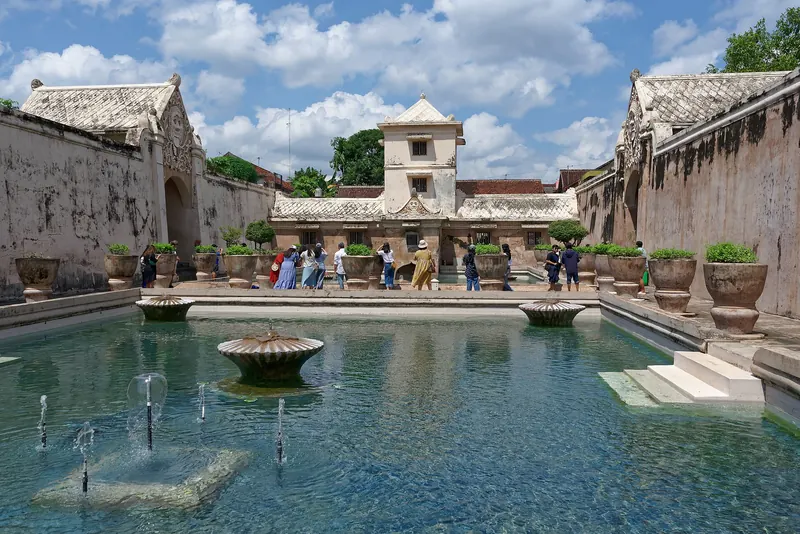
Begin in Yogyakarta itself, on foot. When we checked on 2026-10-03, the palace's official tourism site listed the Kedhaton, the Sultan's palace, as open from 08:30 to 14:30, Tuesday to Sunday, and closed on Mondays, with tickets reservable online. The same site listed Taman Sari, the royal water garden, as open daily from 09:00 to 15:00. Do the palace first, Taman Sari before midday, rest through the heat, and walk Malioboro in the late afternoon. Our Yogyakarta guide covers the dress rules and the quieter quarters.
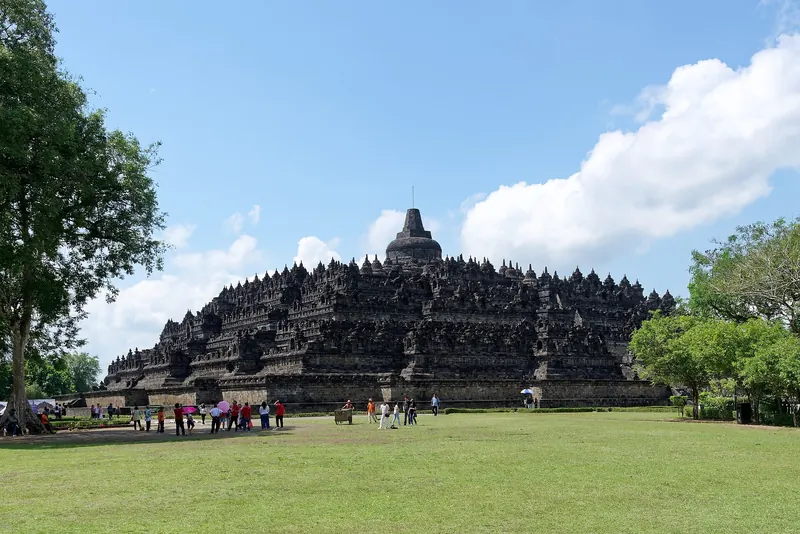
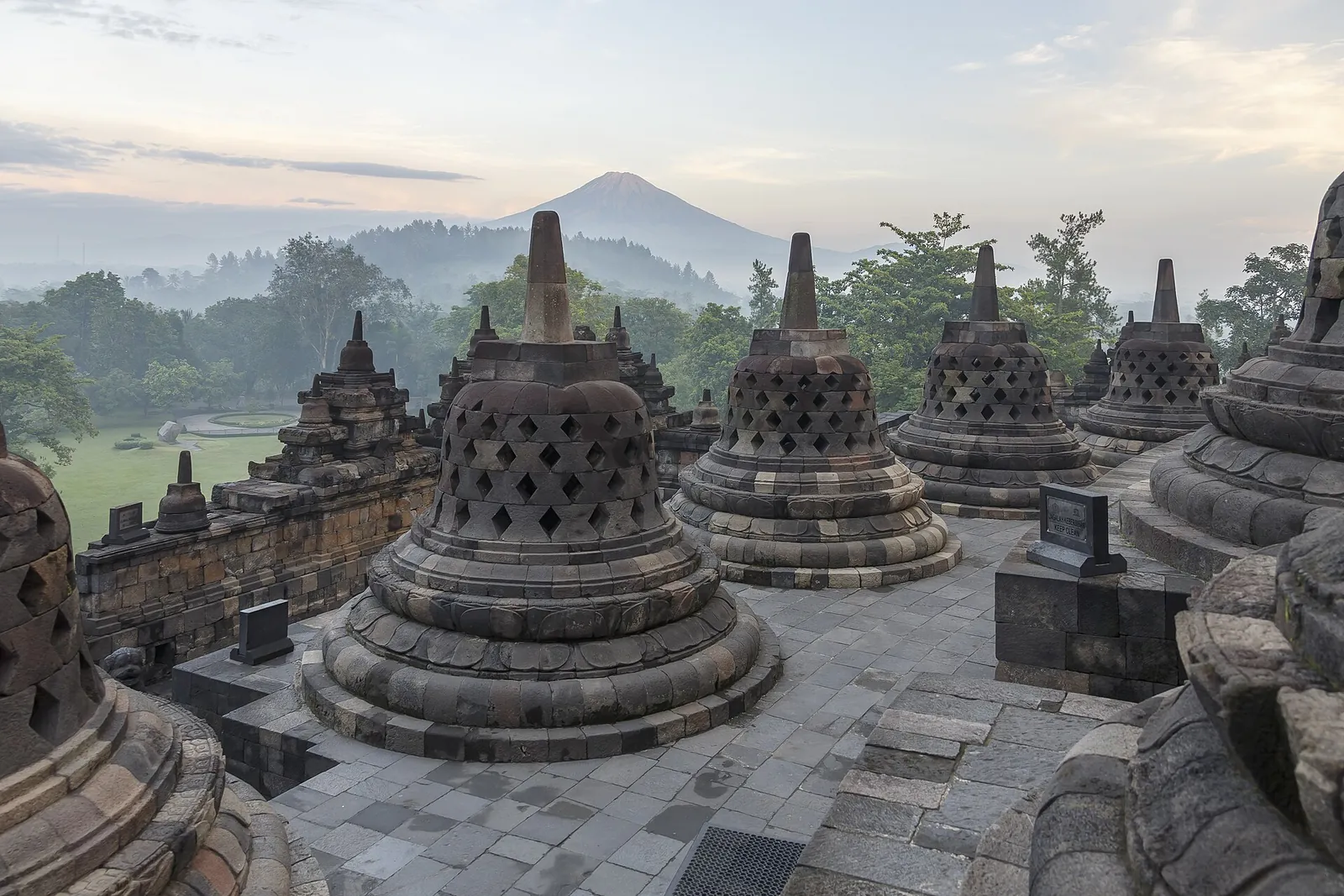
Give Borobudur the whole of day 2. Climbing the monument needs the temple structure ticket from the official ticket site run by the site operator, InJourney Destination Management. When we checked on 2026-10-03, that page listed the temple structure ticket every day from 08:30 to 17:00, including upanat temple sandals and a guide, and listed the cheaper temple ground (courtyard) ticket as for domestic tourists only. Book the climb for your date before you leave home rather than at the gate.
The UNESCO listing from 1991 covers Borobudur together with Pawon and Mendut, two smaller temples close by. Stop at them in the afternoon, when the main monument is at its busiest; our Borobudur guide has the details. Without a car, the ministry describes a bus from Jombor terminal in Yogyakarta to Borobudur terminal, with local transport onward; with a driver, the day is simpler and you can leave before dawn for the sunrise options described in our Borobudur guide.
Make time for the local food
What to eat and where to look
Gudeg
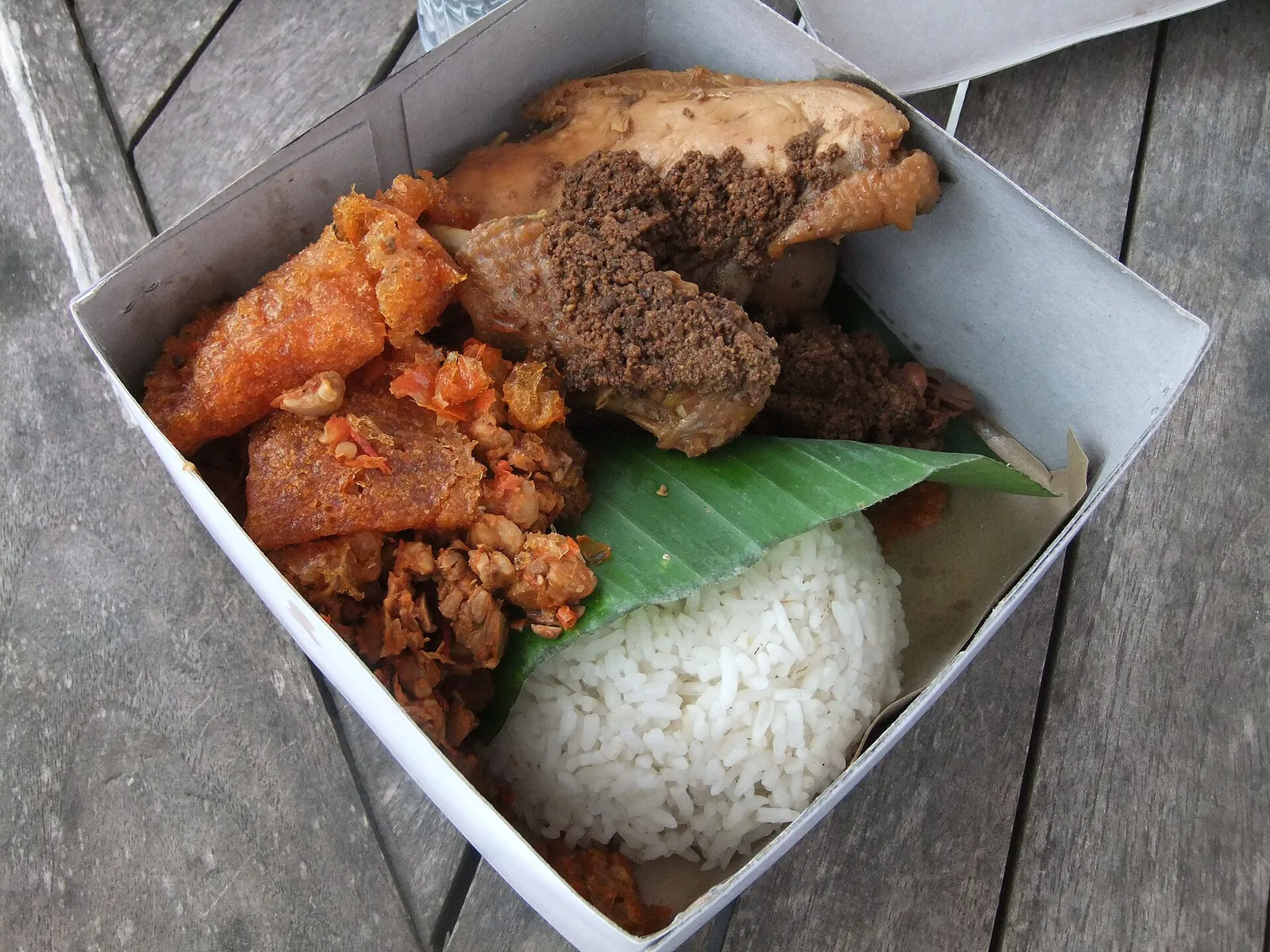
Young jackfruit slow-cooked for hours in coconut milk with spices, coloured reddish-brown by teak leaves. The Ministry of Tourism describes dry gudeg (kering), cooked until the coconut milk has gone, and wet gudeg (basah) with a thick areh sauce; the full plate comes with rice, krecek (spicy beef-skin crackers in coconut milk), chicken and a spiced egg.
- Where to look
- Gudeg stalls and restaurants across Yogyakarta; the dry version is also sold boxed to take away.
- Fit it into your day
- A first-morning breakfast or lunch on day 1, between the Kraton and Taman Sari.
It is sweet by design; the krecek and the chilli bring the heat, so ask for it on the side if you prefer.
Kupat tahu Magelang
Rice cakes (ketupat), noodles, fritters, cabbage and tofu under a thin, sweet-savoury peanut sauce, described by the Ministry of Tourism as Magelang's most iconic dish and a breakfast or lunch dish.
- Where to look
- Warungs in Magelang and around Borobudur; the ministry names Kupat Tahu Pojok in Magelang.
- Fit it into your day
- Lunch on day 2, after the climb. For something stronger, try ndas beong, the head of a Progo river fish cooked with galangal, lemongrass and ginger, which the ministry recommends at Warung Makan Sehati in Bumen near Borobudur.
Stalls usually take cash only; the peanut sauce rules it out for anyone with a nut allergy.
Jadah tempe
A Kaliurang snack that pairs jadah, a cake of sticky rice, with tempe made from soybeans. The provincial tourism office traces the best-known stall, Mbah Carik's, to the 1950s near Telogo Putri.
- Where to look
- Stalls in Kaliurang, around the Telogo Putri area.
- Fit it into your day
- An afternoon snack on day 3, with hot tea, after Ullen Sentalu.
Filling and sweet; one portion is enough before dinner.
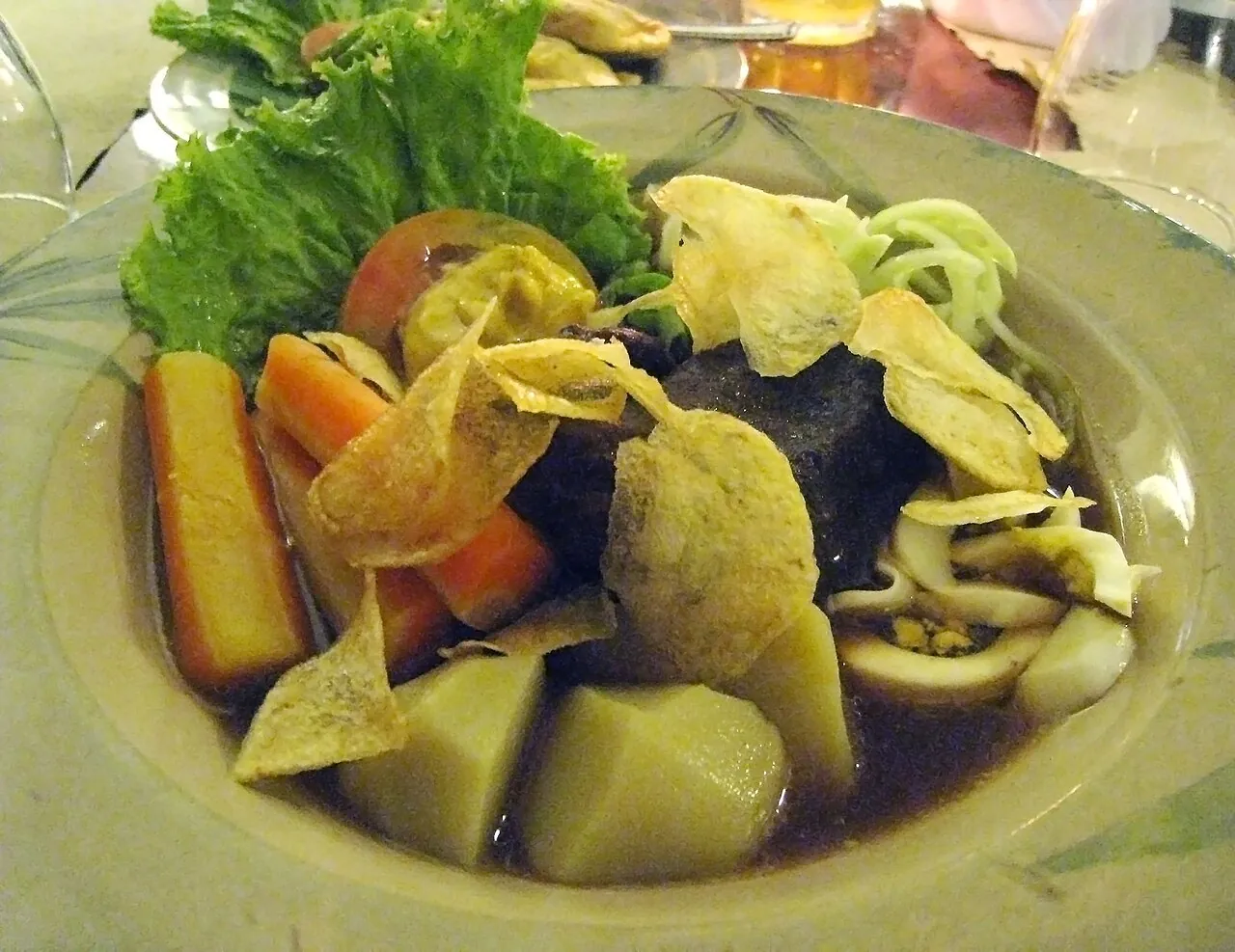
Selat Solo
Solo's beef salad, adopted from Dutch colonial cooking and once eaten mainly at court: beef stew, hard-boiled egg and fried potatoes with plenty of salad vegetables, and a touch of Javanese sweetness.
- Where to look
- Restaurants in Solo; the Ministry of Tourism names Selat Solo Mbak Lies in Serengan, open since 1987.
- Fit it into your day
- Lunch on day 5, after the palace and Pasar Klewer.
Contains beef; ask for the sauce on the side if you find it too sweet.
Nasi liwet
Rice cooked in coconut milk, broth and spices, served with side dishes that usually include chicken, chicken liver and gizzard, yellow tofu and egg.
- Where to look
- Night stalls in Solo; the ministry names Nasi Liwet Bu Wongso Lemu in Banjarsari, serving it since 1950.
- Fit it into your day
- The last dinner of the trip, on day 5 in Solo.
The standard plate includes offal; ask for chicken only if you prefer.
Day 3: Merapi, only if the volcano allows it
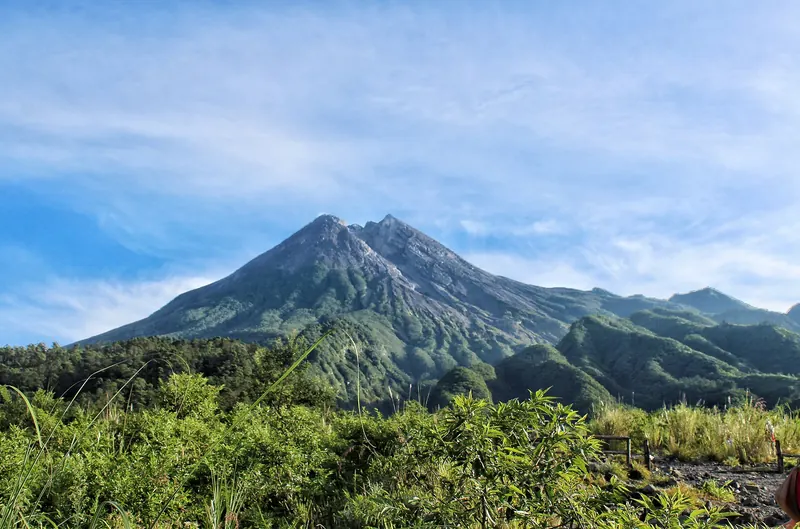
Merapi's alert level decides this day. When we checked on 2026-10-03, MAGMA Indonesia, the government volcano monitoring service, listed Merapi at Level III (Siaga), the second-highest of its four levels. Read the latest Merapi report on MAGMA the evening before, note the danger zones it names, and ask your jeep operator how the route stays outside them. If the level rises or the operator cancels, swap this day for Kotagede and the museums of Yogyakarta.
If the trip goes ahead, do the lava tour in the morning. The Ministry of Tourism describes many jeep communities at Kaliadem offering off-road trips into the area devastated by the 2010 eruption, always led by a driver who also acts as your guide. The usual stops are the Sisa Hartaku house museum, which shows what the eruption did to the people who lived there, an underground bunker where two volunteers died in the heat, and Batu Alien, a boulder shaped like a human face. Bring a sweater for the cool air on the slopes.
Spend the afternoon in Kaliurang, the old hill resort on the southern slope. Ullen Sentalu, a private museum of the royal houses of Yogyakarta, Pakualaman, Surakarta and Mangkunegaran, is visited by guided tour, and photography is allowed only in certain areas. When we checked on 2026-10-03, its official site listed opening from 08:30 to 16:30, Tuesday to Sunday, closed on Mondays. Our Mount Merapi guide covers the volcano museum and the viewpoints.
Day 4: Prambanan at opening time, the Ramayana at night
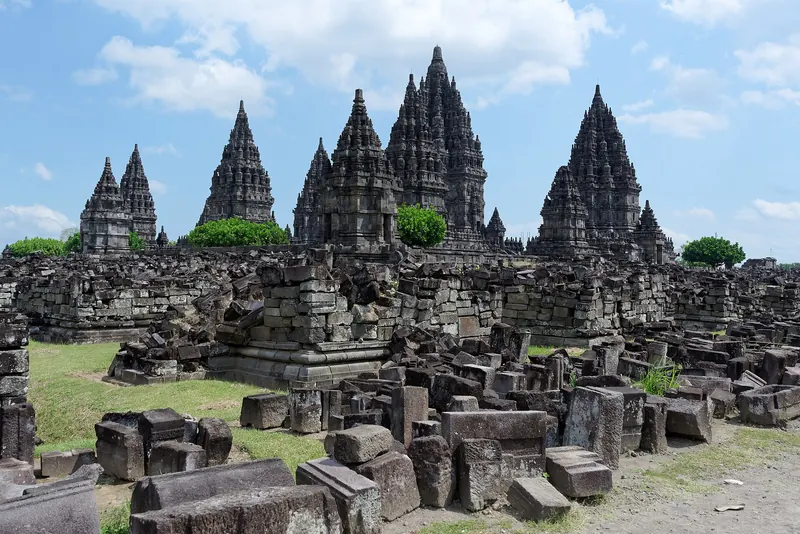
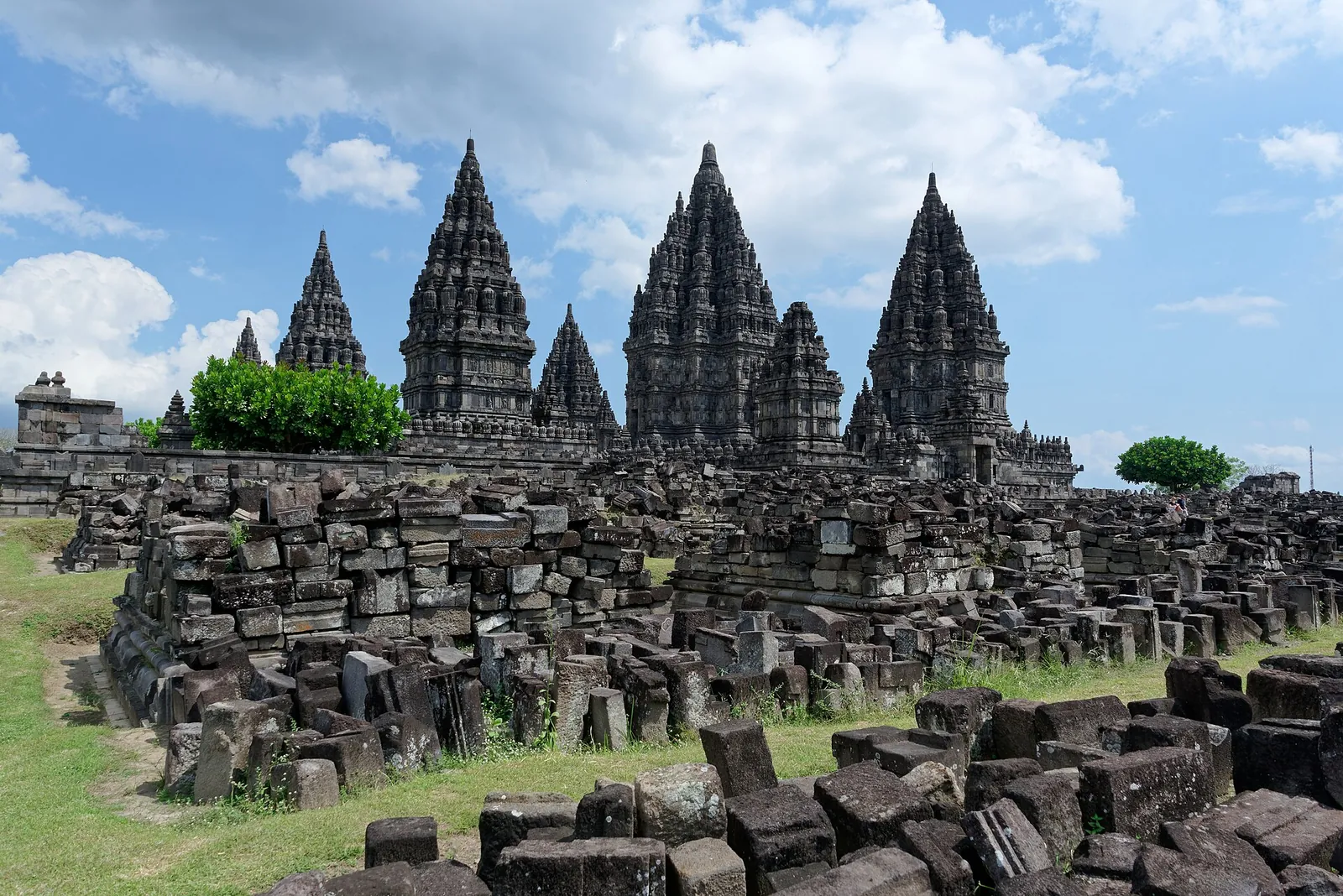
When we checked on 2026-10-03, the official ticket site listed the Prambanan Temple ticket from 06:30 every day, covering the main compound, the Lumbung, Bubrah and Sewu temples and the Prambanan Museum. Be at the gate when it opens: see the Shiva, Vishnu and Brahma shrines while the stone is still cool, then walk north through the park to Sewu, the large Buddhist temple at the far end. There is little shade between the sites, so carry water and finish before the midday heat.
The Ministry of Tourism lists Trans Jogja buses 1A and 1B from stops around Malioboro and Tugu station to the temple, taking about 45 minutes to an hour, or 30 to 40 minutes by ride-hailing car. Go back to the hotel for a rest in the afternoon, or add Plaosan or Ratu Boko by car, as our Prambanan guide explains.
Plan the evening around the ballet. When we checked on 2026-10-03, the official Ramayana ticket page listed the following schedule, marked as subject to change. It did not yet show the Ramayana programme from November 2026 onwards, so check it again for later dates.
- May to October 2026: Ramayana on the open-air stage, with Prambanan as the backdrop, on Tuesdays, Thursdays and Saturdays, 19:30–21:00.
- Every Friday in 2026: the Roro Jonggrang dance drama in the indoor Trimurti theatre, 19:30–20:30.
- If it rains before an outdoor show begins, it moves to the Trimurti theatre; a show stopped by rain after 45 minutes counts as completed and is not refunded.
- Arrival: the operator recommends arriving 30 to 45 minutes before the start.
Day 5: the train to Solo, palaces and markets
Take a morning commuter train east. Wikivoyage puts the Yogyakarta–Solo journey at about an hour and a half, with stops in Solo at Purwosari and Solo Balapan; The line has a Prambanan station between the two cities, but Wikivoyage notes that it is some distance from the temples, so it is not a practical way to reach them. Check the current timetable with KAI Commuter before you travel.
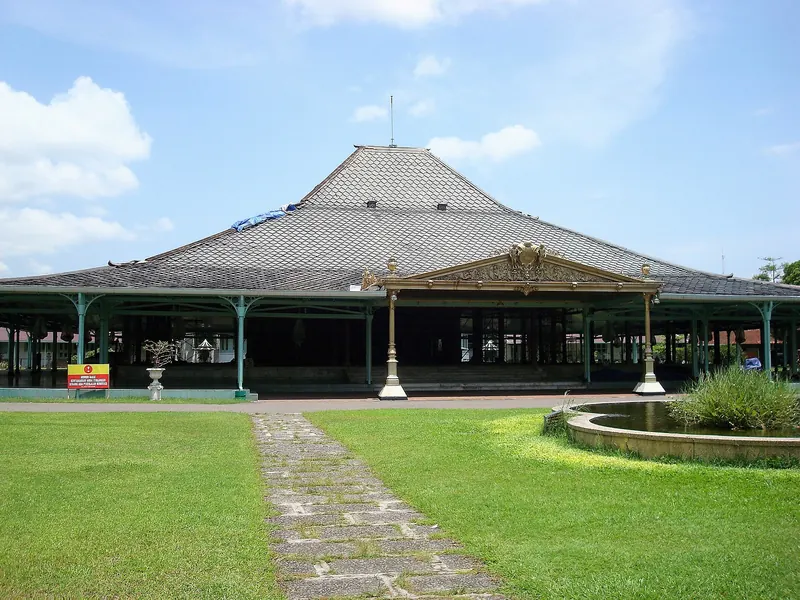
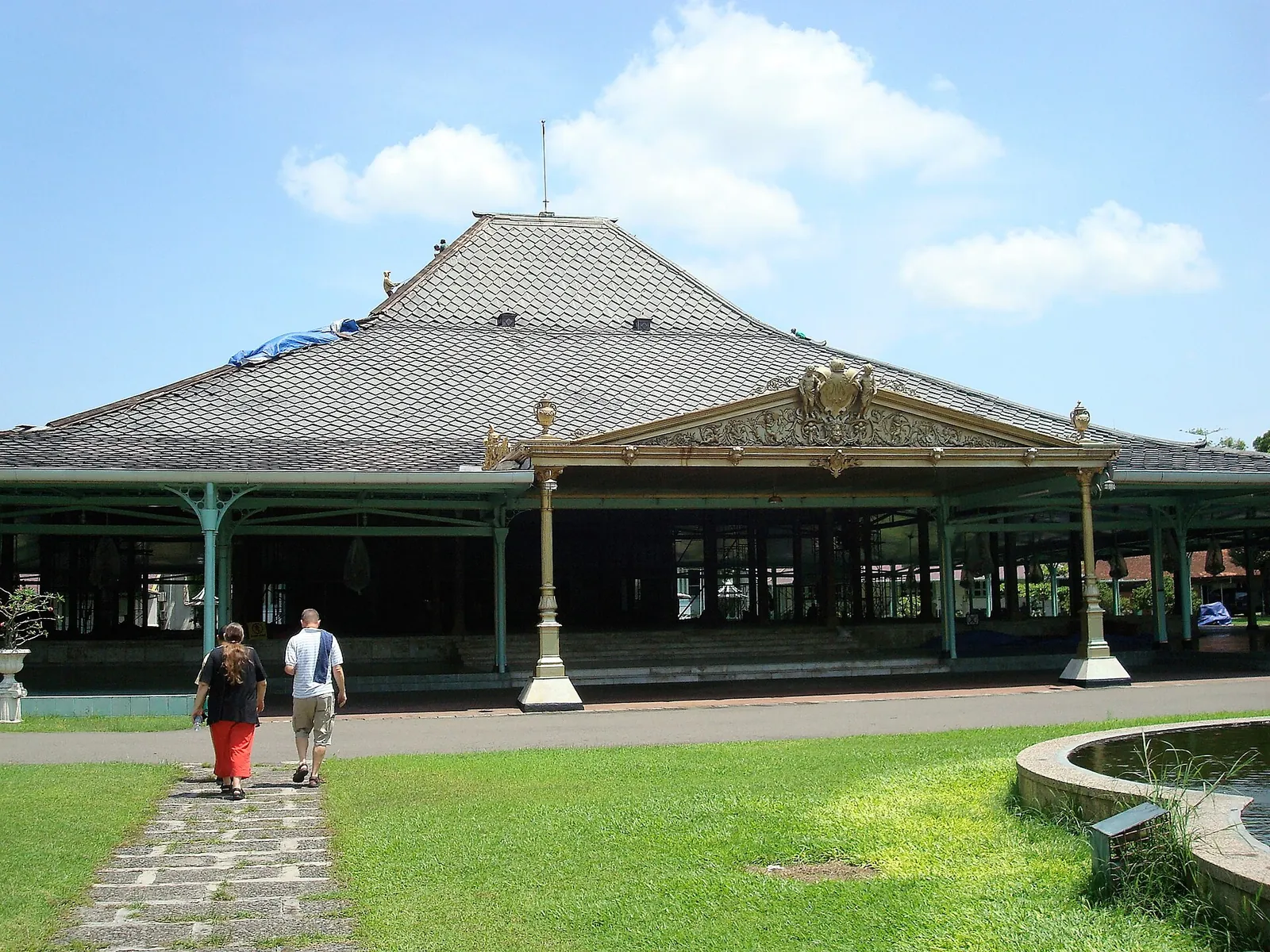
Solo has two royal courts, and one morning is enough for one of them, so choose. When we checked on 2026-10-03, the Ministry of Tourism listed the Keraton Surakarta (the Kasunanan) as open daily except Fridays, from 09:00 to 14:00. Pasar Klewer, the city's largest textile market, is beside it and was listed as open daily from 08:30 to 16:00, so the palace and a batik market fit one late morning. The other court, Pura Mangkunegaran, sells timed, guided sessions on its official ticket site up to 30 days ahead. It asks visitors to arrive 15 minutes early, or lose the ticket, and its dress rules exclude shorts and short skirts, flip-flops and the parang and lereng batik patterns.
Keep the evening for food: nasi liwet, selat Solo and timlo are the city's signature dishes, and our Solo guide has the night-food areas and the batik quarters of Kauman and Laweyan. Sleep in Solo and fly from Adi Soemarmo or take a long-distance train the next morning, or ride the commuter train back to Yogyakarta if your flight leaves from YIA.
The route day by day
This is an editorial suggestion, not a timetable. The opening days below come from the official pages we checked on 2026-10-03; recheck them before you fix the order. A trip that starts on a Wednesday puts every visit on an open day and Prambanan on a Saturday Ramayana night; a Tuesday start works too, with the Friday Roro Jonggrang show instead. With other start days, swap days 3 and 4.
- Day 1 — Yogyakarta (not Monday): the Kraton at 08:30, Taman Sari before midday, a rest, then Malioboro and a lesehan dinner.
- Day 2 — Borobudur: the climb with a pre-booked temple structure ticket, Pawon and Mendut on the way back; dinner in Yogyakarta.
- Day 3 — Merapi (check MAGMA the night before): a lava jeep tour from Kaliadem in the morning, Ullen Sentalu in Kaliurang in the afternoon (closed Monday).
- Day 4 — Prambanan: the gates at 06:30, Sewu before midday, a rest, then the Ramayana (Tuesday, Thursday or Saturday) or Roro Jonggrang (Friday).
- Day 5 — Solo (Kasunanan closed Friday): the morning commuter train, one palace and Pasar Klewer, nasi liwet in the evening; sleep in Solo.
- Extra days: the Dieng Plateau, which the Ministry of Tourism puts about 115 km and three to four hours from Yogyakarta, needs one or two nights of its own; or a second day in Solo for the Mount Lawu temples.
Practical questions
Is five days enough for Central Java?
Five days covers Yogyakarta, Borobudur, Merapi, Prambanan and Solo at one big sight a day. It does not leave room for the Dieng Plateau or the Mount Lawu temples near Solo; add one or two days for either.
Can I see Borobudur and Prambanan on the same day?
Tours do it, but the temples lie on opposite sides of Yogyakarta, so much of the day is spent in a car and each temple gets only a few hours. Separate days let you reach each one at its opening time and keep the evening for the Ramayana ballet after Prambanan.
Do I need to book the Borobudur climb in advance?
Book it. When we checked on 2026-10-03, the official ticket site listed the temple structure ticket, which includes the climb, upanat sandals and a guide, from 08:30 to 17:00, and the courtyard-only ticket as for domestic tourists only. Buy the structure ticket for your date before you travel.
Is it safe to visit Merapi?
It depends on the day. When we checked on 2026-10-03, MAGMA Indonesia listed Merapi at Level III (Siaga). Read the latest Merapi report on MAGMA the evening before, ask your operator how the route avoids the named danger zones, and swap the day for Yogyakarta's museums if the level rises.
Which day of the week should I start?
A Wednesday start fits every closing day on this route: the Yogyakarta Kraton and Ullen Sentalu close on Mondays, the Kasunanan palace in Solo closes on Fridays, and the Ramayana runs on Tuesdays, Thursdays and Saturdays. A Tuesday start also works, with the Friday Roro Jonggrang show at Prambanan.
How do I get from Yogyakarta to Solo?
Take the KAI Commuter train, which Wikivoyage puts at about an hour and a half, stopping in Solo at Purwosari and Solo Balapan. Check the current timetable with the operator before you travel.
Sources and checks before you travel
Reference sources for the version dated 3 October 2026. Confirm opening times, access, transport and conditions for your travel dates.
- Indonesia Travel (Ministry of Tourism): weather, climate and seasons ↗ — opens in a new tab
- Keraton Yogyakarta tourism (official): Kagungan Dalem Kedhaton ↗ — opens in a new tab
- Keraton Yogyakarta tourism (official): Kagungan Dalem Tamansari ↗ — opens in a new tab
- Indonesia Travel (Ministry of Tourism): Malioboro ↗ — opens in a new tab
- Indonesia Travel (Ministry of Tourism): Borobudur Temple Compounds ↗ — opens in a new tab
- Indonesia Travel (Ministry of Tourism): Borobudur Temple, a marvel of Buddhist architecture ↗ — opens in a new tab
- Official ticket site (InJourney Destination Management): Borobudur Temple ↗ — opens in a new tab
- Official ticket site: Prambanan Temple ↗ — opens in a new tab
- Official ticket site: Ramayana Ballet Prambanan ↗ — opens in a new tab
- Indonesia Travel (Ministry of Tourism): Prambanan Temple, history and how to get there ↗ — opens in a new tab
- MAGMA Indonesia (PVMBG): volcano activity levels ↗ — opens in a new tab
- Indonesia Travel (Ministry of Tourism): Mendaki Merapi ↗ — opens in a new tab
- Indonesia Travel (Ministry of Tourism): Kaliurang ↗ — opens in a new tab
- Museum Ullen Sentalu (official site) ↗ — opens in a new tab
- Indonesia Travel (Ministry of Tourism): Keraton Surakarta ↗ — opens in a new tab
- Mangkunegaran tourism (official): ticket reservation and rules ↗ — opens in a new tab
- Indonesia Travel (Ministry of Tourism): Klewer Market ↗ — opens in a new tab
- Indonesia Travel (Ministry of Tourism): 5 tasty dishes to try in Solo ↗ — opens in a new tab
- Indonesia Travel (Ministry of Tourism): Gudeg ↗ — opens in a new tab
- Indonesia Travel (Ministry of Tourism): Magelang culinary delights ↗ — opens in a new tab
- Visiting Jogja (Yogyakarta tourism office): Jadah Tempe Mbah Carik ↗ — opens in a new tab
- Indonesia Travel (Ministry of Tourism): Dieng Kulon ↗ — opens in a new tab
- Wikipedia: KAI Commuter Yogyakarta Line ↗ — opens in a new tab
- Wikivoyage: Solo ↗ — opens in a new tab
- Wikivoyage: Yogyakarta ↗ — opens in a new tab
Does this experience fit your route?
A driver or a guided day trip makes days 2 to 4 of this route much easier. Before you book, check the pick-up time, how long you will spend in the car and which tickets are included.
Check dates and details on Viator ↗ — opens in a new tabAffiliate link · Book with ViatorPhoto credits
Prambanan's Hindu towers rise above the rubble of the small shrines in the middle courtyard
Photograph: Jakub Hałun — opens in a new tab · CC BY-SA 4.0 — opens in a new tab
Changes: Resized and converted to WebP; displayed with responsive crops. · Original photograph and licence details ↗ — opens in a new tab
The upper terraces of Borobudur, reached only with the temple structure ticket
Photograph: CEphoto, Uwe Aranas — opens in a new tab · CC BY-SA 3.0 — opens in a new tab
Changes: Resized and converted to WebP; displayed with responsive crops. · Original photograph and licence details ↗ — opens in a new tab
The pendopo of Pura Mangkunegaran, the junior royal court of Solo
Photograph: Arabsalam — opens in a new tab · CC BY-SA 4.0 — opens in a new tab
Changes: Resized and converted to WebP; displayed with responsive crops. · Original photograph and licence details ↗ — opens in a new tab
Selat Solo, the Dutch-influenced beef salad of Solo's court kitchen
Photograph: Gunawan Kartapranata — opens in a new tab · CC BY-SA 3.0 — opens in a new tab
Changes: Resized and converted to WebP; displayed with responsive crops. · Original photograph and licence details ↗ — opens in a new tab
Boxed gudeg from Wijilan in Yogyakarta, with rice, chicken and krecek
Photograph: Midori — opens in a new tab · CC BY 3.0 — opens in a new tab
Changes: Resized and converted to WebP; displayed with responsive crops. · Original photograph and licence details ↗ — opens in a new tab