Java · Central Java
Solo (Surakarta) travel guide: palaces, batik, night food, hill temples
Solo, officially Surakarta, is the other royal city of Central Java, about an hour and a half by commuter train from Yogyakarta and less touristy. It has two working courts, the Kasunanan palace and the Mangkunegaran, and two old batik quarters still making cloth. Much of its food culture happens early in the morning and after dark. Plan around those rhythms: palaces before lunch, batik and markets in the afternoon, food in the evening, and one long day up the slopes of Mount Lawu for the temples of Sukuh and Cetho.
- Suggested time
- 2–3 days
- Where to stay
- Jalan Slamet Riyadi or the Mangkunegaran area for the centre; Laweyan for a heritage stay among the batik houses
- Season and timing
- The tourism ministry gives April to October as Java's dry season and November to March as the wet season, though it notes the seasons have become less predictable. Palace ceremonies such as Sekaten and the Malam Suro procession follow the Javanese and Islamic calendars, so their dates move each year. Grebeg Sudiro at Pasar Gede falls at Chinese New Year.
The short answer
Give Solo two full days, or three if you want the Mount Lawu temples. Spend one day on the two palaces with Pasar Klewer and Kauman in between, and another on Laweyan, Pasar Gede and an evening of food. Use the third for Sukuh and Cetho by hired car. Stay on or just off Jalan Slamet Riyadi or around the Mangkunegaran, so that the palaces, markets and night food are a short ride away. If you are coming from Yogyakarta, the commuter train makes Solo an easy add-on. It is still worth at least one night, because the city is at its best after dark.
Two courts, two different visits
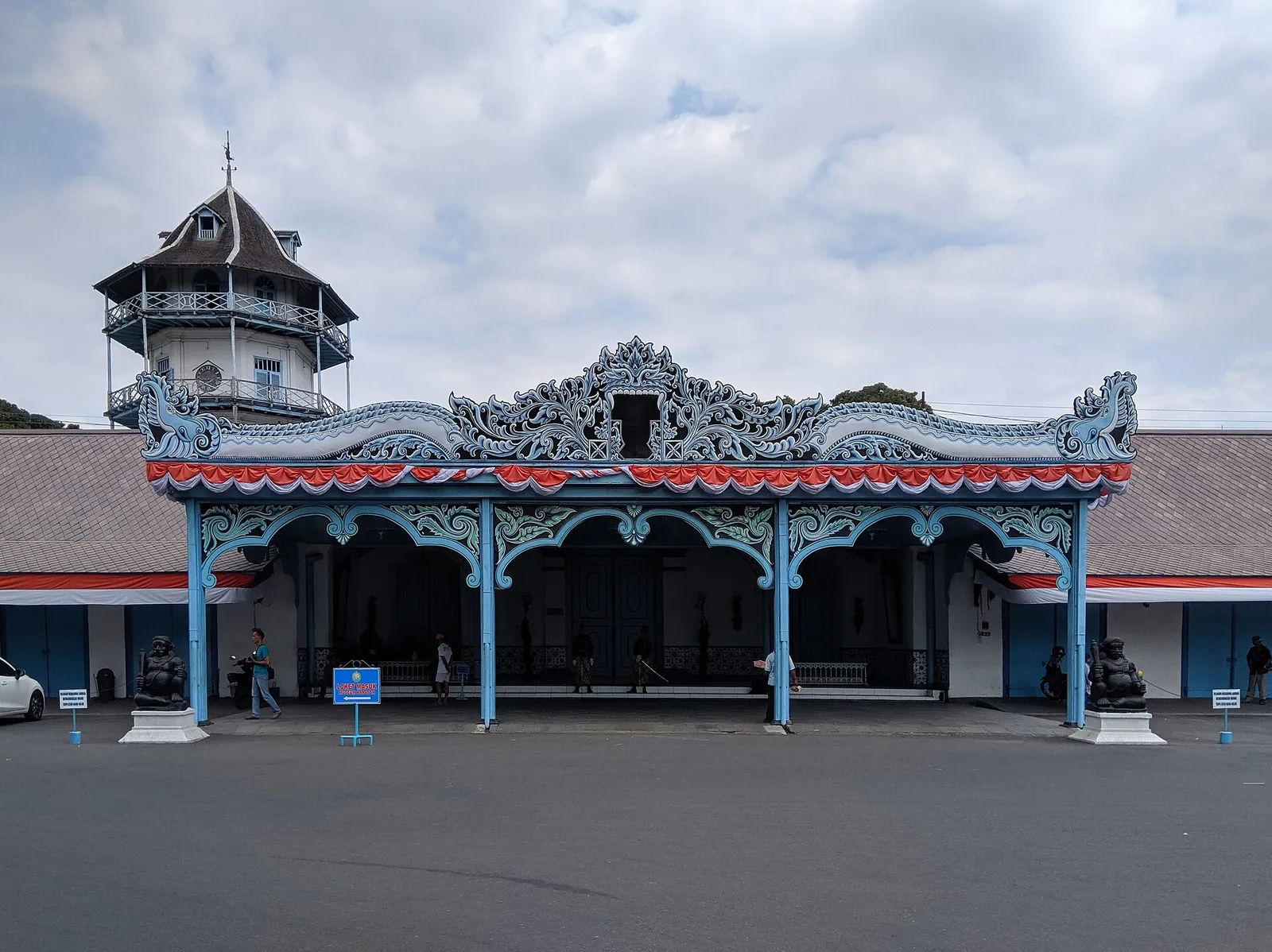
Solo has two royal houses, and seeing both is the main reason to come. The Keraton Surakarta Hadiningrat (the Kasunanan) was founded in the 1740s by Pakubuwono II, after the old court at Kartasura was damaged in the 1743 Chinese War. It is still the residence of the royal family. Visitors see the public parts: the pendopo of Sasana Sewaka, which you enter barefoot over sand that the provincial tourism office says was brought from Parangkusumo beach and Mount Merapi, and the palace museum with royal carriages, palanquins, statues, old weapons and manuscripts. The king's living quarters are closed to visitors. When we checked on 3 October 2026, the Ministry of Tourism's page listed the palace as open daily except Fridays, from 09:00 to 14:00. It gave ticket prices but said they may change, so confirm both at the gate.
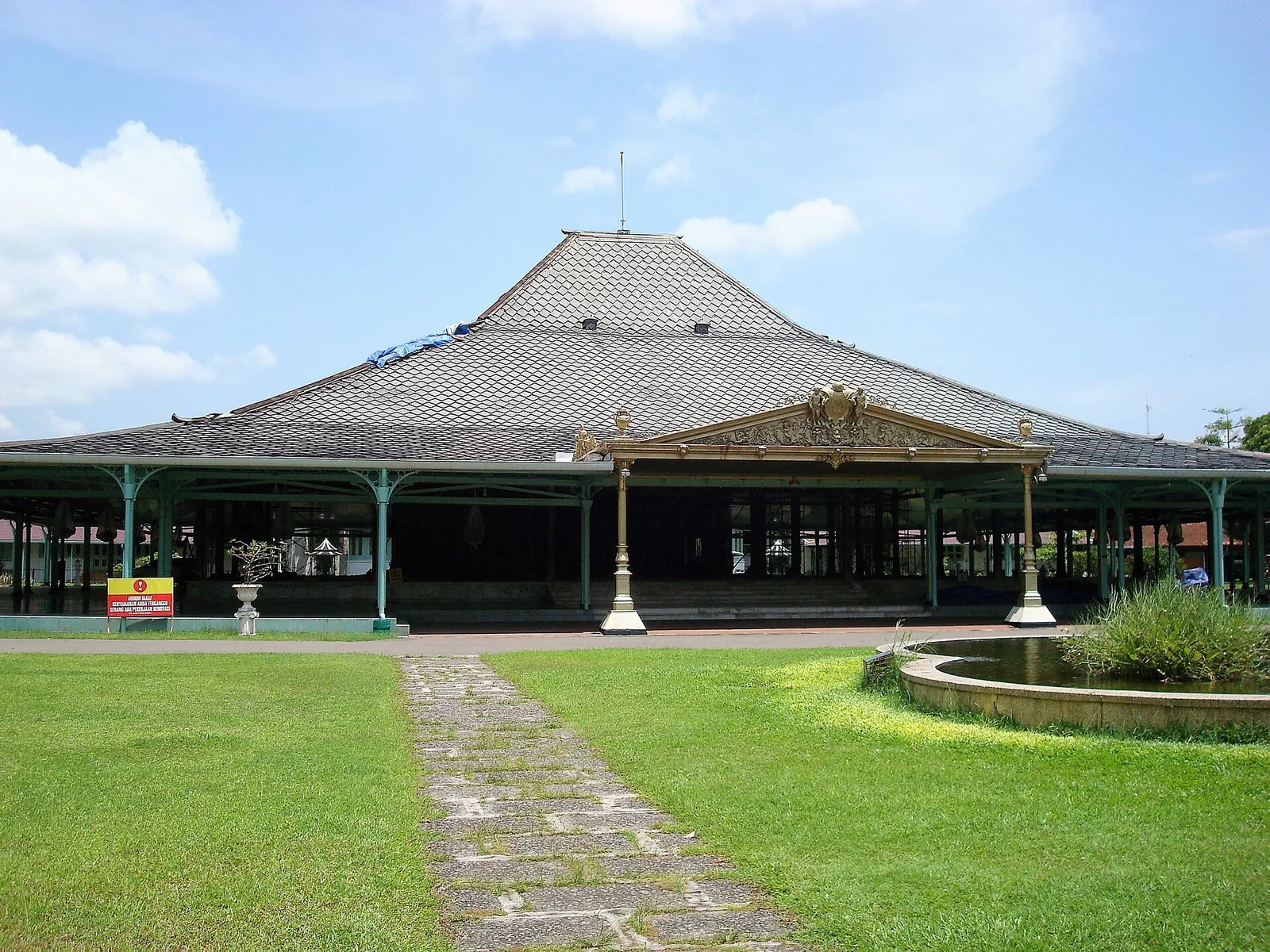
The Pura Mangkunegaran, founded in 1757 by Raden Mas Said (Mangkunegara I), feels very different. It is a timber joglo complex on Jalan Ronggowarsito with a vast open pendopo audience hall, and its collections include masks, wayang puppets, jewellery, heirlooms, musical instruments and manuscripts kept in the Reksa Pustaka library. When we checked on 3 October 2026, its official ticket site sold timed sessions up to 30 days ahead. It required visitors to arrive 15 minutes early, on pain of losing the ticket, and to stay with a Mangkunegaran storyteller-guide throughout. It also listed payment as cashless only.
Dress for the stricter of the two. Mangkunegaran's rules rule out shorts and short skirts, hats and other head coverings, sunglasses, velvet, flip-flops and clothes with the parang or lereng batik patterns. Outside food and drink are not allowed, and professional cameras need permission. Do the Kasunanan one morning with Pasar Klewer beside it, and Mangkunegaran another morning with Ngarsopuro and Pasar Triwindu just outside its gate.
Batik: Klewer for buying, Kauman and Laweyan for seeing it made
The Ministry of Tourism describes the batik of Solo and Yogyakarta as court batik, with Solo's version using sogan (chocolate brown) on a pale yellow ground. Pasar Klewer, by the palace, is the city's largest textile market. It was rebuilt after a fire in 2014, and when we checked on 3 October 2026 the ministry listed it as open daily from 08:30 to 16:00. Go when it opens. It gets hot and crowded, prices depend on the cloth, the process and the detail, and bargaining is expected.
To see batik being made, walk the old quarters. Kampung Batik Kauman grew up beside the Kasunanan as a settlement of palace retainers, and its classic motifs follow the court's standards. The provincial tourism office counts more than 30 home workshops there, where you can watch the process and buy direct. Laweyan, further west, is the merchant quarter. The Sarekat Dagang Islam trading union was founded there in 1912, and its batik is generally brighter. The ministry says some houses offer short batik classes of about two hours as well as longer workshops. Ask at the workshop a day ahead.
Make time for the local food
What to eat and where to look
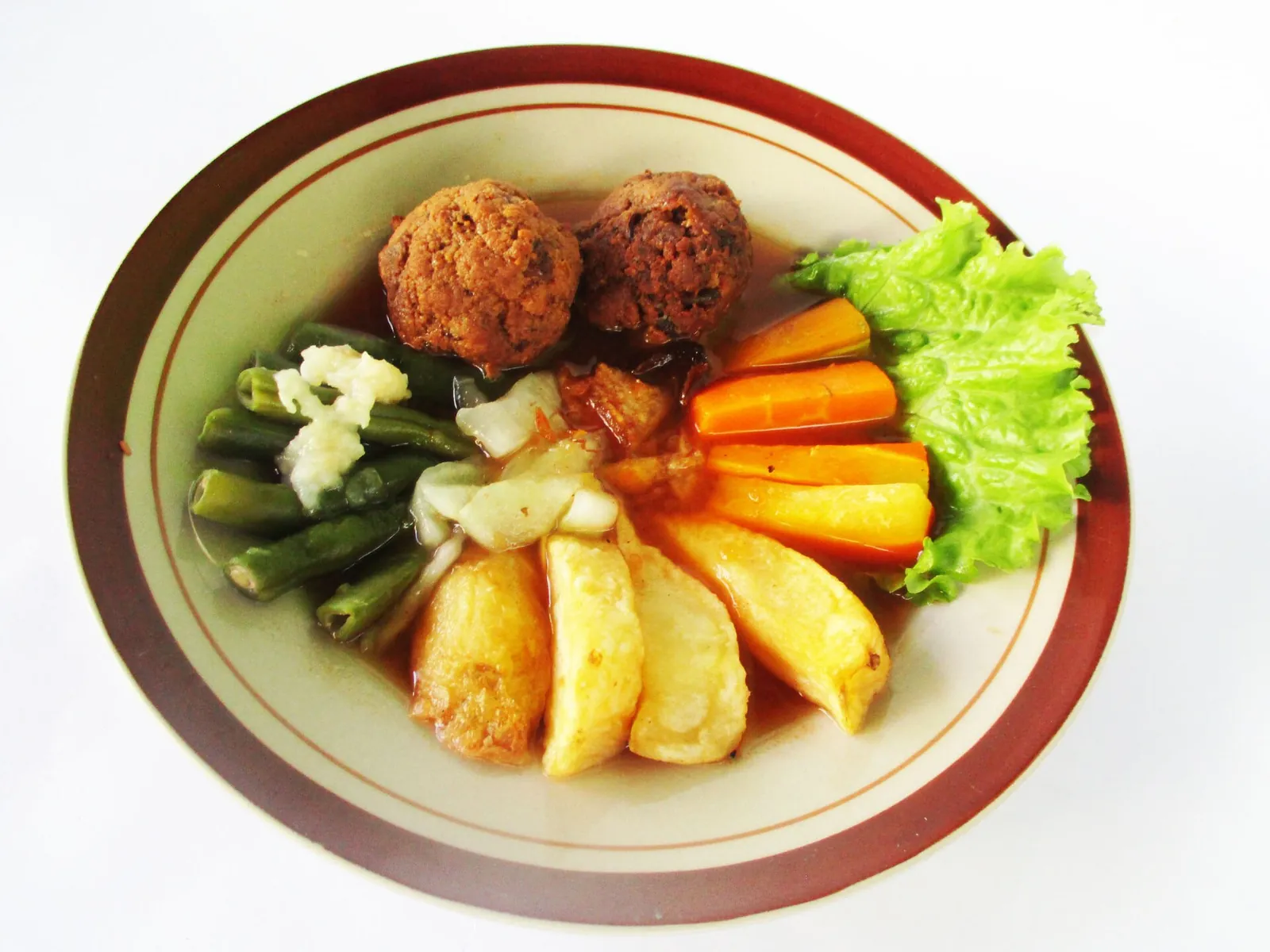
Selat Solo
A colonial-era dish adapted from Dutch cooking and once eaten mainly at court: braised beef in a thin, sweetish sauce with boiled egg, fried potatoes and salad vegetables. It looks European, but the seasoning is distinctly Javanese.
- Where to look
- Specialist selat restaurants; the Ministry of Tourism's food guide names Selat Solo Mbak Lies in Serengan.
- Fit it into your day
- A sit-down lunch after a palace morning.
Sweet rather than spicy; the sauce is usually beef-based.
Nasi liwet
Rice cooked in coconut milk and stock, served with shredded chicken, chicken offal, egg, tofu and a savoury coconut gravy, often on a banana leaf. It is Solo's best-known evening dish.
- Where to look
- Night stalls around Keprabon near the Mangkunegaran; the ministry names Nasi Liwet Bu Wongso Lemu on Jalan Teuku Umar.
- Fit it into your day
- Dinner after Ngarsopuro or a late-evening snack.
Usually includes chicken liver and gizzard; ask for it without if you prefer.
Timlo
A clear soup with spiced braised egg (telur bacem), chicken liver and gizzards and slices of Solo sausage, a meat filling rolled in a thin pancake and fried. It is the city's everyday comfort food.
- Where to look
- Timlo shops across the city; the ministry names Timlo Sastro, with branches in Jebres and Laweyan.
- Fit it into your day
- Breakfast or an early lunch.
Contains offal.
Sate buntel
Minced, spiced mutton wrapped in caul fat and grilled over charcoal, a satay that is a Solo speciality. The fat wrap keeps it juicy.
- Where to look
- Goat satay houses (sate kambing), such as those the ministry and Wikivoyage name in Pasar Kliwon and opposite Solo Balapan station.
- Fit it into your day
- A heavy lunch or dinner; one portion is a meal.
Rich and fatty; this is a goat and mutton dish.
Soto Triwindu and serabi
Soto Triwindu is a beef soto in a brown broth, still served from traditional clay pots beside the Mangkunegaran. Serabi Notosuman are small rice-flour and coconut-milk pancakes, plain or with chocolate, best eaten warm.
- Where to look
- Soto Triwindu on Jalan Teuku Umar in Keprabon; Serabi Notosuman Ny. Lidia on Jalan Moh. Yamin in Serengan.
- Fit it into your day
- Soto for breakfast before a palace visit; serabi as a snack or a gift to take away.
When we checked on 3 October 2026, the Mangkunegaran's site listed Soto Triwindu as open 05:30–15:30 daily; it can sell out earlier.
Markets, old shops and the evening city
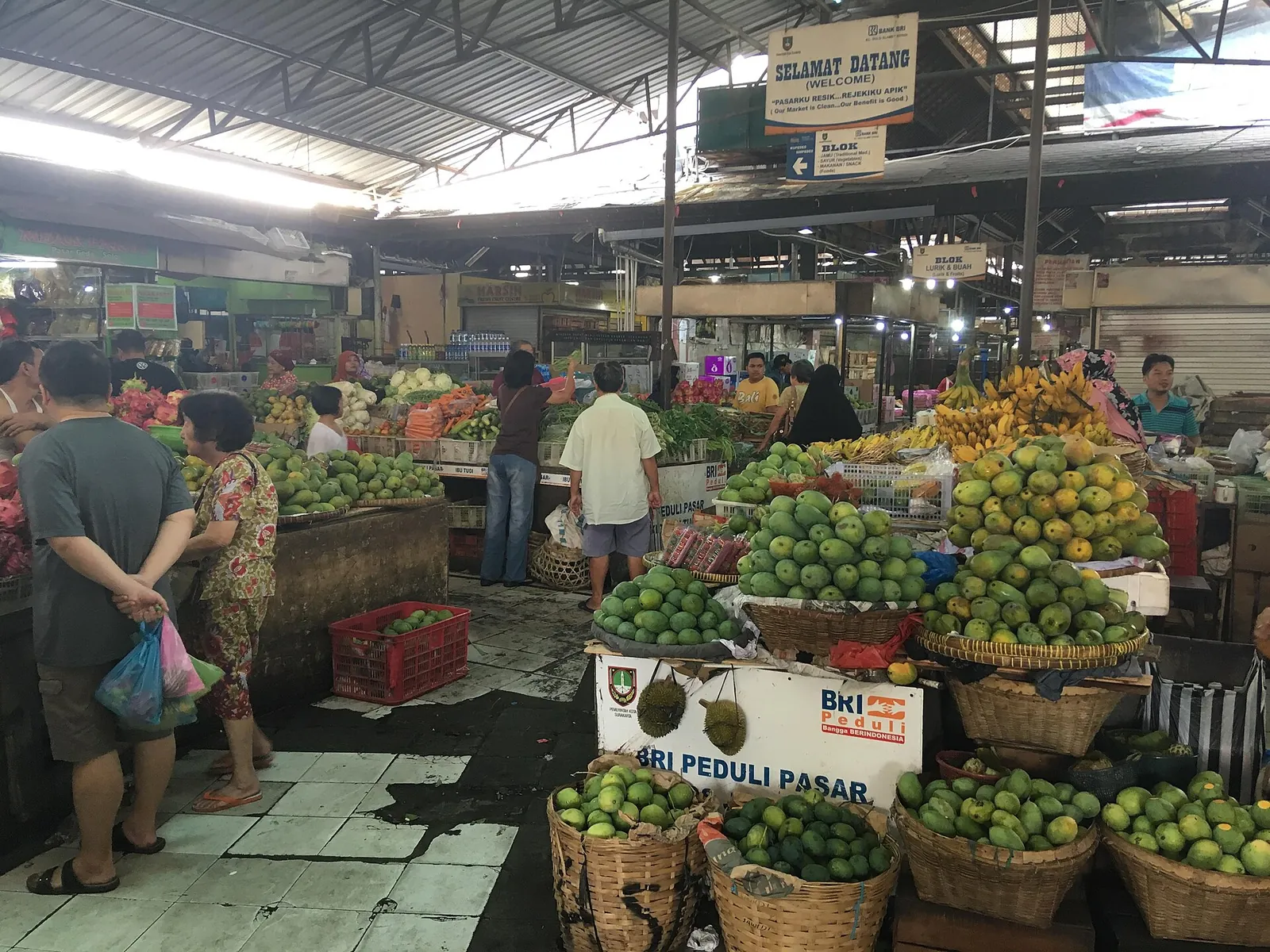
Pasar Gede Hardjonagoro, designed by the Dutch architect Thomas Karsten and opened in the early 20th century, sits in Sudiroprajan, where Solo's Chinese and Javanese communities have lived side by side for generations. Come in the morning for traditional snacks and market food. Each Chinese New Year the Grebeg Sudiro parade carries a mountain of kue keranjang cakes around the market before the crowd claims it, and the lanterns on the market gate are lit.
Around the Mangkunegaran, Pasar Triwindu was built in 1939 as a gift marking a Mangkunegaran ruler's 24 years on the throne (tri windu, three eight-year cycles), and is now an antiques market on two floors. Koridor Ngarsopuro, the street in front of the palace, has wide pavements and painted panels. The palace's own site says it is best at night, with a night market at weekends. Wikivoyage warns of counterfeits among Solo's antiques, so buy what you like rather than what you are told is old.
Evenings are when Solo eats. Nasi liwet stalls set up at night around Keprabon, near the Mangkunegaran. Wikivoyage describes Galabo, beside the Beteng Trade Center near the Kasunanan, as an open-air food court of street vendors that opens after dark and closes when it rains. On Sunday mornings Jalan Slamet Riyadi is closed to traffic for the car-free day, and the street fills with breakfast stalls.
Sukuh and Cetho: a day on Mount Lawu
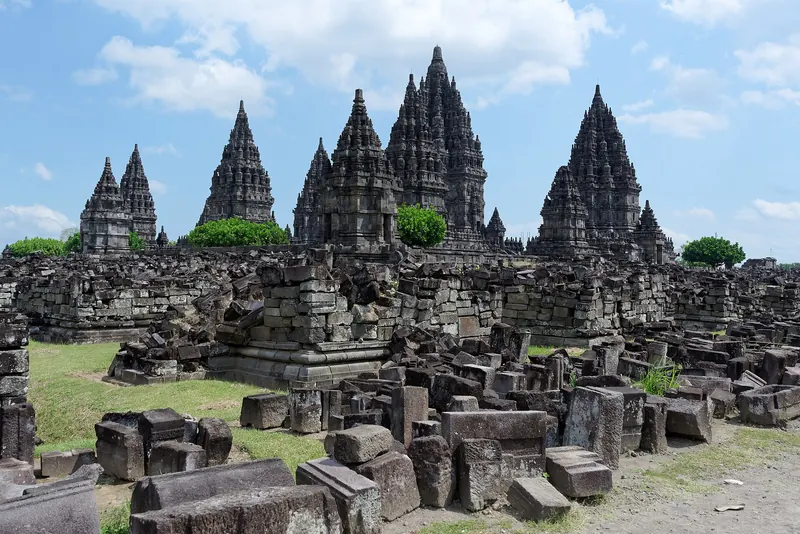
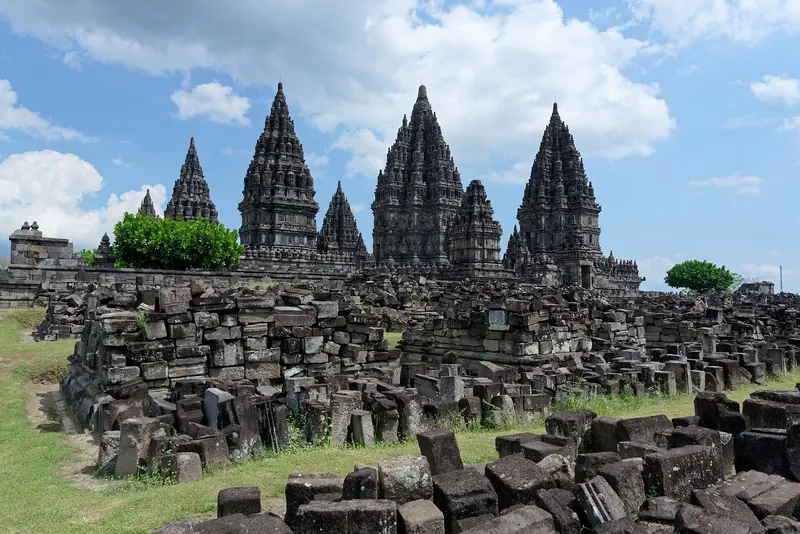
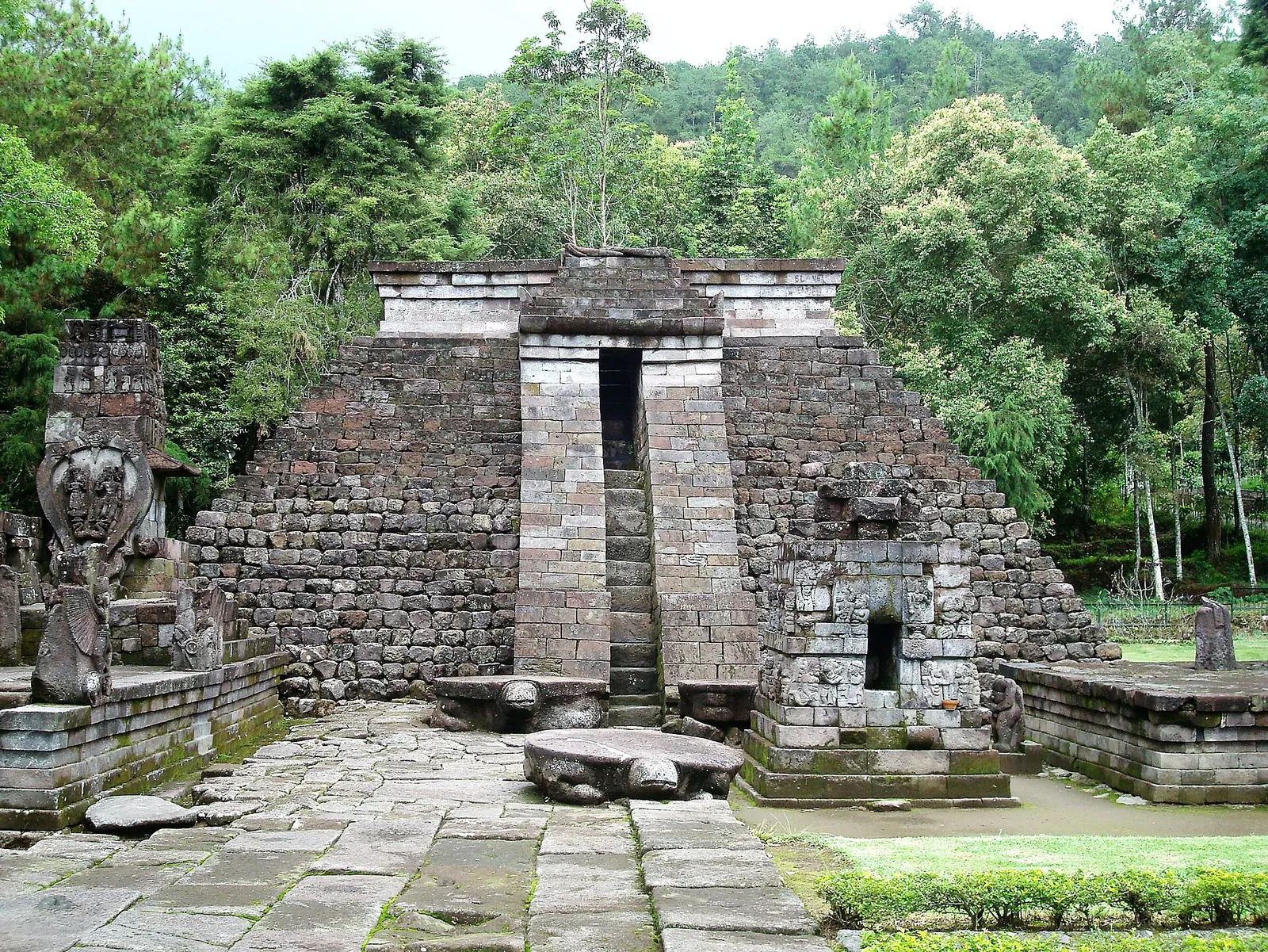
On the western slopes of Mount Lawu, east of the city in Karanganyar Regency, are two Hindu temples unlike anything at Prambanan. Candi Sukuh dates from the 15th century, the last period of temple building before Java's courts converted to Islam. Its stepped, truncated pyramid is often compared to Maya architecture, and it has lingga-yoni carvings and reliefs including the Garudeya, Sudamala and Dewa Ruci stories. The provincial tourism office notes that it shares its approach road with the Jumog waterfall.
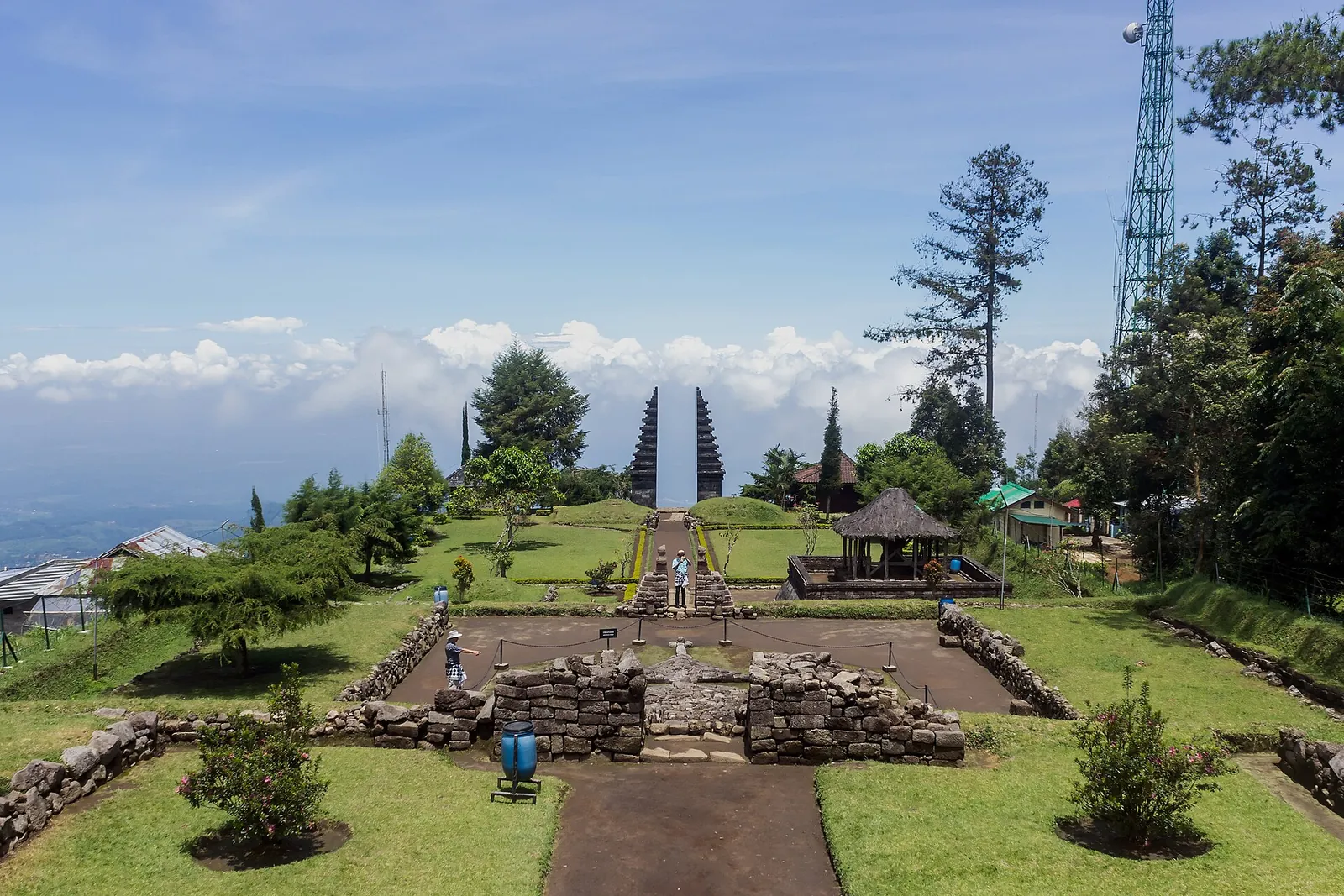
Candi Cetho is higher up the mountain, at Gumeng village in Jenawi district, in forest at about 1,495 metres. It climbs in 13 terraces that the provincial tourism office reads as the journey from a sinful life to a pure one (moksa), and it has a statue of Saraswati, goddess of knowledge. The provincial tourism office describes Cetho as a working place of Hindu worship, so dress modestly and follow any instructions at the gate.
Public transport is impractical for this day. Hire a car and driver from Solo for the day, start early and allow for slow mountain roads. Wikivoyage puts Tawangmangu, the hill resort on the same mountain, about an hour's drive from Solo, which gives a sense of the distance. Cetho is high enough to be noticeably cooler than the city, so take a warm layer.
Getting there and getting around
Most visitors arrive by train. KAI Commuter runs the Yogyakarta–Solo line, and Wikivoyage puts the journey at about an hour and a half, stopping in Solo at Purwosari and Solo Balapan. Prambanan lies between the two cities, so the temple and Solo can be joined in one trip. Long-distance trains from Jakarta, Bandung and Surabaya also use Balapan, Purwosari or Jebres; check which station your ticket names.
In the city, ride-hailing apps work well and are the simplest way to hop between the palaces, markets and batik quarters. Becak (pedicabs) wait outside the markets for short rides, so agree the fare before you set off. Batik Solo Trans buses run along Jalan Slamet Riyadi, the main avenue. Distances in the centre are short, but the traffic is heavy, so plan your day by neighbourhood rather than crossing the city repeatedly.
A workable three-day plan
This is an editorial suggestion, not a timetable. Check opening days, especially the Kasunanan's Friday closure, before fixing the order.
- Day 1 — Kasunanan side: the Keraton Surakarta in the morning, Pasar Klewer and Kauman's workshops after it, a rest in the heat of the afternoon, then dinner near the palace or at Galabo.
- Day 2 — Mangkunegaran side: a booked Mangkunegaran session in the morning, Pasar Triwindu and Ngarsopuro, an afternoon in Laweyan or a short batik class, and nasi liwet in Keprabon in the evening.
- Day 3 — Mount Lawu: Sukuh and Cetho by hired car, leaving early, with a stop in Tawangmangu if the day allows.
- Extra half-day: Pasar Gede in the morning, or the Sangiran Early Man Site north of the city.
Side trips worth the time
Sangiran, a UNESCO World Heritage Site since 1996, is one of the key places for the study of human evolution. Its layers have yielded Homo erectus fossils and the remains of ancient animals. The Ministry of Tourism puts it 45 minutes to an hour by road from central Solo, and it makes a good half-day out. De Tjolomadoe, at Colomadu on the way to the airport, is a sugar mill founded in 1861 by Mangkunegara IV and revived as a cultural venue and industrial museum, with some of the original machinery still in place.
In the city, the Radya Pustaka Museum, founded in 1890 and one of the oldest museums in Indonesia, sits beside Taman Sriwedari, the former royal park on Jalan Slamet Riyadi known for its wayang orang theatre. Check what is on before you go: the ministry's own page says the museum's registered collection is currently listed as zero, so treat it as a short historical stop rather than a major museum.
Practical questions
Is Solo worth visiting if I have already seen Yogyakarta?
Yes, if you are interested in palace culture, batik and food. Solo has two working courts, two batik quarters you can walk through and a strong evening food scene, with fewer tour groups than Yogyakarta. It does not replace Borobudur or Prambanan; it adds a different side of Javanese court life.
Can I visit Solo as a day trip from Yogyakarta?
You can, using the KRL commuter train, but you will see only one palace and a market. Stay at least one night so you can have an evening of nasi liwet and night stalls and visit the second palace the next morning.
What should I wear to the palaces?
Cover your knees and shoulders and wear proper shoes rather than flip-flops. The Mangkunegaran's visitor rules also forbid hats, sunglasses, velvet and clothes with parang or lereng batik patterns. At the Kasunanan you go barefoot in the Sasana Sewaka area.
Do I need to book the Mangkunegaran in advance?
When we checked on 3 October 2026, the palace sold timed sessions online up to 30 days ahead, with cashless payment and a guide included. Book a day or two ahead and arrive 15 minutes before your session.
How do I get to Sukuh and Cetho?
Hire a car and driver from Solo for the day. Both temples are on the western slopes of Mount Lawu in Karanganyar Regency, and Cetho is the higher and further of the two. Leave early, because the mountain roads are slow.
Where should I buy batik in Solo?
Pasar Klewer has the widest range and the lowest prices, with bargaining. Kauman and Laweyan workshops let you see how the cloth is made and buy from the people who make it. Hand-drawn (tulis) batik costs more than stamped (cap) batik.
Sources and checks before you travel
Reference sources for the version dated 3 October 2026. Confirm opening times, access, transport and conditions for your travel dates.
- Indonesia Travel (Ministry of Tourism): Keraton Surakarta ↗ — opens in a new tab
- Visit Jawa Tengah (Central Java tourism office): Keraton Surakarta Hadiningrat ↗ — opens in a new tab
- Indonesia Travel (Ministry of Tourism): 10 historic places in Solo ↗ — opens in a new tab
- Visit Jawa Tengah: Pura Mangkunegaran ↗ — opens in a new tab
- Mangkunegaran tourism: ticket reservation and visiting rules (official) ↗ — opens in a new tab
- Mangkunegaran (official): Pasar Triwindu, Koridor Ngarsopuro and Soto Triwindu ↗ — opens in a new tab
- Visit Jawa Tengah: Kampung Batik Kauman ↗ — opens in a new tab
- Visit Jawa Tengah: Kampung Batik Laweyan ↗ — opens in a new tab
- Indonesia Travel (Ministry of Tourism): Klewer Market ↗ — opens in a new tab
- Indonesia Travel (Ministry of Tourism): Batik Solo ↗ — opens in a new tab
- Indonesia Travel (Ministry of Tourism): Grebeg Sudiro ↗ — opens in a new tab
- Indonesia Travel (Ministry of Tourism): 5 tasty dishes to try in Solo ↗ — opens in a new tab
- Indonesia Travel (Ministry of Tourism): Sukuh Temple ↗ — opens in a new tab
- Visit Jawa Tengah: Candi Sukuh ↗ — opens in a new tab
- Visit Jawa Tengah: Candi Cetho ↗ — opens in a new tab
- Wikipedia: Sukuh and Ceto ↗ — opens in a new tab
- Indonesia Travel (Ministry of Tourism): Sangiran Early Man Site ↗ — opens in a new tab
- Indonesia Travel (Ministry of Tourism): Museum Radya Pustaka Surakarta ↗ — opens in a new tab
- Indonesia Travel (Ministry of Tourism): weather, climate and seasons ↗ — opens in a new tab
- Wikivoyage: Solo ↗ — opens in a new tab
- Wikipedia: KRL Commuterline Yogyakarta Line ↗ — opens in a new tab
Does this experience fit your route?
If you are based in Yogyakarta and short of time, a guided day can combine Solo with the Mount Lawu temples. Check where it starts, how long you spend at each stop and what the entry fees cover before you book.
Check dates and details on Viator ↗ — opens in a new tabAffiliate link · Book with ViatorPhoto credits
The open pendopo hall of the Mangkunegaran palace, Solo
Photograph: Arabsalam — opens in a new tab · CC BY-SA 4.0 — opens in a new tab
Changes: Resized and converted to WebP; displayed with responsive crops. · Original photograph and licence details ↗ — opens in a new tab
The Kasunanan palace (Keraton Surakarta) and its Sanggabuwana tower
Photograph: Gunarta — opens in a new tab · CC BY-SA 4.0 — opens in a new tab
Changes: Resized and converted to WebP; displayed with responsive crops. · Original photograph and licence details ↗ — opens in a new tab
Candi Sukuh, the 15th-century Hindu temple on the slopes of Mount Lawu
Photograph: Arabsalam — opens in a new tab · CC BY-SA 4.0 — opens in a new tab
Changes: Resized and converted to WebP; displayed with responsive crops. · Original photograph and licence details ↗ — opens in a new tab
The terraces of Candi Cetho, high on Mount Lawu
Photograph: Crisco 1492 — opens in a new tab · CC BY-SA 4.0 — opens in a new tab
Changes: Resized and converted to WebP; displayed with responsive crops. · Original photograph and licence details ↗ — opens in a new tab
Selat Solo, the city's Dutch-influenced beef dish
Photograph: Danangtrihartanto — opens in a new tab · CC BY-SA 4.0 — opens in a new tab
Changes: Resized and converted to WebP; displayed with responsive crops. · Original photograph and licence details ↗ — opens in a new tab
Fruit sellers inside Pasar Gede Hardjonagoro, Solo
Photograph: Christophe95 — opens in a new tab · CC BY-SA 4.0 — opens in a new tab
Changes: Resized and converted to WebP; displayed with responsive crops. · Original photograph and licence details ↗ — opens in a new tab