Plan your trip · Vietnam
Where to stay in Vietnam: hotels, homestays, overnight boats, resorts
Vietnam is long and thin, and the bed you book does more than give you a room: it decides how far you travel each day. A hotel in Hanoi's Old Quarter puts the city on foot, a stilt-house homestay in Mai Chau gives you a family dinner and a quiet valley, a night on a boat in Ha Long Bay lets you wake up among the karsts instead of riding a bus there and back, and a beach resort near Da Nang or on Phu Quoc is the rest stop that makes a long trip work. The trick is to use each type of stay where it does its job, and to choose bases close to the airports and stations you will actually use.
- Suggested time
- About two weeks for three city bases plus one or two short stays off each; one base per 2–4 nights
- Where to stay
- Hanoi Old Quarter, Hoi An or Da Nang, and District 1 in Ho Chi Minh City; homestays, boats and resorts as short add-ons
- Season and timing
- Choose the type of stay by season: Ha Long boats are most reliable from April to June and September to November; Phu Quoc resorts are best outside July to September; Sapa and Hanoi need heating from late December to March.
The short answer
On a first two-week trip, sleep in three city bases close to the main airports: Hanoi's Old Quarter, Hoi An or Da Nang on the central coast, and District 1 in Ho Chi Minh City, and fly between them rather than spending up to 30 hours on the north–south train. Add one or two nights of something different off each base: a homestay in Mai Chau, Sapa or the Mekong Delta, one night on a licensed boat in Ha Long Bay, and two or three resort nights at the end. Book city hotels for at least two nights at a time, keep homestays and boats to one or two nights, and leave the beach for the end of the trip so a storm or a delayed flight does not cost you a connection.
Four kinds of stay, and where each one earns its place
Most trips mix four types of accommodation, and each suits a different kind of stop. City hotels are the backbone: in Hanoi, Hoi An and Ho Chi Minh City you want to walk out of the door into the sights and the street food, so location beats facilities. Homestays belong in the countryside, where the point is the village itself: the tourism board's Mai Chau guide describes wooden stilt houses in Lac and Pom Coong villages with clean, simple rooms, shared bathrooms and open-air sleeping areas, and dinner cooked by the family. Overnight boats make sense on Ha Long Bay and on the Mekong, where the water is the destination. Beach resorts are for rest, around Da Nang, Hoi An's beaches and Phu Quoc.
The same valley often offers all levels at once. When we checked on 2026-10-03, the official Mai Chau guide suggested budgeting around 200,000 VND for a rustic homestay, 600,000 VND for a boutique farm stay and 1,500,000 VND for a four-star hotel. Sapa works the same way: the tourism board points out that you can stay in town or out among the terraces, with a pool and buffet or with family-style hospitality, and names lodges such as Topas Ecolodge alongside village homestays. Decide what the stop is for before you compare prices.
A simple rule keeps the trip comfortable: put the comfortable, well-located hotel where you arrive tired or leave early, and put the simple homestay or the boat in the middle of a short excursion. A shared bathroom is easy for one night between two hotel stays; it is harder on the night before a dawn flight.
Homestays: what to expect and how to choose one
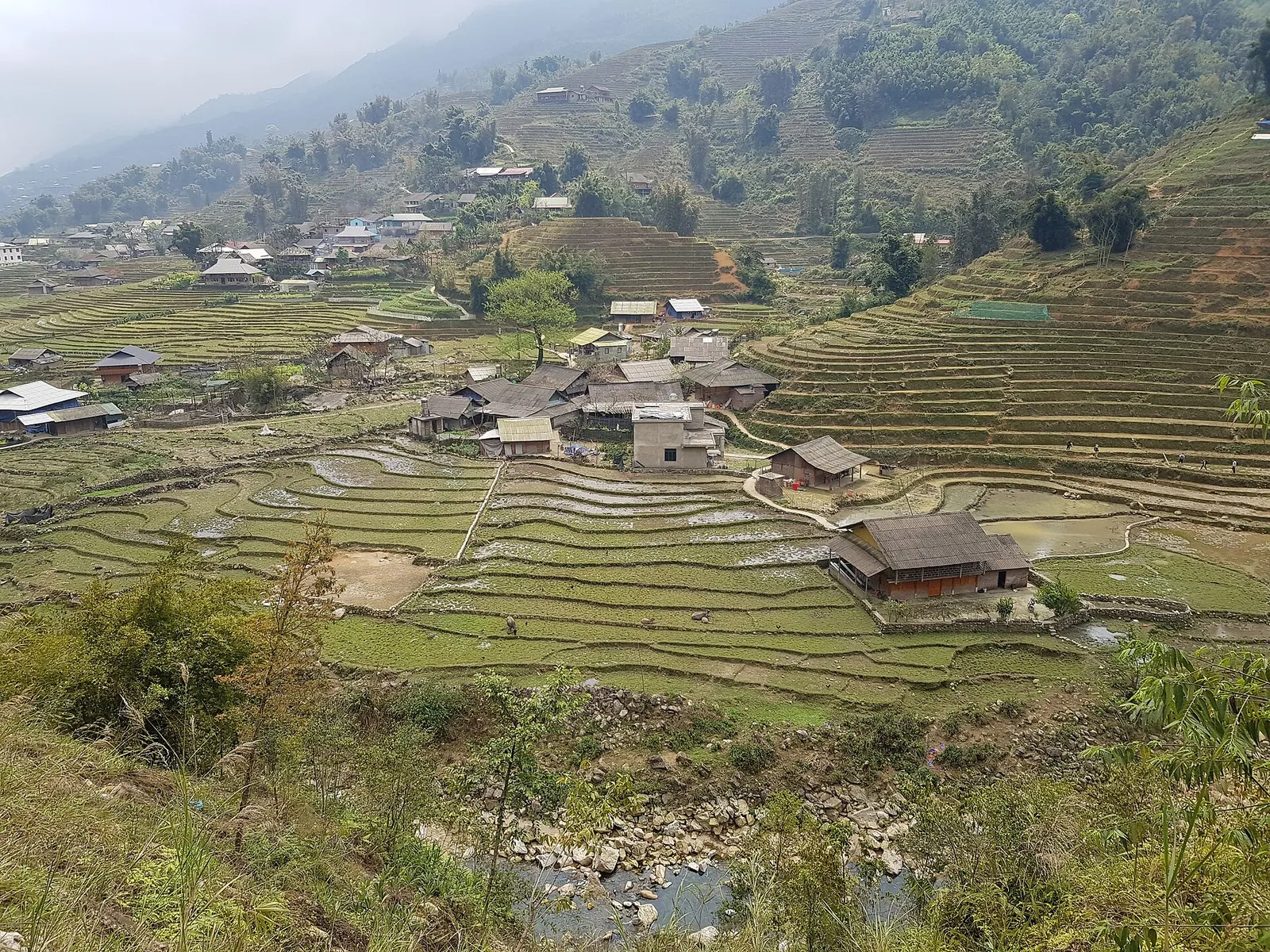
A homestay in Vietnam can mean anything from a mattress in a family's stilt house to a small guesthouse with private rooms that still serves home cooking. In the northern valleys, the tourism board highlights the White Thai villages of Lac and Pom Coong in Mai Chau, within easy reach of Hanoi, and the ethnic villages around Sapa, where an overnight or multi-day trek lets you sleep in a village in the mountains. It notes that staying with a family adds to the small income they earn from farming, and recommends choosing a locally owned trekking company that follows sustainable practices.
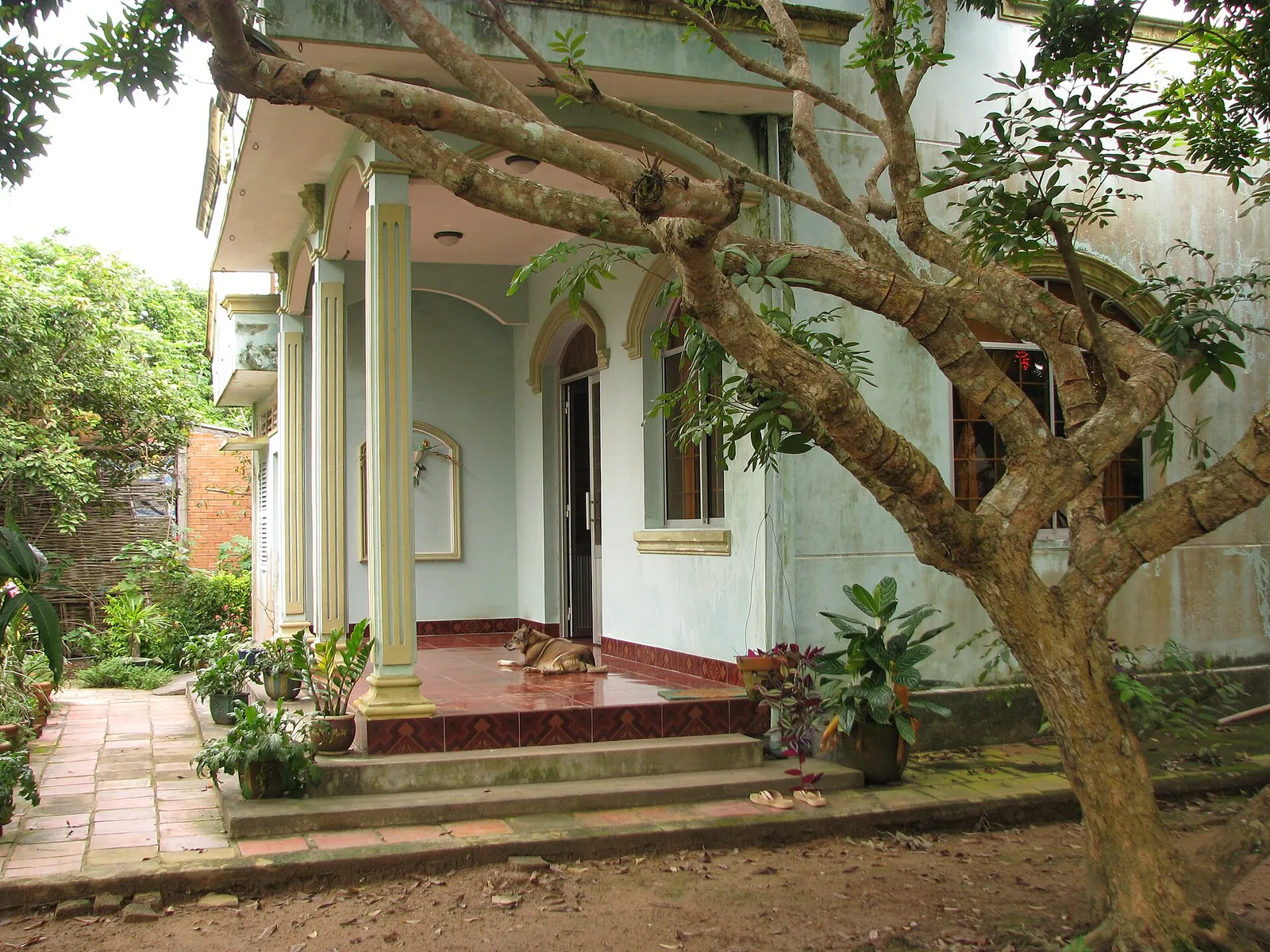
In the south, the Mekong Delta has garden and orchard homestays on the islets. The national tourism site describes Mekong Rustic in Can Tho and Cai Be, which works with local communities and offers homestay rooms or bungalows, fruit-farm visits and meals morning, noon and night. In Phong Nha, the official guide suggests a homestay, farmstay or villa in the rice fields just outside town for nature lovers, with hostels and riverside guest houses in town, and notes that most places serve their own menus for guests. In Ninh Binh it mentions plenty of charming accommodation around Tam Coc, where cycling is an easy way to get around.
Before you book, ask the questions that decide whether the night is a pleasure or an ordeal:
- Bathroom and bedding: private or shared, and whether you sleep in a private room or in an open space with mosquito nets.
- Meals: whether dinner and breakfast are included, and whether the family can cook without meat, fish sauce or shellfish if you need it.
- Heating and season: from late December to March the north is cold; the official climate guide says Sapa hotels use heated blankets, so check what a village house provides.
- Getting there: whether the host or your trekking company arranges the transfer from the town or the bus stop, and how luggage reaches the house.
Make time for the local food
What to eat and where to look
Cơm lam (bamboo-tube rice)
Sticky rice cooked inside a bamboo tube over the fire, then peeled and dipped in crushed peanuts; the tourism board suggests starting a Mai Chau meal with it.
- Where to look
- Homestay dinners and village stalls in Mai Chau and the northern valleys.
- Fit it into your day
- The opening dish of a homestay dinner after an afternoon walk or bike ride through the paddies.
Usually made with sticky rice only, but the peanut dip is a problem for nut allergies.
Gà đồi (grilled hill chicken)
Free-range chicken from the hills, grilled and served with herbs and stir-fried greens; one of the favourite Mai Chau dishes in the official guide, alongside grilled pork skewers.
- Where to look
- Homestay kitchens and small restaurants in Mai Chau's Lac and Pom Coong villages.
- Fit it into your day
- Order through your host in advance if dinner is not included, so the family can buy and prepare it.
Village chicken is lean and firm; tell your host early if you do not eat meat.
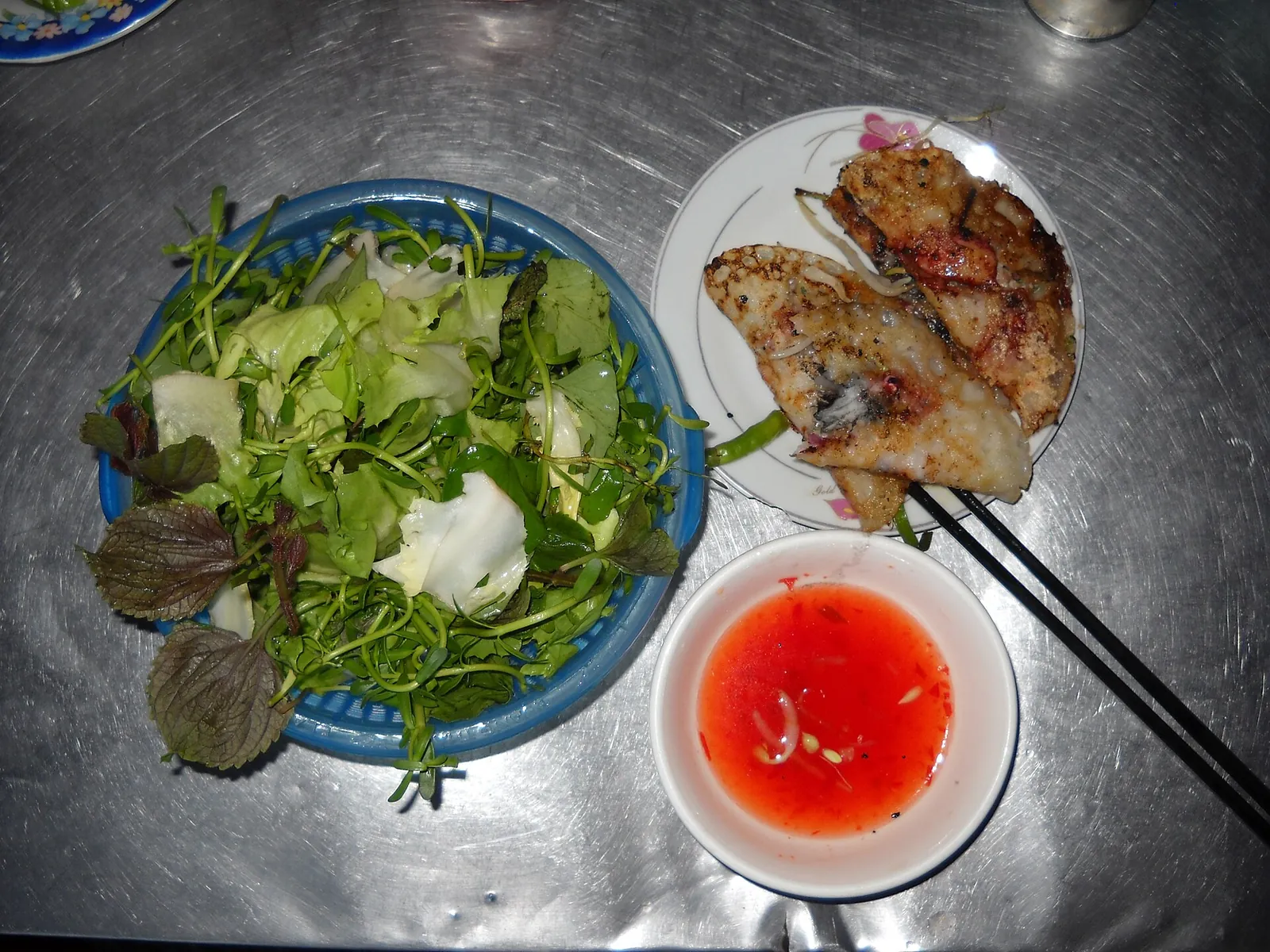
Bánh xèo
A crisp rice-flour pancake coloured with turmeric and filled with prawns, pork and bean sprouts, wrapped in leaves and herbs and dipped in fish sauce.
- Where to look
- Evening eateries in Ho Chi Minh City, Mekong Delta towns and along the central coast.
- Fit it into your day
- A shared dinner on a city night between two excursions, or a homestay meal in the delta.
Contains shellfish and fish sauce.
Mekong orchard fruit
Jackfruit, rambutan, mango and mangosteen from the delta's islets; the tourism board describes Tan Phong islet near Cai Be as covered in fruit trees, and homestays there serve fruit with every meal.
- Where to look
- Garden homestays and riverside markets around Cai Be and Can Tho.
- Fit it into your day
- Breakfast and afternoon snacks at a delta homestay, before or after a sampan trip.
Wash or peel fruit yourself if you have a sensitive stomach; ask what is in season before you go.
Overnight boats and night trains: sleeping on the move
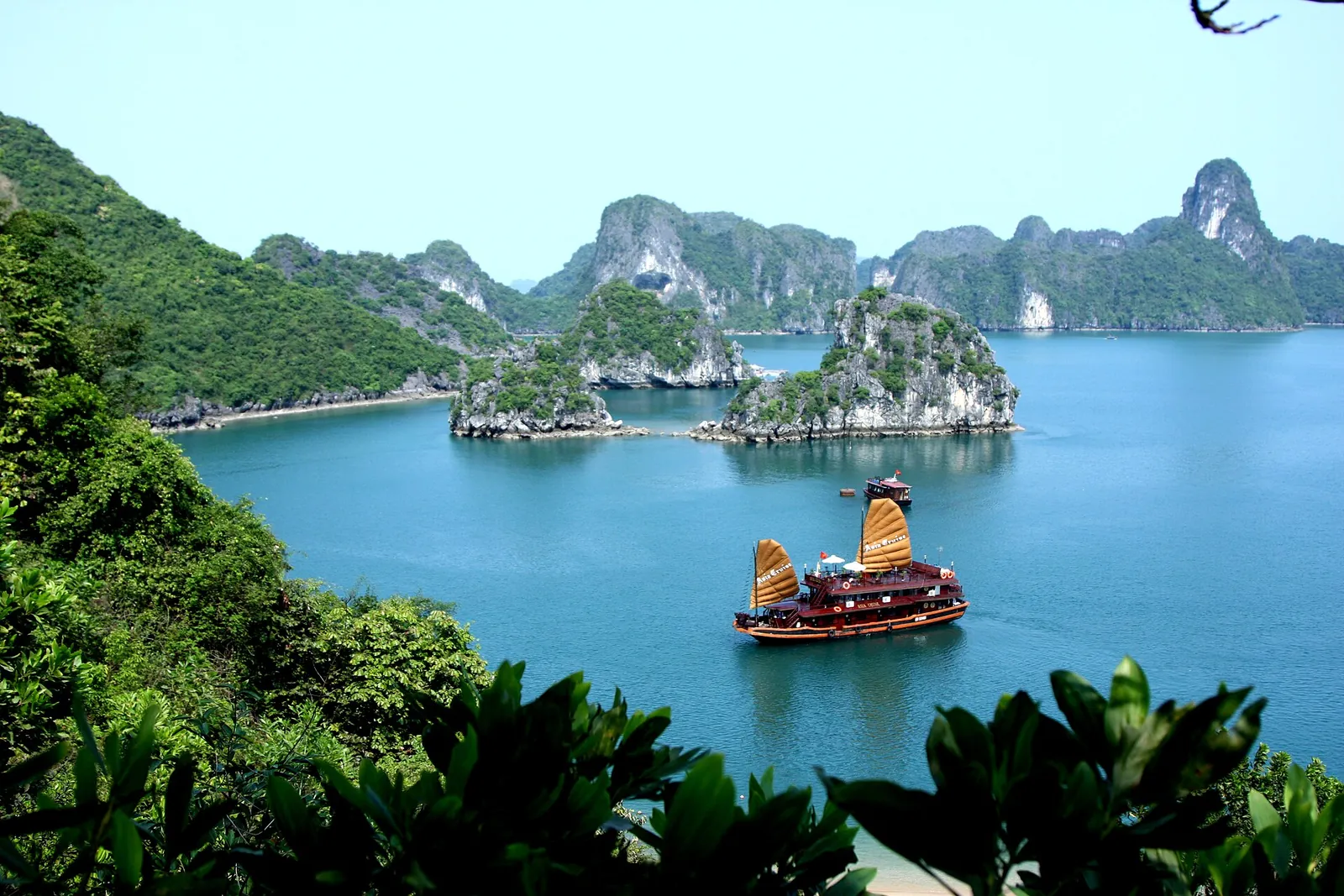
On Ha Long Bay, the official bay management lists separate fees for day trips and overnight stays, and allows overnight anchorage only on set routes: route 2, route 3 and route 4, each with its own overnight area. A one-night stay may last at most 24 hours from departure and a two-night stay 48 hours. In practice, a one-night cruise lets you see the bay at sunset and in the early morning rather than spending most of a day trip on the road from Hanoi.
Choose the boat as carefully as the route. The Vietnam National Authority of Tourism advises always booking Ha Long cruises with reputable companies, and the UK government's travel advice warns that overcrowding and poor safety standards have caused accidents on overnight boats in past years. It suggests asking about the boat's registration and safety record and the crew's certification, and making sure you get a safety briefing and a life jacket. Weather can stop overnight boats altogether: on 13 June 2025, for example, the bay authority suspended overnight permits ahead of a storm and ordered tourist boats back to land by 18:00, so keep a spare night in Hanoi and read the operator's cancellation policy.
On the Mekong, an overnight river cruise or a night on an islet replaces a long day trip from Ho Chi Minh City. The official guide notes that Can Tho can be reached by river cruise from Ho Chi Minh City or from Cambodia, and the national tourism site describes the Victoria Mekong as a river ship launched in late 2019. Night trains can also count as a bed: the tourism board describes the night train from Hanoi to Lao Cai, the gateway to Sapa, as an eight-hour trip followed by about an hour's ride up the mountain, and recommends soft seats or four-berth cabins for comfort on Vietnam's railways.
Beach resorts: when to book one and where
Resorts are the easiest part of the trip to plan, but the timing matters. Put them at the end, after the cities and the excursions, so that a bad-weather day costs you only a swim. On the central coast, the official Da Nang guide notes that the city has some of Vietnam's top luxury resorts along My Khe Beach, which runs south from the Son Tra Peninsula, while Hoi An's An Bang Beach is about a 10-minute drive from the Ancient Town. The tourism board also lists family resorts such as the Four Seasons Nam Hai near Hoi An, with three-bedroom villas on the beach.
On Phu Quoc, the official guide describes Long Beach as 20 kilometres of sunsets, with quieter, secluded resorts on tree-lined beaches such as Ganh Dau and Bai Thom further north. The island's climate decides when a resort holiday works: the tourism board advises avoiding July to September, when storms roll through and ferries become dangerous, and calls December and January the island at its best. For a short break from Ho Chi Minh City, the same site describes Melia Ho Tram as about 140 kilometres from the city.
On the central coast, think twice about a long beach stay in the autumn: the official climate guide warns of rain, storms and small floods in Hoi An from September to November. If your dates fall then, choose a hotel with a free cancellation window and treat the beach as a bonus rather than the core of the trip.
Bases that cut travel time from Hanoi to Ho Chi Minh City
Distances are the main reason to keep the number of bases small. The tourism board's transport guide notes that the train from Hanoi to Ho Chi Minh City can take up to 30 hours and that 16 hours from the central coast to either end is common, and recommends a one- or two-hour flight for the long legs. The three main gateways are Noi Bai in Hanoi (HAN), Da Nang (DAD) and Tan Son Nhat in Ho Chi Minh City (SGN), so the best bases are the ones within easy reach of those airports, with short excursions radiating out from them.
This is an editorial way of grouping the country's main stops by base; travel times are those given by the official guides.
- Hanoi Old Quarter: two or three nights at the start or end of the north. From here, Ninh Binh is a bus, van or train ride away, with van transfers straight to Tam Coc; Mai Chau suits one or two homestay nights; Ha Long Bay works best as a one-night boat trip.
- Sapa: reached by night train to Lao Cai or by bus or van from Hanoi in five to six hours; sleep in town for convenience or in a village or lodge in the valleys for the terraces.
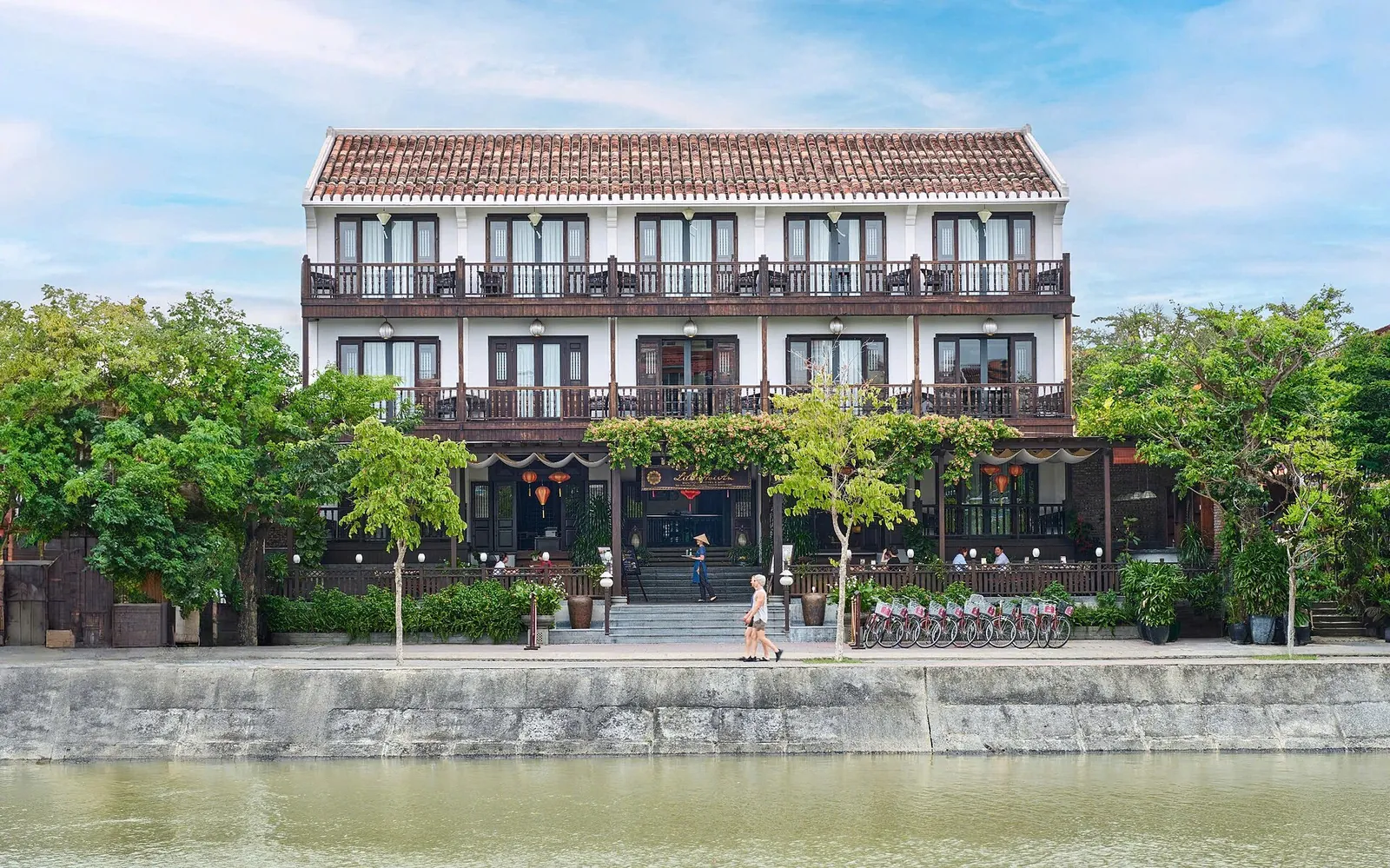
- Hoi An or Da Nang: one base for the central coast. Da Nang airport is about a 50-minute drive from Hoi An's Ancient Town; choose Hoi An for the old town and the countryside, Da Nang for a city beach and quick airport access.
- Phong Nha: a separate stop between north and centre, reached by daily flights to Dong Hoi from Hanoi and Ho Chi Minh City or by train to Dong Hoi, then a local bus or taxi.
- District 1, Ho Chi Minh City: the base for the south; the official guide notes boat trips along the river and day trips to the Cu Chi Tunnels or the Mekong Delta.
- Can Tho: one or two nights in the delta; the official guide gives about four hours by bus from Ho Chi Minh City, and Can Tho airport is about 20 minutes from the city.
- Phu Quoc: the beach finale, best outside July to September.
Booking, passports and safety
A few practical points apply wherever you sleep. The UK government's travel advice says you must always carry photographic ID, and that a printed copy of your passport photo page and visa is accepted; it warns against handing your passport to others as a guarantee, for example to landlords or motorbike rental shops. The tourism board recommends using the room safe or locking valuables in your bag when you go out, and notes that bed bugs can be an issue in hostels and dormitories, and sometimes in hotels.
Be wary of transfers you did not arrange. The UK advice warns that offers of free bus transfers to hotels may be scams unless organised in advance, and suggests saving the location of your accommodation on a map app so it is easier to find at night. For taxis, the tourism board names Mai Linh and Vinasun as trusted companies at the international airports.
Holidays change availability more than anything else. The official FAQ warns that many businesses close during Tet, the Lunar New Year, usually in January or February, and the transport guide advises booking trains well in advance for holidays and peak times. If your trip overlaps Tet, book every bed, boat and train before you leave home.
Practical questions
Where should I stay on a first trip to Vietnam?
Use three city bases near the main airports: Hanoi's Old Quarter for the north, Hoi An or Da Nang for the central coast, and District 1 in Ho Chi Minh City for the south. Fly between them, and add one or two nights in a homestay, on a boat or at a beach resort off each base.
Is it worth staying overnight on a Ha Long Bay cruise?
One night lets you see the bay at sunset and early morning instead of spending most of a day trip on the road from Hanoi. Overnight boats are allowed only on set routes, and the UK government's advice is to check a boat's safety record, registration and crew certification. Book with a reputable company and keep a spare night in Hanoi in case of storms.
What is a homestay like in Vietnam?
It ranges from a stilt house with shared bathrooms and open sleeping areas, as in Mai Chau's Lac and Pom Coong villages, to small family guesthouses with private rooms. Dinner cooked by the family is usually the highlight. Ask about the bathroom, meals, heating in winter and the transfer before you book.
Should I stay in Hoi An or Da Nang?
Choose Hoi An for the Ancient Town, the countryside and An Bang Beach, about a 10-minute drive away. Choose Da Nang for a city beach on My Khe and quicker access to the airport, which is about 50 minutes by road from Hoi An.
Do hotels in Vietnam keep your passport?
The UK government's travel advice warns against giving your passport to others as a guarantee, for example to landlords or rental shops, and says a printed copy of your passport and visa is accepted as the photo ID you must carry. Keep the original in a safe place.
When is the best time for a beach resort on Phu Quoc?
The tourism board advises avoiding July to September, when storms make ferries dangerous, and describes December and January as the island at its best.
Sources and checks before you travel
Reference sources for the version dated 3 October 2026. Confirm opening times, access, transport and conditions for your travel dates.
- Vietnam National Authority of Tourism: Mai Chau ↗ — opens in a new tab
- Vietnam National Authority of Tourism: 7 essential things to do in Mai Chau ↗ — opens in a new tab
- Vietnam National Authority of Tourism: Sapa ↗ — opens in a new tab
- Vietnam National Authority of Tourism: A Sapa itinerary for sustainable travellers ↗ — opens in a new tab
- Vietnam National Authority of Tourism: The best sustainable stays in Vietnam ↗ — opens in a new tab
- Vietnam National Authority of Tourism: Complete guide to Phong Nha ↗ — opens in a new tab
- Vietnam National Authority of Tourism: Ninh Binh ↗ — opens in a new tab
- Ha Long Bay Management Board: Ha Long Bay visitor fees ↗ — opens in a new tab
- Ha Long Bay Management Board: Overnight boat permits suspended for storm Wutip ↗ — opens in a new tab
- Vietnam National Authority of Tourism: Health and safety ↗ — opens in a new tab
- UK FCDO travel advice: Vietnam safety and security ↗ — opens in a new tab
- Vietnam National Authority of Tourism: Transport within Vietnam ↗ — opens in a new tab
- Vietnam National Authority of Tourism: Getting to Vietnam ↗ — opens in a new tab
- Vietnam National Authority of Tourism: Hoi An ↗ — opens in a new tab
- Vietnam National Authority of Tourism: Da Nang ↗ — opens in a new tab
- Vietnam National Authority of Tourism: Phu Quoc ↗ — opens in a new tab
- Vietnam National Authority of Tourism: 5 beach resorts for families in Vietnam ↗ — opens in a new tab
- Vietnam National Authority of Tourism: Can Tho ↗ — opens in a new tab
- Vietnam National Authority of Tourism: 5 reasons you'll love Cai Be ↗ — opens in a new tab
- Vietnam National Authority of Tourism: Weather and climate in Vietnam ↗ — opens in a new tab
- Vietnam National Authority of Tourism: Frequently asked questions ↗ — opens in a new tab
- Noi Bai International Airport: Public transportation ↗ — opens in a new tab
Does this experience fit your route?
Adding a night on the water or in a village? Compare Ha Long cruises, Mai Chau stilt-house stays and Mekong overnight tours, and check the cabin or room type before you book.
Check dates and details on Viator ↗ — opens in a new tabAffiliate link · Book with ViatorPhoto credits
A cruise junk among the karst islands of Ha Long Bay, where overnight boats anchor on set routes
Photograph: Arianos — opens in a new tab · Public domain — opens in a new tab
Changes: Resized and converted to WebP; displayed with responsive crops. · Original photograph and licence details ↗ — opens in a new tab
A riverside boutique hotel in Hoi An, the central-coast base
Photograph: Gaani.ii — opens in a new tab · CC BY-SA 4.0 — opens in a new tab
Changes: Resized and converted to WebP; displayed with responsive crops. · Original photograph and licence details ↗ — opens in a new tab
Ta Van village in the Muong Hoa valley near Sapa, where many trekking homestays are found
Photograph: Andre Hospers — opens in a new tab · CC BY 4.0 — opens in a new tab
Changes: Resized and converted to WebP; displayed with responsive crops. · Original photograph and licence details ↗ — opens in a new tab
A garden homestay on the Binh Hoa Phuoc islets off Vinh Long in the Mekong Delta
Photograph: McKay Savage from London, UK — opens in a new tab · CC BY 2.0 — opens in a new tab
Changes: Resized and converted to WebP; displayed with responsive crops. · Original photograph and licence details ↗ — opens in a new tab
Banh xeo filled with squid, served with herbs in Nha Trang
Photograph: vi:User:ASM~viwiki — opens in a new tab · CC BY-SA 3.0 — opens in a new tab
Changes: Resized and converted to WebP; displayed with responsive crops. · Original photograph and licence details ↗ — opens in a new tab