Ho Chi Minh City and the Southeast · Ho Chi Minh City
Saigon District 1 guide: where to stay, walk and eat in the centre
District 1 is the old heart of Saigon: the grid between the Saigon River, Ben Thanh Market and the Independence Palace where the city's French-era landmarks, its widest pedestrian boulevard and most of its hotels sit within walking distance of each other. Official addresses in the centre now name a ward rather than the district (the Independence Palace gives its address as Ben Thanh Ward, and city notices refer to the downtown as Sai Gon and Ben Thanh wards), but the old name is still the easiest way to describe it. It is the most convenient base in Ho Chi Minh City and the easiest place to start a first visit. The trick is choosing which part of it to sleep in, and walking it in the right order around the heat.
- Suggested time
- 2–3 nights
- Where to stay
- Dong Khoi and Nguyen Hue for the landmarks; Ben Thanh for the metro; Pham Ngu Lao for budget rooms and nightlife
- Season and timing
- Warm all year. The national tourism site notes heatwaves in April and May, a rainy season from May to November and slightly cooler weather in December and January.
The short answer
Give District 1 two full days: one for the colonial walk from the Independence Palace past the cathedral and post office to the Opera House, and one for Ben Thanh Market, Nguyen Hue and a food evening. Sleep around Dong Khoi and Nguyen Hue if you want the landmarks and the riverfront on foot, near Ben Thanh if you want the metro at the door, or in Pham Ngu Lao only if you want backpacker prices and nightlife and do not mind noise. Walk early and late, rest at midday, and use the metro, a metered taxi or a ride-hailing car for anything beyond the district.
Choose your corner of District 1 before your hotel
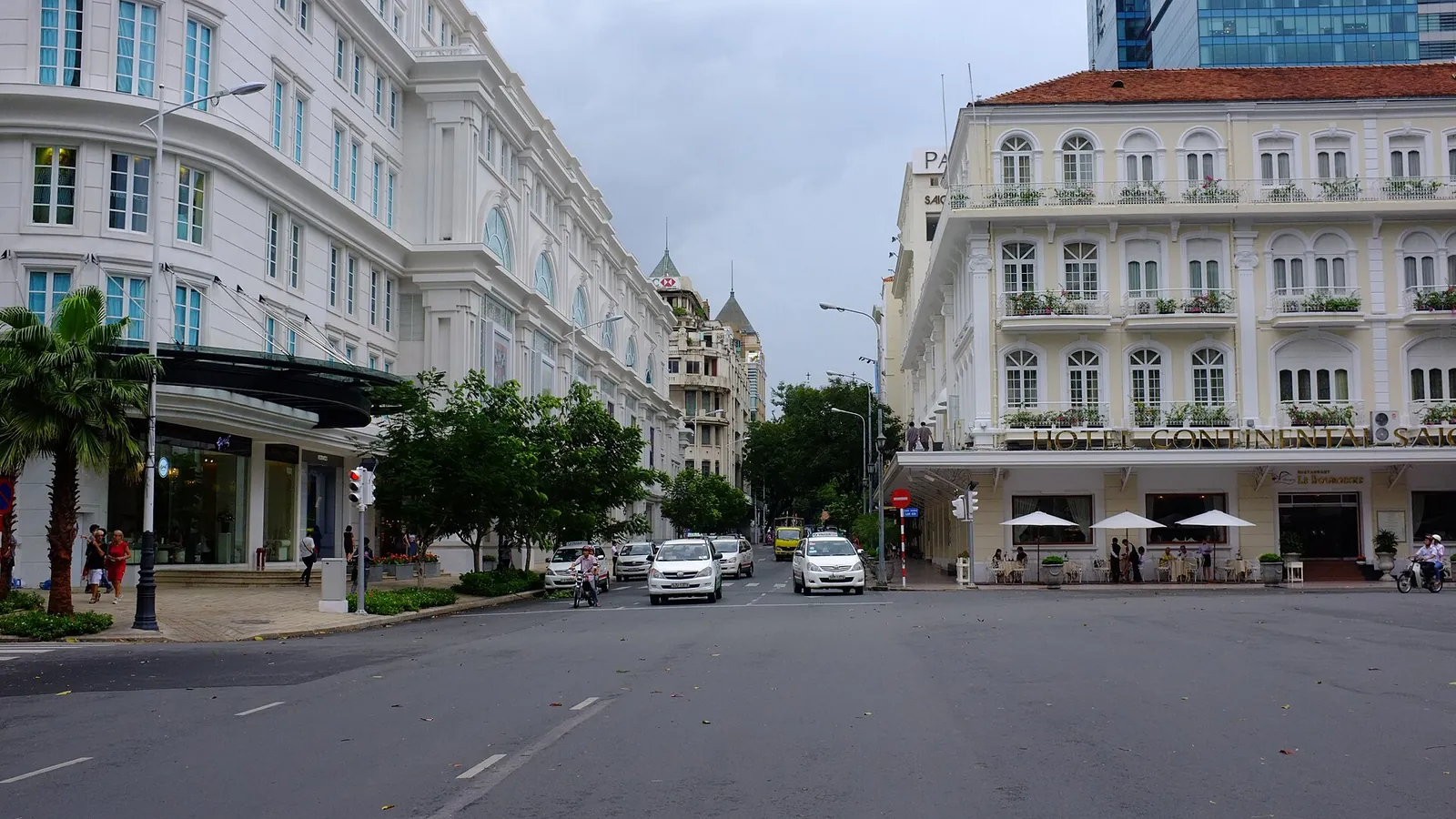
District 1 is compact, but its corners feel different, and the right one depends on how you will spend your evenings. The streets around Dong Khoi and Nguyen Hue are the polished centre: the Opera House, the old hotels and the riverfront are all on foot. The national tourism site's own hotel list for the city is dominated by this area, from the Rex on Nguyen Hue and the Caravelle on Lam Son Square to the Majestic at 1 Dong Khoi and the riverside towers along Ton Duc Thang. It is the best choice for a short first visit; compare prices with the blocks around Ben Thanh before you book.
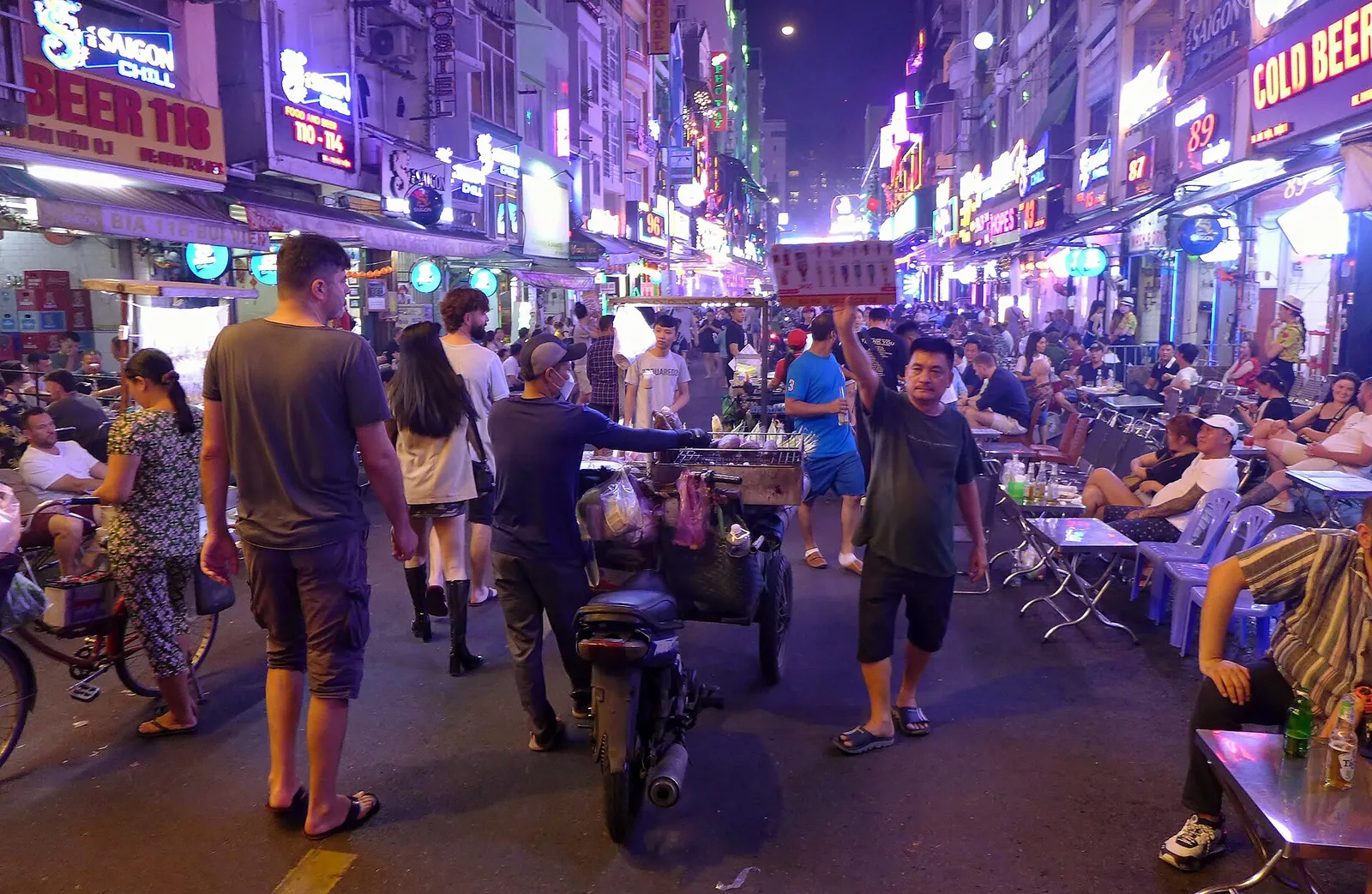
The blocks around Ben Thanh Market put you at the downtown terminus of the city's first metro line and within walking distance of both Nguyen Hue and the Independence Palace. Pham Ngu Lao and Bui Vien form what VnExpress calls Vietnam's backpacker street, with budget hotels and bars; VnExpress describes crowds flooding the street at weekends. Sleep there for the price and the energy, not for quiet; ask for a room away from the street.
Whichever corner you pick, check three things on the map: how far the hotel is from a main road a taxi can reach, whether your room faces a bar street, and how long the walk is to Ben Thanh or the Opera House. Some rooms in narrow buildings have no outside window; ask before you book.
The colonial walk: palace, cathedral, post office and Opera House
Start at the Independence Palace (also called Reunification Palace) as it opens. The palace's official site traces the site to Norodom Palace, the French governor's residence begun in 1868 and finished in 1871; the present 1960s building, designed by architect Ngo Viet Thu, was the residence and office of South Vietnam's president, and the national tourism site describes more than 100 rooms, from the cabinet room to the presidential family's quarters. When we checked on 2026-10-03, the official site listed opening every day from 7:00 to 18:00, including holidays, with adult tickets at 80,000 VND, students and seniors at 40,000 VND and children aged 6 to 17 at 20,000 VND, and online booking. The War Remnants Museum is just behind the palace grounds, a short walk away, if you want to add it the same morning; it is a sombre visit that deserves time of its own.
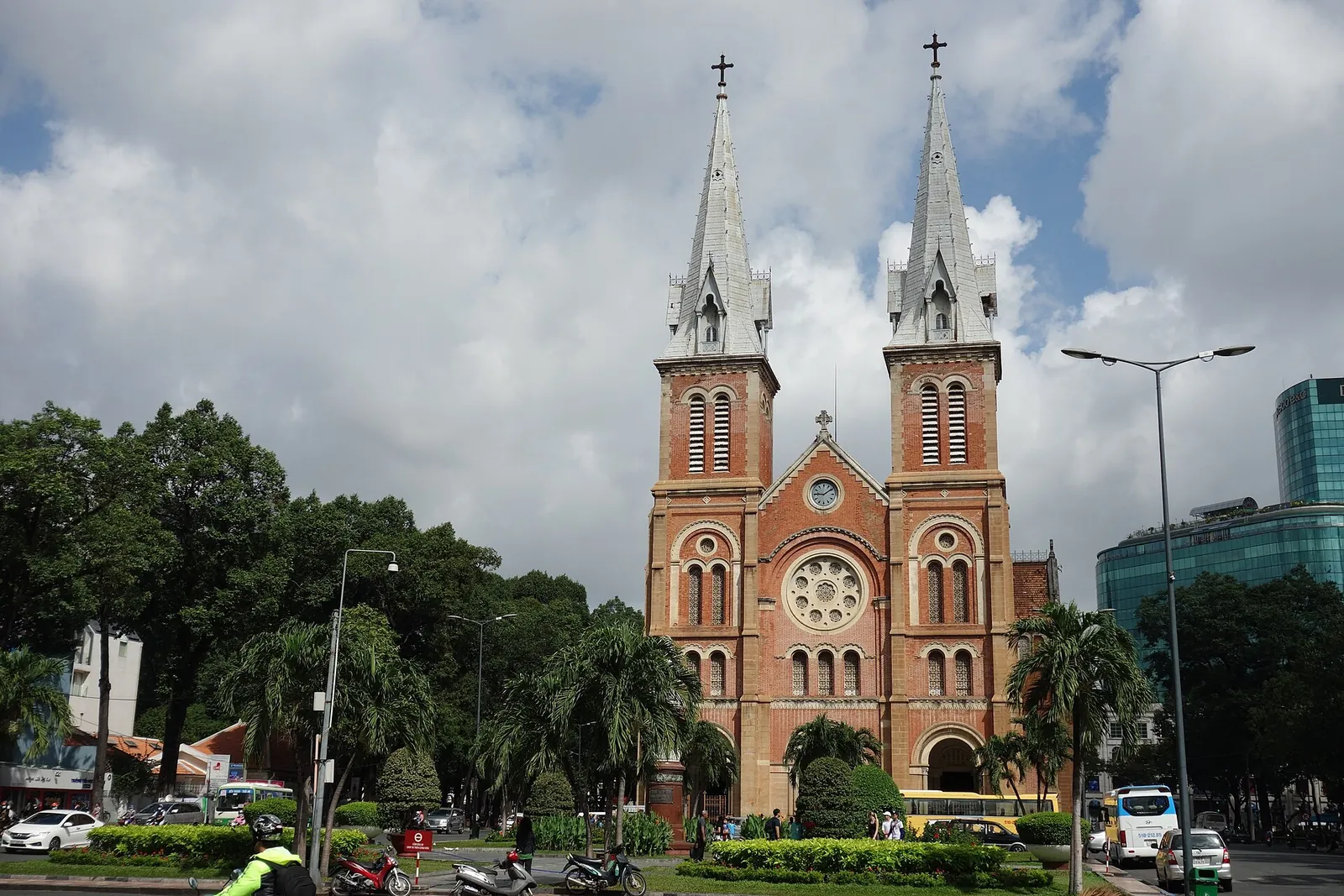
From the palace it is a few steps to the Cathedral Basilica of Our Lady of the Immaculate Conception, Saigon's Notre-Dame. The national tourism site says it was built from materials imported from France between 1863 and 1880. It is in the middle of the most extensive restoration in its history: VnExpress reported in December 2025 that scaffolding was about to go up inside the nave and that work on the roof, lighting and brick facade would continue through at least 2027; in March 2026 new gold-plated crosses were hoisted onto its 57-metre spires. Expect scaffolding, and check on the spot whether the interior is open to visitors that day.
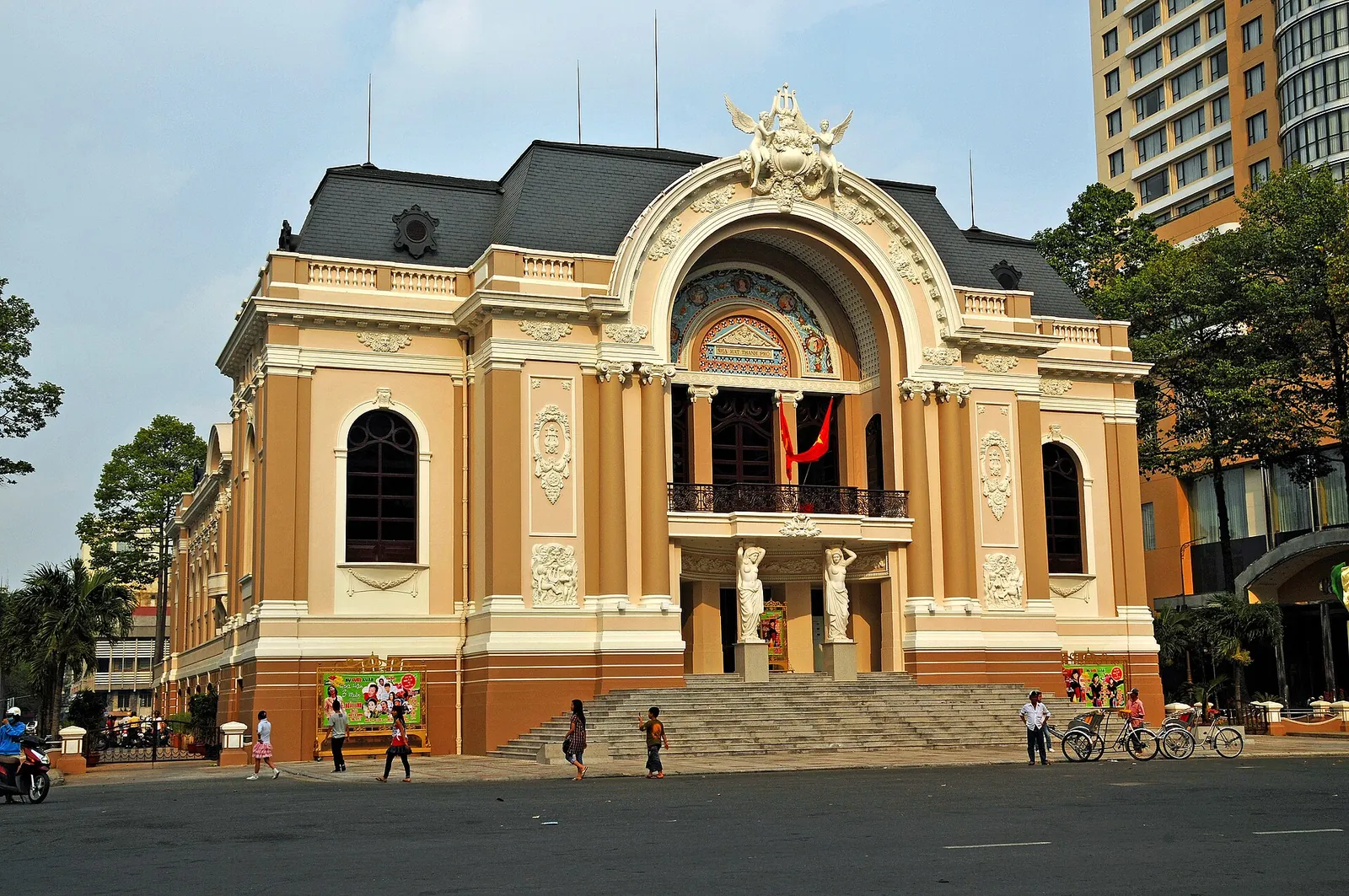
Directly opposite, the Saigon Central Post Office is still a working post office and, according to the national tourism site, open daily. Step inside for the vaulted hall, the old wooden phone booths and the two historic maps by the entrance: one of Saigon and its surroundings in 1892, the other of the telegraph lines of Vietnam and Cambodia in 1936. Then follow Dong Khoi, the city's main shopping street, down to the Opera House on Lam Son Square. The national tourism site suggests booking one of the contemporary circus and cultural shows staged there several nights a week; check the current programme before you go.
Make time for the local food
What to eat and where to look
Banh mi
The baguette sandwich found all over Vietnam, in its Saigon form: the national tourism site describes char siu pork, homemade pâté, soft butter, pickled papaya and hot chilli, with many shops making their own sauce. Variations with pork skin, fish cake, roast pork, grilled beef or shredded chicken are all common.
- Where to look
- Bakery counters and street carts all over the centre; the tourism site names long-running bakeries such as Huynh Hoa, Bay Ho and Hoa Ma (check their addresses, as not all are in District 1), and the food stalls at the back of Ben Thanh Market make them to order.
- Fit it into your day
- Breakfast on the walk to the Independence Palace, or a snack between sights.
Usually contains pork, pâté and chilli; ask for it without chilli (không cay) if needed.
Com tam (broken rice)
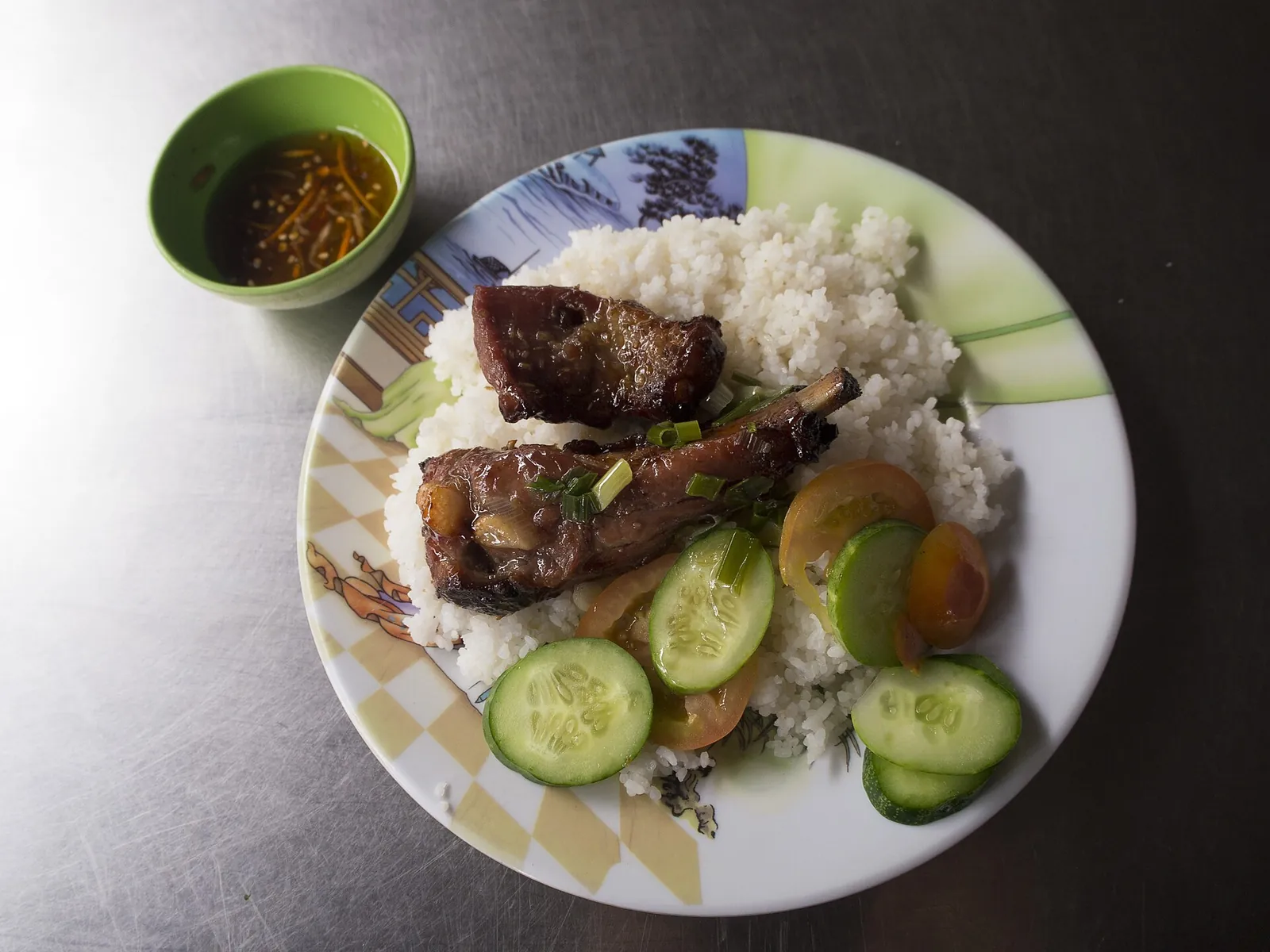
One of the few dishes the national tourism site says originated in Ho Chi Minh City: broken rice grains with a honey-glazed grilled pork chop, a fried egg, spring onions and pickled papaya, eaten with a generous pour of sweet fish sauce.
- Where to look
- Small shops and pavement kitchens with a charcoal grill; the tourism site's advice is that the nearest busy one is likely to be as good as any.
- Fit it into your day
- Breakfast or lunch; it is a full meal.
Pork, egg and fish sauce; the grilled meat is often sweet-glazed.
Hu tieu Nam Vang
Thin rice noodles in a hot bone broth with prawn, minced pork, quail eggs and fried garlic, a dish of mixed Chinese, Cambodian and Vietnamese origins that the tourism site calls especially famous in the city.
- Where to look
- Small carts and noodle shops all over the city, including the centre.
- Fit it into your day
- A light breakfast or late-night bowl.
Often includes pork offal and shellfish; ask what is in the bowl.
Banh xeo (crispy pancake)
A thin, crisp rice-flour pancake folded over shrimp, pork belly, bean sprouts and mung beans. The tourism site explains that the city serves both the small central-Vietnamese version and the large Mekong-style pancake.
- Where to look
- The food stalls at the back of Ben Thanh Market, and sit-down Vietnamese restaurants around the centre.
- Fit it into your day
- Lunch to share, with herbs and a dipping sauce.
Shrimp and pork; the dipping sauce contains fish sauce.
Banh trang tron (mixed rice paper)
A street snack of cut rice paper tossed with green mango, laksa leaves, shrimp salt, kumquat juice, quail eggs, peanuts and beef jerky.
- Where to look
- The national tourism site points to September 23 Park, the Ben Thanh Market area and the crossing of Nguyen Thai Hoc and Tran Hung Dao, all in or next to District 1.
- Fit it into your day
- An evening snack while walking, not a meal.
Contains peanuts, dried shrimp and chilli; usually prepared by hand at the cart.
Nguyen Hue, Ben Thanh and the old apartment blocks
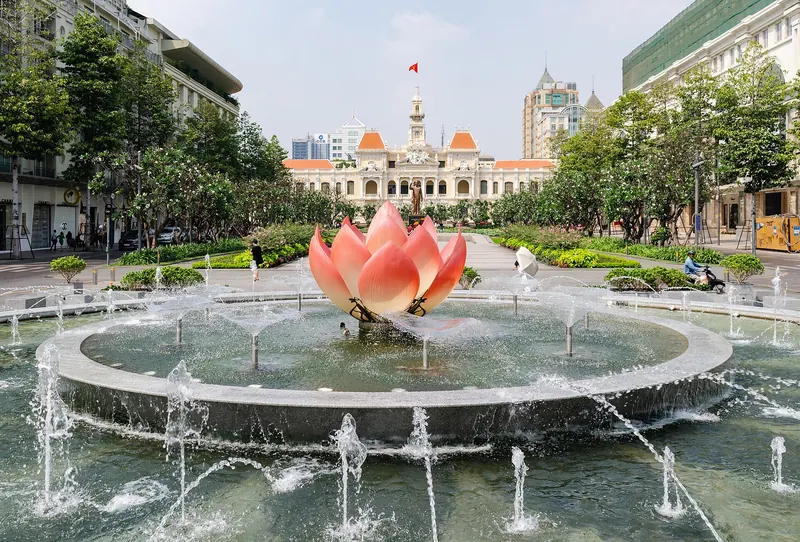
Nguyen Hue is the district's living room: a broad pedestrian boulevard running from the People's Committee building, the old City Hall, down to Bach Dang Wharf on the river. The national tourism site calls it at its liveliest at sundown, which is the time to walk it. It is also the city's main venue for big public events; in March 2026 the city tightened controls on events there and on neighbouring Le Loi after complaints about congestion and noise, so on an event night expect crowds and closed streets.
Look up at the buildings as well as along the street. The national tourism site points to old apartment blocks and offices that now hold small shops and cafés, naming 42 Nguyen Hue and 22 Ly Tu Trong. Climbing the stairs of one of them is a good way to see how the centre's old buildings are being reused. The tourism site's weekend plan puts 42 Nguyen Hue in the afternoon, and a cold drink indoors is welcome then.
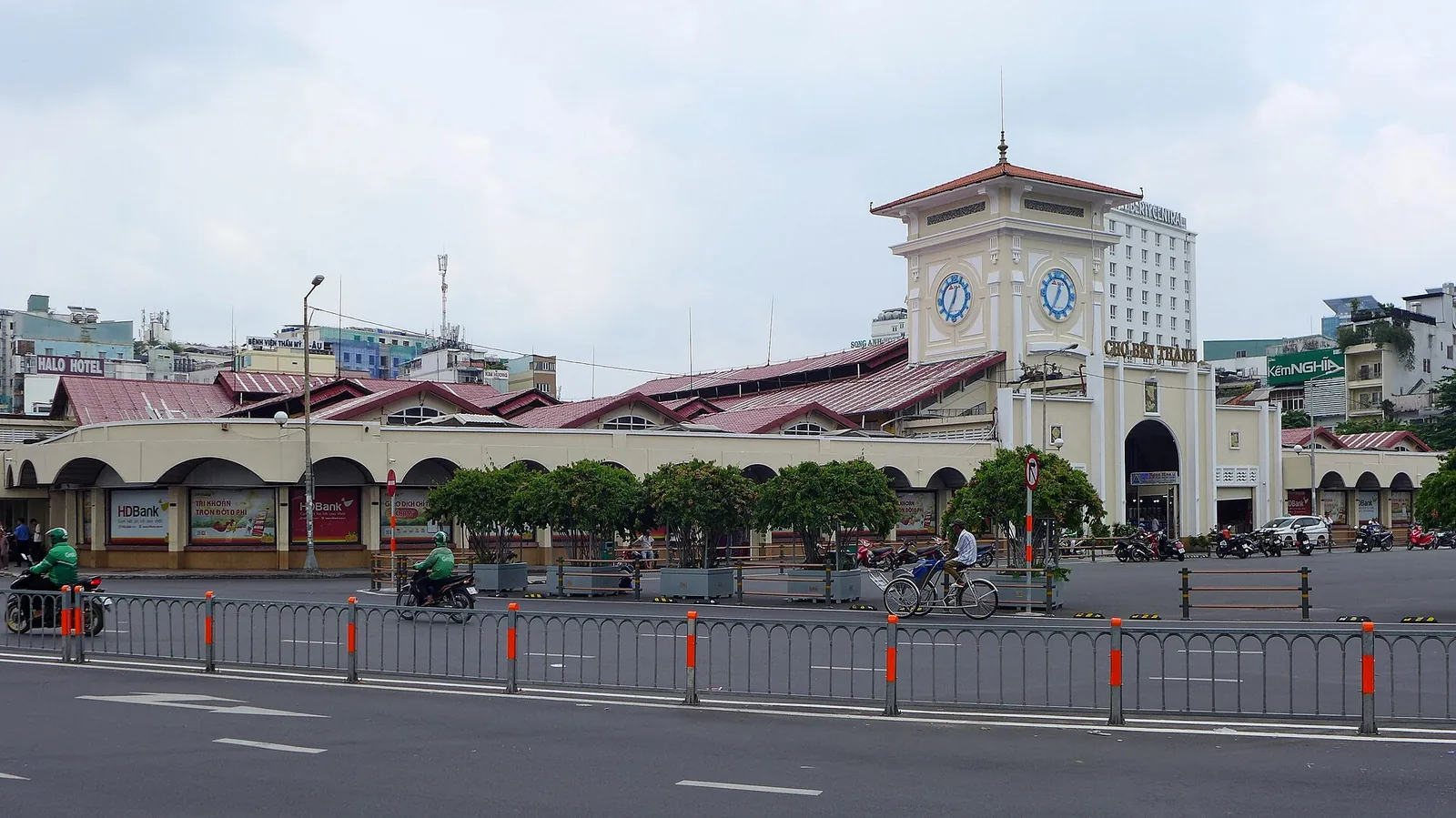
Ben Thanh Market faces Quach Thi Trang Square and stands on land the tourism site says was once Bo Ret Pond. Inside, aisles of fresh produce, dried goods, conical hats, coffee and lacquerware give way at the back to food stalls frying banh xeo and assembling banh mi. Much of it is geared to visitors, so come for a first look at southern fruit and dried goods and a meal at the food stalls, and compare prices before you buy souvenirs.
Getting around: on foot, the metro and the airport bus
Inside District 1, walk. The distances between the palace, the cathedral, the Opera House, Nguyen Hue and Ben Thanh are short, and walking between them is the point. Do it in the early morning and from late afternoon, and cross at a steady pace so riders can read your line. The national tourism site warns that most thefts in big cities are drive-by snatchings: keep your phone close to your body and away from the traffic when you take pictures, and carry bags on the side away from the road.
For trips further out, Metro Line 1 (Ben Thanh–Suoi Tien) opened on 22 December 2024 and starts at Ben Thanh Market; within the district it also stops at City Theater, by the Opera House, and Ba Son. VnExpress reported in September 2025 that the line has 14 stations over nearly 20 kilometres, that trains run from 5:00 to 22:00, and that single fares ranged from 6,000 to 20,000 VND, with QR tickets in the HCMC Metro app, bank-card tapping at the gates and, at some stations, no paper tickets. Check the operator's app before you rely on it, since payment rules have been changing.
Taxis are everywhere. The national tourism site recommends Mai Linh and Vinasun for sealed meters, and notes that with a Vietnamese SIM card you can use ride-hailing apps such as Grab. In August 2026, SGGP reported that the city had introduced free bus fares a month earlier; buses are a cheap way to the airport (see below), but check the current policy before you travel.
A workable two-day plan
This is an editorial suggestion, not a timetable. Check opening hours for the places you choose.
- Day 1 — The colonial walk: banh mi and iced coffee for breakfast; the Independence Palace when it opens; the cathedral and the post office before the midday heat; a long lunch and a rest; Dong Khoi to the Opera House in the late afternoon, then Nguyen Hue at sundown and a show or dinner nearby.
- Day 2 — Market and food: Ben Thanh Market in the morning, com tam or hu tieu for a late breakfast; the War Remnants Museum or a rest at midday; the apartment-block cafés at 42 Nguyen Hue in the afternoon; in the evening, a taxi to Vinh Khanh in District 4 for snails and seafood, or mixed rice paper around September 23 Park.
- Day 3 (optional): Cho Lon by taxi in the morning, or a separate full-day trip to the Cu Chi Tunnels or the Mekong Delta.
Beyond District 1
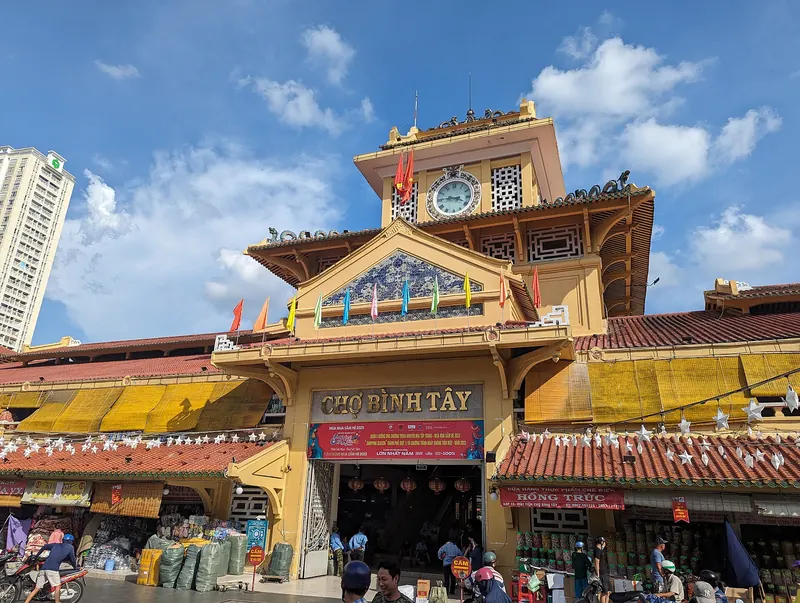
The district is the base, not the whole city. Cho Lon, the old Chinese quarter, is the obvious half-day out: the national tourism site singles out Binh Tay Market, a huge wholesale market, and Thien Hau Pagoda, dedicated to the sea goddess; see our Cho Lon guide. In District 4, just south of the centre, the small street of Vinh Khanh comes alive with sidewalk snail and seafood restaurants from around 18:00, every night of the week, according to the national tourism site; it is a short taxi ride from Nguyen Hue.
The Cu Chi Tunnels and the Mekong Delta are full-day trips, not afternoon add-ons. The national tourism site puts the Ben Dinh entrance at Cu Chi about 35 kilometres from the city and the Ben Duoc entrance about 70 kilometres away, and suggests boats along the river as one way to reach Cu Chi or the delta. Keep the evening before an early departure light, and check whether your tour picks up from your hotel. For the rest of the city, see our Ho Chi Minh City guide.
Practical questions
How many nights should I stay in District 1?
Two or three. Two full days cover the Independence Palace, the cathedral, the post office, the Opera House, Nguyen Hue and Ben Thanh Market at an easy pace with time to eat well; a third night lets you add Cho Lon or a day trip to Cu Chi or the Mekong Delta.
Is District 1 better than Pham Ngu Lao for a first visit?
Pham Ngu Lao is part of District 1, but its backpacker streets around Bui Vien are cheaper and much noisier at night. If sleep and the landmarks matter most, stay around Dong Khoi, Nguyen Hue or Ben Thanh; choose Pham Ngu Lao for price and nightlife.
How do I get from Tan Son Nhat Airport to District 1?
By metered taxi or ride-hailing car, or by bus. When SGGP reported the routes in April 2025, bus 109 ran from Terminal 3 to Saigon Bus Station at September 23 Park via Pham Ngu Lao, and bus 152 served Terminals 1 and 2 via Ben Thanh. Check current routes and hours before you rely on them.
Can I go inside Saigon's Notre-Dame Cathedral?
Possibly, but do not count on it. The cathedral is in the middle of a multi-year restoration expected to continue through at least 2027, with scaffolding inside the nave. Check on the day; the post office opposite is open daily.
Is the metro useful for visitors staying in District 1?
Mainly for trips east of the centre. Line 1 starts at Ben Thanh and stops at City Theater and Ba Son within the district; most sights in District 1 are closer on foot. For Cho Lon or District 4, take a taxi or ride-hailing car.
Is it safe to walk around District 1?
Generally yes, but the national tourism site warns that most thefts are drive-by snatchings. Keep your phone and camera close to your body and away from the road, carry your bag on the side away from traffic, and use a taxi late at night.
Sources and checks before you travel
Reference sources for the version dated 3 October 2026. Confirm opening times, access, transport and conditions for your travel dates.
- Vietnam National Authority of Tourism: Ho Chi Minh City ↗ — opens in a new tab
- Vietnam National Authority of Tourism: 7 must-see attractions in HCMC ↗ — opens in a new tab
- Vietnam National Authority of Tourism: 10 tourist spots not to be missed in HCMC ↗ — opens in a new tab
- Vietnam National Authority of Tourism: the perfect weekend in HCMC ↗ — opens in a new tab
- Vietnam National Authority of Tourism: eating like a local in HCMC ↗ — opens in a new tab
- Vietnam National Authority of Tourism: delicious dishes of HCMC ↗ — opens in a new tab
- Vietnam National Authority of Tourism: health and safety ↗ — opens in a new tab
- Independence Palace (official site) ↗ — opens in a new tab
- VnExpress International: Saigon Notre-Dame crosses installed (March 2026) ↗ — opens in a new tab
- VnExpress International: Notre-Dame crosses on display (December 2025) ↗ — opens in a new tab
- VnExpress International: HCMC tightens controls on Nguyen Hue and Le Loi events ↗ — opens in a new tab
- VnExpress International: paper tickets end at four metro stations ↗ — opens in a new tab
- VnExpress International: metro extension to Long Thanh airport ↗ — opens in a new tab
- SGGP English: bus 109 to Tan Son Nhat Terminal 3 ↗ — opens in a new tab
- SGGP English: free bus fares in HCMC (August 2026) ↗ — opens in a new tab
- VnExpress International: bustling nightlife returns to Bui Vien (2022) ↗ — opens in a new tab
- VnExpress International: Bui Vien backpacker street ↗ — opens in a new tab
Does this experience fit your route?
A guided food evening or a day trip that picks you up in District 1 is the easiest way to add more of Saigon. Check the pickup point, the timing and what is included before you book.
Browse relevant experiences on Viator ↗ — opens in a new tabAffiliate link · Book with ViatorPhoto credits
The Opera House (City Theatre) on Lam Son Square, at the lower end of Dong Khoi.
Photograph: Dennis G. Jarvis — opens in a new tab · CC BY-SA 2.0 — opens in a new tab
Changes: Resized and converted to WebP; displayed with responsive crops. · Original photograph and licence details ↗ — opens in a new tab
Ben Thanh Market, at the downtown end of Metro Line 1.
Photograph: Bahnfrend — opens in a new tab · CC BY-SA 4.0 — opens in a new tab
Changes: Resized and converted to WebP; displayed with responsive crops. · Original photograph and licence details ↗ — opens in a new tab
Saigon Notre-Dame Cathedral, a few steps from the Independence Palace and opposite the post office.
Photograph: hiyang.on.flickr — opens in a new tab · CC BY 2.0 — opens in a new tab
Changes: Resized and converted to WebP; displayed with responsive crops. · Original photograph and licence details ↗ — opens in a new tab
Dong Khoi, the old Rue Catinat, runs from the cathedral down to the river.
Photograph: TomW712 — opens in a new tab · CC BY-SA 3.0 — opens in a new tab
Changes: Resized and converted to WebP; displayed with responsive crops. · Original photograph and licence details ↗ — opens in a new tab
Bui Vien, the backpacker street by Pham Ngu Lao, after dark.
Photograph: Bahnfrend — opens in a new tab · CC BY-SA 4.0 — opens in a new tab
Changes: Resized and converted to WebP; displayed with responsive crops. · Original photograph and licence details ↗ — opens in a new tab
Com tam: broken rice with grilled pork and sweet fish sauce.
Photograph: Tokeisan at Vietnamese Wikipedia — opens in a new tab · Public domain — opens in a new tab
Changes: Resized and converted to WebP; displayed with responsive crops. · Original photograph and licence details ↗ — opens in a new tab